
Arthur Gonzalez
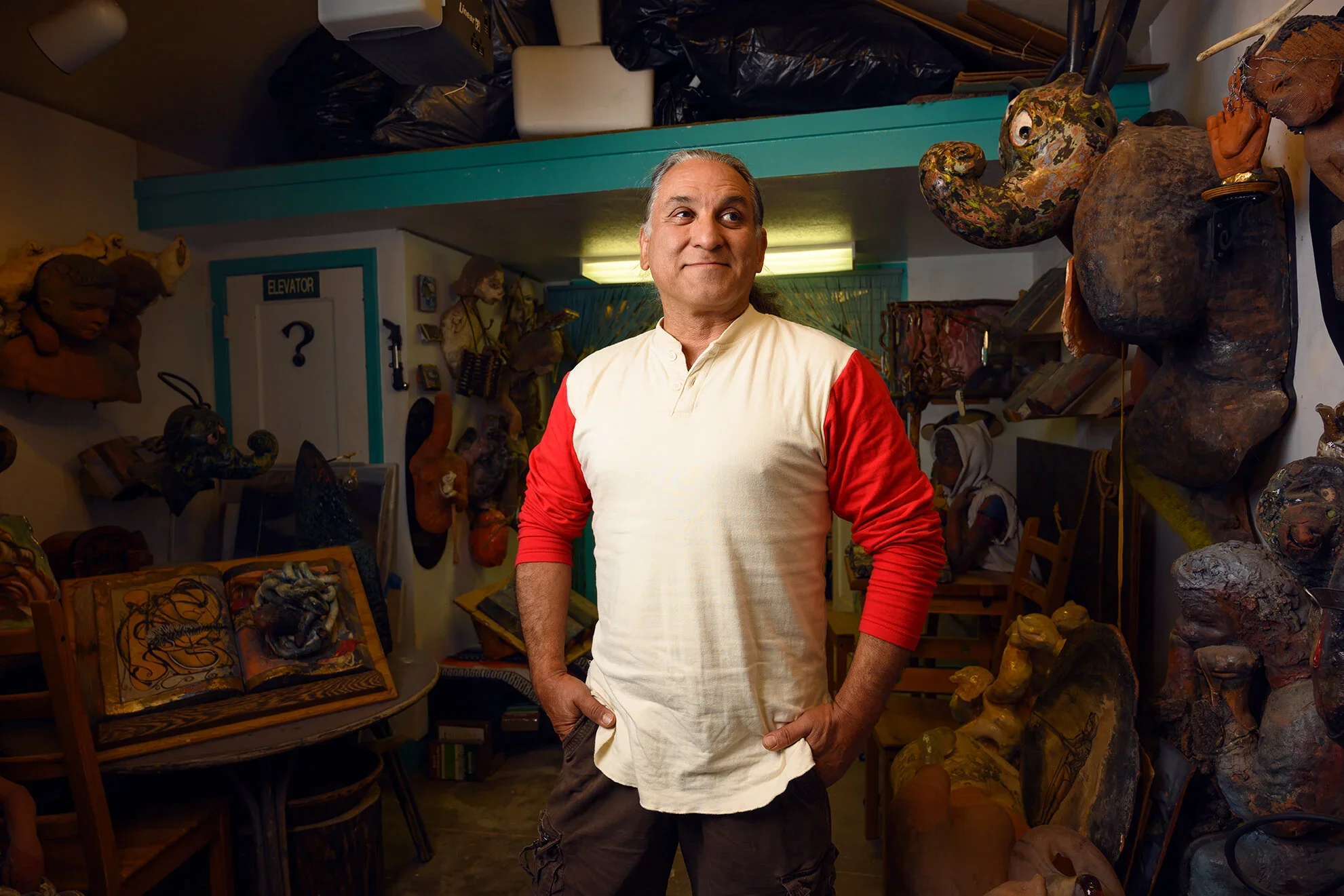
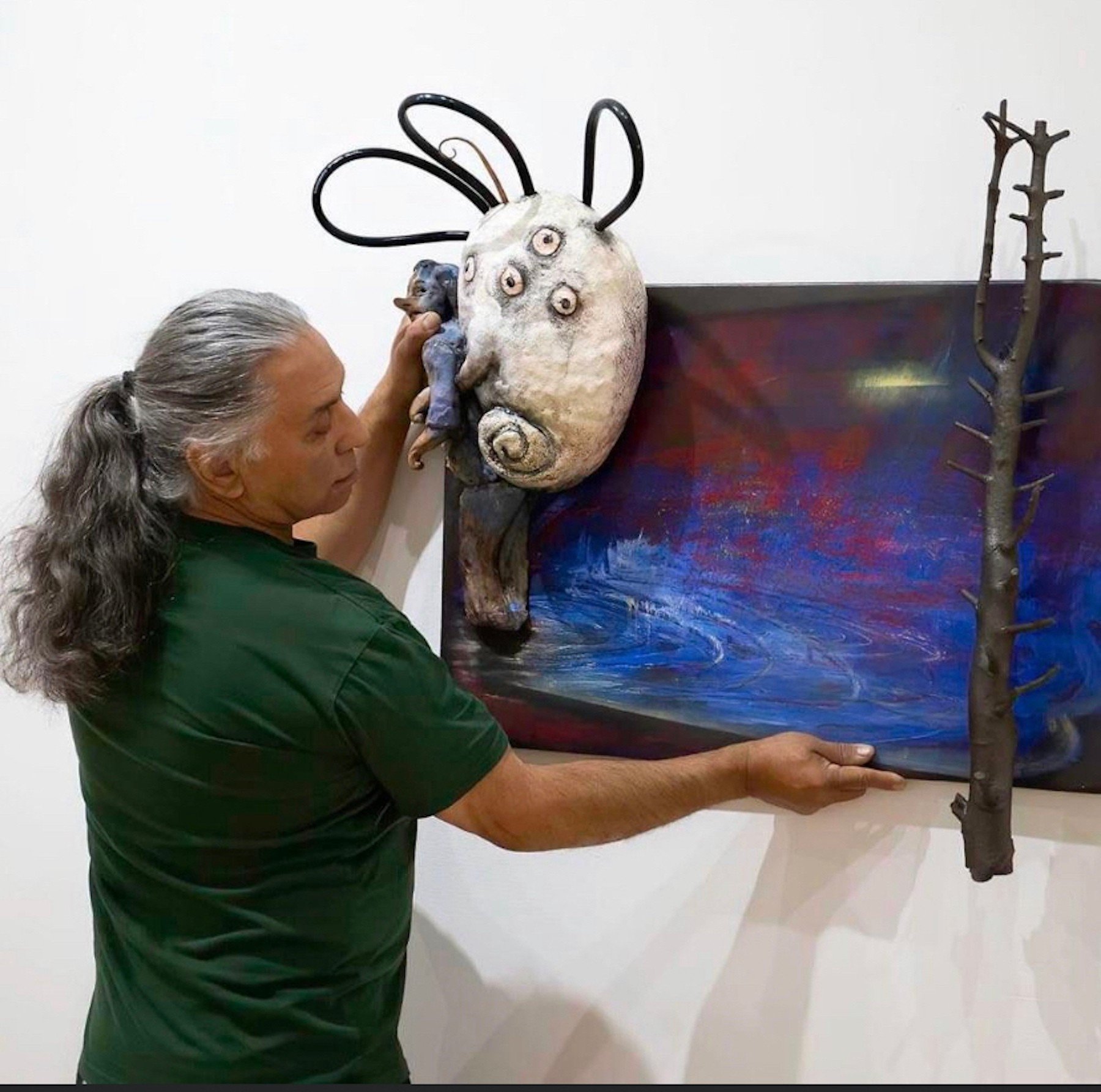
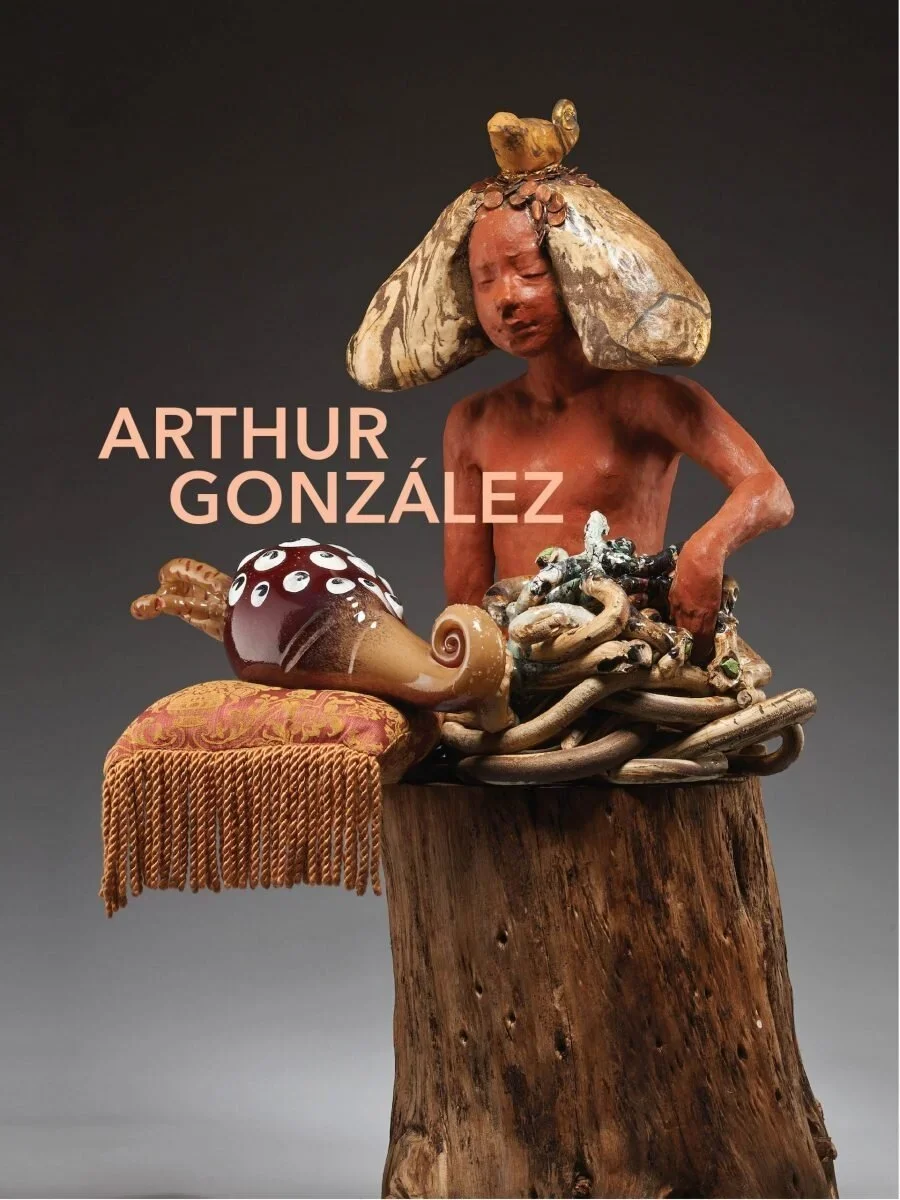
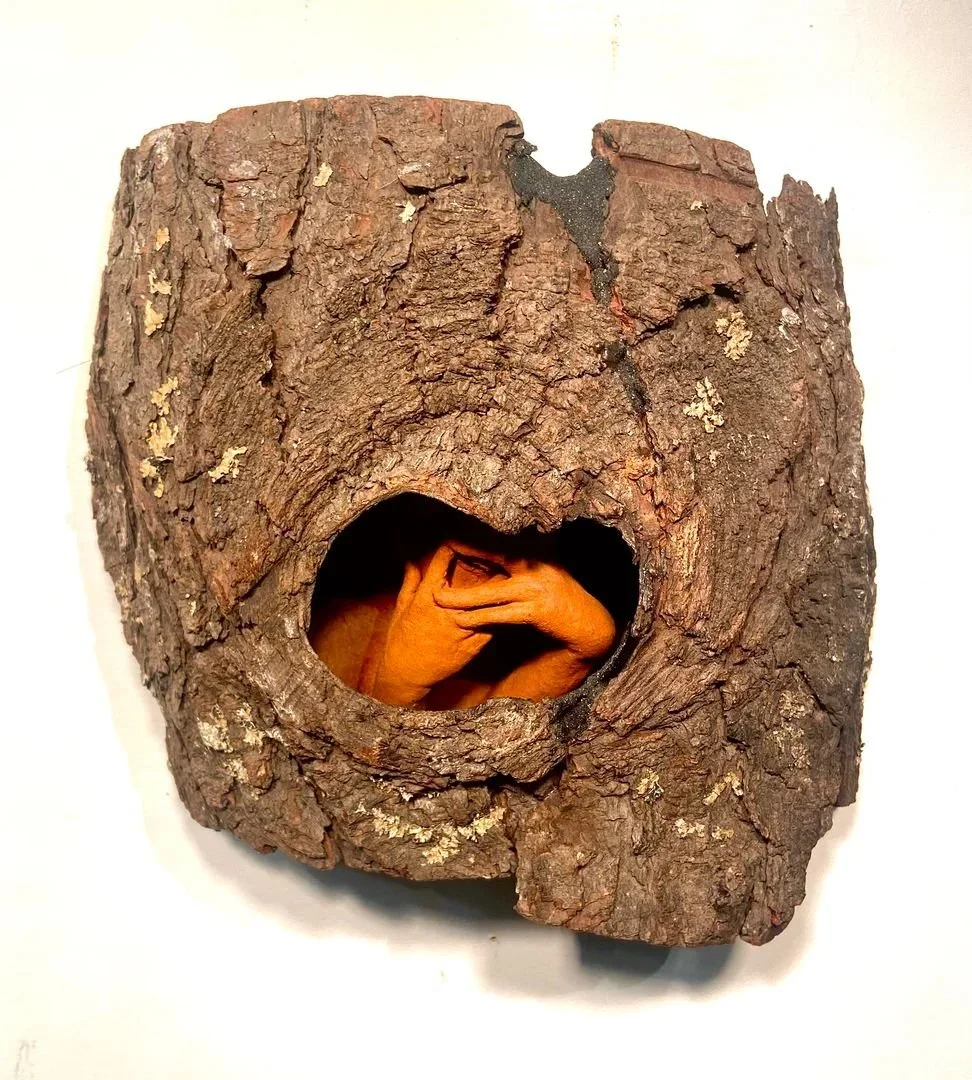
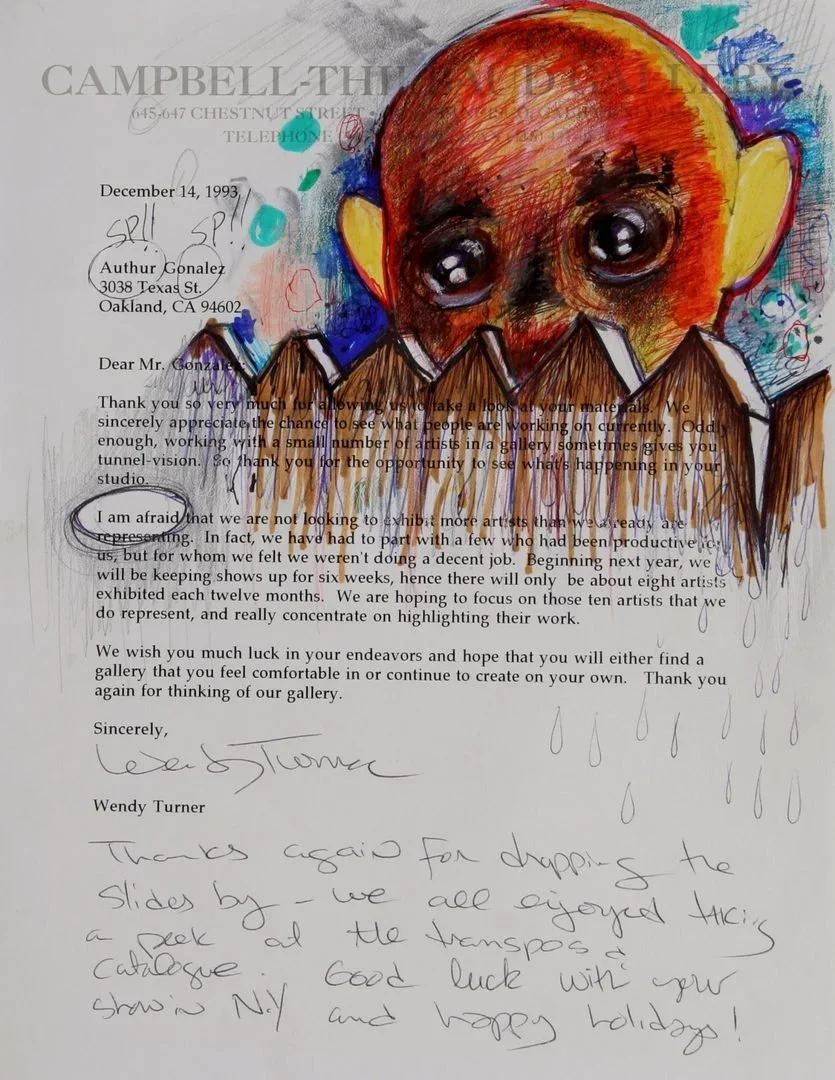
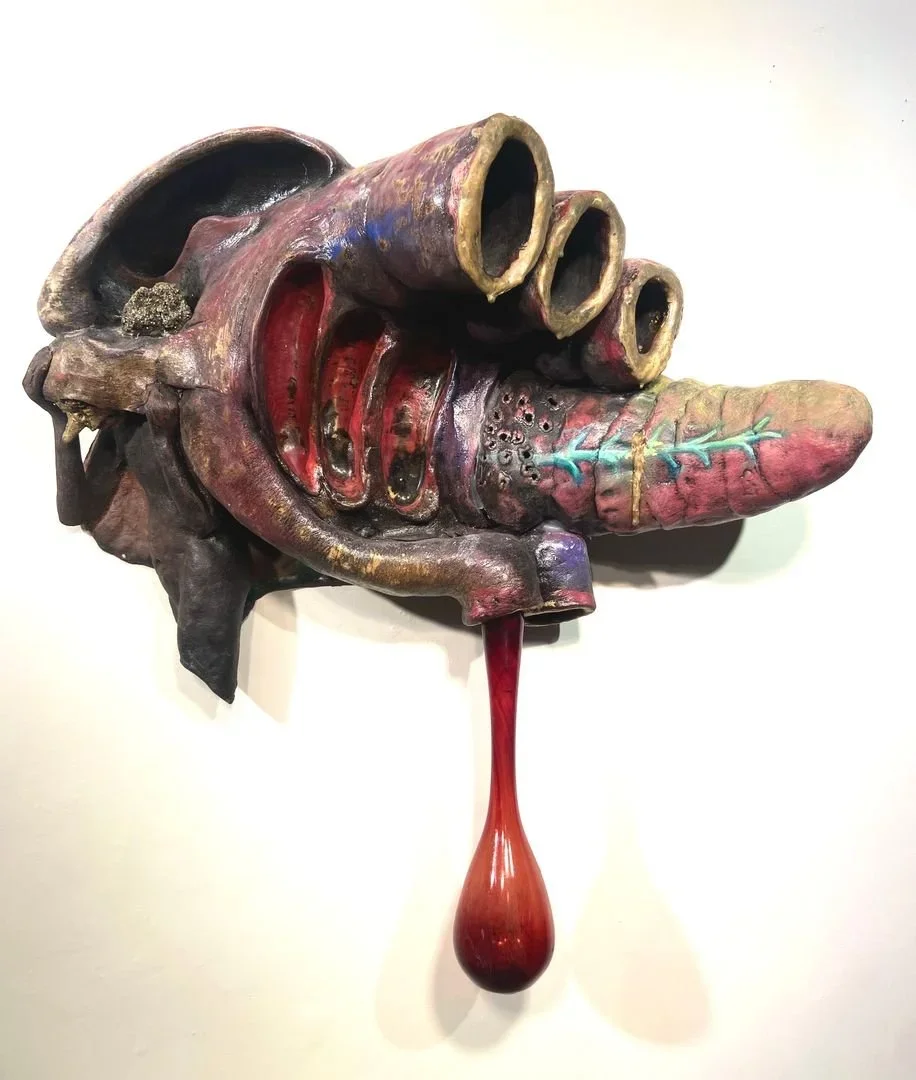
Arthur González is an internationally exhibiting artist whose career spans more than four decades and over fifty solo exhibitions, he is a four-time National Endowment for the Arts Fellow and a tenured professor at California College of the Arts. Emerging from the influential ceramics and figurative sculpture program at the University of California, Davis, where he studied under Robert Arneson and Manuel Neri, González developed a distinctive sculptural language that bridges clay, found materials, narrative, and psychological intensity. His work gained wider recognition through the early 1980s East Village art scene in New York and has since been exhibited at galleries including Phyllis Kind Gallery, John Elder Gallery, Susan Cummins Gallery, Robert Kidd Gallery, and Sharpe Gallery. González’s work is held in major permanent collections, including the Museum of Modern Ceramic Art in Gifu, Japan, the Smithsonian Archives of American Art, the Oakland Museum of California, and the Crocker Art Museum.
The following are excerpts from Arthur Gonzalez’s interview, as conducted by Hugh Leeman.
Rat Fink, Hot Rods, and Getting Struck by Lightning
Hugh Leeman: Arthur, for a guy who has shown his artwork in multiple museums and is a four-time recipient of the National Endowment for the Arts Fellowship, your earliest inspiration is quite unique — from custom art cars and hot rods to the Rat Fink. Tell me the story of how Robert Williams, Ed Roth, and Roth's idea of drawing monsters on T-shirts for friends inspired you as a kid in a way that would lead to this incredible career.
Arthur Gonzalez: When you're talking to an artist about their original inspiration, usually they'll say something more traditional — Francis Bacon or Salvador Dalí, the usual favorites. But if you go back further, in my case, my inspiration came well before I even knew I wanted to be an artist. I always liked to draw. I just didn't know that was something you could do for a living. And what we're about to talk about happened when I was about eleven years old — who thinks about their career at eleven?
One day I was riding my bicycle in the neighborhood and I came across a slot car — a little model car with actual machinery that you race around a track. I found it on the street. I think some kid had accidentally dropped it. It was a little hot rod with a bucket-T body, like the traditional hot rods of that era. And on the door of this little car was a decal — a little monstrous rat cartoon with "RF" on its shirt, which stood for Rat Fink, as I later found out.
When I first saw this little cartoon — it was literally about an inch by an inch — it was like getting struck by lightning. It completely hit me right between the eyes. I have no idea why it hit me so hard. But I just got so much juice from that. I hoarded that little car because of the decal.
Later on I subscribed to Hot Rod magazine and found in the back pages an ad for monster T-shirts — a cartoon of a monster driving a hot rod, tires smoking, just wreaking havoc. And that was Ed "Big Daddy" Roth. He was primarily a custom car designer who had reinvented the entire form — instead of customizing an existing car body, he would remove the body entirely, keep just the chassis and motor and tires, then build a completely new body from scratch using chicken wire, plaster, and fiberglass. You couldn't say "oh that used to be a Ford." It was just Ed Roth's car.
Then he became known for those monster cartoons — hot rods driven by monsters, just ripping down the road. He pretty much invented that whole genre back in the sixties. And one of the designers he hired to fill orders was Robert Williams.
Hugh Leeman: Robert Williams — just for context — of Juxtapoz magazine and lowbrow art?
Arthur Gonzalez: Yes. He would later go on his own and become his own person. He brought color and photorealism into it — like a photorealist application combined with abstract collage. And what I was actually responding to, I later realized, was the Robert Williams take on Ed Roth's ideas.
Hugh Leeman: So how does that start to come into your actual art practice? How does the eleven-year-old you go from being struck by lightning by a Rat Fink decal to taking pen to paper?
Arthur Gonzalez: This was pre-digital, of course. I ordered the catalog of all the designs — I think it cost six bucks. I saved up for it, maybe pocketed my lunch money, I don't know. I sent cash and then waited at the mailbox every day for three months before it arrived. When I got it, I basically carbon-copied all the images — traced them so I'd have duplicates in case the originals got lost. And then I just started practicing.
When you talk to artists about their first image, a lot of times it's a cartoon character. You learn to draw Popeye or the Flintstones. My old professor Wayne Thiebaud learned to draw Mickey Mouse and later worked for Walt Disney before becoming a professor. We all have that cartoon beginning. But to me at the time, that wasn't art — it was just cartooning, just something you could show off with.
The Trap of Photorealism
Hugh Leeman: When did it turn into art?
Arthur Gonzalez: When I got to community college. As a freshman I took painting, and in the seventies all my professors were photorealists — that was the California school of the time, corollary to Pop Art. Artists like Ralph Goings, Wayne Thiebaud. You took a photograph and painted it so well you thought it was a photograph.
Hugh Leeman: You once told me that painting from a photograph means you already know what the outcome is going to be if you're successful — and that that felt restrictive to you. That photorealism handcuffs experimentation. Where did that come from?
Arthur Gonzalez: In that realm, you choose a photograph and then you claim your subject matter — I'm the photorealist who does cars, I'm the one who does neon lights, that kind of thing. Because the technique is all the same, the only distinction is subject matter. By the time I got my bachelor's degree I was already tired of it. You already know what the outcome is. Between finding the photograph and the end result, it's just the journey of construction — like an architect who's been told the building has been approved and now just has to build it. You can't say, oh, I want an additional wing on it. You can't explore. You can't experiment. And that's not my personality. Even today I go into the studio and I'm talking to my work, going, okay, here we go.
Six Rejections and the Birth of Something New
Hugh Leeman: After your undergraduate studies, you apply to several graduate art school programs and every single one rejects you. But you go on to study under some of the most respected modern California artists — Robert Arneson, Manuel Neri, Wayne Thiebaud — and you even become an artist and teaching assistant. How does a string of rejections become that career?
Arthur Gonzalez: I actually wrote a book called The Art of Rejection, and this is where that idea begins. In my ambitious young life, I had a plan: by the time I reached twenty-one I would have my master's degree. Nose to the grindstone, don't waver, nobody's going to stop me.
When I applied to six graduate schools and got six rejections, it was the first time I'd experienced rejection, and it hit me very, very hard. I almost went into extreme depression. Six people I didn't know told me, no, you cannot continue with what you think your life should be. And that was the first time I'd ever felt that energy.
After I came through that, I had to get up and figure out what the next stage would be. And the difficult question was: what do I apply with? More of the same paintings I just got rejected for? That's just going to produce another round of rejections. I realized I had to do a self-evaluation: what is it about my painting that I don't like? Those paintings I submitted were photorealist paintings — and I realized that you can have straight A's as a bachelor's student and that doesn't mean you're good enough for graduate school. They don't look at your GPA; they look at the work. And if they see another photorealist painter, it's forget about it — you're just one of many.
So I had to get more loose. More experimental. And I was feeling that the square canvas was confining me. When I wanted to be more gestural and I came across the edge of the canvas, it was like a stop sign — a visceral rejection. I told my fellow students about this problem and kept getting, "Arthur, get over it. Paintings are rectangular." That's never a good answer. When somebody tells you to get over it, it doesn't answer the question. My wife continues to tell me that, and I still can't hear it.
So I thought: if the edge is the problem, I have to change the edge. I can make it my collaborator. I started doing paintings on cardboard where I'd rip the sheets and have a torn edge — wrong material, but the right track. And then one day I visited the ceramic department at California State University in Sacramento, just hanging out, watching people work in clay. And I thought: if I sling clay slabs and make an amorphous shape and fire it, I have a canvas that's not a rectangle. And I'll react to that shape. The edge is still there, but it's more obliging, more spontaneous.
I'd make a whole bunch of amorphous shaped slabs — like a crazy stack of pancakes — and fire them. I didn't get a lot of cooperation from people in ceramics. They'd say, what are you doing here? You're a painter. And when I brought pieces back to the painting department, they'd say, what are you doing over in ceramics? I was getting grief from both sides.
But here's the thing — the one voice that was louder than all of that was: what I was doing was exciting and I wanted to explore it. And then one time someone said, your pieces blew up — they're in the garbage. And I said, really, where? She was surprised I even wanted to look at broken shards. But I fished them out and from three pieces that had exploded, I pieced together a sculpture. And I had so much fun doing that — discovering my ability to go to Plan B.
Finding a Home in TB Nine
Hugh Leeman: All the while you're navigating this identity — am I a painter, am I a ceramicist, am I even going to be an artist? And there's a statement I came across where you said the history of art is the history of identity. Your work has moved through self-reflective phases, narrative-based work, cultural references, different series. How has your understanding of your own identity changed over the course of your career?
Arthur Gonzalez: It's about keeping your eyes open, looking behind at what you've done, and connecting the dots to create some kind of trajectory. The experimental nature is still important to me even today. Just this last week I did something in my studio that surprised me, and I have to think about what it means, whether it fits.
But experimentation isn't the whole thing. After graduate school I moved to New York and spent the entire eighties there, and that was the best education a person can have — three hundred galleries changing every three weeks, museums everywhere. No way to keep up. What an education just to see the trends and whether you fit in.
And I realized in all that time that I'm still, in my brain, a painter. I still think about composition. I made the wall the domain of my work — things in the round still have an interesting context in the way a painter thinks. The question became: as a sculptor, how do I speak in the language of a painter? Like Frank Stella — he went from minimalist abstraction with those flat stripes, just killing the picture plane, and then later exploded into these layered shaped canvases that essentially became three-dimensional paintings. That's a person who understood both languages.
Magic Realism and the Inexplicable
Hugh Leeman: There's a term you use to describe yourself — magic realist. I think of Gabriel García Márquez when I hear that. What does that term mean to you personally as it applies to your work?
Arthur Gonzalez: The most difficult part about that expression is the word "magic," because people's idea of magic is completely distorted. When you're reading One Hundred Years of Solitude — and I've read that book so many times I still have to refer to the front page to keep everybody's names straight — things are real, real, real, real, and then something inexplicable happens. You've just stepped a foot into non-reality, into the unable-to-be-understood.
The television program that embodies magic realism most perfectly is Northern Exposure. A New York doctor who made a deal with the state of Alaska to fund his medical degree now has to serve as a small-town doctor in Cicely, Alaska. He's a fish out of water. And by the third episode, things start turning weird. There's a magical essence that comes through. His secretary says she's falling in love with the flying man from a visiting circus. You never see him fly, but you always see him completely exhausted from having been flying all day. It's inexplicable, it's humorous — and that's magic realism.
How that applies to my work: I'm using realism in terms of how to visually express my ideas, but I don't feel tethered to making sense. When I'm making sense, I'm back to being a photorealist. When I'm fishing shards out of the garbage bin, I'm creating magic. I just completed a sculpture of a figure who is holding about fifteen hands in her arm — she's carrying a load of hands. That's not realism. It becomes symbolism. But everything else about her is very realistic, and you don't feel like, oh my God, she's holding severed hands — it has something more mythological to it. The piece is called The Myth of Touching. She's also standing in a pool of what looks like water — it's mirrored blue glass. There are cross symbols. If you follow the work you get more of the symbolism, but even without that knowledge, it should be interesting. Beyond reality.
Pinocchio, Clowns, and the Cadence of Stupidity
Hugh Leeman: You dedicated a great deal of your creativity to a Pinocchio series — not the Disney version, but the original book. You said at some point that this revealed, in retrospect, some of your own immature tendencies. What were those immature tendencies?
Arthur Gonzalez: Originally I was just exploring the parts of the face — making large noses, funny ears, playing with those elements, bulbous noses. People would say, oh, you're making clowns. And I'd say, no, I'm not quite making clowns. But then I realized — they are clowns. And that became interesting subject matter.
Then people started saying, oh, you're making Pinocchios. And I'd say no. But then it seemed like denial. Of course you're making Pinocchios. So I investigated the story and found out Pinocchio is not Walt Disney. The original story is extremely dark — almost gratuitously so. There's violence, there's some underplayed sexuality. In one chapter, Pinocchio has to warm his feet by the fire, but because he's made of wood, his feet catch fire and burn off. In another, he's hung from a tree by the neck and nearly dies — and he can be hanged because he's sentient enough to breathe oxygen, which means he can also be choked. He has terrible luck and he never learns from his mistakes.
And the series I created commenting on that was called Cadence of Stupidity. Because it's not just Pinocchio — it's a reflection of my own behavior. I can remember the last time I did something really dumb. It wasn't that long ago. A simple example: I'll put eggs in the cart at the grocery store and then put a gallon of milk on top of them. And in my mind I'm thinking, I wonder if that's going to break the eggs. Of course I break the eggs. The cadence is like a drumbeat — boom, boom, boom. That's my stupidity. A steady rhythm. And I'm not afraid to talk about those things because they're human. Just like writing a book about rejection — people say, it's amazing that you talk about rejection instead of projecting success. But we're all vulnerable.
Four Fellowships and the Art of Applying
Hugh Leeman: There's a point in your life where you become very self-driven, almost obsessive, about applying for grants and fellowships. And this leads to an unprecedented four National Endowment for the Arts Fellowships. After all these rejections early on, what happened psychologically that shifted you from being a kid devastated by rejection to someone who just keeps seeking it out?
Arthur Gonzalez: I'm not seeking out rejection. But I know it exists, and I'm completely calloused to it. It's not an open wound anymore. It's calloused fingers — used to it. So I'm able to surf the rejection, understanding that it's going to happen. And if I'm doing it correctly, I'll get a number of rejections, and within those you eventually hit the acceptances.
The four-time recipient thing — I got three rejections before I got the first yes. A lot of times people ask, how did you get all those awards? I say, I applied. They say, well, I applied. I say, how many times? They say, once. I say, no wonder. You have to play to win.
And there's a certain savviness to cutting down the rejections — understanding who's on the jury, whether it's a rotating jury, whether there's someone on that jury who would be sympathetic to your kind of work. If I'm applying to something with a ceramic base and there's nothing but potters looking for more potters, I'm not going to waste my time. You have to read the room.
The Closing of CCA and the Future of Art Education
Hugh Leeman: You've worked for years at CCA, and it's soon going to close — after more than a century as a foundation for West Coast creativity. What are your thoughts on the future of the arts in the Bay Area without these schools?
Arthur Gonzalez: It's just another thing we're losing in the Bay area. And you know, there's this question being posed now that was never asked before: do you really need an art degree? That question has never been out there. The answer has always been yes — especially if you want to teach. They're not going to let you teach graduate school without a graduate degree.
But do you need a degree to be an artist? No. You don't. However — a graduate degree isn't just three letters at the end of your name. It's about what happens while you're there. The people you speak to. The connections you make because people come to your studio. When I was a graduate student I had a lot of people coming through. And after I graduated and moved to New York, I knew visiting artists from Davis who lived there, and they helped me. One was Ellen Lanyon — she became my mentor for the rest of her life. My Yoda. Whenever I had a question about a gallery interested in my work, she'd say, make sure you do this, don't do that. That wouldn't have happened without graduate school.
But the moment you pose the question — is art education necessary? — that's enough for a parent to say to their kid, let's rethink sixty thousand dollars a year. That question alone does damage.
And the effect on the Bay Area is serious. The gallery system here has never been truly robust — at its best it was decent and functional, back when Bob Arneson and Wayne Thiebaud were here and the art world claimed them as superstars. That was a long time ago. Now there are just a handful of galleries. With every art school that closes, artists here feel one step closer to being on an island — less aesthetic attention, less infrastructure. And every artist who leaves for Los Angeles dilutes what's left of the scene here.
A New Chapter: Push-Ups and Hustling
Hugh Leeman: At a personal level, you're going to be entering a new chapter without the teaching position that's been central to your life. How does that affect you and the other teachers who have dedicated so much of themselves to sharing their passion for art?
Arthur Gonzalez: You have to look at each individual. For me — and another person in my situation would just say, retire, you're in your seventies, you've put in thirty-five years — I guess I could retire. But I'm not going to. I can do workshops, I can stay connected to young people, I love teaching and I'm going to keep my options open. I'm going to hustle more — for workshops, for galleries. I find myself in a genuinely good situation in terms of what my next chapter is, even if I'm not quite sure what it looks like. It's a new stage of rejection and acceptance, and I know what that is. I'm the practitioner. I know how to do this. Now I just have to start doing my push-ups.
Hugh Leeman: At the top of your website, you ask, how many chapters do you think it would take to tell your story? If we change the potential answer from a number of chapters to the heart of the chapter you're in right now — what do you want to pass on?
Arthur Gonzalez: I think the lessons I learned in graduate school that pushed me toward everything I've accomplished — those same lessons are still not part of the vernacular. People are still asking the same questions. Like, why do you use mixed media? Why don't you just commit to one material? It's like I have my finger in the dike and it's never self-healing.
So what do I still believe in? The biggest thing right now is meaning. What does your work mean? What do you want someone to think about when they look at it? A lot of people don't entertain that question when they make work. They make things with a certain look to it and when you ask what it means, there's no depth to the answer. It's the same thing as the photorealist who says, I want them to admire my technique and know me as the guy who paints cars. That's two sentences and then it stops. Or the abstract artist who says, I'm the drip guy — my sculptures are always clustered drips. What differentiates one from the next? There's no added idea. It's the same stoppage.
I can't be that kind of artist. I have to ask myself, what am I making and why? What's different about this piece from any other Arthur Gonzalez? My studio is full. I don't need to make another one unless it has a new angle, somewhere I'm exploring. Where's the discovery? How can I discover something if I don't open my mind to the idea of discovery?
Hugh Leeman: I like that — it goes from the Rat Fink to opening your mind to discovery, over the course of a career, four National Endowment for the Arts Fellowships, and museums. Arthur Gonzalez, thank you so much for sharing.
Arthur Gonzalez: Your welcome.
