
Rhapsody: Works from the Cooper Rosenwasser Collection, Berkeley Art Museum and Pacific Film Archive
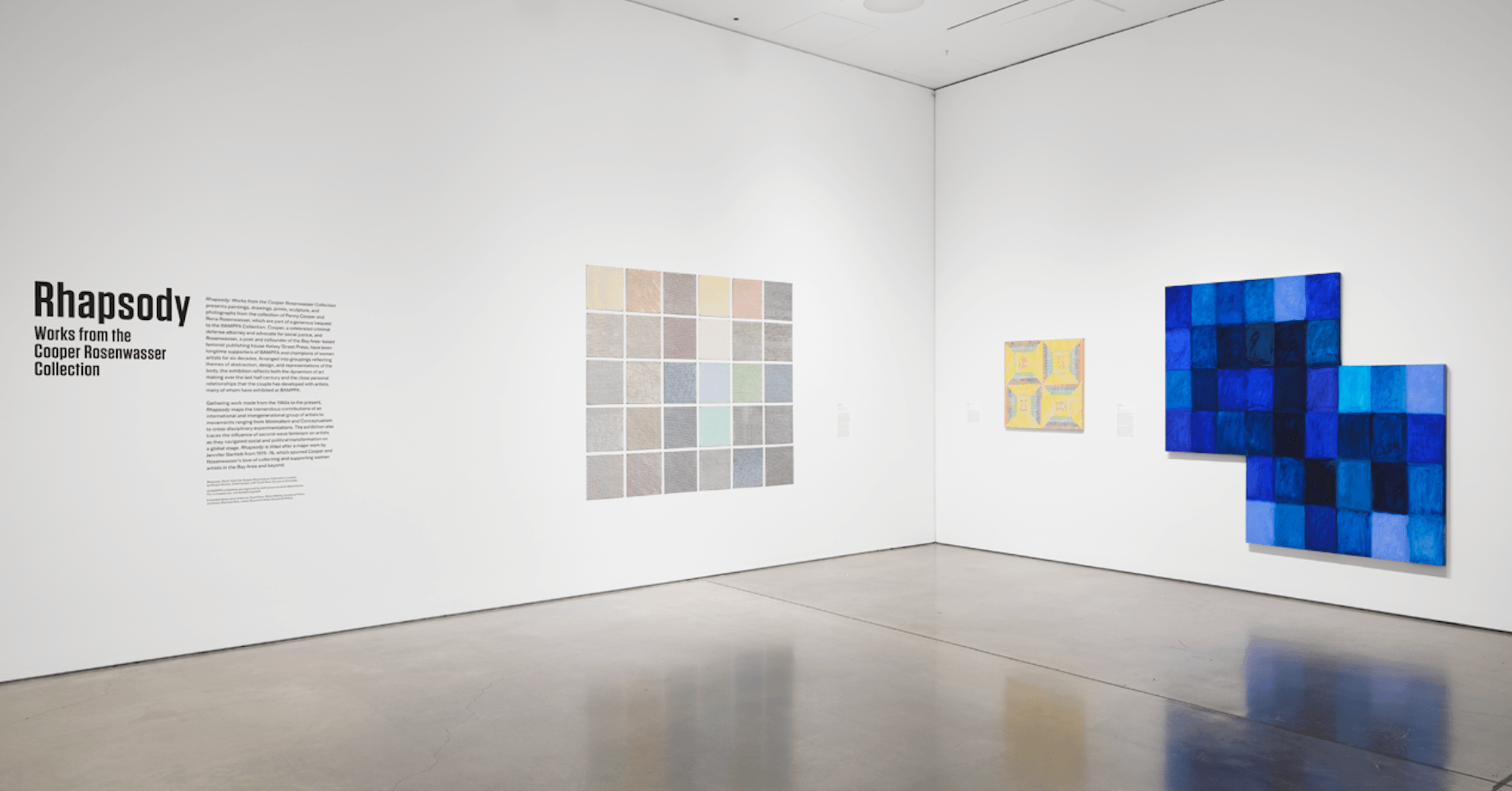
Installation View Courtesy of Berkeley Art Museum and Pacific Film Archive. Photo by Chris Grunder
Marking Space – Marking Time
By Jan Wurm
The impulse to collect is a deeply rooted drive. What propels someone to collect Meissen porcelain or Tiffany lamps or cookie jars (as did Warhol who collected nearly everything), may not be easily or succinctly explained. Attraction is highly individual, personal — yet holds a terrific charge. It excites, stimulates associations, and can satisfy with an intensity of a hunter capturing their prey.
Collecting art can also be spurred by different motivations: it can reflect an historical curiosity, a cultural commitment, a social posture, or simply a decorative need common to man, octopus and magpie. Sometimes it just evolves as any compulsion – one cannot have just one. It becomes a divine addiction.
Viewing the collection of Penny Cooper and Rena Rosenwasser, a lawyer and a publisher of poetry, multiple motivations appear possible from the aesthetic to the political. Looking closely, there are many delights. There are objects crafted and images constructed. And, there are many questions to ponder.
It is intriguing to observe the balanced duality of the works brought together over a fifty year span. Half of the collection has the eye moving and counting and measuring. These are abstractions that seduce with color, and conceptual works that manage to hold tight to the power of color and the rigor of structure.
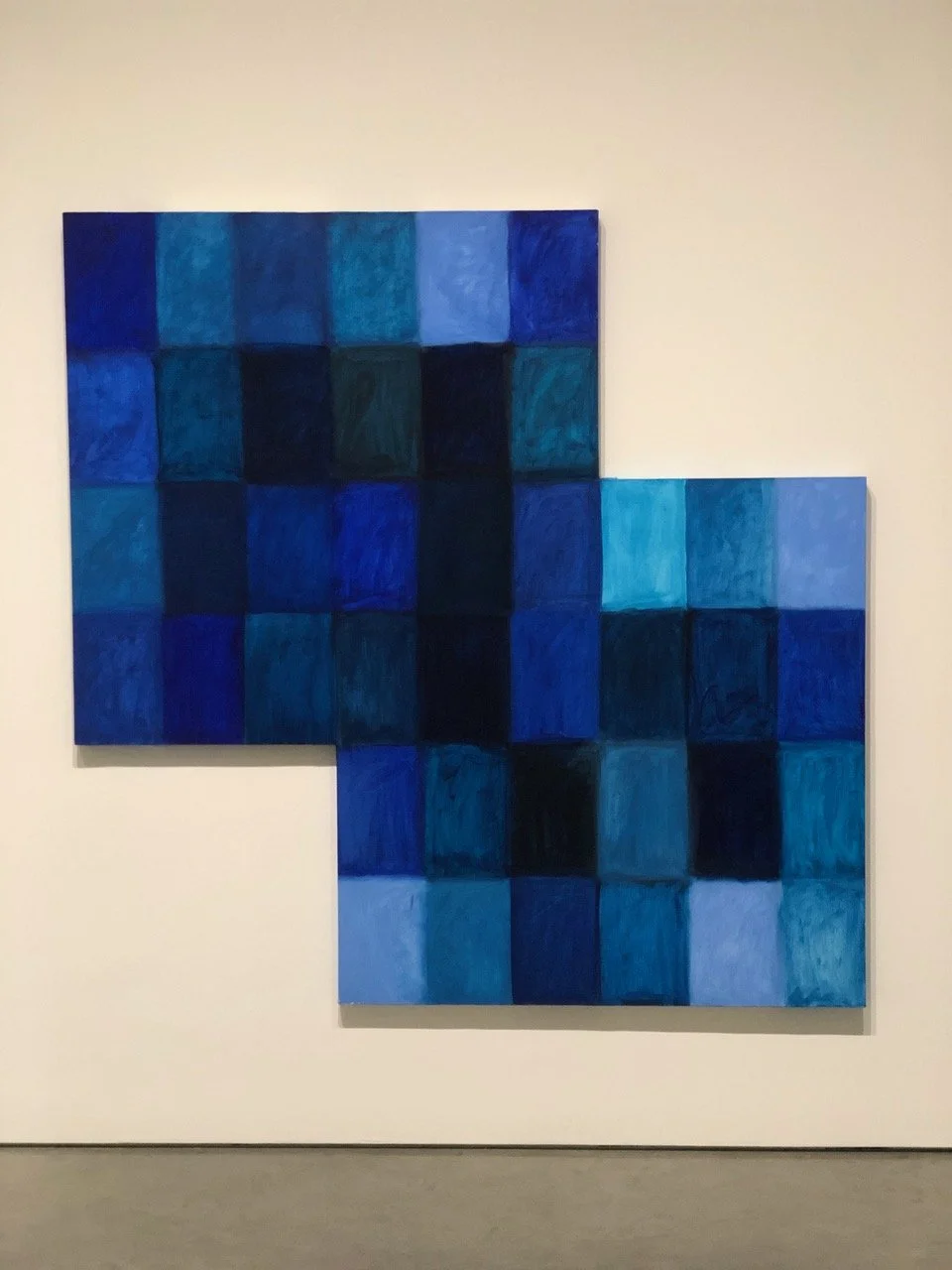
Mary Heilmann Sultana (1993)
The glistening of blue, endless blue, is riveting. Mary Heilmann’s Sultana (1993) rises up from the wall and fills the air. All else dissolves but the interlocking canvases of layered blue rectangles. This is color that is lush while still respecting form, weaving in and out, back and forth until ultimately settling, resting, rectangle formed within rectangle.
An intimate dialogue with geometry extends beyond the grid to anchor sculpture to the wall in Eve (2013). Delcy Morelos hangs the two elements – close, in alignment, in sync as they dance together – forms just slightly angled so that the space between keeps them forever striving. The exacting measure creates the narrowest of the almost-possible. Matched in their deep brick color, their matte surface, crusted yet powdery texture, and punched patterned piercings –still they remain two, separate and distinct, the one always slightly beyond reach.
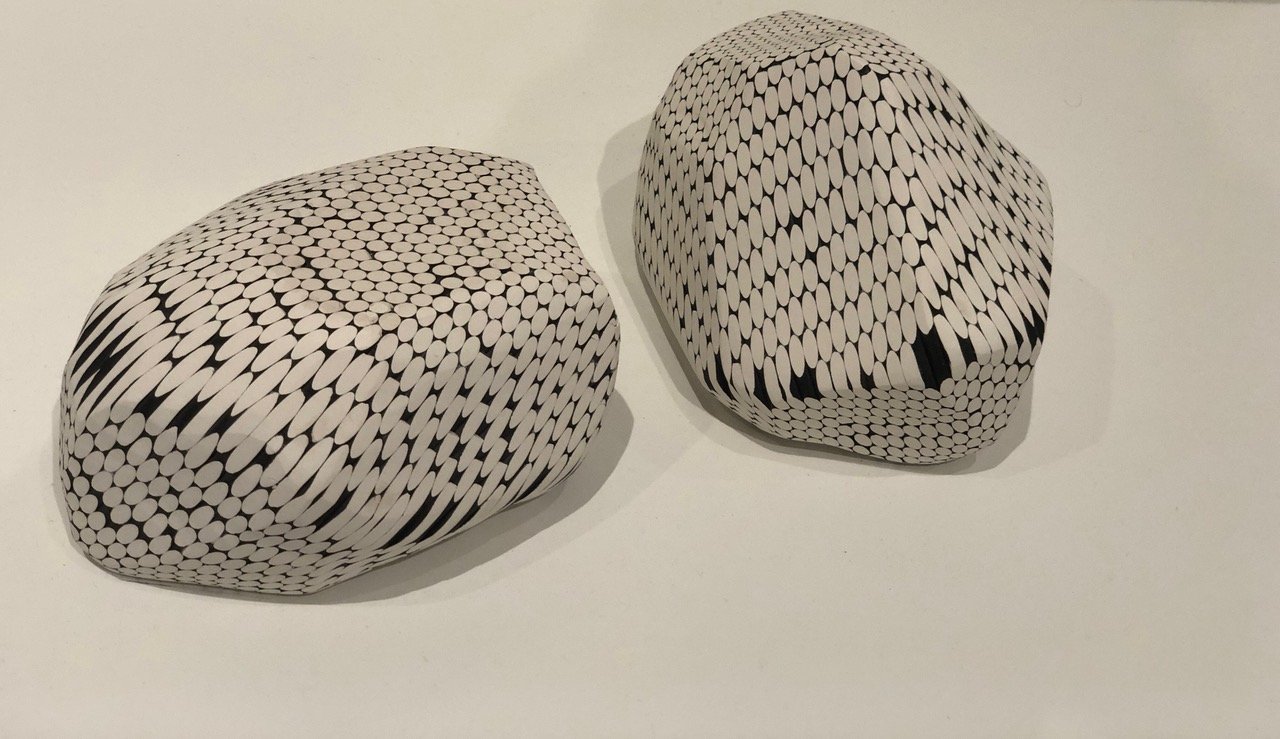
Gay Outlaw Black Chalk Rocks (2000)
In this realm of dialogue, of pairs, Black Chalk Rocks (2000) sets the two irregular shapes side by side. This Gay Outlaw sculpture sits on the floor yet defies gravity as the painted pattern pops off the smooth, rounded surfaces. Black and white, the all over demarcations of circles stretching to ellipse to lozenge, round the curves. The markings reach out to echo, ready to march off and cover the world in wormholes.
There follows entry into a second sphere — a sphere that demands a reckoning: relationship to the body, the skin, the internal. To view this work is to open to one's own experiences, to childhood and childbirth, to discovery and identity, to pain and mortality.
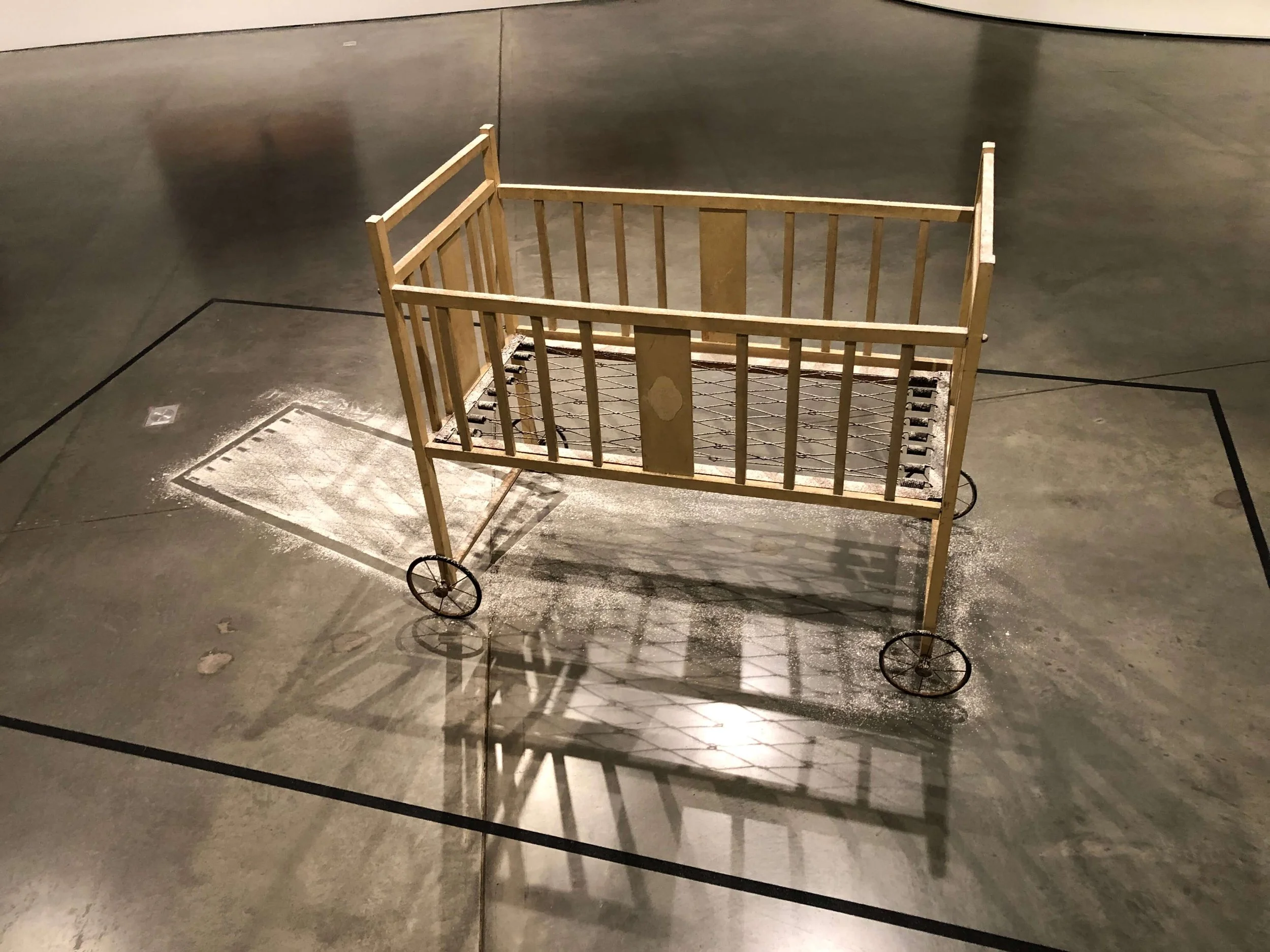
Mona Hatoum First Step (1996)
An empty crib stands cold on the concrete floor. The spotlight bears down on the emptiness of loss: no blanket, no sheet, no mattress, no baby. Powdered sugar draws the negative space of a shadow of the crib, a third reverberation of loss is overlayed by the true shadow of the crib under the spot lighting. In First Step (1996), with the quietest gesture, Mona Hatoum points with the only decoration, decals of the Pied Piper of Hamlin, memorialization or cautionary tale. The fading decal harkens to the lost children of Hamlin, led off by the figure who was to save the village of rats, at an unbearable price – the children. Silent, the work evokes an everlasting haunting.
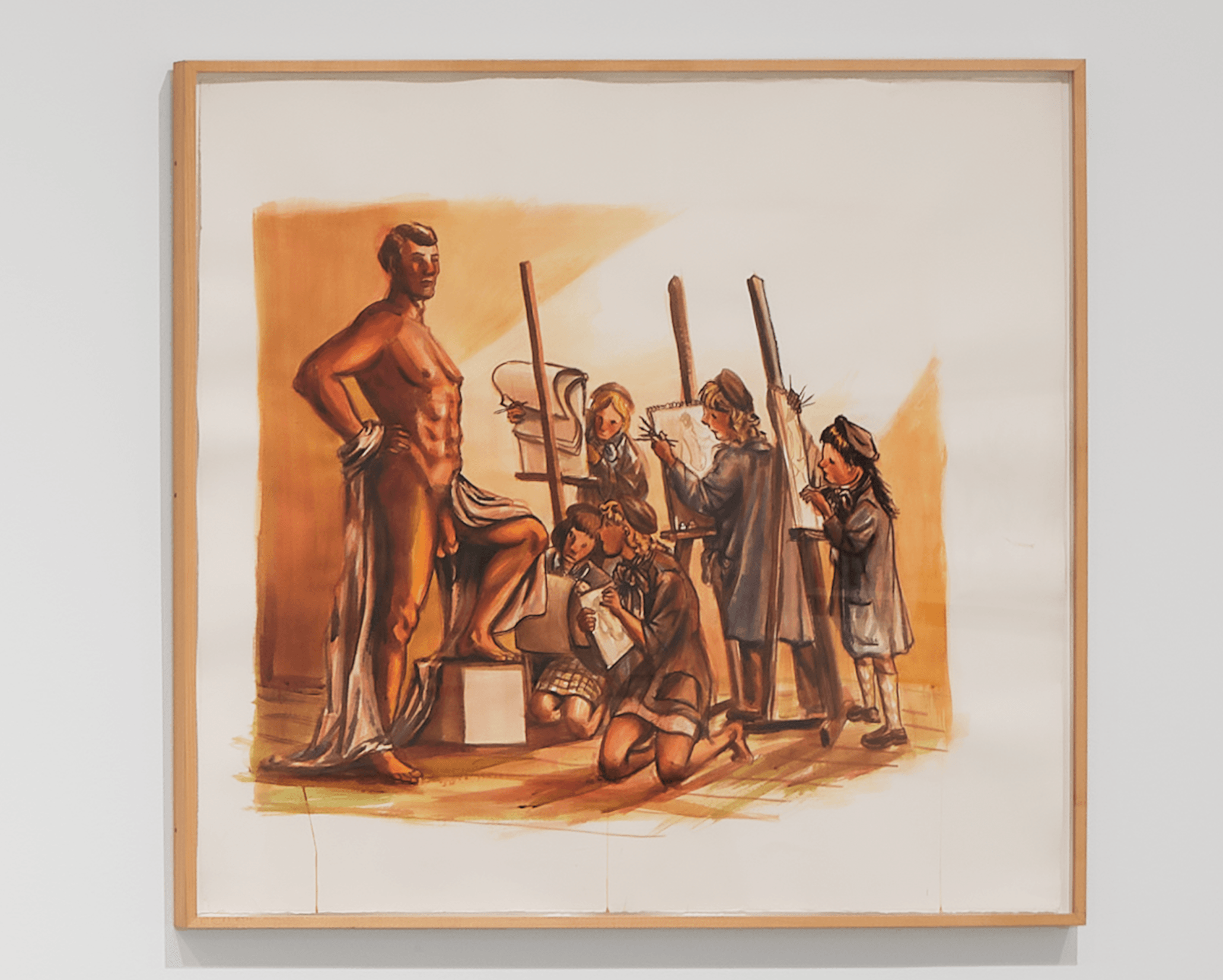
Nicole Eisenman Untitled (Live Model Drawing Class) (1994)
There is a crack for a moment of bemusement with Nicole Eisenman’s 1994 Untitled (Live Model Drawing Class) of a figure drawing lesson. With a smooth cartoonist’s line rendering little girls enthralled by the exposure of a male model’s genitalia, the scene lampoons the notion that female art students needed to be excluded from the life drawing studio, a notion of protectionism that justified exclusion and censorship in art, literature, and theatre just as in business, politics, and public life through the centuries.
In reading a book authored by two individuals, there is the wonder of how two voices were merged, how two viewpoints coalesced, how two judgments were reconciled to form one fluid narrative. The collection of art may be an aggregation of many objects, still, when built by two collectors it raises questions of common interest, response, even “taste." Some collections are assembled by or with a consultant, gallerist, or critic— with their eye pre-selecting, their hand weighing heavily on the acquisition scale. This collection bears none of the homogeneity of an externally directed assembly. It does bear the imprint of passion and driven commitment, not just in supporting the work of women artists, but in supporting values of personal expression and humanism.
Neither just pattern nor minimalist nor conceptual nor feminist nor ethnic nor surreal, these works manage to hang in concert so that they bridge the divisions and encompass the spaces between.
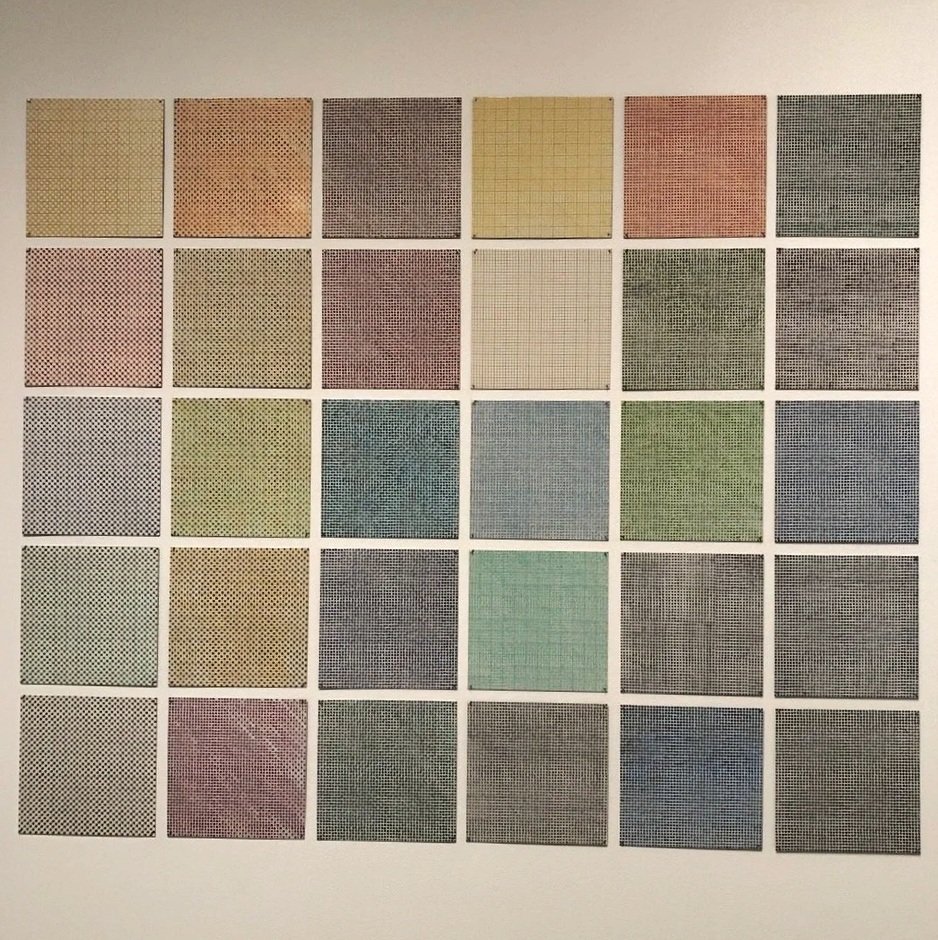
Jennifer Bartlett Binary Combinations (1971)
Jennifer Bartlett’s Binary Combinations (1971) takes the grid and the dot to not only create pattern, but to set up a vibrating color scape that oscillates between low single hue and high-pitch multi-color pulses.
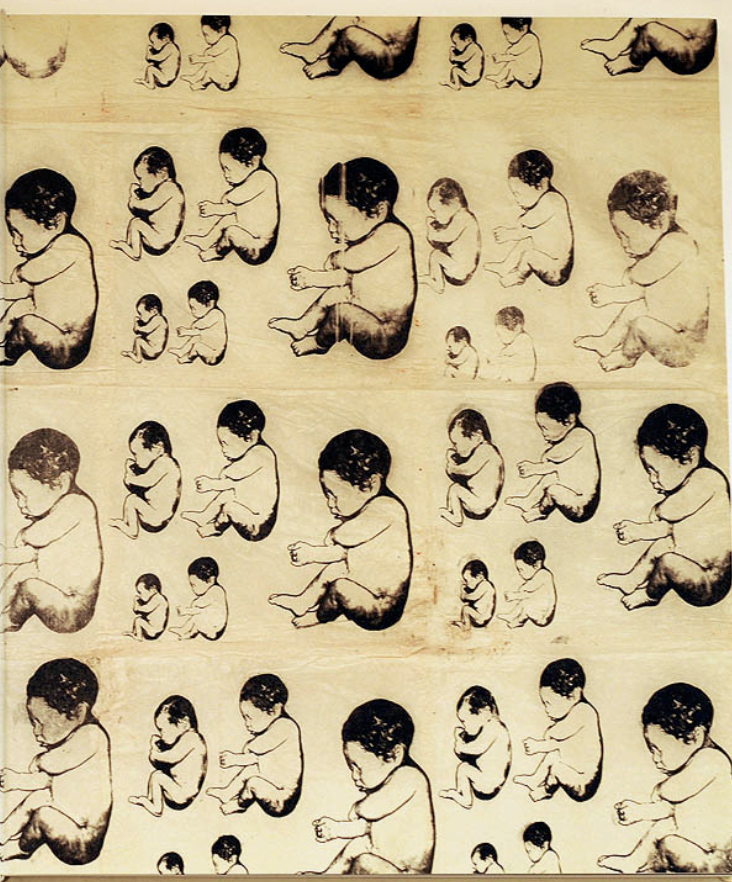
Kiki Smith All Souls (1988)
Kiki Smith takes the formalism of the grid and operates with repetition of a monochromatic graphic rendering of babies that sets up all the distress of fragile vulnerability and potential loss. All Souls (1988), with each iteration of the babies, holds less firmly –a repetition, a prayer, meant to console but which itself overwhelms, echoing pain, verging on dissolution. It becomes a memorial to mirror infinite loss.

Baby with Placenta (1987)
These works of Smith climb the wall, unfurl from the wall, or cling to the wall. In Baby with Placenta (1987) the messiness of life –the bloodiness and precariousness of childbirth –pounds with a quickening heartbeat, then shrivels with a death knell.This dangling darkness holds all fears: miscarriage, stillbirth, any and all tragedy that might be delivered.

Here I Saw What Happened and I Cried (1996)
Carrie Mae Weems levels her camera at film and focuses on ethnography as she critically appropriates images from National Geographic. With From Here I Saw What Happened and I Cried (1996), the boldly asserted profiles bracket histories of enslavement and racism from Africa to the United States.
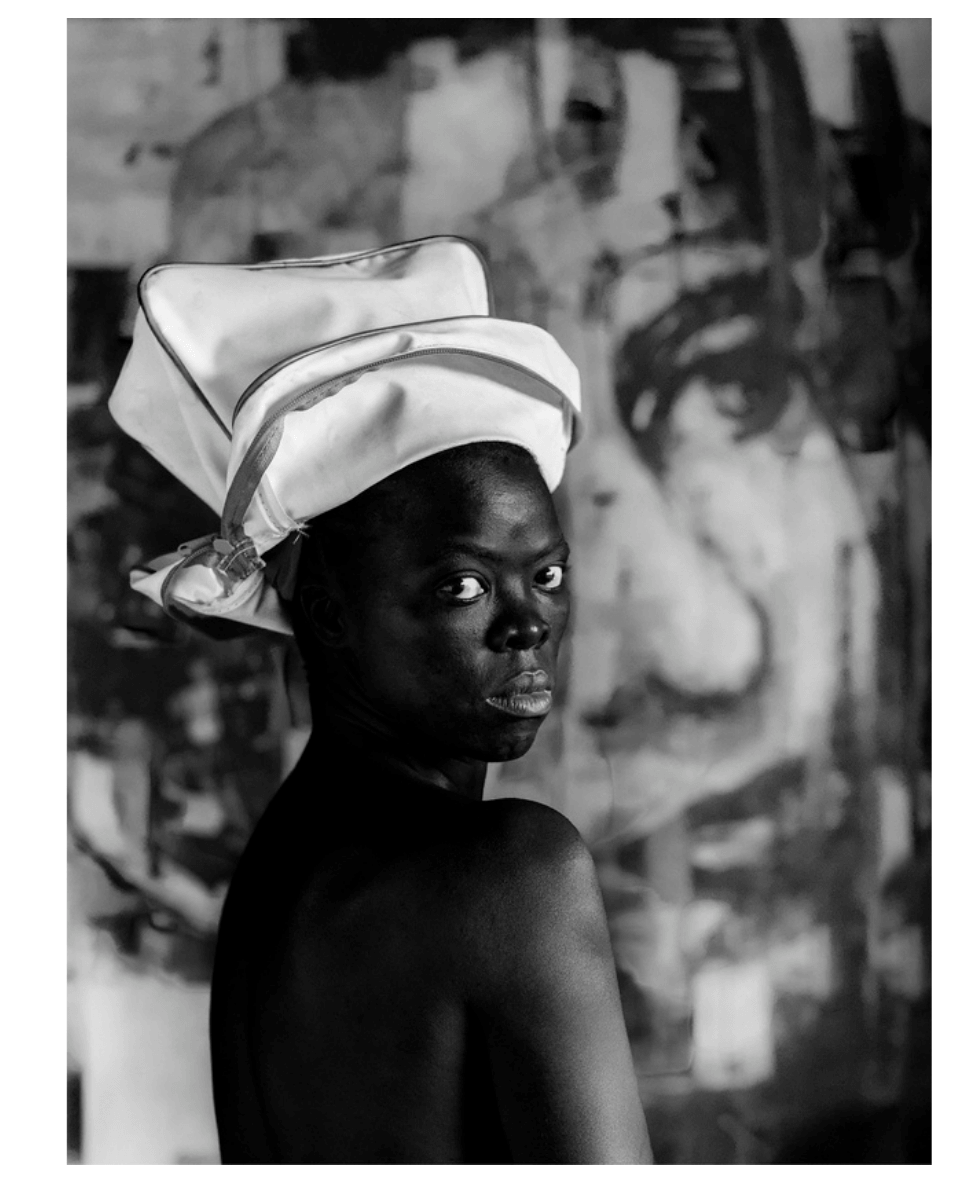

(L) Zanele Muholi Babhekile II, Oslo, 2015 (R) Catherine Opie Self Portrait Pervert 1994
These artworks are direct, unflinching in confronting the difficult. The photographs of Zanele Muholi glisten yet burst with pain. Catherine Opie’s body bleeds. These artists’ portraits spare nothing in their unqualified honesty. It is at the edge of despair, disaster, urgency that this art is declarative of injustice.
This is art that exhibits both beauty and power, and an intensity rarely seen in a private contemporary collection. The very acquisition and support of these voices represent a deliberate and brave commitment. This is a fearless personal investment in raw and often brutal history finding form in an uncomfortably truthful cultural expression. To have so many of these extraordinary artworks gifted to the Berkeley Art Museum brings a depth and strength to BAMPFA enriching the museum, students, and the community in profound ways.
Rhapsody: Works from the Cooper Rosenwasser Collection
Berkeley Art Museum and Pacific Film Archive
Through June 28, 2026
