

Jacobo Roa, Brilliant Coalescence and Many Ports, Angela King Gallery
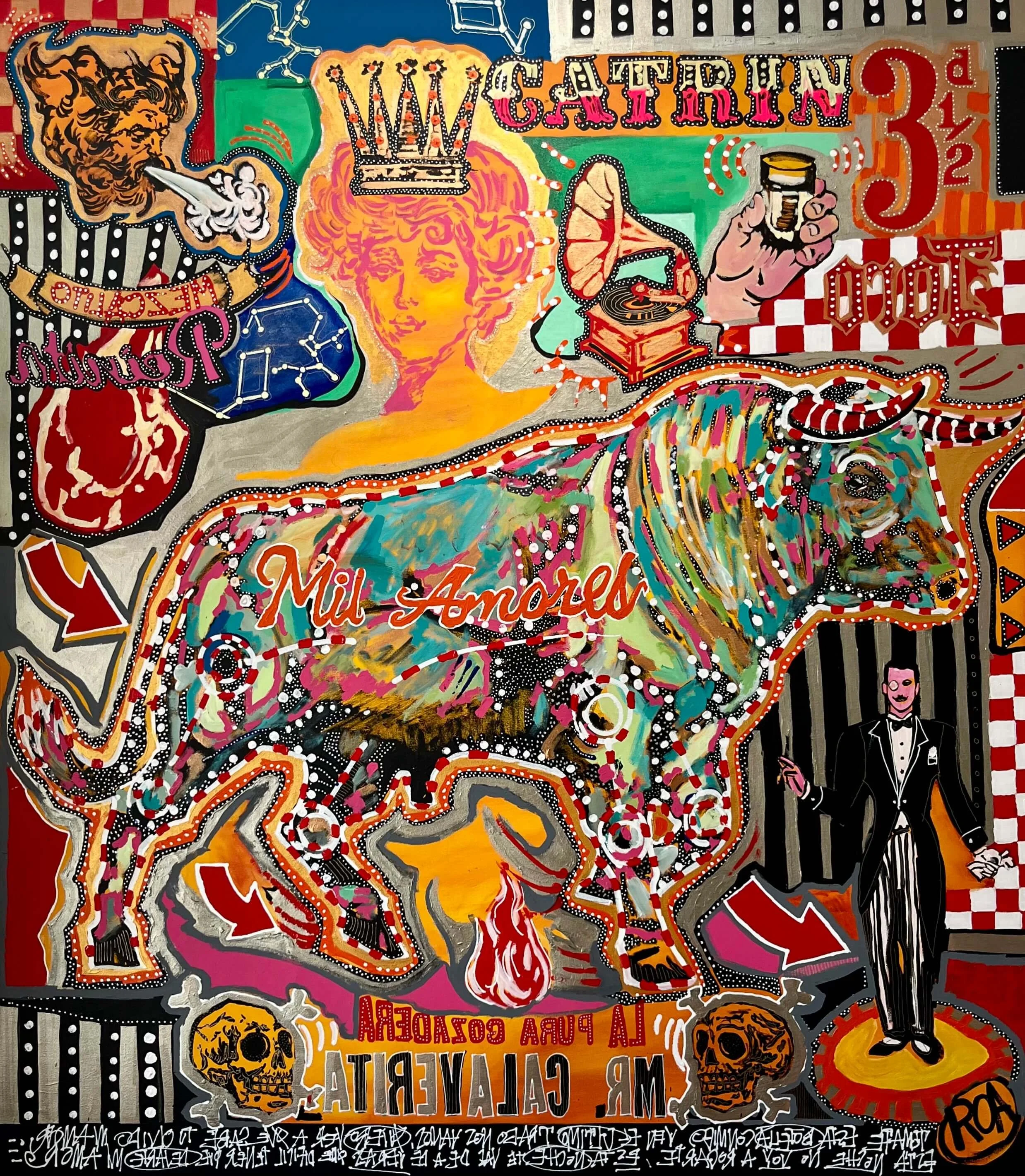
Jacobo Roa’s ’Toro (Mil Amores)
This review is part of our “Artist on Artist” series.
Don Paul is an artist and author living in New Orleans.
By Don Paul
Jacobo Roa favors Ports as places to live. Ports are places that themselves LIVE.
Ports such as Progreso on the north coast of Mexico’s Yucatan Peninsula.
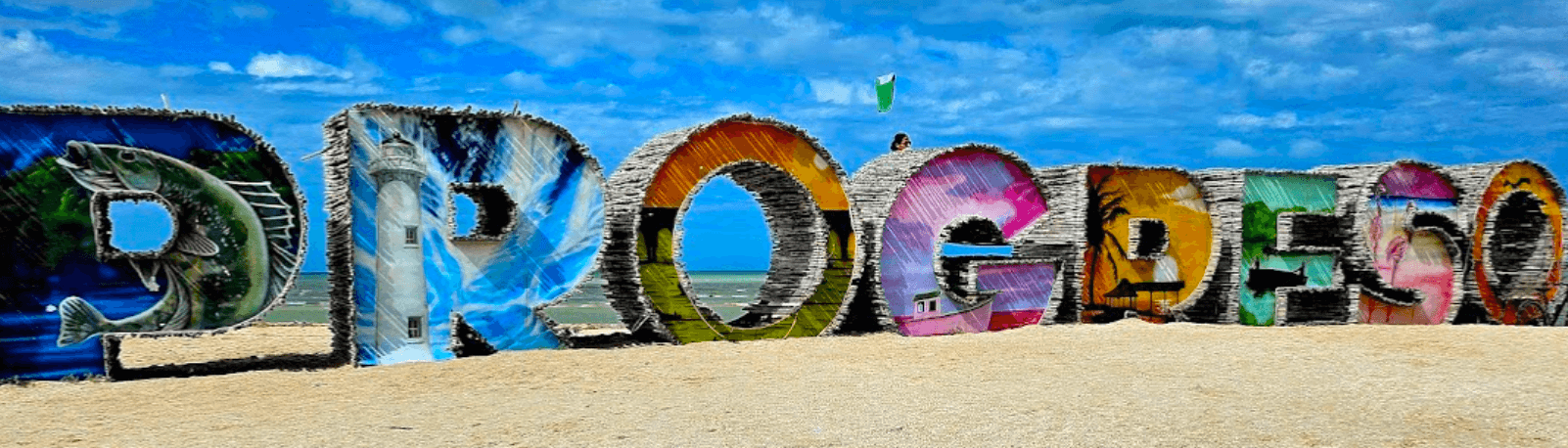
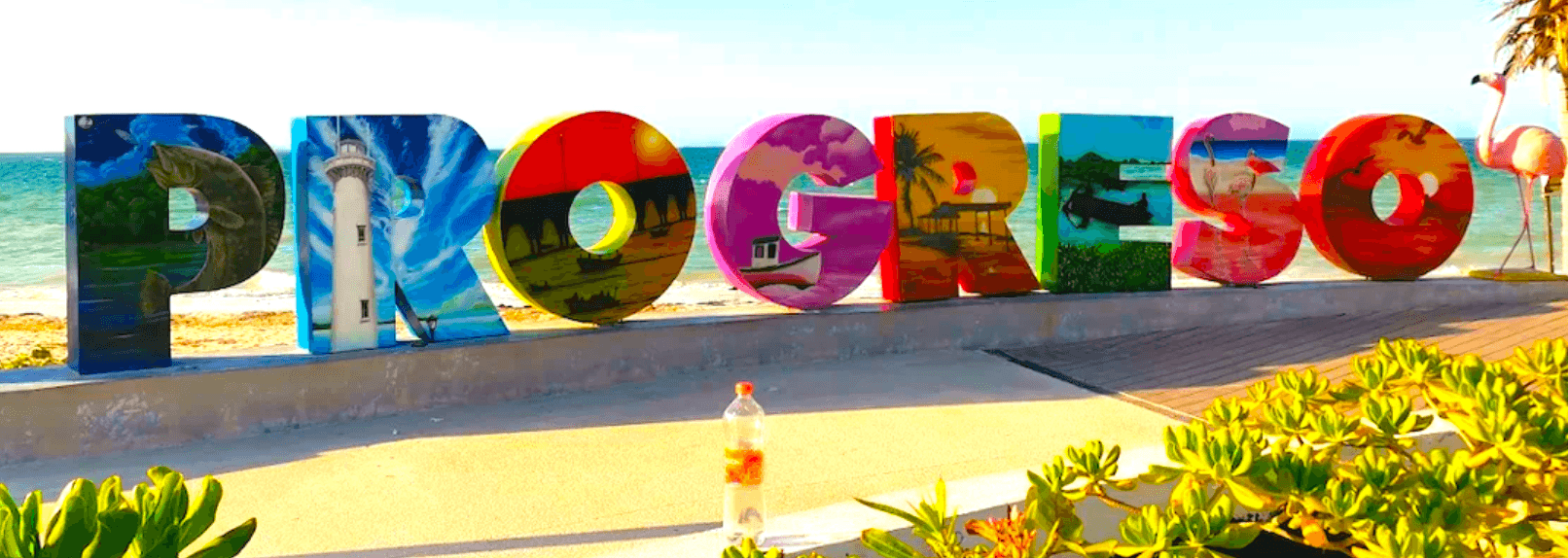
Port of Progresso signs
Or a Port such as Playa del Carmen on the Yucatan’s south coast, opposite Cozumel. Or the Port of New Orleans, Louisiana.
Ports invite colors. Ports’ sources are multiplous. Ports combine diverse elements. Ports’ tableaus are like a Midway and like Carnivals, changing by the Day, by the Hour and even by the Minute.
Ports are like the varieties of Mexico that Jacobo Roa got to know as a child and teen-ager who accompanied his father, from the Geologic Institute of Mexico City, in lengthy explorations . Jacobo’s father relished company, cuisine and cultures of Mexico’s deeply different indigena. These same years of childhood and adolesence, Jacobo’s mother fed him the latter 20th-century literature of Latin America that’s called ‘Magical Realism’.
Jacobo knew early on that marvels such as the “Ice!” appearing in Gabriel Garcia Marquez’s tropical town of Macondo fit “just right” with feats of Pro Wrestlers / Movie Stars such as Mexico’s El Santo and the Blue Demon. They were fantastical phenomena. They each and all figured in a great and deep Show!
Jacobo Roa was born left-handed. He had dyslexia. It was natural for him to write words “backward”—his writing could be read in mirrors. He bridged every day to dream-worlds—worlds of Mexico that were depicted three decades later in Pixar Studio’s “Coco” and Alfonso Cuaron’s “Roma”.
He became a Painter as Calling and Vocation. He went to live in Estados that would expand him. Guanajuato, northwest of Mexico City and also over one mile high, with its old-money Pinks and Cerulean Blues, attracted him. He studied Surrealists there.
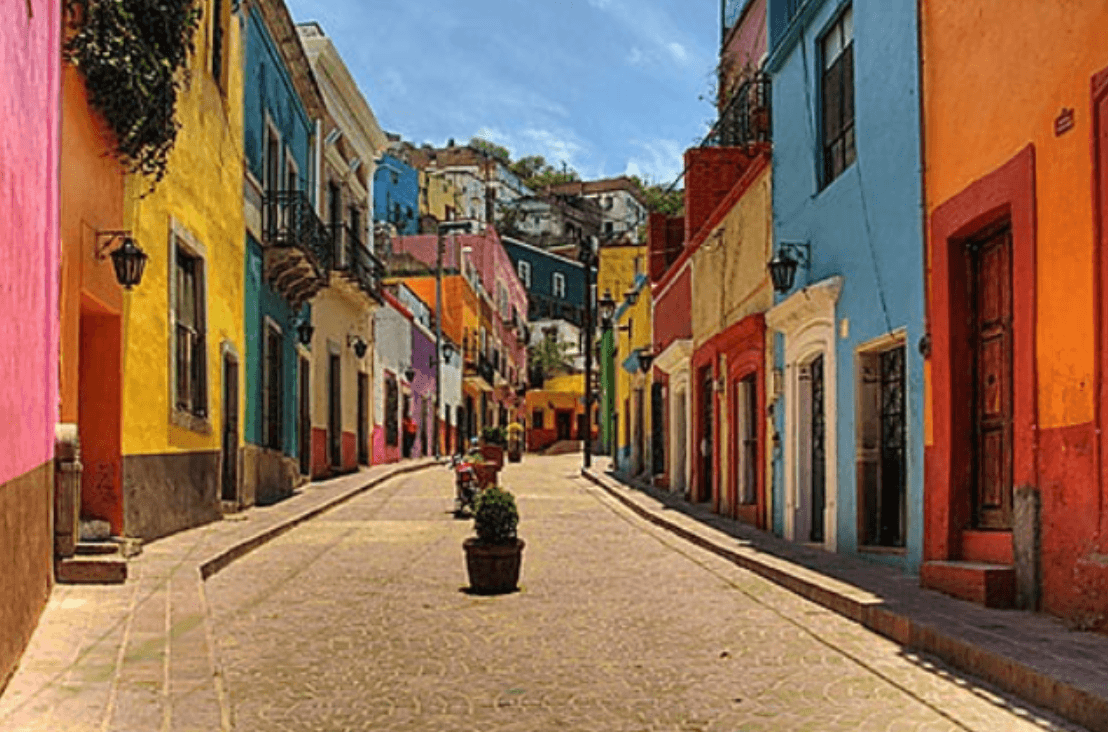
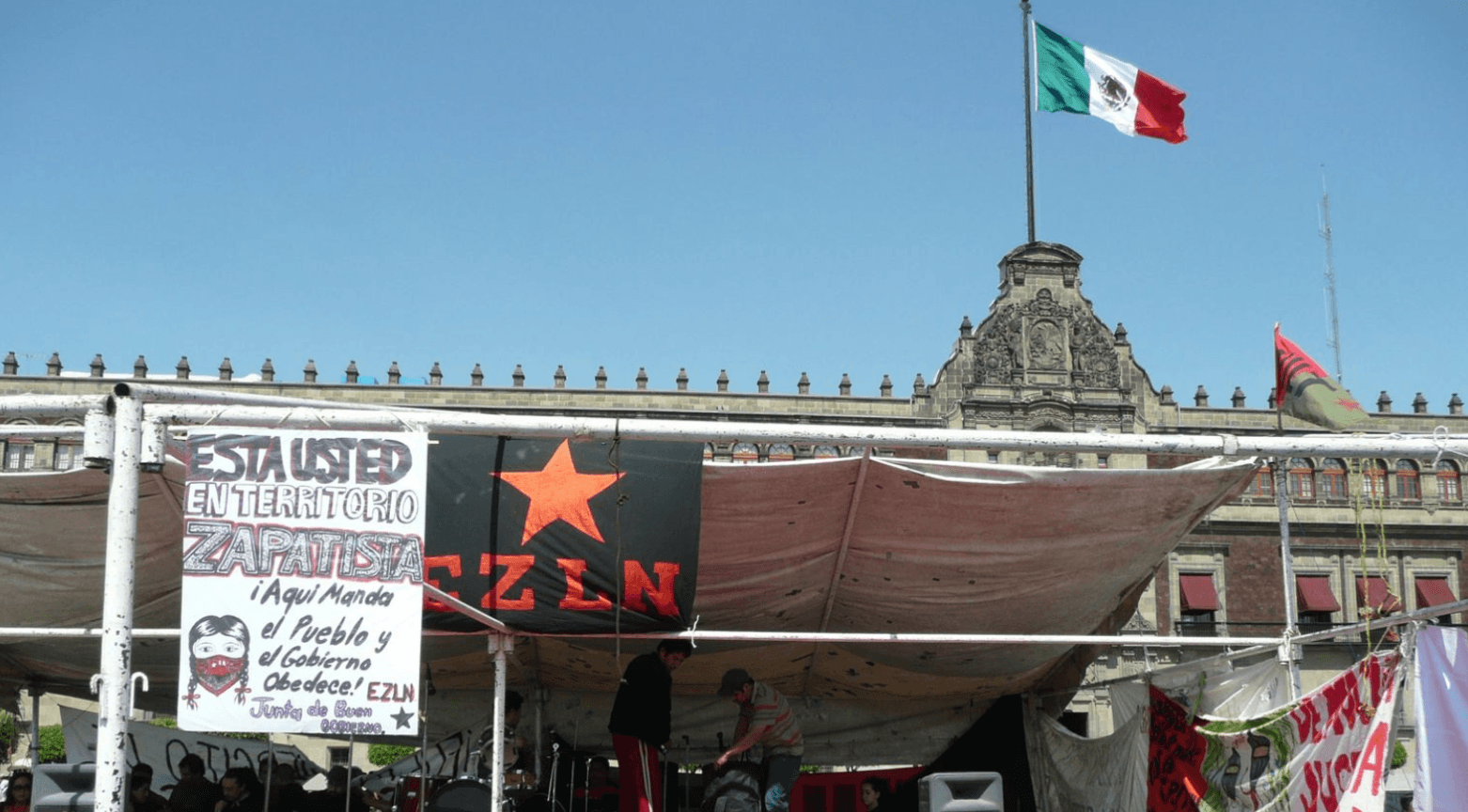
Next, Cozumel, a Beach, in 1993, and tutelage from Galo Ramirez there. Then Chiapas, San Cristobal de las Casas, 1997, when Zapatismo still marched across Mexico.
Next, into the 21st century, Oaxaca, its Rufino Tamayo Art Institute, and studying under Juan Alcazar.
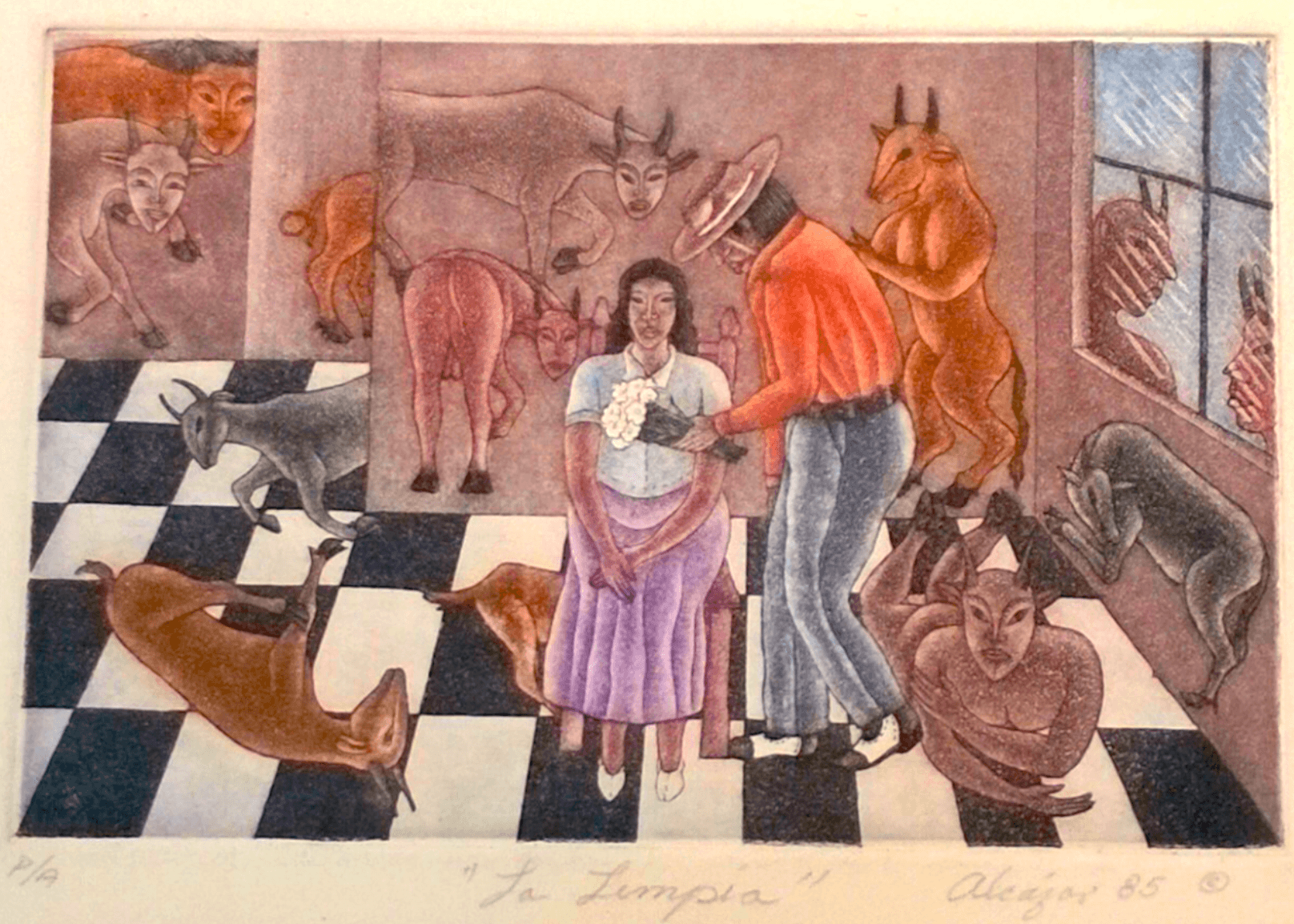
La Limpia by Juan Alcazar.
From his first exhibition, turn-of-the-century, Jacobo Ro presented multiple Objects, Aspects, and Windows on a bed of many colors. canvas. He was and is crazy about Mexico. Mexico, modern and ancient, remains his galvanic inspiration. His affections and implicit critiques are like mechanical and animal Cornucopias—Shops’ and Bars’ lighting—they too Day and Night—over two decades.
The past few years have brought understandings and fruitions for Jacobo Roa. His latest Show at the Angela King Gallery in New Orleans’ French Quarter reveals a mastery growing mid-career, this third decade of our 21st century.
Two paintings that are alike in their thematic compositions, but that differ dramatically, ‘El Bici Chango’ (The Monkey Bike) and ‘Bici Loro Skull’ (Skull Parrot Bike), display Roa’s gains in aesthetics and affects.
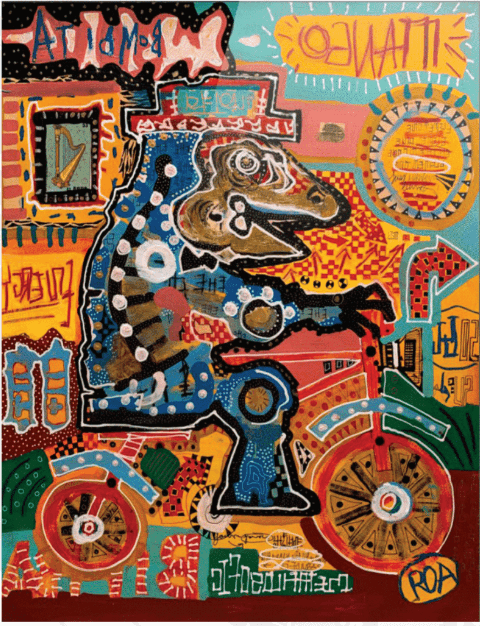
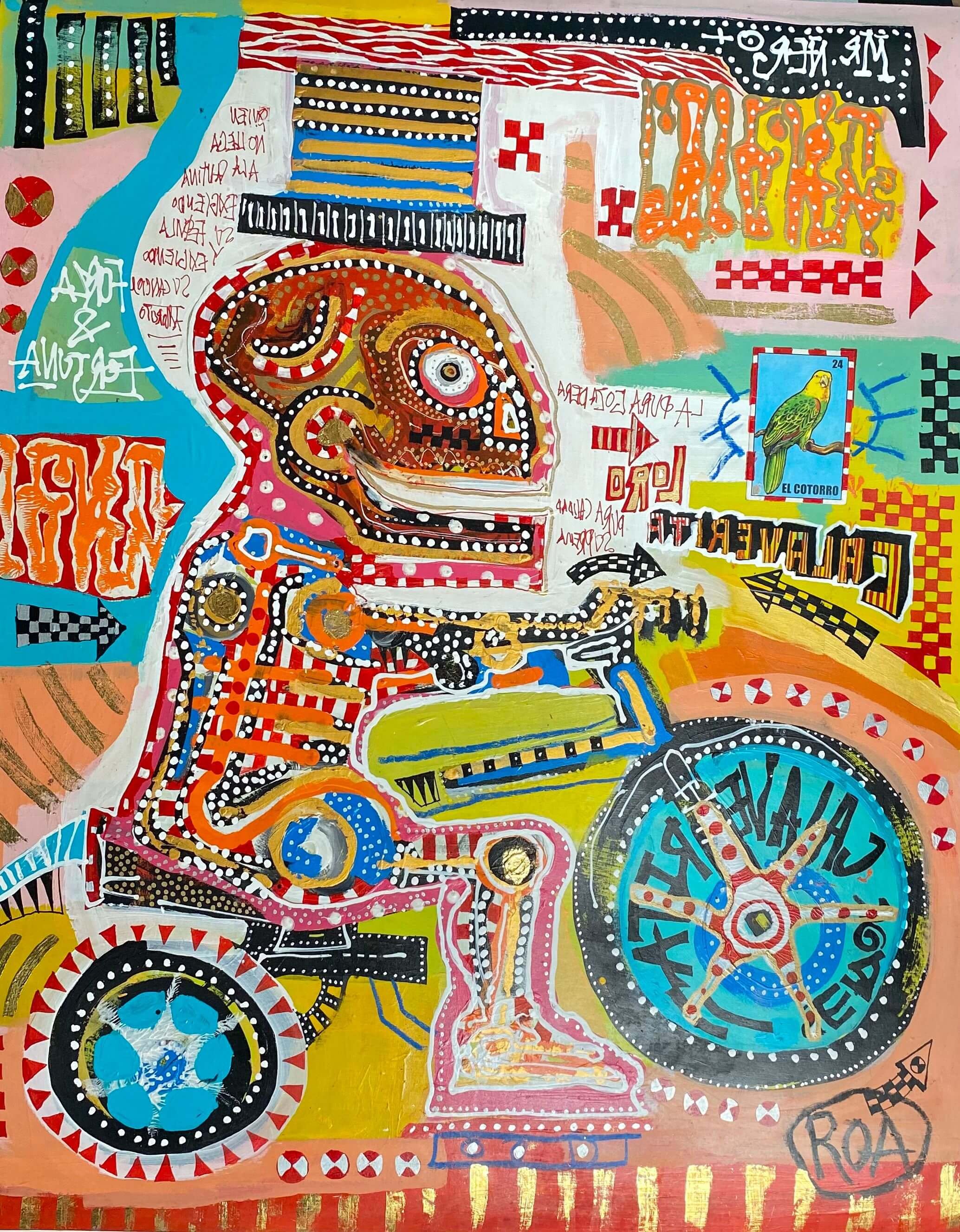
Both paintings have Demon Riders as their focus. ‘El Bici Chango’ is, however, guns his bike through browns and carmines of Mountain Deserts ‘Bici Loro Skull’ suggests the Sea in its pastels. The Riders are surrounded by Figures and Inscriptions that accord with their evident locales. Each Rider and his world are pleasing to contemplate and—as with Matisse—to further imagine.
Another two in Roa’s current Angela King Gallery Show are obviously paired. They emanate from the same ‘Tropical Dancing Club.’
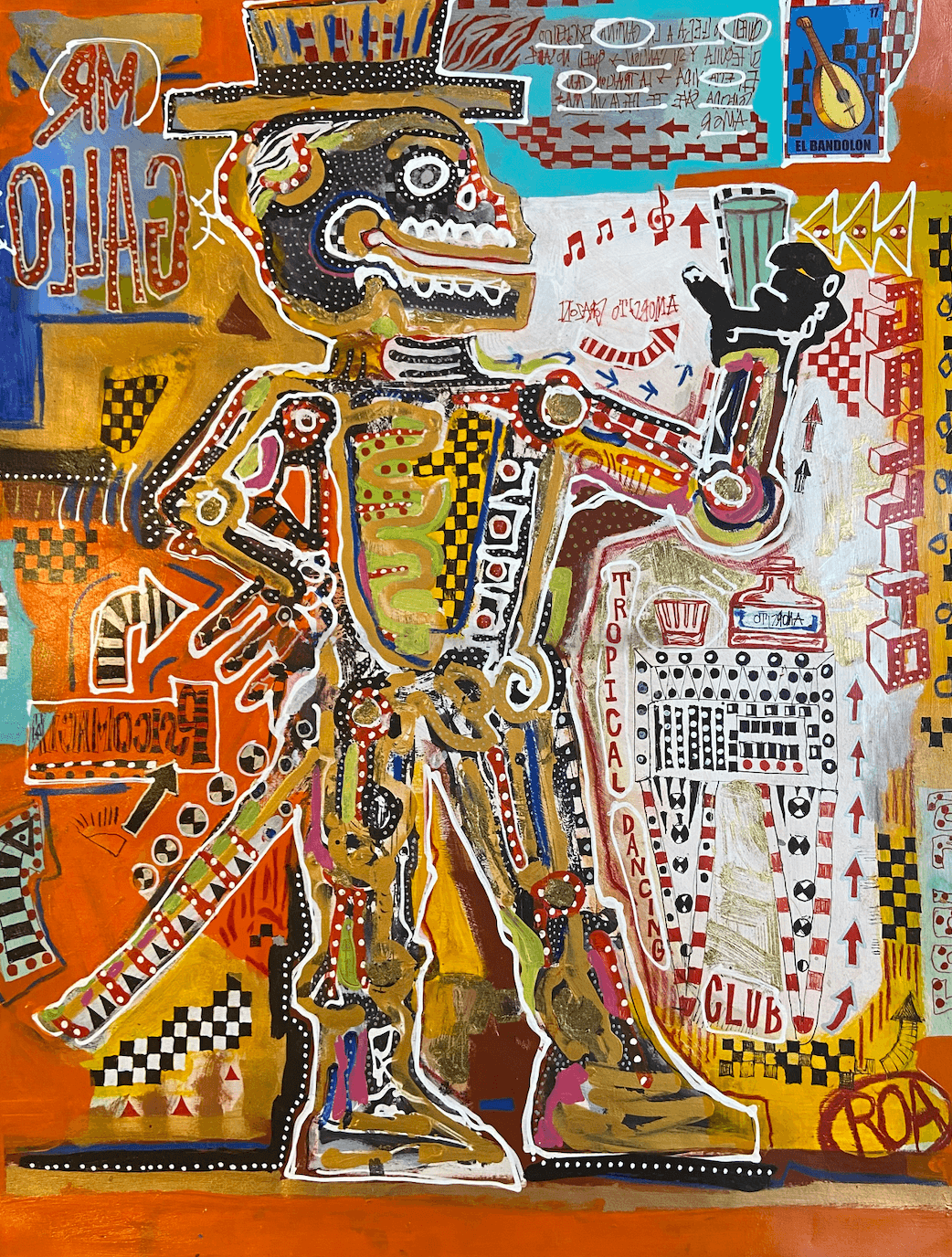
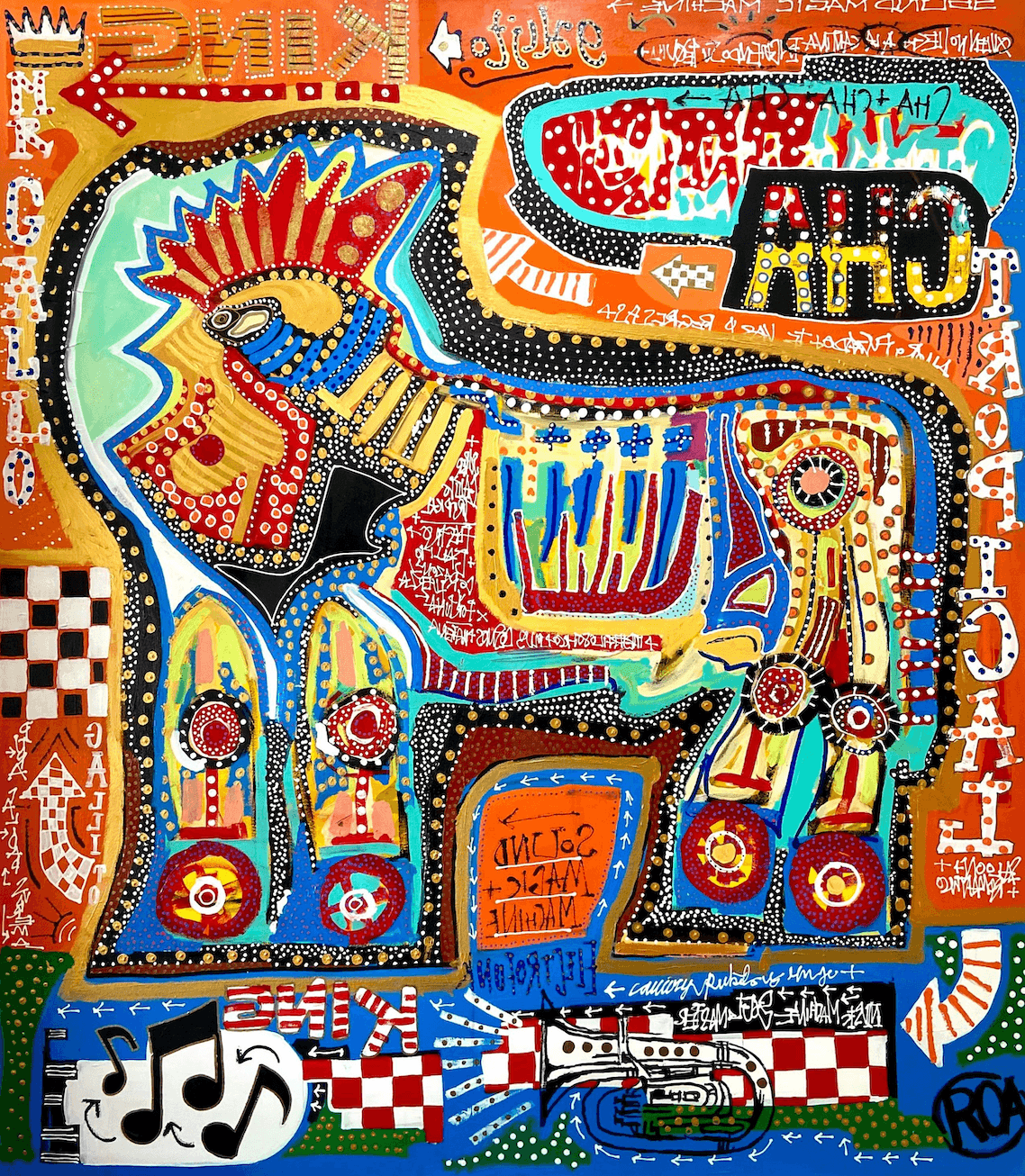
The Cantina with its King of the Juke (its Mr. King9 is a resort for both Dancer and Drum, Rooster and Horn. Again the two paintings differ wildly and yet offer endlessly pleasing fields and elements to enjoy.
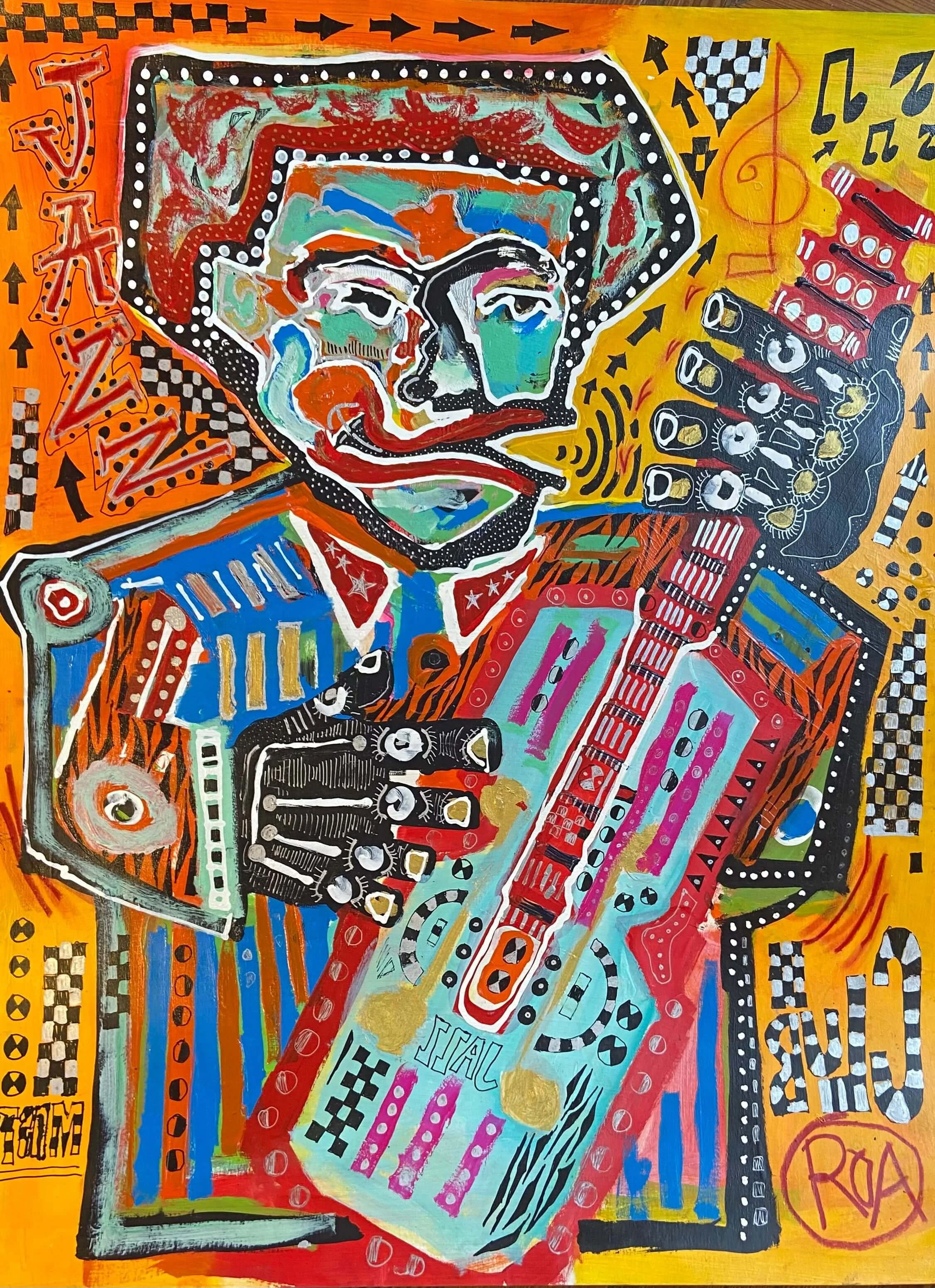
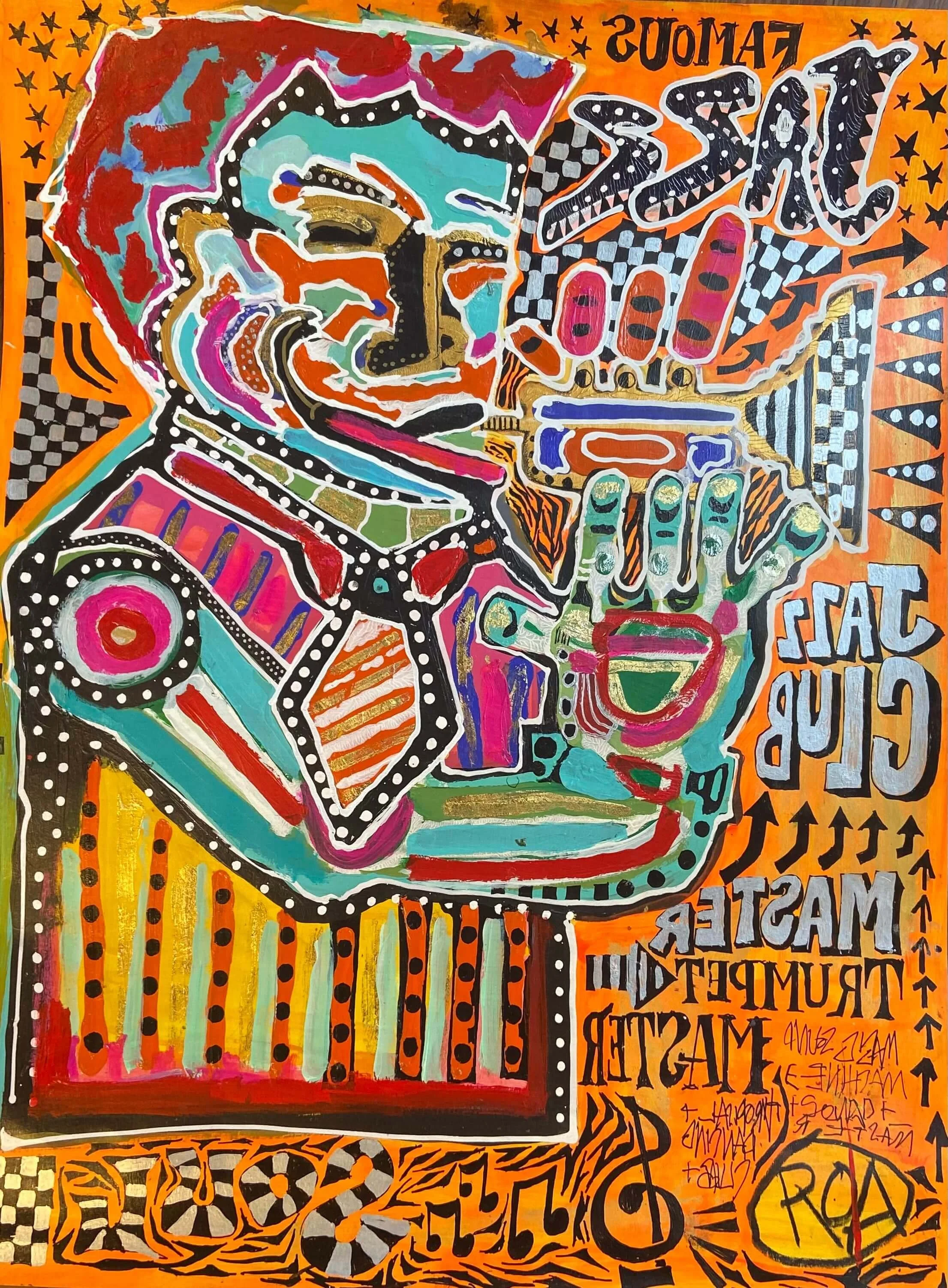
A second pair in Roa’s new AKG Show portray New Orleans’ scenes.
Each of Roa’s ‘JAZZ’ musicians—of Guitar or of Trumpet—is a distinct and emphatic Personality. Each is dressed AND surrounded by comely designs, statements and colors.
Roa ventures into Mexican Classics of Identity and Satire with his ’Toro (Mil Amores’.
His ‘Catrin’ speaks from and to the most re-produced image in Mexico’s Day of the Dead, Jose Guadalupe’s drawing ‘La Catrina Calavera’. A Calavera, you may know, is a stylized Skeleton of a recognizable corpse. Millions of Calaveras haunt popular culture, Latin American to Grateful Dead, with their reminders of Mr. D.
Posada’s ‘Catrina’ stirred laughter and controversy when published in a Broadside from Antonio Vanegas Arroyo in 1913.
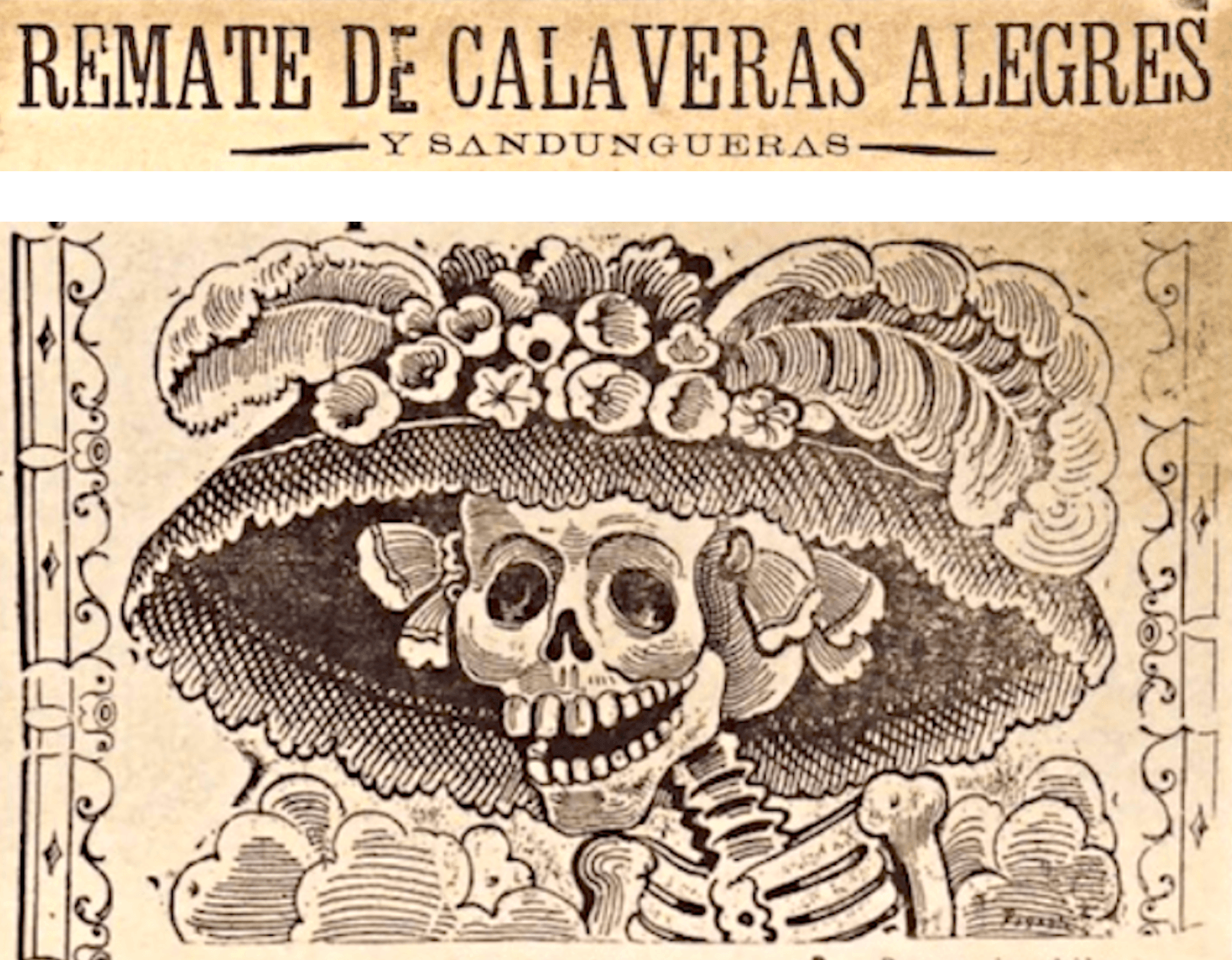
Mexico’s Revolution under Emiliano Zapata and Pancho Villa was a-flame in 1913. Posada’s avidly smiling Catrina and her Gargantuan Garden of a hat were said to poke fun at dictator President Porfirio Diaz and his First Lady, Carmen Romero Rubio.
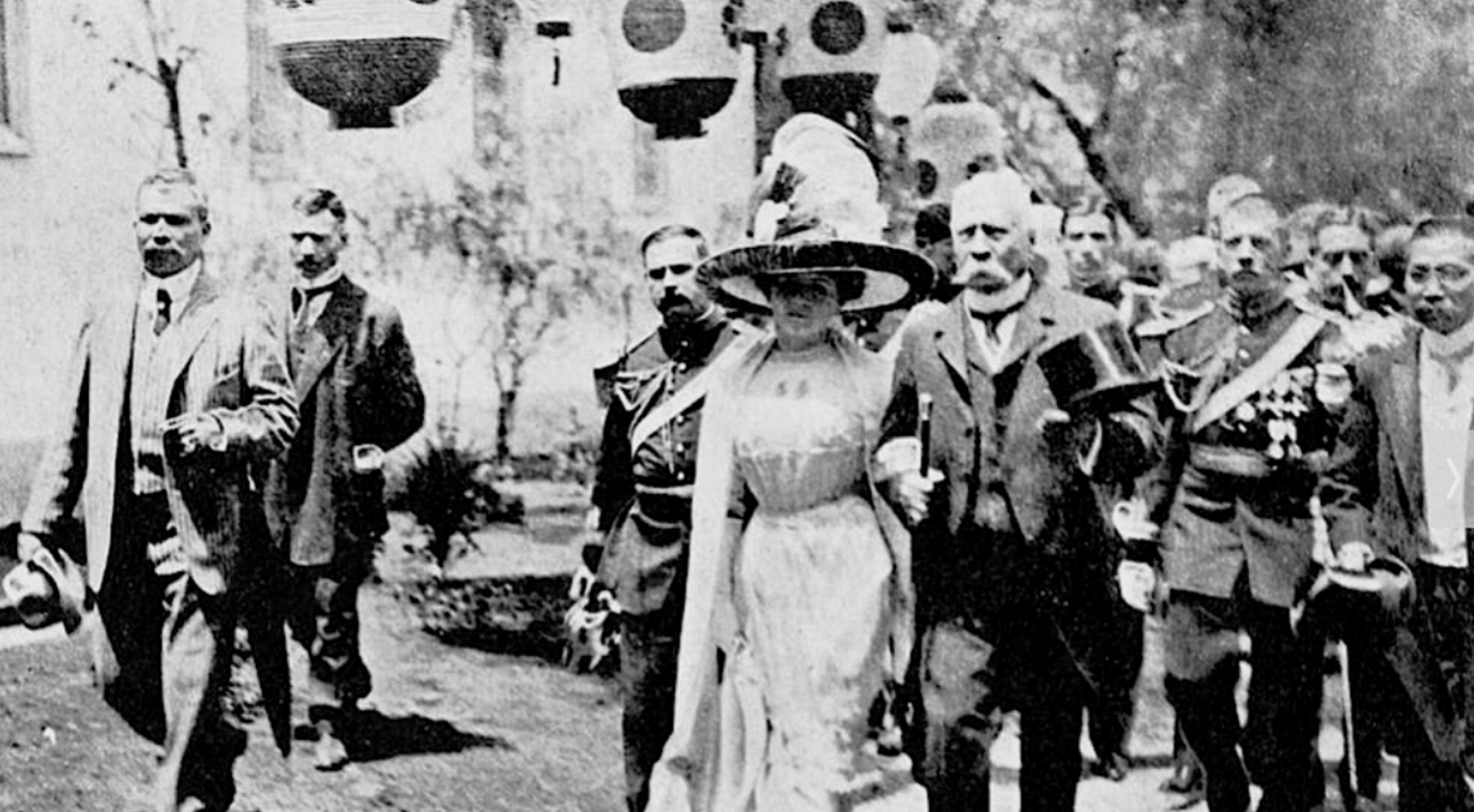
Photograph of Porfirio Díaz and his wife, Carmen Romero Rubio, with the Japanese ambassador Kuma Horigoutchi, as they arrive at the Japanese Industrial Exhibition at the Crystal Palace, September 2, 1910.
Ruben C. Cordova’s excellent piece of November 2019 in Texas’ online magazine about art, Glasstire, digs into the still myriad meanings in Posada’s drawing. It’s Meme that’s grown … more MULTIPLOUS (that strange word and would-be nelogism for a happy reality ahead)) than even Sears, Roebuck Women’s Hats in their 1912 Cataloging.
Please see Ruben Cordova’s piece in Glasstire. https://glasstire.com/2019/11/02/jose-guadalupe-posada-and-diego-rivera-fashion-catrina-from-sellout-to-national-icon-and-back-again/
Diego Rivera took up La Catrina, or Catrin, is his 15-meters-wide mural of 1946=47 for the Hotel del Prado in Mexico City. ‘A Dream of a Sunday Afternoon in the Alameda Park’.
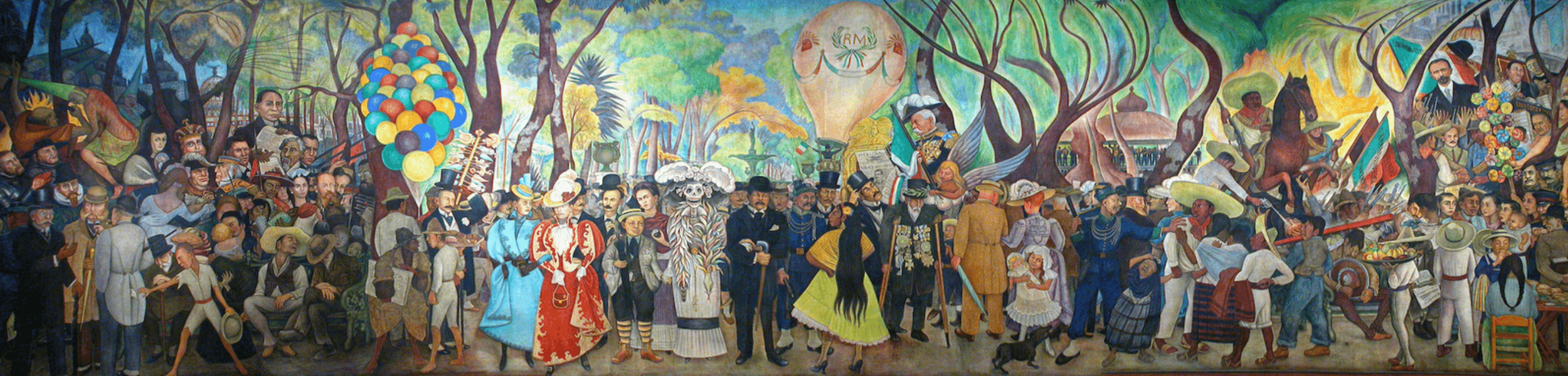
Front and center in Rivera’s Epic-of-History mural are: La Catrina, José Guadalupe Posada, Frida Kahlo, and Rivera as a Boy in Short Pants. Frida with her cocked head touches both Posada and her boy-child husband. Rivera’s Catrina is no caricature of bourgeois pretensions here—her hat is like a coral garden and she wears Rattlesnake Feather Boa and she’s fanged like the Aztec’s most fearsome and immortal Goddess, Coatilcue. (Thanks to Dr. Doris Maria-Reina Bravo for the images image and below, drawn from her study of the Rivera mural on a online page of smarthistory.)
https://smarthistory.org/rivera-dream-of-a-sunday-afternoon-in-alameda-central-park/
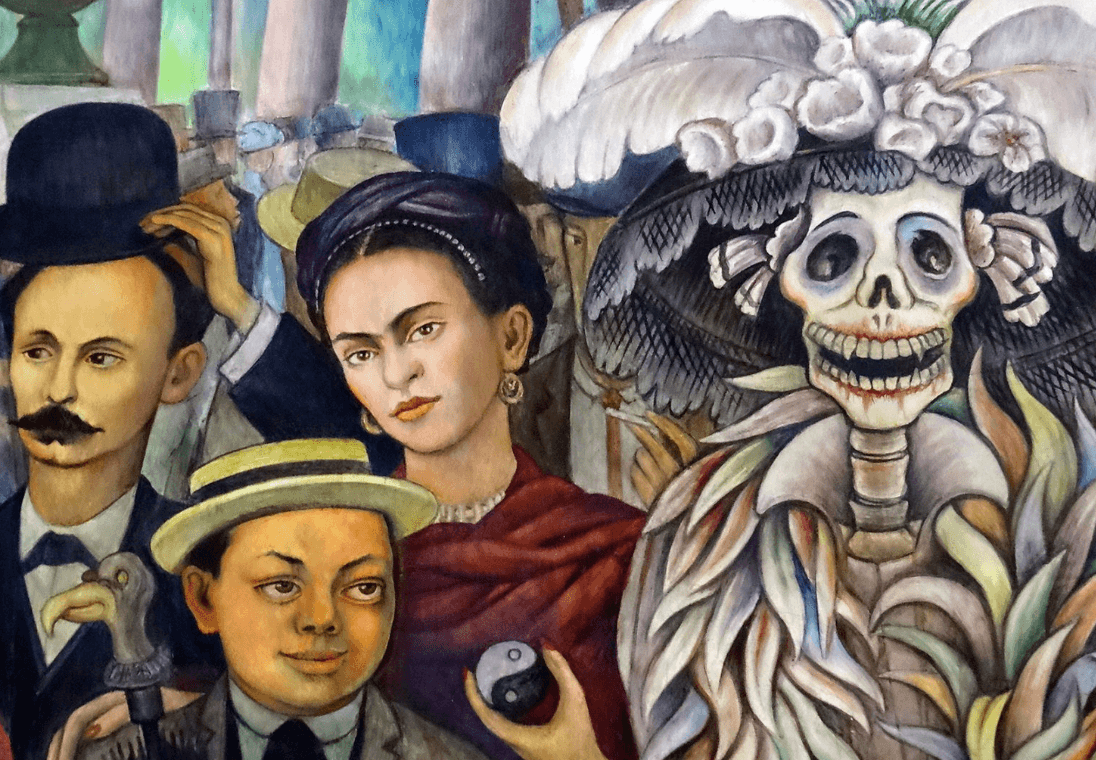
Diego Rivera, detail with the artist as a young man (lower left), the paintier Frida Kahlo (behind him), and La Catrina (the Skeleton), Dream of a Sunday Afternoon in Alameda Central Park (Sueño de una tarde dominical en la Alameda Central), 1947, 4.8 x 15 m (Museo Mural Diego Rivera, originally, Hotel del Prado, Mexico City; photo: Adam Jones, CC BY-SA 2.0)
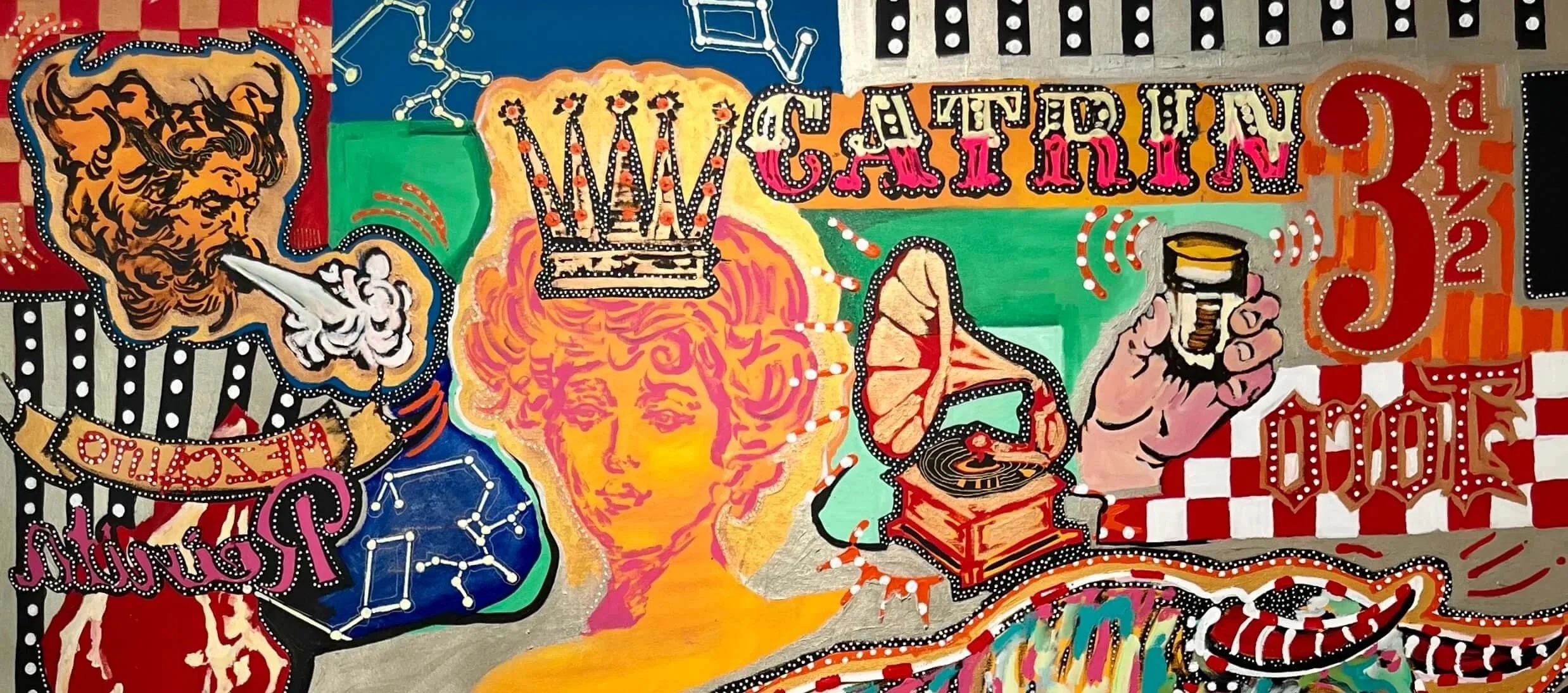
Detail, Jacobo Roa’s ’Toro (Mil Amores)
Please look back, now, to Jacobo Roa’s ’Toro (Mil Amores).
Look in particular to his 21st-century ‘CATRIN’ beside her marquee
What a load of Myths and Influences the painting’s most central figure carries! How she’s caught between them! The Floral Horn of Romantic Phonograph playing into one ear. An Iberian God-of-the-Sea blowing to her other ear. The Bull of a Thousand Loves (and counting) stolid and implacable beneath her portrait, the Bull’s bulk in profile dominating middle of the painting.
You may want to look more closely at this Katrina or Catrin.
How piquant is her situation! What her eyes see and how wistful they and her mouth are! Yet SMACK atop Coiffure of this Advertising-like portrait is a Five-Point Crown … a Crown of Five Points such as Basquiat gave his pair in ‘Red Kings’ of 1981. A Crown that places Primacy—real Aristocracy of Sensitivity—upon the Beauty and Consciousness of this Perceptive, Wistful Woman.
'Jacobo Roa is steadily growing, growing into brilliant coalescences, becoming an artist who aspires to reaches like Picasso’s and and Basquiat’s and to breakthroughs of explosive coherence such as De Kooning’s and Georgia O’Keefe’s. He’s now able to assimilate Nations, Icons and Characters into works jam-packed with beauties and stimuli.'

