
This review is a part of our ‘Artist on Artist’ series.
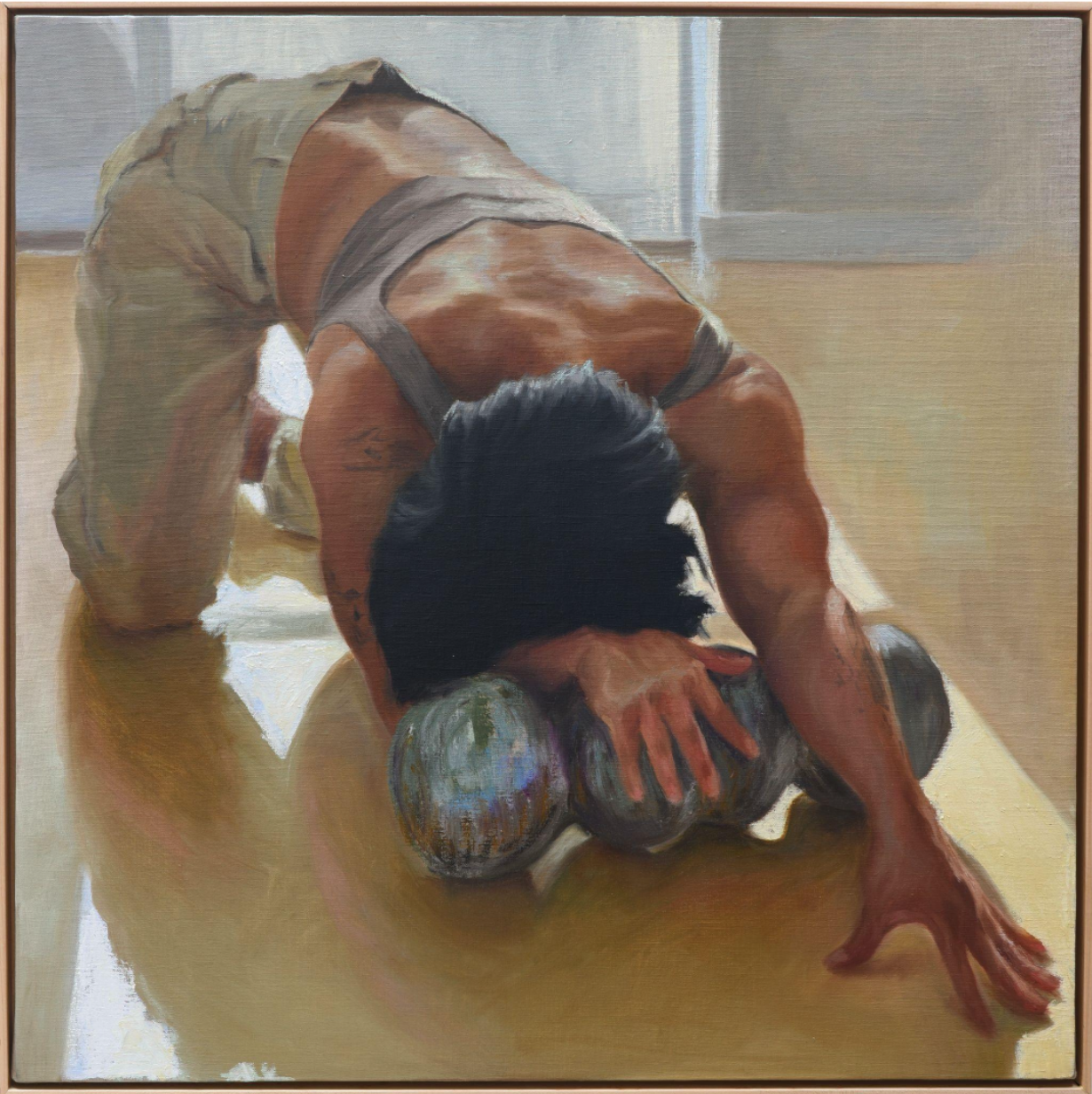
“Rouleau sur la parquet”, 30” x 30”, Oil on linen, 2026
A conversation between, KC Ho, Olin Marcus Johanssen, and Christina Kent
“Hi everyone, let’s talk about our favorite works from Tim’s exhibition. The way they resonated when viewing them, and how they made us feel after leaving the show.”
KC Ho:
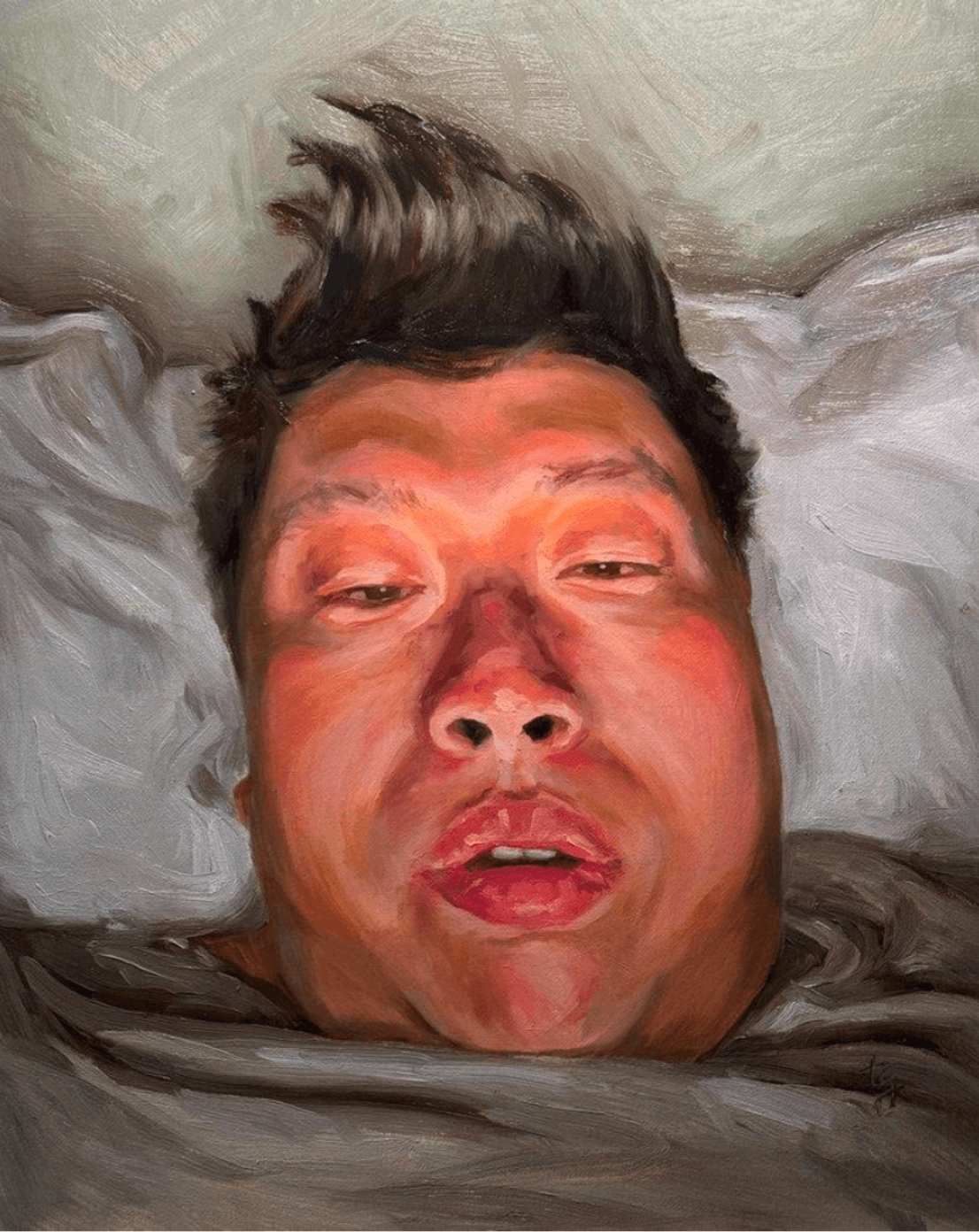
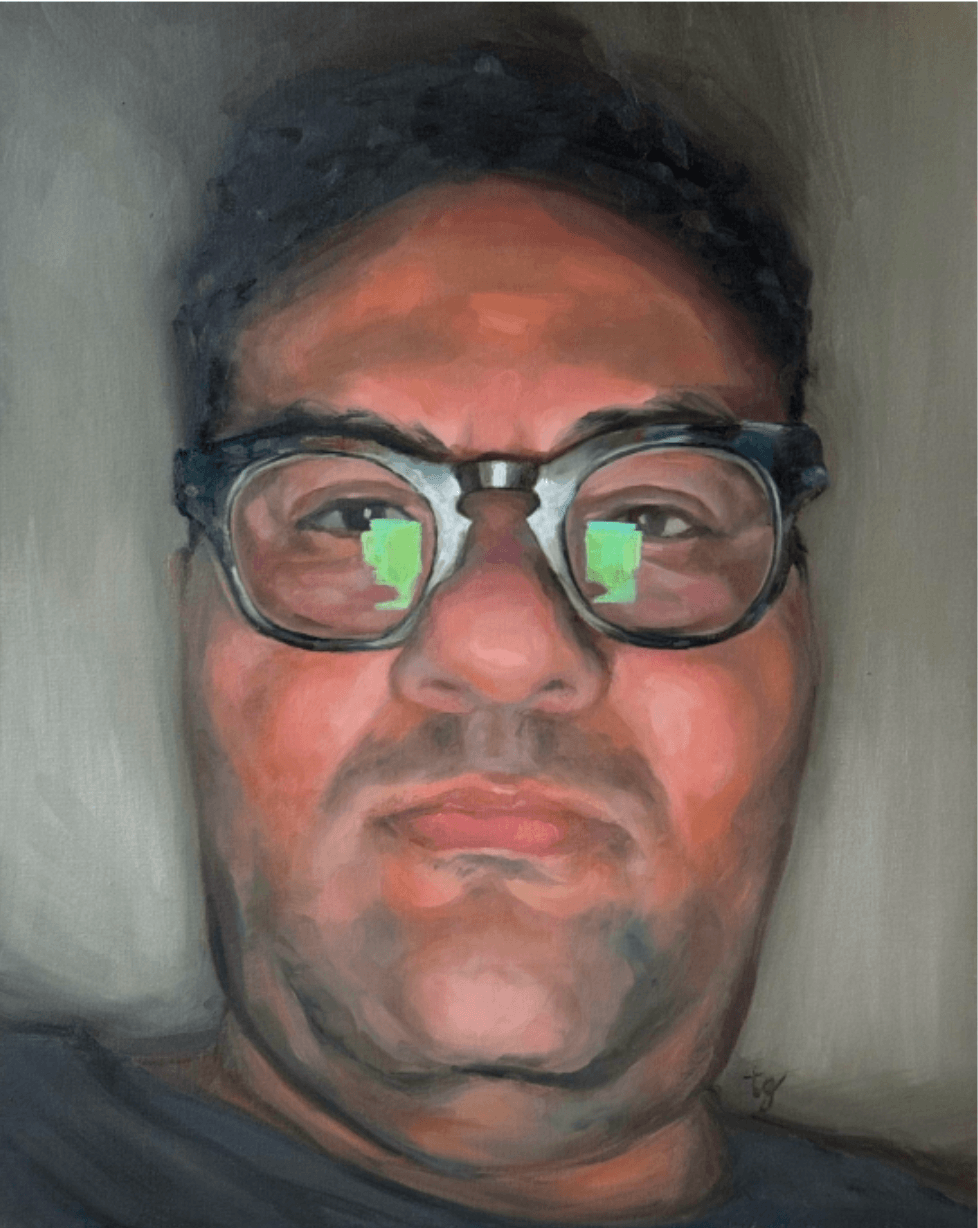
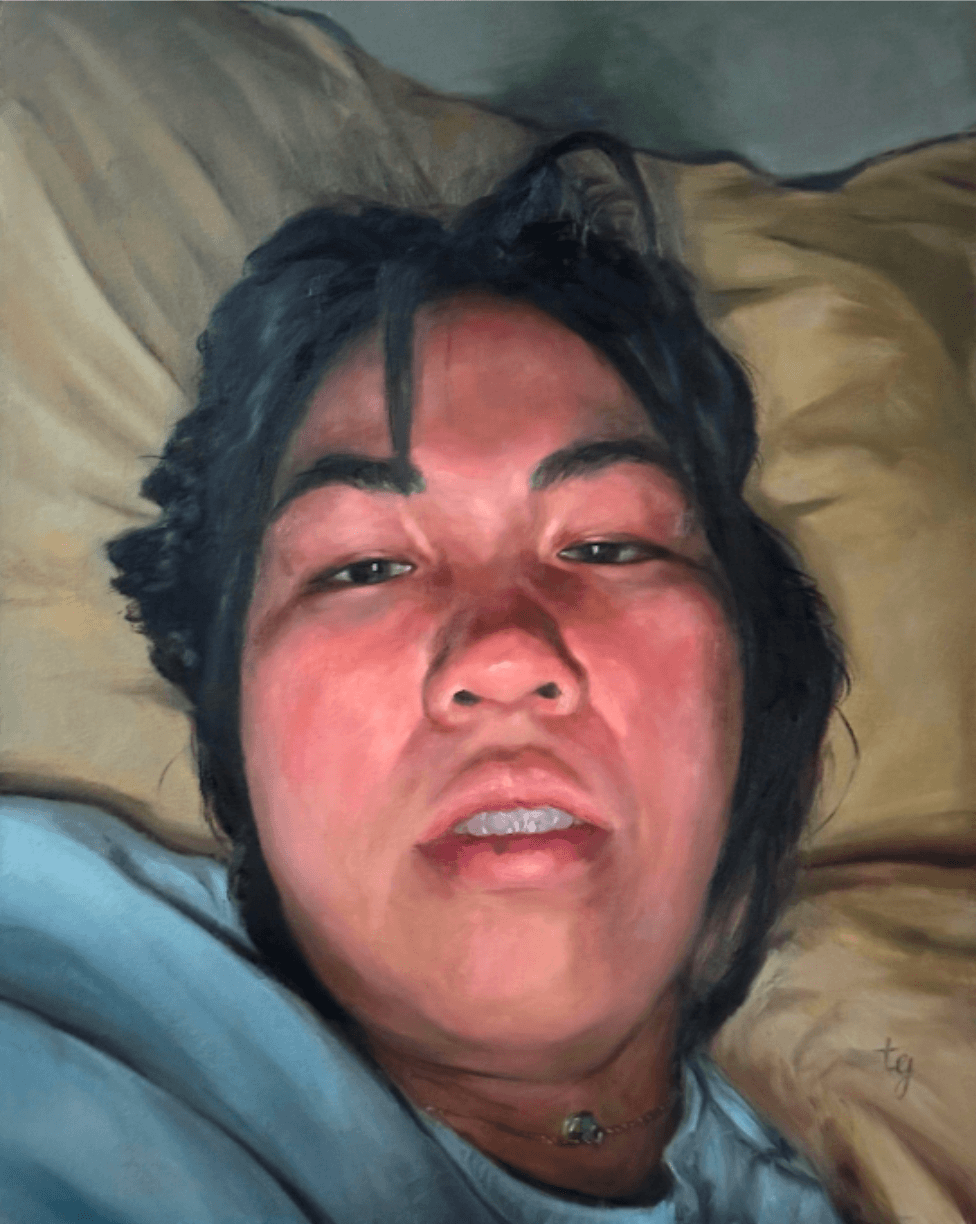
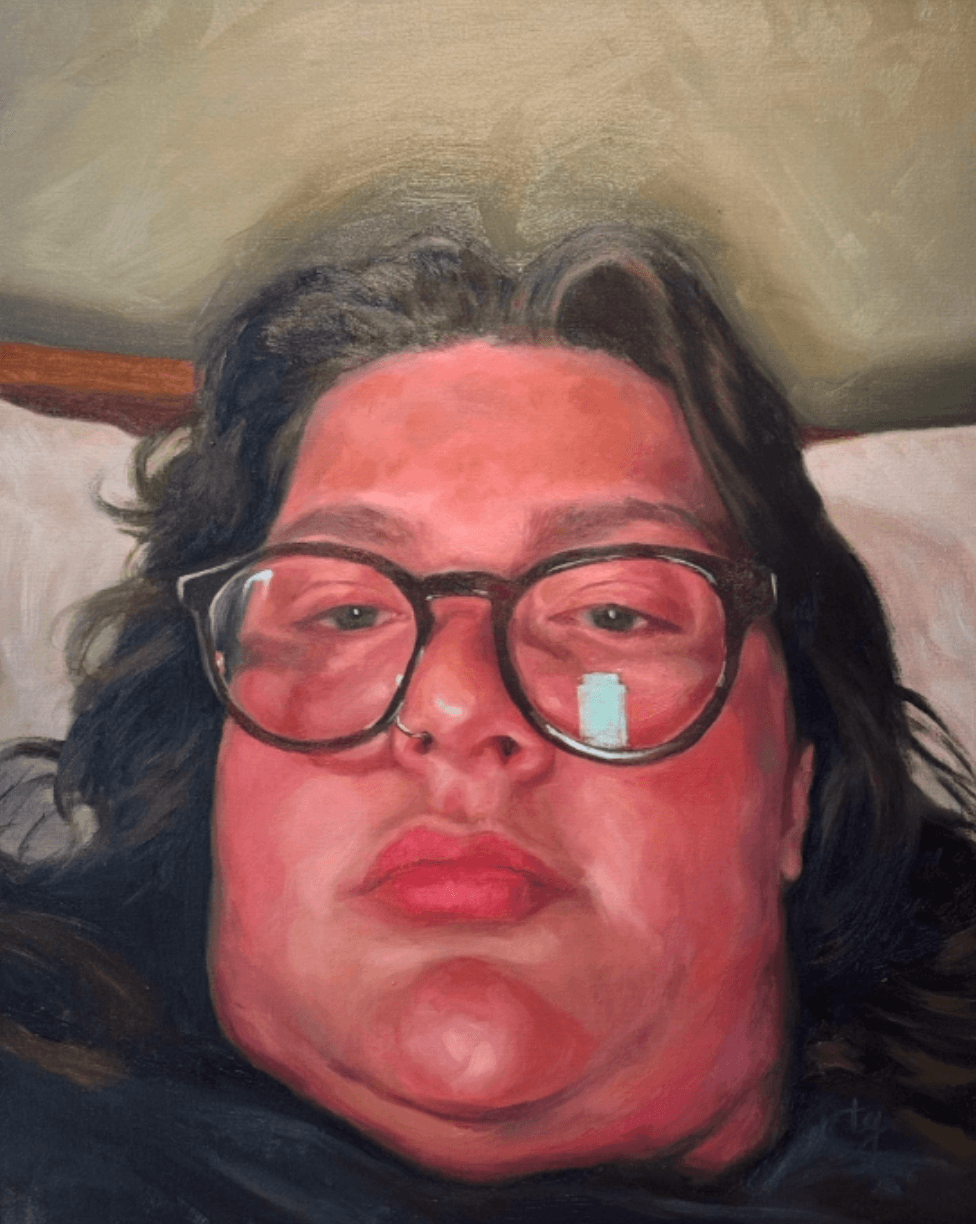
My favorite works in the exhibition are the four portraits in the Doomscrolling series, 2024. These paintings exist at the intersection of traditional portraiture, raw self-exposure, and psychological inquiry. Each face is rendered with a soulless, unsettling quality, transforming the features into a landscape of flesh, weight, and distorted pressure. Through the reflections in their glasses, we catch a glimpse of the moment the soul is consumed by these “digital spirits,” leaving the facial muscles motionless and emotionally stagnant.
The palette of fleshy reds, muted browns, and grays against dark backgrounds creates an almost claustrophobic atmosphere. The rendering of the skin is incredibly lush and visceral — it possesses a distinctly “juicy” quality that makes the viewer want to reach out and feel its physical weight. Ultimately, these paintings confront us with our own self-absorption, reflecting how hollow we can become when lost in our screens.
Perhaps the reason these paintings resonate with me so strongly is that I recognize myself in them. Like many of us, I find myself doomscrolling from time to time, becoming absorbed in the endless stream of images and information on my screen. There is something uncomfortable about seeing this familiar habit translated into such haunting physical portraits. The paintings feel less like a critique of others than a mirror held up to ourselves. They remind me how easily we can lose ourselves in the digital world, becoming passive observers of life rather than active participants in it.
Christina Kent:
I appreciate the intimacy and vulnerability in Tim’s work. The subjects in the exhibition are people Tim knows well; his friends, family, and himself. This deep personal connection translates onto the canvas. We as the viewers are granted access into the subject’s personal space, often in their homes or even in their beds. Reflecting on how for many people, their most intimate moments are shared with digital devices, rather than other people in real life. I think technology can leave us feeling lonely and alienated, and Tim’s work encourages us to connect with real human beings.
There is also a celebration of unfiltered reality that I find very compelling. In his Doomscrolling portraits, the people depicted may not be as pretty as filtered photos of which are posted online, or now compare that to AI influencers. This is what makes these paintings so “real” and is also a statement to the “filtering” of an artist’s hand. The portraits are not flattering, but they are beautiful in their own way. And in doing this Tim is celebrating our imperfections with his thoughtful handling of each portrait.
I think the last impact for me was that great art isn’t just something you enjoy at the exhibition, it can change how you see the world. When you come home after going to Tim’s show, it changes how you see things. You pause for a few moments in the mirror to look at yourself, the uneven color of your skin, your wrinkles, your asymmetric features, not with judgement, but with fascination and appreciation.
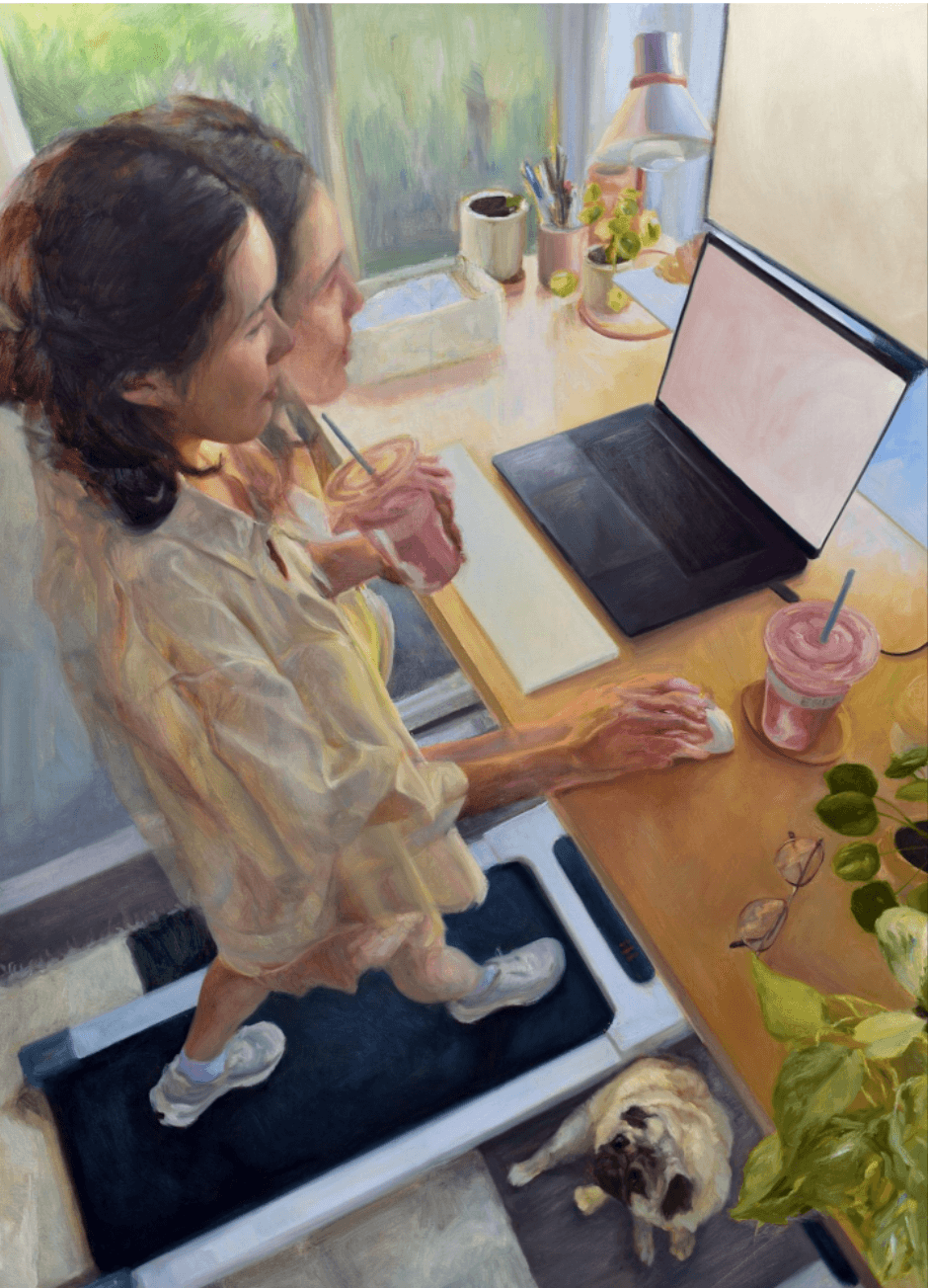
“Je rêverai des horizons bleuâtres”, 42” x 58”, Oil on linen, 2026
Olin Marcus Johanssen:
I feel very lucky as a part of this group to have seen Tim’s work come into its exhibited form over the +9 months in which he was preparing for it. The vulnerability that is present in all the work is not just a narrative device, but rather a greater manifestation of his state of being as he painted each one. To be in his studio and see the preparation for each piece, he is very academic and considerate in his approach to painting. That process leaves him open to be freer and looser in the final piece, allowing the paint to do its work as much as the subjects themselves. I am very honored to have been able to purchase one of his studies for the piece “Sun Salutation”, a personal favorite of mine from the show.
At the exhibition I was also drawn in by the conversational nature of some of the paintings with those of great masters in history. The painting “Madeleine” is inspired by the 1640 Georges de La Tour piece, “Magdalene with the smoking flame”. The similarities and juxtaposition of the two are a masterclass in conversational painting. His subject is lit by the stark blue light of the laptop screen. She peers into the machine, anxiously petting her dog, as she holds her own head pensively in her hand. After seeing this, I continuously asked myself, ‘What was she looking at?’. Her expression appears to be near tears, or deeply troubled by that which is in front of her. There is also the perception of the element of choice present; her ‘flame’ can be extinguished, technology seems to be in control of the emotion, but we are reminded that we also play a part in how we use the tool. In de La Tour’s painting, Magdalene stares into a tall candlelight flame while petting a skull. It is the most rudimentary form of light, but the narrative is strikingly similar to Tim’s, and we are reminded that even in the face of technological progress one was never immune to the mind's ability to ponder dark or complicated thoughts. He is not making the elementary statement that it is technology’s fault that we worry, or even the more insidious, that we have choice in the matter. He is showing us that in history, just as we do now, the mind is often consumed by ‘Doom’.
I was also very struck by the painting “Rouleau sur la parquet”, and its similarities to Gustave Caillebotte’s “Les raboteurs de parquet”. The laborers or Caillebotte’s toil away at the back breaking work of stripping a wooden floor in the hot Parisian summer heat with modest tools. Their bodies have a sinewy muscularity not born from vanity but rather from the necessity required to complete the work being done. The room is illuminated by the harsh light of midday, but the shirtless men's pale torsos demonstrate that they rarely live outside in it. In Tim’s on the other hand, a tanned strong woman is seen rolling out her muscles as she either begins or finishes a solo workout. The interior she inhabits is baked in light from the outside, but where Caillebotte’s men seem to be illuminated by the light from the window only enough to make them visible, Guan’s woman is centered firmly in the sun, casting a shadow of equal strength to her physique. As “Madeleine” did, we are given a beautiful look into the similarities and differences between our time and that of 150 years ago. We have the privilege to work out hard for our health, and in conversation with the other paintings in his exhibition we are confronted with the reality that while it may be a privilege it is also a necessity. The sedimentary life of existence is something we are trying to erase with filtered images vs hard work. Or we try to do it all at once like in “Je rêverai des horizons bleuâtres”, walking inside a room beautifully lit by the nature around it, on a treadmill, multiple screens going, two smoothies, and the dog laying idly beside. Tim’s work tells us how our stories are unique in our time, but also how they are not. His exhibition is a must see.
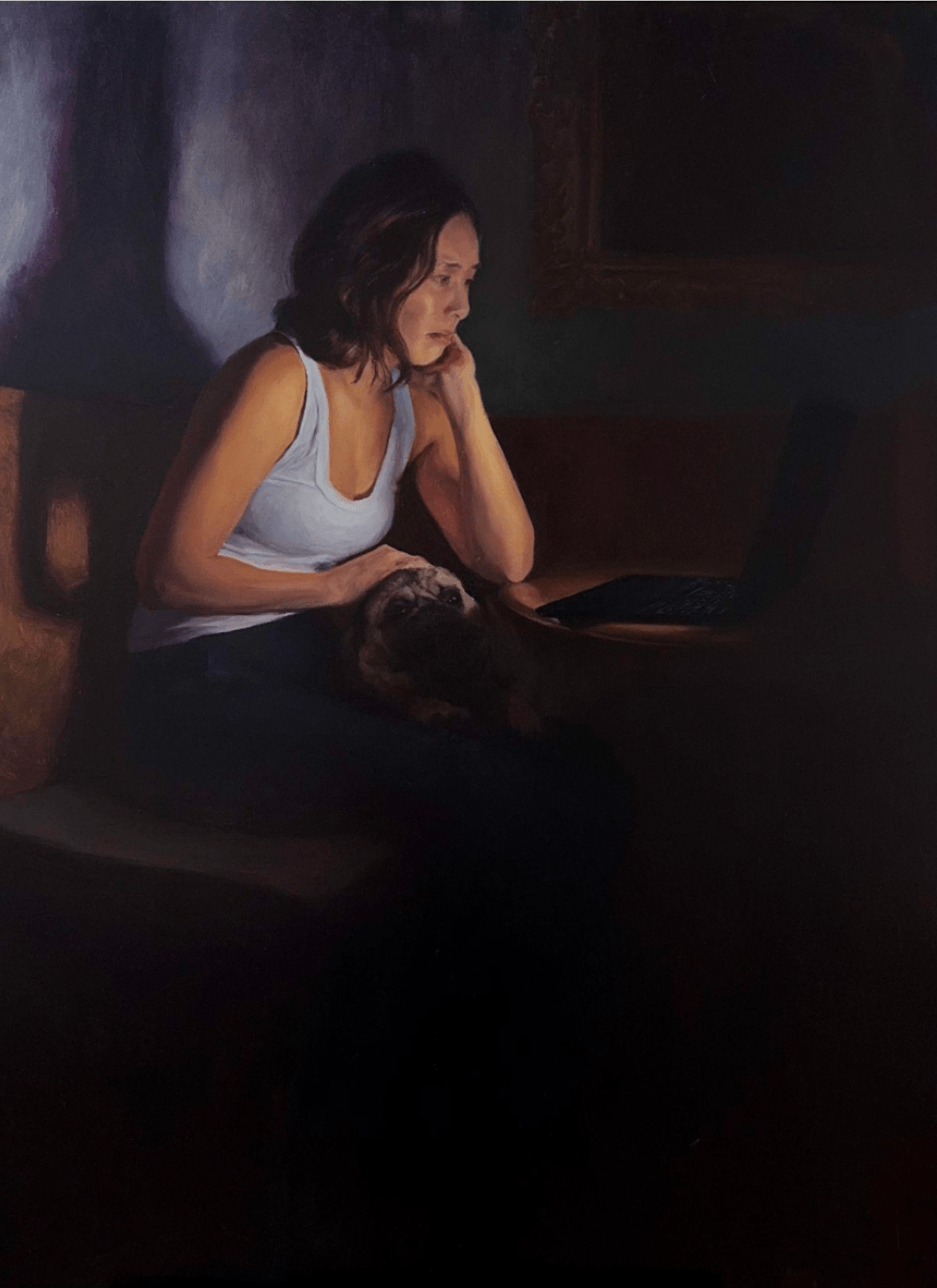
“Madeleine”, 37” x 50”, Oil on linen, 2026
Here and There is on view now through January 17, 2027 at the Triton Museum of Art in Santa Clara, CA.