
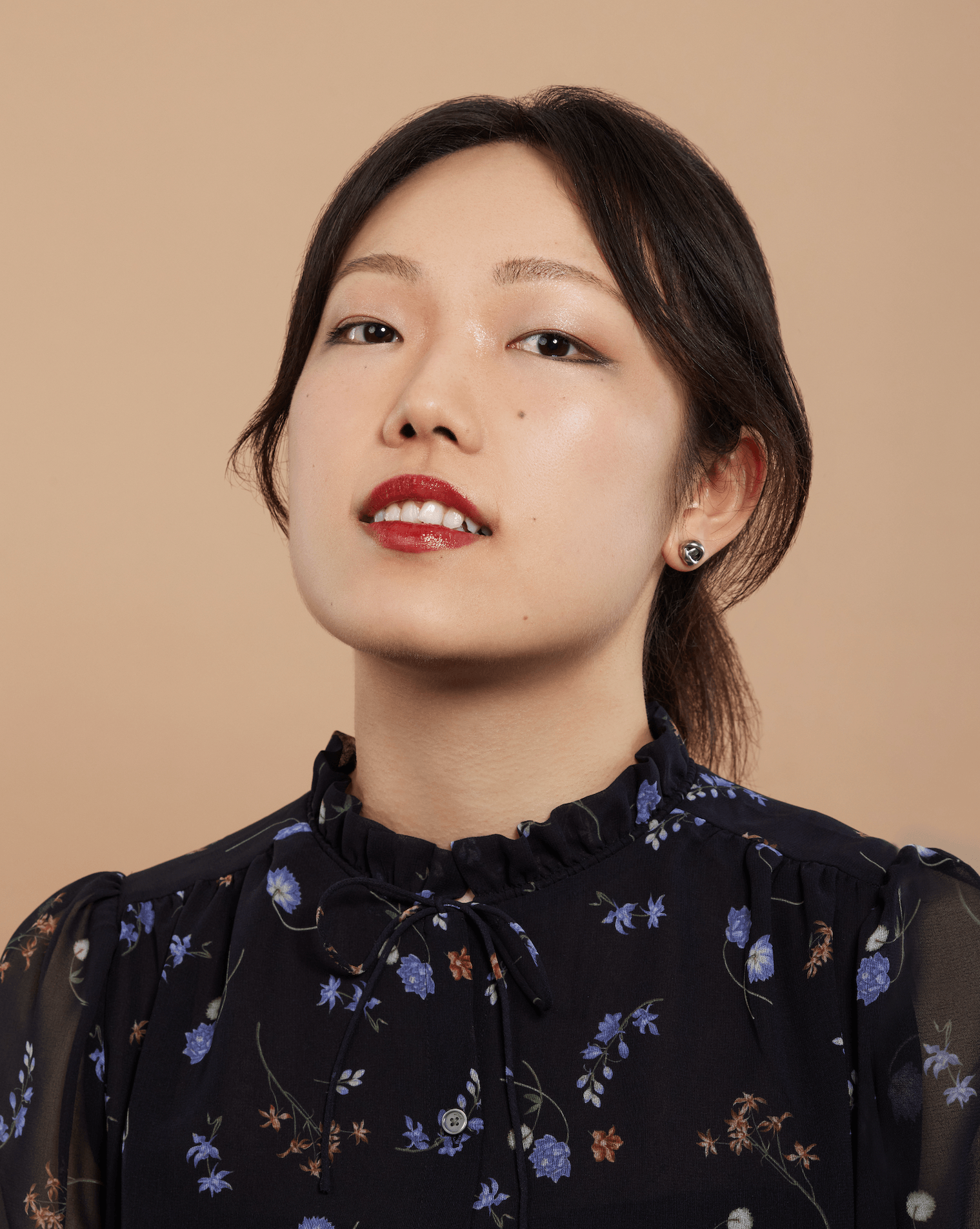
Jiayue Li is a San Francisco-based artist whose paintings and drawings capture intimate moments of everyday life. Li also works as an illustrator and graphic designer, with work featured in publications including The New Yorker and Vogue Singapore.
Can you start by describing your work and specifically what you’re working on now? Do you have a preferred medium? Subject matter?
My work is focused on capturing everyday observations, thoughts, and feelings, often translating them into imagined or fictional scenes. I usually work with colored pencils and oil paints, and I'm interested in creating images that sit somewhere between reality and imagination. A lot of my subject matter comes from self-reflection, nature, and things that catch my attention in daily life. Recently, I've been exploring oil painting more and experimenting with color, composition, and ways to express different emotional states.
Where can people see your work? Are you in any exhibitions right now or have anything scheduled? Do you welcome studio visits?
I don't have any exhibitions coming up at the moment, but people can find my work on Instagram. I work from my home studio in San Francisco, and I'm always happy to welcome studio visits. It's nice to meet people and share what I'm working on in person.
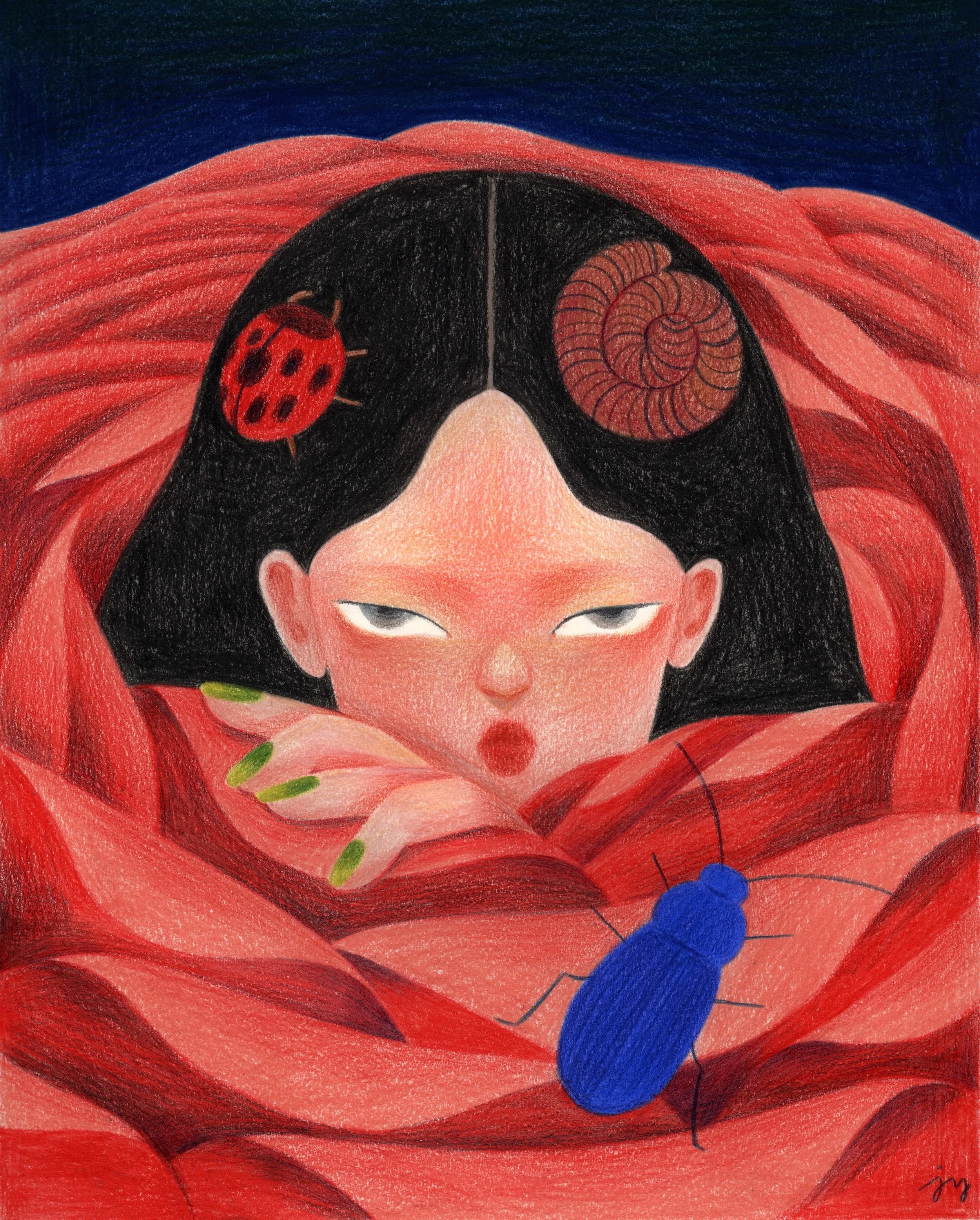
Jiayue Li, The Rose.
Can you share how you became an artist? Did you have an epiphany that compelled you in this direction? Did you have formal training? Did you grow up in a family that valued art and left the door open for you to become an artist?
I think becoming an artist was more of a spontaneous choice than a defining moment. Growing up, I was always drawn to making things and doing anything art-related. I started drawing around the age of six, and it gradually became a natural part of my life. My parents were very supportive and encouraged my interest and took me to art classes every weekend since elementary school.
What is the most challenging thing about being an artist in San Francisco? There’s a lot being said now about the changing landscape of the art scene here. On the one hand there is criticism that City Hall isn’t doing enough to support the arts and some are pointing to the changing landscape of the gallery scene. That perhaps the old model of a brick and mortar gallery that represents artists, with exclusivity agreements, is dying off. Any thoughts?
I think the way people experience and discover art is changing quite a bit. The traditional gallery model is evolving, and there are now so many different ways for artists to share their work and for audiences to engage with art, whether through social media, independent exhibitions, online platforms, or more unconventional spaces. While I think this creates more opportunities for artists to reach people, it also means we're constantly surrounded by different images, ideas, and voices. For me, one of the biggest challenges of being an artist today is finding the space to stay true to your own perspective and creative instincts without being too influenced by all the external voices, expectations, and distractions surrounding you.
I don't think the shift away from the traditional gallery model is necessarily a bad thing. There are more ways for artists to share their work, connect with audiences, and organize exhibitions independently. At the same time, physical spaces and galleries still play an important role in bringing people together and creating meaningful conversations around art. I hope San Francisco continues to find ways to support both emerging artists and the spaces that make the local creative community feel alive.
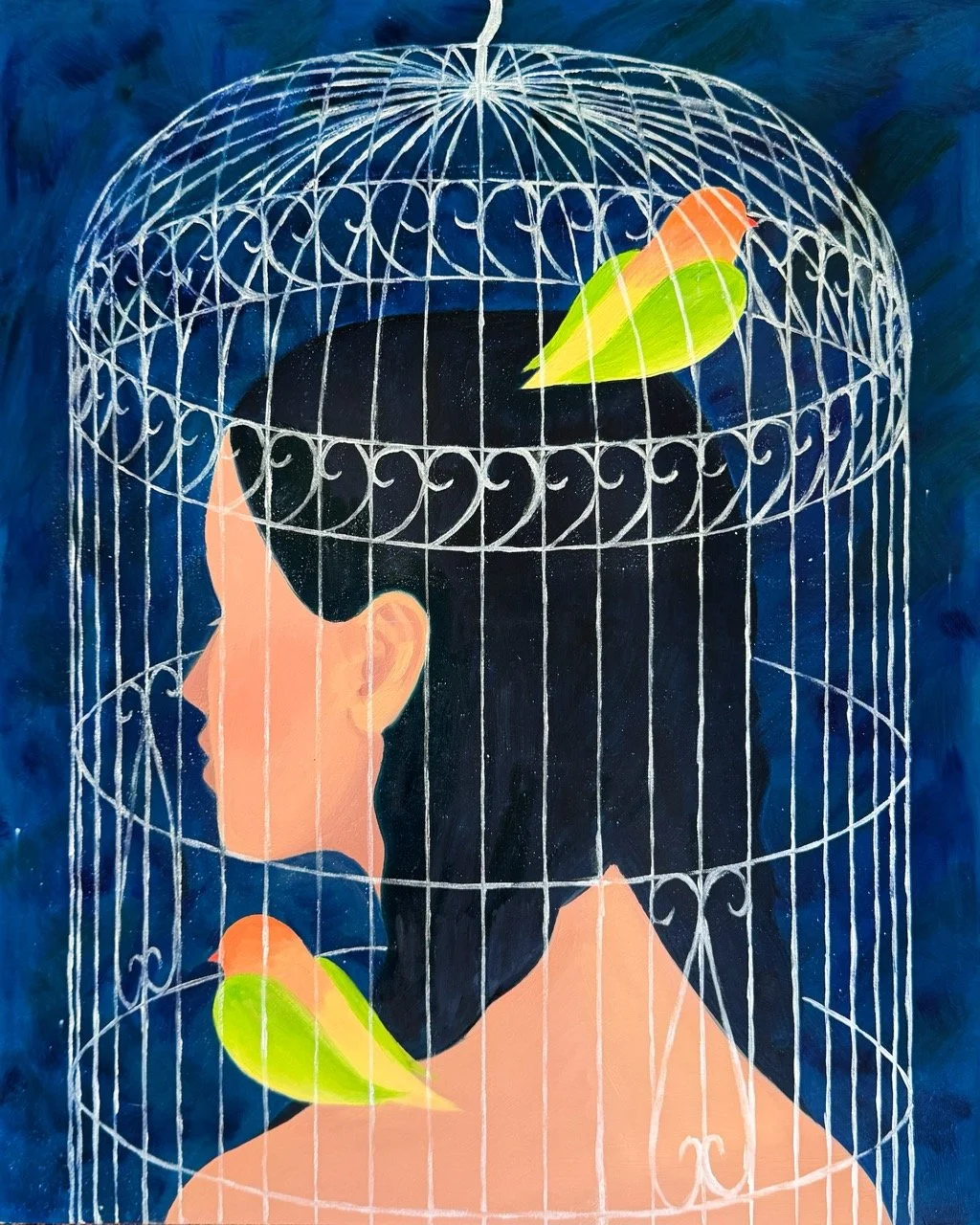
Jiayue Li, The Birdcage.
Have you ever put on exhibitions yourself as a curator or organizer? If you were to put on an exhibition in the future do you have any curatorial ideas you’d like to share? Is there a show you’d really like to see put on?
I haven't curated or organized an exhibition myself yet, but I'd love to do that in the future. I'd be interested in putting together a group exhibition around personal memories. I love seeing how different artists interpret similar themes through completely different mediums and visual languages. It would be interesting to bring together artists whose work feels very different on the surface but shares an emotional connection underneath.
Do you think art should make political or social commentary? Does your art do that? Is there a role for the artist to play in challenging political climates?
I think art can make political or social commentary, but I don't think it has to. Some artists use their work to directly address what's happening in the world, and I find that incredibly powerful. Art has the ability to make people pause, question things, and look at society from a different perspective.
My own work tends to be more introspective and personal rather than directly political. I think there are many ways to respond to the world through art, whether that's through an explicit message or by creating something that encourages people to reflect on their own experiences.
Do you believe art reflects an artist’s diversity such as gender identity, sexual orientation, ethnicity, or race? Are these (or any other diversity considerations) present in the art you make? Why or why not?
I think our identities inevitably influence the way we see and interpret the world, even when we're not consciously trying to express them. As a woman and someone who grew up in China and now lives in the US, my experiences naturally find their way into my work.
I often draw female figures and explore ideas around identity, self-reflection, and transformation. I'm interested in the different roles women occupy, how we see ourselves, and how those perceptions change over time. I don't always approach these subjects with a specific message in mind, but I think my background and experiences are always present in the images I create.
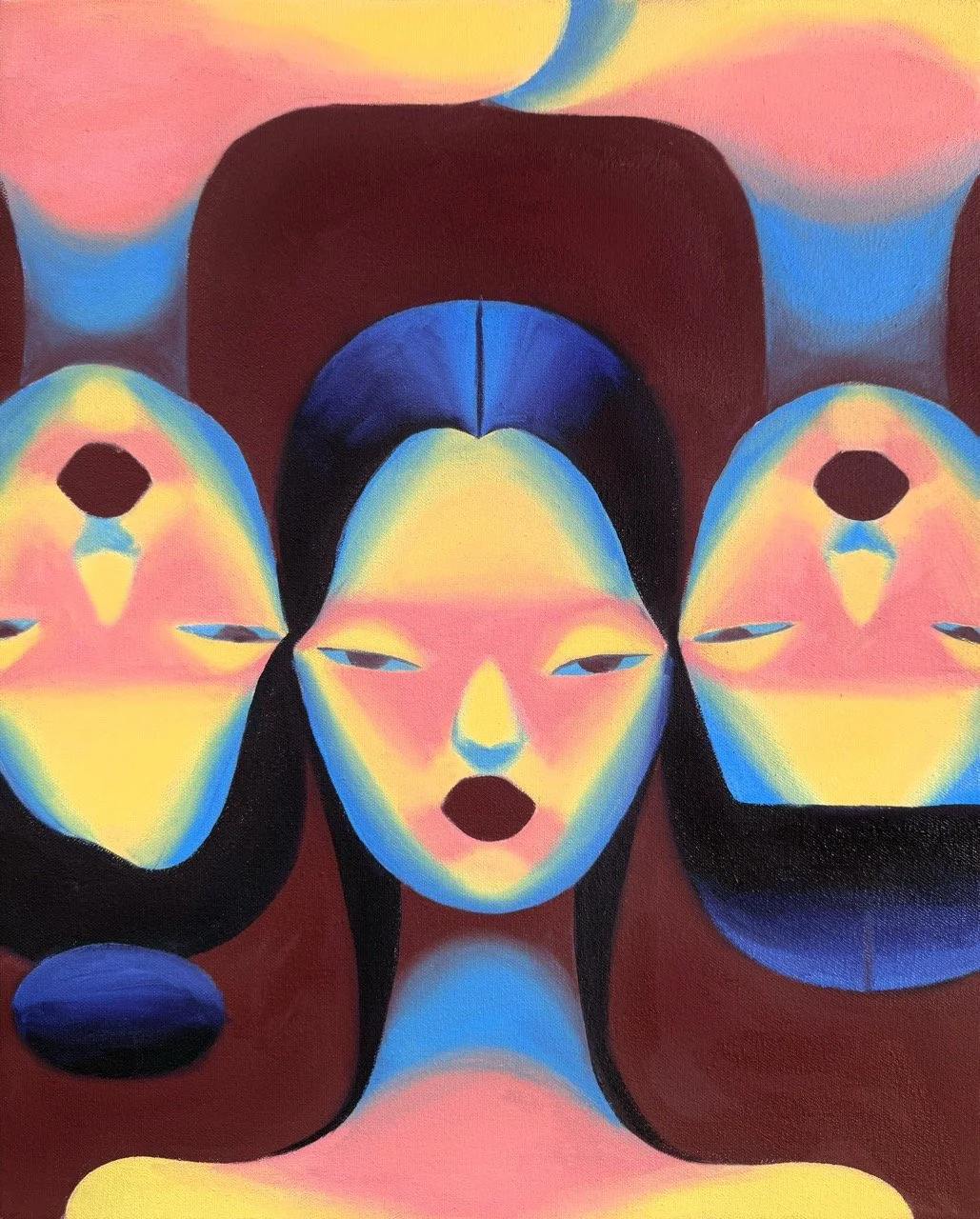
Jiayue Li, Alter Ego.
What do you think artists should be talking about right now?
I think artists should continue talking about the things that genuinely matter to them, whether that's identity, the environment, technology, politics, or simply their personal experiences. I'm particularly interested in how we're navigating a world that's becoming increasingly digital and fast-paced. With so much content being produced and consumed every day, I think it's important to talk about the value of slowing down, observing, and making things with intention. I also think it's important to create space for different voices and perspectives, especially those that might otherwise go unheard.
Outside of artmaking are there any cultural projects you're interested in or currently engaged with? Any art-adjacent hobbies you enjoy?
I really enjoy growing plants and learning about interior design and how people shape and interact with spaces. I find inspiration in everyday surroundings, whether it's the way a space is designed, the colors and textures of objects, or the atmosphere of a particular place. I think all of these interests naturally find their way into my creative practice in one way or another.
Are there any contemporary artists you draw inspiration from? Can you name the artists and say how or why they inspire you? Same thing for historical artists. Are there any who speak to you despite their living in a different era?
I'm drawn to artists who have a distinctive way of interpreting the world. Koak is someone whose work I find inspiring. I love her playful and imaginative visual language, especially the way she creates expressive characters and builds her own unique world through illustration.
I'm also inspired by Georgia O'Keeffe. I admire how she captures the forms and details of nature, often transforming familiar subjects into something almost abstract and otherworldly. Her use of color, scale, and composition really speaks to me. I think both artists have a strong sense of personal vision, and I admire how they've developed such recognizable visual languages while continuing to explore their own interests.
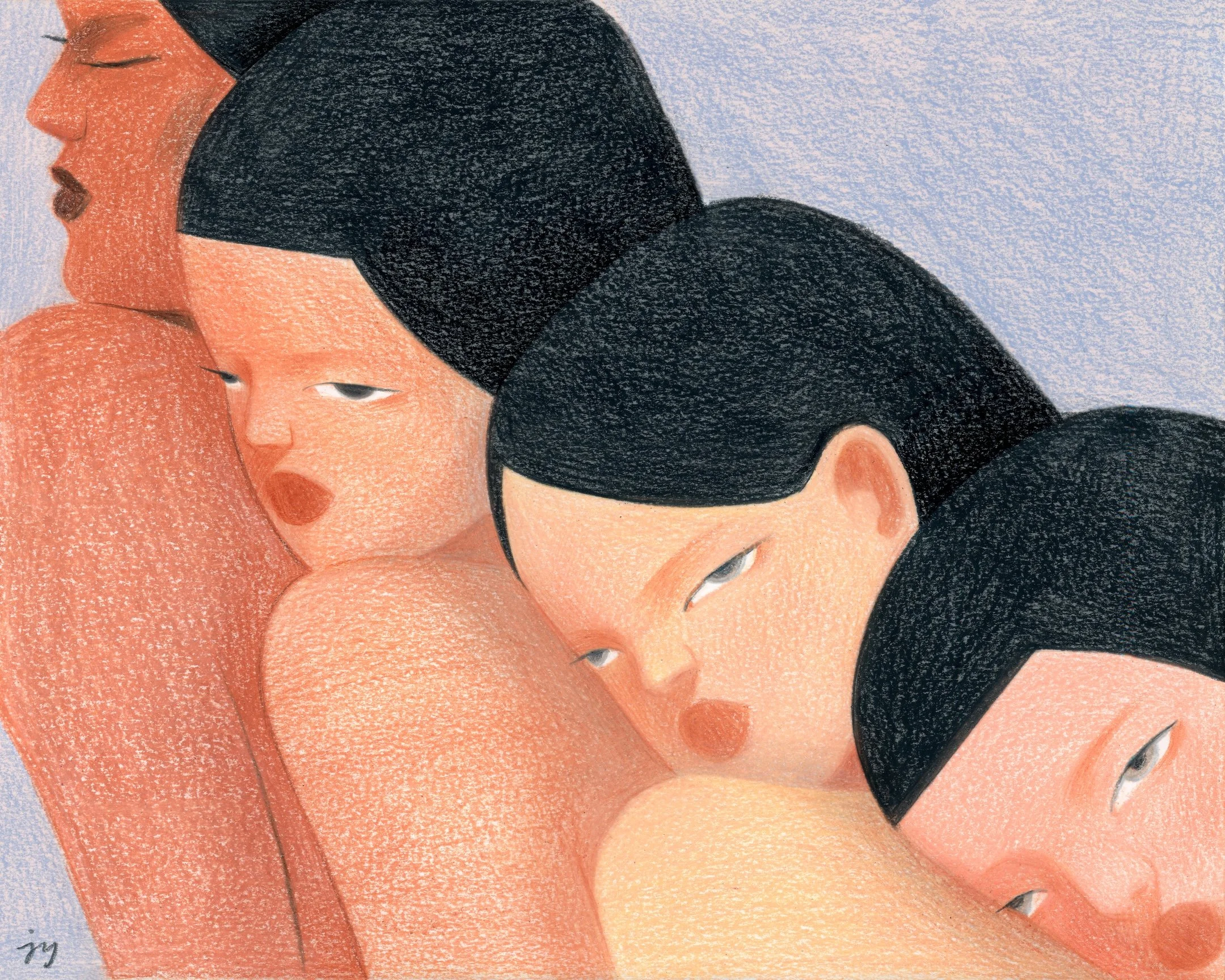
Jiayue Li, Lining.
Do you have a favorite public art piece? What is it and why?
I don't have one specific favorite public art piece, but I really love Storm King Art Center in New York. I appreciate how the artworks are curated and integrated into the natural landscape. There's something special about experiencing sculptures in such a large outdoor setting, where the surrounding nature becomes part of the artwork itself. I love how the experience allows you to interact with art in a different way, rather than just viewing it inside a gallery.
Can you say something about the art you live with? Whether you bought, found, were gifted, or traded for the piece, what artworks do you live with? How has the experience of having these pieces influenced your own artmaking?
I love living with art, especially pieces made by other artists and friends. I'm drawn to work that has a strong personality or makes me curious every time I look at it. I think having art around you changes the atmosphere of a space and becomes part of your everyday experience. It's also a reminder that there are so many different ways of making and seeing things. Sometimes I find myself noticing details in a piece I've lived with for a long time, and that can be just as inspiring as discovering something new.
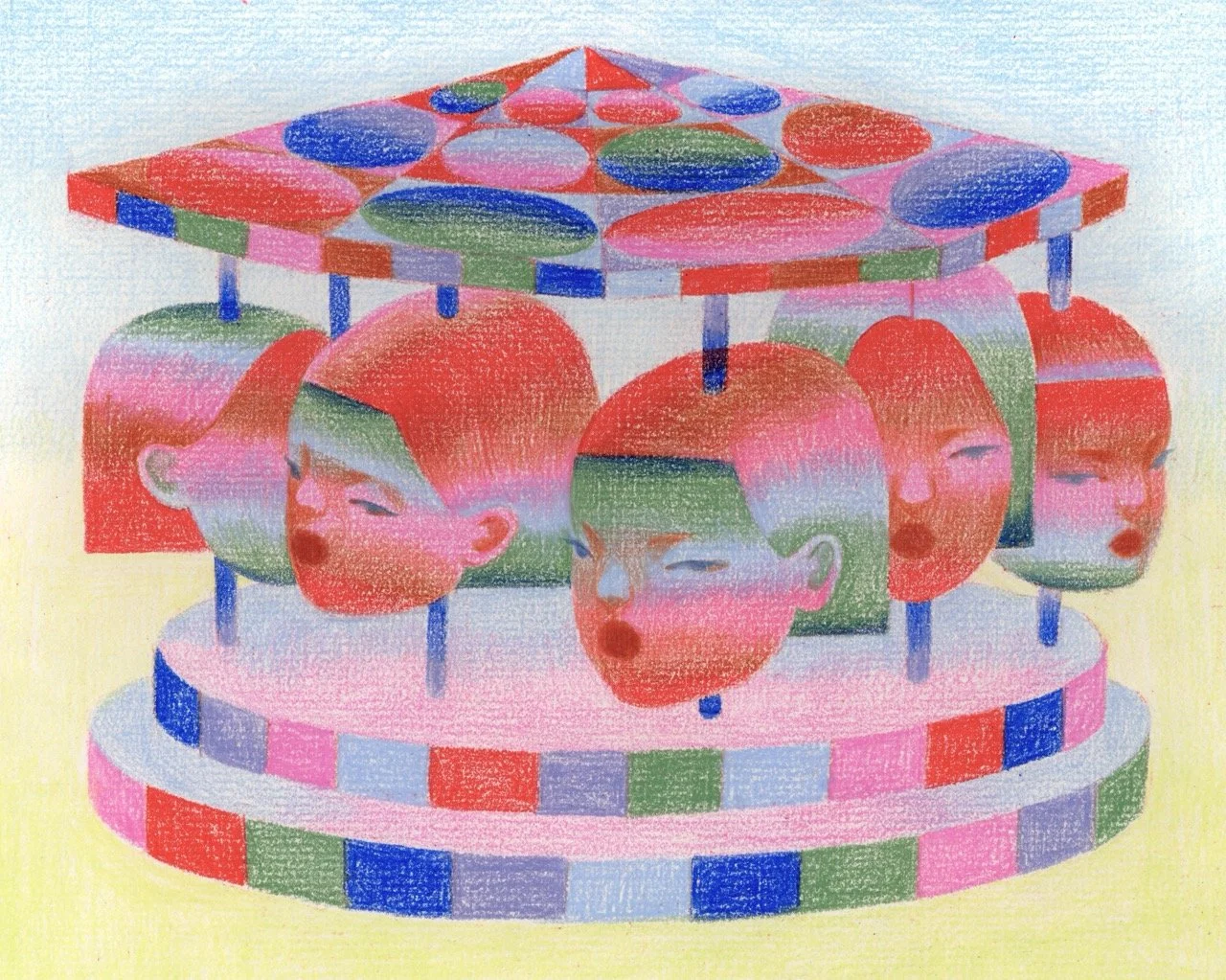
Jiayue Li, Carousel.
Artists are increasingly expected to have an online presence and, in some cases, become their own publicist. How do you feel about social media? Has it helped your career, or does it sometimes feel like another job entirely? Any social media rules or tricks you abide by?
Social media has definitely made it easier for artists to share their work and connect with people outside their immediate communities. It's been helpful for me to have a place where I can share what I'm making and reach people who might not otherwise come across my work.
At the same time, it can feel like another job, especially when there's pressure to constantly produce content and keep up with algorithms. I try not to let that dictate what or how I make art. I'd rather share something when I genuinely have something I want to show than feel obligated to post all the time. I think it's important to remember that the work itself should come first.
It's difficult to talk about being an artist without talking about money. What does making a sustainable life as an artist look like to you? Do you think the art world is honest enough about the financial realities of being an artist?
For me, sustainability means being able to continue making work without having to constantly worry about whether I can afford to do so. I think there's still a lot that isn't discussed openly about the financial realities of being an artist. Making art takes time, materials, space, and energy, and not all of that is reflected in the price of a finished piece.
What are you unwilling to compromise on in your work, even if doing so might make the work easier to sell?
I wouldn't want to compromise on the freedom to experiment and follow my curiosity. I don't want to feel that every piece needs to fit into a particular style, subject matter, or aesthetic just because it might be more commercially appealing. I want to leave room for my work to change as I change.
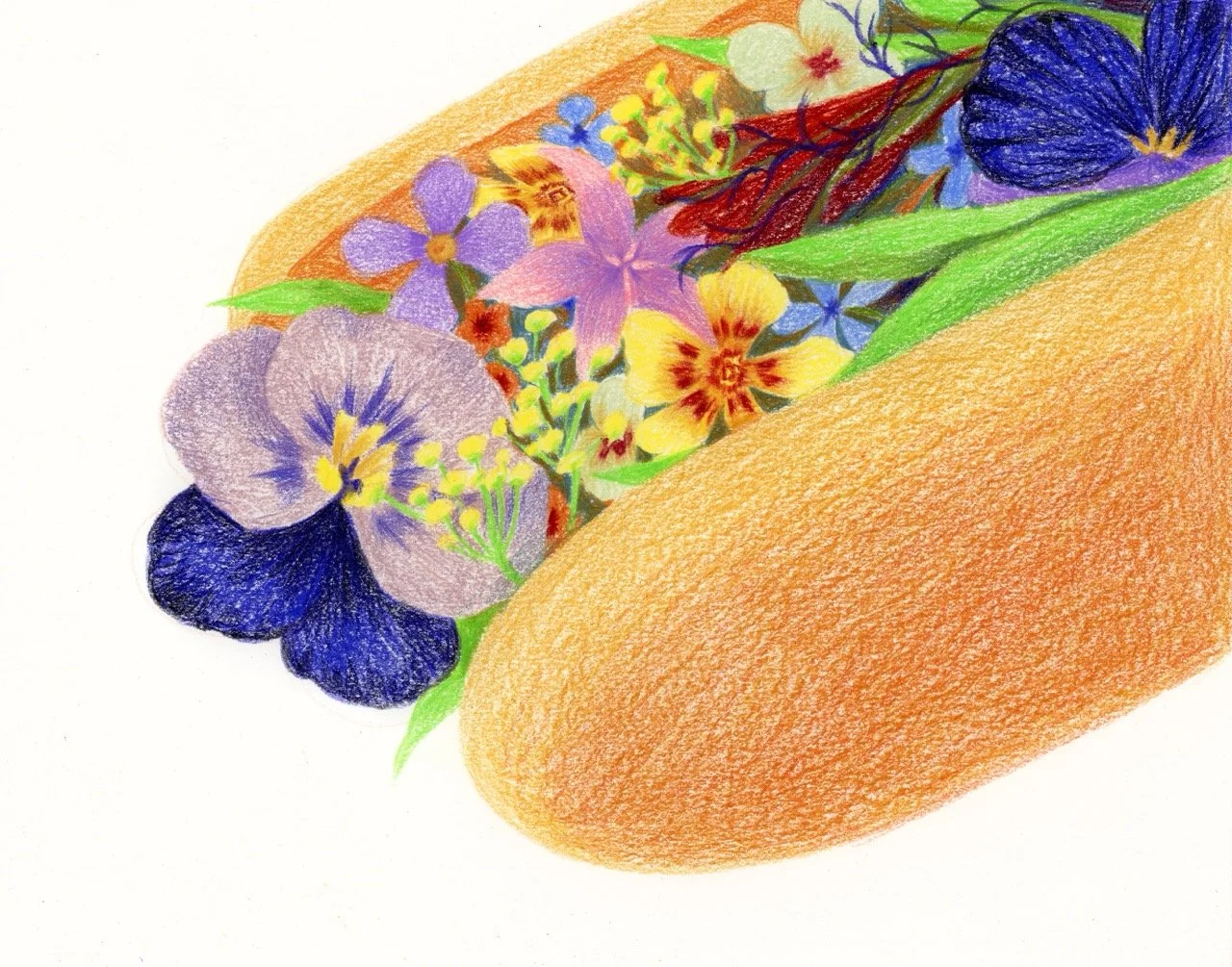
Jiayue Li, Flower Dog.
Whose opinion of your work matters most to you?
I think it's important to listen to feedback and understand how other people experience my work, but I also need to feel personally connected to what I'm making.
If you suddenly had unlimited money, space, and time to make one work or project, what would you make?
I'd love to work on larger-scale pieces or create installations for public spaces.
What current art trend have you noticed and do you support it? Are there any fads or trends in the art world you believe will be fleeting?
I've noticed a growing interest in handmade processes, physical materials, and more personal forms of expression, especially as digital tools and AI become increasingly integrated into creative work. I don't think there's anything inherently wrong with trends. They can introduce people to new ideas and ways of making things. But I do think trends become limiting when artists feel pressured to follow a particular visual language just to stay relevant. The work that stays with me is usually work that feels genuine to the person who made it, regardless of whether it's fashionable at the moment.
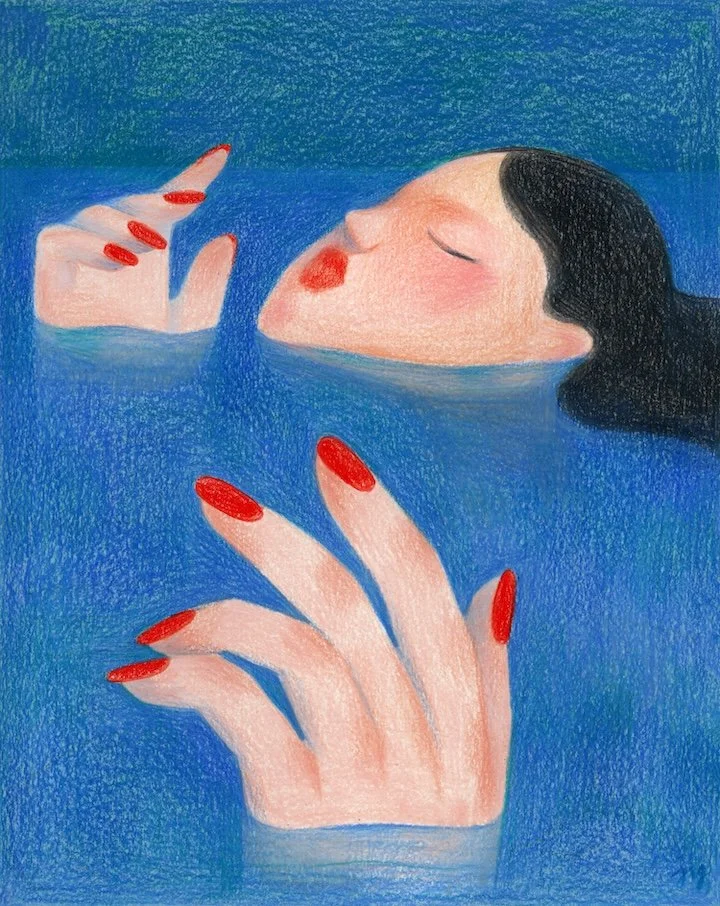
Jiayue Li, Drowning.
What do you make of celebrities who turn to visual art outside of the careers they’re known for? Do you enjoy seeing what they make, or does it bother you that their work can receive immediate attention simply because they already have an audience and a platform? Is that just the nature of the art world, or does it make it harder for working artists to be seen?
I think it's great when people from different backgrounds find an interest in making art. At the same time, I think visibility and access are already uneven in the art world, as they are in many other fields, so it's important to recognize that difference. Ultimately, though, I prefer to focus on the work itself. I think everyone should be free to make things, and the work should have room to speak for itself.
If a fancy collector wanted to take you out to dinner anywhere, where would it be? Do you have a suggestion for a great inexpensive meal in San Francisco for the proverbial “starving artist”?
I've recently been loving the rice rolls at Express Rice Roll in Chinatown, and I'd recommend everyone give them a try!
Any question you wished we asked you? What is it and what is the answer to it?
I think these are all great questions that really made me think, so I don't have anything to add. Thank you for having me!