
“The Tipping Point” at Laguna Art Museum Presents the Layered, Political Artwork of the Multicultural de la Torre Brothers
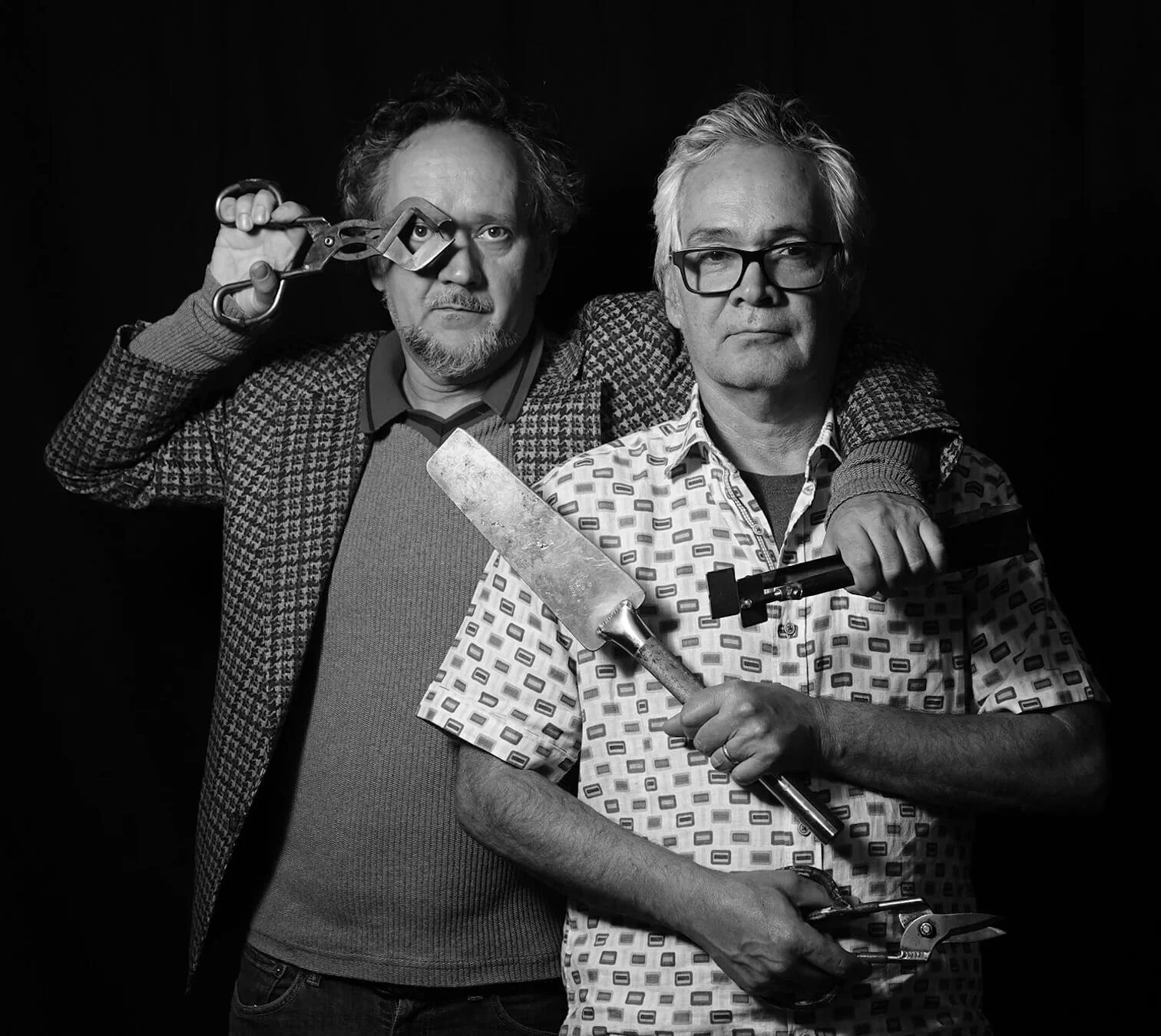
Einar and Jamex de la Torre, 2019, Photo by Josue Castro
Artists Einar and Jamex de la Torre present wildly colorful images, sculptures and installations inspired by ancient and contemporary art. Influenced by living in both sides of the U.S. Mexico Border, the brothers imbue their work with subtle political references and in-your-face challenges to our preconceptions about art.
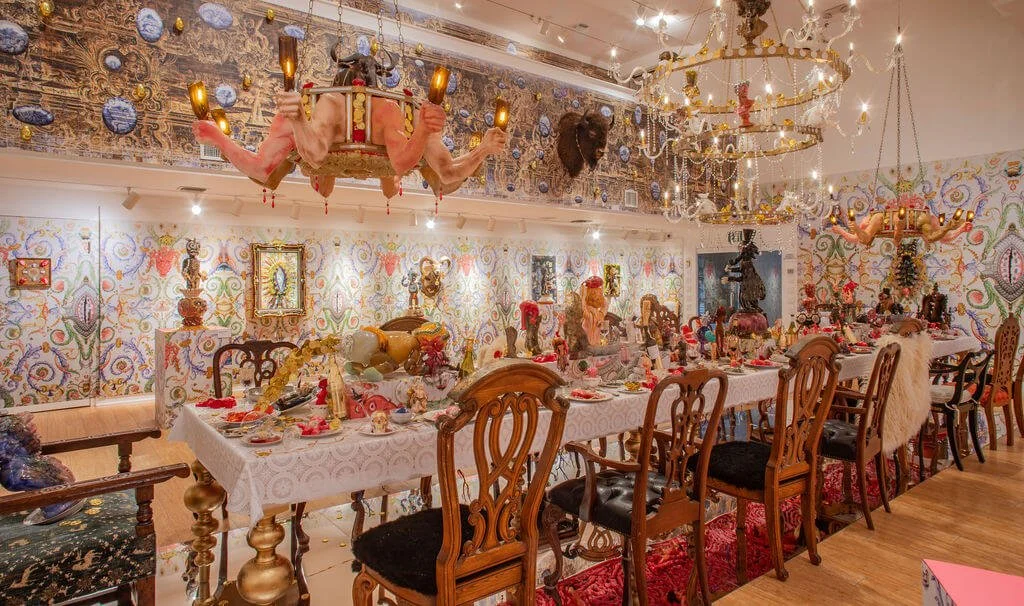
The Dining Table, 2026, various mixed media, 304 x 44 in. Courtesy of Laguna Art Museum
Their exhibition, which includes blown glass, ceramic work and lenticular images, examines the concept that built-up pressure can become so powerful that it ultimately alters our world. For the de la Torre brothers, that pressure is cultural, political, environmental and spiritual. Their art draws on influences from pre-Columbian forms, Catholic iconography, colonial history, border culture, popular media and consumer life. They explain that throughout the history of art, such appropriation has often been employed. They also quote from artist Pablo Picasso who said, "Good artists copy, great artists steal."
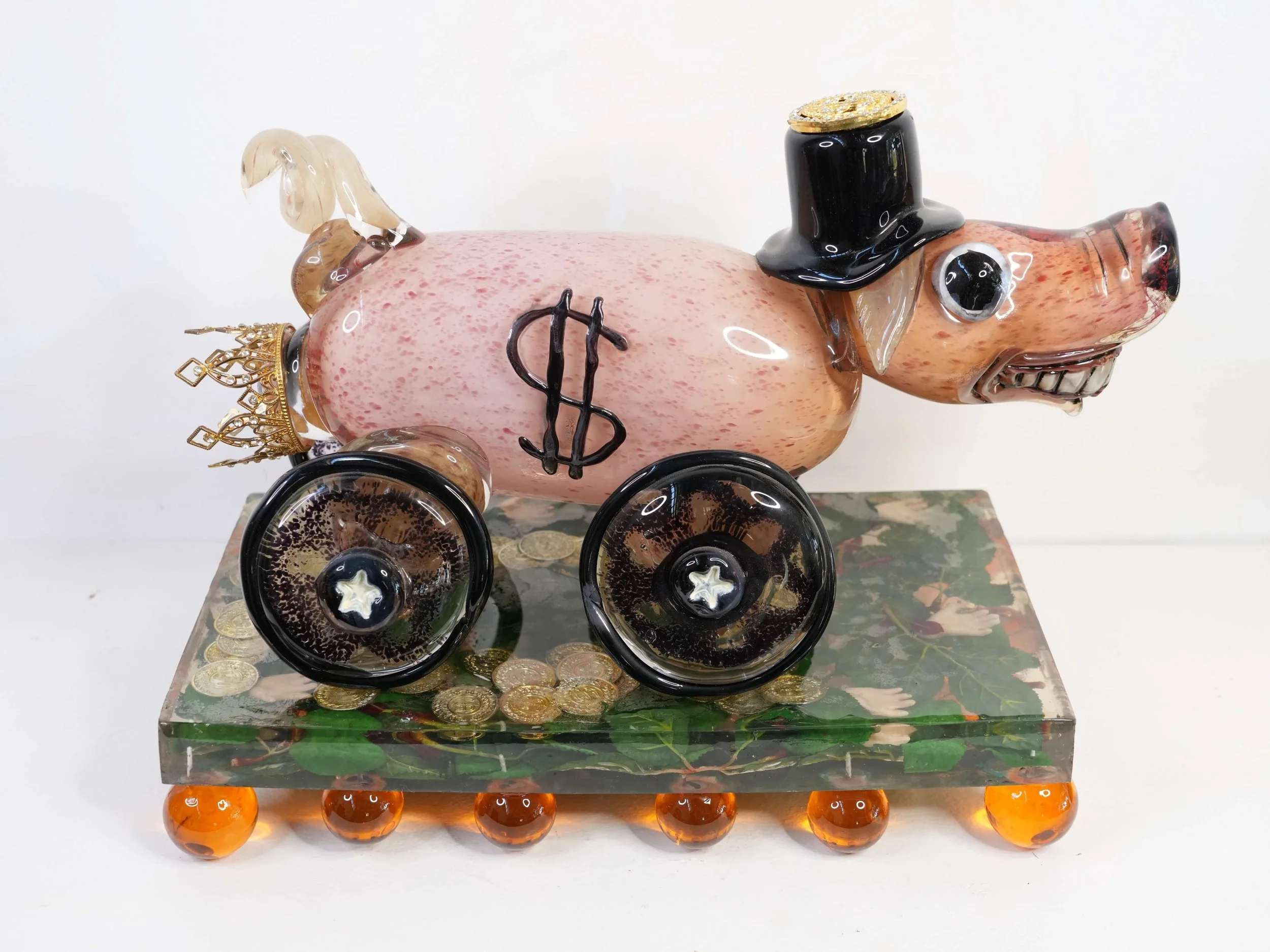
Capitalist Pig, 2026, blown glass, cast resin, mixed media, 14 x 17 x 9 in. Koplin Del Rio Gallery and The de la Torre Brothers
At first glance, the show’s main installation, “The Dining Table,” 2026, a 304-inch long banquet-length table, replicates a lavish dinner scene. Situated against a background of intricate colorful wallpaper, the table is a wildly inventive collection of elegant dinner dishes, with each place setting holding a pink plastic Kewpie doll bathed in a syrupy red liquid. Wine glasses and bottles are everywhere, some spilling out gold coins, several splattering liquids. while glass and ceramic statuary line the table’s center. These include “Capitalist Pig,” 2026, a pink pig on wheels with a crown, a top hat, a dollar sign on its side and golden coins embellishing it; and ‘Ricci Mosca,” 2026, a ghoulish dark figure that stares ominously at the table. The wallpaper, they explain, helps to create the environment, so that viewers are inside of the artwork, as opposed to just seeing it on display.
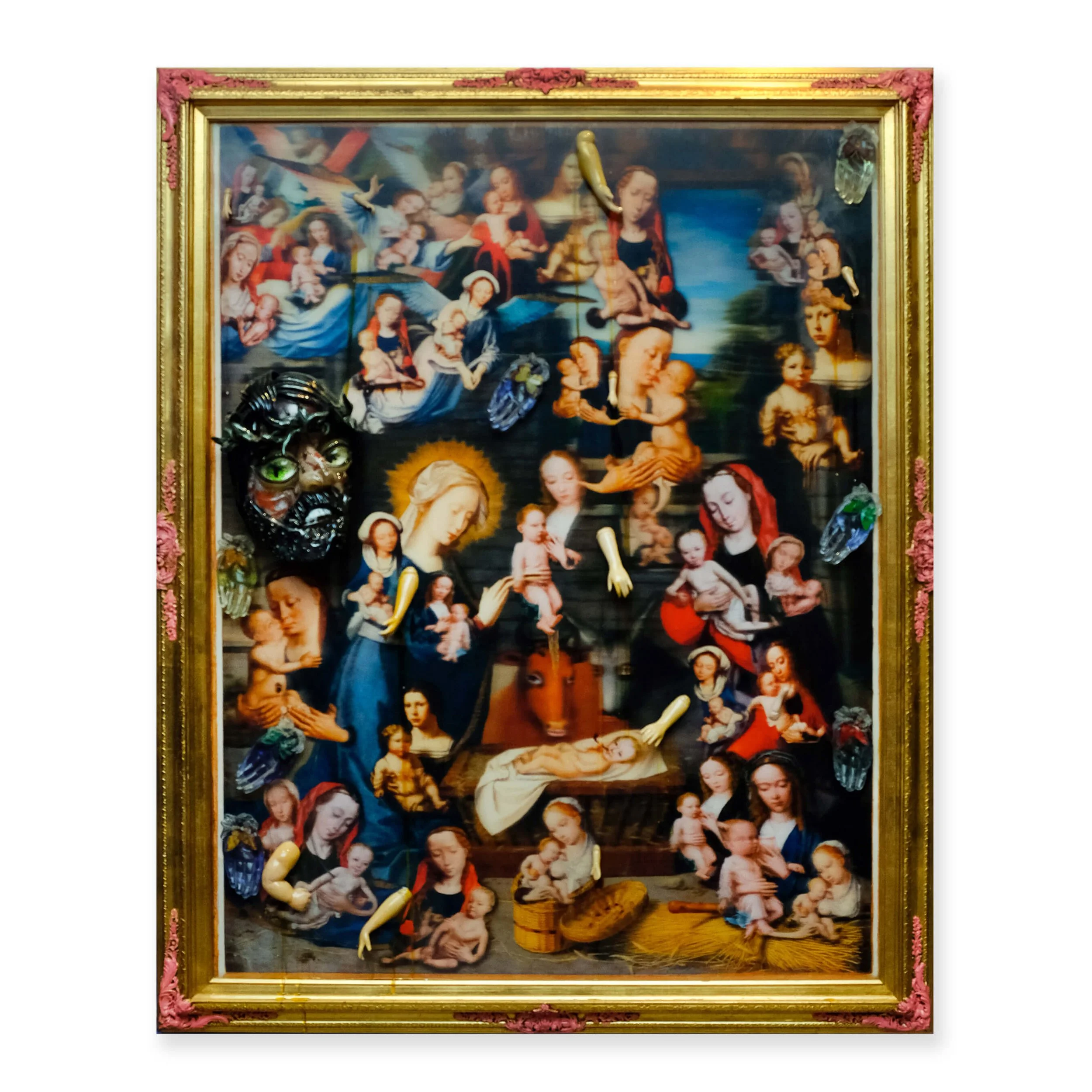
Oedipus Christi, 2023, lenticular, mixed media, 57 ½ x 46 x 5 in. Koplin Del Rio Gallery and The de la Torre Brothers
Three chandeliers are above the table. Two with six arms each, hold lights; the third one is decorated with beads and money bags. Lining the walls are cherub sculptures playing instruments, and several taxidermy animals, including a giraffe, a ram, and a boar, each wearing a gold chain with a dollar sign hanging from it. Also on the walls are paintings including the lenticular “Oedipus Christi,” 2023, a Catholic inspired work with an intrusion of “Madonna with Child” images. An elaborate, colorful rug, affixed to the table’s bottom, is reflected by a mirror on the floor, creating greater depth to the room.
This complex, immersive installation addresses our society’s fascination with wealth, abundance, consumption, and participation in systems of excess. The endless gold coins spread on the table—and throughout the entire show—along with golden eggs affixed to the walls, evoke images of the Oval Office, currently decorated with numerous gold objects and tchotchkes.
When questioned about the proliferation of gold, the brothers respond, “Successful art addresses the human condition.” The genesis of the de la Torre Brothers' work and artistic philosophy began when they were kids in Guadalajara, where they used modeling clay to make toys that their family could not afford. (Einar was born in1963 and Jamex was born in 1960.) Their family also traveled throughout Mexico, including to Michoacán and Oaxaca. The vast variety of vernacular crafts they saw on these trips contributes to the variety of detailed cultural symbols that permeates their work today.
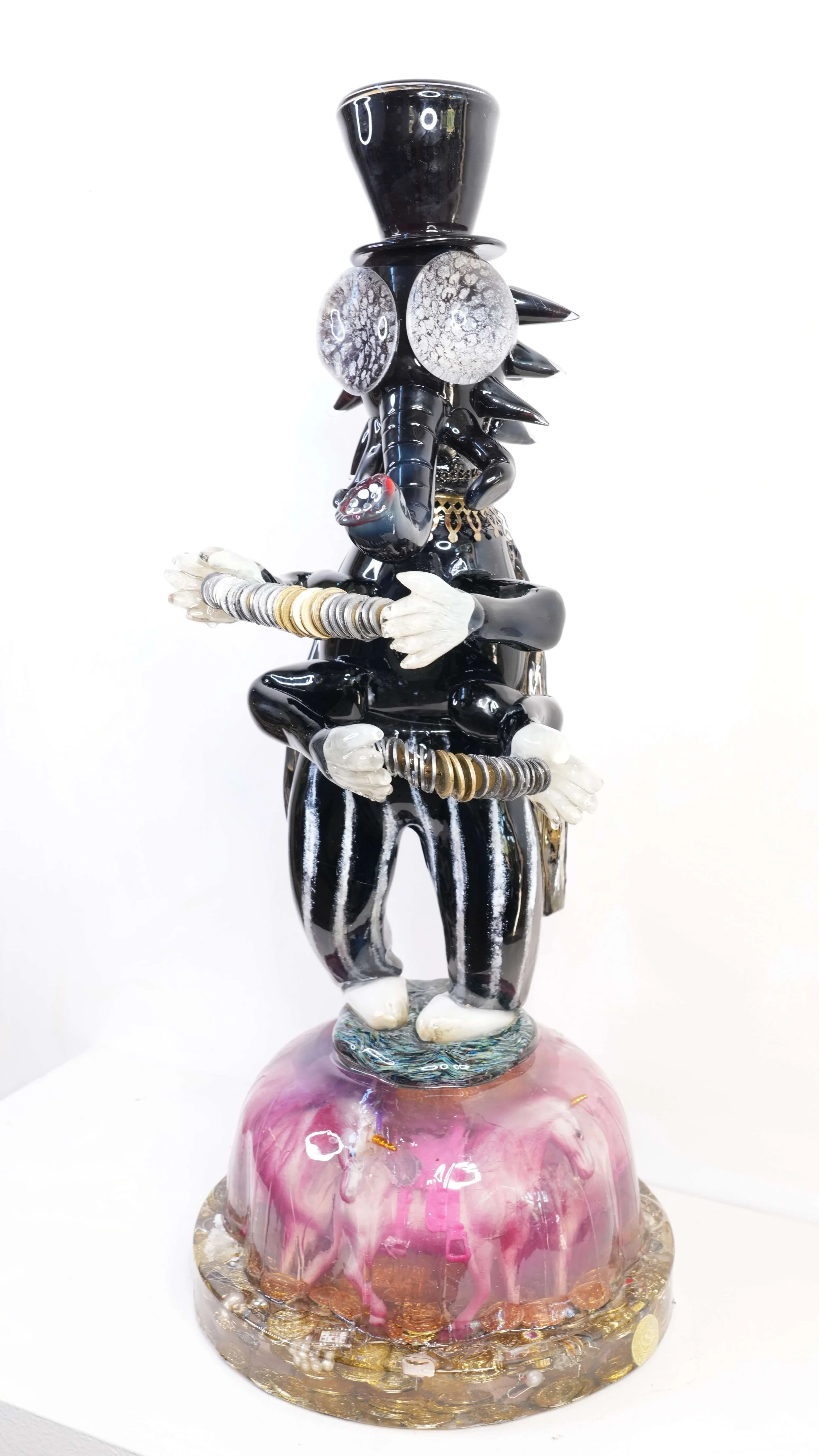
Ricci Mosca, 2026, blown glass, cast resin, mixed media. 30 x 13 x 13 in. Koplin Del Rio Gallery and The de la Torre Brothers
The brothers, who moved to the USA as teenagers, have been collaborating since the 1990s, their sibling relationship and shared experiences serving as powerful influences leading to their complex, multilayered work. They describe their process as, "a continuous dialogue that goes back and forth,” adding, “We have so much in common in subject matter, aesthetics, and in the use of material. Over the years, our work got more layered and complex." They also describe glass blowing as a practice often requiring help from others. “When we go into our studio to do mixed-media work, collaboration becomes a natural process.”
Regarding surrealist influences in their work, they explain, “We relate surrealism to the complexities of everyday life, and to the bizarre juxtaposition of images around us.” They explore the idea that absurdities and contradictions in the religious world inspire their work of exceptional creativity, much of it with surreal aspects. Examples include “Instagram de la Muerte,” 2021, a black hooded figure staring at a small pink object that is likely a phone. “Reunification of Church and State,” 2024, is a sardonic representation of a clerical figure wearing a religious robe. The more conceptual “Plunder of Catholic Kings,” 2017, features a skeletal figure emblazoned with gold coins, standing on top of an Olmec head. These and many other sculptures in the show contain figures that seem to glower at the viewers. “Some have called us devil worshippers,” Einar remarks. But this comment, the demeanor of many sculptural pieces, and the proliferation of gold in the show, are expressions of their dismay at the state of our world today.
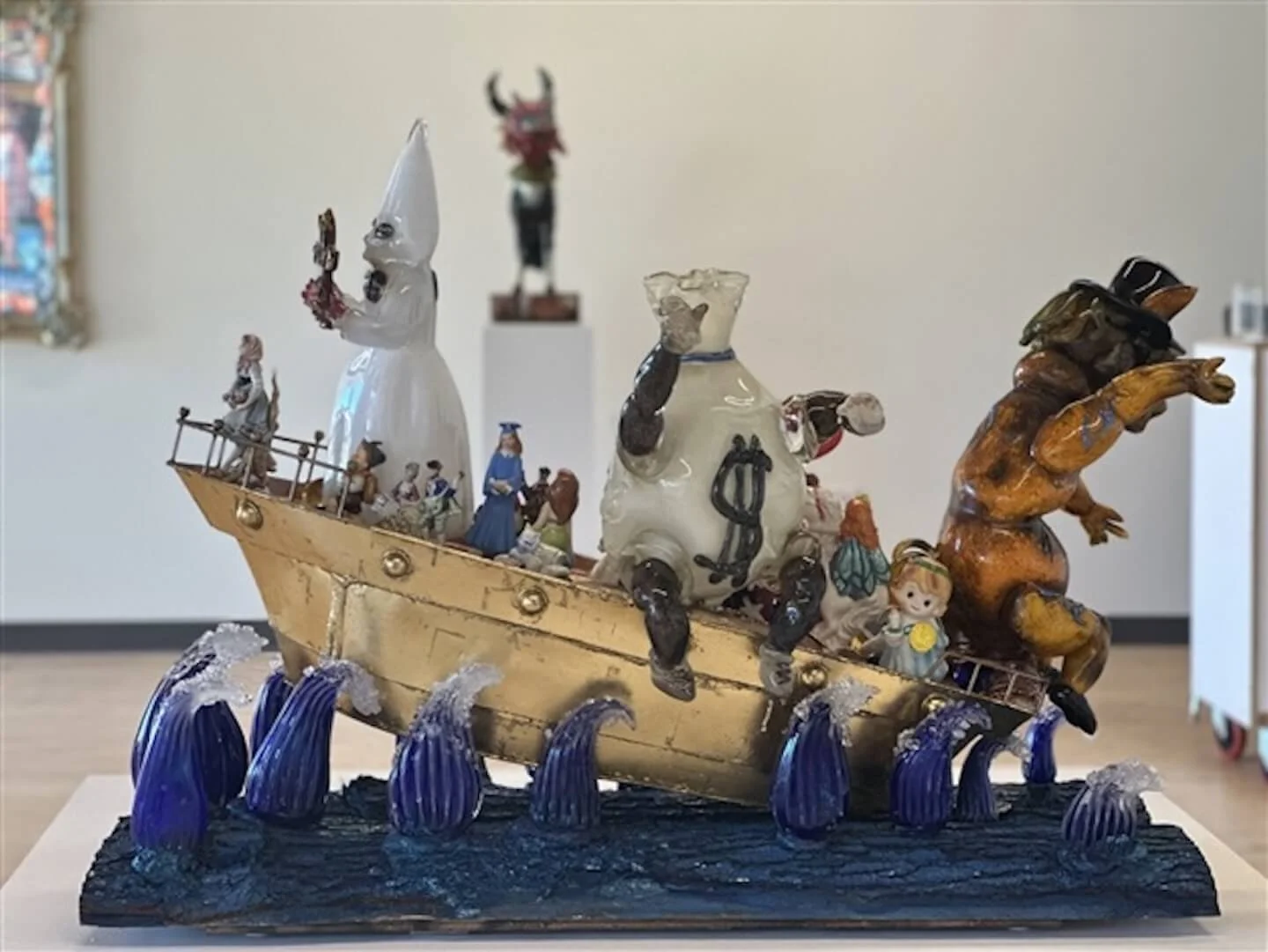
Ship of Fools, 2025, blown glass, mixed media, 41 x 49 x 22 in. Koplin Del Rio Gallery and The de la Torre Brothers
Reflecting that dismay is the installation, “Ship of Fools,” 2025; the title describing a dysfunctional group of passengers on an ocean going voyage. Their ship features an arrogant orange glass pig, a Ku Klux Klan member, a money bag with arms and legs, a cannon with a hand reaching out from within, several small dolls dressed as British aristocracy from the eighteenth century, and ceramic shoes that might have been worn by that aristocracy. There are also numerous golden coins throughout the ship.
Installing “The Tipping Point” was more labor intensive than was any previous exhibition at the museum. A staff member explains that creating it took seven staff members two and a half weeks—with the direction and assistance of the de la Torre Brothers. The show ultimately transforms the various pieces and installations into a colorful and bizarre world that speaks to the viewers’ hearts, political proclivities and spiritual sensibilities.
“The Tipping Point” runs through January 24, 2027 at Laguna Art Museum, Laguna Beach, California.