
Don't Gentrify the Image: Rick Lowe on Art, Data, and Community
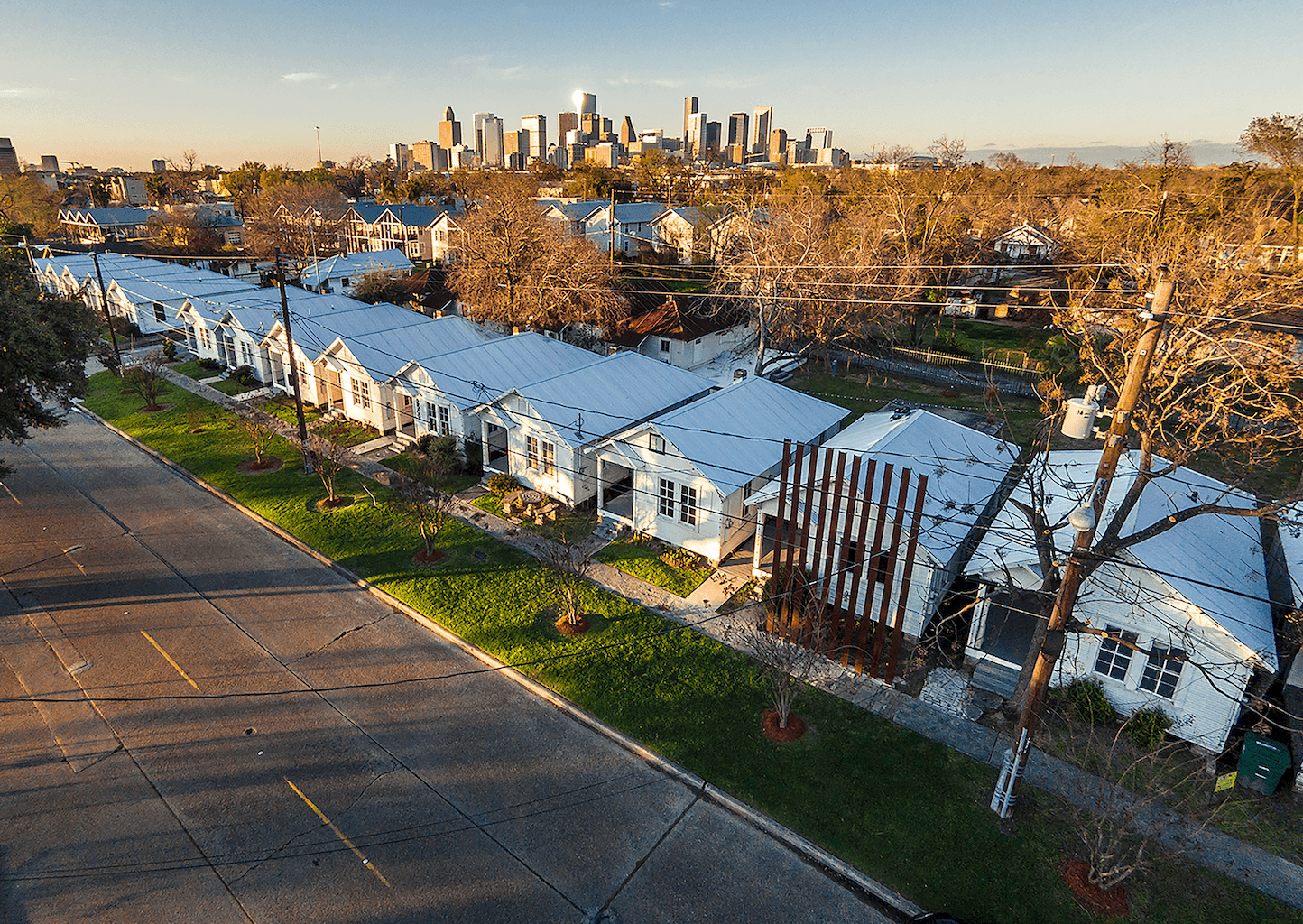
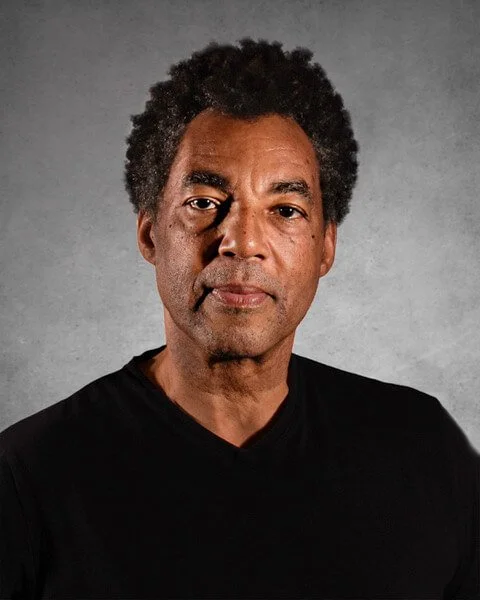
Rick Lowe is a Houston-based artist trained in the visual arts who has spent more than three decades bridging art-world institutions and community-based practice.
In 1993, he founded Project Row Houses, an arts and cultural community in a historically significant Houston neighborhood. He has exhibited internationally at the Museum of Contemporary Art, Los Angeles; the Gwangju Biennale; the Venice Architecture Biennale; the Nasher Sculpture Center; and Documenta 14 in Kassel and Athens.
His community projects include the Watts House Project in Los Angeles, the Borough Project for the Spoleto Festival, Transforma Projects rebuilding New Orleans after Hurricane Katrina, and Trans.lation: Vickery Meadow for the Nasher Sculpture Center.
His honors are extensive. He was a Loeb Fellow at Harvard University, received the Heinz Award in the Arts and Humanities, and won the Creative Time Annenberg Prize for Art and Social Change. In 2013, President Obama appointed him to the National Council on the Arts, and in 2014 he was named a MacArthur Fellow. He holds honorary doctorates from the Maryland Institute College of Art and Otis College of Art, along with the University of Houston's President's Medallion Award.
Since 2016, he has taught as an associate professor of art at the University of Houston.
Artist & Founder of Project Row Houses | Interview by Hugh Leeman
Why He Stays in the Third Ward
Hugh Leeman: Rick, you've lived through an extraordinary transformation of Houston's Third Ward and have continued to call it home, even as your career became increasingly international with numerous shows at Gagosian around the world. What does staying geographically connected to one place give you that moving continuously through the international art world cannot?
Rick Lowe: Comfort. Houston has become an easy place for me, and I think that comfort and familiarity give me the room and space I need to be risky, to do things, to play around. The adventure I need, I get through travel — but when it comes to work, I like the stability of being in a place I'm familiar with. People know me, and I have access to things that are a little more challenging in different places.
Don't Gentrify the Image
Hugh Leeman: In preparing for our conversation, I came across a talk where you described being in the studio and catching yourself thinking, "don't gentrify this image." That's a powerful connection between aesthetics and urban change. What does it mean visually to gentrify a painting?
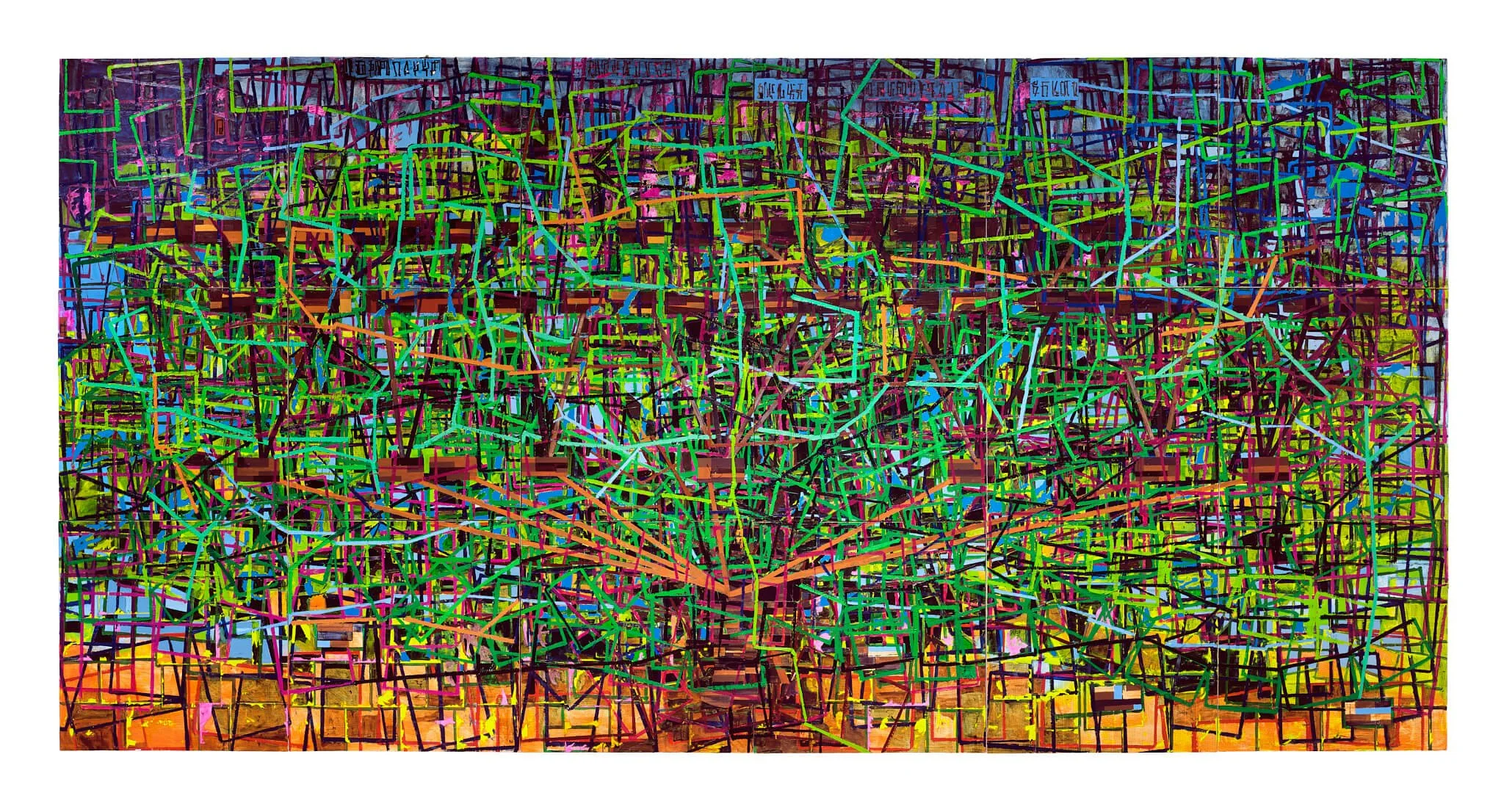
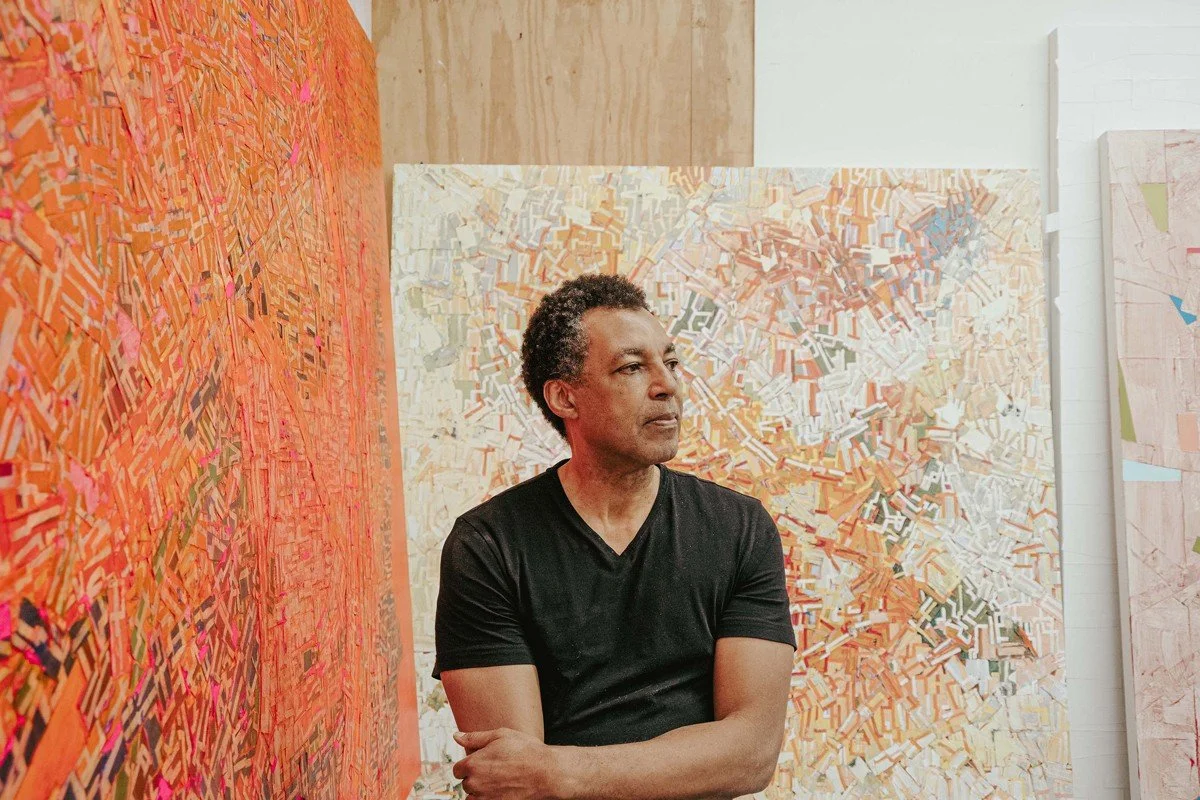
Rick Lowe: Oh, I have one right behind me right now. I like to work with a combination that I consider the combination of life — the duality of life. There are beautiful things, messy things, refined things, rough things in all aspects of life. Nothing is just one way.
It took me a while to understand that within the community development work I was doing, neighborhoods that have been disinvested in deserve investment. And investment has a tendency to place properties in a more refined position — it gets upgraded. There's nothing wrong with that to some degree; everybody wants to live in a place that makes them feel good and looks nice. But then when it starts flooding over, you have to go back and say, wait, wait, we've got to keep balance. For me, the low-income communities I work in will never become perfectly manicured suburban neighborhoods, because the resources aren't there. So there's a certain comfort in knowing I can make things that are a little do-it-yourself — I can have a little DIY up here — but I also want some professional stuff too.
Within the painting process, I love color. I love playing with color. Color has a tendency to get luscious and sweet, and it can take your mind into just the beauty of color. But I also want to pull people back to the nature of where the paintings come from — this experience of the messiness of the urban environment. So I have to go back and mess it up a little. If the color's too luscious, too sweet, then it's too gentrified, so I have to go in and scuff it up. And then sometimes I get overly scuffed, and it's like, oh God, this thing is really messy and not good. So I need to create balance. I acknowledge that balance in both the community-engaged work and in the painting and the objects I make.
Could an Artist Create Solutions?
Hugh Leeman: I want to go to that idea of the community-engaged work, which really transcends the boundaries of simply image-making. There's a familiar origin story of Project Row Houses, and it begins with a young person asking why an artist couldn't create solutions. Looking back now, was the most consequential part of that question really the word "solution," or was it the challenge to reconsider who art was even supposed to be serving?
Rick Lowe: Well, first of all, when that young person had the gall to throw that question out, I was young enough and stupid enough to think I could answer it. But the essence of it for me at that time — being a young person with unlimited optimism about the possibilities of society becoming better and more just — I was looking for solutions. That was the driving force. I thought the most poignant part of the question was, can you create solutions? And that has driven a big part of my work for a long time.
The Ticker That Measures a Community
Hugh Leeman: Beyond Project Row Houses, there's the Black Wall Street Journey, and it turns a neighborhood's own social and economic information into something that resembles a financial market ticker tape. What happens conceptually when these instruments normally used to measure markets and corporations and value are redirected toward measuring the well-being of a community?
Rick Lowe: The physical structure of the ticker is one thing, but the real thing is the data and information collected. The big questions for me are: who's collecting it, and even more important, why are they collecting it — and third, for whose benefit?
I found myself moving into the academic world of research, meeting those people, understanding how and why they do what they do. What they do in their research is very legitimate. But the one thing I challenged them about is that once you start to learn who gets to use that data and who it's used for, it's for the information makers, the narrative makers of the world. They pull on that data so they can say, we have data to back up what we're saying. And so much of the data pulled from low-income populations and minority groups — particularly Black groups — is used against those populations. It's used for dominant cultural and economic forces that have an interest in keeping those groups in a more diffused state, in their capacity to utilize data to propel their own interests.
Empowerment, Not Empathy
Hugh Leeman: In learning more about the Black Wall Street Journey, there's a part where you say that what you're most interested in is an empowering narrative, as opposed to one that simply seeks empathy. Tell me more about this.
Rick Lowe: That's been a line through the growth of my work over time. Early work spoke about particular issues — police brutality, poverty, and so on — that led that young person to ask me why I couldn't create solutions. There was a way of believing that empathy in others would help us improve things for those the empathy is put toward. But later, I started to realize that the power comes from within the group, and we have to figure out how to not rely so much on outside sources to move things. We have to figure it out for ourselves.
When I started Project Row Houses, that was all about creating a narrative that empowered a community from inside, not something happening from the outside. And that continues now into the Black Wall Street Journey. Because of the nature of engaging with researchers, you have to expand what that community is — there are allies and folks doing work who are very interested once they know. What I found about the group I've been working with at the University of Michigan is that most of them, when I started challenging them about the deficit model their research was projecting, they started to think about it. It was very easy for them to start thinking about how to deal with this data in a way that could be used differently than the traditional way of selling it off to the big pollsters.
What the Deficit Model Does
Hugh Leeman: You mentioned the deficit model. Can you give a bit of context about what the deficit model is?
Rick Lowe: Most of the information we hear about us, Black people in particular, is a deficit. Our conditions are always explained in the context of a deficit — a deficit in relation to other ethnic groups, particularly whites. What I found through this research group at the Institute for Social Research at Michigan — what they helped me understand — is that they're trained to look at things in relation to each other, not within a particular group.
We could say Black people have made progress in many, many ways. Education has been a huge gain for Black people. But when you put it in relation to whites, Asians, Latinos, we may be in a deficit, particularly to whites. As a person who is struggling to find something to feel good about, to build my self-esteem around, I'm going to do that a lot better by looking at the possibility of saying, wow, we've come this far in the last sixty-something years — we're moving — as opposed to something always telling me I'm lagging behind. I don't have any research to substantiate this, but as a person and as an artist, I'm interested in knowing: how is it possible that Black people are able to keep moving forward and not be acknowledged for that?
Hugh Leeman: It sounds like in some ways the deficit model puts forth a petitioning for empathy. It's saying, things are bad here, so the way out is to petition for empathy from the very people who are recording this data. Whereas what you're saying is constructing a narrative from within the community that says, I'm not seeking external empathy, I'm doing something internally. Is that fair?
Rick Lowe: Yeah, absolutely — you stated it much clearer than I did. You want to be able to generate things for yourself. I was just listening to — I think it was James Baldwin, in one of his interviews, maybe repeating James Brown: "I don't want anybody to give me nothing. Open up the door and I'll get it myself." That's really putting yourself in a place of being empowered and not having to rely on someone else to empower you.
A light went off for me when we were honing the Project Row Houses mission statement some years ago. We settled upon language — I can't remember the exact thing — but the project would be a catalyst for the empowerment of community. The point was that it was to be a catalyst for empowerment, not to empower. And that was a big discussion within the organization: shouldn't it just be that we empower the community? And it's like, no, you can't empower the community. You can be a part of it, you can be a catalyst for it, you can contribute to it. But you can't empower people. People empower themselves.
A Non-Traditional Route
Hugh Leeman: I want to get to your show coming up at the museum, but to back up — this idea of self-empowerment coming from within. You have a very interesting path through life. From the outside you might say this guy was destined to be a superstar artist showing with Gagosian. But you started out playing basketball, then became an artist, and now you've brought academia into your world. How did you empower yourself along this path that seems very windy on the river of life?
Rick Lowe: People gain power in many different ways. I was one of those people who was unfortunate in American history to be in a situation where — my family being Southerners in rural Alabama, sharecropping Alabama. A lot of people don't know what that really means. What it means is that families are a unit; they work for the person who owns the farms. And when I say working, it means everybody worked, seven days a week. So if you're working, you're not going to school all the time — you're missing school. I was one of those people who missed that opportunity for formal educational training. So I had to figure out how to train myself to do the things I wanted to do.
I have a non-traditional route to where I am. I have no academic credentials. I have a high school diploma, but it was basically just given — that's kind of what they did to poor Southern Blacks in particular. You just get them through the system. So I had to work around the traditional ways of doing things that are set up to empower you. I didn't have it. So I had to figure out how to empower myself, how to educate myself academically, how to function in a society that I didn't have any part of when I was growing up.
Hugh Leeman: How did you do that? What's the recipe? I realize it's not as simple as A plus B equals C.
Rick Lowe: Curiosity. Just wanting to know what's out there in the world. Wanting to go places, seeing what other people are reading and doing and thinking, and saying, I want to do that. And constantly being curious. On some level, as I understand the dynamics of things, it also takes a bit of courage — courage to go into unfamiliar territory. All these places I was going were very unfamiliar territory. It would have been very easy to say, I'll just get a job and work at the factory like the rest of my siblings and everybody else. That's one thing to do. But for some reason I was able to muster up the courage to say, I can read philosophy. I know I can somehow — I just had to find the right people who could teach me how to do it.
The Easy Classes That Changed Everything
Hugh Leeman: There's an interesting tension because you're talking about the narrative — just work at a factory, get a job, this is your lane, stay there. How did you work through this somewhat invisible system that's trying to place you in a certain box? Were there family saying this is absurd?
Rick Lowe: Stumbling upon art was the key for me. I started out with a basketball scholarship to one of the small universities in Alabama, and that was what I thought was my way to fulfill my curiosity, to get out of Alabama. But one of the things suggested to me by the people in the athletics program was that I should take some easy classes, because I'd be spending a lot of time in the gym. And I took an art class. At some point, all the energy and focus I was giving to basketball transferred to art. Being in that environment — it's an open platform for people.
I've been working on a book project with a friend, interviewing people who've been part of community-engaged art programs. One of them was saying how much a program did for her life, how it opened things up — she was the first of her family to go to college. I was listening to how wonderfully smart she was, and I said, you probably would have done something interesting even if you'd gone to a sports camp instead — because you have it in you. And she said, yeah, I probably would have done something successful, but it wouldn't have been as thoughtful as the things I bring now.
So we used this example. We said, I wonder what would have happened if Clarence Thomas had gone to a really nice arts environment program. He went to all kinds of programs getting ready for his professional life — what would have happened if that kind of person had an art program in their life? It might have made him a little more empathetic toward others, more open and curious about things in different ways. I give all the credit to the arts, because otherwise I don't think I would have had exposure to that kind of diversity of thought and desires and approaches.
Hugh Leeman: It was the easy classes that changed the direction of your life.
Rick Lowe: Yeah, it was very easy. Sometimes — when I used to play dominoes with one of my mentors, such a great philosophical mind, he'd say, dominoes is so great because it's one of the most inconsequential things you can do with your time, but it matters. It has all the importance in the world, when you're making connections with people and friends and family. It's the simple things that can take you really deep.
The High Aspiration of the Michigan Show
Hugh Leeman: So I want to go toward the simple things that take you deep. The exhibition at the University of Michigan Museum of Art culminates a multi-year residency with the university's Institute for Social Research, where you collaborated with researchers, data scientists, faculty, and dozens of students. Your research included engagement with the Panel Study of Income Dynamics and the anti-Black index, and the residency involved a two-year course sequence you taught. This clearly goes far beyond a traditional art show. What's the high aspiration here?
Rick Lowe: The high aspiration is to somehow impact the sources of information that come out — and that's through impacting the researchers who gather data, helping them find different avenues and vehicles through which they can talk about this data, so they can actually be agents in the dissemination of their data. Particularly nowadays, there are all kinds of platforms. It's not like it used to be, where you get all your news from the six o'clock evening news. There are other things for them to do, but they have to become aware that the research they're doing, they're doing for particular people with particular interests. I want to expose them to the opportunity to think about what their interest is, how they want to use that data, how they want to make it available. The folks at Michigan have been generous enough to make that available to me as an artist through an exhibition. Hopefully it'll expand to others with even more popular platforms.
Hugh Leeman: In some ways it sounds like you're doing for others what was done to you in the best way possible — expanding your horizons through curiosity.
Rick Lowe: Oh, absolutely. When you gain opportunities — this is just the way I grew up — you make those opportunities available to others. That's probably more ingrained in the minds of people from the lower end of the economic spectrum, because they understand how important it is. Whereas people at the upper ends kind of take it for granted, because the institutions all work for them and everything is designed for them. When you're coming from the bottom, you know you have to work within the ecosystem of where you are, and you have to make sure you replenish.
What a Financial Ticker Says About Black Progress
Hugh Leeman: At the center of the project is the Black Wall Street Journey ticker tape — this roughly forty-foot-long LED installation modeled on a Wall Street financial ticker. One will appear on the roof of the university's building facing a major thoroughfare, while a second is planned for the atrium of the Institute for Social Research. What civic discourse do you hope this sparks?
Rick Lowe: The idea of the ticker was always much more about getting people to think about Black people in a way that there are things we're doing that are worthy of discussion. The ticker becomes a platform for that. Most tickers are very abstract for people who aren't familiar with the data. When I look at the Bloomberg ticker, I don't know what it means — I just see lots of numbers going. But what I do know is that the mere idea that there's a Bloomberg ticker says to me there's something powerful happening in the economy. That's what we're hoping to get from the public — to see this ticker where, once in a while, something goes across it that says stuff about Black progress. People won't know exactly what it is, but they'll know it's something dealing with Black progress. That's a win.
Then in the Institute for Social Research — they have over seven hundred researchers. Having those people walk through the doors and see there's an alternative platform for this research, hopefully that'll excite them. We're focusing on African Americans in that Panel Study, but you could break that study down many ways — women, immigrants, many groups. If you're interested in what I'm interested in, which is finding points of inspiration that encourage you — if I'm interested in running a marathon, I don't need to see all the data that says people my age never run a marathon. I need to see data that says, let's focus on these twenty-five people worldwide who are doing it. That gives me a sense of possibility. It's been done. I can do it.
Kinship Networks and the Unicorns
Hugh Leeman: You have a project that's part of the same exhibition — Kinship Networks. How does it investigate the exhibition's themes of relationships and social structures?
Rick Lowe: Within the exhibition, there are paintings I'm doing that comment on the process — me, as a non-researcher, seeing how research happens and where the holes might be. You'll see some graphs that look normal, but then something goes way off track. I guess we call them nowadays the unicorns — the things that just happen that nobody expected. Those things are real, and they need to be accounted for, because they help people understand that, yeah, you can go to outer space. Everybody doesn't do it, but it happens.
Looking at how researchers use graphs, the Panel Study uses them to show family trees — we end up calling them kinship networks — to show how these families start and grow. I use those in some of the paintings to draw attention, but also to acknowledge the familiarity of things for the researchers. I want researchers to be able to go to this exhibition and stumble around and find hints of things — oh, that's what we do, that's our work. They'll have to work to discover it, and hopefully get some chuckles on the graphs and charts that go a little haywire.
Data as Sculpture: From Where Is the Middle East?
Hugh Leeman: You mentioned holes in the data, and you've spoken of yourself as the outsider here, which can be powerful because it brings a perspective that hasn't been inculcated to "this is how we do it." What are some of the holes you're seeing?
Rick Lowe: First of all, the way questions are asked creates lots of holes. The researchers helped me understand that — they have the data, but how they ask questions of the data gives you different answers. But I also think, just in general, the whole way of doing comparative analysis leaves a huge hole. That's the core of this whole project. By only doing comparative, you don't get to see the growth within. That's a huge hole, because people need to see their growth as well as the deficits.
So much of it, though — if you think about how the world of research and data operates, we like to think of it as just objective. Oh, this is just objective information. Well, objective from where? That's the question. I was listening to something the other day, and someone from the so-called Middle East said that always frustrated them — middle of, from where? When the British were there, India was the Far East for them, and the Arabic nations were in the Middle East. But that assumes England is in the center of the world. Who said that? The same with how global maps are looked at. Someone set the standards for global maps that we just assume, we just use because it's normal. There are countries inflated in size and others not proportional. So there are many places where there are holes in research — it comes from historical references in how we do things, and some comes from intentional manipulation.
Hugh Leeman: It seems like one of the things you're focusing on is the way data is effectively a sculpture in and of itself — that it's forming a society, forming perceptions. How is data already sculpted by the institutions that decide what gets counted and who gets counted?
Rick Lowe: Oh, it is. It almost seems predetermined now, because it's so codified and accepted. That's what this project is pushing back on. So many things are rooted in it — police brutality and all these things are rooted in notions that are just acceptable. Oh, it's much more likely that a Black person is going to commit a crime than a white person. Probably not. The whole thing about Black-on-Black crime — there's not as much Black-on-Black crime as there is white-on-white crime. There are so many things we've come to accept, and it shapes the world and our psyche around those things.
That goes back to the conceptual framework that inspired me early on — Joseph Beuys's concept of social sculpture. If we thought of the world and everything that happens in it as a piece of sculpture, we're all sculpting it. Which means anything can be a sculptural form — politics, community organizing, any aspect of shaping, whether physical or intellectual or mental. And there's been an incredible sculptural perspective of Black people in this country that is just not legitimate, as far as I'm concerned.
Public, Community, and Neighborhood
Hugh Leeman: Over the years you've made an interesting distinction among the public, a community, and a neighborhood — with neighborhood being geographically defined, while community can extend far beyond geography. When you begin a project, how do you determine which of those constituencies you feel accountable to?
Rick Lowe: In general, projects come about in a few different ways. One is that I'm invited by some entity — an art institution or a community group. Those have very different opportunities and challenges. An art institution is helpful in a lot of ways — it'll generate financial support that going into a community-based setting will not, for artists. But it also has serious drawbacks in terms of how art institutions are seen within community contexts. Generally they're not sustained efforts, and people end up feeling like they were used.
The community process can be both good and bad too. You're invited by a particular community, so you start with community buy-in and support. But it's harder for artists to generate the resources necessary outside the art-institutional context. When we decided to do housing, it was of a scale we couldn't rely on private money from the arts sector — we had to get public funding. It was very challenging and difficult. It took us a while, because people didn't see artists as the responsible group that would actually do something meaningful.
But the way I really love is being self-driven, self-initiated. The Black Wall Street Journey project is something I've just been pushing because it's something I'm interested in, which allows me to move the project in the direction where there may be resources and capacity to advance the work. It started in Chicago, and the research university we engaged with was the University of Chicago, which didn't have a strong social science research identity. So I did that long enough to find out it wasn't going to get me what I needed, and then I could move it to another context. That's the way Project Row Houses was founded — not through the invitation of any institution. It was initiated from within me and the people around me who were working toward it.
Housing for the People Who Live There
Hugh Leeman: I want to come back to a powerful word you used — the sustainability of a project. But first, there's an interesting tension. When you set up Project Row Houses, the idea from the outside was, we should have artists in residence, bring artists in from different places to do their thing and show people how exciting this can all be. And you pushed back on this. Why?
Rick Lowe: I was learning at the time, and part of the learning process is being a good listener — really trying to hear what people have to say, in a real way. Not that kind of, oh, let's have the community meeting, give people a chance to say what they want, and then you go out and just do what you do. Just listening. People were saying what they liked about what we were doing, but also what they desired and needed within their community. They said, we love this art thing you're doing, and you're doing great stuff with the children, but this neighborhood needs housing. What are you guys going to do about housing?
It didn't make any sense to import artists to live in housing that people in the neighborhood would normally live in. If we could renovate those houses, they should be for the people who live there. There were twenty-two houses; we were taking ten for art programming and five for youth education. We at least owed it to the community to do the housing thing, if that's what people found meaningful.
It was a challenging move for an art group to say we're going to do housing, but it's not going to be artist housing — it's going to be housing for young mothers. That was a hard thing to sell thirty-plus years ago. But it worked. Now, because of that, the project has about a hundred-something units of housing that grew out of that effort. It's not solving the housing problem, but it's symbolic in a good way. It speaks to the fact that this is a community with a history, and there are people who have history with this community, and some of them are still here, and they will be there as long as the project is there.
Hugh Leeman: That's a powerful shift you brought about through questioning the status quo — and in some ways it came from being the outsider.
Rick Lowe: Well, to be genuine, I also have to mention that I spent a lot of time being a person in the grassroots community-activism context, being mentored by seasoned activists doing interesting stuff. I'd hear it all the time — they understood, from the political standpoint, that politicians always want to know what you think and what you want, but they're rarely willing to work to get you those things. So it was very easy for me to see that. I'd seen it so many times. This is what people are saying they need — so how dare we say, yeah, we know that's what you say you need, but this is what we think should work. That's not the way to do it.
On Sustainability
Hugh Leeman: As a final question — years ago you questioned the pressure placed on socially engaged projects to become "sustainable." After seeing Project Row Houses move from an experiment to an institution, how do you think about sustainability at this point in your career?
Rick Lowe: I think sustained effort is an absolute. In all issues, there has to be sustained effort. But I also understand that life moves in different ways, so things have to sustain themselves differently at different times. A project may play a significant role in a particular place at a particular time — that doesn't mean it has to play that same role forever. It may move out of that because it loses touch with the times. Things just happen.
I always tell people there are great short-term projects that are every bit as powerful as long-term investment projects. It's the same as with paintings — paintings aren't good because they're big. There can be small paintings that are great and big paintings that are not good. It's about the quality of the experience, whether it's really hitting the mark at that particular time, because it's never going to be that way forever.
Even with something sustained like Project Row Houses — I used to make these charts, a circle of projects, drawings showing at what point on the circle the project is an equal amount of aesthetic and practical impact. At some points it's like, oh, this is a magical moment where it's beautiful, everything feels good, the impact is great. And then it slowly moves out of that — it becomes very artistic and poetic, but it's not really connecting with the issues. That's okay, that happens. But then you have to work to move it back toward that nice combination of both. And sometimes it moves the other direction, where the art part is completely lost but it's very mundane and practical — which is fine too, because the practical elements are the whole point of doing it as well. So I see it move even within the sustained projects. Sustainability over many lifetimes — it's just what it's doing at the moment that it's doing it.
A Bird's-Eye View
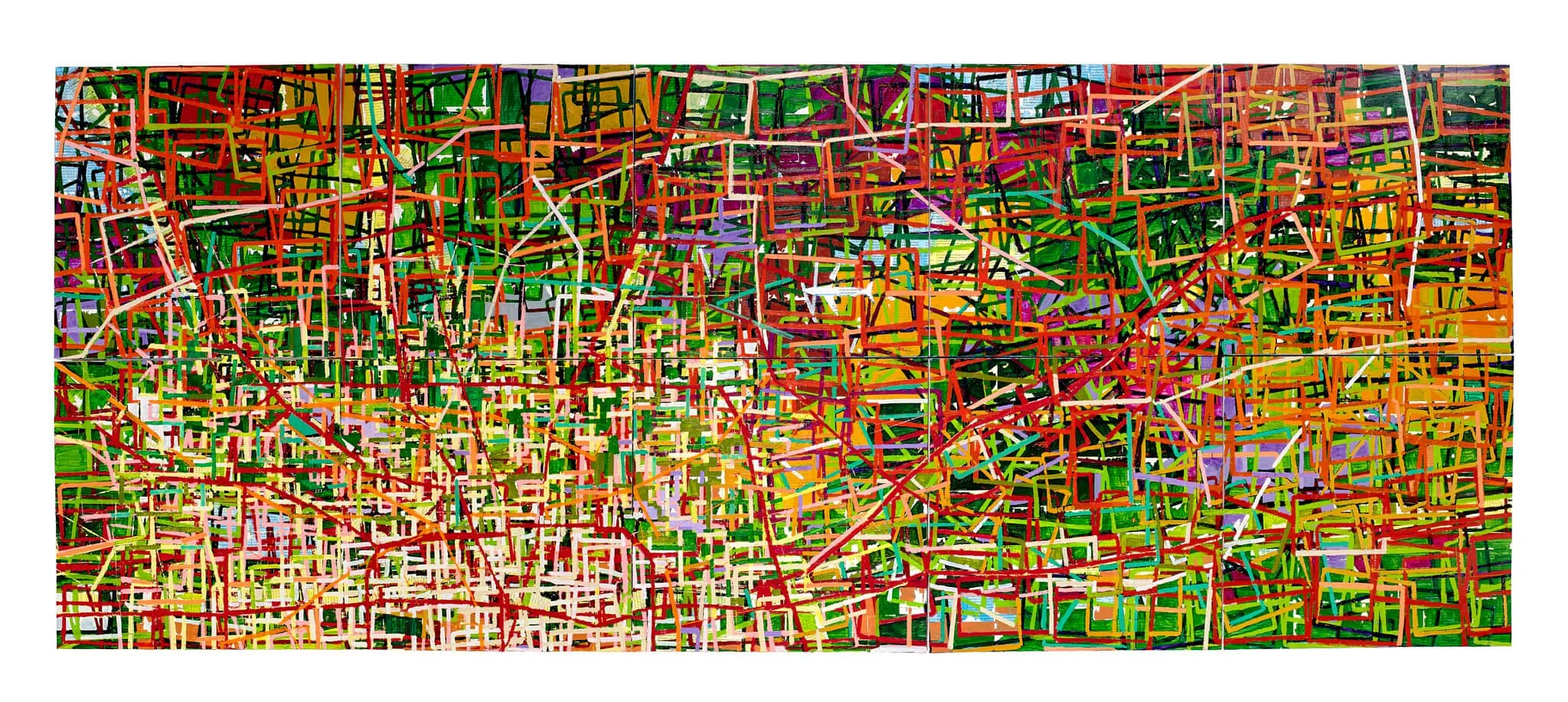
Hugh Leeman: Rick, behind you is an incredible colorful linear artwork. Take me through this — what are we looking at?
Rick Lowe: This one is, strangely enough — I don't do a lot of commissions, I generally stay away from them, but our airport here in Houston wanted to commission me to do a painting. So I did this piece for the people flying into the airport, because when you fly in, they have that new digital mapping stuff you can look at in front of your seat — the flight map. I love looking at maps. I look at them all the time, and I love the ones I'm familiar with. I know which way we come into Houston, which way you go. So this is actually a map of Houston — you don't see the whole painting; it goes out further, but there's a loop here, an outer loop, and that little airplane thing you always see is the only representational thing in the painting. It's a bird's-eye view.
Hugh Leeman: A bird's-eye view of your passion for maps. A beautiful thing. Rick Lowe, thank you so much for making time to share.
Rick Lowe: You're very welcome, and I enjoyed it. Thank you.
