
The Laguna Beach Pageant of the Masters, A Living Version of History’s Greatest Art.
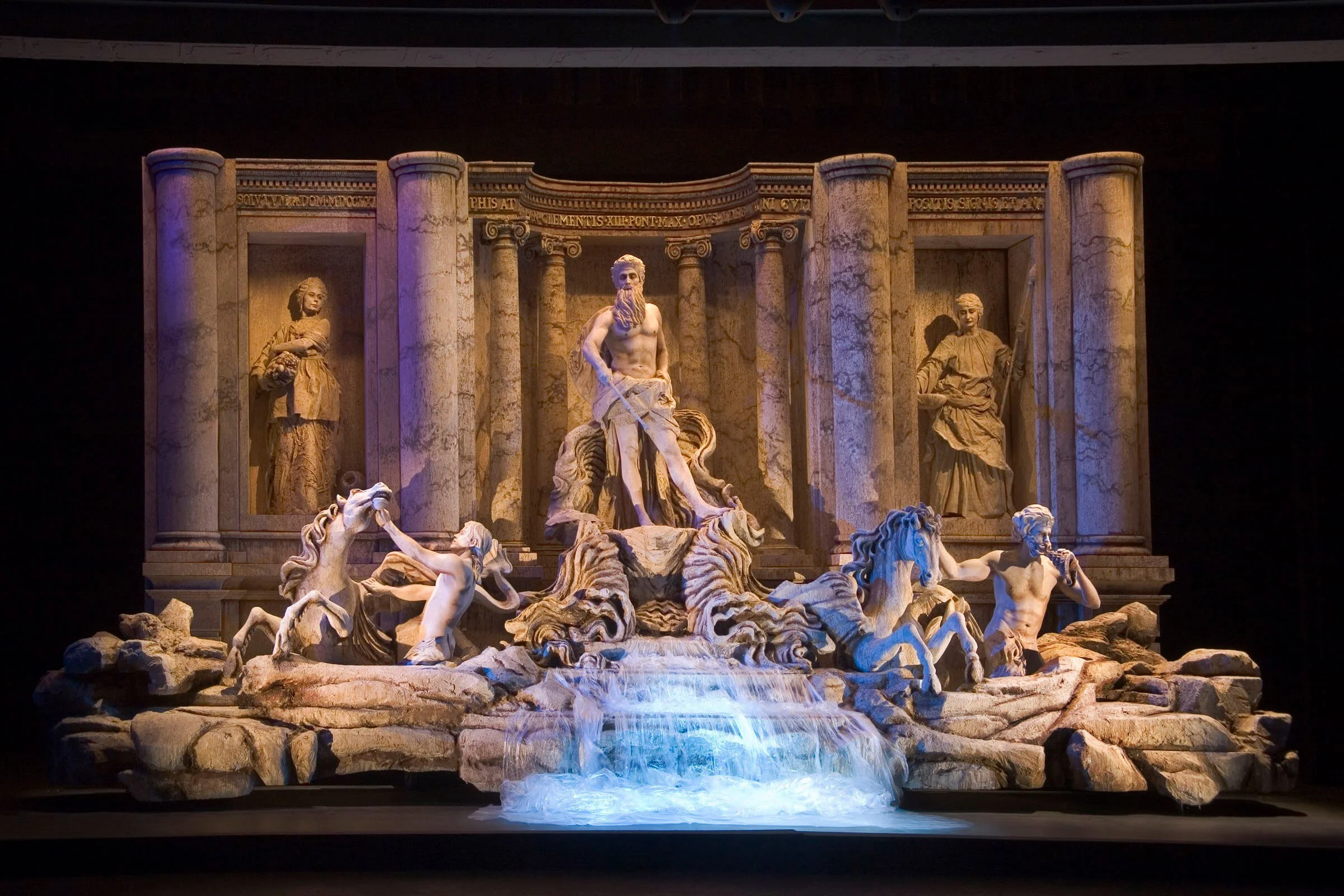
Nicola Salvi, Trevi Fountain, 1762, marble, Rome, Italy (image from Pageant of the Masters)
By Liz Goldner
This summer’s Pageant of the Masters, with its theme, the “Greatest of All Time,” celebrates six centuries of art masterpieces, presenting work from many different eras and styles. The theatrical spectacle features 40-plus renowned paintings and sculptures, most with real people inhabiting their artistic counterparts, on the stage.
The Pageant evolved organically in the art colony of Laguna Beach, which attracted artists from all over the country and beyond. Artists moved there in the late 19th and early 20th centuries for the magnificent weather, coastal scenery, landscapes as subjects of their artwork, and especially for the camaraderie with like-minded creatives. As the town evolved, performances became important occurrences at get-togethers and gallery openings, leading to the Pageant of the Masters.
Performed for two months every summer, the Pageant combines fine art with intricate theatrical engineering, and with volunteers who pose as characters in classic, modern and contemporary paintings and sculptures. The models inhabiting the living pictures or “tableaux vivants” wear elaborate make-up, wigs, headpieces and cleverly constructed clothing to facilitate their art personas.
Supporting these volunteers are detailed background scenes from the original paintings, created by professional artists. With models posing in front of these scenes, re-creations of well-known works of art, framed, with stage lighting, are produced. When viewed from the Pageant’s expansive Irvine Bowl amphitheater, the audience beholds astonishing larger-than-life pictures that overflow with vibrancy. This aspect is also true of the sculptural pieces. Completing the complex production is a large construction crew, a live orchestra, and narration detailing the stories behind the art pieces.
These two-hour performances are derived from amateur theatricals performed during the Victorian era. These events featured party-goers posing as their favorite art characters within large picture frames. In the original 1932 Pageant, titled “Spirit of the Masters Pageant,” volunteers posed as “Mona Lisa,” “Whistler’s Mother,” and other well-known subjects. The volunteers walked down Laguna Beach streets, holding large frames around themselves, leading onlookers to the newly formed Festival of Arts. The Pageant evolved to become a complex production, presenting works by Vermeer, Rembrandt, Bruegel, da Vinci, Botticelli, Manet, and modern and contemporary paintings.
The “Greatest of All Time” Pageant theme hearkens back to its roots, featuring world-famous art pieces. The show begins with sculptures by Michelangelo and paintings by Johannes Vermeer (“The Music Lesson,” 1665, and “Art of Painting,” 1668). Marble masterpieces, including a stage-wide re-creation of the majestic “Trevi Fountain,” 1762, in Rome, are accompanied by music by Ottorino Respighi: “Pines of Rome,” 1924.
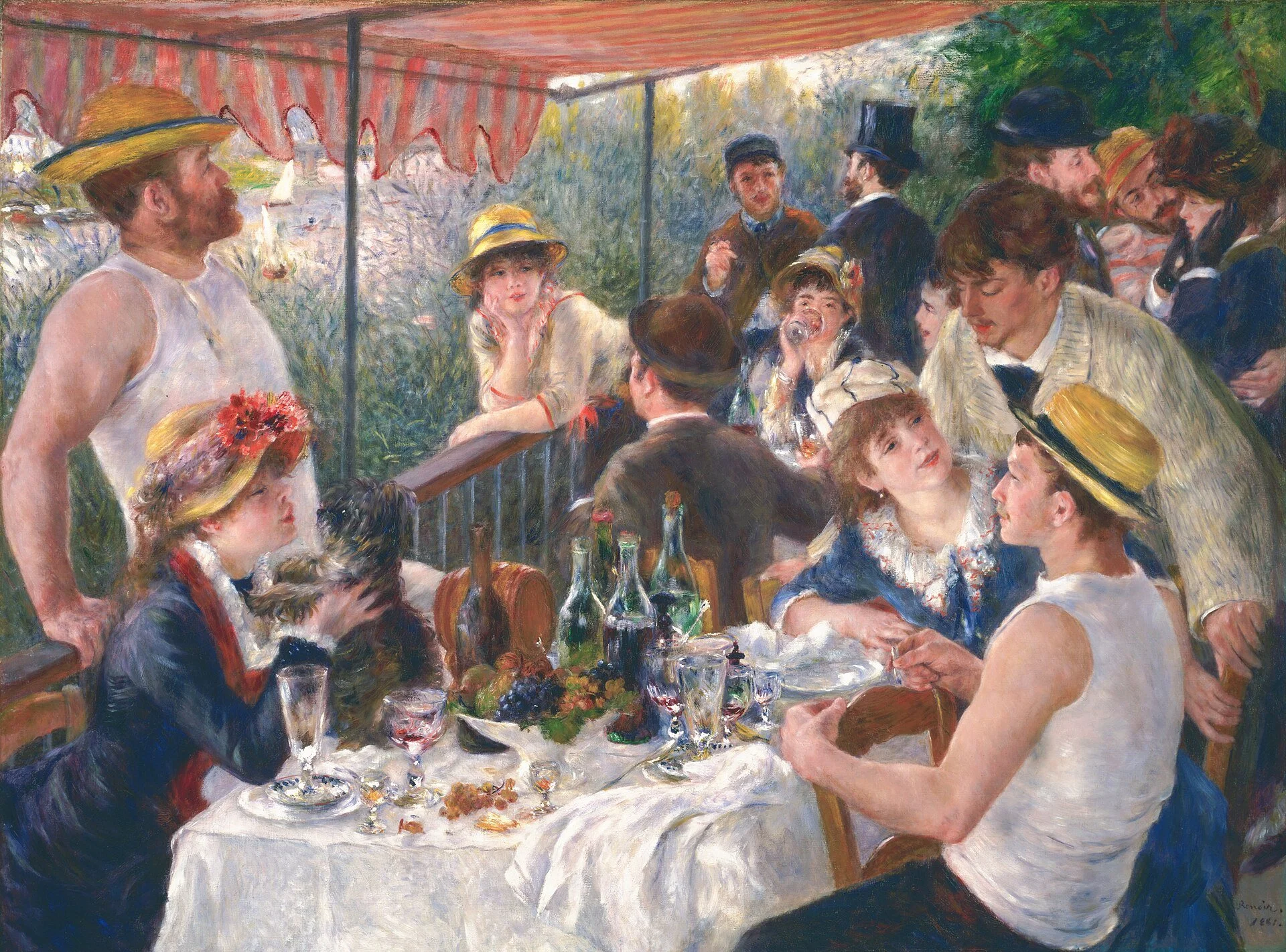
Pierre-August Renoir, Luncheon of the Boating Party, 1881, oil on canvas, The Phillips Collection, Washington, D.C.
These are followed by masterful Impressionist artworks: “Le Déjeuner sur L’herbe” by Claude Monet, 1866; “The Dance Foyer at the Opera,” 1872, by Edgar Degas, with live models holding complex dance poses; and “Luncheon of the Boating Party, 1881,” by Pierre-August Renoir. When the latter painting is displayed, a French accented voice, representing the artist, says “To me, a painting should be something pleasant and pretty, yes pretty.” The work, on view at the Phillips Collection, Washington, D.C., is a colorful, sunlight-infused work of a party on the Seine River, embodying the quintessential Impressionist style, and lifestyle during the Belle Époque.
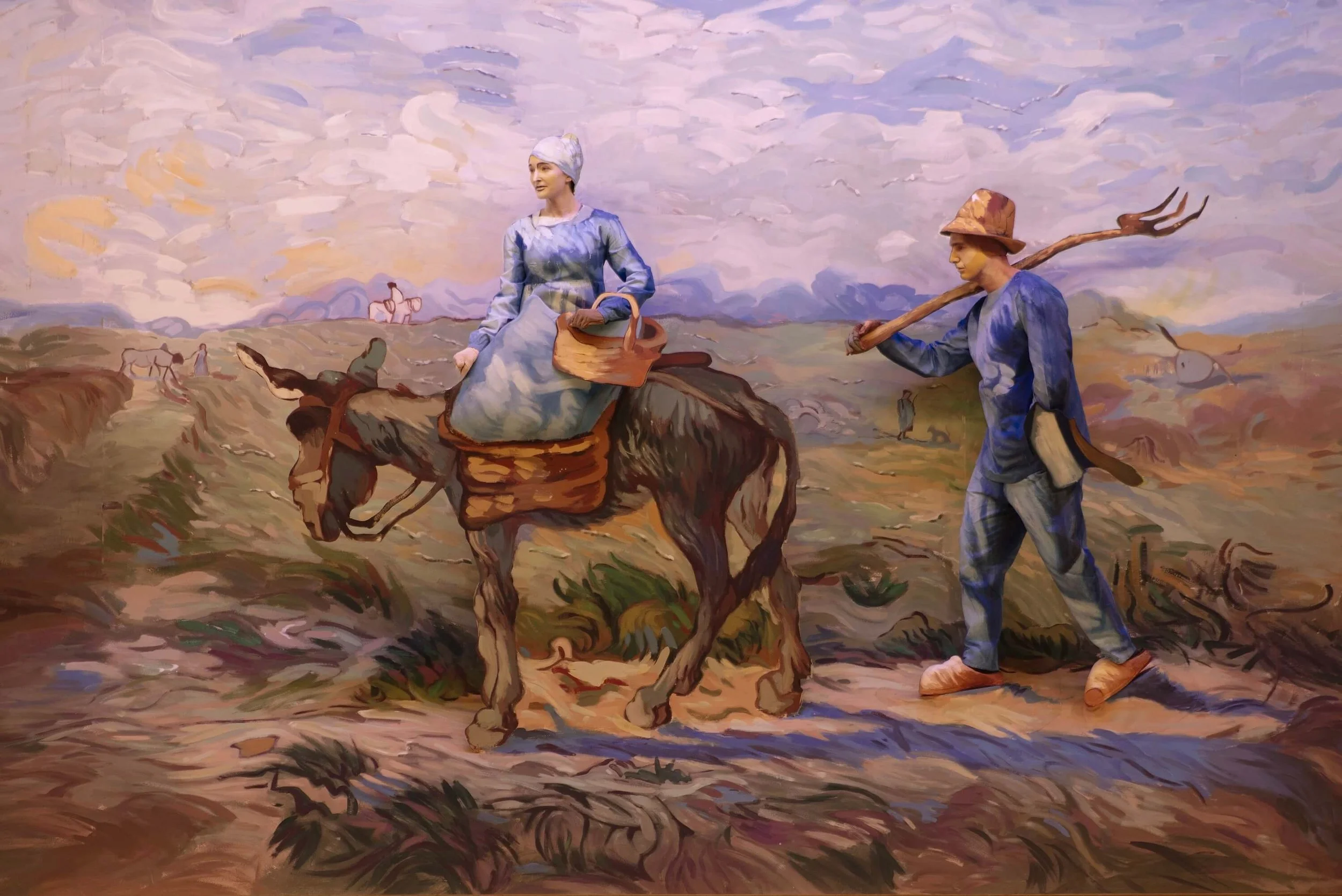
Vincent van Gogh, Morning, Peasant Couple Going to Work, 1890, oil on canvas, The State Hermitage Museum, Saint Petersburg, Russia (image from Pageant of the Masters)
Vincent van Gogh’s “Morning, Peasant Couple Going to Work,” 1890, is an expression of the artist’s reverence for rural laborers. One of his most luminous paintings, “The Starry Night,” 1889, depicting the view of the sky andstars from his asylum room during a sunrise, with the addition of an imaginary village, is featured. A magnificent replication of the work is displayed across the Pageant’s entire screen.
Pablo Picasso, one of the most prolific painters who ever lived, according to long-time narrator Richard Doyle, appears on the Pageant stage by an actor playing him, with voice-over by a Spanish-accented man. He talks about his celebrated paintings and about his several wives and lovers. When discussing his tumultuous relationship with his wife, Russian ballet dancer, Olga Khokhlova, an elaborately dressed woman, personifying her, dances vibrantly onto the stage.
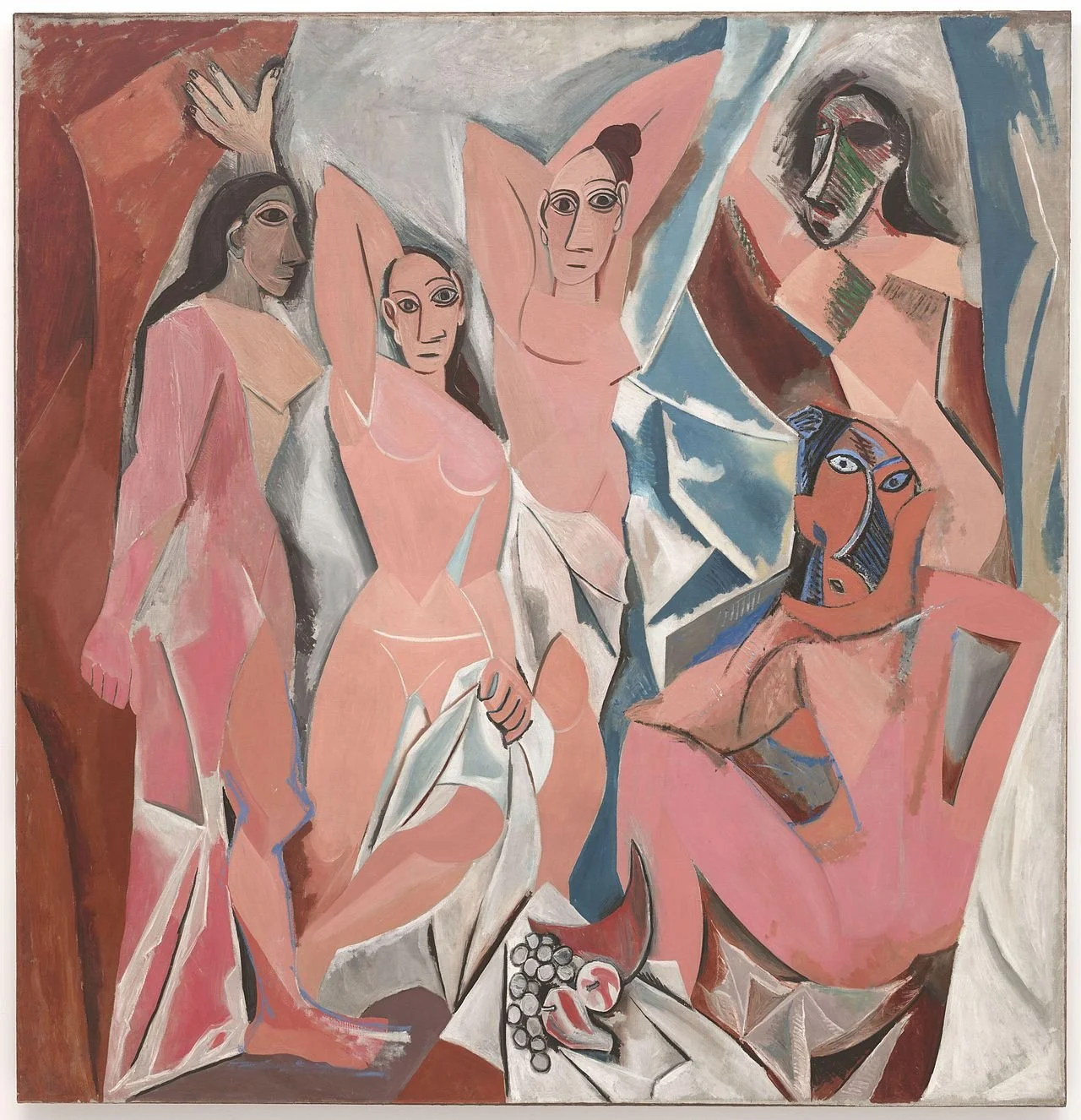
Pablo Picasso, Les Demoiselles d'Avignon, 1907, oil on canvas, The Museum of Modern Art
Special attention is given to Picasso's 1907 “Les Demoiselles D’Avignon,” in the permanent collection of the Museum of Modern Art. Presenting five sex workers, with African, Iberian and tribal-inspired masks, in a red-light district of Barcelona, it was one of the artist’s first paintings to employ fractured spaces. As one of Picasso’s most famous works, its cubist style influenced artists for many decades.
Picasso’s iconic 1937 painting “Guernica” is then thrillingly displayed across the show’s entire screen. Representing the fascist bombing and obliteration of an ancient Basque town during the 1937 Spanish Civil War, the anti-war painting conveys fractured versions of injured bodies, abstract horrified faces, bulls, horses, and birds. The bombing of Guernica was carried out by Nazi German and Fascist Italian forces supporting General Francisco Franco’s Nationalist forces.
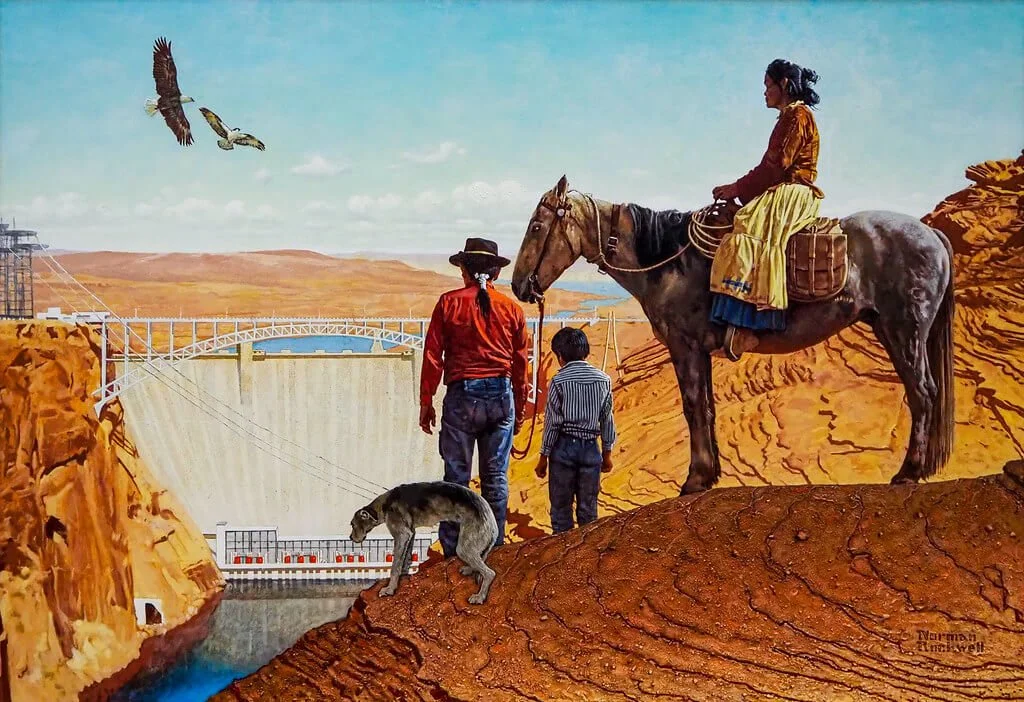
Norman Rockwell, Glen Canyon Dam, 1969, oil on canvas, Commission and © U.S. Department of the Interior
The Pageant’s second act begins with an actor playing the world-renowned 20th century artist Norman Rockwell in his art studio. As he talks about his inspiration from common people for his art, four of his Saturday Evening Post” covers, 1917-21, are depicted. With the titles, “Boy in the Mirror,” “Champ,” “Necessary Height,” and “Rivals,” they artfully present the insecurities of pre-adolescent and adolescent boys,
His “Picasso vs. Sargent,” 1966, in his finely wrought realistic style, illustrates the contrast of 1960s female styles and tastes. One woman in a black coat and heels is perusing a traditional painting by John Singer Sargent. Alongside her, a younger woman in jeans and boots is admiring a more contemporary Picasso painting.
Rockwell’s “Glen Canyon Dam,” 1970, illustrates the Arizona dam that severely damaged the Colorado River’s ecosystem, altering the Indigenous Navaho landscape, its farming and herding capabilities. The artist included in this Western-style painting a Native American family observing the project’s detrimental impact on their people. President Ronald Reagan is quoted as saying, “Norman Rockwell painted the people and events of six decades of American life with compassion and humor.”

Frida Kahlo, The Love Embrace of the Universe, The Earth (Mexico), Myself, Diego, and Señor Xolotl, 1949, oil on Masonite, Mexico City
Other art pieces in the second act include a stage-wide rendition of the “Lincoln Memorial,” 1922, designed by Daniel Chester French; Winslow Homer’s “Snap the Whip,” 1872, of nine young boys playing in a field; and David Hockney’s “Portrait of an Artist,” 1972, of Hockney staring at a man in a pool. Frida Kahlo’s “The Love Embrace of the Universe, The Earth (Mexico), Myself, Diego, and Señor Xolotl, 1949, is deeply symbolic and surreal, as it conveys many layers of entwining embraces. The Earth (Mexico) is holding Frida Kahlo, who is compassionately holding a nude Diego Rivera who is sleeping blissfully in her arms.
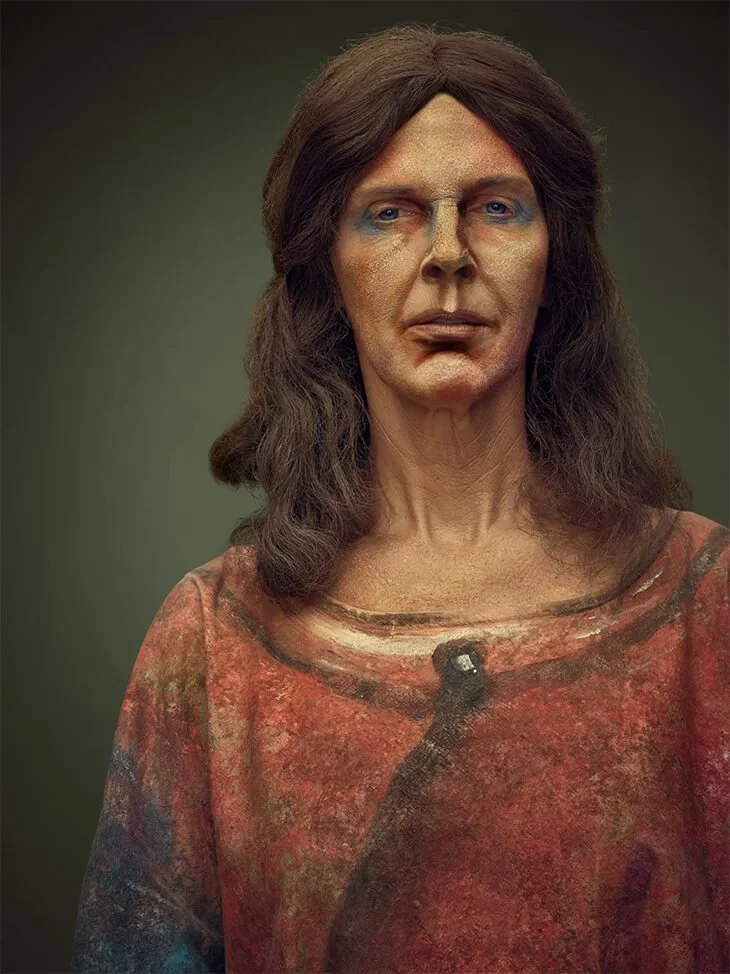
Matthew Rolston, Da Vinci, The Last Supper (Saint Philip The Curious), 2016, photograph of model in the scene
The Pageant’s concluding art piece, “The Last Supper,” 1495-1498, by Leonardo da Vinci, is a continuation of a decades-long tradition of presenting it at the Pageant. But an aged da Vinci first appears on the stage, questioning if the painting is worth showing. Then Andy Warhol, who silk-screened “60 Last Suppers” 1986, appears on the stage, encouraging him to exhibit it. This dialogue by two art superstars, who lived millennia apart, connects Renaissance devotional art to modern art and celebrity culture—a feature epitomizing this production’s expansive theme.
The curtains open to reveal a magnificent living rendition of Da Vinci’s “The Last Supper,” with heavily made-up actors, set to the music “Meditation,” about a spiritual awakening, from the opera “Thaïs” by Jules Massenet. As the audience leaves the Irvine Bowl, they are reveling in the glory of having seen and heard about the details of some of history’s greatest artworks. Many people I spoke to were also captivated by the production’s unique pageantry of marrying art history with theatrical illusion.
The Pageant of the Masters Director is Diane Challis Davy. Dan Duling is the scriptwriter. Richard “Butch” Hill is the Technical Director. The show runs nightly until September 4, 2026.
