
Michelle Grabner on Unromantic Truth and the Art School Crisis
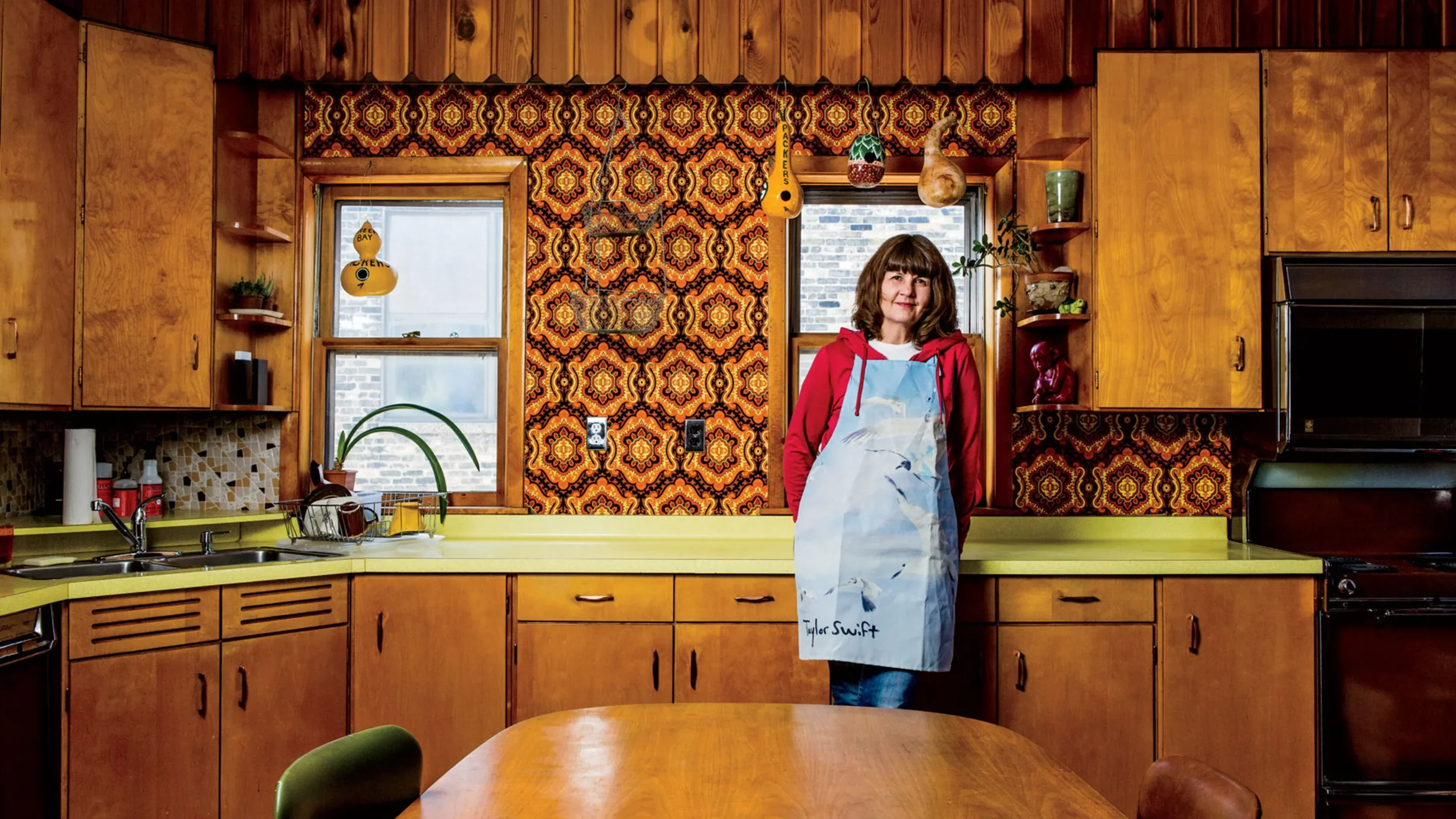
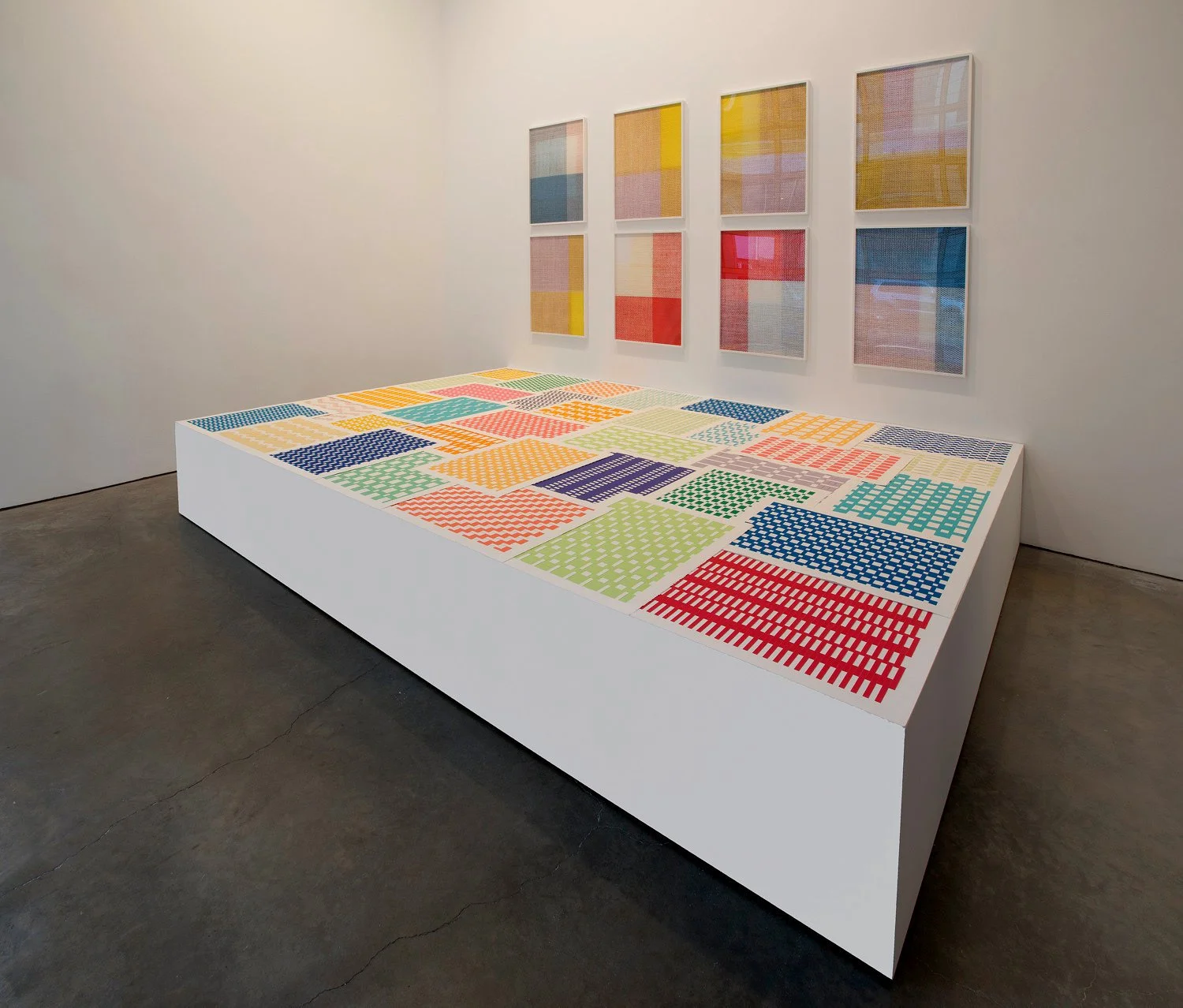
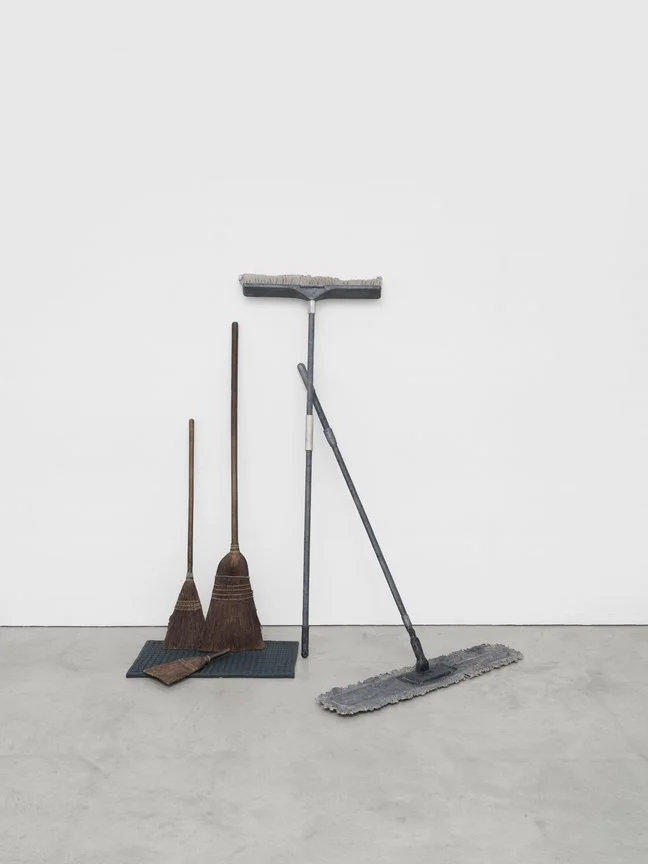
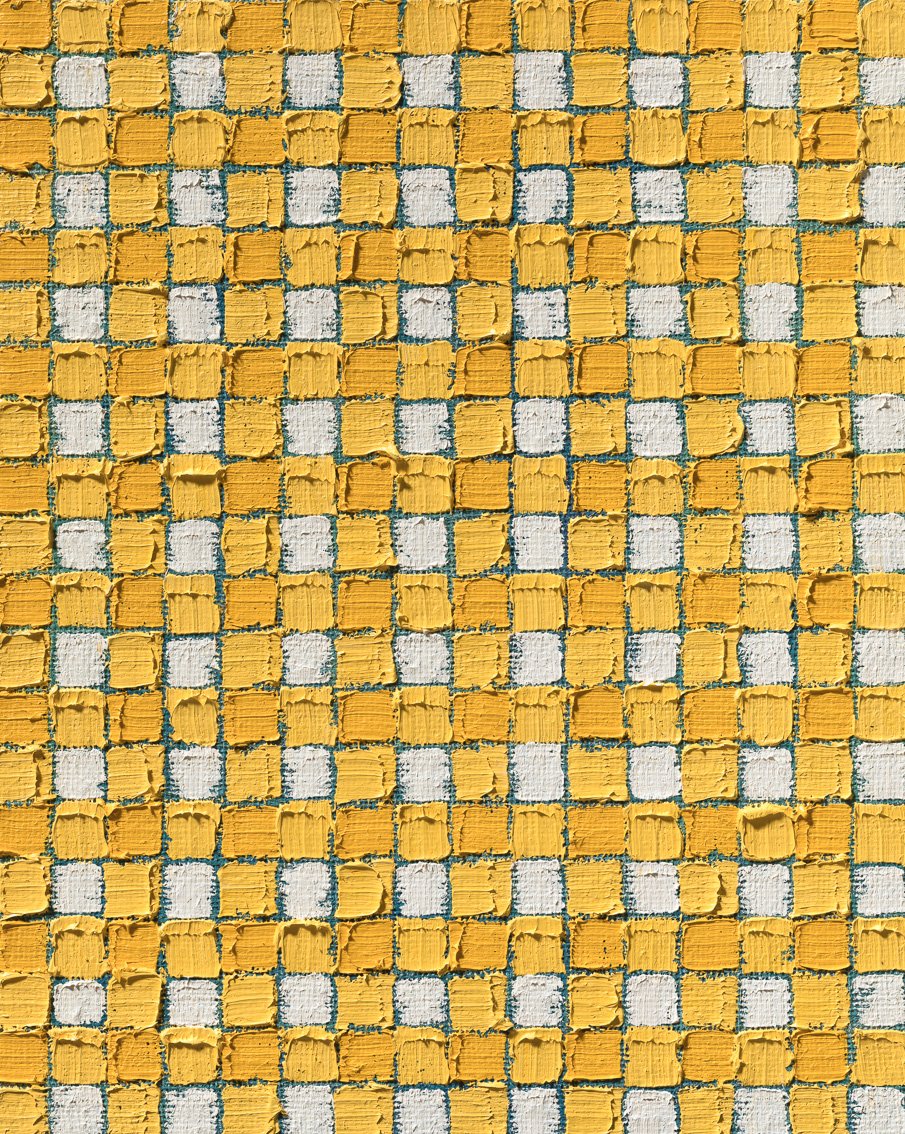
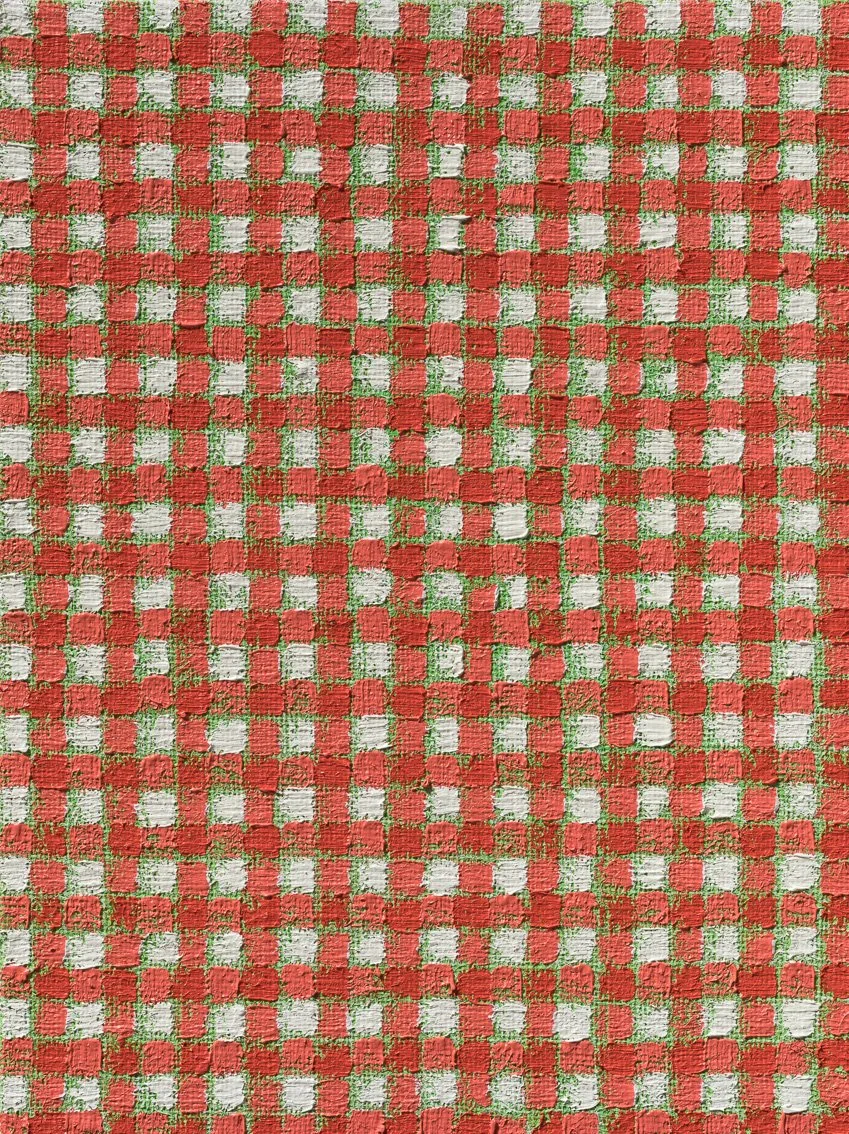
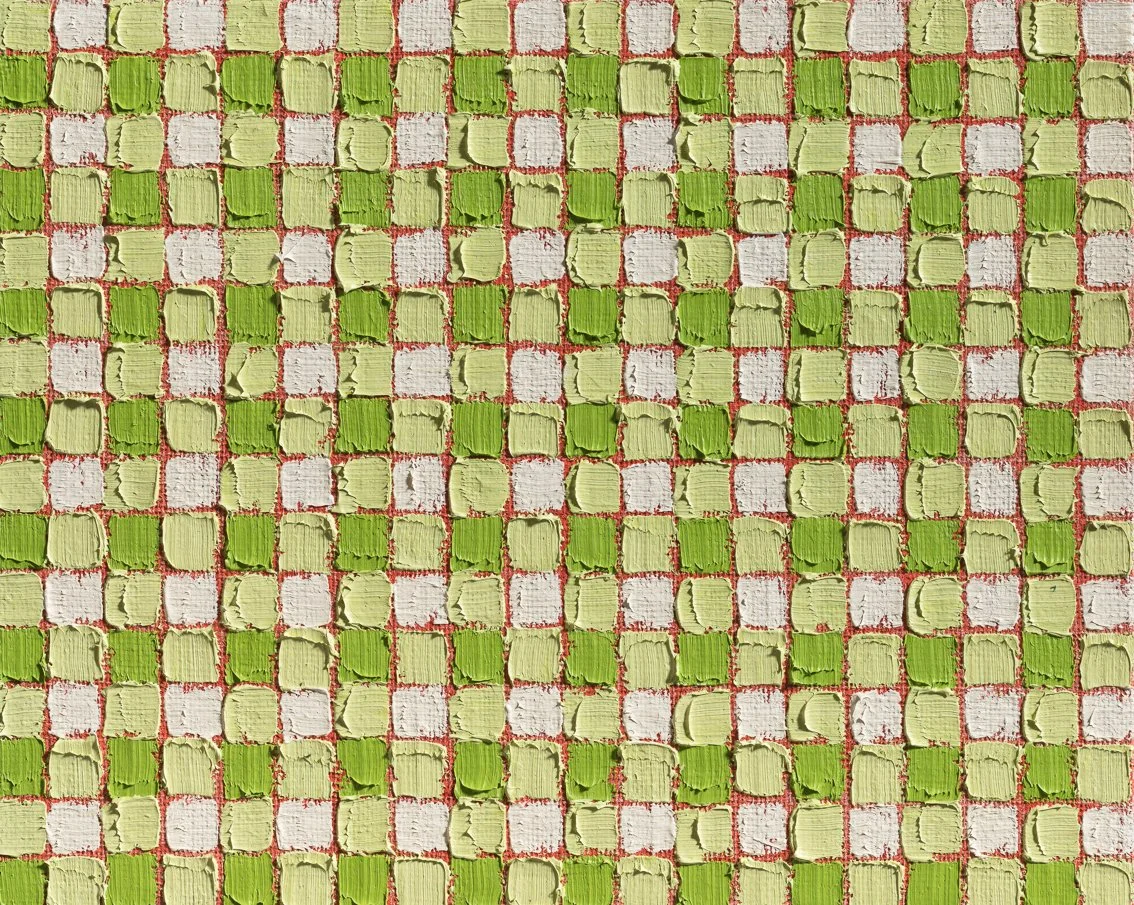
Michelle Grabner is an artist, writer, educator and curator whose paintings, drawings, and sculptures draw the minimalist grid into the register of domestic and handmade labor. She is the Crown Family Professor of Art and Senior Chair of Painting and Drawing at the School of the Art Institute of Chicago, where she has taught since 1996, with additional appointments at Yale, Cranbrook, Bard's Milton Avery Graduate School, UW–Madison, and Skowhegan. In 2014 she became the first practicing artist selected to co-curate the Whitney Biennial, and served as inaugural artistic director of FRONT International: Cleveland Triennial for Contemporary Art in 2018; she also curated the 2016 Portland Biennial. With artist Brad Killam she founded and co-directs the nonprofit spaces The Suburban and The Poor Farm. Her work is held by the Smithsonian American Art Museum, the Victoria and Albert Museum, MUDAM Luxembourg, Daimler Contemporary Berlin, the Milwaukee Art Museum, and the Madison Museum of Contemporary Art, with museum surveys at MOCA Cleveland and the Indianapolis Museum of Art. A 2021 Guggenheim Fellow, she was elected a National Academician in 2019.
Artist, Curator, Educator | Interview by Hugh Leeman
Mr. Perez and the Switchboard in the Utility Closet
Hugh Leeman: Michelle, I want to start with Mr. Perez, your high school art teacher. Who was he, and can you tell the story of how he impacted your life?
Michelle Grabner: Sure. We'd have to go back to the late seventies, Appleton, Wisconsin — Appleton East. Just a little note: I don't think he makes a big deal about it, but Willem Dafoe also went to that high school. We didn't overlap, he was a little older.
As a high school student, I hung out in the art room. There are a lot of students who find their way into learning, into understanding the world, into thinking about how to be social, through the art world. I was also just upstairs from the band room, where I hung out as well.
Mr. Perez taught painting and drawing. I remember he put me in a utility closet and had me paint the switchboard — the electrical switchboard — hard-edge. That made sense in the eighties. I think about that now: it's a little poppy in its feeling, a little industrial. It was clean, it was flat, it was graphic.
He also taught us about history. When I was in high school, I was naive enough to think Perez was French, because I thought all artists came from Paris at some point. He corrected me on that.
But he said something that was important. He had a daughter a little older than I was, who went down to the University of Wisconsin–Milwaukee, where I ended up. He said, they have a good art program there, you should think about it. And he was very pragmatic and said, you can teach high school art as well. That was a way of thinking about an art career. It never occurred to me. It never would have occurred to my family that that would be a place I landed. But in his ability to see that this was a place I wanted to be, a place I wanted to live — my body understood the work I was doing, and it would give me a lifetime of joy — he pointed me in that direction.
Repetition, Constraint, and the Overproduction Critique
Hugh Leeman: You mentioned the hard edges of what he had you painting. I want to go to your own practice. In your early works, there's domestic pattern painting, and you've said there's a capturing of routine and orderliness — not simply domestic or middle-class signifiers. How has your relationship to order changed as your work moved from painted patterns and gingham into public sculpture and large-scale everyday objects?
Michelle Grabner: That's a super big question. I'll start with process, repetition, and the attention that repetition requires.
Repetition is important in terms of how I think, and come to learn and know the world. But my ability to log in that hard work in the studio — the tedious reproducing of images, whether that's copying, or making dot after dot, grid after grid — really has changed.
As you know, I have three kids. The first was born in '87, and Seal, my youngest, was born in '02. So we've had a household of children for a long span of time, and they require attention. The household requires attention. That was really quite wonderful, because I had to work within — I'm going to call them constraints, but they were joyful constraints — serving and helping the family structure, the needs of children at different developmental stages, while at the same time finding tracts of time to do my own work.
Just recently, my daughter went off to college. And while my husband, God bless him, has profound emotional loss and gets weepy all the time, I'm almost responding in a pathological way to this openness of time. I don't need to be there. She's in college. She comes home during winter and summer. But I'm really grappling with an excessive amount of time that was given over for decades to helping my children.
So you're catching me at a kind of frantic time in my overall practice — not only continuing the work I do, thinking about process and repetition in form and image, but also at a time when I've been making a lot of sculptural work. Different processes, different techniques, a different relationship to making, because I can spend time in different studios to make that work.
And as you know, I've been a faculty member at the School of the Art Institute since 1996. I started out part-time doing grad advising; that turned into a full-time job, which turned into chair of the painting and drawing department. Being at an institution that long does offer you some privileges. When we started out as a young little family, buying a home in Milwaukee for twenty-seven thousand dollars — as economies change, household economies change, and a relationship to those ideas about the domestic changes as well.
Hugh Leeman: That word "constraints" is interesting — constraints often get associated with creativity. When you have no constraints, infinite openness becomes an impediment in itself. Now that those constraints of mothering aren't there, how are you dealing with it?
Michelle Grabner: Sometimes I worry about myself. It's become a little pathological in the amount of production. So I've been shifting my thinking to: what does it mean to be somebody who overproduces? Almost as a critical platform.
I think about it two ways. One, that the overproduction of work is actually critical within the art world, and particularly its marketplace. There's no rarity to my work. That's really important. The idea of repetition — a kind of sameness. Yes, there are slight material differences, but for the most part, again and again and again, being pulled and curious about those minute shifts from one red gingham painting to another. That compels me. But it's also a really interesting and strangely profound critique of rarity within the art world, and how we put value around that which is unique. That's really interesting to me to think about, particularly right now.
The other goes back to attention — my own need to set up a different kind of discipline with this richness of time, cut loose from those typical household experiences. Those two things are haunting me right now. Are either of them true? Are they both true simultaneously? Probably. And there are probably other conditions going on.
Then there's education, right? Being involved in education, thinking about those shifts on all kinds of levels — whether it's a governmental push to undercut education, or how does the art school survive now. Does it take up more of my time? Not so much, but it's fascinating to think about. And I'd like to think about it with the same imagination and possibility — being curious, trying something that maybe will fail — as opposed to being on your back heel all the time. That's how I feel our school, as well as many other schools, is just kind of pivoting to these outside forces. That lack of power is problematic, and it does take up some of my headspace.
The Layer Cake: Curating the Whitney Biennial
Hugh Leeman: I'd like to focus on your curatorial practice. As a curator for the Whitney Biennial, you said in the exhibition catalog that you wanted artists to speak with other people rather than have critics explain from the outside. What was the inspiration?
Michelle Grabner: The 2014 Whitney Biennial was the last biennial in the Breuer Building before it moved to the Piano Building downtown in the Meatpacking District. It was co-curated, but Donna De Salvo called it a layer cake — everybody got a floor. That's very different from past biennials, or biennials since, where there may be multiple curators but it's really hard to get a sense of who's selecting whom. We drew straws and we all got a floor. If you went up to the fourth floor, you knew that work was my selection. The third floor was Stuart Comer, and Anthony Elms was responsible for the second floor. So it was made very clear what kind of ideas, what kind of selection process, each curator was engaged in.
For the catalog, I asked each living artist I included to have a conversation with somebody else. In some cases it was their wife or their partner. In some cases it was a reverend, a person of spiritual capacity. Sometimes it was a fictional person — there was an artist who talked to somebody who was a made-up name.
That was important in terms of breaking away from curatorial authority. I did not have to be the person who teased out not only the meaning of the work, but the arc of an artist's thinking. I did that by selection — and selection is always the hardest part of curating for me — and by a loose organization of the layout of the fourth floor. I really wanted artists to contextualize themselves. They have their own interests. They want to have conversations not just with curators, not just with art critics, not just with art historians, but with other people, other disciplines, other ways of being in the world.
And this is important: biennials, or any group show — even monographic shows, even survey shows — they are not the truth of a full artist's work. They can never present that truth. So if I can empower artists to have a conversation with somebody, maybe we're getting at a truth we wouldn't typically get at in a catalog essay written by an expert or the curator.
Disappointment and What Institutions Forget
Hugh Leeman: There's something intimate about that, which pulls away from commodification. You've said artists are disappointed all the time, and the curator should be more transparent with them. What would a kinder curatorial process look like?
Michelle Grabner: I did say that artists are often disappointed, though the disappointment may not be directed at the curator — I have had loads of disappointment directed at me. We participate in these big public-facing exhibitions as artists, and we have an expectation of a kind of success that has been waning with the biennial, particularly the Whitney Biennial these days. But I also think we're disappointed that it doesn't yield that fullness — the fullness of artists within their making or within their ideas. A group show cannot yield that fullness when you're represented by one or five pieces. That's a tiny sliver of what somebody was thinking about.
What I really regret about the biennial is simply that I didn't have more conversations with the artists about what their expectations were. Not that I could change those expectations, but to hear them, to understand the context. They may have been highly personal. Artists later in their career really wanted this opportunity to yield a different kind of success than just being included. Helping them understand some of the limits of what the 2014 biennial at that point in culture could actually offer.
And then to do some follow-up. Actually have a debrief with the artists. There's a lot of upfront work — everybody who does curatorial work knows that. Both the compensation and the amount of work mean you do it, but it doesn't allow for these other conversations. In my case, once I was done, I just needed a big breath, and I moved on to another project. I didn't do the follow-up. I'm in touch with a lot of artists I included — we've become really good friends, or they were friends going in — but I will argue that institutions should start building conversations with artists as soon as the work comes down, a year after the work comes down.
The Whitney Museum of American Art — the work I did for them, I would do all over again, because I learned so much and I hope artists learned as much. But I still have to pay for annual membership. They've forgotten I was even there in 2015. So let alone how they forget the artists who participated in those exhibitions. It's not only a problem with curators. It's a problem with institutions.
The Churn: Why the Biennial's Pull Is Waning
Hugh Leeman: You mentioned the waning interest in the Whitney Biennial. What do you make of that?
Michelle Grabner: That's the art market and how institutions are intertwined with the marketplace. There's a need for the new. The market always needs new material, so it churns quickly.
Exhibitions like the Whitney Biennial depend heavily on galleries to help support framing or production, because the budget for the biennial is relatively small compared to other exhibitions they mount — and this is the case with most major biennials or group exhibitions. So there's a dependency on the market to support that artist if they have representation. That entanglement allows for this churn.
There are also conversations within the institution, to be perfectly frank. We had some of those in 2014 about how do we think about America, the Americas, the United States? How do we think about artists who are no longer with us? How do we think about younger artists? Since 2014, the biennial, with a few exceptions, has really pivoted to younger artists, with a couple of well-respected or overlooked artists — again, who are no longer with us or have had a lifelong practice — but that's getting farther and farther aside. The institution is letting the curator be responsive to the culture at hand. But we've been so frothy lately within the marketplace — it's coming to a bit of a halt now, but the frothiness of recent years really led to that quick turnover, that burnout.
Can I tell you one thing I really love? It was kind of the only public piece in the 2014 biennial — a commission by Tony Tasset, a Chicago-based artist. It's basically multicolored panels with lists and lists of names etched in them — maybe five thousand names of artists, many who had been in the biennial, many who'd had studio visits by biennial curators, many twentieth-century artists. He called it Monument to Artists, because he was acknowledging that hardworking artists do not always land in those exhibitions. He was trying to honor them in a kind of memorial. And paradoxically, he installed it right along the Hudson River in Chelsea — far away from the Breuer Building on the Upper East Side. It was a funny place to drag that conversation, that critique, into the project. That was really meaningful to me, because it did speak to the question you're asking.
FRONT, Cleveland, and the Regional Triennial Problem
Hugh Leeman: You recently published an article in Artforum where you noted your work on FRONT, the Cleveland Triennial. You wrote: "My work on FRONT taught me that for regional triennials to succeed, they must unambiguously reflect, represent, and elevate the self-image of local and regional communities, as well as partnering institutions that support those communities." You go on to note that triennials tend to buckle financially when they don't follow this. So what incentivizes the curatorial reach to not follow the model of representing local communities?
Michelle Grabner: That would be a conversation broader than the hyperlocal. Those conversations are the thing that may connect artists from a different location in the world to Cleveland, or to Milwaukee. Those ideas may be abstract. They may be about ideas of power.
I'm a big fan of the comparative. Putting an artist whose work deals profoundly with figuration and the identity of that subject next to somebody doing that locally — juxtaposing those two works — one starts learning a lot about the subtleties of difference, of place, and of artists. We can think about artistic style and how that shifts, or artistic language and how that shifts. To be comparative is really important.
I get frustrated with that first resentment — that they are not in — as opposed to: what am I going to learn from this work that's coming to my city? Where does it overlap? Where is that difference? Using comparative structures to analyze one's own practice as well as the work coming in. I'm a big believer in those big ideas. That's why I'm attached to art, art-making, artists, and its history — those bigger ideas, and seeing them shift, change, mutate, seeing vocabularies be responsive to that artistic imagination.
But it's exhausting. I was just talking to a friend, a former student, who last year started a biennial in Wisconsin. The first flush of the local audience was: who are you including, and why isn't it more of us? That's disparaging, because there's something to be learned. And it suggests something really important — that the audience, the artists in these regional places, including myself, believe that inclusion in an exhibition like this is a credential. As opposed to some comparative learning going on, to understand a value system, a vocabulary that's in my studio, and have that reflected or sorted out with the work coming in.
I really believe what I said in that Artforum piece. Though as an aside — the most generous and lovely individual who started FRONT International, Fred Bidwell, probably challenges me a little on that. We did represent Cleveland artists, Cleveland-area artists, Midwestern artists. This assessment wasn't new to me. But frustratingly enough, it still wasn't enough. It wasn't that we turned our back on local and regional production — that was threaded in. But it wasn't the premier pillar of the exhibition.
The Unromantic Truth: Jobs, Debt, and Studio Life
Hugh Leeman: I want to go back to being on the back heel. Art education is something you've dedicated decades to. You've spoken practically about jobs, insurance, family, studio life, and you tell your students that having a job doesn't weaken their art practice. When you talk about the less-than-romantic parts of the art world — and we could add incredible student loan debt — how do those conversations go?
Michelle Grabner: With our graduate cohort in painting and drawing, we take the second-years — those about to graduate — on a professional practice retreat. We go to Ox-Bow, an exceptional residency school in Michigan. We take the bus there, we're all staying together in the beautiful wilds along Lake Michigan, and we have people pop in, mostly via Zoom. Sometimes it's a terrific tax person who tells you how to manage your taxes and what's deductible — that's so pragmatic and important. We have collectors talk about what they're collecting. We had a former student who teaches at a community college, because community college teaching is as important and virtuous as teaching at a Research 1 institution. Giving them opportunities to think about how to be in the world with an MFA in painting and drawing from the School of the Art Institute of Chicago.
That's a responsibility institutions have these days, especially as we're moving to the new policy where graduate students and undergrads alike — whether you're at Yale or the Art Institute — will have to meet a threshold of income if the schools that produce them want to continue receiving financial aid. That's heavy, heavy on professional practice.
In short, what I end up saying is: you find a way. If you've taken out student loans, you find a way to pay back those student loans. You find a way to pay for your life — whether that's a studio outside your living space, or a studio within it, whether it's healthcare, whether it's the supplies you need. You find a way outside of the art marketplace to pay for those things.
I say that because the capriciousness of the marketplace does not yield an interesting engagement with your own making, with whatever you're thinking about, whatever your practice is. It has a tendency to skew that thinking so it participates within the marketplace. So if you have to be a barista, or if you have to carry the mail, you do that. You don't want to be so precarious — that art market, which we know is precarious, can really undo a relationship to your life, and then you can't practice anymore. So find out what that economic base is. And God bless you if you can develop it right now, because we know that's difficult. But do not entangle the art market into what you need to get your work done, or how you need to live day to day.
How Art Schools Might Change
Hugh Leeman: What if we look at this from another angle — how might art school models be changed to improve outcomes for their students?
Michelle Grabner: There is that pivot to building a curriculum that exposes students to cultural work — whether it's being an art handler. And again, that's precarious, as we know, within culture and within our institutions. There's a lot of support being pulled away because our patron class is changing.
But I don't think this is radical, though maybe it seems unusual to say right now: by having honest conversations with students about the importance of ideas and history and theory and positions — exposure to techniques that have purpose, but not a purpose in the practical world; what they actually have is a deep purpose in elevating the passions of the individual. That's a big swing, which not many institutions are doing right now — toward the virtues of what happens in humanities departments, or the kind of thinking that has happened in art school.
But you have to have an honest conversation by saying: you, student graduating with an MFA — where I had a path to teach in higher ed, that path for you is likely not there. It's thinking through not just betterment itself, but betterment through the humanities: collective thinking, thinking expansively, thinking critically. If those things go away, we're in trouble. But if you're going to art school for a job — as we're hearing and seeing in all kinds of disciplines, people are just forgoing it. They're going right to the workplace, because the statistics tell us you can earn as much money going to a trade school, probably more, than hustling out of school with that MFA and knocking on the door of the market.
Schools should do what schools can do, and that is teach critical thinking, teach relationships to ideas, teach histories. Those things are still hugely important. And clearly not everybody can afford them — so let's just blessed hope that schools start to understand they've overbuilt, and that tuition is obscene and needs to be walked back.
This is where my husband teaches at a community college in DuPage County, just outside of Chicago. That place is flourishing, and he's able to teach art — ideas, foundations, techniques. The majority of his students will not be artists, but it's still important.
Hugh Leeman: If we made a comparative model — the School of the Art Institute costs X, community college costs Y — what are the differences in the education you're receiving?
Michelle Grabner: I'm somebody who's always said those early foundational classes should be taught when one is a junior and a senior. Simple 2D design, simple material processes. So often we get students at the Art Institute who had a really great high school education, an AP background. They come to art school wanting to express themselves, and they do not want to settle into all those foundational languages they feel they may have had in high school. But those are languages. Those are the foundations we carry in our studio every single day. Those are things in the cliché of the toolbox we will never get away from. So I would love for us to revalue those foundations, as opposed to putting them early on where students quickly move through them so they can finally get to those upper-level undergrad classes where they can express themselves. I'd love to flip how schools think about a curricular trajectory through the visual arts — foundations all the way through, or foundations at the end.
We have a lot of students at SAIC who, instead of paying four years of undergrad tuition, are transfer students. They'll go to College of DuPage for two years and transfer to the Art Institute for two. I remember reading a piece in the Times years ago about how prudent it was for a student to take two years at their local community college and then go to Cornell for their junior and senior year — and they have a degree from Cornell University. That's starting to really ramp up. It's a conversation that's always around community colleges: how they think about transfer, the classes they teach, how they'll be accepted into other schools. That seems quite smart.
Complicity, Compliance, and the Federal Loan Changes
Hugh Leeman: The Trump administration recently made major changes to federal direct loans — graduate borrowing limits, Pell eligibility, repayment rules — that will majorly affect art schools, with a stated goal to make schools less debt-heavy and more accountable to students' long-term success. The counterpoint is that it could make graduate art school less accessible, less experimental, more careerist, and more dependent on private wealth. What are the conversations you're having with faculty and students around this?
Michelle Grabner: Right now, our administration is deeply, deeply looking at how to be complicit with these changes. How do we acknowledge and change curriculum so we're in compliance? That's coming from the top.
To be perfectly honest, outside of a few faculty, nobody's bristling. There's fear. There's a "what do we have to do to keep the doors open" situation. And that is exactly what administrations want.
What it ends up doing — these are policies from the feds that want to undergird our economy in traditional ways. If you're spending this money to go to school, and there's debt, but you're not able to then take those credentials back into the workforce and elevate the overall economy, why are we going to subsidize your education? I have huge problems with that. Education and learning — that's an abstraction and a value that has to be embraced. I really bristle at all of these conversations.
I just wish I heard even a little utterance of the alternative. I was reading a review of a new Black Mountain College book coming out. It talks about how these alternative schools — as Black Mountain was, or some of these profoundly liberal arts schools that are barely opening their doors, Hampshire, well, gone — had alternative pedagogy, alternative learning structures. And in the review: the more alternative and the more compelling, and thus when we look back the more importantly historical in terms of a cultural movement — the faster they fall. So there's that working against the whole argument I'm pushing, that these are the things we should strive for. So maybe, hopefully, the smallest institutions can be noted, seen, and supported by the big foundations — the Mellons, the Fords of the world — to really buoy them up and give them a place so they can be adjacent, at least, to what's happening in traditional schools.
Hugh Leeman: The Department of Education frames these loan changes as a way to stop over-borrowing and push schools to lower cost. Is there a version of that argument art schools should take seriously?
Michelle Grabner: Absolutely. Administrative bloat — it's everywhere. On the other side, which is very important, are all those adjuncts who dedicate their lives to teaching but do not hit the hierarchy of full-time status. Godspeed — they've unionized. That means institutions have to be accountable for those faculty who do the good service and the good teaching, to compensate them, to recognize them. That's very important, but it's also very expensive for these institutions that are vulnerable.
So without taking away from our colleagues who are adjuncts and lecturers the protection they deserve and earn — how can we think about a new structure? SAIC should really be doing that. This goes back to the back heel. Instead of being defensive, I want to know where the imaginative thinking is going on. How can we restructure so we can bring those costs down, so we don't have to have that exorbitant tuition? We're just going to have to get smaller — that's maybe what I'm hearing the administrators say. That seems pragmatic, but I'm wondering if there are other ways. Hopefully we're going to start having these conversations this academic year about being imaginative. What does it mean that we can serve our students, not burden them with excessive debt, and still be excellent in terms of thinking about the arts, making, history, and so forth.
Hugh Leeman: You said we're going to have to be smaller. Does that mean layoffs?
Michelle Grabner: Indeed it does, if we're not making our enrollment goals. And right now we're not making our enrollment goals — very simply because our international students are having a very difficult time getting here. They're not being awarded visas. If students aren't being awarded visas, our classes aren't filling. If our classes aren't filling, we're going to have to cut those classes, or move some students into another class, and there will inevitably be faculty who are not able to teach.
Hugh Leeman: And the difficulty with visas for international students is also due to the current administration's policy changes?
Michelle Grabner: Yes, absolutely.
The Myth of Early-Career Income
Hugh Leeman: One critique is that these rules measure the value of art education through early-career income. What is that myth about how artists actually build their lives?
Michelle Grabner: Yes — and it's not okay. That's the policy coming from the feds. But there are other economies we engage in day to day doing the same thing. The art blogs. The marketplace.
The question is: how can one feel — I'll use the word success — fulfilled in the world as an artist, engaged with art, their own making, the past of art-making, the future of art-making, the full range of that potential engagement?
There are so many industries that entwine. Art school being one. The residency industry — the pay-to-play to go somewhere. Even the critical apparatus, which isn't really critical, it's barely journalism, but the constant announcement of ridiculous things like Daniel Arsham's houses for sale — a massive, beautiful home in Manhattan. We're comparing ourselves to these rare exemplary figures who command this attention. You get this in all aspects of culture. So school is a problem, but there are other industries built around the frothiness of the marketplace that burns out very quickly. Social media and Instagram being another one. How does one have all this influence just by being seen through a virtual tiny bit of digital color?
I'm old enough to understand how a museum show, or being in legacy collections, and critical assessment, and the marketplace, and teaching — they were all entwined. They all depended on one another. And now they're atomized. It's all over the place. This is what's really difficult to teach with my grad students. They're always bringing me somebody they found on Instagram that they're really striving toward. But that alone will not yield satisfaction in the fullness. Artists want to be public-facing. That is a kind of public face, but it's not with the object itself.
All of these typical markers used to be entwined, and now they exist all over the place. So what does that mean? It means artists are going to have to first feel very, very comfortable with how they're developing work, how they're thinking about their work. Their daily practice has to feed something so they can create the structure of how they succeed. And that just may be: I logged in eight hours today in the studio, and I also went to my job. That right there is a kind of success. If we start letting all of these industries from the outside shape that, we're going to be perennially disappointed.
Yes, it's great to have professional practice classes. But really starting to have these conversations about how one can integrate this passion we have, this skill set, this craft we honed, into our day-to-day and value that — I think that's the first step. And it's very, very hard, because I can't wake up in the morning without doing this. Everybody has this moment of: what about me? Ridiculous. But that's very hard to navigate — those powerful, all-prevalent industries within culture.
Hugh Leeman: Is the "what about me" the attention economy you're referring to?
Michelle Grabner: Yes — and this is where I'm highly critical of how many schools, maybe our own, think about critique. It's not really critique. Critique is its own discipline. It has its own history. And often — there are a lot of exceptions — I'm concerned that critique is simply a bunch of eyes on work, and that's successful enough, or that makes the artist we're looking at feel okay, that the attention we're giving it is all that's necessary. And schools are sadly calling that a crit. It is not. We may all gather around a work, but there's something else that has to be done. History needs to be given. There are so many forms of critique that can be overlaid. Critique has to be taught. Critique honors the work and the artist, its own discipline, and the work of culture. That's a rigorous kind of attention. I would like a more rigorous kind of attention.
Boredom, Limitation, and the Pale King
Hugh Leeman: As a final question — you've talked beautifully about boredom, even calling positive boredom a kind of contentment. What does boredom do for creativity?
Michelle Grabner: There's a terrible cliché Picasso quote that's maybe a terrible cliché, but it's kind of good — something about inspiration and work. Dedication and work: in that frame is where inspiration often comes from. It doesn't come from above, and then one does the work. There's something inherent. That's not all artists, obviously — people have different relationships to how they manifest a thing or an idea.
This goes back to what we were saying about limitations. Repetition, process — there's something that's going to change. The body will change it. Culture will shift. Conversations and politics will shift, and inevitably, even within the most basic, repetitive making, one will understand it differently. There will be a shift that happens in there.
So boredom. All these academic books about boredom came out — I'm putting a pin in around '08, after the economic collapse. It's what we didn't have. We were revving up with our screens and social media and the speed of the digital world. So boredom was the other to that. This is the cultural condition — what is the other to that? Boredom. And all of a sudden there's lots of interesting writing on boredom and the conditions of boredom and how that yields and plays within creativity.
So in short: limitations and boredom — I see them as two structures that help one slow down and linger and assess within their thinking, within their practice, within their making. And boredom — David Foster Wallace, I always bring him up — he really did tease that apart, particularly in the novel he was writing when he died, thinking about being an IRS agent in Peoria.
Hugh Leeman: Or is that Infinite Jest?
Michelle Grabner: No, Infinite Jest — he set the stage with Infinite Jest, and that was absolutely no boredom. Everything — whether it was a drug, or tennis, or Canadian militants — it was always about distraction. That was about a life of distraction. The Pale King was the other. They're the beautiful bookends.
Hugh Leeman: Michelle Grabner, thank you so much.
Michelle Grabner: Hugh, thank you. And thank you to anybody listening to this, putting up with my babbling. You're a delight. It was great to talk to you.
