
The Art of Making, Pamela Walsh Gallery
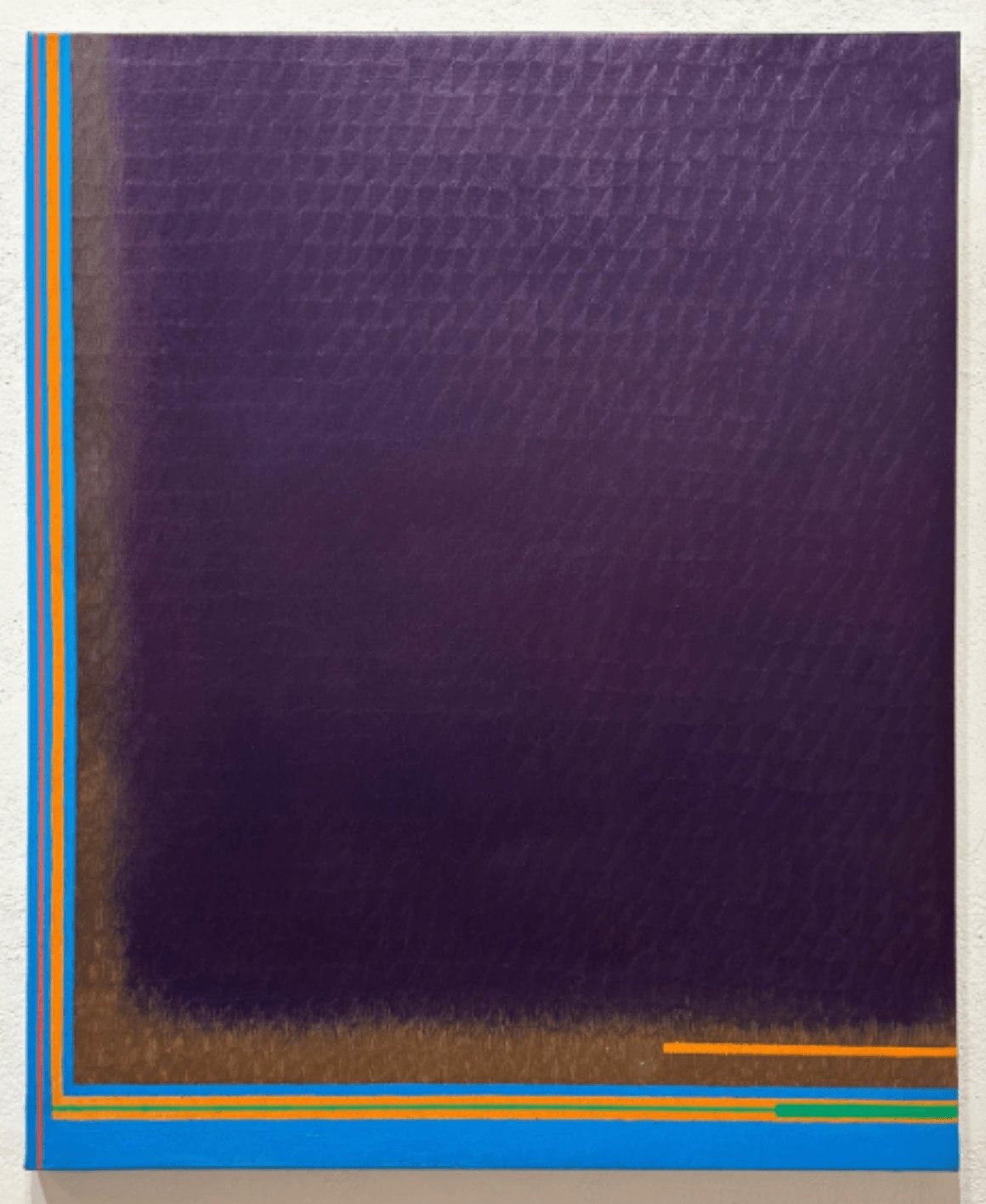
Miguel Gelabert, Land&scape (V 4.0), oil on canvas. Image courtesy of Pamela Walsh Gallery.
We often forget that the process is an important creative act. We hyperfocus on the final product, what it signifies or carries. The medium is simply a vessel to tell this story; to usher meaning and finality to any work of art.
The Art of Making, on view at Pamela Walsh Gallery in Palo Alto, CA, celebrates and asks us to bear witness the artwork’s gestation as much as the final product. Three guest artists accompany seven gallery artists in conversation about materiality and how the physicality of a work of art carries as much significance as its ephemeral vision. We are asked to pause, sit closely with each work, and celebrate its becoming.
Upon entering the warm and bright gallery space, the texture and depth of the two-dimensional artworks on view are apparent. There is a luscious quality to the work on view while simultaneously showcasing the artists’ manipulation of material, commitment to craft, and the art of making.
For gallerist Pamela Walsh, it is important to bring together artists driven by experimentation and the physical act of making. Many of the artists in the exhibition use identical materials to achieve polar opposite results. Brought together, the seemingly opposite works of art complement and play off one another in the space. It is a joyful parade of artful making, pleasing to the eye and evoking a curious childlike wonder. The crux of the exhibition is a belief that creation, its laborious process, is inevitably tied to the finished work.
Take Land&scape (V 4.0), oil on canvas, by Miguel Gelabert. From afar, the hushed tone of a horizon hangs in the background of the work. Upon closer inspection, the brushwork, a deliberate method of making a gestural stroke with every turn of the brush, creates a hazy, dreamy landscape. Gelabert pays homage to his coastal hometown, Blanes, Spain, crafting paintings that depict nature as an extension of the spiritual realm. The glow and hazy horizon are achieved through a beautiful, repetitive brushstroke, creating illusion and depth. An act of making as much as seeing, Gelabert’s wavy brushstrokes and disappearing horizon do not serve as a backdrop–instead, they are a meditation on our internal world–a place where memory, emotion, and perception emerge.
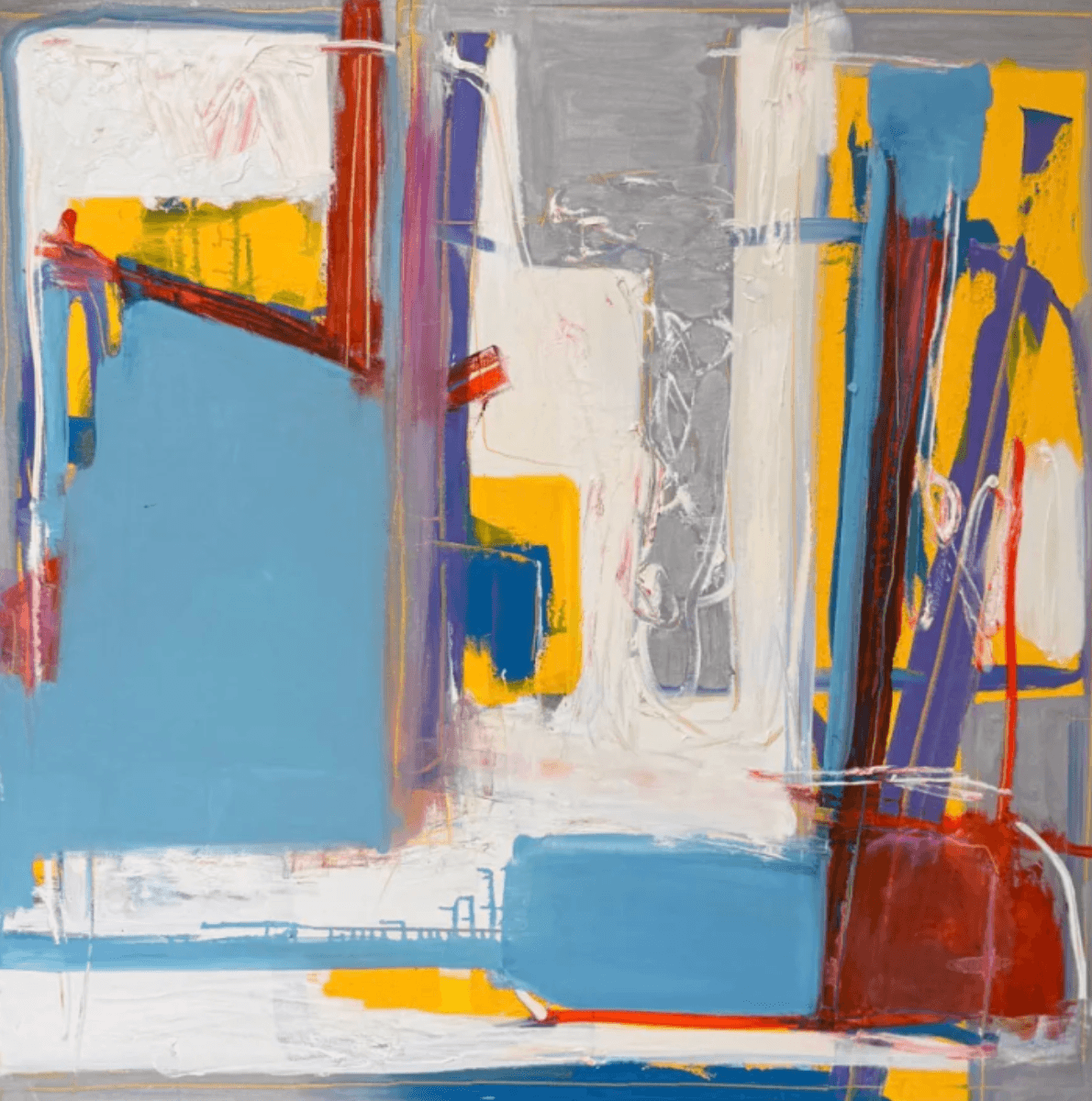
Gustavo Ramos Rivera, Pedazos de Cielo (Pieces of Heaven), oil on canvas. Image courtesy of Pamela Walsh Gallery.
Gustavo Ramos Rivera’s Pedazos de Cielo (Pieces of Heaven), oil on canvas, utilizes paint as a method for evoking memory and nostalgia. Ramos Rivera’s abstract works are deeply connected to his personal iconography of family, nature, and community from growing up in a small Mexican border town. The language he’s created, utilizing paint on canvas to create abstractions, is heavily influenced by his Mexican heritage and postwar abstraction.
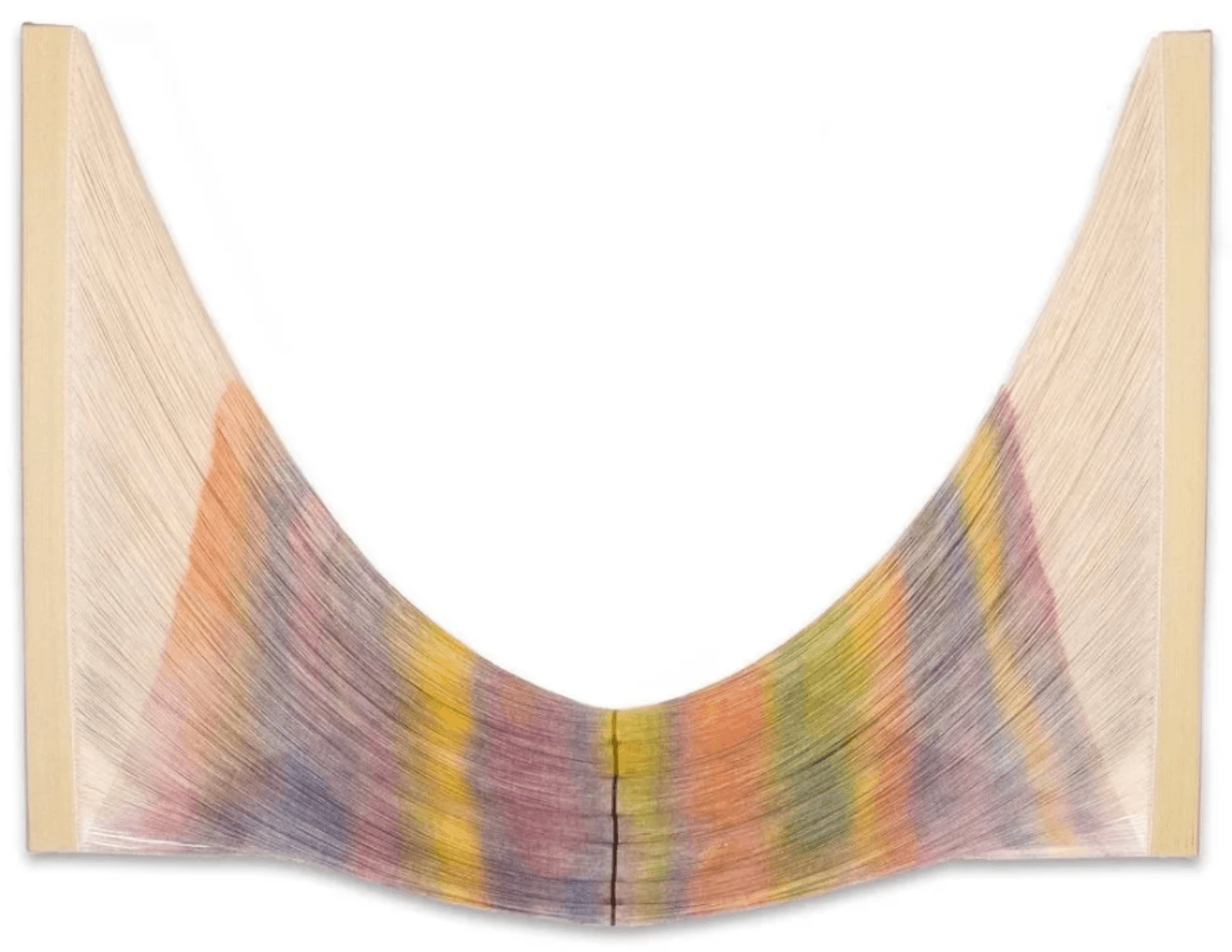
Miles Bennett, Dying Light 15, 2024. Image courtesy of Pamela Walsh Gallery.
Beyond oil on canvas, several artists on view manipulate material to showcase the depth of their process. Dying Light 15, 2024, a mixed-media work by Miles Bennett, showcases craft–the art of the loom–in full display. As if hung off the loom itself, the slacked thread holds exuberant color and depth. Never intended to be stretched, Bennett celebrates the material by displaying it softly against the wall, hanging gently so each thread woven creates an illusory tapestry of color and texture. Committed to exploring the intersection of gesture and the inherent properties of any given surface, the final product is the process.
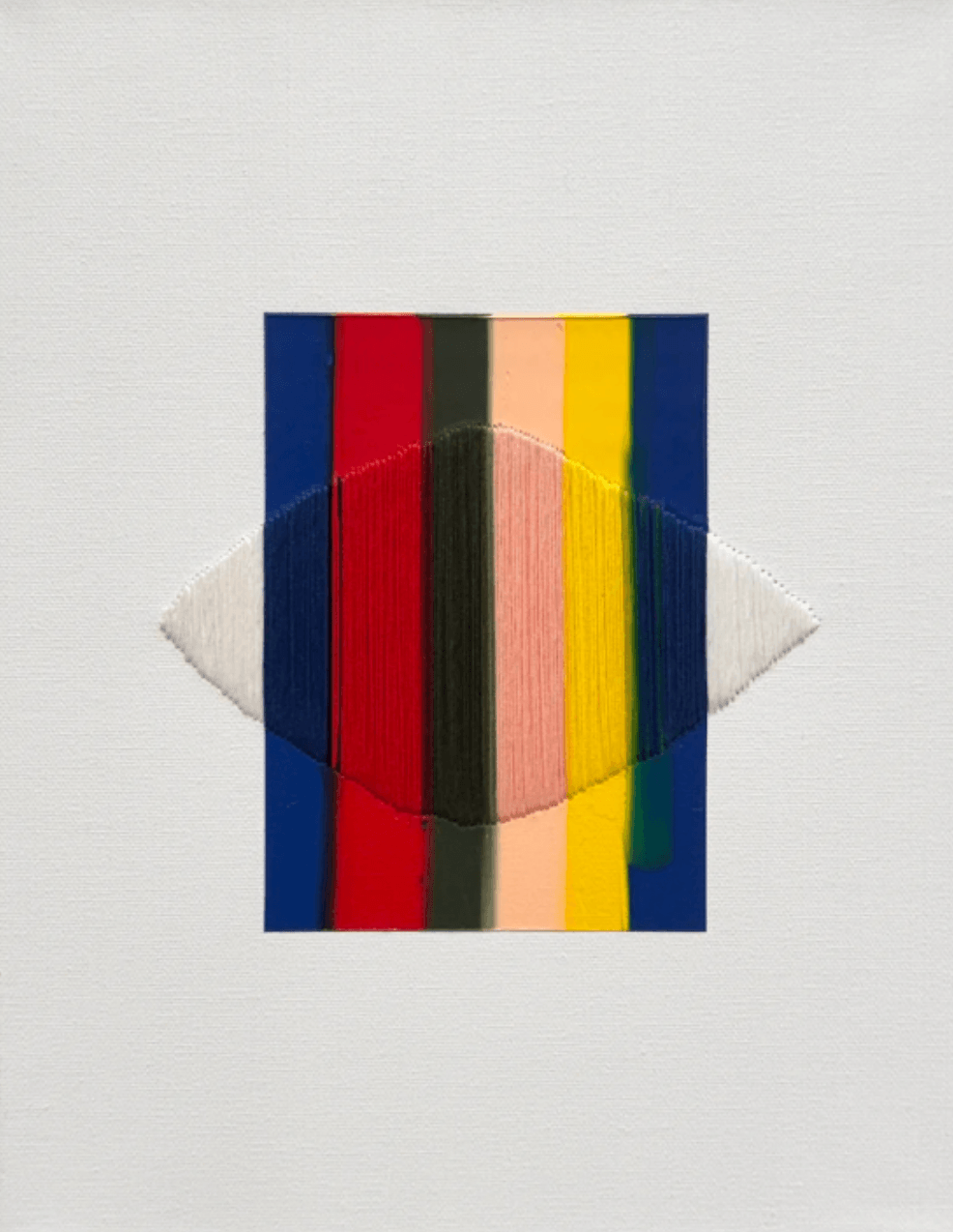
Raul de la Torre, Of Such Frail Thoughts Its Thread Is Often Broken, 2020, acrylic and embroidery on canvas. Image courtesy of Pamela Walsh Gallery.
Continuing this throughline, Raul de la Torre’s Of Such Frail Thoughts Its Thread Is Often Broken, 2020, acrylic and embroidery on canvas, deconstructs painting down to its core. By deconstructing the surface, he weaves embroidery through its center, adding depth and structure. The lines are blurred between painting and object, dismantling a traditional canvas and creating a surface for repair. Like Bennett, the process of making–from destruction to rebirth–is the root of the artwork’s ethos.
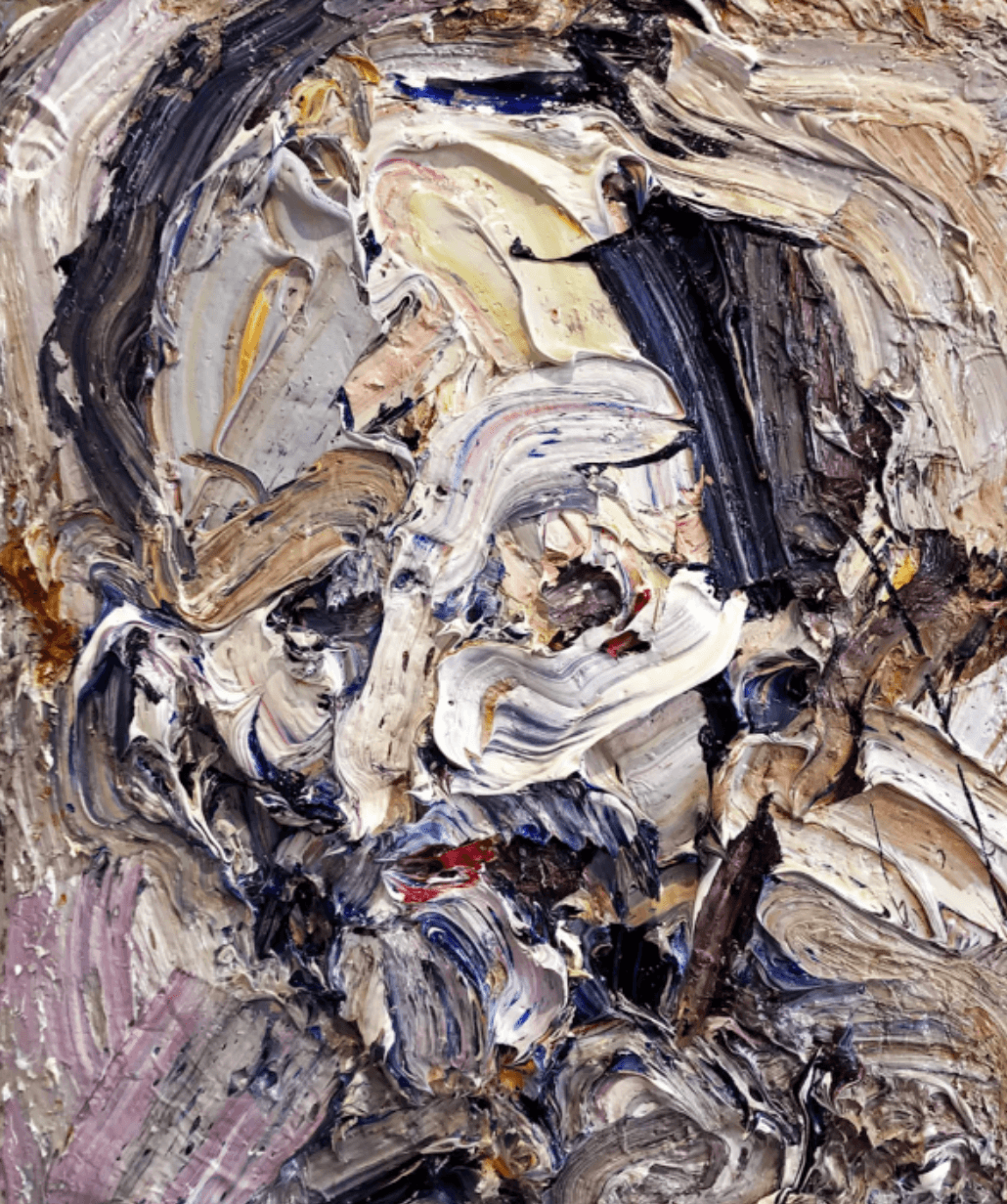
Craig Waddell, Down the Way - Self Portrait, 2019, oil on linen. Image courtesy of Pamela Walsh Gallery.
Pushing the boundaries of what paint can be is front and center for Australian artist Craig Waddell. Down the Way - Self Portrait, 2019, involves layer upon layer of paint. Thick, deep, guttural brushstrokes dominate the surface of the soft linen canvas. Waddell’s passion for the tangible characteristics of paint is on full display in The Art of Making, showcasing oil as a medium in and of itself: heavy, vibrant, and powerful. Although painting landscapes and flowers were not part of his practice for many years, since the passing of two dear friends, the depiction of flowers is heavily prevalent in his work, demonstrating a commitment to honoring those who have passed while serving as a memento mori for the living.
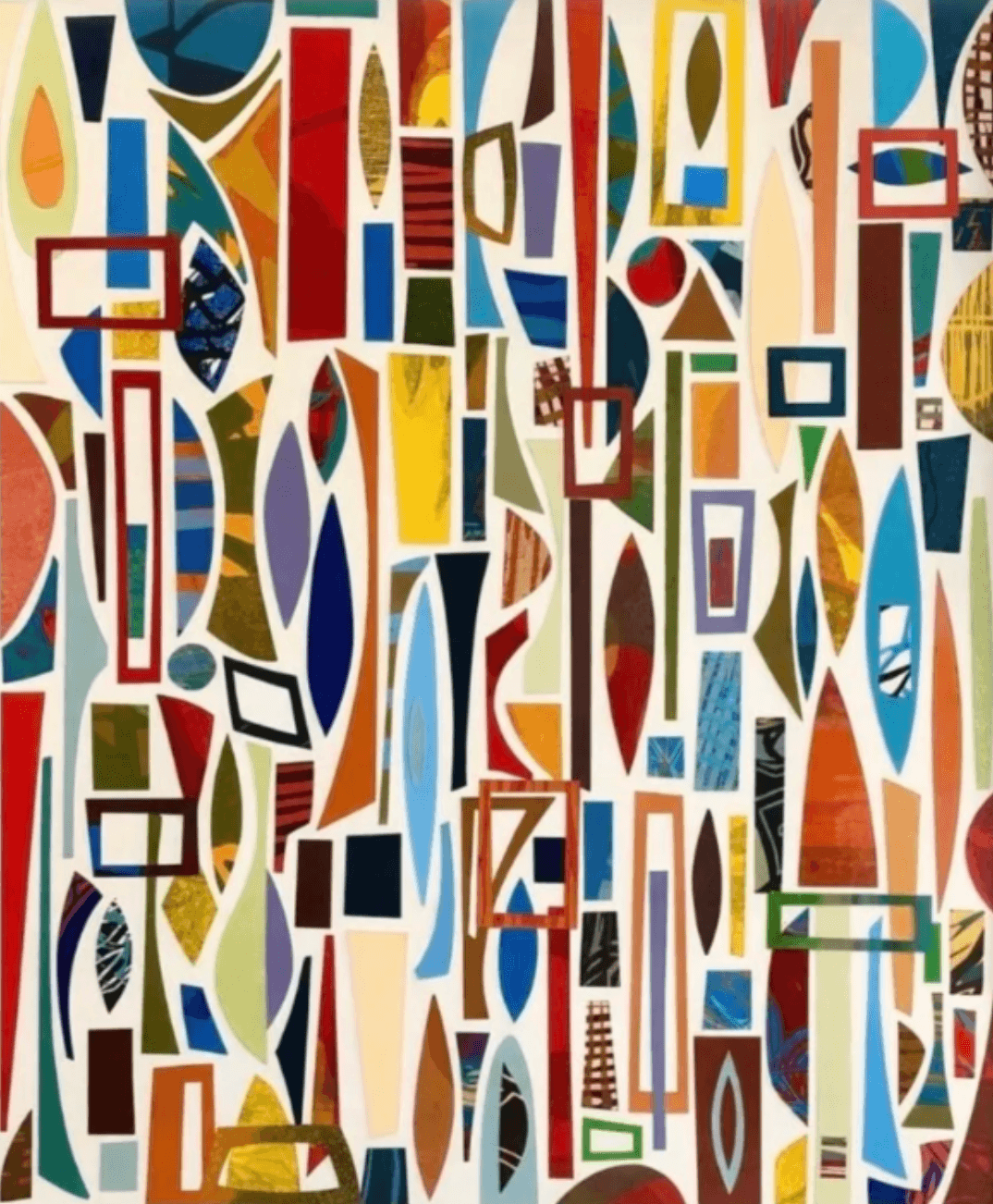
Fernando Reyes, Jubilee, 2026, mixed media. Image courtesy of Pamela Walsh Gallery.
Immediately to the left after entering the gallery, stands a small mixed-media work, Jubilee by Fresno-born and raised artist Fernando Reyes. The formation of paper cut-outs throughout the white canvas is a tribute to the methodical act of making art. As each cut-out is placed and adhered to the canvas, the work slowly becomes alive. Each fragment is a significant component of the overarching materiality of the final work. Reyes shows us that the act of making is an art form in and of itself; an often playful, bright, and expansive aspect of the creative process.
Each artwork on view ties together the sheer beauty and awe of the act of creation. As each artist experiments, manipulates, or interrupts the medium, a playful yet intentional message underlies each: the final artwork cannot be without the process. Therefore, the process of making is the truest form of artistic creation. The Art of Making reminds us to enjoy the physicality of the artwork as much as its meaning.
