

Dread Scott: To Propel History Forward
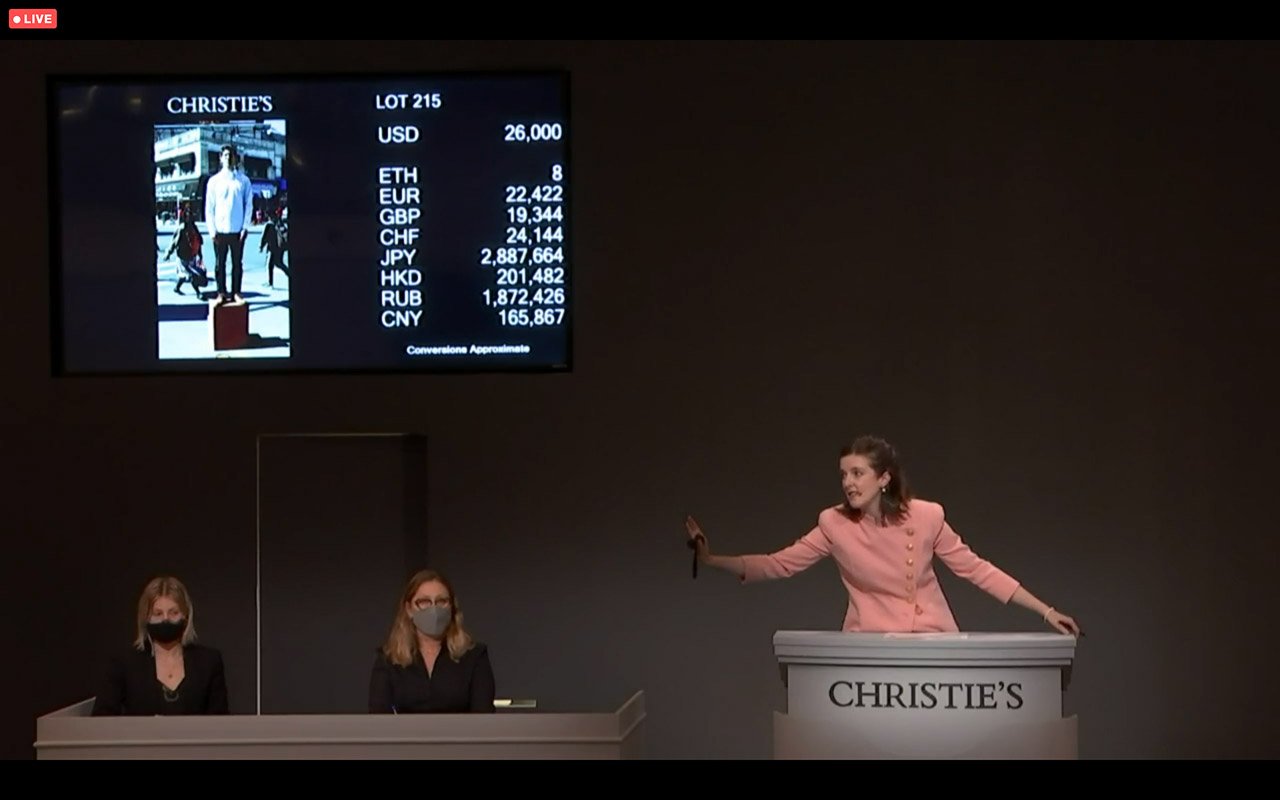
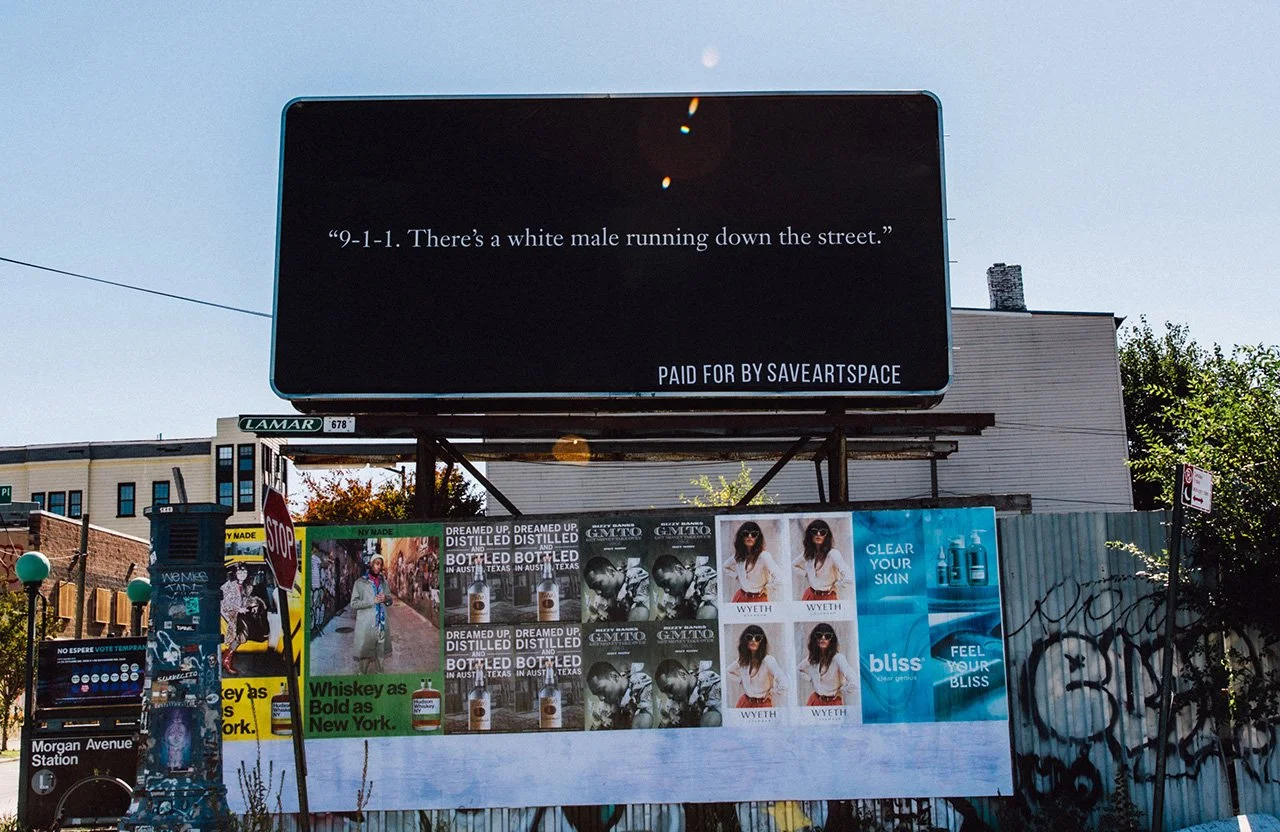
Dread Scott is a visual artist whose works is exhibited across the US and internationally. In 1989, his art became the center of national controversy over its transgressive use of the American flag, while he was a student at the School of the Art Institute of Chicago. President G.H.W. Bush called his art “disgraceful” and the entire US Senate denounced and outlawed this work. Dread became part of a landmark Supreme Court case when he and others defied the federal law outlawing his art by burning flags on the steps of the U.S. Capitol. He has presented at TED talk on this.
His work has been included in exhibitions at MoMA PS1, the Walker Art Center, Cristin Tierney Gallery, and Gallery MOMO in Cape Town, South Africa, and is in the collection of the Metropolitan Museum of Art, the Whitney Museum, The National Gallery of Art, and the Brooklyn Museum. He was a 2021 John Simon Guggenheim Fellow and has also received fellowships from Open Society Foundations and United States Artists as well as a Creative Capital grant.
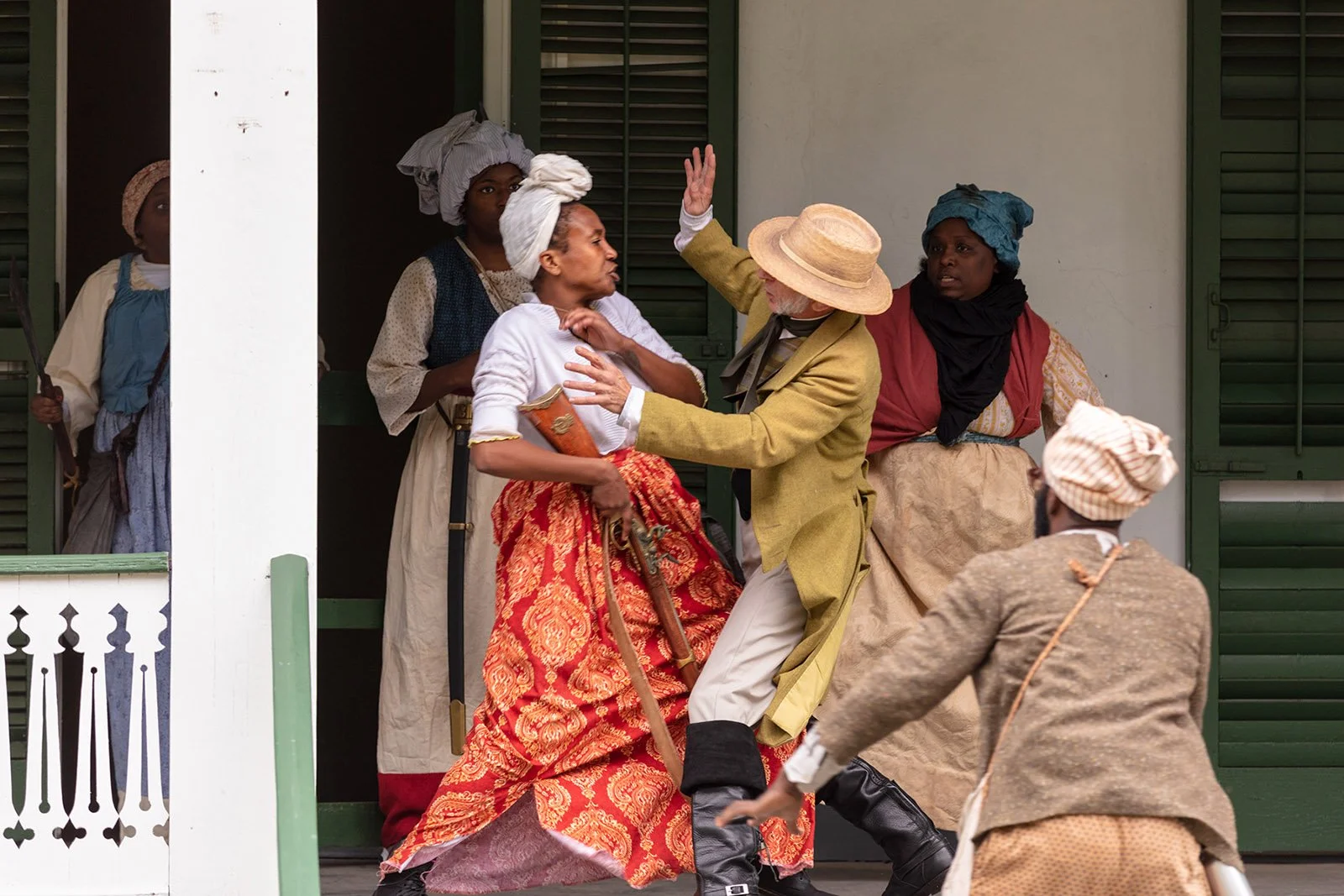
In 2019 he presented Slave Rebellion Reenactment, a community-engaged project that reenacted the largest rebellion of enslaved people in US history. The project was featured in Vanity Fair, The New York Times, Christiane Amanpour on CNN, and highlighted by artnet.com as one of the most important artworks of the decade.
Artist Dread Scott, Interview By Hugh Leeman
Propelling History Forward
Hugh Leeman: Dread, in preparing for our interview today, I came across different instances where you said some version or another of "I make revolutionary art to propel history forward." After nearly four decades of making art, what does forward mean to you now, and how has your understanding of what art can actually propel changed?
Dread Scott: Well, that's a good question, and I'll say guilty as charged — that's been my tagline for a while. I do think it's really important to have a vision of a radically different future, and my work hopefully helps people envision that. The world as it is has a tiny handful of people that control the wealth and the knowledge that humanity as a whole has created. It doesn't have to be that way, and it's causing a tremendous amount of suffering. In short, capitalism is a nightmare, and America and its particular vision of it is causing tremendous horror. Right now we're seeing a war in Iran that the United States and Israel launched. We've seen a livestreamed genocide in Gaza that without U.S. backing wouldn't actually be happening. We've seen cuts to USAID that have led to hundreds of thousands, if not millions, of deaths. And you could go on and on — and this is just very recent history in a country that was founded on slavery and genocide.
So looking at the United States and the world as it is — and knowing it doesn't have to be that way — I make art to help people confront the horrors that are at the root of this society, not just America, but America as a particular concentration of it, and then imagine how the world could be radically different and far better.
As for what art can do to propel history forward, I think that's a question a lot of people need to confront: both how history moves forward, and how art can play a role in that. For progressive or radical or revolutionary people, the world we have now is not the one that those of us who participated in Black Lives Matter, or in the "we are the ninety-nine percent" moment, were hoping and dreaming for. And certainly for those with roots going back to the sixties and seventies — the Black Panther Party, revolutionary organizations — this is not the world people were fighting for. There's a real question of whether you can get to a better world, a world without exploitation and without oppression. I think that's possible. I don't think we're at the end of history.
These are particularly tough times, particularly dark days, and it may get worse. But there hasn't been a period in history where artists haven't tried to stand for a better future and fought for it. In the midst of rising fascism, Picasso did Guernica in direct response to the fascist bombing of a civilian population. Billie Holiday did "Strange Fruit" in the midst of tremendous racial oppression, and it became a harbinger of the civil rights movement. Art at its best has heralded a future that's better for humanity — though not all art does that, and not all artists. And you have to get a little bit of synchronicity and luck for when your art can align with social movements that can actually change things. I don't think it's the art by itself that changes the world, but there also hasn't been any social movement of progress that I've known of that hasn't had art as a vital component of it.
The Questions Confronting Humanity
Hugh Leeman: You've said there are key questions you ask yourself about what is confronting humanity, and that this becomes a kind of guideline for what you create. What are those questions?
Dread Scott: One of them, which has been an arc of what I've done for a while and that I'm coming back to, is patriotism and nationalism. Those are increasingly coming to the fore. The question of who is and who isn't an American — the United States right now is waging a war, splitting up families, deporting people who have been productive members of society for decades. It's targeting ordinary people and driving a wedge between those it claims should be here and those who shouldn't. It's attacking LGBT people, with a special edge on attacking trans people, saying, "You're not really part of the body politic. You're not real Americans." So the question is: do you view America as basically a force for good, or as a historic problem? As I said, it's a country founded on slavery and genocide. The founding ideals and conception of this country are not something liberatory.
Now, many of my friends, my audience, my colleagues don't share the view that America is fundamentally the problem. A lot of people right now are trying to get Democrats elected, hoping that can stand up to the fascism Trump is consolidating, hoping for a return to some ideals — progressive liberal democracy or something. I think we should dream a lot bigger than that. If our dreams are rooted in founding documents written by enslavers and friends of enslavers, that's actually not that visionary. It's not that lofty. And if we're rooting for a society that at its base has capitalism — private ownership and accumulation of wealth determining what gets produced, not whether people need housing, clothing, medical treatment, or education, but profit — then I think people have to look beyond that to get to a society we actually want to live in.
A slightly different question from national identity is race, racism, and racial oppression, which has been a consistent thing I've looked at. You can't understand America without understanding race and racism, and you can't understand the modern world without it. The position of Black people in U.S. society, but also globally, raises huge questions. You can look at it through the prison system, through the police force, and through the amazing culture Black people have created. The culture that so many people appreciate — that I've benefited from tremendously and been part of — is Black culture. So looking through the lens of race, racism, and white supremacy, but also the tremendous culture that has been forged, is something my work looks at a lot.
And there are other foundational questions. As fascism gets consolidated, the position of women in society is increasingly to the fore. The U.S. government has made it very difficult for women in many states to have access to reproductive care. That's a huge question. I haven't addressed it a lot in my work, but it's something I think about, and I ask myself whether it's something I need to focus on more.
The Professional Troublemaker
Hugh Leeman: A thread that runs through so much of what you've done is summed up in a word — the troublemaker. You've joked that you're a professional troublemaker, that you get paid to be one. What's the value to society that comes from the troublemakers?
Dread Scott: If you have a society based on exploitation and oppression, it's good to have people trying to change that — to be fearless and courageous in standing up to it. There were court jesters who had the freedom to make fun of the king. This is somewhat apocryphal — I don't know the real history of court jesters in medieval European society — but the story is that if other people said what the jesters said, they might lose their heads, while the jester, if he played it correctly, could shine a light on society.
I also think people like Richard Pryor, or musicians like The Clash, cause trouble for oppressive ruling classes but are vital for people raising their heads and asking, "Do we have to continue to live like this?" The Clash and Public Enemy saved my life. I never met Joe Strummer. I was fortunate enough to meet Chuck D when I was twenty-seven or twenty-eight. It wasn't the personal relationship that mattered — it was having musicians saying, "Look, you're not the one who's crazy. The society is messed up." That was really important to a young me.
It is largely young people who change the world. Fred Hampton and Martin Luther King were kids. Malcolm X was young when he was leading people into the streets to change systemic oppression that had been around for centuries. People thought that was crazy, but that vision enabled millions to stand up. Marx and Lenin were young when they changed the world. It's not that older people don't play a role — I've got gray hair, and I hope to contribute what I can — but historically it's young people who look at the world and say, "Things need to change. We do not want to inherit the world our forefathers gave us." And people who say that, at whatever age, cause trouble for those trying to maintain society the way it is.
Right now there's tremendous focus by the government on shutting down dissenting ideas, because they matter. There are pro-Palestinian students facing deportation, students who've been imprisoned. There's a Latino immigrant who did absolutely nothing wrong and ended up in prison in El Salvador, and said, "I've done nothing wrong. I've appeared in your immigration courts." He sued the government — Kilmar Ábrego García — and the government kept coming after him, because it was making trouble for them to enforce a program that has some support but that a lot of people are upset by. It's why in Minneapolis people stood up. When ICE was going into Minneapolis, they didn't back down voluntarily — they backed down because people stood up. That was a lot of trouble for the government, but it's the kind of trouble that inspires other people to stand up and say, "We don't want to live in a society where people have guns pointed at them in their cars for asking to see a warrant." That's the kind of trouble that's needed when a society is moving in an authoritarian and fascist direction.
More Aspirational Ways of Being
Hugh Leeman: You compare the artist to the court jester — presenting new ways of being that are more aspirational than simply getting some Democrats elected. What are some of those other ways of being, as you see them?
Dread Scott: I look at a world where there's tremendous wealth and an opportunity for everybody to have a decent life — relative freedom of movement, health care, shelter, clothing, food. And the thing standing in the way of it is capitalism. Something as simple as insulin doesn't get to people, not because drug companies can't produce it cheaply, but because it's profitable to keep the prices high. America spends more per capita on health care than any country in the world, yet the health outcomes are worse. That points to a profit motive baked into the way the American system delivers health care. Everybody knows that's not a good thing, except the pharmaceutical companies, the insurance companies, and some of the politicians.
You could provide health care for people. You could provide food. There's food left to rot because it's not profitable for the growers to get it to people. It's actually profitable to have the corn rot in the fields — and that's criminal. There are people who are homeless while buildings sit vacant, and more affordable homes could be built but aren't. I don't think it would be easy, but it would be very possible. England has been a capitalist society for several hundred years, but seventy years ago they created the National Health Service, which meant that if you got sick, rich or poor, you could see a doctor. That doesn't happen here.
There are people who have literally walked to the United States from Honduras. They work hard, they contribute to their families and to society. They build the buildings we're in, they cut the lawns, they cook our food, they bus our tables. And they're under threat just because they crossed a line drawn in the sand. That's nuts. The aspiration is a society where everybody could contribute what they can and take what they need. That would be a wonderful society to live in — one increasingly working to overcome the differences between mental and manual labor.
Humanity has reached a point where a lot of the ways we're living are outmoded and obsolete. Wars are being fought over strips of land — and it's not just the U.S. Russia is bombing Ukraine, Israel is attacking Gaza, Lebanon, and Iran, and you can look at Congo or Sudan. It's so that small groupings of people can control wealth and knowledge that humanity as a whole created, and it's causing tremendous suffering. We could get to a world where humanity is caretaker of the planet. The first couple hundred years of industrialism damaged the planet, and now we're facing a tremendous ecological crisis. How do we collectively solve that — in a way that overcomes the differences between societies, rather than telling people in the Maldives or the Amazon that they're just going to have to suffer? The people in Brazil and Peru didn't cause the problem, but they're suffering directly from it. How do we say, "We all live on earth, and we're responsible as sentient beings for making the planet better," including for the other species affected by our decisions?
What Is the Proper Way to Display the U.S. Flag?
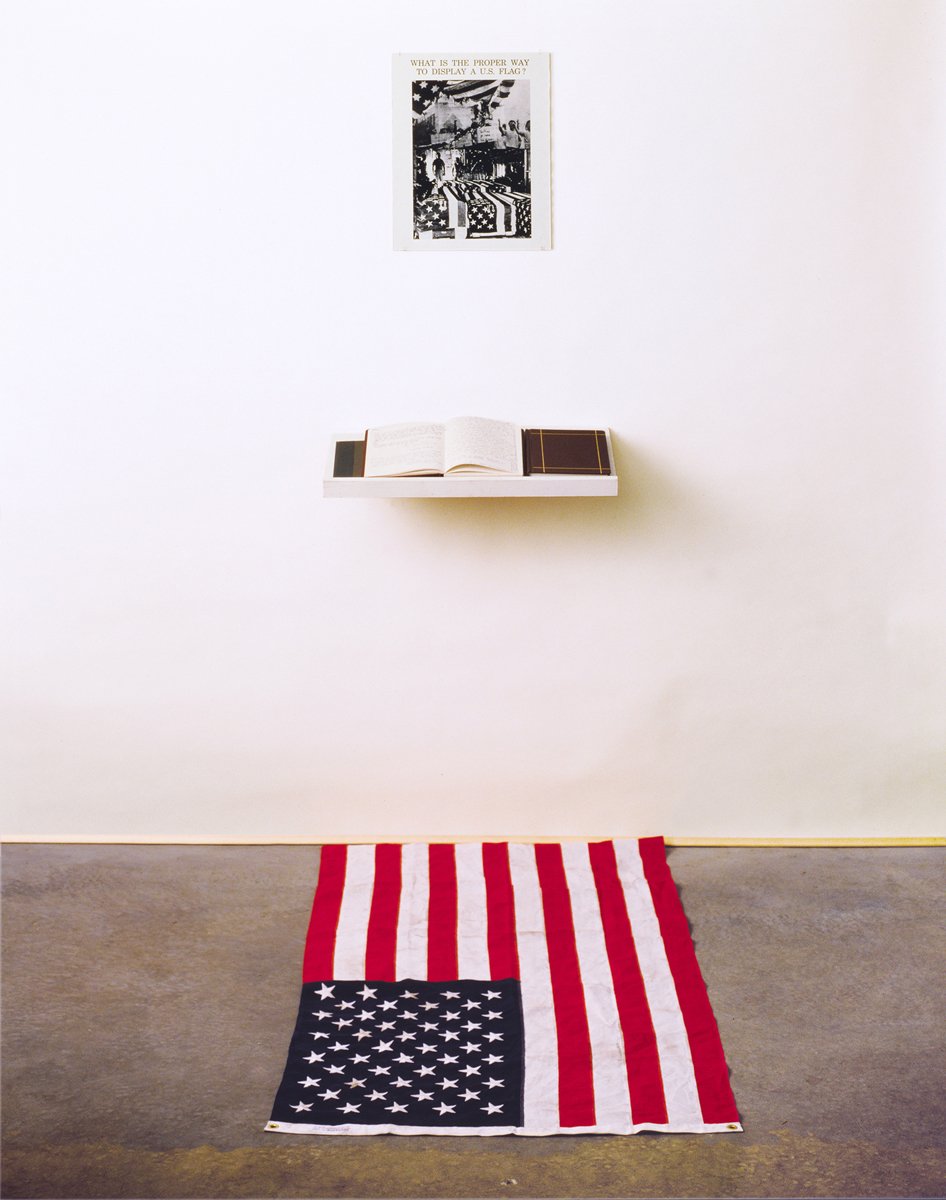
Hugh Leeman: You've tapped into the contentious nature of this moment in one of your most controversial works, What Is the Proper Way to Display a U.S. Flag?, where the audience didn't just observe the work — they had to negotiate an American flag laid on the ground, stepping on it or around it, and there was a book where people could write their response. When you go back and look at those responses, do you see them as documentation of the artwork, as a separate collective work, or as an archive of how Americans understood patriotism at a particular historical moment?
Dread Scott: It's kind of the latter, but also something slightly different. That work is an installation for audience participation, and the audience is actually part of the medium — part of the artwork. The responses people have, both physical and written, are part of the work, so the audience that came before is part of the artwork for the people who come after. It is a window into what people think of the United States at the particular moments when it's been shown. The work was made in 1988 and became the center of controversy in 1989, with exhibitions around 1989 and 1990. It's a window into what people thought of the United States, of patriotism, and of conceptual art made by an unknown art student.
But it's more than a window. The work gives ordinary people — whose ideas about the United States are normally written out of the conversation — a place to speak. At the time I made it, there was a lot of talk about patriotism; George Bush was literally campaigning in flag factories. People were starting to wear flag pins. But the people in the housing projects, the ghettos, and the barrios didn't have their views made part of the evening news. In What Is the Proper Way to Display a U.S. Flag?, you had all sorts of people — including those who felt victimized by the United States, as well as visitors and immigrants — able to talk about it.
For example, one woman wrote, "I'm a German girl. If we Germans carried on about our flag the way you all do, we'd be called Nazis again. I think you make too much trouble about your flag." That's an insightful comment from someone looking at the United States from the outside. Or someone from the housing projects who wrote that the police shot their brother and then kicked over his body to make sure he was dead, and said, "Thank you, Dread Scott, for this opportunity" — that the U.S. flag stands for oppression, and that the cop wore a flag patch on his arm. Those voices — people who are the victims of American policy — don't often have the freedom to talk about patriotism the way George Bush did. This work put those voices forward. Not my voice, but the voices of all sorts of ordinary people — including people who wrote that I should be killed and that my family should be made to pay for the bullets. There were very proud, patriotic Navy SEALs who literally threatened my life. These books talk about all of that. The work is a record, and I'm glad it exists — but it's also a living, breathing, functioning artwork that, when it's shown again, has some of the same force it had when it was first made.
Courage, Luck, and the Boundary of What's Necessary
Hugh Leeman: You mentioned the threats to your life. In a widely circulated TED Talk you gave years after the piece, you spoke about courage, luck, vision, and the boldness of action — describing how you continued with a photo shoot while people protested outside and threats were being made against your life. How has your calculation of that boundary of what's necessary changed from that young artist to today?
Dread Scott: First off, I'm still trying not to be a martyr. I don't want to get killed for my art, and so far so good. But the important thing is that there's a lot of untimely death in this society — some of it for people's views, but a lot of it just because this society is unjust. Look at the Sean Bells, the Trayvon Martins, the George Floyds of the world — people going about their business whom the police killed. Look at people who are victims of someone who can get a gun and walk into a school or a house of worship. Look at people who die because they can't get access to health care, food, or shelter — immigrants who died not because they were deported by ICE, but because they were left out in subzero temperatures in summer clothing. This is an unjust society that causes tremendous suffering.
I look at it as vitally important for those of us with relative freedom. I was a middle-class kid; I got trained as a middle-class person. I know how to read books and think about the world, and as an artist I have the relative luxury to read, look at movies, listen to music, think, and make art about it — and to have a disproportionate effect on society. So if you recognize that the world is unjust and you have this relative freedom that most people in the world don't have, do you stand by and say, "Isn't it cool that I have the freedom to make art — maybe I can make enough for a nice car"? Or do you say, "It's an accident of history that I am who I am, and I'm going to use my work to help people change the world"? I've chosen the latter.
But if you criticize the United States in a way that becomes threatening to it, this country reacts with violence. Look at how it attacked the Black Panther Party. Look at how certain artists were hounded — not necessarily directly killed by the government, but their lives made very difficult. Or something not as innocent as how Basquiat was treated, where people around him thought it was great to have this young Black dreadlocked genius and kept giving him drugs even as he was falling apart, because they could keep making a profit. The government didn't directly kill him, but the logic of the art world snuffed out a brilliant artist far too young.
So I have to speak truth to power as best I can and, hopefully, keep my courage when threats come. When I made A Man Was Lynched by Police Yesterday and it was shown at Jack Shainman Gallery, the gallery and I received threats. Other works have brought threats too. I keep saying, "I stand by the work" — but getting galleries and museums to also stand by the work is a challenge. Coming back to What Is the Proper Way to Display a U.S. Flag?, I think that work is profoundly relevant right now, but it hasn't been shown in the United States for about twenty years. I've tried — including with museums that own my work — and we haven't been able to find a place willing to do it. Honestly, any institution that did would quite correctly understand that this president would probably be criticizing them and calling for them to be defunded, and there would be people who'd try to harm the museum, including the docents, security staff, and curators. So it's not a light decision. It's not just me saying, "I'm willing to stand for my work, come what may." I need sections of the art world willing to take those risks too — and sometimes they're even more on the front lines than I am, because the people sitting in the gallery are the easy targets while I might be in another city. It requires conversations with a range of people to have this work out there. But I think it's vitally important to society.
Room to Dissent: A Question for Younger Artists
Hugh Leeman: You've talked about censorship and the threats around this work — financial and physical — and about the historical importance of young people in movements. Do you think younger artists today have enough economic and institutional space to dissent genuinely, or has professionalization made it harder to take the kinds of risks your generation could take?
Dread Scott: Every generation finds a way to rebel, to speak out, to dissent. It's certainly more economically challenging to make art now than when I was in my twenties and thirties — but when I was in my twenties and thirties, it was harder than for the generation before. There are interviews with Richard Serra where he talks about living in a loft in SoHo, walking out one day, seeing a ton of used tires, and hauling them up — a year's worth of art-making materials. That New York doesn't exist; it didn't even exist when I moved here in 1992. You hear about how Warhol and Basquiat lived — that wasn't there when I arrived. There was a certain freedom people had. But let's not be overly romantic about it. You read Baldwin, and he talks about being really poor while doing some of his best writing.
A lot of young people in New York are probably living with three, four, five other people — in Williamsburg, Bushwick, the Bronx, Washington Heights — and working forty or fifty hours a week, which doesn't leave a lot of time to make art. But they'll figure it out. The bigger question for young people, whether they're visual artists or musicians or poets or theater makers, is: where do you stand? Do you plant your feet among the people and figure out how to make art that speaks to these times? Can you do it powerfully? And can you get lucky enough to reach an audience? You have to make good art, but then you also need a little luck. When What Is the Proper Way to Display a U.S. Flag? was made, it was always a really good work, but it required a specific alignment of the stars to become the national touchstone it became.
There are young people making really interesting work, but I'm old — I don't know them that well. There are young rock and rebel musicians doing interesting things, but there isn't the cultural zeitgeist there once was — no Jimi Hendrix or counterculture, no Public Enemy, no intellectual avant-garde like the one that gave rise to the Constructivists or the Mexican muralists. I don't see that right now. But that just means the twenty-five-year-old who's going to change the world hasn't changed it yet. This system is creating people who are making interesting work about these times, and they're not people with gray hair like me. I haven't given up — I'm going to do everything I can — but there are young people doing kick-ass stuff, and I just don't know yet what it is, because it hasn't become the thing.
Being a Father, and the Urgency of the Work
Hugh Leeman: You're at a transformational stage in your own career. In a 2016 video discussing police killings, you said, "I have a son and I fear for him," and made clear the concern extended beyond your own family. How has being a father affected your sense of what is urgent in your work, and the kind of future you want art to help make possible?
Dread Scott: Being a dad is a much more direct connection to trying to make a different and better world. You see through a different lens the world you're leaving to younger people. When the Trayvon Martin and Mike Brown killings happened, and there were potential trials for the murderers, I had to sit with my kid and say that I both couldn't tell him how to survive an encounter with the police and couldn't promise there would be justice if he were killed. That was very painful. In the midst of that, Bruce Springsteen came out with "American Skin (41 Shots)." It was painful to feel something of the horror that Mamie Till, Emmett Till's mother, felt knowing her child was going to the South before he was lynched — knowing your kid is going to an area where they do not value Black life, that he could be lynched, and that the horrors I knew about America could be visited on my child. You have to admit you can't protect your kid. And that's very hard.
There are people all over the world who've feared for their children throughout millennia — disease, hunger, war. We're not special in that. But where preventable death isn't common anymore, having the state be responsible for hunting people with Black skin is really tough. It creates more urgency for making art and contributing to political movements that make a better world. There was a real desire to look more directly at the horror that is America and help other people understand it — and understand that the world hasn't always been this way and doesn't have to remain this way forever. That kind of change in history sometimes takes perspective, stepping back.
Being a father, I've also learned from seeing the world through my kid's eyes. My kid graduated from college right during COVID and was entering a workforce where nobody was getting a job — where the few people working were "essential workers," basically people who weren't wealthy enough to avoid high-risk employment. My kid was initially working in a grocery store with a lot of exposure. I've seen how their generation looks at questions of gender differently than when I was growing up. And I've learned from how younger people look at the activism my generation did. A popular refrain among younger activists is thinking about self-care. I think that can sometimes go a bit overboard, but older people can learn a lot from younger people saying, "You guys got burned out, and it became a toxic environment because everything was all-on, everything was the most important thing in the world, and you didn't take care of your emotional and physical needs." Some younger people, including my kid, recoiled from that even as they were dedicated activists during Black Lives Matter — not wanting to repeat the mistakes they thought my generation made.
Defending the Flag: The New Work at YBCA
Hugh Leeman: You've got a show coming up in San Francisco, at Yerba Buena Center for the Arts — The Body Politic — and they've commissioned a couple of works. What are the new works, and in particular, tell me about Defending the Flag.
Dread Scott: Defending the Flag is one of the main pieces. It's not the first time I've returned to U.S. patriotism and the flag, but it's the most significant return to that question since What Is the Proper Way to Display a U.S. Flag? When I made that earlier work, I thought I basically got the question right and didn't need to come back to it. And yet, both what's going on in the world and how I'm looking at it now make me want to return to this question more directly.
Defending the Flag is a performance piece with a U.S. flag on a pole, guarded by a person dressed in military uniform holding a replica of an M4 carbine — the standard-issue rifle the U.S. military uses. It will be a prop weapon, but it will look very much like the real thing. If an audience member gets too close to the flag, the guard will assertively take control of the situation and tell them they need to step back, that they're defending the flag. It'll be a jarring experience, because when you go to an art gallery you're not used to seeing soldiers, and you're not used to them interacting with you. You might see a docent, who's supposed to be quiet — this is the opposite of that. There's an element of violence in it. Even though we absolutely know neither the performer nor the audience will resort to violence and no one will be harmed, it's a meditation on what patriotism is and how people look at the flag, the state, and the government. At the end of each performance — it'll probably be performed twice a week during the run — the flag will be ceremonially folded and placed inside a safe in the gallery.
Part of the motivation is that when What Is the Proper Way to Display a U.S. Flag? was the center of controversy, a lot of veterans claimed they had special access to patriotism and to the flag — that their forefathers had died for the flag — and they were, in effect, defending it in trying to suppress my artwork. So I figured, let's literally physicalize the absurdity of defending the flag: not talking about the rights or the society we'd want, but the absurdity of mounting a military defense of the U.S. flag. I'm taking that experience from almost forty years ago and addressing it directly.
That's not the only work in the exhibition. There's another new commission called Life, Death, America, a set of body prints — about twenty-eight to thirty of them, the way David Hammons did body prints — assembled into a big mural that'll be fifteen feet by thirty-six feet. Each person is individually printed and then assembled into the mural: people of different ethnicities, nationalities, sizes, genders, and ages. Some look very small because they're young; some look much bigger because they're old. Some are in suits, some look like artists, some like athletes. It's a diverse cross-section of society that lives in the United States and has ties to places around the world — some of the people are Iranian, some are Palestinian. Because of the printing technique — a residue of the person on canvas, coated with powdered graphite — everybody becomes a similar tonality. If somebody has dreadlocks, those remain as cultural signifiers, but all of our skin pigmentation becomes black or dark gray. So the piece reduces our differences even as those differences remain visible for the observer.
I'm making it at a time when the background of so much conversation is death — the million-plus people who died of COVID in the United States, people worried about being killed in a mass shooting, people with family in Palestine, people from Iran facing a U.S. war, people worried about family separations in a way that almost feels like death because they may never see their loved ones again. Death is the background of what a lot of this work is about. Because of the technique, the figures have an ethereal, almost ghostly quality. So the work shows both the strength and vibrancy of a diverse, complicated, nuanced society, and the fact that people are thinking about death.
Hugh Leeman: Dread Scott, thank you so much for making time to share these ideas.
Dread Scott: I hope you got something usable. As I said, I do tend to talk in paragraphs — you may have to cut this down. But I hope you enjoyed the conversation, and I hope we talked enough about the art, and not just the politics, to get something interesting.
