
Jiayue Li, Leng Xia // Cold Summer, Birdcage Cafe
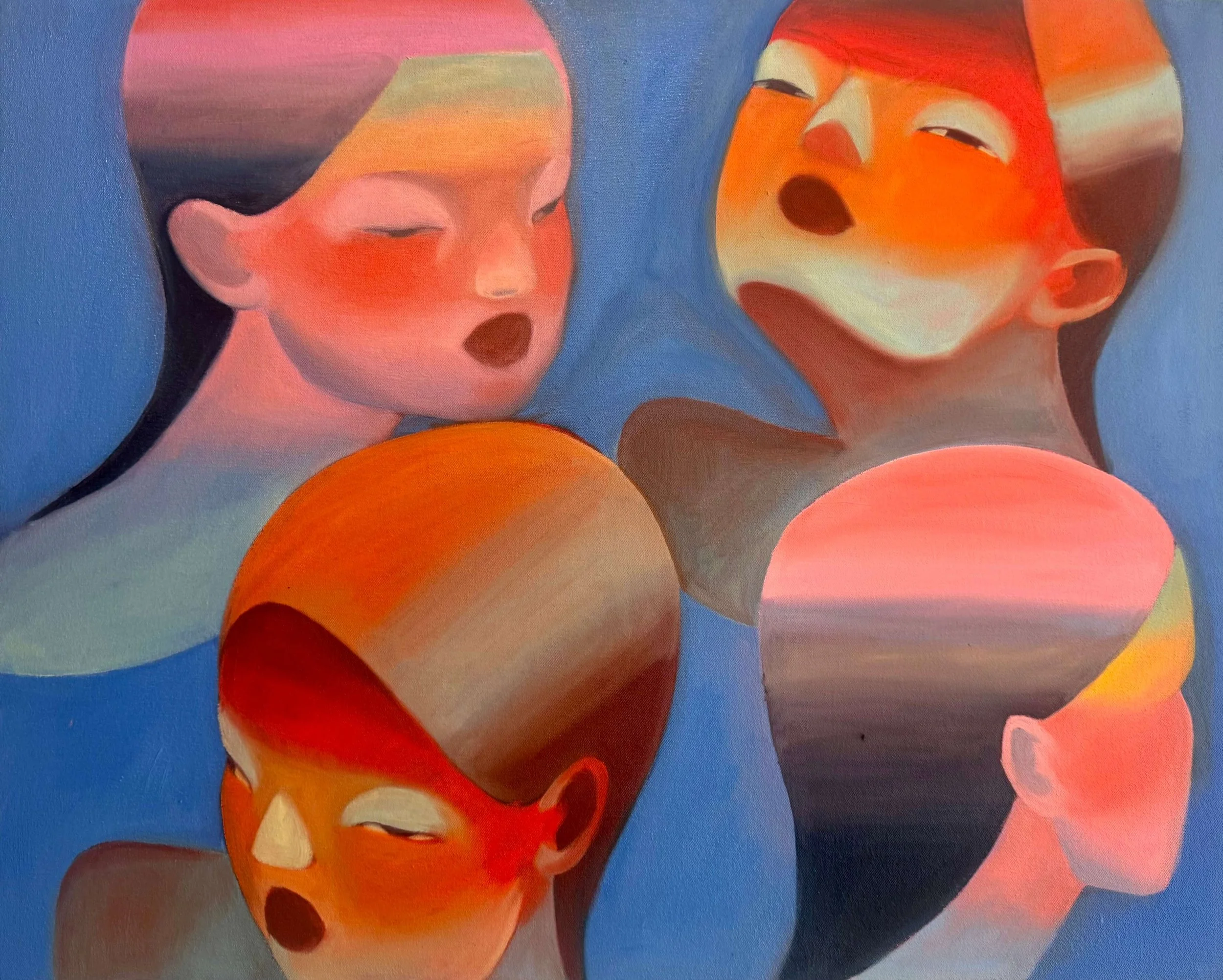
Untitled, oil on canvas, 24 × 30 inches, 2025.
Entering Birdcage Cafe, you are met with a flourish of emotive works by Jiayue Li. They appear almost immediately among the warm light, small tables, plants, trinkets, vinyls and everyday movement of the café. Hung at different intervals and scales, the works do not command the space so much as inhabit it. Li’s figures, gather, read, stare outward, and fold into one another, their expressions moving between introspection, amusement, melancholy, and something harder to place. There is a quiet familiarity to them. Without the physical and psychological distance of a conventional gallery, they begin to feel less like figures placed on display and more like people already present: friends at another table, someone half-listening to a conversation, or even fragmented reflections of oneself. The intimacy of Birdcage seems particularly suited to Li’s world, allowing its surreal distortions to feel strangely grounding.
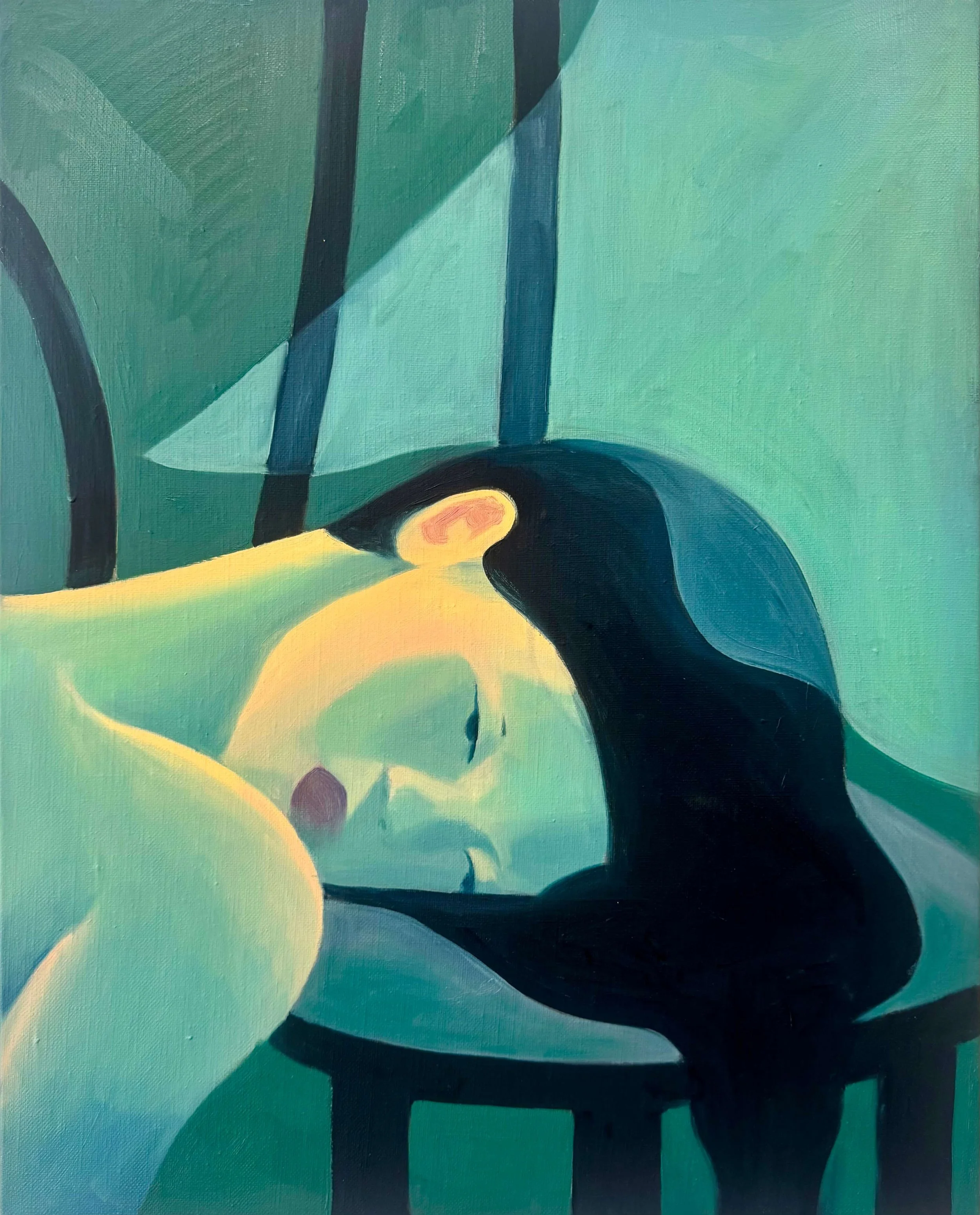
Breeze, oil on canvas, 16 × 20 inches, 2025.
Born and raised in Chengdu, China, Li began drawing at the age of six, encouraged by an early art teacher who took her students into fields, villages, and parks to draw from life. She later studied at the College of Design and Innovation at Tongji University in Shanghai before completing an MFA in Design at the School of Visual Arts in New York, developing a practice that moves between art, illustration, and design. Her work has frequently been described as dreamlike and surreal, qualities immediately recognizable here in the repeated faces, disembodied heads, shifts in scale, and unique relationships between figures and objects. Yet there is a precision beneath the strangeness. Working in mediums including colored pencil and oil paint, Li’s practice has explored womanhood, identity, and emotion, while her softness of line and palette allows otherwise ordinary moments to slip gently away from reality without ever becoming entirely unfamiliar.
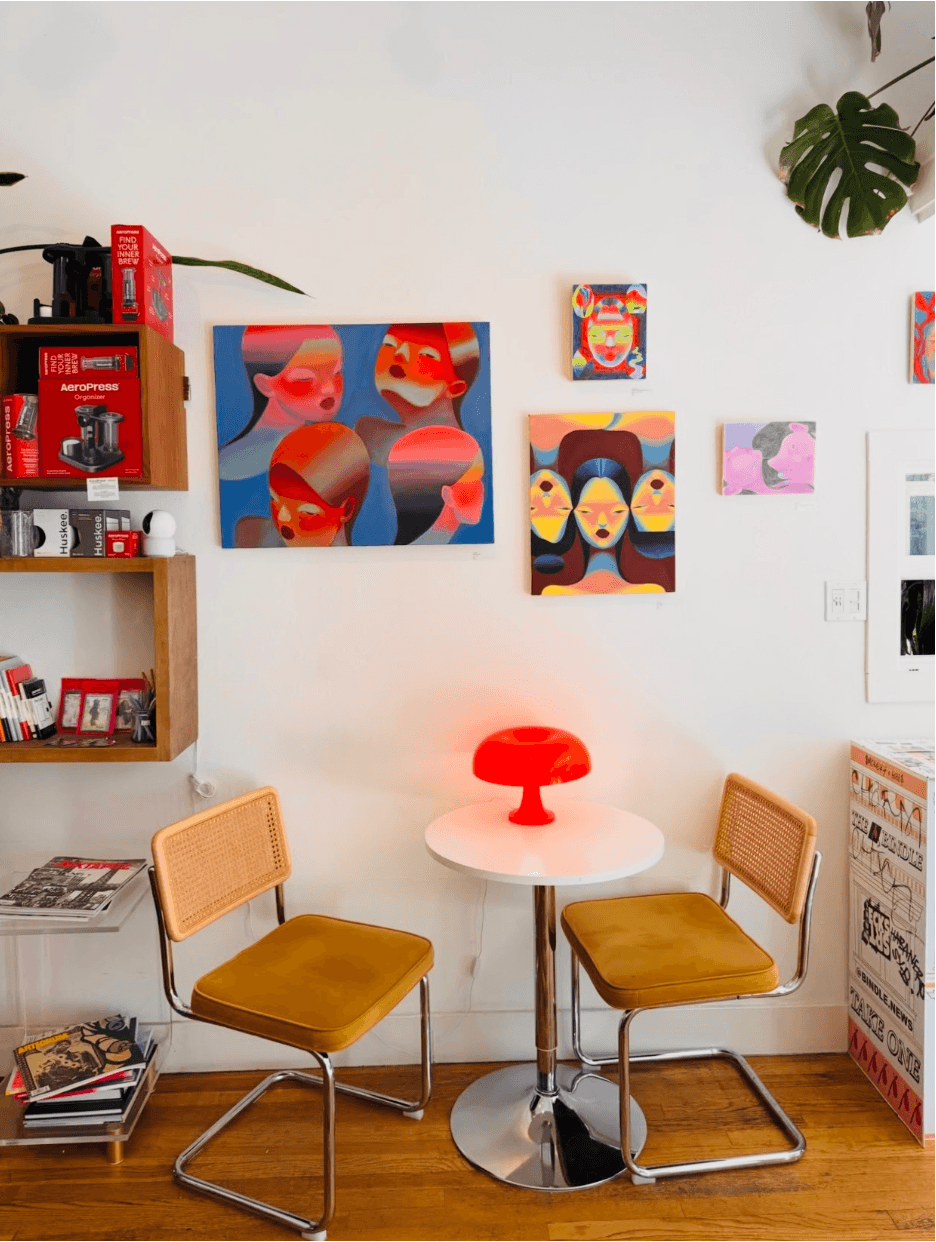
Photo by Cafe Hunter San Francisco on Instagram, @cafehuntersf, 2026.
Carousel makes Li’s interest in multiplicity clear. A procession of female heads replaces the horses of the familiar amusement ride, each similar enough to suggest the same person yet subtly altered in expression, orientation, and mood. Li has described these faces as representing different sides of being a woman, but the repetition also captures something more universal: the many versions of ourselves that coexist, contradict, and continually circle back upon one another. This becomes more intimate in Alter Ego, where three closely related figures press into the same small frame. Whether companions or versions of the same person, their closeness blurs the distinction between them. Together, the works suggest that identity for Li is neither singular nor fixed, but something continually negotiated between who we are, who we imagine ourselves to be, and the versions of ourselves that others encounter.
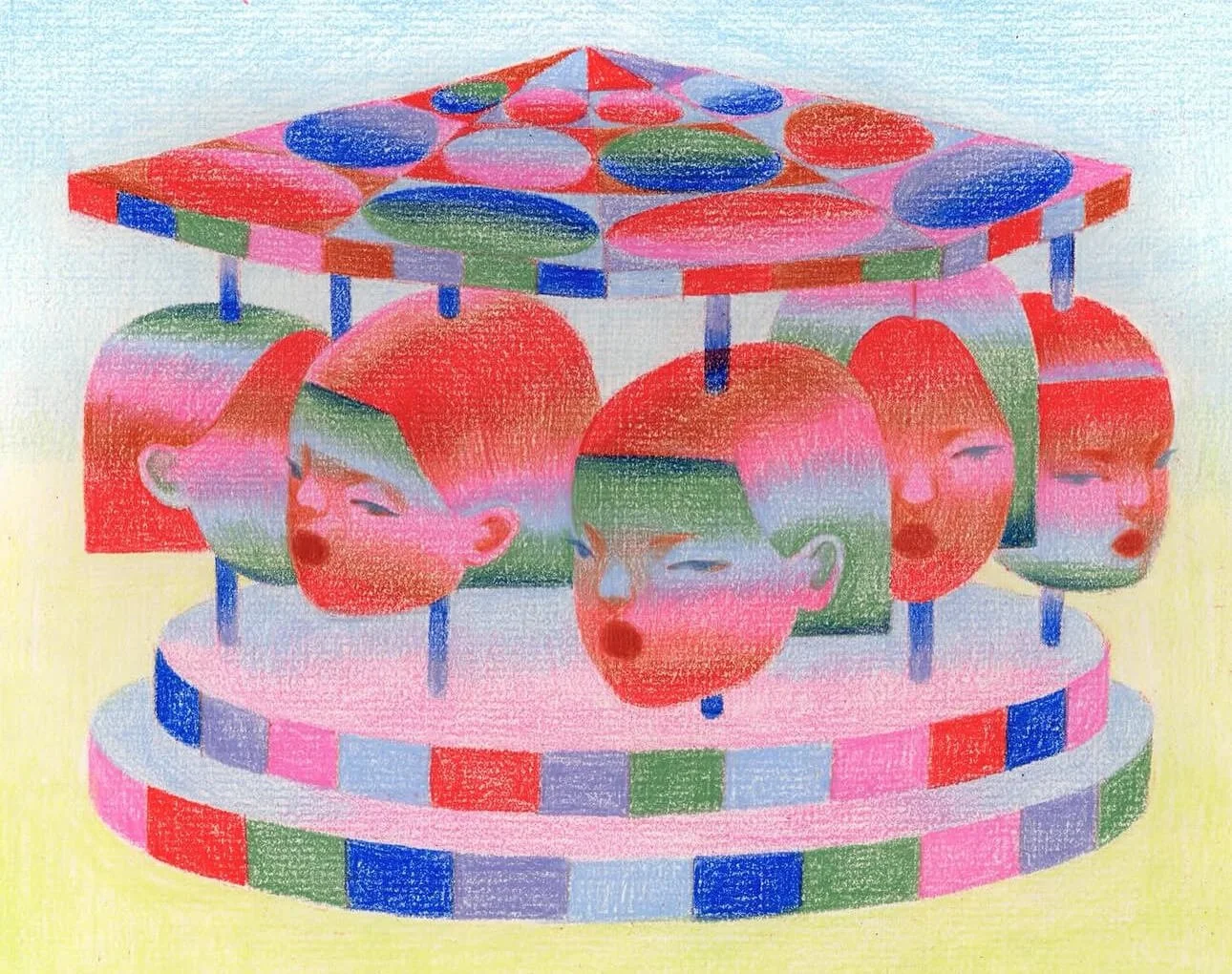
Carousel, pencil on paper on wood panel, 9 × 12 inches, 2025.
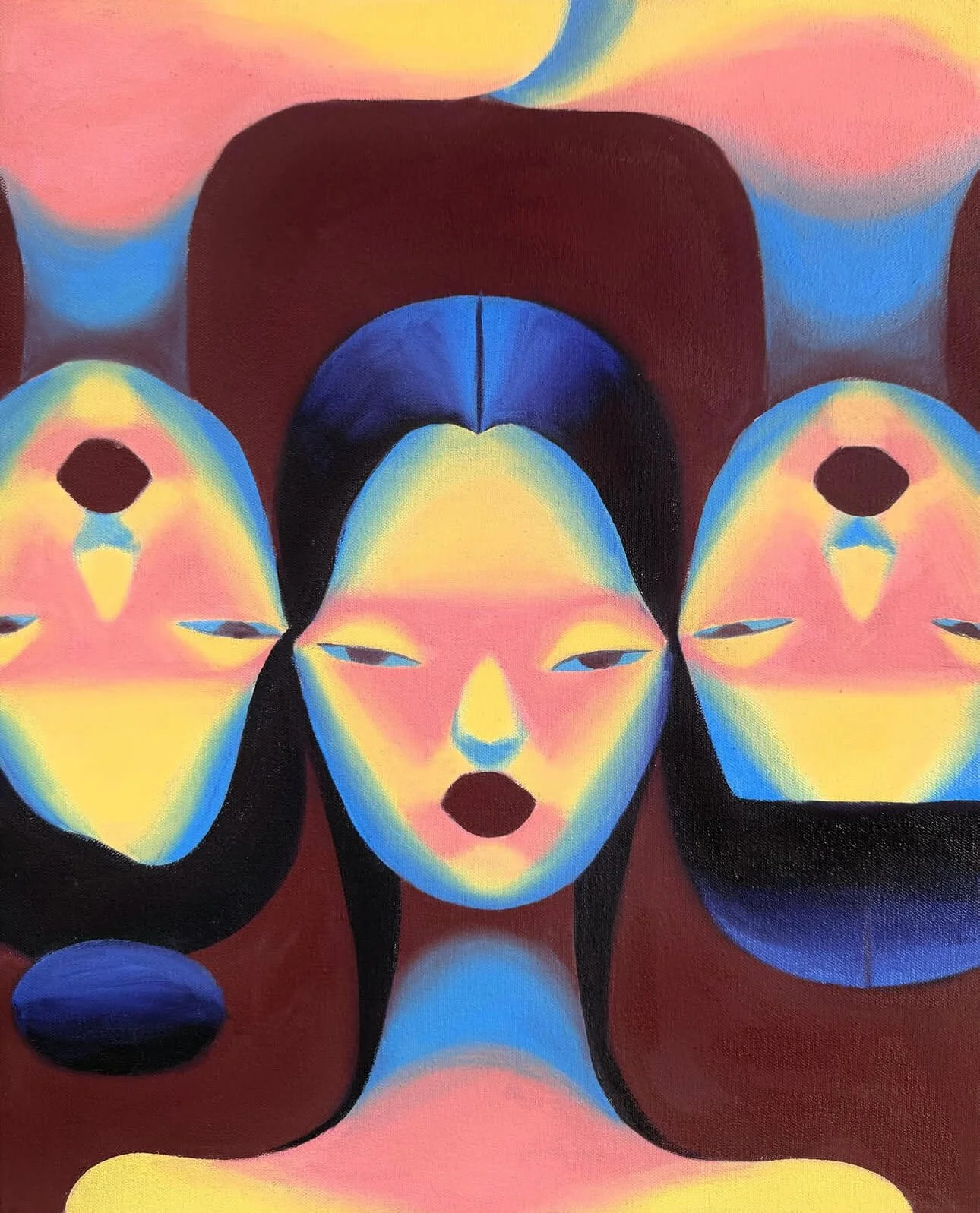
Alter Ego, oil on canvas, 16 × 20 inches, 2026.
Midnight Reading draws Li’s surreal world back toward something quieter and immediately relatable. A woman lies immersed in a book while a cat rests across her body, its weight and warmth almost tangible despite the exaggerated proportions within the piece. Her elongated legs extend beyond the frame, but the mild distortion feels less important than the intimacy of being awake with a book and an animal while the rest of the world sleeps. Seen within Birdcage, that familiarity becomes even more pronounced. The work feels less like a scene being observed than a private moment one might recognize from one’s own life, reinforcing how easily Li’s figures slip between imagined characters and reflections of ourselves.
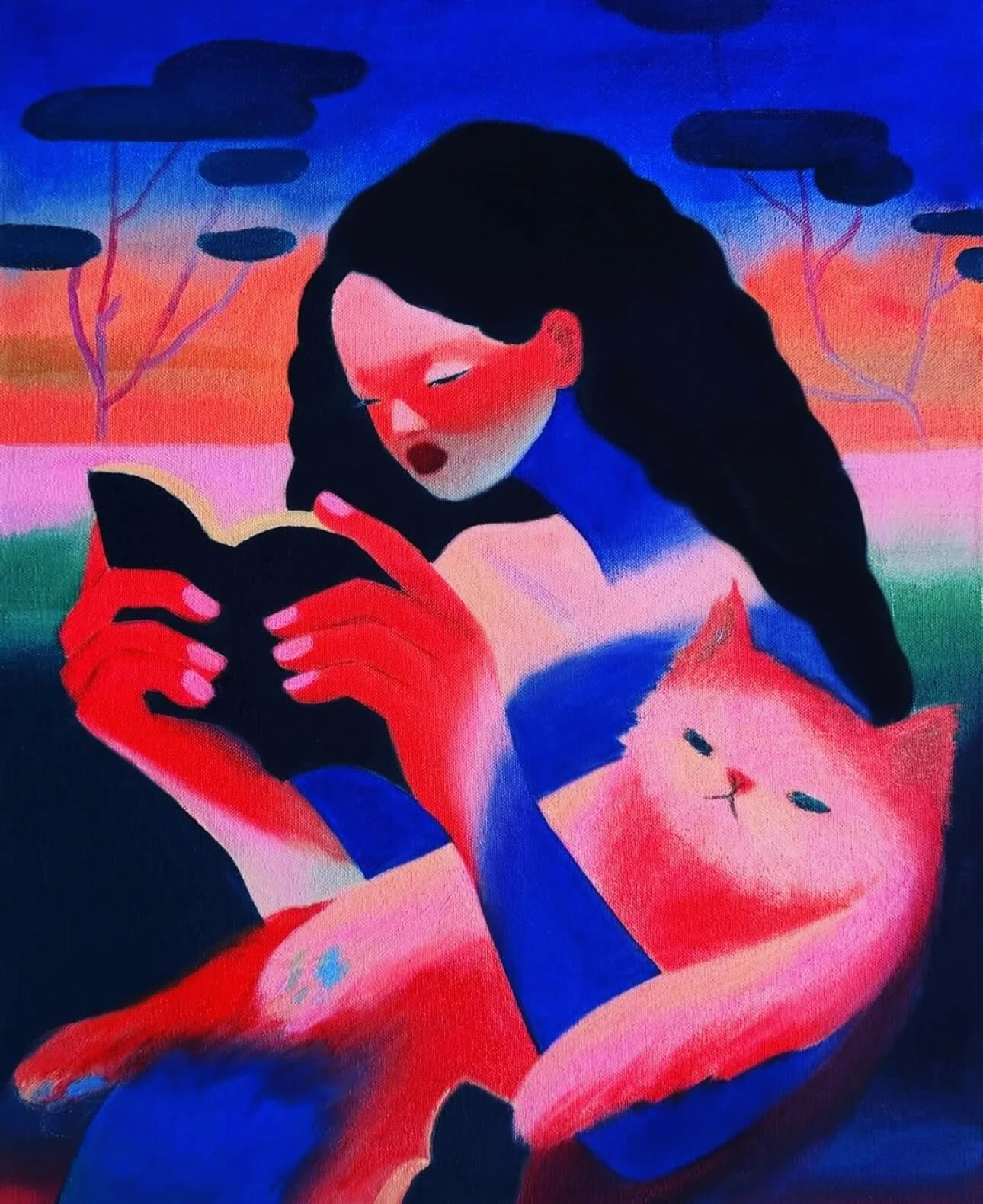
Midnight Reading, oil on canvas, 16 × 20 inches, 2026.
Recollection II turns memory itself into a collection of fragments. Scattered across the page are planets, a key, fruit, beads, a feather, a pair of lips, an eye, and other small forms, seemingly unrelated objects given equal weight by the simple act of remembering them. Memory rarely preserves a complete picture; instead, it holds onto random details while allowing others to disappear. That same logic seems to inhabit At Dusk, where two figures overlap so closely that their bodies and faces almost begin to merge, as though one person is being remembered through another. Together, the works suggest recollection not as an accurate return to what happened, but as something continually reconstructed, where people, objects, and emotions become entangled with the way we remember them.
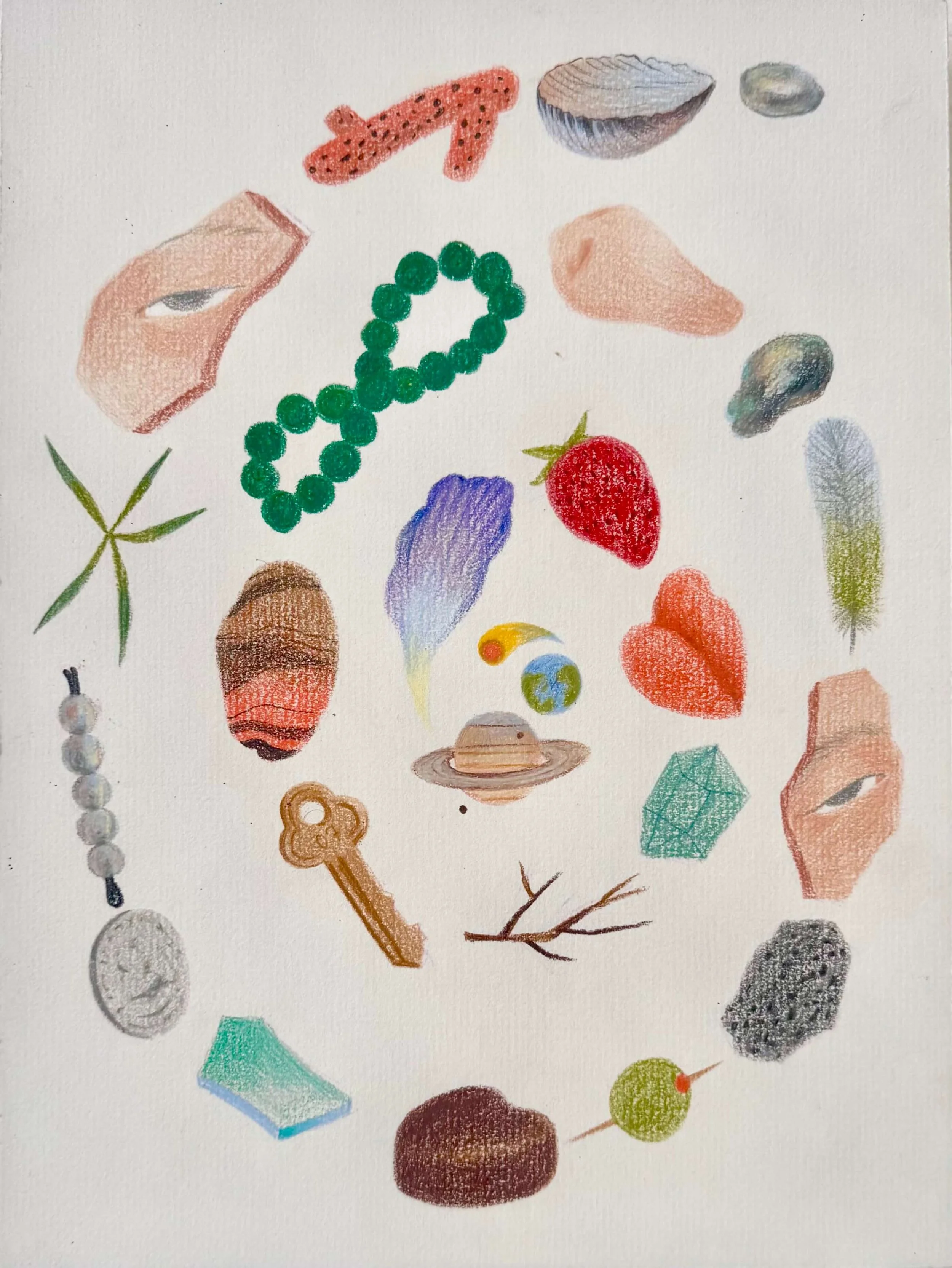
Recollection II, pencil on paper on wood panel, 9 × 12 inches, 2025.
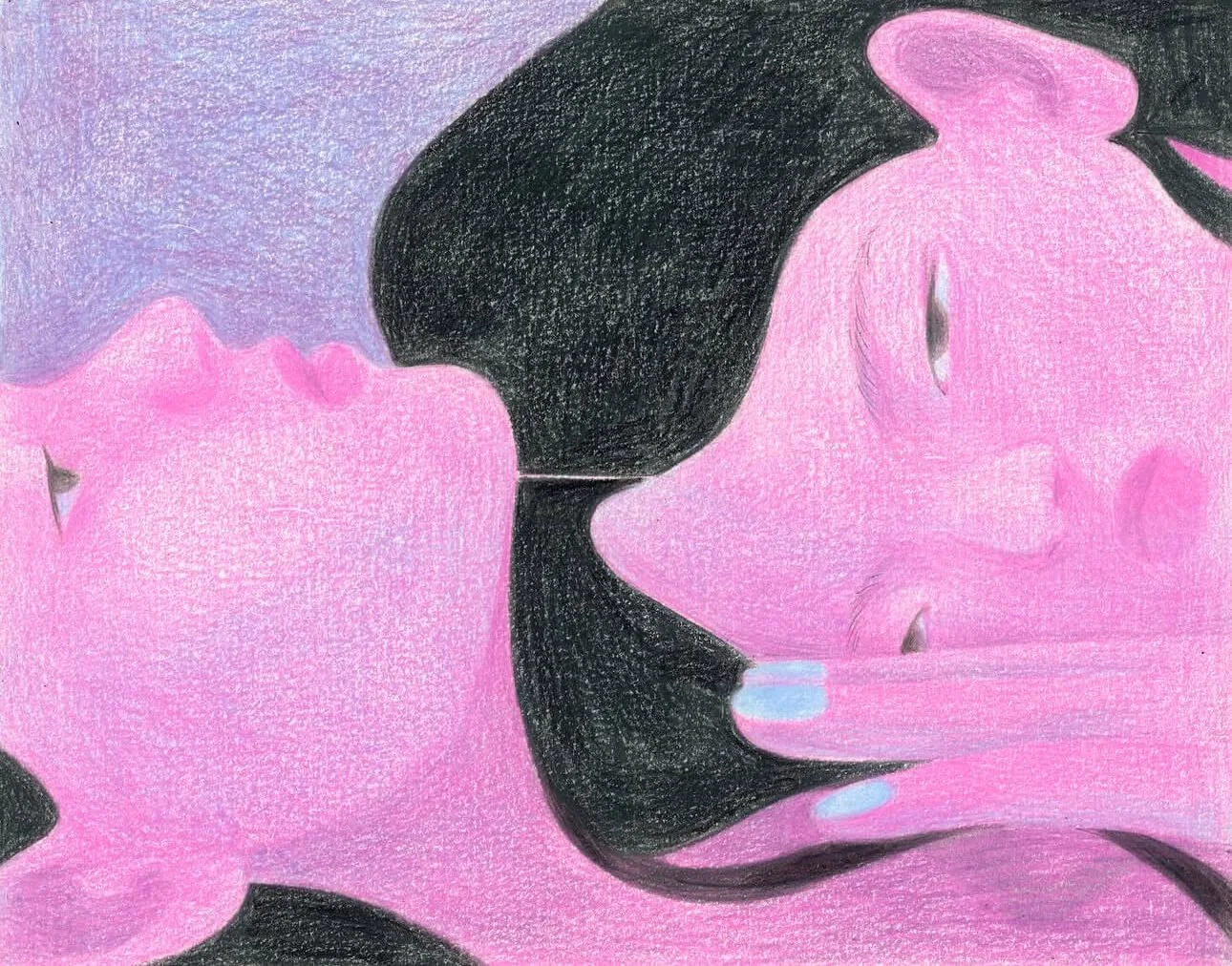
At Dusk, pencil on paper on wood panel, 10 × 8 inches, 2025.
Perhaps what makes Li’s work feel particularly at home at Birdcage is that it is allowed to exist alongside life rather than apart from it. Over breakfast or coffee, her figures become strangely companionable, like friends pulled into conversations dissecting the night before: a date, too many drinks, something said, something regretted, something still being worked out. There is humor, melancholy, and self-consciousness in these women, but also enough ambiguity to recognize something of ourselves in them. Li’s surrealism does not remove us from the everyday; it bends the everyday just enough to reveal how strange our inner lives already are. At Birdcage, surrounded by conversation, companionship, and the movement of people coming and going, that distance narrows further. Her figures are not simply being looked at. For a little while, they seem to be sitting among us.
Jiayue Li’s exhibition at Birdcage Cafe remains on view through September 30.