
Beth Lipman on Glass, Abundance, and What We Leave Behind
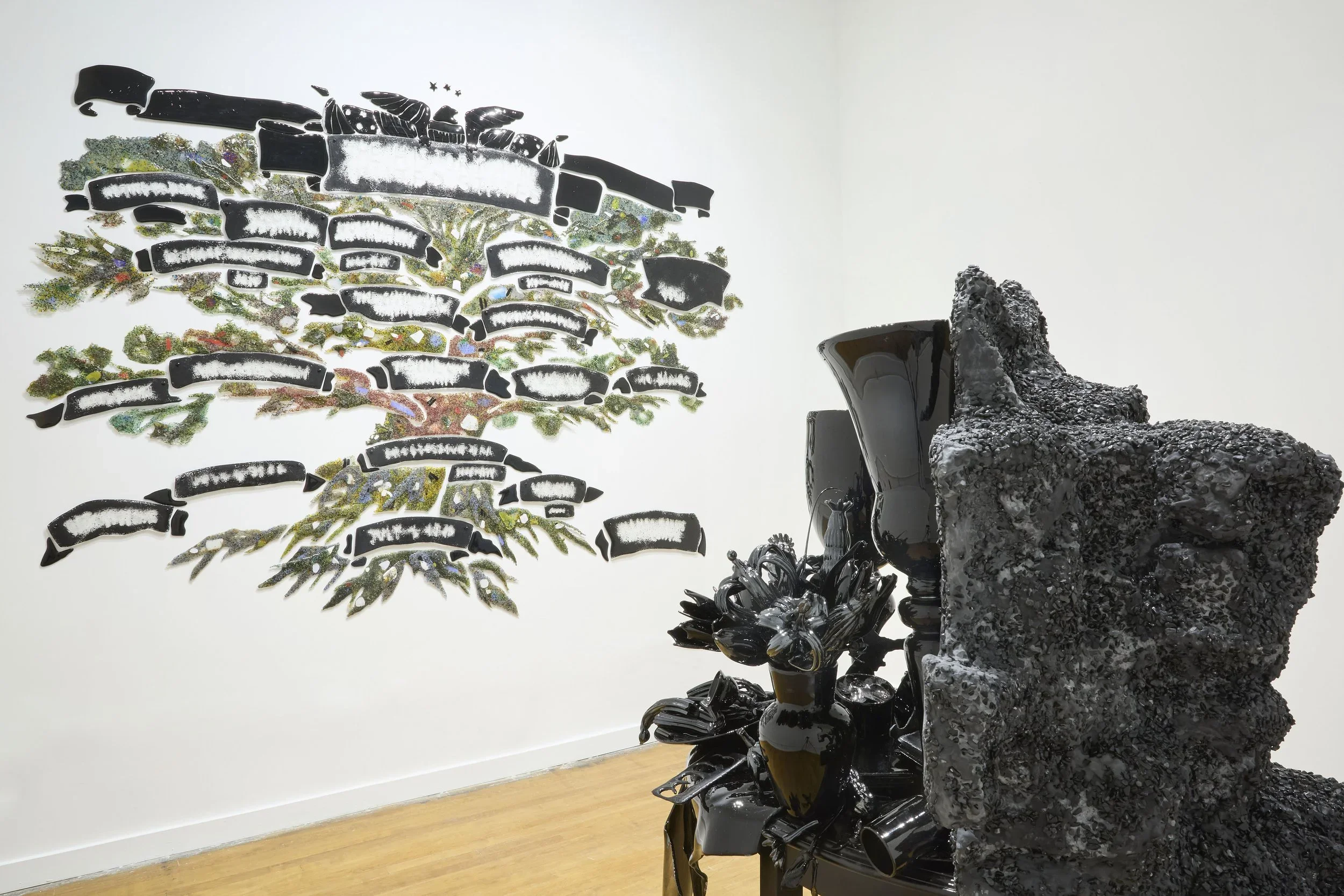
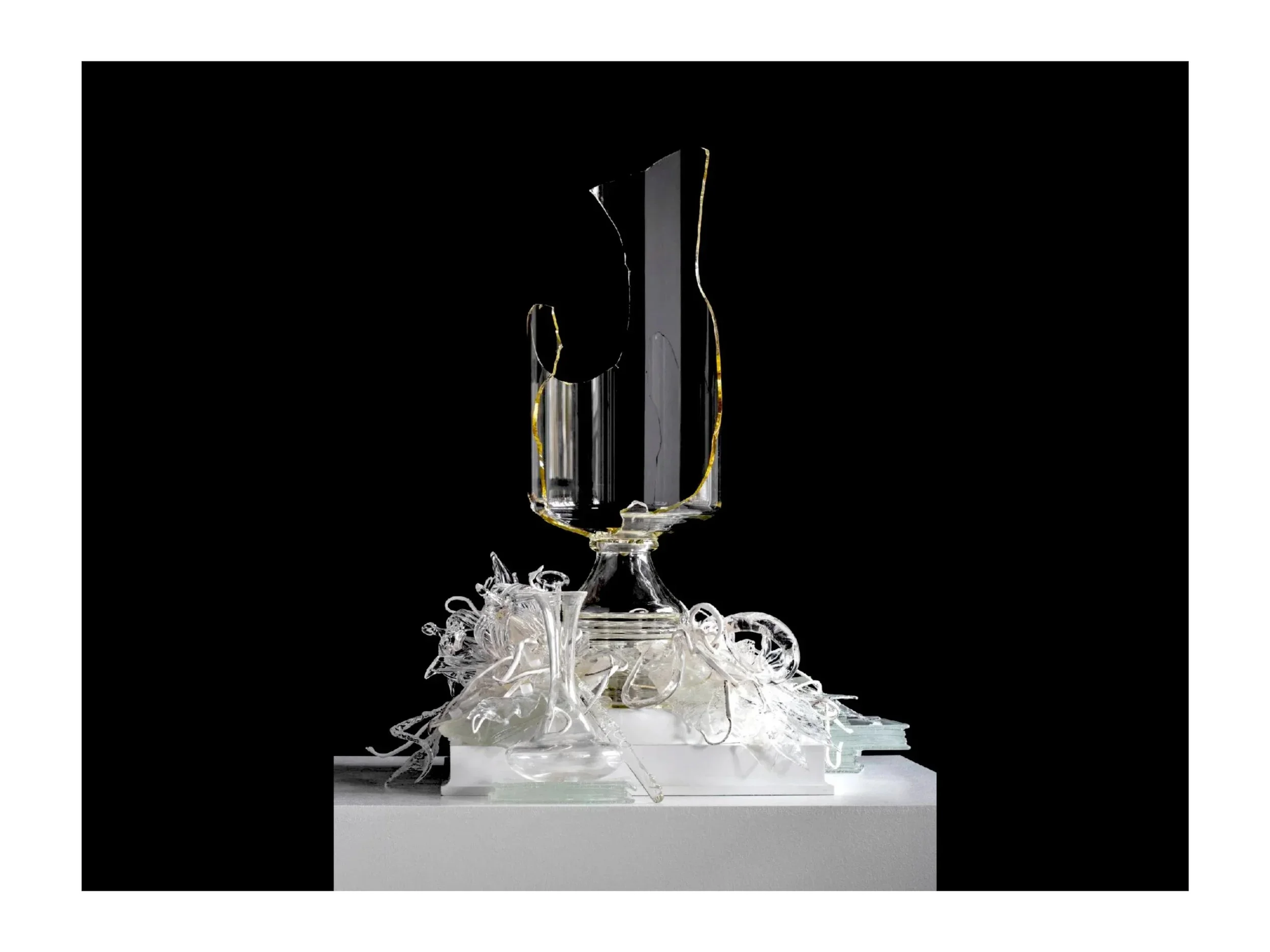
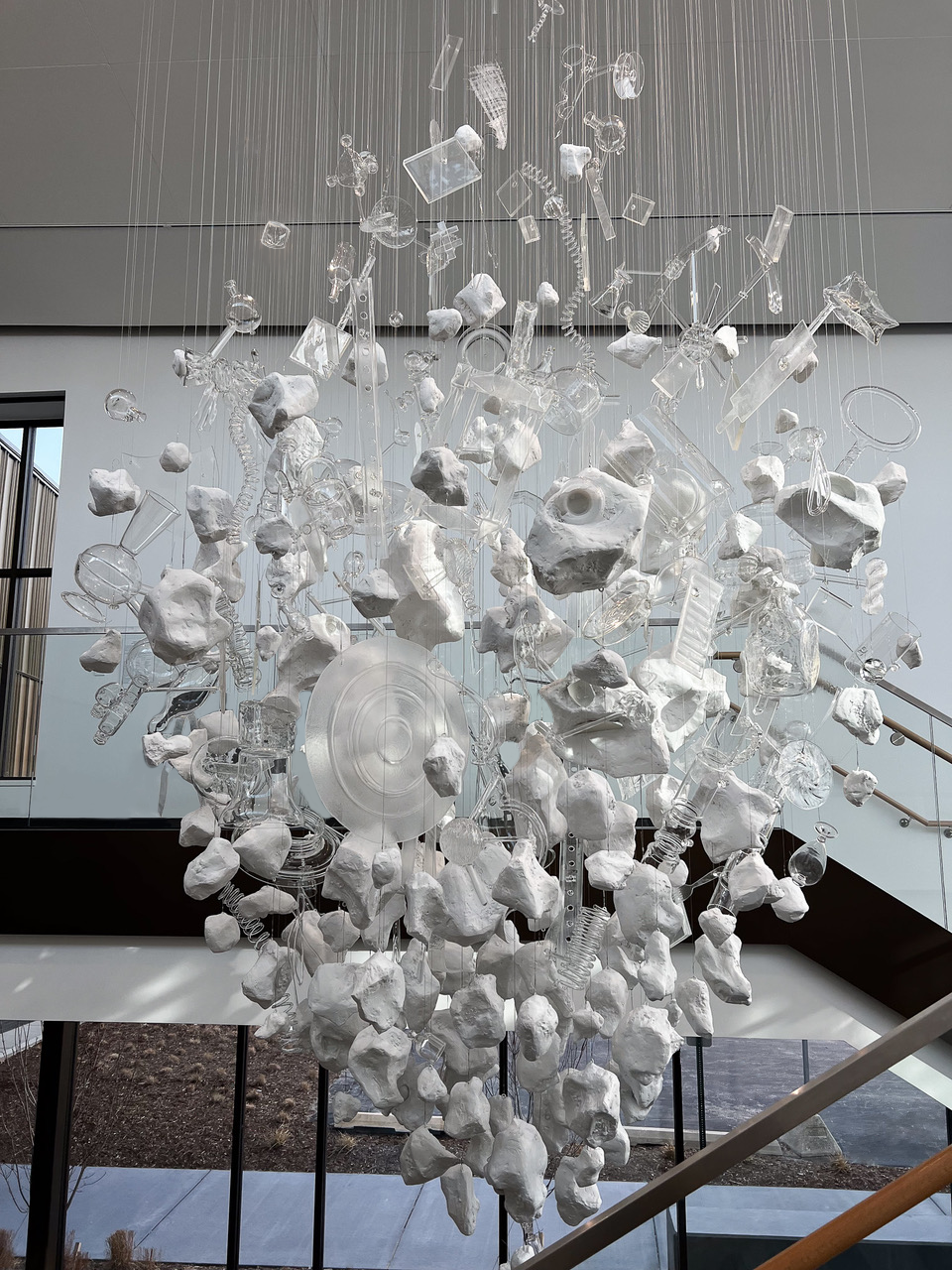
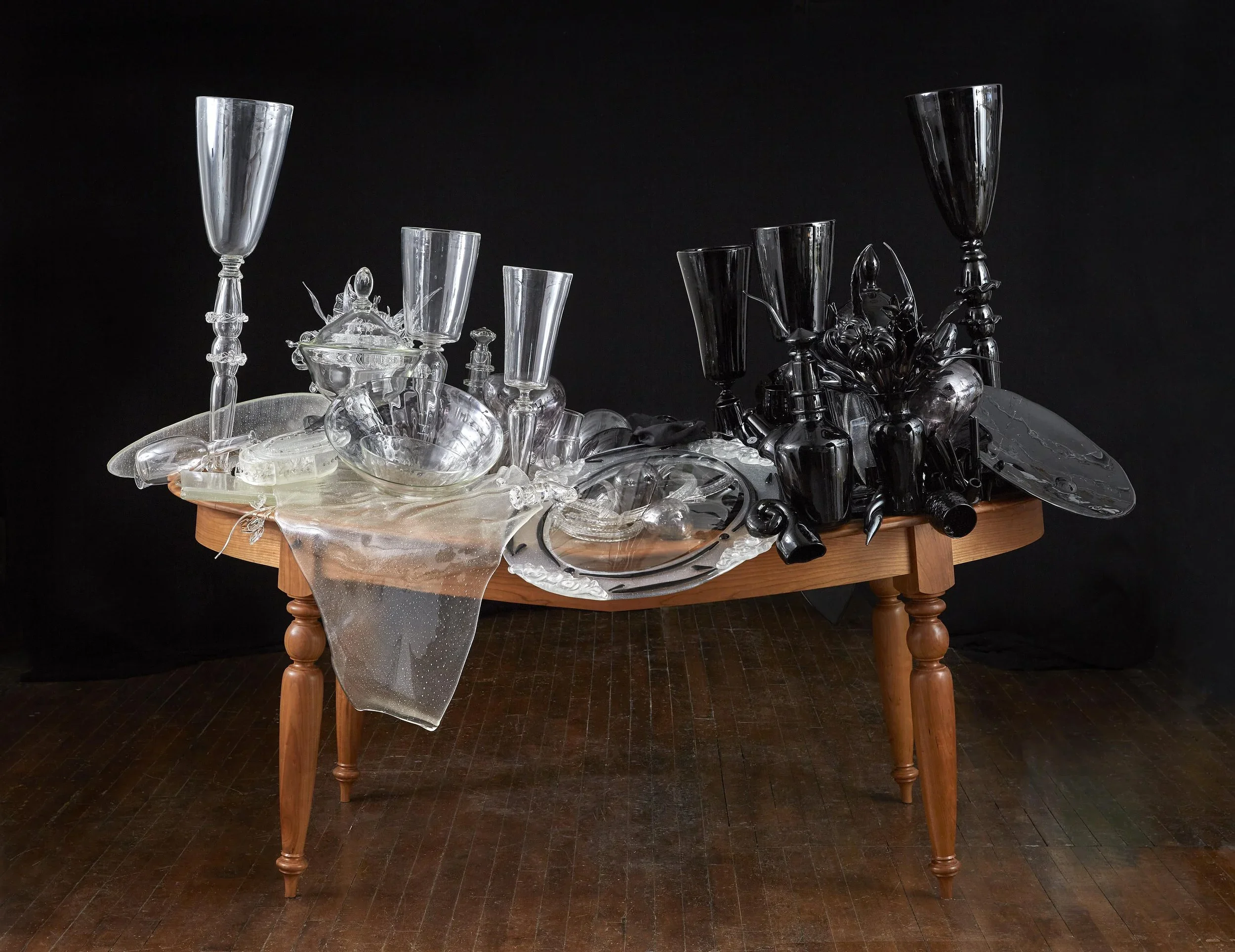
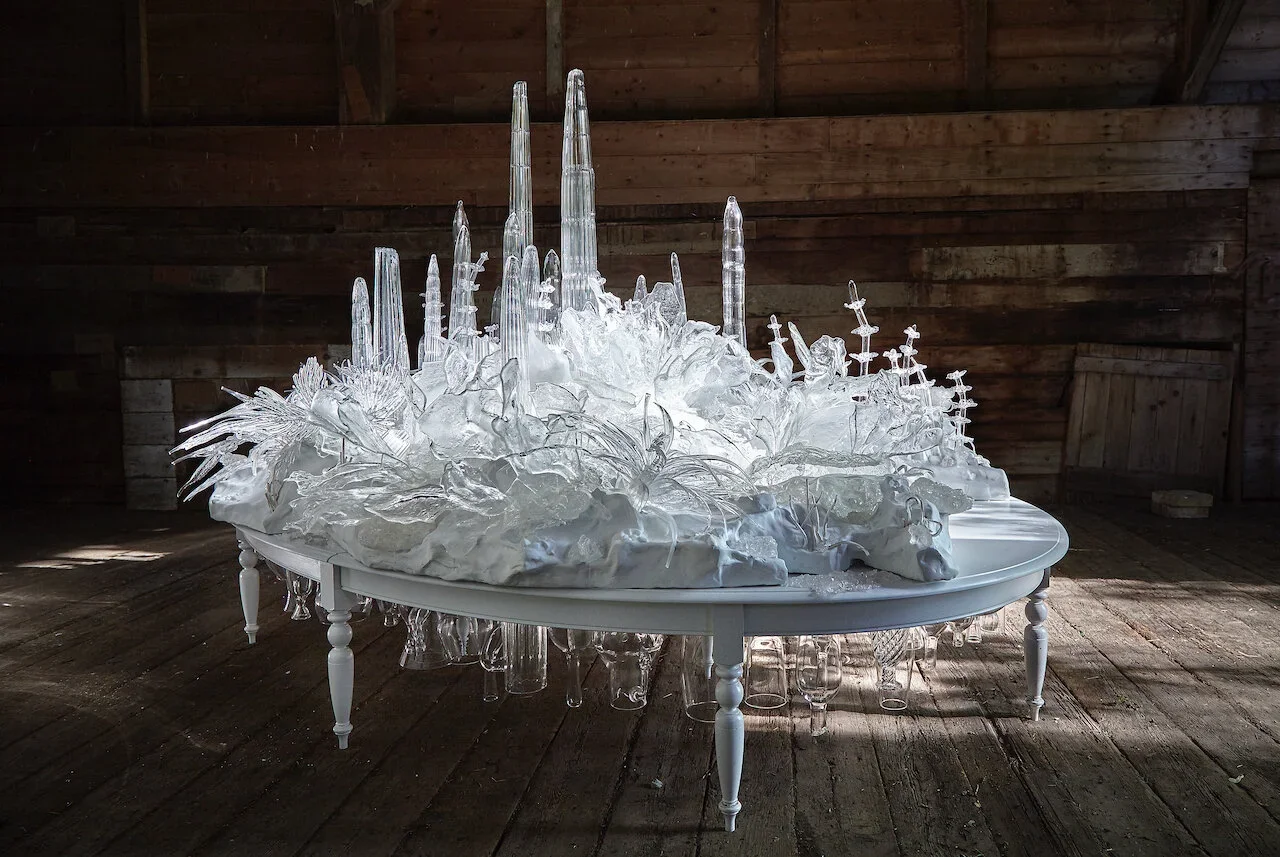
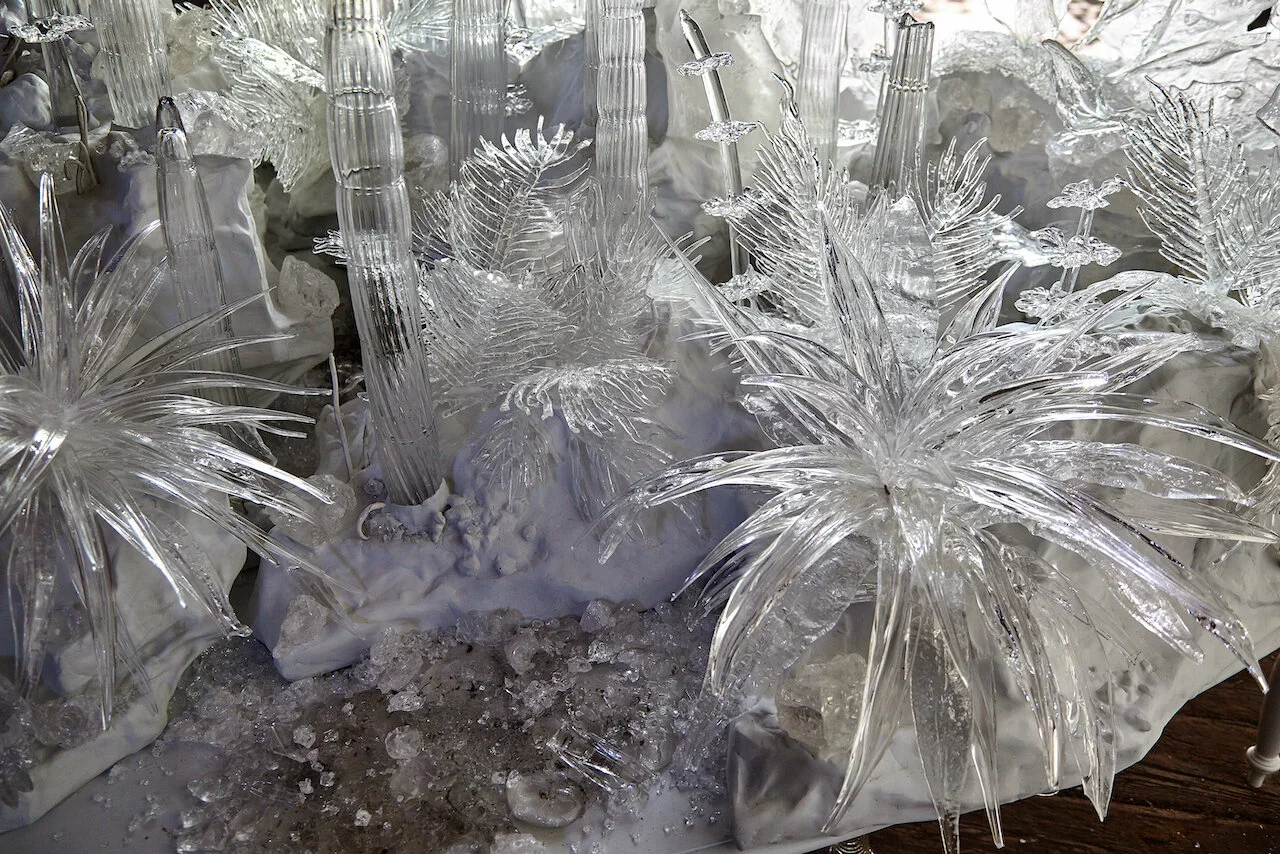
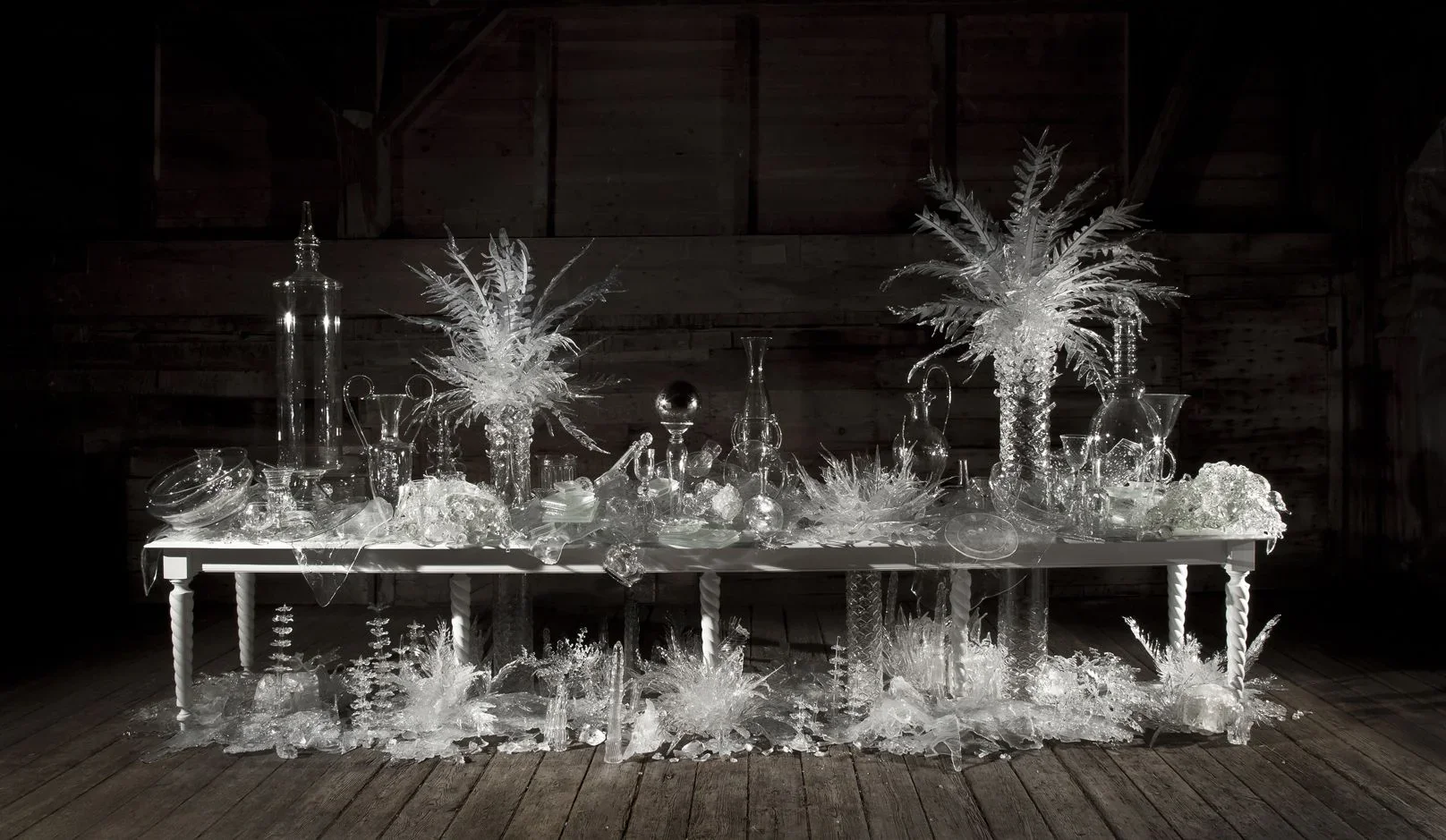
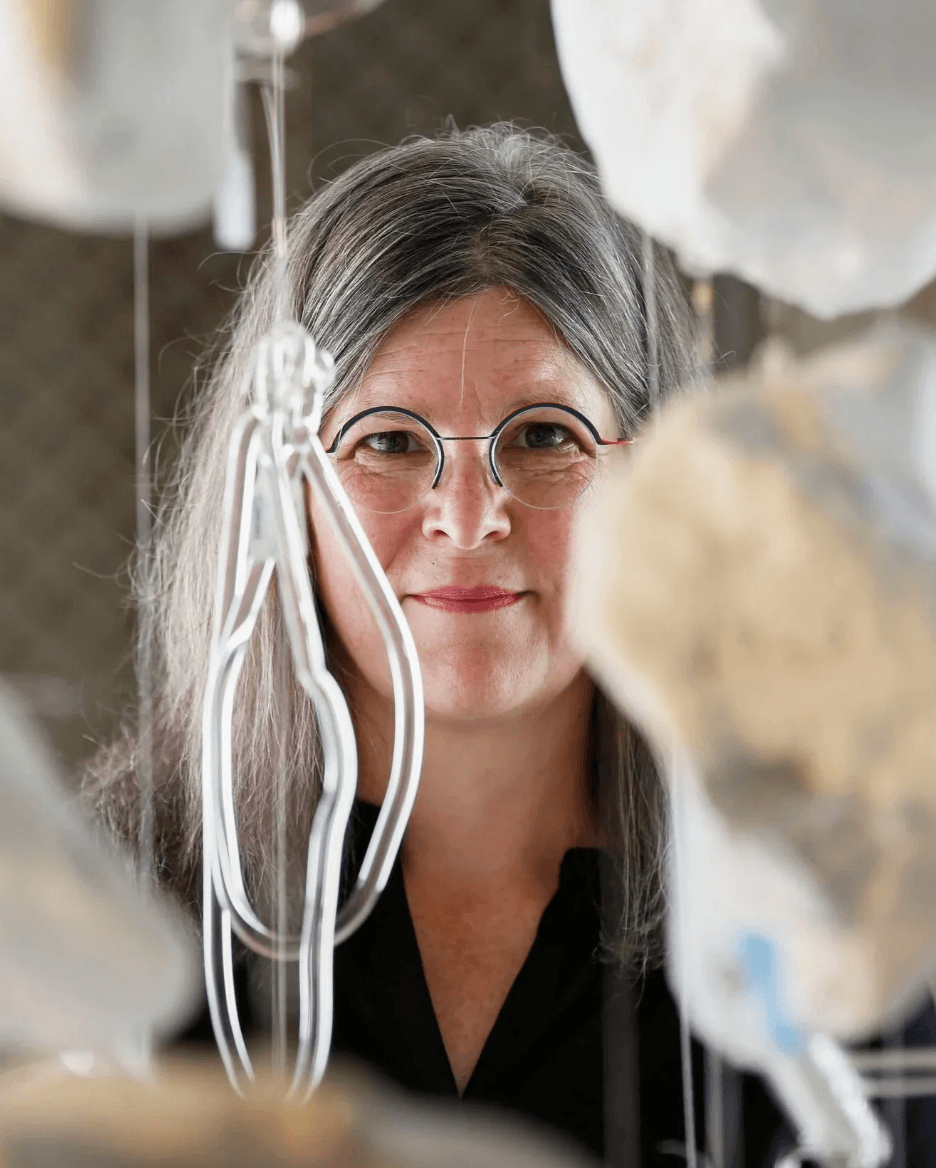
Lipman has exhibited her work internationally at such institutions as the Ringling Museum of Art (FL), ICA/MECA (ME), RISD Museum (RI), Milwaukee Art Museum (WI), Gustavsbergs Konsthall(Sweden) and the Renwick Gallery of the Smithsonian American Art Museum (DC). Her work has been acquired by numerous museums including the North Carolina Museum of Art, Brooklyn Museum of Art (NY), Kemper Museum for Contemporary Art (MO), Smithsonian American Art Museum (DC), Jewish Museum (NY), Norton Museum of Art, (FL), and the Corning Museum of Glass (NY). ReGift, a site specific installation investigating the life of Florence Scott Libbey, is on view at the Toledo Museum of Art.
Lipman has received numerous awards including a USA Berman Bloch Fellowship, Pollock Krasner Grant, Virginia Groot Foundation Grant, and a Louis Comfort Tiffany Foundation Grant. She has been an Artist in Residence at the Alturas Foundation, the John Michael Kohler Arts Center’s Arts/Industry Program, and the Smithsonian Artist Research Fellowship. Recent works include Living History, a large scale site-specific commission for the Wichita Art Museum (KS) that investigates the nature of time and place and Belonging(s), a sculptural response to the life of Abigail Levy Franks for the Crystal Bridges Museum of American Art (AR).
A Conversation with Artist Beth Lipman | Interview by Hugh Leeman
Into the Still Life Through the Back Door
Hugh Leeman: Beth, you said you came into the still life tradition "through the back door." You've talked about food's importance within it as a universal thing we all share, before realizing years later that you'd circled back to the still life that hung in your childhood home. Can you tell that story to start us off?
Beth Lipman: Sure. Though it wasn't actually a still life hanging in my home — it was all of the still lifes in the library of books my mom had. I'm sure there were still lifes hanging in the home too, but they were probably in a folk art tradition, or hand-stitched by my grandmother, that kind of thing.
I fell in through what I think of as the back door, because we had all these representational images of food. My mother was a folk art painter, basically a self-trained decorative arts person. She had a small business that supported our family making tole ware. I grew up in Pennsylvania Dutch country, in this heyday of craft fairs and colonial revivalism in the eighties. In the midst of discovering her own path, she amassed this incredible library of books, a bunch of which I now have.
That was going on simultaneously with growing up in a household that was always talking about food and the next meal as we sat down to eat the meal we were having — fantasizing into the future about the next time we'd get to eat. Every day was like that. That was really the crux of the zeitgeist of our house, the three of us — my mom, dad, and I. So looking back, it's a very familial and personal approach to this grand tradition.
My mom would take me to museums up and down the East Coast, so I was absorbing all these different genres of art, this love of objects and material culture, without hierarchy. That was happening at the same time as helping my mother at craft fairs — setting up the booth, selling to customers, breaking it down, wrapping all the objects. So it was this applied-art experience combined with a kind of high-art experience at these cultural institutions, plus this obsession with food. It was almost inevitable I'd fall into the still life tradition.
But I really focused on it fully for the first time when I was invited to make a work in response to anything in the Brooklyn Museum in 2000. I created a still life with fruit after Severin Roesen. That was the first intentional, full-frontal approach to addressing the genre head-on. I gravitated toward that painting because I loved it, I had a visceral reaction to it — but it also felt like home, something I knew I was going right back to. After that first step, I just fell into the morass of still life: this constant unfolding of relevance that the tradition holds, how it's timeless and yet evolves to meet us as humans through every generation. I think it's a fascinating, endless genre to dip into.
Is the Still Life Becoming Irrelevant?
Hugh Leeman: There's something interesting there — you say there's a timelessness to it. We have hundreds of years of still life, arguably thousands going back to ancient Egypt. But in a conversation we had previously, you wondered aloud whether still life was perhaps becoming irrelevant at this point in history. Tell me more.
Beth Lipman: Did I say that last time? Thanks for reminding me. It's interesting. We're living in such a virtual age, and the digital revolution is obliterating — or compensating for — our need for the tangible by allowing us to live vicariously through the virtual world instead of in real life.
I think about this a lot. My daughter's friends are watching TikTok and fulfilling the need to make something by watching someone else make something. It's like, oh, it's done, now we can move on in this thirty-second clip — I've gotten the gratification I needed from watching someone else do something with their hands. That may be adjacent to the question of whether we even need to have objects around us — objects that are also compensatory, that reaffirm our identities, our status, our devotion and attention. And now we have this thing that fills all needs, at least for now.
But I also think we might run into a backlash quite quickly, where people do a hard pivot and start to look at objects again, look at the environment they surround themselves in. I think we're in a pendulum swing.
Hugh Leeman: You bring up such an interesting point — that it becomes compensatory. And it's not just with making things, but with connecting with another human being. It gives us this simulation. Even in the early days of Facebook, we used "friends" as a name — I have seven hundred friends on Facebook — and the reality is we're being deceived in some ways. There are studies that seem to contradict one another, but you have younger generations starting to move toward, no, I just want a flip phone, and the importance of actually having your hands in the dirt. The thing that's always stuck out to me most is the academic Jonathan Haidt saying we've grotesquely overprotected our children in real life and under-protected them online.
Beth Lipman: Great writer and thinker. Living in the morass of it. But do you think we're truly deceived, or does it just not matter because we're satiated anyway? Do people really believe they have seven hundred or fifteen thousand friends, that everyone likes them? It is interesting — it fills a very primal, almost biological reaction.
Hugh Leeman: I was listening to an academic talk about The Matrix — why it became so popular. His point was that it fulfilled something deeply repressed in us as a society: this idea that some larger system is controlling us. But the big takeaway was that these systems aren't really controlling us — we're deceiving ourselves by thinking there's something larger. How crazy would it be to just put it down and walk away from TikTok? To bring it back to still life — so much of material culture is being replaced by virtual and digital culture. In Spanish-speaking Latin America there's a phrase that the smartphone allows the people far away to feel close and the people close to feel far away. You're at dinner and everybody's on their phone.
Beth Lipman: I was thinking, while you were talking, about the premise of human behavior — how we're essentially connected, functioning as a unit. I wonder if it's more of a reaffirmation in a different format that we're completely interconnected, like a hive, this kind of eusocial behavior — that we're essentially that way as a species. The problem for me is the lack of agency in it. Of course we can put it down, you're right. But it's the way it's controlled by a very few number of people, and that's problematic when it's not egalitarian. Although you could argue eusocial behavior doesn't equal egalitarian at all — there's always a hierarchy. We're going somewhat far off topic, but it's interesting because we're talking about the commonality of art and how art fits into that equation, and what we get from it when we experience it.
What the Smartphone Would Do to the Table
Hugh Leeman: When we spoke, you mentioned that one thing you typically don't put into your three-dimensional sculptural still lifes is the smartphone. What's the thinking behind that?
Beth Lipman: I tend to veer away pretty heavily from any form of new technology, because I find it to be the very first thing that's going to become old and dated. I'm constantly striving toward a universality so that even a hundred years from now — God knows if we're all still here, we have plenty of existential threats to worry about — if someone approaches the work, they couldn't say, oh, that's the iPhone 17 with the rounded corners.
But to that point, books are looking quite old at this point to many people too. I use books all the time in my work, but that technology is so much longer — the actual span on a book, and the idea of writing going back to Sumerian times. Not books per se, but what they represent. So maybe it's a form of romanticism.
A smartphone just marks it — it's a time mark that stops the transcendence into whatever else you're thinking about within the relationship between all those objects in a composition. It's like a mirror. The moment you see that technology, you cannot resist it. It's sitting right next to me while we're Zooming. So if you see it in a composition, does it dominate the experience of the sculpture, or can you take it in relation to the entirety of the piece? I don't know — maybe I should start including it.
Hugh Leeman: What I'm deducing is that it becomes almost a distraction to the greater whole when you see it in the piece. And that's kind of what the phone is — you've got a group of people together at dinner, but no one's really there. You hold a deliberate line around staying inside Western visual language, so as not to further what you've called the imperial impetus of the culture. Can you talk about that restraint as an ethical choice?
Beth Lipman: There's a history of imperialism and colonialism in Western culture, and you can argue the still life genre is squarely in keeping with that — from its inception in the late 1500s and 1600s. The things you'd see within those paintings weren't necessarily plundered, but they were sticky in terms of their commercial trade implications. When you look into Orientalism and all these different threads — there's beauty in it too. It's not a critique so much as eyes wide open: this is part of what the culture is. Everything is being assimilated now; everything is fair game.
But I try to stay in my lane, because for me it comes back into a commercial space. If the work is acquired and I've been compensated for a composition that includes objects from an Indigenous culture, or a culture that's been historically or currently marginalized, I find that problematic — taking money for something represented that isn't mine, unless I'm going to give that money directly back into that culture, which I'm open to. But the conversation becomes really sticky, and I tend to deal with issues that are more zoomed out — mortality, natural sciences, deep time. I don't want the conversation to get stuck on the fact that I've appropriated a ritualized object from a culture I have no relationship to.
I'm perfectly comfortable with Judeo-Christian religious objects. Funnily enough, I did a work that's on view right now at the Jewish Museum in New York, in their permanent collection. I was asked to include references to some of their permanent collection works, which I loved. The curator kept saying, can you make this more personal? And I said, well, I don't really make work like that — hyper-autobiographical. And then I ended up making something super personal, with objects not just from their collection but from my own family, despite having no intention of doing so.
I don't need to consume everything visually and intellectually and iterate it as an object with my name on it. I feel that way about using actual animals or insects in work too — I don't want to censor artists who do that, but I personally never would, because everything just defaults to your ego, your name on this object. You're subsuming another person's culture or another life force. Those aren't areas I'm interested in dipping into.
The Jewish Museum: An Accidental Autobiography
Hugh Leeman: The piece at the Jewish Museum ended up incorporating things from your life and became somewhat biographical. What was the autobiographical portion?
Beth Lipman: I was raised a Reform Jew in south central Pennsylvania. As I was looking through the collections, I started putting in moments that were very specific to my parents. The thing that was really interesting was that there were so many objects in the Jewish Museum that were totally exotic to me — I had no idea what they were or what they were used for. I didn't recognize them at all.
It made me start to think about my identity within that culture. I'm very secular, not a devout religious person, but I was like, wow, I don't even know that much about Judaism or some of these rituals. I grew up going to temple and did all the things, but I had no idea what some of the objects were. After I read the label, I'd think, oh, it's a matzo roller — that's how you make it, that's a great object. Things associated with rituals I didn't even know about.
Occasionally in my work I'll do that — it's deliberate and intentional, but it's arrived at in a non-conscious way, more of an amassing of things. I'll include things from my environment or my family's environment, or things that refer to work I've made in the past or will make in the future. I'm constantly sifting through cultural and personal references. I've made a few pieces that are very specifically personal — objects from my immediate domestic environment.
A Stratigraphic Layer: What They'll Read Off Our Tables
Hugh Leeman: You referred to your work as a stratigraphic layer that humanity will leave on earth — still life as a larger understanding of the whole. When you picture someone excavating our era far into the future, what do you want them to read off of your tables?
Beth Lipman: That there was abundance. Most of the compositions are in glass, at least partly — sometimes ceramic, sometimes metal. The materiality becomes really important, because some materials will completely not be available. If we're talking a thousand years into the future, you'll be able to understand a shape of glass — an apple in glass, a vessel. But a lot of other things don't last as long. Maybe it's post-apocalyptic — what are these objects? We are dealing with vessels, with many things.
There's an abundance in our lifetime, in our generation, that's just unfathomable to previous generations — even just the amount of trash we make. So I think that would be one of the first things they'd read. Obviously I have no idea what a future human might be thinking. They might use it to bludgeon someone who's about to attack them — just grab the heavy thing and throw it. I have no idea.
Hugh Leeman: You bring up such an interesting point, because it hits on this fear of scarcity and anxiety we have amidst a time of incredible abundance. Do you hope the autobiographical pieces preserve you — so someone in the future can say, oh, Beth was a such-and-such, she was trying to tell us something about herself?
Beth Lipman: I just wonder what kind of information is even going to be available. This is very dystopic, but I don't think that level of information is even going to exist — I could be totally wrong. Ian McEwan's new book that I just finished — What We Can Know, I'm paraphrasing the title — is about a history professor far into the future rediscovering a poet's life. Everyone should go read it, it's incredible.
Who's going to care, really? You'd have to care very deeply to get that granular about me personally. Of course there's a tremendous amount to know from any object — its creator, the environment it's from. That's material culture. That's the interesting thing: where is the sculpture generating from? What is the society that has afforded the possibility of creating something that is, on one hand, not essential?
I don't deliberately embed myself, other than as a conceptual exercise to figure out something I want to know. I certainly feel the work is an extension of my thought process, and it's great if someone else gets something from it — that's sliced bread right there. But the original impetus is more about a conceptual exercise of trying to figure something out.
Hive Mind: Stepping Outside the White Cube
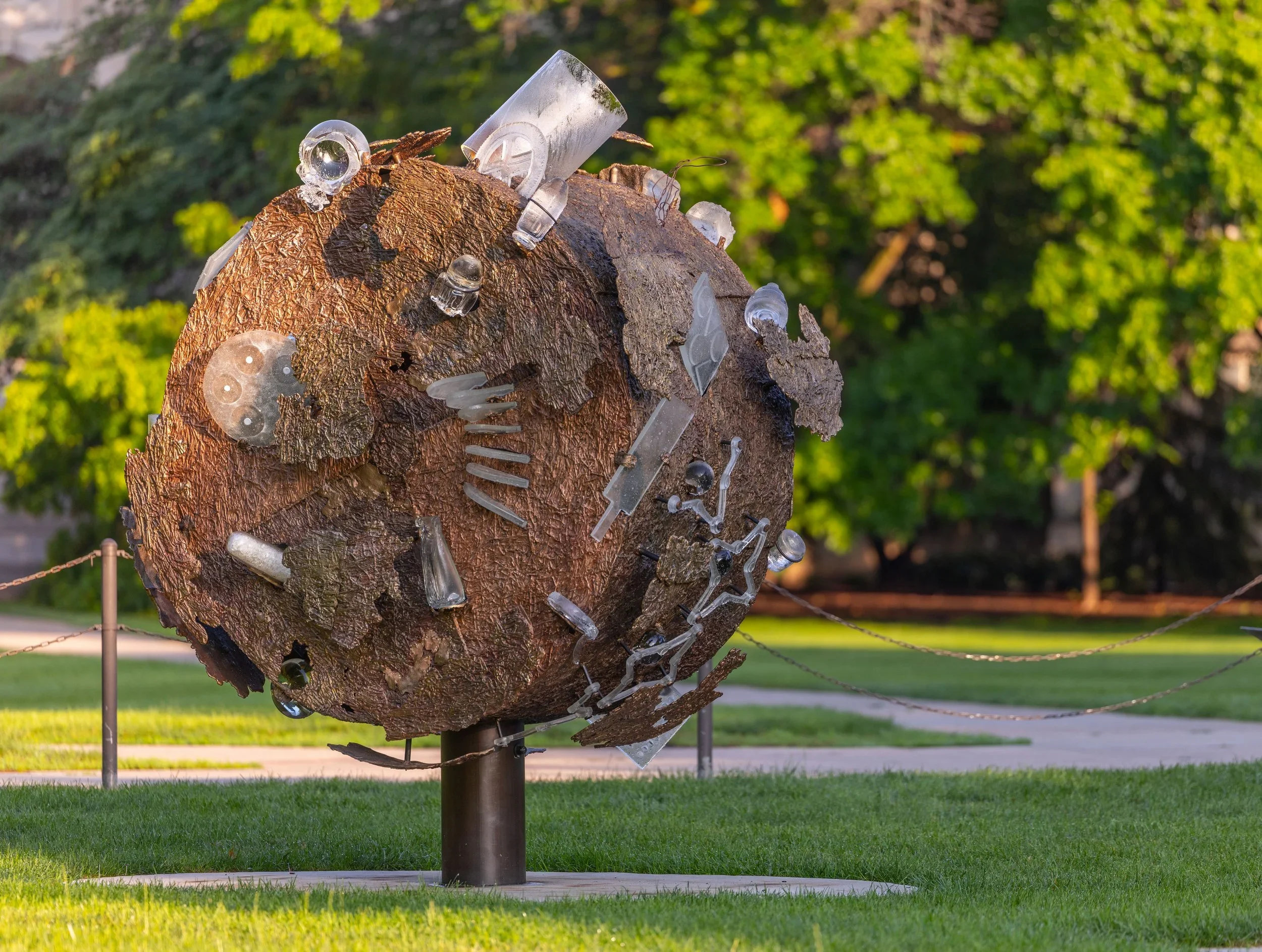
Hugh Leeman: So much of your work has used glass. But you did a piece recently at Iowa State University titled Hive Mind — your first permanent outdoor work — and you said it left you wanting to work in metal outside all the time. What cracked open there?
Beth Lipman: I'm very spatially related. A lot of times I need to be embedded in a space, with the weather. Up until that point it was interior spaces, where being in the space unlocks my imagination to understand what the next thing is that needs to happen — that's going to respond specifically to the institution I'm in.
To have Hive Mind embody so many things that have happened and will happen over the years at Iowa State, and then be situated in the center of campus where everyone traverses to get to their buildings and the cafeteria — to have it in conversation with the architecture, and to understand scale and the content of objects in relation to these more monumental iterations of human endeavor. And then to just have this work be something people are passing constantly, no matter what.
Not because I need everyone to look at it all the time, but you have to choose to go into a museum or gallery. Whereas this journeying, this migrating that happens as humans — you catch it out of the side of your eye while you're biking across campus, or talking with friends, or on your phone. It was really exciting to engage in an outdoor environment. I'd dipped into outdoor things before, but nothing permanent. It was so much fun to create something that functioned in a different way, outside of a white cube or a house museum.
Perseverating: Anxiety as a Tool
Hugh Leeman: You've mentioned a dystopian future a couple of times — this undercurrent of anxiety in society. In our conversation you taught me a new word: perseverating. You described pacing around the studio, worrying the same points over and over. Does that anxiety feed into your artwork or fight against it?
Beth Lipman: I definitely use it as a tool. I'd like to think it makes me very sensitized to detail — everything has to be exact. I'm not a hyper-controlling person, but in terms of bringing my practice to closure, I do have that precision. Perseverating would be an apt description of what I do when I'm really locked into my work or an exhibition. It's a way of worrying something into existence. I don't mean that negatively — it's like chewing the fat.
Hugh Leeman: Do you think it's similar to the hive mind effect — that it's not just you feeling this, that lots of people are feeling these fears, and that's being influenced into your work?
Beth Lipman: That's fair. When you zoom out, we can either directly address the zeitgeist of now, or try to transcend it. Sometimes with artists, I think we can be prescient — we tap into something that hasn't fully bloomed in the collective consciousness yet, and it arrives roughly at the same time as the hysteria of everyone else. All we can do is follow the thing we're most passionate about, the next thing we're doing. It's tricky to respond to a moment directly as it's happening.
We're a slow-moving species, in a way. If it's a fire, we can put it out. But a slow-moving disaster — climate change, singularity to a certain extent — how are we going to stop that? We're not. I'm not saying this fatalistically, but if you learn from history, we're just not hardwired to meet that. As an artist, I filter all of that through my work, and I constantly check whether what I'm making is what I really need to be making right now.
Making Something as a Political Act
Hugh Leeman: You've said that simply making something is a political act — a way of saying, I'm here, I'm a voice. That could date all the way back to cave paintings. Can you expand on that?
Beth Lipman: To make anything at all is radical. There's not much in this world supporting anyone in their attempts to make anything — if anything, it's the exact opposite. The level of death by a thousand cuts in just living. So to make a mark of any kind is a radical act, and therefore a political act, because you've asserted something into a social discussion that wasn't there before. It doesn't have to address the body politic directly, but it's essentially political in that it expresses yourself.
This is another problem with the digital revolution: of course many people are providing content, but there are far more people ceding their voice to watch other people's content, and an even smaller number making a lot of money on all that free content. So it's a really interesting time to think about making something.
Hugh Leeman: You've raised the possibility that the digital revolution is doing something to human consciousness bigger than even the Industrial Revolution — that we may be sliding back toward oral history, losing writing and reading. As someone whose practice is about what gets left behind, what worries you most?
Beth Lipman: The dissolution of society. Although oral history lasted a very long time, so that worked out quite well. My tech relatives are going to eye-roll if they ever hear this, but it feels like devolving — from a scientific standpoint of natural growth and decay, have we peaked and are going back into a devolving way of being? How fragile is this system if we're not writing and reading anymore? What happens if the internet goes down for two weeks? What happens to that information?
Hugh Leeman: So much of society has been formed over thousands of years by showing people images and telling them stories — that's the basis of religion in many ways. And now we have a machine that can do those things. Even if you're writing the next great novel, it gets buried under an avalanche. I wondered if there's something anti-authoritarian in what you're saying — because the nature of authoritarianism is that you don't have a voice; your belief is what we tell you it is.
Beth Lipman: It's subsumed. And we're voluntarily ceding to it right now. Really interesting time to be alive, though, right, Hugh?
The Double: Two Sides of the Coin
Hugh Leeman: You've said you're obsessed with the double of things — the other side of the coin, the contradictions we all have. Half of us can believe one thing and the other half its opposite. What's surfacing in your work now?
Beth Lipman: That's front and center in everything I'm thinking about right now — the pairing of two sides of the coin, the double. I'm doing it with objects, within the storytelling of still life. It relates to truth and untruth, and where truth lies within that. It's not just about the doubling; it's about the perspective of the two sides — not just the similarity, but the discrepancies, and the times where there's slippage into both, a porosity between the two sides.
I'm thinking about the doubling of the body, societal doubling, natural doubling, the artificial and the real — the copy, authenticity and fake. There are so many ways to think about the double and pairing. It's most likely where the work is going to go for quite a while, because it starts with the premise you know, then understands what happens when you depart from it — when you jump off the cliff from what you know into what's on the other side.
I've been circling doubling and copying pretty much my adult life. I weirdly also had identical twins, which made me think — wait, did that happen because I was so super-focused? It's been a preoccupation in one way or another my whole art practice, but often subordinated to other things. Right now it feels like, oh, this is the moment we're looking at two sides of something. That feels like it could carry me for a long time. There's just so much information there.
The Permanence of Volatility
Hugh Leeman: In some ways what you're talking about is perception and belief, intimately intertwined. Zooming out to religious belief systems — thousands of years of, if you don't believe in the sun god, my people come over the mountain and decimate yours. We're almost incapable of considering that I might actually be wrong, that my reality might not be the one. To pull things full circle: we've been talking about volatility and the challenges society is going through. If that volatility lifted and you could dream in any direction, where does your imagination want to go next?
Beth Lipman: The whole premise is interesting — this idea that volatility, or change, is in a way a permanent state, isn't it? I don't feel my practice is solely circling a nexus of volatility. I love talking with you about all these ideas, but the practice is the practice. There are things that seep in that are really relevant right now and could be less relevant in twenty or fifty years.
Inherently, I believe the study of material culture is something my imagination will keep doing probably my whole life, because we only have one or two really, really good ideas our whole entire life. We're human — we have these objects we use, that we choose to surround ourselves with, that we're entrenched or burdened with, or choose to live with. I don't know what the next step is, but I trust it's going to arrive and I'll meet that moment. I don't have a place I'd rather be than where I am now, because I'm doing exactly what I want to be doing in my work. I don't know what the next step is, but I trust I'll know it when it presents itself.
Hugh Leeman: In some ways the volatility you're speaking of is inherently human. What creates technology is effectively necessity, and what we're experiencing now is the human volatility to all this newness being created around us — and you become a documentarian of that volatility. It doesn't go away. That's part of the reality we all experience.
Beth Lipman: It'll be something else soon. I find it fascinating how locked the conversation has been on AI for so long — even though it just started. Maybe AGI is here, maybe it's not; maybe singularity is here, maybe not, who knows. Given how fast our attention span shifts, it's surprising how long this conversation has gone on. We're not talking about climate change that much right now, Hugh, which I find devastating and problematic. But it's definitely not the top discussion for most people I see.
Things will continue to change. That's what we don't know. My good friend Sandro Montanari — an incredible geologist — said, you want to not know, because the moment you know, it's always bad. He's studying all of this, and he said it's better not to know, because if you don't know, there's still hope. So, better not to know. If you know, it won't be good.
Face to Face, and the Backfire to Come
Hugh Leeman: You bring up an interesting point about the hyper-focus on AI, lamenting that we're not talking about climate change — and the two are intrinsically intertwined right now with the energy consumption around this. It goes back to what you were saying about a networked system that isn't egalitarian, where very few people control the narrative. A couple of years ago I was in a discussion group and a guy came in I'd never heard of — Sam Altman, the head of OpenAI. Someone asked what he was worried about, and he said the subtle nuance of day-to-day misinformation AI is capable of giving to someone who may already have a predisposition to a mental health issue, and it convinces them of a whole other alternate reality. That's already manifest. And you were talking about the obsolescence of books — now you have a machine that can make information specific to you, specific to me.
Beth Lipman: The real consequence is that we won't be able to trust anything except actual face-to-face, in-person conversations. Even the conversation you and I are having could be modified. I think there's going to be huge backfire to all of this — a major backfire people aren't reckoning with. You can tax the system with misinformation and artificial slop for only so long before the hive mind turns away and says, this is not useful anymore, it can't be trusted. There'll be a wholesale rejection of communicating in this way, because it becomes not efficient or utilitarian. If you can't trust anything, or the content you share becomes modified and out of your control, why would you continue to do it?
We're generally, even though slow-moving, somewhat logical sometimes — if something does such harm, it's going to break. Do you think so?
Hugh Leeman: I feel a lot of concern, and I think a lot of people do. I was in an Uber yesterday and there were bill posters around a construction site — hundreds of them — that said, "Got anxiety about AI and your future?" with a phone number underneath. So much of us base not just our social identities but our deeply embedded psychological identity on our repetitive behaviors, and for most of us that's our job — I'm an architect, I'm a salesman. The potential of that going away leaves an entire society going, I have no idea who I am. And the other side of identity, going to your work and still life, is what we consume — I am a such-and-such because I drive this car, I have this watch. If that purchasing power goes away, you've got a whole demographic that's like, I have no idea who I am. Even in the short term, if you have an implosion of the stock market — I was reading that seven companies comprise about forty percent of the value of the entire S&P 500. If that's a bubble and it collapses, that's where we're really going to have an issue with jobs.
Beth Lipman: It's all so interconnected, and it feels vulnerable and fragile. Many people think we're in a bubble right now. We also need correctives — that's part of continuing to be a society that can move forward and be robust. I obviously don't want the stock market to collapse, if solely for selfish reasons, because it'll impact the arts immediately.
There's a belief system that all these systems we have in place to create a functional capitalist society can withstand these violations or attacks. But after a period of time, what's the turning point where things start to fold? What happens if an innumerable amount of people lose their jobs? Or — I know this is a pivot — you can't trust the food system, can't eat lettuce forever. All these systems are okay, they're resilient, until they're not resilient anymore.
There will probably be a natural corrective to the age of AI, because we still have the autonomy to walk away from it — some people more than others. It could lead to a huge renaissance of all the things we've been talking about: the need for interconnectedness, the need for the tangible, the need for putting your hands in dirt. At the same time, I'm super grateful we can have a Zoom together and hang out. Technology is miraculous too.
I think we're inherently in need of making things and creating things — that's part of who we are as humans. And being with other people, even though I consider myself an introvert. I don't think all the adjacent virtual ways of feeling in touch will actually scratch the itch we have as humans.
Are we in a weird bubble right now? I do think so. I think about energy consumption all the time. Before I ask Claude anything, I think, is this worth the electricity, this question? And sometimes I'm like, well, hello, Claude, I have a question I just can't answer on my own. But I really try not to default to using it, because of the energy consumption — and also I don't want my brain to rot out.
Hugh Leeman: Beth Lipman, thank you so much.
Beth Lipman: It's totally my pleasure. Thank you for this.
