

Chris Dorosz, Person Painted People, Scott Richards Contemporary Art
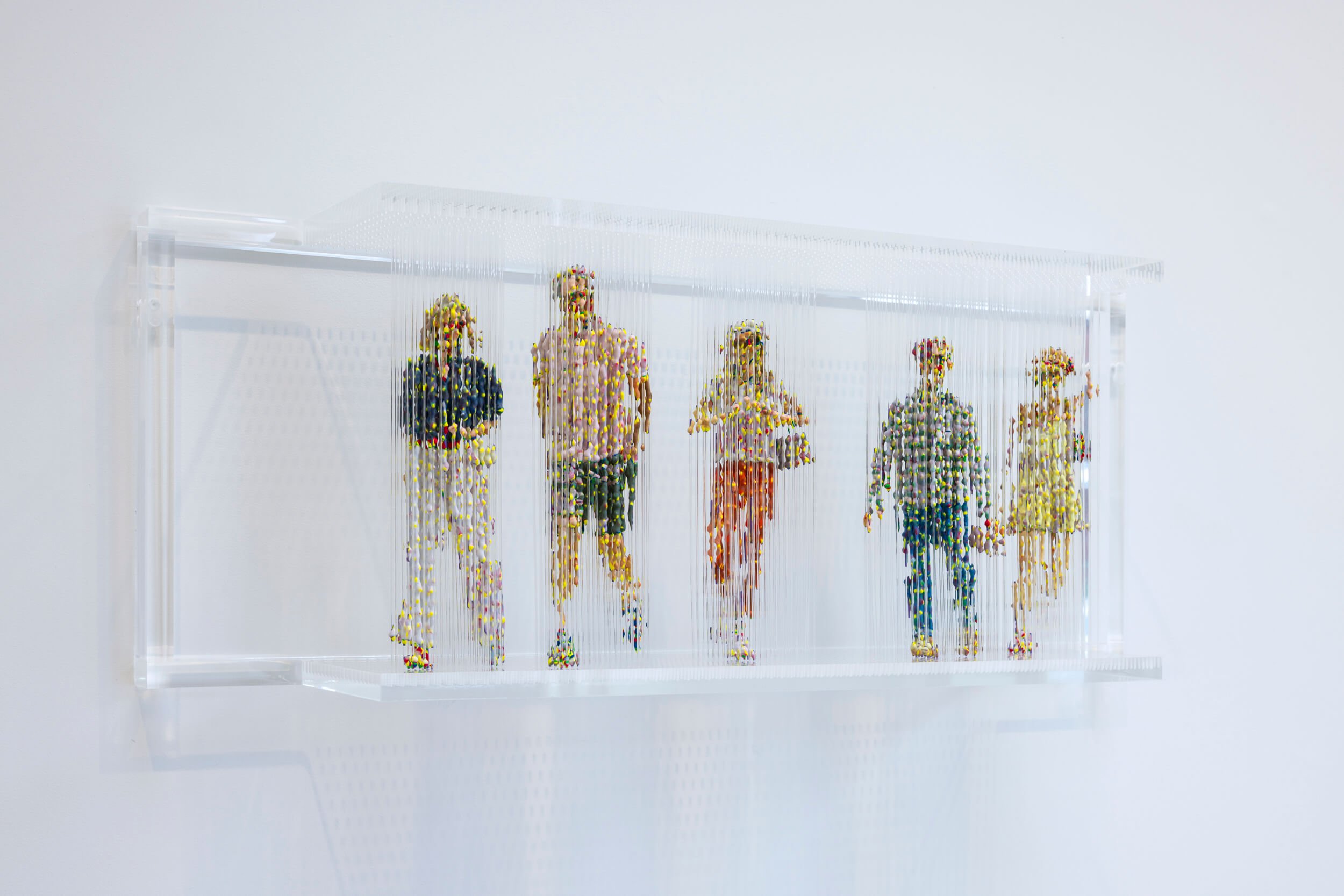
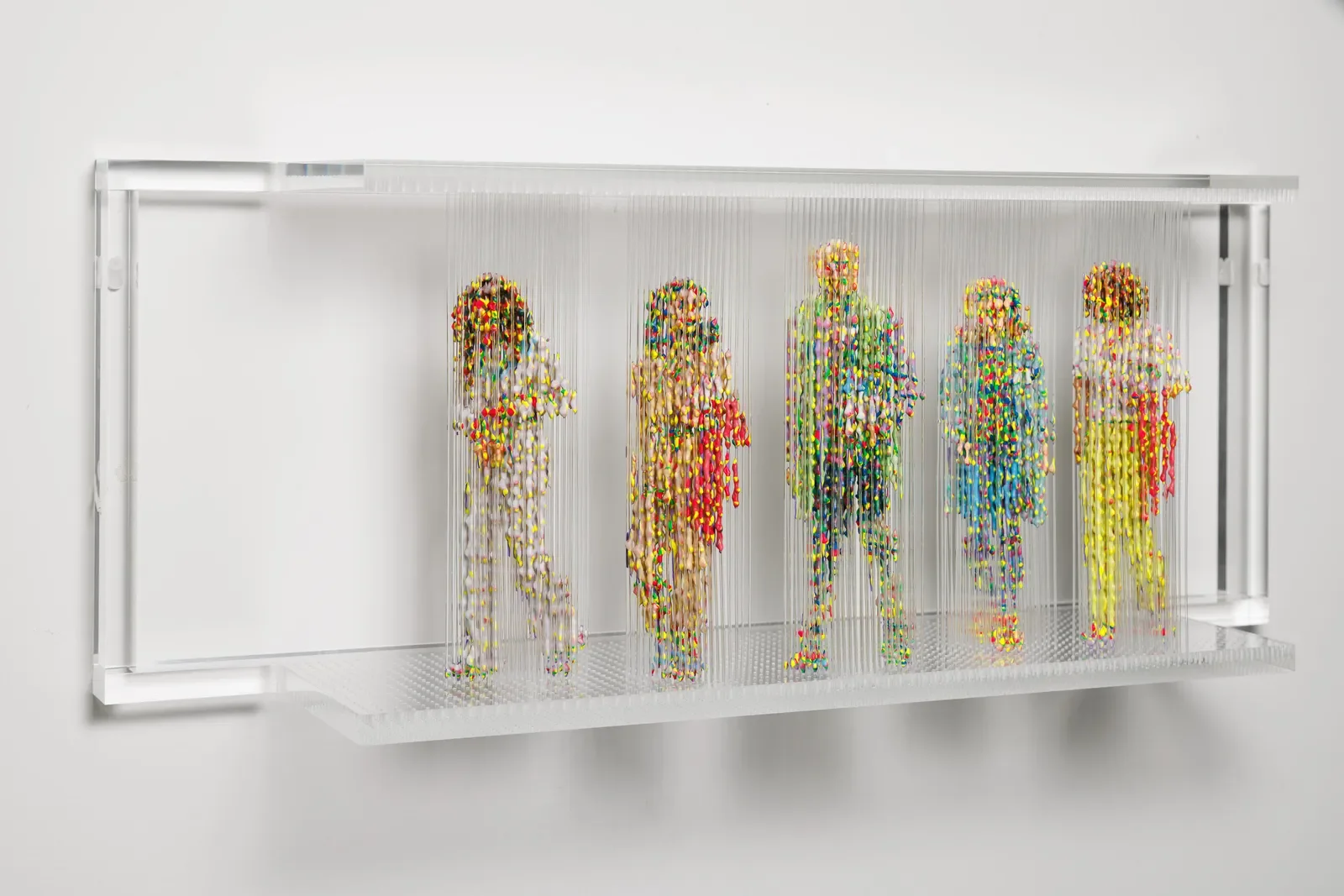
Stasis 151, 2026, Acrylic paint on plastic rods with Plexiglas support, 12.5 x 32 x 8 inches
The colorful blobs of paint have coalesced onto thin, plastic rods, and they now form abstractions of people you love to hate. Or not. No specific names are attached to the men and women on display inside the viewing chambers of Chris Dorosz's new art exhibit. In fact, there's no wall text at all with any of the artworks, leaving the viewer to imagine who these people are exactly. Is that woman in the yellow dress and the camera on her shoulder an "influencer" who peddles her vacuous views to millions of TikTok followers? Could that tall blond man possibly be Donald Trump in an awkward pose? What about the 18 other people whom Dorosz has lined up to be inspected from all available angles?
The only clue from Dorosz at the gallery is his artist statement, which says the people we see in his "Stasis" series are inspired by "figures from media streams of people driving the social, technological, and political forces shaping our reality." For anyone who spends more than a minute following the news or engaging in social media posts, Dorosz's art will resonate in intensely visceral ways — including from Dorosz's method of choice: He squeezes these figures into small corridors of clear plastic, where the men and women line up side by side, as if trapped inside a surreal tomb that froze their movements into a single, unguarded pose. Their existence is a kind of selfie hell, where — Sisyphus-like — they're condemned to be seen without their phones, their smiles, and their actual identities. Instead, they live in a world of melted abstraction, where their bodies are just slivers of plastic rods that form shapes we recognize as human. Look closer and you see the rods in unison, spaced apart enough to reveal the individual reeds of plastic and paint that compose these 20 men and women.

Detail of Stasis 151, 2026 Acrylic paint on plastic rods with Plexiglas support 12.5 x 32 x 8 inches
"The medium is the message," Canadian academic Marshall McLuhan famously wrote in the 1960s, and that edict helps illuminate Dorosz's "Stasis" series, which deliberately upends visitors' need for precise and concise explanations. If television is about bursts of moving images that addict viewers to constantly changing scenes of drama and intrigue, and if the internet also follows that mode of quick-paced visual movement, then Dorosz's "Stasis" work is an attempt at slow-motion impermanence. Depending on the angle you take to view each work in the series, the scene changes a bit. Up close, they are obvious collections of rods and paint. From a distance, they're delineated people. Nothing is fixed. This "inside-outside" perspective has a long tradition in the art world, whether it's Chuck Close's colossal portraits of people's faces or George Seurat's pointillism that inspired generations of artists in France and across the world. In his seminal 1964 chapter, "The Medium Is the Message," from his book Understanding Media, McLuhan pinpoints Cubism as an art-world example of something that provides "instant, total awareness" without resorting to illusion. Dorosz's "Stasis" art is both awareness and illusion — his use of a post-McLuhan, post-modern medium that is neither pure sculpture nor pure painting.
What we encounter are what I'd call pop-culture echo chambers since the figures stand inside their see-through containers like embryonic collectibles that didn't quite evolve into their final form and are now nameless, universal stand-ins for everyone. You see what you want to see but you can't really know the figures. It's impossible. There's no touching them. There are no knowable backstories. Nothing except Dorosz's on-site explanation (tucked inside a binder) that says the figures "resist a fixed reading. This reflects how identity is mediated and circulated through pervasive image culture."
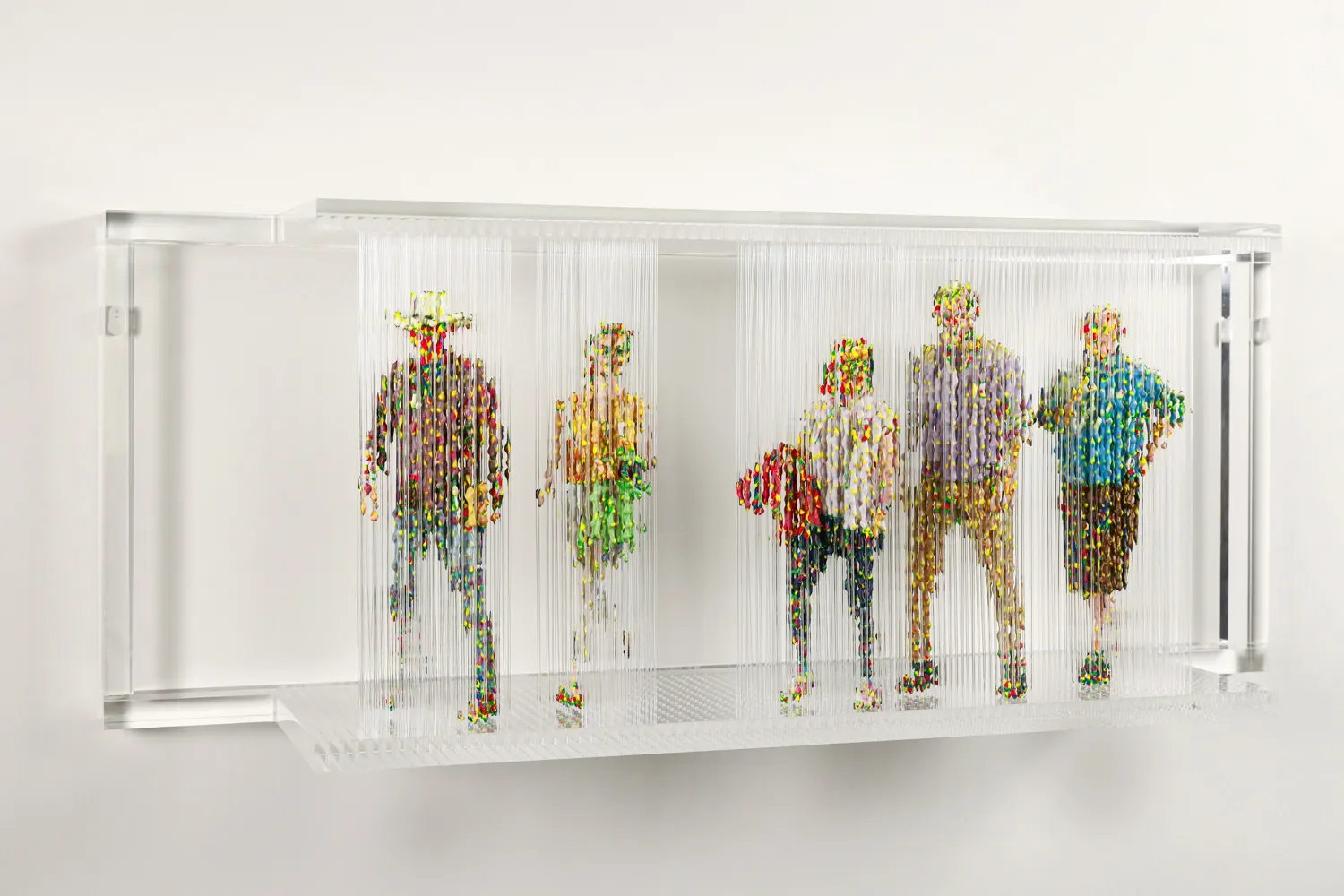
Stasis 152, 2026, Acrylic paint on plastic rods, 12.5 x 32 x 8 inches
If you want to start an argument within your family or even among a group of strangers, bring up the subject of "image culture" and its impact on just one level of society: politics. Because of "image culture," reading levels have plummeted overall, with a YouGov survey showing that 40 percent of Americans didn't read a single book last year. Not one book. Meanwhile, the average American spends more than two hours a day just on social media, never mind the other offerings (news sites, music channels, etc.) that beckon on the internet. Because of these parallel developments, political leaders traffic in slick, quick messages for the short-attention-span environment that pervades everyday culture. More than ever, people's momentary perceptions become embedded as permanent evidence that explains complicated issues that would ordinarily require Socratic debates to understand. Stasis, indeed.
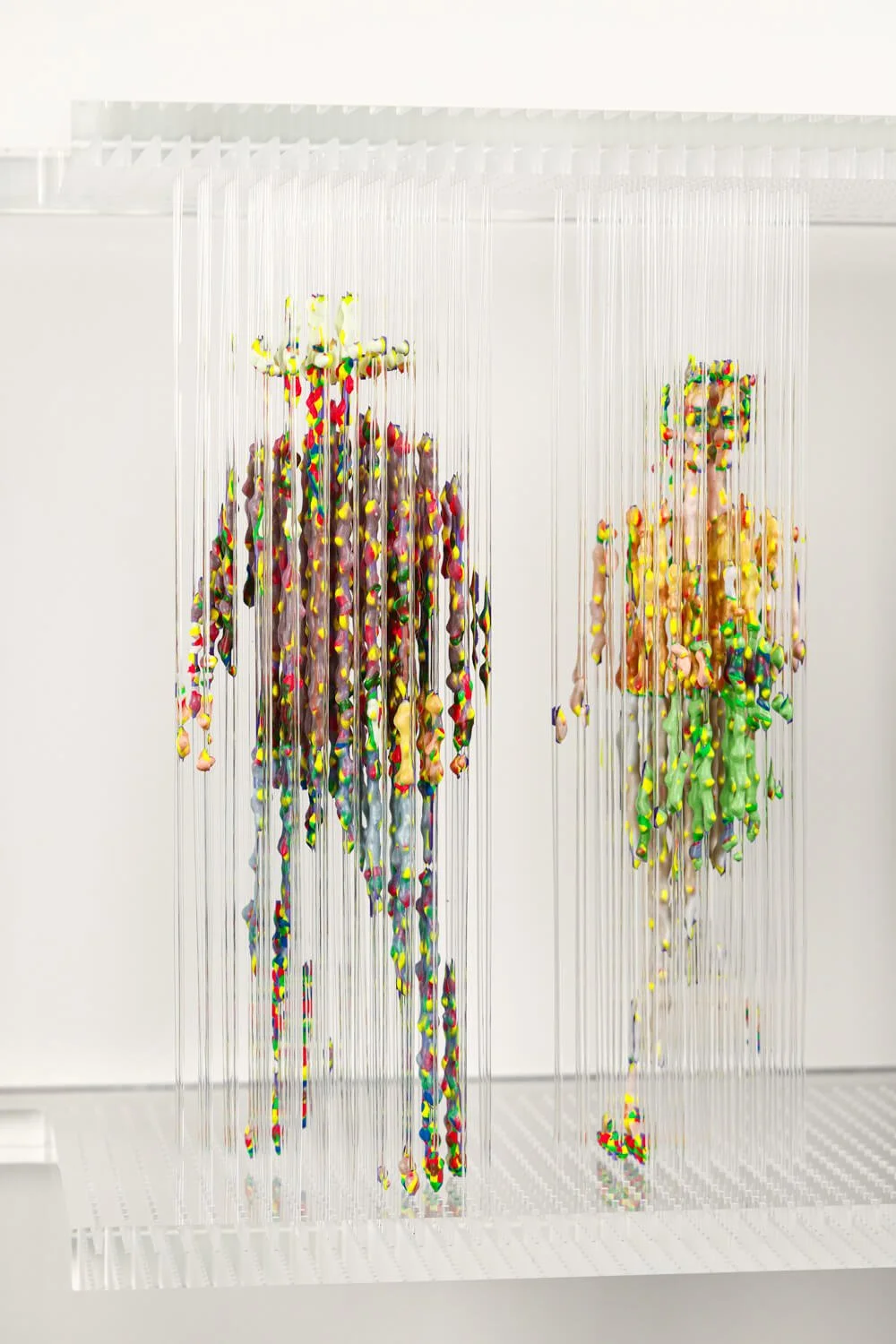
Detail of Stasis 152, 2026, Acrylic paint on plastic rods, 12.5 x 32 x 8 inches
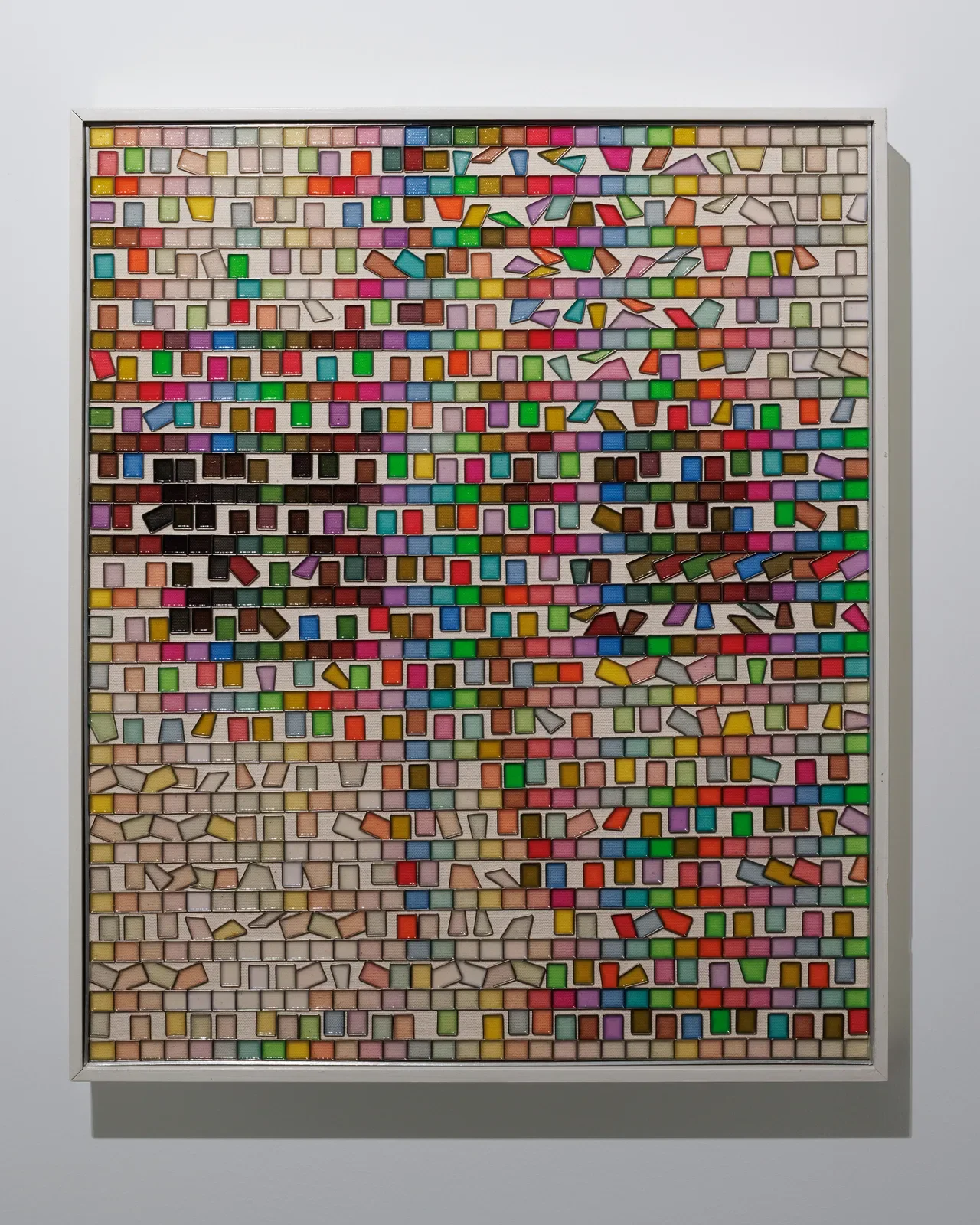
(L) Woman Front View, 2026 Acrylic paint and gel medium poured into industrial staples on canvas 16 x 19 inches
(R) Stasis 153, 2026, Acrylic paint on plastic rods, 12.5 x 32 x 8 inches
Dorosz's "Person Painted People" exhibit at Scott Richards Contemporary Art, which continues through September 26, is a rousing success except for one aspect: his second series of works called "Staple Paintings," which are grids of staples filled with poured paint. Also abstract portraits of people that change perspective depending on your distance, these figures are of those Dorosz knows, but the works' contours don't approach the mesmerizing level of his "Stasis" series. The humans we see in the "Staple Paintings" seem too obfuscated and too uninviting — puzzles more than people. And they don't have the inherent humor of the "Stasis" works, which trap their figures in catacombs of plastic that are surreal and absurd. Almost Monty Python absurd. You can easily imagine these figures screaming to get free from their viewing chambers. But Dorosz doesn't let them speak, which means these nameless men and women are the antithesis of internet influencers and political big shots. Instead of a cacophony of blabbing, there is silence all around them. Pure silence that lets you clear your mind and think of people you'd want to see trapped in these same absurd holding cells.
