
Ian Kimmerly, “Some Quieter Melody,” at Dolby Chadwick Gallery in San Francisco
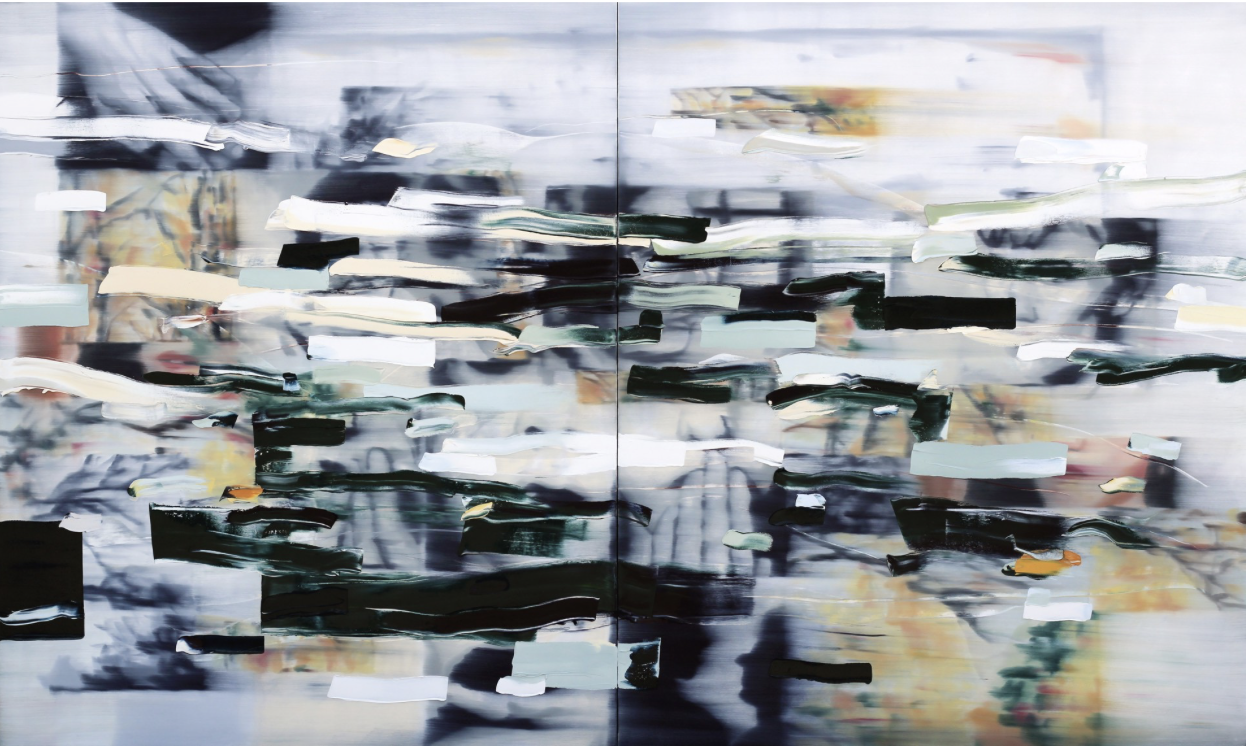
Ian Kimmerly, An Overview, oil on canvas, 72 x 120 inches, 2026.
Ian Kimmerly exhibits over a dozen large paintings at Dolby Chadwick Gallery ranging in size from 38 x 44 inches to the two largest 72 x 120 inches (double panels), with most of the works measuring 60 x 72 inches. The oil on canvas paintings are immediately compelling and showcase an aesthetic style Kimmerly has been exploring for a number of years, seen here in his fourth solo exhibition with the gallery, where representational and abstract processes are integrated to make the fully realized works of art.
Looking closely at the paintings one can see identifiable figurative imagery sitting beneath the layers of abstraction. Large swaths of paint cover images Kimmerly has rendered, then arranged, in a collage-like manner. While the source of the imagery isn't easily discernible, one cannot help but feel as if they're looking at something familiar. Parts of faces, landscape traces, and other images are intentionally placed, in some cases compartmentalized throughout the backdrop. The countenances peer through layers of paint on the canvas, giving the viewer an impression they are watching an old film reel through an oblique lens, one that has been compromised with age. An involuntary nostalgia is triggered as one thereafter looks at the whole and imagines testimonial elements communicating with the fresh, final layer of bold paint.
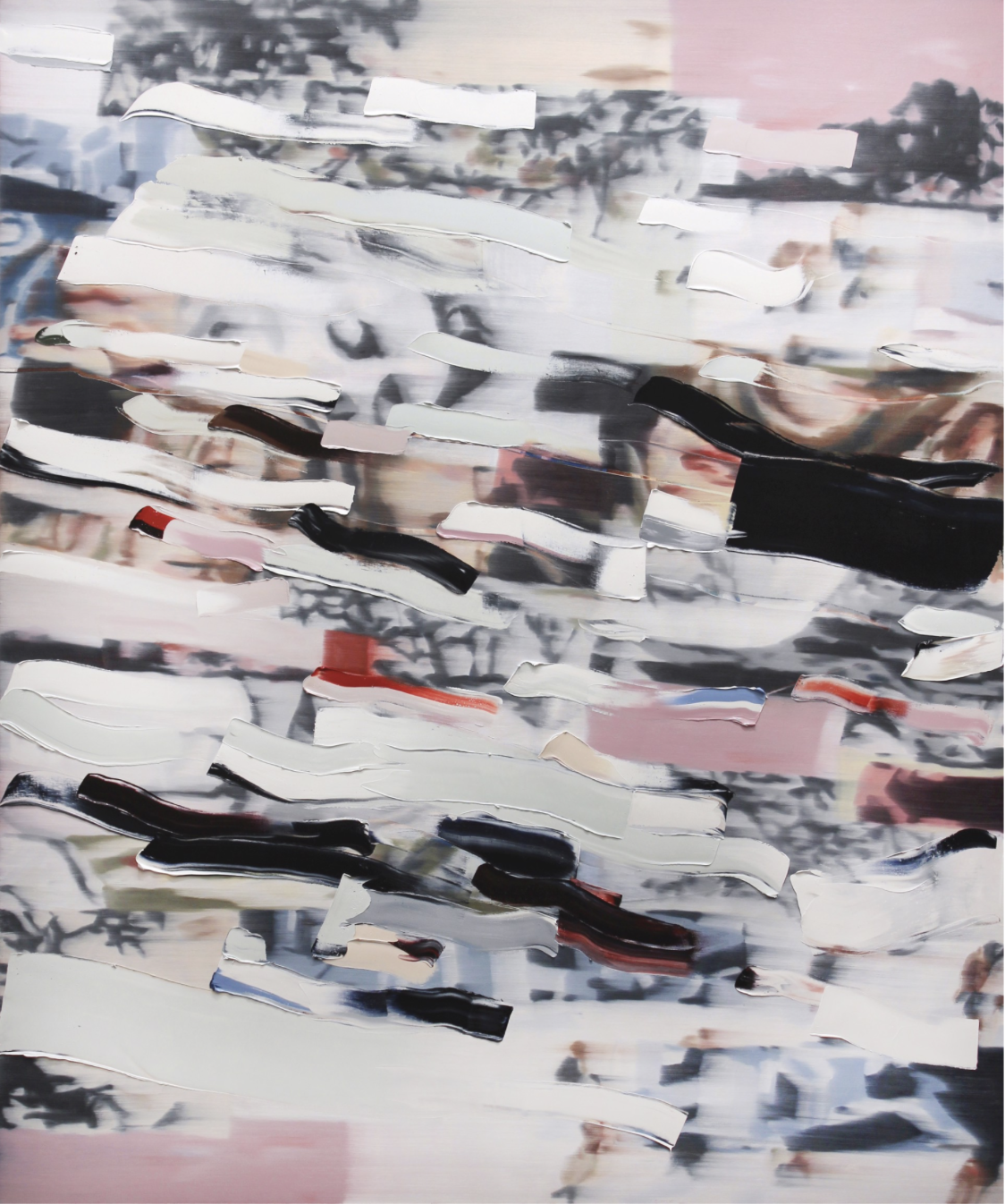
Ian Kimmerly, Puzzle Pieces, oil on canvas, 72 x 60 inches, 2026.
In “Changeable Like The Sea” (oil on canvas, 50 x 60 inches, 2026) Kimmerly presents discernible faces and people striding along a boulevard. In “An Overview” (oil on canvas, 72 x 120 inches, 2026) we see hands, fingers, and human visages, evoking architectural features. “Words Also Vanished” (oil on canvas, 60 x 72 inches, 2024) offers us glimpses of terrain. And in “Turning The Sky” (oil on canvas, 46 x 40 inches, 2024), Kimmerly presents us with the closest he gets to a traditional landscape, with clouds and building structures on the top and bottom of the canvas. The latter, where the colors are muted yet prominent against representational elements, conveys a clear demonstration of time and place, linking the composition to what feels like a particular day, ensconced in nature.
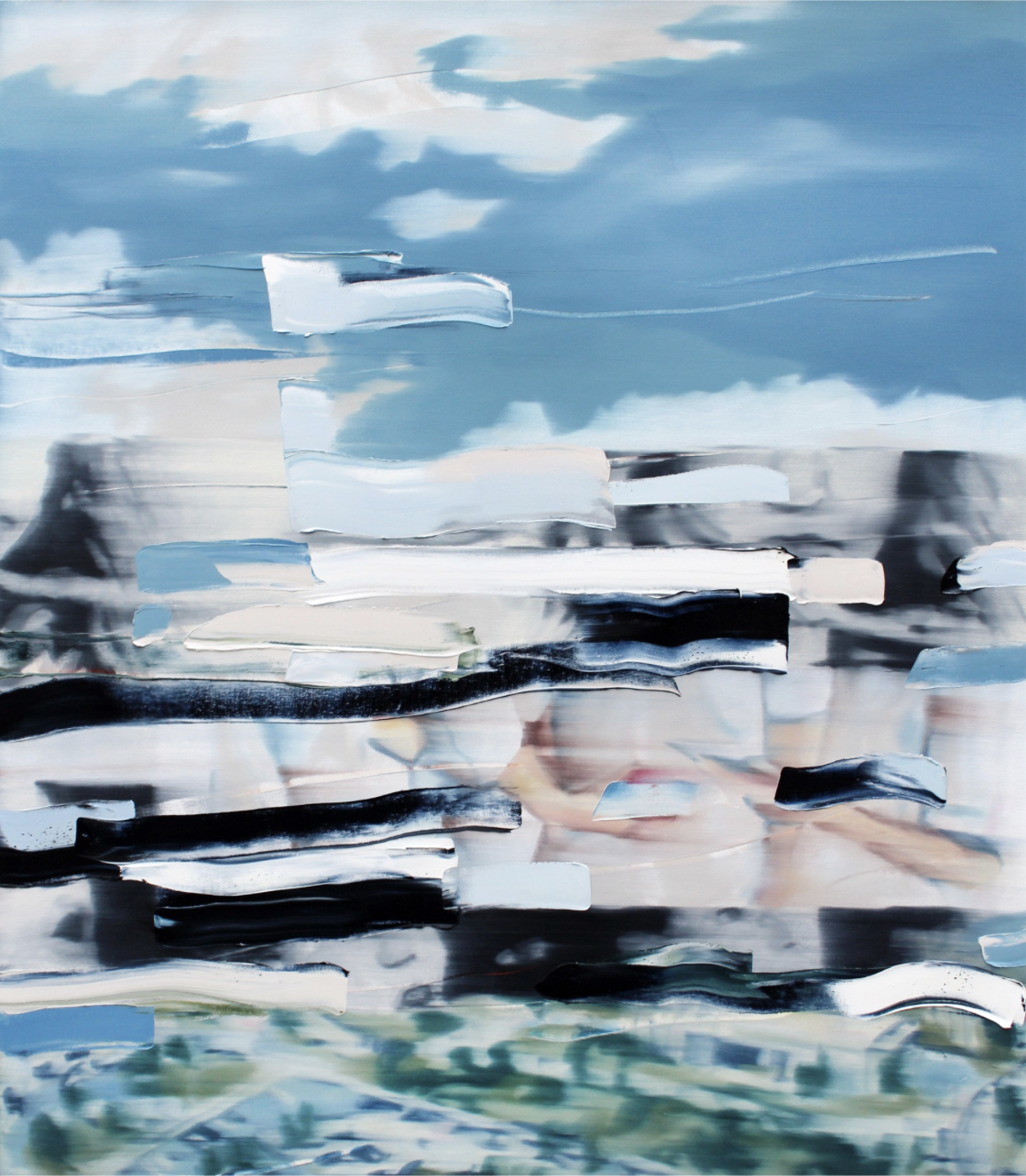
Ian Kimmerly, Turning The Sky, oil on canvas, 46 x 40 inches, 2024.
What does it mean to render representational images behind dominant abstract marks? In many respects it allows narrative to cohabit, as the obliterated familiar is partially erased and thereby lost. It tells us that we live in simultaneous moments and places, because the past coexists with the present, and we shouldn't be able to solely focus on one. In most cases there is a haunting effect in how Kimmerly’s imagery is blurred, reminiscent of Gerhardt Richter’s exploration of visual perception. Kimmerly works within multiple layers of paint, the first apparently consisting of the images he has sourced from various magazines and the like. The complex and textured layering creates a richness in service toward the final composition, integrating the disparate painting components into something intentional and necessary. Any ambiguity opens a subjective relationship to the work of art. There are liminal spaces between each layer inviting an unsettling yet transformative emotional quality to arise. In some cases the visages portrayed and which are still discernible are quite emotive. Somehow they evoke known people and places where the viewer stands as a witness before a moment comprising wholly of chance. Kimmerly invites us to consider the multiplicity that constitutes a single life.
Impermanence and the interpretation that pertains to visual awareness is implicated in these art works. How fleeting moments can be captured by photography, then rendered onto a canvas, then obfuscated to communicate the unsettling nature of being. Kimmerly’s paintings are a response to the prevalence of mass media images, with the essential conceit being his reappropriation of them for his own accord. Somehow he makes them more authentic and participatory by offering them to us in this reconfigured way and in the process offering us a dreamlike narrative or landscape in which to ponder our relationship to everything around us.
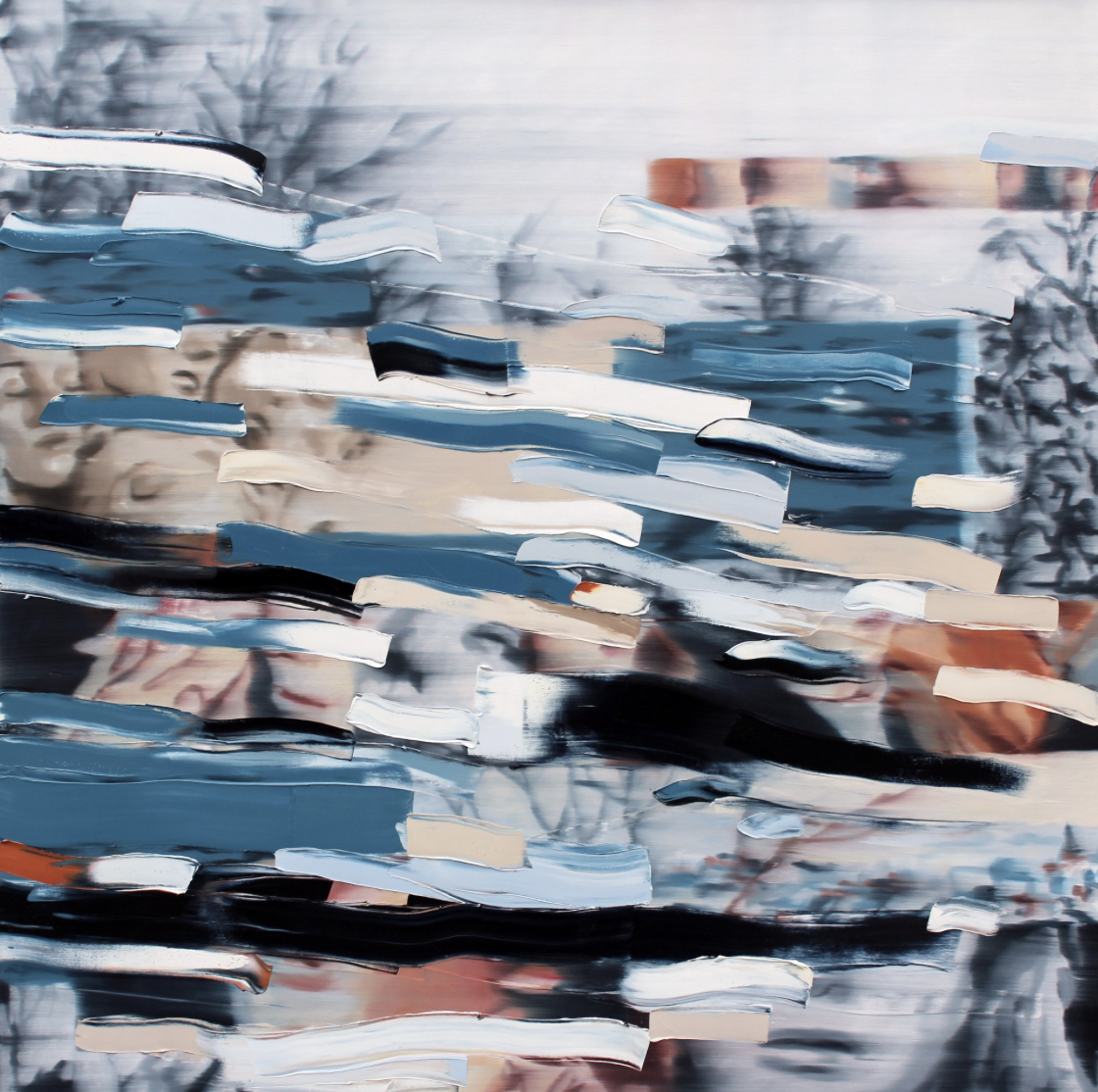
Ian Kimmerly, Mimicry, oil on canvas, 60 x 60 inches, 2025.
The thick, bold brushstrokes of paint are placed last on the canvas in a method lacking strict symmetry. There is usually a wandering stroke visible which suggests uncertainty and invites speculation. The eye searches for meaning darting between representational and abstract forms. These paintings have a lasting quality with a sophistication achieved precisely because they are not overtly balanced. They both convey the emotion and architecture of paintings by Franz Kline. But Kimmerly's visual mashup offers us something less calming and zen-like and more akin to modernity’s chaos. The askew-marks make the paintings. They convey humanness. They reveal a painter messing with a surface, trying to push it to share a collective consciousness, at a time of intense social upheaval.
The exhibition title is taken from the Polish writer Olga Tokarczuk. In her 2019 Nobel Lecture, Tokarczuk presents the idea of a “fourth-person” perspective which deemphasizes what are often insular, individual viewpoints in favor of something elevating the whole. She offers a perspective involving a narrative which can simultaneously embody the viewpoints of each character thus offering a broader and more comprehensive understanding of how a story is interconnected. Tokarczuk writes "all things that exist are mutually connected into a single whole, even if the connections between them are not yet known to us." Like Tokarczuk, Kimmerly invites the viewer to experience a holistic “fourth-person” perspective when viewing these paintings. “Some quieter melody” is Kimmerly’s nod to the calming effect a fully-realized narrative can deliver.
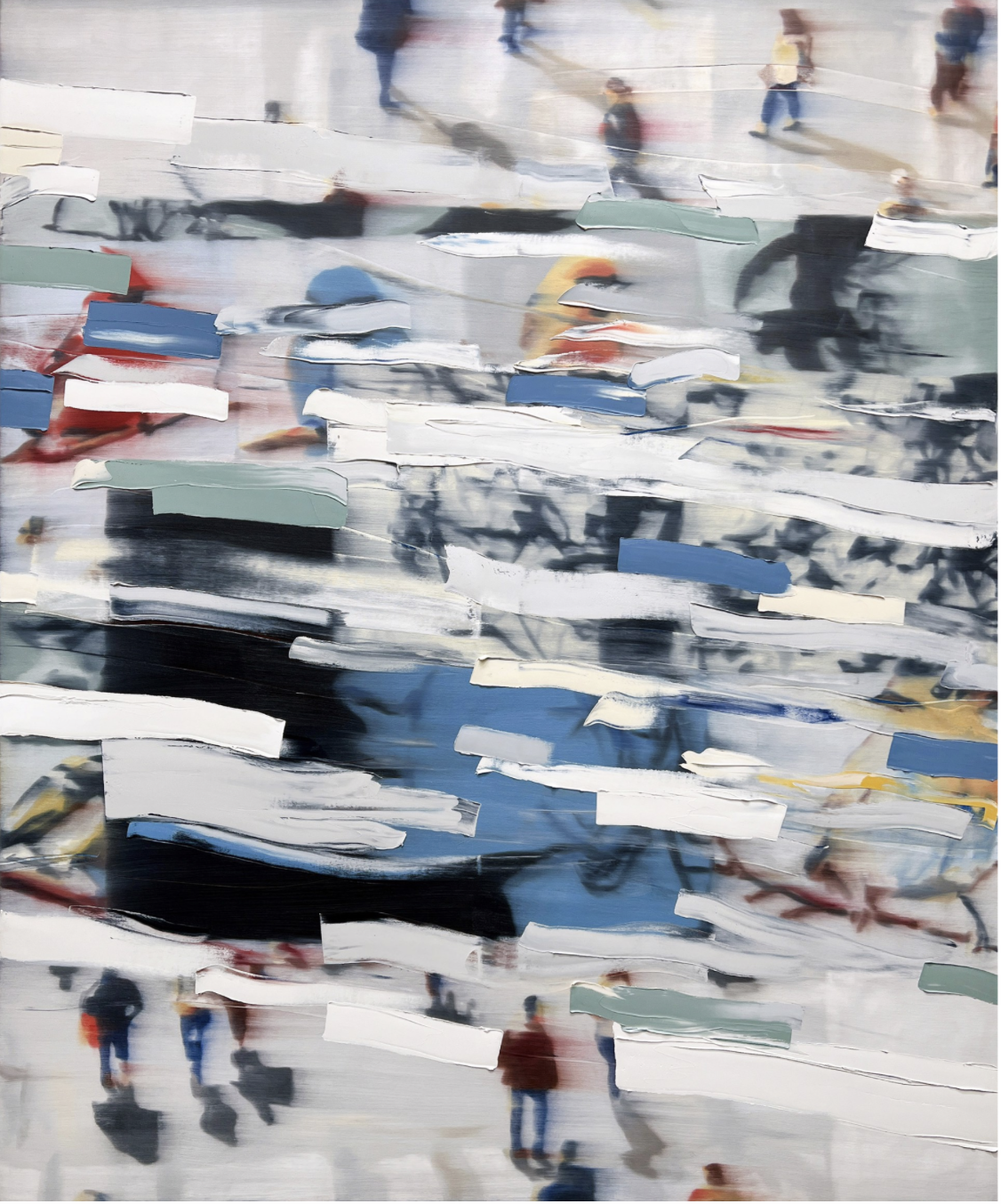
Ian Kimmerly, Flocks, oil on canvas, 72 x 60 inches, 2025.
Life is a series of choices and accidents. Peering toward visual clues Kimmerly scatters throughout, and underneath the composition, he leaves the overpaint of abstractions to announce an impediment that both invites interpretation and seeks resolution. During a life well-lived, we each collect snapshots we store in our memory, composed of something akin to short, yet meaningful, episodes. Regardless of the source material, the viewer tells the story they see and feel, and thus, Kimmerly’s images convey something of the human experience as they promise reconciliation with the past.
Ian Kimmerly’s “Some Quieter Melody” runs through September 26, 2026 at Dolby Chadwick Gallery in San Francisco.
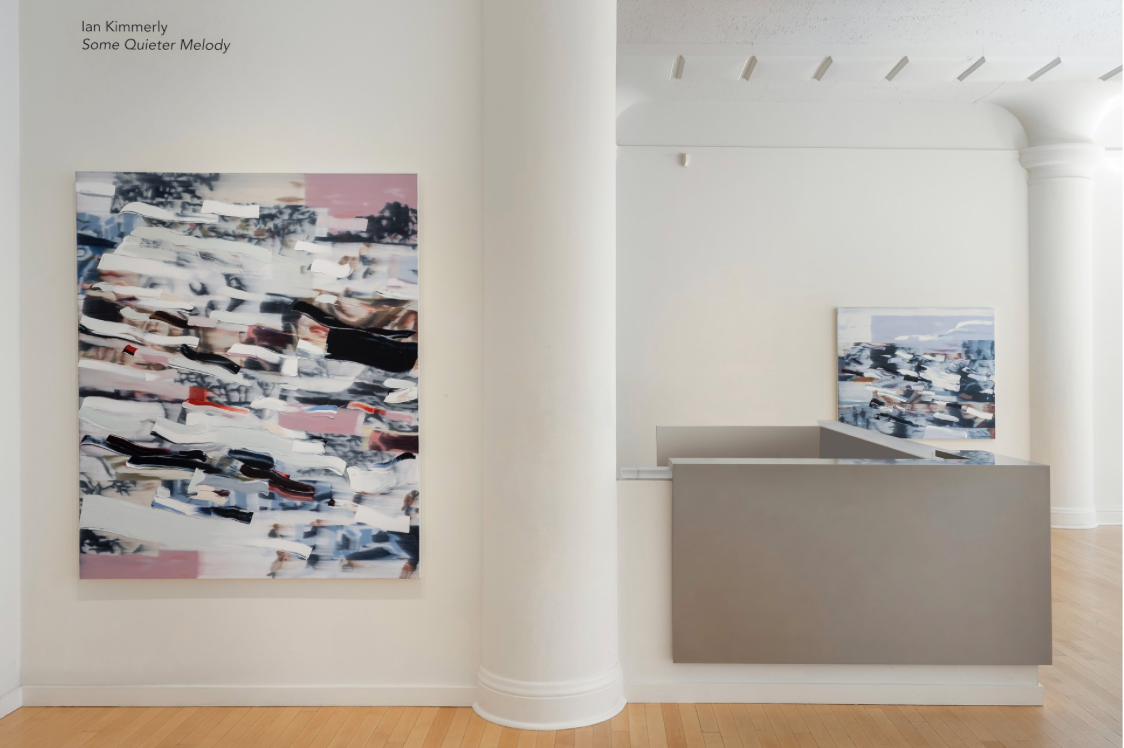
Installation images courtesy of Dolby Chadwick Gallery.
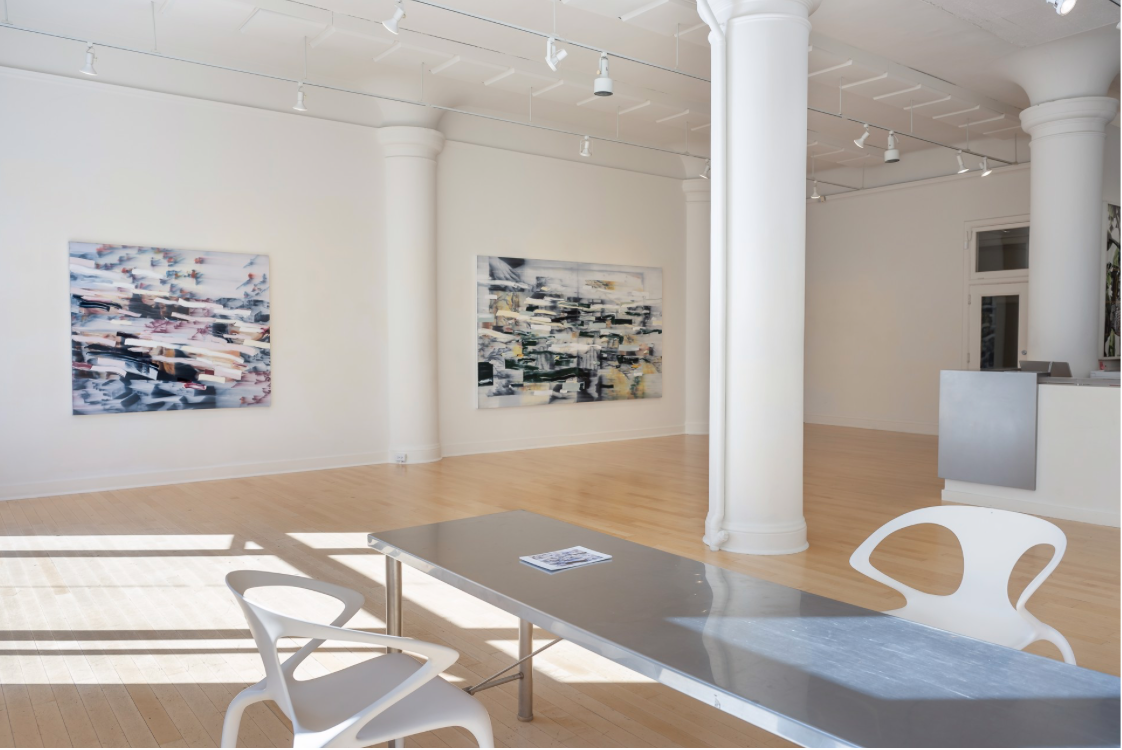
Installation images courtesy of Dolby Chadwick Gallery.