
A friend of mine believes one should take advantage of every opportunity to hear Beethoven performed. In much the same way, for the past decade I have tried to avail myself of each chance I had to see exhibits that include Gego. She’s hardly as familiar as Beethoven, but she’s the reason I visited the Hosfelt Gallery’s current show.
It’s a show of intriguing work and ample pleasures beyond its pair of Gego works.
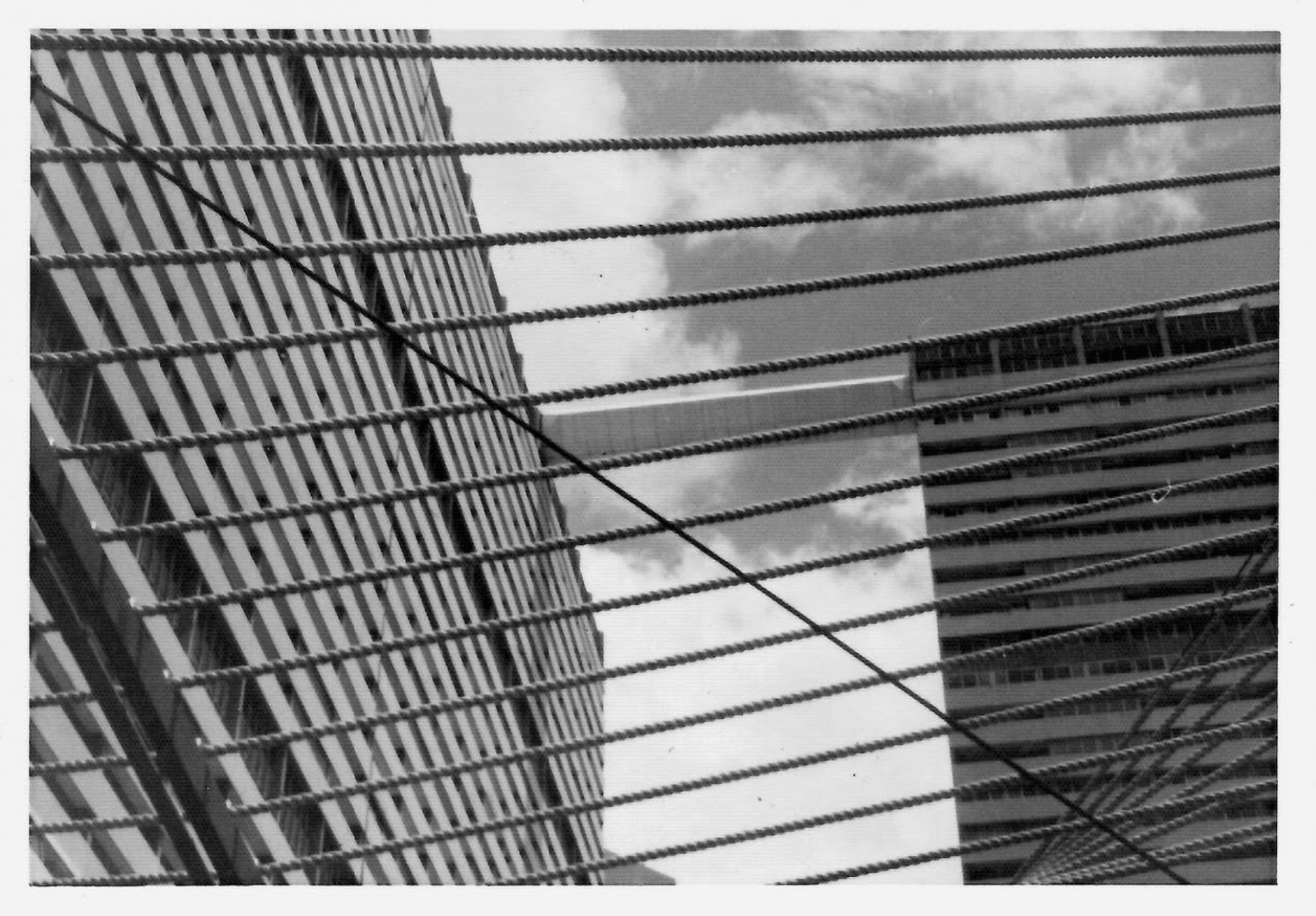
Gego (Gertrud Goldschmidt), Cuerdas, 1972, 17m x 40m by four stories high, nylon aluminum steel copper, Parque Central Caracas, photo by Carlos Alcalá.
Gego was born Gertrud Goldschmidt in Hamburg, Germany. As a Jew, she was banned from practicing architecture, her chosen profession, once Hitler took power. After other family members were out, Gego locked the family house, threw the key in the Elbe River and fled, eventually settling in Venezuela where she took up sculpture.
Gego was my grandmother’s youngest sister. As a teenager in the 1970s, I was sent to spend the summer with Gego in Caracas. I got to watch her work and saw how her sometimes monumental sculptures had been integrated into the landscape of Venezuela’s capital.
After I came home, 40 years passed before I again saw some of her sculptures. It was in Los Angeles, at Hauser & Wirth’s 2016 spacious show of abstract sculpture by women. It was thrilling to reunite with her through her work, but not as amazing as seeing Guggenheim New York dedicate five floors to her art in 2023, including one piece I recognized from my time at her apartment.
This fall, there are two paper Gego works in Hosfelt’s “Tangled Web.”
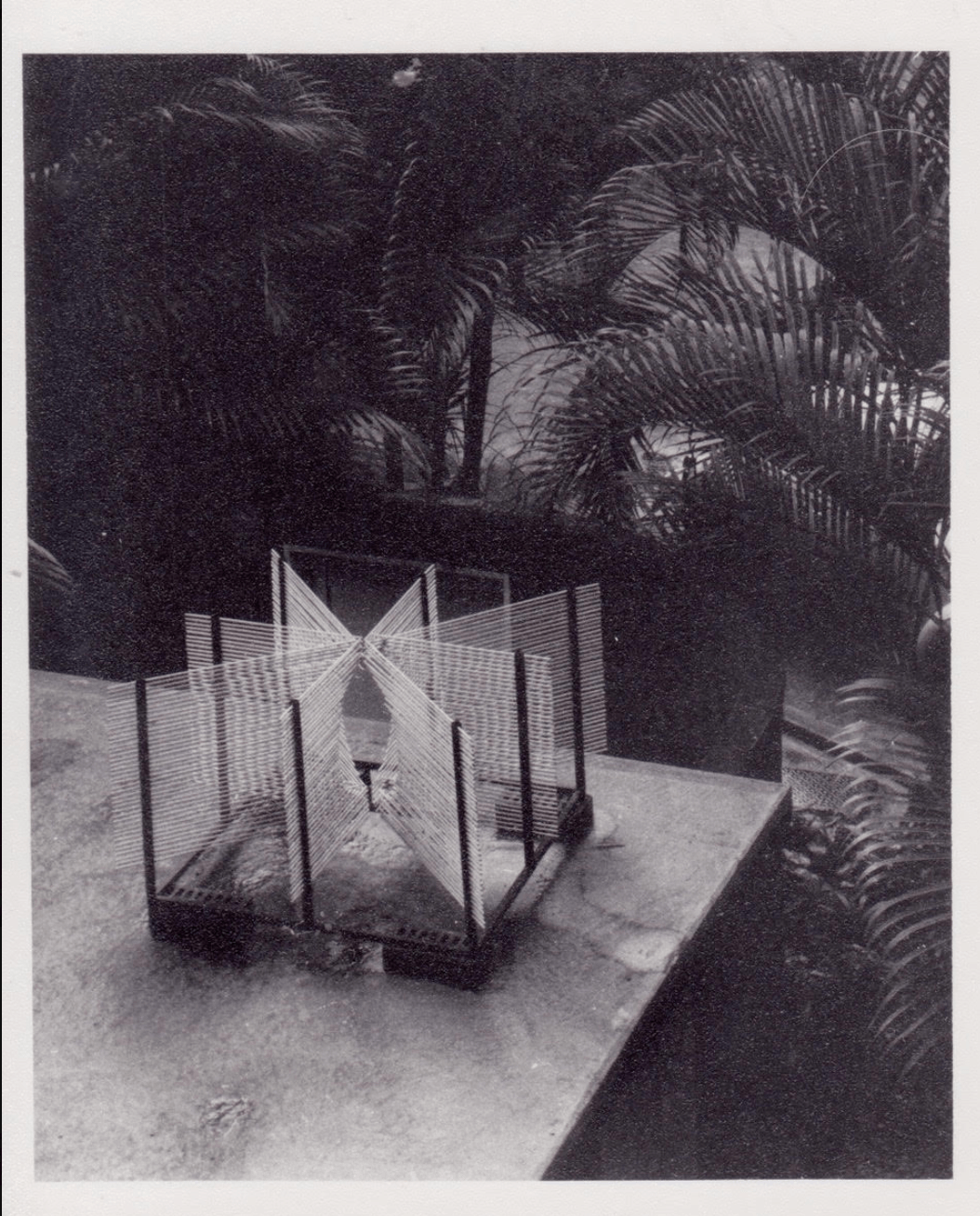
Gego (Gertrud Goldschmidt), Esfera en Hexaedro, 1964, 63 x 98 x 98cm, cast iron and paint, at Gego's home, photo by Carlos Alcalá 1974, sculpture currently held by the Museum of Contemporary Art Barcelona.
This admittedly self-indulgent introduction to “Tangled Web” fits with the vision of Todd Hosfelt, Principal of the gallery. Hosfelt places a great deal of value on the connections between the viewer and the work, and connections among any collection of works.
An artist may create a particular work with a specific meaning in mind, but things change once it is seen, Todd Hosfelt said in an interview. The viewer’s takeaway is influenced by their past experiences, by what they may know about the artist or the genre or the subject matter, by their particular tastes and – dare I say it? – even by color preferences.
Art doesn’t have a static significance, Hosfelt maintains. “You put it out in the world, over time it means something different.”
The writer Hisham Matar says something similar in his book about the Sienese School of paintings. “The subjective life of the observer is required in order to complete the picture.”
This is the tangled web. Not just a metaphor for weaving, the way we say a spider weaves a web, but also a web of connected meanings between art, artist, viewer.
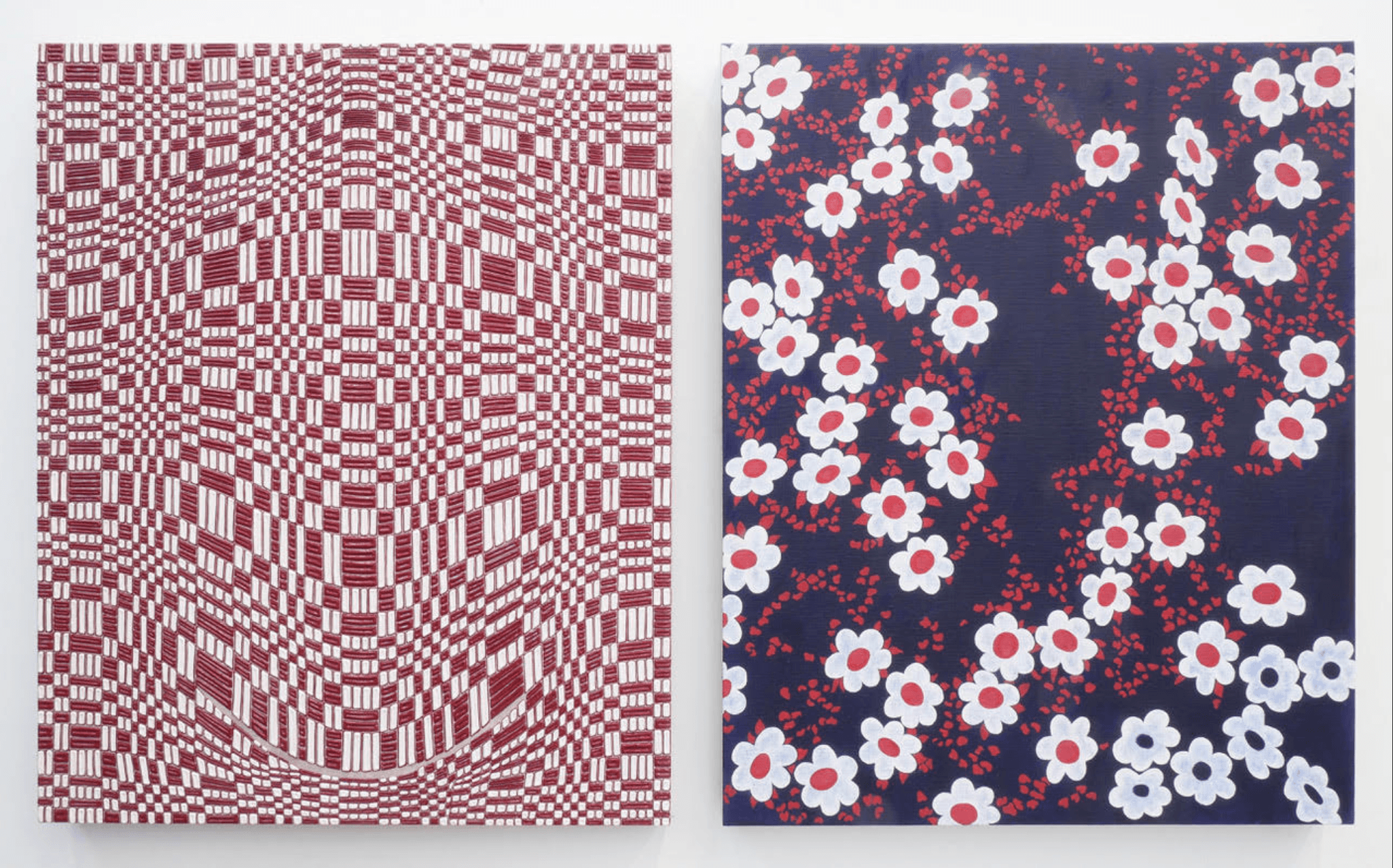
Andrea Higgins (b. 1970), Self-Portrait with Daisies, 2026, oil and acrylic on linen (diptych), as installed 22 1/4 x 37 in/56.5 x 94 cm, each panel 22 1/4 x 18 in/56.5 x 45.7 cm (plus 1 inch vertical space)
The show “Tangled Web” exists because of one such connection. Hosfelt was mounting a new show of one of his longtime artists, Andrea Higgins, who has an ongoing fascination with fabric. Her theme traces back to visits with her grandmother to Britex Fabrics. “Her whole process is in weaving with paint,” Hosfelt said. Higgins’ current show consists of diptychs described as self-portraits and consisting a botanical image paired with one that looks like a woven pattern.
Because Higgins is creatively deliberate, not quickly prolific, her latest works were not enough to fill the gallery’s sizeable space, Hosfelt said. He sought to complement Higgins with a simultaneous show that connected to the spirit of her work.
Hosfelt began to search for the art to develop the weaving idea. Hence, “Weaving as a Conceptual Practice.” It’s a wonderful idea for a show, though not a new one. In 2024 and 2025, four great museums in the United States and Canada mounted “Woven Histories: Textiles and Modern Abstraction,” showing a Who’s Who of artists, including Gego.
“Tangled Web” includes a pair of Gego’s paper Tejeduras, literally Weavings – weavings of paper strips. “Woven Histories” had one of those, but also included an example of her suspended wire Reticularea sculptures. Those, too, are deemed weaving.
Hosfelt had hoped to include a piece by Anni Albers. The “Woven Histories” museum show spotlighted Albers who, in 1949, was the first textile artist to have a solo show at the Museum of Modern Art, and is a central figure of woven art.
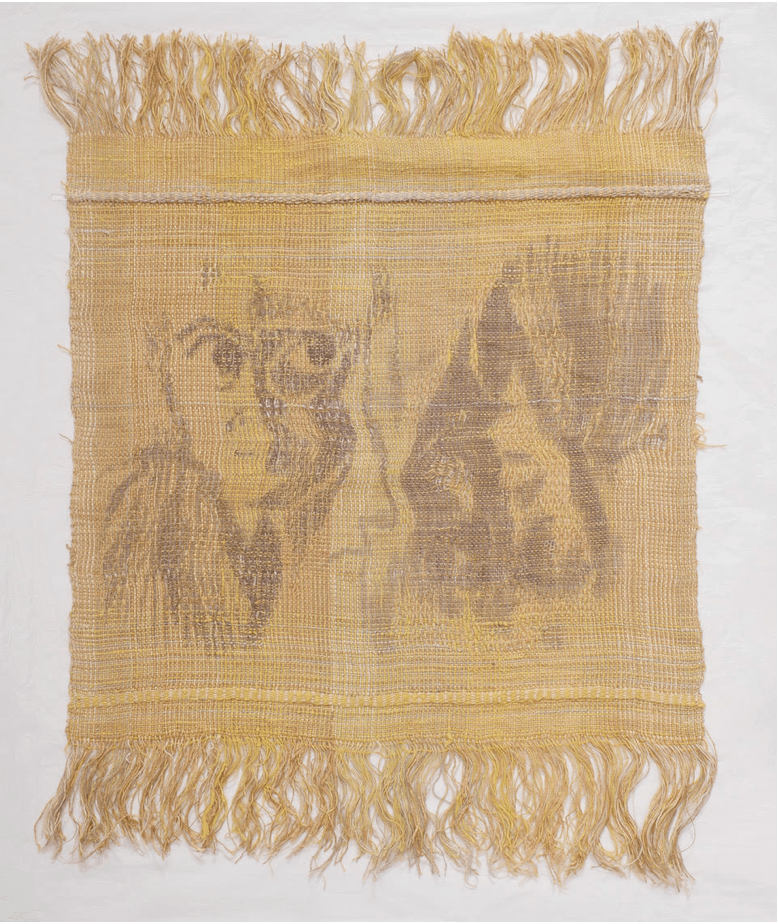
Trude Guermonprez, Silhouettes, 33 x 23 inches, 1970, linen; double weave, stenciled
Unable to secure one, however, he included Silhouettes, a mysterious weaving by Trude Guermonprez, who taught side-by-side with Albers at Black Mountain College, where people like Ruth Asawa, Robert Rauschenberg and Ray Johnson were students.
The fact that Guermonprez’s piece remains a mystery to me is partly consequent to a weakness of “Tangled Web,” otherwise an inspiring show. There is no interpretive signage alongside the pieces. A gallery visitor has no indication of Silhouette’s significance, either on its own or as a stand-in for Albers.
Hosfelt says he finds much interpretive material in museums pretentious and inclined to make the viewer feel ignorant. He has gone to the opposite extreme. Here, the only interpretation is what viewers bring. Their experiences create the meanings. That can limit the meaning.
I only knew about Guermonprez from research after seeing the show. On the flip side, I knew what Hosfelt didn’t: There was another weaving teacher at Black Mountain, Franziska Mayer, who was Gego’s first cousin. Mayer later created a weaving workshop in Peru.
Some interesting bits about the “Tangled Web” art and artists I learned only serendipitously, listening in as a gallery staffer told other visitors hidden backstories to the pieces.
For example, Debra Valoma’s terrific No Ordinary Spider presents an eye-catching abstract front. What the viewer does not know is that Valoma wove it in a way that displays a text on the unseen rear surface. It’s a quote from E.B. White’s “Charlotte’s Web.”
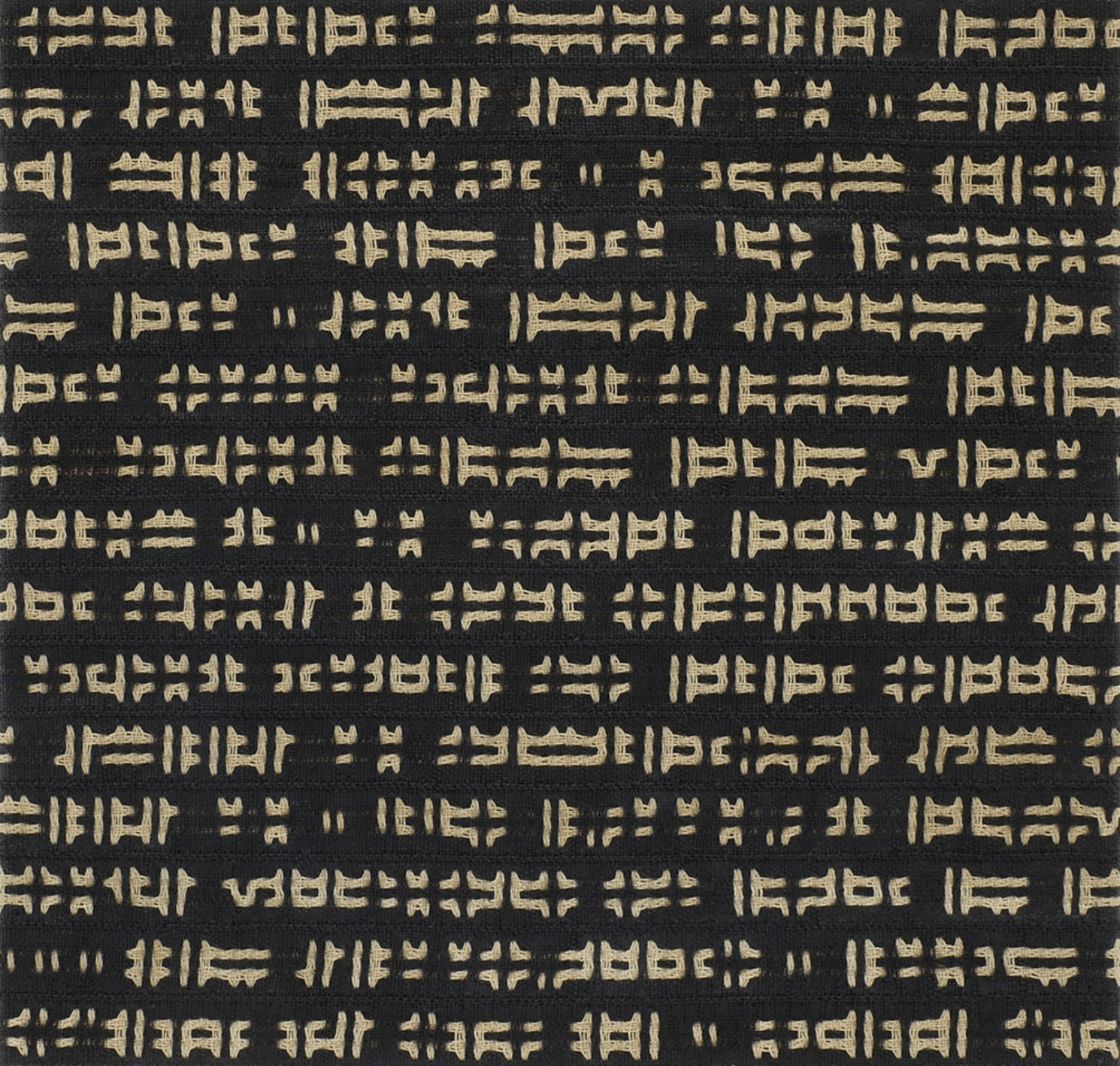
Debra Valoma, No Ordinary Spider, 2026, waxed linen weaving, 24 1/2 x 26 in
Similarly, I wouldn’t have known how Driss Ouadahi’s acrylic-and-oil canvases have lines that derive, in part, from the artist’s memories of seeing the world through the warp of his Berber grandmother’s loom. “It’s really all based on this early memory of his,” Hosfelt said.
Without added research, gallery visitors will not know that Gego’s Tejeduras were done later in life when, bedridden, she could no longer work the wire sculptures for which she is best known.
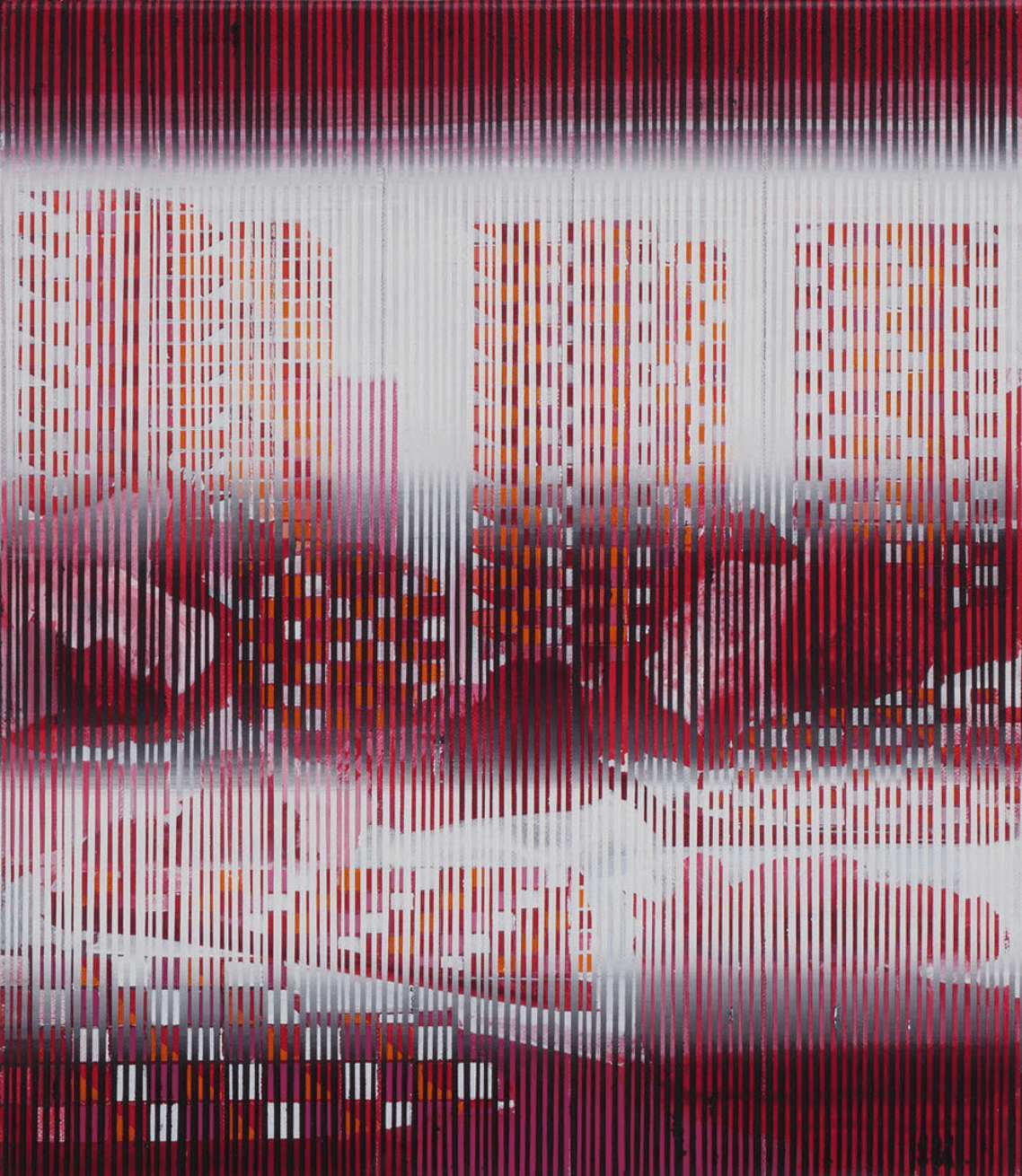
Driss Ouadahi, Red and White Patterns, acrylic and oil on canvas, 2026, 18-1/8 x 15-3/4 inches
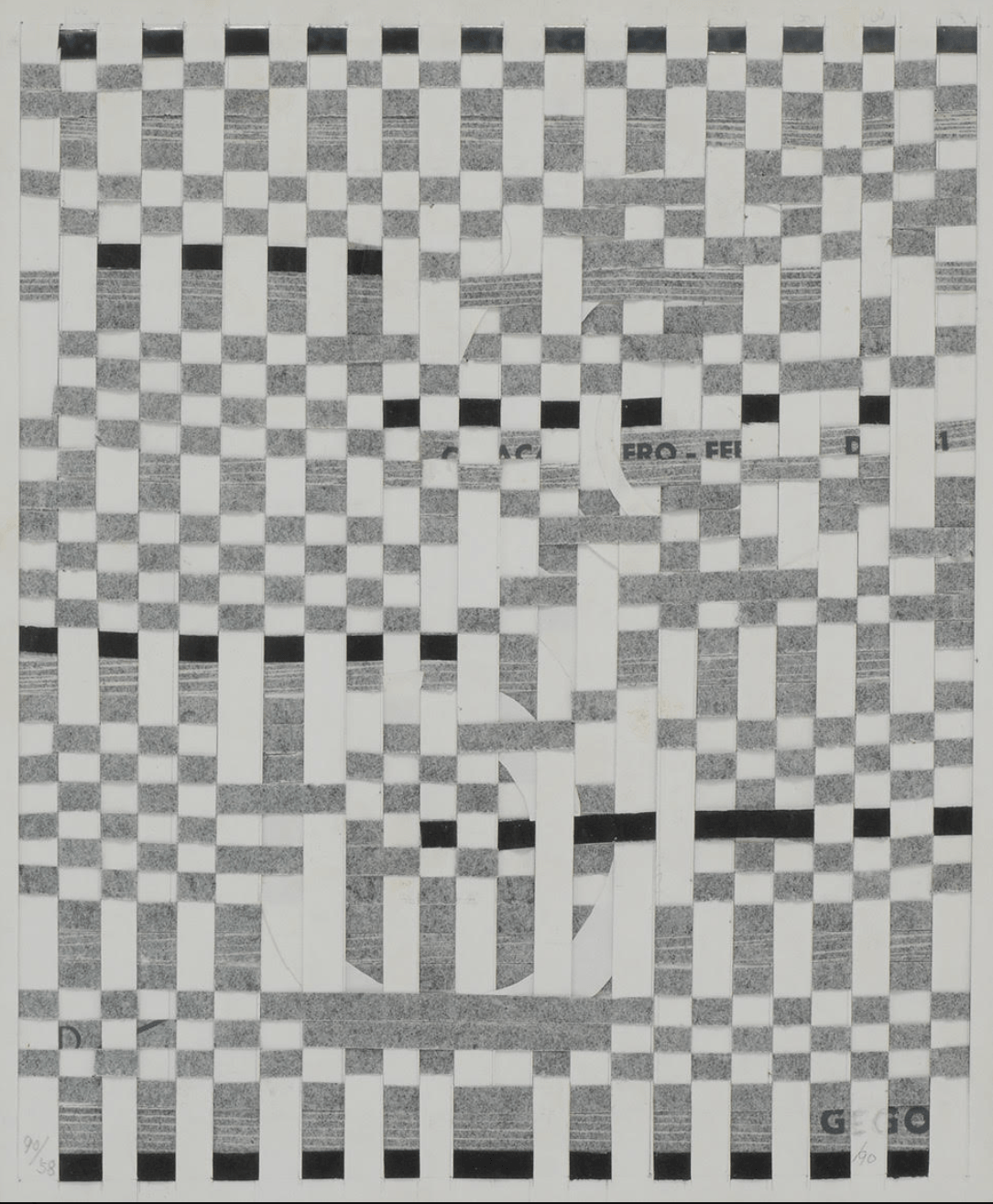
Gego (Gertrud Goldschmidt), Tejedura 90/58, 1990, 9 x 7-1/4 inches, card-stock and printed paper
Even so, the absence of background information does not hinder a visitor’s general ability to marvel at the visual artistry of the pieces in the show. Among them:
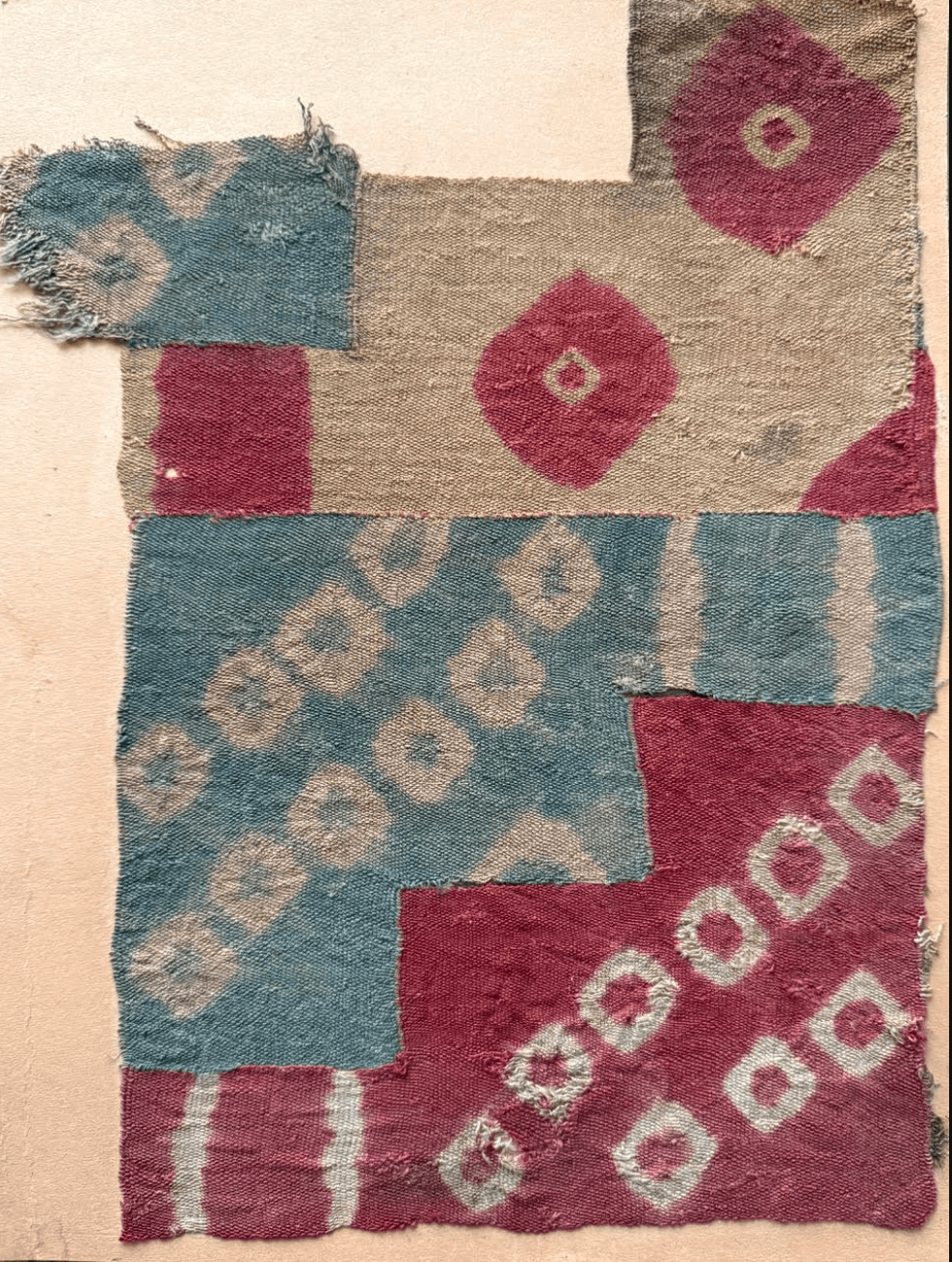
a dyed Nazca Peruvian weaving, perhaps 1,000 years old
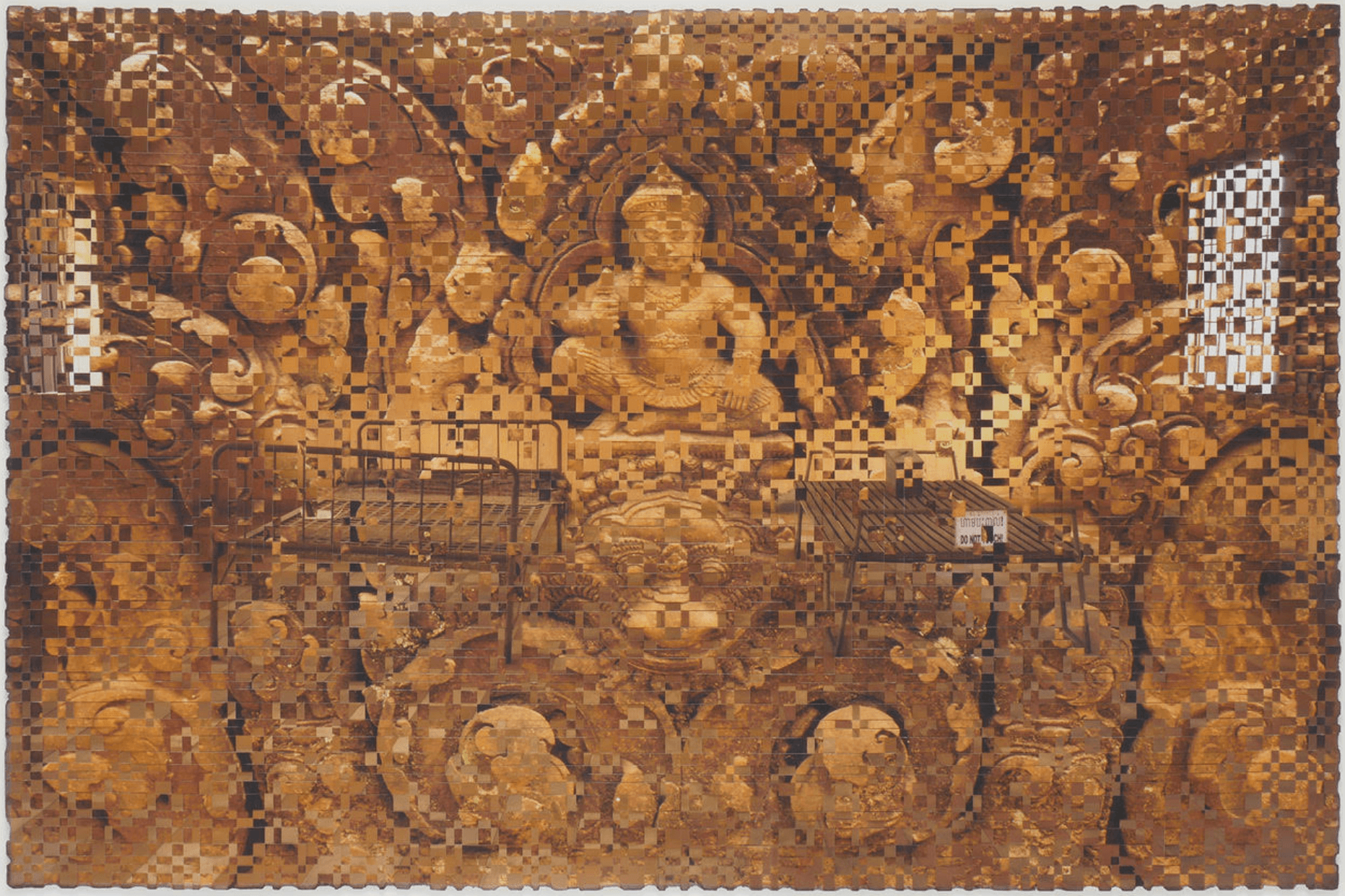
Dinh Q. Lê’s Monuments and Memorials 9, 5-feet long and woven from photographic prints
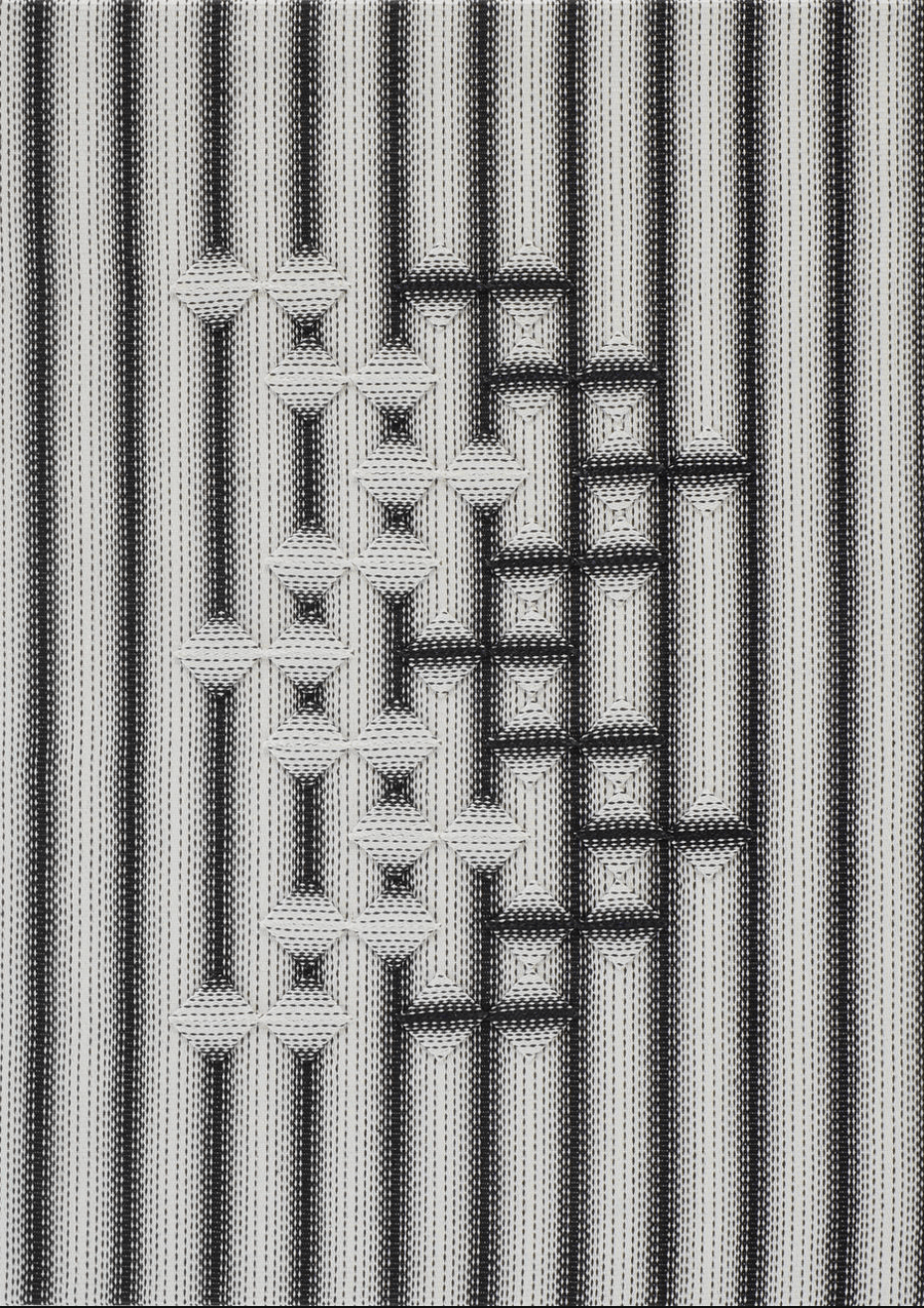
Susie Taylor’s Lightning no. 3, in which a simple woven pattern takes on dramatic changes as pieces of the same pattern are rotated and superimposed
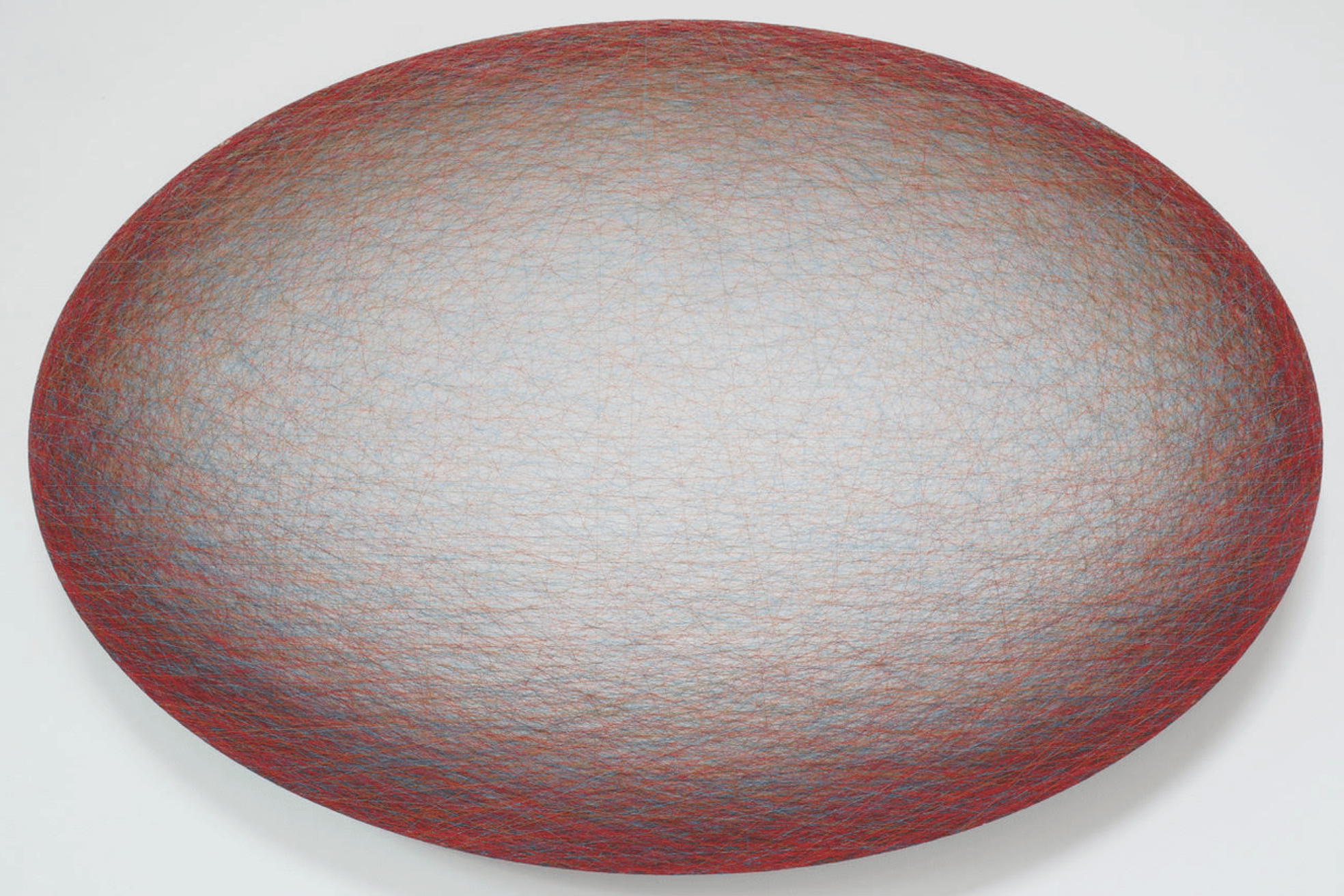
Emil Lukas’ on angle #2473, an intense network of colored threads that looks, from a distance, much like a metallic ellipse
In the end, that sort of “aha” encounter with weaving is a significant part of what Hosfelt wanted for “Tangled Web.” The show takes the viewer beyond quotidian encounters with woven clothing, tablecloths or carpets and presents an opportunity to personally redefine one of civilization’s oldest technologies.
The exhibition runs from October 17 to November 25, 2026.