
Sonia Gill, Memento Vivere, Transmission Gallery
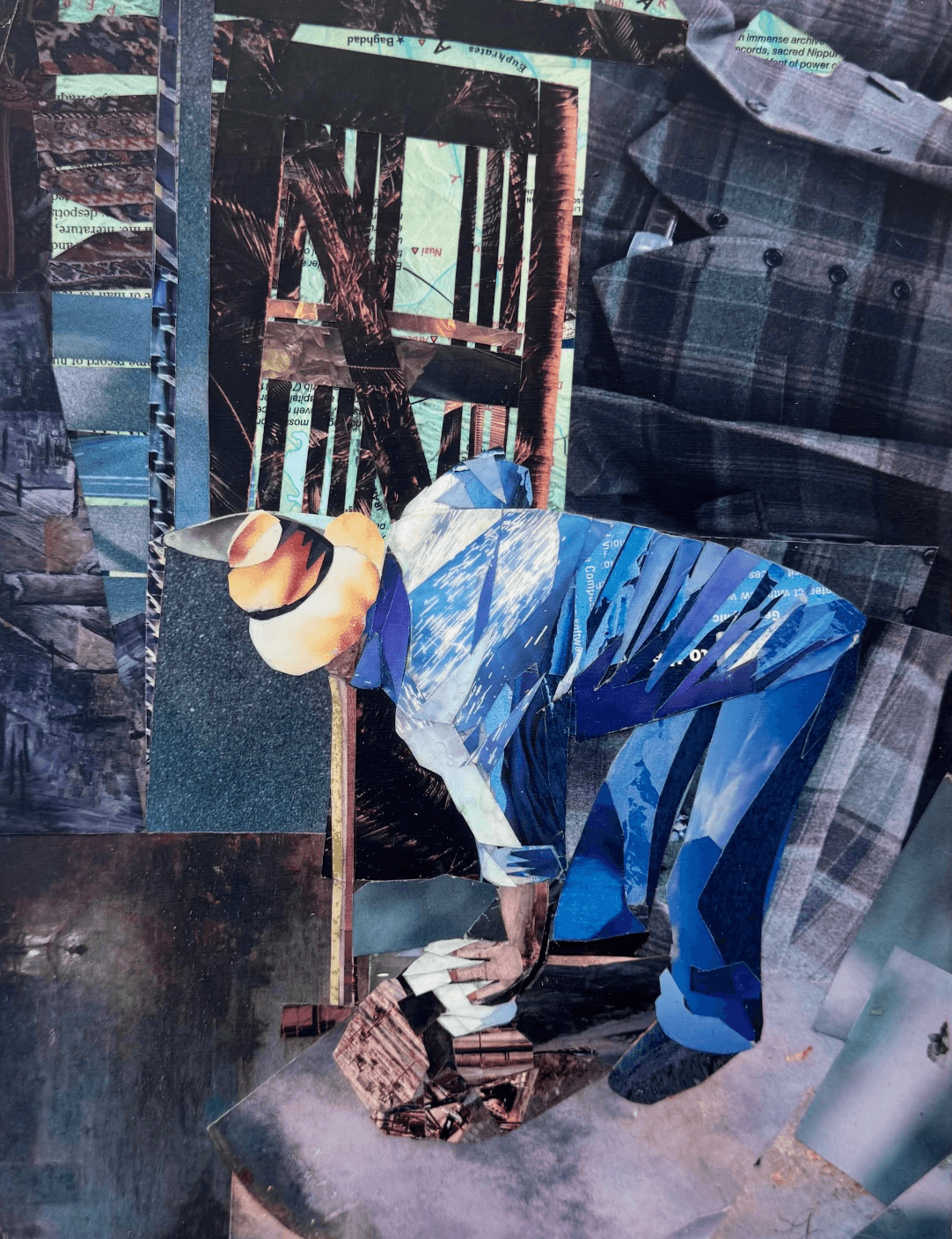
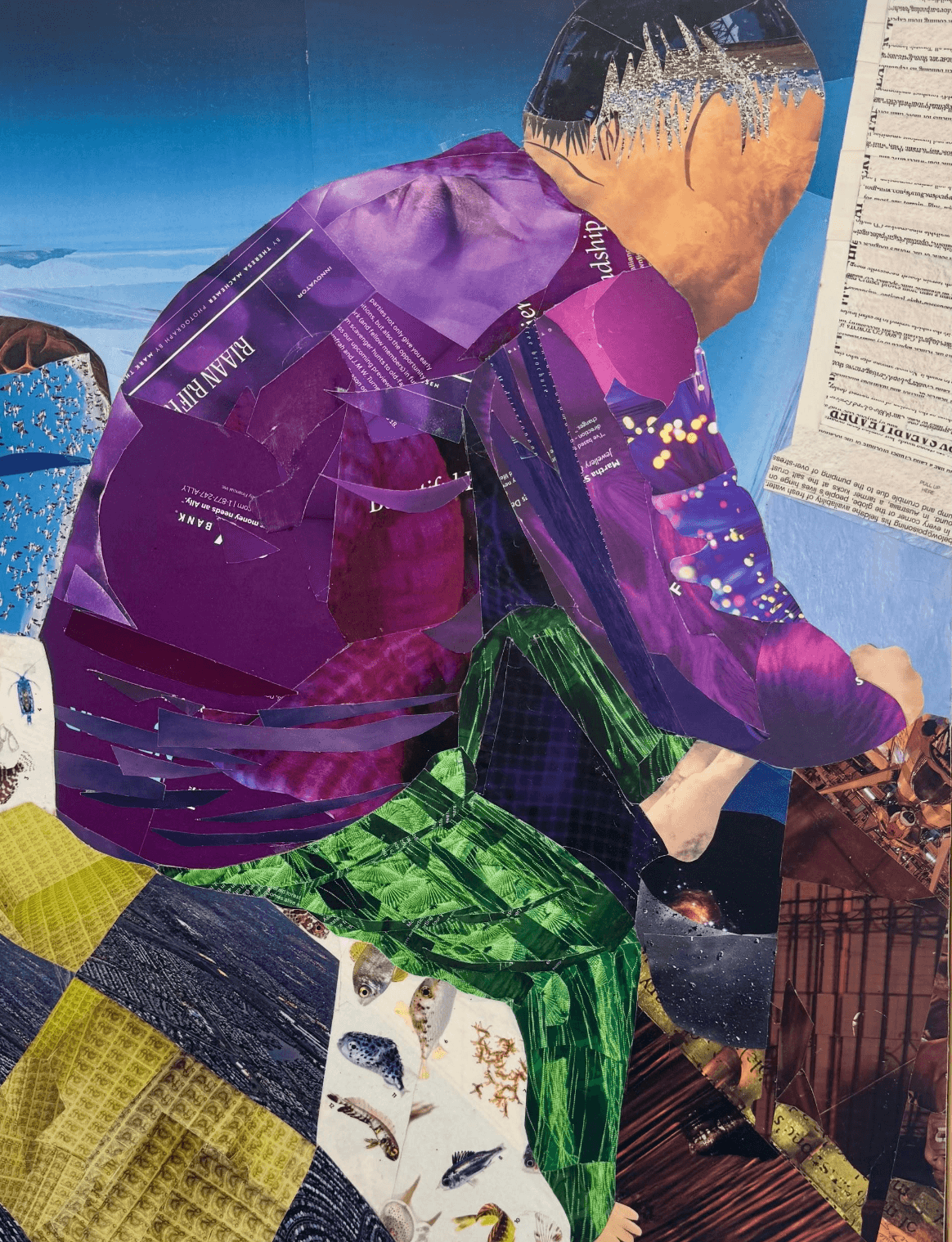
Breaking Rocks in the Hot Sun, paper on canvas, 12 x 9
Memento Vivere- Remember to Live
By Doug Welch
Memento Vivere, Remember to Live, is an exhibition of Sonia Gill’s collage work currently being shown at the Transmission Gallery, in Oakland California. The show is open through June 6. A graduate of California College of the Arts where she studied painting and earned a BFA, Gill utilizes paper to make her works. Repudiating brush and oil based paints in making these collages, they nevertheless retain the language of painting; Gill’s brush strokes come in the form of pieces of paper. Instead of mixing paint to find the right color, she searches her trove of materials for the right hue and value. Gill’s process can be slow and painstaking, she layers instead of mixing, she experiments and replaces until her piece is complete.
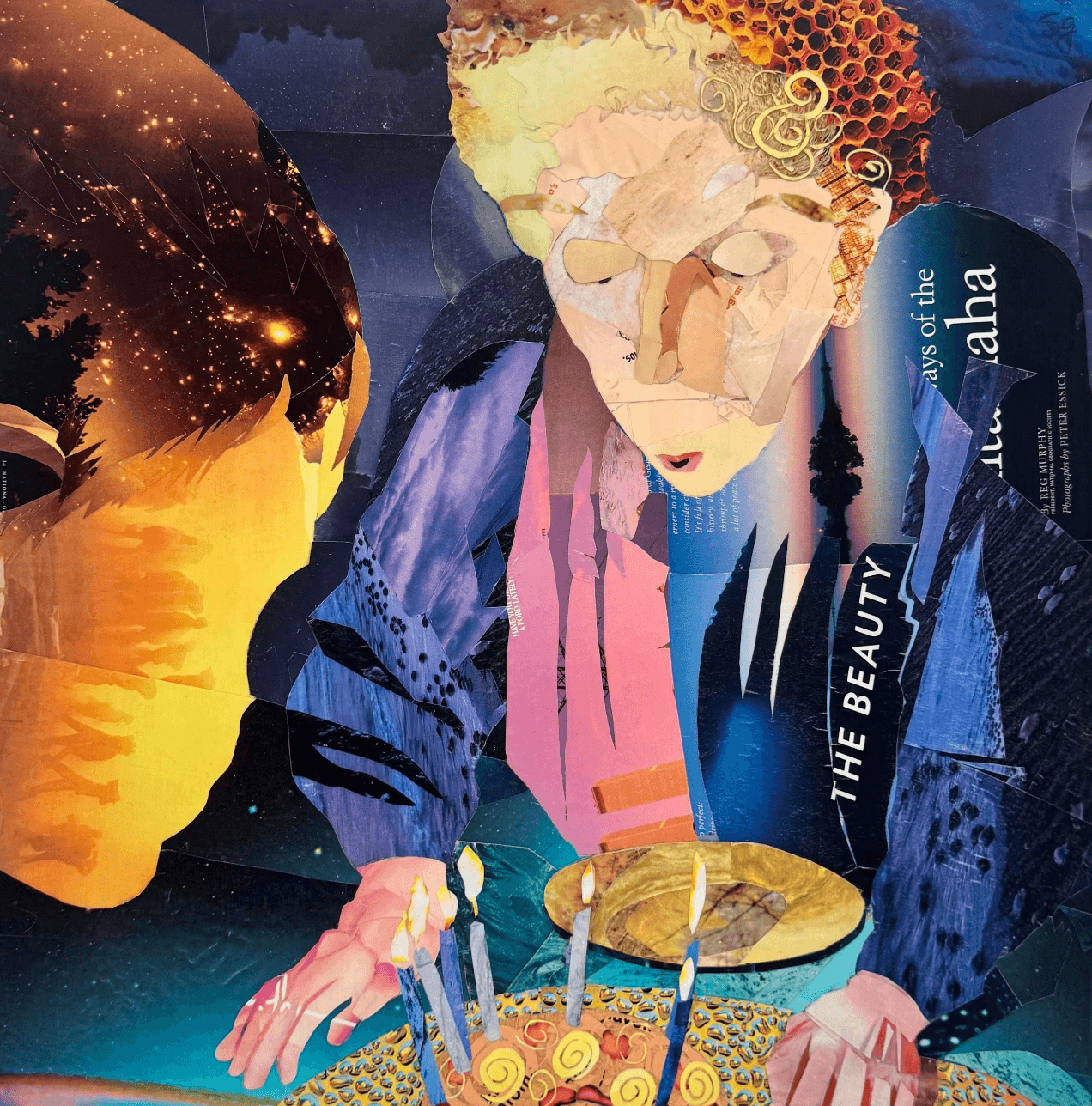
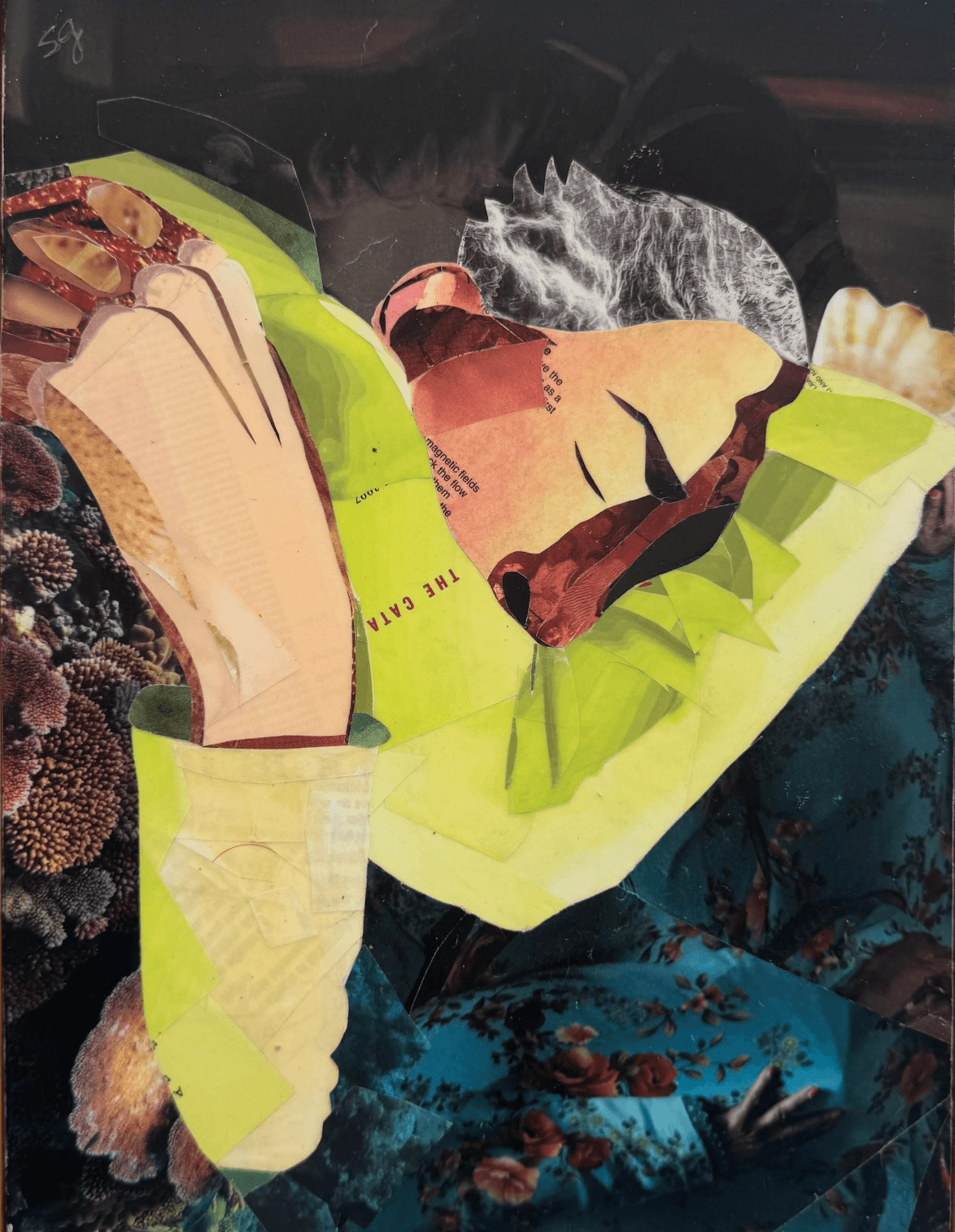
The exhibition is described by the gallery’s advanced publicity as “an homage to the quiet enduring moments that define human life: reading together, tending to small rituals, routine tasks and moments of reflection.” Spending time with these subtle and rich collage works conveys a reminder to look past all of the busyness and noise of our modern lives, and to slow down. Gill brings precision, detail, form, nuance and realism to her collage-paintings. She invites the viewer to look carefully and search for the details that help define what constitutes representation, movement, and mood.
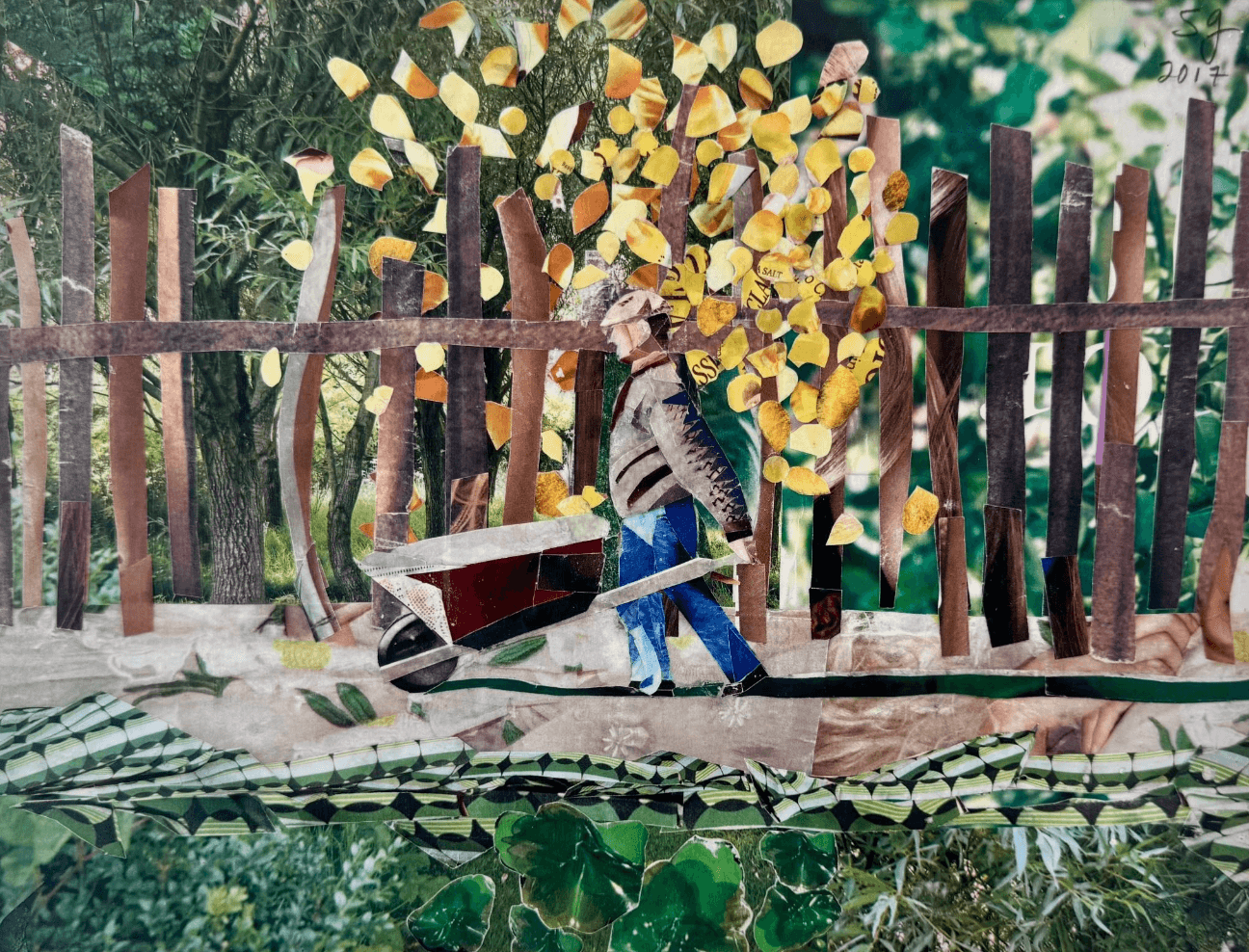
In the collage-painting, “Gotta Keep Moving”, a 9 x 12 inch paper on canvas, a man pushes a wheelbarrow along a garden path with yellow and gold cut-paper leaves from a Redbud tree appearing to explode upward in the upper center of the composition. The clarity of the scene is striking considering the medium she uses — remnants of images, pages from magazines and found scraps. Impressively, Gill energetically animates these fragments into convincing representational forms. Movement is everywhere — in the posture and stance of the figure, in the depiction of the scatter of the leaves, in the lush green foreground pressing toward the viewer. We don’t just see a man and a wheelbarrow but also the wind blowing the leaves, the fence posts warping with age, and a path being created. Gill’s strength is making all of this look easy; she has a command of forms and is able to cut fragmentary imagery and repurpose it in furtherance of creating a new image that has more in common with traditional painting than the mash-up of forms we typically associate with collage.
The paintings, as Gill prefers to refer to these collages, represent transformation, flexibility, and re-creation. The fence posts initially appear as if the printed material used had been designed for that very purpose – to represent fence posts. However, looking closer, strands of hair, remnants of text, different hues of brown both glossy and matte all become apparent in the source material. Below the fence posts, a human hand is identifiable, along with other non-discernable images, joined together to create a path for the focal subject: a man and his wheelbarrow. Gill’s work causes us to ponder how images are constructed. She teaches us that text can become leaves or part of a wheelbarrow, magazine pages depicting people can become walkable paths, images of tree foliage can become grass – or how image fragments become a man’s face, his jacket, his hand or his hat. It is part of our nature to instinctively categorize, identify, and seek identifiable imagery. We are constantly free associating to related and similar ideas and visual impressions. To some degree, Gill does something similar, but makes the process tangible. She does it carefully, intentionally and skillfully – it is not automatic or unconscious – it’s the opposite. By bringing seemingly unrelated fragments together into identifiable scenes and images, her art allows us to contemplate the role we all play in constructing our reality.
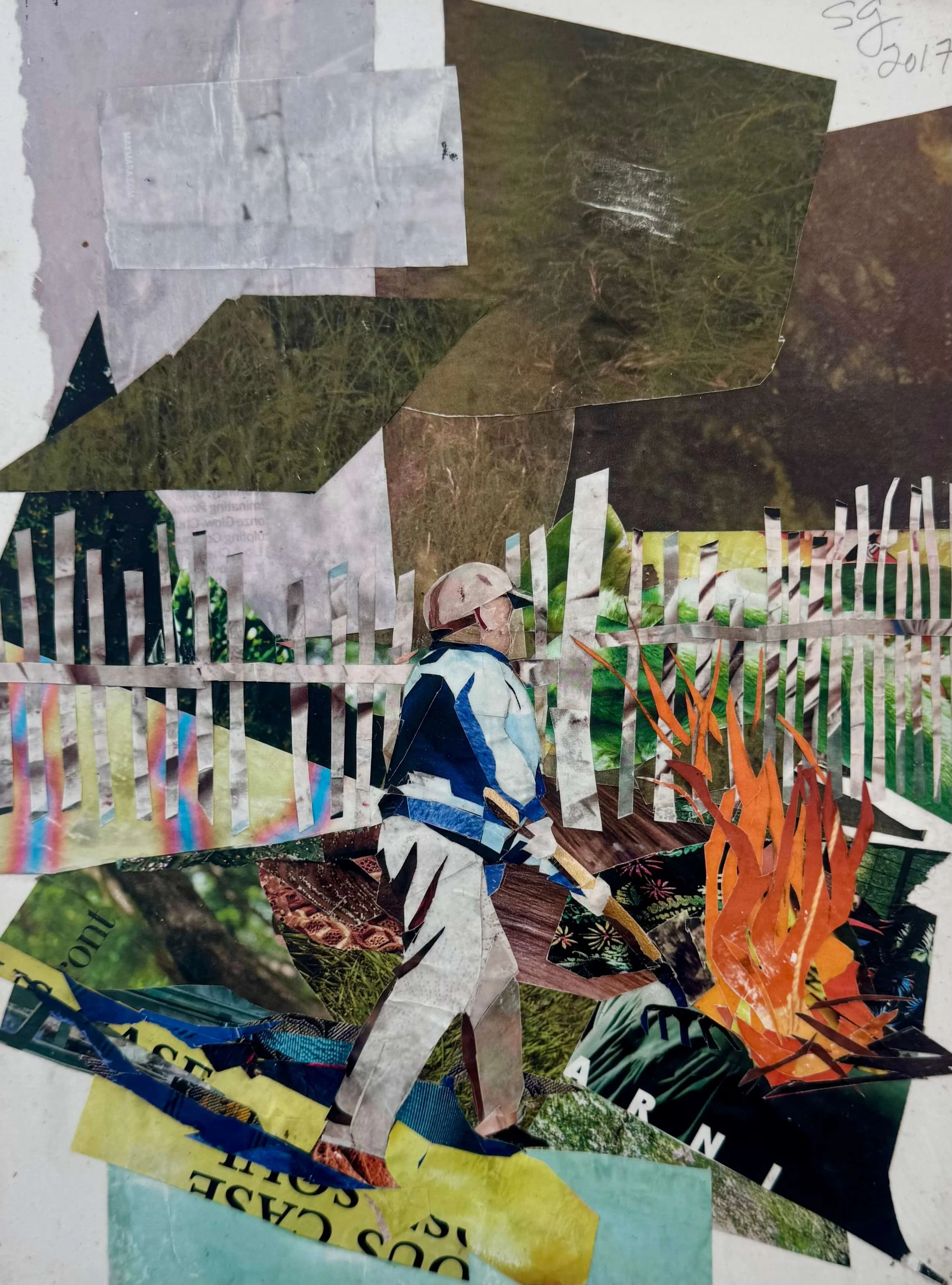
“Burning Man”, is a 12 x 9 inch paper on canvas collage-painting. In this piece, a man is working near a burning pile of dead flora.The fence and the background have a playful quality. The man’s face and the fence post almost blend together, with some of the pickets transitioning from grey and white to muted blue, yellow, orange, and red. In the background a possible structure stands beside an open field or an elevated landscape or possibly a mountain. The open nature of the background contrasts with the very detailed central figure – a man wearing gloves and holding the wooden handle of his tool. He is leaning forward, or at least, moving in a back and forth direction. His front leg is planted protecting him from getting too close to the fire, as he adds fuel to it with his rake. His back foot is partially lifted giving him power and flexibility to move – even the creases in his pants are visible. This last detail captures Gill’s understanding that what might seem to be a minor feature (textile folds) can animate the picture conveying a profound sense of realism and hence, believability in the image.
Gill’s exhibition repeatedly shows her ability to create scenes of life that are full of life. She creates detailed and beautiful scenes from fragments of printed material, transforming randomness into something intentional, something seemingly unrelated into something connected.
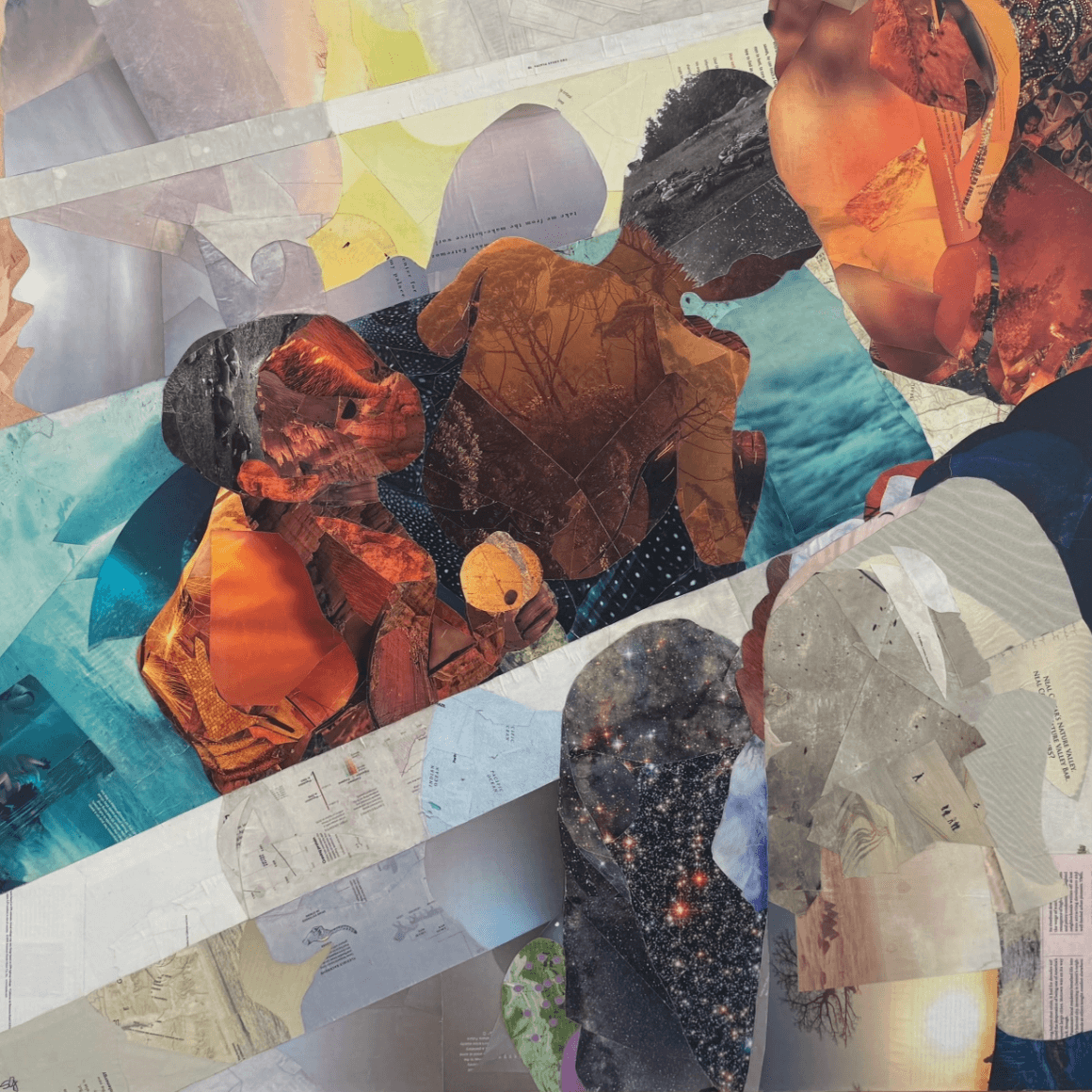
“Minor Miracles, 36 x 36, collage on canvas shows two young children taking a bath while an adult watches over them. One of the children gently and trustingly looks up at the man. In this small image alone, the idea of paper as paint becomes obvious – creating the sweet look of a child is possible here because Gill turns pieces of paper into paint. The other child, probably a year or two older, sits in front looking down toward the water. His shadow appears on the wall beside him. His back is created from images of trees and nature. The details continue, the man in this scene is wearing a vest or sleeveless sweater and a white shirt, his leg is bent at the knee and is partly created from an image of the cosmos, and even the color of his sock is identifiable. There is much left unsaid as well. Gill leaves ample space for imagination and wonder. The wall beside the boys is yellow, purple and grey. It has text and lines and undefined shapes. What it represents is up to the viewer. It could be the future coming into better focus or still determine what it will hold. Or it could simply be a contemporary design on the bathroom wall.
Looking closely at this piece, one detail stands out. For the young boys’ heads, Gill used paper with, what appears to be, intense photographic images depicting the aftermath of the Civil War battle of Antietam or Gettysburg. Images showing bodies strewn on a battlefield is certainly a commentary, but deciphering what is being said is elusive. Could it represent general trauma from the past, whether generational or individual? Is it about the sacrifices that have been made for these young boys to be in their specific moment? Or is it simply to present the darker color of these boys’ heads? At a minimum, it spurs curiosity and a desire to learn more. Using paper as paint can seem to add limitations or challenges that an oil or water based paint will not have. However, this image used by Gill to create these young boys’ heads, reveals a very unique and powerful quality of paper paint. Alternative messages or meanings can be conveyed, not just from the forms created but from whatever image exists on the paper, even in its new fragmentary state.
A visit to Transmission Gallery this week will be more than worth it. Each piece is a scene and within each scene, an unknowable number of details reveal themselves. Gill has put together an impressive body of work, each inviting further exploration into what the essential details are to make something recognizable and in that process of inquiry, she raises questions about how we construct our reality.