
Sometimes a Great Notion, Calder // O’Keefe, Hauser & Wirth
Often, an encounter between two people can pass nearly unnoticed, so fleeting it may not even be recorded as forgotten. Sometimes, in company of friends or colleagues, two people meet and sparks fly. Common experiences and passions ignite relationships that ring clear and true. Then again, occasionally, there are meetings of individuals who sense underlying affinities that hold a mysterious recognition of essence.
How a friendship between Georgia O’Keefe and Alexander Calder, two artists of divergent life paths, blossomed and flourished calls for reflective consideration.
In a newly opened gallery space in Palo Alto, the current Hauser & Wirth exhibition points to parallel deployment of formal elements and an abstracted language of landscape and nature.
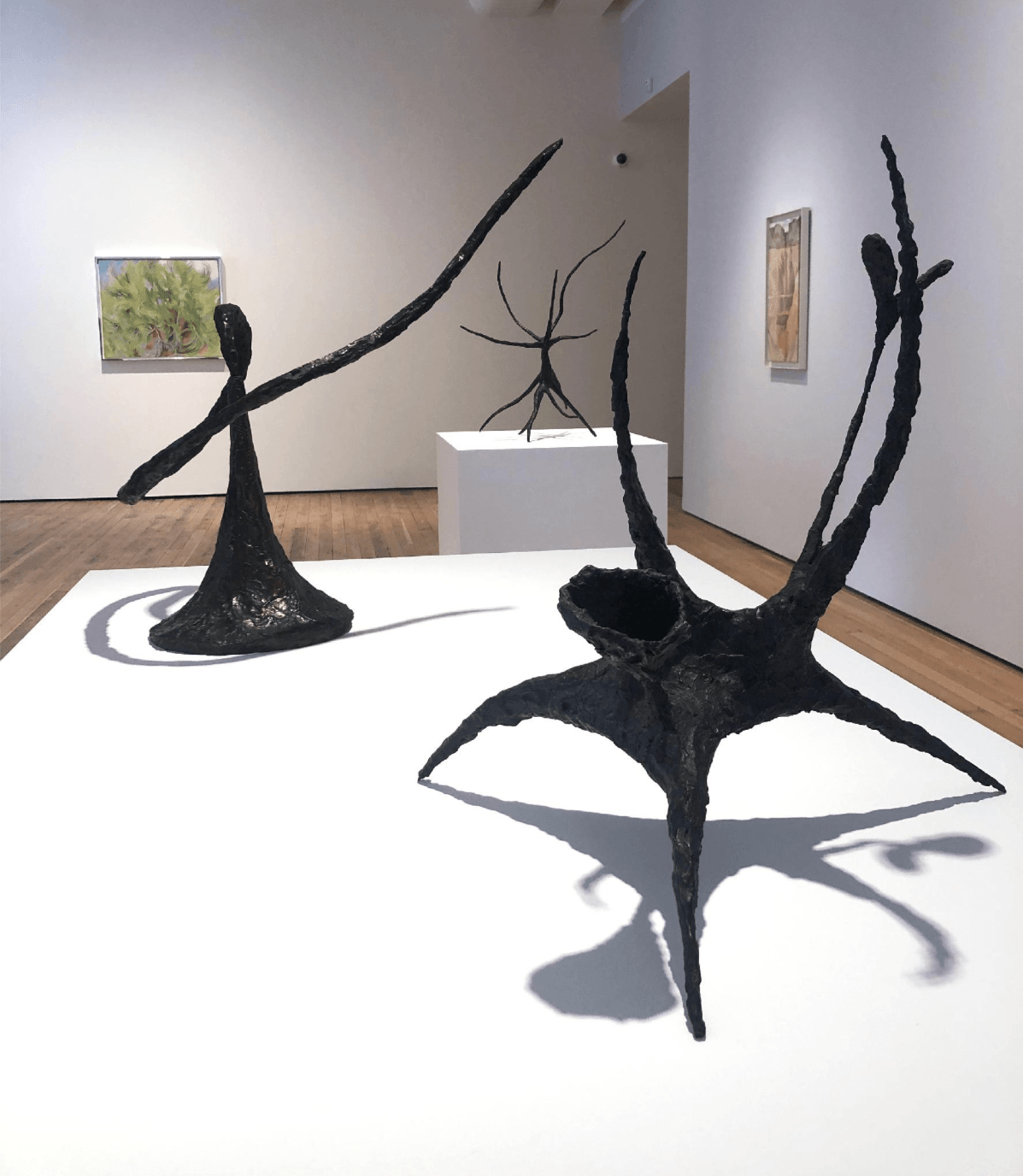
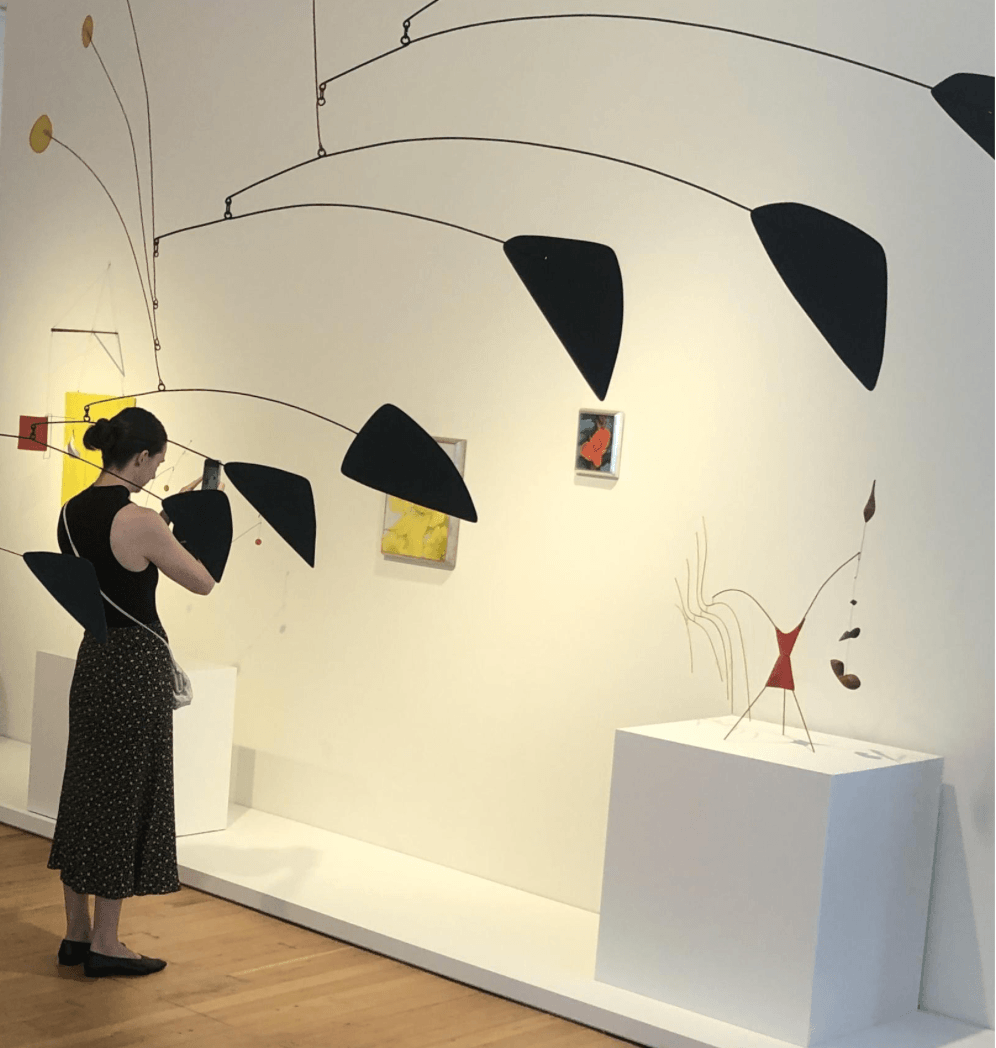
Installation View: Calder | O’Keefe at Hauser & Wirth, Palo Alto
O’Keefe relinquished the relentless intensity of New York City for the quietude and serenity of New Mexico. Her renderings remained two dimensional, her paint applied as smooth and thin as skin. Calder moved east and west, crossed oceans and seas, crossed languages and cultures. His arena was four dimensional from the drawn to the built to movement through time.
And yet --
Georgia O’Keefe painted buildings that reached to scrape the sky. She painted mountains to expand across horizons and cradle the sky. She painted flowers to exude the fresh breath of sky.
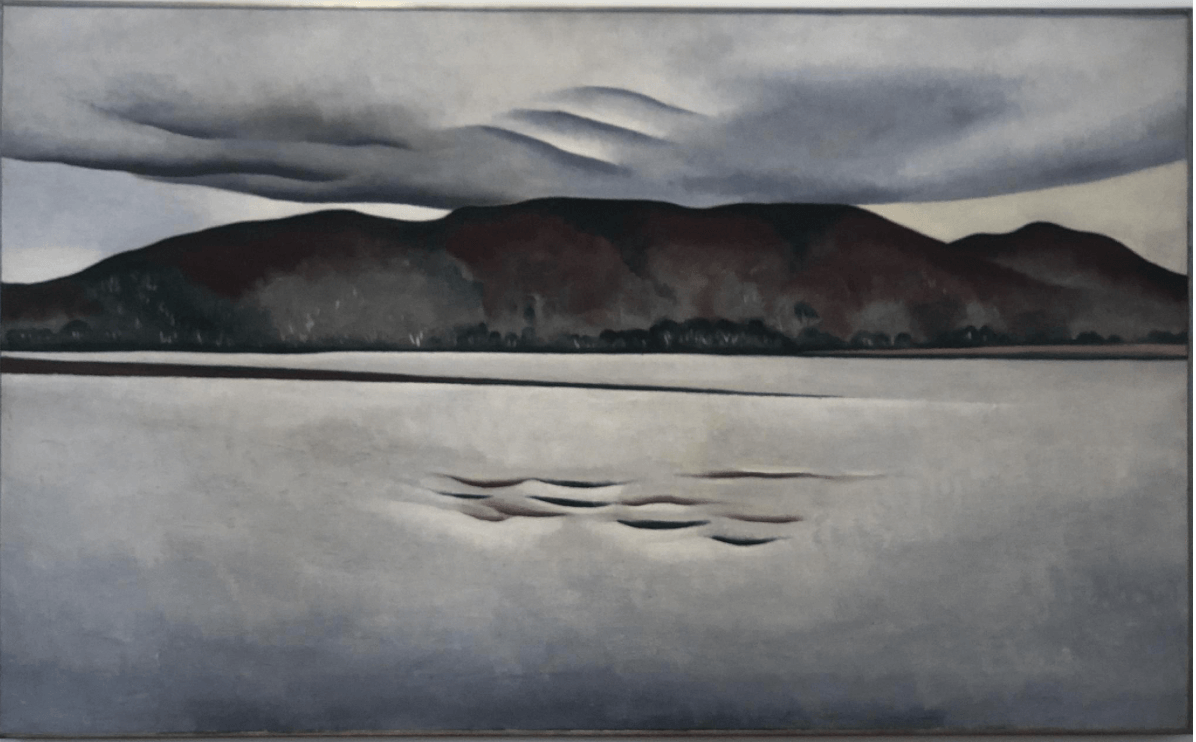
Georgia O’Keefe Grey Lake George 1925
Alexander Calder drew through space. He made etherial sculptures that flew through space. He made sculptures that, planted to the ground, reached to grab through space.
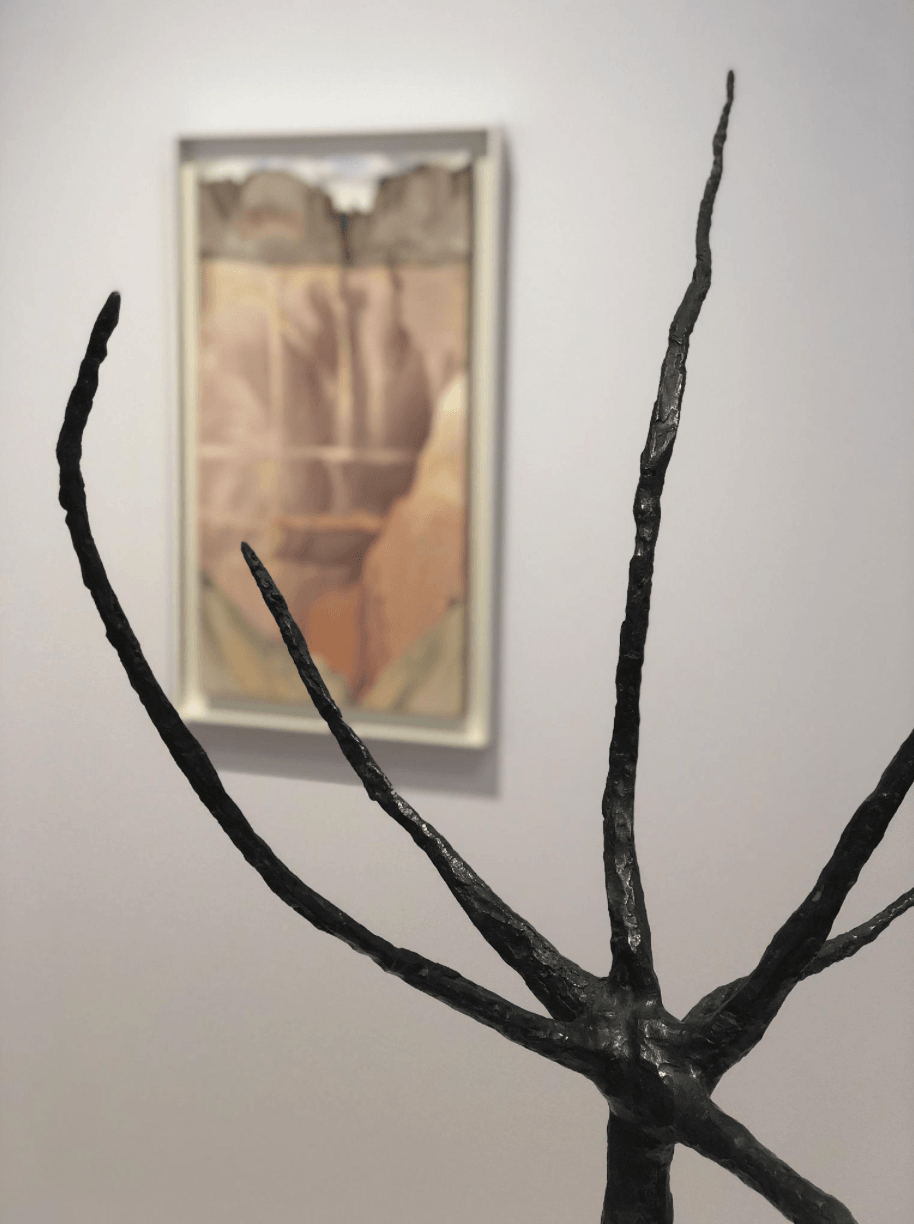
Foreground: Alexander Calder Snag 1944 (Detail)
Background: Georgia O’Keefe Waterfall 1944
The shared sensibilities of artists who see the space in which life passes through, and then rests –this shared vision of the unseen —felt and understood— this can form a bond of deep connection. It can engender a friendship grounded on mutual recognition.
Rooted in nature, in organic forms, the shape of things may be the most immediate element to grasp in the pairings of the works of Calder and O’Keefe. Calder’s suspended biomorphic shapes can echo surrealist vocabularies in striking graphic black or, even, drenched in primary color. Rib-shaped elements can line up to recall skeletons or roots or flower. Just so, O’Keefe can present a similar abstracted shape as a repeated element rendering mountain formations. The curving, voluptuous beauty of shape pulsates across the canvas and envelops the viewer.
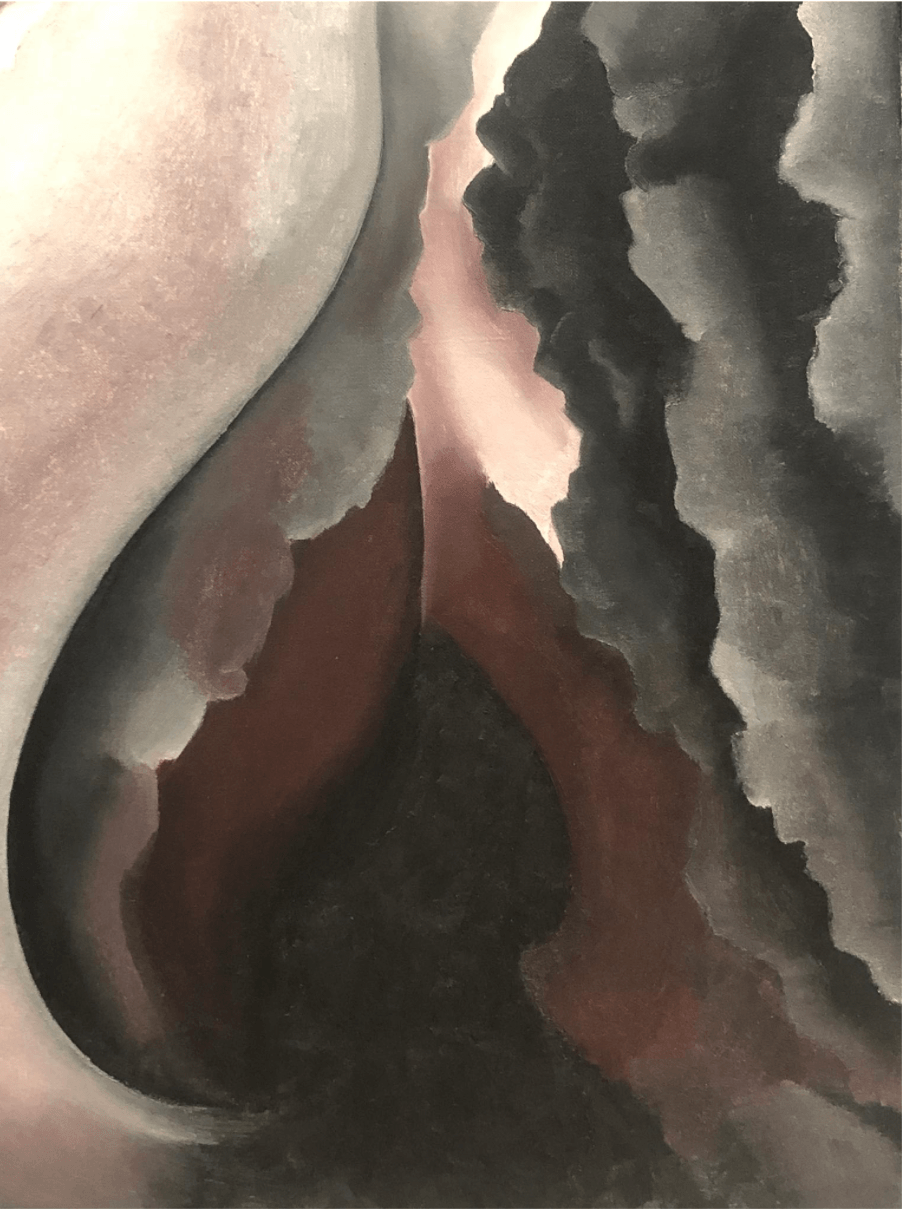
Georgia O’Keefe Dark Iris #2 1927
The voluptuousness of painted flowers extending to the edges of a canvas, as in O’Keefe’s Dark Iris #2 (1937) or Jonquils #2 (1936), is mirrored in the energy of Calder sculpture bursting with a radiating reach.
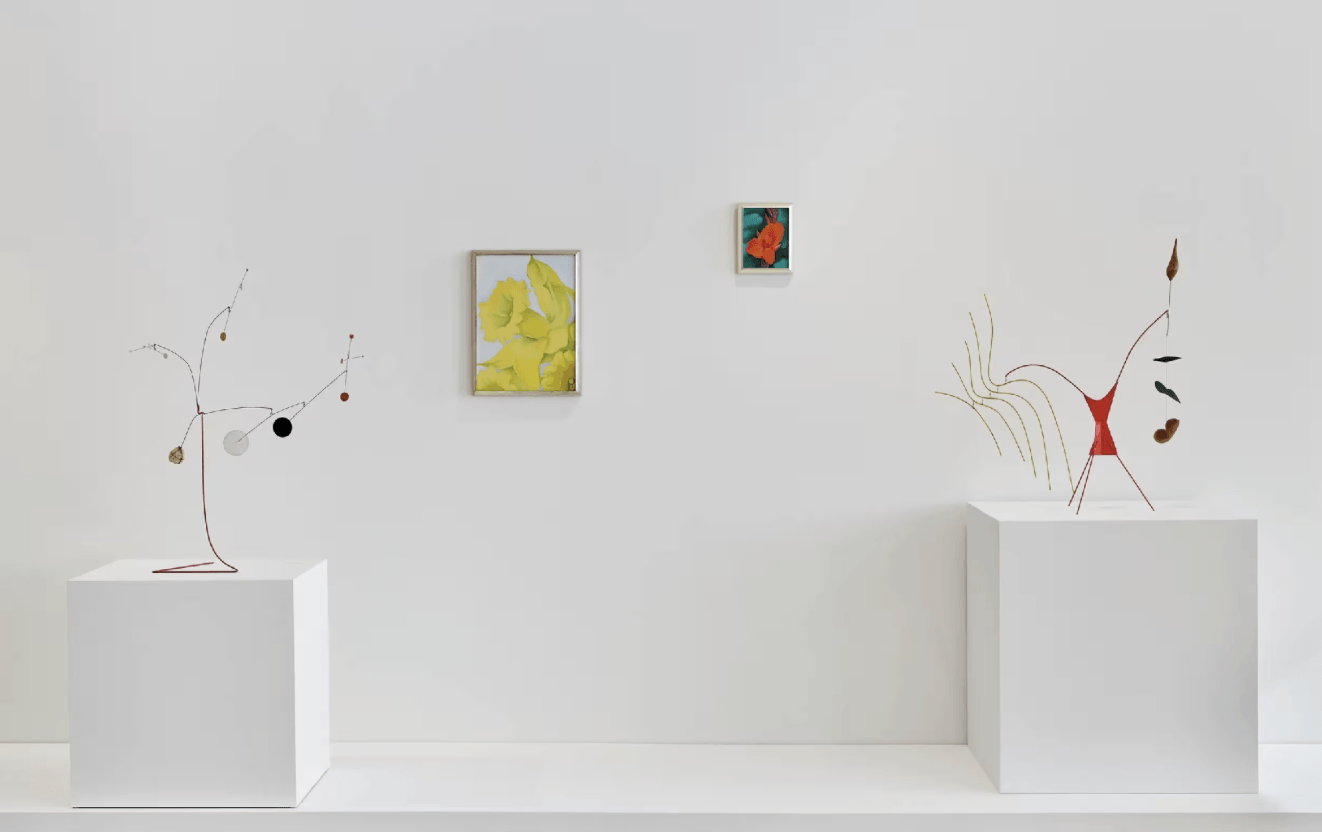
Installation: Alexander Calder Untitled 1941, Georgia O’Keefe Jonquils #2 1936 and Red Canna 1919
Calder, in bronze, asserts associations in works from 1944 such as The Flower and Whip Snake. The found object, the encounter with nature, the witnessing of the effects of time –all imbue the work of these two artists who find different paths of expression yet retain a shared empathy.
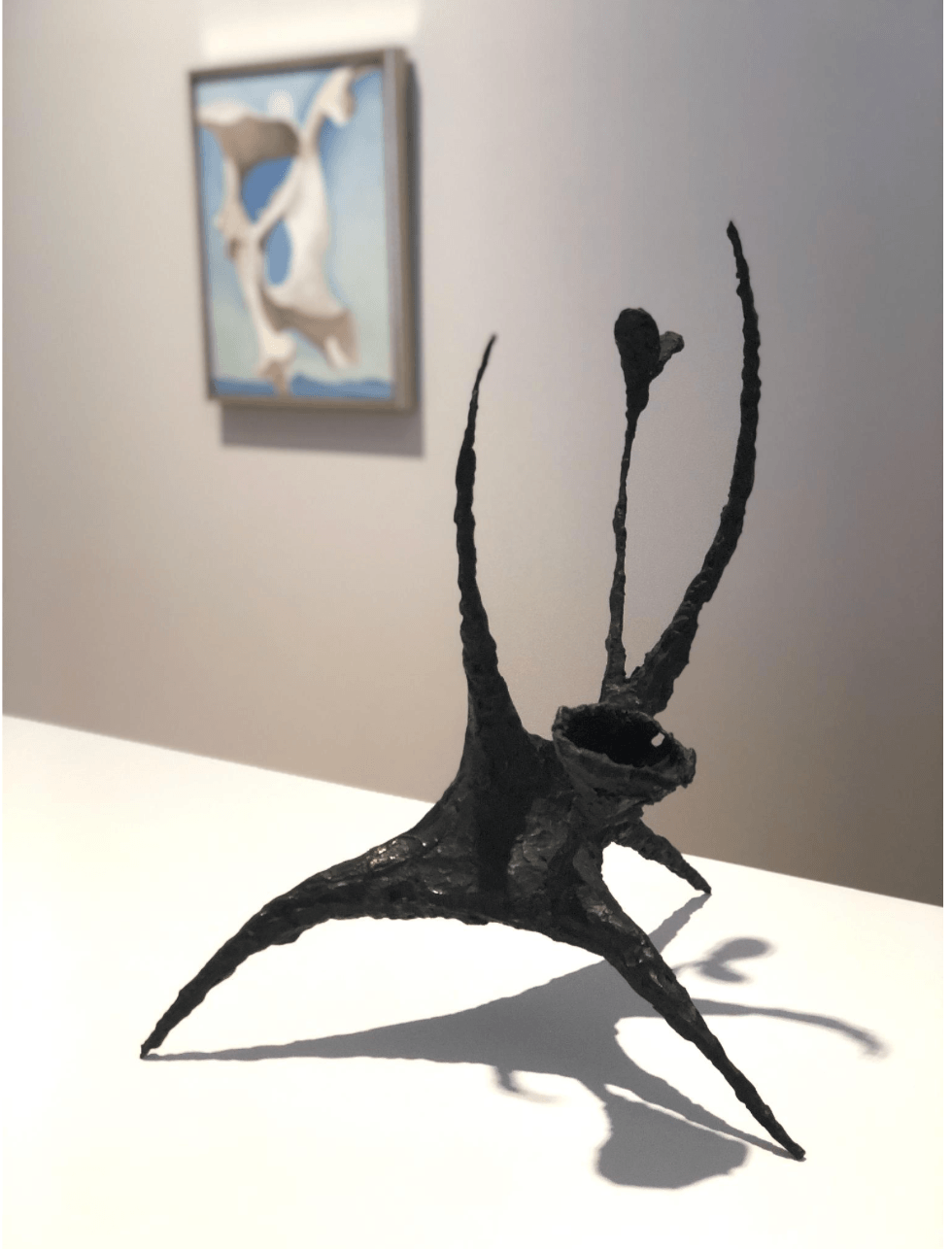
Alexander Calder The Flower 1944
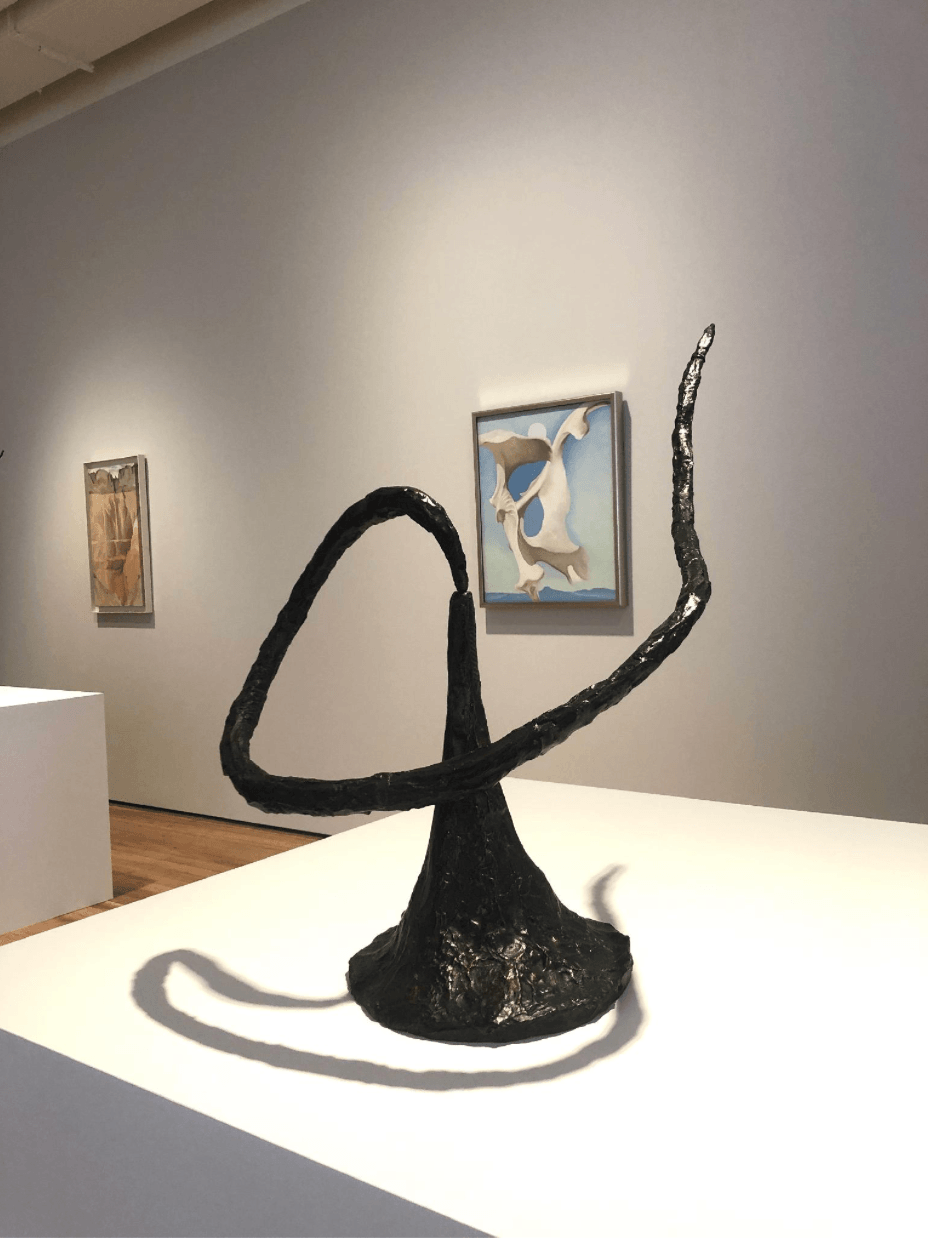
Alexander Calder Whip Snake 1944
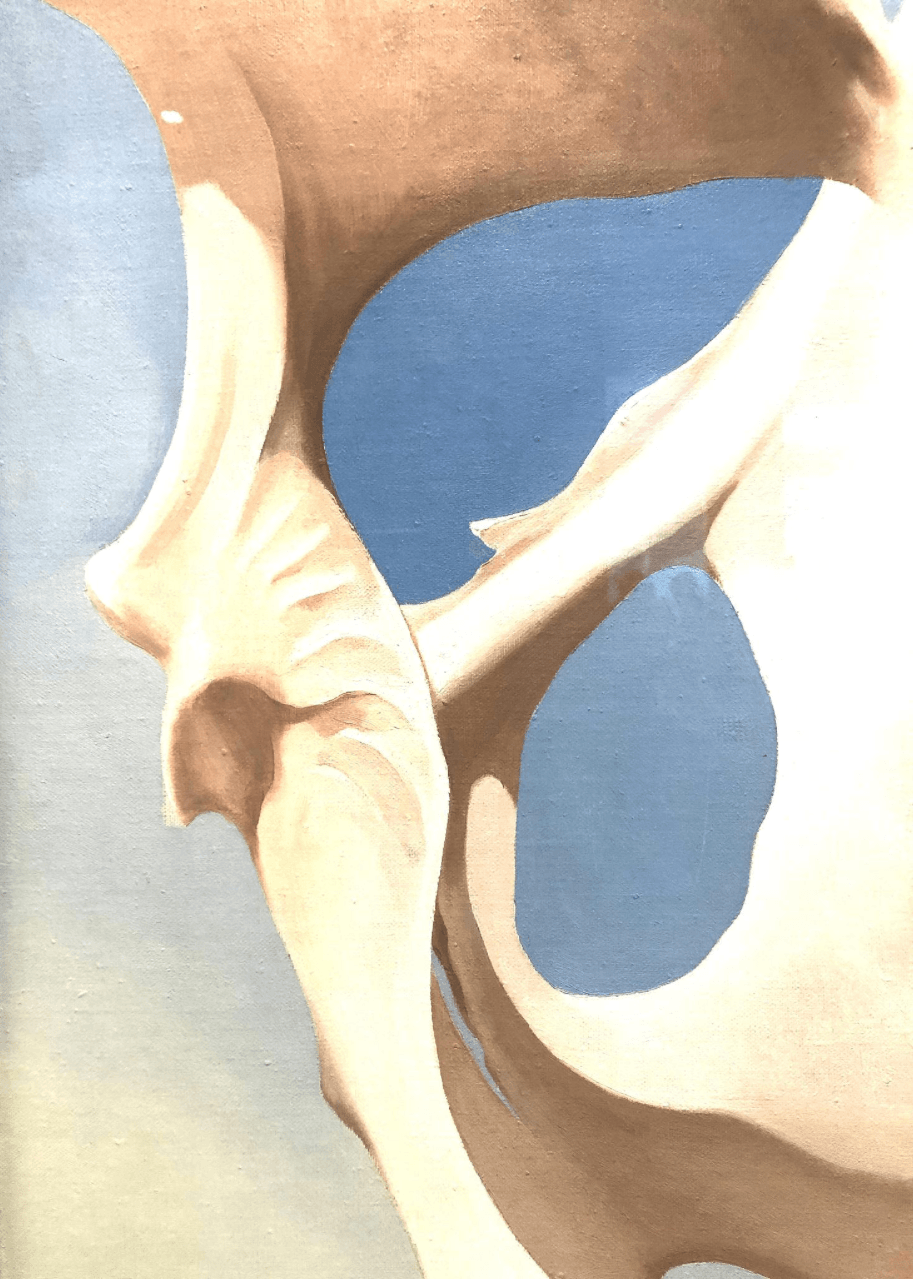
Georgia O’Keefe Detail: Pelvis with the Moon – New Mexico 1945
It is in the space-between that these artists are united. This forms a unifying element: in the unseen of a pelvis bone open to speak of life and death; in the unseen space between moving objects shifting their relationship. It is the air that blows smooth the skeleton, the stone, the mountain. It is the air that propels, reconfigures and animates, that draws the ever-changing shadows.
Two artists, thousands of miles apart, wander through landscapes. In the east the odd stick or stone or feather catch the eye. Birds or scurrying squirrels call and rustle marking the air. In the southwestern desert the quiet of day holds skeletons and snake skins and flowers. As the sun sets the cooling night brings an orchestra of insects and birds and winds. The artists’ hands scoops up fragments. They collect and treasure, model or imbed bits and pieces of this material world. The artists’ vision carries it forward, transforms, and renders its essence.
Georgia O’Keefe Feather with Bird’s Bone 1942
There is a supreme constancy in the paintings of Georgia O’Keefe: landscapes of rocks, mountains, and sky that stretch with an even-paced centrality evocative of a secure embrace.
The sculptures of Alexander Calder can stand their ground or glide and dance, or hold a humorous promise of laughter. For each artist the other reflecting a common sensibility, beauty, and a resonating spirit.
Traces: a silver brooch, postcards sent from France, small tokens of sustained warmth – all offering a notion of unique connection.
CALDER | O’KEEFE
October 3, 2026 – January 24, 2027
Hauser & Wirth
201 Hamilton Avenue
Palo Alto