
Ben Davis: The City of Awe
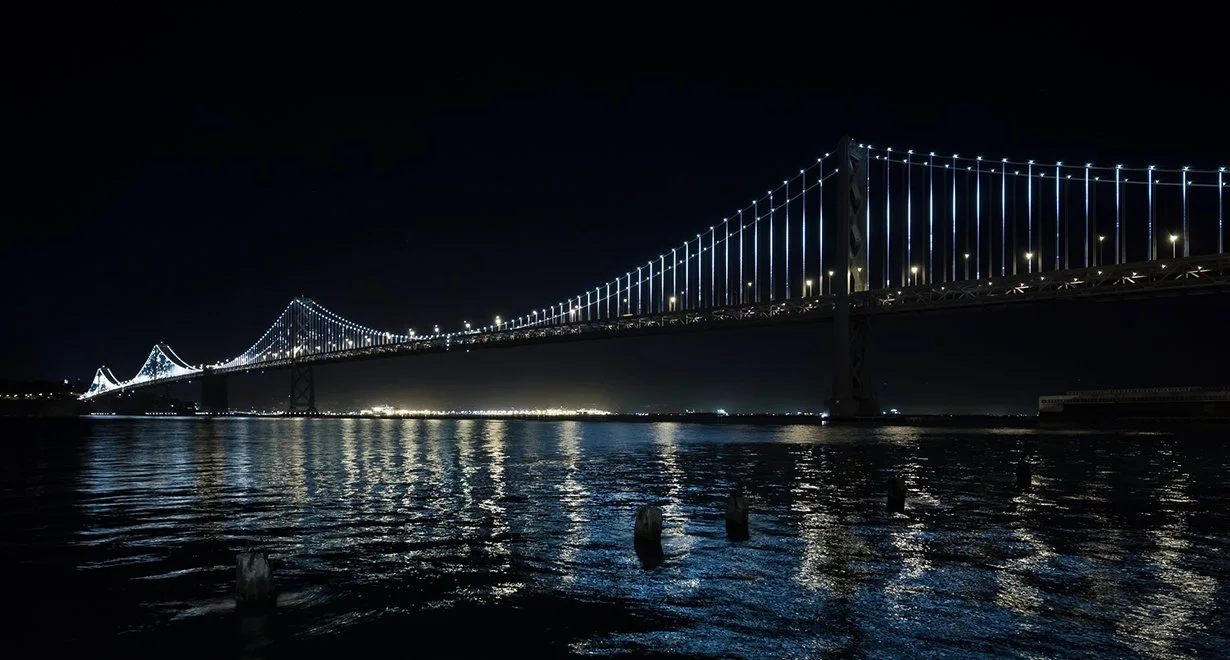
Ben Davis is a San Francisco-based public art visionary, creative producer, and founder of Illuminate, a nonprofit organization dedicated to transforming urban spaces through monumental public artworks. In 2011, Davis envisioned The Bay Lights, an installation by artist Leo Villareal that transformed the San Francisco–Oakland Bay Bridge into an illuminated landmark. Since its debut in 2013, Illuminate has developed ambitious projects including the Golden Mile in Golden Gate Park, the Pink Triangle on Twin Peaks, and large-scale laser installations across the city. Davis also coined the phrase City of Awe, an initiative encouraging San Franciscans to embrace creativity, civic engagement, and collective experiences of wonder. With a background spanning public communications, urban revitalization, and civic projects, Davis approaches public art as a catalyst for community connection and urban transformation. His work seeks to make extraordinary artistic experiences accessible to everyone while reimagining the possibilities of public space.
A Roborant Review interview by Hugh Leeman
The City of Awe
Hugh Leeman: For many people, the last few years in San Francisco have been a story circling around the so-called doom loop. Yet you've invested so much of your practice in the opposite — this optimism of awe. When you walk out your door in San Francisco today, what are you seeing that the doom loop naysayers are missing?
Ben Davis: First of all, light finds its highest purpose in darkness, so I felt extremely motivated during dark times. And what I see — honestly, I feel like I'm living in the most amazing, most important city in the world right now. I've never seen San Francisco look more beautiful. I've never felt its energy be more coherent. I've never seen more people desiring to acknowledge the specialness of this place, the city of awe.
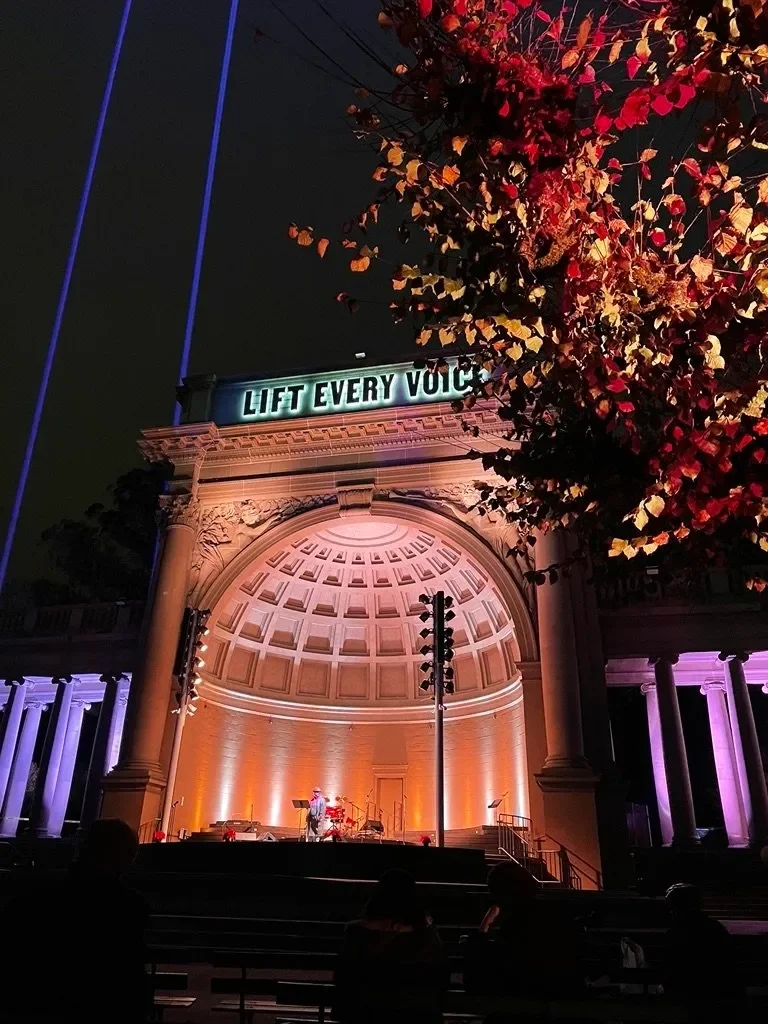
I also have the benefit of seeing the power of cumulative generosity. Just in the stuff that's in my realm, it's all around us. I go down the Golden Mile and see a mile and a half of people joyfully interacting with the space — sitting in yellow chairs, at the band shell enjoying a concert, moving into the evening with the Bay Lights, in Fulton Plaza, or the more ephemeral laser installations we put up. I see the power of humanity and generosity manifesting itself in this place, and I think we're about to explode.
About to Explode
Hugh Leeman: That's a powerful statement — about to explode. Is this in a positive way? Because AI obviously has to be weighing on this conversation and its impact on that idea.
Ben Davis: Let's remove AI as a specific thing and move into the realm of what's happening around us. The frequency of change is moving at a speed that's out of our comprehension right now. No one really knows what the world looks like in ten years, or eight, or four — even three or two. It's a wild moment. And this is why this City of Awe moniker, this open-source moniker for San Francisco, makes sense. It's a declaration of who we are and an aspirational calling to who we must be — because the simplest definition of awe is the coexistence of beauty and terror. And that is my everyday in San Francisco right now.
It's so beautiful. I'm in the Marina; I just had a meeting on Crissy Field underneath the gorgeous Golden Gate, with Alcatraz off in the distance — such a magnificently beautiful place. And yet there's a sense of terror coming from the city too. We're in charge of the arc of human consciousness right now. A lot of the decisions being made here are going to have major impacts no one can even fathom. We live in this really special place that has a confluence of incredible talent and more wealth than anyone has ever imagined in one small place. People think dot-com, but that's Mountain View and Cupertino. This is a bigger wave of investment, all in a few zip codes of San Francisco. It's unprecedented, and it's going to be disruptive — it already is — but it also has the potential to be extraordinary. As a human, this is the most incredible time to be alive, as scary as it is.
So I think about creating the shared narrative that we all live in the most important city in the world, and that it's our moral obligation to show the world what civilization looks like when we all choose to live generously together, with an abundance of culture, world-class across the board. Truthfully, I'm freaked out about the world — not just AI, but climate, politics, war, viruses, nuclear war. All the scary indicators are blinking red, with AI pushing the acceleration curve. And the thing is, we're not getting off that ride here in San Francisco. There'll be people who don't want to use it, and great. But to me it's not quite a tool — that's the wrong metaphor anymore. It's part of the creative and cultural tool set for those who want to use it, and we can drive it as much as we put the objectives of humanity in the driver's seat — which is really the expression of culture.
The beautiful thing about creating beauty is there's no reason to do it other than for its own sake, to thrill other humans. There's no economic incentive. The stuff we do has zero corporate sponsorship; we create nothing that requires paid admission. It's all the culture of generosity. I don't know exactly how San Francisco explodes culturally, but I do believe we have the potential to be the Florence of a new Renaissance. Not that we're going to go back and be old-timey — we're going to honor everything, release it, and see what's next.
Hugh Leeman: It's an interesting comparison, Florence and the Renaissance. A lot of what gets missed is that there was a phenomenal amount of crushing, terrible things happening in the fourteenth century, just before — an incredible pathogen killing tons of people, warfare, economic catastrophe for the masses. Maybe some of that is where the rebirth comes from, and where we can pull some optimism. I want to get to you being here in San Francisco of all places. You've dedicated your creative practice to this city for years, yet you've received invitations from Dubai, Singapore — first-class travel, major budgets, huge teams — and you've said no, to go deeper where you live. What have you learned by staying put that you couldn't have learned by scaling out?
Staying Put
Ben Davis: It's a super interesting personal thought exercise to live out. Why not accept those offers? The truth is, they still get me excited when I hear about them — there's a fluttering, like a bird in my chest. But I realize that's the excitement of the ego, and it's not really what I want to be doing. I know I don't want to be the guy making the lights work in a mall in Singapore, no matter the budget. As cool as it would be to work on big things, I don't want to be working for a sheikh or anybody else. I want to stay put and go deep where I live, and see if I can make a difference that actually makes a difference, rather than just express myself in other places.
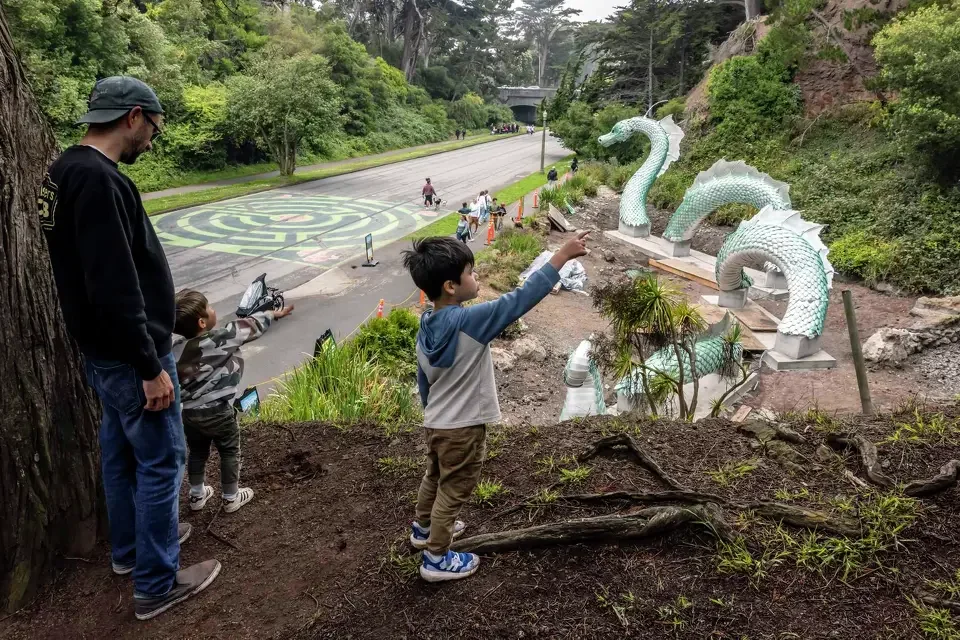
Saying no to everything has a couple of interesting byproducts. One is that you can't replicate the work — you have to do new things all the time. It's been a great joy to look at the range of what Illuminate does: from the Bay Lights, to the revival of the band shell, to the activation of JFK, to putting a sea serpent in a pond that blows bubbles out of its nose — cultivating this new monumental art form and touching so many of the sacred structures of San Francisco, this tertiary architecture we bring new attention to.
But an even better byproduct is the high-trust network we've been able to create, which lets us short-circuit the process — not unfairly, but to get to the decision-making and make sure we're aligned with the broader mission of every organization we touch: vitality, beauty, equity. We've shown that you can take a system designed to say no and work with people inside it to deconstruct and reconstruct it, from a no to a yes, for the things we want to see in the world — faster, with more fluidity, even decalcifying the system as we move through it. And still, we're not easy people to work with. I'm not. I'm friction and grit all the time, trying to smooth the edges of the system, because our mission statement is that Illuminate rallies large groups of people together to create impossible works of public art that draw out humanity's better nature. The word "impossible" was a conscious choice.
Look at the Bay Lights — to put lights on the side of an interstate freeway, five hundred feet above boat traffic and two hundred feet above cars, was an impossibility. It stayed an impossibility until we worked with twenty agencies around a table to find a way to say yes to that beauty. And then everything changes. Now there are nine bridges on the River Thames that the artist Leo Villarreal has taken on. There are bridge-lighting divisions. Everyone has changed what's possible in the world, and I love that we get to be at the seat of that. What drives it is humans — finding ways to bring their best, to bring the culture of generosity. Bureaucrats taking on two more inches of paperwork with no more pay. Technologists leaning into the challenge of how to make the technology work. And a philanthropic community finding resources no one was planning on spending. There's a real magic starting to happen here when we stay in that culture of generosity and manifest transformation.
Hugh Leeman: You're very well known for the bridge-light projects and the laser projects. I want to go back to before any of this started. In a previous conversation, you traced a lot of your early motivation to the south end of Boston — growing up through the first years of school desegregation, which you called a wound around division that you're always trying to heal. Can you talk about how your light installations speak to that wound?
The Wound Around Division
Ben Davis: It's mostly an unconscious operating system, but what antagonizes me most is systemic injustice. I grew up in it — and not just the redlining that's still inherent in the system, but literally the threat of violence every single day in Boston, for me and my friends. Understanding where you could go and not go because of race, this bizarre notion that there's Black and white and all these divisions in the world.
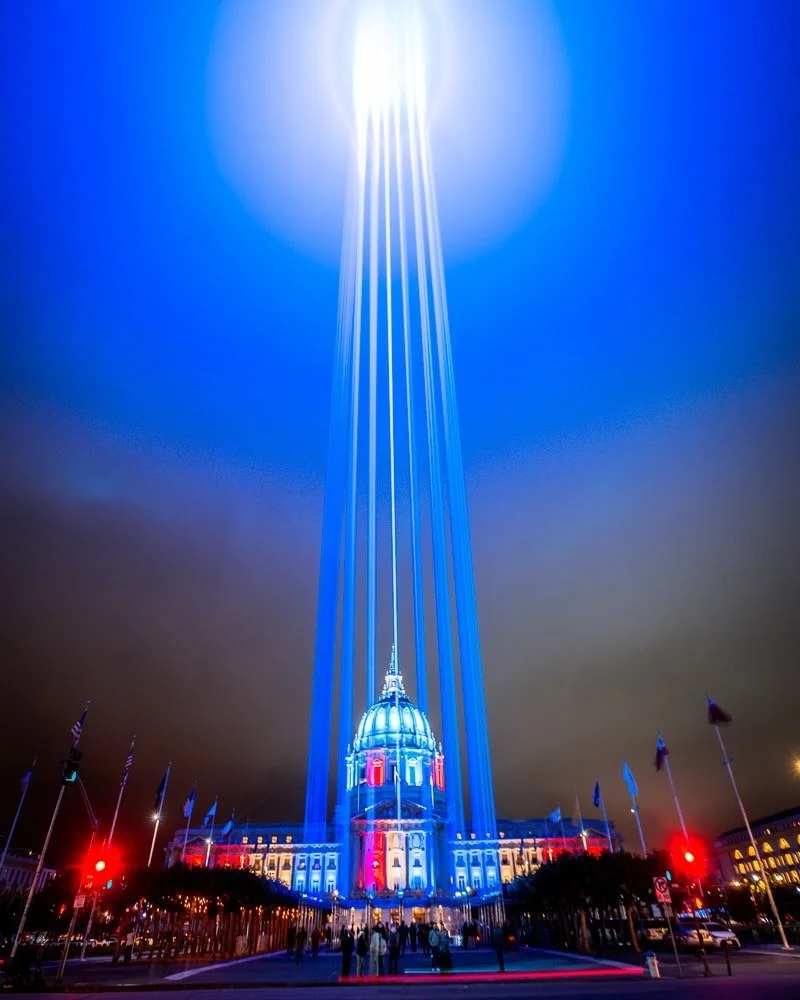
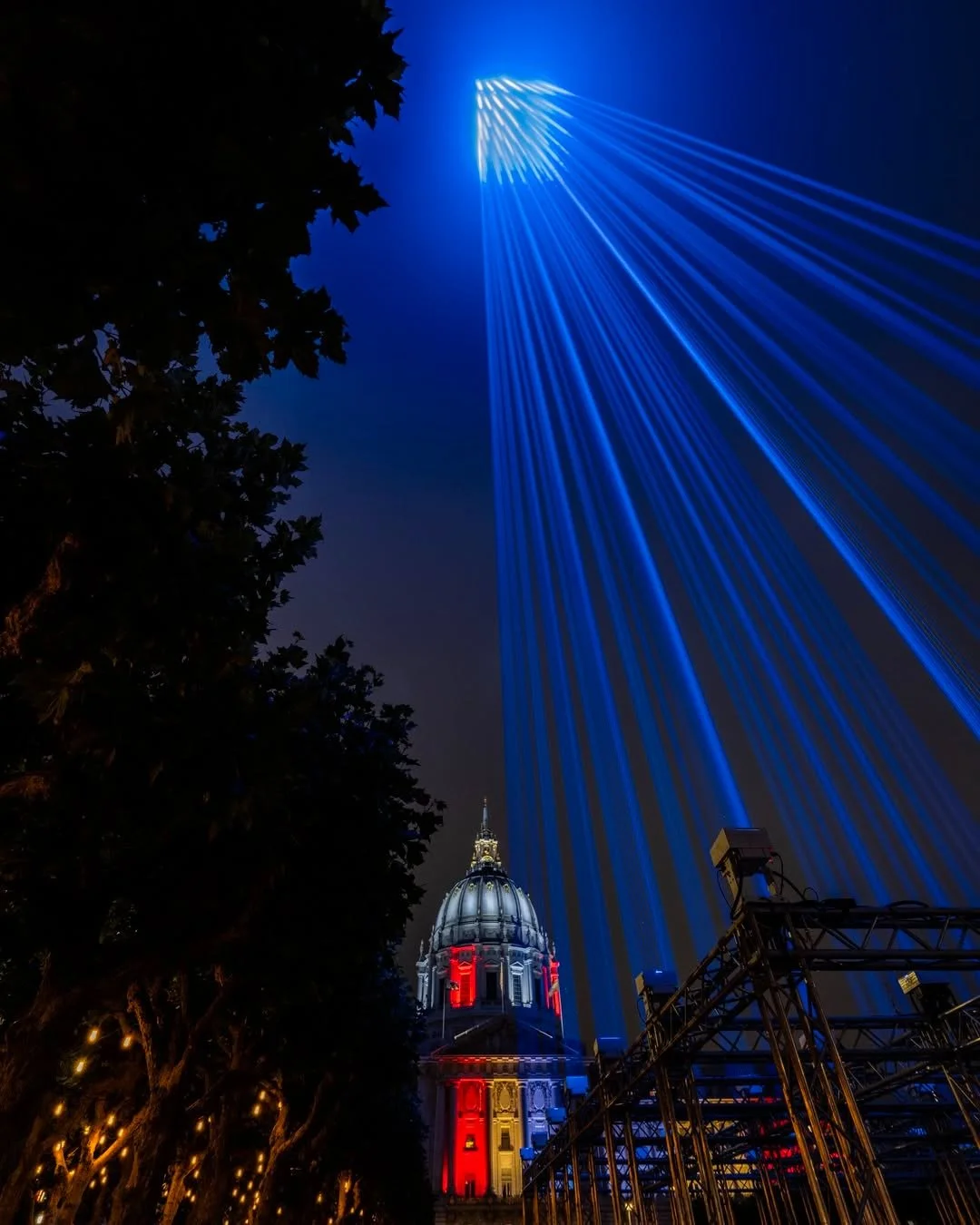
So when I look at projects, Illuminate's ethos is that we create nothing that requires paid admission. Part of that is simply that there's no barrier to entry. One of the nice things about light — and we don't always work in light; Illuminate is really more about illumination of the human soul — is that it's such a powerful medium when you do it the right way. Something like the Bay Lights or the lasers across the sky: you don't need an art degree, you don't need to know anything. You can be one person standing there, and almost unconsciously reach out and want to grab the hand of the person next to you, because you're feeling a sense of beauty and awe. There's an inherent sense that this is a generous gesture — something morally beautiful about it. This took a lot of work; it's a human triumph for something like this to exist. We get to bathe in that together, and it makes no difference how much money you have in your pocket, what language you speak, who you love, who your God is. All that matters is that you're part of this bigger thing than yourself called humanity.
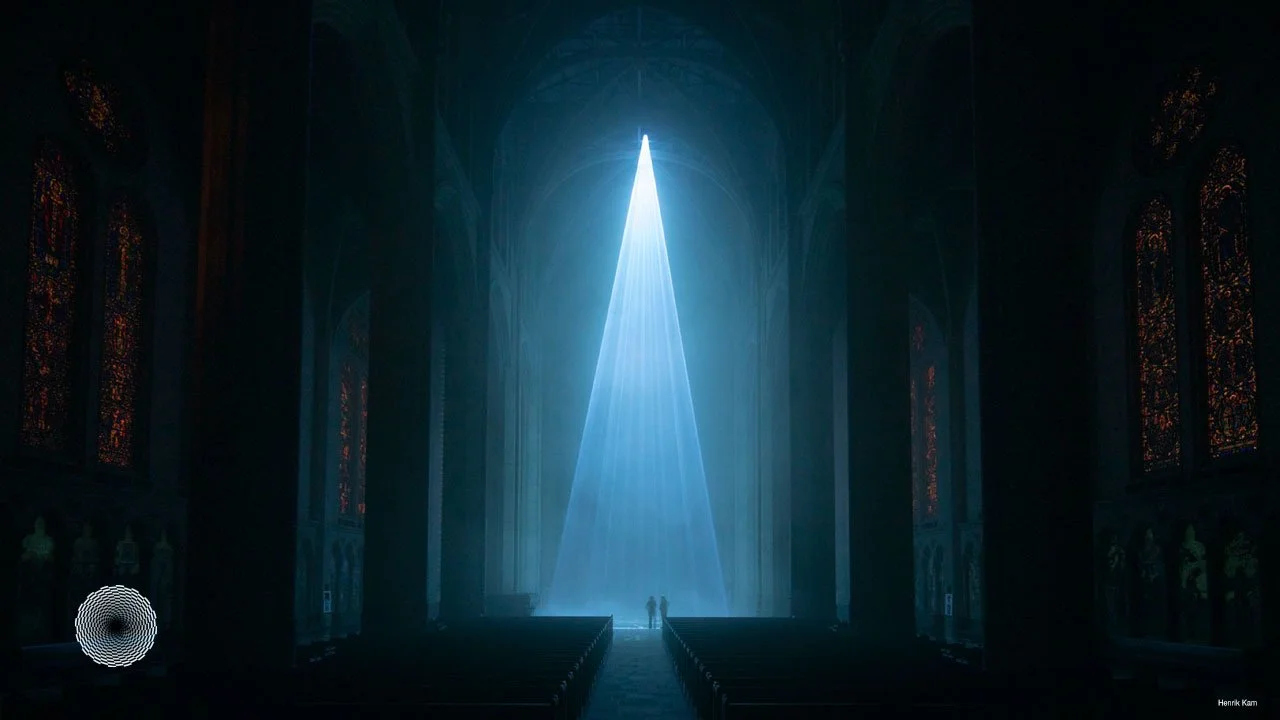
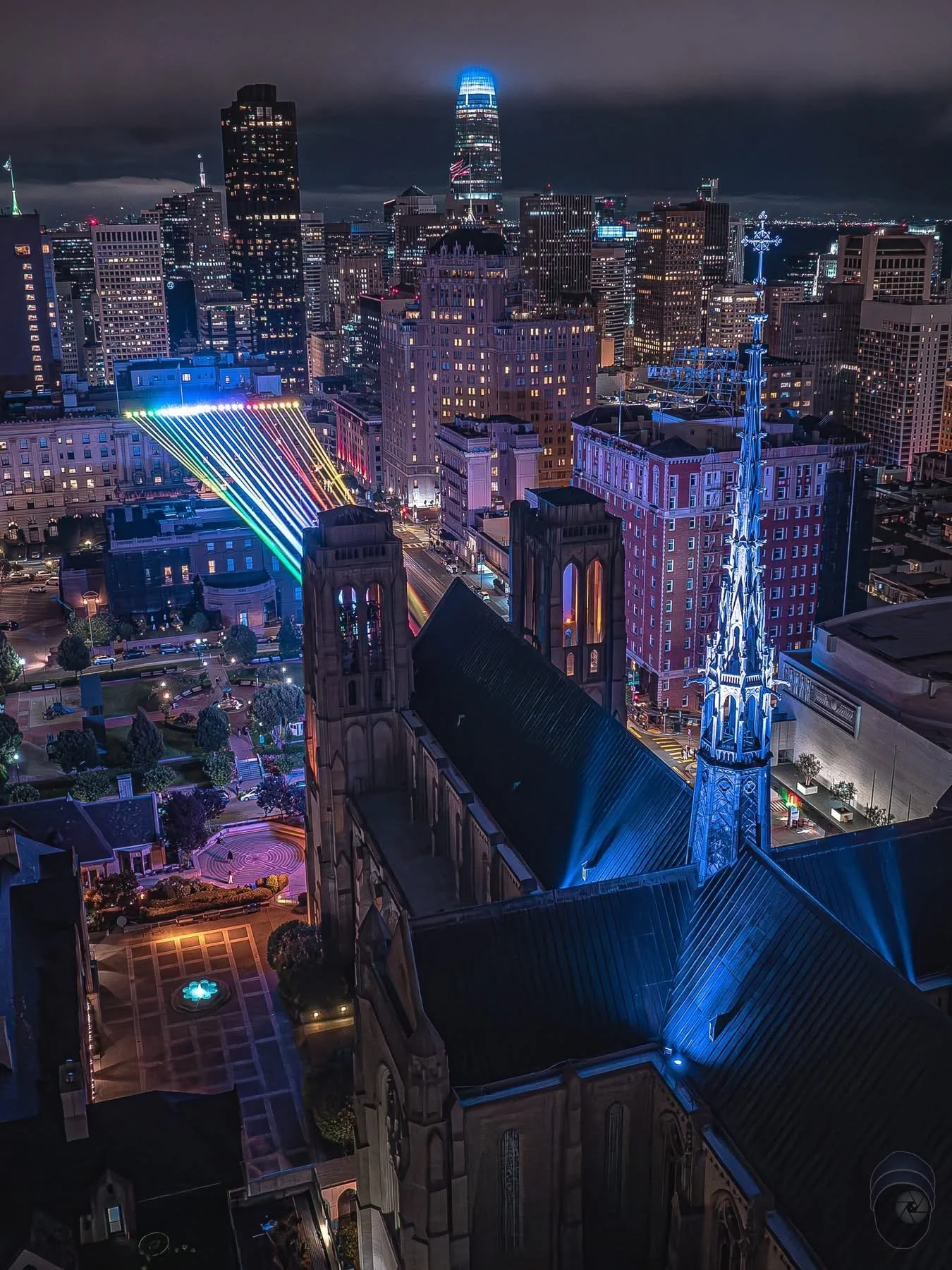
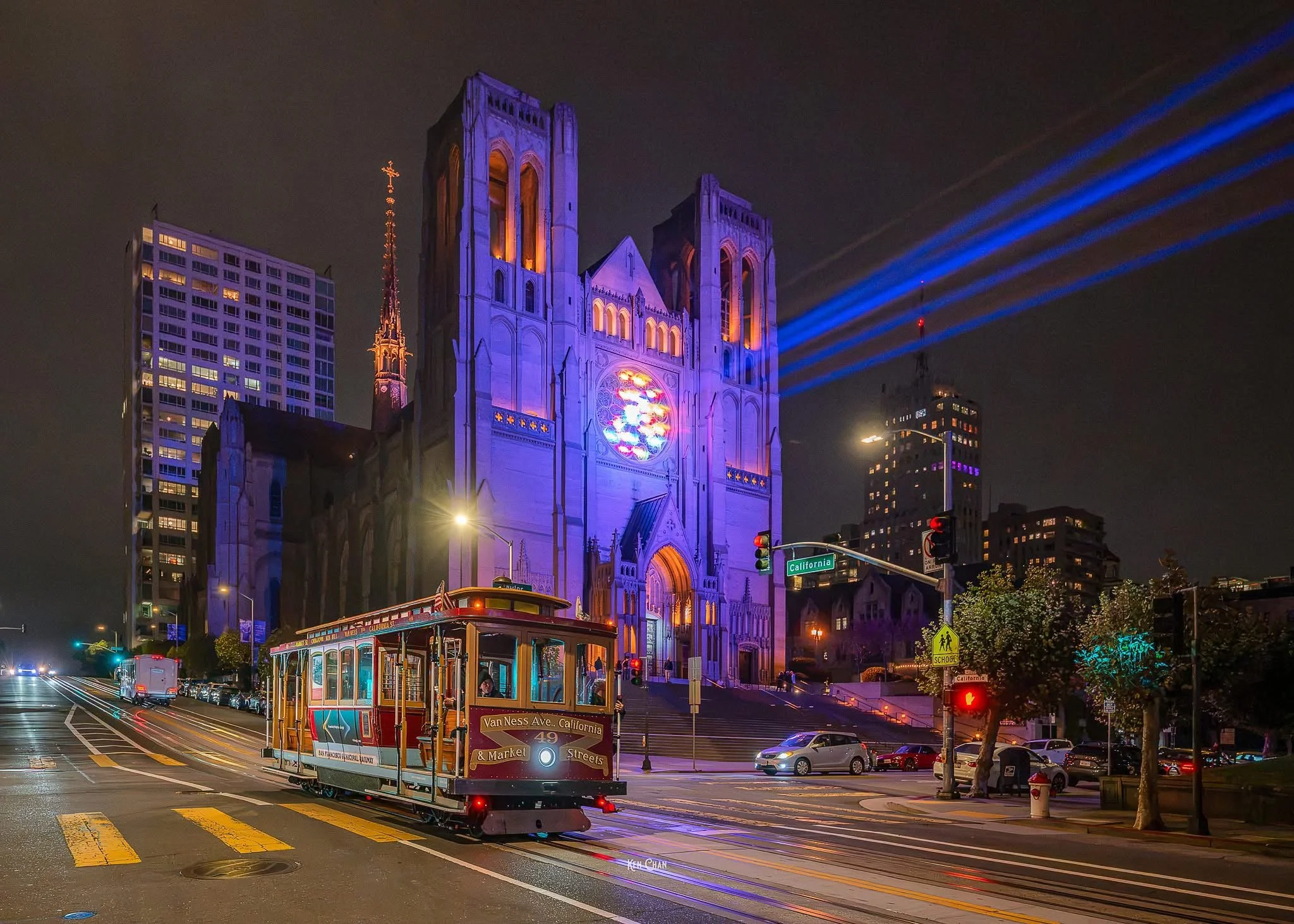
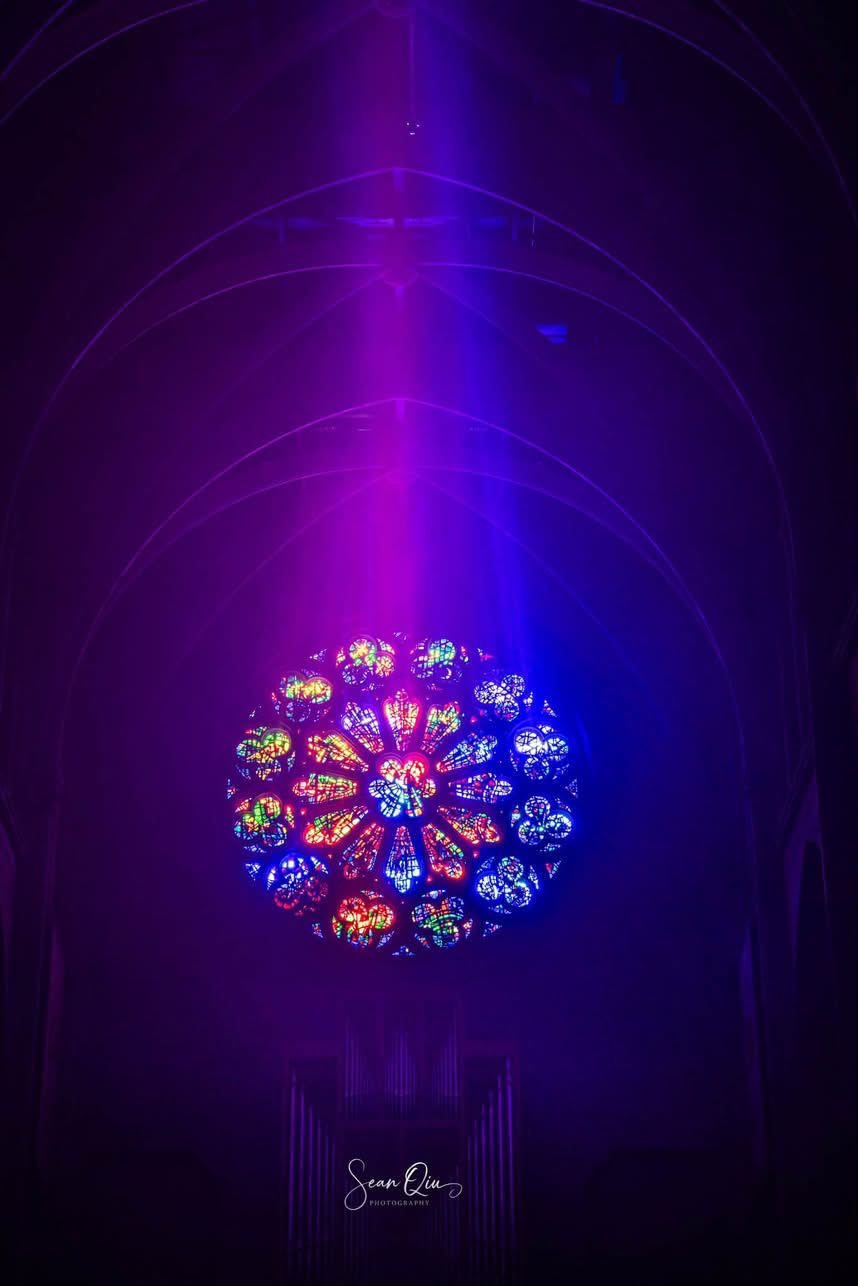
The piece we just did at the cathedral was amazing to witness. We put twenty-five lasers from the roof of the Fairmont, over Huntington Park, into the twenty-five panels of the rose window at Grace Cathedral, opened the doors, and had music inside — twenty hours of improvisational music over five nights. One of the directions I gave the musicians was: timeless sounds, vocalization is fine, but no words. I didn't want people to have the barrier of words — either not knowing what was said, or knowing and being taken away from their own thoughts. When you get that right, there's a sense that a human being from any time and any place in history — whether Florence in the Renaissance or the Amazon jungle — could walk into that cathedral and drop into "wow." This brings me into natural reverence and silence, into a human ethos where we're all quiet together, with a shared focal point of beauty. Those are magical moments that, to me, heal that wound. It's a beautiful privilege and a gift.
Hugh Leeman: In a previous interview we did live for a group, you mentioned that when large public art projects are discussed, they're often framed around how much money they'll generate for downtown businesses or a neighborhood. You turned that on its head and asked how little — close to nothing — a family of four could spend to have an incredible experience together. Our city talks about diversity, equity, and inclusion, but often focuses, perhaps necessarily, on how much money is being generated. You really hit on something there.
A Family of Four, for Nothing
Ben Davis: This is a deeper concept about generosity. There's a beautiful San Franciscan — if he were a plumber I'd fall at his feet, but he's a choreographer — Alonzo King of LINES Ballet. At one point I heard him give a talk, and he said, "All the universe is lines and circles. All of it." Even as I say it now, it cracks my head open. I can look at the world around me and see it as lines and circles. But I also think it's a metaphor: the line is the transactional relationship, the economy of reciprocity. I give you this, you give me that, we shake hands — you get my user list, I get your logo. Versus the circle of generosity: just releasing.
If we have a city where a family of four can have the most amazing day and night of their life, simply because they're here in the city of awe, everything else takes care of itself. If you make the city that magical, the money will come; everything starts to flow again without the need to justify it. I understand why people do the other thing, and they can continue to. But I want to see this whole other part of us break off — beauty for beauty's sake, radically accessible.
I think there's a backlash coming right now in favor of championing civility. For reasons we can all speculate about, civility in civil discourse has gone. If we champion it — if we create family-friendly public spheres full of safety, joy, and beauty — that's an ethos that spills out into all things. That's part of what it means to be a civilization right now, and San Francisco has the ability, maybe even the moral obligation, to show the world how, through a culture of generosity and care. Love is presence. If you care about the space in the city of awe, the idea that we're all part of something bigger than ourselves means the person planting flowers in front of their house, the person bringing culture out through a podcast, and me putting lasers through the sky are all part of the same energetic field. We support each other; we're rooting for each other's success. That's really tough in the arts, because it's a scarcity mindset for a lot of legitimate reasons, and people are often less generous the closer you get to where you most want generosity. I'm trying to lead by example and see if we can turn the corner — because the most profound form of beauty isn't lasers in the sky. It's people. People, when they can get past their shit, are amazing.
Hugh Leeman: I want to go to that — people when they can get past their shit are amazing. You've spoken about wanting to break the myth of the lone artist and the lone founder, and instead to illuminate the work of everybody, people "working in the sweet spot of their creative genius, generously, toward something bigger than themselves." How do you build a culture where people can sublimate their ego like that?
The Sweet Spot of Creative Genius
Ben Davis: One of the beautiful things about San Francisco is it's a city of under a million people, full of amazing people — even more so now. There's a power of attraction here that's bringing really remarkable, meta-conscious people. They come to find their fortunes, but the fortunate ones find themselves in San Francisco and find a way.
In every conversation with every beautiful human I meet, I pretty much ask three questions. What's your passion — what is it you care about? Then I listen really deeply. I ask what they think is the sweet spot of their creative genius — when are you the greatest thing you can be, doing something so well it makes a difference? And then I ask if they have a fantasy project for San Francisco. The way opportunities are working in front of me now, I feel in touch with the source in a beautiful way. I don't feel like these are my ideas; they show themselves to me because I'm filling myself up the right way and finding ways to engage people in exactly this — everybody working the sweet spot of their creative genius, generously, toward something bigger than themselves. When that happens, the magic spills out. The sum becomes greater than the parts. That's when you reach for the divine, and it extends a hand downward to meet you.
Hugh Leeman: There's an inner dialogue you've had about love and fear. Three months before one of your major projects on the Bay Bridge, before it had even revealed itself to you, you were on Stinson Beach, and you realized almost every decision up to that point in your life had come from a place of fear rather than love. You committed to choosing love whenever you could muster the consciousness to do it. Years on, how has that practice held up — and where do you still catch yourself finding fear as a motivator?
Choosing Love Over Fear
Ben Davis: That's a beautiful, generous question. The reality is I'm in a place now where I feel like I'm in practice almost all the time — and practice just means you keep doing it until it becomes second nature. Of course I still experience fear; I'm always afraid at some level. But I've mustered courage, and courage is just speaking from the heart. The world's been kind to me, truthfully. The more I've leaned into the thing that scared me most, the more the world has opened up with an agency I never thought I'd have access to — meaningful, authentic conversations with so many people, a sense of co-creation produced lovingly with so many talented people. I feel a powerful sense of community and love and connection. I feel in love. I feel in service. Maybe that was the first major step, but I'm doing it all the time, checking myself: Is this the fearful thing? Is this the scarcity mindset? Is this you worrying about you rather than the other? What's the loving choice?
Let me go a little deeper. I had a thought the other day I really like. Someone was saying you can't measure consciousness. But I think all of consciousness might be this: the space you can create between stimulus and response. Something triggers us, and we react — we get mad, we get angry. I typically did, carrying around shame and all kinds of invisible baggage that had me relating to everyone like a threat. But when you shed some of that and create more space, you can notice, "Okay, I'm getting triggered here, but the truth is this person isn't actually doing this." Whether they are or aren't, I have a lot of choices now. What's the loving choice? What's the strong choice? If you can create enough space, you can make a loving choice every single time. And when you do, the world changes around you — your circumstances change, you're speaking from the heart, you're not being defensive.
I also think this is maybe the entirety of what we call free will. All human free will exists between that which comes into us and that which comes out of us, in the space we create to be mindful in that moment. It's a long path to go down before we talk about Illuminate, but I do think this is the primary practice — finding the breath, being at peace with yourself and the world, and then crafting as beautiful a response as you can every single time you deal with other people.
Hugh Leeman: I like that — the space between stimulus and response being consciousness. You had this massive project with the Bay Lights, and it failed, technically. There was an intense stretch working with a lighting conglomerate that was bought and sold a handful of times. The word you landed on in response was humility. What did the failure teach you that a resounding, trouble-free success couldn't have?
Failing Your Way to Success
Ben Davis: This concept of failure and success is interesting. I'm a constant source of failure. You kind of have to fail your way to success — at least for what we're doing, because we're trying something all the time, taking worthy risks. Often it's small: we'll try this, it didn't work, let's try something else. Keep jiggling the knob, keep spinning the dial, keep unlocking the code. The struggle is part of the beauty. No one's ever heroic because they have unlimited resources — you're figuring out how to do something that's really hard, and that's where the creativity pours in.
To watch the Bay Lights go through multiple rounds of what I wouldn't call failure, but the reality of doing something really hard — we're trying to put complicated, sophisticated electronics on the side of a bridge that vibrates twenty-four-seven, expands and contracts by more than a foot on warm days, gets lightning strikes, high winds, salty air, heavy rain, grit and grime from cars. About the most perverse environment you could create for an electronic installation meant to last. The multinational conglomerate wasn't a helpful player in that, and I'm glad we're now working with Musco — an amazing American, family-owned firm, full of integrity, who care about the project. They've been transformational, because humans always matter. But it was that struggle — the need to take it down, bring it back, even do it again — that solidified both the perseverance and the belief in the project.
I like projects to be temporary. I'd rather have people fight to keep something than fight to get rid of it. You never know if something will be a success, especially a bold thing that's never been done before. The sea serpent in the pond — I think we had a one-year permit; it'll get extended, because it's beautiful. "Lift Every Voice," the words on top of the band shell — Historic Preservation fought me tooth and nail, they didn't want them up there, and they made sure my permit said they had to come down in two years. I didn't lift a finger, and it's been extended for five, and it'll be extended again. It's amazing: when you do something that feels like it should have always been there, the world opens up and creates new possibilities, just from the sheer beauty. So — failure. If someone's not mad at me every single day, I'm probably not doing my job.
Hugh Leeman: [laughs] To that idea of someone being mad at you every day — you've had an expansive series of projects on Highway 1, at the edge of San Francisco between the city and Ocean Beach. Some people are very supportive, some very against. How are you navigating challenges that are not just social, but bureaucratic and even political now?
Transcending the Politics
Ben Davis: I try to transcend the politics. With the Golden Mile in Golden Gate Park — I was outraged. Dede Wilsey does a lot of great things in this city, and I take nothing away from her, but in her mind it was a good use of her resources to spend her wealth to bring cars back onto the JFK promenade. I raised my daughter in this city, and I would have killed for such a space, to have her safely ride her bike. To see someone with all these resources, who can take her cars out to the countryside, take that away from people — it infuriated me, filled me with rage. But that's not going to do me much good.
So I got permission from Rec and Park — not to tell anyone how to vote, but over the course of ten weeks, to show people what they had. The tool wasn't to express our outrage; it was to express such love that the power of attraction would pull people in. And it worked. What was supposed to be a close election turned into a landslide, because literally thousands more San Franciscans, through word of mouth over ten weeks, came out to the JFK Promenade and saw what we had. It was no longer a road for cars that you were allowed to walk on. It was a place for people first. A simple idea. And I did not tell anyone how to vote — I'm an arts nonprofit.
The bureaucratic stuff is interesting. I look at what I'm able to be part of and think, how do I have the ability to do this? It's crazy-making to move into the maw of the bureaucracy and stay with it long enough to create transformation. But I was a bureaucrat for eight years, so I have bureaucratic empathy. If I hear a "no" that's justified, and you can explain why we're saying no to this beautiful thing, we can talk — I'm good. But if it's a no because that's how it's always been done, or because of a law passed during Prohibition that we're not going to think about, that drives me mad, and I'll push back as hard as I can.
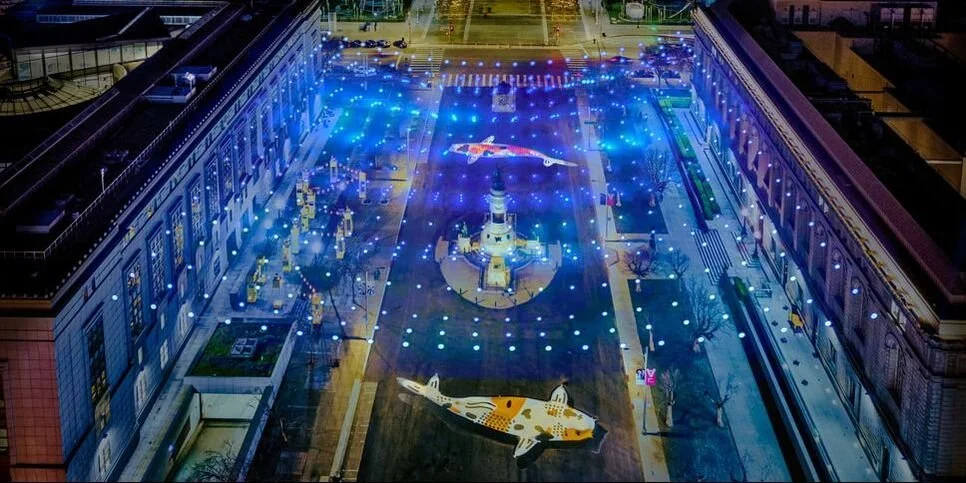
For me, bureaucracies are like people. Some are energetic, lean, full of purpose. Others have lost the point and are floating along — doing what they were supposed to do in 1940, but the world has changed around them. So I read the mission statements of these organizations, I understand what they're trying to do, and when I weave together a solution, it's in their favor if they're willing to look at it, consistent with what they say they want. For four years I was a volunteer community mediator. Every Illuminate project is some Venn diagram of many groups' shared interests finding a sweet spot — the Port of San Francisco, Rec and Park, the Arts Commission, the museums, the bike coalition. What are the projects we can all agree make the city a more generous, beautiful place? The activation of Fulton Plaza, that weird little place on our Civic Commons undergoing a transformation. All of Market Street. Things are going to happen here in the next few years. I think Market Street might finally turn the corner.
Hugh Leeman: A moment ago you mentioned the word "rage" — a word our society of filtering and facades rarely says out loud. But you've noted that the honest answer to what motivates you is rage: that you don't get out of bed unless you're pissed off about something, and the practice is holding that rage until you can find a loving expression for it. How do you perform that alchemy — converting rage into beauty — without losing the fire along the way?
Rage, and Its Loving Expression
Ben Davis: The teenage, rageful reaction is easy and immediate, but it's just going to create more rage and chaos around me. It does the opposite of what I want, which is for the situation to be different, not more of the same. So it's like the space between stimulus and response, except I give myself as much time as I need for the loving response to come. With Golden Gate Park, the rage filled me, but the response — down to every artist who put things out there — was to be as loving, and create as much beauty, as we possibly could. We all have political perspectives, and there's every right to express them. But if you really want to win hearts and minds and overcome the force trying to disrupt this, love is the answer.
I can take you through every Illuminate project and show you the loving response in each. The Bay Lights began partly enthralled by the beauty of Burning Man, but also with a question: six months of a city's creative and cultural resources going out to a gated community six hours away in the desert to create a great experience, and then leave no trace. Beautiful — but can't we do this where we live, and let it last longer, and let more people enjoy it? The loving response to that was ultimately the Bay Lights. Imagine if we could do 1.8 miles across the sky, here where we live, and let it be there for everybody.
I often ask, am I an artist, or this, or that? I like to shed those titles and let them land lightly. But where I am now, I do catch visions, and I don't think they're mine — I think I'm an instrument. "Visionary" is an interesting title; it's actually my title at Illuminate, Chief Visionary Officer, and I say it with a lot of humility, because it feels outrageous to say about oneself. But the visions are flowing fluidly now, and I see such possibility, and it's manifesting. There's a bigger moment coming — I can feel it, we all feel it. Everyone here says, "I was called here, maybe for a different reason, but I'm here for a reason, and I want to be part of this." There's a shared energetic field we're all moving into, and it's going to be gorgeous. It's going to be chaotic too — everything all at once. There'll be winners and losers, as there always are in an urban environment. What I love about San Francisco is that winner and loser can flip in a minute if the earth shakes. You never know what's going to happen here.
Hugh Leeman: I want to go to that idea of the visionary. You've created incredible laser projects throughout the city, and you've gone as far as naming the fog — Carl the Fog — as a real artist of this, because the beams don't become anything to our eyes until they hit particulate matter in the air. You've shot them down Market Street over Pride, up through Sutro Tower, off a van at City Hall. What is it about this art form that has so gripped you — and where do you most want to take it that no one's yet seen?
The Light of Humanity
Ben Davis: I'll drop a little vision on your podcast. I just had a great meeting this week with a lovely dude named Charlie Beal, the executive director of the Gilbert Baker Foundation. Gilbert Baker was an amazing San Franciscan — more than I'd even realized. In 1978, over Pride weekend — the very day, by the way, that as a seventeen-year-old I accidentally hitchhiked into San Francisco, and saw this wild city unfurl before me, Harvey Milk and a sunroof going down Market Street — that was the day Baker unveiled the rainbow flag to the world. His original intention, according to Charlie and the things I've read, was that it be a symbol for all of humanity: the full spectrum as the full spectrum of humanity itself. He unleashed it on Pride weekend, and it got picked up by the LGBTQ subculture and moved out into the world with amazing ferocity.
There was a moment when some bow-tie-wearing, pink-shirt Republican gay folks wanted to trademark it, and got a lawyer and started to. Gilbert Baker found out, found his own lawyer, and made sure it stayed open and accessible to everybody — that nobody could ever own it. I love this guy. In 2028, the rainbow flag celebrates its fiftieth anniversary. My fantasy is that Illuminate, in that year, takes the lasers we've been cultivating here — that show this flag so beautifully down Market Street — and delivers it to fifty places around the globe, bringing this light of humanity and going back to Baker's original vision that this is a symbol for all of humanity. The time is right for the reassertion of humanity as its own force. As a gift from the people of the city of awe — zero corporate sponsorship, no need for economic remuneration, but a lot of rich cultural partnership along the way — we deliver this light of humanity to fifty locations around the globe, in honor of Gilbert Baker and in celebration of humanity. I think that would be beautiful.
Hugh Leeman: It's incredible. Your vision is powerful and beautiful, and I've seen the lasers in person — they're inspiring. But there's another side: some have criticized these projects as interfering with bird migratory routes. What's the truth behind this?
The Birds, and the Science
Ben Davis: This is interesting. I've been mindful of it the whole way through — every installation, watching carefully for any unusual bird activity. I've seen zero, over more than thirty full nights, sunset to sunrise. When we did other light installations, I invited the Audubon Society to run tests. I've watched for bug kill — zero; sometimes with stadium lights you see bugs dead all over the place, but no bug apocalypse with this. It's different from the 9/11 memorial lights, where there's some indication birds were swirling, so people sometimes confuse the two. I've looked at the science around migratory birds, and I honor the people who care about this and what they want to see. I'm happy to fall back on any science anyone wants to bring forward. Looking at the lasers and the Bay Lights against migratory patterns, I just don't think these are the harmful things. People can worry about it, I get it — but this is the light that gives, not the light that takes, and there's no indication it's doing harm.
Here's the real indicator. Humans are animals too; we have receptors, we're sensitive to light. There are a lot of light complaints in San Francisco — a neighbor just installed a security light that shines into my bedroom, and every time a raccoon walks past I wake up unless I close the curtain. But for the APEC conference, when there were twenty-one heads of state in town, we put the lasers right down the canyon of Market Street, so close you could practically brush the beams with a broom out your hotel window. Five nights, from 5 p.m. to 7 a.m., fourteen hours a night — not one human complaint about the light. This coherent light behaves differently. We can set up a device about the size of a milk crate on Market Street at the Embarcadero and, if it's clear enough, cast light over the Pacific Ocean ten miles away. It's bizarre. But there's no indication it's creating harm — as long as you're not shining it in someone's eyes. I'm happy to stand by the science. I love people who care about the world around them, including night-sky conversations. Let's have them, rather than getting positional and shutting the wrong things down.
Hugh Leeman: Switching from one light project to another — the lights you've done at Grace Cathedral you've called the deepest thing you've ever done. A place that exists, as you put it, between life and death, where you cried and talked to your father. What happens in that room at Grace Cathedral that doesn't happen with the huge public pieces, the laser beams down Market Street?
Grace Light: A Portal
Ben Davis: A few things happen at Grace Cathedral, and Grace Cathedral is the star of the show. There's the Aura experience, which Illuminate is not associated with — if it requires paid admission, it's not ours. Aura is gorgeous and people should see it, an external projection-mapping of whales flying over your head. Then there's the Grace Window installation, the twenty-five lasers that activate the rose window — beautiful, deep. But the one you're asking about is called Grace Light. It's by the artist George Zisiadis and the composer Gabriel Bold, two years in the making, and it exists no place else in the world.
A powerful beam of light comes down from the eaves and lands perfectly on the labyrinth. A small group is invited in to experience it from two perspectives — one group walking around it while another lies beneath it, then they swap. When you're lying beneath it, you look up into a swirl of beautiful light that keeps moving abstractly overhead, with an original score. As we developed it, I was in the interfaith chapel, with the symbols of the faiths going around the doorframe, and I kept thinking about origin stories — how light is at the genesis of every religion, and even of non-religion; atheism has the Big Bang, still a dependence on light and an explosion. So I thought this was a story of Genesis and birth. Then Dacher Keltner, who wrote the book on awe, came and experienced it, and said, "This is essentially a piece about death." And I thought, oh wow, he's right. As we refined it, people lying beneath it started to have the sensation that it felt like a portal — maybe this is what it's like when you die.
We've created a kind of back door for people in the last weeks of their life to come through, when loved ones felt it was important enough. We've had the whole UCSF neuro-oncology department — people who deal with the specter of death and children dying every single day — come in to process death together and have conversations about it. The reason the piece works so well is that it's extremely thoughtful. George Zisiadis is a beautiful soul who went as deep as a human can go and sacrificed deeply to make it without any ego, and the score is amazing. But what we're really doing is letting people see what's already there. This cathedral is a thousand years of technology stacking up to bring people into awe — flying buttresses creating vaulted ceilings, stained glass letting light pour through to tell stories, pipe organs that fill your chest with resonance and bring you into humility. And then we go back to light again. That's Grace Light. Grace Window takes it another step, where the technology is now coherent light coming into the window with a different kind of energy.
All we're doing is adding photons and sound waves — literally nothing else to the space, other than the few things that let you see and experience it anew. It's a celebration of the cathedral. I don't care whether something is art or not — I love art, all of it, but I'm not an art snob; I just want things that move people. I don't know if this is art, but man, does it open you up, and it opens all of us up at the same time. When you're with a group of people and you're all open, there's a kind of permission to cry, to smile, to look each other in the eye, to pat each other on the shoulder. With Grace Light you're scrunched shoulder to shoulder, almost touching, lying on a marble floor — this leveling act, the humility of death. You're on a hard slab together. It's great, it's crazy, it's beautiful.
Hugh Leeman: There's something profound about bringing people together to have conversations around death — the one thing we all share equity in, that every one of us is on a slow march toward, and almost never talk about. Creating that space, bringing in the UCSF neuroscientists and people in their final weeks, is phenomenal. As a final question, to come full circle: a through-line of our conversation today has been beauty. You've said you're more committed than ever to beauty as an organizing principle — beauty to make the difference that needs to be made in San Francisco. To some, "beauty" sounds like decoration above the couch to match the carpets. For you, how does beauty become a serious civic instrument?
Beauty as a Civic Instrument
Ben Davis: It's funny — I couldn't care less what anyone thinks about it. Beauty gets dismissed in art because it feels cheap or available, but people don't know. Watch what happens when you really work to create beauty — not just on the surface. Illuminate has ten guiding principles, and the first is "Be beauty bound: create beautiful expressions from surface to core." The way we make a project is full of integrity; there's a beauty in every aspect of it that's about human beauty, moral beauty, generosity. When you get to the place where people feel that — and yes, beauty is subjective, terror is subjective, it's all subjective, but there are common elements — you can witness it, in the making and in others around you. I have absolute faith in it.
There's a habit in a place like San Francisco to virtue signal — it's a way to get your art funded. I care about this group, I care about that issue — it's all good, let it happen. But there's a bigger thing going on. Every time you virtue signal, you inherently polarize. I'm not saying it's bad to do, but the whole system is designed around it: if it can hold our attention, it can open our wallets, so there's a system built to pull us to one side. This is an ancient philosophy around polarity. If you can kick and swim and fight your way back to the center, that's where possibility exists again. I want people to kick and fight their way back to a shared sense of beauty, humanity, humility, and awe — so we can be less dogmatic, more pragmatic, take agency from the place we live, and create powerful beauty in every aspect of the way we choose to live.
Hugh Leeman: Ben Davis, thank you for the beauty you've brought to our city, and the conversations that happen around your projects and beyond. I appreciate you making time to share today.
Ben Davis: Thank you so much. The people who love and care about me say I need to be public speaking more — so thank you for the opportunity, and I'll just keep going.
