
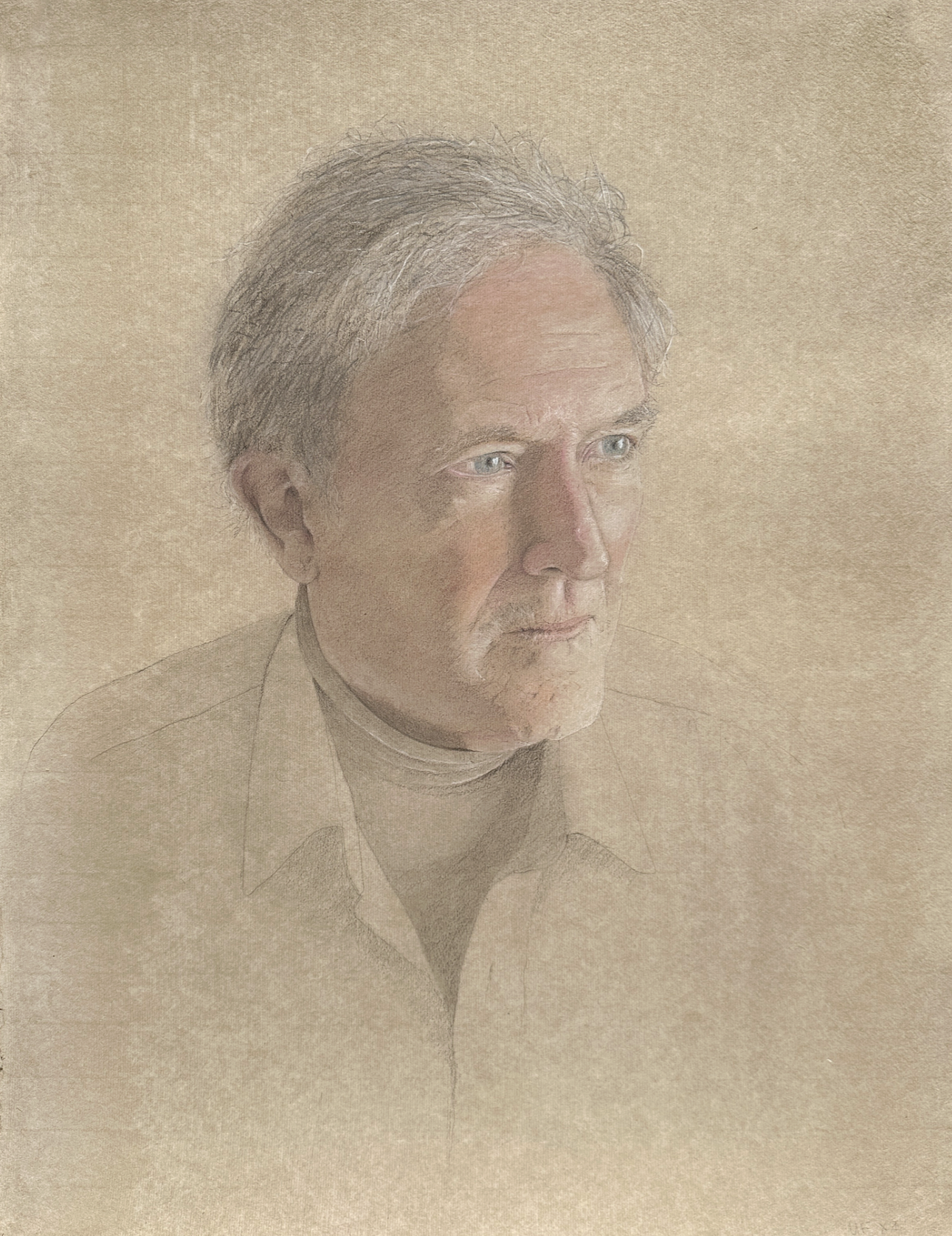
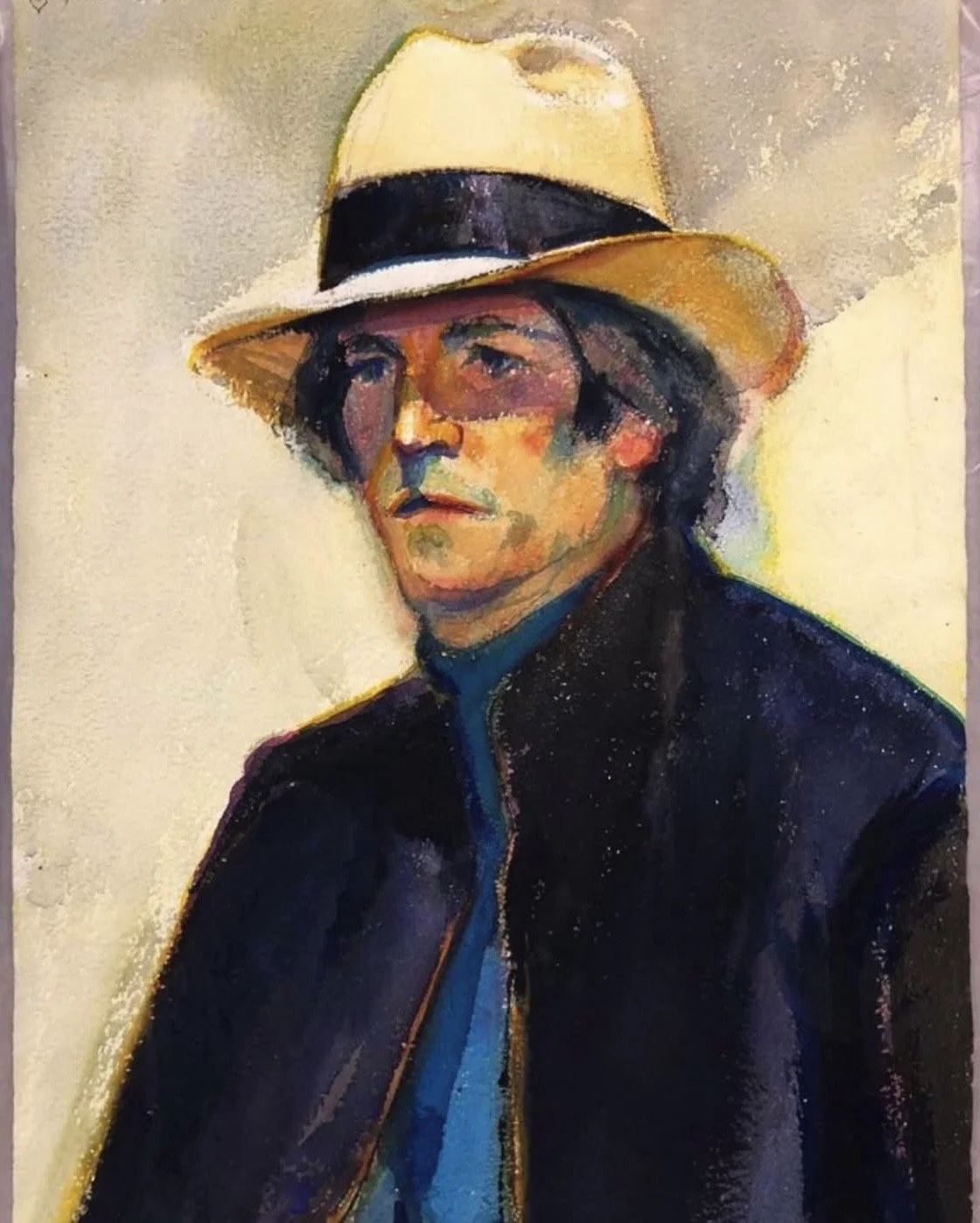
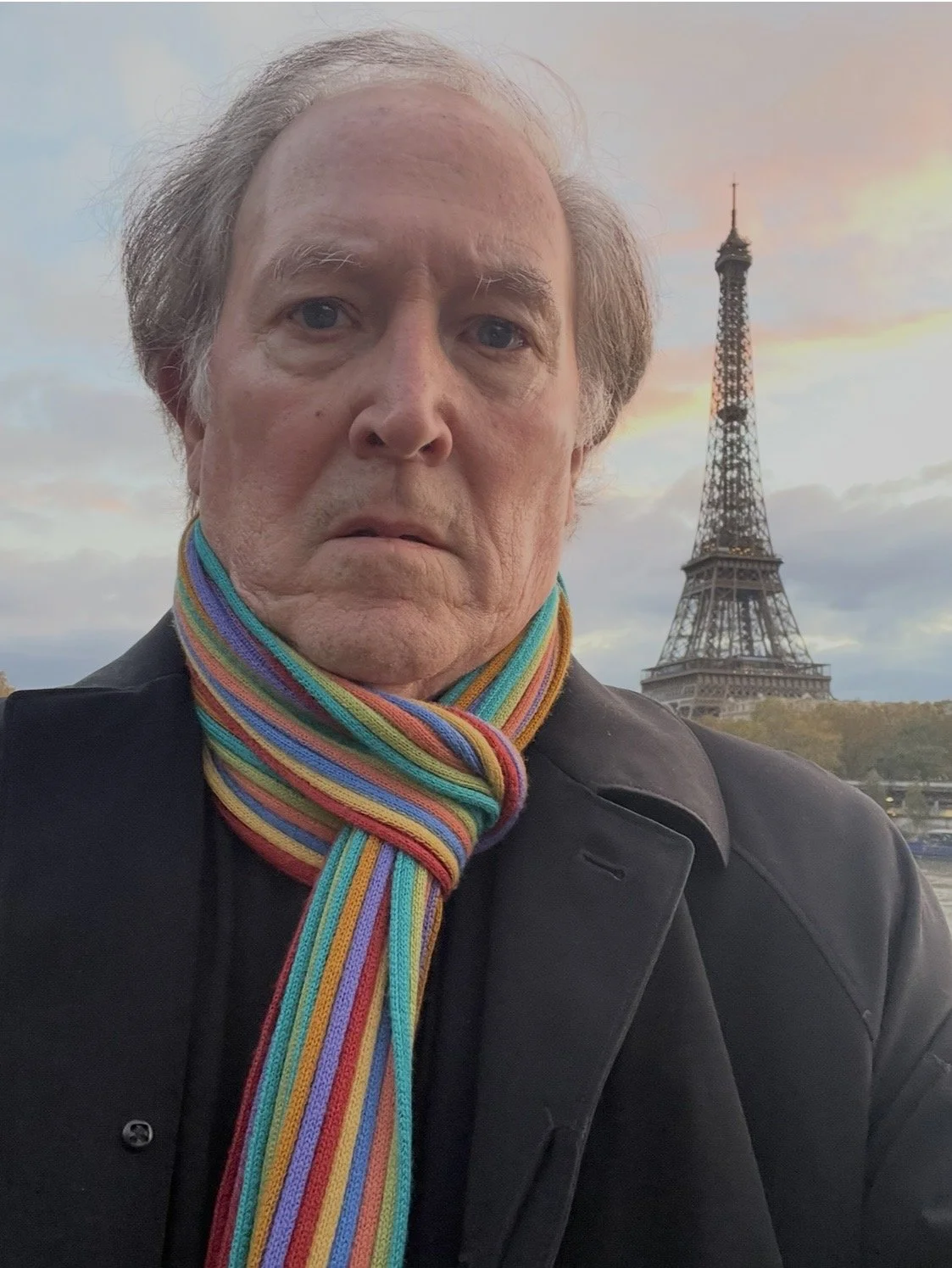
Robert Flynn Johnson

Editor’s note: The Phillips Collection sold their only Georges Seurat drawing, not their only John Singer Sargent as noted in the conversation.
Robert Flynn Johnson was Curator Emeritus of the Achenbach Foundation for Graphic Arts at the Fine Arts Museums of San Francisco. His interest in art was sparked while studying at McGill University, followed by an early curatorial post at the Worcester Art Museum and then a role as Assistant Curator of Prints and Drawings at the Baltimore Museum of Art. Recruited to San Francisco, he led the Achenbach for 32 years, retiring in 2007 after helping expand the holdings to roughly 90,000 works on paper.
Alongside his museum career, Johnson built a private, Impressionist-leaning collection, especially works on paper by Edgar Degas and his circle, valued for their intimacy and sense of process. The traveling exhibition Edgar Degas: The Private Impressionist draws entirely from his private collection and reflects his stated belief that curiosity, more than “taste,” is the collector’s essential attribute.
Excerpts from Robert Flynn Johnson’s interview with Hugh Leeman.
Finding Degas Below the Radar
Hugh Leeman: Robert, over several decades, you've amassed an incredible collection of Edgar Degas works on paper. The collection has shown at numerous art museums around the country. How did the passion for Edgar Degas art begin for you?
Robert Flynn Johnson: Looking at the nineteenth century, I found that there was a kind of a contradiction in terms of Edgar Degas — a great painter, a great draftsman, a great printmaker. Eventually we found out he was a really important photographer, too. And his subject matter, unlike the other Impressionists that dwelled on landscape and still life, were human beings. He depicted them with great pathos and great sensitivity. Yet his reputation was of a curmudgeon, a kind of guy that didn't get along with people, that had a very difficult personality. Here's a man that could be so sensitive to the human condition, but also himself was a bit of a misanthrope and a loner. I found that a very contradictory quality in his art.
Collecting also has to do with availability. I have great respect and love for the art of Francis Bacon, but even if I won the lottery, I still couldn't afford a Francis Bacon. I remember once the great art dealer Leo Castelli was asked who was his favorite artist. Everybody assumed he was going to say Robert Rauschenberg or Jasper Johns, but Leo Castelli said, Johannes Vermeer. You don't buy Vermeer. You enjoy Vermeer. You appreciate a Vermeer when you see one. But they're not to be collected.
So a happy accident occurred: when I first went to Europe as a curator at the Achenbach in 1976, I found, to my great surprise, that you could still buy drawings — not prints, drawings — by Edgar Degas for around four thousand five hundred dollars.
Hugh Leeman: Wow.
Robert Flynn Johnson: They weren't ballerinas. They weren't horse racing scenes. They weren't women getting out of the bathtub. They were drawings after the old masters that he copied in the Louvre — figure studies, arm studies, leg studies, academics. But they were Degas, and they were fully stamped, from his estate. I realized there was a tremendous opportunity to collect Degas below the radar screen. And museums like the Achenbach really weren't interested in collecting arm and leg studies by Degas — they wanted to buy a great bather pastel or a great portrait. So I had free rein to acquire these works because they weren't particularly popular or fashionable. That was the beginning of my collecting of Degas. The whole collection, over the years, was formed on a curator's salary. I often say to people, I'm not a Johnson of the Johnson & Johnson wax fortune. I'm a Johnson of the Manchester, New Hampshire Johnsons.
Building a Collection on a Curator's Salary
Robert Flynn Johnson: I often joke about my time at the museum — both at the Baltimore Museum and later the Fine Arts Museums of San Francisco — that I pretended to work there, and they pretended to pay me. When I came to San Francisco in 1975, after three years I had reached the top of my pay scale, and for the next twenty-nine years I never got a raise. All I got was a cost-of-living adjustment. But I was very smart in 1975: I bought my house in San Francisco for sixty thousand dollars, near the museum. I also taught art history at the San Francisco Art Institute for thirty years. I had some wonderful students — Barry McGee, Enrique Chagoya. The students never saw a reproduction or slide. I made them come to the museum and we only looked at originals passed around the table.
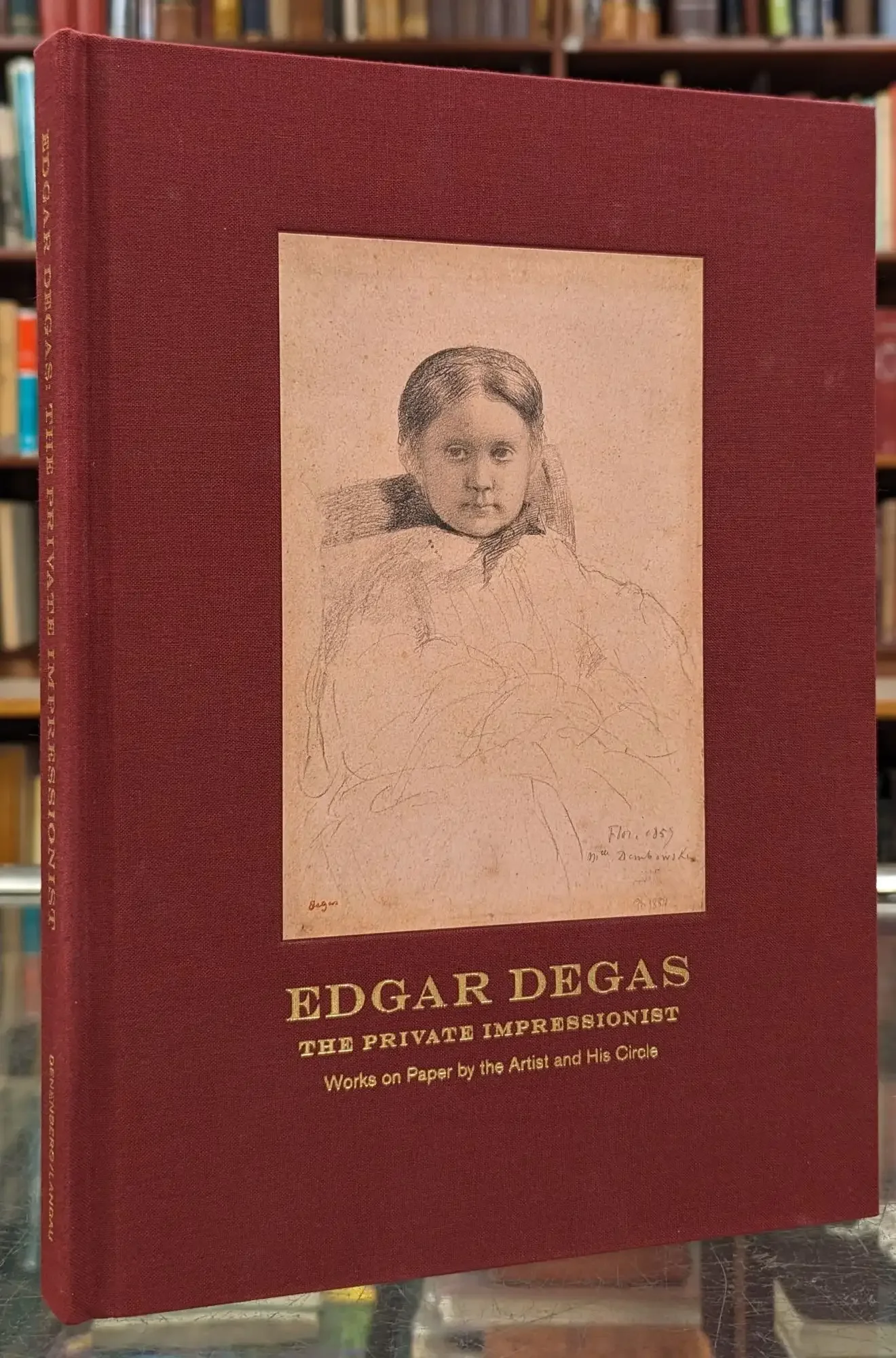
Over the years, I put together a collection of Degas. Then somebody asked me if I'd do a show, and I realized I had no paintings, no pastels, only one sculpture. But in my collection I had a lot of works by artists who were contemporaries and friends of Degas — a Menzel, a Pissarro, a Manet, a Cézanne, a Mary Cassatt. So I basically put together a show called Edgar Degas: The Private Impressionist. It's an exhibition as much about the era as just about Degas, about the milieu he lived within. I tried to emphasize that the exhibition was as much about Degas the man as Degas the artist.
Hugh Leeman: Art and Antiques Magazine wrote of your passion for Degas, saying — and I quote — "Johnson has a passion for Degas and sees him as a sort of kindred spirit." What interests and attitudes do you share with him that led to being seen as a kindred spirit?
Robert Flynn Johnson: I'm an art historian, but I'm a humanist. The artists I respect and love are Lucian Freud — I did the first traveling show of Lucian Freud in America, and he was a friend of mine — Francis Bacon, Alice Neel, Dorothea Lange, Walker Evans. These are people for whom humanity is in the forefront. Empathy, in some like Dorothea Lange. The violence of modern life in Francis Bacon. Stark, brutal realism in Lucian Freud and Alice Neel. The thing that links me with Degas is his interest in the human condition. He's such an interesting character — the only Impressionist who ever came to America. He took a boat from Le Havre to Liverpool, then to New York, and a train down to New Orleans. In many ways, he painted the greatest painting of America in the nineteenth century: The Cotton Market, New Orleans. It's about a bunch of people in an office doing business — and America in the nineteenth century was a capitalist commercial entity doing business. It's a terrific painting.
I should also mention that Degas had separation issues with his art. Every single work he did in New Orleans — did he give anything to his relatives when he was there? Did he sell anything to them? No. He took every single work back to Paris. I have twenty-one drawings by Degas. Every single one was still in his studio, in his portfolios, when he died. Incredible — the greatest collector of Degas in the nineteenth century was Degas himself.
The Little Girl in the Chair: A Prized Acquisition
Hugh Leeman: There is one Degas drawing in your collection that holds a particularly important place in your heart. You've called it the most important piece in your collection — it's a young girl, maybe six or seven years old, sitting in a chair and staring off into the distance. How did you come to acquire it, and what has captured you about it?
Robert Flynn Johnson: There's a dealer in Munich, Arnold Levy — Bruce Levy and Angelika Arnoldi. He's American, she's German, they're married. Years ago, back in 1976, they sent a catalog to the museum with three early Degas drawings. I called them up and every one was already sold. I said, well, if you ever get a good early Degas drawing, I'd be interested. Later that spring, I went to Europe for the first time and bought several important works for the museum — a Guercino drawing, a Richard Dadd self-portrait watercolor, some English watercolors. About five or six weeks after our acquisition meeting, an envelope from Germany arrived on my desk with a photograph of the little girl.
I took it to the director of the museum, Ian White, and said, "This is a really beautiful drawing. I think we should try to get it for the museum." He said, "How much money do you have in the fund right now?" I said, "Basically nothing — I just bought those works of art." We brought it to the acquisition committee, and people admired it. But one trustee — who shall remain nameless, a good friend of mine, but rather pompous — got up and cleared his throat: "It's a beautiful drawing, but it's not a horse racing picture, not a ballerina, not a woman getting out of the bath. It's not one of his famous subjects. Save the money to buy a real Degas of a more important subject." And so he killed it.
After the meeting, I said to the director, "If the museum isn't going to buy it, can I?" And he said, "Be my guest." So I contacted Mr. Levy and said, "I'll send you a thousand dollars. You don't do business in July and August. By the middle of September, if I can't raise the money, I'll send you the drawing back and you send me the thousand back." It was a fifteen-thousand-dollar drawing. He agreed, though we'd never done business before. Then I had to raise fourteen thousand dollars. I was like David Niven in Around the World in Eighty Days, throwing things out of the balloon basket to gain altitude financially. I sold an important Edward Hopper etching — to my brother, which I hated to lose. I sold a portfolio of Walker Evans photographs. And I raised the money and got the drawing.
My father was a child of the Depression, and I never borrowed money to buy a work of art. I only bought things I could afford. There are a couple of works I probably should have stretched for — Lucian Freud's dealer offered me a painting, said I could pay over several years. But I had kids in school. That was a big mistake. But by and large, I've been comfortable acquiring things I could afford. About twenty years ago, the drawings I used to buy for three, four, five thousand dollars suddenly became thirty and thirty-five thousand. The market had risen, and I switched largely to photography, where there were still tremendous opportunities at reasonable prices.
Selling the Collection: Love, Legacy, and Letting Go
Hugh Leeman: In 2007, you retired after decades as a curator at the Legion of Honor and de Young's Achenbach Collection. Yet you continued collecting and organizing museum exhibitions. Now you're selling your prized Degas collection — and you have a plan for the money. What is that plan?
Robert Flynn Johnson: It's for my children and grandchildren. I'm having a show in January at a gallery in New York. There are fifty-two drawings in the catalogue; thirty-six are on view because the rest are currently at the Society of the Four Arts in Palm Beach. I've made it clear to the dealer that if somebody is interested in the Degas in the catalogue, they can only buy them if they want to buy the whole collection intact. I'd be willing to let that beautiful little girl go, as long as the Degas collection is kept together. The other thirty-six drawings are being sold individually.
You can't take a U-Haul to the cemetery. My son recently became a pilot for United Airlines and has never owned a house. My daughter and son-in-law just bought ten acres outside of Spokane and want to build their dream house. It's time. Yes, I have to pay the dealer's commission and capital gains to Uncle Sam. But I love my grandchildren and my children more than I love these drawings. It's as simple as that. And one thing nobody can take from me is the memory of the acquisitions and the fact that I've published them in catalogues. As a collector, no matter how long you own something, you're just a custodian. You don't use up the art the way you use up a pizza or drive a car into the ground. The art is hopefully in good shape when you sell it or give it away.
If I were a very wealthy man, I wouldn't sell. I would eventually keep the collection together and donate it to an institution. But I'm art-rich and cash-poor. My art is my financial base, and my kids need it sooner rather than later.
Art in Times of Turmoil: Museums and the Public
Hugh Leeman: During a recent talk, you noted how the National Gallery kept their doors open amidst social turmoil and held concerts open to the public. What role do you believe art plays in uplifting spirits or providing solace during difficult times?
Robert Flynn Johnson: Philippe de Montebello, the great former director of the Metropolitan Museum, was once interviewed by The New Yorker and said, yes, the Met is an elite institution — by choice. This was when you could go and pay one penny to get in. His point was the museum is there for everyone who is interested. We live in a society so dominated by social media, television, the internet, that we don't have a very sophisticated education system to nurture an appreciation for art and music. You take a kid who's sixteen and ask them who Jean Sibelius is, and they go blank.
I was very lucky to have cultured parents. My father was a neurosurgeon who listened to classical music at the end of the day, smoking a cigar, trying to relax after operating. He taught me about classical music. When I told him I wanted to go into the art world — not exactly remunerative — he said, "If this is what you really love, then go for it." My brother is a curator too — chief curator of the Sports Museum of New England, a friend of Ted Williams, who wrote a book on him. He and I are like Peter Pans. We never had to grow up. We're doing exactly what we want to do. I know people who are much wealthier than I am, good people, good friends, but they hate what they do between Monday and Friday. They're paid so much for it that they retreat into the weekend and dread Monday.
"Orwellian Dysfunction": The Crisis Inside the Fine Arts Museums of San Francisco
Hugh Leeman: Museums are undergoing incredible challenges — great pressure both internally and externally. In 2013, you told The New York Times that the Fine Arts Museums of San Francisco were, quote, "in a state of Orwellian dysfunction." What was going on then, and what has changed since?
Robert Flynn Johnson: We built the new de Young Museum — two hundred million dollars. I give Mrs. Wilsey and Harry Parker credit for raising that. But this would be like giving your daughter a brand new car, free and clear, to drive back east to college, and not giving her any money for gas, insurance, or registration. She'd get about as far as Reno and run out of gas. We raised the money to build the physical building, but put nothing aside for operating endowment. When we finished, the de Young was in a four-to-five-million-dollar structural deficit every year.
Compare that to the Houston Museum of Art: Peter Marzio was building a wing as large as the original museum — also about two hundred million dollars. They came to him saying they had the money. He said no — you've got to raise another one hundred and fifty million for operating endowment. Our air conditioning is going to double in Texas. Our guard force is going to double. Everything's going to double. Attendance won't double. He grudgingly got them to raise it, and so Houston started each year either a little in the black or even. San Francisco didn't do that.
That structural deficit put tremendous pressure on directors and trustees to bring in crowd-pleasing exhibitions. Some are fine. The Paul McCartney photographs show, organized by the National Portrait Gallery in London — he's not Ansel Adams, but he photographed a phenomenon. It was interesting and beautifully installed. But we clearly did it to get bodies in the seats.
After Harry Parker retired, John Buchanan came in as director, then he died, and for nearly two years we had no director. During that time, a number of totally loyal, totally dedicated, totally talented curators and other staff were fired for no cause by Mrs. Wilsey. People who were doing their jobs and loved the institution. They went into arbitration and got severance for unlawful termination. It was a real goddamn mess. The ship has only really been righted by the emergence of our current director, Tom Campbell, who's doing a very fine job. He stabilized the institution. The endowment is being built. The museum is doing well.
Butts in Seats vs. Curatorial Integrity: Navigating the Tension
Hugh Leeman: There's a contrast you've been articulating throughout our conversation — the elitist museum by choice, and the need to get people through the door. You once said, "I understand why the guillotine was invented. The society that produced all that overly ornate and very expensive furniture was not paying attention to the society that they actually lived in." How can museums maintain or rebuild public trust while also attracting mass audiences — without becoming so populist they lose their integrity?
Robert Flynn Johnson: The Kaws show, and to a certain extent the manga show at the de Young — Japanese animation, which the museum doesn't collect — are both blatant attempts at going to the lowest common denominator. It's like taking a really good Chardonnay and putting a teaspoon of sugar into it to make it more palatable to someone who doesn't like a decent Chardonnay. Both of those shows are slightly dispiriting.
But I believe the public can be enticed into a museum if the museum utilizes its collection strategically — not just loan shows, but its own collection. One of my favorite shows I did over the years was called Animals Real and Imagined, using only works from the Achenbach. Horses, dogs, pigs, alongside Japanese prints of dragons and mythological creatures. I hung the exhibition about five inches lower than normal for children. At the opening, we had helium balloons with ribbons for children to take away and a giant pile of animal cracker boxes. We made it a great kids' day. Really successful.
Tom Campbell did something brilliant during Covid — the DeYoung Open, an exhibition of works by local artists. People sent things in and when you went to the show, there were like seven hundred works of art on the wall. Not all were fantastic. But the de Young said: we're a museum for local artists. Yes, we'll do shows of Manet and Morisot, of Alice Neel and famous artists. But we won't forget local artists. You can't believe how proud some of those included artists were to have a work hanging in the de Young. It put a flag in the sand that the de Young was more welcoming to local artists than SFMoMA.
And various curatorial departments need to work together rather than being territorial. For example, the Legion has a good Picasso sculpture and a good painting. You can't have just two works in a gallery. But the Achenbach has three or four Picasso drawings, a remarkable group of prints, and the second greatest collection of Picasso illustrated books in America, after MoMA New York. You could mount a six-month Picasso show at the Legion featuring the painting and sculpture, surrounded by all those other works — without borrowing a single thing. But the departments have to cooperate. They can't say, "This is a painting gallery and we can't have prints and drawings up here."
Drawing in the Age of Digital: A Skill Going Down the Drain
Hugh Leeman: You've lamented that classical drawing skills are, quote, "not lost, but going down the drain in a big hurry," and recounted how some students feel that one drawing class is enough. With the rise of digital art, AI-generated art, NFTs, and other new media, how should the art world balance appreciation for time-honored techniques with enthusiasm for new forms?
Robert Flynn Johnson: There was a rush for NFTs — Beeple and all that — but at the same time there's been a strong interest in people like Lucian Freud and living artists like Jenny Saville, people who know how to paint and draw. I'm not completely despairing. But when I was teaching at the San Francisco Art Institute in the seventies and early eighties, when I went to the MFA show at year's end, eighty or ninety percent of the young artists were doing paintings, drawings, sculpture, photography. When I was at the end of my career at the Art Institute in 2007 and 2008, I'd go to the MFA shows and over half the booths were video screens.
I'm not against video. Bill Viola was terrific, and William Kentridge is a goddamn genius. But if I go into a gallery and there's a Mark Rothko on the wall, I can spend twenty minutes with it — or fifteen seconds. It's my choice. But if you do a ten-minute video, you're asking me to devote ten minutes of my life to your film. So if you're going to ask me for ten minutes, you've got to give me wonders-of-wonders content. A ten-minute video is a ten-minute movie. It has to have a beginning, an end, a purpose, a frisson, some sense. It can't be a photograph of a bus stop where three buses go by and that's the end.
If you want to go into video, fine. But you should also know how to draw. Wayne Thiebaud once told me about a student who wasn't particularly skilled. The student said, "Oh, Mr. Thiebaud, I already took a life drawing class last semester." Well, obviously that wasn't enough. It's like saying you've taken three tennis lessons and you're ready for Wimbledon. Cézanne wanted to draw like Degas and Ingres, but he couldn't. His early paintings are very rough, very expressionistic. And then he evolved — Cézanne became Cézanne. He was the first artist who painted a landscape where fifty percent of the canvas was blank and said, "It's finished." People said no, it's not. He said, "Yes, it is." He found his own way of expressing himself, worked around being academically precise. And that's what's really great about art.
Elvis Has Left the Building: Contemporary Art and the Timing Problem
Robert Flynn Johnson: When SFMoMA opened their new building downtown, there was an art fair. I went and found a beautiful collage by a dealer from Boston I'd never done business with. I didn't know who the artist was, but I really liked it and bought it for the museum. It was by Kara Walker. Five hundred dollars. I should have bought one for myself. I bought it because it was good — I didn't know who she was, she wasn't famous yet. There is contemporary art out there museums can acquire. You don't need forty million dollars. With forty million dollars, you're going up against Jeff Bezos. Elvis has left the building.
There's a Michelangelo drawing coming up at auction in January in New York, and no museum is bidding on it. Two or three rich oligarch billionaires will be. A lot of museums are simply out of the running.
I'd also recommend, for your listeners, an amazing BBC documentary by my late friend Robert Hughes called The Mona Lisa Curse — I think you can watch it online. It's about the monetization of art. Back in the forties and fifties, American collectors buying early Abstract Expressionism were buying those paintings because they loved them, to hang on their walls. They weren't buying to flip. The idea of flipping is modern — almost a Wall Street sensibility. And that sensibility has ramifications for everything I just described about the Baltimore Museum and the Phillips Collection. Those trustees saw their permanent collections as casino chips. And you just don't do it.
Museums and the Issues of the Day
Hugh Leeman: If you were starting your career right now, what would you do to overcome the challenges museums are facing — from the attention economy to labor issues to questions of legitimacy?
Robert Flynn Johnson: First of all, if I were starting now, as well educated, after Baltimore, I'd have a hard time getting a job — I'm white, male, and straight. Three strikes. They might say, "You're really good, but we have too many male curators, too many white male curators." Though interestingly, of all the print and drawing curators at major museums in America, I'd say seventy percent are women. But here's what I'd do: one of the exhibitions I'm most proud of from my time at the Legion was a show I did in 1990 called The Face of AIDS. It was an exhibition of people who had AIDS or were HIV positive, at the height of the crisis, when you couldn't find anyone who didn't know someone who had lost a friend or relative. An artist had come to me through my monthly open-portfolio day — any artist could bring their work in, like open casting. She did watercolors and acrylics on paper. I told her the watercolor wasn't her medium, the acrylic on paper was really good. About two years later she came back with portraits — three portraits of men with AIDS. Some guys had asked her to paint their lovers before they died, so they'd have something to remember them by. She told me that after each portrait, she did a self-portrait the same size. Eventually she had twenty-five portraits of people with AIDS and twenty-five self-portraits. I had a show called The Face of AIDS — fifty works on the wall. There was a priest, a young boy who got a blood transfusion, two women. Very poignant.
I had a hard time getting the show approved because she wasn't well-known. And I said, "Don't concentrate on who she is. Look at her art. The art is powerful and poignant, and the museum has a responsibility to take on issues in the community at the forefront."
If I were a curator today at a museum, I would do a show of my friend Joel Daniel Phillips. Joel did an amazing series of drawings of homeless people. He set up his studio in an area of San Francisco right in the middle of the drugs and difficulty. He realized: if you have a lemon, make lemonade. He went out and befriended homeless people, got them to sign model releases, and did these over-life-sized drawings. They're terrific. There's a book out, and I wrote the introduction. He did them in Oakland, in San Francisco. What Joel Daniel Phillips's drawings do is put faces on the issue. These were real men and women, and he gave them a level of respect — they were not invisible. When we walk down the street in the Tenderloin, we tend not to want to look at anyone. Just get to where we're going. Joel said: no. You've got to look at these people. Just as Walker Evans and Dorothea Lange did during the Depression with their photography.
I'm not saying one shouldn't do a beautiful show of Morandi etchings or Picasso prints. But the museum should take on the issues of the day.
The Phillips Collection Controversy: Cannibalizing a Legacy
Hugh Leeman: To the idea of museums taking on the issues of the day, the Phillips Collection has been a point of focus for you recently, and how they've effectively begun exchanging classical parts of their collection for more contemporary art. Can you speak to your thoughts on this?
Robert Flynn Johnson: Every museum doesn't have to be the same thing. If you want to see great old master paintings in Washington, you go to the National Gallery. If you want contemporary art, you go to the Hirshhorn. If you want classic nineteenth and twentieth century paintings, you go to the Phillips Collection. The Phillips was formed by Duncan Phillips, a private individual, and the museum is in a big house in Washington — not a giant institution. Phillips had absolutely fabulous taste, and over the years they bought very judiciously. Arthur Dove was basically starving to death in the thirties and forties, and Duncan Phillips liked him very much and basically kept dove alive as an artist. So Dove is hugely important within that collection.
When you go to a good French restaurant, do you expect sushi on the menu? No — it's a French restaurant. There's been so much pressure on trustees, directors, and curators to be more inclusive — more works by American Indians, by transgender artists, more women. None of that is bad. But you've got to look at what your museum's tradition stands for. If an institution wants to collect more contemporary art, the director should get his trustees and donors together, raise some money, and buy contemporary art. Give an adventurous young curator a hundred thousand dollars and send them out to buy eight or ten works for five, six, seven, ten thousand dollars. Some of those will be the de Koonings of tomorrow. Venture capital on exciting new artists.
Well, the Phillips didn't do that. The director talked the trustees into selling masterpieces from the collection. A Georgia O'Keeffe — gone, into some private collection, never to be seen again. A major Arthur Dove — gone. And their only great Seurat drawing sold for six million dollars. The total of the three works sold was about forty million dollars. What do you do with forty million? You go buy a 1982 Ed Ruscha. Because you didn't buy it in 1982. Forty million doesn't get you beyond the velvet rope at the Larry Gagosian beach party at Art Basel Miami. That's what it gets you. You're buying things you should have bought decades ago.
And the fact is, you don't go to the Phillips Collection to see video art. You go to the Hirshhorn for that. The director wanted to acquire work by a British video artist who deals with gay culture — I've got nothing against him — but it's insanity in the Phillips Collection. They're cannibalizing Duncan Phillips's legacy. I put that on my Instagram and got one hundred percent agreement. Everybody commenting was equally appalled.
The Hippocratic Oath of Collecting: Do No Harm
Robert Flynn Johnson: The Pennsylvania Academy of Fine Arts about seven years ago sold a masterpiece Edward Hopper painting — East Wind from Weehawken — to buy contemporary art. The Pennsylvania Academy is supposed to be a museum of American art. They sold their only great painting by the greatest American artist of the first fifty years of the twentieth century. This is like a museum of Impressionism selling their only Monet. It's insane.
I've got nothing against collecting contemporary art. But if they want to spend forty million dollars on it, those trustees should raise forty million dollars. They shouldn't go into the collection and sell their only great Edward Hopper.
The Baltimore Museum a few years ago wanted to sell their best Warhol, their only Clyfford Still, and their only Brice Marden painting. The day before the auction, there was so much pressure from The Washington Post and others that the museum backed down and canceled the sale at the last minute. But they were ready to sell three masterworks so they could go out and have a good time at art fairs. There's a Hippocratic oath in medicine: do no harm. Selling your best Warhol, your only Brice Marden, and your only Clyfford Still is doing tremendous harm. Those trustees and directors saw their permanent collection as fungible assets they could dispose of — casino chips they could cash in. My job when I was curator was to build the collection, not tear it apart.
Hugh Leeman: Robert Flynn Johnson, I love this idea — museums should take on the issues of the day. Thank you for sharing so candidly and honestly.
Robert Flynn Johnson: No problem.
