
Jerry Kearns, Zero-Sum, Modernism
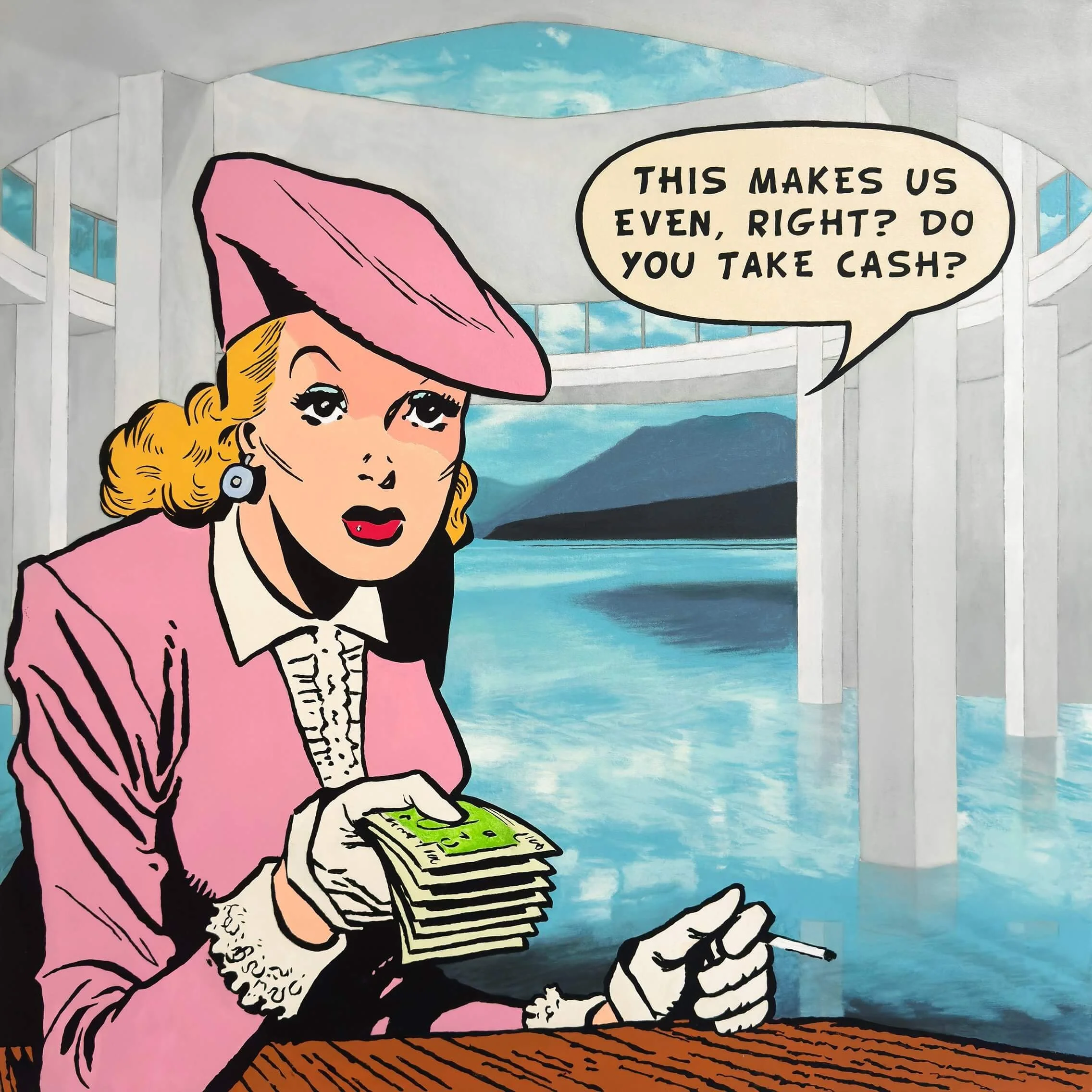
The Dealmaker, acrylic on canvas, 2022
48 x 48 inches
By Hugh Leeman
Jerry Kearns' Zero-Sum at Modernism captures the spirit of America's loneliness epidemic brought to us by a winner-take-all capitalist culture now paying a heavy debt for its ‘success.’ Kearns's "aim for psychological history paintings reflecting the time and place where we live" is achieved in 15 works whose isolated mid-century archetypes ponder morality and the price of transactional relationships. Their emotionally deflated forms and text bubbles counterpose their glamorous clothes and cartoon style through thoughts and speech that speak America's language of mental crisis.
In past decades, Pop artists situated similar low-culture comic book imagery in art as a means of elevating it into the realm of fine art, blurring the boundary between low and high art at a time when Warhol famously predicted today’s internet culture, "In the future, everyone will be world-famous for 15 minutes." In Kearns's paintings, that future has arrived as his works highlight how low culture and appropriation function as the language of everyday communication.
The paintings form a tightly staged sequence of photoshop composited atmospheres from glassy water to postcard skies. The tension arises from the high contrast in aesthetics between the scenes and the figures, as internal landscape lays bare the stark reality of America's deteriorating sense of self. Was the dream worth having, America?
Answers, tongue-in-cheek, come from The Dealmaker, a well-to-do mid-century blonde in white gloves with lace cuffs, holding a cigarette and a stack of cash, toward the viewer, asking, "THIS MAKES US EVEN, RIGHT? DO YOU TAKE CASH?", standing in front of a flooded modern architectural masterpiece backdropped by a mountainous landscape in the distance. Sea levels have changed, and so too has the shoreline of beachfront property. Her offer and eye contact with the viewer break down the fourth wall, directly engaging us. What is the price to be paid for such destruction?
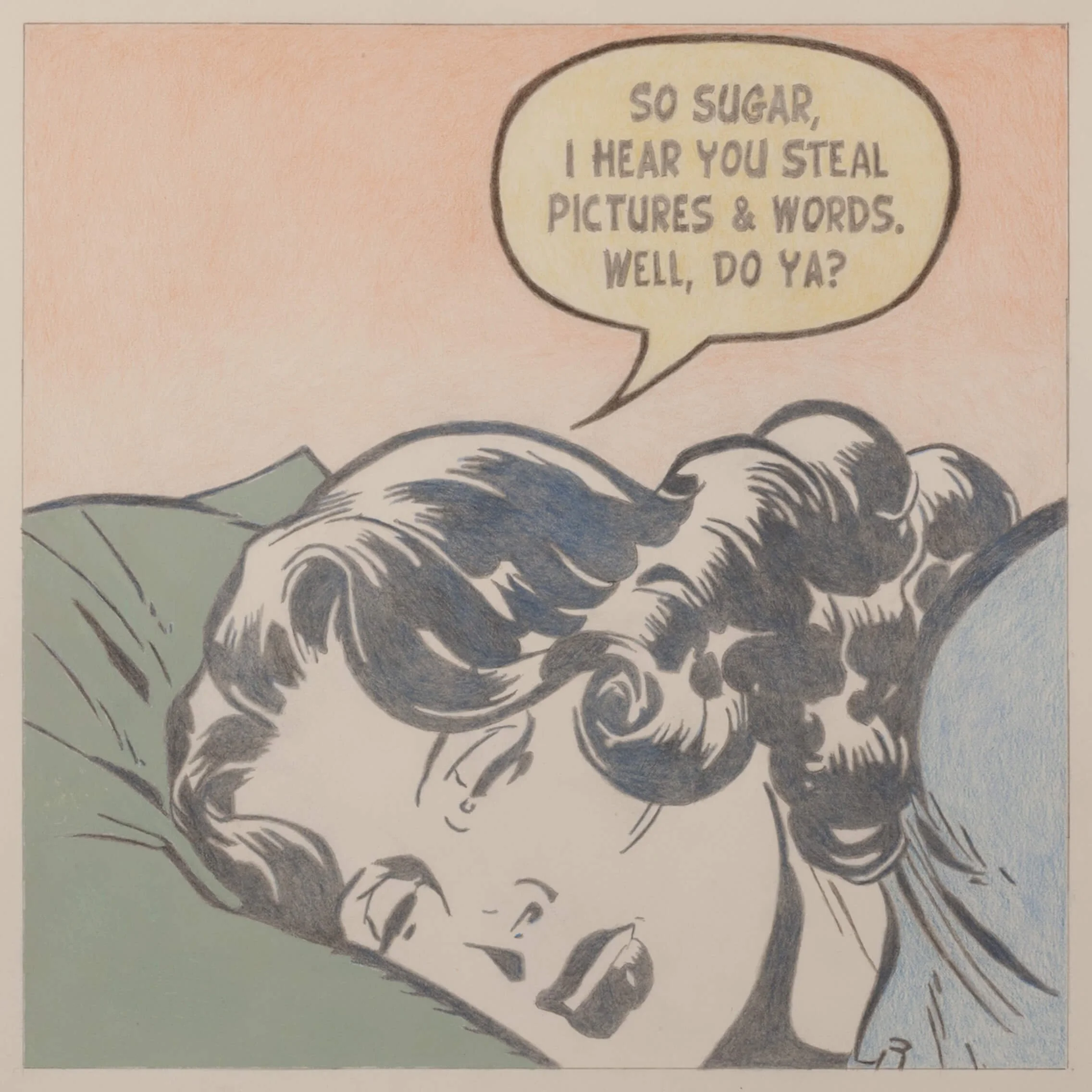
The Thief, acrylic and graphite on paper, 2022
16 x 16 inches
Making the show as poignant as ever in the era of the internet is the work on paper, The Thief. In the flat matte pastel-colored painting, The Thief's damsel in distress buries her head in a pillow, eyes clenched, her speech at once flirtatious and confrontational, pleads for the truth that's left in a well-worn art-world taboo. "SO SUGAR, I HEAR YOU STEAL PICTURES & WORDS. WELL, DO YA?"
Just as Lichtenstein stole words and images from the comic book illustrators who were scarcely compensated as he made millions, and research suggests Warhol’s fame magnetized words and ideas to him that he never actually uttered, like "In the future, everyone will be world-famous for 15 minutes.” Kearns rightfully turns the lens of appropriation and inheritance on his own work and, more importantly, on the 21st-century internet phenomenon of digital piracy and appropriation.
The 2022 work was done the same year that ChatGPT was released to the mainstream public by developer OpenAI. After years of "training" or vacuuming up and plagiarizing phenomenal amounts of pictures and words that have led to countless lawsuits in which everyone from an ongoing list of artists and authors to media companies like The New York Times are suing the company for doing as the painting’s protagonist notes "stealing pictures & words."
Kearns says of the pastel tones in his works on paper and cartoon style aesthetic, "The use of the 1950's cartoons reflect my desire to locate personal / psychological dialogues that read as implications of long-term societal shifts away from the values of an earlier moment in America's cultural history. The quieting of the compositions, along with the pastel colors, suggests memories of things gone by. The image becomes a dream-like echo of personal and societal loss."
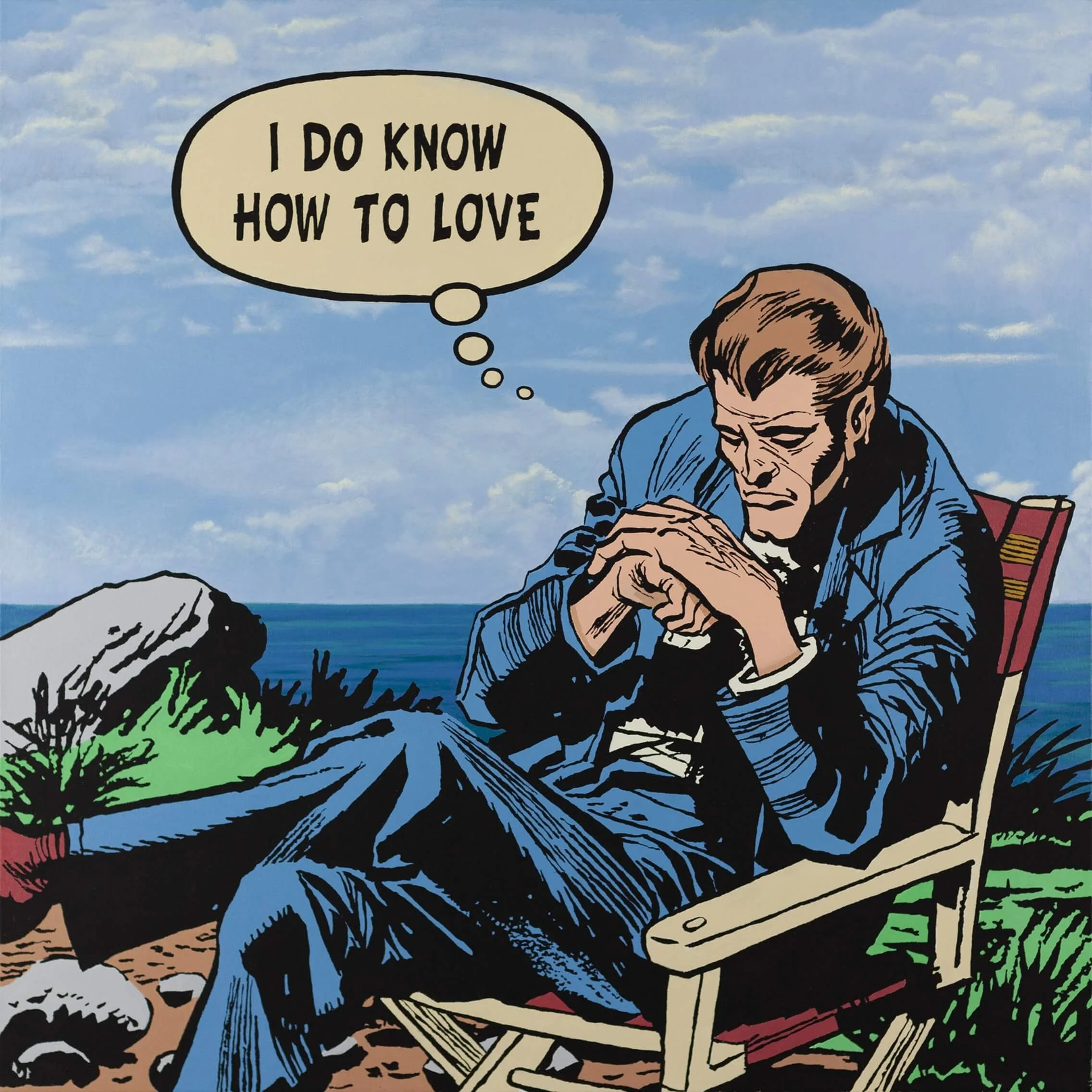
Untitled, acrylic on canvas, 2024
48 x 48 inches
The societal shifts are as evident as ever in his large acrylic paintings featuring aging men burdened by the loss of status; both paintings are aptly titled Untitled. The once idealized masculinity of the 20th century slumps into a space between confession, defensiveness, and self-questioning. In one, a man in a suit sits in a director's chair on the beach, back to the ocean, head slumped and burdened by the pensive state of societal change. His wealth may remain but his emotional sense-of-self is entirely unclear, "I DO KNOW HOW TO LOVE." Is he able to convince himself, let alone anyone else?
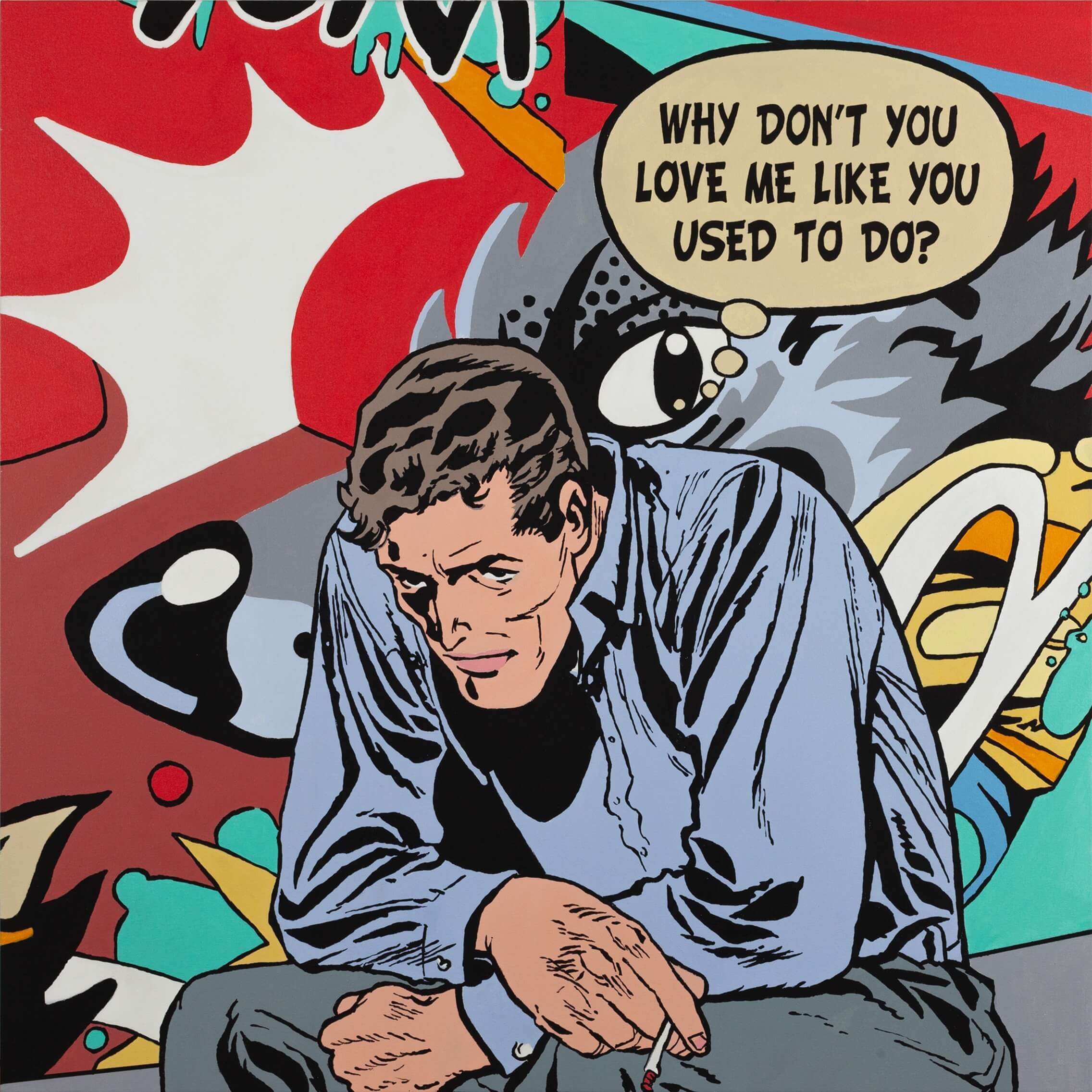
Untitled, acrylic on canvas, 2024
48 x 48 inches
In the other Untitled painting, the psychological state is less ambiguous. A blue-collared male smoking a cigarette slumps over, his thought bubble pleads, "WHY DON'T YOU LOVE ME LIKE YOU USED TO DO?" This piece is the only painting in the show where the background style matches the comic-book style of the figure; an angry lone wolf peers out at the viewer.
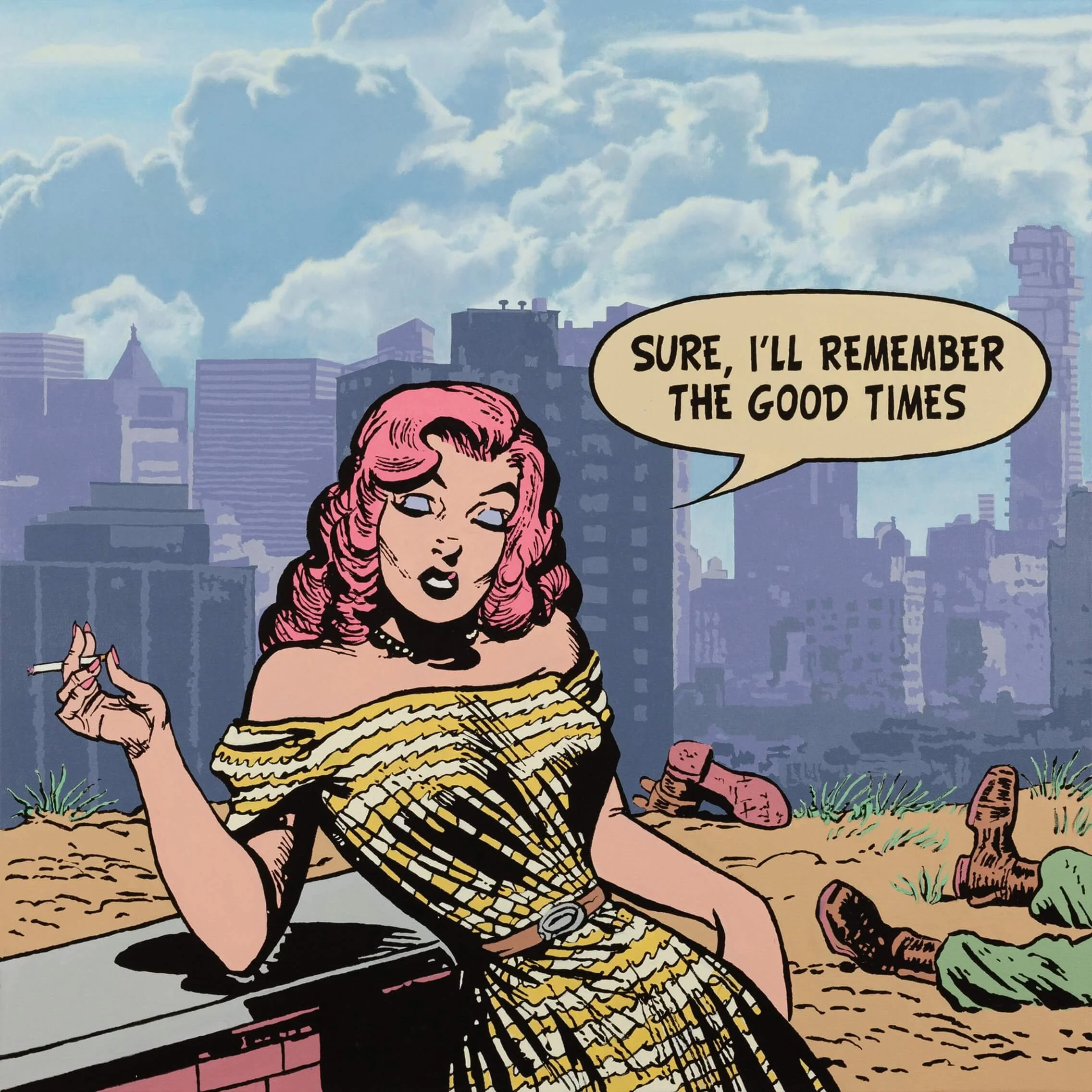
Good Times, acrylic on canvas, 2023
48 x 48 inches
Good Times pulls us into the paradox of America's present as much as any one work. A bosomed woman with an exaggeratedly thin waistline leans against a wall, smoking a cigarette, backdropped by a modern skyline. Between her and the city, the legs of anonymous laborers with work boots soles to the sky and toe down in the dirt speak of the hill the middle class succumbs to in the zero-sum game that made America great as the bombshell blithely states, "SURE, I'LL REMEMBER THE GOOD TIMES."
Kearns neatly condenses America's social crisis into single phrases for the culture of 280 characters per post. The aesthetic harkens back to an era of America when it was more confident, less self-aware, and uninhibited by the burden of its past or that its future would one day be questioned.
The artist says, "During the time I was making the works in this show, I was aware of a much more transactional mindset pervading public thought." Through 15 artworks, Kearns Zero-Sum surrounds the viewer with images of class experienced as a negotiation performed within a system that rewards transaction. In America’s zero-sum culture, there have always been winners and losers, yet Kearns paints pictures “of the time and place where we live” in which even the victors inherit the loss that comes with winning the past through having mortgaged the future.
