
Multiple Offerings, a retrospective of Theresa Hak Kyung Cha, BAMPFA
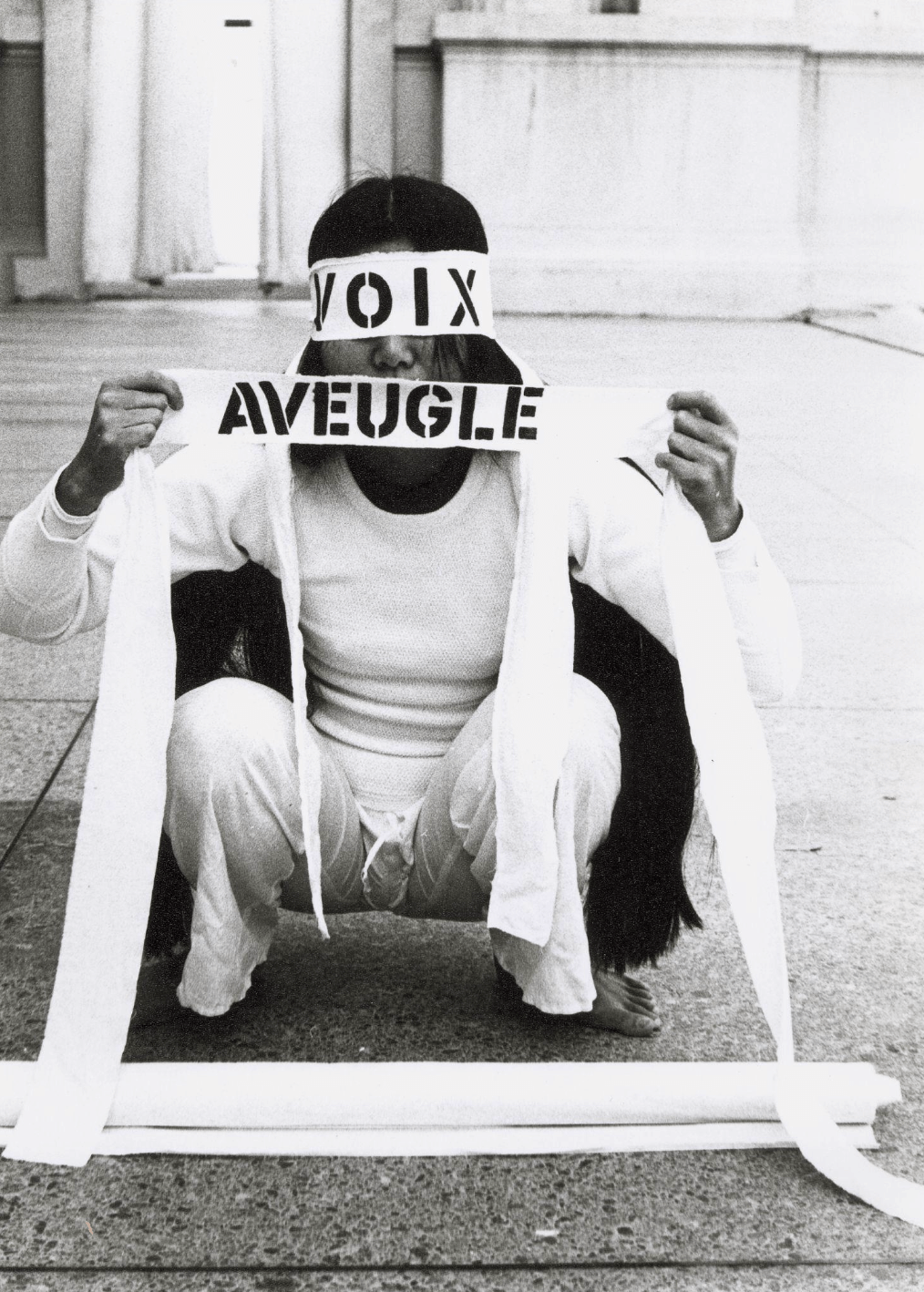
Theresa Hak Kyung Cha, Aveugle Voix, 1975. Documentation of performance rehearsal at Greek Theater, University of California, Berkeley. Photograph by Trip Callaghan. Collection of Berkeley Art Museum and Pacific Film Archive; Gift of the Theresa Hak Kyung Cha Memorial Foundation.
Through Apr 19, 2026
Words Fail Me
If you are “looking for the roots of the language before it is born on the tip of your tongue” (Cha, 1978) the Theresa Hak Kyung Cha exhibit at BAMPFA (through April 19, 2026) is a revelation.
This comprehensive and well-researched presentation of the Cha Archives makes many works from the archive public for the first time. It provides context for Cha's iconic work, the sui generis book "Dictée" (1982).
Like a meteorite, even just the first page of this masterpiece, Dictée, is so unusually brilliant that it immediately brings up the question of where her unique perspective and creative force came from.
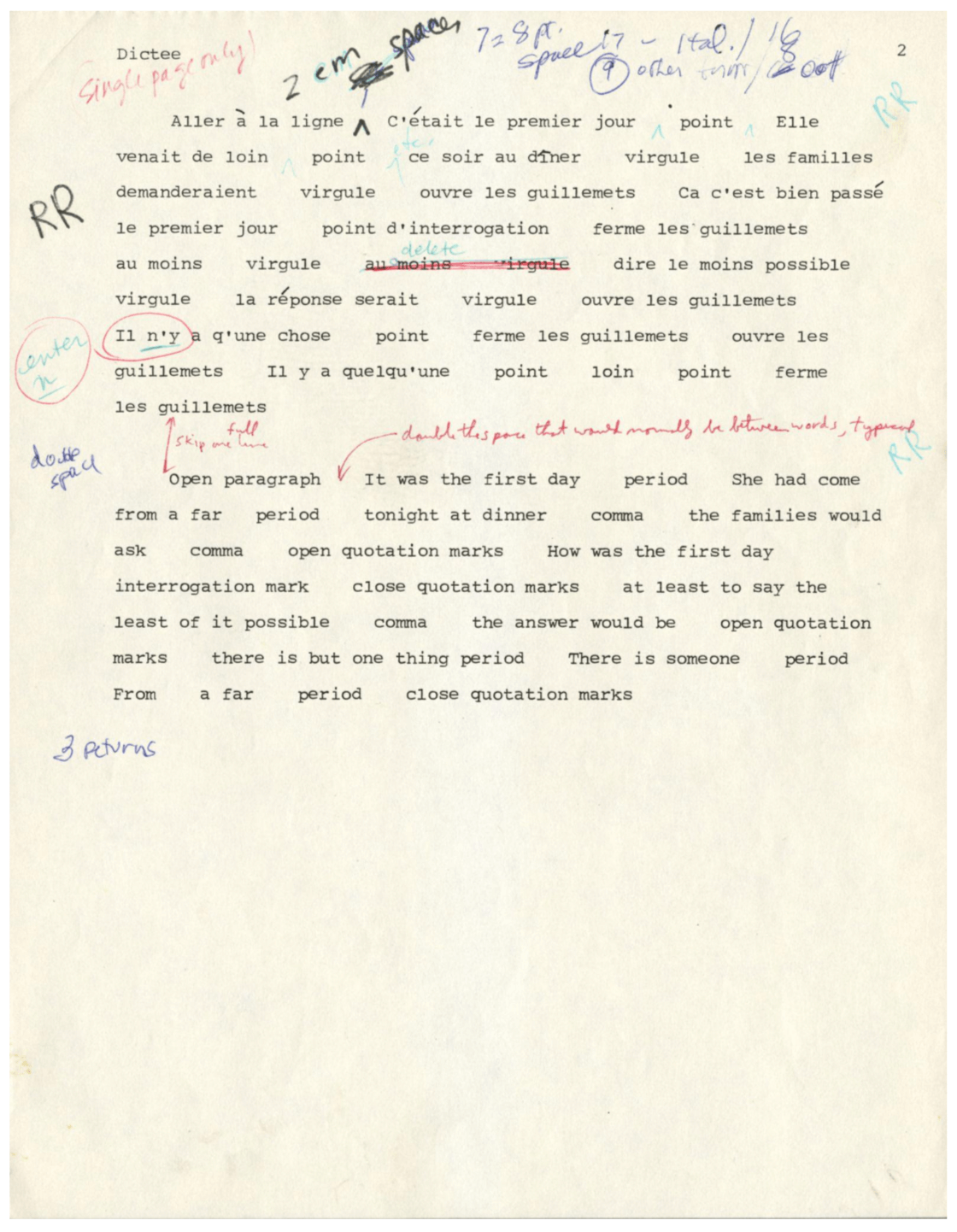
Theresa Hak Kyung Cha, Dictée, 1982. Manuscript: ink and correction fluid on photocopies. Collection of Berkeley Art Museum and Pacific Film Archive; Gift of Reese Williams.
BAMPFA's current exhibit, beautifully staged in the signature oxblood color of the "Dictée" cover, answers that question by providing much context while at the same time steering away from the book itself. It answers the question, but only to those who are willing to dive into the mystery of Cha's world, which is not easy to access.
The show consists mostly of text, works on paper, and structuralist video, which I would argue feels like text as well. The work does not draw the viewer in easily, it is the opposite of a spectacle, it is a whispered encounter, confusing, promising, rich, perhaps leading to "a salvation from the struggle of being human" as Cha wrote about her own work, "to only the purest of pure" (Cha, 1978).
The difficulty is entirely intentional on Cha's part. She presents her work in a way that it operates like a signpost to the work's origin, which is her writing process. She states that her goal is "[…] uniting the spectator with the “Absent” where and the “Absent” when the images and words were FIRST made."
Surprisingly, Cha makes this work, and it takes the "spectator" to the 1970s Bay Area, a fertile period in which both the arts and technology were richly speculative and richly socialized, a time, it seems, with less NDAs, ROI, and fewer concert tickets as expensive as used cars. This was the same time you could buy an Apple computer from Steve's garage as a DIY kit.

Apple Computer, 1976
It takes the "spectator" back to Theresa Cha's performances, writings, and experiments with many media, although at the core she always was writing. It takes the spectator back to the mystery of an extremely sensitive, vulnerable person who is carving out a future for the most tender movements of the soul against a world which just wants to win. It includes gratitude to her parents, questions education, gender, origin, nationality and all the other normative forces that tend to override interests in pure existence.
How does she do it? First, she introduces ambiguity. She writes AMER on the American flag, which at first looks like she wanted to write AMERICA but ran out of time, but then looks like she deliberately stopped after the first four letters because it means "bitter" in French. To those who don't share the language, the point is lost, so the work is fragile and depends on the "spectator's" curiosity and patience. But to those who follow her invitation, the flag is no longer only a patriotic moral shield covering for the sins of a violent nation, but also a symbol of an AMERICA that is not complete without AMER, bitterness, and we get to live in that ambiguity.
Cha studied at UC Berkeley from about 1970 to 1978. Double majoring in Art and Comparative Literature, Cha took classes mostly in French, Sculpture, and Ceramics.
It seems that she took these courses with a specific purpose, which was fully formed, as opposed to many other students who take courses in hopes of finding their purpose. In each medium she engaged, a basic theme emerged of seeking to trace nations and identities back to the grammar and words that formed them. Operating from the saddle point of Korean origins, American presence, and a French imaginary, Cha did have a unique chance to consider the structures that shape us, and she took it to expose how much of the soul the harder shells of identity, history, violence and politics cover up.
In the Introduction of Dictée, we encounter this soul. It is remembered by the protagonist, who is asked how their day went, by strangers. In the English version, the protagonist answers, "There is someone period from a far period". In the French version, the same passage specifies "quelqu'une," which is also someone, but specifically a female someone.
This woman, the one who comes from afar, with both a sensibility and a resolve that’s uncommon, is not from around here, and perhaps not fit for this world, and yet she exists. She exists skillfully and creates this new space between herself and the world. It's an utopia almost of soulful intimacy which the blind can see, because, we may speculate, they are not distracted by the noise of the world.
Cha herself existed skillfully, as is suggested by the four degrees she acquired. This was less unusual then than it would be now, but it’s clear evidence that she was thriving. She entered the world with a purpose, leveraging each moment for freedom in support of that purpose, across all boundaries, from performance to film and literature. The opportunities were not waiting for Cha, she extracted them from the University with her kindness, her purpose, and the sense that her work was already fully formed in her mind when she asked for support. For example, she was able to use high-tech video equipment from the Educational Technical Services office for her pioneering video work, poems really. In the Ceramics courses she took, she leveraged the standard form of the vase as a page for her writing, and she wrote scars. Her ceramic vase is scarred, hurt, but not broken, the inside remains pure, present and unknowable. The scars are a mirror of our own violence, and they hail us to a higher state of being: surely we can do better.
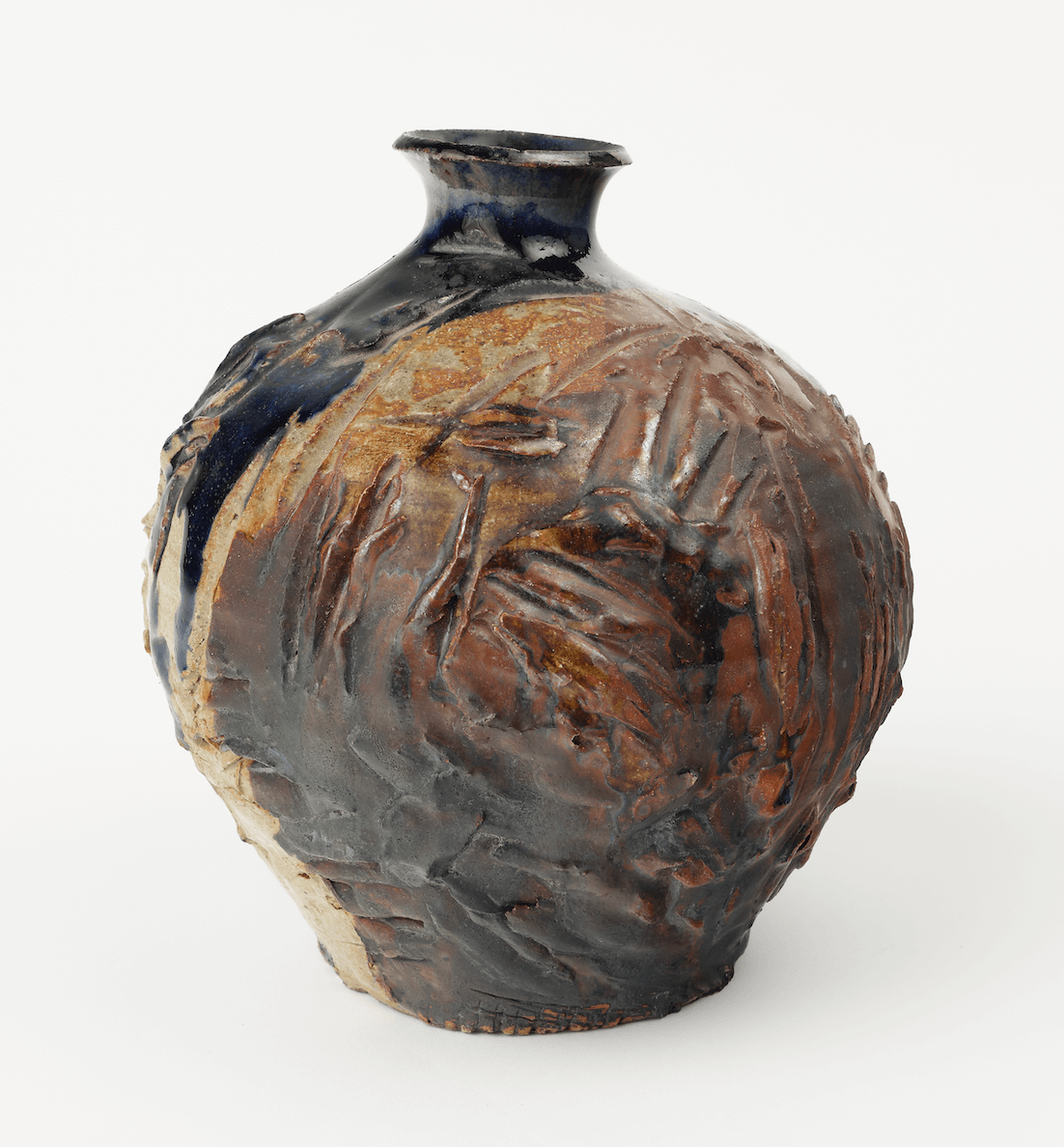
Theresa Hak Kyung Cha, Untitled, c. 1970s. Glazed ceramic. Theresa Hak Kyung Cha Collection and Archive, Berkeley Art Museum and Pacific Film Archive. Gift of Chiye Tamaki, 2019.50.3. Photo: Chris Grunder.
Like a film whose unexpected ending changes the meaning of the entire film, Cha’s violent murder in 1982 loads the reading of the scars on the vase with a sense of foreshadowing, but this reading limits the work. Even if she had lived on to this day, her work would just and still exhort us to live kinder, more caring lives with more room for the unknowable, and more calm before the great mysteries of life and time, and more love for people from afar.
