
REFRESH 2026, Swissnex San Francisco
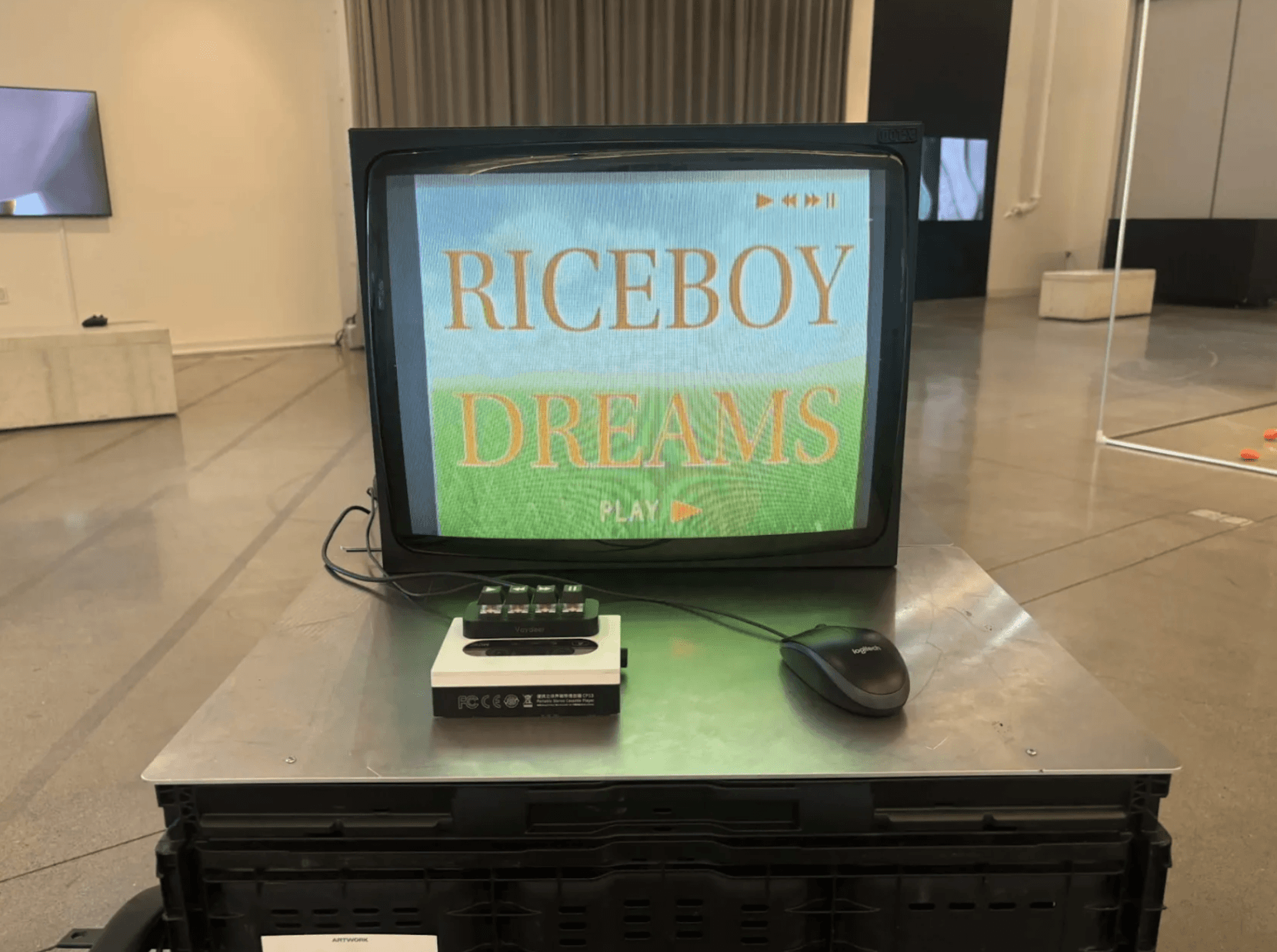
Charles Hanil Roberge, RiceBoy Dreams, experimental game, 2024
Situated between the beautiful waterfront edge of San Francisco and the eternal question of how to define humanity, REFRESH 2026 exposes a world where life is defined by labor. Simultaneously highly comedic and deeply personal, this year’s REFRESH employs interactivity to digitize the human experience, allowing exhibit attendees an intimate understanding of lives they will never interact with through technological methods that are still new to our human senses.
REFRESH’s exhibit entertains using the dull and bleak state of global burnout with the world of human capital in painful tension with the euphoric, alien curiosity sparked by new technologies. By imagining “games” where the primary objective is productivity and the world is an inescapable global network populated by digital imitations of life, REFRESH demands that you question how different people are from our artificial intelligences. If we are forced to work and so are they, why can’t we empathize with the imaginary? What makes a highly filtered and curated internet personality different from a virtually indistinguishable AI personality? Is there value in performing tasks that an AI can do faster, better, and more efficiently?
REFRESH is a festival and exhibition created by the partnership between the Department of Design and the Immersive Arts Space of the Zurich University of the Arts. It now finds itself hosted by Swissnex, visiting the United States for the very first time. This definitionally “new media” exhibition isn’t easily categorized into any aspect of digital art. In fact, the exhibition is almost exclusively composed of art that is often not considered art at all. A wall plastered in heavily altered selfies overlooks a room full of video games, animations, documentaries, and useless robots. A crate full of dirt and an AI-generated version of the pope, both the humble manifestations of hours of creativity and meticulous research, defy typical expectations for a gallery.
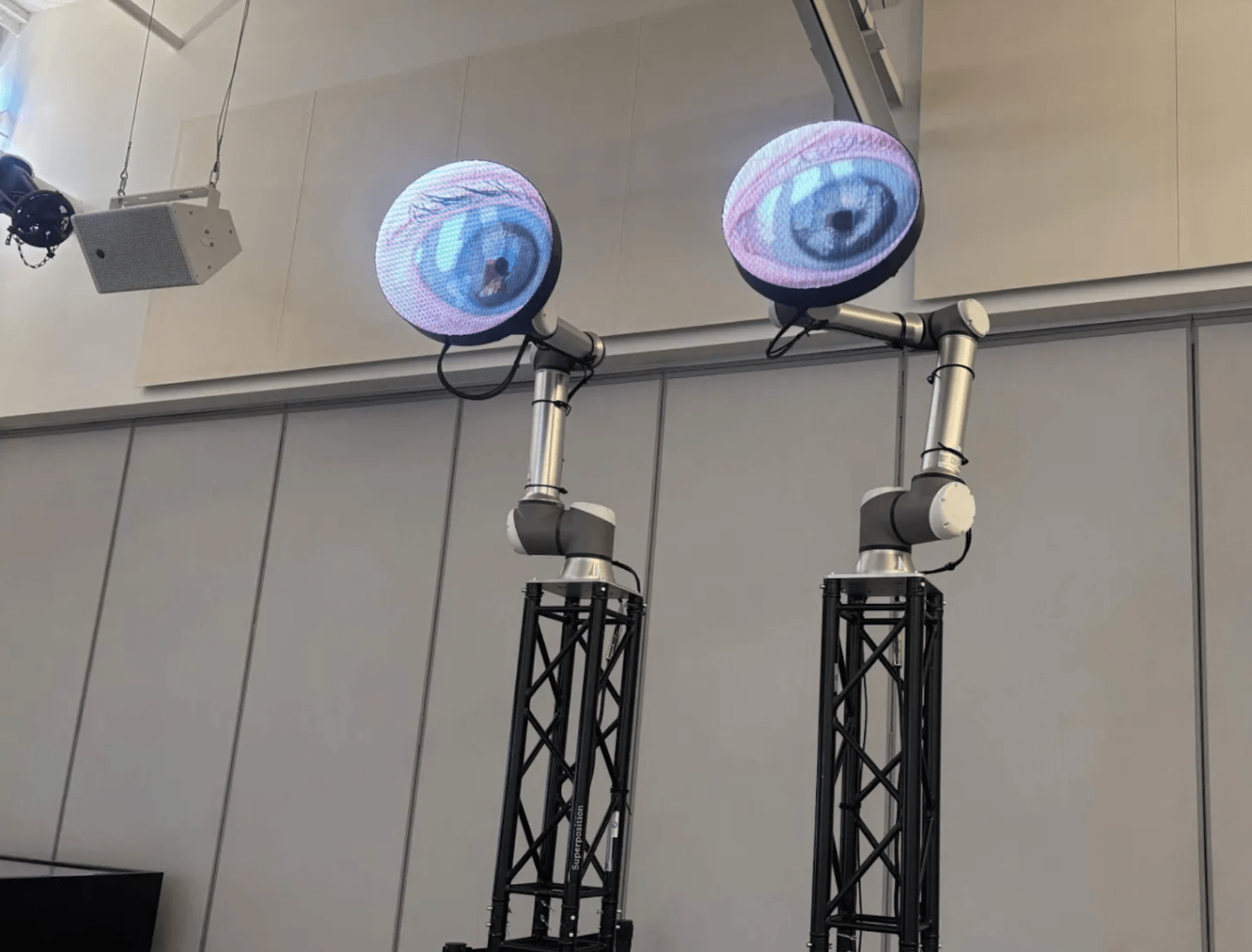
Andrea Anner and Thibault Brett, void avoid (return to nothing), robotic installation, 2025
The works dance over the line of etiquette, presenting absurd, immersive art that must be played with to be understood. An experienced guest may find this uncomfortable, but should know that the exhibit reflects these feelings as well. Void avoid (return to nothing), a robotic installation by artists Andrea Anner and Thibault Brett, both yearns for and fears your interaction, with two high-definition eyes that seek out gallery guests but turn away when faced directly, imitating shyness. The robotic joints were originally used in manufacturing and would have been secured behind a safety barrier, featureless and distinctly off-limits. But the artists saw humanity in the machine and made it into something that replicates us, choosing the windows of the soul to display its faux-emotion. Rather than generating products on an assembly line, the pitiful automaton now manufactures a level of empathy often denied to the public service worker, who we would rather keep sequestered behind a safety barrier.
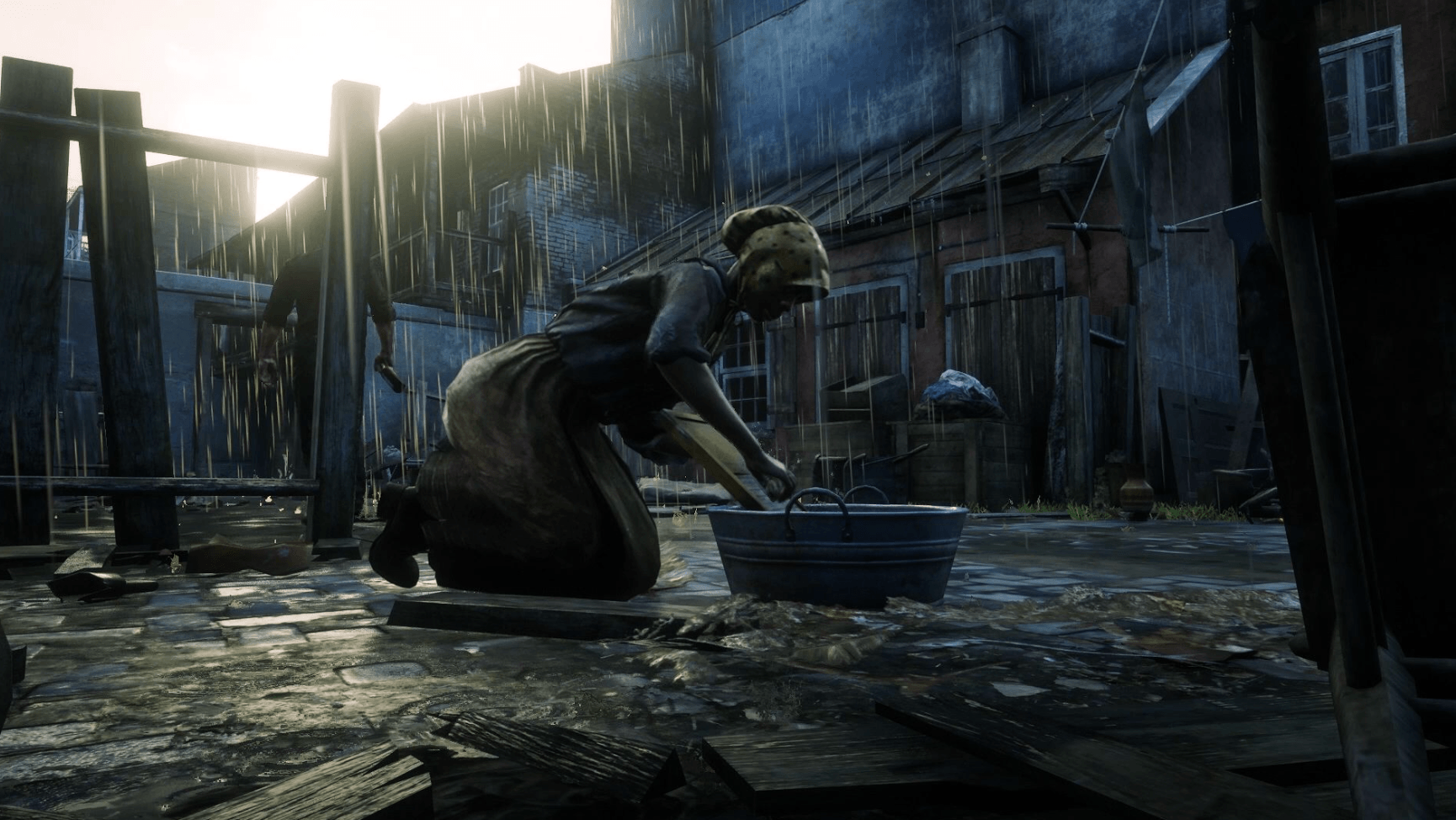
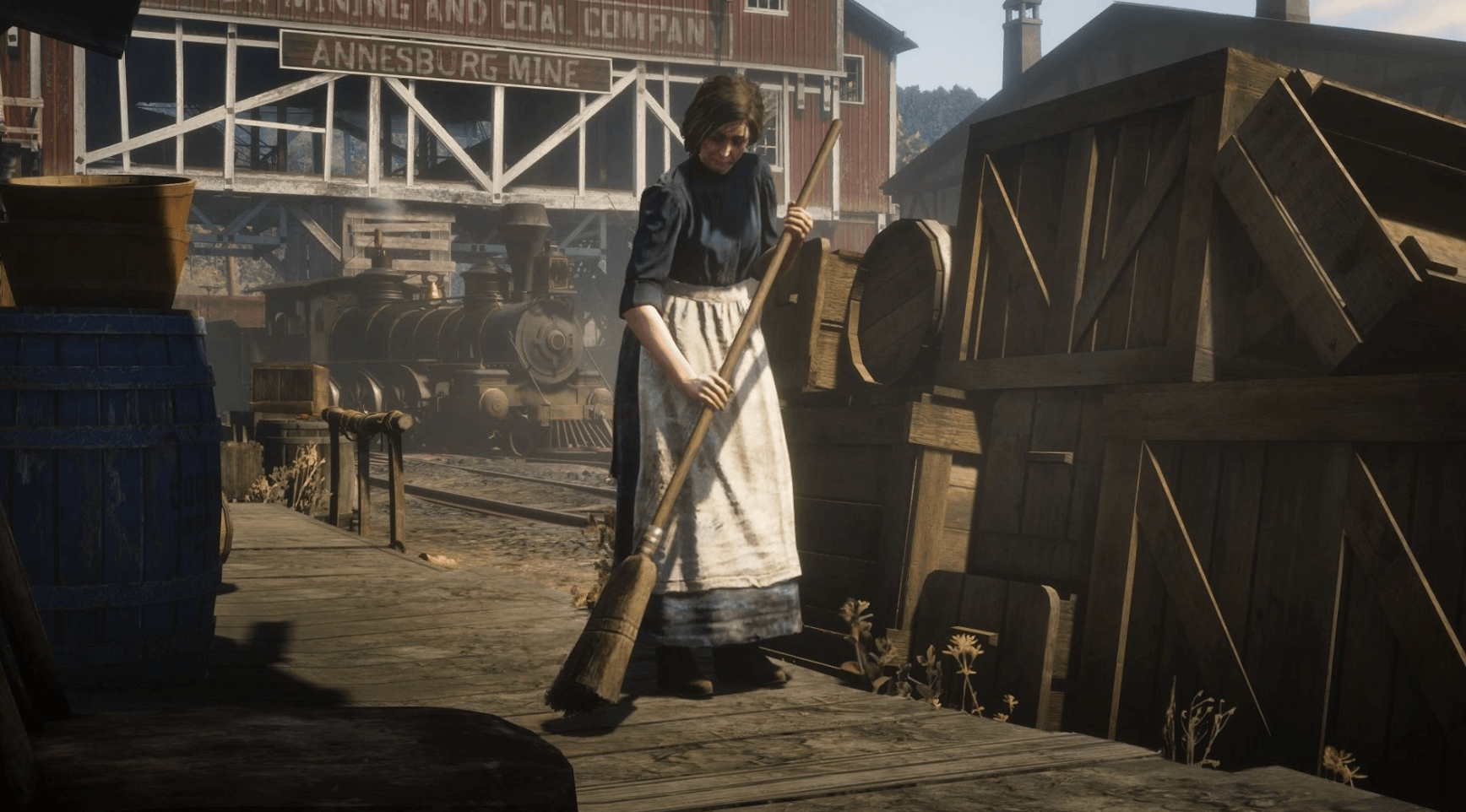
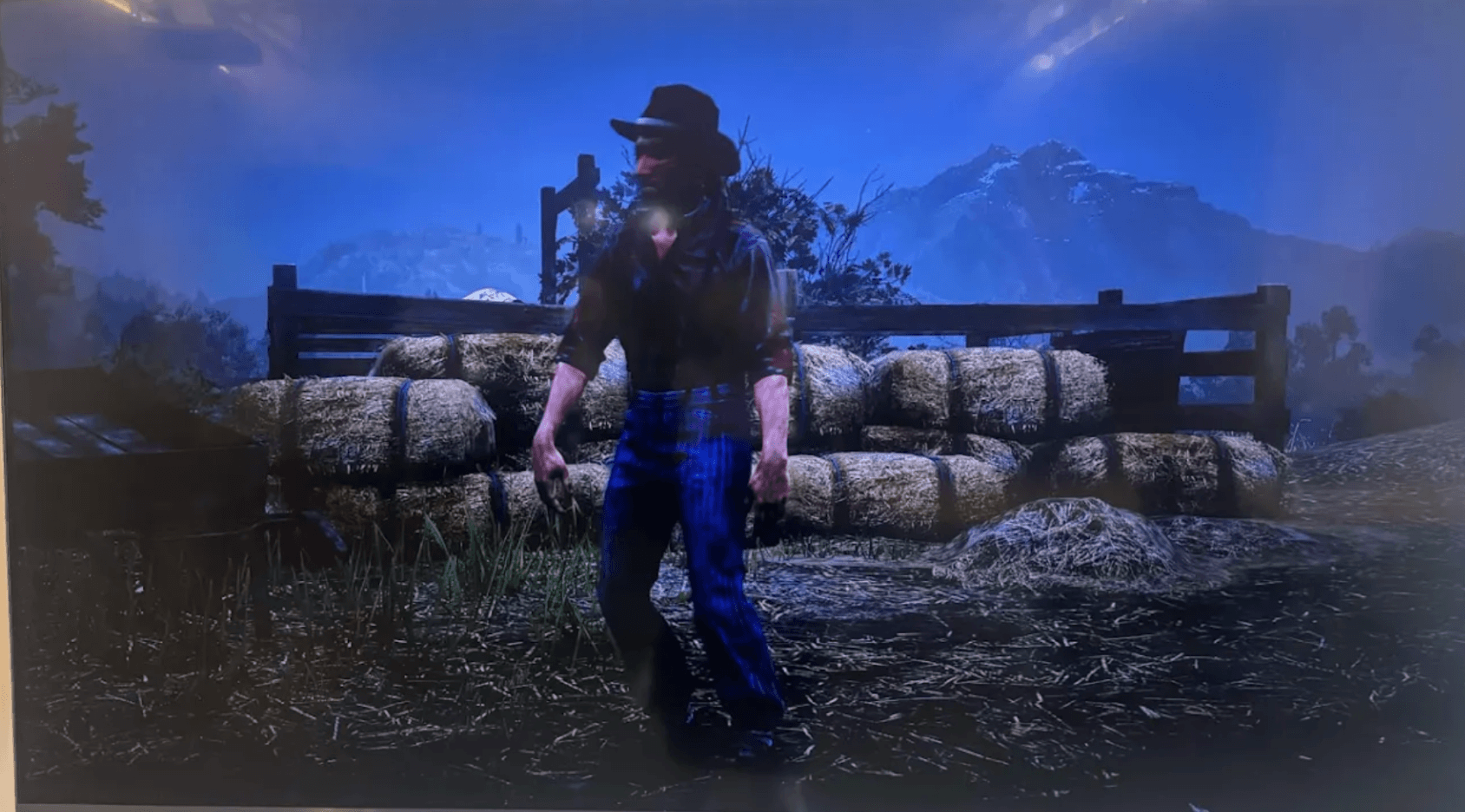
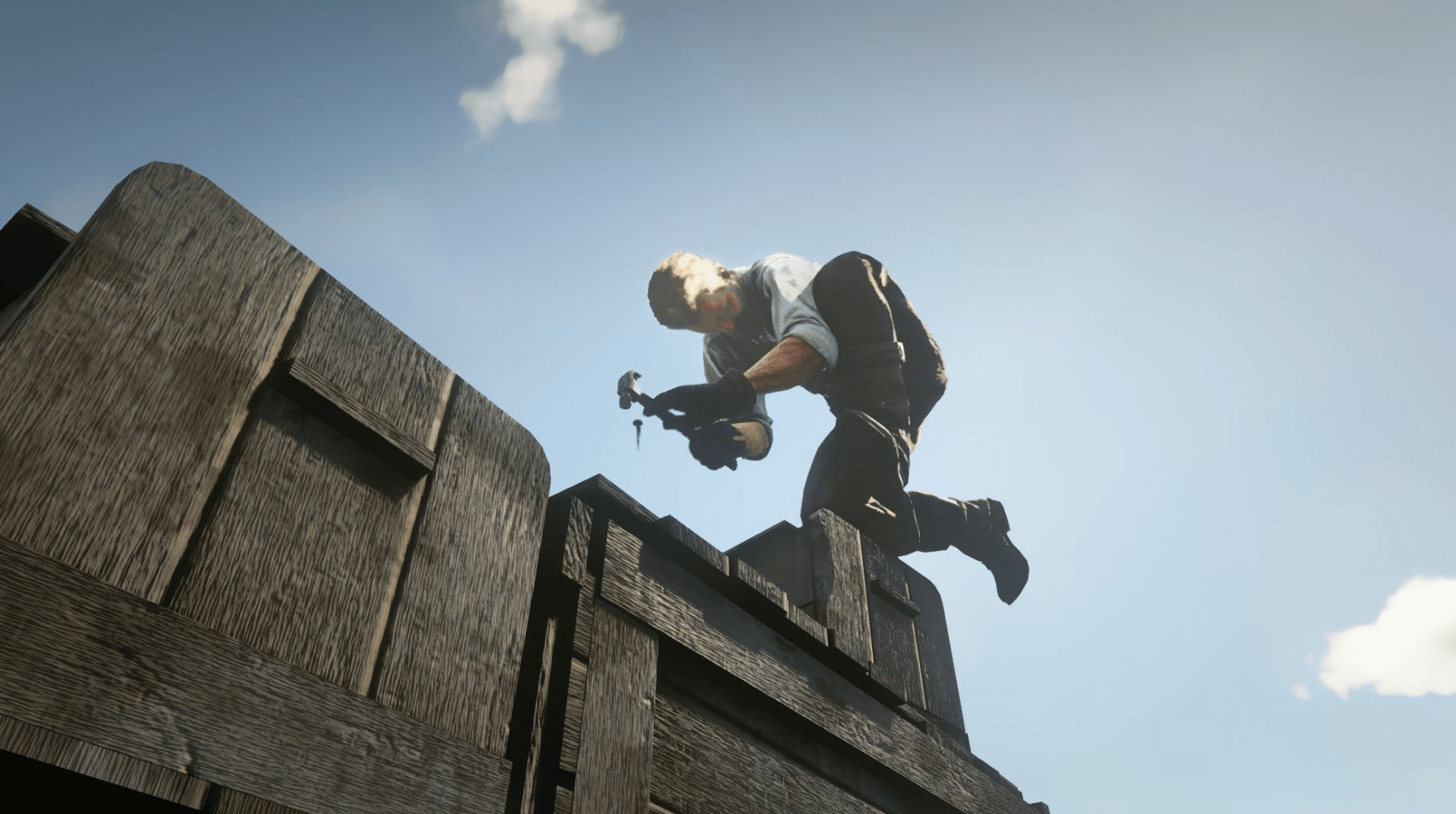
Total Refusal, Hardly Working, film installation, 2022
We see ourselves in these metal bodies of code and wiring in their non-consensual pursuit of the endless global project. By each being a small part of a mysterious and undefined ‘progress,’ we have no attachment to our work or our world. Food comes from ambiguous places we will never see or truly understand and our lives are dedicated to goals we did not choose to pursue. Like the non-playable characters in Hardly Working, a film by artist group Total Refusal, we toil without a defined goal the way that workers are expected to. Pocket Boss, a game by artist Mario von Rickenbach, has you drag and drop 2D elements into place in simple, minute-long puzzles. In spite of its inclusion as art in an exhibit, how different is this game from a job sitting at a computer? You change graphs on miscellaneous data and respond to text messages to achieve the goals of your superior without any hope of having an impact on the world. Its upfront and confrontationally unsubtle humor doesn’t change its applicability as you move forward without a clear finish line and no objective but ‘progress.’
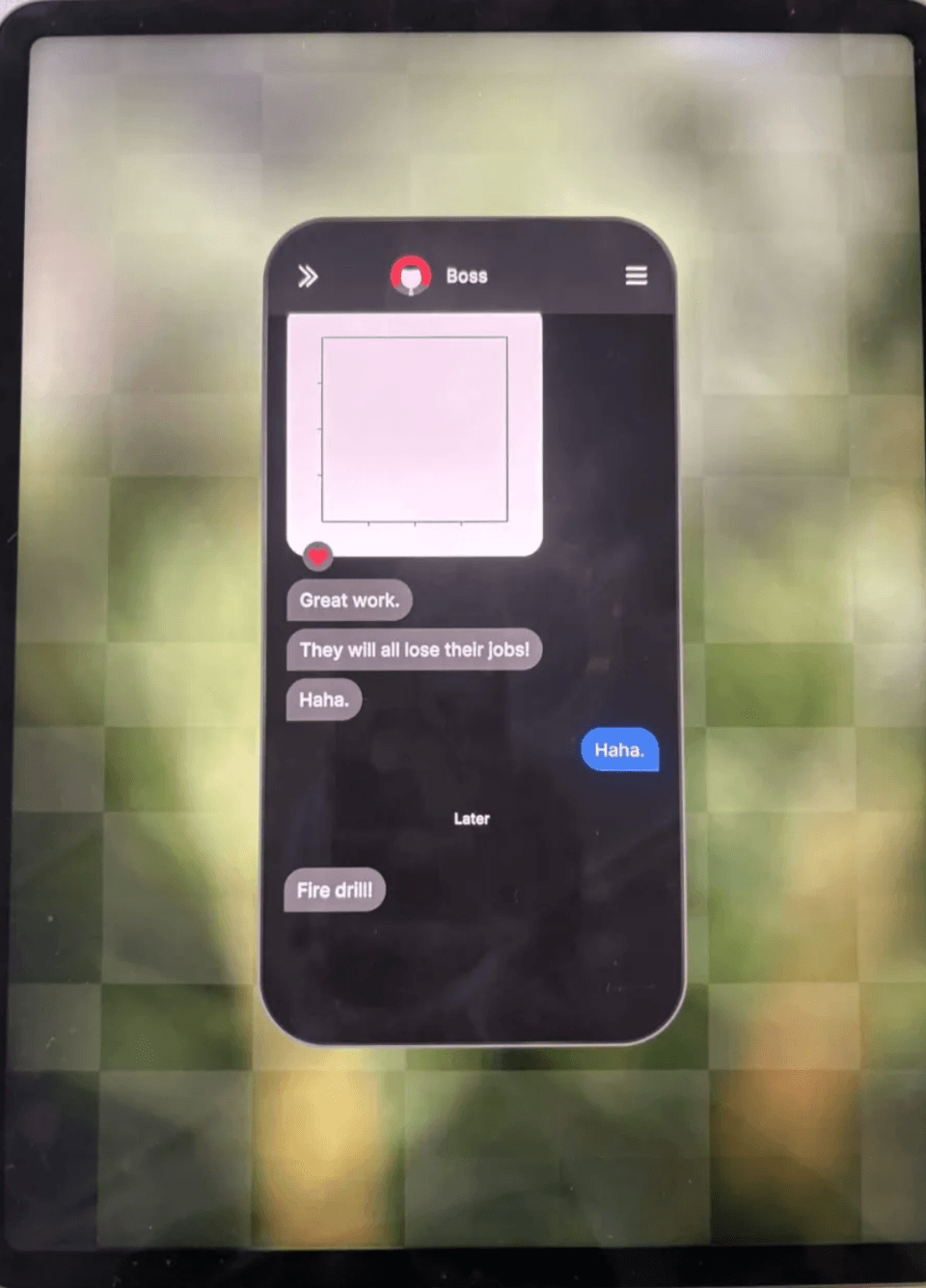
Mario von Rickenbach, Pocket Boss, experimental game, 2025
However, this is still seen as a luxury career path. A work essential to the exhibit’s continued theme of ‘state-of-the-art dystopia’ is the 2016 film Hyper-reality by artist Keiichi Matsuda. Jarringly transparent in its messaging, this video warns of a world where technology directs humans towards the most efficient version of our primary objective, following the heavily digitized life of a woman sorted into a job as an on-demand grocery shopper. Her world flickers between the visual overstimulation of an internet once meant to be representative of life but having now overtaken it, and the empty, barren boredom of the world without it. This glaring warning-light media is effective not only in showing humanity’s theoretical future but also in reminding us why we continue to hurtle towards this future. Our billionaire aristocrats don’t see themselves represented in the laborer. They don’t empathize with the manufacturing robot. They view cyberpunk stories through the lens of the ultra-wealthy and see no reason not to pursue this life of instant gratification. In Hardly Working, all of these non-playable characters are low-class workers, usually in low-skill trades, who could disappear from the broader story of Red Dead Redemption with minimal impact on the player’s experience.
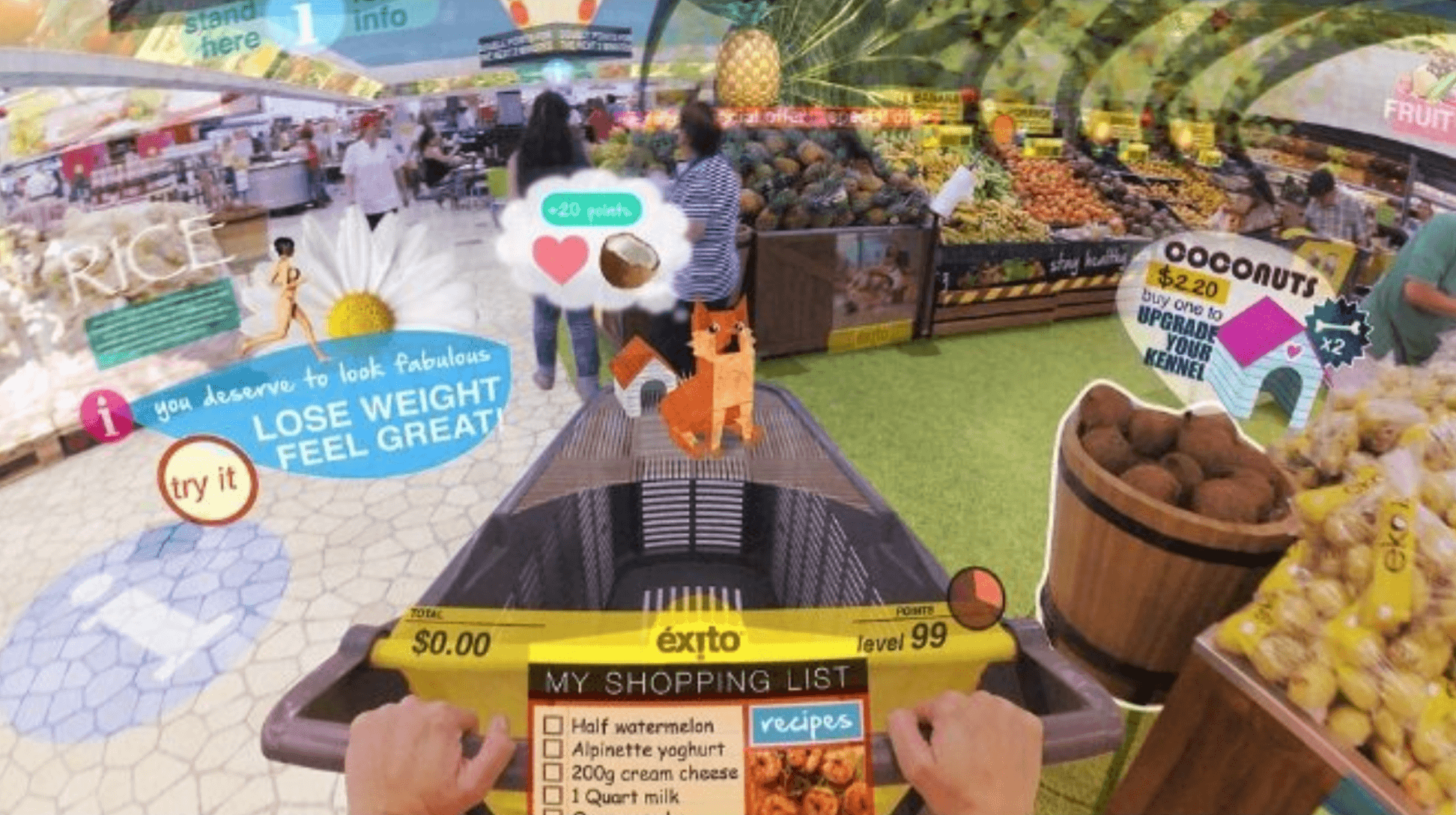
Keiichi Matsuda, Hyper-reality, film installation, 2016
Hyper-reality is a particularly interesting inclusion, as the term “hyper-reality” has been catapulted back into popular usage in this new online era of indecipherability, where you are unable to differentiate imitation from original. With its now distinct ties to AI, it joins the list of pop-culture terms that have taken on new meaning in a recent era where AI seems to be the deciding invention of our future. “AI” itself has been so heavily utilized by speculative media in the past that we have developed a very particular view of what “AI” is that does not accurately represent the capabilities of the LLMs and agents with which we now interact.
Our cultural view of AI as an intelligent, artificial organism that can think and make decisions causes us to mistake AI for something that is sentient. What would it mean for a video game NPC to become ‘sentient’ and how different would that intelligent creature’s life be from your own? Are humans valuable in a world without the need for human labor or human art? If our needs and our culture can be fulfilled entirely by technology that imitates us, what remains as the point of humans in a human society? REFRESH 2026 reinforces this fear with an incredible lightness and immersion, showing, potently, the value the human mind has outside of work. Even though it may be functionally able to interact with the art showcased, AI would be unable to understand what it represents, finding no joy in its humor, or understanding the human lives and histories that make the art of REFRESH great.
