

Justin Wong
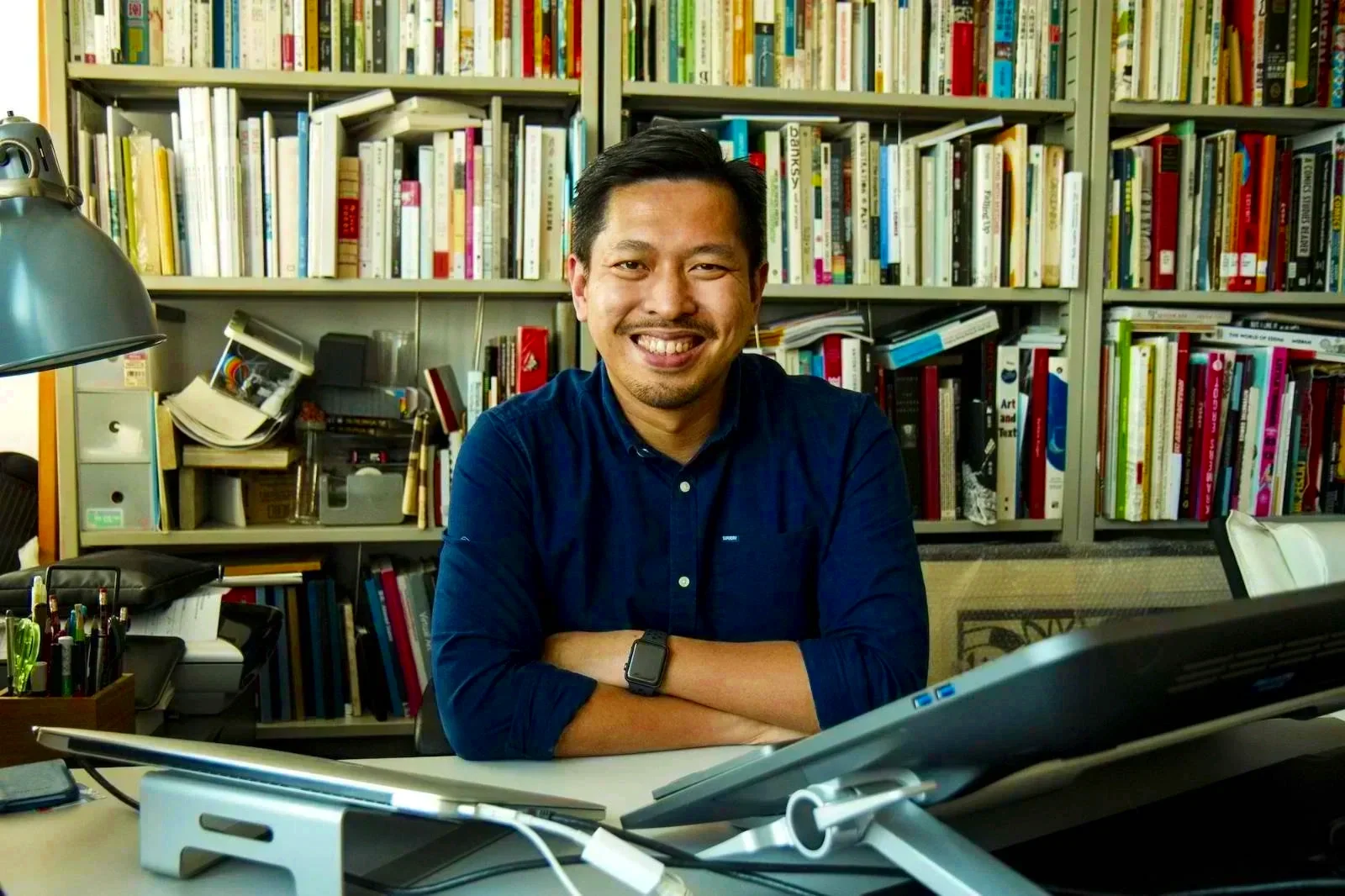
Justin Wong is a Hong Kong-born, London-based comics artist, political cartoonist, and scholar whose work spans political satire, visual storytelling, and cultural research. He is best known for his long-running daily column Gei Gei Gaak Gaak in Ming Pao, one of Hong Kong's most widely read newspapers, where he began his career as a political cartoonist in 2007. Over two decades, he has published comics series across Hong Kong, Taiwan, and France — including This City / That City, New Hong Kong, Hello World, and Je préfèrerais ne pas — and participated in numerous international exhibitions and art festivals. He previously served as an Assistant Professor at the Academy of Visual Arts, Hong Kong Baptist University, where he taught and researched comics studies, visual culture, and political cartooning. He is also the founder of Skip Class, an online platform connecting creative practice with critical reflection. He currently lives and works in London.
The following are excerpts from Justin Wongs interview conducted by Hugh Leeman.
Fleeing Hong Kong: Four Days to Leave
Hugh Leeman: Justin, you grew up in Hong Kong, taught at Hong Kong Baptist University, and were a well-known illustrator and political cartoonist for the newspaper Ming Pao. Yet you left your teaching position and fled to London. Take us through the story of this life-changing series of experiences. What happened?
Justin Wong: Just to clarify — I'm still working for the newspaper, but on different topics now. I did political cartoons for them for almost eighteen years. At the same time I was teaching comics and illustration at Baptist University. A few years ago, in 2020, I wrote an article about the protests in Hong Kong in 2019 — analyzing the illustrations that emerged during the protests. It was published in a magazine out of Switzerland, through a collaboration with a university there. A five-hundred-word academic article, very neutral. I didn't insert my own point of view. I used some images from the internet and some of my own works. One year after I wrote it, the magazine was finally printed and they sent a few copies to Baptist University. A few days later, my boss called me and said there was a problem with the article. I knew what it was about — the national security law had just been implemented in 2020. So I said, okay, what do you want to do? You can just fold them away, they're not even distributed. But to my complete surprise, a few hours later I learned that the university had called the police. Over an article that wasn't even in public circulation. I was totally shocked. It felt like a betrayal. It was a school project, an academic writing. And then I decided to leave Hong Kong. In four days, I was gone. And I have never gone back.
Hugh Leeman: Who is "they" in this context — who made that decision?
Justin Wong: Senior management at the university. I don't know exactly who called the police, but it must have been a very senior position. Some said it was the president. I cannot confirm. But they called, and I knew what would happen next.
Hugh Leeman: You gave yourself four days. You knew what would happen if you stayed. What would have happened?
Justin Wong: I can't predict exactly, but very likely they would have come to the university and detained me for questioning. There was a chance nothing would have formally come of it — reporting to the police doesn't automatically mean a case is established. But you have no faith and no trust in the system anymore. And there was another factor: a few months before this, I had already drawn a comic strip that upset the police. So by that time, I'd already decided to leave Hong Kong — I just didn't have a concrete plan. I had a visa. So when this incident happened, I said, I already have the visa, why not just go now? I put my plan ahead and left.
Hugh Leeman: What was the motivation for getting the visa before any of this happened?
Justin Wong: The BNO visa was introduced in early 2021, after the case of the 47 — activists and pro-democracy lawmakers who organized a primary election as a strategy for the next official election. They were all arrested for alleged subversion. University professors, lawmakers, journalists — not criminals. That case triggered the UK government to introduce the British National Overseas visa. A lot of Hong Kong people decided to leave out of fear for their safety. I was doing political cartoons, so I was high risk. That's why I decided to get it.
Hugh Leeman: The Hong Kong Free Press published an article shortly after, and in it the school denied calling the police, while you were quoted saying you heard through unofficial channels that the police were called. Can you clarify what actually happened?
Justin Wong: It was actually my department director who told me directly that the school had called the police — not a rumor, not a back channel. He was told about it by senior management, who then told him not to tell me. But he told me anyway. And even after I left, my former colleagues confirmed that the police did follow up. Later, the police denied there was any official case. Because once I was gone, they thought, okay, the problem is gone, just leave it. That's what I believe happened.
Hong Kong, the National Security Law & the Collapse of Democracy
Hugh Leeman: Before we go deeper into your story, let's give some context to listeners. For people who may not know, can you offer a brief picture of Hong Kong going from a British colonial possession with certain democratic protections to where it stands now?
Justin Wong: The most significant moment was the protests in 2019. We had two million people in the streets. A lot of fighting, a lot of violence. The Hong Kong government couldn't handle it, so the Chinese government stepped in and implemented the national security law — essentially a copy of their own mainland version. We never had anything like that in Hong Kong. It gave them all the tools to arrest people. Journalists, lawmakers — the most high-profile case was Jimmy Lai, who ran Apple Daily, the most popular newspaper in Hong Kong. With that law in place, freedom of speech was gone. Totally gone.
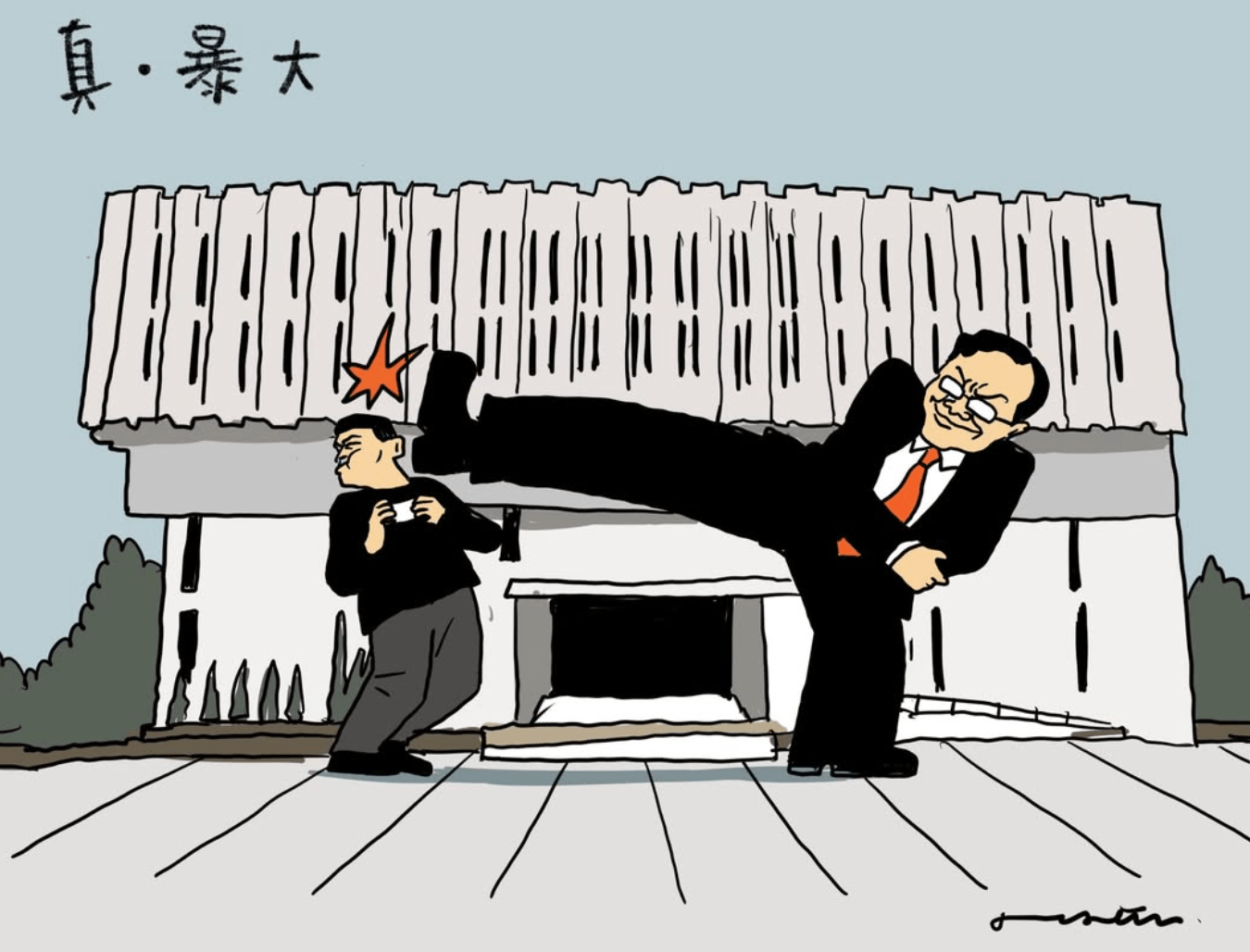
As for me, I had already stopped my political cartoon column even before the article incident. There was an earlier episode where I drew a comic about a conflict between journalists and police — I was just making fun of the situation. The police were not happy. They filed complaints to both the university and the newspaper and posted their letters of complaint on social media to pressure me. From that point, I stopped the political cartoon column and changed to a non-political topic. Fortunately, I'm still with the paper because of that.
Hugh Leeman: You mentioned the 2019 protests, the national security law, journalists being arrested. What should the West understand about the anti-extradition law amendment bill — the ELAB — and how a democracy deteriorates from within?
Justin Wong: The protest was actually triggered by something very specific and accidental. A Hong Kong man killed a Hong Kong woman in Taiwan. The government wanted to change the law to bring him back for trial, and suddenly people realized this change could have much larger consequences — it could allow extradition to mainland China. So it escalated. And the Hong Kong government handled it terribly. At a certain point they just lost control, and the Chinese government stepped in. I don't think Beijing planned for it to end this way from the beginning. But they'd had enough. And for Hong Kong people, we saw their true face — that Hong Kong would never have democracy under China. There was a Sino-British declaration, a promise of fifty years of autonomy and democracy. We dreamed about it for thirty years. And then it became clear they would never honor it. The bubble burst for both sides. The Chinese government said, we've had enough. The Hong Kong people said, we will never get what was promised. That was the end game.
Art, Symbols & the Language of Resistance
Hugh Leeman: Your former employer, Hong Kong Baptist University, notified the police about an academic article in which you analyzed the role of visual art and symbols in the resistance demonstrations. You used imagery that included a slogan now outlawed in Hong Kong — "Liberate Hong Kong, revolution of our times." What was it about your analysis of art and symbols that was seen as so threatening?
Justin Wong: Honestly, what I wrote wasn't the most important part. It was the images. I grabbed some from the internet, and some of them contained that slogan, which was now forbidden. Whenever they see those images, they become very, very sensitive. And I think by that time there was an atmosphere where the university wanted to draw a line — to say, this is not us, this is just him. They wanted to separate themselves from me, to protect themselves and show their loyalty to the government. It didn't matter what I wrote. They knew my work — I'd been teaching there for thirteen years — and the former president and senior management never had any issue with my political stance. But by then, I think they'd started to identify people they were happy to get rid of.
Hugh Leeman: You put together graphic novels across your career — New Hong Kong, Hello World, and another called This City, later renamed Dead City, published after you left. Can you walk us through the evolution of your work and how the political climate changed what you were making?
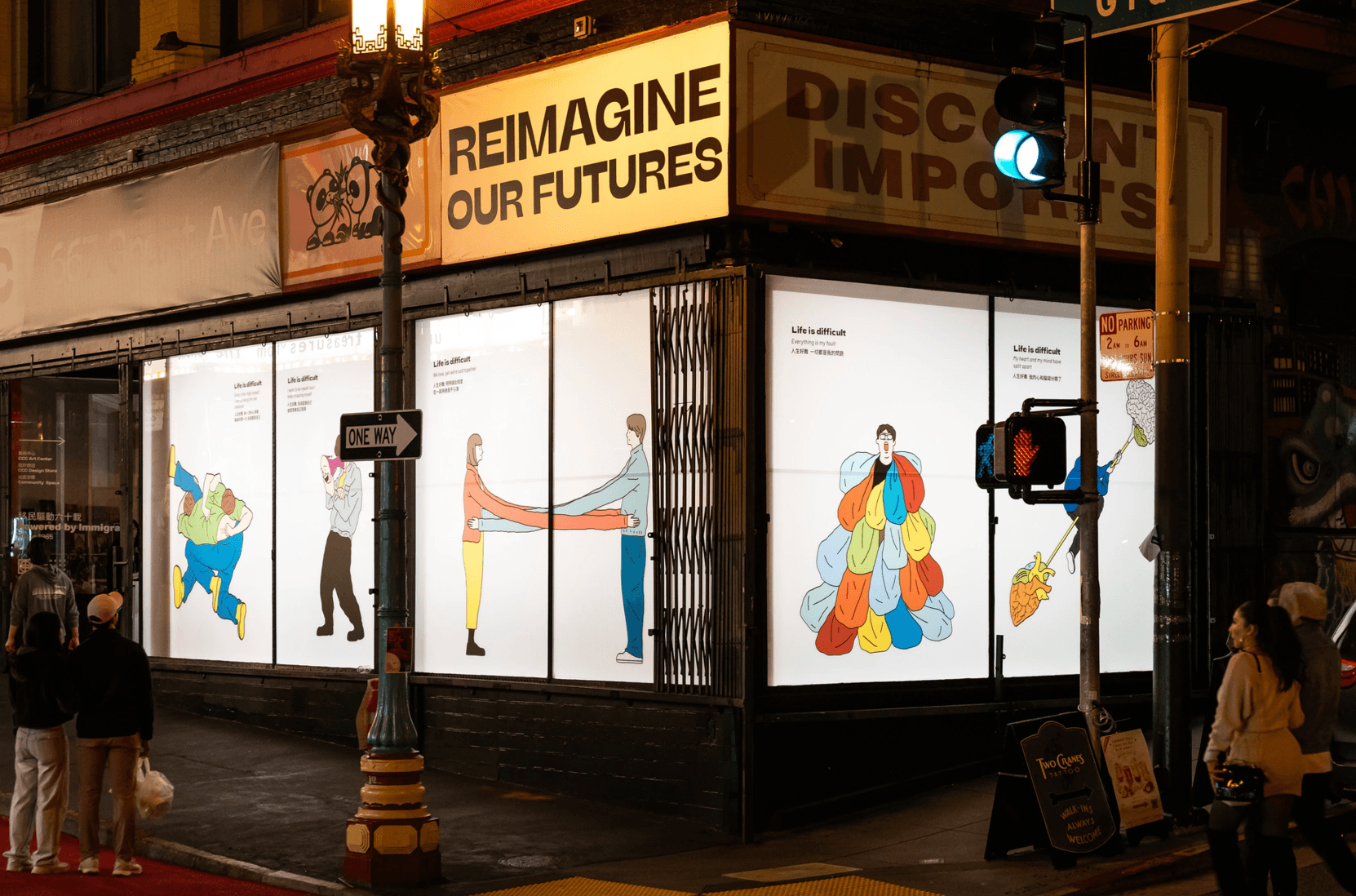
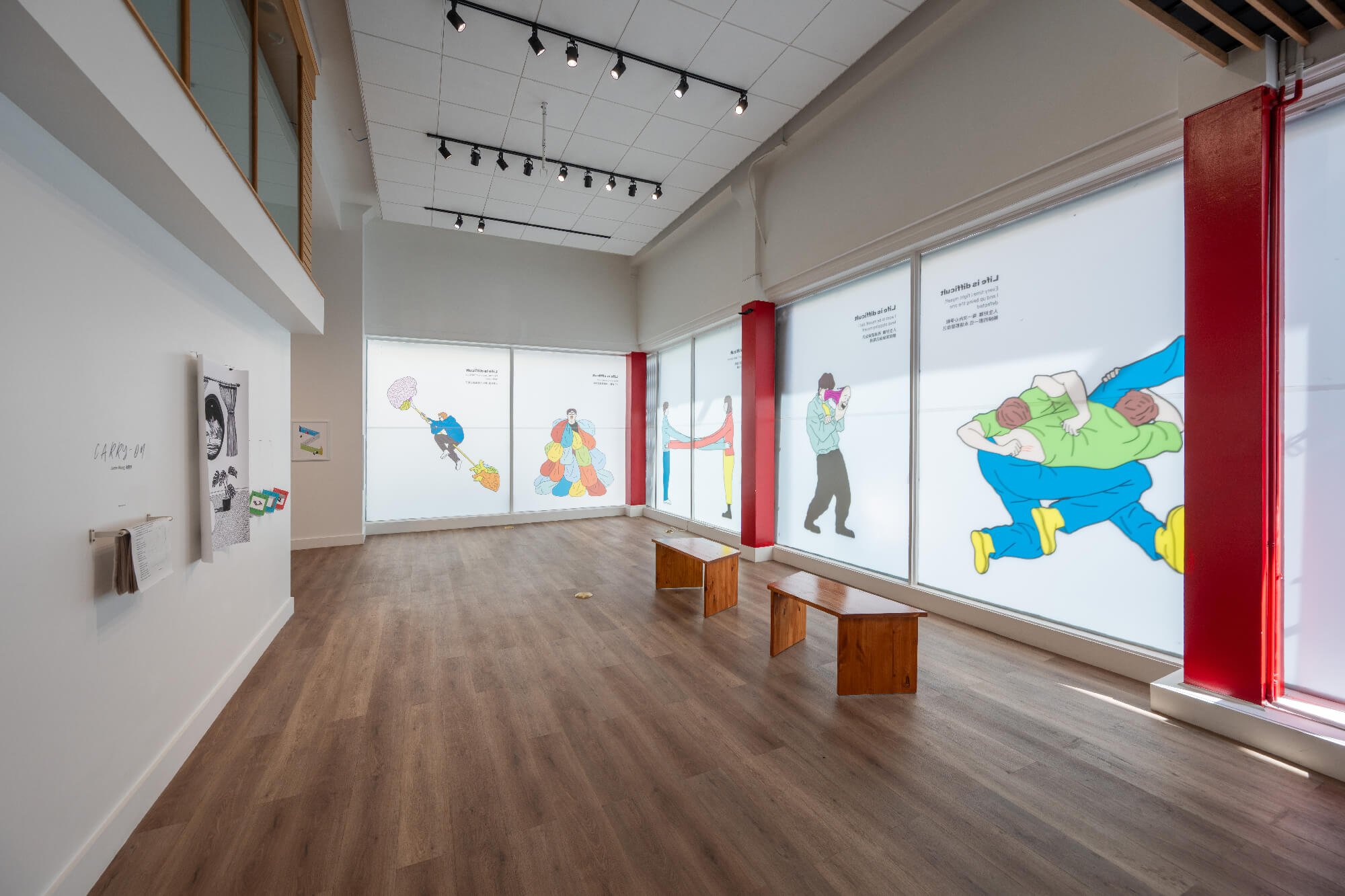
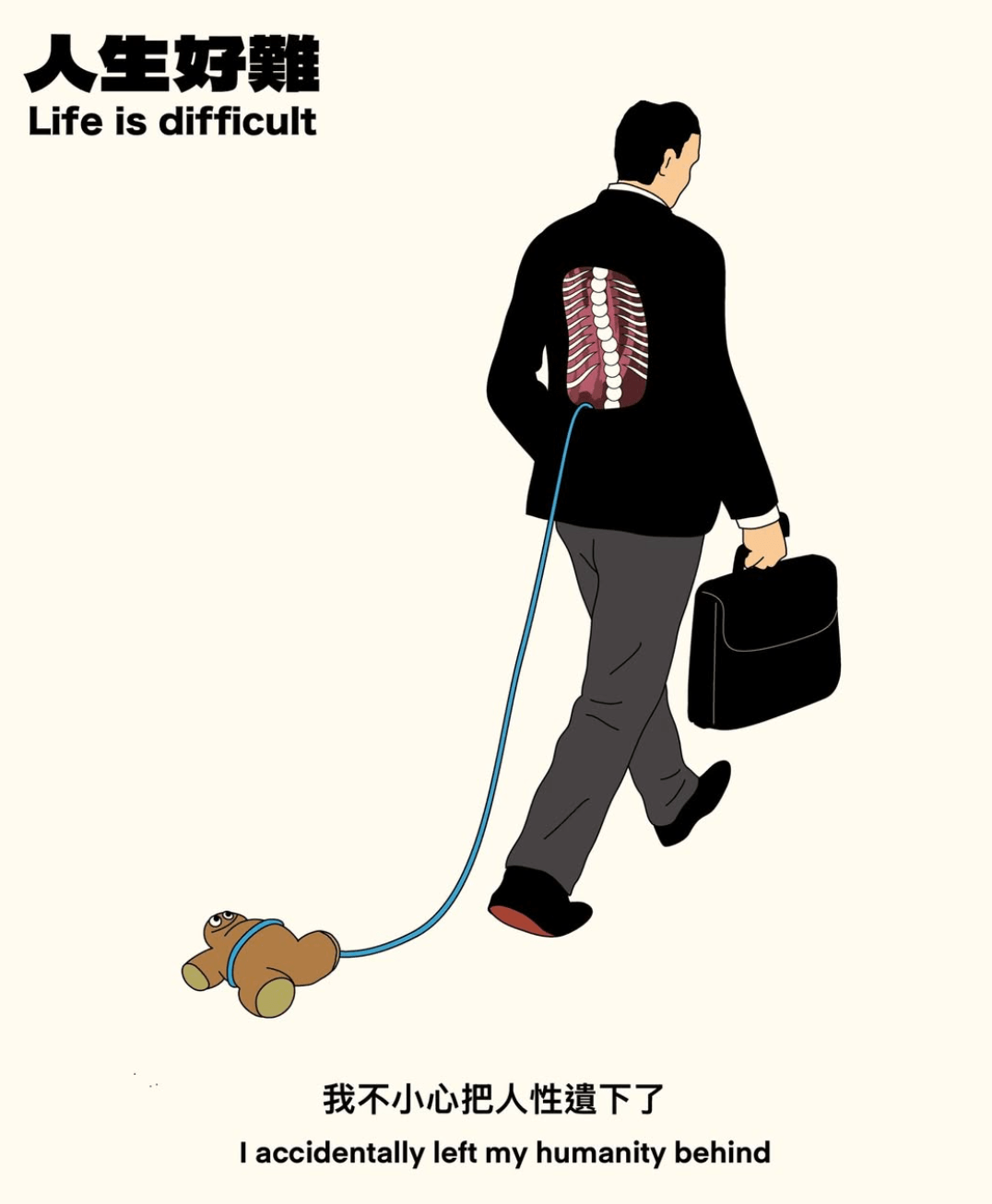
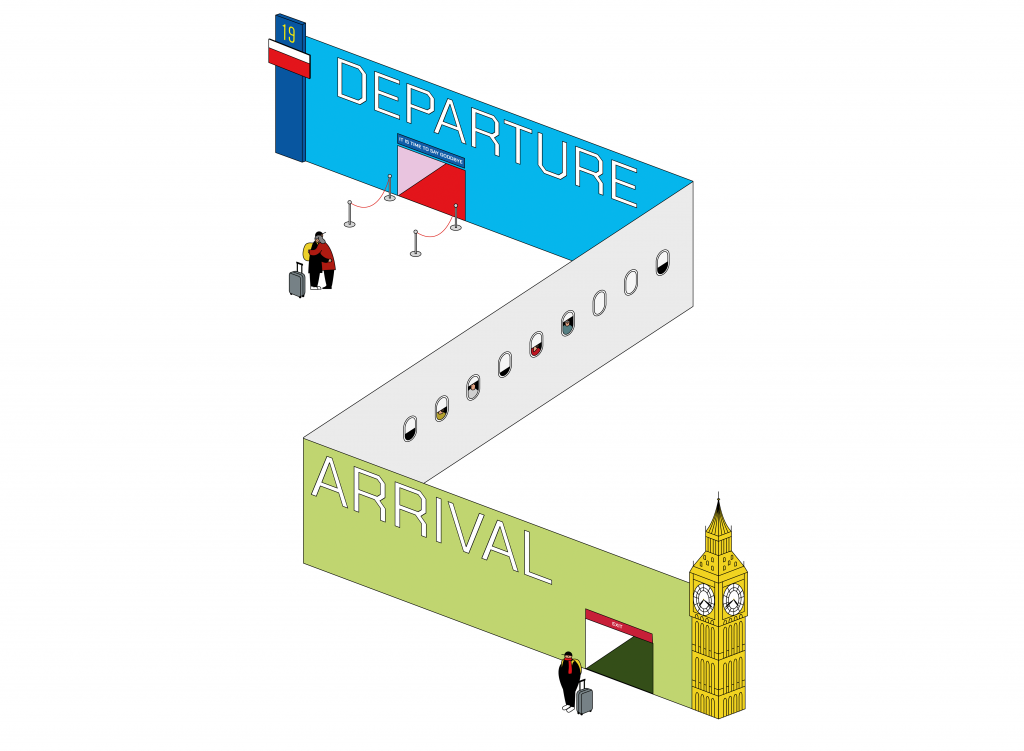
Justin Wong: Hello World was my first graphic novel — a father and son story, not related to the protests. New Hong Kong came out after the Umbrella Movement, around 2015. It was a collection of the daily political cartoon column I ran in the newspaper, responding to current events. Then there was This City, which I created before the national security law was implemented. It was very direct political satire. After I worked on it for a few months, the national security law came in and I asked my editor if it was safe to continue. They didn't give me an answer. They didn't tell me to stop, but I didn't feel safe. So I changed the series — from This City to That City, meaning we're not here anymore, it's there. The whole mood shifted completely. I was still in Hong Kong, but people were starting to leave, and there was this very intense emotion around departure. COVID was beginning at the same time. The whole city, the whole world, felt this hole in the heart. So I moved from direct satire to something much more emotional — about pain, about loss. That work was published in 2023 by a Taiwanese publisher. There were two stages: political satire, and then personal emotion. The second is what you see in the exhibition now at CCC.
Hugh Leeman: Earlier you mentioned the incident that led you to stop your political cartoon column before the university situation — where you drew a strip about police and journalists. You were made to apologize after a complaint from the Hong Kong police. The strip featured two children at school: one asks, "Do you think you can do whatever you want when you pretend to be a journalist?" The other responds, "Wow, where did you hear that fake news from?" And the first says, "I don't know. My friend from junior Police Call was spreading this." Reading this as an outsider, it hardly seems threatening. Can you explain what made it so sensitive?
Justin Wong: The context was a primary school — a junior police call, which is like a metaphor for police, and a little campus journalist. I used this school scenario to make fun of what was actually happening in society: the police were constantly accusing journalists of spreading fake news to justify their own actions, and the journalists were pushing back. It was a society-wide argument. I just took that conflict and turned it into a funny campus version. But by that time, after the 2019 protests, the Hong Kong police were very conscious about their image. Their relationship with citizens had completely broken down. So whenever anyone criticized them, or talked about them in any way that wasn't favorable, they would react very strongly. They were desperate to rebuild their reputation. And that's why a cartoon like that — which seemed so mild — triggered a complaint.
Identity, Exile & Finding Yourself in London
Hugh Leeman: The Chinese government is threatening your writing, threatening your comic strips, threatening your illustrations. All that you've described — the fleeing, the betrayal by your employer, the fear of incarceration — amounts to them stripping away your artistic identity, your teaching identity, and your public credibility. Psychologically, how does one deal with all of that?
Justin Wong: It's difficult. I decided to leave Hong Kong one day, and four days later I was already in London. I remember arriving and participating in an online symposium about comics. When they asked me to introduce myself, I suddenly didn't know what to say. I used to say — I teach at a university, I'm a political cartoonist. And suddenly both of those identities were gone. I thought, what am I? I'm an artist. That's the only identity I could claim. And it was a very, very difficult period to find myself again, because my whole life had been built on those two roles.
The more positive thing was knowing I wasn't the worst case. There were people who had just one day to leave. And as more and more Hong Kong people came to London, I got more friends — people who, even if they weren't forced out like me, still chose to come and sacrificed what they had. A lot of them were professionals earning good salaries, with good futures. But they had kids, and they couldn't trust the educational system anymore, with its very clear intention of national brainwashing. Knowing I wasn't alone helped enormously.
Hugh Leeman: Where do you see yourself in relation to the Chinese government — are you an activist, a journalist, an artist? How do you define your own role in this conflict?
Justin Wong: It's complicated. Unlike activists in other countries who have a direct relationship with their government, in Hong Kong there's a Hong Kong government in between — one that was supposed to be a civilized, rational institution. I did political cartoons for eighteen years and never had a single issue. The newspaper never asked me to stop. I had total freedom of speech. So it's not like the Chinese government was directly threatening me — things went through the Hong Kong government, which made it confusing. Were they representing Beijing, or not?
I never saw myself as an activist. Even now. I started doing political cartoons because I had a talent for drawing and telling stories, and I wanted to express what I felt about society. The newspaper gave me a platform to do that, and I was really, really happy doing it. I thought I was doing the right thing. But I never intended to be an activist. I still draw political cartoons for an online media established by Hong Kong people in the UK — one work per week. And I draw a line for myself: I'm not doing things to fight the government. I'm doing things I believe are right, that are good for the Hong Kong community. That is my raw intention. Some people because of how I left, would call me a freedom fighter. I won't claim that. But I will continue to publish work I believe is true.
The Art Development Council, Blacklisting & the Silencing of Culture
Hugh Leeman: You've spoken of betrayal, of arresting people, of explicit and implicit threats. There's also the concept of being blacklisted — the canceling of someone. Can you speak to what you personally experienced with the Hong Kong Arts Development Council?
Justin Wong: Someone nominated me for the ADC Award — the Arts Development Council gives out awards across visual art, theater, film, and other disciplines. I knew I probably wouldn't get it given my background, and sure enough, I received a letter saying I wasn't selected. Fine, I'd prepared myself for that. But a few weeks later, a friend told me I had actually won — the judges had selected me as the awardee. But the ADC Council overruled the decision and disqualified me. That's when I realized I had no future in Hong Kong even if I stayed. Artists depend heavily on government funding through that council. And I could see what was happening — theater groups unable to rent venues, shows canceled the day before with excuses like "there's a problem with the venue." Over and over. Freedom of speech had become a memory.
Jimmy Lai, Apple Daily & the Twenty-Year Drawing Project
Hugh Leeman: I want to talk about Jimmy Lai. Who is he, and what does he mean to you personally, beyond the typical public narratives?
Justin Wong: He was a businessman who came from China as a young immigrant and worked his way up, originally selling garments. After the June 4th incident — Tiananmen — I think something changed in him. He loved China when he was young, but after that, his perspective shifted. He started Apple Daily, which became the most popular newspaper in Hong Kong, along with several other magazines. It was a pro-democracy publication — in Hong Kong politics, you are either pro-government or pro-democracy, very simply. Apple Daily was very successful but also very controversial, very tabloid in style, very critical. During the protests, it played a huge role. The government had been trying to pass Article 23 — a national security law — since 2003, and 500,000 people went into the street to stop it, which began a kind of annual protest ritual every July 1st. Apple Daily was always there, closely tied to those activities.
None of that was illegal. But he became the Chinese government's number one target. He was rich, he had a press empire, and they accused him of being funded by America and being too close to Western politicians. Once the national security law passed, they finally had the tool to arrest him. He's been in jail since then.
What moves me is that he had the chance to leave — with his money and power, he could easily have gone. But he refused. He knew his fate. He said Hong Kong had given him so much, and he wanted to repay that. He wouldn't leave. I'm really moved by that. Even though I don't know him personally, and I published in Ming Pao, not Apple Daily, and sometimes I didn't even like Apple Daily's tabloid style — I deeply appreciate what he represents.
Hugh Leeman: His story inspired your twenty-year project. Can you explain the project and what emotional state gave birth to it?
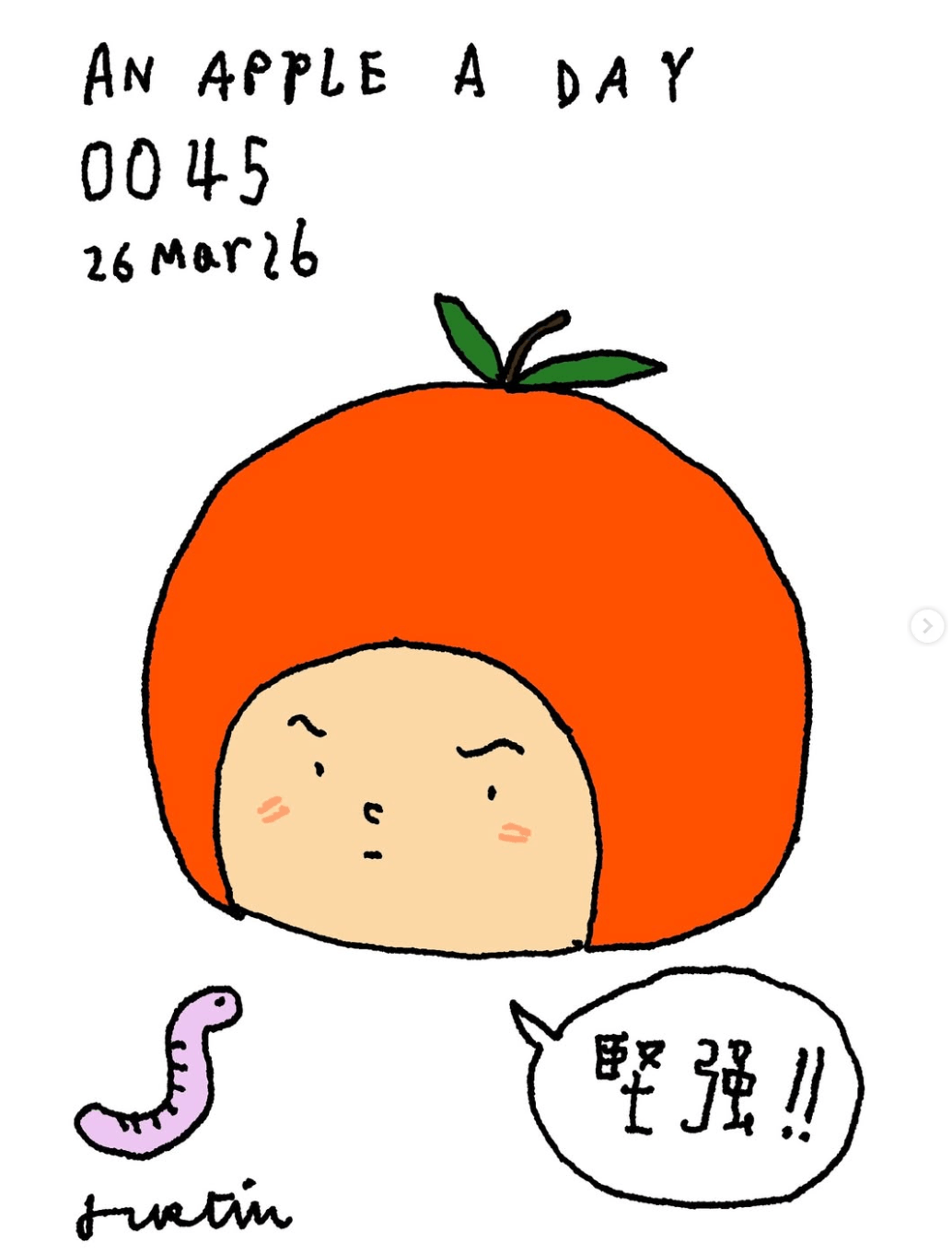
Justin Wong: When Jimmy Lai was sentenced to twenty years — people said he won't come out alive — I started thinking about my friends who are also in jail because of the protests. I put myself in their position. If I were there, ten years from now, life would go on for everyone outside. No one would remember me anymore. I was really, really troubled by this. And I thought — I've been doing political cartoons every day for eighteen years. What if I just spend five more minutes each day drawing an apple and continue for twenty years, to honor what Jimmy Lai and others are going through? It's a symbol of remembering. The real battle is memory. Will people still remember what happened in 2019? Will the next generation know? No one will check in twenty years whether I actually did it. People will probably forget about this project. But to me, it's a personal practice — a daily reminder that there is something I must not forget. It's not really about Apple Daily as a newspaper anymore. It's an icon. It's about keeping memory alive.
Carry On — The Exhibition & Art as Emotional Reckoning
Hugh Leeman: You have a show, Carry On, at the Chinese Cultural Center in San Francisco's Chinatown. With everything you've shared — Jimmy Lai, friends in prison, the question of whether they'll be remembered, the betrayal, the fear of fleeing — how do all of these threads come together in that exhibition?
Justin Wong: It's a very subtle transformation of my perspective. After I left Hong Kong, I went through a lot of emotional changes — anger, sadness, the sadness of betrayal. And then I tried to be positive, tried to think, okay, this is the reality now, we have to carry on. I also saw it as a moment to rethink my life completely. But emotion is complicated. A few years after I left, I said to myself, I'm not sad anymore. And then, sitting at dinner one night, it would just hit me — a sudden, heavy sadness. Not dramatic, but deep. It just attacks you without warning.
It's a complex feeling — trying to be positive and being pulled back into something dark, especially because, unlike many of my friends who can return to Hong Kong for visits, I cannot. It's too risky for me. I had no choice. So the work in the show is a mixture of all of these feelings. Loneliness in London. Deep uncertainty about the future. The question of identity — what am I now that my two roles are gone? What do I carry forward?
Hugh Leeman: If you could give a talk to a Western audience and convince them of anything, what would you want them to know, and what would you want them to do?
Justin Wong: I would probably talk about the Apple Daily twenty-year project. Because that one is universal. It's not even really about art. In a world of wars and conflicts, global power struggles, left versus right — the future is so uncertain. What I've learned is that it is important to know what you are doing and why. I lost my identity, my career, my salary — everything, overnight. I was earning well in Hong Kong, and then suddenly it was all gone. But when I do the Apple Daily drawing each day, I realize it doesn't have to be grand or high-profile or technically impressive. Nothing special about it. But it matters because I want to remember something. And everyone can do this. You have your own Apple Daily. Whatever culture you come from, wherever you are — you have your own symbol worth keeping alive. Find it.
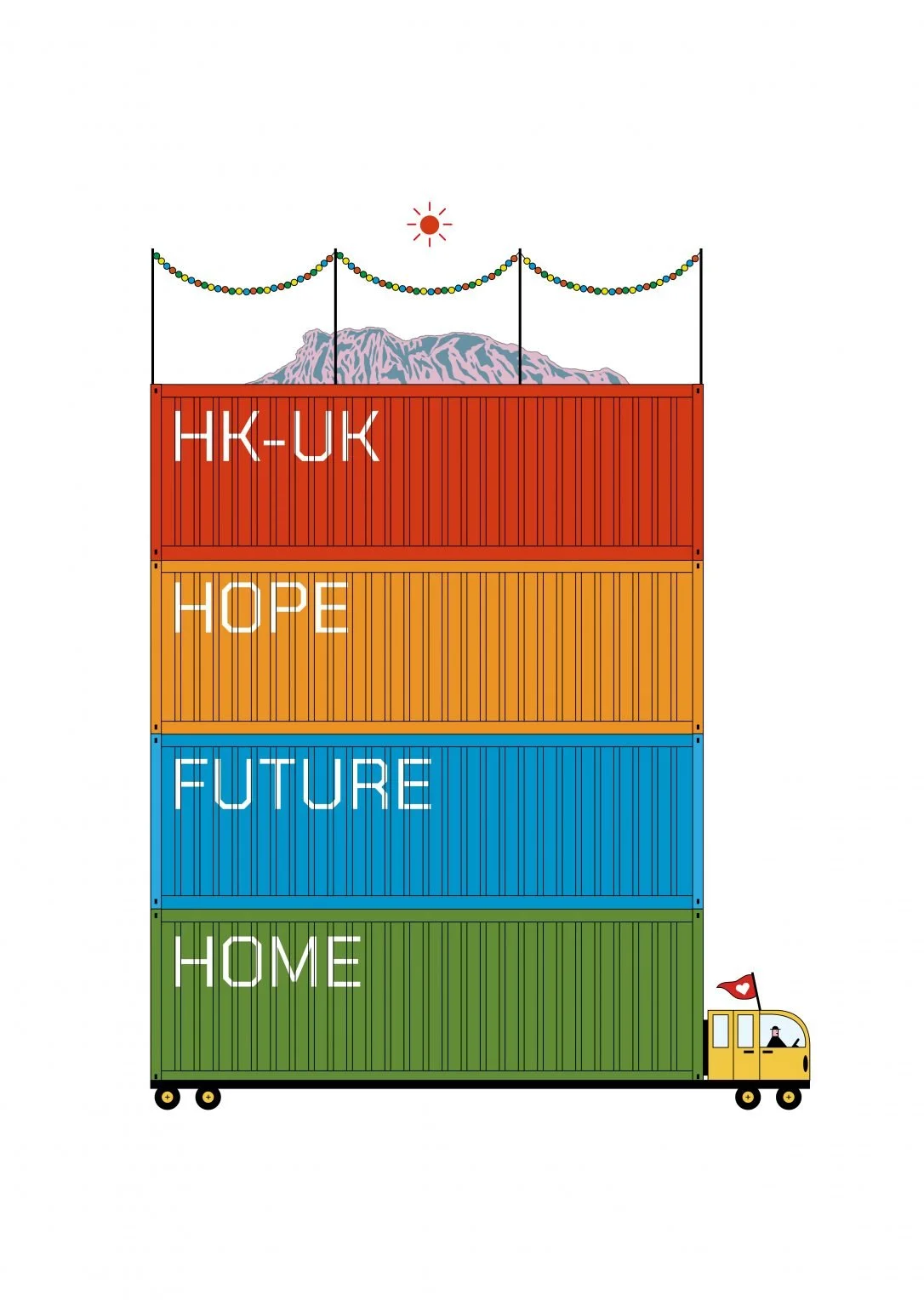
Hugh Leeman: In your course at UC Berkeley, you've talked about the Lion Rock Spirit — the resilience and hardworking ethos that defines Hong Kong's identity — and asked your students if they have their own Lion Rock. What do you want these students to remember when the course is finished?
Justin Wong: I use humor as the central topic of the course, because it's something I find uniquely remarkable about the protests. When we talk about Apple Daily and Lion Rock, it's about resistance and perseverance — let's fight on. But there's another quality among Hong Kong people, especially the younger generation: a genuine sense of humor. Hong Kong was always a middleman between East and West, never quite sure of its own identity. The one thing we could do was make jokes. Our humor just grabs from everywhere and puts it together, this sense of — I don't care, I just laugh. During the protests, it was bloody violent. People were killed, people were injured. And they still laughed. They used a little piggy emoji grabbed from a social media platform as one of their protest icons. People wondered what it represented. It's not Lion Rock, it's not Apple Daily — it's just a piggy. And somehow it escalated into one of the most important symbols of the whole movement. That lightness, that humor in the face of darkness — it's so important. So what I want the students to remember is this: whatever you're facing — personal difficulties, uncertain times — humor can be a kind of support. Find the lightness. That's what I want them to carry with them.
Home as a Myth
Hugh Leeman: As a final question — under what circumstances could you see yourself returning home?
Justin Wong: I always joke that when I'm old, or when I've calculated how many years I'd spend in jail if I went back and decided it was worth it. Of course I'm joking. But it has become a myth to me — whether I ever go back. Hong Kong today is already very different from Hong Kong five years ago. A lot of people say I won't miss it, because what I miss no longer exists. And maybe one day I won't need to go back anymore.
Hugh Leeman: Even within the myth, there's still connection — family, friends. What about that?
Justin Wong: My family is all in the UK now — even my parents. My close family. I have friends still in Hong Kong, and as long as they can travel, a lot of us just say, let's meet in Taiwan, or in Japan. An hour's flight from Hong Kong. It's not ideal, but I'm fine with it now. And maybe not being able to go home can become a motivation for the work too. It's difficult. But it could also be something to carry forward.
Hugh Leeman: Home as a myth — that sounds like the title of a future work. Justin Wong, thank you so much.
Justin Wong: Thank you. Thank you so much for inviting me to share.
