
Rainbow, a group show at Whitney Modern
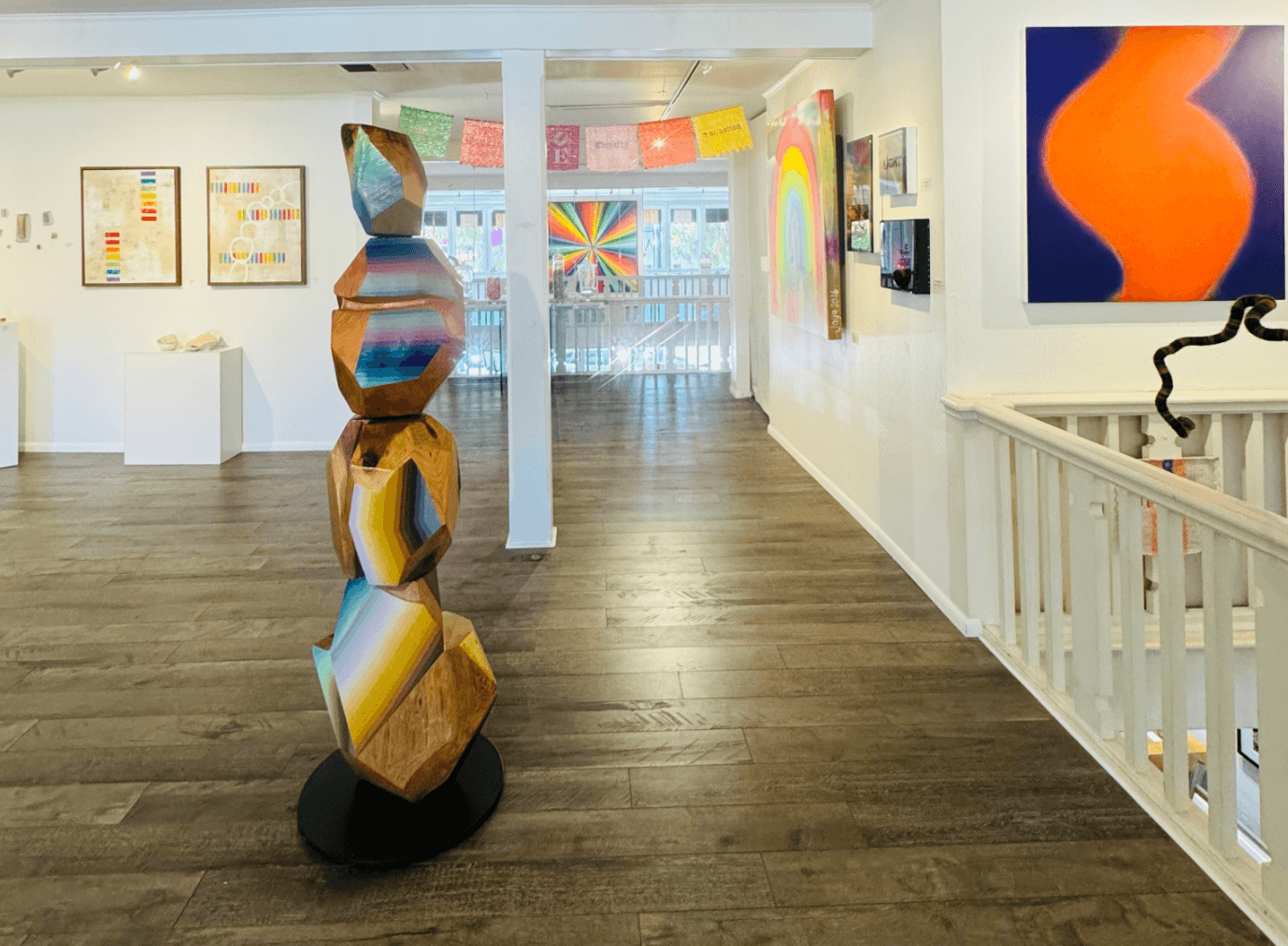
Rainbow, Whitney Modern, Los Gatos, June 2026. Image Credit: Marie Cameron
By Vrushali Anil Dhage
Rainbow, a show curated by artist and curator Marie Cameron at the Whitney Modern, features more than 130 works by 38 artists. Given the number of artists and the apparent heterogeneity of their works, one wonders whether all of them consciously worked on the concept of the rainbow in their respective practices. Hence, the curator’s concept is the primary premise of the review. The works exemplify the same. The catalog candidly mentions some artists who admit they barely felt the rainbow as a referential element in their works until the curator suggested it. Cameron presents Rainbow from multiple vantages - literal, intensely personal, referential, and political, affecting the masses. While viewing the show at the Whitney Modern, a sense of plurality, near-disparity, and yet a collective appeal is obvious. Nevertheless, the gallery space and its design help accommodate it seamlessly.
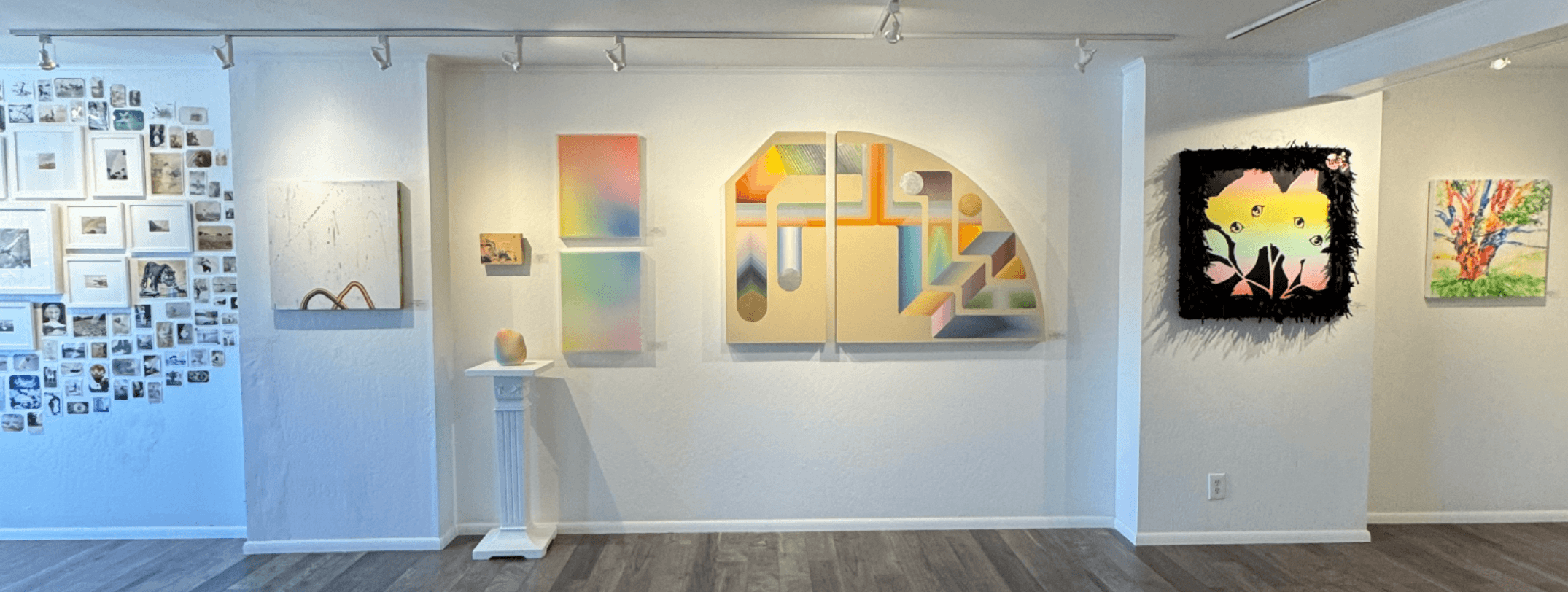
Rainbow, Whitney Modern, Los Gatos, June 2026. Image Credit: Marie Cameron
The reference and relevance of the rainbow have long carried visual, religious, scientific, and political meaning in art history. From early childhood education, with pretty pictures of the rainbow, the early attempts to remember seven colors, to the Irish folklore of the leprechauns and the pot of gold, the rainbow offers a spectrum of relevance and symbolism from biblical to contemporary times. Biblical references in the Book of Genesis, the great flood, and the rainbow as God’s promise that he would not flood the earth again. The Rainbow Landscape (c. 1638) by Peter Paul Rubens presents an idealized view of a working landscape, with the ephemeral natural phenomenon of the double-arch rainbow (The Wallace Collection, n.d.). The Blind Girl (1856) by John Everett Millais allegorically expresses the contrasting experiences of the two girls. The Rainbow: Study for 'Bathers at Asnières' (1883), by Georges Seurat, was another example of the play between the optical impact and scientific color placements; to the mysterious work Figures on a Beach – The Rainbow, (1975), where Richard Ernst Eurich created a rainbow without the conventional colors (Doble, n.d.). The examples are numerous and distinct. The current show similarly contextualizes and interprets many works as aligned with the multiple ways a rainbow can be read, experienced, and re-imagined.
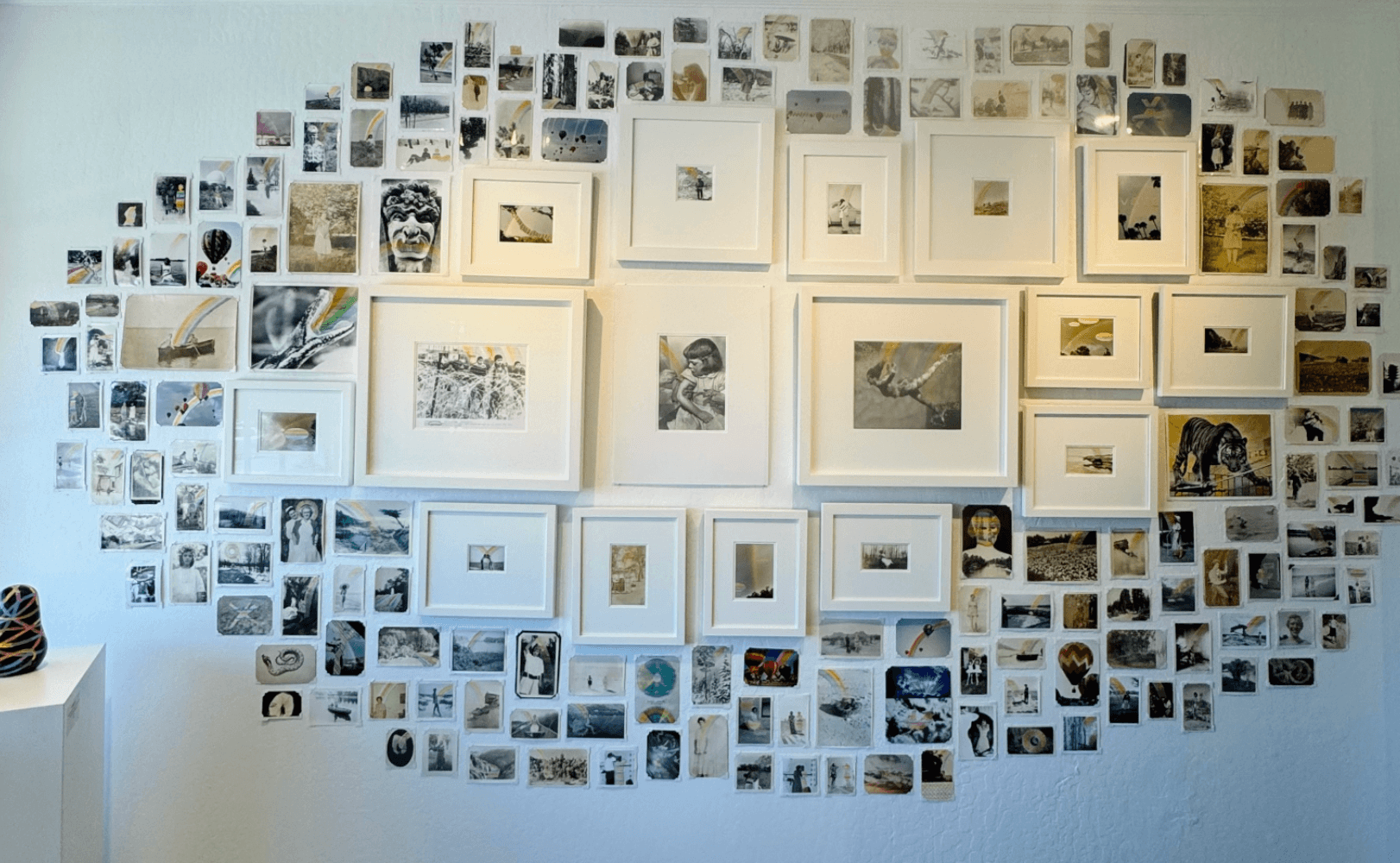
Wall of Rainbows, Marie Cameron, silk on found photographs and postcards, 3” x 2” - 10” x 8” 2020 - 2026. Image Credit: Marie Cameron
The curator’s interest in the concept, the visual, and the symbolism of the rainbow stems from her artistic practice during the COVID-19 period of imposed isolation, when the rainbow got integrated into her works. For some artists, it was a childhood memory, a loss of a loved one, or a life-changing event. The meaning of the phenomenon ranges from the elemental scientific one, to the enigmatic illusion, a visual meditation, religion, energy, as assurance of hope, gratitude, earth and its nourishment, identity, inclusion, sexuality, and pride.
Understanding the natural phenomenon of the rainbow from a scientific perspective involves aspects of physics and optics, intriguingly concluding that no person can see the same rainbow at the same time. Hence, calling for a collective yet uniquely personal experience. Cameron bases the show on similar grounds, initiating multifarious dialogues. As with some artists, Claire Buckley, Erin Fong, Wendy Fountain, Alexandrya Eaton, Chandrika Marla, Angel Oloshov, Kerith Lisi, Leah Rosenberg, Michaela Sampas, Sabrina Sanchez, Harumo Sato, Christine Wilkinson, present abstract, metaphysical, to quasi-tantric works, with colors that subtly explore a psychological realm. At the same time, some address the instinctual, inexplicable relation between the chromatic layers and compositions. The visual spaces in these works range from rich, textured color fields to scapes of meditation and introspection. To some, it is about one identity, inclusivity, and pride. The rainbow transforms from a legible, identifiable form and symbolism into that of realization.
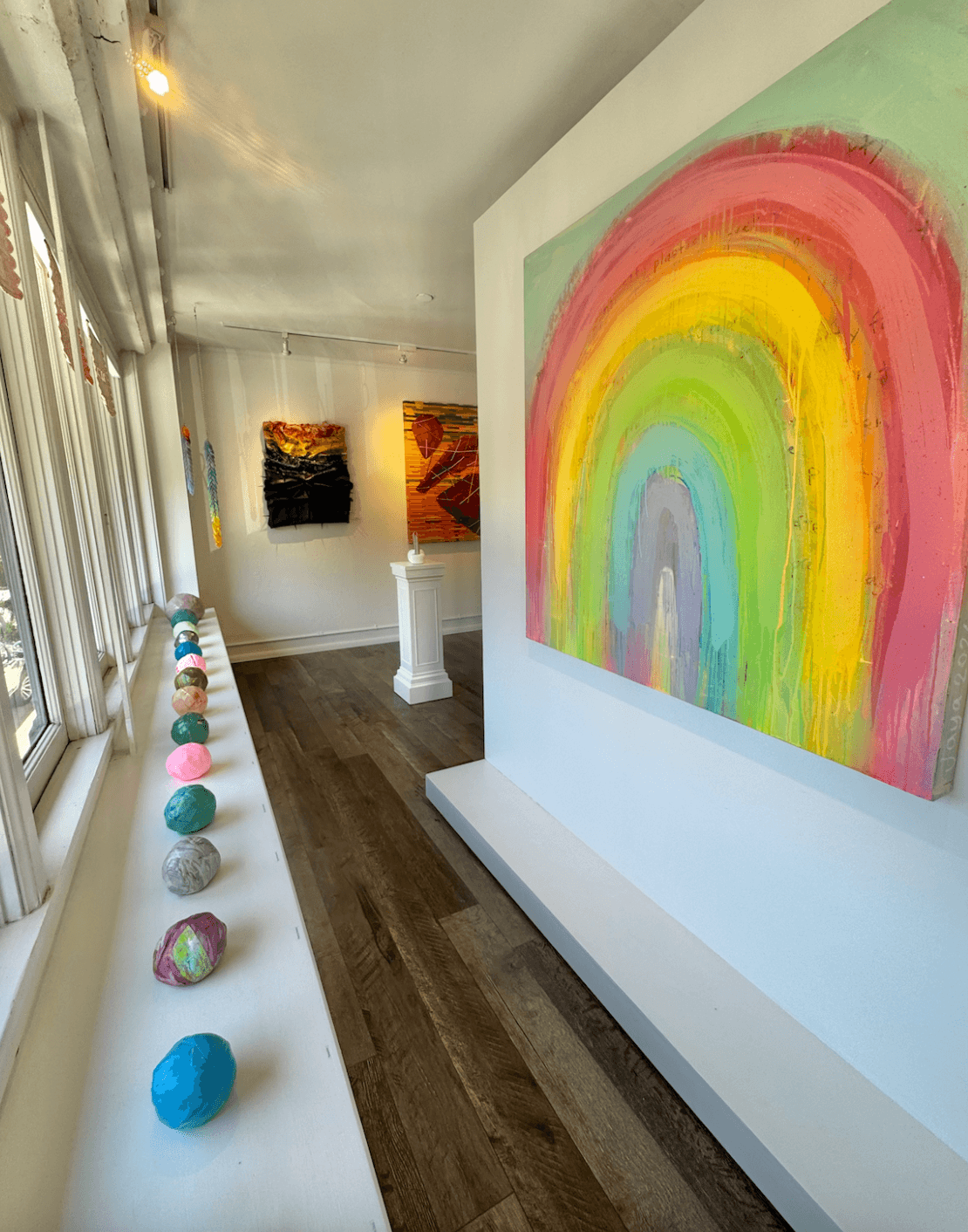
Rainbow, Whitney Modern, Los Gatos, June 2026. Image Credit: Marie Cameron
Contrastingly, the visible rainbow appears through the identifiable VIBGYOR or the reverse ROY-G-BIV as seen in works of Gabe Brown, Marie Cameron, Elise Ordorica, Heather Robinson, Nicholaus James Dalton, Wendy Ackrell, Danielle Krysa, Alis Whitman, Theresa Giammattei, Bob Stang, Victoria Wagner, Rinat Goren, Ian James, Jaya King, Alicia McCarthy, Jonathan Parker, Stephanie Metz, Seonna Hong, Stephanie Robison, Full Bloom by Leah Rosenberg, Jenn Shifflet, and Jenna Bonistalli. Stencil-ized forms co-occur with geometricized clouds, calibrated by the medium and design appeal. Sharp spectral radial lines, like a ray passing through a prism, to the free-spirited strokes of color reverberating luminosity, to the gradual soft gradation of hues in a near-lyrical fusion, render the rainbow visible. A variant is Cuong Nguyen’s painting, conjuring a play of the absent and the present. The rainbow isn’t visible, but the dark, laden clouds are suggestive of its possible appearance. Weaving the mythological and the personal occurs in the works of Tino Rodriguez and Gina Tuzzi. Humans, ubiquitous objects, realistic rendering, commingle with the curious and the imaginary.
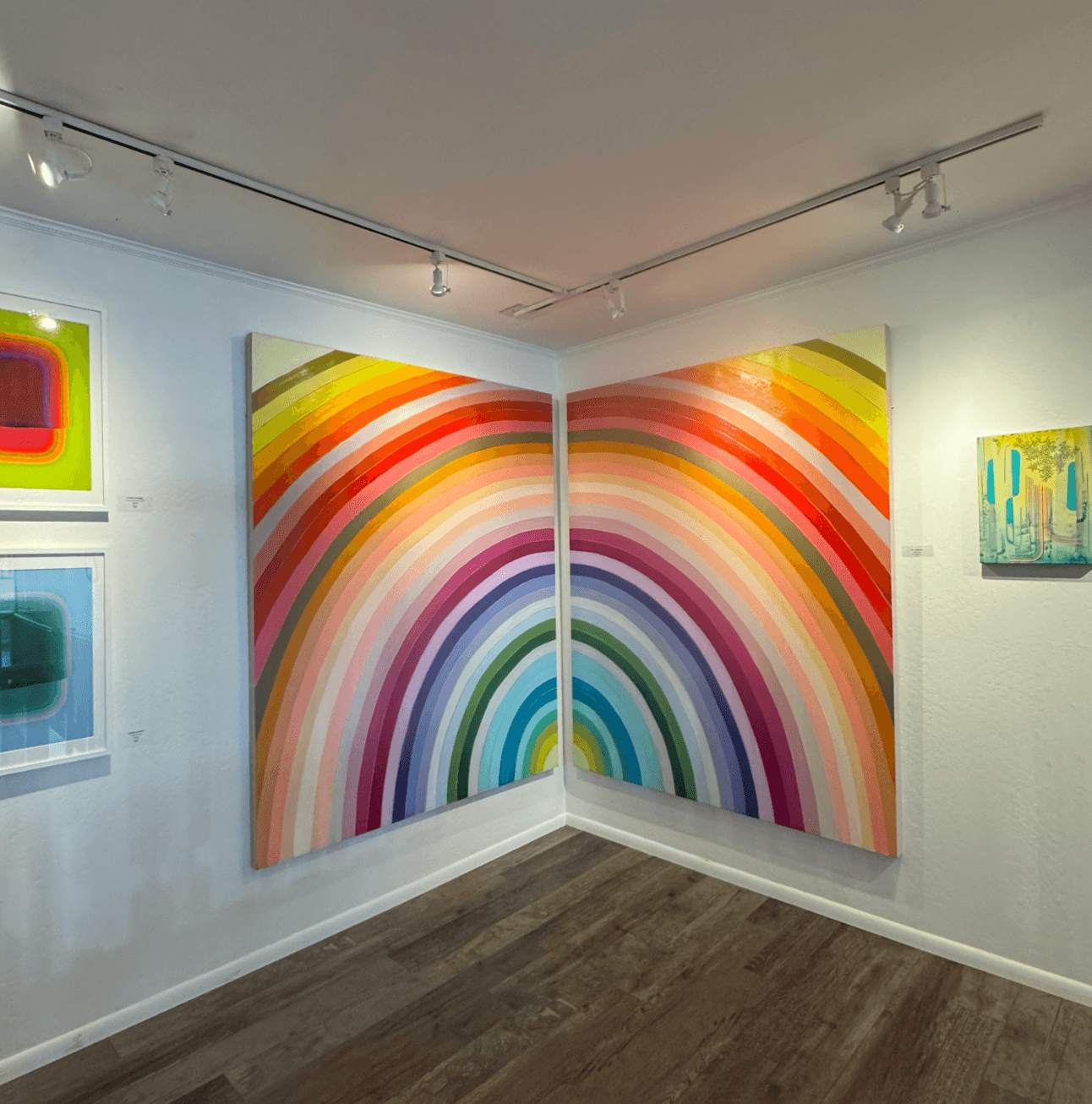
Rainbow, Whitney Modern, Los Gatos, June 2026. Image Credit: Marie Cameron
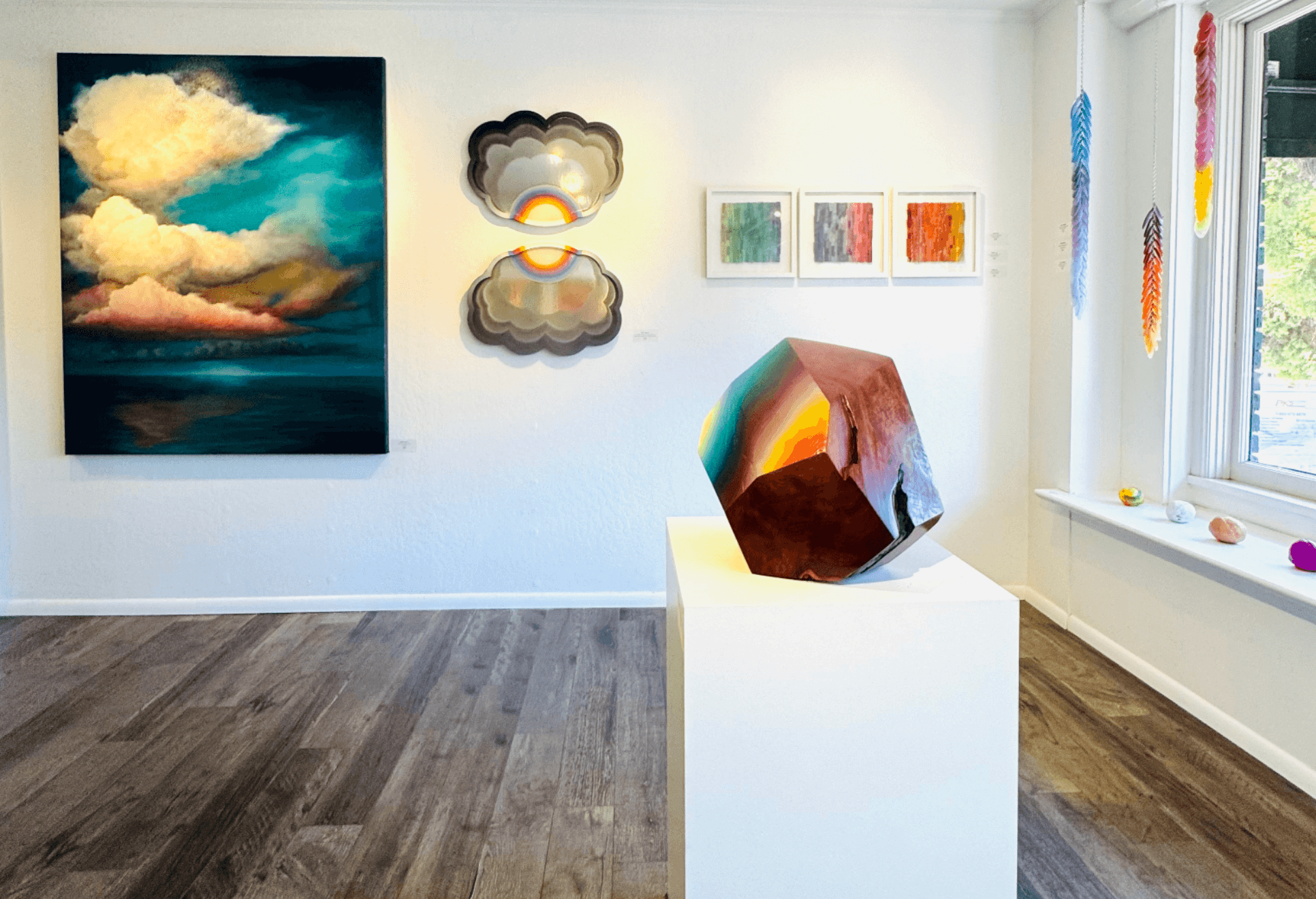
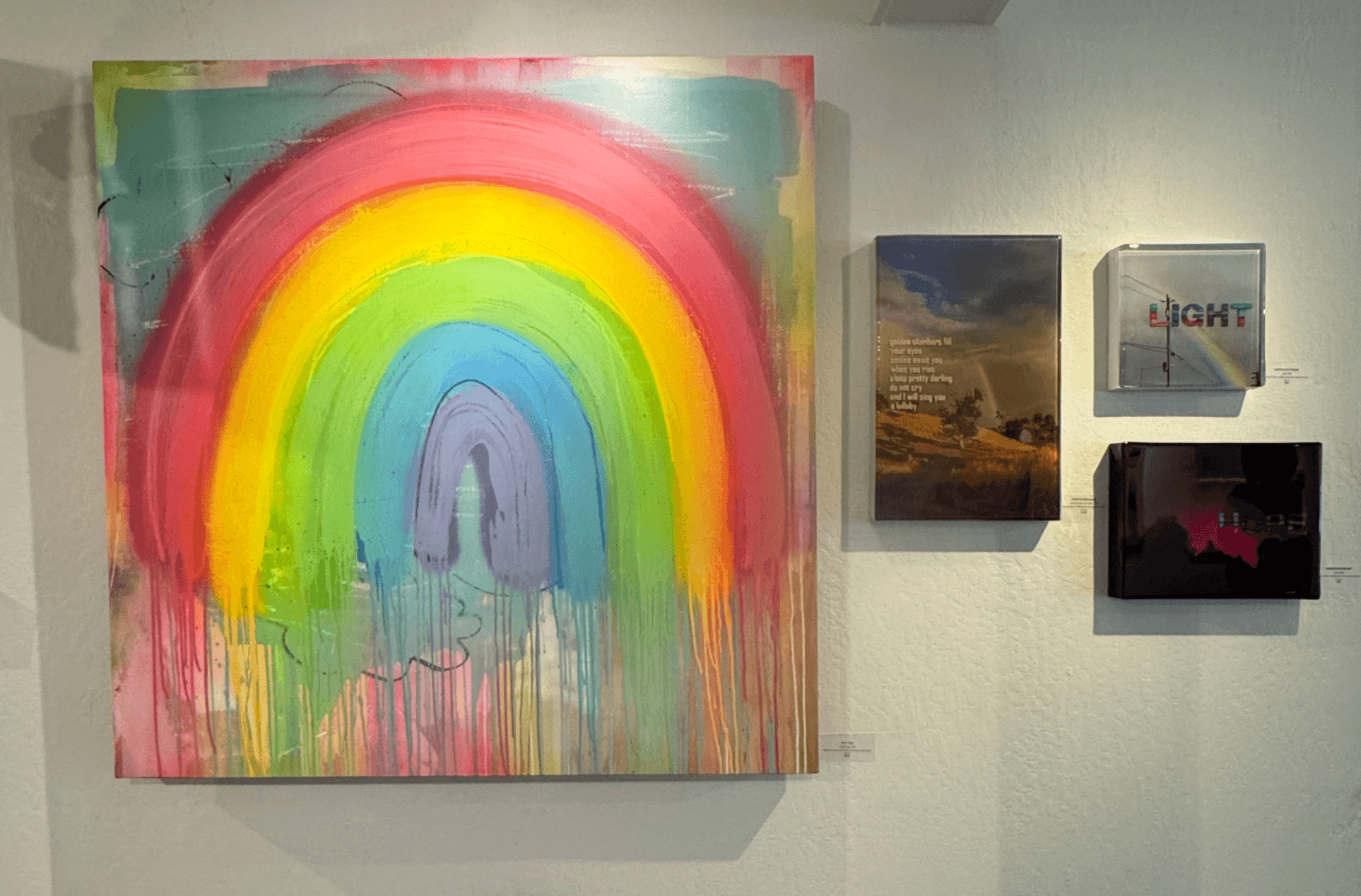
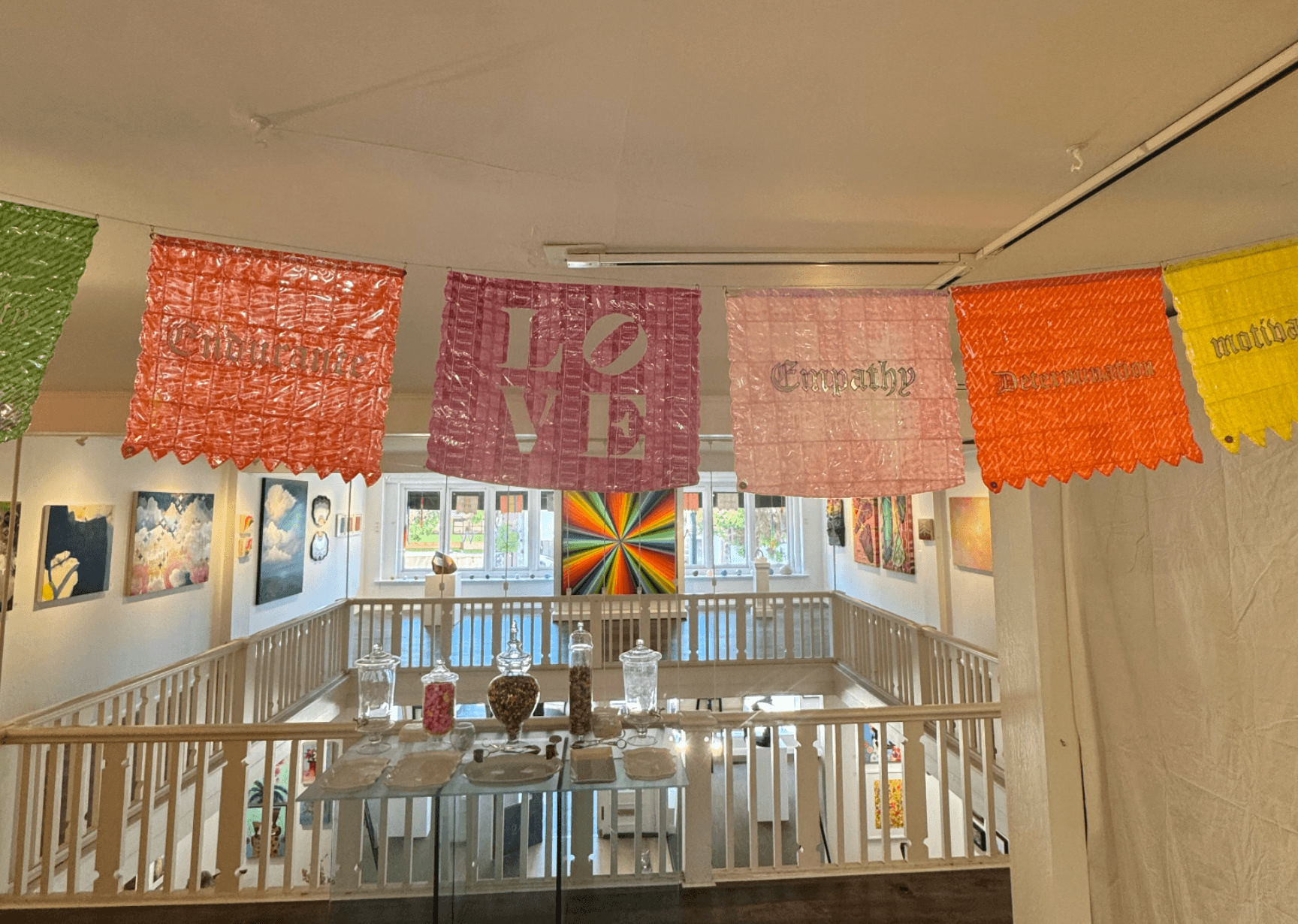
The works by Karen Gutfreund and Charlotte Kruk employ words and colors, furthering the power of ‘the legibility’ of a visual. Gutfreund reconstructs personal memory and emotions. Kruk’s works ricochet between reflection and confrontation, as we intentionally or otherwise succumb to consumerism and its menacing grip of the characteristic excess.
The show runs at the Whitney Modern till the end of June. Being a large show, it entails a lot to take all at once, especially given that the visual languages of the artists are largely varied. Simultaneously, it efficiently encapsulates the plurality as emphasized by the curator. Furthermore, having a show titled Rainbow in June, the LGBTQ+ Pride Month, contributes to its intent.
References
Doble, F. (n.d.). The significance of rainbows in art. Art UK. Retrieved June 15, 2026, from https://artuk.org/discover/curations/rainbows-final
The Wallace Collection. (n.d.). The Rainbow Landscape. Retrieved June 16, 2026, from https://wallacelive.wallacecollection.org/eMP/eMuseumPlus?service=ExternalInterface&module=collection&objectId=64938&viewType=detailView
