

Demetri Broxton, Ancestral Echoes, The Museum of African Diaspora
By Terri Cohn
Always container, sometimes contained, the house serves…as the portal to metaphors of imagination…Out of the house spin worlds within worlds…if I were asked to name the chief benefit of the house I would say: the house shelters daydreaming, the house protects the dreamer, the house allows one to dream in peace…. .
—Gaston Bachelard, The Poetics of Space, viii, ix, 6
In The Poetics of Space, Gaston Bachelard argues that a house is much more than a physical structure. It is a repository of memory, imagination, daydreaming, and lived experience. For him, rooms, corners, drawers, cabinets, stairways, and attics are not merely architectural features; they are psychological spaces that shape how we understand ourselves and the world. For Bachelard, a house is not simply inhabited; it accumulates meanings over time, becoming a container for memory, imagination, and lived experience.
That perspective corresponds remarkably well with David Ireland's aesthetic. A sculptor whose vision was nurtured during the 1970s by the process-based practices of Bay Area conceptual artists, Ireland sought to create work so thoroughly integrated into existing spaces that it became almost imperceptible. In 1975, he began transforming his Victorian home at 500 Capp Street into a work of art—not through conventional renovation, but through careful attention to the traces of time already embedded within it.
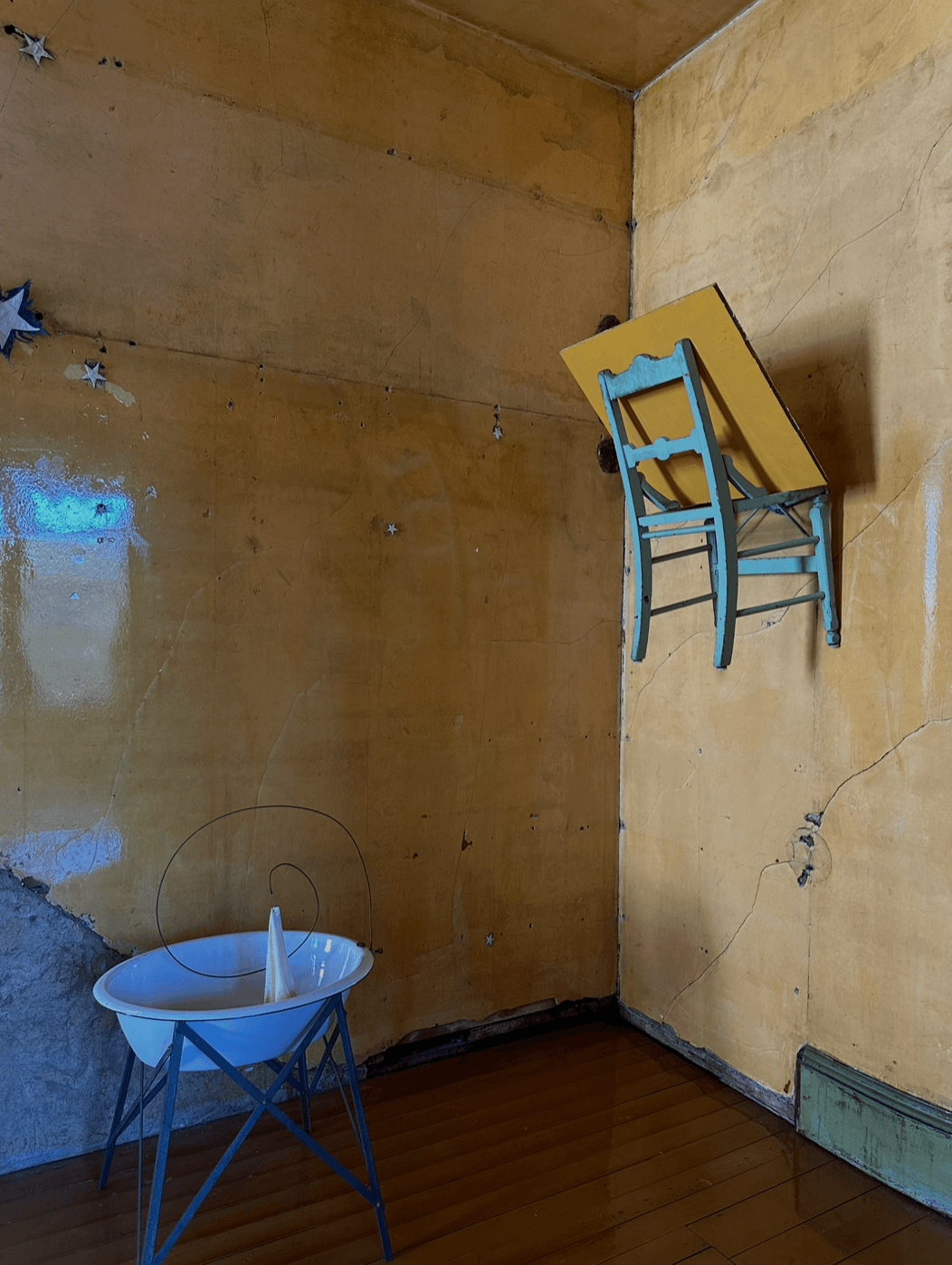
David Ireland, Upstairs Hallway installation, with Joyce Burstein star
The house became a vessel of collected experience. Layers of paint, repaired surfaces, found objects, dust, and evidence of habitation acquired meaning through Ireland's acts of observation and preservation. He expanded the significance of this detritus by treating it as relics. Cracks, bumps, and bruises in the walls were burnished and varnished, transformed into uniquely beautiful surfaces. Although Ireland's aesthetic reflected his intentions as a conceptual artist, its outcome also evokes wabi-sabi, the Japanese philosophical worldview that finds beauty and serenity in what is impermanent, weathered, and imperfect.
In keeping with this sensibility, Ireland transformed 500 Capp Street into a kind of Wunderkammer—a cabinet of wonders—filled with objects and curiosities, collections and remnants, juxtaposed in cabinets, on tables and shelves, and grouped associatively on walls throughout the house. Visitors are invited into a process of discovery. The house functions simultaneously as a repository of memory, a living archive, and a container of stories whose physical traces offer clues to its history. One memorable example is Ireland’s The Safe Gets Away for the First Time November 5, 1975--a metal label adjacent to a deep unpatched wall gouge--a playful marker of an event that launched Ireland’s thirty-year transformation of his home into an art installation.
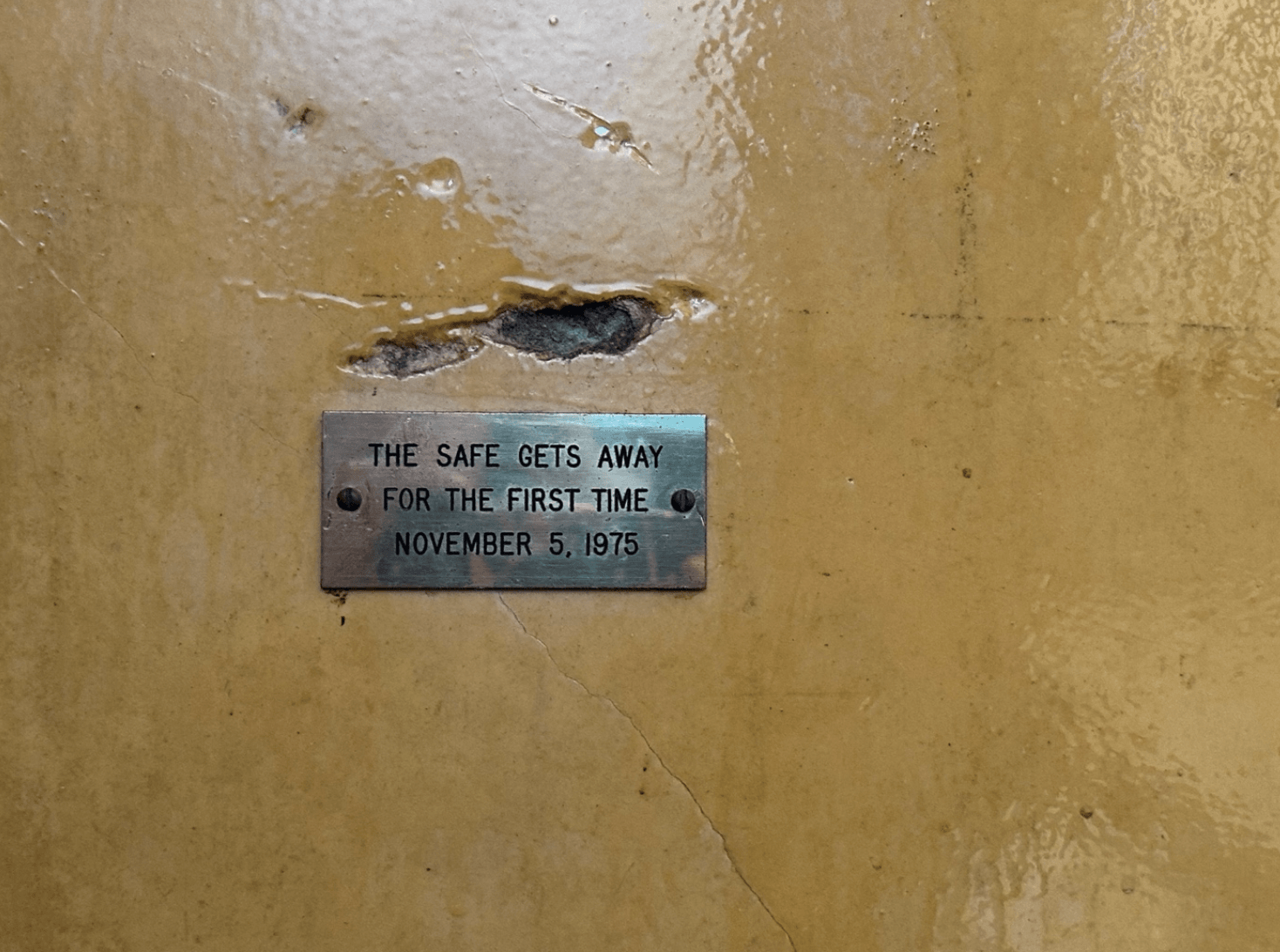
David Ireland, The Safe Gets Away for the First Time, November 5, 1975, Stairwell
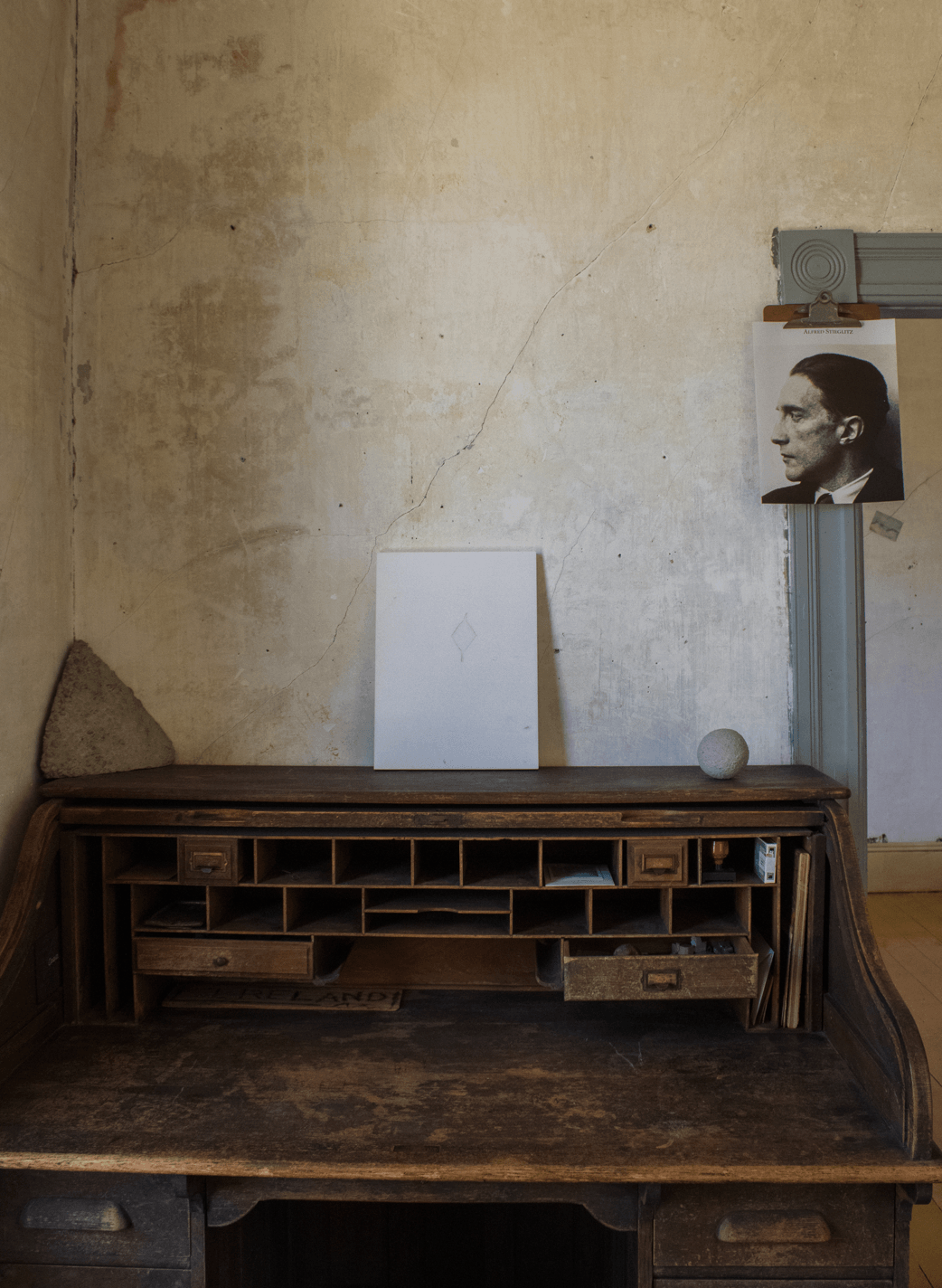
Leonie Guyer, Untitled no. 120, 2023, oil and incised line on marble; on DI desk, dumb ball, and photograph of Marcel Duchamp
If Bachelard's house shelters memory and imagination, Ireland's house gives those qualities material form. It is both a poetic dwelling and a cabinet of wonders.
Léonie Guyer and Joyce Burstein, the current artists-in-residence, each met David Ireland during their student years at the San Francisco Art Institute. Their two-person exhibition Amitié—French for "friendship"—brings together memories of Ireland with their own distinct artistic trajectories. What is particularly compelling about the exhibition is the degree to which both artists extend Ireland's ethos. Their installations do not simply occupy the rooms; they activate the house’s latent memories and emotional resonances. The exhibition feels less like a presentation of discrete artworks than an invitation to experience the house as a poetic field of relationships among people, objects, spaces, and time.
Guyer's subtle drawings of enigmatic forms seem naturally at home within the historical setting of Ireland's uncommon house. Its sparsely furnished rooms and luminous golden walls provide an ideal setting for works such as Untitled, no. 102 (2018), a small, unframed marble drawing whose presence is heightened by the patinated wall that supports it. Suggesting a bearded chin resting atop a necktie, the image embodies the understated playfulness that animates many of Guyer’s forms.
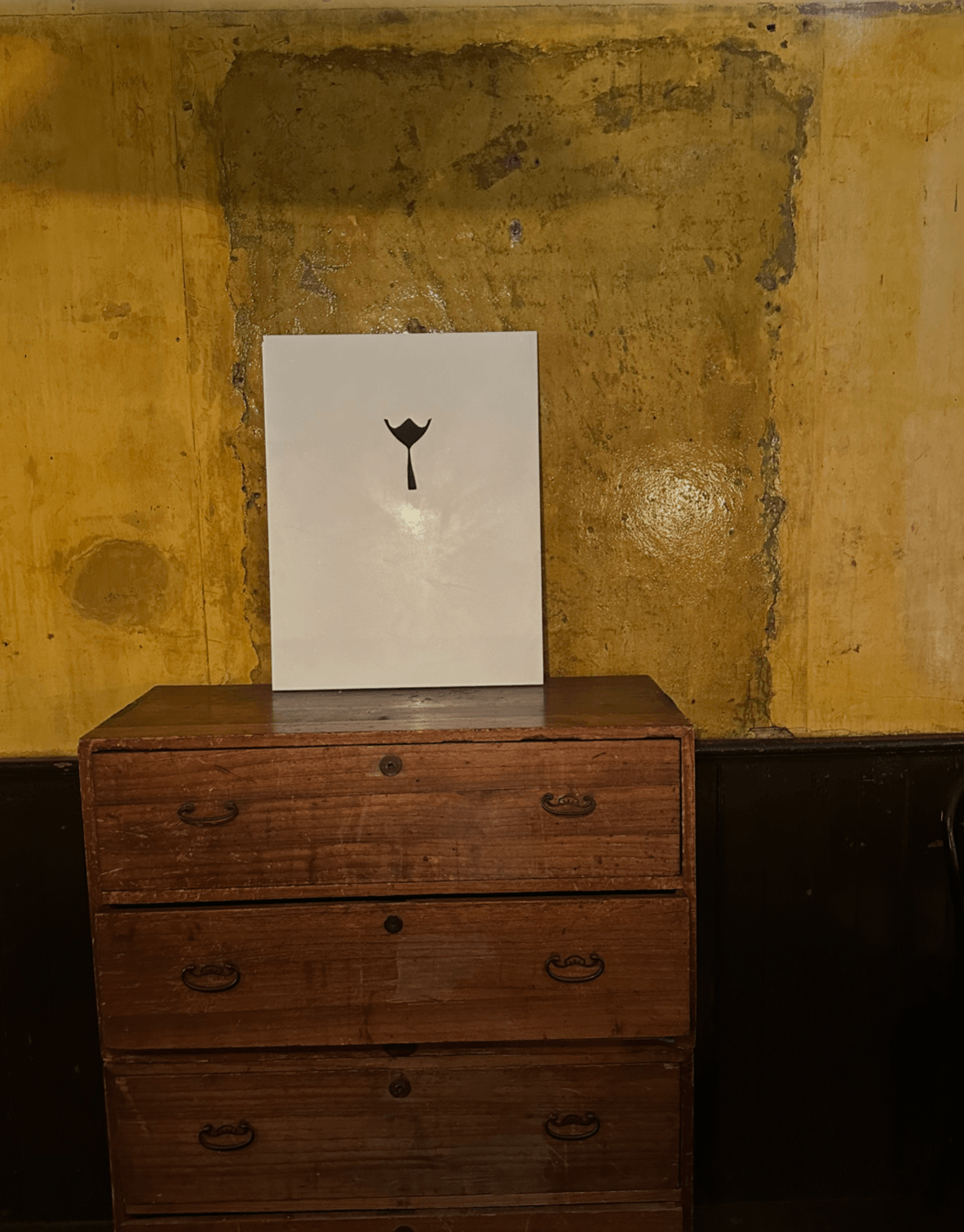
Leonie Guyer, Untitled no. 102, 2018, oil and incised line on marble
Similarly, Untitled no. 123 (2023), a small oil and incised-line painting on marble, is beautifully situated within a cabinet whose worn Pompeian-red interior evokes the wall paintings of ancient Roman villas. Guyer's contribution also includes small drawings on paper and directly on windows. One window drawing, described as "sit(ting) in the sky in a window in David's study," is particularly subtle, changing with the shifting daylight and encouraging prolonged attention.
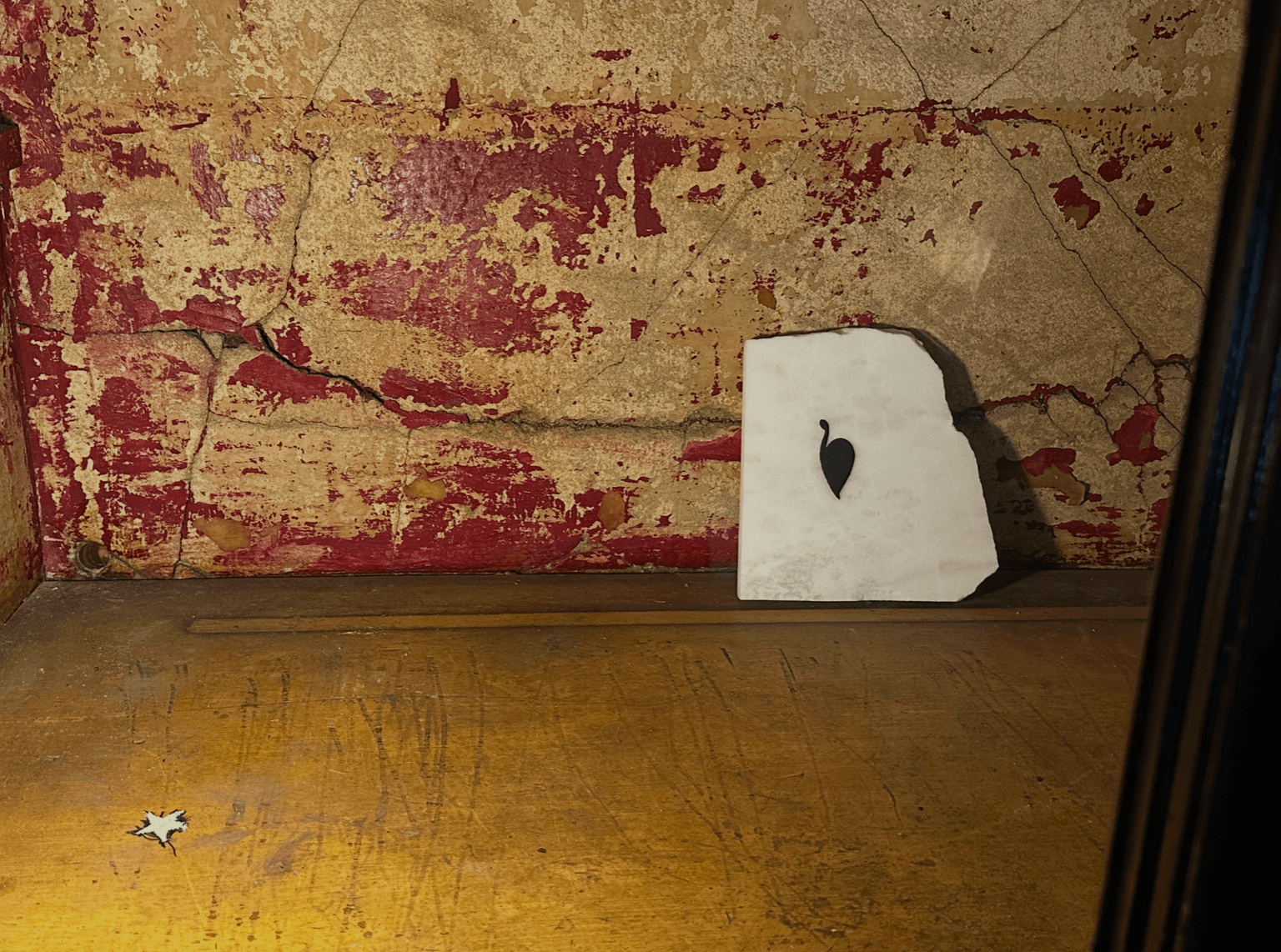
Leonie Guyer, Untitled no. 123, 2023, oil and incised line on marble, 7-3/8 x 7”
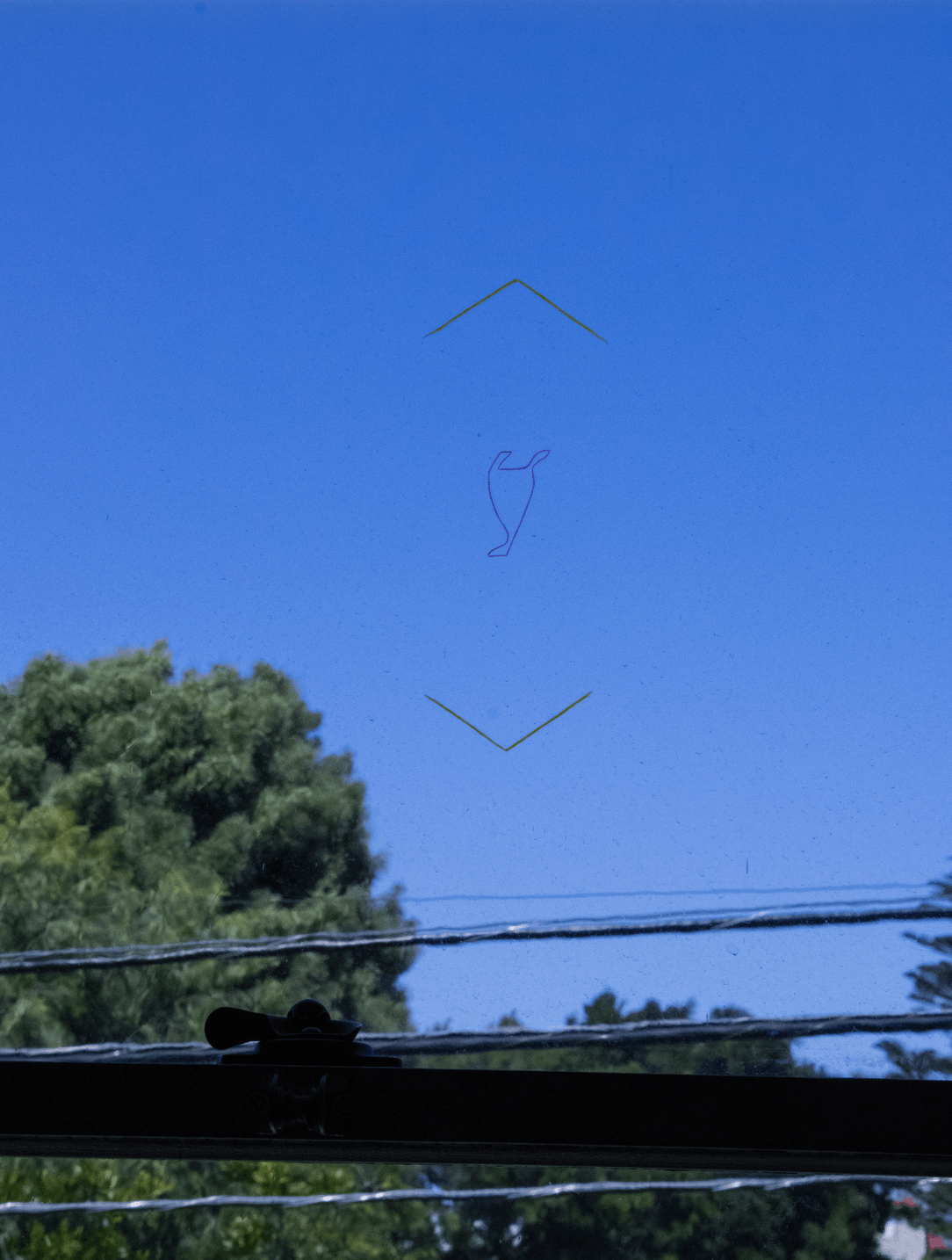
Léonie Guyer, Untitled (for DI), 2026, oil on glass window
Burstein’s rescued stars preserved water droplets, and intimate accumulations of materials such as fingernail clippings function as contemporary curiosities—small phenomena reclaimed from everyday life and granted renewed significance. Like Ireland, Burstein is interested in discovering meaning that exceeds conventional interpretation.
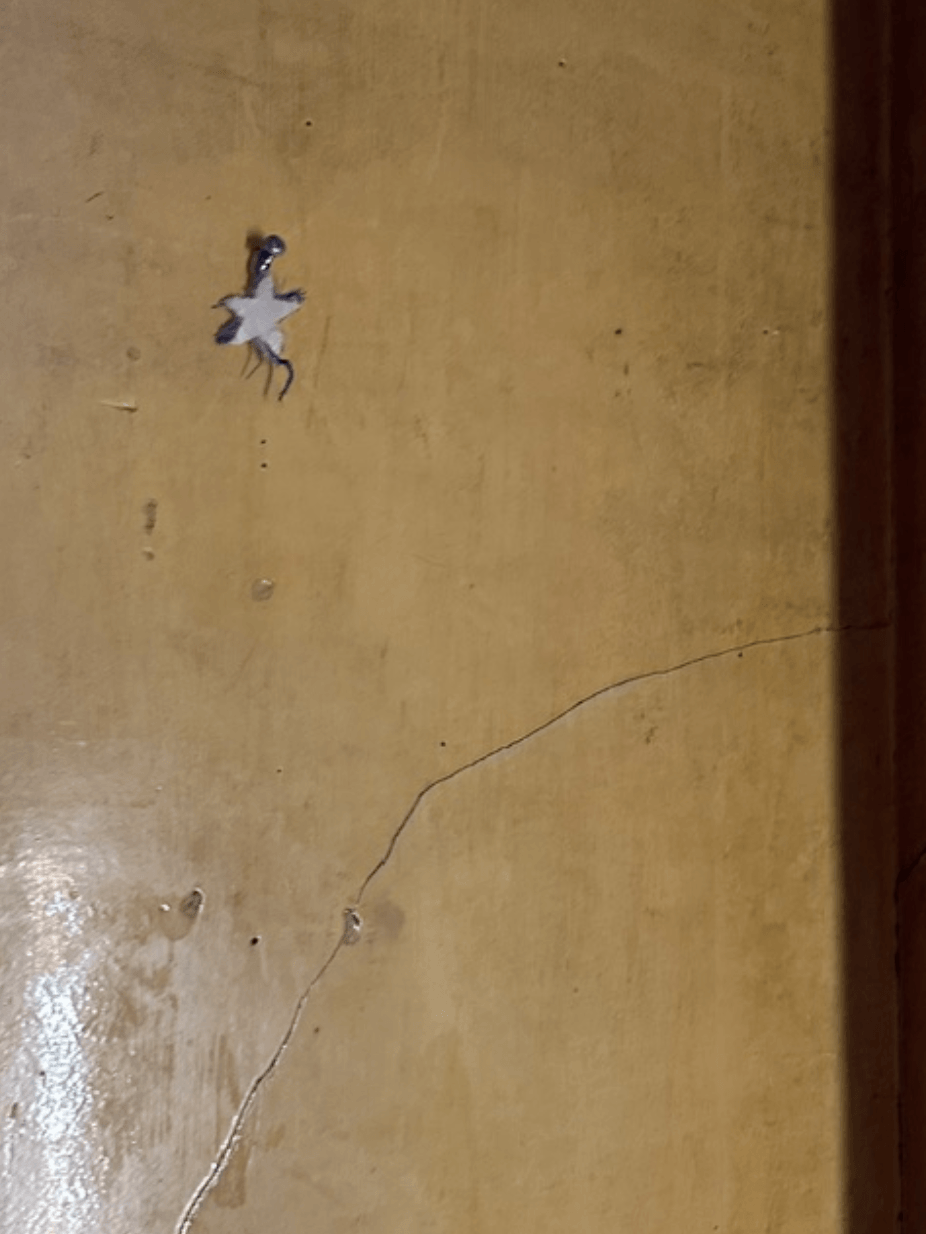
Joyce Burstein, the flag of the night sky: liberated stars, 1994-2026; 35 stars taken from the American flag, various sizes, placed throughout the house on existing nails and historic nail holes, surfaces, and attached with water
A particularly engaging example is the flag of the night sky: liberated stars (1994–2026), a constellation of thirty-five stars removed from American flags and distributed throughout the house. Separated from their original context, the stars become less emblems of nationhood than wandering, poetic forms whose meanings remain open to discovery. Installed on existing nails, historic nail holes, architectural surfaces, and even attached with water, the stars encourage a close reading of the building's interior while creating imaginative pathways through the exhibition. Burstein's material kinship with Ireland is further revealed in fingernail drawing (2026), installed on Ireland's dining room table adjacent to his own collection of fingernail clippings.
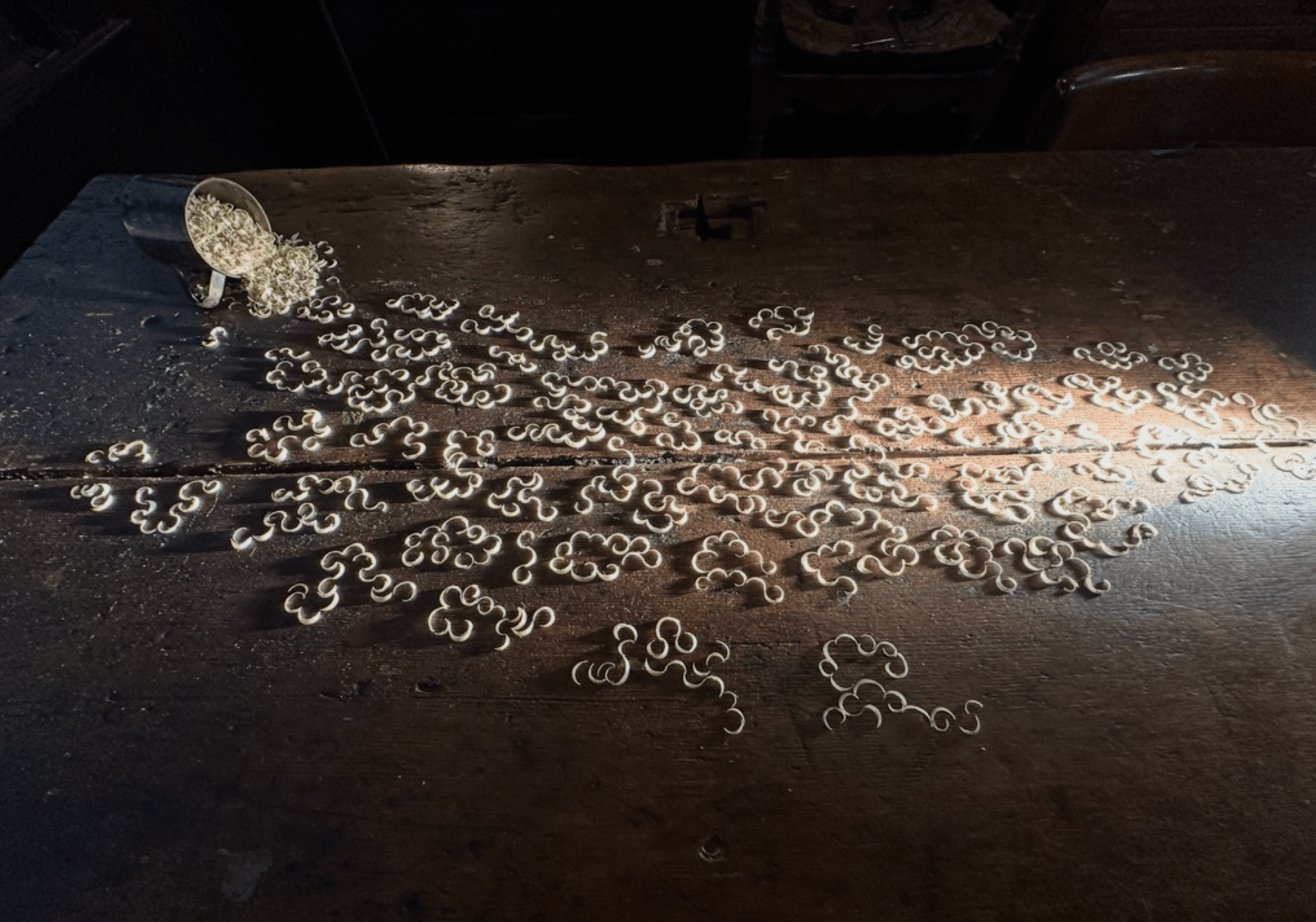
Joyce Burstein, fingernail drawing, 2026, the artist’s fingernail clippings, (dimensions variable), lit with DI lamp
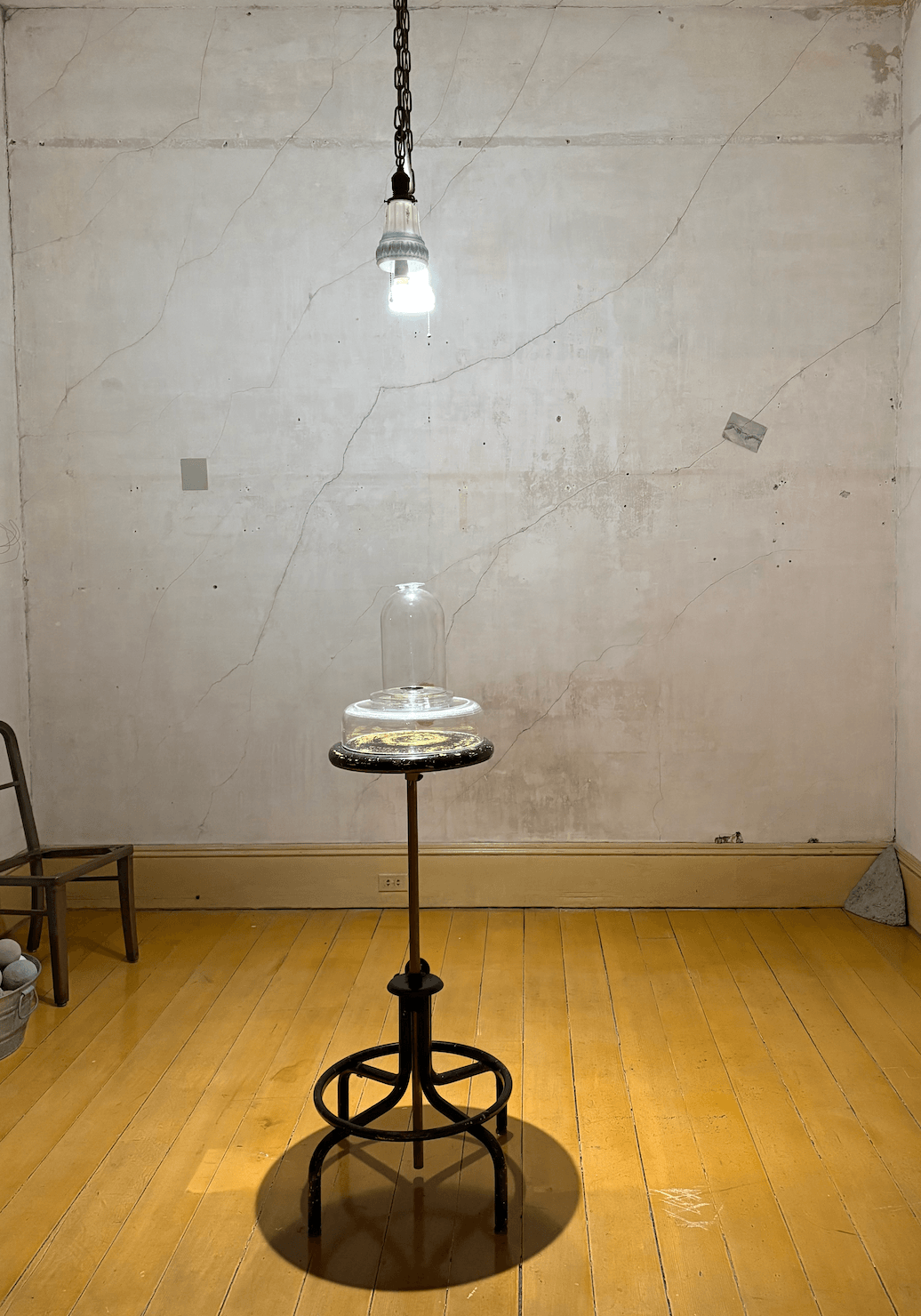
Burstein’s most memorable work, however, is the ocean of yes and no (2026), in which a single drop of water appears miraculously suspended beneath a glass bell jar. Displayed and spotlit like a precious gem atop a small black sphere adjacent to a candle, and elevated on a metal laboratory stool, the piece resembles an alchemical wonder from another era. Its apparent magic arises from Burstein's understanding of simple physical processes: the droplet is preserved through a vacuum created when a candle burns away the oxygen inside the sealed jar.
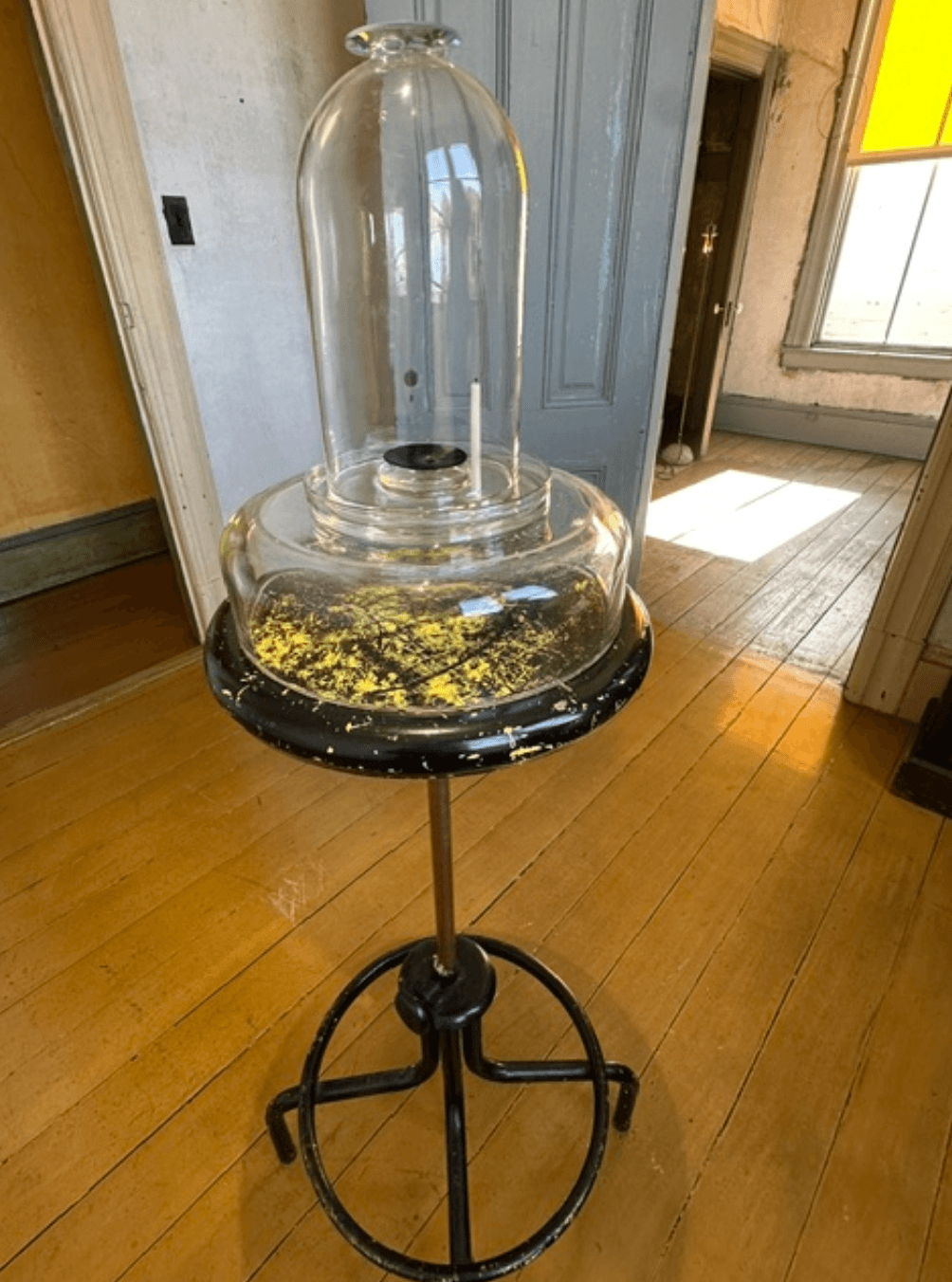
Joyce Burstein, the ocean of yes and no, 2026, water, glass, ash, candle, dimensions variable.
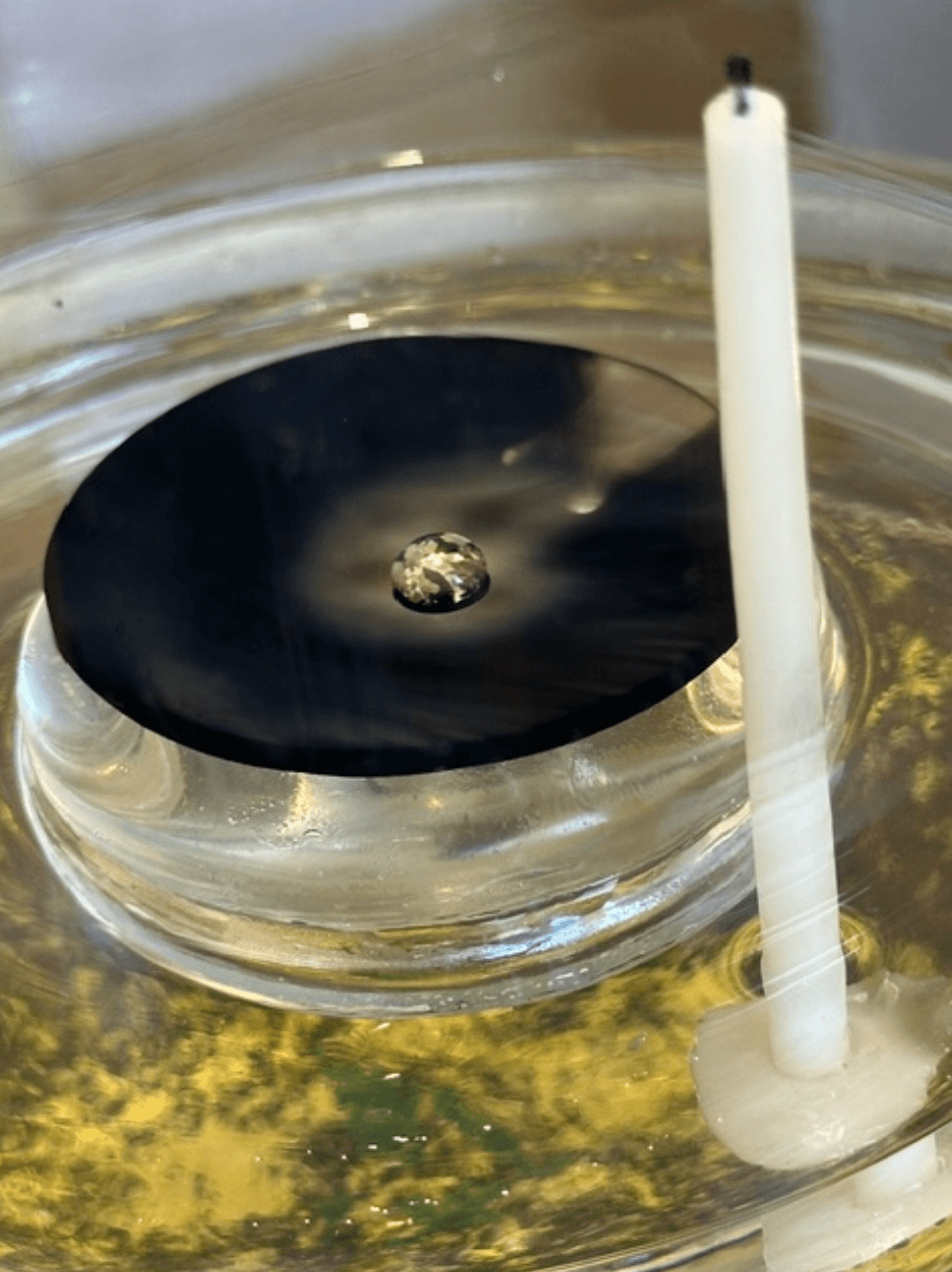
Joyce Burstein, the ocean of yes and no, detail
Significantly, knowledge of the mechanism does little to diminish the work's enchantment. Rather, the piece feels entirely at home within Ireland's environment, surrounded by the house's abundance of handmade, weathered, and pre-industrial details.
Unlike many installations by artists working at 500 Capp Street, Guyer's and Burstein's interventions feel integral to the house rather than superimposed upon it. Neither artist overwhelms the site; instead, each contributes additional wonders to its existing constellation. Ireland's house exemplifies Bachelard's proposition that a dwelling is not merely inhabited but imagined. Amitié builds upon that insight, revealing the house as a space where friendship, memory, and material presence continue to unfold long after their original moments have passed.
