
Patricia Piccinini, The Struggle that Sustains Us, Hosfelt Gallery
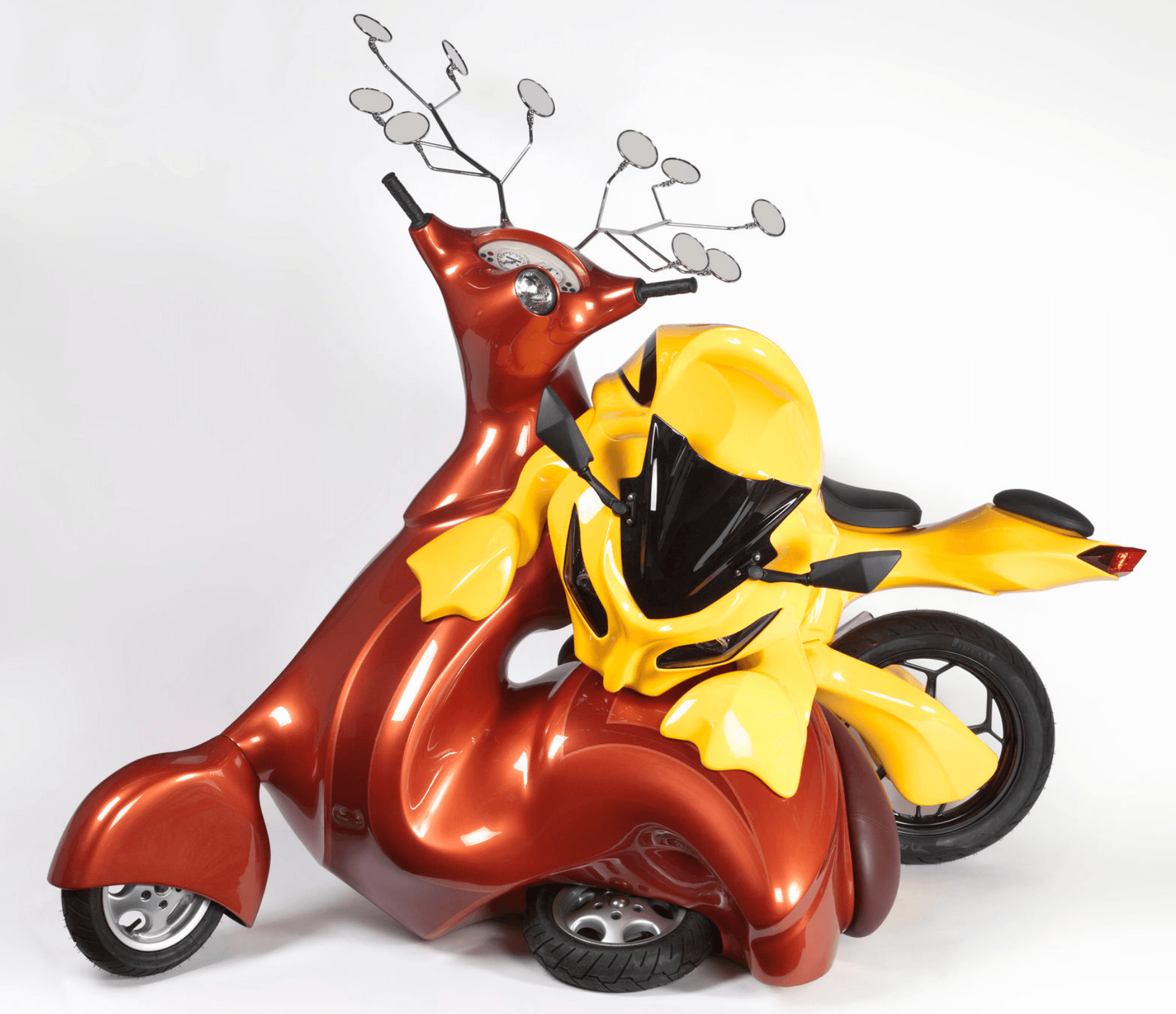
Detail, Patricia Piccinini, The Struggle, 2017. Fiberglass, auto paint, leather, steel, scooter parts. 200 x 240 x 120 cm.
Patricia Piccinini’s show, on view through July 3, begins as soon as you walk into the gallery’s second-floor space. A motorcycle has mated with a cartoon character, and the offspring–machine and rider, or perhaps a single creature–fills the vestibule.The motorcycle’s preening toughness? The cartoon’s simpering cuteness? Gone and gone, replaced with swooping, unselfconscious shapes and two clustered antennae made of side mirrors.
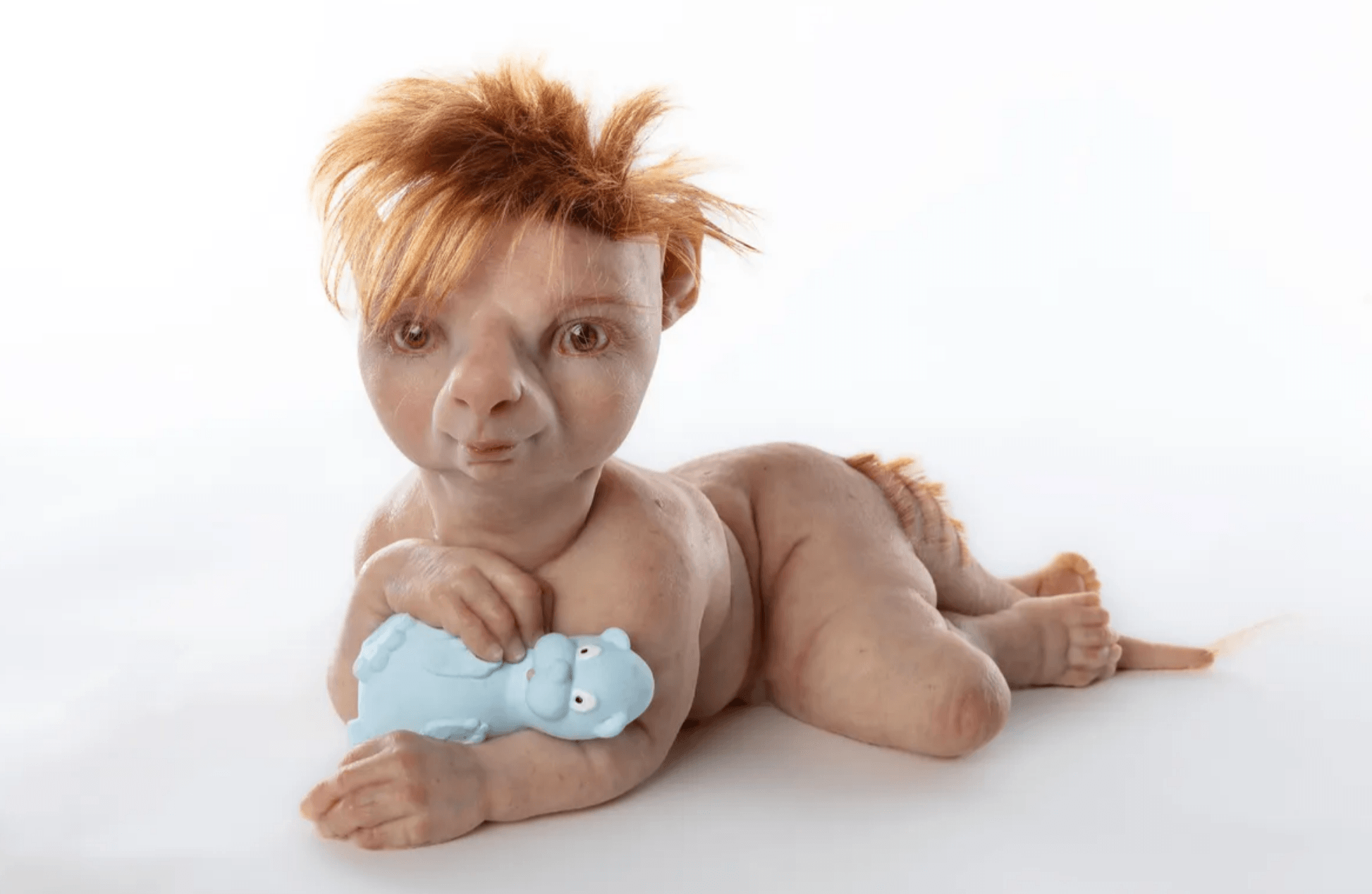
Past the entryway, the show fills half of the gallery’s space with sculptures and a few drawings, all depicting creatures that come from a world like ours, only smudged. Probably most arresting are three figures with peach-colored flesh and features floating somewhere between human and animal. There are also two creatures, more clearly animals, in a brightly colored cartoon mode. In a corner, three gigantic bell jars in brilliant orange and pink enclose totem-like figures mounted on vertical rods.
One of the figures with lifelike, silicone-fashioned skin, The Stalwart (2026), sits upright, like a person, but bears elongated arms that end in hybrid foot-hoof appendages. The creature’s face, topped by a shock of real human hair, is arranged like that of a pig—wide-set eyes, upturned nose, ears near the top of the head—yet the eyes, nose and ears are clearly human in form. Another figure in this mode, The Protégé (2023), lies on her stomach, sporting a face shaped like a sheep’s and an extravagant, lizard-like tail. A third peach-fleshed creature, also depicted in two drawings, has a Toucan’s beak, a dragon’s mane fitted with human hair, and a pouch full of babies.
In the cartoon mode, The Sage (2025) is a straight-forward portrayal of an owl in purple and green—except for the strong cock of her head. Cloudgazer (2024), a more ambiguous cartoon figure, is also in motion, pushing her beak as close to straight up as possible. The figures enclosed in the huge bell jars have strong, exaggerated features, somewhat obscured by their containers.
Despite their different modes, the works all seem to be from the same world. One reason is that their bodily construction, rather than being anything-goes, follows rules derived from living vertebrates. The creatures are generally bilaterally symmetric, for instance, and their features are related to those of real-world species.
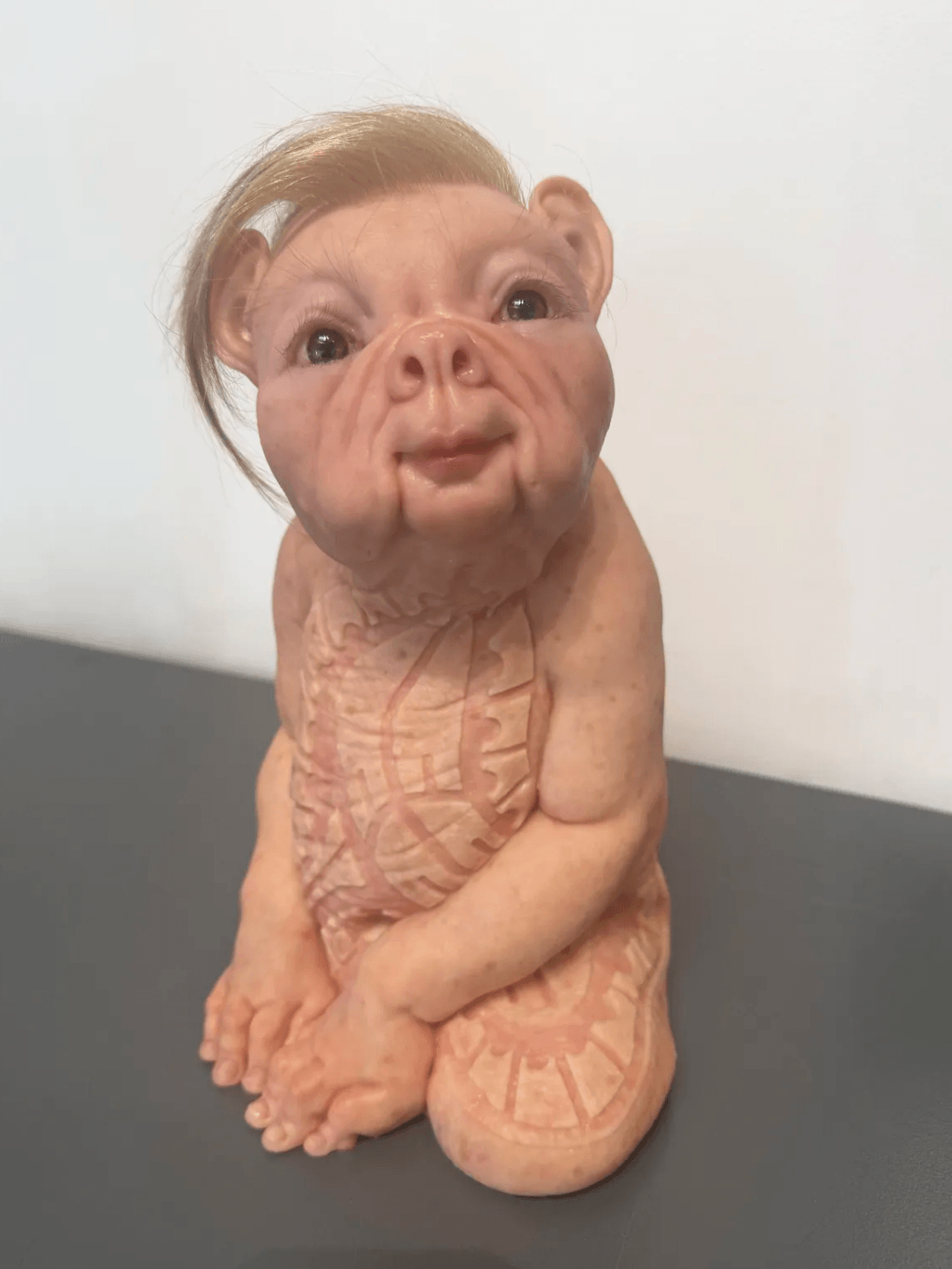
The Stalwart, 2026,
silicone, fiberglass, hair
11 3/8 x 9 1/2 x 6 7/8 in
Another reason the figures appear to inhabit a unitary world is that each creature lives in the same way: unbothered by our gaze. No being attempts to impress us, to repulse us, or to gain our sympathy. The bell jars and the rod-mounting of the enclosed figures are evidence that we try to see these creatures. But it’s clear that our attempt fails—the captured totems remain unknowable.
All the creatures retain some mystery. Those not trapped in the glass jars also show evidence of an inner life. The Stalwart (2026) is a being who, in the face of indignities or worse, refuses to be crushed, or even to complain. She reminds me of one of my relatives.
The Protégé (2023) radiates the self-assurance of a newly minted trillionaire, despite holding a toy. With The Sage (2025), you can forget what you’ve heard about owls not being especially wise, just looking the part. This owl cocks her head, focusing on the viewer. Never mind projecting qualities onto her—we wonder what she thinks of us.
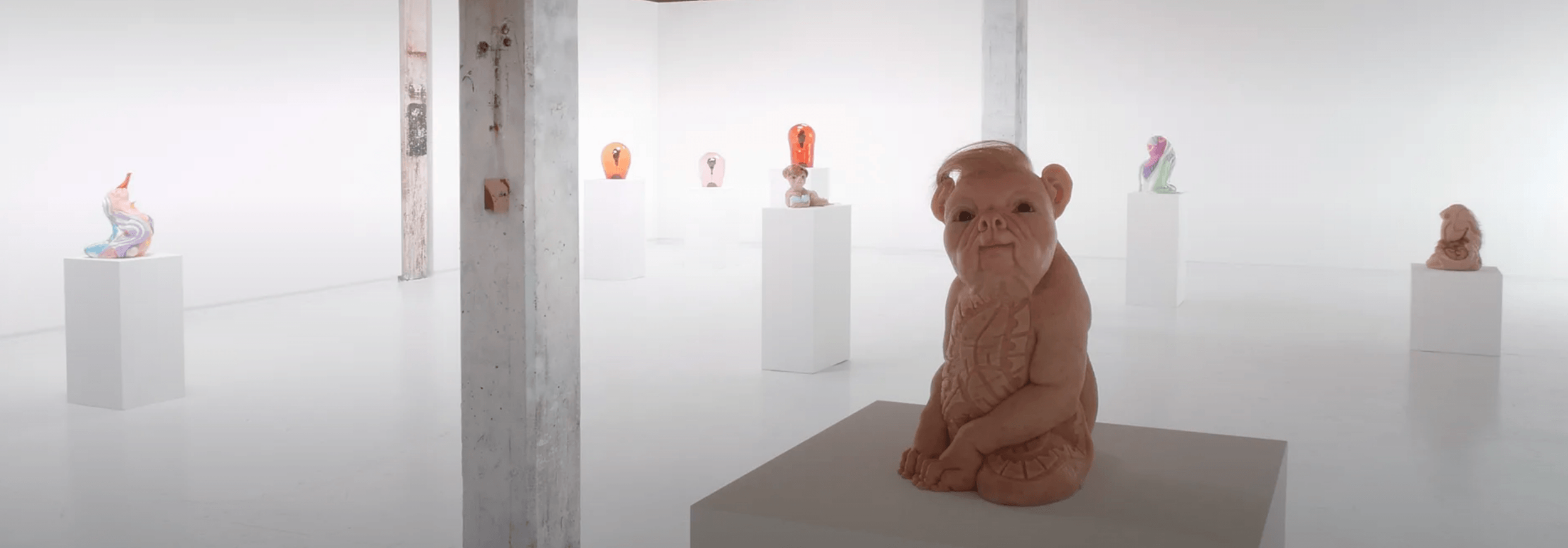
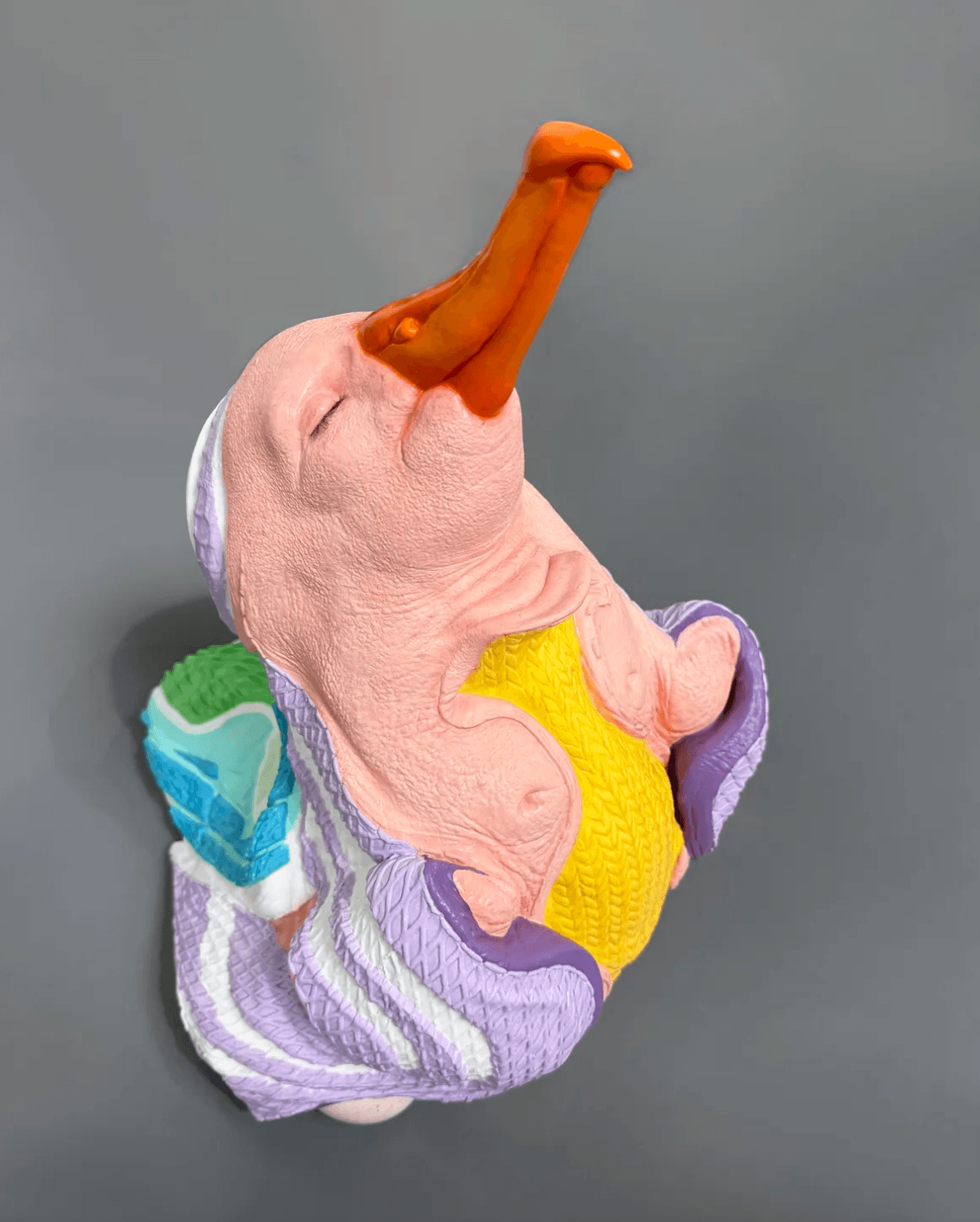
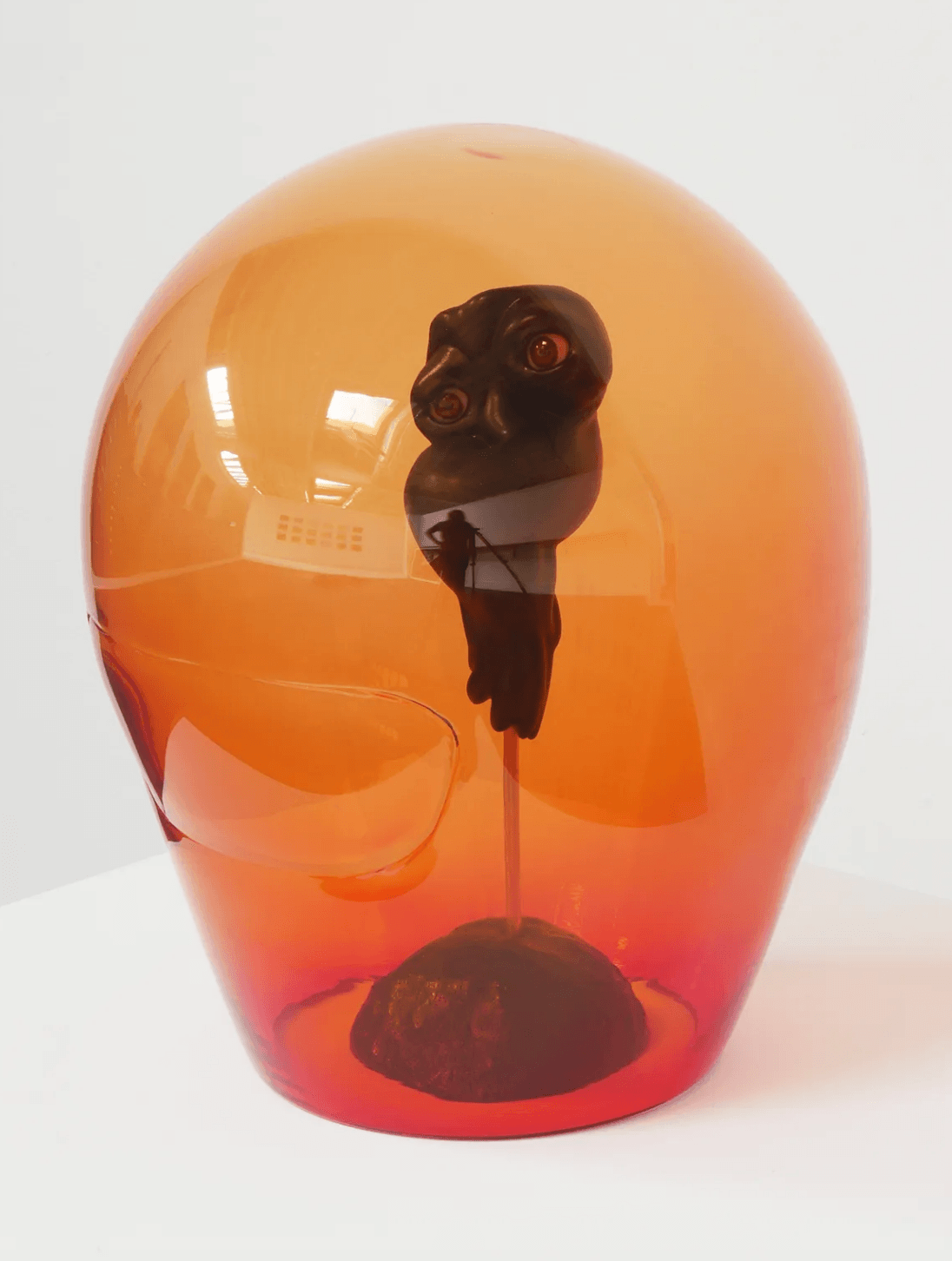
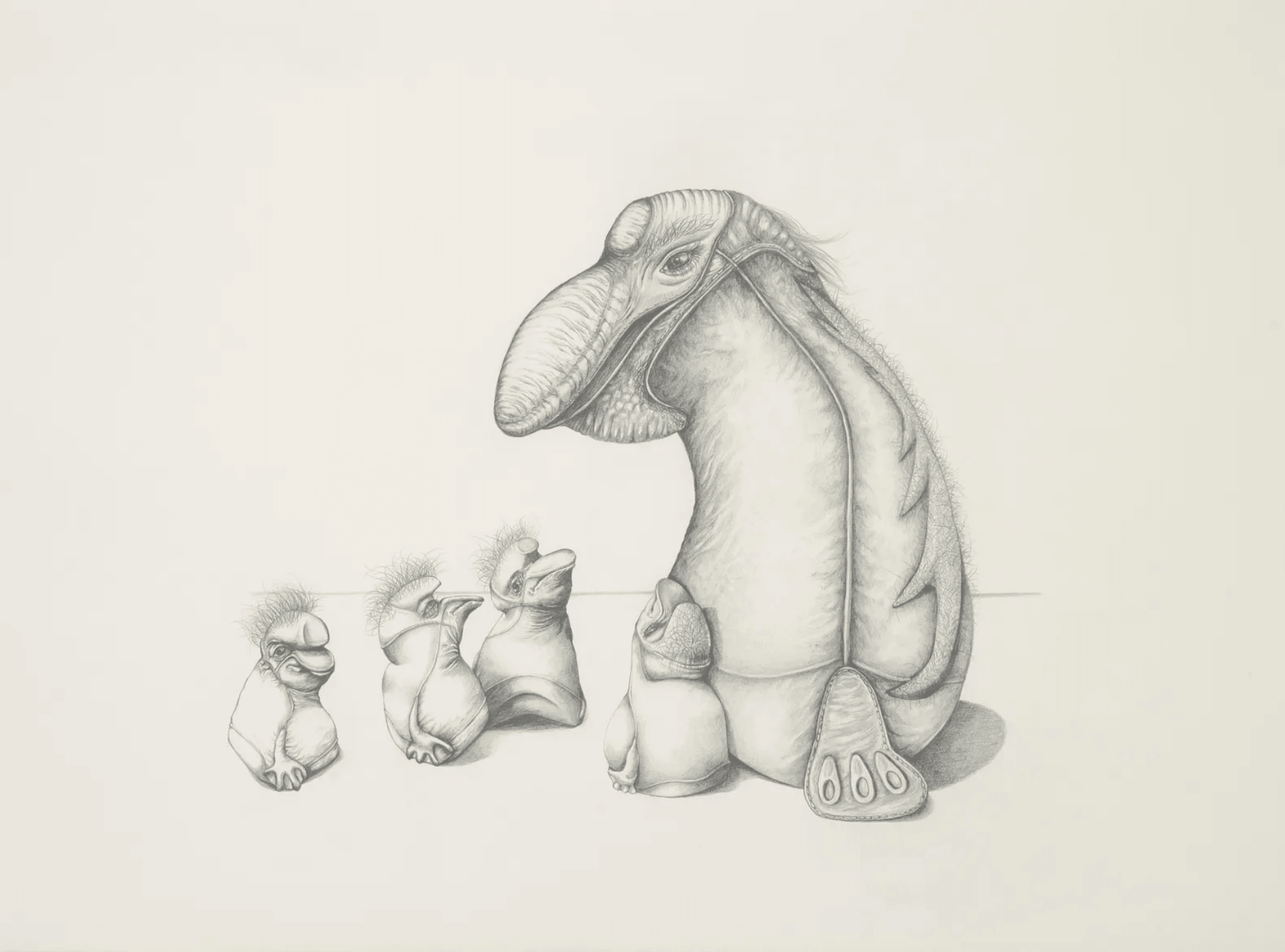
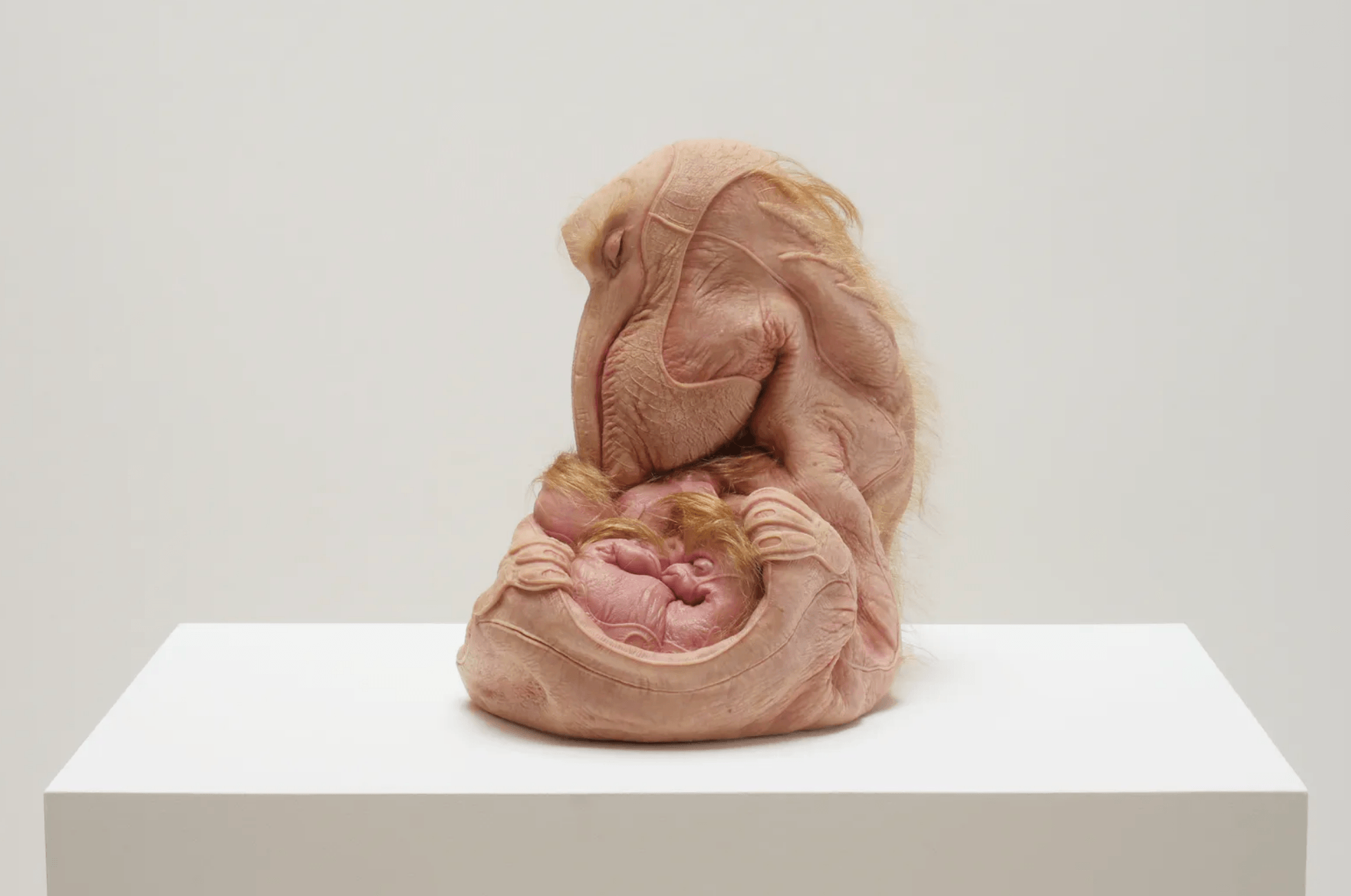
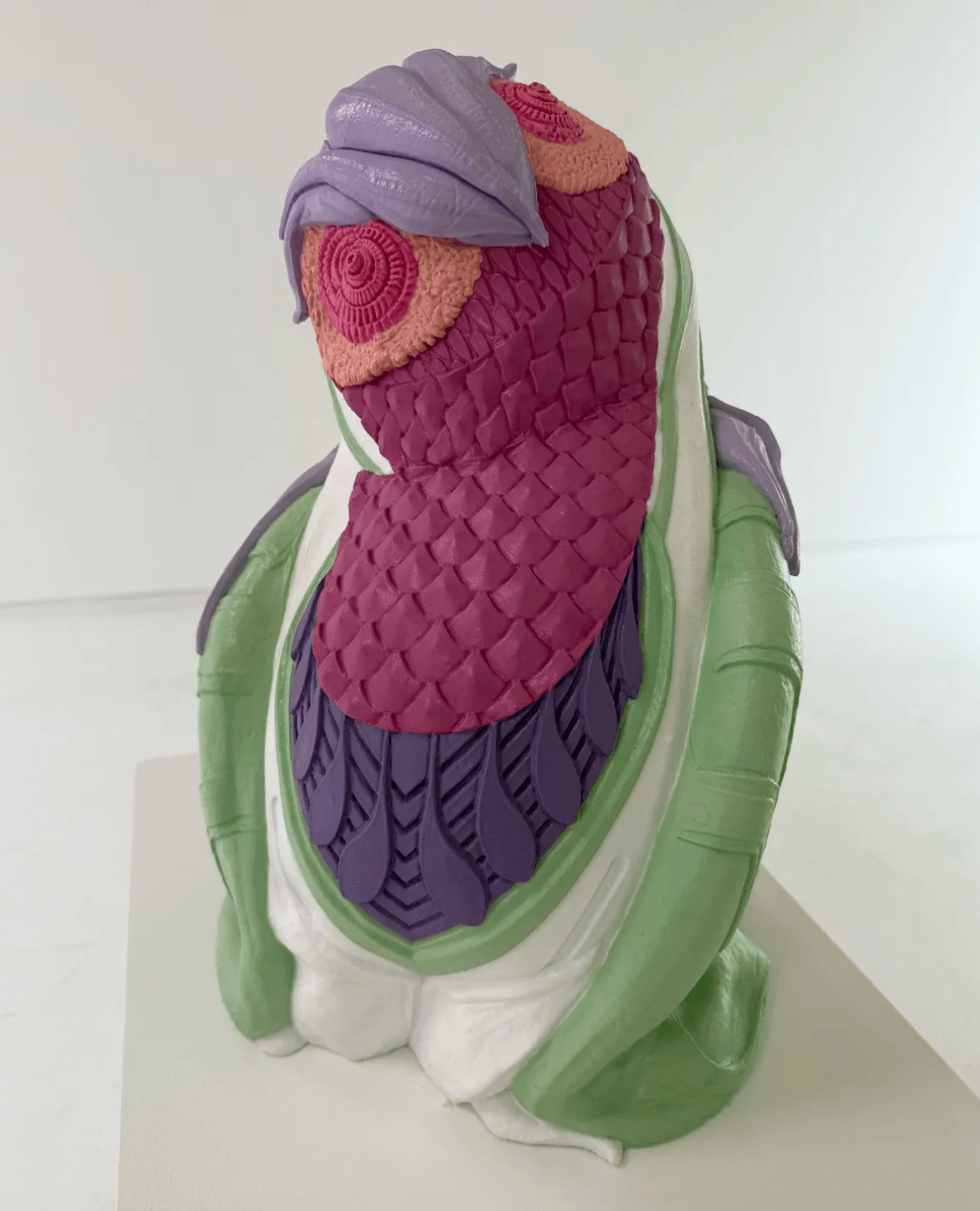
The figures in this show may be described as mutants. Rather than being spun from whole cloth, the creatures are our reality, tweaked. The figures remain fundamentally natural, of the earth, featuring neither the oversimplified blankness of many hand-drawn cartoons nor the bland uniformity of machine-made manipulations such as beauty filters.
In biology, mutation powers evolution by giving selection something to act on. Here, mutation is also a creative act. The creatures in the show look very strange, the opposite of conventionally beautiful, yet the exhibition is not a dystopian one. The weirdly-shaped figures, with their relatable feelings, allow us to see ourselves plainly–and show us our kinship with other animals, our place in the world.
