
A Conversation with Oscar Villalon
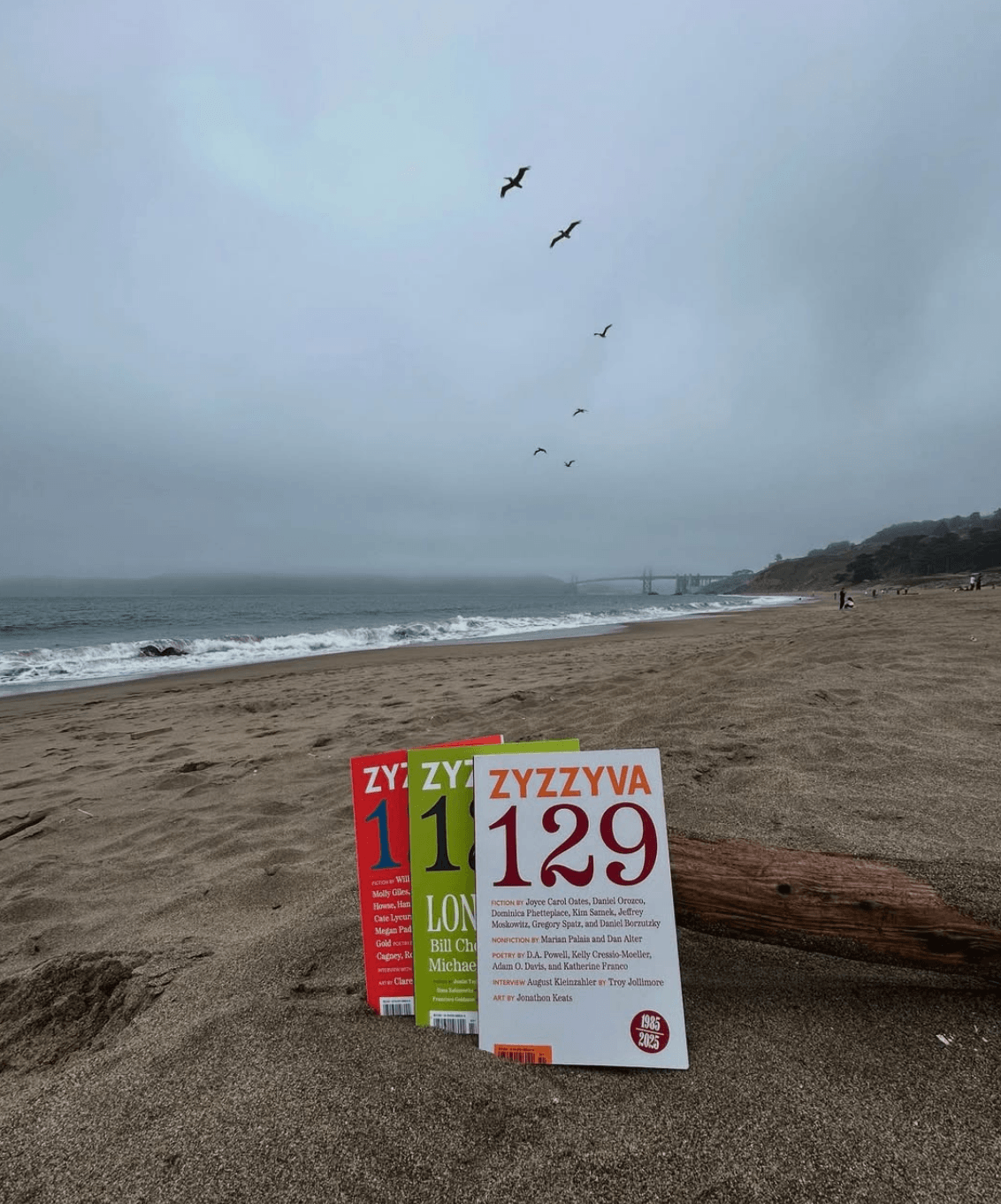
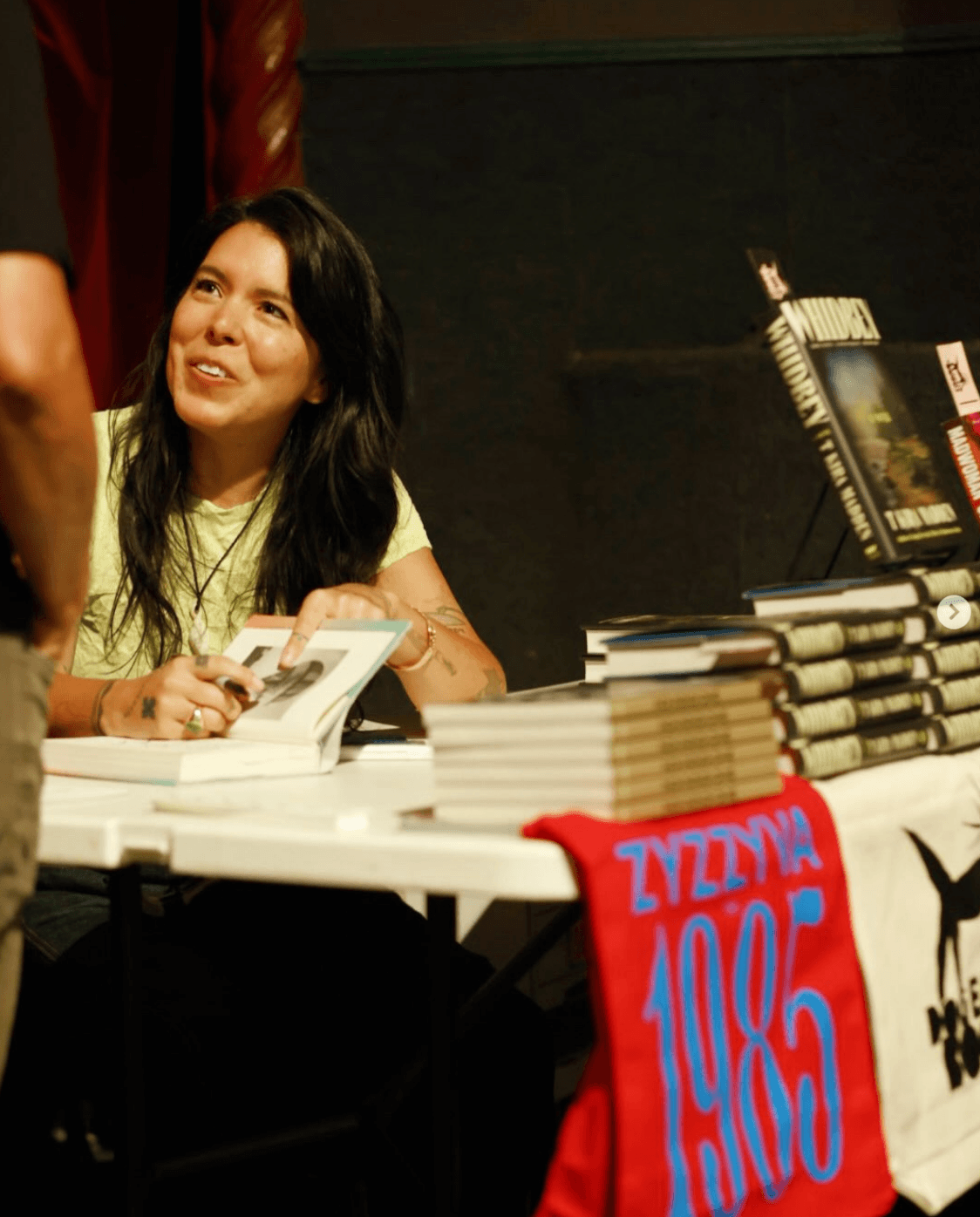
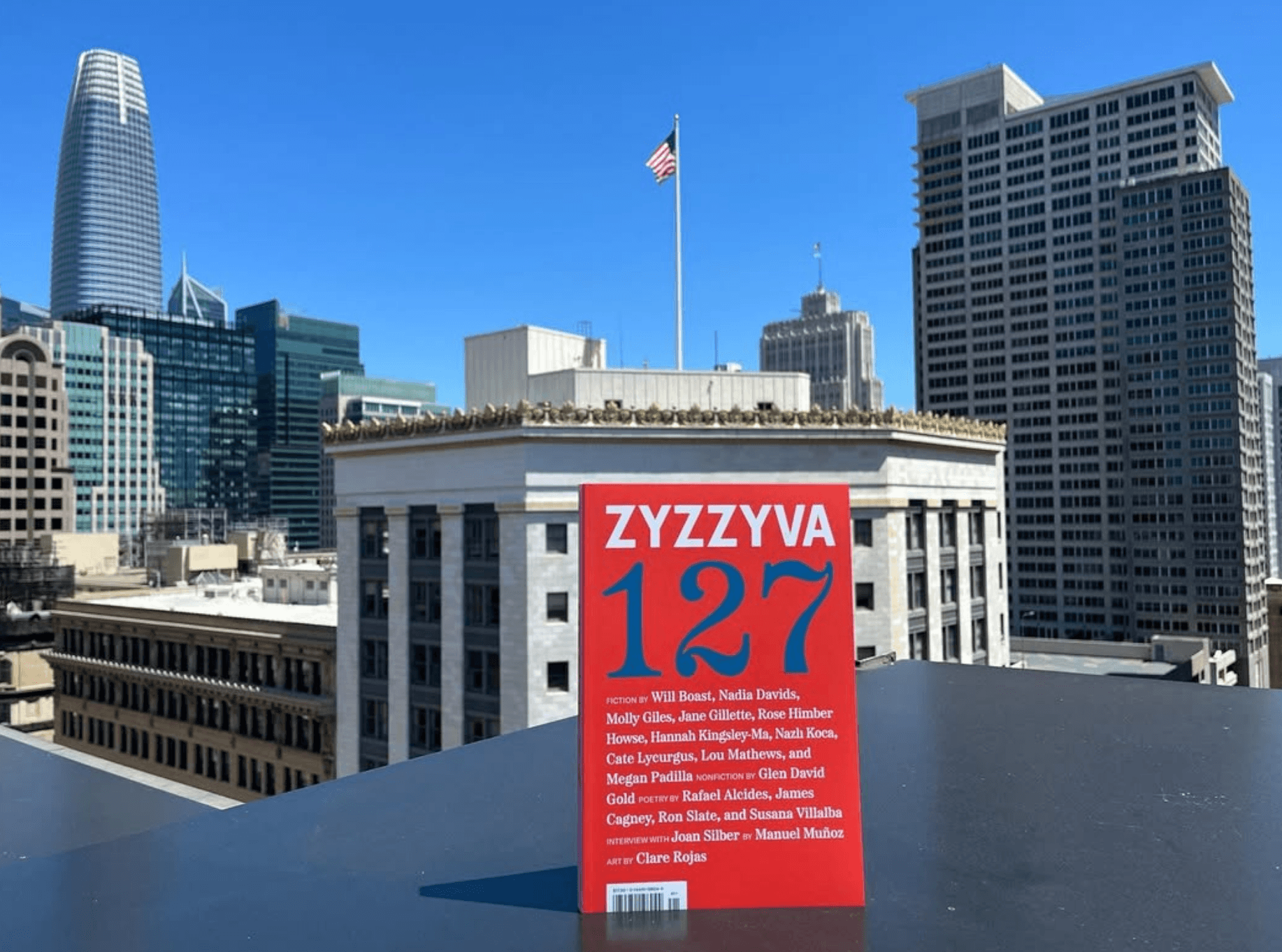
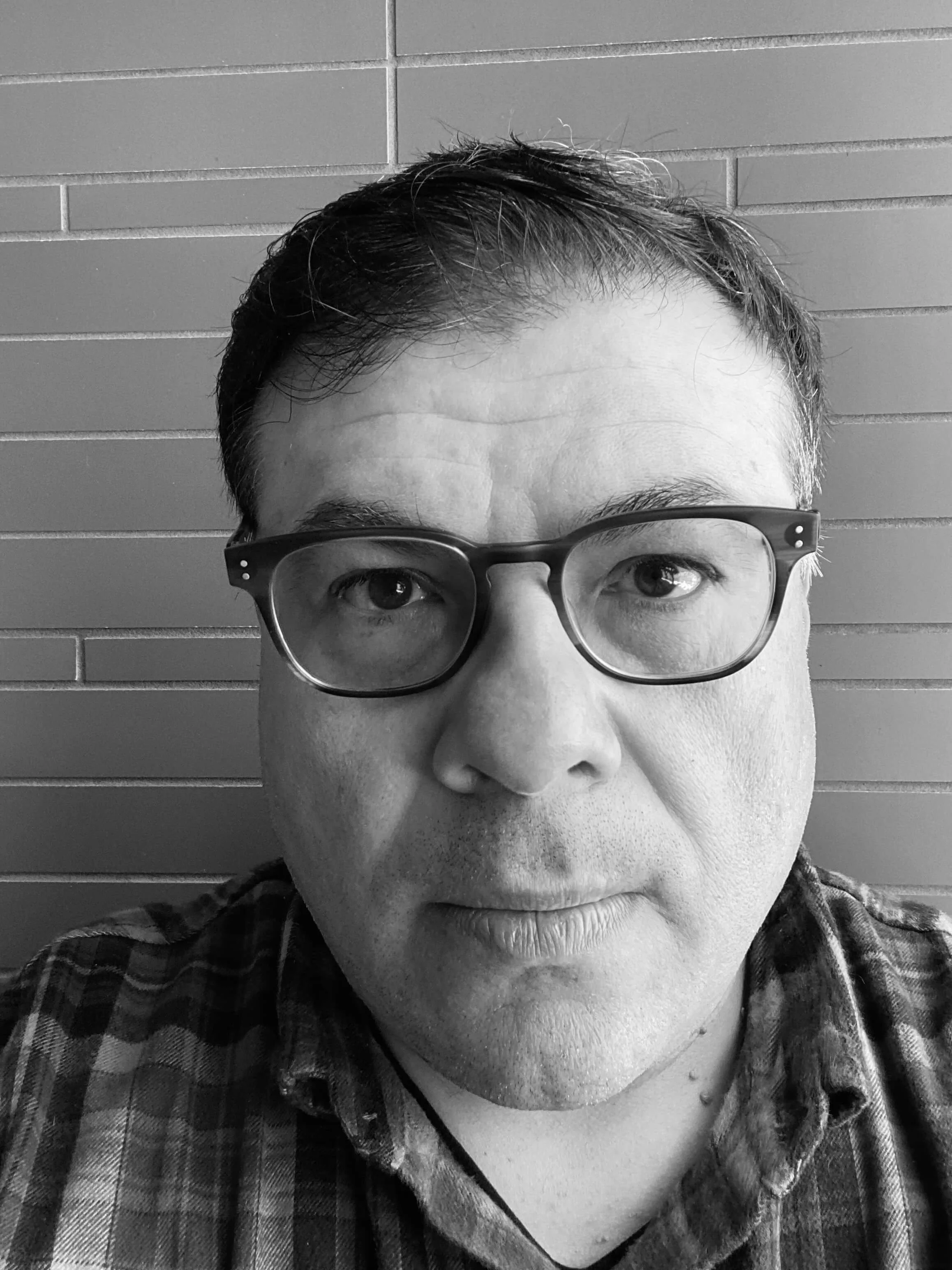
Oscar Villalon is the editor at the San Francisco literary journal ZYZZYVA, winner of a Whiting Literary Magazine Prize in 2022. His writing has been published in Stranger’s Guide, Freeman’s, The Believer, Virginia Quarterly Review, Lit Hub, and elsewhere, including the anthology There’s a Revolution Outside, My Love: Letters from a Crisis (Penguin Random House).
Managing Editor, ZYZZYVA | Interview by Hugh Leeman
What Is ZYZZYVA?
Hugh Leeman: Oscar, for people who may not know, what is ZYZZYVA, and can you share a bit of its history and background?
Oscar Villalon: ZYZZYVA is an independent nonprofit literary journal headquartered in San Francisco, publishing since 1985 — that's when the first issue came out. It was founded by editor Howard Junker, and its intention was to publish poets, writers, and artists living on the West Coast, which was defined as Alaska, Washington, Oregon, California, and Hawaii.
The reason was that Howard and like-minded people — the people who would eventually be on the board, the donors — felt that folks living out here just weren't getting the attention they merited from publications outside the region, namely New York, but just in general. Attached to that was a sense of necessity: we needed some sort of journal out here in which all these different people in the literary community could see each other. A platform for all the incredible writers and poets and artists out here.
Why a Literary Journal Matters in the 21st Century
Hugh Leeman: There's a nobility in that 1985 idea of giving props to people who, by a simple tyranny of geography, aren't near New York. But bringing it to today — what is the importance of a literary journal in the 21st century?
Oscar Villalon: It still functions the same way. The idea is to create a platform for a literary community to get their work published, seen, and appreciated, and therefore to support them. A journal like ZYZZYVA is so regionally specific — and now even more so. Originally the idea was to platform West Coast poets, artists, and writers; now it's to platform California poets, artists, and writers. We still publish people from all over, but in the main we want to highlight folks from the Golden State.
Why? It's important for people to see what's happening around them — to see what they're already a part of, the richness of their community. So the mission of a literary journal is not only to support the people you publish by bringing them to readership, but also to enrich the lives of the readers, so they can see what's happening around them. Art is being made all the time. Literary art is being created all the time. This is exciting. You are part of an evolving thing, and I think that can be greatly beneficial.
Hugh Leeman: With that shift from Alaska-down-to-Hawaii toward focusing more on California, is there still inclusion for someone from Iowa or Texas?
Oscar Villalon: Yes, we do publish them. But here's the idea: it's not just about publishing you, it's about supporting you in other ways — events. We do a lot of events, probably more than any comparable literary journal. So far in 2026 we're almost up to a dozen events, and we're still in July. The next step to supporting you is bringing you out to a reading and putting you in front of an audience, literally building some sort of fellowship, some communion, with our readers where we live.
So we absolutely will publish people from outside, but I can't extend to you the full benefit of being published in ZYZZYVA if you're in search of community. When we publish people from outside the region, they tend to be a little more established — they already belong to a literary community. It's like inviting a special guest to the party: look who's dropping by, what a special visit from so-and-so who normally lives in New York but is stopping by to hang out with us today. It's not that we don't want to publish people outside the area — it's that I feel we can't fully support you as well if you're outside the region.
Hugh Leeman: So you're creating a community about genuine connection, as opposed to simple publication. Is that fair?
Oscar Villalon: Yes — though I'm not creating it so much as surfacing it. It's there. The community just needs to see each other to coalesce. My thinking is that ZYZZYVA becomes a locus around which the community can gather, see itself, and hopefully thrive and drive further. We're certainly not the only organization making things happen, but every little bit helps.
The Values Behind the Journal
Hugh Leeman: In a previous conversation you told me a literary journal is a small marker of what you value. What are those values?
Oscar Villalon: Possibilities. In terms of values, I'd say what we'd call the humanist values — empathy, rule of law, self-knowledge, self-awareness, the pursuit of enlightenment. But in terms of the idea behind it, it's one of possibility. The idea of becoming. The idea that we are evolving, that things aren't static, that they need not be the way they appear right now. What literature does is open your mind to the possibilities — literally, other ways of living, other ways of being, other ways of seeing the world.
Taking Over and What Had to Change
Hugh Leeman: Several years ago you took over as managing editor. When you took over, what were the things you said, "this needs to stay the same," and what did you say, "we need to change this"?
Oscar Villalon: When I became managing editor, I was working for the editor, Laura Cogan. We were on the same page about what needed to change. Where ZYZZYVA was when we were tasked with running it, and where we wanted it to be, came down to the variety of writing, maybe even the quality of the writing — it felt to us like it was lacking in excitement. We wanted to reshape it in our image. That's why you don't necessarily want the same editor running a journal for years and years with their stamp on it — sometimes you want someone who sees things differently, to shake things up. Times change. Different leadership.
One of the big things we did was introduce interviews — lengthy interviews. We didn't do those before. We also opened it up to outside contributors; it had been very strictly West Coast writers. Going back to the analogy of the party, we wanted to invite people in whose work our readers would enjoy, even if they didn't live on the West Coast. And the events — so many events. That was by far the biggest change once Laura Cogan became editor and I was managing editor. At one point we were averaging nearly twenty-four events a year — at least two a month — while publishing the journal three times a year and doing fundraising, with just three full-time staffers at the time. A lot of work, but important, necessary work.
The Ideal Reader in a Rent-Controlled Apartment
Hugh Leeman: You've described the ideal reader to me before as someone living in a rent-controlled apartment, who knows that's how it's going to be forever — an aspiring writer or artist, maybe a social worker, maybe working for a nonprofit. That's a very specific ideal reader. What inspired the focus on them?
Oscar Villalon: Because I don't think of literary community, or the pursuit of a literary career or literary interests, as something that should be tied to income. I don't like the idea of creating something where people feel they're pressing their nose up against the glass, aspiring to get in — not in terms of quality, like "one day I could write a story good enough for the journal," but in terms of class. Another class of people, one I may never be part of, for a variety of non-negotiable reasons: your ethnicity, your race, your degree, what field you work in.
What I want to do — and I hope this resonates — is create a journal for people who made a value choice: the reason I'm living in the rent-controlled place, the reason it's sometimes a financial struggle, is because I've chosen one thing over another. I chose, let's say, meaning over lucre. It's a way of saying, I recognize you as a fellow bohemian, and I want to create a journal I think you would like. Because for me, San Francisco — in spite of all the wealth, all the shiny things, all its outsized power — its beating heart is still the bohemian one. It's about beauty, about culture, still very much about possibilities. I want to recognize that.
Hugh Leeman: Given the massive displacement of the creative class over the last ten years or so — the artists, writers, poets, dancers — do you see your target audience dwindling?
Oscar Villalon: No, and I'll tell you why. Even though those are the people I'm thinking of when I put out the journal, there are so many more people who, out of economic necessity, have to take jobs that pay well — because they have a family to support, or crushing needs that can only be addressed financially — who would also very much like to be part of that. The journal is open to them too. It's for the people who had to take that route, understandably, who have to work for a living to make a good amount of money because they're trying to create wealth and comfort for their family. I get it. But at the same time, recognize that life is elsewhere — that this isn't the sum of it, that there's more going on.
Hugh Leeman: In other words, the sum of life is not the accumulation of cash.
Oscar Villalon: Right. You do that to take care of your material needs, but what are you going to do about your spiritual, intellectual needs? Hopefully a journal like ZYZZYVA becomes, for those San Franciscans, a balm — something that reminds them of their humanity, reminds them of their agency, reminds them that our time is short, but that the world is still incredible and mysterious.
Naming the Place Where It Hurts
Hugh Leeman: We spoke before about how Western civilization is under incredible pressure of change — in the shadow of catastrophe, of authoritarianism, of fascism — and that people want answers at these times. What are the answers people are looking for?
Oscar Villalon: It boils down to one question: why do I feel the way I do? Let me frame it a little. We go through life thinking things and feeling things, and we lack the vocabulary to express them to ourselves, let alone to others. What the literary arts do is provide you with that vocabulary. So you can name the place where it hurts. You can name that itch, and now you know where to go and scratch.
In these times of utter confusion — of astonishment and bafflement and anger and sadness and fear — it's more important than ever to be able to express what you're thinking and feeling. This prevents you from falling into the traps of other people who are going to express it for you, who are going to say, "here's what's wrong with you." Spending time with a novel, or with poems, or with a collection of lyrical essays gets you closer to something true, which reminds you of your humanity. And when we talk about possibilities, with possibility comes hope. If you're reading, say, the literature that came out post–World War I, or post–World War II, particularly in parts of Europe and the Americas, there might be something in there to help you make sense of all this.
The other thing it does is remind you that you're not alone. Part of that process of providing vocabulary is through examples of people who've gone through what you've gone through, felt what you've felt, seen what you've seen — that indeed nothing is new. It only seems new if you don't know about other lives.
Hugh Leeman: That idea that you're not alone is powerful — in the shadow of the loneliness epidemic, and thinking back to the Spanish Civil War, where I believe Franco banned people from gathering in coffee shops, because that's where revolutions begin. On the flip side of that: if you really want to control people, you make them feel isolated. Like, no, you're the only one feeling that.
From Irrelevance to Relevance
Hugh Leeman: An undercurrent to everything we're discussing is relevance. You told me that when you took over, you wanted to make ZYZZYVA relevant again. What did that journey from irrelevance to relevance look like?
Oscar Villalon: By that I meant increasing the readership, making it something exciting people would want to see again. What happens is you get caught in a rut — the last issue looks a lot like the one before it — and you risk losing their attention. You could get to the point where you're serving the same meal. So you want to create surprise. Not that the high quality is the sameness — it's asking, are we repeating things? Are we not trying anything different, in terms of people writing in different styles? Can we mix it up, so that when readers encounter the journal, they walk away having engaged with something they otherwise never would have.
The other thing I meant by relevant: we have such a high caliber of poets, writers, and artists in our region — San Francisco, the Bay Area, California. It's an embarrassment of riches. Let's showcase them. Let's show people all these amazing talents working right now, writing about this shared experience of life, that they may not otherwise know about, or that they may find validating. That's what I mean by relevant.
Hugh Leeman: That implies ZYZZYVA is not a monologue but a dialogue. What have readers taught you that changed how you edit or what you publish?
Oscar Villalon: They don't teach us directly — we don't do polls. But what they've shown is increased patronage. For the last two years or so, our subscription numbers have steadily gone up. It's a trickle, but they're going up, in a way they hadn't in a while. Our events are very well attended — and we're seeing something really remarkable and hopeful: young people at our events. That's how we read them, and we say, we must be doing something right.
At the end of the day, we judge the reader because we think of the reader as ourselves. Between myself, our senior editor Manjula Martin, our associate and assistant editors — Andrew David King, Annie Dominici, Chiara Bercu — we create the vibe, along with our production designer, Justin Carter. That's important to mention: yes, I'm the editor, but this is in collaboration with all the journal's other editors. We put our heads together, we figure out what we think is going to be good, and we trust each other. In some ways it works like a band — everyone contributes something, and hopefully the sum is greater than the parts.
The Border, Belonging, and the Value of a Citizen
Hugh Leeman: Turning to your own writing — in your piece on Aida Hernandez, you described the border as something that can make a person fully part of a community and yet alien to it, while asking whether the story of the undocumented is really about the value placed on Mexican American futures. How do you see that idea applying today?
Oscar Villalon: That question has become more urgent, and the answer more stark, than ever. Let me back up. When you think of what ICE has been doing, when you think about the wages of Latinos compared to other US demographics, when you think about their near invisibility in popular media — Mexican Americans alone are thirty-five million people, that's ten percent of the country, and if you include Latinos as a whole it's closer to twenty percent — yet we barely register as a blip on the radar of US popular culture. In English, I should say. We certainly have our own popular culture, which is bountiful and commercially successful. But in US popular culture in general, we're hardly there.
This raises the question: what exactly is the value to us of being a US citizen, compared to other groups? When you're living in a constant state of what feels like siege — worried about the birthright citizenship ruling, with all these things coming at you — it forces you to think about what it means to be an American. The Black experience in this country is very helpful in figuring out what that might mean: what does it mean to be essentially a second-class citizen? That's something still worth thinking about when your schools are so poorly funded, when folks doing agricultural work are exposed to all kinds of pesticides and develop cancers. How much are we valued? Is my citizenship worth as much as yours?
This administration has made pretty clear what they believe our status to be — that at best you're going to be second class, if they have it their way. There'll be some exceptions, maybe if you're Christian evangelical they make room for you, but even then I don't buy it. I don't think you'll be fully, quote-unquote, one of them.
Hugh Leeman: In your El Paso essay, you address Mexicanos, Chicanos, Latinx directly, shifting between English and Spanish. What does that bilingual prose allow you to say emotionally, politically, even communally, that English alone does not?
Oscar Villalon: It becomes an opportunity to explore, on the page, different ways of being. In this case, it allows you to reflect how you actually think. The biculturalism, the bilingualism — it's not so much code-switching, not turning a lamp on and off where you're this or you're that. It's actually a combination, and the percentages vary. Sometimes when you're very upset, that combination can be at least fifty-fifty, if not seventy-five/twenty-five Spanish. Other times it's the opposite.
I also wrote it that way because I wanted to present what felt to me like an honest accounting of the emotions many of us were going through at that moment. In the wake of that horror, unabashedly embracing one's Mexicanness — and then the surprise: yes, I may speak the King's English, but how about that, I'm also this. We're complicated. Complex, I should say.
Precarity, Wealth, and the False Protection of Money
Hugh Leeman: Years ago you wrote a piece titled "Letter from San Francisco," addressing abandonment, economic fear, undocumented labor, and illness — a sense that there's no real net underneath people. How do you see that condition of precarity today, especially in San Francisco with the after-effects of the pandemic, housing instability, and economic inequality?
Oscar Villalon: It's even more extensive — and add to that precarity not just the economic one but the political one. The anxieties felt around that time are exponentially greater now. With all the vast wealth coming in from AI, it only further heightens how many people are struggling. What might have changed is that we're not looking at it anymore, the way we did some years ago. I think we've perhaps normalized it.
But when you look at the success of all these democratic socialists elsewhere in the country, people are seeing what they're seeing. In San Francisco it's harder to say — the gleam does blind you, if you choose to let it blind you, from what's actually there. What's important is that my fellow San Franciscans recognize that with every leap in quote-unquote progress — which seems to only mean filling somebody's coffers with gold — we still have a lot of work to do. We have to start considering what it looks like to work together, to be in community, to sustain a good society — to give a nod to Lyndon Johnson. And I think this is true for the whole state of California: things like healthcare, education, and housing are not things you should ever be skimping on. Those should be non-negotiable.
Hugh Leeman: You've mentioned alternative ways of being throughout our conversation. Tell me more about what those look like.
Oscar Villalon: Chief among them: how do I want to use technology? What does it mean to contribute to society? When we talk about other ways of being now, they all boil down to other ways of being a good citizen, other ways of being helpful to your community. What's going on now doesn't seem to be fruitful, so what are other ways of improving where I live? That idea — that meaning is found in being of service to others, not just in doing what's quote-unquote good for you — might be the paradigm being looked at. If there's a paradigm shift, it might be from "I acknowledge it's a dog-eat-dog world, so I will accrue as much wealth and power as I can to protect myself and mine" — to instead: maybe the best way to address that is to help others as much as I can, to be in service to others as much as I can. That's how we get out of any dire straits we're in. And once you do that, your entire outlook changes.
Hugh Leeman: It's really hard to ask oneself to be in service to others when your worldview, since childhood, has been to accumulate capital and strategically leverage debt to your own benefit.
Oscar Villalon: Absolutely. Here's the thing. Life is nothing if not about moments of love, of fear, of sadness, of pain. These are the ingredients that shape a life. And anything you do to avoid those things in an extreme, destructive way deforms you. "I can't feel love, because love compromises me, love means I'm loyal to people, and that'll mess up my ambitions." "I can't feel pain, because pain means I'm weak" — but if you never feel pain, you never grow. Sadness, same thing. Fear, same thing. If you never allow these things to humanize you, it deforms you. You can't live under that sort of protection. It's a false protection. Money seemingly allows for it, but it really doesn't.
If your whole point is to accrue wealth so you'll be sheltered and comfortable — that's the most superficial step. Protect you from what? That's why when you look at someone like MacKenzie Scott, you think: you can reach a certain level of material resources where you're set, and after that it doesn't matter. That's why you see someone like her giving away all that money. You don't need all that. It's not going to make you happy. It seems so obvious. And this is why the literary arts can be an affront to others — because it's a very low-budget, low-fi way of questioning what your worldview may be all about. And not only questioning it, but maybe making you feel some conviction that what we're talking about might be a better way to live. It's being conscious of how you're living, the choices you're making, and what you might be sacrificing.
Those Children Are Your Children Too
Hugh Leeman: You mention wealth as a superficial boundary, but it does reinforce challenges here. The San Francisco Unified School District is deeply challenged even on a national scale, and yet we're in an extremely wealthy city. To some extent, once I pull Junior out of the public schools and into private school, I have no vested interest in seeing the public schools thrive. If I can afford bespoke medicine, what do I care if others can't afford health insurance? Wealth creates insulation, and a potential blindness that borders on sociopathy.
Oscar Villalon: It can, absolutely. But this is the part that's so isolating: you are part of a society. Those children are your children too, believe it or not. Because those children are going to grow up, and one day they will encounter your child — and then what? There's no getting out of this. Like the man said, five to one, one to five, no one gets out of here alive. You cannot be apart from your fellow man. You think you can, but you cannot. It's going to boomerang back.
You know a good way to combat fascism? A highly educated populace. How do you do that? Put some money into public schools, where the vast majority of kids are going to go. Those are your future voters. Otherwise you're creating an anti-democracy. So here's how I'd look at it: if you want to send your child to a private school to get the finest of the finest, fine — I don't begrudge you that. But your wealth should also be such that you can pay your taxes to keep the public schools going and nice — meaning a solid education, great facilities, teachers who are paid and happy to be there. You need to do both. It's not one or the other. And I guarantee you, if you do both, there's no problem.
Young People and Physical Media
Hugh Leeman: You mentioned young people picking up ZYZZYVA more and more, which is a holy grail across the arts — everyone from museums to galleries says, "I have no idea how to engage young people." There was a report under the Biden administration on the loneliness epidemic, and one fascinating finding was that some of the loneliest people were those in positions of power, because everyone around them only pretended to be their friend — our relationships had devolved into a transactional nature.
Oscar Villalon: I don't think it's just us. I'd expect this to be happening to other literary journals too. As a general observation, young people are gravitating more toward physical media. We're a print journal. This is strictly anecdotal, but every time I visit family in San Diego County and we stop by a Barnes & Noble, it's packed — always — and mostly with young women, who seem to be having a great time. Something's going on.
I could see how, if you were in your late teens or early twenties, being quite sick of it all and wanting to find other mediums to be entertained or to make sense of things — why not through books, printed journals, or even physical media like DVDs, LPs, CDs? All these things that take you offline. It's important we don't forget that everything we call wonderful and exciting and new was created by people who are definitely not young anymore. Mark Zuckerberg created Facebook when he was just a lad — he's no longer a lad. The children born into this world have no investment in any of it. This is as incredible to them as television was to me. And how did I feel about TV? It sucked. At some point I just stopped watching, because it's brain-dead. I could see the same happening with young people and technology — social media, streaming — where they say, I'm just not completely jazzed about this. What else is out there?
Look at the success of movies like Weapons and Sinners — they had an internet route to them, audiences knowing the directors through YouTube, but where did they go see them? Not online. In movie theaters. Sold out. Blockbusters, both of them, theaters packed with young people who enjoyed the experience of being crammed together in one place, which is communal. Something may be afoot, Hugh. ZYZZYVA may be one of the beneficiaries, I hope — but it's definitely not limited to us.
The Owl of Minerva Flies at Dusk
Hugh Leeman: As a final question — I read that you value writing that relates to the present while touching on ideas of love, death, work, children, parenting, "eternal things." What current predicaments are you most interested in seeing writers illuminate now?
Oscar Villalon: Two things. One: one's own culpability in the state of things. And two: one's own hopes and ambitions and perceptions of how things could get better. Both at once. There's a lot to explore. As the old saying goes, the owl of Minerva flies at dusk — wisdom only manifests after the disaster, and in the aftermath is where we try to sort out what went wrong. What was my role in this? And how can we prevent it? I don't mean strictly as a policy paper, but in terms of the human condition. What is it about us that makes us vulnerable to predation, to fascism, to authoritarianism? What is it about even those who would be opposed to all these things — their own failures, personalized? People you'd otherwise look up to, the César Chávezes of the world.
That kind of serious examination is what I'd hope to see more of, because we need more of it. But it requires a certain erudition, in terms of what books you're reading, what research you're doing — a certain mindset in how you engage with the world. It's the trick of being both here, in the present, in the specific, and at the same time inhabiting the universal — seeing how other people live, how they think, or where we sit in history. This boils down to your own life: you weren't just born and the world started. We're part of a continuum. Things happened way before you got here, and you'll spend your life trying to make sense of that and how it's affecting the way you live now. And at the same time you have to live your life, experience all these things, and figure out how you're contributing to a future, or how you're making sense of what a future might be like.
What can we do? This is why I talk about possibility. What little tweaks can we make — if not on a social scale, then on a personal scale — to be better? To find some sort of peace, to find the ability to live within your own skin. There's a parallel between being able to live within your own skin and being able to live within your own society. We don't want to keep deluding ourselves, lying to ourselves to make it to the next day, that everything's going to be okay if it's not. And if things are not going to be okay — whether personal or public — what can we do about it? Is there anything we can do? Literature is often asking questions, not providing answers, but even asking them is important. To have that conversation — this is why we see each other, why we gather, why we go to readings and author conversations, why we're all here. We're all trying to suss these things out. I think that's the nature of life. I really do.
Hugh Leeman: Oscar Villalon, thank you so much. I appreciate what you've shared, and thank you for what you do.
Oscar Villalon: Thank you, Hugh. I appreciate it.
