
Oliver Hawk Holden, Future Relics, 120710 Gallery, Berkeley
By Chad Abbley
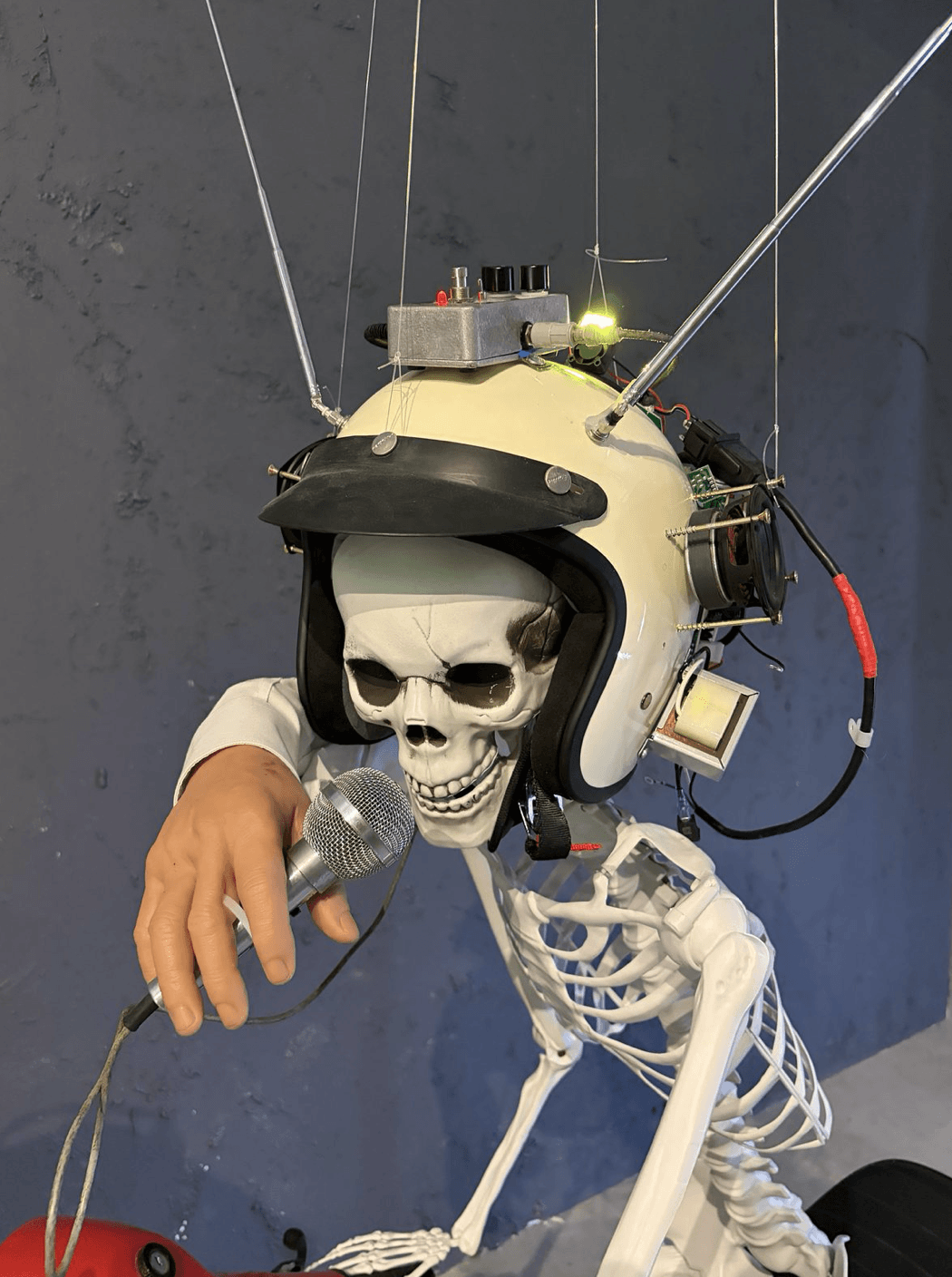
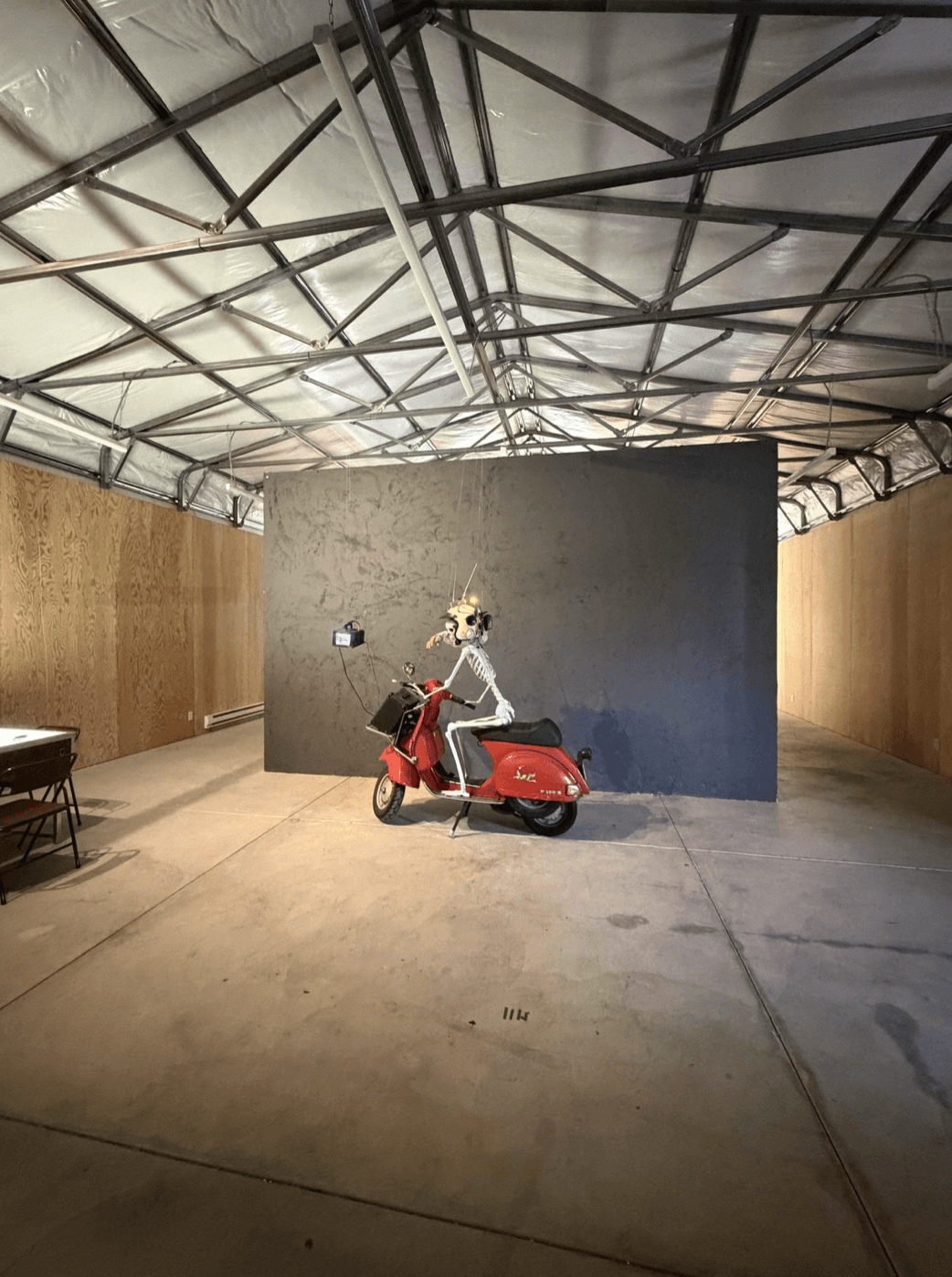
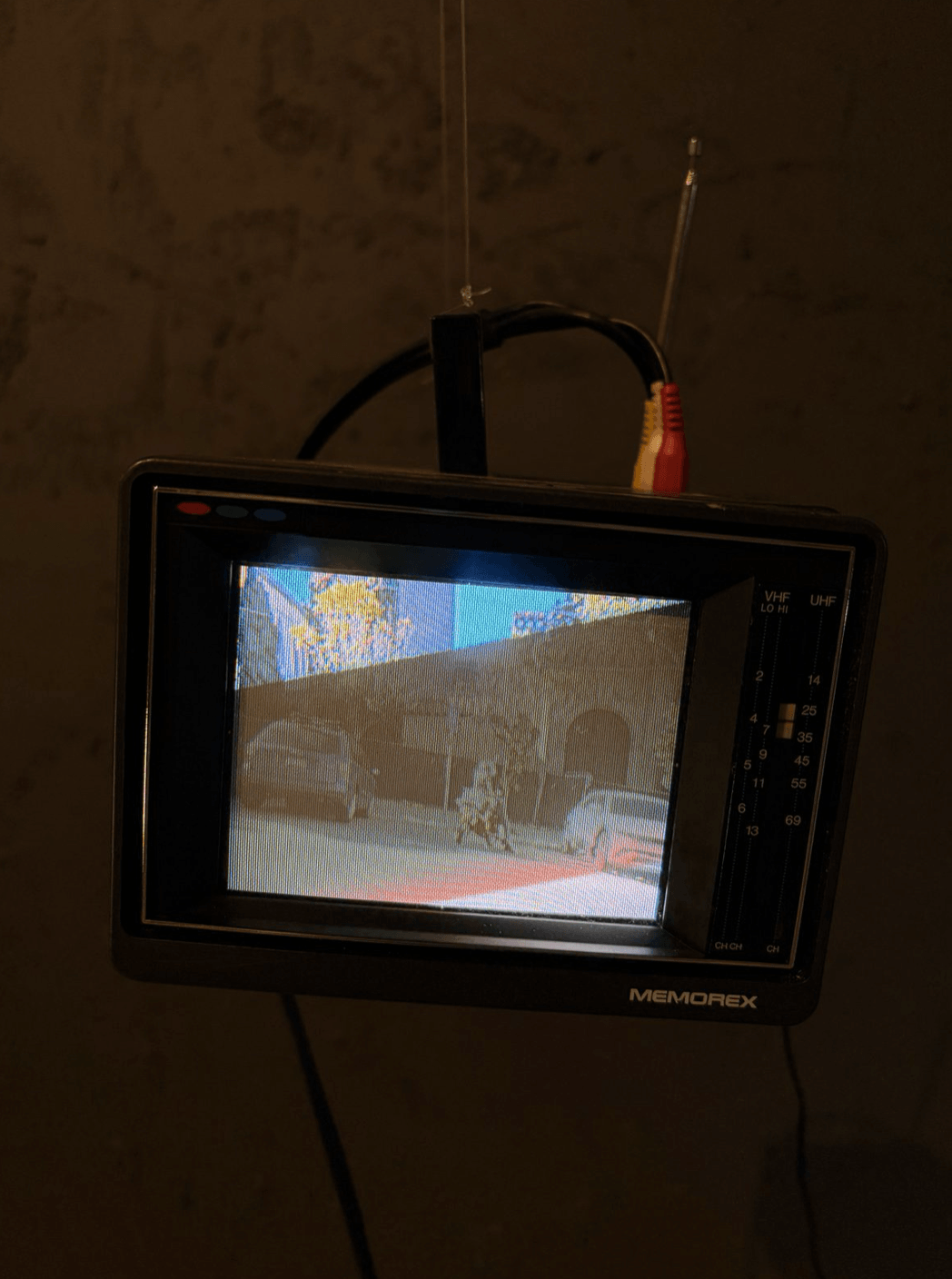
The gallery lights weren't on. A black curtain covered the doorway to keep the daylight out, and behind it, in the dark, a skeleton sat on a red Vespa next to a small CRT portable television from the nineties. The skeleton was wearing a helmet — California state law when operating a motorcycle — and the helmet had a microphone and a speaker mounted on it. You could speak into the microphone and it would transmit whatever you said back out through the speaker, with a layer of reverb added.
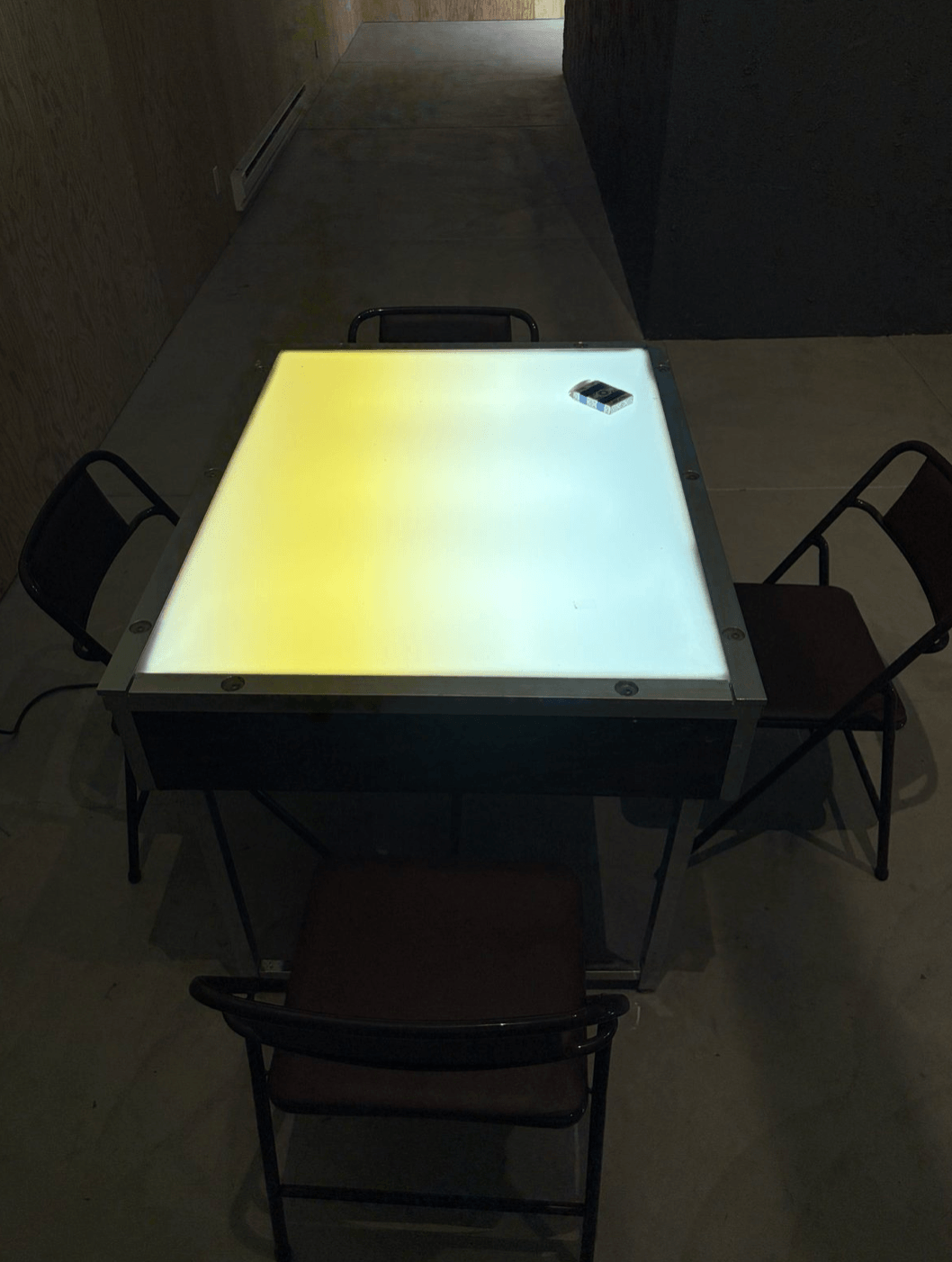
Future Relics: Curatorial Edits from 4087 — Artifacts from the Berkeley Time Rift was Oliver Hawk Holden's solo exhibition at 120710 Gallery in Berkeley, which closed July 19. The darkness of the main gallery gave way to the entrance of another, smaller gallery built inside it — this one lit with enough light to make you squint until your eyes adjusted. A white cube, the perfect encapsulation of the modern art gallery. Diffused panels in the ceiling, stark white smooth walls. The doorway had been built to standard dimensions and then widened to double the size by breaking away the drywall, the rough edges of the destruction left visible. There were additional holes that looked like they could have been punched out by someone's fist, or maybe a baseball bat. Punched-out drywall has a specific aesthetic.
Holden is an SFAI alumnus known for kinetic sculpture and new media installations — carved wood reliefs, found objects, lo-fi video, hand-built moving parts, often with an intentional DIY aesthetic.
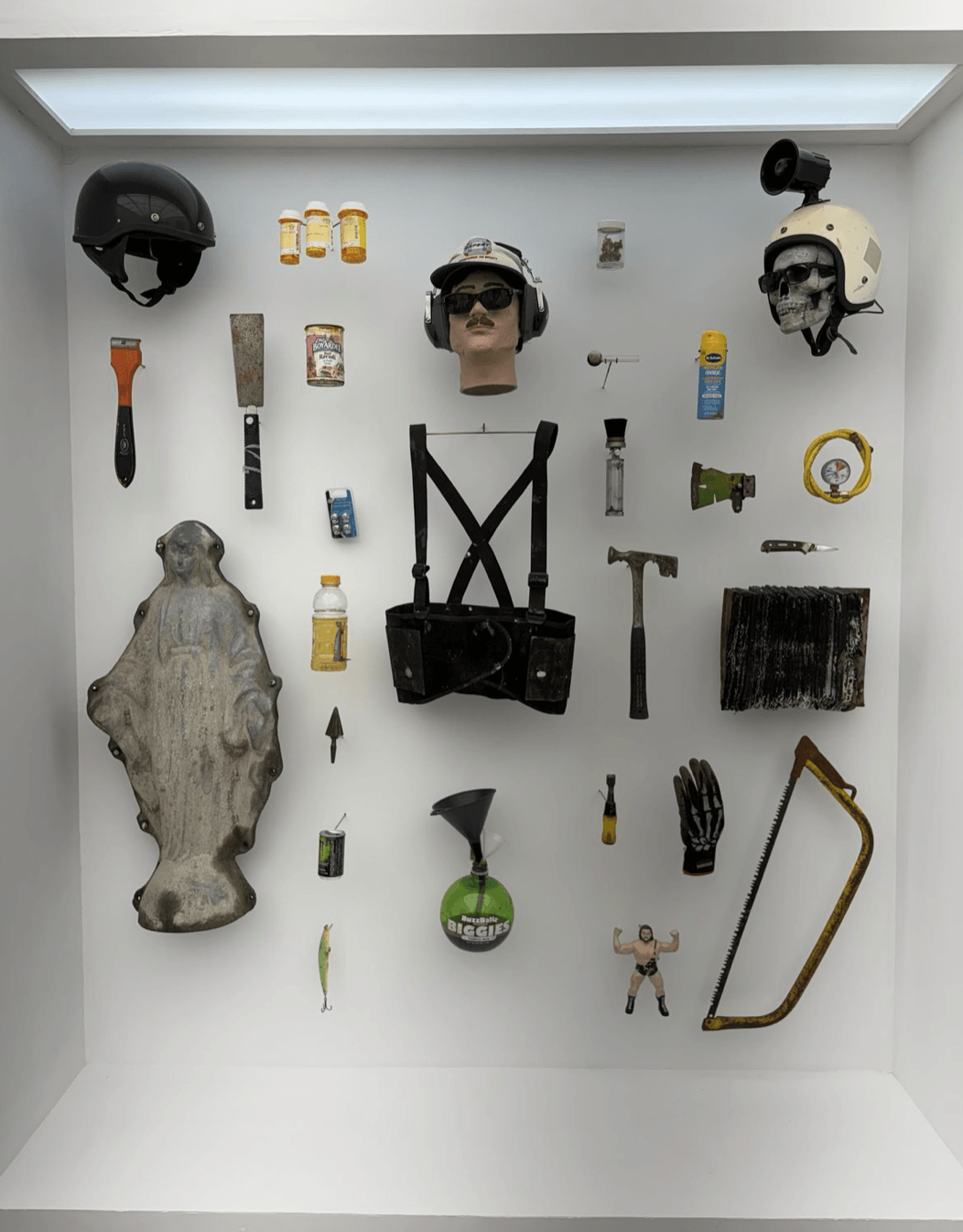
Inside, the dark gray painted box carried a texture across its entire exterior, and the contrast between the dark outside and the bright interior was immediate. The finished interior walls were smooth and presentable, undistracting, the light falling on a set of three inset coves where objects were mounted to look as if they were floating on the wall. A lemon-lime Buzzballz "Biggies," a staple in any liquor store worth its weight in the Bay Area. A twenty-ounce Gatorade bottle filled with a mystery yellow liquid that looked as if it may have come from a dehydrated person — the irony is not lost, since this person probably did not consume the beverage that was originally in the bottle. A rusted can of Chef Boyardee beef ravioli. A cast metal Virgin Mary, about twenty inches tall, with screws around her entire radius. A vintage Oakland Tribune, its paper yellowed from decades of degradation, headlined "Earth Gravity Pulls Apollo 11 Homeward." A gold-plated Pokémon card.
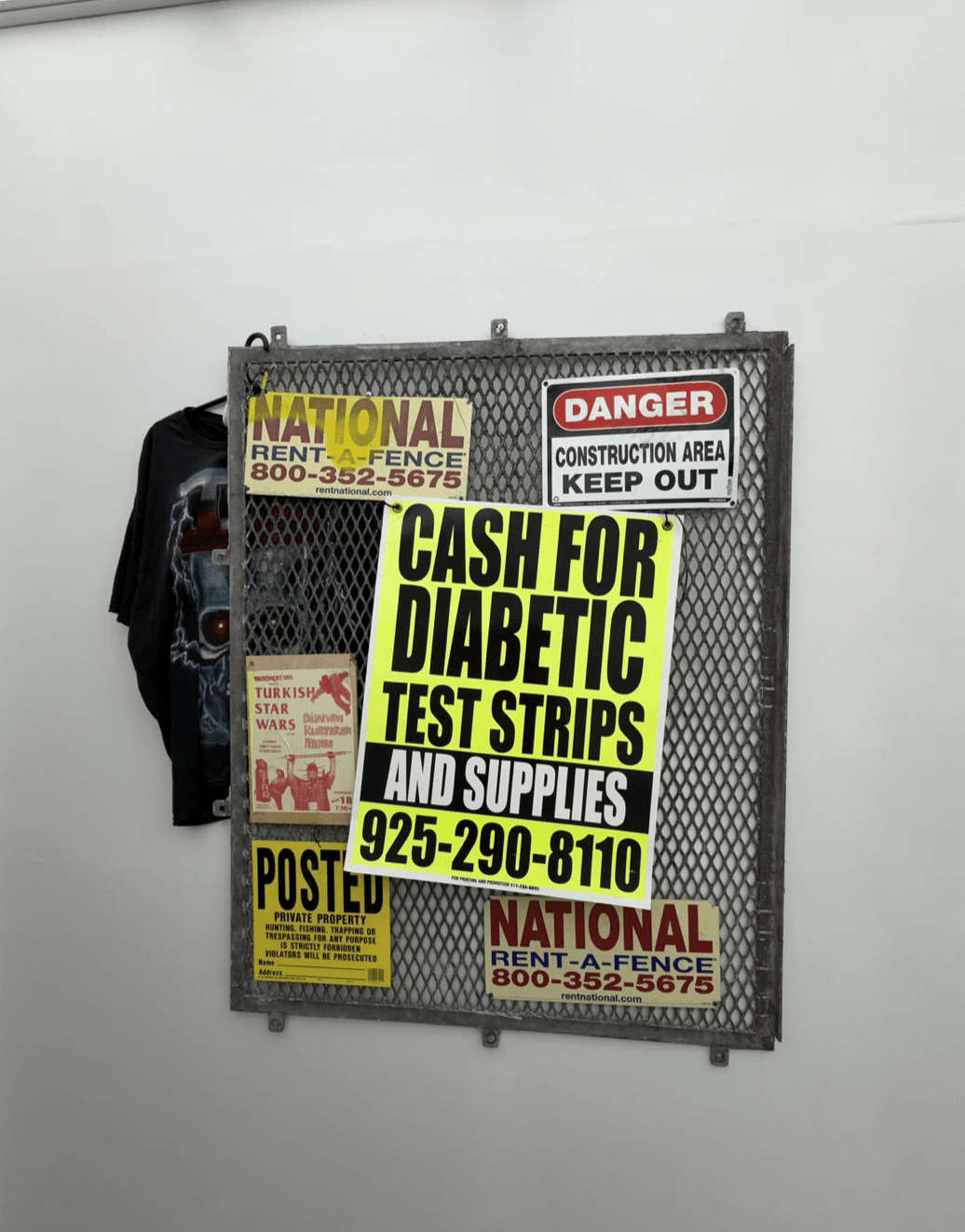
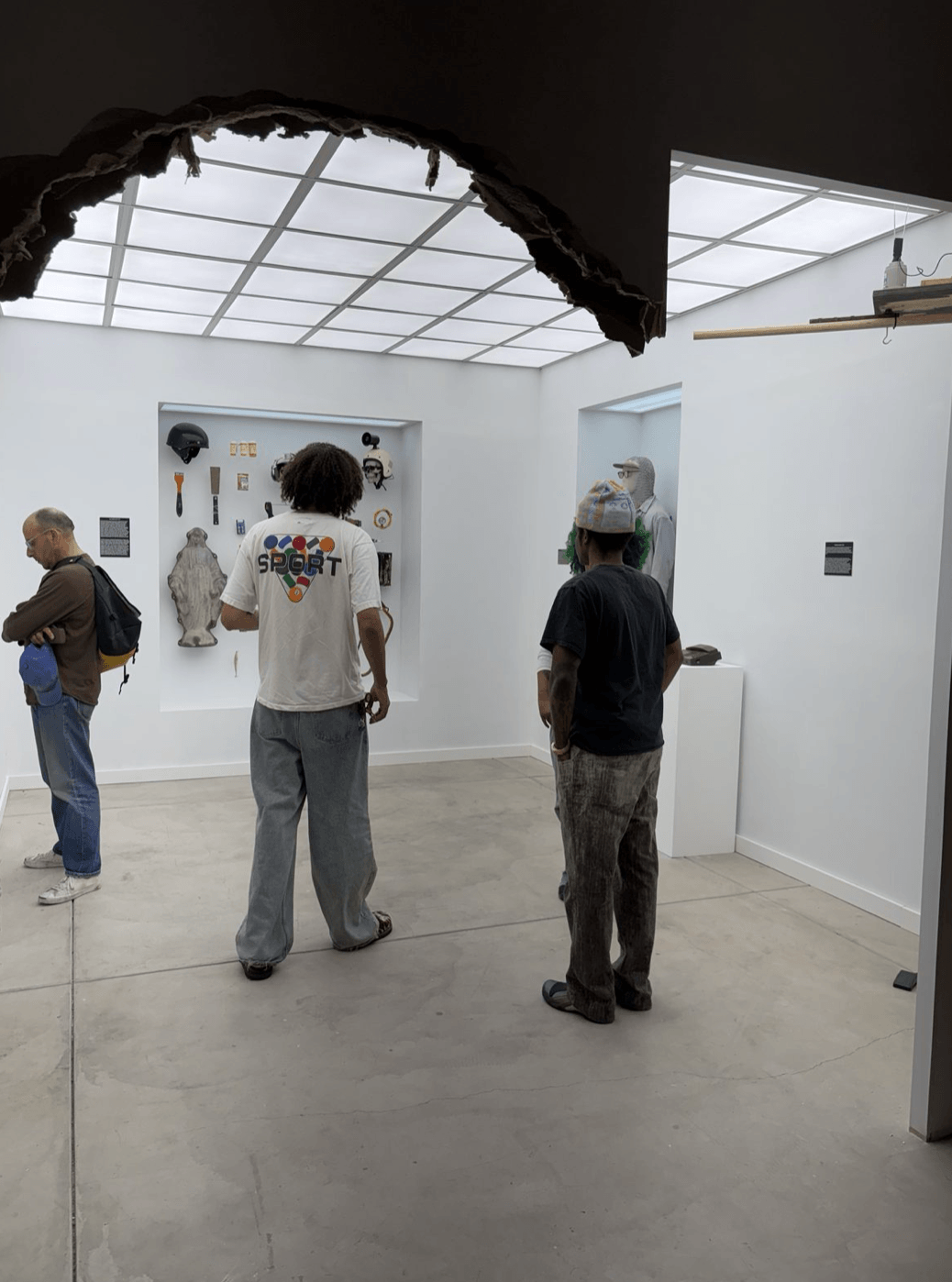
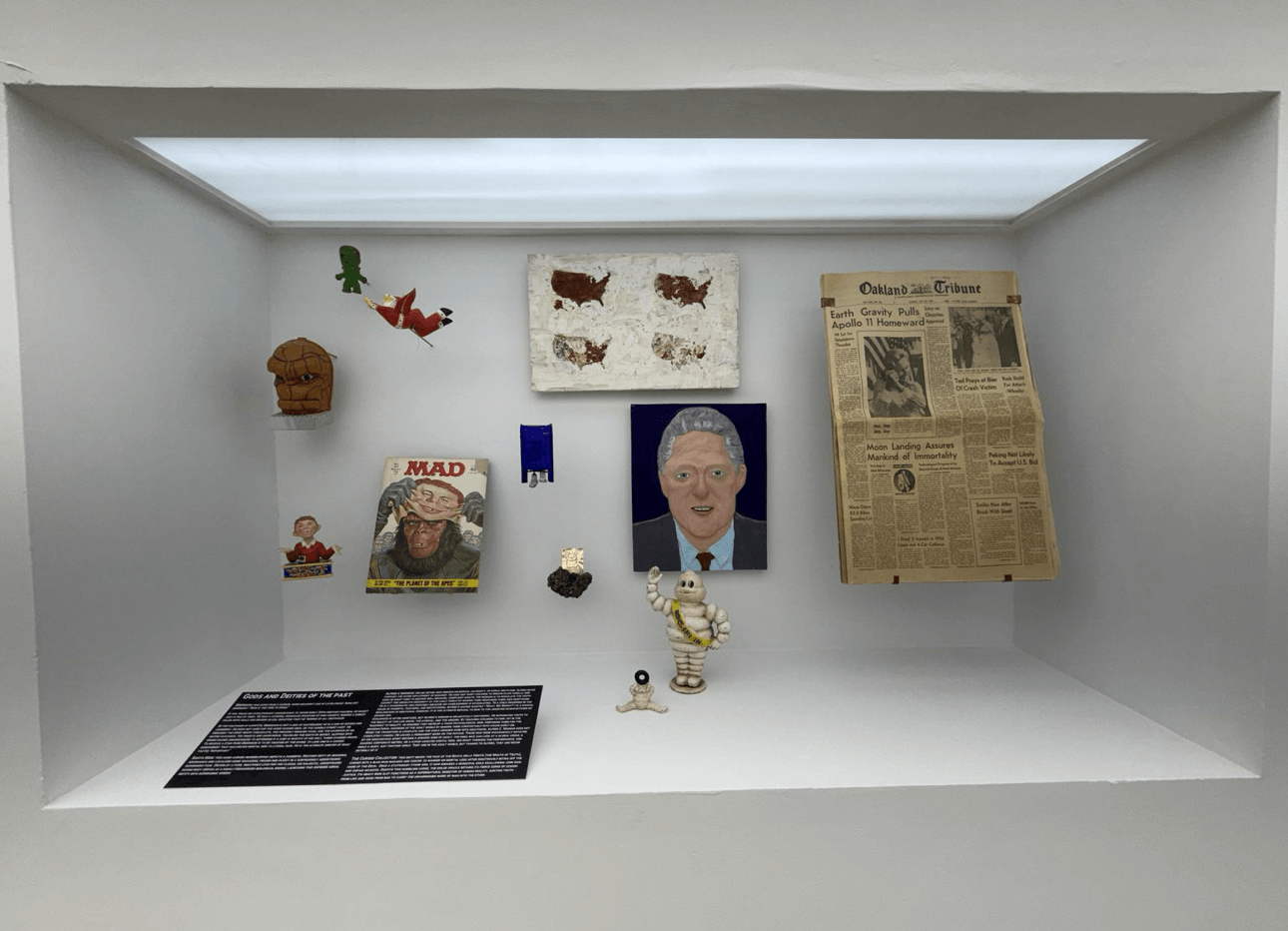
The evenly diffused lighting from the drop ceiling presented the space as polished, and forced you to reconsider whether these objects — some of which you might find in the trash — were more important than you first considered. The space in which they live generates their value. It is the same arrangement as the artifacts of the past. Ancient pottery never thought of ending up in a display case behind glass in a museum. What would those people have made of this? How weird would they think we are for doing it? What is trash to us now may be a priceless object someday.
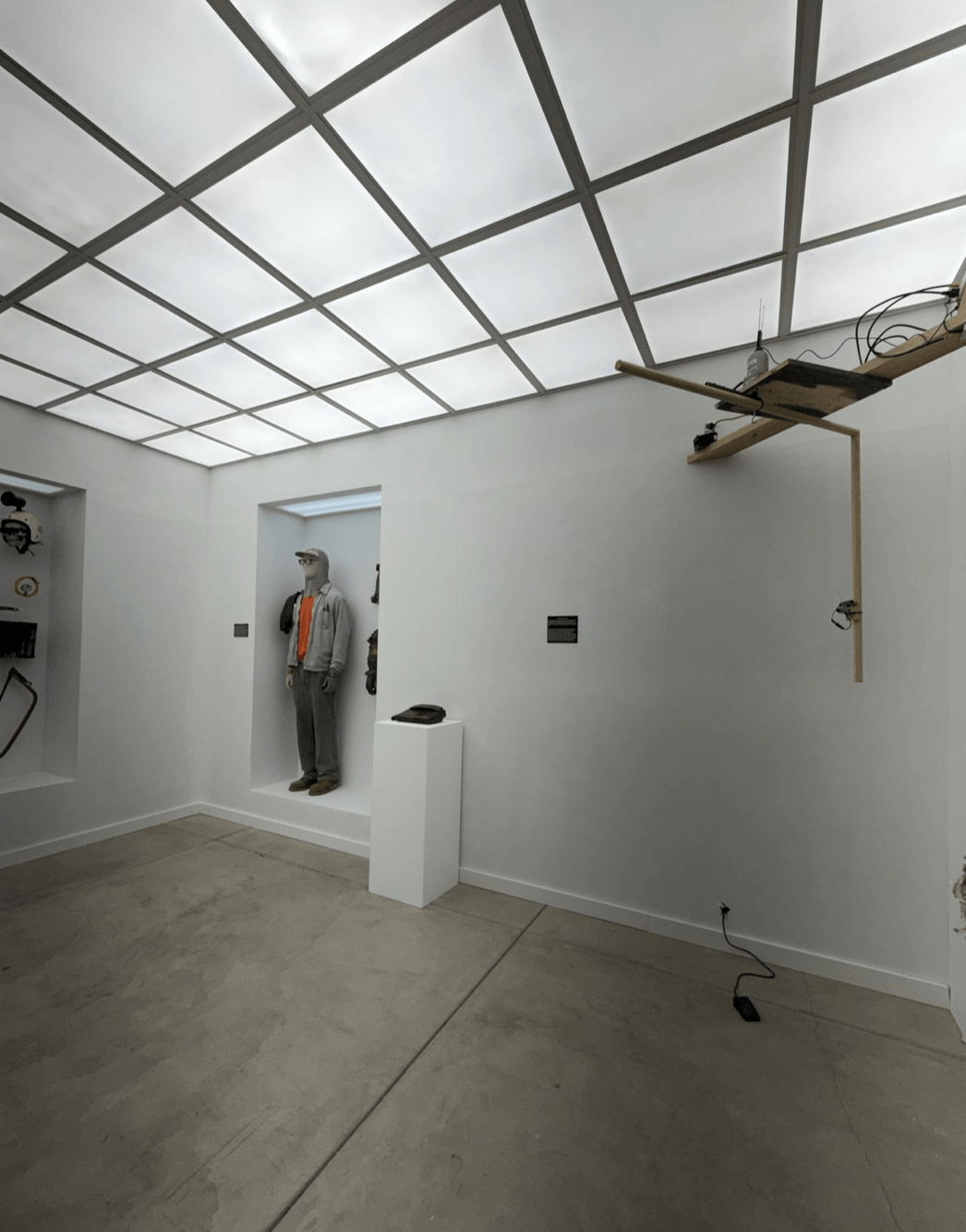
"The Rotational Scan" took the interactive elements further and made the person viewing the show part of it. A foot pedal snaked out of a hole punched in the wall; a webcam and a small battery were zip-tied to a wooden dowel driven by an electric motor, and the resulting scan was projected onto a screen mounted just outside the entrance to the built gallery. Whoever stood in the center and worked the pedal became the subject. The viewer is an active participant and apparatus inside the show. The text accompanying the work talked about how we are never able to see our own faces, which made me think about how we need technology in order to see ourselves at all — whether it is a mirror made from melted sand or a camera assembled by hands I will never see. Cameras record our every move, marketed as a way to capture our memories, a personal memento to hold onto forever, and then stored inside a cloud server somewhere.
It's hard to see what is happening while it's happening.
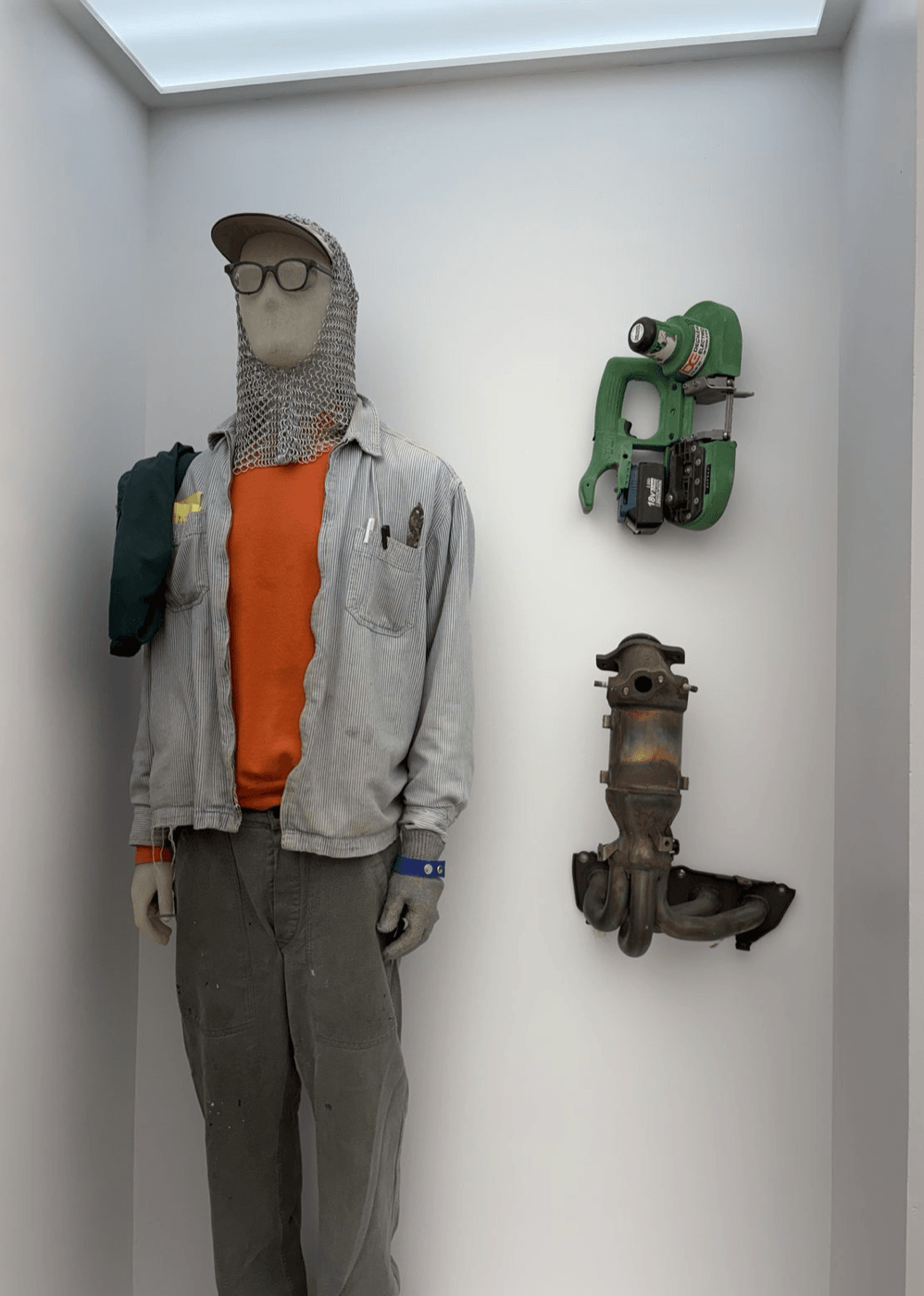
A mannequin in the enclave on the right-hand side wall of the exhibition cube. Dressed in a blue-collar outfit with hat and glasses, seemingly nondescript aside from the chainmail headwear. A cordless handheld bandsaw and catalytic converter sat mounted next to it. The mannequin refers to life as a gig worker in modern society, the essential practice of so many in the art space — the workers who bring to life the ideas of the dreamers and visionaries who were anointed the role of curator and taste maker.
I find myself looking at the way things are installed when I visit art museums. The barometers in the corners of the room measuring humidity. The security clips on the hanging hook attached to the D-rings on the back of a Rothko. The routing of the cables on the pedestal connected to a slide projector. I have become my own installation crew on every occasion I have had a show. Here, the trade became the artwork. Most of the shows I see fall within a certain range of production, the gallery dictating the environment — an unassuming blank slate, maybe some vinyl lettering, a wall painted a solid color, some site-specific embellishment. The focus usually lands on whatever ends up on the walls. In this show the focus became the environment instead. I know Oliver to be a preparator, and those skills were used here to make something that goes further than I think most artists would be able to; it feels honest to use the skills that pay the bills. The inset displays and brazed wire float mounting gave the feeling of a museum display, but the small scale of the space rattled the illusion. The full ceiling of diffused lighting was something out of a science fiction movie. Galleries don't usually opt for that treatment.
What worked about the show is that you don't need much context to get something out of it. It feels more universal than most exhibitions I have been to. A lot of artists either ignore narrative completely or shoehorn their practice into whatever trend is currently winning grant applications, and I didn't feel that here, which was a welcome relief. But I keep returning to the skeleton at the entrance, the first thing you encounter. Mortality. When you put the pieces together and rip the bandaid off the art world, or more broadly the larger system we're all cogs in, some suppressed feelings tend to bubble up. The art world as the same crushing system as any other, disguised as culturally enriching — a wolf in sheep's clothing. What will be left behind when we are all gone? What server will it live on?
