
Andy Goldsworthy, Red Flags, Fort Mason Gateway Pavilion, presented by FOR-SITE and Fort Mason Art
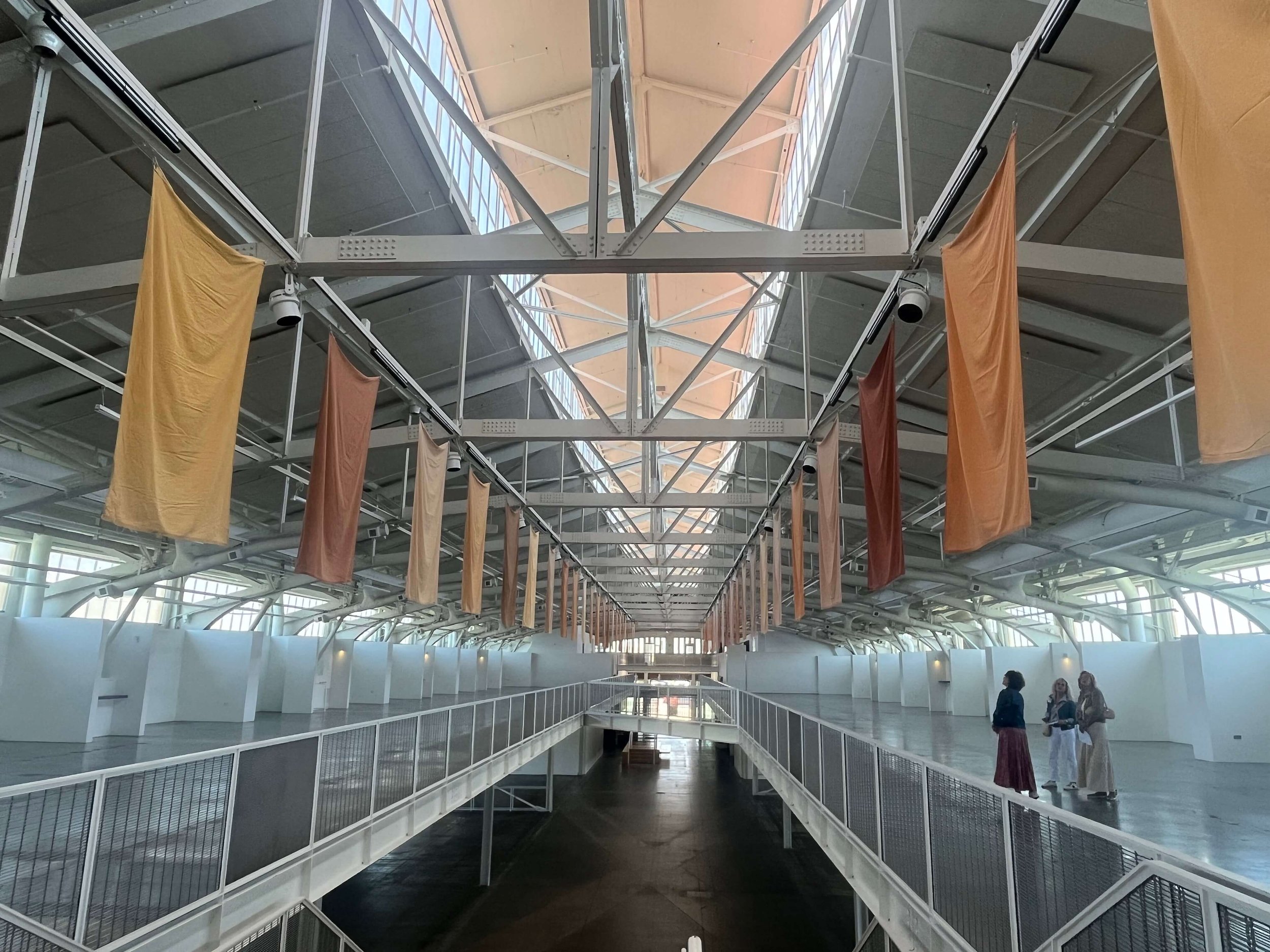
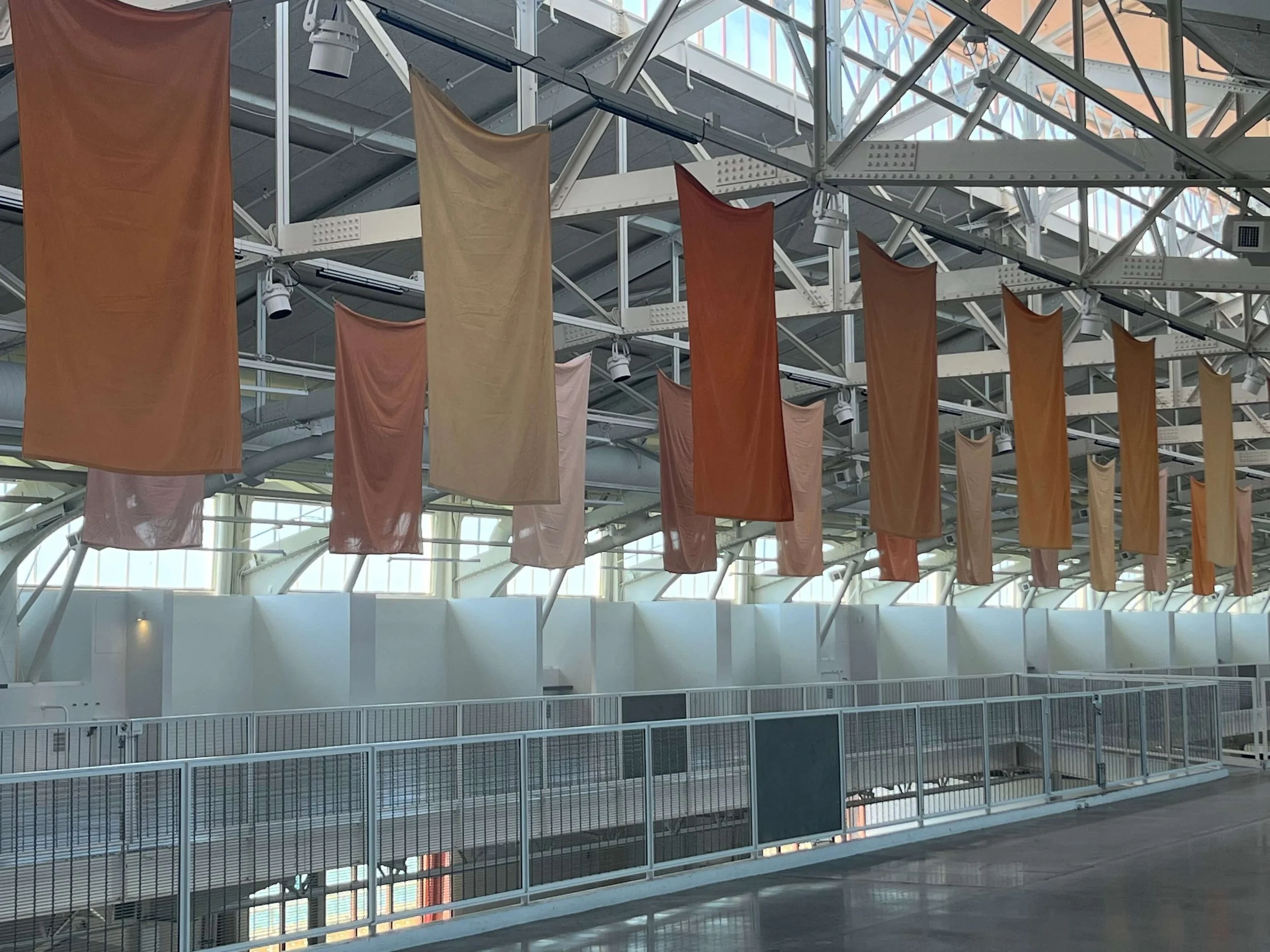
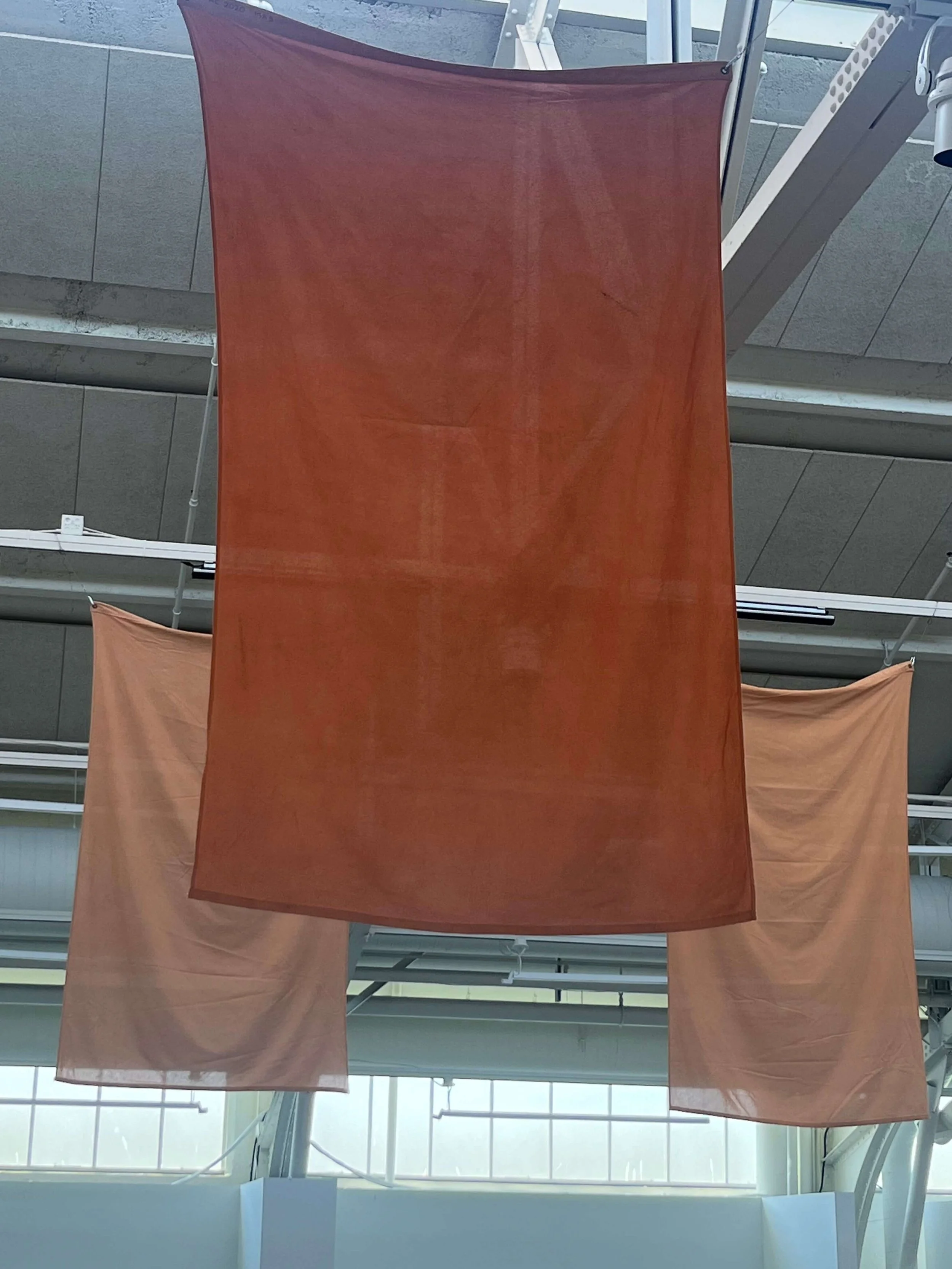
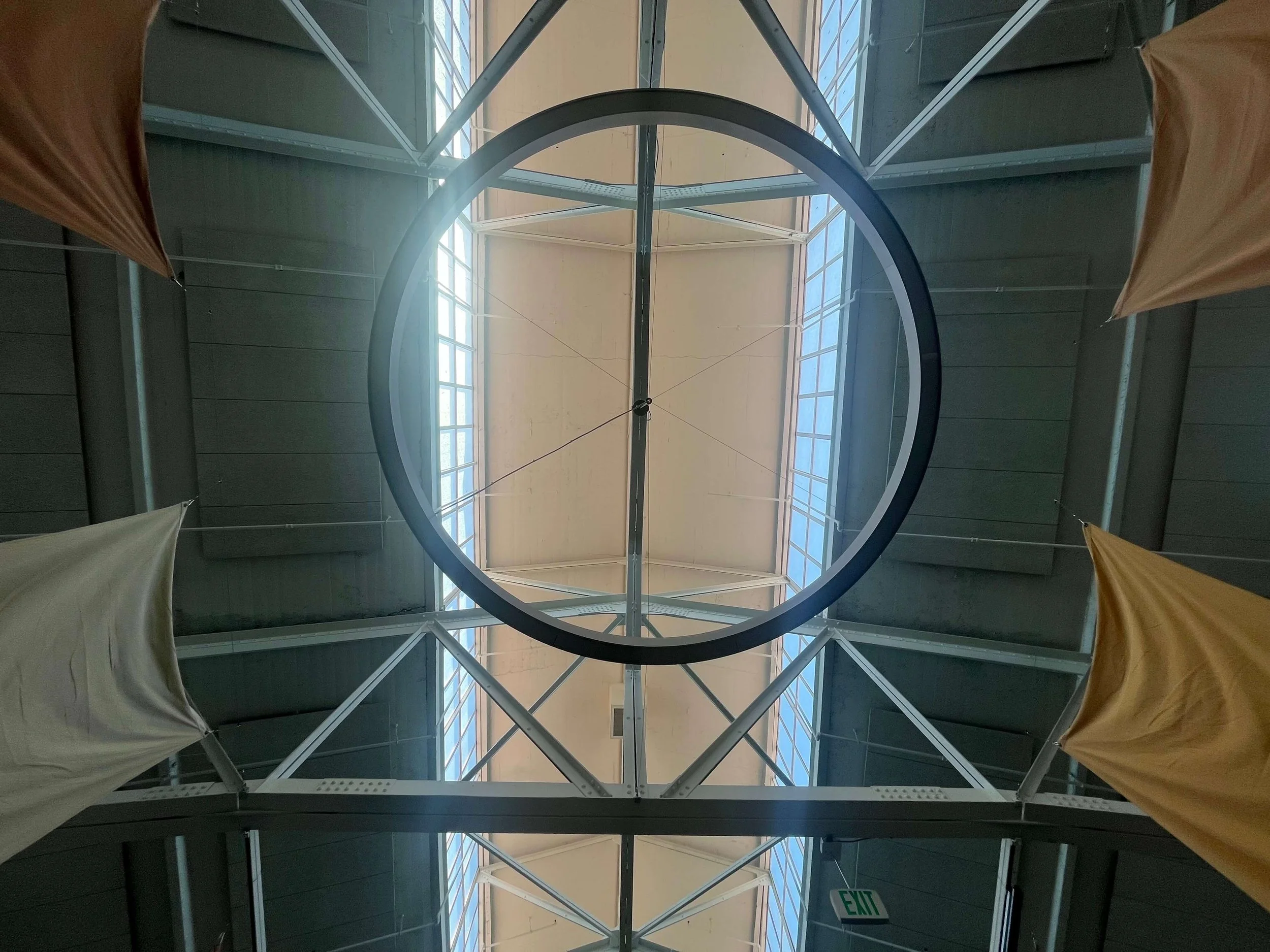
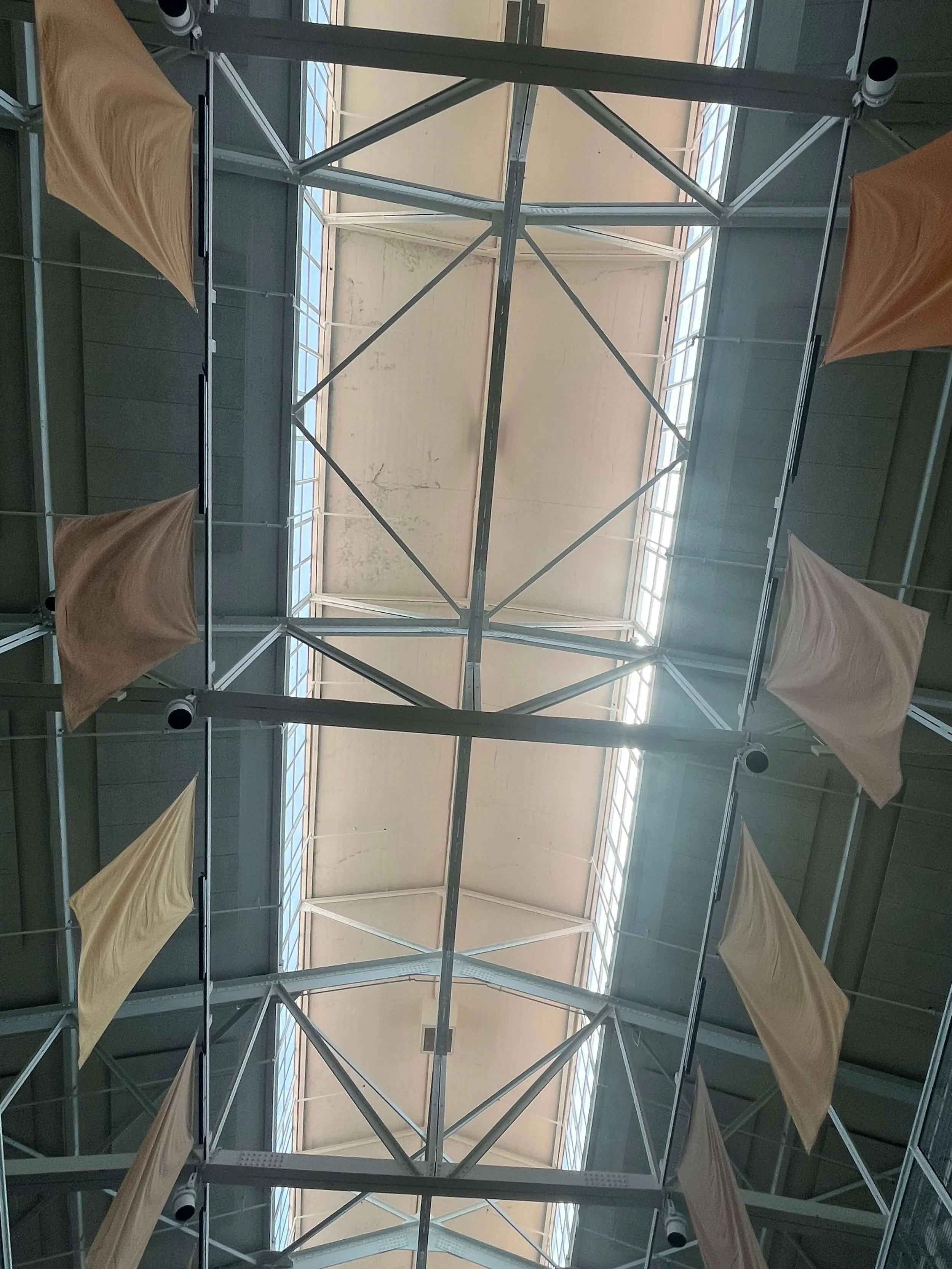
Red Flags ran July 1-July 30, 2026. All photos by the author.
I can’t say that the work of Andy Goldsworthy goes unappreciated. The New Yorker recently did a nice piece on him. Out in the world, though, his work does seem to go under the radar. It feels hidden in plain sight.
While the lucky Bay Area art lover may have to wait in a crowd for an unobstructed view of Morisot or Kahlo or Vermeer at a blockbuster show, an equally lucky visitor to one of Goldsworthy’s nearby site-specific works may find themself in solitary meditation with a sinuous rock wall, a towering cypress spire or a winding eucalyptus path.
When I’ve visited his Stone River at Stanford University, I have often been the only person taking in the marvelous piece – carefully constructed from sandstone by master masons and winding snake-like between trees and dry grass.
Perhaps paradoxically, his most-seen work in the area goes largely unrecognized. Last year, more than 840,000 people visited the de Young Museum in Golden Gate Park. The majority of them walked on, or even sat on, Goldsworthy’s Drawn Stone at the main entrance. I’d wager many of those had no idea that the crack in the sandstone walkway was his art. I certainly was unaware of it on my first visits to the rebuilt de Young.
My current musing is occasioned by a visit to Red Flags, Goldsworthy’s latest temporary installation, through July at Fort Mason in San Francisco. When I visited mid-month, midweek, I was again nearly alone. There were only three other visitors in the cavernous pier, aside from me and my wife.
Why?
A friend, with whom I first encountered Goldsworthy’s work, suggests it may be because this is an artist who defies “showiness.” His work is the antithesis of shiny, oversized Pop baubles created by big names. It is of nature, for nature, and frequently in nature.
It is unobtrusive. Instead of grabbing attention, it rewards reflection.
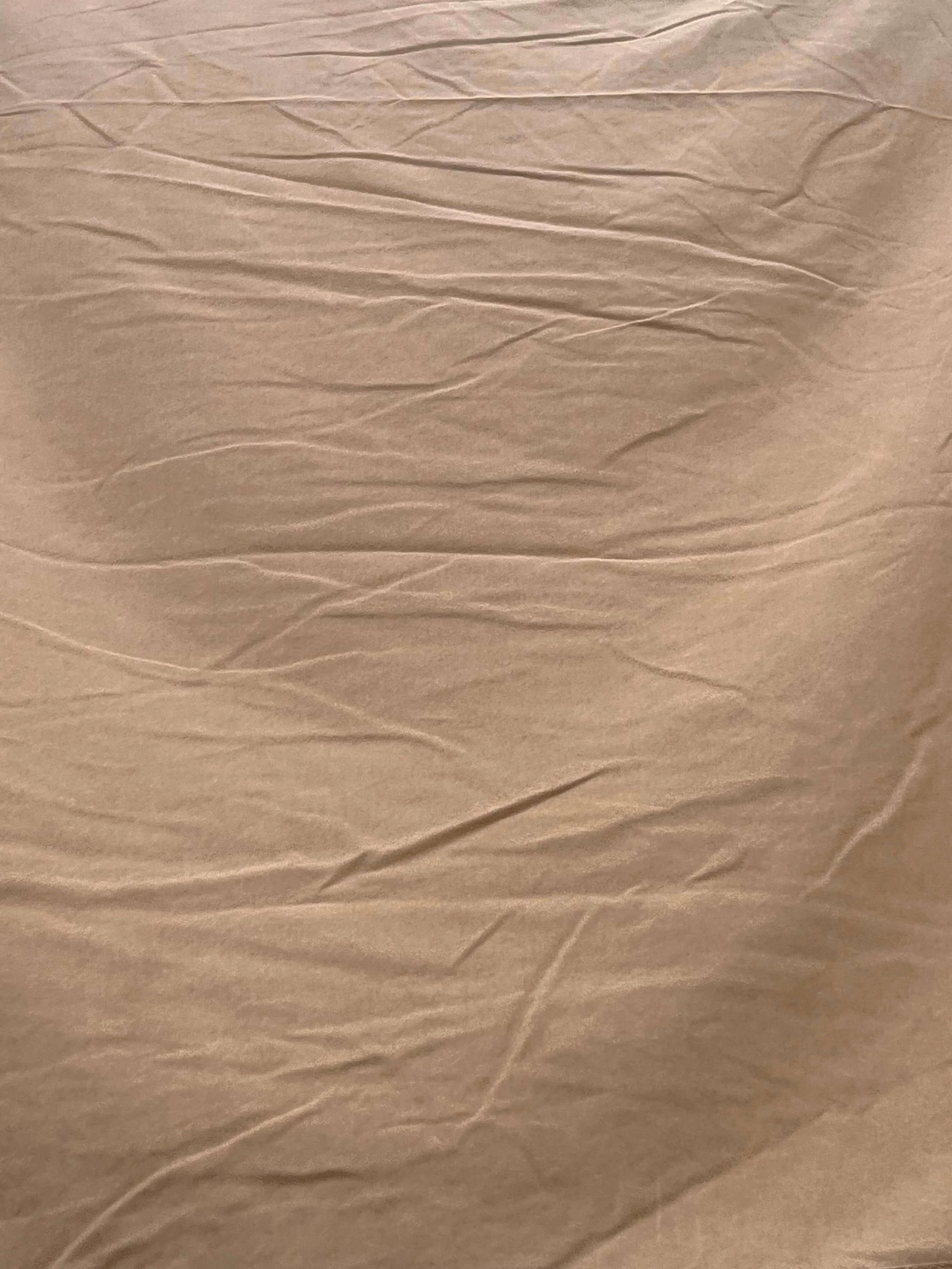
Red Flags is simply 50 flags dyed with dirt from the 50 states of the USA. It is almost monotonous when seen as one flag after another, arrayed in chronological order of statehood. It runs from Delaware, 1776, to Hawaii, 1959. (However, they are not labeled. Visitors can pick up a list.) The colors range from a pale tan to a dark, rusty red (think Richard Serra), but with 50 flags, many tones seem the same, or nearly so.
It is not, at a glance, the most visually rewarding of Goldsworthy’s works. It demands reflection and careful attention, and perhaps that’s what these flags are signaling. They signal a need for observation and, at the same time, the installation enables reflection, attention and observation.
The inability to sustain attention in the face of micro-media and fast commerce is a modern bugaboo. Currently, there’s also a vogue for looking at a single artwork for a specified amount of time in order to fight that demon; in order to practice observation and build attentional muscles. I don’t recommend looking at one of Goldsworthy’s flags for 10 or 20 minutes. I’m not sure it would be particularly rewarding.
Instead, the installation embodies what the Bay Area artist and writer Jenny Odell has called “the architecture of nothing.” Red Flags, to use Odell’s words, “holds open a contemplative space against the pressures of habit and familiarity.” It frees us to do nothing and allows us to observe closely. Odell has credited the 2017 Goldsworthy film, “Leaning into the Wind,” with helping her to crystallize her ideas, expressed beautifully in her 2019 book, “How to Do Nothing.”
The sameness of the flags offers an opportunity to look, not longer, but differently. One needs to observe groups of flags, fragments of flags. One should be conscious of the different angles from which they can be seen. In that context, the largely white shell of the pier building becomes a part of what is there to be seen, or perhaps the negative space that frames the flags.
Intentionally or not, the flags put me in mind of Josef Albers, who juxtaposed squares of color to show that color is not absolute. It is a product of relationships. With Red Flags, we have rectangles of similar colors, juxtaposed to show nuance of difference, but also the sameness of the 50 states. It cannot be understood without thinking about the relationships.
How are the states the same, how are they different? Goldsworthy, an Englishman, establishes American common ground with a 51st flag, pigmented by combining native soils of all 50 states.
All of Goldsworthy’s work is about relationships. At very least, it ponders the relationships between the art, the artist and the site, but often about more. Each visitor needs to find their own connection with Red Flags.
I always enjoy Goldsworthy projects because I find in them an enormous respect for nature and materials and a high level of thought and craft.
Here are other Bay Area Goldsworthy pieces I’ve seen in recent years, with their locations and years of creation:
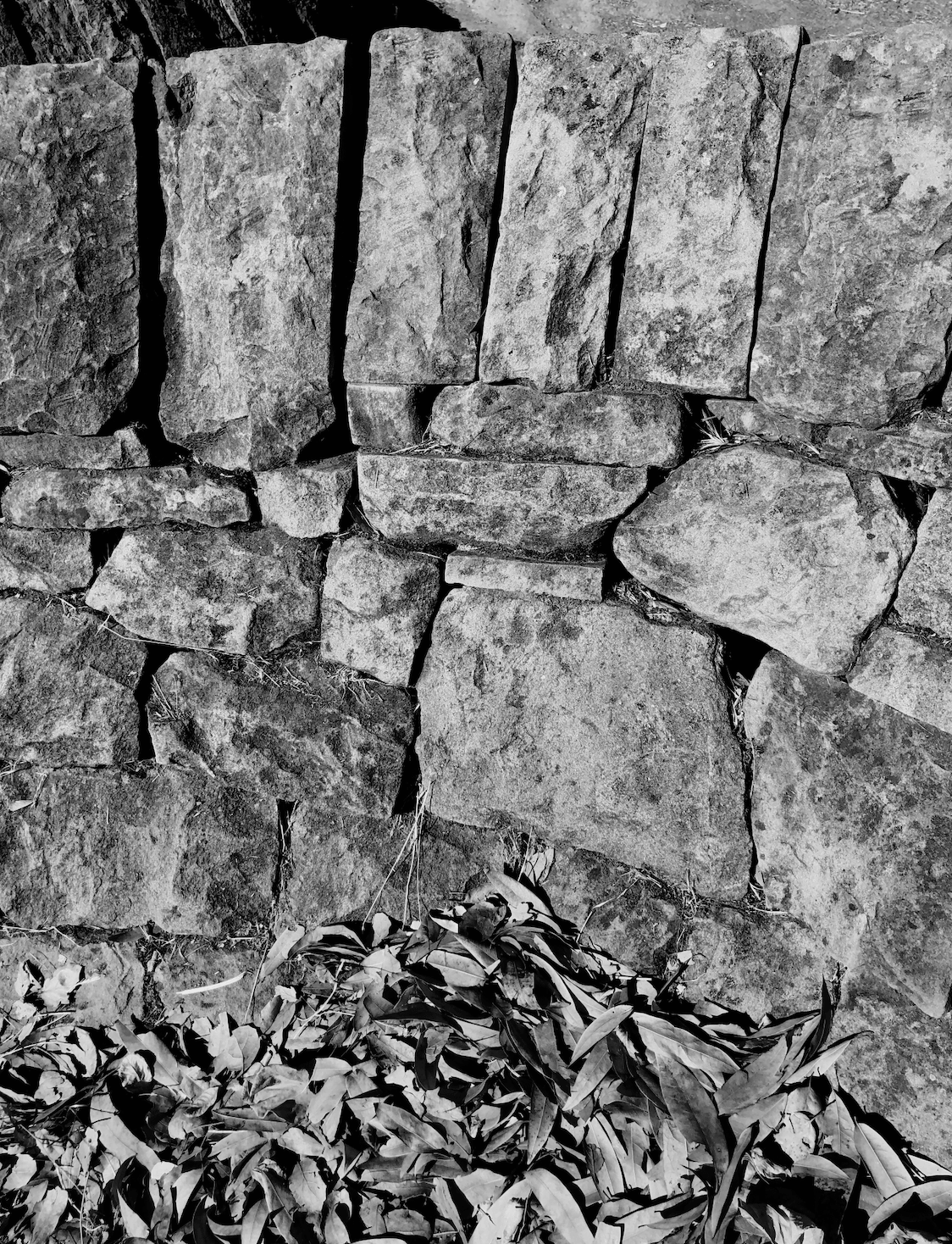
Stone River, 2001: A snaking sandstone wall, near Stanford University’s Cantor Center, created with stone salvaged from Stanford buildings destroyed in the 1906 earthquake.
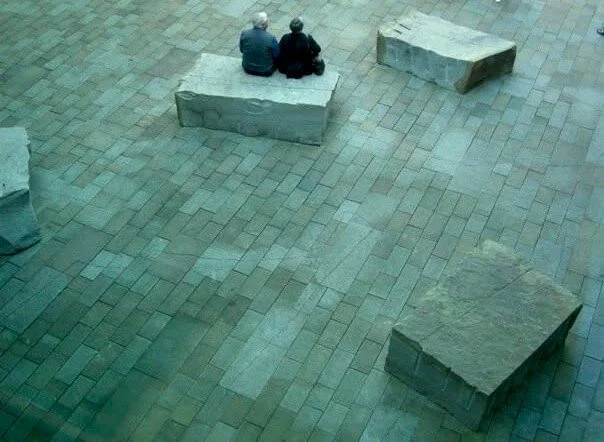
Drawn Stone, 2005: A crack running through sandstone at the entrance to the de Young Museum. It echoes the earthquake that forced the museum to be rebuilt.
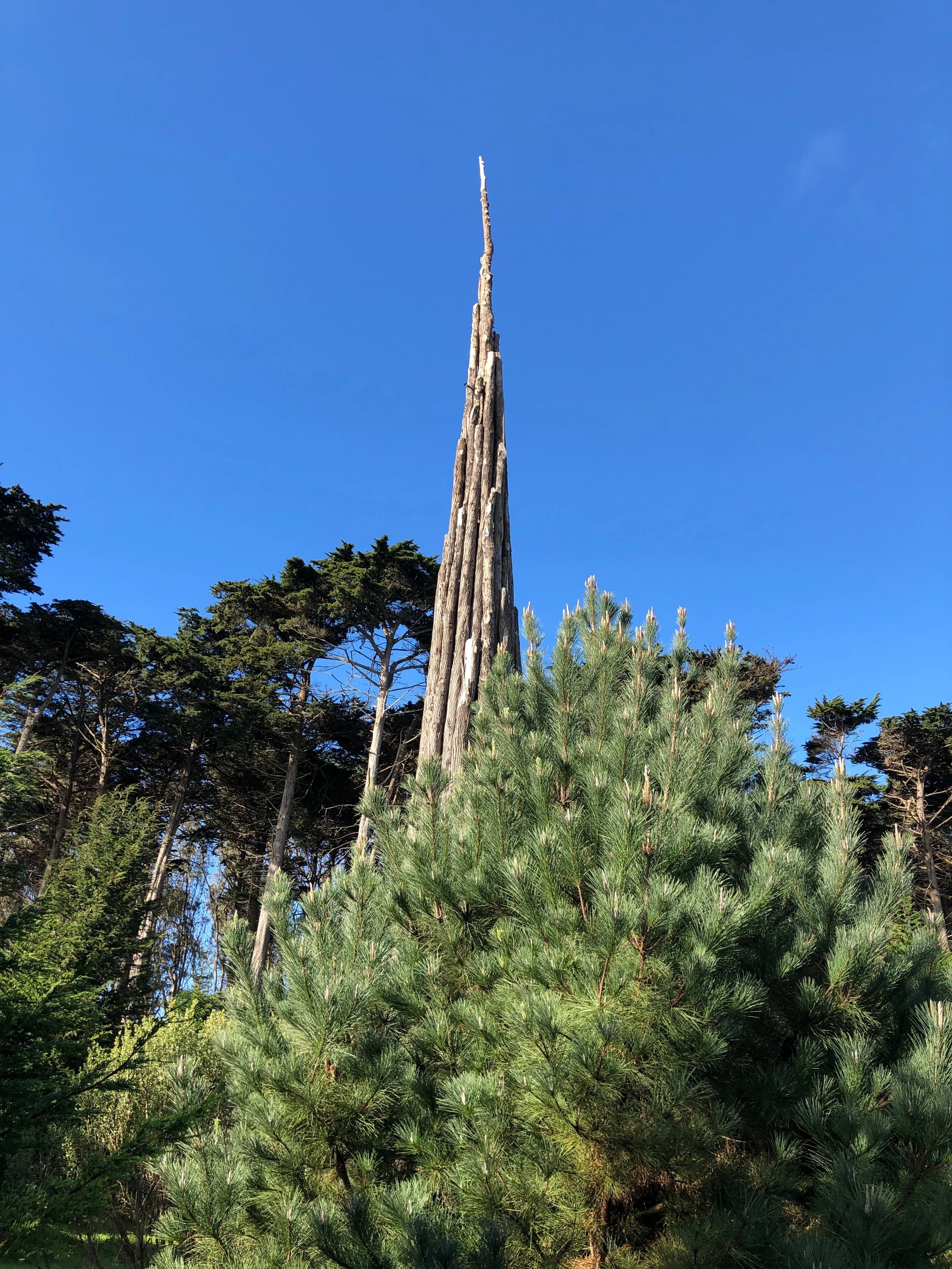
Spire, 2008: A rocketing spire of rough, Monterey cypress trunks, high on a hill in San Francisco’s Presidio.
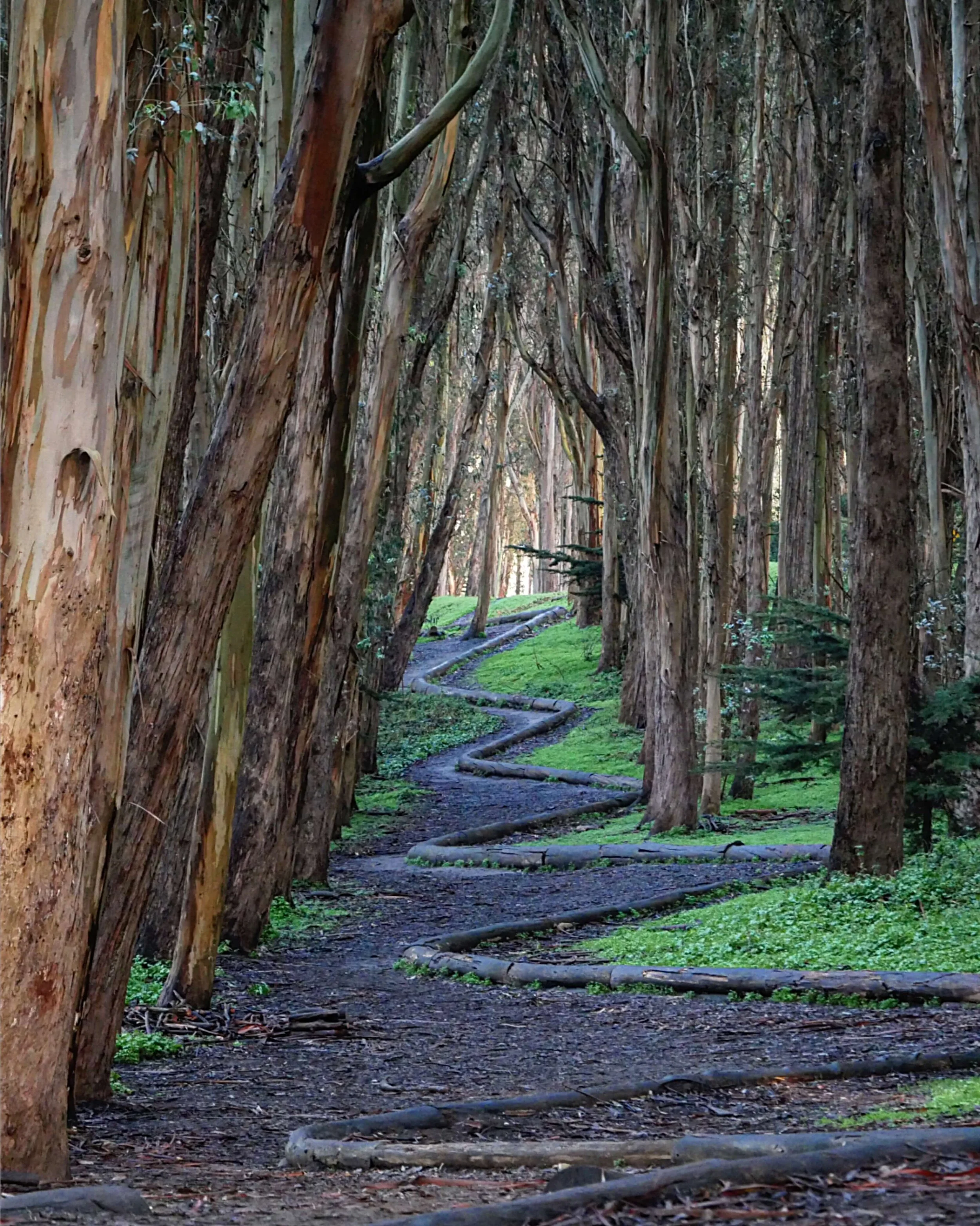
Wood Line, 2011: A romantic, wavy path-sculpture in the Presidio, delineated with downed eucalyptus branches.
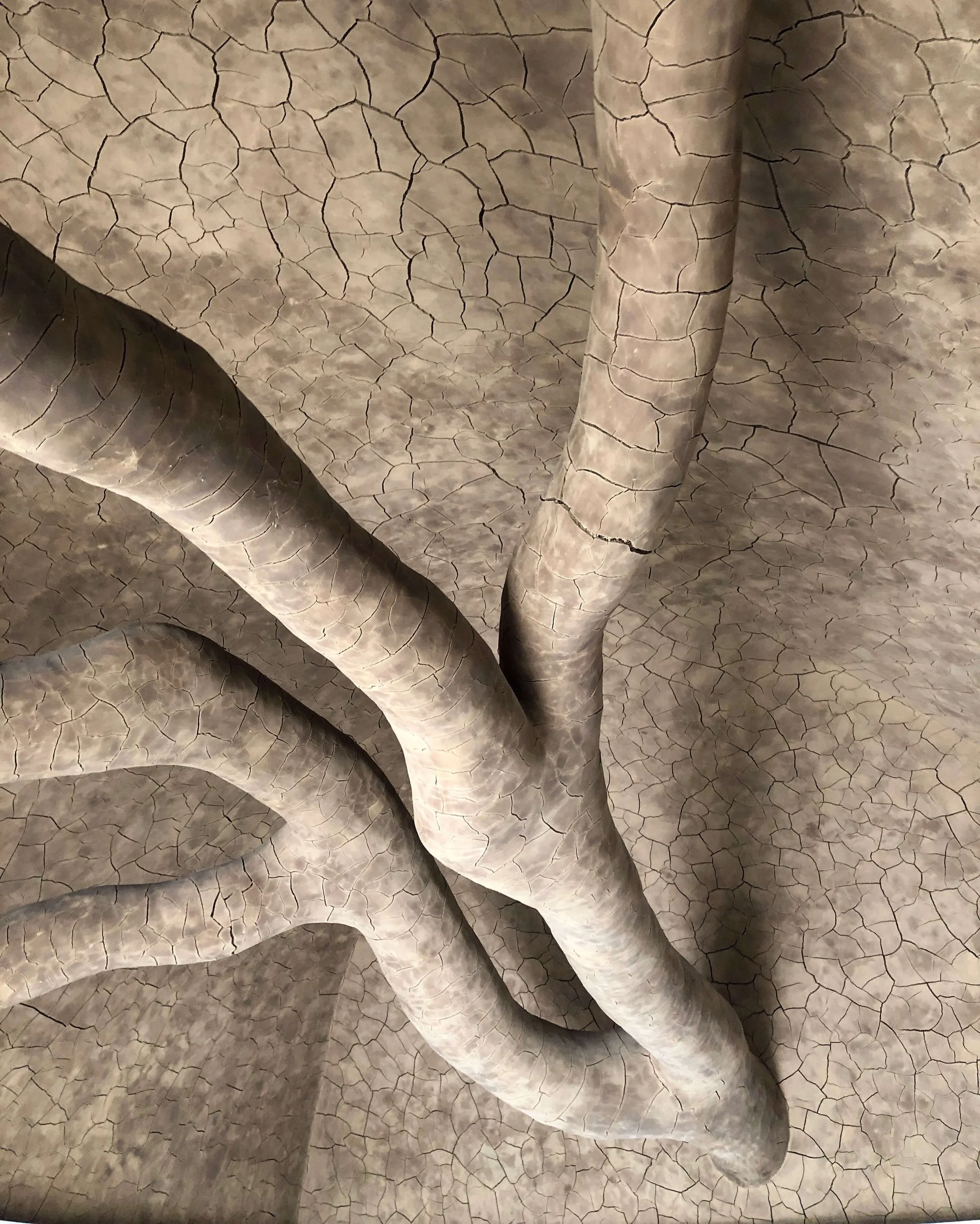
Tree Fall, 2013: Great, reaching branches within the Presidio’s small Powder Magazine – the ceiling and branches covered with cracking clay. (Currently closed)
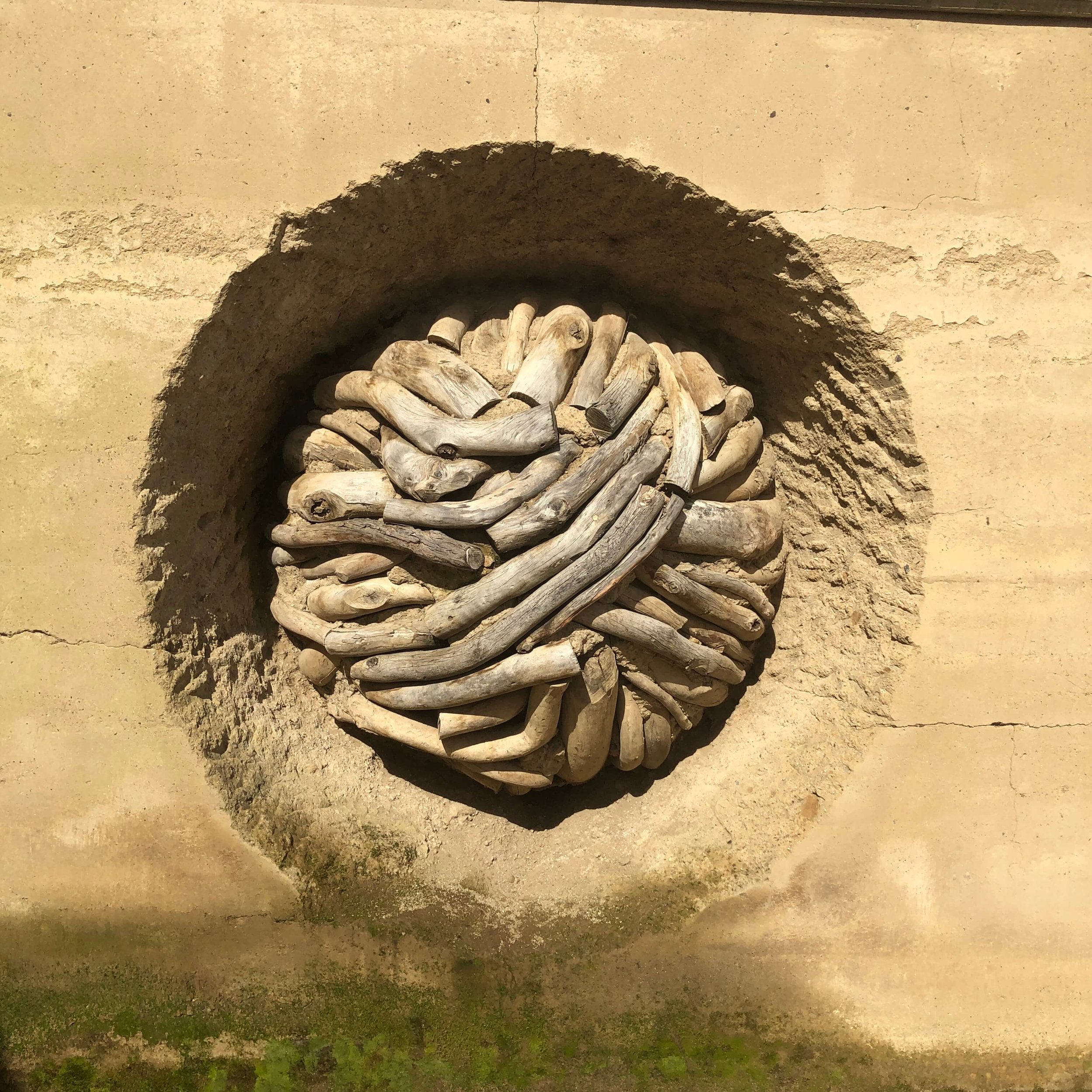
Earth Wall, 2014: A sphere of eucalyptus branches interred within a rammed-earth wall and then partially excavated. At the Presidio’s Officers’ Club.
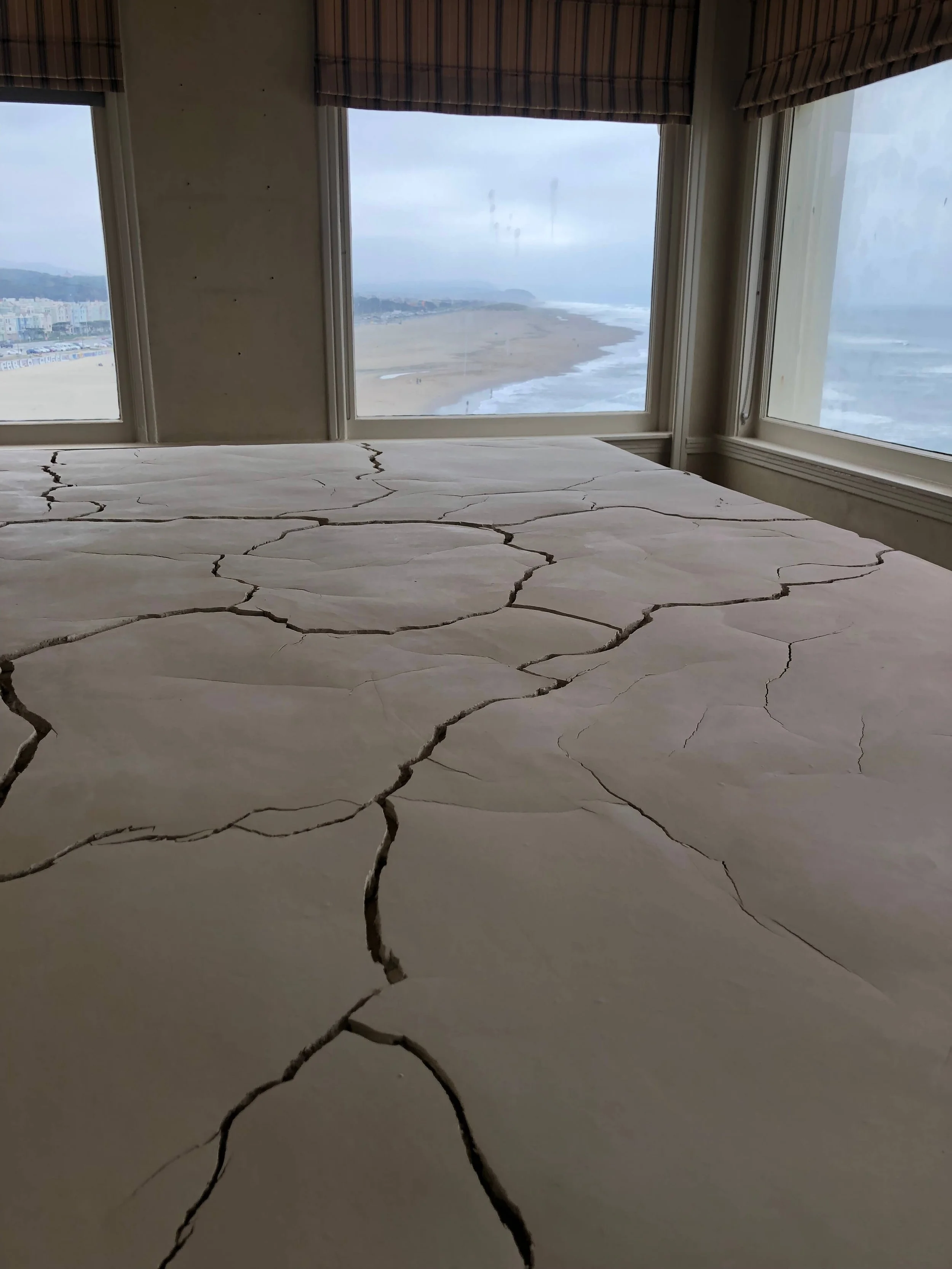
Geophagia, 2022: a dining table covered with kaolin clay which cracked. The name echoes a medical term for clay eating, but also suggests how we are destroying our environment. The piece was a collaboration between Goldsworthy and Heath Ceramics. (Short-term installation for For-Site’s “Land’s End” show at the former Cliff House.)
