
Monique Duncan, Nostos Algos, Birdhouse Gallery
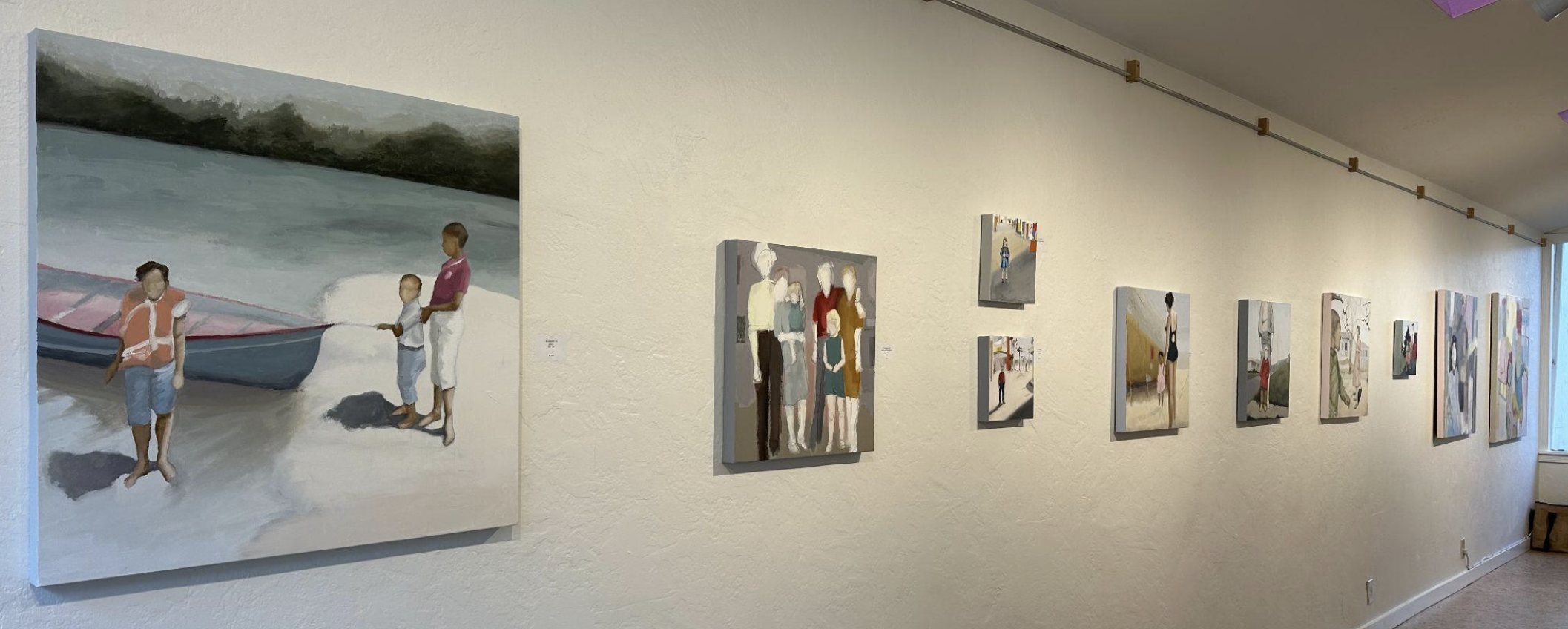
Installation view of “Nostos Algos” by Monique Duncan at Birdhouse Gallery
If you haven't seen Marty Supreme, it's a roller-coaster - a manic protagonist getting in and out of sticky situations all set to a soundtrack of amped-endorphin synthesizers. I had just come from seeing the film when I chanced upon a preview of Monique Duncan's debut show at the Birdhouse Gallery, and in my over-stimulated exhaustion, it was all I could do to gloss over the various canvases on the wall.
But even at a glance, effects caught my eye: collaged blocks of bright background color, blurred faces, unfinished forms. There was clearly a visual language being spoken and it perked me up and drew me in until I’d forgotten about “Marty Supreme” and its barrage of manic energy, giving way to the quietly exhilarating high-wire act of Monique Duncan’s show.
The 10 paintings hung across on a long wall at Birdhouse take their cue from found photographs (including the artist's own family), and while most share a style of muted painterly poise, they also differ surprisingly in their executions, creating a friction between the impressions from one painting to the next that gives one pause, challenging you to look and look again in the hopes of deciphering what’s being expressed.
At root these paintings appear to be exploring the interpretive power of locating the subject within a photograph, using the act of painting to sharpen or blur, crop or frame and, ultimately, give presence, via degrees of detail, in the rendering of these figures and faces from the past.
Early in the flow, two families of three pose for a portrait but are left unfinished, their heads as blank as if John Baldessari had collaged white circles over them, leaving them familiarly configured but expressively obscured. Sans the specificity of their presence, we are left with the bond of their togetherness, dated wardrobes and all, and the timeless confidence and awkwardness and innocence of body language when posing for a picture.
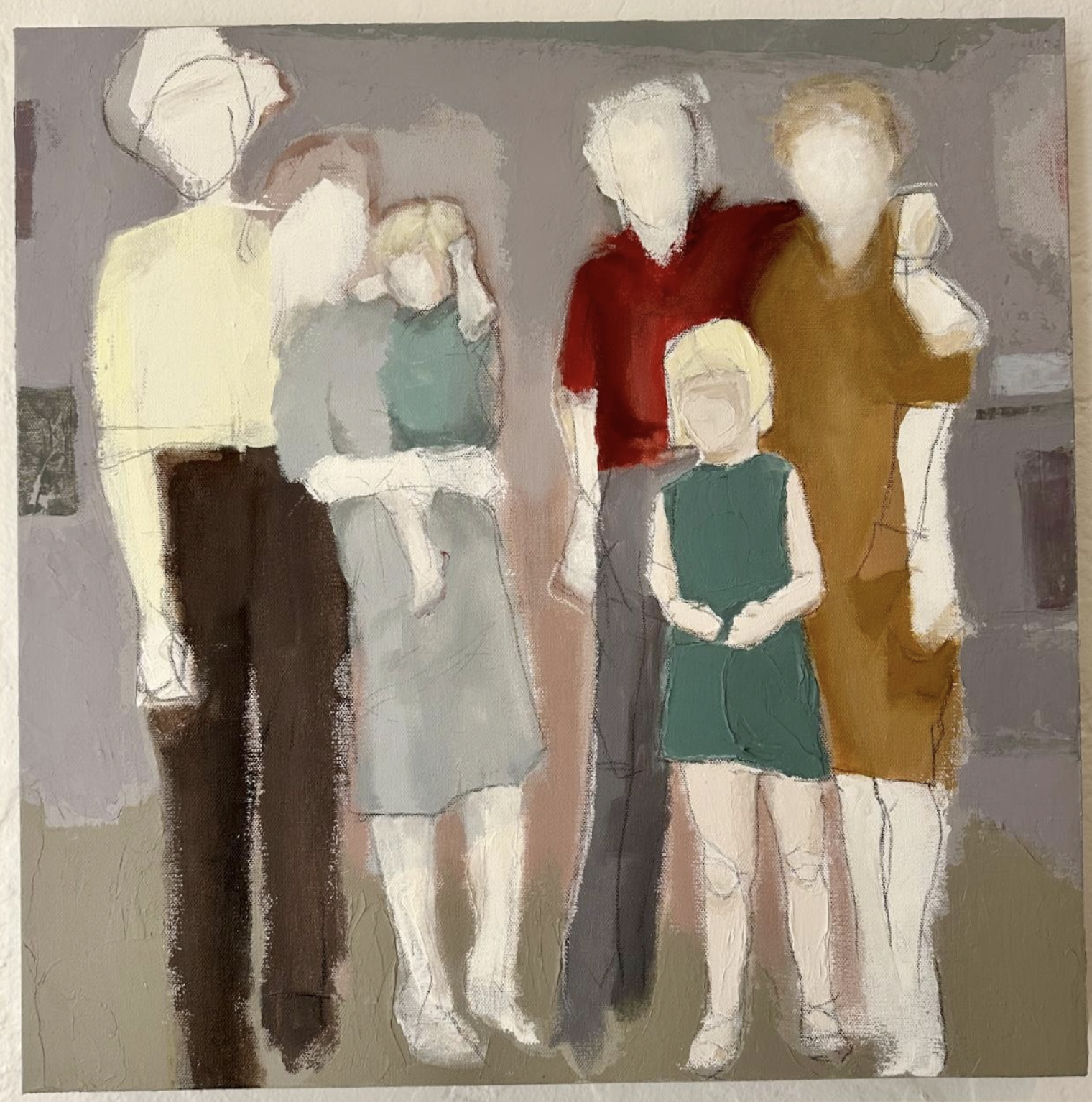
“5 Northwest 61st” by Monique Duncan - Acrylic and China Marker - 20” x 20”
In another, a blurry child in a red winter coat and yellow boots stands before a formally dressed woman from another era, her grey bulk looming like a boulder while everything above her shoulders exists in our imaginations, cropped out of frame. It’s titled “Mother II”, but I want to call it “Charlie Brown”.
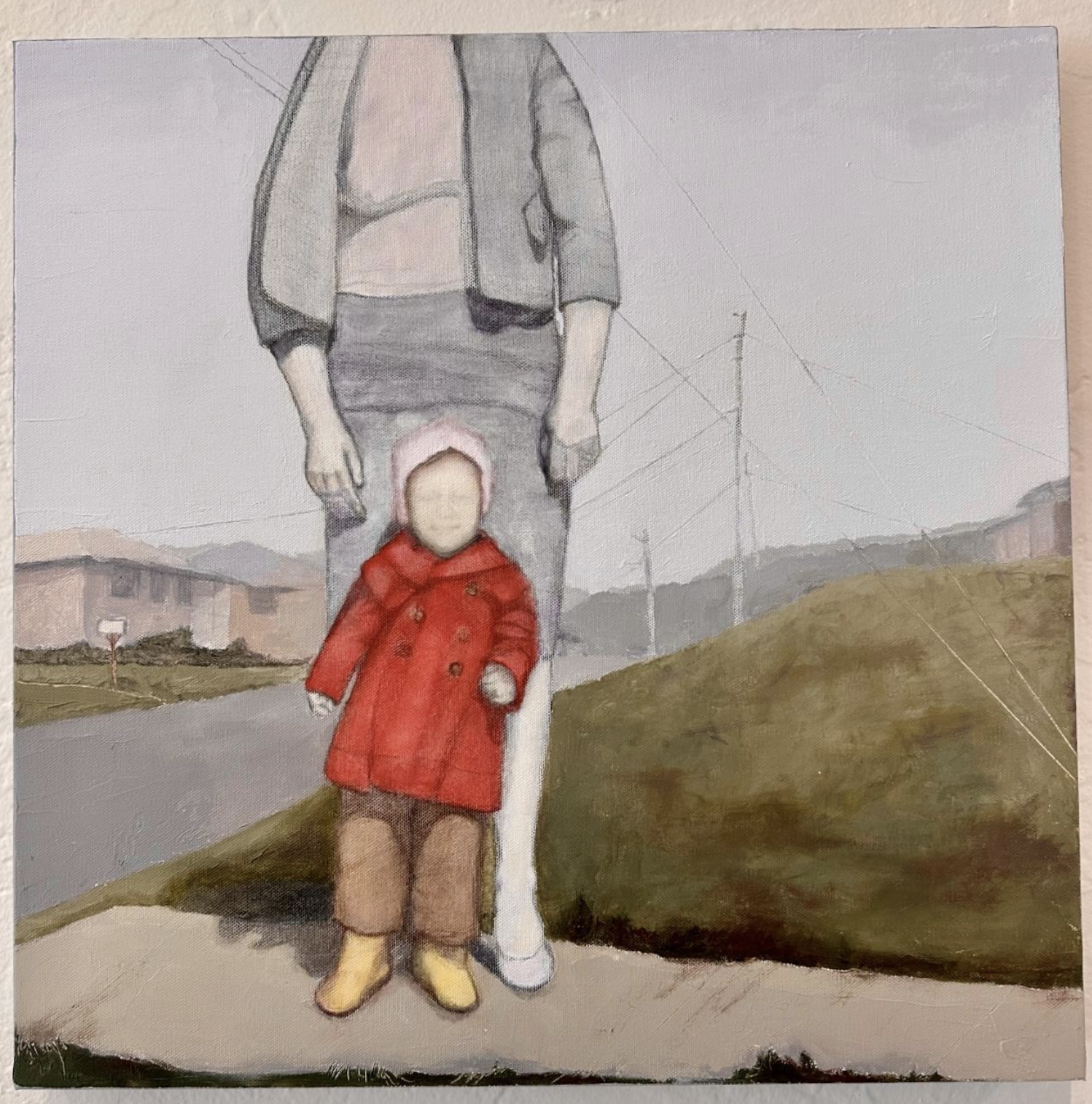
“Mother II” by Monique Duncan - Acrylic and Graphite - 20” x 20”
There is a wavelength to this series of paintings that is as evident in each work as it is in the flow and accumulation of the show - a wavelength that exists, frankly, without the clues from the show title, "Nostos - Algos" (“Nostalgia”), or from the source photographs pinned on the opposing wall (which were not there on my first encounter, and which I encourage you to view after the paintings, not before them, so that the paintings can speak first).
The frequency is one of emphasis and empathy, commanding the power of paint to express an emotional subjectivity that the literality of a photograph is largely incapable of, especially when it comes to family dynamics.
In Monique Duncan's hands, these childhood/family photographs have their dynamics reworked, focusing the emotional resonance in unexpected places: the bow of a rowboat, the red pin on a child’s shirt, a deep red swatch of canvas obscuring the side of a suburban home. In a sequence of 3 paintings at the center of the show, the resonance extends to the borders and backgrounds, with tethers from a beach tent, streams of telephone wires, and a splay of bare tree branches cross-fading their inanimate embraces.
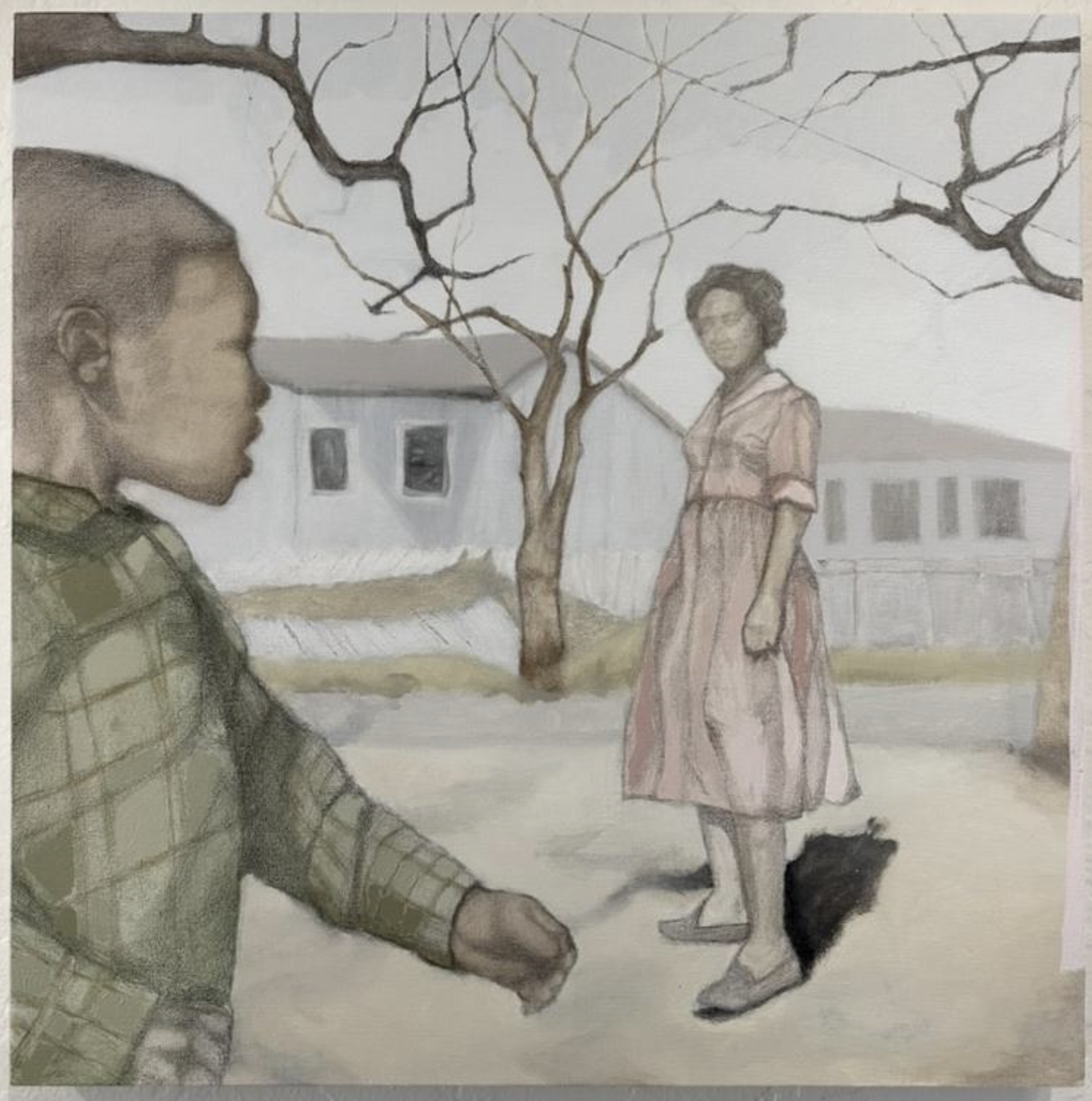
“Nostos Algos” by Monique Duncan - Acrylic and Graphite - 24” x 24”
Looking again at those 3 in the center, it’s the nape of the neck, weight of the arms, a smile barely perceptible that I’m drawn to. This interpretive capacity for making the scenery resonate with the subject makes me think of the photographs of Dawoud Bey, whose street portraits are dialogues between foreground and background, prop and posture, attitude and ambience, rewarding patient viewing with the sparks of uncanny connections.
"Nostos - Algos" is a small show, but one brimming with throughlines and poetic visual-language effects, from the current we enter on, stage-left, to the plunge into abstract-expression in the final piece, an explosively colorful reworking of the artist’s own family photograph, which precedes it. The sequence flows like a line of fireworks before a roman candle. Or a tightrope walk finished with a pop of champagne.
And while nostalgia may be the theme, Monique Duncan’s paintings feel like a fresh event, alive in the moment enough to shake us out of holiday hangovers and Oscar-bait exhaustion. Forget Marty, this is “Monique Supreme”.
