
Hillary Olcott
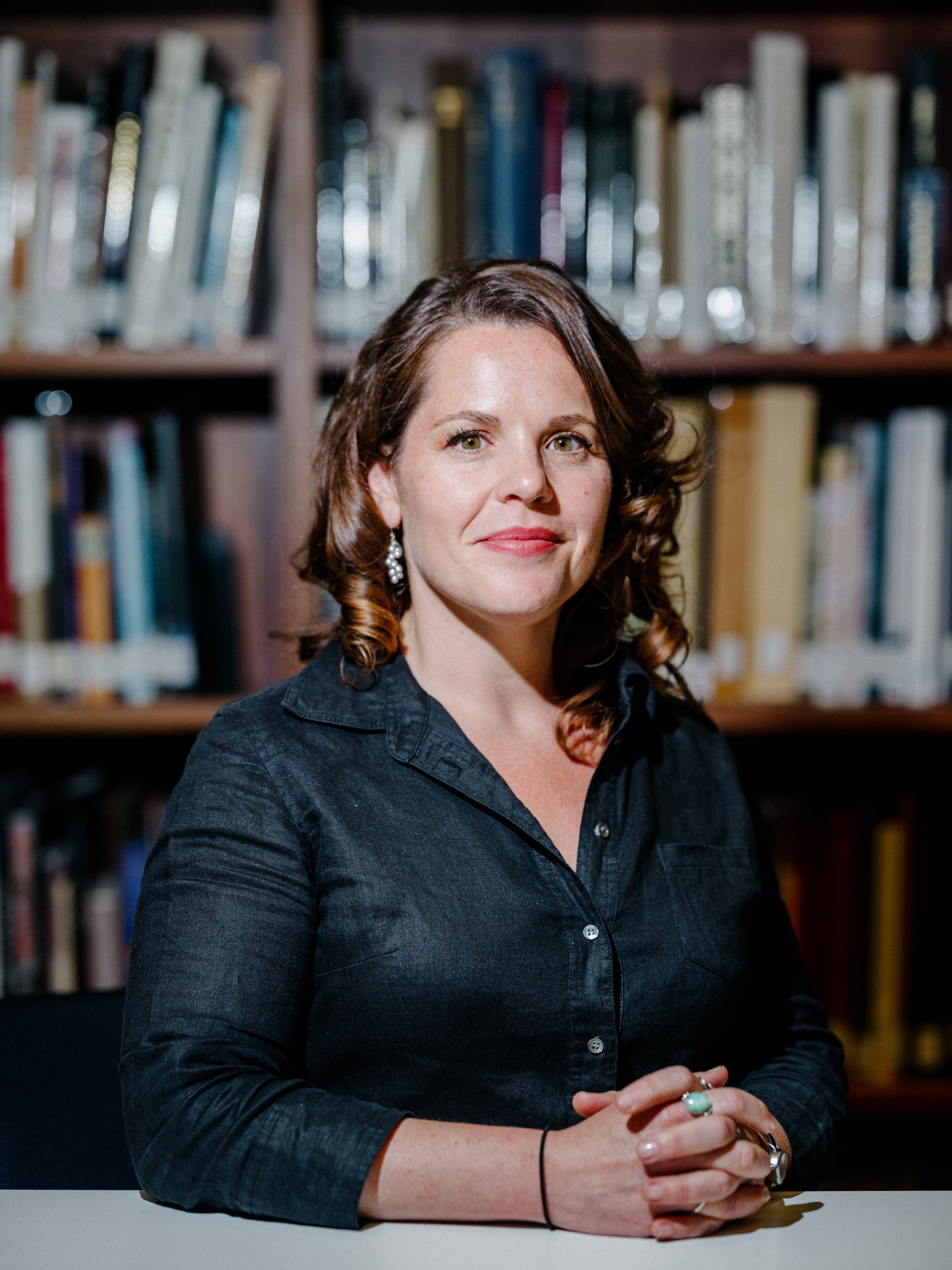
Hillary C. Olcott serves as Curator of Arts of the Americas at the Fine Arts Museums of San Francisco, which comprises both the de Young Museum in Golden Gate Park and the Legion of Honor. Her curatorial expertise spans Indigenous American art, ancient Mesoamerican cultures, and Andean civilizations. At the de Young, Olcott has been instrumental in reimagining the museum's approach to Indigenous art curation, leading the 2025 reinstallation of the Arts of Indigenous America galleries in collaboration with Indigenous co-curators Joseph Aguilar, Meyokeeskow Marrufo, Will Riding In, and Sherrie Smith-Ferri. This groundbreaking project prioritizes collaborative partnerships with Native communities and multi-vocal interpretation. Her scholarship includes curatorial work on major exhibitions such as "Teotihuacan: City of Water, City of Fire" (2017-2018) and "Frida Kahlo: Appearances Can Be Deceiving" (2020), where she served as coordinating curator. Olcott's approach emphasizes ethical museum practices, community consultation, and bridging ancestral and contemporary Indigenous artworks.
The following are excerpts from Hillary Olcott’s interview.
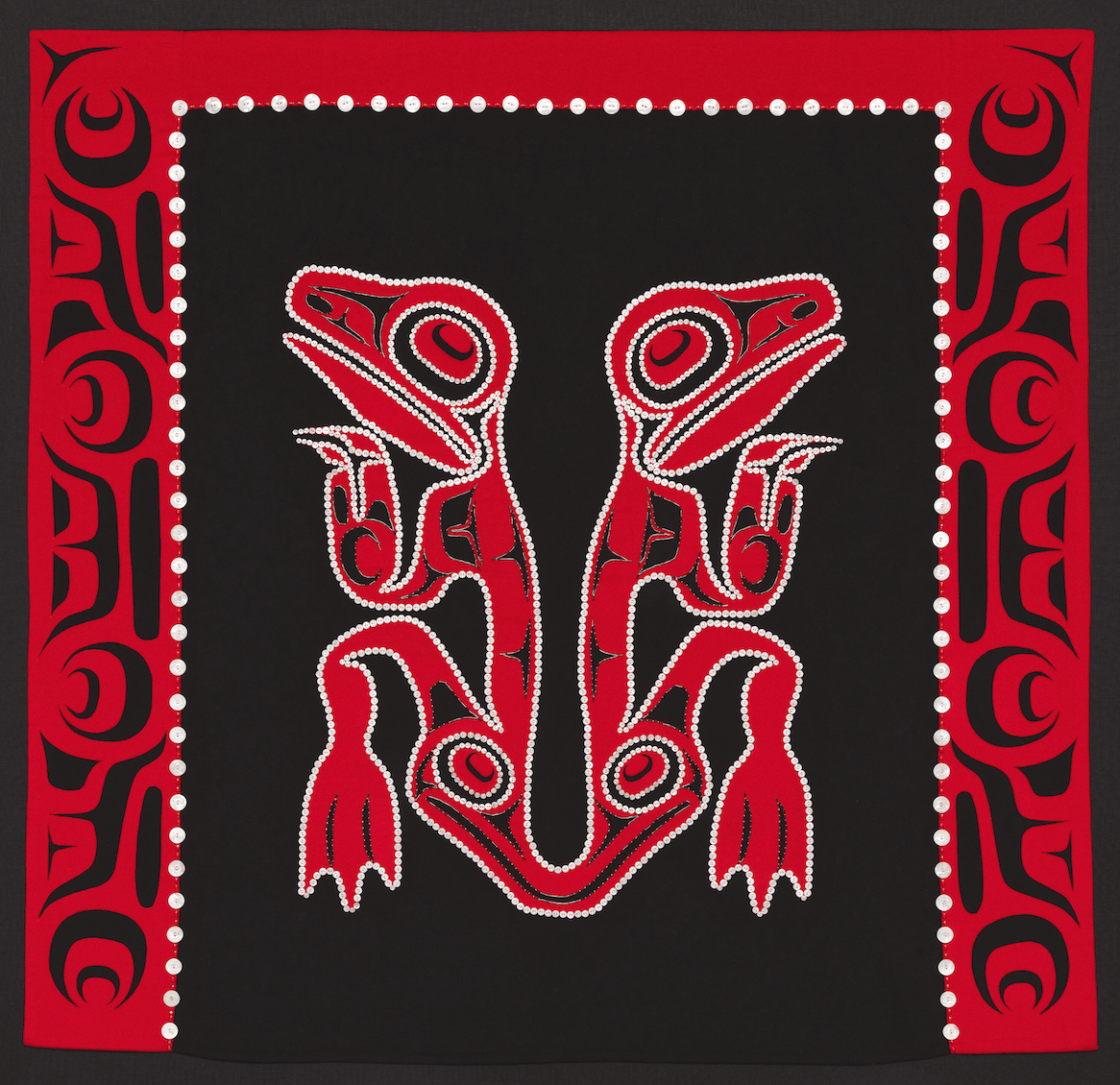
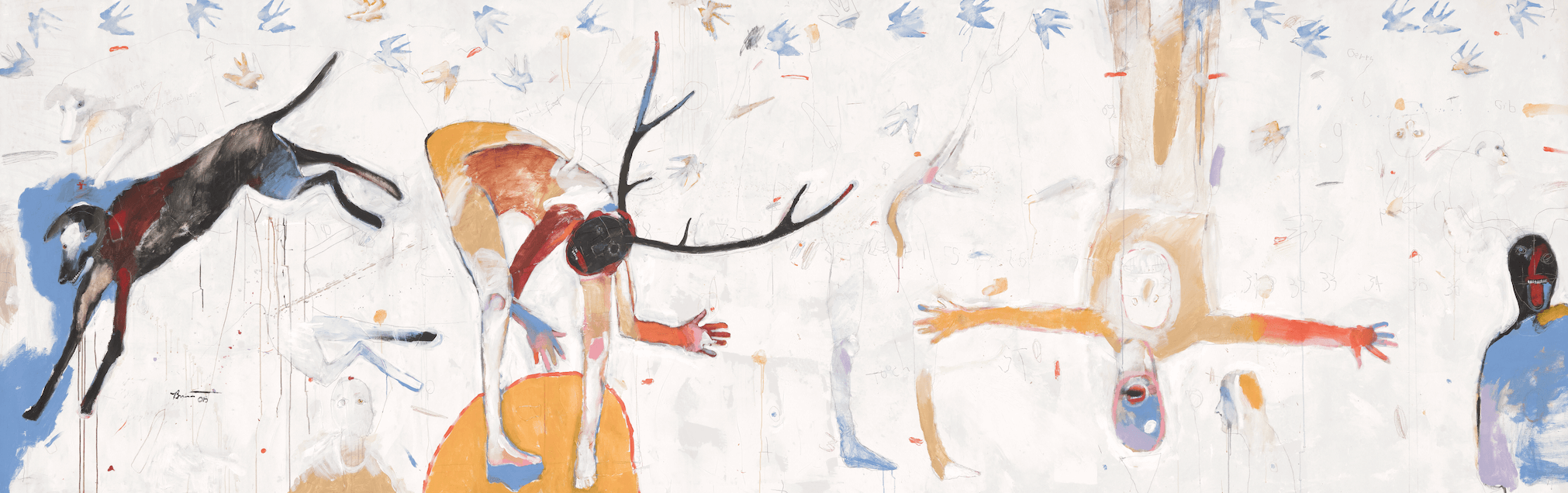
Hugh Leeman (HL): Hillary, you dedicated a great deal of your energy to the book "Yua: Spirit of the Arctic," in which you publish anthropological essays with personal accounts from artists to enhance the exhibit's books and educational value. Now there's an essay by contemporary indigenous artist David Ruben Piqtoukun, and there's a piece adjacent to that titled "Bear in Shamanic Transformation." I want to give you a bit of a quote from that that you were editing, and here's some of your response on this. It says, quote, "The bear man is one of the most powerful shamans in Inuit existence and is capable of tackling impossible feats. A number of taboos have occurred or have been broken by the villagers. In my case, I allowed my ego to consume my existence," end quote. Can you share about the importance of this piece and what it and the accompanying essay and similar works in the book can teach us as a way of expanding our perspectives on what art is?
Hillary Olcott (HO): Sure, that's a big question to start with. I like it. Thank you. So, David Ruben Piqtoukun is an amazing artist. We have a number of his works in the collection at the Fine Arts Museums of San Francisco, and this work, "Bear in Shamanic Transformation," is one of my favorites, and that's why we included it in the catalog "Yua: Spirit of the Arctic." And I'm really grateful for David for being so transparent and generous with what he shares in his essay for that book. It's very personal and it reveals how personal his work is to him and how much it reflects his journey as just a human being. And I think that resonates with a lot of us.
Many artists through time have had their human experience inform their art practice. And by including contemporary artists' voices in our projects that may focus on contemporary art or may focus on art from other time periods, it sort of, to me, brings the human touch back to works and items that might not have people who speak for them right now. And these kind of personal experiences connect us all and remind us all of our shared humanity.
HL: I want to pull into that idea on the shared humanity. So you were part of a curator conversation for Nampeyo and the Sikyatki Revival. Can you give a bit of context on Nampeyo and what is the importance of the artist's works within contemporary curatorial conversations today?
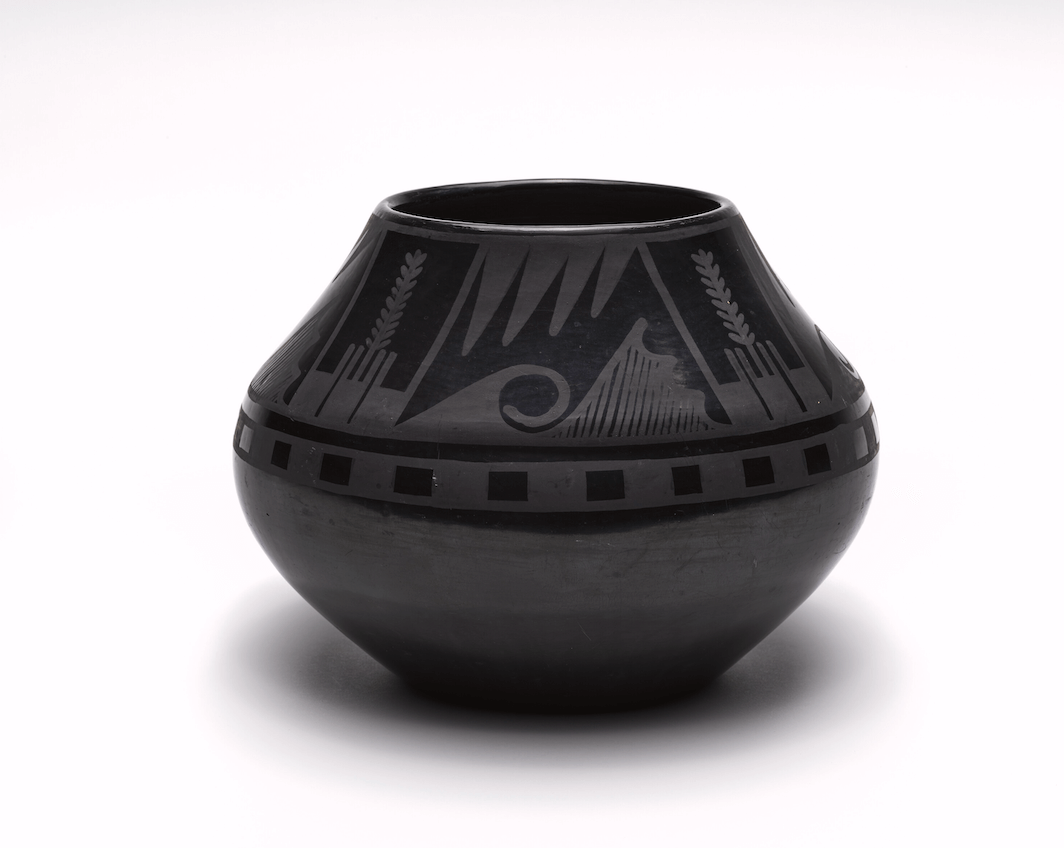
HO: So "Nampeyo and the Sikyatki Revival" was an exhibition that I worked on of the permanent collection. It's all drawn from the permanent collection of the Fine Arts Museums of San Francisco, and I worked on the exhibition with the amazing Hopi potter Bobby Silas. Bobby is an incredible artist. He also is a scholar in his own work. He has personally done a lot of kind of experimental research and learning from different communities and from different potters about their communities' practices, but also in reviving ancestral knowledge and ancestral pottery firing techniques. And that was one of the reasons I was really excited to work with Bobby on this project, because Nampeyo similarly was kind of renowned for reviving these ancestral designs—not necessarily techniques, but ancestral designs.
So Nampeyo of Hano was a Tewa Hopi potter. She lived from the end of the 19th century to the beginning of the 20th century on First Mesa in Hopi territory, in what is now the Hopi Tribe's territory. And she was a very skilled potter. Because of where she lived in the village, her house was one of the first houses that visitors at that time encountered. And also her brother was multilingual and was a guide for a lot of people who were coming into her town. And for the first time, outsiders were arriving at the village. And so she became quite famous because of the circumstance, but also because she was a really amazing potter.
And she started to look at fragments of ancestral pottery that could be seen around her village in the ancestral sites below the mesa and came up with her own sort of extrapolated designs based on those ancestral works. And what's interesting about her art is she became—in a time when female artists in general, but certainly Native female artists, were not recognized, were not known by name, were not honored by outside communities—she was a very famous artist. And her work was sought after. She was known by name and people wanted to have her pottery in their collections. And so she helped bring this wider knowledge and appreciation of Pueblo pottery. She also helped represent Native female artists and female artists. And she would popularize this style of this kind of Hopi ancestral revival style that became the more popular aesthetic of Hopi pottery and kind of brought about this revival technique and imagery.
But she's one of those artists, like a Frida Kahlo, who's become an icon. And the exhibition featured her artwork—pots that were made by Nampeyo herself—as well as historic pottery by other Hopi artists who were working at the same time, the ancestral pots that, you know, the type that Nampeyo would have looked at, and then five generations of her descendants who still make incredible pottery in her lineage today.
HL: It's a fascinating curatorial practice that you have, and it seems like you're very much so at the vanguard of something that's beginning to take place in museums where there's this breaking down of old boundaries. For an instance, there's a mixing of the so-called high art or fine art with indigenous art or art that used to be called simply anthropology. Your new galleries present 1,000-plus years of art and all kinds of media together, explicitly challenging expectations of what Native art is. What new possibilities do you think this opens up for storytelling and perhaps even more importantly—or they could intersect in some ways—is visitor engagement?
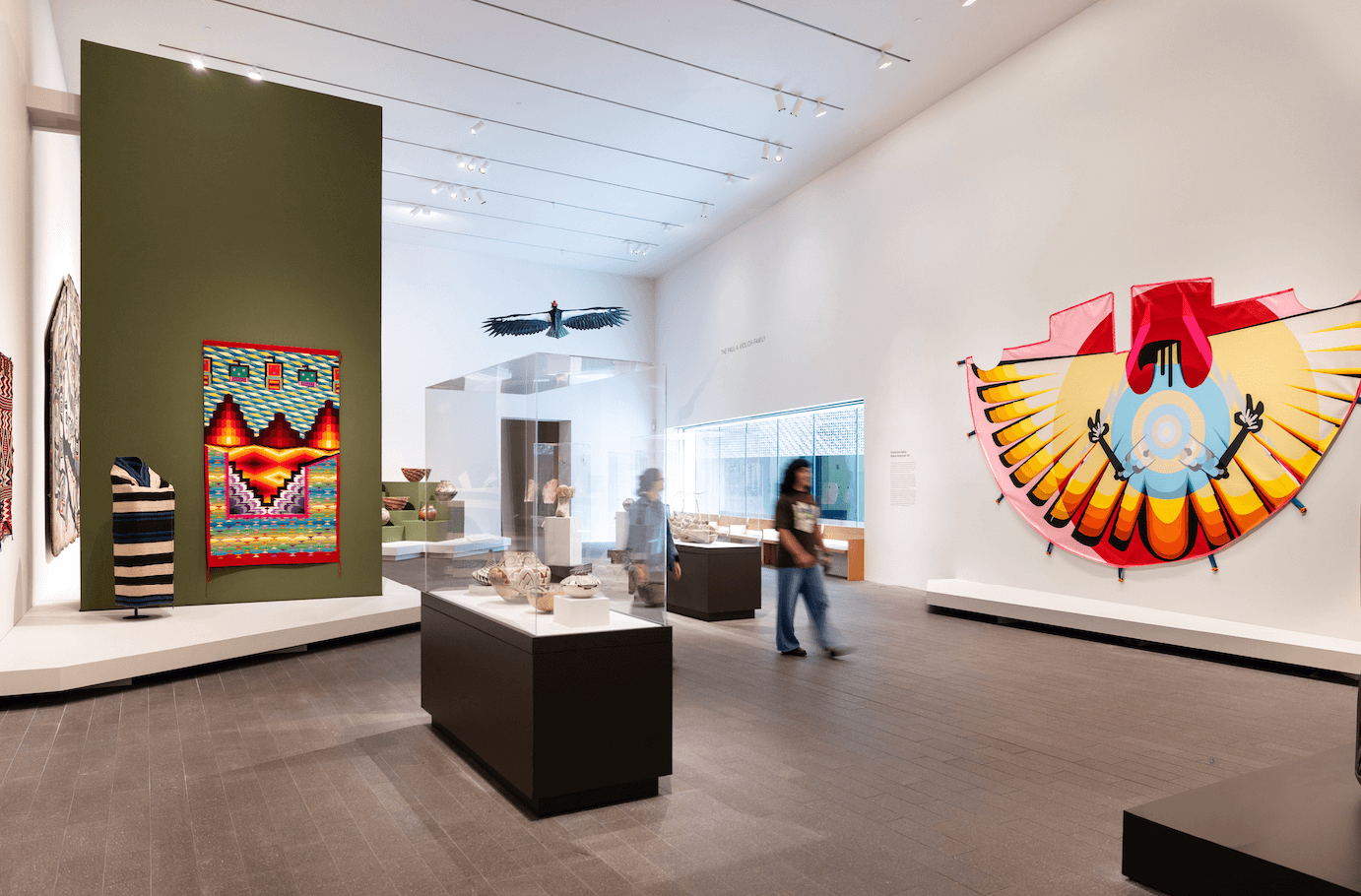
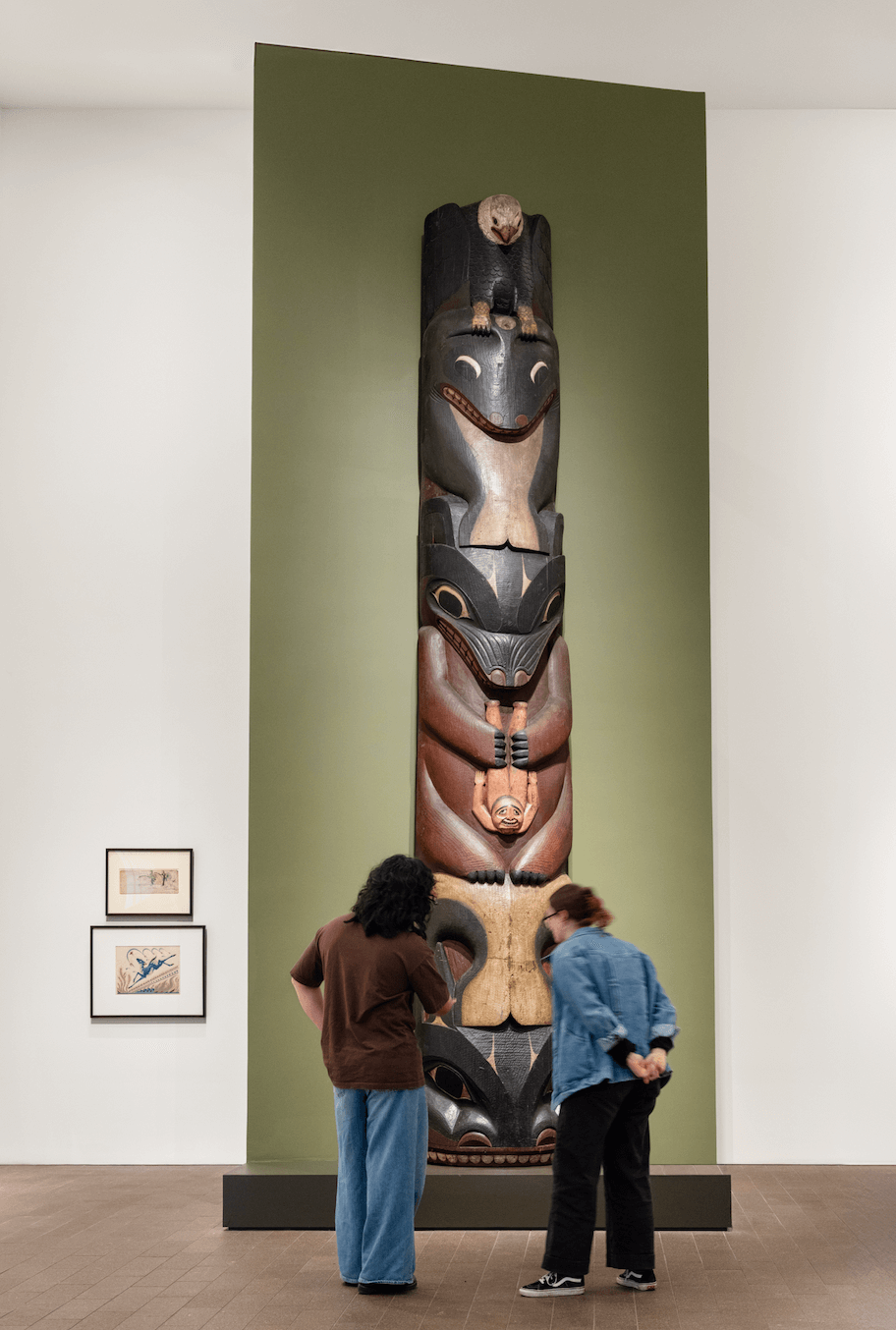
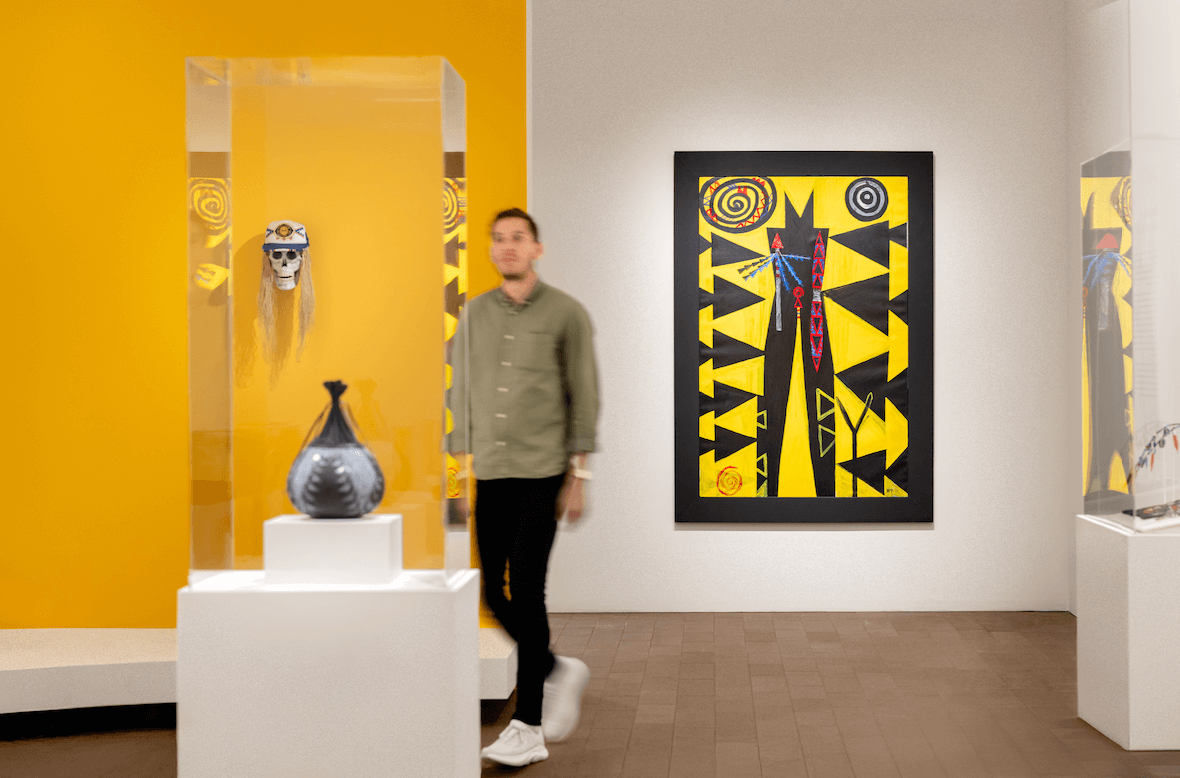
HO: So thank you for that question. I'm very excited that we have opened these new galleries at the de Young Museum. We have reopened and reinvisioned really the suite of Arts of Indigenous Americas galleries. It's a four-gallery suite, and for this project I worked with a co-curatorial group. There were five of us on the team and we had an advisory group. We worked with artists and cultural leaders, culture bearers from different communities that are represented in the collection.
And one of the things that was really important to us as we developed this exhibition was to bring people back into the story. And part of that is done through showing this continuum and these practices that have been maintained and expanded on and revived, all of it through thousands of years within Indigenous communities across the Americas in their own ways. And so I wouldn't say we have 1,000 years of art represented. There are works that span 1,000 years, mostly actually skewing towards the contemporary. And this brings up—it expands the conversations that can be had. I think whenever canons are sort of challenged or expanded, it invites a lot of dialogue and potential conversation.
But for me, what actually expands the conversation and the interpretive possibilities more is the curatorial practice of collaboration. And so that for me was the really important part of this project. It was collaborative from the first moment until the end, and bringing in outside voices or bringing in other voices—bringing in more people into any project makes that project richer and makes it resonate with more people because more perspectives are inherently represented. So I'm so grateful to my co-curators and our advisory group who supported us through the project, and I'm really excited that we can share a multitude of perspectives and voices through this exhibition.
HL: Thank you for mentioning this collaborative process. I want to pull a bit further on that thread. So you've emphasized working closely with Indigenous curators, artists, and advisers from the very start of the project of Arts of the Indigenous Americas and the reopening of these galleries. What's a story of where a community advisor's input during this project changed how an object was interpreted or displayed in the galleries?
HO: That's a really good question. The whole—so to back up a little bit—the entire narrative structure of the exhibition was very impacted and shaped by this curatorial collaboration. If I was working on my own, I never would have come up with anything nearly as good as we came up with as a group, because it was also a lot of talking and thinking about every detail goes into it when you're working in a group. And so we also had certain values that we were trying to uphold throughout the process.
In an example, when we look at artwork specifically, you earlier made a comment about combining fine arts with anthropological items, for instance. And the reality of the legacy of collecting Native American cultural items and artworks is that earlier in this museum's history and many museums' histories, cultural items were collected as ethnographic items or cultural items. And today they sit in fine arts museums with the appreciation of them as art items. But they are not simply art items. They are cultural items that have deep meaning within their communities. And they are inextricably linked to their makers and their communities that they were working in and with.
And in this exhibition, we recognize that and we honor that, and we honor the makers and the communities and the cultures from which they come. And we recognize that even if an item is made as purely an art object or as an object, an item made for sale in a market, that it is still inextricably linked to the communities and the cultures and the practices that it comes from. And so with that in mind, we were very careful to not select items for display that we knew were going to be potentially sensitive. And then from that more conscientious object list, we still consulted with communities of origin, invited consultation at least from communities of origin for every item that's represented in the exhibition.
And then all of the items that are on view in the exhibition also have—the ones that have extended labels—the extended labels are authored by somebody who, most of them, works with that type of material or is the artist who made it or is tied to the community from which it comes. So those all offer an interpretive framework that would be different than, say, you know, an institutional curator potentially.
But a really great example of how an item was interpreted differently is in our "Rooted in Place," our California gallery. In this rotation of the exhibition—because we're kind of doing these one-year to one-and-a-half-year exhibitions—we're focusing on the far northern region of California. So the kind of lower Klamath region featuring art by Hoopa, Karuk, Yurok, Tolowa, Wiyot artists as well. And we were working—we have loans from both historic and contemporary items on loan from artists and from cultural practitioners. And then we have works from the museum's collection.
And one of the historic items from the museum's collection, and really one of the only ceremonial items that we have on view, is a ceremonial dance regalia from the region that was given to the museum in the early 20th century. And we don't know exactly what community it came from because, like many museum records, it's not very complete. And it was included after much discussion with many different stakeholders about the appropriateness of display. And in the end, all of the people that we spoke with felt like it was important to include the item in the exhibition, partially because it's at the museum. And if it might go home, it might not, but it's there. And how do we honor this item in the way that it should be? And how do we give it purpose? Because if it's just sitting in storage and can't be seen by anybody and is alone in a way, how do we begin this journey of it having meaning, of it having purpose in the right way again?
So there were many discussions about it, and then we had visits from different cultural leaders to prepare it for display. They wrapped it in a hide, which it would be wrapped with in ceremony, and they wrapped it in a good way, and they prepared it. And when we care for the item, we also care for it in the museum with a duty of care that is requested by community members. So we recognize that items that are in the museum have much more meaning than most of us who work there can know about, and that we take care of those items for the community members. And so that's a really good example of what this kind of collaboration can lead to.
HL: This idea of the collaboration and something you mentioned earlier which really sticks out—"Rooted in Place," or the relationship to place—is kind of a central theme of this exhibit that allows, effectively, conversation between some of the objects in the exhibit to take place. How did this theme of relationship to place or "Rooted in Place" come about, and how do you see the concept of place coming through in the exhibit itself?
HO: The theme of relationship to place came up through conversations in our curatorial group, and it is really reflective of Indigenous values and worldviews. And it suits the collection. It fits the collection and it allows us to have a wide range of focuses within that, because we do have Arts of Indigenous Americas from far northern Canada to Chile in the collection, across thousands and thousands of years and across materials. So in order to keep these galleries busy and working for all of those items, we thought long and hard. "Relationship to place" came up as a theme that could serve the whole collection.
And so each gallery has a different focus of that theme. "Rooted in Place" is the California gallery. My co-curator, Mia Kiscal-Mauro, is a whiz with titles. I call her my title queen because she just comes up with amazing ones over and over again. And that was one she came up with, and it's a riff on both baskets—because California is basket country, so plants and roots go into making baskets—but also because we are in California and very much rooted in the places that we come from.
So the large Native American art gallery is titled "Home," in a way looking at these different relationships that happen within home, but also to recognize that all of these items—almost all of them—are away from home. And many of us also live away from home, and many people live away from home. But so what does that mean? So the themes that come up through this are materiality—this tie between the objects, the items, their material, where they come from, how that reflects deep traditional ecological knowledge and stewardship on the part of their makers. This tied to seasonal practices, to the land, the plants, the animals that we all share our homes with.
And the other themes that come up are relationship between community, between individuals within the community, family, mentors and apprentices. We also sort of investigate the relationship between territory itself and then different meanings of territory, specifically in the context of Native peoples and artists, many of whom were forcibly removed from their home territories or who moved away from home territories because of job opportunities or schools and what that means. So there's a wide variety of themes that can be explored, which is perfect when we're looking at a huge spread of time, communities, and materials.
HL: It's impressive what you've all done there. And I think the idea of having these different materials, different geographical locations, and then specifically the disparate chronological time periods that we're seeing here—this vast wealth of time. How do you approach creating a dialogue between, say, for example, a 500-year-old artifact and then a piece that was made in 2024? Because, as you noted, a big part of the exhibition is contemporary artists and their works. How does that dialogue happen between something that's several centuries old to something that was made, you know, 8, 10 months ago?
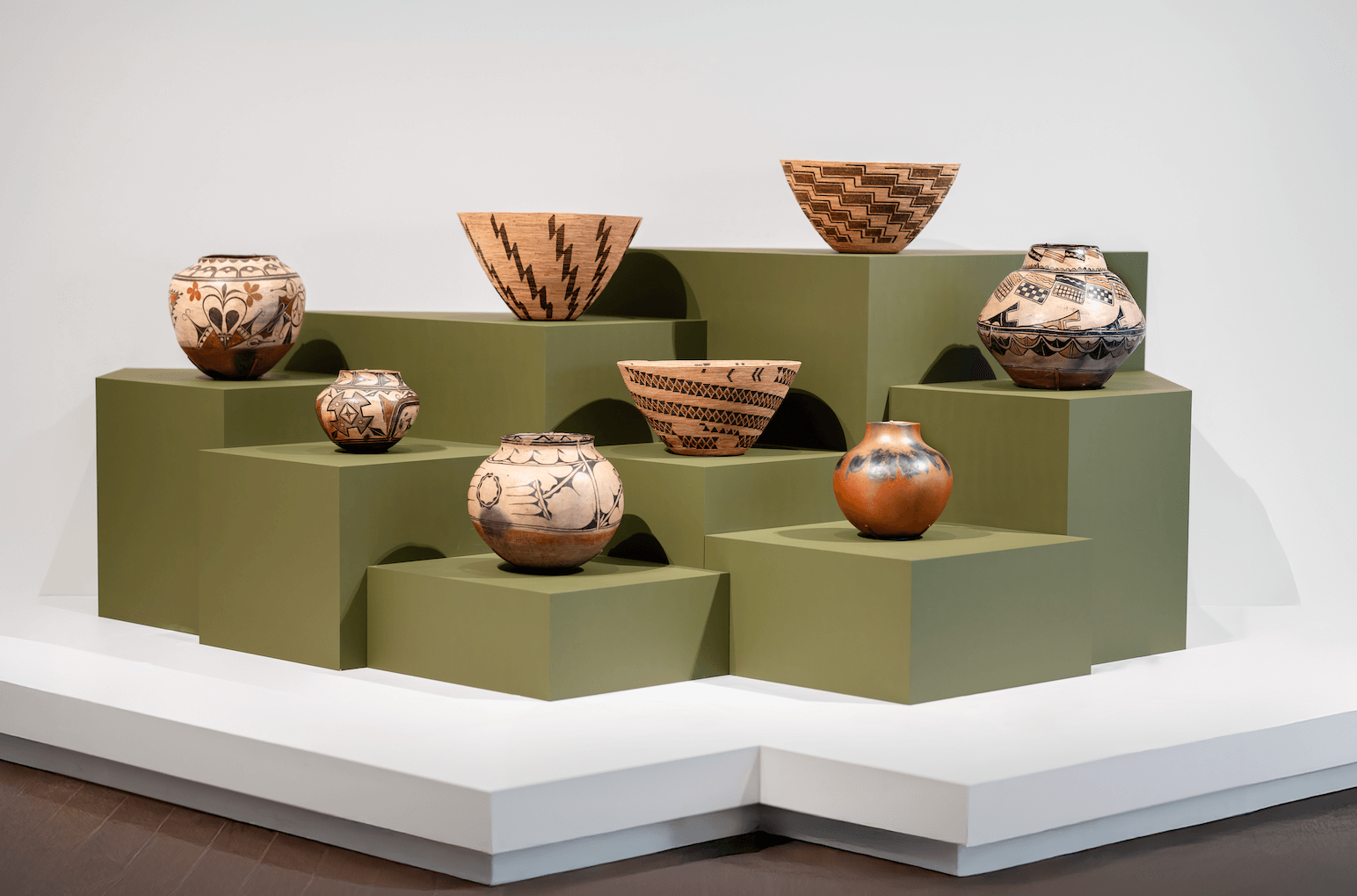
HO: You know, the artworks, the items have their own dialogue. We really don't need to do much. I mean, the artists—in one example in the exhibition, there's a case with four Pueblo pots in it, and they span 1,000 years, and they are actually from different communities. There's an ancestral Pueblo bowl. There's a pot by a Zuni potter working in the 19th century. And then there are two contemporary Acoma pots—one by Dorothy Torivio and one by Juana Leno.
And it shows the lineage of Pueblo pottery making, this really rich, deep practice of making pottery in their communities, but also the continuity that comes from that, but also the innovation. And innovation in and of itself is tradition. There's a tradition of innovation within all Native artists' work. And so we didn't really need to do anything. We have a beautiful label written—there are a couple labels written for the case. One by one of my co-curators, Joseph Woody Aguilar, and another one by one of our advisors, Brian Vallo. And so there are great words that accompany it, but we didn't have to do very much. They have their own dialogue.
HL: I want to step back in time before kind of moving forward to get your perspectives on what the future of museums might look like. Before we began recording this conversation, we had talked about an early project that you consulted on that was of Andean art in Peru particularly. This is a fascinating early project for yourself, and it kind of sets this passion in motion in many ways from an outsider's perspective. But going back before that, what sets this in motion for you of the Indigenous arts curatorial practice? Where is that coming from?
HO: That's a great question, and I don't know if I have a great answer for it. So I think a good place to start is sort of at my beginning. I am the child of two academics. And when I was a young child, my parents were both full-time university professors. They taught at Colgate University, and I would tag along with them. So they would have sabbaticals, they would lead study abroad programs, they would go on research trips, and I tagged along. And in that time, I would be pulled out of school usually. And my dad and mom sort of took on my education. And that would mostly mean learning—my dad would, you know, we would read books about the history of the places that we were going before we went. And we would go to museums while we were there, and we would go to cultural sites, and we would talk to people. And then I would sit in their classes while they taught their classes and draw or whatever in the back and sort of listen.
And so a lot of my education as I grew up—I had, you know, traditional school education as well—but that kind of world education really shaped me, I think, from a young age. And when I was in college, I didn't know what I wanted to do with myself. And I happened—in my first semester, for my science requirement, I took Introduction to Archaeology, and I just loved it. I was really excited about it. You know, part of our stops that we would always do when we traveled would be Stonehenge and the ruins and the cave, the petroglyphs, and all of that my dad loved and kind of instilled that interest in me, which I found out in my freshman year.
And in that class, in one of the breaks, a professor came and talked about his field school in northern Chile that he was going to run that summer. And I thought, "Oh my goodness, I need to go." So I managed to get myself on that trip. And in that, I loved it. I loved wandering around the desert and kind of seeing what there was in the Atacama. And in that, one of the people that was helping to run the field program said, "Oh, do you know Professor Christopher Donnan? He teaches at UCLA and you must take his Introduction to the Ancient Americas course."
And I signed up, and I think that was the second to last year he taught it. He was close to retirement, and I signed up for it the next semester, and she was right. And that totally changed the course of my life. So I took that class, and then I took his seminar that he taught, and then I started working with him in the Moche Archive at UCLA, and I was his research assistant for a number of years. And he is still a dear mentor in my life, and I'm very grateful to him.
But as I'm graduating, I knew that, you know, all through college I thought, "Well, everyone goes and gets a PhD right away. Of course I'm going to do that." You know, two academic parents—what other path is there in my life? And as I'm graduating from college, I was not ready for a PhD program. I was not ready for six more years of school. So I thought, "What am I going to do? I like museums. I guess I'll work in a museum. How does somebody work in a museum?"
So I started looking at job applications or job postings that seemed interesting. And I noticed that for all of them, you needed a master's in museum studies. So I applied for museum studies master's programs, and I chose the one that allowed me to live with my parents and save some money and also was partially abroad. So I did my master's in art and museum studies from Georgetown University.
And as I was graduating from that, I ended up being hired by the place that I had had an internship as part of my program, which was Dumbarton Oaks Research Library and Collection in Washington, D.C. And I had been working with the, quote, "pre-Columbian collection," the prehispanic collection there in my internship. And luckily, they had an opportunity and hired me as I graduated. So I had the opportunity to continue working in this kind of prehispanic art trajectory that I happened to find myself on, you know, that fated day in Introduction to Archaeology where they advertised the field school. But it was never really my intention necessarily.
And then after I worked at Dumbarton Oaks—and there I was the exhibitions coordinator, exhibitions and programs coordinator, so I was working across the collections—I was hired at the Fine Arts Museums of San Francisco as a curatorial assistant for the Arts of Africa, Oceania, and the Americas. So I was working a lot across a larger collection there, and because of my background, worked more with the Americas. And then as the Arts of the Americas curator at the time left, there happened to be a need for working very intently and intensely with the Native American art collection because of—we were given, the museum was given a large gift from the Thomas Weisel Family Collection. And so I kind of stepped into this role without ever intending to or trying to.
And as I started working with the Native American collection, I realized how naive I had been about the legacy of collection and the legacy of museums. I had been very naive, and I began working in this field very young, and starting from an archaeological perspective, particularly working in Latin America, it's a very different dialogue that is shared about these items. And so coming into working with contemporary communities across Native America, I learned—I have learned and continue to learn so much about the realities of the past and the present of working with Indigenous items, I mean, and people, but mostly the importance and responsibility of caring for Indigenous cultural items and artworks that are in museums. But I never expected to be here. So I love the work that I do and I'm really grateful, but I really never expected to be here.
HL: Well, there's something very honest and generous, and I appreciate the idea of speaking to the naiveté of, you know, the history of museums and collections. And I think back to the Wunderkammers and, you know, you've—it's appreciated to speak so candidly on that. I want to hear some of your emotional internal emotional dialogue on the Frida Kahlo show. So if we go back to the time of, you know, no one's heard of coronaviruses yet, and you've been working away on this exhibition that's going to highlight Frida Kahlo, and the exhibit's right about to open, and then this whole thing happens that we now know as COVID and it changes the entire interaction between, well, society as a whole, but particularly this exhibition. How did that feel? What was going on internally as you're thinking like, "Oh my God, we just put so much into this and now it's kind of like, oh, can't do anything"?
HO: Yeah, that was a trip. So I was assigned to be the institutional curator—I don't think that's quite the right term. I don't remember what my official title was—but basically the institutional curator for this exhibition, "Frida Kahlo: Appearances Can Be Deceiving" or "Las apariencias engañan." And it was an exhibition that was organized by the Victoria and Albert Museum and then traveled to Brooklyn and then was going to travel to the de Young Museum. So I was working with the initial curators, Circe Henestrosa and Gannit Ankori, and we—the core was from the Frida Kahlo—the Casa Azul, the Blue House, the Frida Kahlo Museum, the museums of Diego Rivera and Frida Kahlo, I think is the official name.
We worked really hard to secure all the loans of paintings—those were not from the original exhibitions. And creating any exhibition is a lot of work. And we enhanced it with prehispanic items from our collection that kind of spoke to the collections that Frida Kahlo and Diego Rivera had. And then it was the final week. We had installed everything. Thursday was supposed to be the donor reception, and Friday was the member opening, and Saturday was the public opening. And that Monday, San Francisco shut down and we had shelter in place. And we had to send all of the couriers who had been working with us from Mexico—we had to send them all home because we weren't sure how long, you know, the borders were going to stay open. And no one knew, as you said, no one knew what on earth was happening.
I do remember—it's funny, you know, we were in sort of the craze of installation, and people had stories, and there was a cruise ship that was parked kind of in Oakland for a little while, I think, the week or two before that. And so there were all these stories as we heard, you know, the world shutting down. And I remember very clearly one morning walking out of my door, and one of my neighbors had the paper delivered, and there was a front-page story about the cruise ship being parked there and people stuck on the cruise ship. And I had this moment thinking, "This is one of those scenes in the horror film, you know, the sort of apocalyptic film when we look back on this moment and think, 'Oh, life is totally different,'" you know. And that really did happen.
But yeah, we had to, kind of like everybody else, reconcile with how to keep our audiences engaged through a time when we couldn't be in a physical space together. And luckily we were able to extend—you know, all of our lenders were very generous. We extended the exhibition and it was up for 18 months. So for 18 months I was also engaged with digital programming about Frida Kahlo. So there's all kinds of weird programs in the bowels of YouTube that one could find if they would like to about Frida Kahlo. And also it was in a time when we were all trying to do experimental programming, you know, to keep people interested as we sipped cocktails over Zoom together.
But it also showed how much people cared because so many people tuned in to those programs. And then once we were able to open the exhibition in limited capacity with social distancing, we sold out tickets, and it meant a lot for people to come. They shared, you know, that they hadn't left their house in months, but they wanted to come to see that exhibition. So I think it also showed the power of Frida Kahlo's art and how much people love her. And then there was a strange resonance too, because so much of her art towards the end of her life dealt with the fact that, you know, she had spent so much of her life sort of contained because of her accidents and her illnesses and her surgeries. And so a lot of her life was sort of led from one room, led from a bed. And so I think that had also special resonance for people during our COVID lockdown of 2020.
HL: Oh, that's a very optimistic insight and takeaway from it. I like that idea that leading her life from the bed and how that could have resonated somewhat psychologically with an audience amidst what was going on in the world. You know, earlier you very generously shared this idea about your naiveté coming into this world quite young and the history of museums. One of the things that you touched on earlier was the idea of repatriation, whether it be repatriation of goods or the caregiving even, and so too then the idea of human remains. And this is of course a major challenge for institutions. How do you see the future of balancing between preserving museum collections and then doing right by descendant communities? And maybe give a bit of context because so many of us in the general public have very little context of how this functions, what the history of that is, and then what people like yourselves as curators at the vanguard of this may be thinking about of how to deal with this as a society, specifically the question of human remains in museums.
HO: Sure. I can speak personally to this question and also I'll speak slightly on behalf of the Fine Arts Museums of San Francisco, because every institution has a different, perhaps, perspective. So I can't speak to the larger field or the larger fields. I can speak personally.
So at the Fine Arts Museums of San Francisco, unfortunately, because of the legacy of collecting—the museum sort of started as a more pan-material museum—there are ancestral human remains that are in the collection, and we are working very hard to get those home in a good way. And I can't share much information about it because of privacy, but we are engaged in consultation with different communities of origin, and it is something that we care deeply about and work very hard and carefully on. We have—those items have never been—those, I shouldn't say items, those individuals have never been on display. The museum, to our knowledge, never displayed ancestral human remains. So there are other museums that perhaps have different policies and stances.
Personally, it is a horrible tragedy that ancestral human remains are in museum collections. And it's not just their remains, it's often the items they were buried with, and those are in collections as well. And so that all needs to go home. But this work is not easy work for anyone who does it. It is very emotionally, spiritually, physically draining, especially for the tribal communities or communities of origin, the descendants who engage with this work. And I have an enormous amount of respect for those individuals because it's really hard and it's really important. And anything that's hard and important takes time, and it can take time. So we have a lot of gratitude for the communities that we are working with and for their patience and grace and strength and understanding. And yeah, it's a sensitive subject that we hold to great import.
HL: Thank you for giving a bit of context on that, as it's something that's not often seen or understood. So museums, even before COVID, had been challenged, particularly with youth, to bring youth into the museums. And of course now with digitally native generations, it continues to be very difficult. COVID certainly didn't help, as you know better than anyone, as we've established here. But you talked about a really interesting idea of saying we were experimenting with new programming, and I think that there's something very beautiful about this idea of saying we're experimenting—that oftentimes experimentation can take place during a crisis, we'll loosely call it that, that it causes us to question the status quo, so to speak. So engaging younger, more diverse audiences has been an ongoing field of interest for art museums. And it's impressive that you at the Fine Arts Museums in San Francisco are developing new school curricula for the Indigenous galleries and even covering trips for Title I school groups. In addition to this, going forward, what ideas could evolve on this? What experimentation could take place to welcome kids and communities who haven't always felt included in these spaces?
HO: That is a great question and one that I'm really excited about. I think providing access is a huge part of it and getting kids into museums young—feeling comfortable, feeling welcome, feeling excited and inspired. And part of that is the access itself. So I'm very grateful we received a generous multi-year grant from the Koret Foundation to support this curriculum development and also to support access from schools, Title I schools, and also, or potentially, schools from further afield.
But also it's increased representation. And so making—when those kids come in, making sure that those kids feel represented and seen and respected. And part of that comes from having different kinds of art on the walls, having art from different communities on the walls, how it's talked about, who's talking about it. And the more that that is done, then, you know, it makes space for even more of the work. And I'm so happy that we have the space of our Native American art galleries. It was also really important as we developed the Arts of Indigenous Americas galleries for my co-curators that Native American art was not folded into another department. It was very important for them that these spaces remain Indigenous spaces and it's Indigenous-forward.
But representation needs to go into every other space within museums. And it's not just the representation of, let's say, Native artists. It's also how language across all of the collections is shared, is communicated—the type of language, the way things are discussed. And you know, I think that that's a big shift for museums, a lot of museums, and big shifts happen slowly. I'm grateful we have an interpretation department at the de Young, the Fine Arts Museums of San Francisco. Our colleagues, led by Abraham Jackson, our inaugural director of interpretation, do great work. And you know, I think that we're headed in a really good direction.
But we need to make sure—and it happens. It's not just the representation, it's not just the language, it's how children are welcomed. You know, are you told right away? I always hear school groups. We have great school groups, and so many times I hear teachers shushing the kids in the galleries like, "Shh." Like, no, don't shush them, you know? There—no, we don't have to be quiet at a museum. That's just someone decided that one day. That's not true, you know. So it's not just—it's like kids also need to feel like they're in a place that they feel welcome. They're not being yelled at. They're not being told to be quiet.
I hope that kids can be excited. Also, I hope that kids can be excited to be in physical space with other people, connecting to items that are in front of them, artworks that are in front of them, experiences that they're having that are not through technology necessarily. And I think that that's really important as we move forward with increasingly these digitally native generations—is encouraging in-person experiences.
Hugh Leeman: Hillary Olcott, thank you so much. I appreciate you sharing on this. It's impressive to see what you're doing.
Hillary Olcott: Thank you.
