
Mildred Howard, Poetics of Memory, Oakland Museum of California
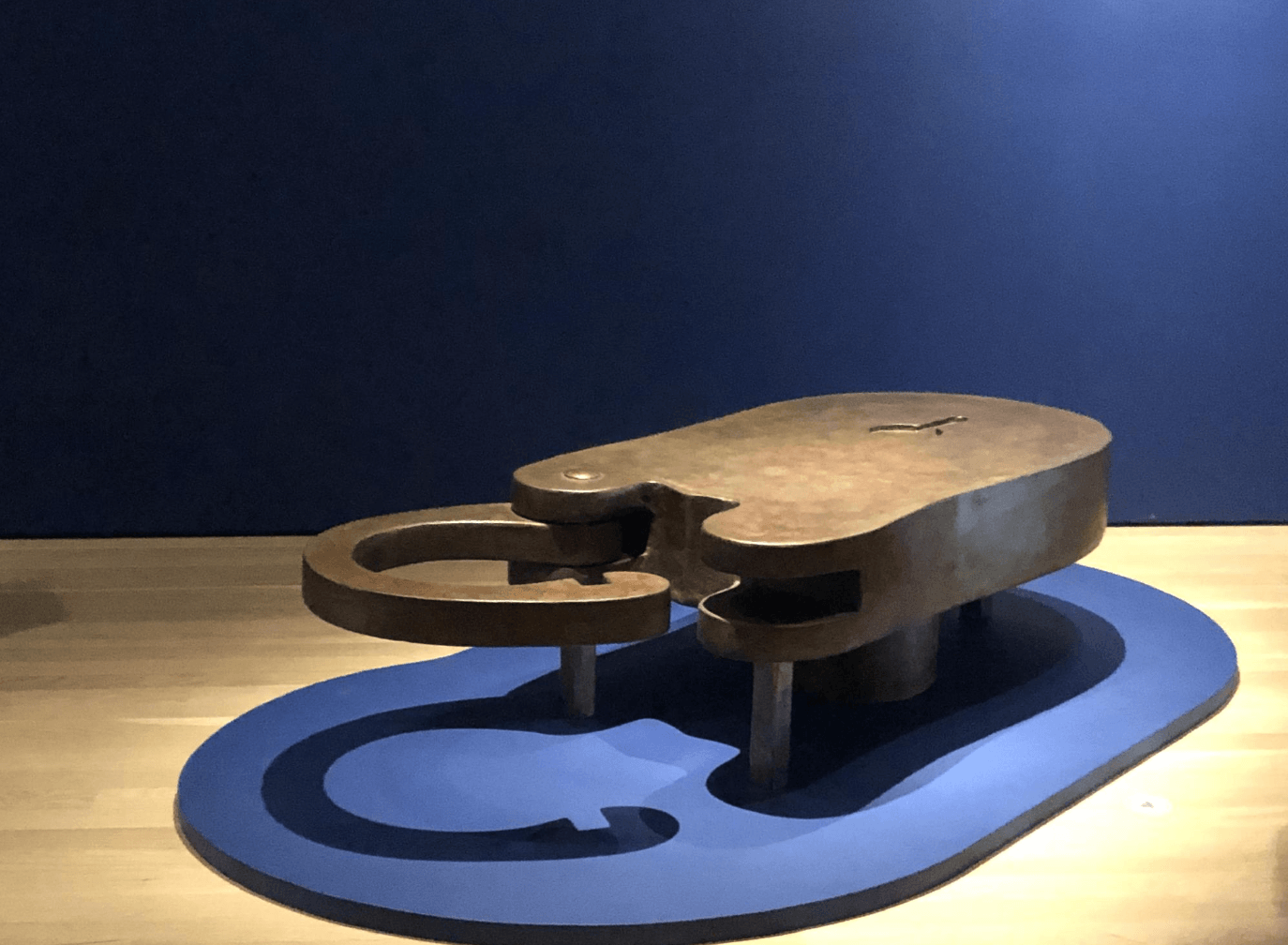
Locks and Keys for Harry Bridges 2001 (Detail)
Vibrato of Memory
By Jan Wurm
To cherish freedom, to uphold liberty – to defend what has been so dearly won – memory must have a place not buried in the past, but integrated and woven through the present so that it may extend into the future. Slavery, conscription, incarceration, internment, expulsion – the plights of individuals, communities, and ethnicities are all readily pushed to the shadows, buried, erased. The work of Mildred Howard gives expression to these sorrows. The lock, the key –they stand larger than life to lead the way into the retrospective exhibition, Mildred Howard –Poetics of Memory, at the Oakland Museum of California.
It is in the aggregation of elements that Howard evokes the poetry of the single object that is transformed into symbol, that can speak to experience and time and the cycles of lives and communities.
Howard often draws from multiple sources for her assemblages: music, poetry, history, personal experience. Following travel to the South and the alligator-infested swamps surrounding the Indigo Plantation in Charleston, she built her tribute, A Salute to Sojourner: Still Water Run Deep (2001), as an altar with a first edition of Harriet Beecher Stowe's Uncle Tom's Cabin and a child's small foot in the clutch of alligator teeth. Attached, at the very base, the lock, from which the struggle rises. In referencing the dangerous flight to freedom, Howard interweaves the lives of Sojourner Truth and Stowe, two women who fought courageously for freedom and equality. The immediacy of their struggle is felt through the handwritten quote and the magnified, unflinching eye. It is the eye of the artist herself, not only bearing witness, but asserting: what has happened to those who came before is our history.
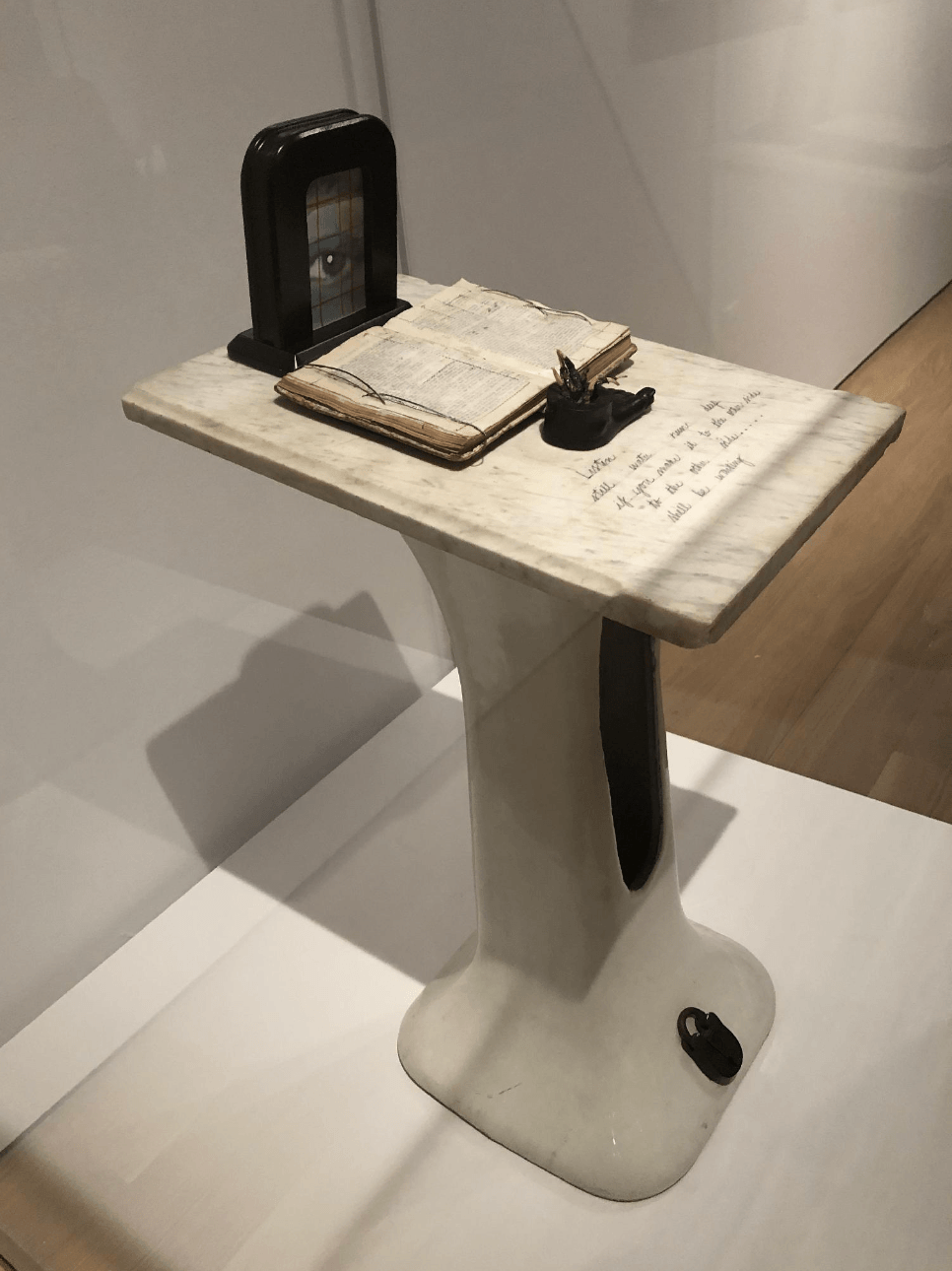
A Salute to Sojourner: Still Water Run Deep 2001
The Other Side of the Coin (2014) allows Mildred Howard not just one alternative viewpoint but a series of works investigating meaning and impact in commercial images. Taking Fairbanks Gold Dust washing powder, Howard has excised the mascots, the Gold Dust Twins, Goldie and Dustie, from the packaging label, and inserted her own image. In placing a back-to-viewer defiant posture, the artist points to the racial stereotype coined with the slogan, “Let the Gold Dust Twins do your work.” These two variations from a series of ten show Howard working through shifts in posture, images of the young and the mature, and the meeting of selves in the doubling of image.

The Other Side of the Coin 2014
Within the world of Howard’s parents’ antique business, the objects held histories: the use they had given their owners, the pleasures they had sparked in the eyes of beholders long passed. The objects were touchstones for memories as well as markers of conventions and styles past. And they called out for care: repairs and mendings, touch-ups and coverings. Mildred Howard breathed the air of these objects, her hands learned to restore and heal these histories. The understanding of structure and pattern opened into the making of dance costumes, into design and the marriage of hand and cloth, finger and thread. It traveled on to stitch paper, to join wood, to glue glass. Objects spoke to Howard, sometimes quietly or enigmatically,held in flat files or boxes until their shape was fully announced…Until the objects came together in concert to tell stories more complex than the single note.
The Magnolia Project: III (2008) employed complex printing technology. Instilling an added layer of irony; Howard has dissolved the image by fragmenting the surface with buttons, the ancient invention meant to hold things together.
With the triptych, a traditionally religious format, Howard evokes not only the spiritual nature of memory and dedication, but also uses repetition and variance to slow the viewer’s visual pace. The triptych becomes a meditation. In Faith, Hope, and Charity (1977), the artist presents us with a measurable diminution as we pass from idyllic landscape to the darkly framed.
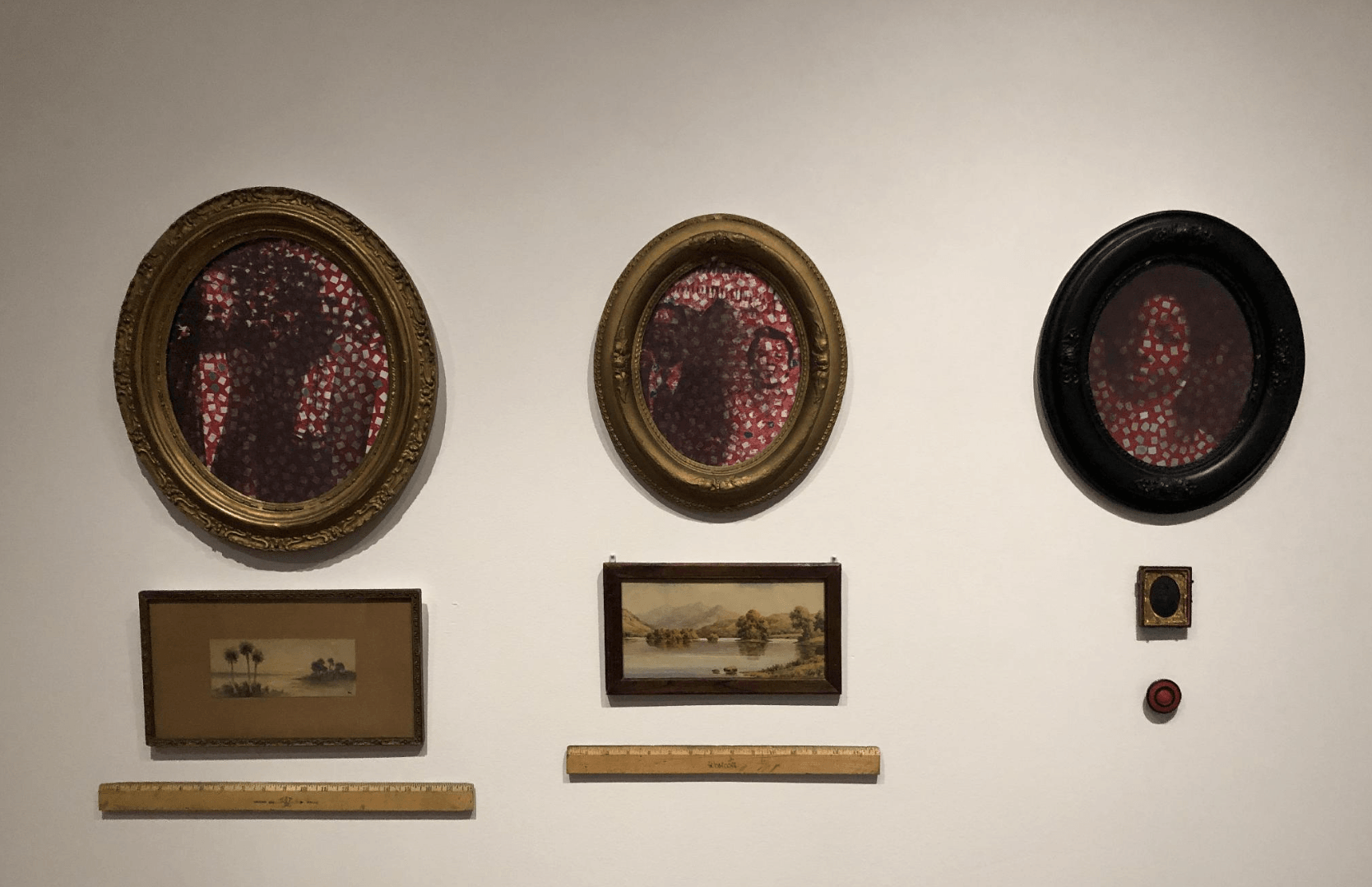
Faith, Hope, and Charity 1977
As vibrato oscillates, shifting in pitch and volume, so the visual memory in the work of Mildred Howard extends a smooth and even tone only to rise, drop, pierce the heart in the close viewing. The memories given material presence claim space with metal or wood or stone. But they reverberate through lace and mirrors.
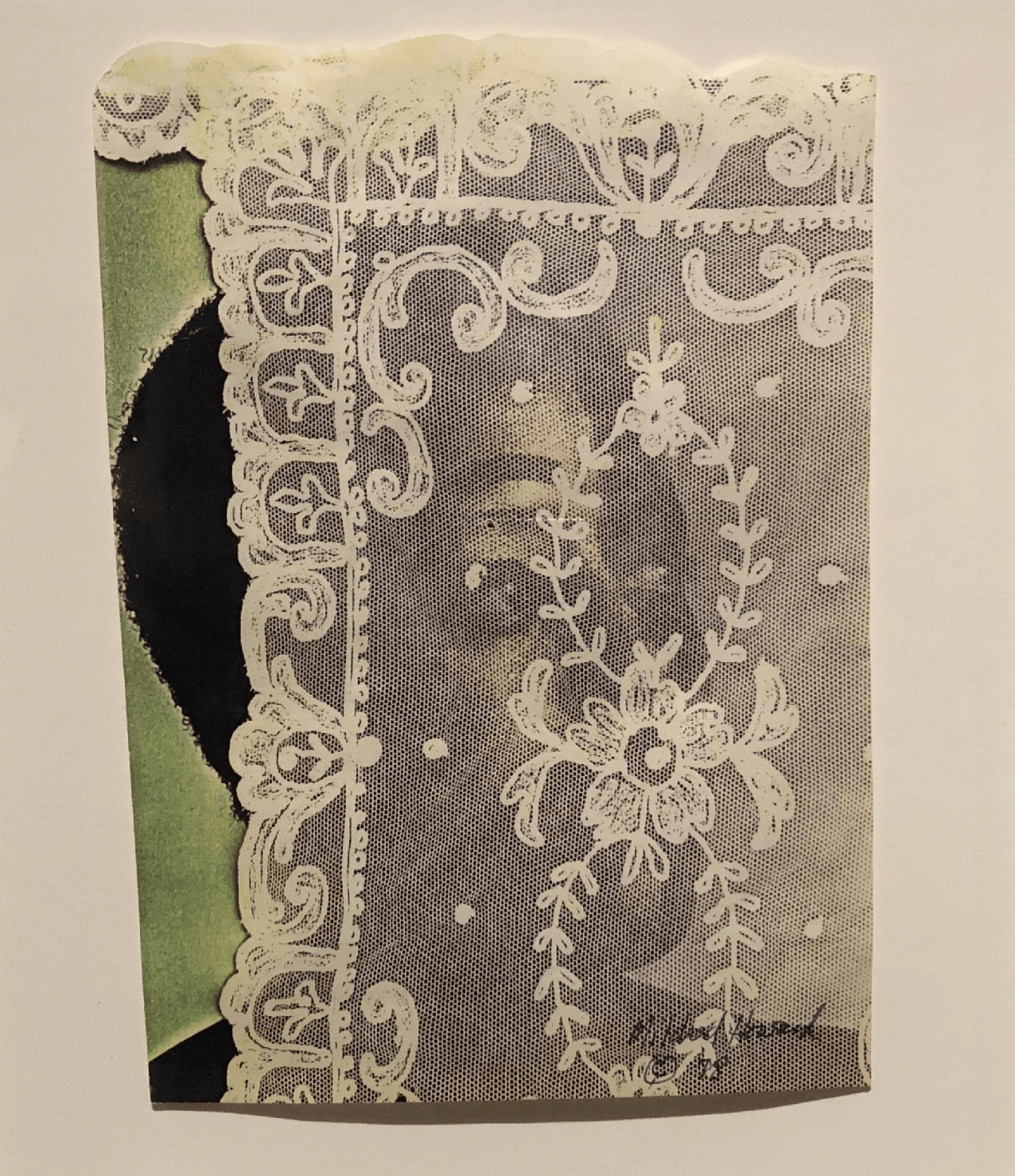
Untitled 1979
Not only does Howard use images of her own face to summon a bridge to the past, the geographically distant, the ancestral to the present, she veils and filters the view. In Untitled (1979), she layers the xeroxed image with lace – a step of removal from a direct reading of the artist to push into deeper pondering of time and place. In Untitled (1997), she striates her bifurcated face, pairing African pattern with the gold of ancient Egyptian convention.
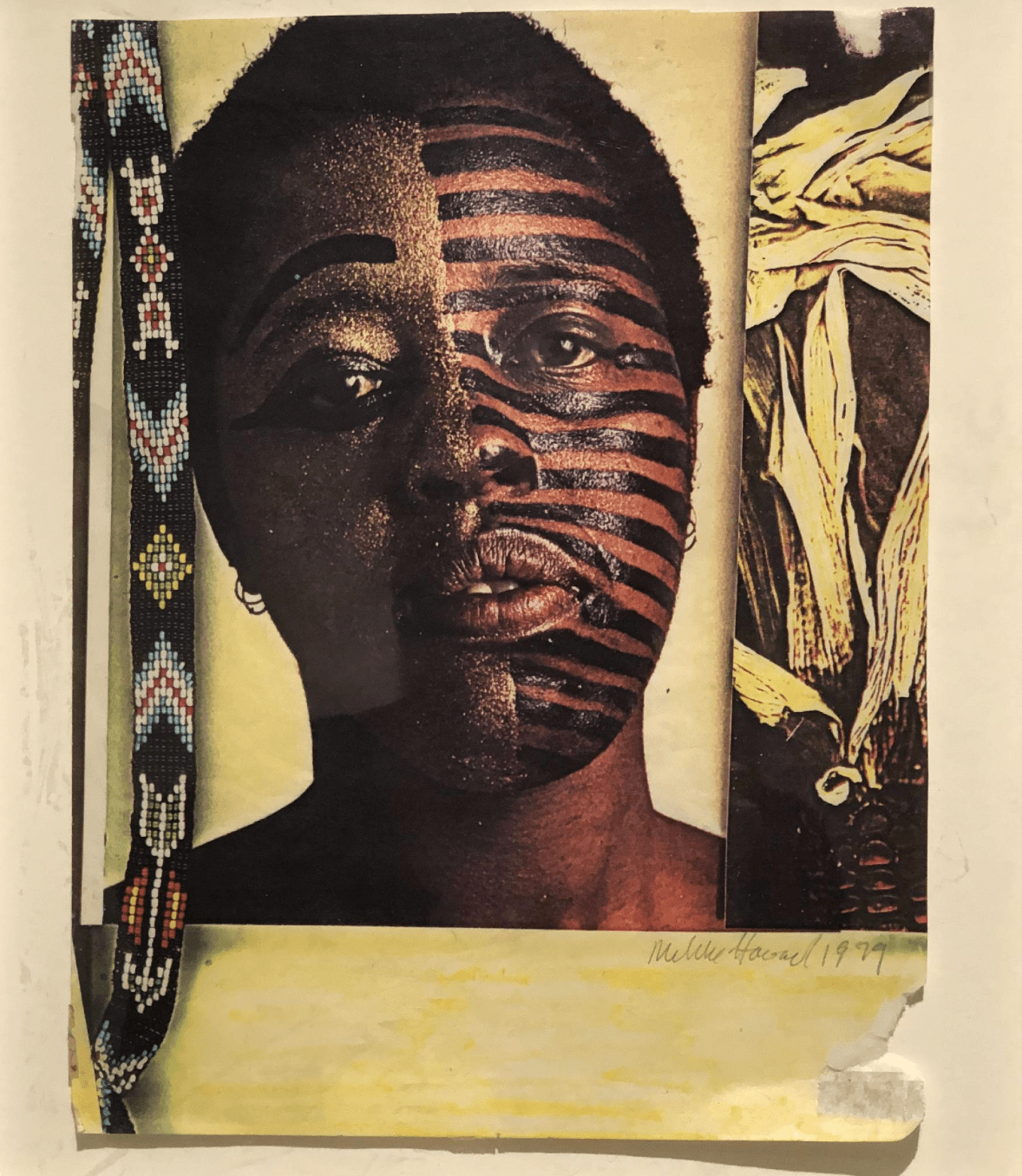
Untitled 1997
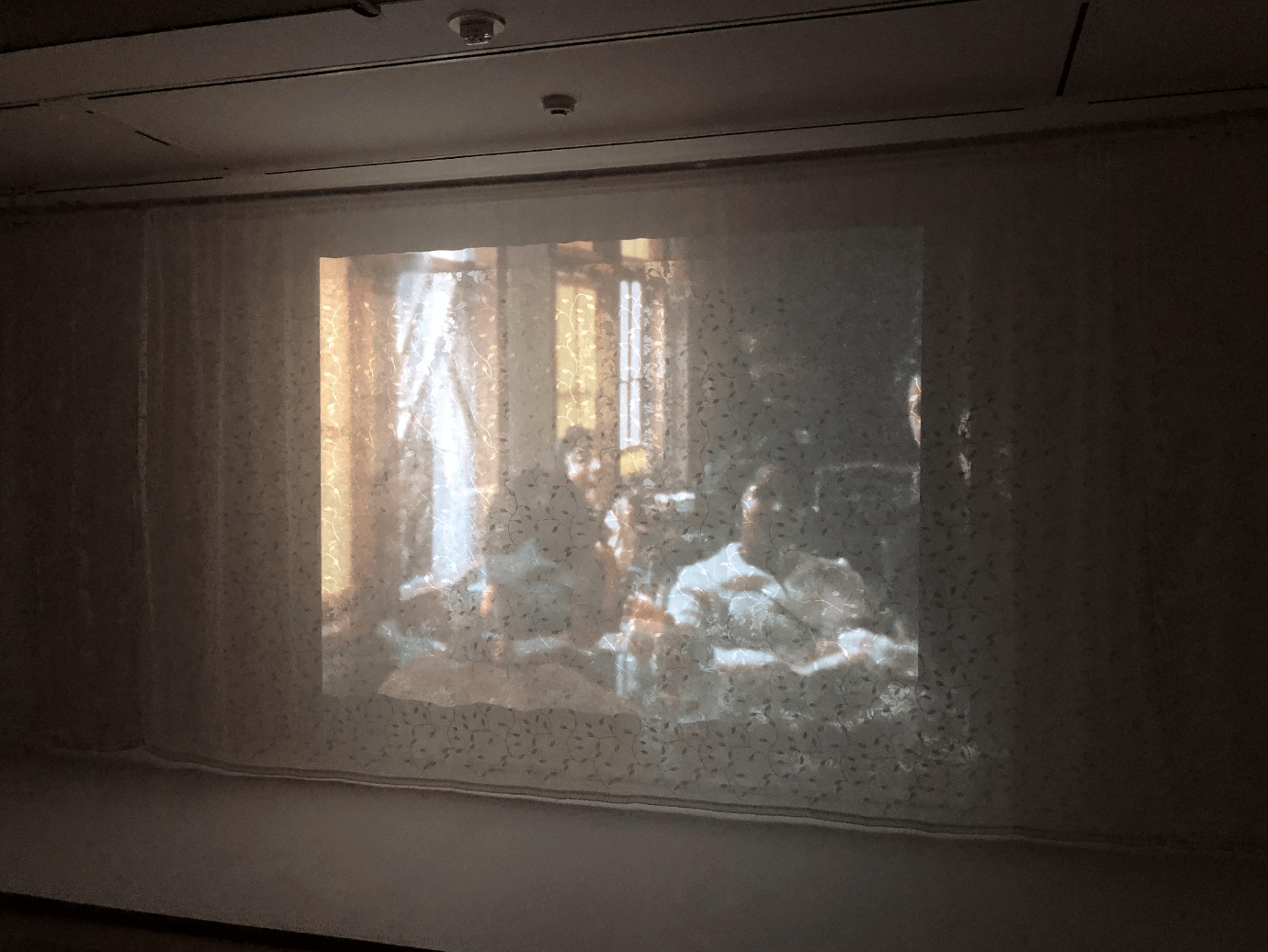
This distancing by obscuring the photographic image is writ large across an immense gallery installation of wall projections. Culled from recently discovered old 8mm film shot as a teenager on travels to visit family in Texas and in home and school life in Berkeley, the progressions of images merge as the viewer peers through the gauzy veil of lace curtains. Childhood, Family, Friendship: these provide central themes and a core essence of an artist whose work has been nurtured by her community, her history, and her broad curiosity and engagement. Moving Stills (2026) grasps the past, illuminating scenes for the brief moments before they are eclipsed by the next memory, revealed like an unraveling sweater briefly shows each stitch of the garment before it too is undone.
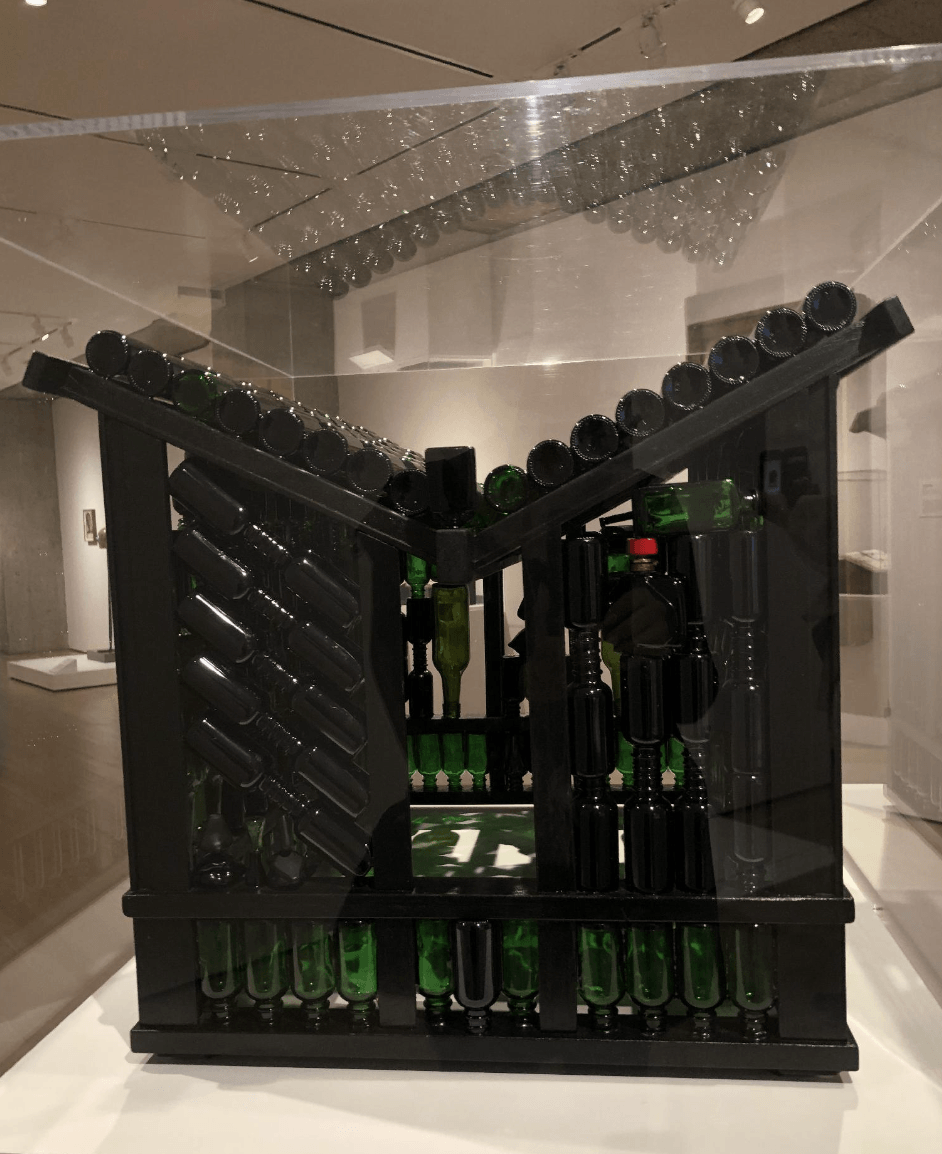
In representations of shelter, Howard has developed a language to address racism, injustice, need, and compassion. What sets her work apart from much politically engaged art is the grace with which she addresses history’s impact on private lives. In these houses, Howard has found a vehicle to address both the strength of the hand built, as well as the oppression and the denigration of slavery and poverty. With references to the shotgun house as well as the idiosyncratic bottle houses of folk art –these shelters in fact are open to deep vulnerability. The fragility of glass is ever-present, whether on a smaller scaled piece or a structure large enough for visitors to enter. Fall of the Blood House 2005 (View from within)
In a recent bottle house, Black Has Always Been a Color (2024), Mildred Howard references the title of an essay by artist Raymond Saunders, itself a response to poet Ishmael Reed’s article, “The Black Artist: Calling a Spade a Spade.” This bringing forward of the 1960s shared activism and common commitments of the Berkeley community rings with a new layer of sorrow and poignancy of loss with Saunders’ death last July. This glistening house of black glass reveals intimate senses –nose and mouth – along with the spot of red embedded – just the touch to punctuate the enclosed. The weighted and measured is a visual stop to slow, halt assumptions, reflect. And it is just enough to evoke a Saunders painting: black sprawling across a canvas with red to punctuate.
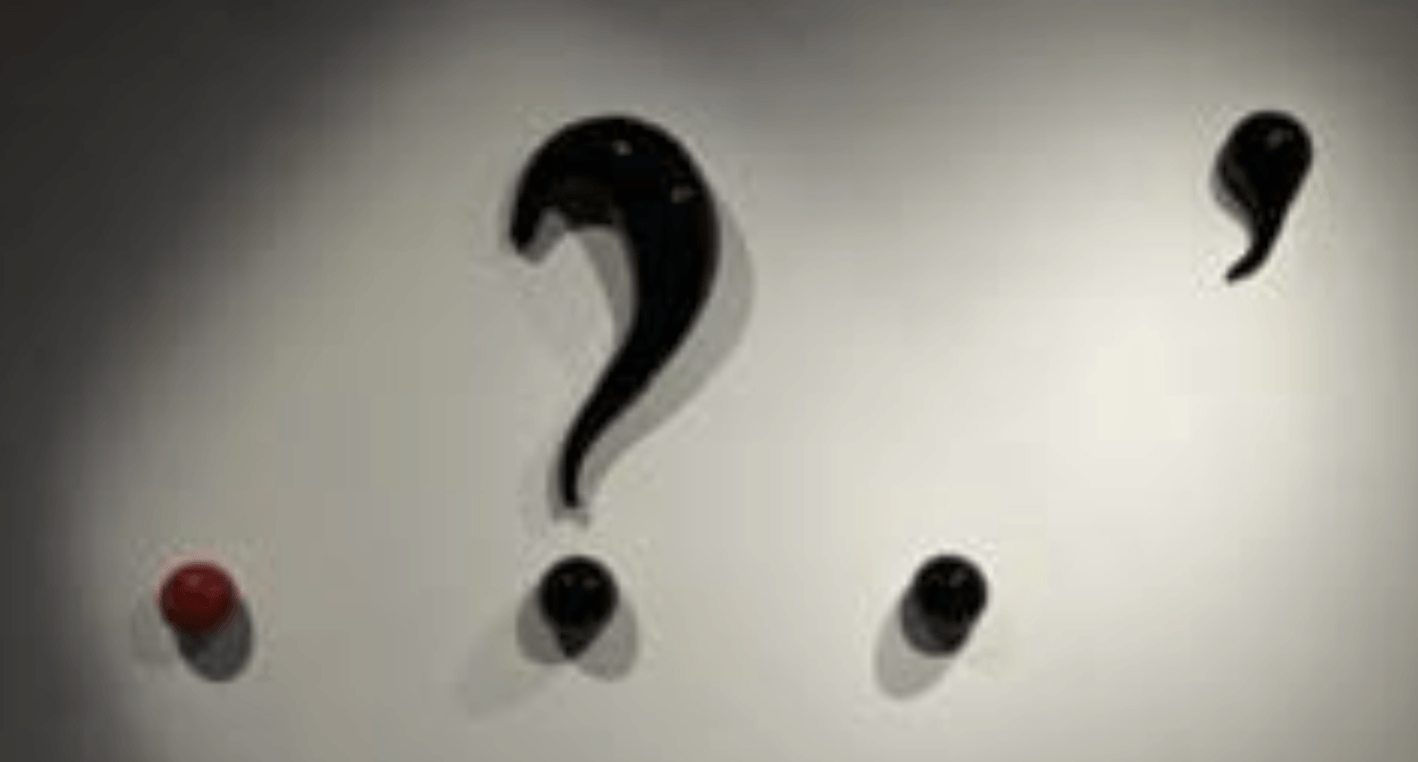
Punctuation, essential for clarity in prose, elemental when used in poetry, is the heartbeat of music. Each mark giving meaning, each able to alter meaning… Howard, an artist steeped in music, can take that small dot, and transform the shape of time. Enlarged a thousand fold and centered on the wall, that dot controls the dialogue. In black. In red. Full stop. Or she can place a question mark at eye level and turn worlds upside-down.
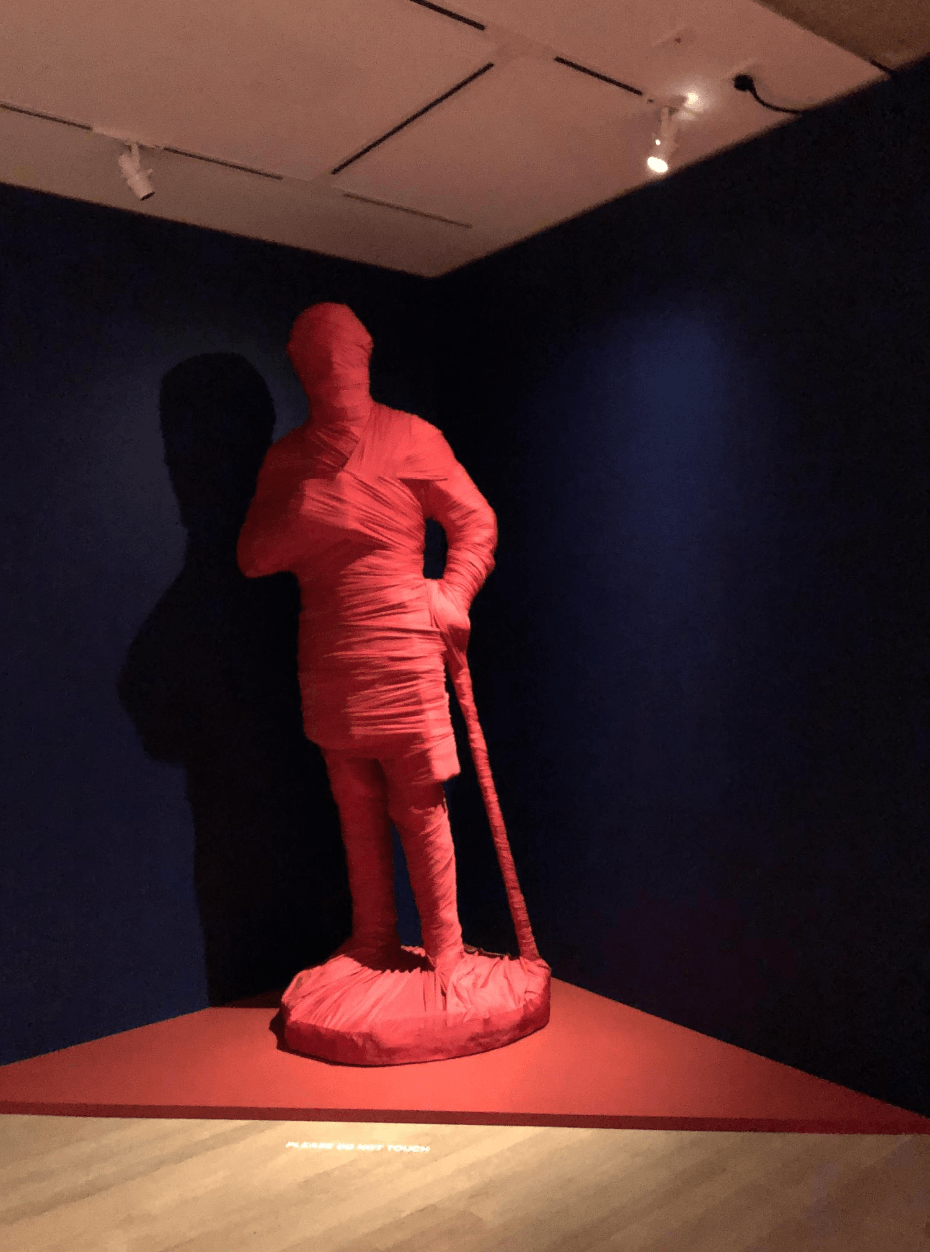
In a gallery bathed in colored light, three over-life-sized figures loom over the human. Peter Burnett: Histories/ Hidden Truths (2026), William Gwinn: Histories/ Hidden Truths (2026), and Francis Scott Key: Histories/ Hidden Truths (2026) have been wrapped – enveloped in red sheeting and bound –to transform the laudatory statue into the unidentifiable/unknown/obliterated. Still standing, they remain; but, now mummified, transformed: a red flag, a symbol of distorted reverence, a memorial to historical pain.
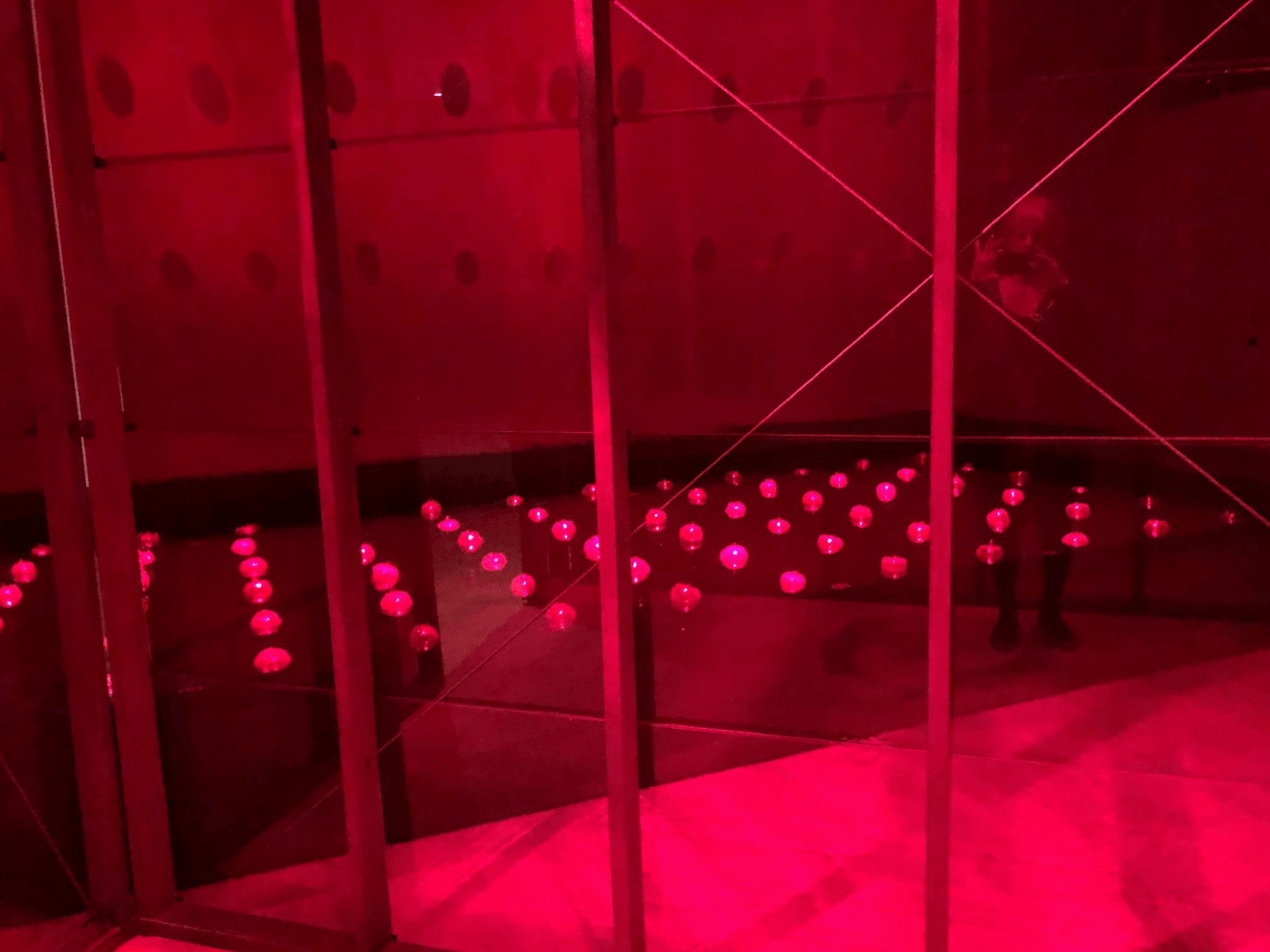
In a haunting illumination, Crossings (1997 / 2026), spreads a vista of an impassable terrain. Rendered not with chains or barbs, but rather with eggs that challenge passage with breakage, with destruction, with loss. The insurmountable and the puzzling are reflected in the huge, heavily gilded framed mirror propped to reflect the viewer, witness to the quandary of passage, the inevitability of breakage, of crushing destruction of material and spirit.
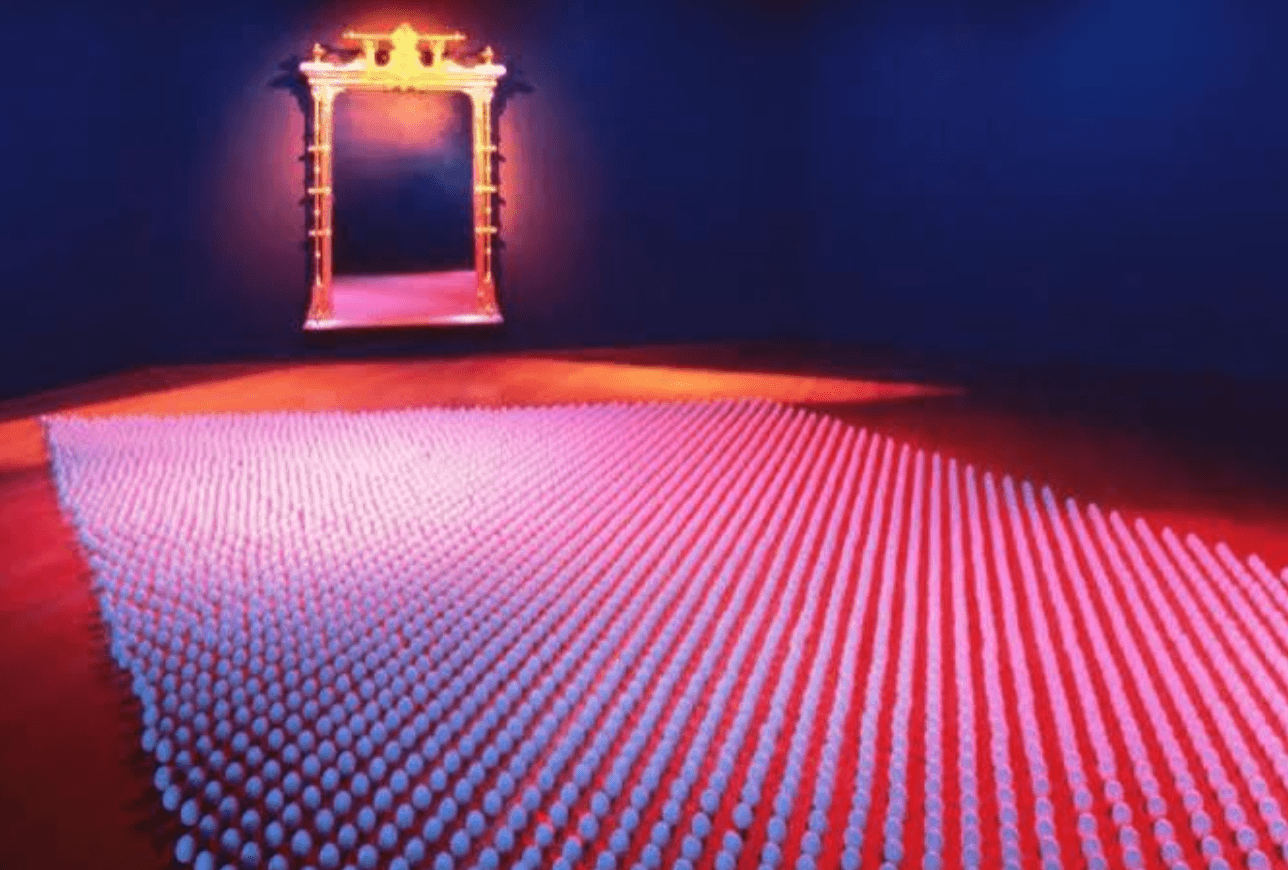
Crossing 1997
Imbuing public buildings with poetry and music, framing the landscape to capture nature’s beauty, excavating and marking history – in devoting her vision to public art, Mildred Howard creates opportunities for revelation in daily life. She magically brings the same intimacy of a family photograph out into public life and interrupts routine to interject reflection, memory, and song.
Mildred Howard, an artist productive and provoking through more than five decades of art making, has taken any and all material in hand. She has molded and shaped, cut and glued, joined and fastened. She has mined images and objects and brought these elements together to create a visual poetry that alludes and conjures beyond the page or pedestal. Her work calls out with ever expanding meaning and resonance. Mildred Howard’s art holds the memory of generations and vibrates with a spirit to animate, shepherd, and guide with profound,resounding humanity.
Mildred Howard – Poetics of Memory, Oakland Museum of California, June 12 – October 18, 2026
