
Marta Thoma Hall, Together Us, Wonzimer Gallery
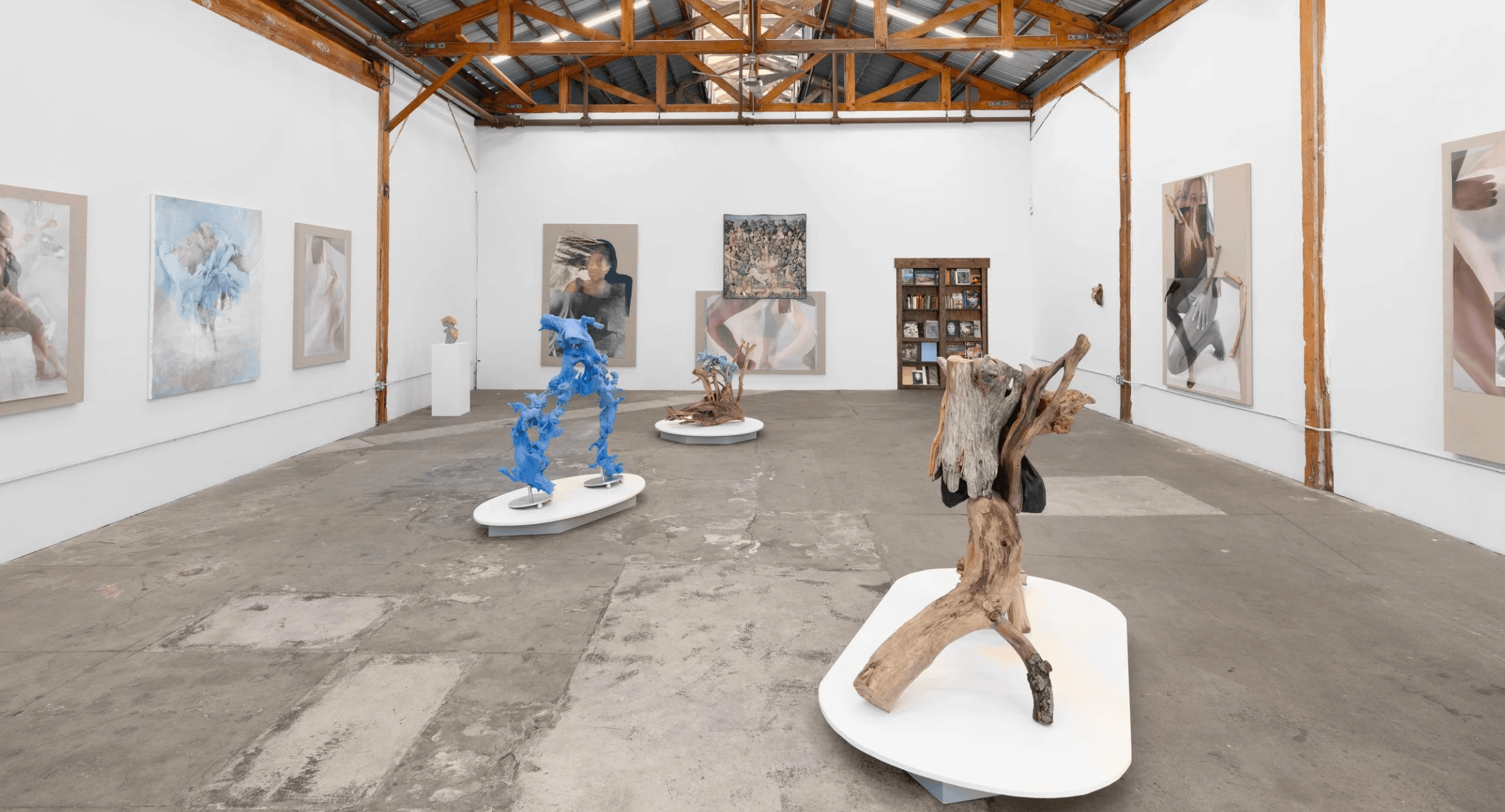
Marta Thoma Hall’s Together Us, at Wonzimer Gallery, L.A., CA
What Matters: Together Us
I kept returning to the word matter while moving through Marta Thoma Hall’s new solo exhibition, Together Us, at Wonzimer Gallery in Los Angeles—matter as physical substance, as situation, as urgency, as significance: what it is that matters. This new body of work explores these meanings through a deceptively simple question: where does one human end and another begin? Arriving at a particularly charged cultural moment—when our world is increasingly polarized by fixed ideologies—her work turns instead toward the unfixed, toward the moment of creation when the boundaries between self and other, and between the self and all matter, are at their most porous. Across more than a dozen sculptures and mixed-media works, she offers a materially inventive and psychologically nuanced meditation on how we inhabit the space between individuality and connection.
Her materials make a compelling argument for permeability. Weathered wood, steel, resin, fur, tapestry, and 3-D printed forms converge in objects that feel at once ancient and speculative, archaeological and futuristic. Thoma Hall treats material not as inert substance, but as a living language through which questions of identity, embodiment, and interdependence are staged.
The large-scale Of the Sea presents a photocollage of three women of different races and a small painted mythical koi goddess, embedded within tapestry, rusted nails, and reclaimed wood. The women’s faces are layered, superimposed, and in flux—blending into and out of one another while also emerging from the woven ground itself. The work does not erase difference so much as renegotiate it, suggesting that identity is relational, provisional, and materially entangled. The tapestry becomes a metaphor for collective memory: threads and knots joining to form an image, much as individual lives are woven into a shared narrative. At its most elemental level, the piece asks us to recognize that all beings are composed of the same substance, however differently configured. Empathy emerges here not as sentiment, but as an acknowledgment of shared vulnerability and interdependence.

Of the Sea, 2025–2026
Mixed media on tapestry on wood panel
79 x 52 x 4 in.
Thoma Hall’s practice belongs to a lineage that includes Leonora Carrington and Louise Bourgeois—artists whose work is intuitive, surrealist-inflected, and deeply embodied. Yet Thoma Hall’s integration of 3-D printing and fabricated elements gives her sculpture a distinctly contemporary charge. Each object condenses personal history, cultural memory, present tensions, and speculative futures into a single present-tense form.
Youth centers on a found teddy bear wedged into a cast-concrete, limbless torso, while a wig of synthetic fur veils the upturned face. The work is at once tender and unsettling. The teddy bear—an emblem of comfort, dependency, and early attachment—appears lodged within the body like an enduring psychic remnant, suggesting how childhood memory and formative love remain embedded within us long after innocence has passed. The concrete torso evokes the hardened structures of adulthood and experience; yet within that weight, softness persists. Thoma Hall stages a poignant tension between vulnerability and resilience, showing that what we carry from youth is never fully discarded, but becomes part of the architecture of the self.
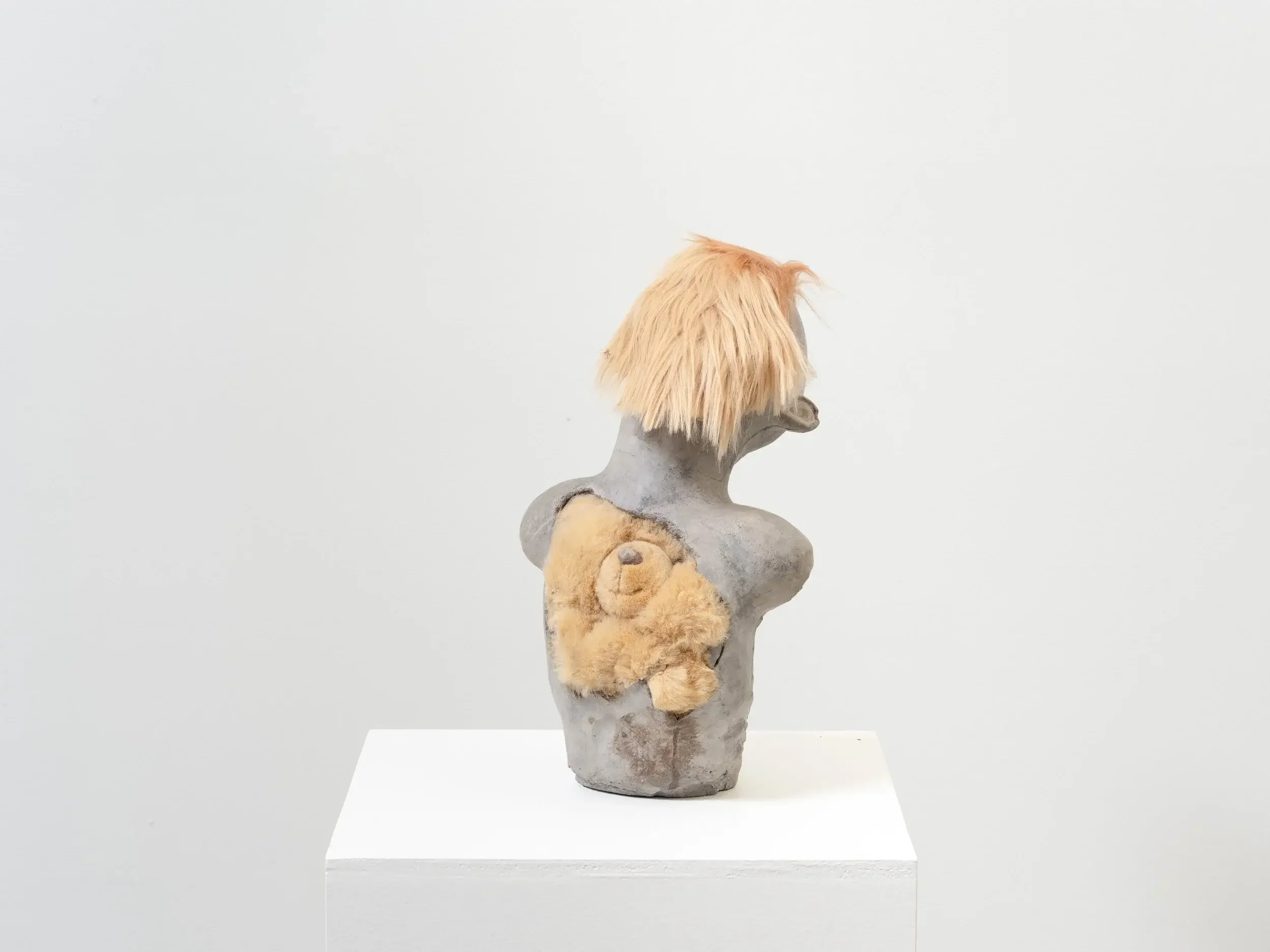
Youth, 2025–2026
Cast concrete, found objects, and fur
15 x 10 x 10 in.
Together, Yo Mama features two 3-D printed figures—one black, the other beige—emerging from a natural driftwood structure. Though distinct, the forms are locked in an intimate, almost symbiotic embrace, creating a visual dialogue of mutual sustenance across race, gender, and constructed identity. The pairing of digitally fabricated elements with organic wood stages a conversation between technology and nature, the manufactured and the elemental. Boundaries dissolve: wood becomes flesh, structure becomes body, and difference becomes the ground of relation rather than division.
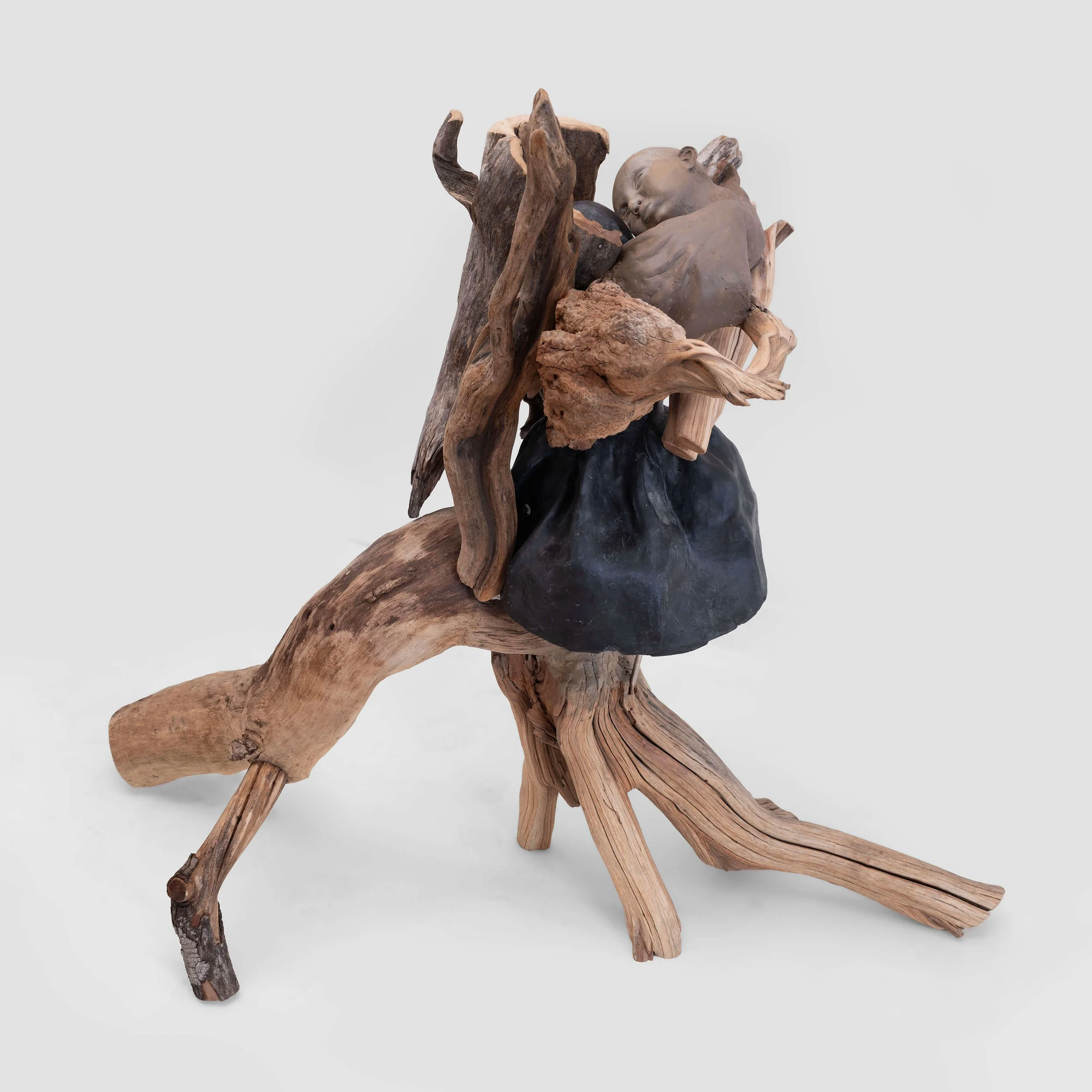
Together, Yo Mama, 2026
Wood and 3D printed
53 x 48 x 45 in.
The photocollage with paint and embroidery, Spirit of Ge, depicts several female bodies swaying and interweaving within an ephemeral blue field. Suspended in a womb-like central space, they appear both emerging and dissolving, not yet fully formed but charged with possibility. The work evokes life at the threshold of becoming, where identity has not yet solidified.
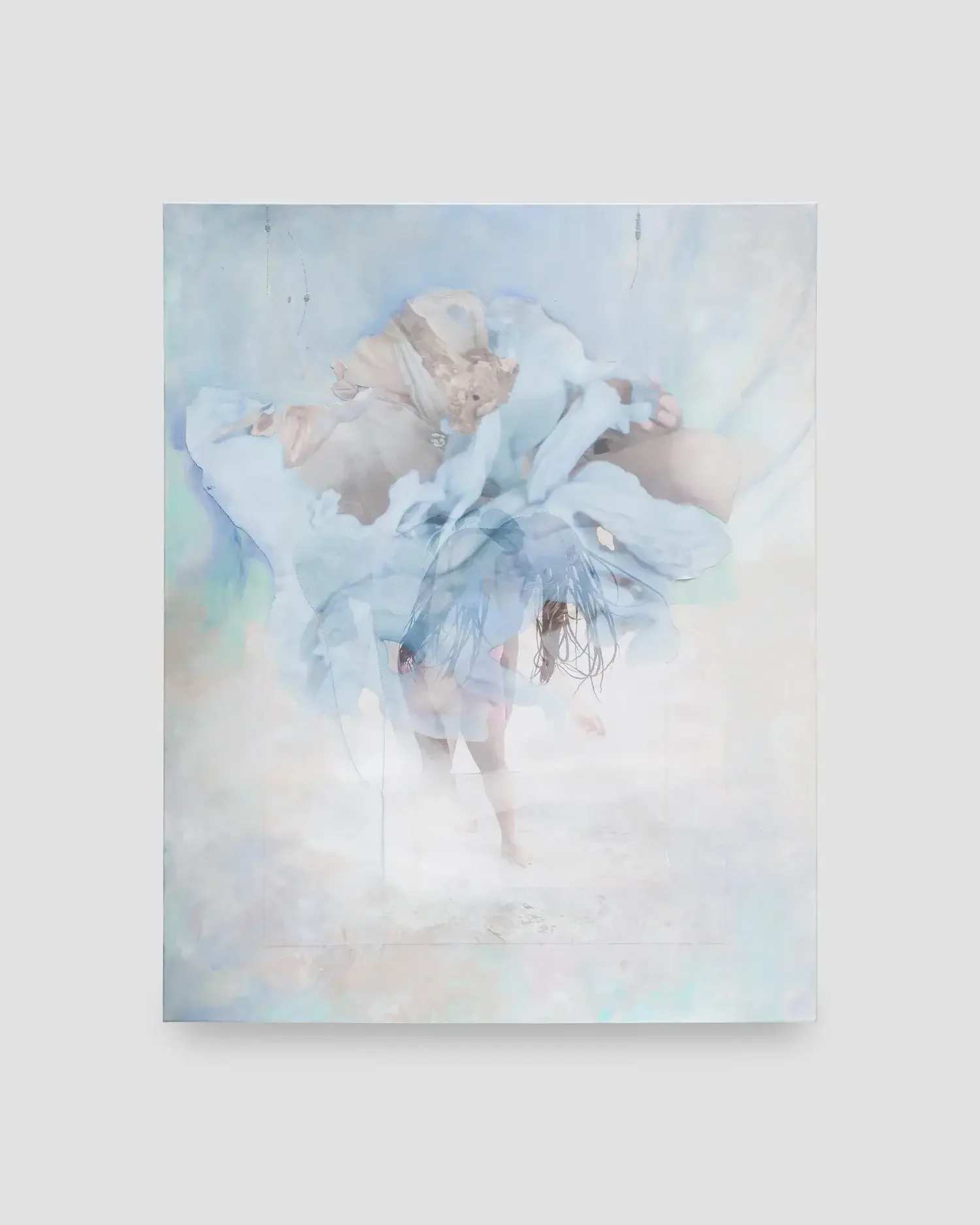
Spirit of Ge, 2025-2026
Mixed media on Canvas
60 x 48 x 2 in.
We, and everything visible in our world—and perhaps beyond it—are made of substance that is never lost, only transformed. Thoma Hall’s work returns us to this elemental truth: that we are dynamic configurations of shared material, continuously changing through time. What makes Together Us so resonant is its refusal of simplistic binaries. Thoma Hall does not equate unity with sameness, nor difference with separation. Instead, she proposes a world of porous forms, shared substance, and continuous becoming—an urgently needed vision for the present moment, where what matters most may be our capacity to recognize ourselves in one another.
