
Manic Mask, Goku Mcafee, SWIG Art & Music Bar
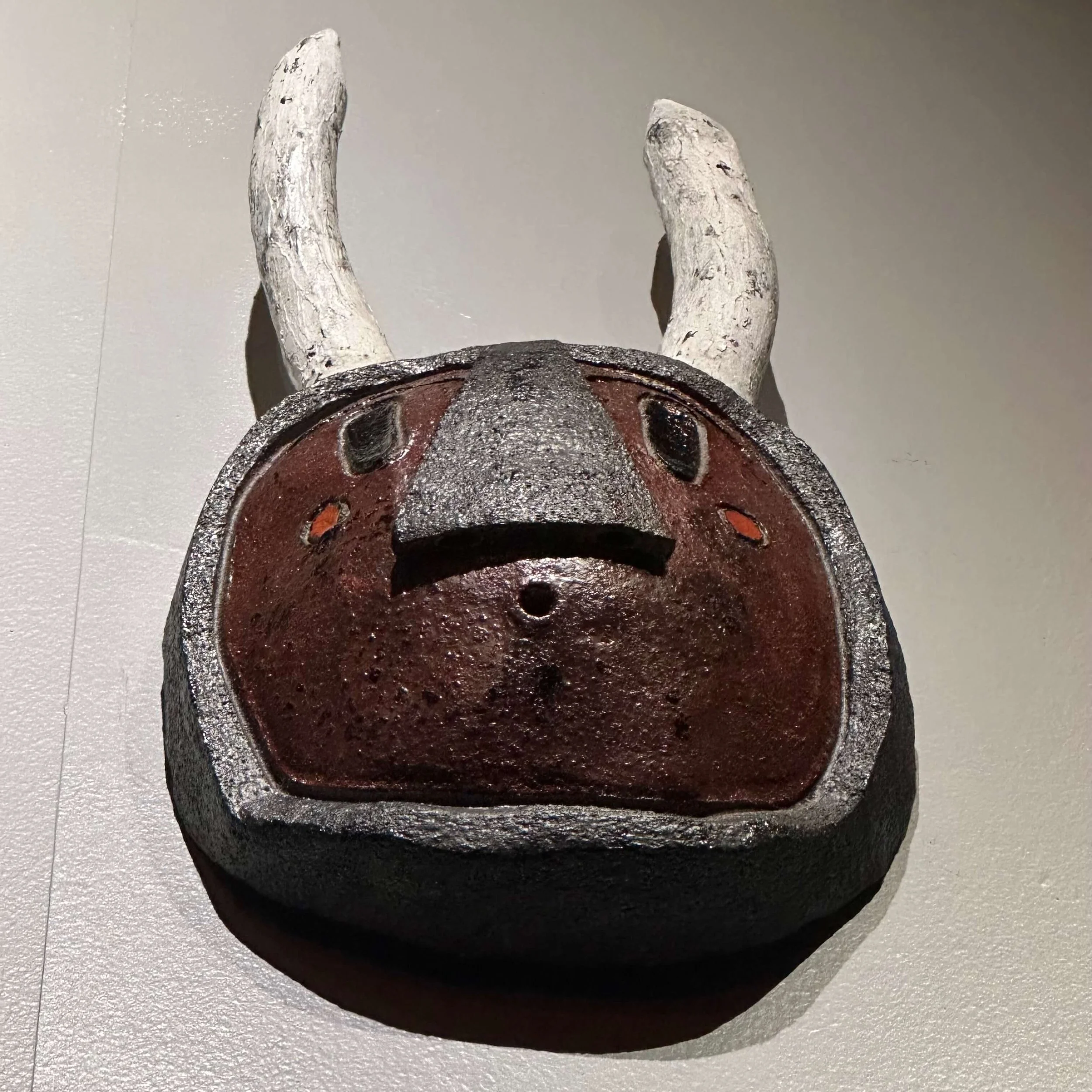
Manic Mask is a solo show by Goku Mcafee featuring medium-sized paintings (roughly the size of a small window) and ceramic masks at SWIG Art & Music Bar.
The show opened March 13, and there are multiple avenues for interpreting the work- each deserving its own written exposition. To be clear, this review is written as a cold read—a formal analysis of the pieces in the space, without deeply researching the narrative or internal logic of each piece. Here, individual works are used to unpack others, because the exhibition depends on a deeper structure—one that resists immediate coherence and unfolds through cumulative, multilayered reading. It is worth noting that while many bars and restaurants exhibit art, it is underappreciated how well SWIG serves artists: two large walls flank its fireplace, accommodating mural-scale pieces, while a back area with a lower ceiling offers a more intimate viewing experience— and throughout, the lighting is superb. The space actively strengthens the reading of the work.
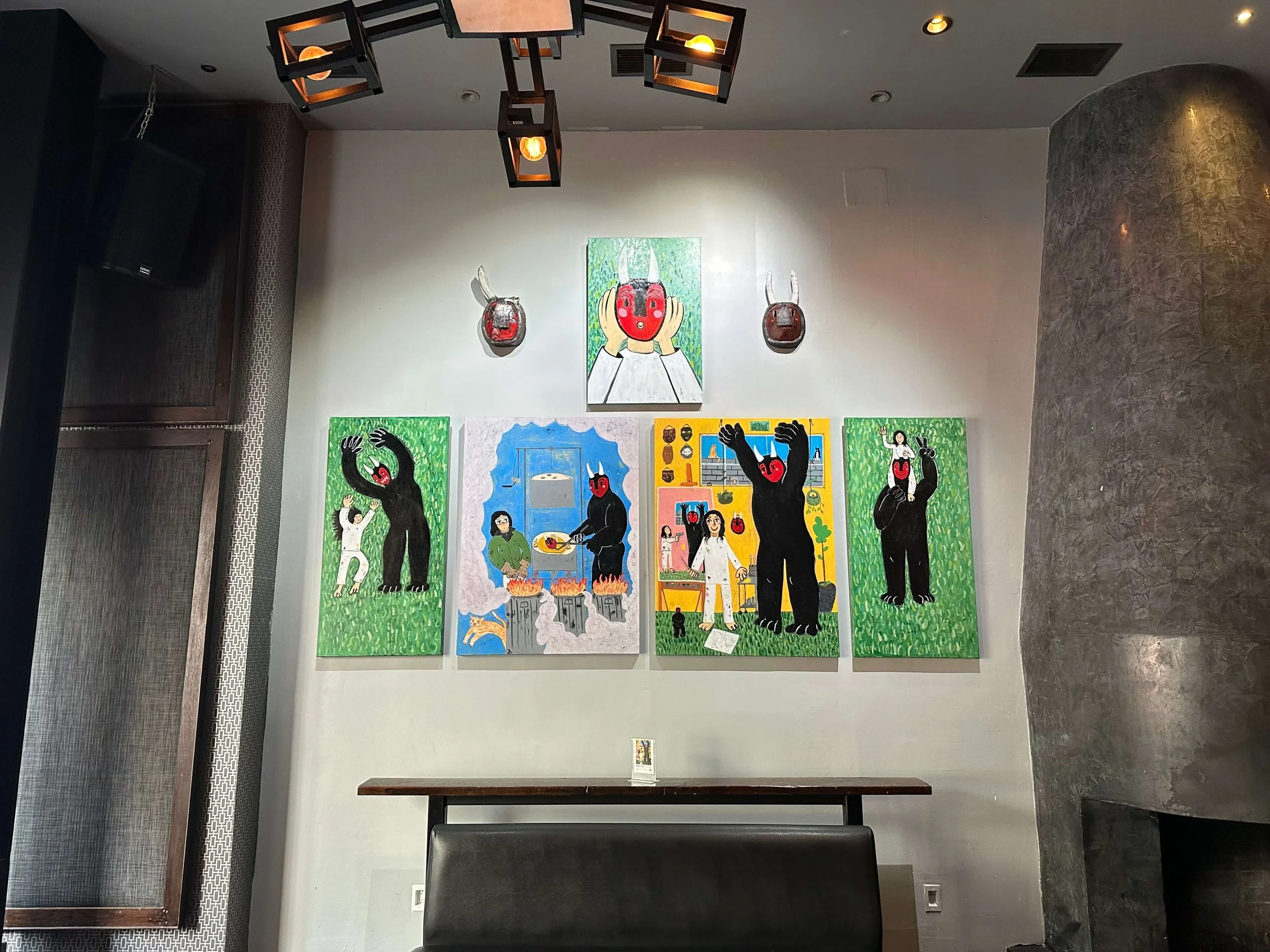
SWIG Art & Music Bar, left of entrance
The title of the show is overtly psychological, and upon entering, the viewer is plunged into the artist’s personal mythology. On the first wall to the left is a series of five paintings and two masks depicting a small, child-like figure (an inner child) alongside a devilish mask, set against saturated green, blue, and yellow backgrounds. The mask is primarily worn by a monstrous, muscularly bulbous figure, though in one elevated painting, it appears on the childlike figure, as suggested by white sleeves.
Compared to the paintings on the adjacent wall— and even to the surface treatment of the ceramic masks further back— these works possess a less explicitly tactile surface. However, they compensate —almost working double time— to establish a dense and active iconography. The relationship between the two figures, while rendered with playful innocence, produces a visceral unease. If this were a tragedy or horror narrative, one might expect the smaller figure to lose a limb when the ominous companion removes the mask. In one of the central works, the protagonist paints a self-portrait in which they hold a gun to the devilish figure, introducing an explicit threat of violence. Why must the protagonist rehearse this act?
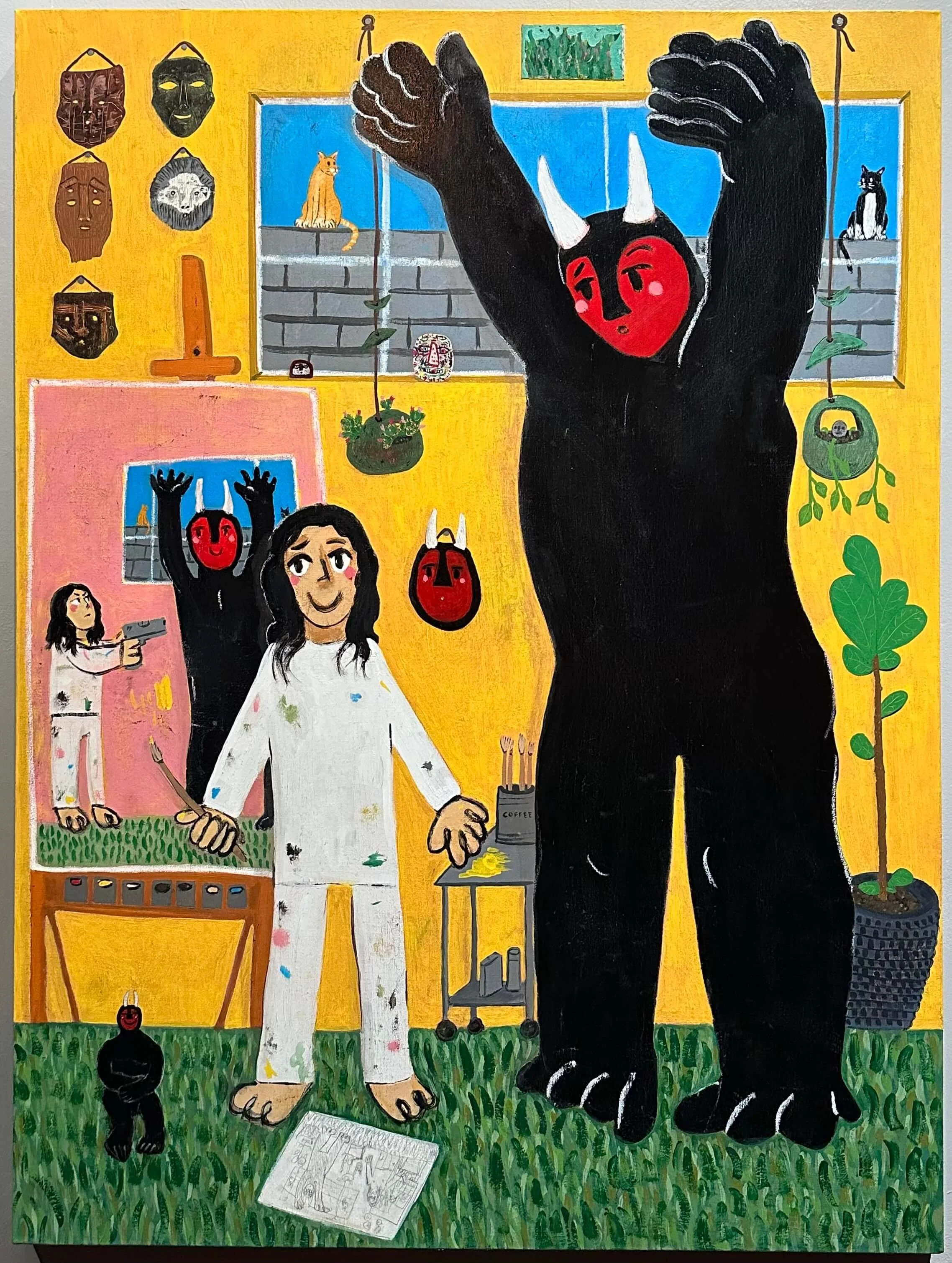
Goku Mcafee, Happy Painting, Oil Enamel on Canvas, 48” x 36” 2026
Despite this tension, the overall communication of the seven works is energetic, sustaining a visual dialogue through gesture and touch between the two figures. The viewer can infer that the roles of mask-wearer and mask-maker are being handed off.
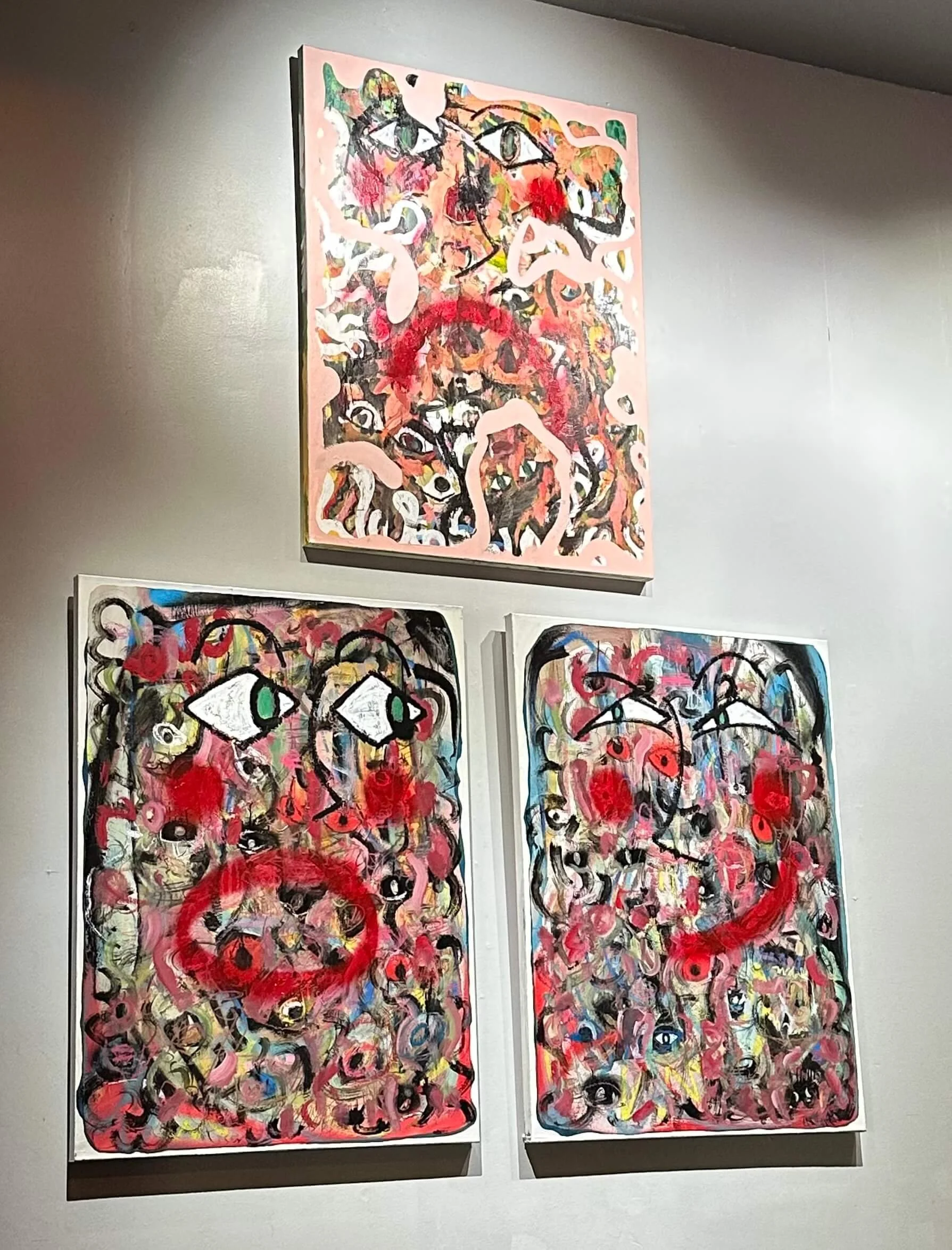
Goku Mcafee, Me, Myself, & I 1-3, All Oil Enamel, Oil Stick, Oil Pastel, Spray Paint on Canvas, 48” x 36”, 2020 - 2025
The three works on the adjacent wall do not immediately relate to the first cluster; their layering and stylistic treatment feel distinctly different. Yet as a bridge between the earlier scenes of mask-making and the back area’s multiplicity of masks, these broadly abstracted faces— pushed to the edges of their rectangular supports— read as masks themselves, operating on a different register within the artist’s universe. Beneath each singular face, a sea of smaller faces, recognizable by Goku’s distinct eyes, fills the ground with a restless, diffuse agitation . They may also resonate with what psychiatrist Robert Jay Lifton described as the ‘Protean Self’: the range of identities we hold and synthesize into a flexible, singular sense of self. In a broader moment shaped by defensive certainty, the ability to entertain multiple selves can seem less like strength than risk. Outwardly, spaces for ambiguity appear scarce, doubt is treated as weakness, and openness rarely galvanizes on command. Such pressures can isolate the deeply human desire to weigh carefully—even the voices within us.
To examine the masks in the back section is to encounter both the breadth of the artist’s creative capacity and the force of a productivity that doesn’t shy away from personality or emotion. While the masks remain consistent within a general size and shape range, their surface textures and internal structures vary dramatically. Returning to one of the initial paintings— depicting the two figures constructing a mask behind a set of metal garbage cans— it is reasonable to assume that at least some of the rich patinas were achieved through Raku firing.
Compared to the other two-dimensional works, the masks hang low enough on the wall to invite thoughts of touch, to prompt consideration of what it might feel like to wear one. While no figure in the paintings directly hands the viewer a mask, the intimacy of the back space brings the viewer into the narrative implicitly: what would it be like to take on the role handed off through the wearing of one of these masks?
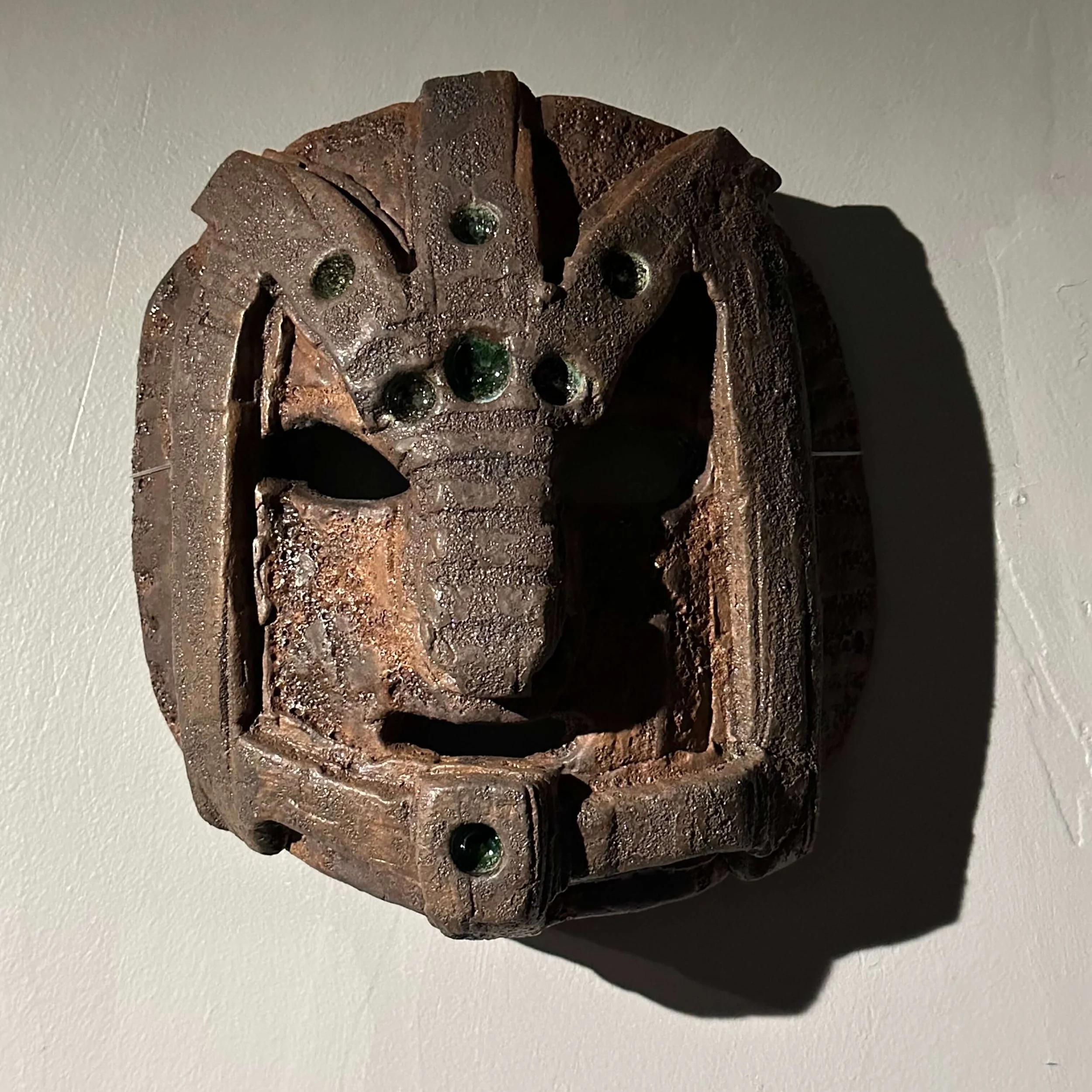
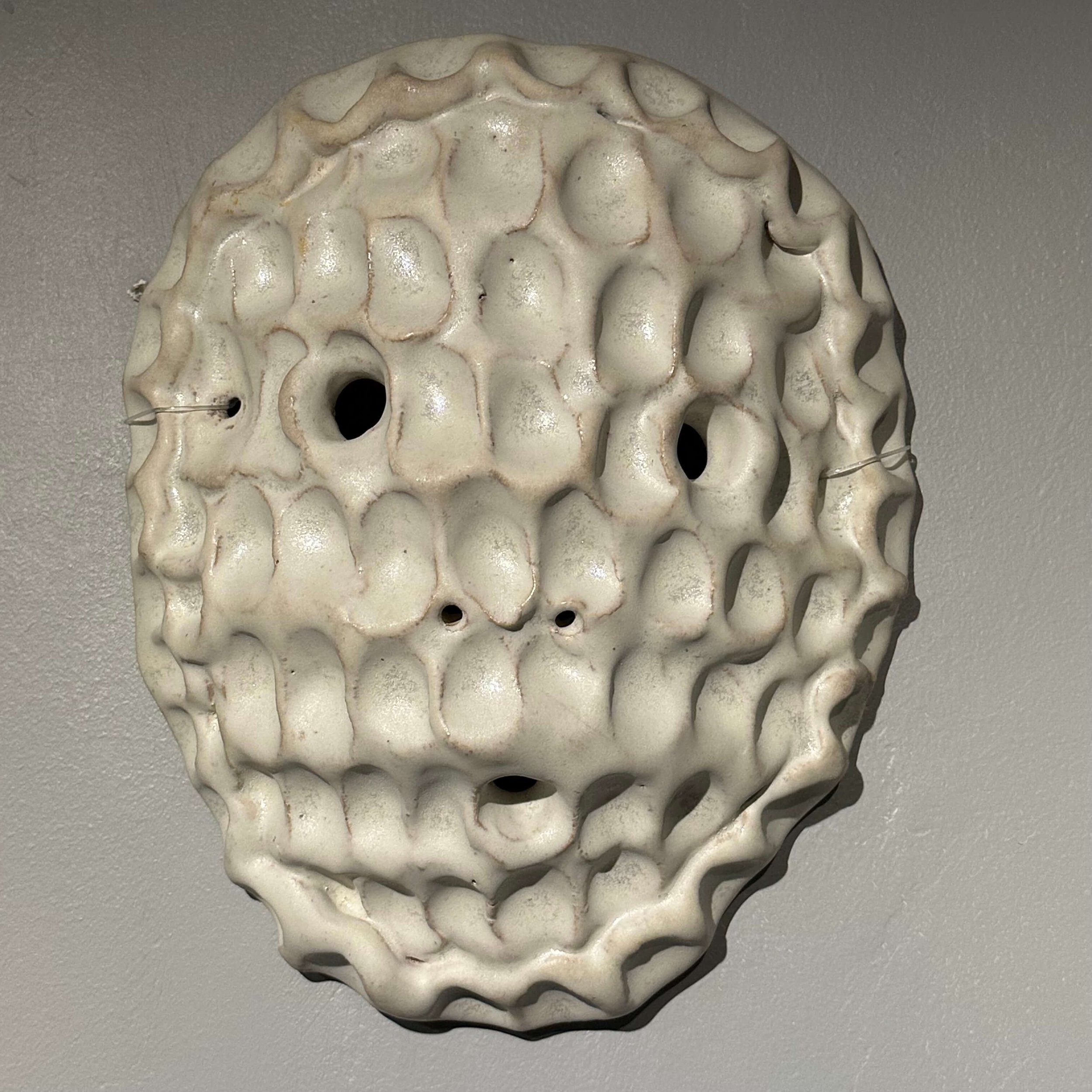
(L) Goku Mcafee, King’s Burial Mask, Glaze & Glass on Terracotta, Gas Fired, Dimensions N/A 2026 (R) Goku Mcafee, Pearl God Mask, Glaze on White Clay, Gas Fired, Dimensions N/A 2026
This is work that invites reflection on the conversations one holds with inner contradictions, demons, or competing positions, and how those internal dialogues are translated into outward presentation. From a Jungian perspective, this is the concept of the persona: a social mask that conceals aspects of the self. But this is not the full extent of what Mcafee presents. There is a deeper vulnerability at play: an invitation into the dialogue of the creative process itself, not only in art-making but in the ongoing effort to align inner and outer life in relation to others.
In an economy of accelerated signals, where meaning is compressed into moments, this work resists that exchange. It asks the viewer to linger- not for polish, but to confront the labor of negotiating the self behind the mask. This is the psychological and conceptual task holding the exhibition together; without it, the body of work risks fragmenting into discrete mediums and stylistic sections .
The work is presented in a way that supports this slower engagement, offering a genuine opportunity to commune with the pieces. To demand that each work relate to every other in a succinct, digestible way is a flattening impulse to impose on this exhibition. Instead, Mcafee allows for something less resolved but more vital: the visible transformation that occurs through exploration.
