
Enrique Chagoya on invisible censorship, keeping our humanity, and uselessness
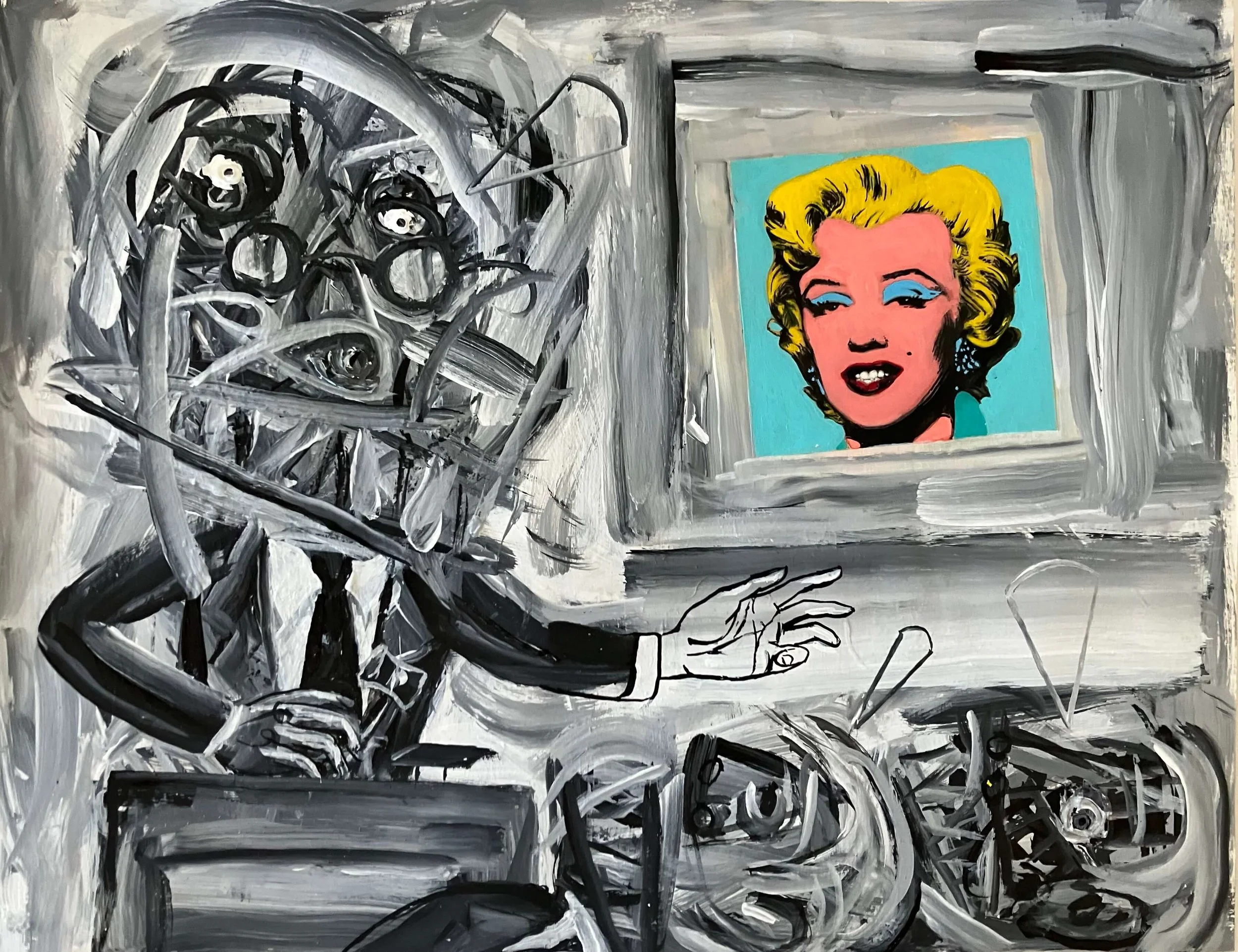
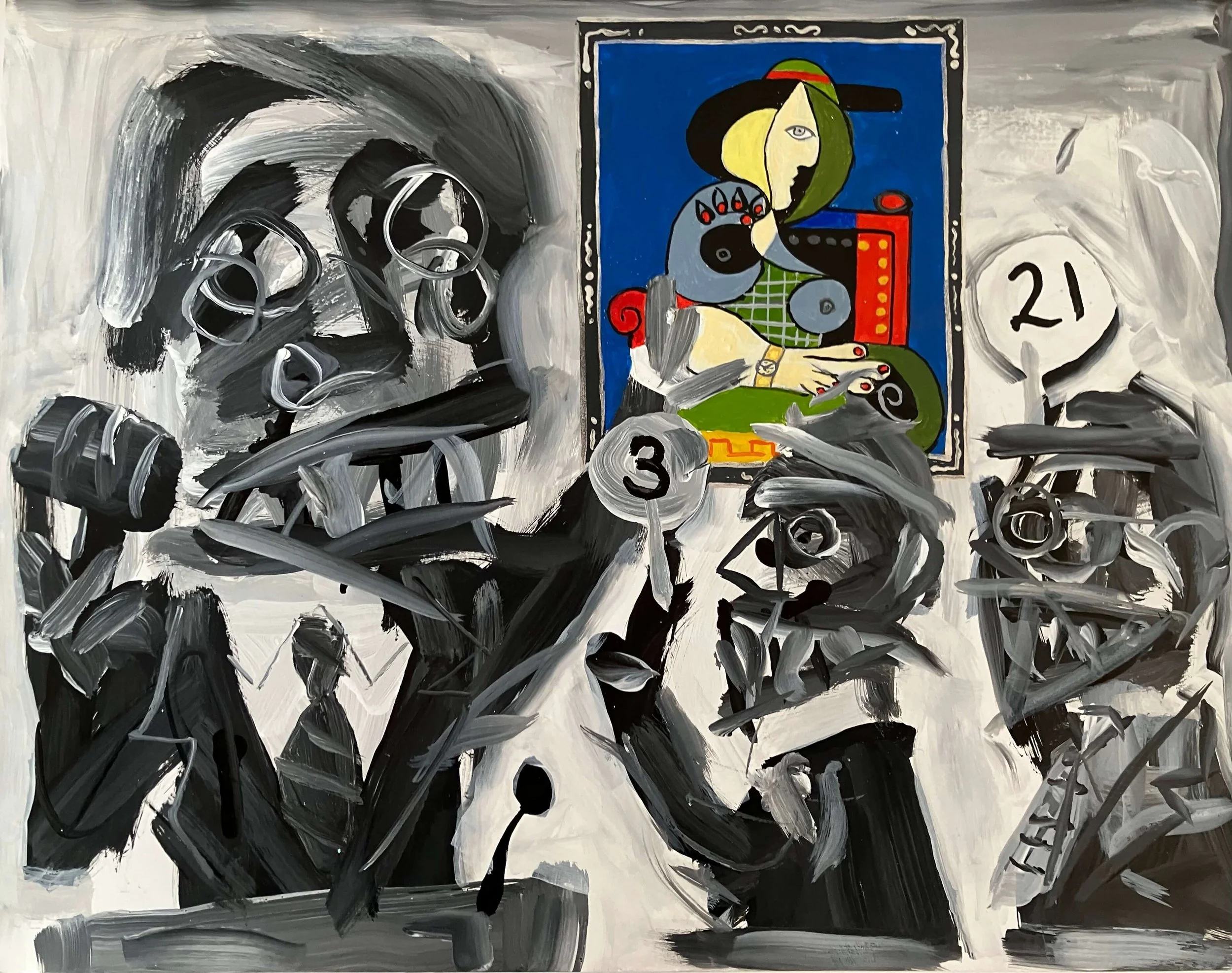
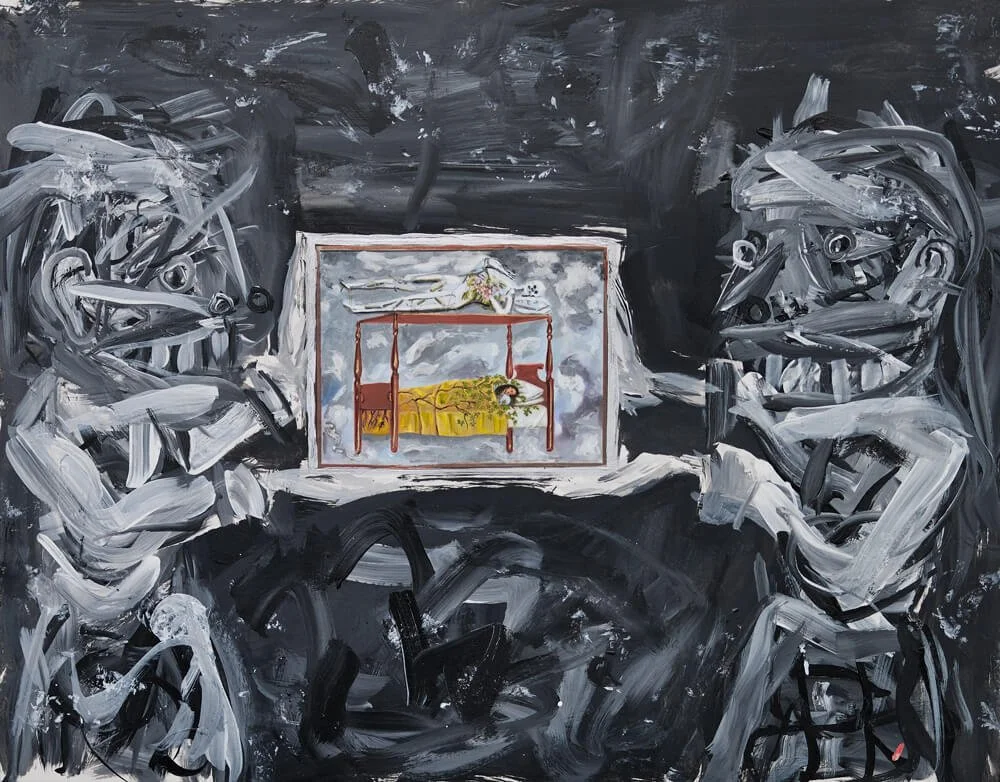
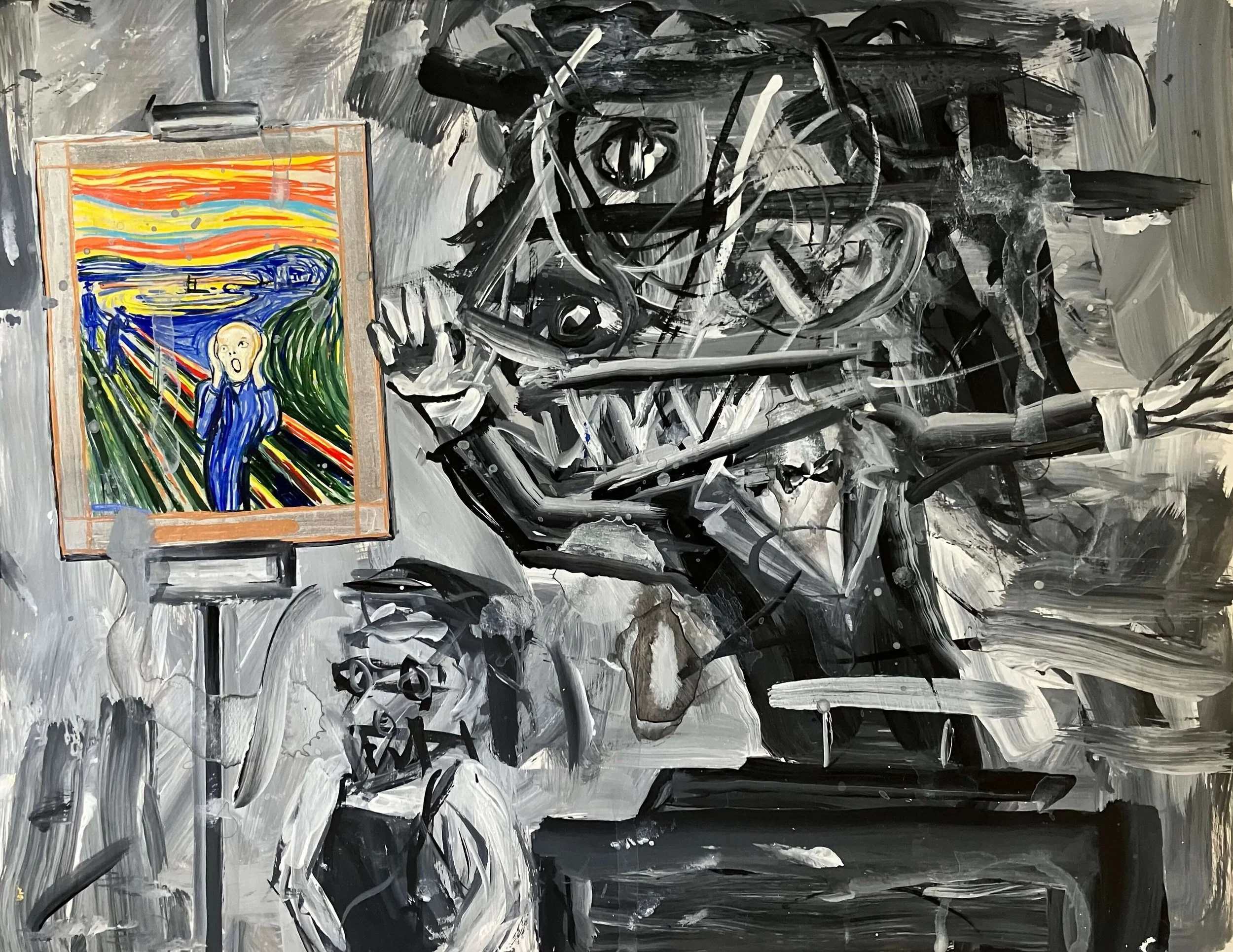
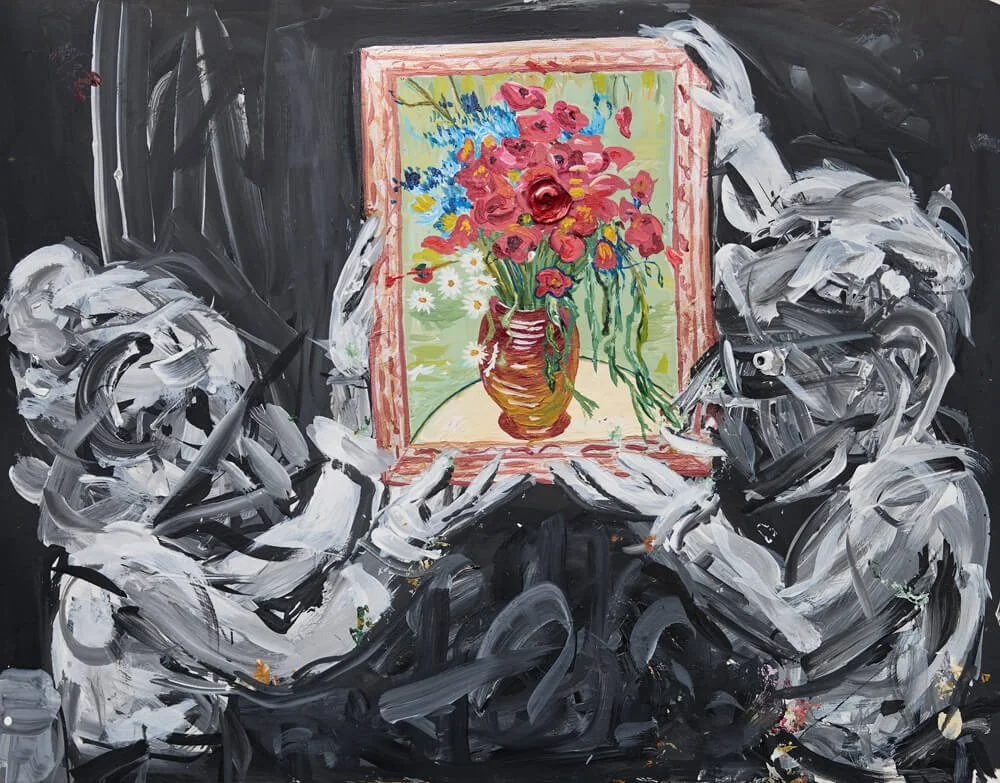
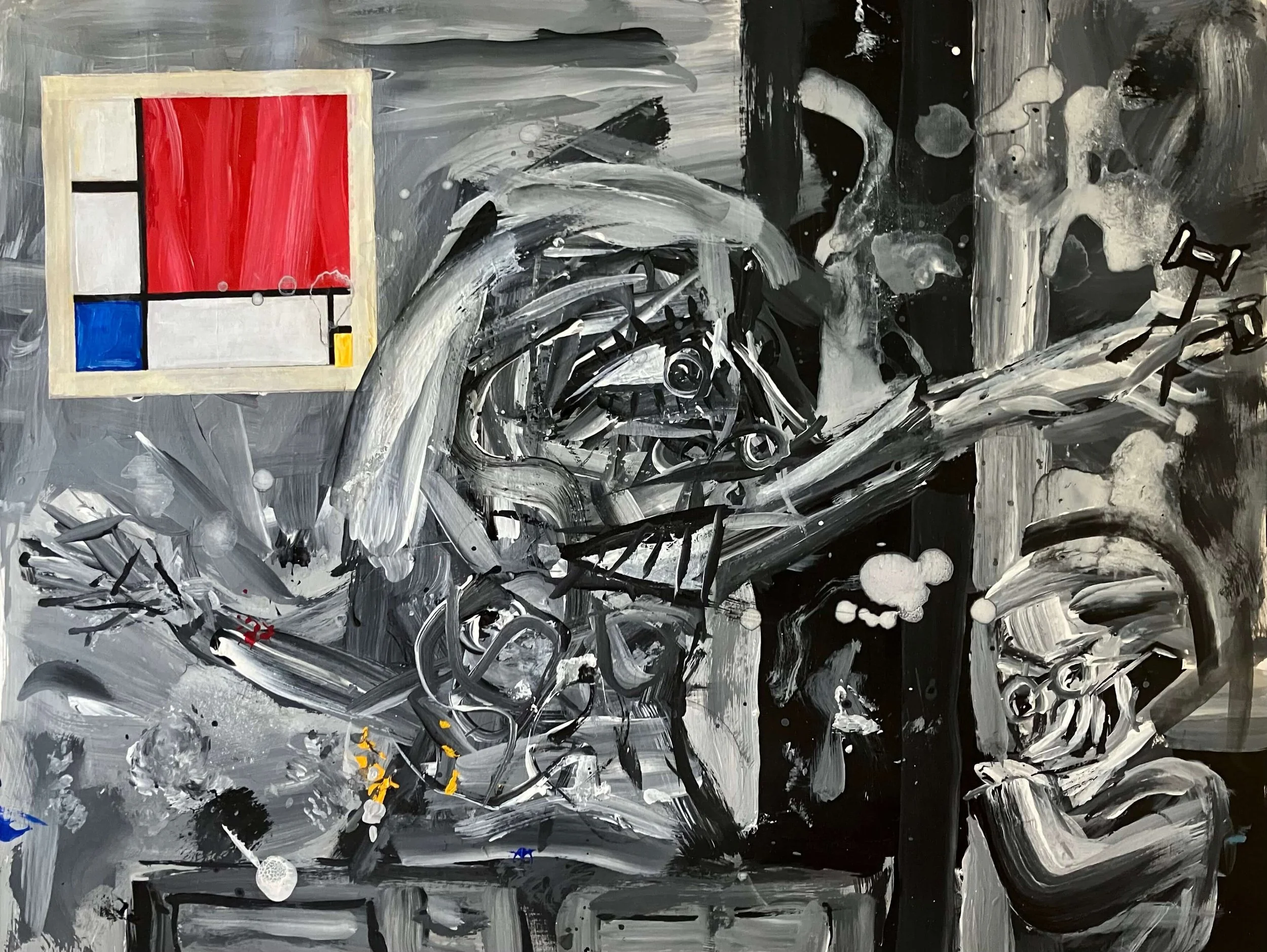
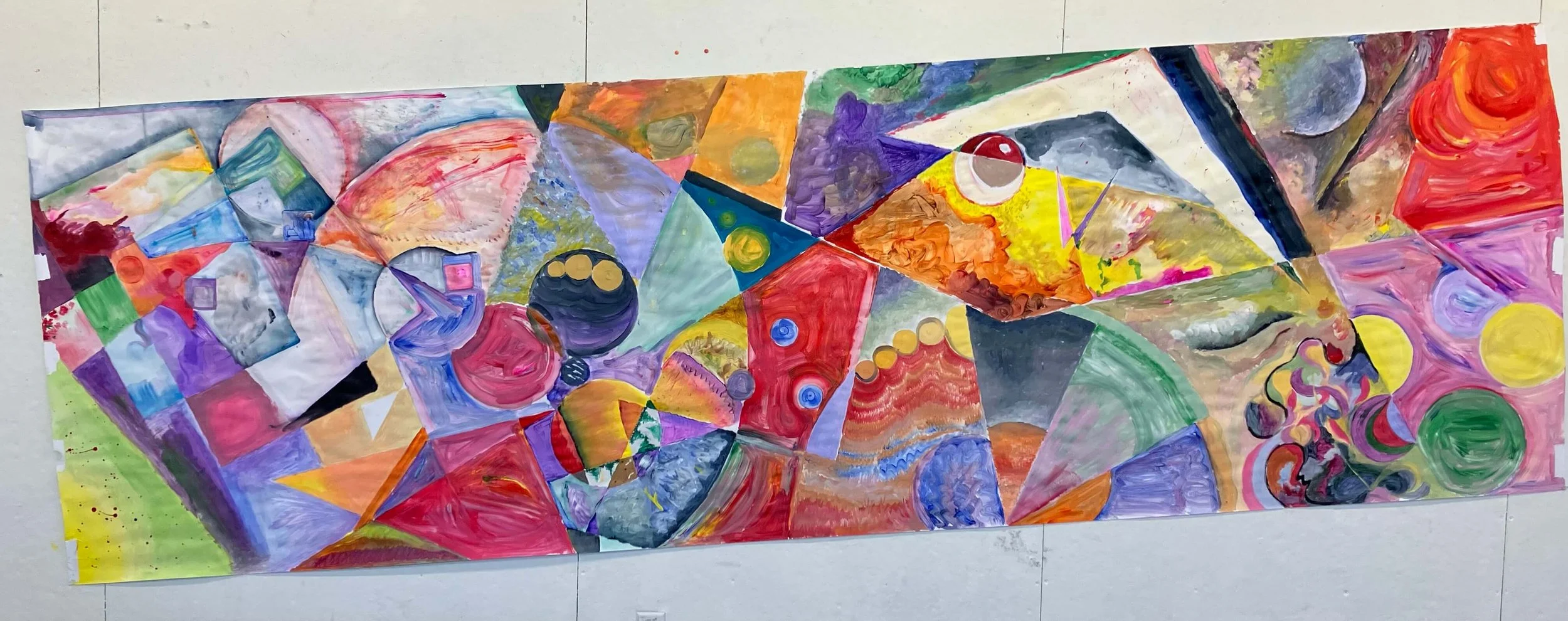
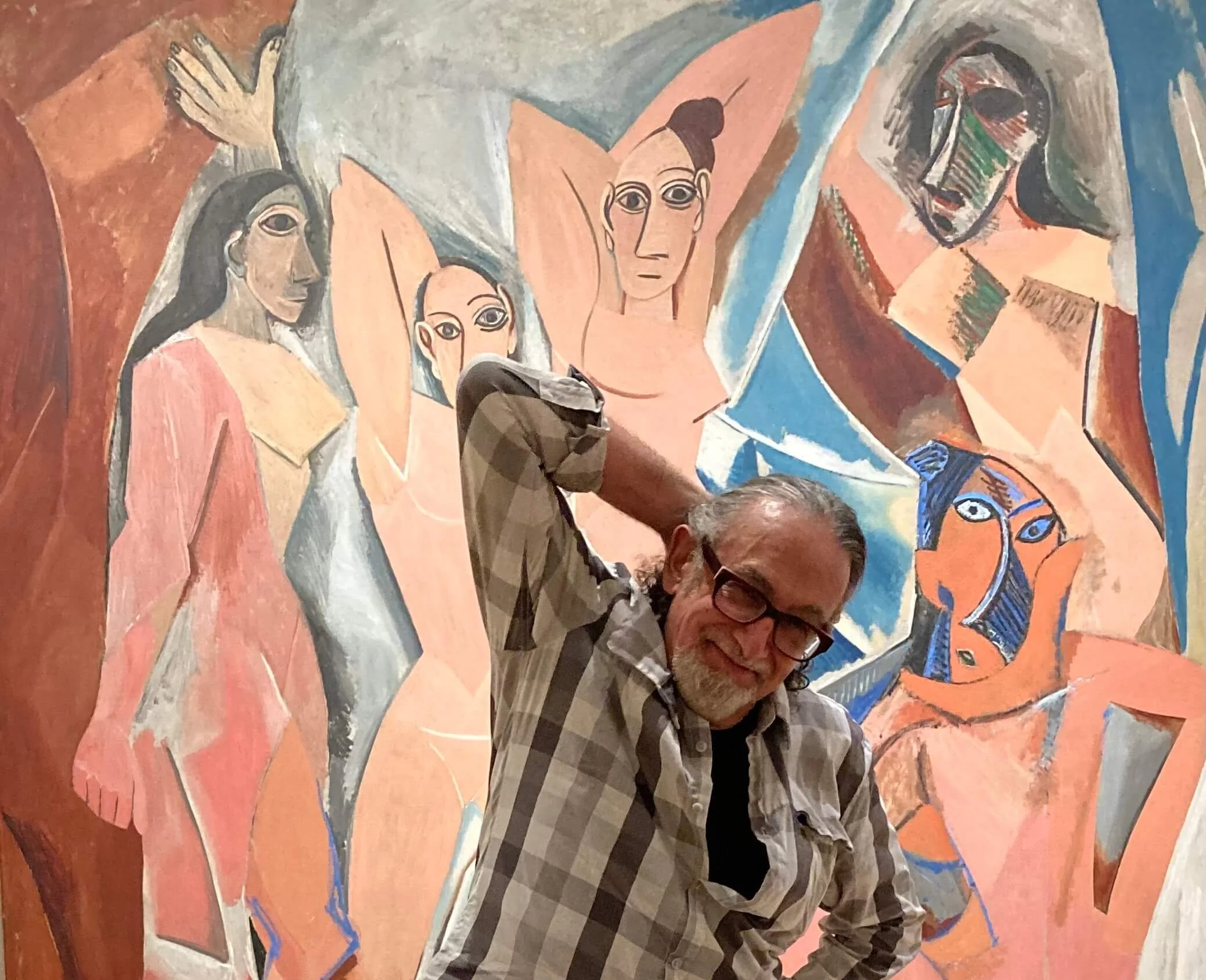
Enrique Chagoya is a Mexican-born American painter, printmaker, and educator whose work has become a major voice in contemporary political art. Born in Mexico City in 1953, he studied economics at the National Autonomous University of Mexico before earning a BFA from the San Francisco Art Institute and an MFA from the University of California, Berkeley. From 1987 to 1990, he directed San Francisco’s Galería de la Raza, and he later became a professor in Stanford University’s Department of Art and Art History. Chagoya is widely recognized for codex-inspired works, prints, and paintings that remix Mesoamerican imagery, pop culture, colonial history, and political satire. His honors include a Guggenheim Fellowship, election to the National Academy of Design, Stanford’s Dean’s Award in the Humanities, and a Tiffany Fellowship. His work is held by the Museum of Modern Art, the Metropolitan Museum of Art, SFMOMA, LACMA, the Whitney, and other major institutions.
Artist & Educator Enrique Chagoya | Interview by Hugh Leeman
The Closing of Anglim Trimble and a Perfect Storm
Hugh Leeman: Enrique, after years of being represented by Anglim Trimble Gallery, the gallery has recently closed. What was the reasoning, and what effect has that had on you as an artist?
Enrique Chagoya: It's a series of events that have been taking place in the context of the art market in general, and with this gallery in particular. The original owner, Paula Anglim, passed away about ten years ago. She left her son Philip in charge, and thanks to him the gallery stayed open, along with some of the people who had worked with Paula — in particular Ed Gilbert, her gallery director for many years. It was doing okay, though it was hard to sustain through various changes. They moved from Geary Street downtown to Minnesota Street Projects, which was a big move, and eventually took a second space downstairs. It was doing well from around 2016 until it closed last year.
Ed Gilbert died around COVID, in 2021 or 2022 — he got cancer, unfortunately — and he left the gallery in charge of Shannon Trimble. So the name changed first from Paule Anglim to Anglim Gilbert, and then, when Ed passed away, to Anglim Trimble.
Then things began to happen with COVID especially. COVID was a major storm in the art world. Suddenly galleries had no traffic, hardly anybody was buying art, the economy went down. Museums lost attendance, restaurants closed, all businesses were down. It was a huge storm, and that was one element complicating the market.
This is my personal opinion, but every time there is a recession, there is a concentration of wealth in fewer hands. Many businesses go bankrupt and are absorbed by larger ones — the big fish eats the small fish. That happened with COVID, and it happened in 2007 and 2008, when all the financial institutions needed to be bailed out. I felt it myself. My sales went down big time. I used to make as much income from art as from teaching at Stanford, and that changed in 2007 — it went down to maybe a third, and very spotty. The economy never really recovered from 2007 to 2009, and all of this has created an unstable situation in the art market. A lot of the middle-market or mainstream galleries went out of business around then.
But business has been very good for the high end, and it still is — especially for auction houses. A few auction houses in the US, Europe, and China — less than a dozen altogether — control about fifty percent of all global art sales. The rest is managed by private galleries or dealer networks. Thirty years ago, people could live off their work. Today, I admire artists who live off their work alone, because it has to be super stressful. The market goes up and down even if you're a branded artist. It's not stable for anybody.
Hugh Leeman: As an established artist, how did the Anglim Trimble closing specifically affect you?
Enrique Chagoya: All of these contexts created a perfect storm. Many galleries closed. Anglim Trimble closed — the director, Shannon, was exhausted, he complained all the time that he was tired and didn't have the energy to keep it going, especially because the times were more demanding. But in pretty much the same week or month, Rena Bransten Gallery also closed, or became more of an online gallery. Jack Fischer closed. Altman Siegel closed. Four galleries all of a sudden.
The way it affected me is the way it affected most artists in any of these galleries. Suddenly there's a surplus of artists and less supply of galleries able to sell art. This is my wild guess, because I haven't seen research on it, but it's a matter of numbers — fewer galleries, more artists whose work is perfectly acceptable for the middle-of-the-road market. At this point, because the market isn't great, it's very hard to find a replacing gallery. You'd be very lucky to have your work accepted by a gallery you find respectful of it — a gallery that really promotes the artist and pays you on time. I have friends who lost money from galleries. Some lost money and art when the gallery went bankrupt and never got either back. Horror stories.
The Most Invisible Censorship Is the Market Itself
Hugh Leeman: Let's talk about this, because it's beyond just local. In a previous conversation I mentioned to you that the gallery system, from my perception, has always been unfair, and no one wants to talk about it because they're afraid of being canceled socially by that very system. So they prefer to stay in a bad relationship because that's better, in their opinion, than being single. And you said, yeah, I agree with you. For someone who has shown at museums around the world, can you give listeners context? How does the gallery system function, and what's so unfair about it?
Enrique Chagoya: It's hard to generalize, and I'll be careful not to, because there's a spectrum of galleries from scary and terrible to amazingly great — with the amazingly great being the minority, and I'm talking from the artist's point of view, not from the perspective of profits.
I was extremely lucky to have somebody like Paule Anglim, because she knew a lot of collectors of difficult art. Not all galleries deal with difficult art — especially today, they prefer safe art, art that doesn't have a political opinion or a sense of humor, because they have to pay the rent. The more eccentric collectors are a minority.
To answer your question — in general, it's a fifty-fifty partnership on sales. In an ideal relationship, the gallery represents the artist's interests, promotes the work to collections, museums, and biennales, stores the artwork, sells year-round, and connects the artist to curators. For that, they keep their fifty percent. It can be a beautiful partnership in an ideal world. But one thing is the ideal world, and another is an economy that goes up and down.
Some galleries are run by independently wealthy owners who don't worry so much about sales — they pay attention to the quality of the art. Paula had many artists who didn't sell, but she liked the work, and eventually those artists became big names — like Lynn Hershman Leeson. Paula believed in the art. That couldn't happen with a gallery that needs to sell every show to stay open. I remember Paula trying to promote my work to other galleries in New York, and they wrote back admiring her for taking risky art. I love Paula forever for that. Reaching out to other galleries is an unusual move — most galleries don't do it. "Some even resent artists finding another gallery out of state, and they demand a cut of the fifty percent of the other gallery's share of the sale. Paula didn't do that, except a small ten percent on the first show, then she left me alone with my gallery in New York, George Adams, and my gallery in Phoenix, Lisa Sette."Paula was the exception. It's a very tough world for making a living as an artist from art sales alone.
And you don't want to be painting things you'd hate. As an artist, you might not want to do anything you don't feel passion for, regardless of whether it sells. But if you start calculating whether something will sell, whether it will alienate people, you're going to be a very unhappy artist — especially if you start selling what you don't like to paint.
Censorship, Bias, and the Frida Kahlo Record
Hugh Leeman: You mentioned the "safe artist," and you've never been that. You've been censored not just in the United States but in France. There's even a circumstance where your artwork was destroyed by someone who broke into a museum and took a crowbar to it because it bothered them. What are your thoughts on censorship in the arts and freedom of speech today?
Enrique Chagoya: There are many forms of censorship — and maybe some people don't talk about this much, but I think the most invisible type is actually the art market. If you study what sells, who sells it, for what prices — which artists, women or men, artists of color, European white artists, African American artists — you're studying what sells and for how much.
Just to give an example: the recent Frida Kahlo painting that sold for fifty-four million dollars was a record price for any female artist ever. Yet people weren't celebrating it, because male artists from the same period — say, a Surrealist of similar quality and the same size — sell for at least twice, if not three times, more than Frida Kahlo's painting. That's a bias from the collectors themselves, who tend to be male, maybe business people. I don't want to stereotype who buys art — it could be somebody money laundering, I have no idea.
Hugh Leeman: Do you think, in Frida's case, we're looking at a self-supporting, vicious cycle? That a lot of the people buying are an investment class, and if Frida Kahlo doesn't sell for as much, it's harder to inflate the value and manufacture more value in it, compared to a Mark Rothko — so it becomes a hard cap ceiling on some artists?
Enrique Chagoya: Exactly. The market itself shows biases — and not only in auction houses. Any artist who makes a big statement gets it in the face. Think of Daumier, who went to jail more than once for making funny cartoons of the king. He was censored by the art market and by the king. But I'm beginning with the most invisible one, that hardly anybody thinks about. People say, oh, that's just supply and demand. It's not just supply and demand. Supply and demand is affected by branding. Some brands bring more demand even if the art itself is no better or worse. If you have a handkerchief where Picasso made a doodle, it's a hundred thousand dollars because Picasso did it. If I make a masterpiece on a handkerchief, nobody's going to pay a hundred thousand dollars, no matter how great it looks."
The branding is biased. Whether an artist shows in the Venice Biennale, which is a branding biennale — the Biennale in Havana is not going to bring an artist to a Gagosian Gallery. There are branded galleries. A mega gallery in New York versus a community gallery here — a solo show in each has nothing to do with the aesthetic value of the work and everything to do with the branding value of the name. And because there's unequal branding in gender, cultural background, and content, there's a selection, and it tends to be unidirectional. By definition, discrimination means choosing. So if it's choosing one type of art over another, my question is: is that censorship? It feels like censorship to me. The thing is you're just left out. And then you can go to more direct censorship, where you're left out by more direct means.
Hugh Leeman: It seems like the art world is, in some ways, inherently a world of gatekeeping — and that gatekeeping is what allows this very unique economic engine to function, in which it manufactures objective value on a subjective quality like beauty, for a product that has no real value. Canvas and paint has no value, but you can make it worth millions if you get enough people believing in it.
Enrique Chagoya: "Yes — the aesthetic value versus the exchange value. They're opposites. The aesthetic value is something spiritual, for lack of a better word, because I'm not religious — an element of subjectivity from the inner world of a human being that is invested in the work. Most artists really invested in the work don't even think about sales; it's the last thing they want to think about, because it's alienating and takes over your practice. The material part is the opposite — idealism versus materialism. They can be a partnership, but it's delicate, and the main power is the material world.
Frida Kahlo never sold anything close to a few thousand dollars in her lifetime, let alone fifty-four million. Even her estate doesn't benefit from it. Same with Van Gogh, who barely sold anything, and now a Van Gogh goes for a hundred nineteen million. He was a struggling artist most of his life, supported by his brother Theo. There's an unequal exchange between power and creativity, where the artist gets the short end.
Back in 1973, the collector Robert Scull bought many Rauschenberg paintings for a thousand or two thousand dollars each, then flipped them a few years later for hundreds of thousands — one he'd bought for two thousand he flipped for a hundred fifty thousand. He made a few million; Rauschenberg didn't get a penny. When Rauschenberg complained, Scull just laughed and said, "I made your art more valuable, be thankful." And Rauschenberg answered — I saw it on video — "Well, you buy my next painting, okay?" Of course that never happened. He and James Rosenquist tried to get a bill through Congress requiring artists to receive royalties from all sales. The auction houses lobbied against it and it lost by a few votes. But in 1977 California created the Royalty Act, giving artists five percent on sales in California. That was the practice for a few years, until an appeals court struck it down in 2018. So we don't have that benefit anymore. In other creative industries, artists get royalties — if somebody writes Harry Potter, the writer becomes a millionaire from royalties.
Retiring from Stanford and the Weight of Academia
Hugh Leeman: After years of teaching at Stanford, you've decided to retire at the end of this academic year, summer of 2026. What was going on at Stanford that influenced you to retire?
Enrique Chagoya: Things change over time, especially the amount of commitments academia takes from you. Stanford was very supportive of my work — it gave me an amazing studio. When I started thirty-one years ago, in 1995, it was before the internet exploded. Email was just beginning. We had one faculty meeting every three months, just six or seven of us over a lunch break, and then I had the rest of the week to work on my exhibitions in my studio space. It really supported my career.
But there's a point where things began to happen, and moving fast forward to today — I have at least double the work, maybe triple, that's how it feels. Monthly faculty meetings, joint faculty meetings. Sometimes we have meetings to prepare for the meetings. We have to be on many committees — promotion committees, DEI committees, committees for murals on campus — because that's part of what you do to get promoted, from tenure track to tenure to full. You have to play more roles. Some of us become director of the art practice area, some become chair. Imagine all that administrative work where you don't have time to make your art. By the time you get to the beautiful studio, you don't have the energy — or even the time — to do the work.
Hugh Leeman: Were all these extra meetings enhancing education outcomes for the students?
Enrique Chagoya: Some of the meetings are productive, I have to say. But we're biting off more than we can chew. And now there are more cuts. This was maybe not news publicly, but the university endowments got their taxes catapulted. Endowments are what bring new faculty, pay for medical and technological research, and pay tuition for our grad students — our grad students don't pay tuition, they're paid for by an endowment. All these endowments used to pay one percent taxes. This administration raised them to twenty percent. That, in itself, is another form of economic censorship to me.
Hugh Leeman: So the raising of endowment taxes has a clear effect on the university's financial capability. You mentioned Stanford has started laying off adjunct teachers. Is that connected?
Enrique Chagoya: Yes, one hundred percent connected — less money to hire people. We had to get rid of quite a few lecturers. Many adjunct faculty could not be reappointed. People on scholarships, PhDs — I worked with somebody from neurosciences to prepare one of my classes, and the PhD student lost their scholarship. I ended up paying them from my research account, otherwise I couldn't have taught the class. All of this happened because the taxes were raised and the NEH grants were eliminated. Grants for the sciences, for medical and neurological research, were basically cut. There's an ideology that the sciences are too threatening to the values of the new monarchy trying to develop in this country. They don't want science — they want conspiracy theories, religion, extremism. They see universities as places where independent thinking is too threatening, including the sciences, even though the sciences benefit everybody, including the people doing the censorship.
So censorship is happening through economic measures that punish people who don't align with the government's policies and cultural brainwashing — and from there into actual censorship, like what happened with the Smithsonian and the Kennedy Center. The Smithsonian censored a painting by Amy Sherald, where she painted a trans figure as the Statue of Liberty. I'm glad she refused to have a whole show based on that kind of censorship. That's another layer. Beyond the economic censorship there's cultural censorship — the culture wars against LGBTQ people. And what are they replacing DEI with? The opposite. Non-diversity. Inequality and exclusion. I don't know why the Democratic Party doesn't call it what it is.
Hugh Leeman: When you say they're becoming "woke" themselves — who is "more pure than thou" in this case?
Enrique Chagoya: The conservatives are being more pure than the liberal-minded. Because if you recall, the term "woke" was born from the left, criticizing other leftists who were too politically correct — more politically correct than you, that's very woke. That's how it started. And now the ultra-right is appropriating the language of the left to attack the left, which is very skillful. But the problem in our political system is that the Republican Party is already appropriated by the MAGA crowd — loyalty to the president like a cult of personality — and the other party has become Republican-light, always wanting to reach across the aisle, not wanting to be too radical.
The Devastation of CCA, SFAI, and the Bay Area Art Scene
Hugh Leeman: You've connected the funding cuts at Stanford, the laying off of adjuncts, and your own decision to retire. That's not getting the same headlines as the closures of CCA and SFAI. What are the long-term implications at Stanford, and adding the closing of CCA and SFAI, what are the implications for the Bay Area art scene?
Enrique Chagoya: They are devastating. There are fewer artists coming out of the Bay Area now. The closing of the San Francisco Art Institute and CCA was also affected by COVID. The Art Institute was already in financial trouble before COVID because it overexpanded with a building at Fort Mason, and when COVID arrived they had no students, especially foreign students from Asia and Latin America, and no income. That was a major blow. That's when people wanted to sell the Diego Rivera mural — I protested that sale. It created a conflict within the faculty and staff that ended tragically with the school closing a couple of years later. Same with CCA, little by little running out of money, affected by a bad economy and a shift toward programs pushed by parents paying astronomical tuition who want their kids in professions that can make a living. Not the arts, because the arts are now riskier than ever.
It's a cycle that affects the supply of artists and the culture in the Bay Area. I hope I'm wrong — I'd love to be wrong — but I think a lot of people now go to the East Coast to study art, and artists are moving out of the Bay Area because things are getting very expensive with the new tech boom and the AI explosion in San Francisco. I see it in graduate applications, where the art really lacks strength on concept and development, unlike other years, because a lot of artists are no longer coming from places like CCA or SFAI. So the quality of artists arriving in academia seems affected by all of this.
I hope it eventually shifts, because art existed before art markets. There's an industry that comes from art, but without artists there would be no auction houses, no galleries, no art historians, no art programs in academia. Without the artists, none of this art industry would exist.
Art as a Way to Keep Your Humanity
Hugh Leeman: In our previous conversation you mentioned a sense of hopelessness, even beyond the art world — a hopelessness in the world right now. What do you tell your students, and what would you tell people, to reclaim their sense of hope?
Enrique Chagoya: What I've been saying lately is: you have to see the arts as a way to keep your humanity. Not necessarily a way to make a living, but a way to develop your creativity as a human being who, among other things, makes art. As humans we're a complex of many versions of ourselves — writers, curators, theoreticians, some into economics like myself, or cultural anthropology. Eventually everything connects to your creativity, to your art. That's what I tell my students.
Even if you go into mechanical engineering or computer science, the only thing that's going to save you from AI Armageddon is the humanities. Because we think not only with our head but with our gut — they say the gut is the second brain — and that's nothing you could create in a robot. You cannot create the living experiences we have as social beings. Our consciousness is an experience, like language — we didn't invent language, we inherited it from our social experience. In your lifetime you get heartbroken, you get super happy, you lose a friend or a relative to illness, you grow older, you lose and gain many things. That drama affects the way you think, the way you invent, the way you discover new knowledge. If you work in computer science and don't study all of this, you'll create a boring, mechanical way of thinking. You might get all the information written about a subject when you ask a question — including the conspiracy theories, all mixed together — and AI is going to be a sycophant. It's always going to agree with you. It's never going to say, I don't know. It just makes up stuff. It sounds really good, but it's not informed by the life experience we have through biology. I don't know if we'll ever program that, because we'd have to give biology to a machine — a heartbreak, a family, children.
Hugh Leeman: We've become obsessed with efficiency, and forgotten that the most profound things in life are not efficient — love, human connection, creativity. I want to read something you said to me: "You have to feel that you need to make art as it humanizes us. Being a poet, a painter, a musician, you have to do it because there is an element of joy. If you feel guilty, even better. Focus on the benefits of thinking visually. The arts are about improving our neuroplasticity." Tell me more about this neuroplasticity, and the benefits of the process.
Enrique Chagoya: The humanities improve everything we do. Even in mechanical engineering or computer science, you'll make more complex work — the creativity is in the planning. Arts develop that creativity, and that develops what's called neuroplasticity. I learned this teaching a class on art and neuroscience last year in collaboration with a neuroscientist, Clara Bacmeister, a fifth-year PhD student. I did a lot of research and found a book called Your Brain on Art, by two writers from Johns Hopkins who have a neuroarts lab (Susan Magsamen and Ivy Ross). They research very seriously the effects of art on stressful mental conditions and the role of art in healing — how art can be a way to deal with anxiety, depression, PTSD. Though I caution my neuroscientist friends that that's true as long as you don't have a deadline, because once you have a deadline it becomes very stressful — you can't even sleep.
We visited places like Creativity Explored in San Francisco and Creative Growth in Oakland, and saw the exhibitions at SFMOMA that included their work, along with NIAD from Richmond — artists who made amazing art. These places in the Bay Area were some of the first in the whole country, if not the world, to use art to give meaning to the lives of people who are neurodivergent. We loved it. One of my students from that class is now going to work at Creativity Explored — Sisely DeLisi, a great student.
Neuroplasticity is something we all have, and it develops with experience. It's a condition we have for life, so we can keep learning and absorbing new experiences, hopefully until the end. It affects our whole human health, because it connects to all our systems. When you have a healthy mind, you have a healthy body.
So I designed exercises connecting color to meaning. For instance — don't think about it — what would be your color for pain?
Hugh Leeman: Red.
Enrique Chagoya: Red, okay. And your color for joy?
Hugh Leeman: Yellow.
Enrique Chagoya: Great. And neutral?
Hugh Leeman: Green.
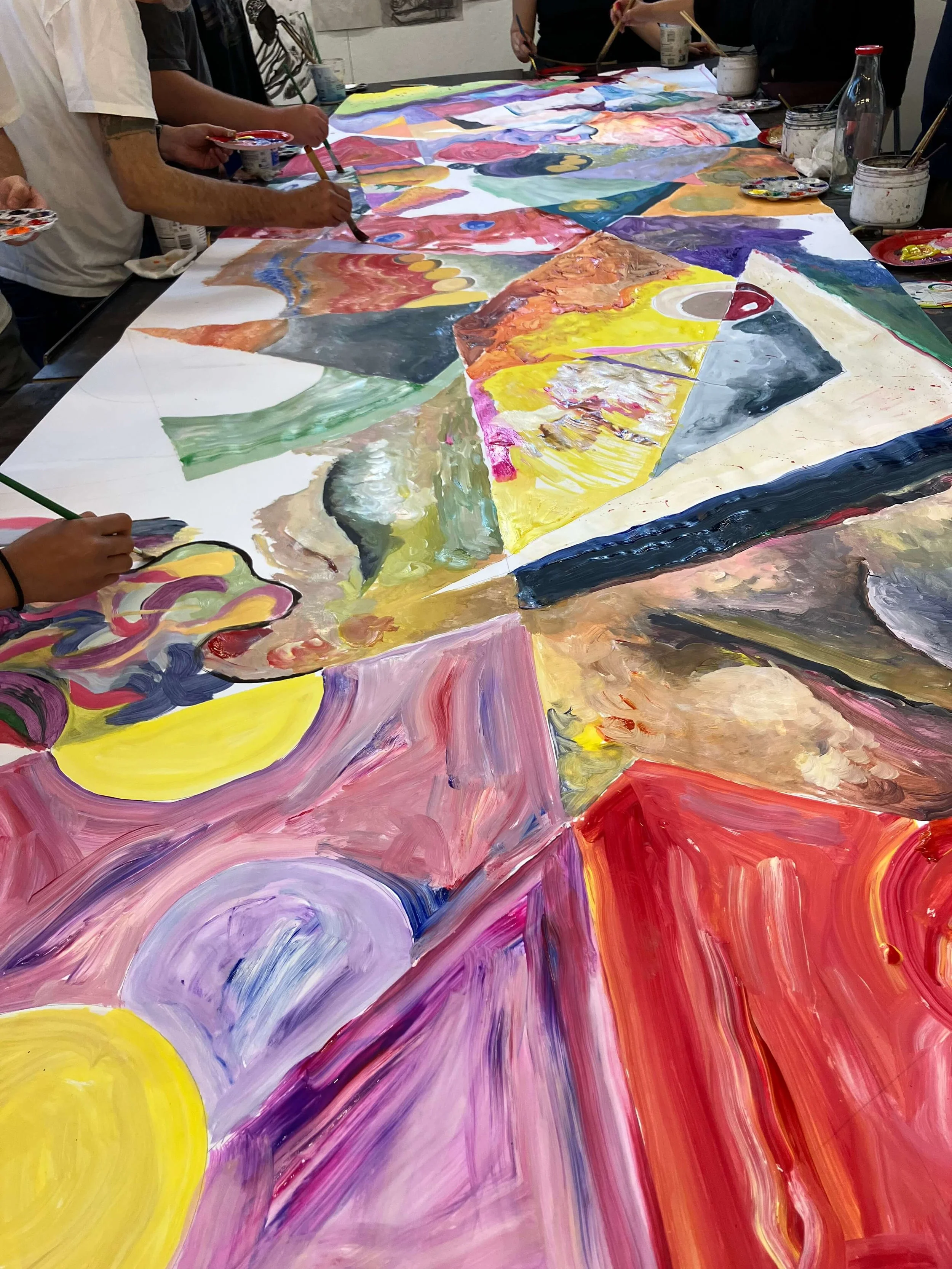
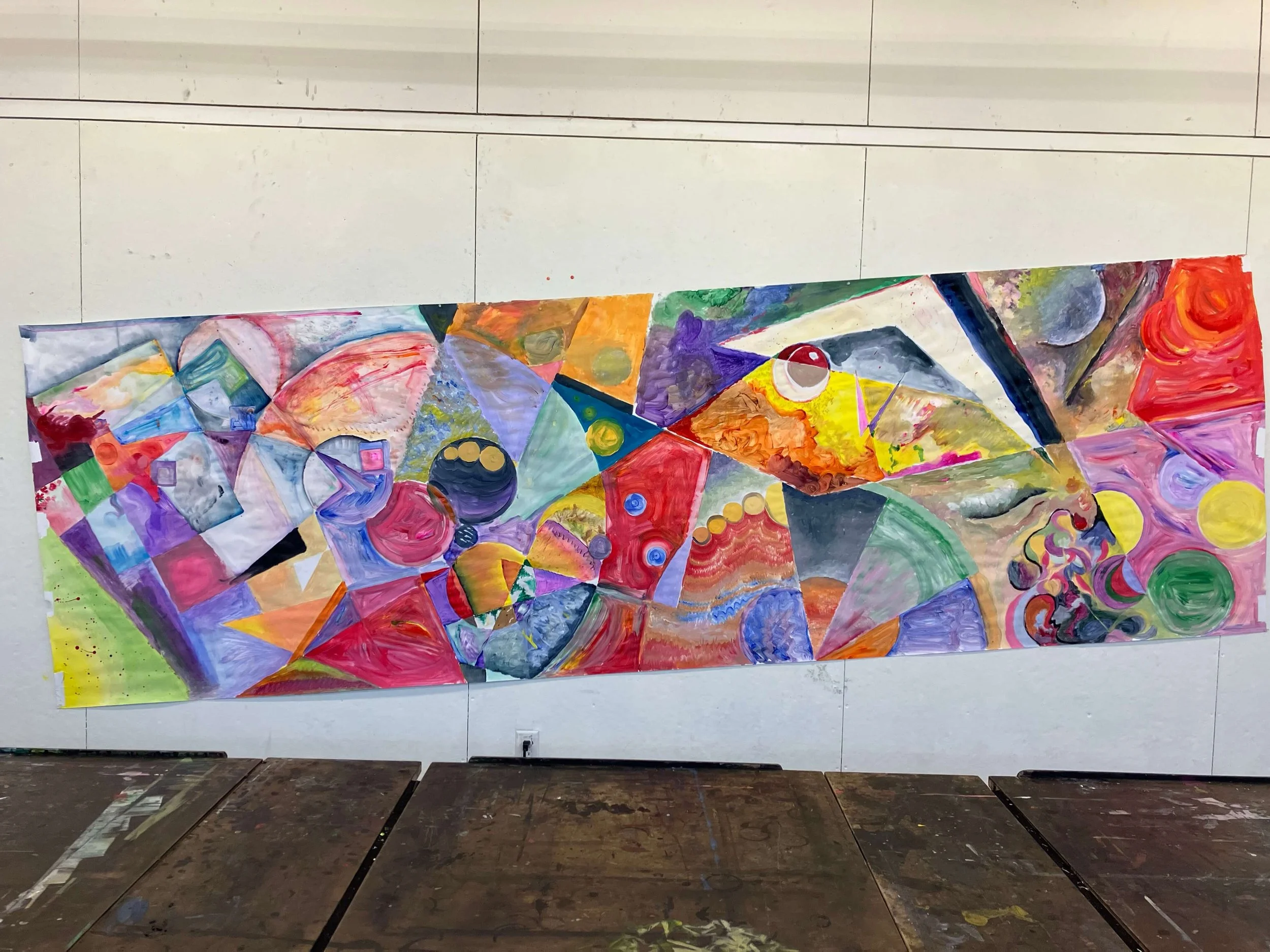
Enrique Chagoya: Green, okay. I gave a list of these binaries — fear, courage, neutral; noisy, quiet — and everyone made a chart of colors. Then I play mostly contemporary music with no lyrics, music that isn't popular, because I don't want anybody recognizing it, so I did a lot of work to find something new. Then we all — including myself — make compositions translating the sound into a color that reflects the emotion the tone gives you. We did this collaboration across two classes, and both times it was like a meditation experience. We all enjoyed the practice and ended up doing really interesting work.
The Profundity of Uselessness
Hugh Leeman: I love this idea. So much of what we've talked about circles around negativity and hopelessness — and so much of that is market-driven, connected to making a product. What you're describing now is the profundity of process. There was art long before there were art markets. I think of our deep ancestors making images on cave walls, most of which weren't even being seen — deep in caves. There was something ritualistic about it, allowing people to connect not just with each other and themselves but with something bigger than the self, that we might today call God. And this idea of color with emotion is almost like synesthesia, translating sound to a color, to a human connection.
Enrique Chagoya: Exactly. I even talk about synesthesia because I have it — with the days of the week. To me this is why we make art. Not only because it makes us feel good, but because it's healthy for your mind, and that's why it makes us feel good. There's a point where you get hooked and you cannot stop doing it. It pays you back. That's why we make art. If somebody's suddenly interested in showing or selling your work — okay, that should be the byproduct, but not the end of the art or the artist. And if that never happens, you'd better find another way of income. We all have to. A second job — teaching, being a curator, an art critic, an art historian. Or inventing a new way for art to be distributed beyond the art market, which would be a good creativity challenge for all of us.
There's a reason we make art, and it's very positive. It's about play — play without being self-conscious, without expecting anything. If you don't like what you did, paint other things on top of it until suddenly it happens. In my case, I make satirical images that make me laugh, and I don't care if they don't sell. I should care! But I hope I don't get canceled for that. The other thing I've been doing is the art with my students, which has no purpose — it's for no museum, no gallery — but it ended up making a beautiful statement of color. We studied abstraction, like Sonia Delaunay and her circles, and did something in that direction, but without thinking about anybody or making any statement — just listening to music and translating it into whatever subjective colors we feel.
With my own synesthesia — you could ask me ten years from now and it's the same — Sunday is a Kelly green, dark but bright. Monday is a light creamy yellow. Tuesday is a dark red, red red. Wednesday is yellow. Thursday is an earthy orange. Friday is a bright orange. Saturday is white. I think there are connections to my childhood — Sundays were the park, so I see green. Saturday was the only day I took a shower, so it's white. Monday is like the moon — in Spanish it's lunes, and luna is moon. Martes is Tuesday, and Mars is Marte — so I imagine Mars red, the red planet. Miércoles would be Mercury, Wednesday — though Mercury isn't yellow, somehow it became yellow. Thursday is Jueves or Jupiter. Viernes, Friday, I think is Venus. Saturday would be Saturn, and I don't have a reason to make Saturn white. But again, all of this is useless.
Hugh Leeman: Enrique Chagoya, I love the uselessness of this — and I connect it to the idea of play. Maybe the profundity of life is uselessness, and the absurdity of our marketplace is its obsession with usefulness. Thank you so much, Enrique.
Enrique Chagoya: On the contrary — thank you.
