
Jerry Lyles, Outside, Print-Matrix Space, Upstairs Studios at Blue Star Arts Complex, San Antonio, Texas
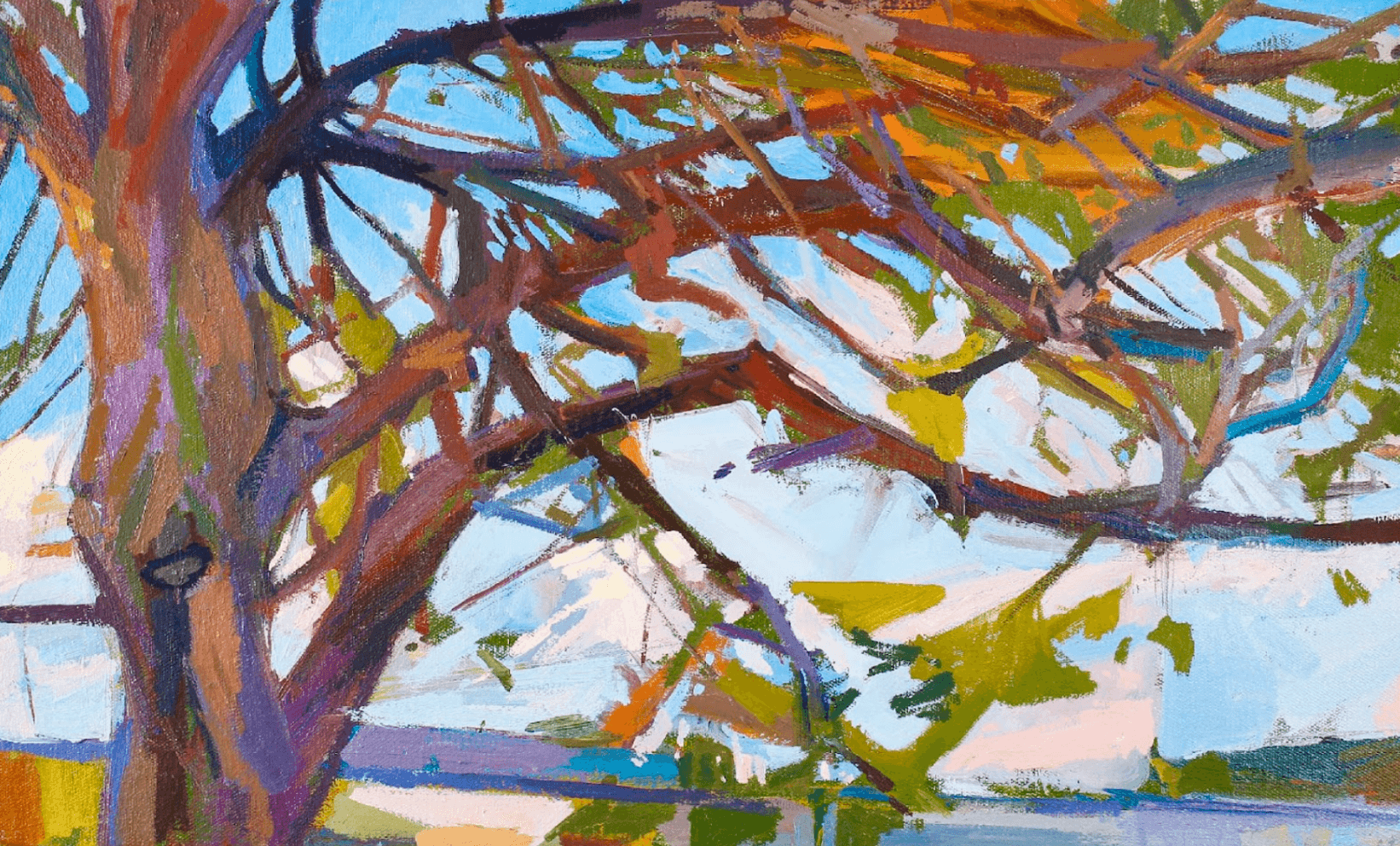
Jerry Lyles, Stadium Mesquite, oil on panel, 13 x 21 inches, 2018.
Jerry Lyles’ exhibit “Outside” consists of eighteen oil paintings whose subject matter is the Rio Grande Valley in south Texas. In the paintings, the viewer encounters mesquite trees, cactus, tangled branches and wildflowers. There are no humans in Lyles’ paintings. In two of the paintings (The Shoulder Ends and East Side Refrain) there are images of cicada skins, an insect known for its buzzing and vibrating sounds in the summer. In another painting (Studio View, At The Truck Rest), the top of Lyles’ car is discernible near a tree and surrounded by flowers, while another (Untitled) depicts the arts complex at University of Texas, Rio Grande Valley (where Lyles teaches) at dusk. Taken together, the paintings in this exhibit depict the chaotic and vibrant flora of the Rio Grande Valley, where the glow of life is present. Lyles thus provides a different image of the Rio Grande Valley: not military checkpoints, shopping malls, outlets, or new highways permanently under construction, but life.
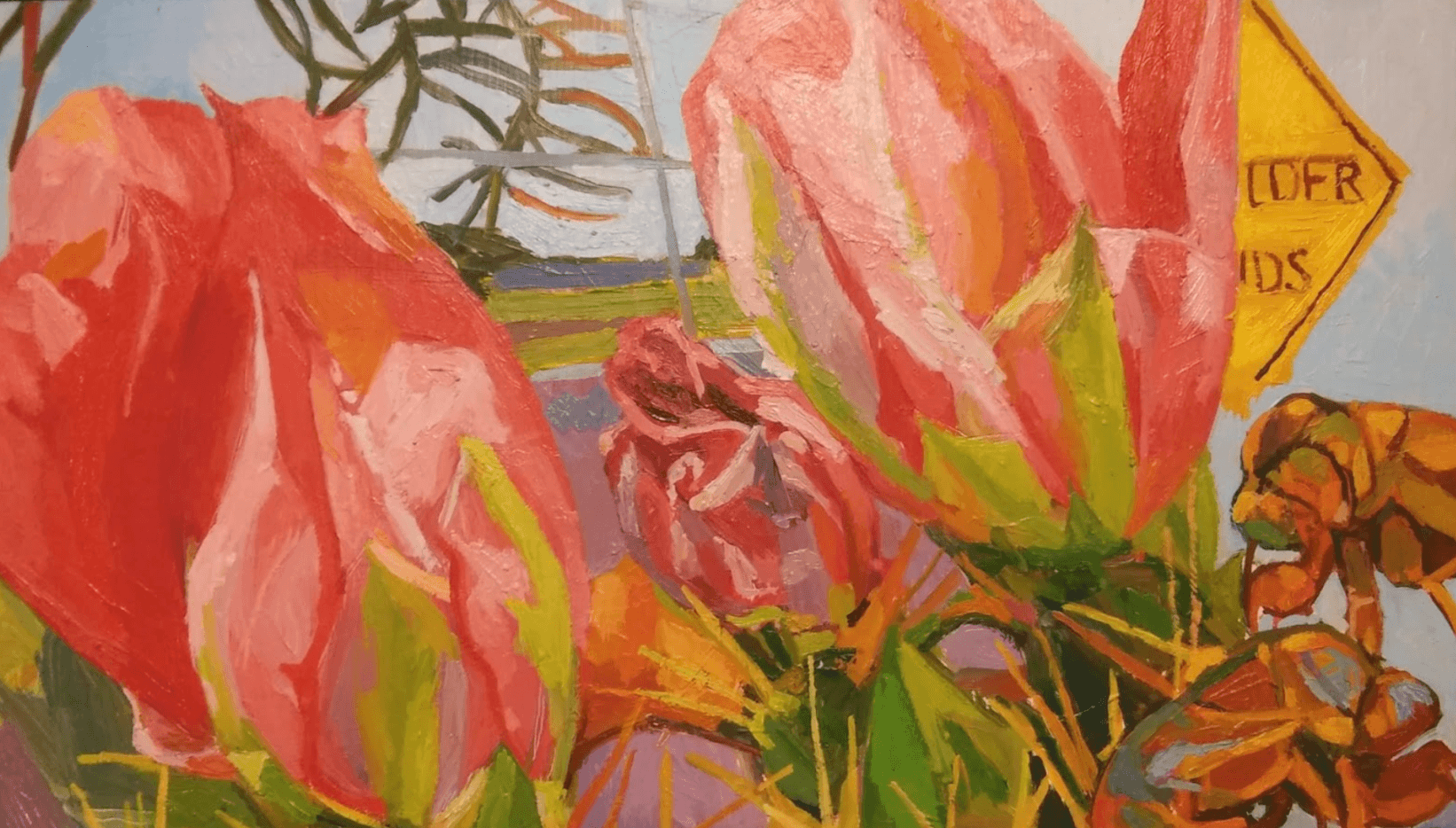
Jerry Lyles, The Shoulder Ends, oil on panel, 9 x 16 inches, 2024.
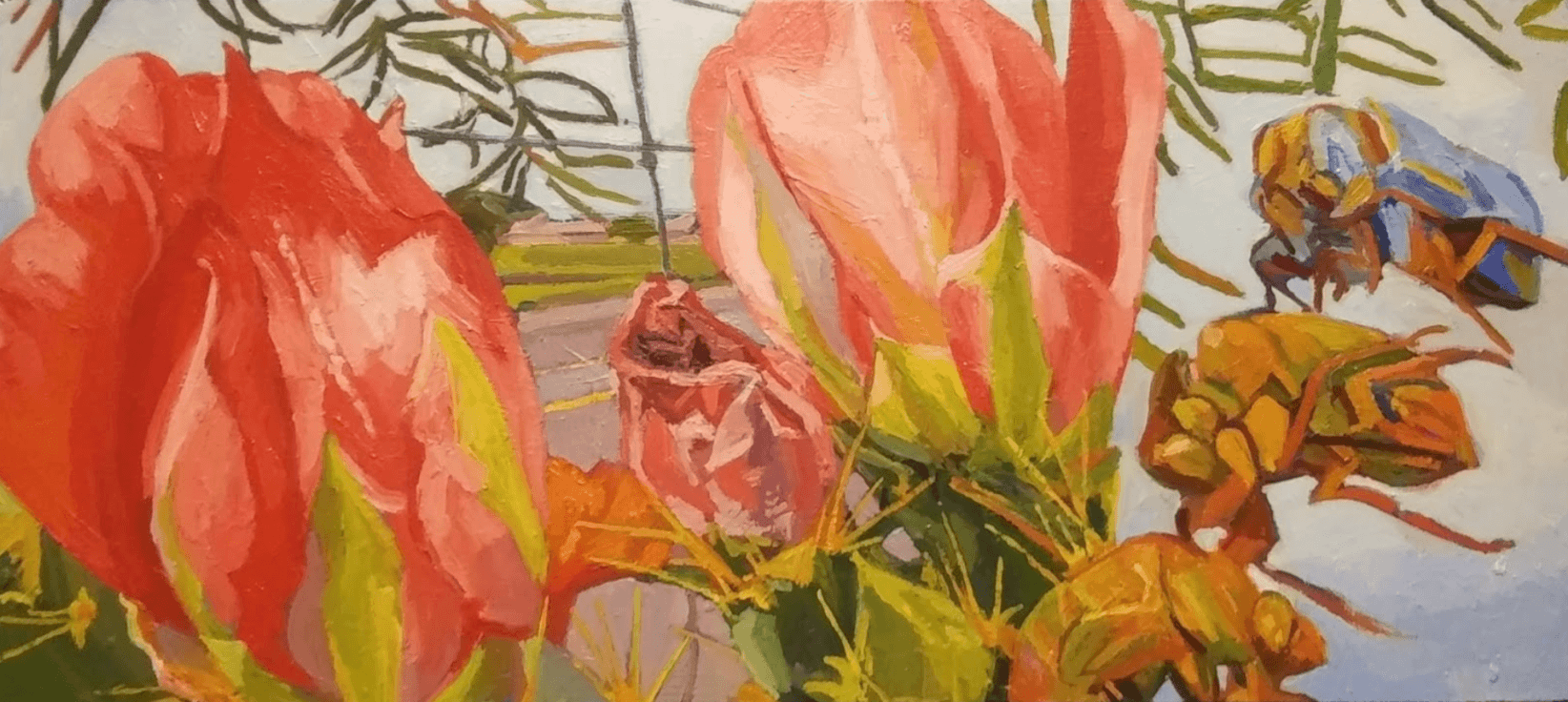
Jerry Lyles, East Side Refrain, 12 x 24 inches, 2024.
In terms of medium and technique, Lyles works with oil on canvas. One color does not dominate in these delicately crafted paintings; rather, red, blue, brown and green interact. As one gets closer to the paintings, one discerns dabs, dots and blank spaces, and as one steps back, the colors take over and harmonize. Titles include At the Truck Rest, Keep Punching Up, The Shoulder Ends, Roadside Paint Brush and Backyard.
Lyles works within the tradition of landscape painting made famous by 19th and 20th century painters including Claude Monet, Vincent Van Gogh and John Constable, who in each of their own way made what they saw outdoors part of their distinct vocabulary, just as Lyles seeks to do. He states that his influences also include Pierre Bonnard and Édouard Vuillard, particularly with regards to color palette. In a conversation with the artist, he references other contemporary influences including Janet Fish, Alice Neel and Lewis Stanley. The most important part of this aesthetic inheritance is representation with what he describes as a “measure of looseness”.
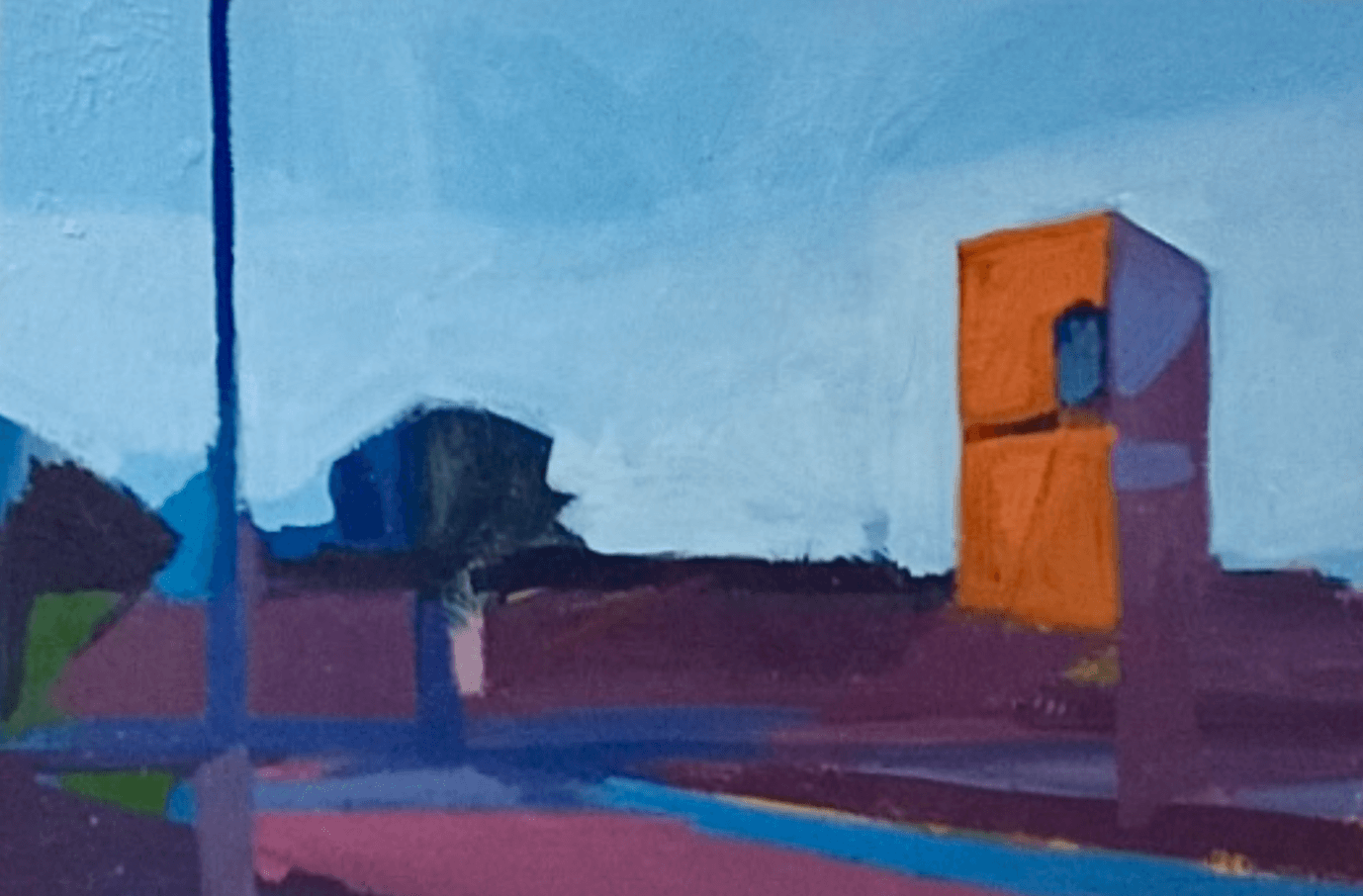
Jerry Lyles, Untitled, oil on canvas.
The landscapes of the Rio Grande Valley are changing fast. Space X, located on Boca Chica Boulevard near Brownsville, directs our gaze to outer space, while Lyles redirects our eyes back to the natural world right in front of us. Lyles’ landscapes are not intended to be exact replicas of the empirical world, he is choosing to show the lusciousness found in the region; if you were to go outside in south Texas and look for the flora that Lyles depicts, you would be missing the point of his work. Lyles captures magic and enchantment in a region where drought is the norm, although at times abundant in growth and color. In the Rio Grande Valley, the heat exhausts and dehydrates everything, and in remote areas one encounters water stations intended for human use. Forces more powerful than human life dominate the environment. It is not uncommon for the temperature in the summer months to be 110F every day, cooling down only to 85F at night. Wind blows from the Gulf of Mexico, and when it rains everything wakes up: flowers bloom and trees sprout new leaves. The winter months are mild but still hot, rarely dropping below 50F.
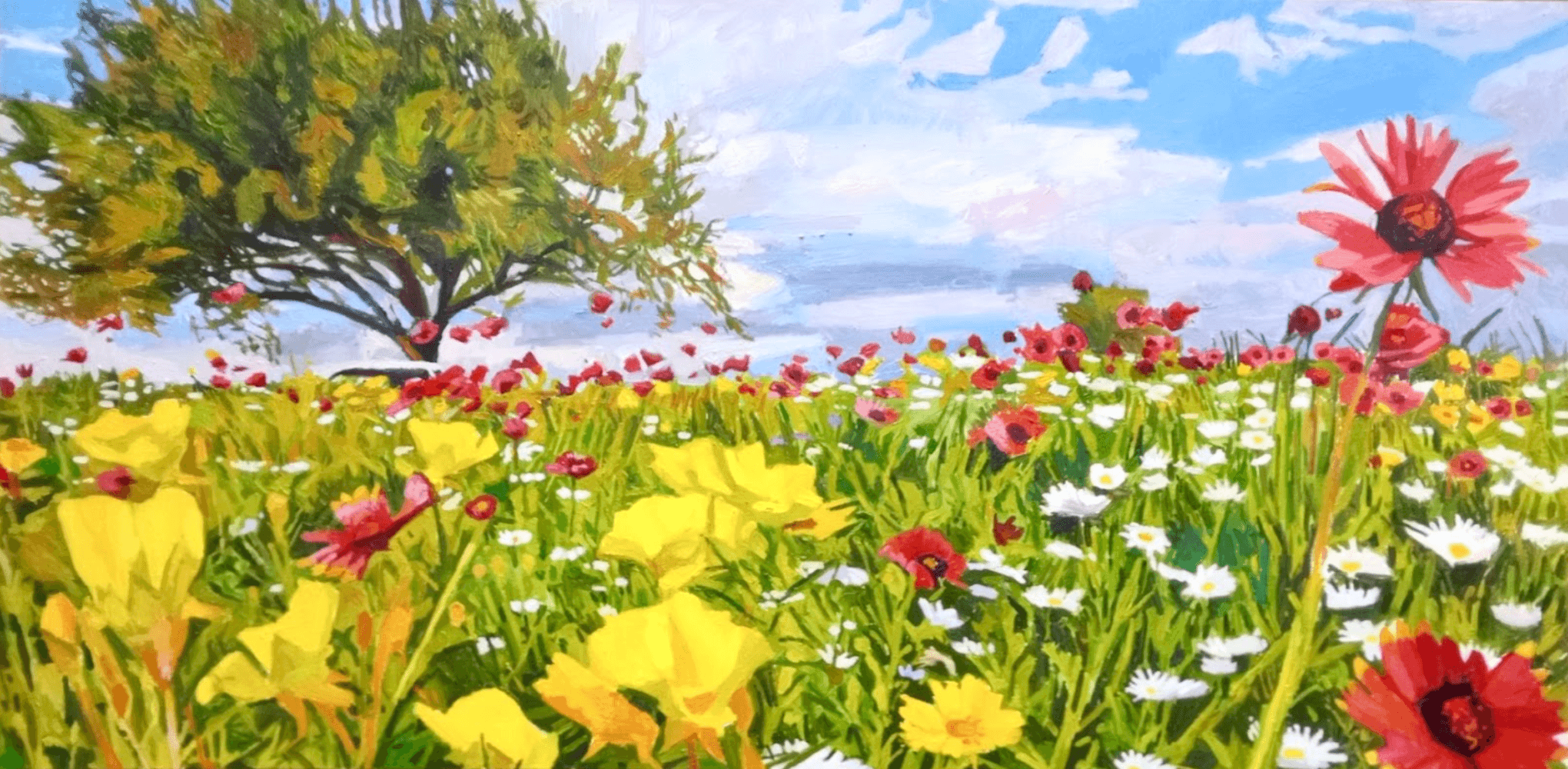
Jerry Lyles, Studio View, At the Truck Rest, oil on canvas, 2025.
In the largest painting on display, Studio View, At The Truck Rest, Lyles’ white car is slightly detectable. In the same painting, a mesquite tree tilts to the left in the upper left corner, a red flower tilts to the right, and the sky opens in the middle. The landscape bends, like everything in the Rio Grande Valley. In Untitled 2024, the perspective proffered by the painting situates the viewer in a field of flowers. Another landscape painting (Rest Stop on 281) is more abstract and blurred, recalling Paul Cezanne’s pointillist landscapes. Another landscape painting gives the viewer the illusion of coherence. In two others (Moon Rising and Soft Landing), mesquite trees are half dead (a mixture of green and brown color in the trees), but somehow still alive and thriving.
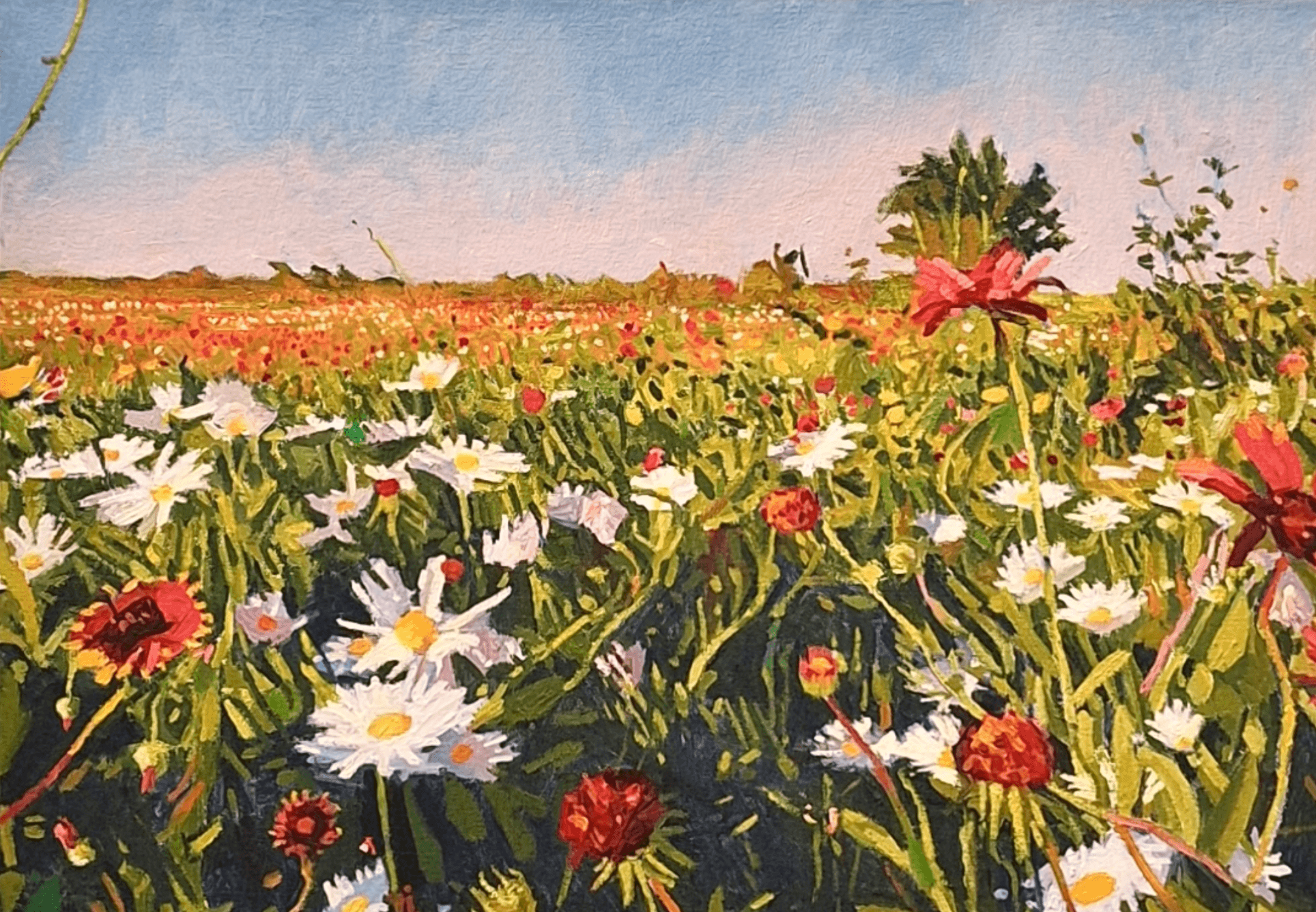
Jerry Lyles, Untitled, oil on canvas, 2024.
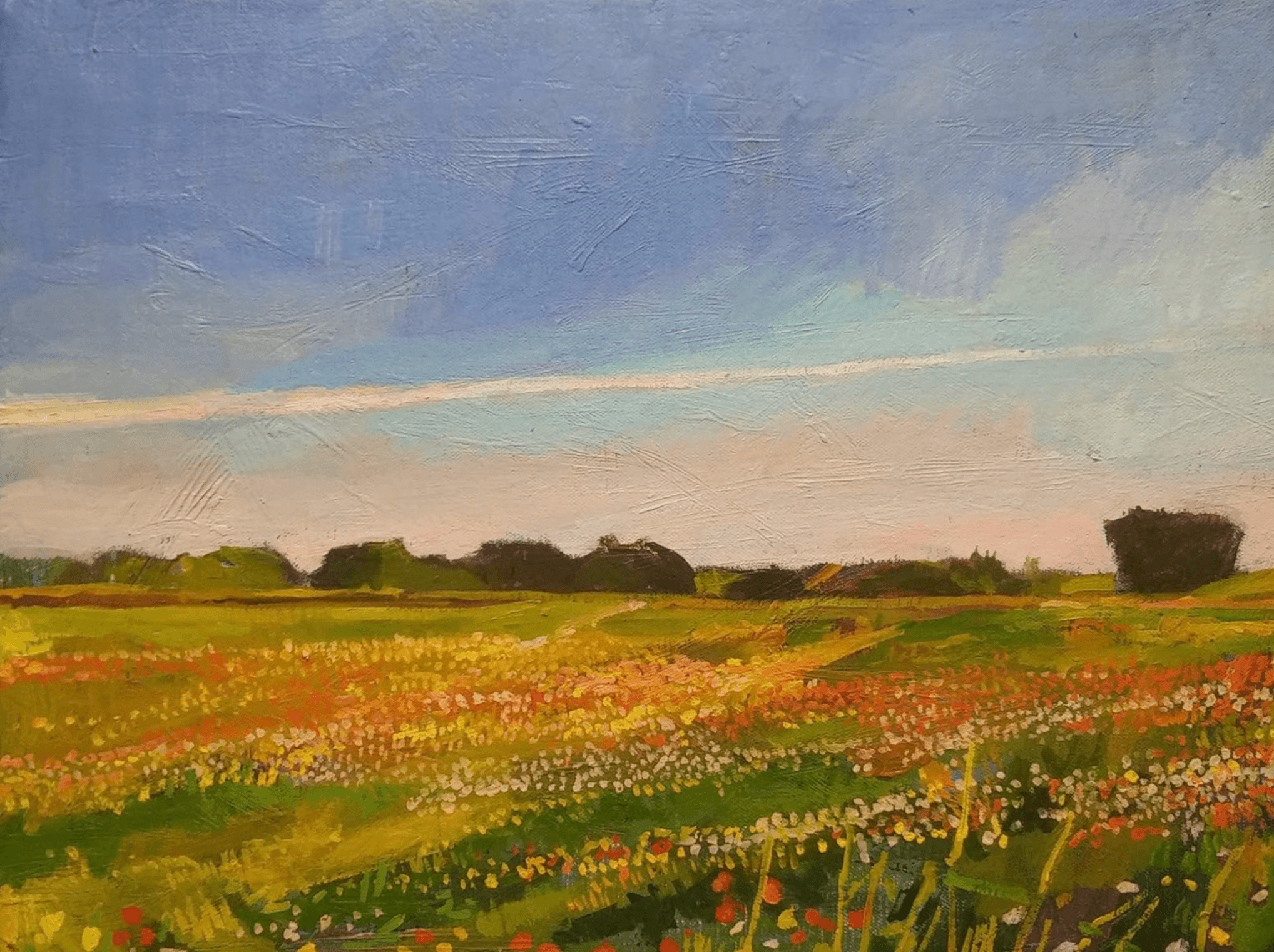
Jerry Lyles, Rest Stop on 281, oil on canvas, 12 x 16 inches, 2024.
Lyles teaches that our relationship to the natural world has suffered from the shocks of technology and sedentary lifestyles. Gated communities offer safety; we are locked in as much as threats are locked out. Lyles reminds us that on the other side of the fence, up the highway, even quite close, there is an outside.
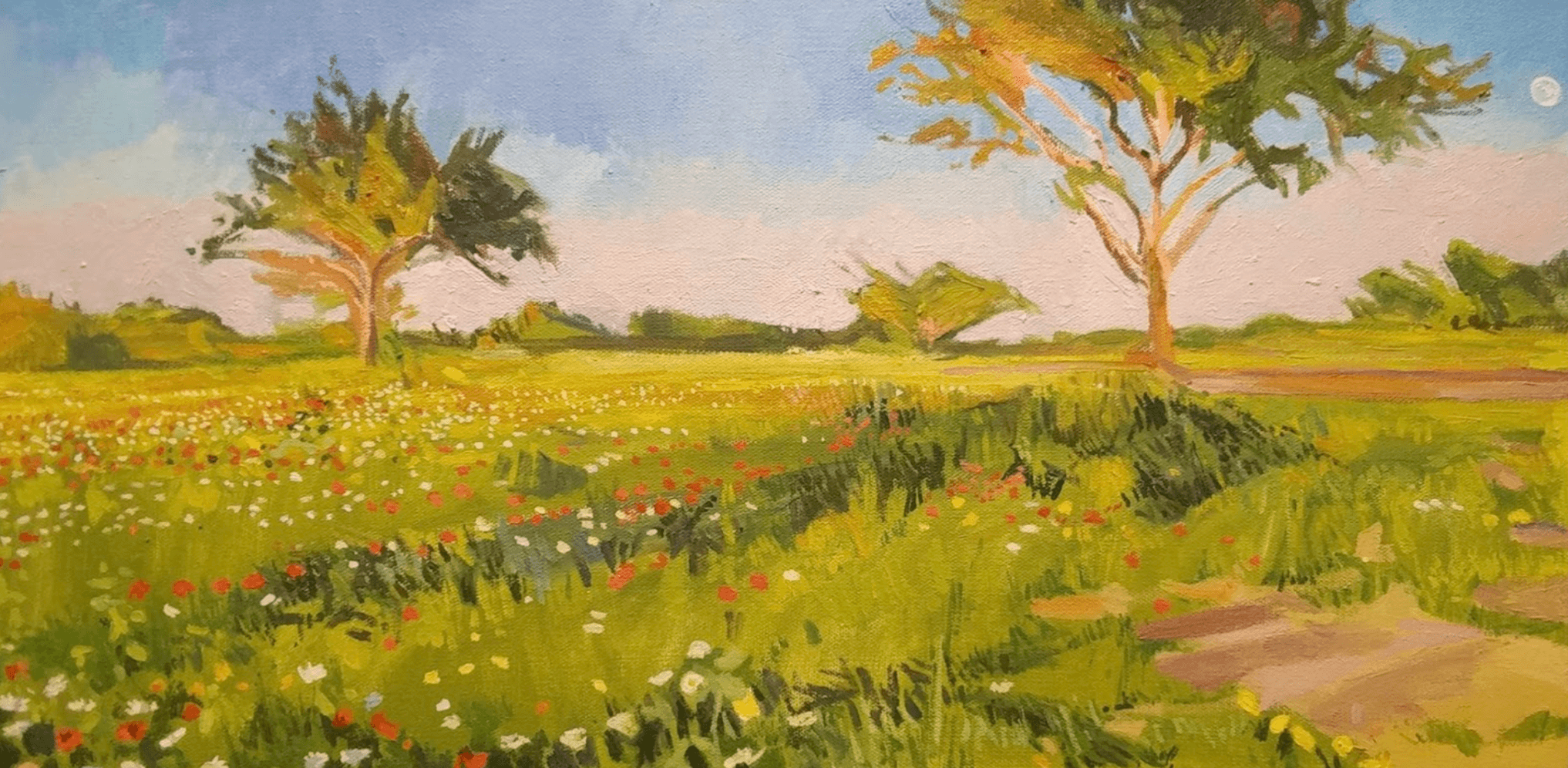
Jerry Lyles, Moon Rising, oil on canvas, 12 x 12 inches.
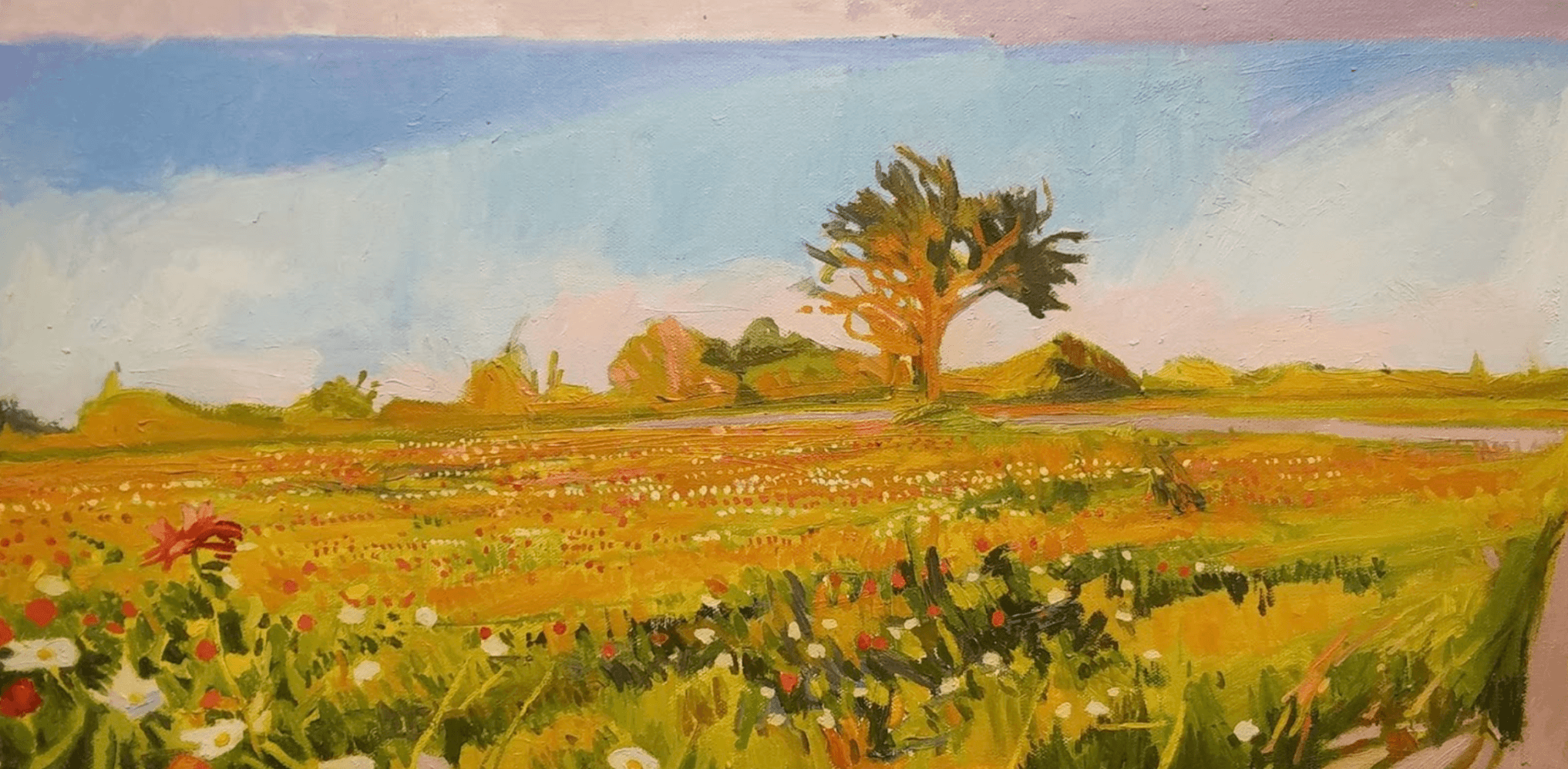
Jerry Lyles, Soft Evening, oil on canvas, 12 x 12 inches, 2024.
For Lyles, nature is not a place to build, dominate, exploit, poison, decimate and burn; it is a zone for contemplation and spiritual serenity. Lyles’ art is much more than a raising awareness campaign, though. He gives us a glimpse of what an unmediated relation to the outside looks like, albeit via the medium of art. An art exhibit called “Outside” that is staged inside a gallery captures the mediated character of vision quite well. Lyles shows the viewer where they are standing and what they have yet to see.
Jerry Lyles lives in Edinburg, Texas and teaches art at the University of Texas, Rio Grande Valley. The last day to see the exhibition is this Thursday, 19 March 2026.
