
Video Craft, Museum of Craft and Design
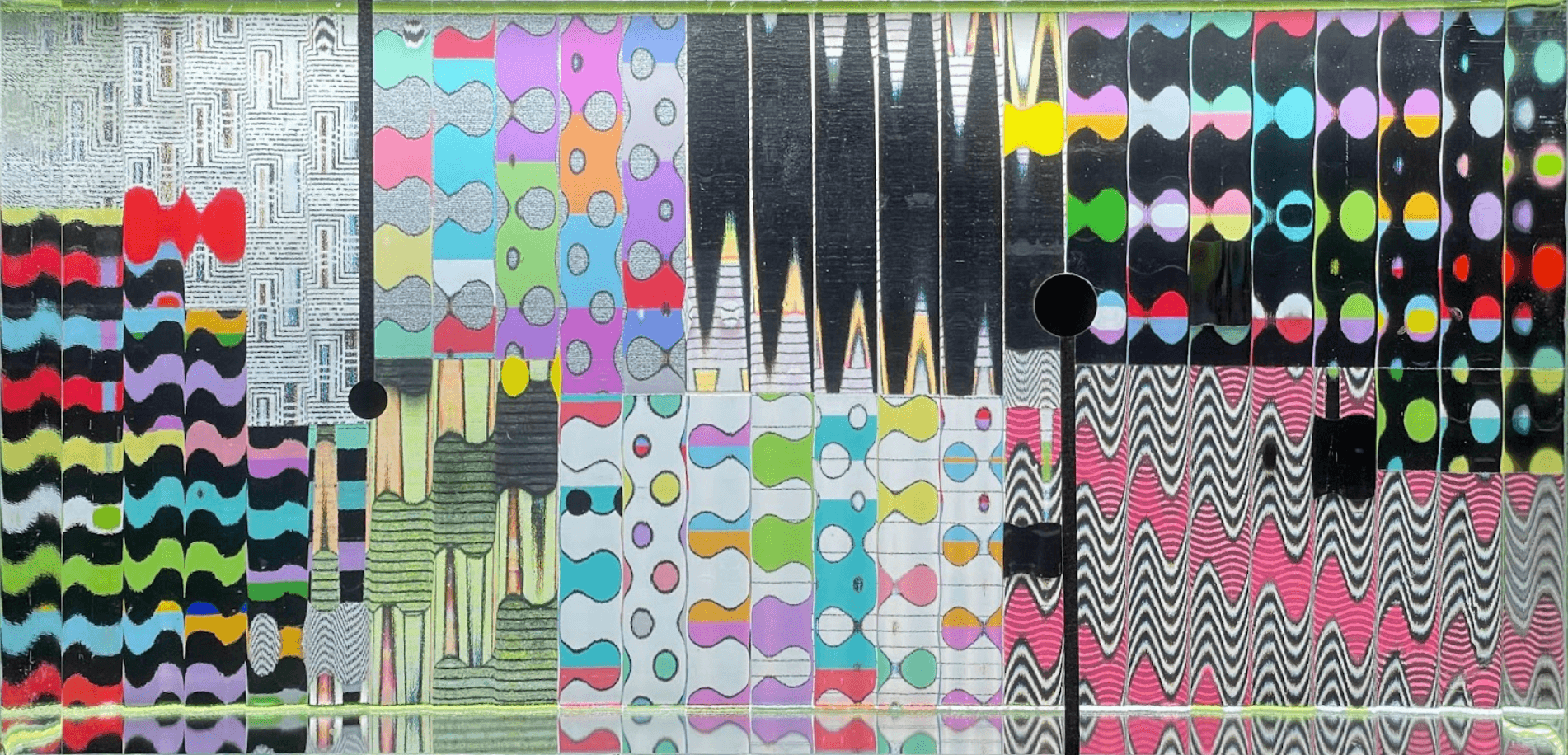
Sydney Cash, ADHD Party, 2024 (detail). Steel frame, Flutex glass, computer generated drawings, self-contained lighting, mirror, fabric.
February 28 to August 16, 2026
By Scott Snibbe
One of the most skeptical people I know once surprised me by saying, "Moving your hand is an act of telekinesis." Maybe you can scrape together a story from high school biology about action potentials, ATP, and actin. But the question William James asked 150 years ago—how the thought of an act becomes the act itself—remains.
This mystery isn't merely a philosophical question, but one of the most urgent crises we face today as information, media, art—maybe even all our jobs—dematerialize with the rise of AI. What's the point of making things with our hands anymore, of turning mind into matter?
The newly opened Video Craft show at San Francisco's Museum of Craft and Design powerfully confronts these questions in a grand tour of more than twenty artists' works, each grappling with our world's dematerialization by worrying it through their hands. They knit, weave, quilt, and crochet in exquisitely danced skirmishes with the immaterial, transmuting phone videos, industrial waste, found footage, obsolete microchips—even Microsoft Word—into gorgeous objects you yearn to touch.
One of the first works visitors encounter sets the tone for the exhibition's devotion to hand-wrought transformation. Greg Climer's The Animated Quilt of Nathan and Bryan (2022) elevates a fleeting peck on the cheek into a memorial to bittersweet goodbyes. Starting with a three-second digital clip of friends parting ways, he rendered the moment material—and monumental—by painstakingly cutting and sewing fabric pixels into quilted frames. The five years of effort it took to create the work are felt in the sheer acreage it requires: half the frames spread across a thirty-foot wall, the rest stacked beside a looping video in which the quilts are rephotographed one by one, reconstituting the memory.
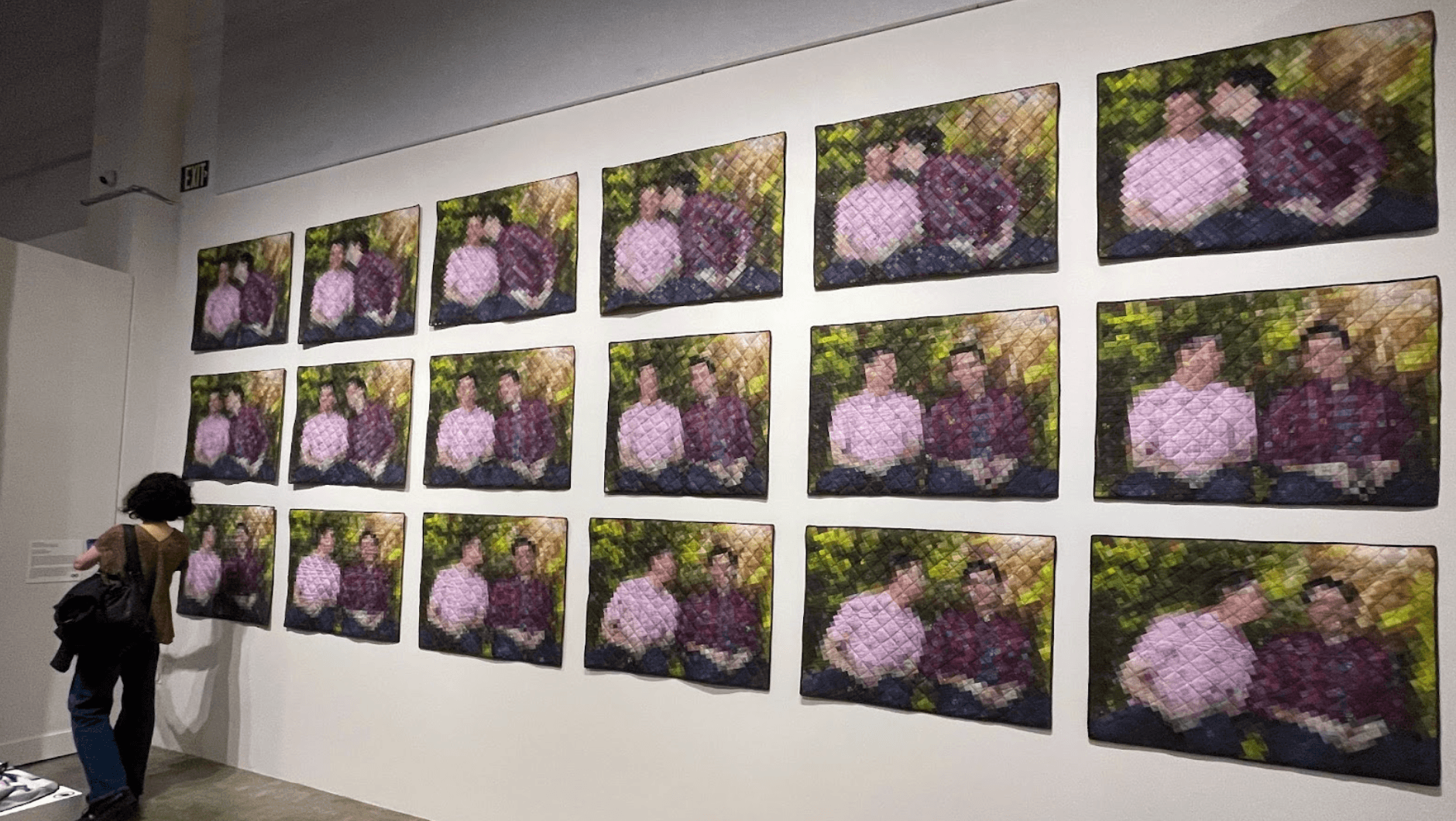
Gregory Climer, The Animated Quilt of Nathan and Bryan, 2016-2022. Quilt panels, digital video.
One has to take care of damning craft with faint praise by emphasizing the manual labor it took to create it. Yet in an age of instant oil paintings summoned from "the cloud," you really can feel the presence, the care—the love—of the artist in this hand-stitched work.
Spend more time with the piece and you discover a further subtlety. The quilted pixels themselves aren't rectilinear, as Cartesian screens require, but tilted at varying degrees from frame to frame. The soft squares of color literally "lean in" to the kiss in a way impossible for the digitally gridded.
Gregory Climer, The Animated Quilt of Nathan and Bryan , 2016-2022. Quilt panels, digital video.
Sabrina Gschwandtner quilts film instead of video, revealing the older medium's innate materiality. Arts and Crafts in America and Peruvian Weaving (2016/2025) is an abundant array of 16mm frames in a traditional "courthouse step" pattern—films about weavers themselves woven together, until footage becomes yardage.
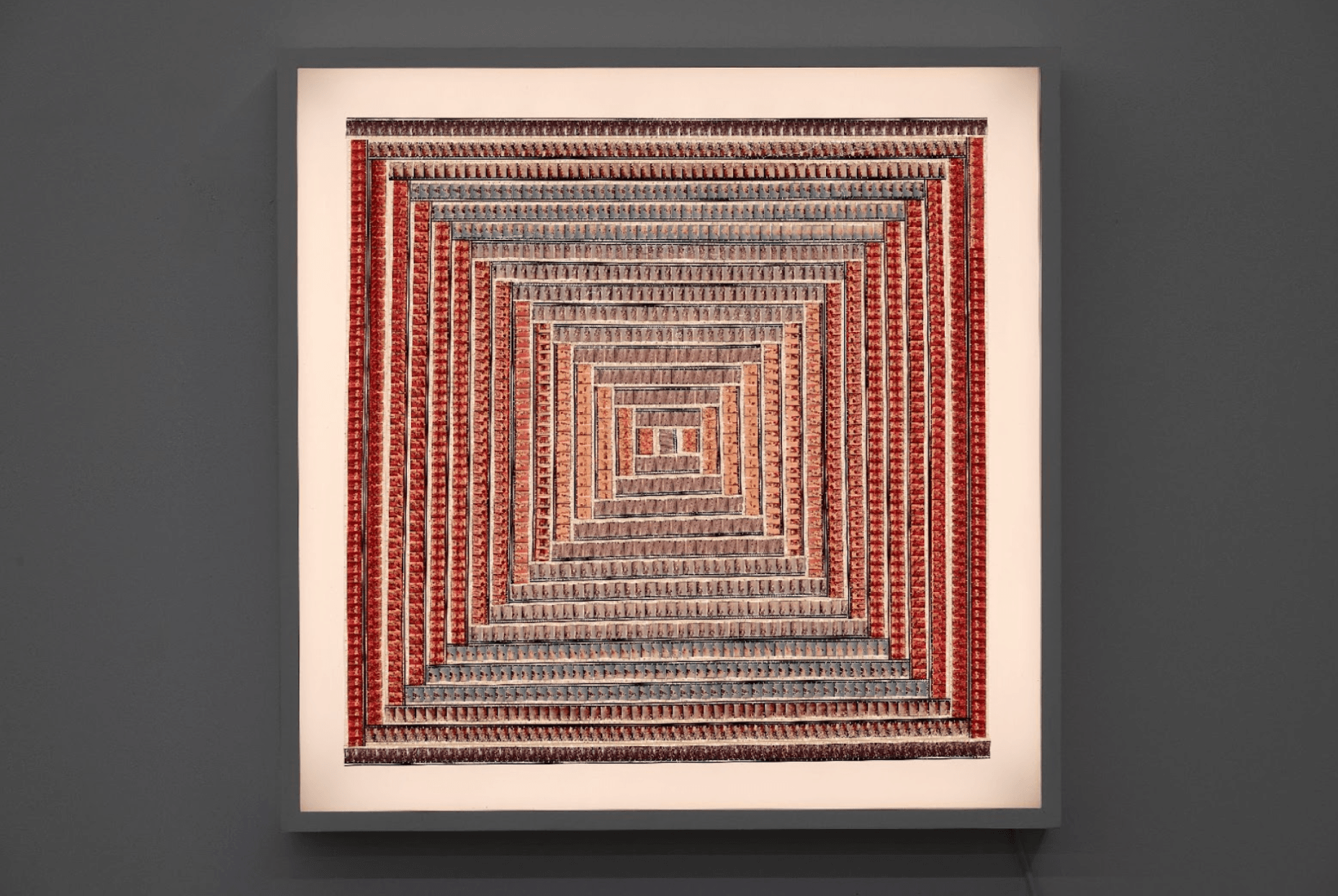
Sabrina Gschwandtner, Arts and Crafts in American and Peruvian Weaving , 2016/2025. 16mm polyester film, polyester thread, LEDs.
Adjacent is her Hands at Work Video in which films of millennia-old traditions of American weaving blink in disciplined rhythms between bold solids. Nodding to Saul Bass movie titles and Steve Reich musical minimalism, the work's repetition is the grammar of both a great quilt and time-based media. The video shrinks, repeats, and time-shifts sequences of women's handwork, appearing and disappearing amid modern triangular grids.
As the credits roll, I'm left with a lingering unease that I suspect the artist intended: Facing a video screen depicting touch and tactility that the video medium has itself erased, I felt echoes of the erasure women—and the crafts they practiced—have so often faced through the centuries.
Sabrina Gschwandtner, Hands at Work Video , 2016. Single channel video, 02:44.
I have admired Sabrina's work since she started creating it a couple of decades ago, but something I discovered in this show is that she is not the only quilter of film.
Kelly Egan's Athyrium Felix-Femina (2016) is a film quilt made through the earliest form of photographic image-making, the cyanotype. Her work pays homage to Anna Atkins, who in 1843 published the first book illustrated with photographs—contact prints of British algae.
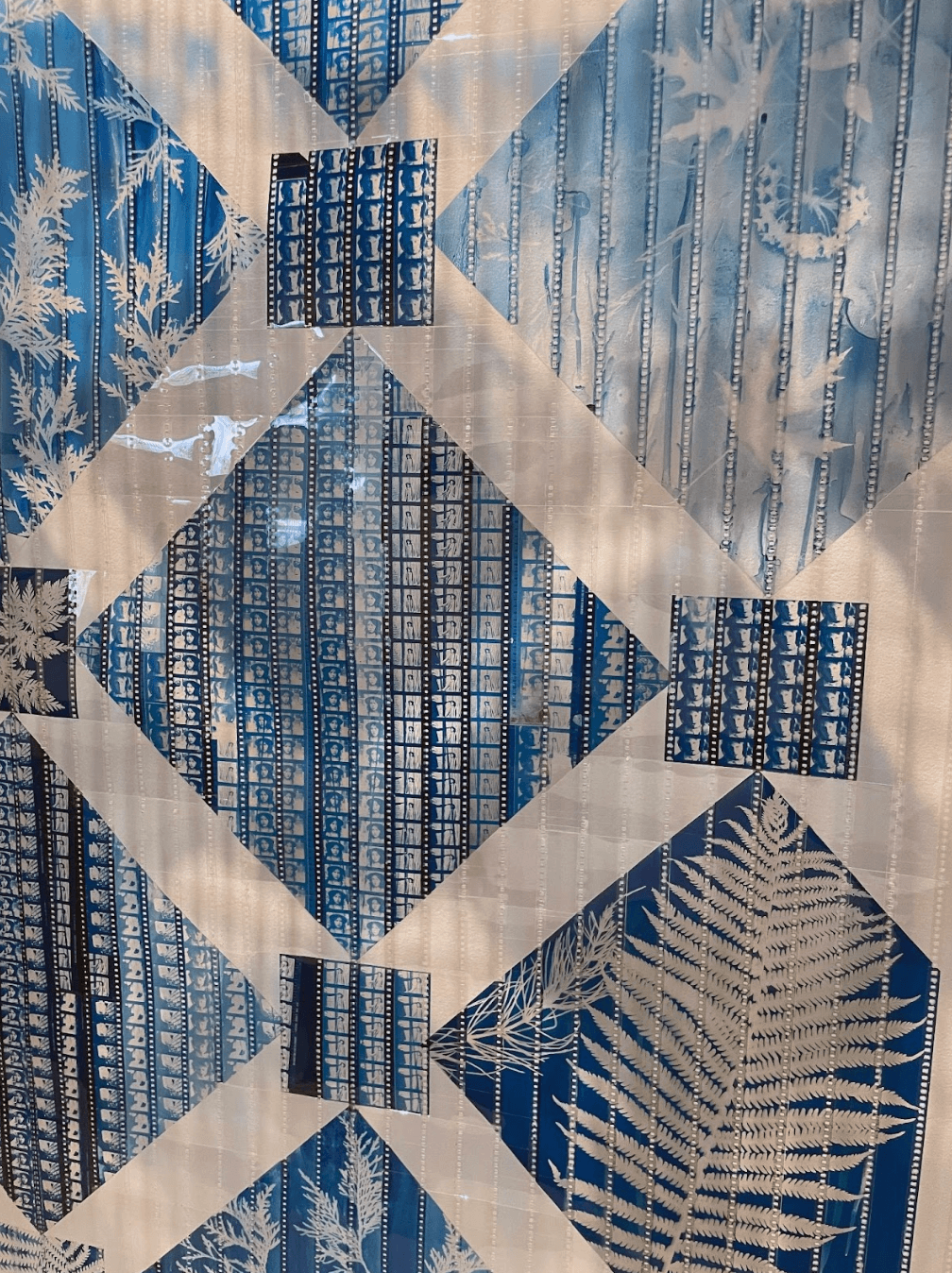
Kelly Egan, Athyrium Felix-Femina (For Anna Atkins) , 2016 (detail). 35mm hand-coated and handmade cyanotype gelatin emulsion, animated optical sound.
Egan employs the same vintage technique on 35mm film, directly printing ferns onto celluloid strips sewn edge-to-edge to form a queen-sized crystalline quilt. Interspersed with transparent leader—and menacing exposures of a young girl tormented by bullying boys—the piece becomes a playable film again by passing itself through a projector.
Kelly Egan, Athyrium Felix-Femina (For Anna Atkins) , 2016. 35mm hand-coated and handmade cyanotype gelatin emulsion, animated optical sound.
The resulting experimental film is a work of structural rigor. Its cuts result from the quilt pattern itself. The sound too emerges directly from the quilt's physical form: staccato rhythms of sprocket holes and the "sound" of cyanotype gradation. Yet there's nothing cold in Egan's uncompromising craft. Watching this film adjacent to its quilted totality becomes a meditation on women, work, and beauty spun from honoring the achievements of those trimmed from history's fabric.
Sydney Cash also powerfully remixes material with ADHD Party, a wall-mounted lightbox curtained with Flutex—a 1930s-era ribbed glass manufactured for privacy. Floating atop fine, colorful patterns, its glass refractions buzz in your eyes, never resolving because their lenticular lensing causes your stereo vision to fail.
Close one eye to see something beautiful. But leave both open for an experience impossible to capture in reproduction. Alive and unnerving, this lightbox reminds us that opto-tactile experiences with our bodies in physical space are irreplicable.
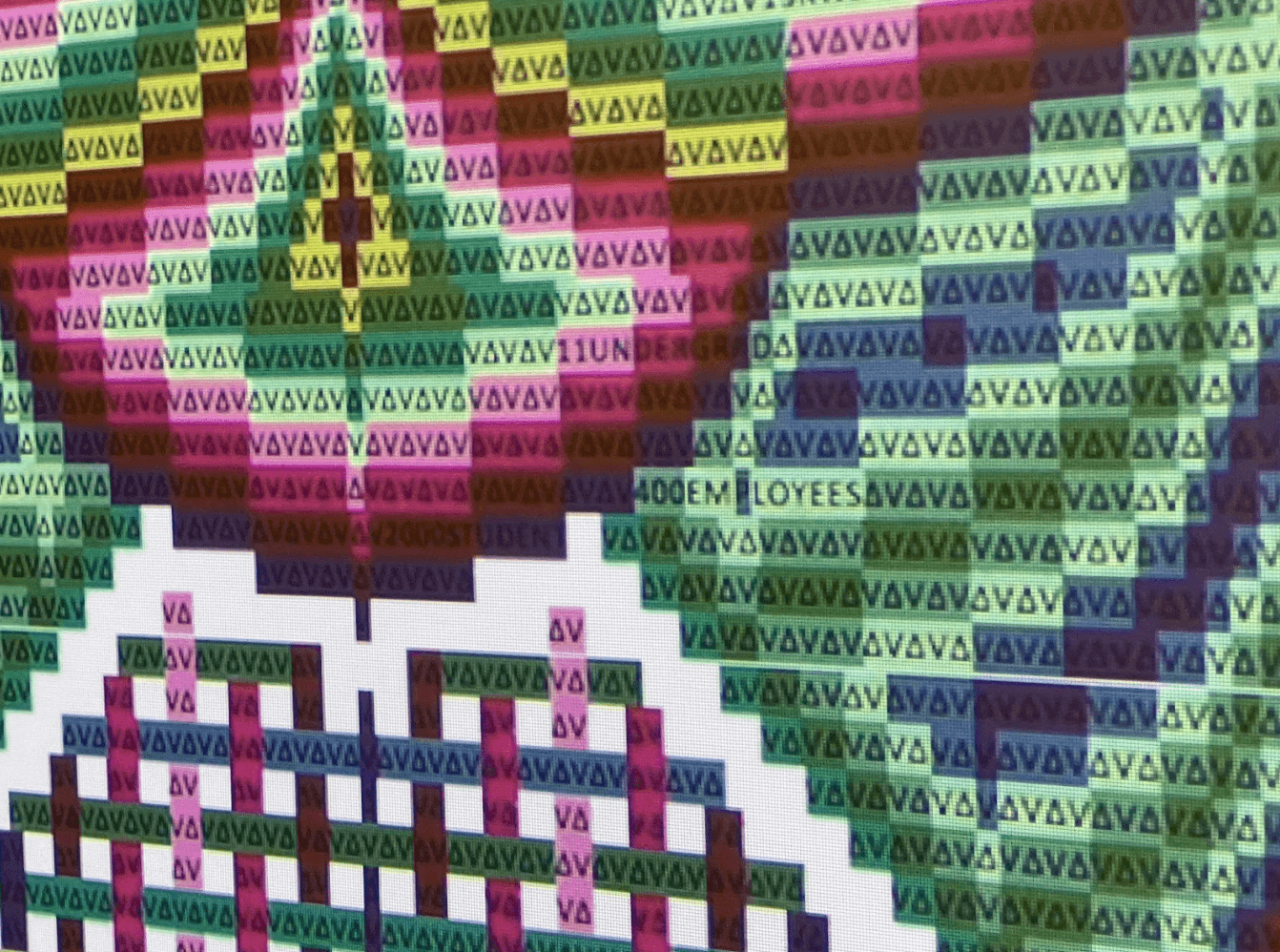
Shaheer Zazai, ECfdV_EC, 2023 (detail). Digital video, 5:21.
Shaheer Zazai's ECfdV_EC (2023), is one of the few wholly immaterial pieces in the show. Taking a different tack toward video craft, Zazai uses Microsoft Word as his medium, strictly limiting himself to digital type and virtual highlighter as tools to craft a quilt no less effortful than a physical one. With contempt for copy-and-paste, this short film is a sped-up record of improvised Afghan forms. It shows how memory of materiality can be authentically conveyed with ASCII alone.
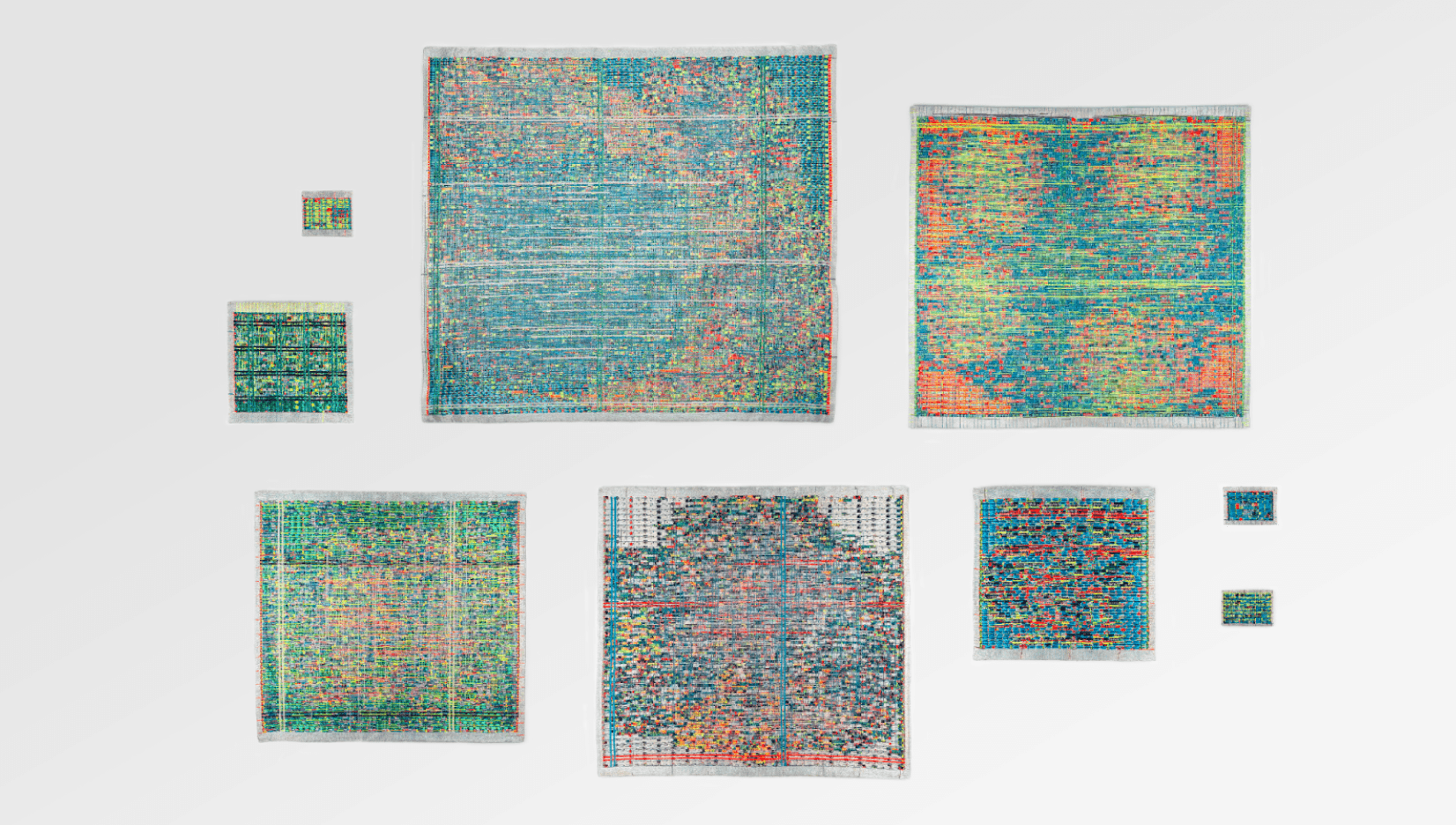
Richard Vijgen, Hyperthread series, 2024. Various yarns, Jacquard woven.
Richard Vijgen's Hyperthread (2024) reminds us that there is no such thing as digital immateriality—if you look closely enough. His square textiles felt familiar from a distance. When I drew closer, they resolved into woven depictions of microchips' layered horizontals and verticals.
When I was a boy, I once lifted off the case of my computer to stare down at its semiconductors, wondering how these literal "black boxes" could contain color and form. Hyperthread shows us that information, when examined under a microscope, contains color and form too. Observed closely enough, data and computation resolve to strips of woven matter.
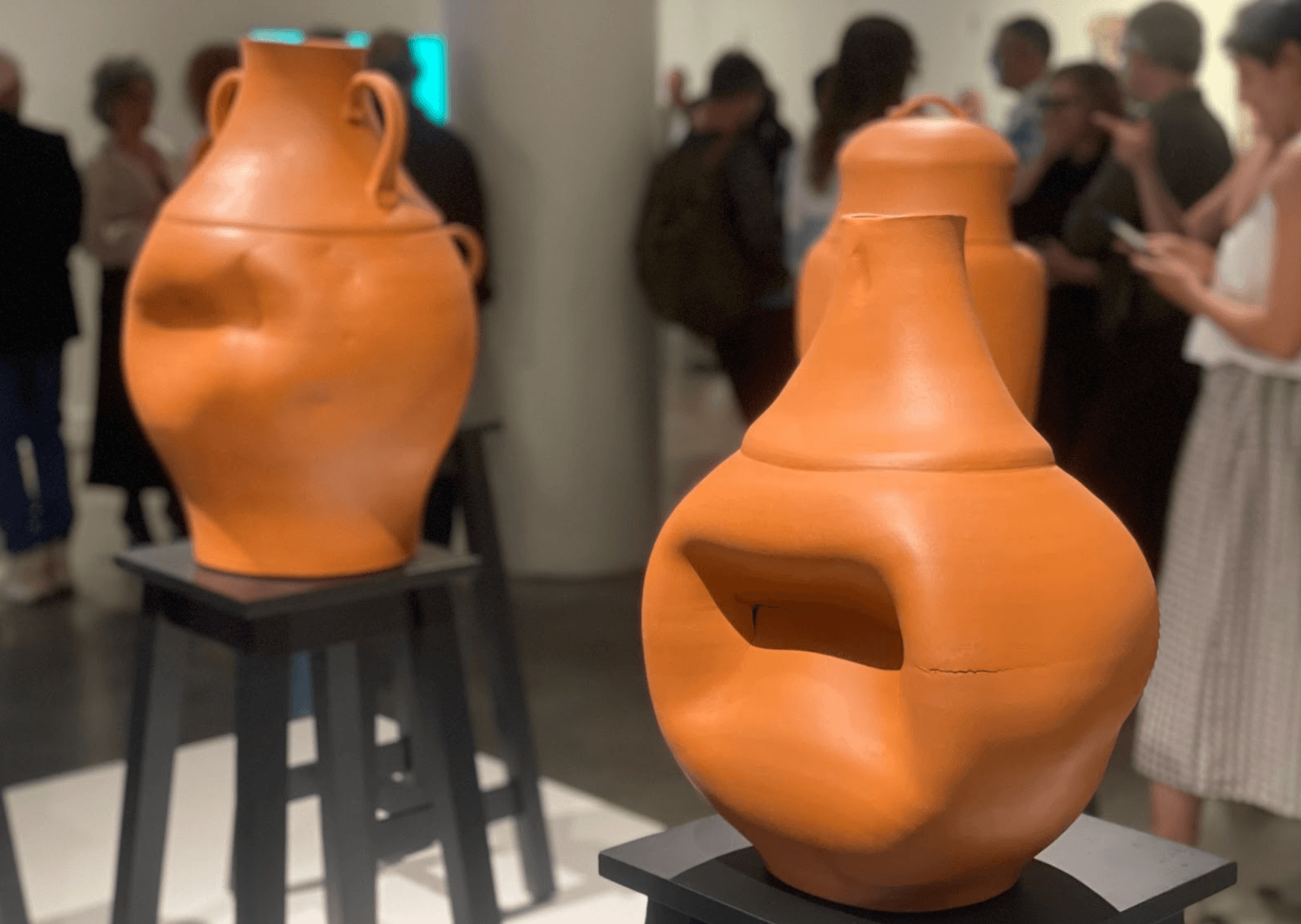
Lauren Kalman, To Have or to Hold…, 2024. Red stoneware, digital video.
Lauren Kalman's To have or to hold... (2024) is among the most visceral works in this tactile show. Playing beside heavy, distorted earthen vessels, her videos document how these sensual shapes emerged from the artist embracing the still-wet ceramic. Every work in this show bears the trace of the person who created it, but only these are literal impressions recording the negative space where the artist worked. Soft, wounded, resilient, these buckled urns remind one that the bruised reed never breaks.
Craft has been sidelined in the past for many reasons, one of the most egregious being the predominant gender of those who practiced it. However, it's a delicate dance as to how much emphasis we want to place on the political aspects of making and exhibiting crafted art. We sell short this work if we frame it only as righting past wrongs because it stands on its own as some of the best art being made today. It speaks not only to its niche, but to universal questions of what it means to be human.
Lotte Reiniger, The Adventures of Prince Achmed, 1926. Cutout silhouette animation.
Gschwandtner's earlier film quilts resurfaced pioneering films made by under-celebrated women—including those of my film-school hero, Lotte Reiniger, the nearly forgotten creator of the world's first feature-length animated film, The Adventures of Prince Achmed (1926).
It angered me when I learned how Walt Disney buried Reiniger's rightful title—beneath Snow White, no less, another victim of gendered injustice. But the reason I recommend Reiniger's film to you—and the works in this rich exhibition—is not to settle a score, but because they are, in their own right, some of the most poignant art I've encountered.
