
A Conversation with Jack Fischer
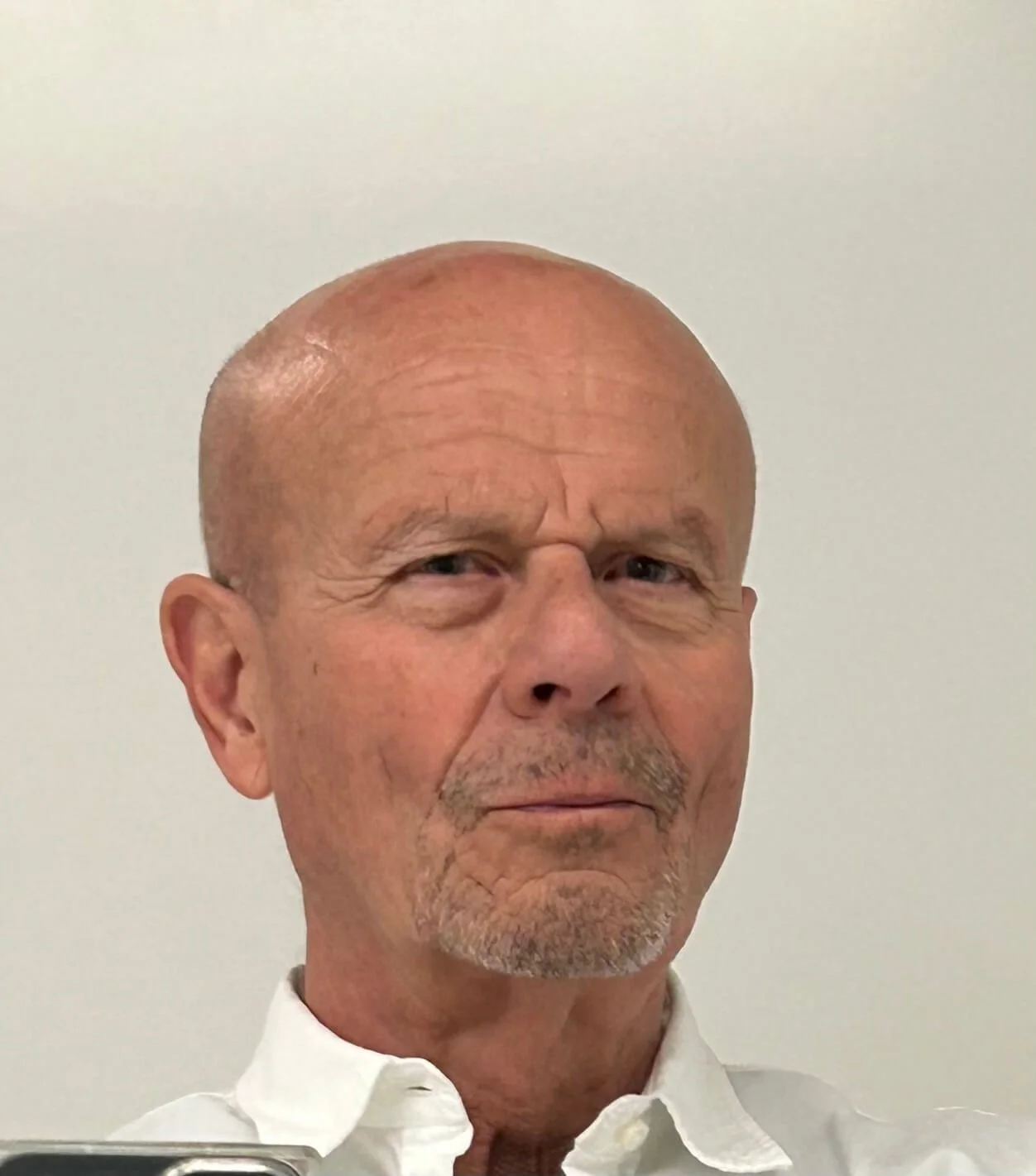
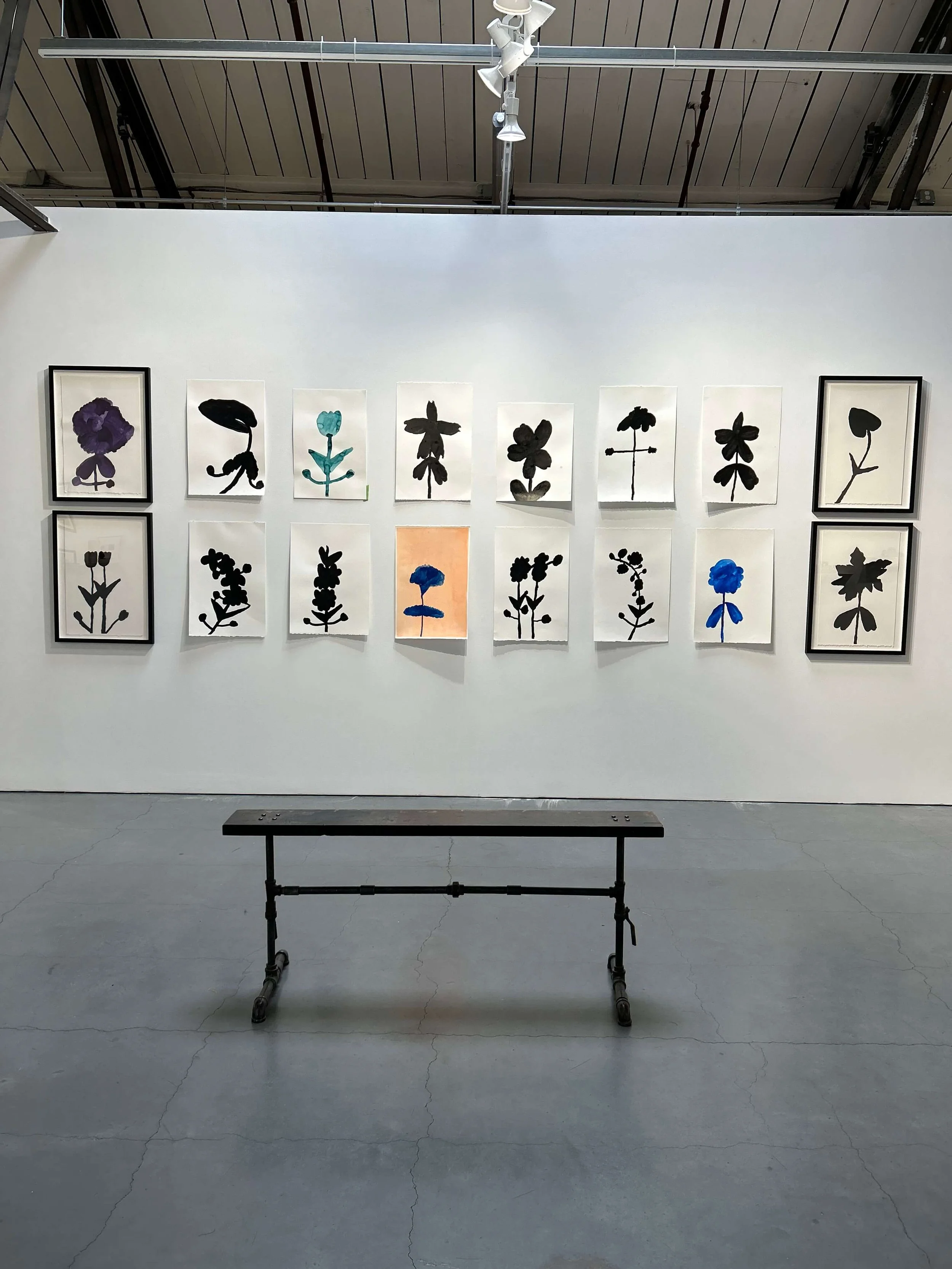
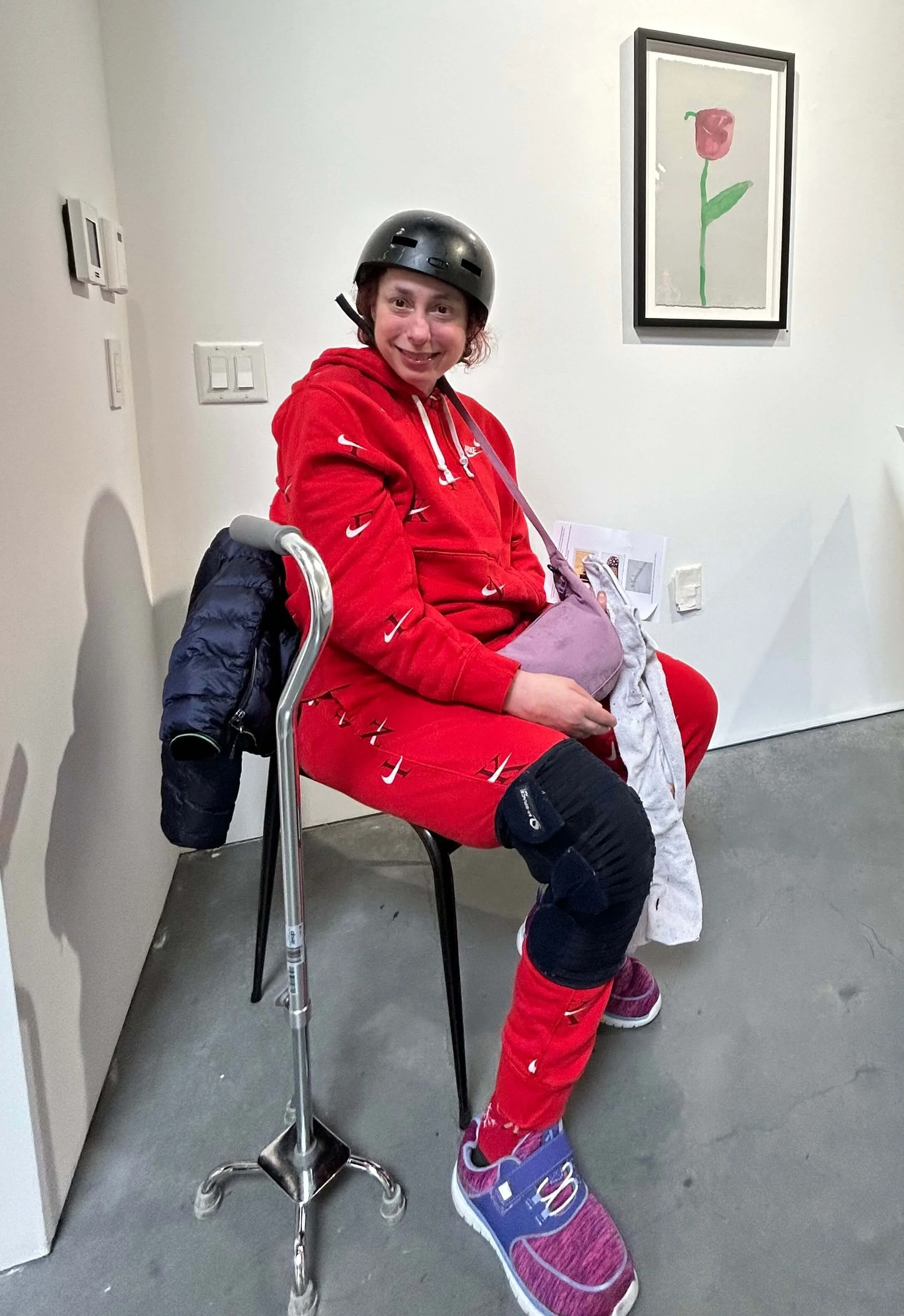

The following are excerpts from Jack Fischer’s interview with Hugh Leeman.
What Is Outsider Art?
Hugh Leeman: Jack, you built a gallery around decades of devotion to outsider art. To start us off — what is outsider art, and how has your relationship to it changed over the decades of your gallery?
Jack Fischer: One of the issues I had from the very beginning was that I railed against it being called "outsider." It diminishes the work. It puts it outside of our world. I considered it a misnomer. It's not outsider art. It's not insider art. It's just art. That was the raison d'être for why I opened the gallery. I wanted to expose the world to the fact that this is work where there was no intent of "I am going to paint a masterpiece." It was: I can't help but make work. I can't help but do this. And I know from many of the artists I've worked with — artists who are not neurodivergent, not so-called outsiders — that they understand that driven quality. I do this because I have to. I have no choice.
When you walk into Creativity Explored, or into NIAD, or into other centers like Creative Growth, you meet artists who are driven to make work. They're there because their families can't care for them during the day — that's how they come to a center like that. And what I've always been most interested in is seeing the hand of the artist. In that so-called outsider work, you can't help but see it. You can't help but see the stains, the impasto, the vehemence — the way the work is sometimes thrown onto the canvas, scraped across the page.
Hugh Leeman: What is it about seeing the hand that has appealed to you so much?
Jack Fischer: It's real. It's heart. It's emotional. That's what drives it — the emotion, not the intellect. And that, to me, is the most important thing in artwork. The heart.
How Creativity Explored Changed His Life
Hugh Leeman: You mentioned Creativity Explored and NIAD — nonprofits that are effectively art studios for neurodivergent adults. When we spoke briefly before this interview, you mentioned that Creativity Explored changed your life. What is the long version of that story?
Jack Fischer: A couple of things occurred. One is that Creativity Explored became the impetus for me to open a gallery. Had I not walked in there, had I not really immersed myself in what was going on in that center, I don't think I would have done what I'm doing — I'm certain of it. The other part is really personal. I walked into Creativity Explored for an opening and met my wife of eighteen years. She was a donor. We got married four months later. It was great. It's still great.
Hugh Leeman: Four months after meeting her at Creativity Explored, you get married.
Jack Fischer: Yep. It remains incredible to this day.
Hugh Leeman: Incredible. There's something in what you said about leaving the hand behind in the work — that it's about emotion, not intellect, not overthinking. So many things today have been reduced to checking boxes, comparing profiles, running analytics. Yours was a connection that came from the heart. Now — you started out as a sales rep selling T-shirts, primarily to Japanese boutiques. We jump ahead decades, and you've just closed your gallery. Before you made that decision, what was the internal dialogue like?
The Decision to Close the Gallery
Jack Fischer: It's complicated. It's a lot of different issues — my age being one of them, some health issues, the fact that I'm about an hour to an hour and a half each way from the gallery. And the collector base is very different than it was. It's shrunk. The people who bought from me are typically between sixty and eighty, and they're beginning to divest of what they used to collect. The people who bought from me were not buying because they thought a particular artist was going to be the next big thing. The twenty, thirty, forty year olds who are making money are not building collections, not buying from the heart. They're not walking into a gallery and saying, "Oh my God, I love this — I need to have this on my wall." Those people are few and far between.
And believe me, right up until the very last day of my closing, I had people come in and buy something because they loved it and wanted to put it on their wall — not because they thought it would be valuable someday. I've had people come in and ask who I think is going to be the next big thing. I showed them the door. I have no clue. I'd buy lottery tickets if I knew.
Every day I ask myself, what the hell have I done? I'm going to continue in some form — pop-ups, maybe an art fair or two if I want to torture myself. And if someone wants to hire me as an art consultant to show them where my heart is and what I would have on my wall — which is the only criteria I've ever used for what I show — I'm open to that.
The Torture of the Art Fair
Hugh Leeman: You said "if I want to torture myself, I'll do an art fair." I've never heard anyone say they love art fairs. There seems to be a necessary evil quality to them. What's the torture?
Jack Fischer: It's very, very expensive. The amount of work that goes into essentially throwing up a gallery somewhere else for seventy-two to eighty hours — constructing the interior of a booth, handling all of the ancillary logistics to create an instant gallery — is a staggering amount of work for the possibility that you'll at least break even and meet people who will continue to follow what you're doing outside of that venue back into the gallery. That has happened over the years.
I haven't done an art fair now for about three years. They're very, very expensive. There are people who are wildly successful doing art fairs. I've had only a few that were genuinely successful — by which I mean more than breaking even, walking away with something in your pocket, and having met a couple of real, steady collectors. I've had a few of those.
Hugh Leeman: The steady collectors — that's the hope. I want to go back to what you said: the collector base is shrinking and fundamentally different. How is it different?
The Shrinking Collector Base
Jack Fischer: At the risk of sounding insulting — the tech community in the Bay Area has a lot of disposable income, but that income is going toward experiences, toward houses, and what I think is a significant fear of making a mistake by buying a small painting for five or ten thousand dollars. Where is that value going to go? And at the higher end — this is where people are going to get annoyed with me — there is a kind of cabal among curators, collectors, and other dealers to keep certain work at one hundred and fifty to two hundred thousand dollars. The high-tech people making a lot of money didn't study the humanities. There is a big space between zeros and ones, and that space in between is where the humanities live. I don't think they understand that space.
Hugh Leeman: I want to play devil's advocate here. You said these people are largely spending money on experiences. We're seeing a lot of people under thirty-five, even forty, where the idea is: we're going to Tahiti for five days — it's almost an anxiety-driven social media competition of experiences. Is it possible that's actually better — that people are not buying objects to put in their homes and instead going out and having bonding experiences?
Jack Fischer: I love that. Because in my late teens and twenties, I was going to flea markets and buying five-dollar found photographs. I was going to South America, to Mexico — having those kinds of experiences. In a way, I am as guilty as the person I'm blaming for taking that ten-day Tahiti trip for a friend's destination wedding. In today's dollars, that's a twenty-thousand-dollar experience. God, what I could do with twenty thousand today.
Hugh Leeman: What would you do with it?
Jack Fischer: I would go to Tahiti.
Hugh Leeman: Well said.
The Humanities, Art Education, and a Generation in Crisis
Hugh Leeman: There is a massive drive in the last ten years — particularly in China and across the Western hemisphere — toward STEM education. Arts and humanities are being deprioritized. From an objective standpoint, you can see where that's coming from financially. But we're also seeing this same age demographic experiencing dramatically rising rates of anxiety, depression, non-fatal self-harm, and suicide. A lot of it connects to internet culture. But it also connects to a loss of the humanities. And yet, for someone like yourself who has championed so-called outsider art — what is the value of art school or art history education today?
Jack Fischer: When I talk about the humanities, I'm not talking just about art history. It's a much wider net than knowing who Raphael was, who Dalí was, who Rothko was. It's reading — and what's happening to reading, and to the understanding of what you're reading, is very different now than when I was coming up.
I was lucky. My mother took me to the Museum of Natural History and the Metropolitan when I was growing up. We'd get on the subway and go. I lived about ten blocks from The Cloisters. I would go on Sunday afternoons, listen to chamber music and Gregorian chants, and see the incredible tapestries there. I was really, genuinely lucky. And I feel lucky now when I walk into the gallery and surround myself with something I curated. If you look behind me, you'll see I've curated my home as well.
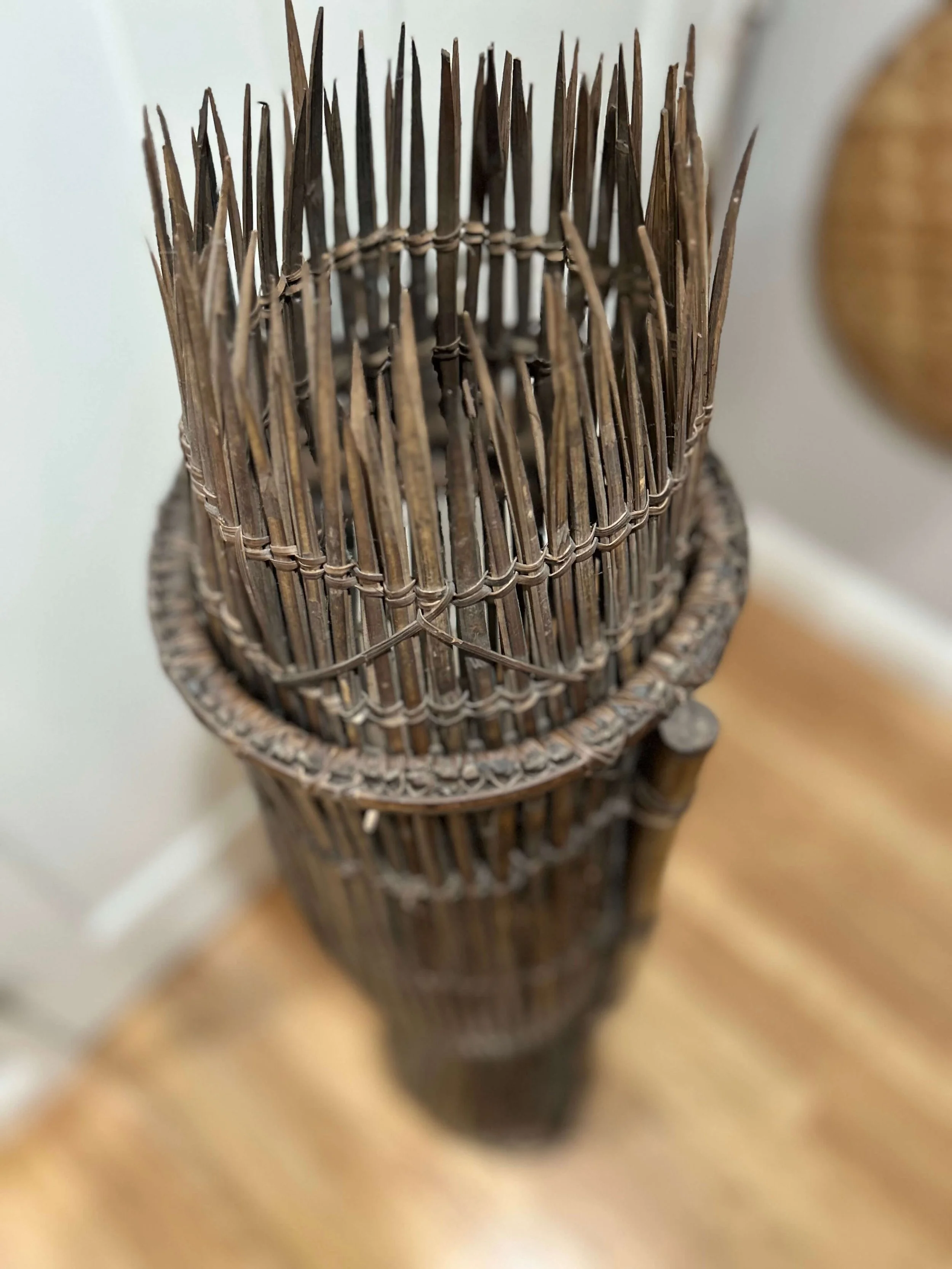
I don't know how to bring that kind of world experience to a wider group that didn't get it. My idea of fun was going to a flea market and finding some weird, beautiful object — like a Filipino woven bamboo fish trap, about four and a half feet tall, used to catch fish. I loved it the moment I saw it. Twenty-five years later I looked at it and thought, wait — that's a Martin Puryear. I didn't know that until decades later.
Art as the Gift That Keeps Giving
Hugh Leeman: There's something interesting about what you're saying when you frame it against the static versus the moving image. A generation of people under twenty-five has grown up where every image is constantly scrolling, moving, something they have power over — they can swipe past it, vote on it. A painting just hangs there. How do you make the case for that?
Jack Fischer: There's a huge paradox in what you're saying, because one of the things I always tell people when they're looking at a painting I love is: think of it as a gift that keeps on giving. I guarantee you that in five years, in a week, it's going to be different. In a way, it also moves.
And that's something I tell people before they buy — consider whether you're going to appreciate it in the same way, or even more, in a couple of weeks, in a year. I say that from personal experience because I've bought things that a year later I thought, what was I thinking? It's not moving me the same way anymore. So yes — I believe it all moves, just differently.
Hugh Leeman: Going back to what you said at the start — emotion, seeing the artist's hand. There's a quote often attributed to Francis Bacon: the most powerful part of any painting is the space it leaves for the viewer's imagination. That seems to be what you're pointing at — that you can look at something you've owned every day for a month and see a part of yourself in it that the artist never intended.
Jack Fischer: Yes. And tied to that — I don't want the work to do it all for me. I want room to interact with it, be it a year later or ten years later, and have something new happen. That's where the emotional moments arise.
From Colombia to Manhattan: An Origin Story
Hugh Leeman: You've published a photo of yourself wearing a shirt that says something along the lines of "I am an immigrant." You grew up in Manhattan. What is your family's origin story?
Jack Fischer: We moved to New York City when I was eleven years old from Colombia, South America. I was born there. Spanish is my first language — I speak it fluently. So you can imagine what the Super Bowl halftime show was like. The way that it went, the way it was broken down — Bad Bunny was like a passion play. The way he laid it all out was beautiful. I don't really love his music that much, but it was gospel.
So yes — I was born in Colombia, South America. My father was a refugee from Germany who wound up there, and that's where I was born. When I came to New York, I knew no English. It was an interesting experience to be in the public school system of New York City as an immigrant. I wear that shirt proudly.
Hugh Leeman: So your father initially leaves Germany —
Jack Fischer: In 1938. And he left a lot of family behind. Out of nine, only three survived. He winds up in Colombia, where there's a small Jewish community — people who migrate, find each other, and take care of one another. Then, fast forward twenty years, there's a dictator in Colombia — Gustavo Rojas Pinilla — who was beginning to kill students. My father, who had already escaped the Nazis, thought, "Oh no. Here we go again. We're out of here." My uncle had also escaped and was already in New York, so they were able to find each other. I don't know how my father managed it all, but he did.
Hugh Leeman: It's such a fascinating part of the world. I have close friends who live in Cúcuta, right at the Venezuelan border. It's a remarkable time — the immigration of people from Venezuela into Colombia. And you go back twenty-plus years and it was almost the opposite: Colombians flooding into Venezuela. The way those dynamics shape how people perceive you and your community. Growing up, coming to Manhattan as an immigrant — what was that like?
Jack Fischer: We left Colombia because of the dictator. My father, who had already escaped one regime, recognized the signs immediately and got us out. I give him so much credit for that. And to this day I cannot believe how he managed it.
Hugh Leeman: Can you connect that journey — from Colombia to Manhattan — to who you became as a collector and dealer?
Jack Fischer: It immediately makes me think about objects, and how objects ground us. I think that's what made me a collector. I am drawn to objects — from tiny little things to the paintings behind me. This one here, by the way, is by Camille Holvoet from Creativity Explored — that wonderful cake. Objects, paintings, sculptures ground us. Music grounds us. It keeps us all part of a larger community. And maybe that's part of why I always want to see the hand — because that hand implies another person. It implies connection.
Hugh Leeman: There's something ineffable in the way you're describing it. Going back to the humanities — there is something deeply human about seeing the imperfection of a hand in the work. You think of that cake painting behind you, and I'm reminded of when I was at Creativity Explored — there was a woman there who, for the most part, all she did was make cakes, pastries, cupcakes. I was completely struck by her. There was a brilliance to it. And she had more joy in what she was doing than almost any other artist I've ever met. Sometimes you meet artists who seem to suffer through their practice, who work so hard to be deeply intellectual. She just loved it. I admired her enormously.
Jack Fischer: That's who that is. Yeah.
Opening the Gallery
Hugh Leeman: I want to turn to the gallery you just closed. What is the earliest memory that explains why you became an art dealer before you had a physical space? And what led you to think — I need to have a physical space? Because that is a serious commitment: the rent, the utilities, being there in person.
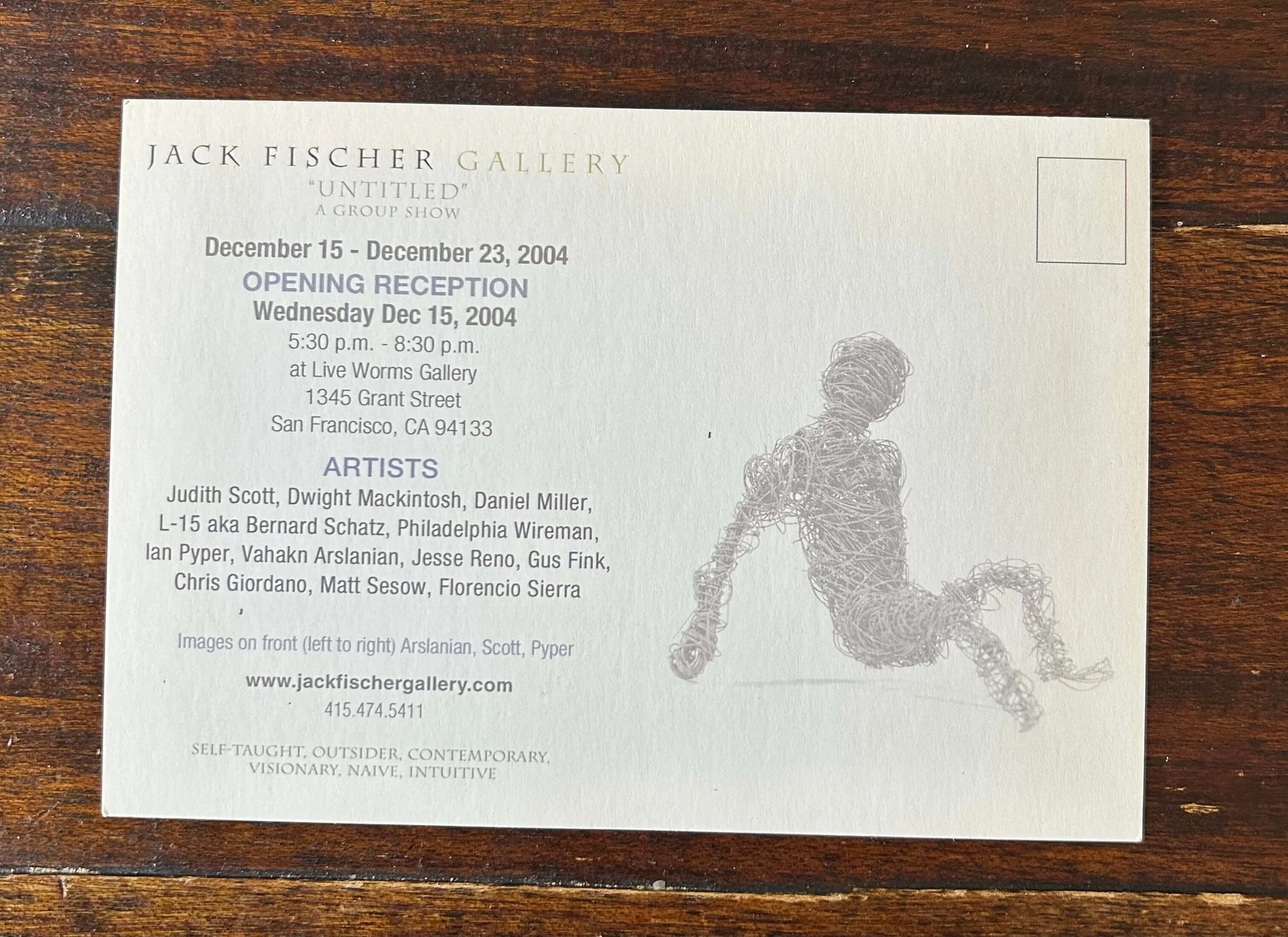
Jack Fischer: I got to a place where I had no choice. I had been around the art world for a while before I opened the gallery and had sworn I would never have anything to do with it. Then one day I just decided I was going to throw up a show. So I rented a small space on Grand Street called Live Worms — this was 2003, I believe — for one week. With the help of a lot of people, we put up the show. I barely got anything properly framed — pushpins, whatever worked. It was somewhat successful. I sold a few things. I didn't even know how to write an invoice.
About a month later I did it again at Live Worms. Kenneth Baker walked in, reviewed the show, and wrote something like: this is great, it's unfortunate it's only up for a week, you should all come see what Jack Fischer is doing — it's refreshing and interesting. He was something of a demigod in the reviewing world at the time. I took that as an impetus.
I found out there was a small space at 49 Geary. I thought, I'll try it again — signed a lease for one month. Then that evening I called and said: can I sign the lease for a year? Diving off the deep end with no idea what I was doing — but I was going to do it. I wrote to people. Hey, you want to have a show? I'm going to be doing this. My first space was probably about fifty square feet, if that — the old bathroom on the fourth floor at 49 Geary. They had redone it, closed off the stalls, but it was this tiny little space.
Hugh Leeman: You signed a lease for one month and then called back that very evening to commit to a year. From a negotiating standpoint it almost seems like you'd wait at least a week to see how things go. What hit you?
Jack Fischer: Well, four months later I got married — so you know me. It was now or never. You know how sometimes you don't want to go to the gym but you grab yourself by the scruff of the neck and go anyway because it's your fate? That's what it was. My fate.
Hugh Leeman: Kenneth Baker — you called him a demigod.
Jack Fischer: I retract demigod, but he was certainly someone I respected tremendously. He was a great writer and a real personality in the Bay Area. Everyone wanted to be reviewed by him. He was writing for the Chronicle, and it was almost like a magic wand — you got a review from Kenneth Baker and people paid attention. He really understood my mission. He understood my intent — which was to show so-called outsider work alongside so-called insider work. He got that. And based on that, I decided: take out a year lease.
How the Art World Changed Him
Hugh Leeman: From Live Worms and the old bathroom at 49 Geary to decades of dedication — how has your relationship with art and the art world changed over those years?
Jack Fischer: I've been lucky enough to make some really wonderful, deep friendships with artists I've worked with. And it's deepened my life as a human in ways I can't fully explain. It's been a lesson in art that I can't really put into words.
I'm reminded of that book All the Beauty in the World — about the fellow who gave up a career in finance to become a guard at the Metropolitan Museum of Art. It's his musings as he walks around, and without you quite realizing it, he walks you through the entire art history of the world. I was able to develop something like that — a deep, intimate understanding of the art world in the Bay Area, with connections out into Los Angeles, New York, London, Germany, through the artists I've worked with.
I've done it entirely without a roadmap. By the seat of my pants, by my emotions, by what has spoken to me in the work. I'm humbled by the people I've met because of it.
Hugh Leeman: That's a beautiful way of putting it — that it's really about the relationships. Nigel Poor was on the podcast and said something like: I don't know that art can bring down an institution that needs change, but I think it can bring peace and beauty to people who connect through it. I take peace in that. And what you're describing is something similar — relationships built not on shared third-quarter earnings, but on the emotion left behind in these paintings.
The Macro Picture: Galleries Closing, a World Changing
Hugh Leeman: Here we are in the heart of Silicon Valley and San Francisco, with AI accelerating everything. I was reading an article on SFGate about galleries closing at Minnesota Street Projects — revenue down, attendance down. And yet the financial markets have been booming for years. Here in the Bay Area, if you draw a fifteen-mile circle around SFO, you have a GDP roughly equal to Germany's over the last decade. Yet there seems to be an implosion happening in the art world. Where do you see all of this going?
Jack Fischer: When you have legacy galleries like Rena Bransten closing, and Blum in LA closing — I think galleries my size and mid-tier galleries are going to be slowly but surely devastated over the next five years. I don't see anything positive happening. I believe it's only going to be the mega galleries that survive, and they're going to be cherry-picking from what remains of the smaller galleries, which has been going on for years anyway.
CCA closing comes to mind. What does it mean for the professors out of a job as of 2027? Why would anyone want to become an artist?
I started this gallery with maybe seven hundred dollars in the bank, rent on my house to pay, and a gallery to open. Scotch tape and toothpicks. And in retrospect, I cannot believe it happened. But I'm so thankful. Scotch tape and toothpicks.
Hugh Leeman: I deeply appreciate that honesty, because one of the challenges the Bay Area art world — and maybe liberal democratic communities more broadly — is facing is an unwillingness to speak truth to a difficult situation. Everyone is expected to hold the company line. CCA is closing. Vanderbilt is effectively opening a center to teach people how to use technology for the future. The writing may be on the wall.
Jack Fischer: They also have a really good basketball team. My theory is that's really why they're here. The Warriors brought them.
Hugh Leeman: Conspiracy theories with Jack Fischer. It's Steph Curry behind all of this.
The Art Industry Structure
Hugh Leeman: In that article about Minnesota Street Projects, the galleries cited two main problems: lack of demand, and the art industry structure itself. What are the structural problems in the art world?
Jack Fischer: I'm not sure I know exactly what they mean by that.
Hugh Leeman: Part of why I'm asking you. My understanding is the question of whether it's better to have a gallery in an area where you're a unique destination, or to cluster with other galleries in the same building. In almost no other industry do we say, I'm going to open my hardware store right next to ten other hardware stores. You go where there's demand and you're a unique entity. Yet in the art world, we cluster. Did it help your gallery to be at 49 Geary, surrounded by other galleries?
Jack Fischer: Absolutely. At 49 Geary we had twenty-seven galleries in the building at one point. We had First Thursdays, which drew incredible numbers. At Minnesota Street Project we have ten galleries, and it has drawn collectors, clients, and young people. It was genuinely good for my gallery to be there.
The accidental tourist, the accidental collector — the person who got off at the wrong bus stop and wanders into the building and winds up buying something for fifteen hundred dollars because it struck them — I'm going to miss those moments. But more than the sale, I'm going to miss the accidental conversations. Someone walks in, we say hello, and we wind up talking about Colombia for an hour. That is what gave me incredible joy.
Every once in a while, teachers would bring students in to hear about a show. One time — I can't remember the artist or the teacher — I finished my talk, everyone left, and this one kid came back in and said: "You know what you do? You show people's dreams." I completely melted. That has stayed with me.
And during my closing week, I had people in their seventies and eighties coming in. But I also had a student from CCA's last graduating class who said, "I've been following your gallery for years. I'm sorry you're closing." I thought — what? You started following me when you were ten years old? It has been rewarding beyond anything I expected.
One Intervention That Could Help
Hugh Leeman: What is one intervention — whether from Minnesota Street Projects, a city initiative, a policy change, a nonprofit partner — that could materially help small and mid-size galleries and artists right now?
Jack Fischer: What the Rapoports tried to do with Minnesota Street Project — renting at below-market rate to galleries — is a great model. And I don't see them closing the building, despite the rumors. The same model worked at 49 Geary. There was something similar in Santa Monica — a former bus depot that housed fifteen to twenty different galleries for years. It's why Kentucky Fried Chicken opens across the street from McDonald's.
I don't think people are going to stop buying art. I think that will continue. It's just going to be harder. But that model — affordable clustered space, built-in foot traffic, a reason for people to come — that's the thing closest to a real answer.
Hugh Leeman: That's a good counterpoint to my earlier suggestion that galleries maybe shouldn't cluster together. Jack Fischer, thank you so much.
Jack Fischer: Thank you so much for this. I can't wait to see what comes out of it.
