

Isaac Vazquez Avila - Unruly Inland Scenes, pt.2 Gallery, Oakland
Unruly Inland Scenes, Isaac Vazquez Avila’s fifth solo exhibition with pt.2 Gallery, is a noticeable departure from the dense, graphic language that has characterized much of his earlier work with the gallery. Across fourteen new works, Vazquez Avila loosens his hold on recognizable imagery and allows something quieter and less certain to emerge. Horizons, bodies of water, vegetation and suggestions of interior space drift in and out of paintings that sit somewhere between landscape, abstraction, observation and memory. It is not that place has disappeared from his work, if anything, it has become more present, only now less as something to be pictured than something to be experienced.
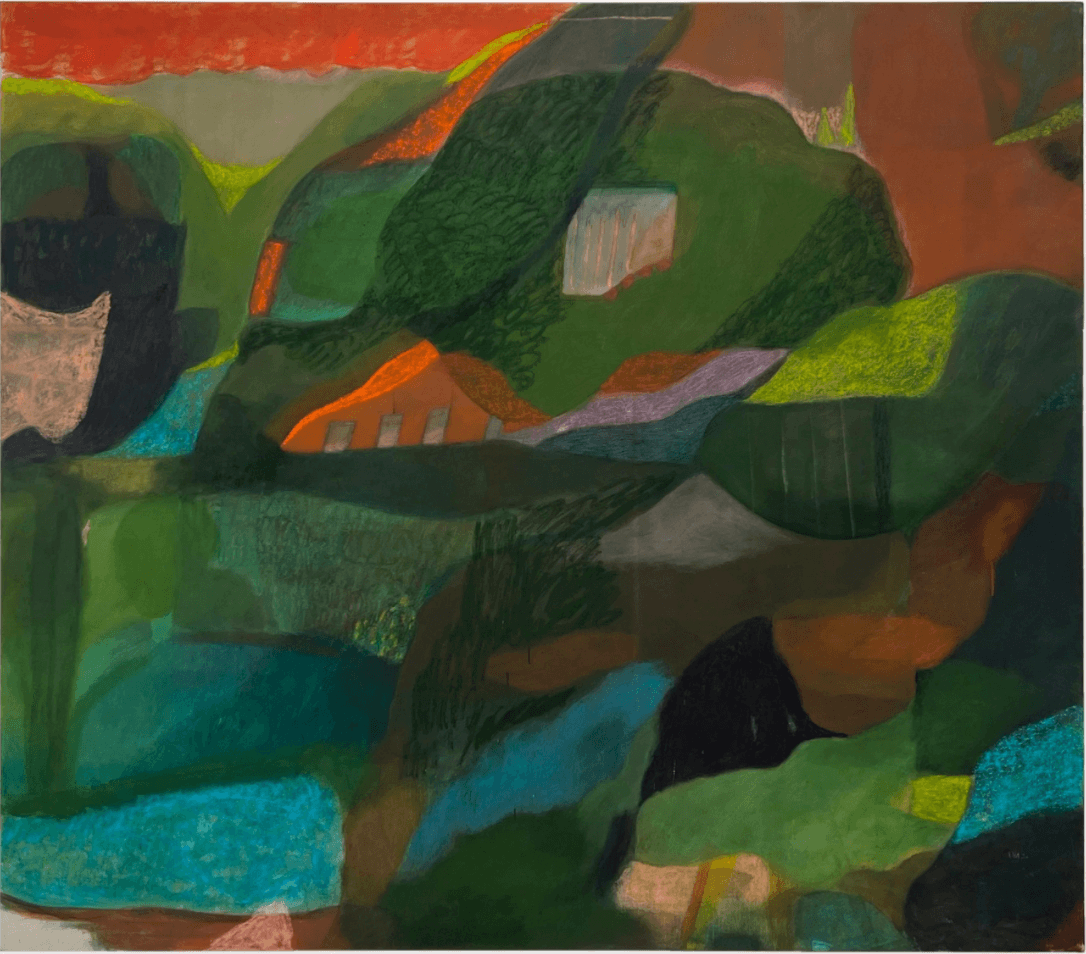
Isaac Vazquez Avila, unruly incidental observation, flower ground, oil, soft pastel, gouache on canvas, 73 x 84 inches, 2026.
Born in Mexico City in 1983, Vazquez Avila moved to the United States as a child and eventually settled in San Francisco, where he now lives and works in Bernal Heights. He received a BA in Latino/a Studies from San Francisco State University before earning his MFA from UC Berkeley in 2016, where he has since taught studio courses, alongside teaching at California College of the Arts. His practice has moved freely between painting, sculpture, sign painting and mural work, with exhibitions at the Berkeley Art Museum and Pacific Film Archive, Guerrero Gallery, Tlaloc Studios in Los Angeles and numerous Bay Area spaces. He has also conducted research in Mexico City through UC Berkeley’s Global Urban Humanities Initiative, examining the relationship between art and urban life, an interest in place and lived environment that continues to surface throughout his work.
Across his previous exhibitions with pt.2, Vazquez Avila’s work has undergone a gradual loosening. Earlier paintings were often hard-edged and densely constructed, drawing on sign painting, urban imagery, memory and explicit Latinx iconography, while his sculptures brought together found and altered materials with a greater sense of improvisation. By Como Siempre in 2024, daily walks through Bernal Heights had become an integral part of his process, with visual observations and collected materials finding their way back into the studio. Last year’s Letting Go marked a more significant change, as Vazquez Avila began painting over recognizable imagery and resisting predetermined compositions. Unruly Inland Scenes feels like the next step in that progression: rather than rejecting recognizable forms entirely, he now allows fragments of landscape to surface without requiring them to fully resolve.
That uncertainty is particularly present in mello meadow and a sense of place that is familiar, two works whose compositions continually tempt the eye toward recognition without ever quite satisfying it. In mello meadow, deep greens, reds and passages of blue begin to suggest hills, water, architecture or vegetation, while a sense of place that is familiar offers an even denser accumulation of forms that seem momentarily recognizable before slipping away. Looking at them feels similar to remembering a dream: the certainty that you saw a particular person, object or place remains, but its edges have softened and its details have blurred, no longer easily reconstructed. Vazquez Avila leaves enough detail for the mind to attempt completing these images, but not enough to accurately say exactly what they are. Their familiarity comes less from recognition than from the strange sensation of remembering something you cannot fully retrieve. This allows the viewer to create a personal narrative with the work while simultaneously recognizing another’s emotion within it; there is an attachment and disconnect all at once. A skill Vazquez Avila has honed and thoughtfully shared with us.
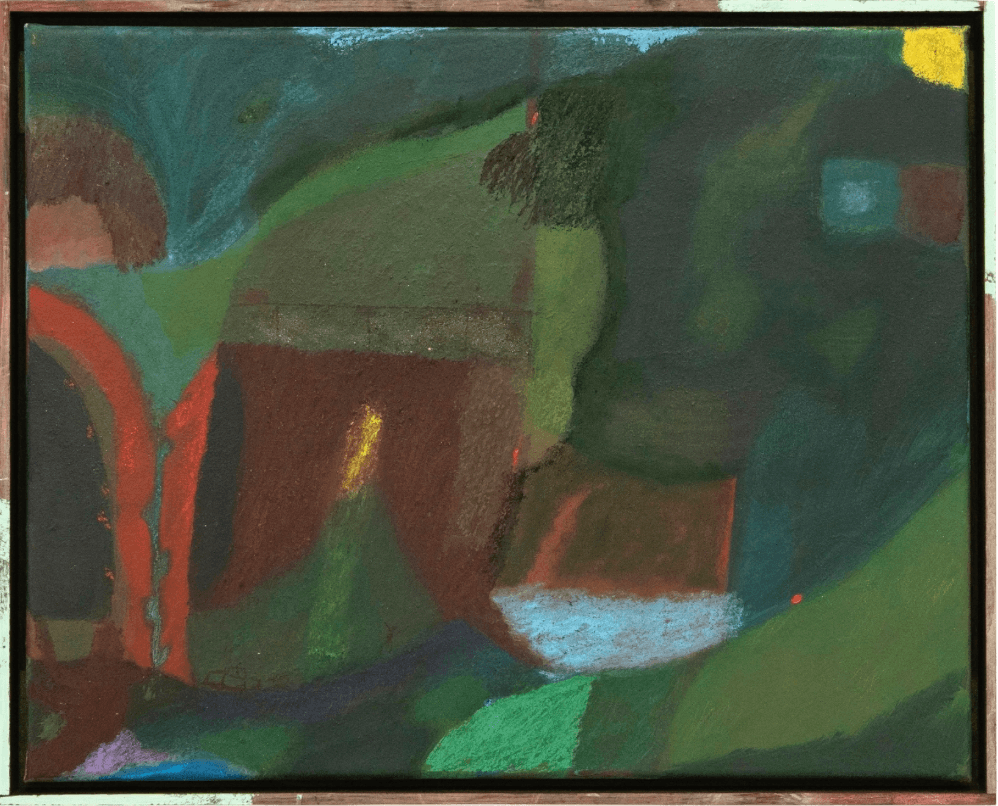
Isaac Vazquez Avila, mello meadow, flower ground, oil, soft pastel, gouache on canvas, 17 x 21 inches, 2026.
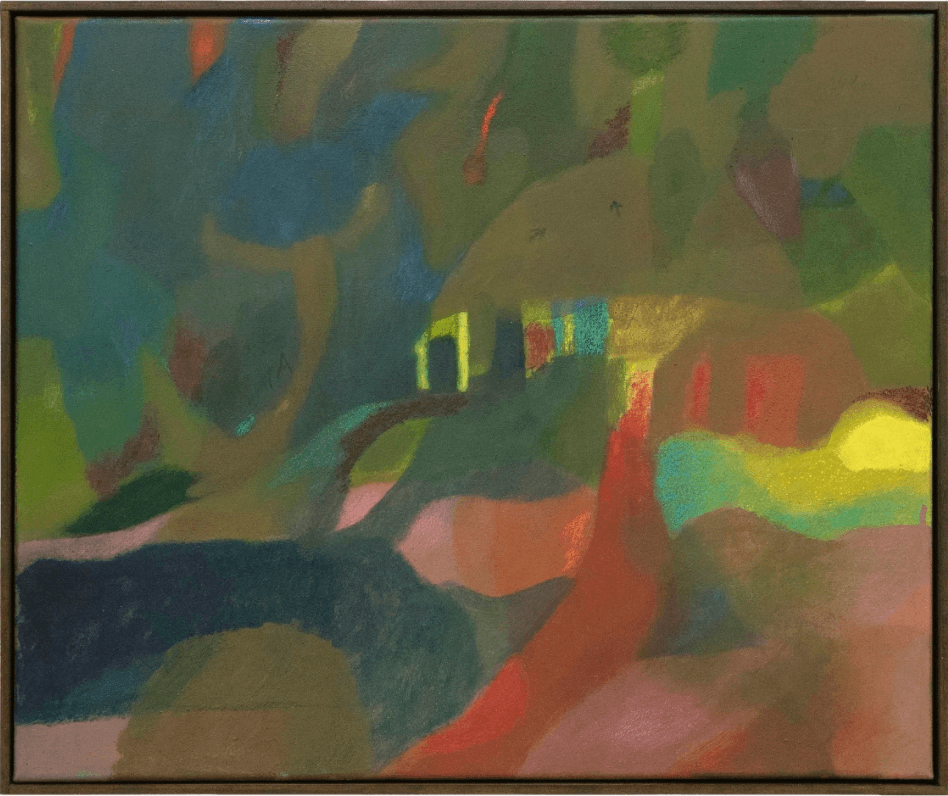
Isaac Vazquez Avila, a sense of place that is familiar, flower ground, oil, soft pastel, gouache on canvas, 20.5 x 24.5 inches, 2026.
Condition of a solitary bird pushes this ambiguity further. Its large fields of yellow, green and black initially read more abstractly, yet the title immediately changes how we look at it, prompting the mind to search for a bird among its loosely formed shapes. The dominant yellow carries its own associations, recalling the yellow ducks that are among the first birds many children learn to recognize, an almost instinctive visual shorthand that makes identification possible even where representation is absent. Again this draws a nostalgia and perhaps even a melancholy from the viewer without providing an obvious prompt toward it. Sculpture sits somewhere between these ways of seeing. Painted sections of brilliant blue, green and red occupy one half, while the other shows the scars, holes and weathered surface of what appears to be found wood. Here Vazquez Avila’s accumulated observations become physically present. The work brings something of the material world encountered on his walks into the gallery, allowing the viewer to experience not only an image of his surroundings, but something that appears to have lived within them. This becomes a more direct view into his experiences and process, as though he has taken us with him on one of his city walks; an eclectic urban tour guide perhaps?
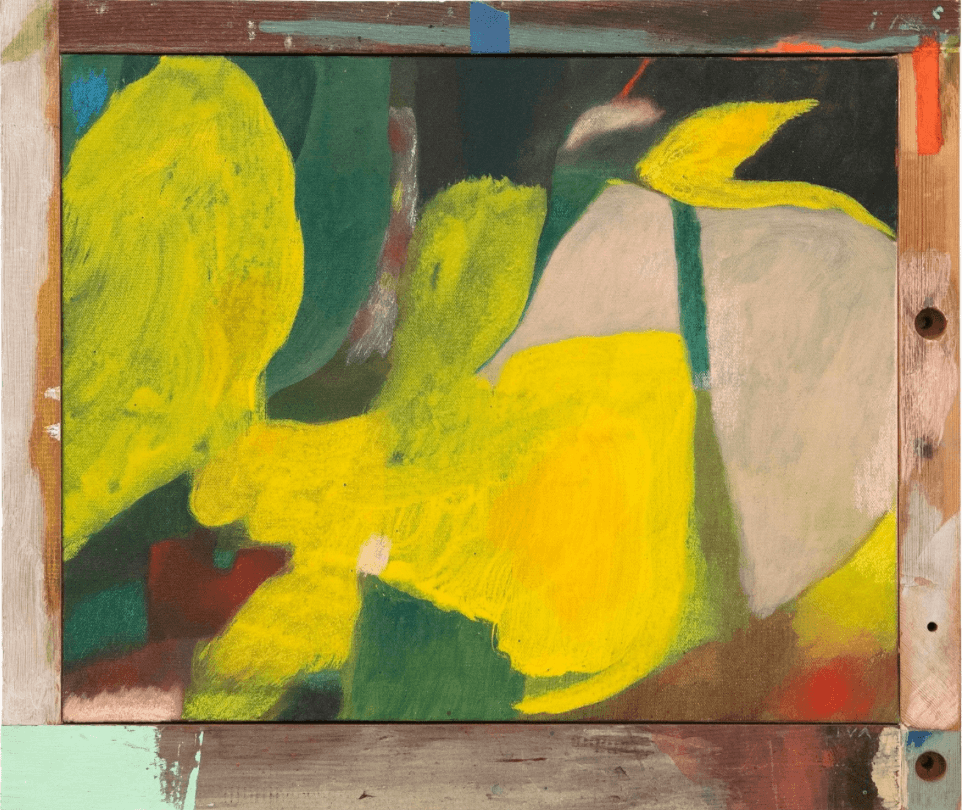
Isaac Vazquez Avila, condition of a solitary bird, flower ground, oil, soft pastel, gouache on canvas, 19.5 x 23 inches, 2026.
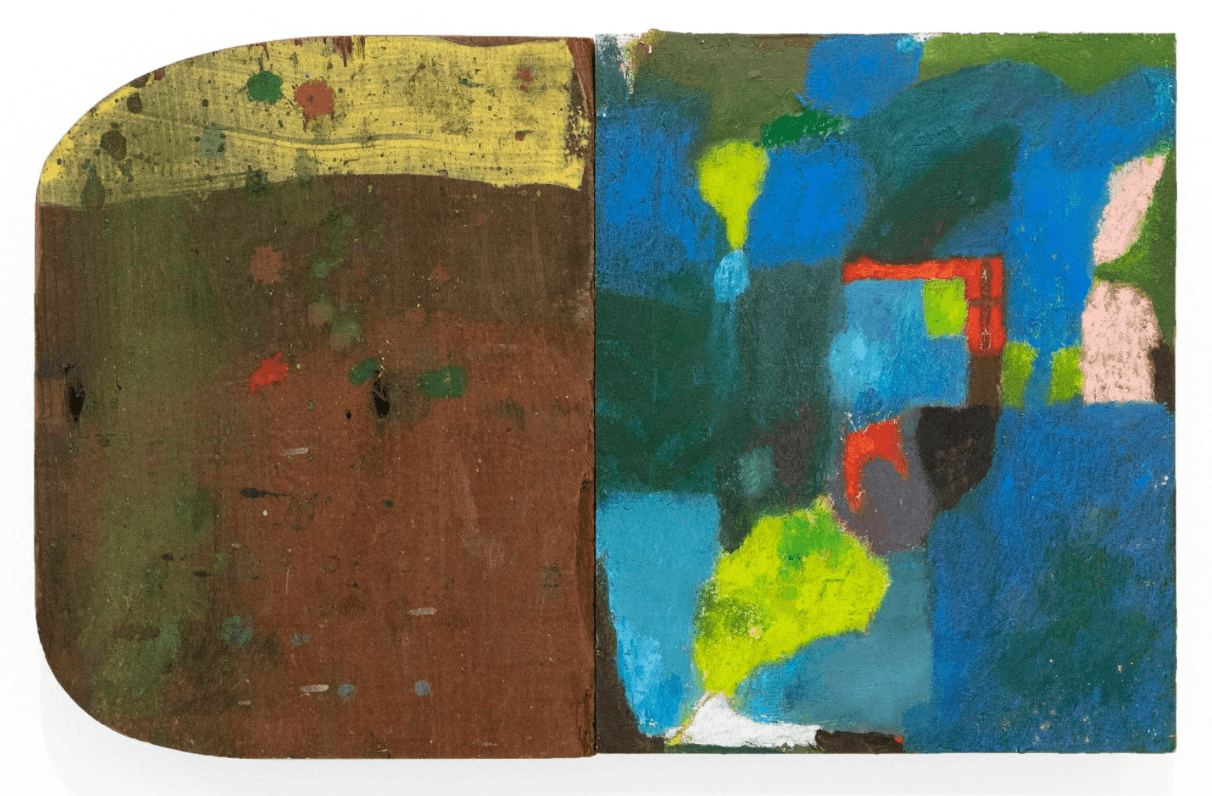
Isaac Vazquez Avila, Sculpture, flower ground, oil, soft pastel, gouache on canvas, 10 x 15.5 inches, 2026.
This movement between remembered, observed and physically experienced place expands dramatically in Slow Burn, Vazquez Avila’s new mural on the second floor of SFMOMA. Part of Bay Area Walls, the museum’s ongoing series of commissions and site-responsive projects by local artists, the sprawling work brings together Pacific sunsets, the cityscape surrounding his Bernal Heights home and studio, and memories of his birthplace, Mexico City. Here the suggestive forms of Unruly Inland Scenes become more culturally and geographically explicit: a Mesoamerican stepped-fret motif appears alongside birds referencing Mexican photographer Graciela Iturbide, while hand-painted signage and the weathered surfaces of public murals inform its texture. At this larger scale, Vazquez Avila’s accumulated experience of place becomes almost environmental, allowing locations separated by geography and time to occupy a single horizon resulting in a piece that feels quintessentially Vazquez Avila.
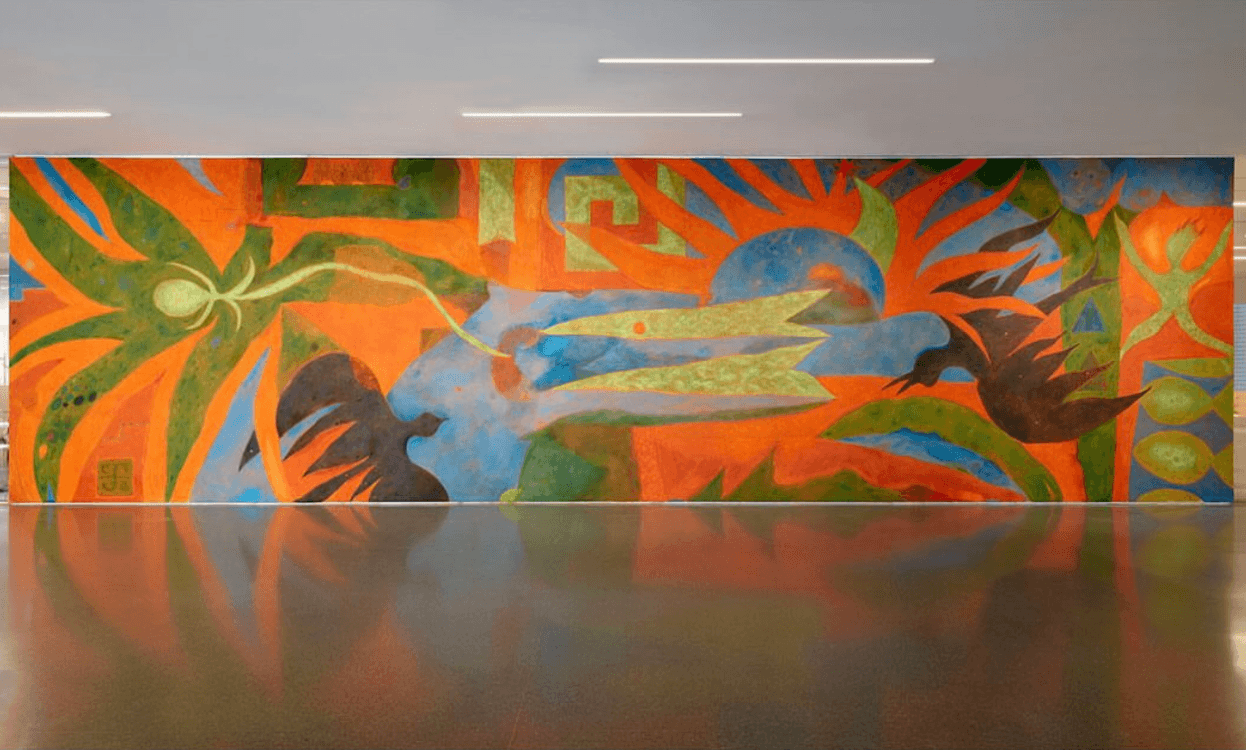
Isaac Vazquez Avila, Slow Burn, mural, Bay Area Walls project, SFMoMa, 2026.
What emerges across these works is a practice in which heritage and daily life are not separate sources, but parts of the same continuously accumulating experience. Mexico City, Bernal Heights, childhood memory, a familiar stretch of landscape or something noticed on a walk can all enter Vazquez Avila’s visual language without needing to announce where they came from. For the viewer, this allows the work to become strangely personal. We may not share his memories, but we recognize the experience of carrying places with us, of remembering them imperfectly and allowing the past to quietly alter how we see the present. Vazquez Avila captures not so much what a place looks like, but the emotional residue it leaves behind, and in doing so creates space for our own memories to enter alongside his.