

Suzanne Lacy, Art, Aging, and Accountability
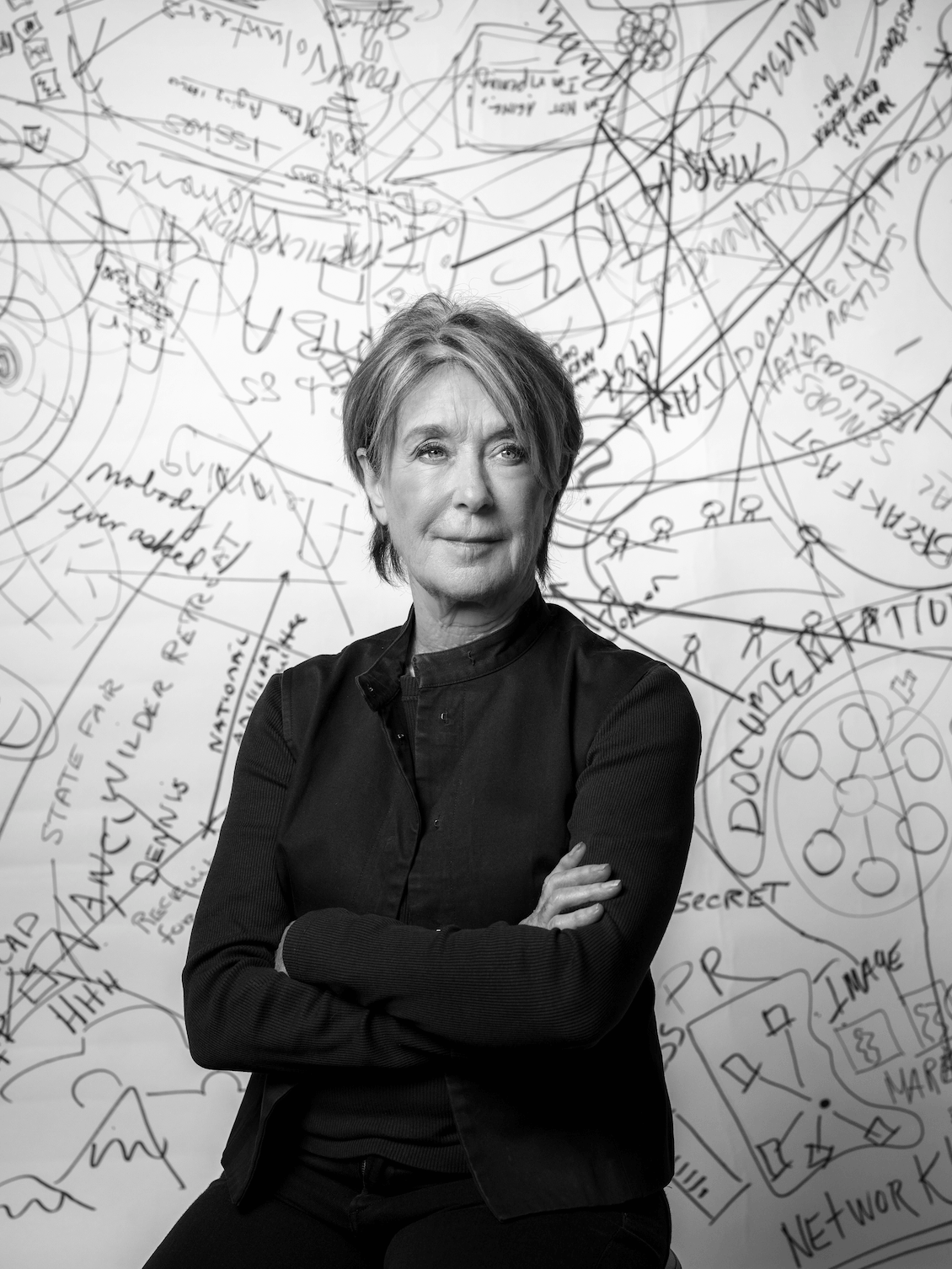
Suzanne Lacy is renowned as a pioneer in socially engaged and public performance art. Her installations, videos, and performances deal with sexual violence, rural and urban poverty, incarceration, labor and aging. Lacy’s large-scale projects span the globe, including England, Colombia, Ecuador, Spain, Ireland and the U.S.
In 2019 she had a career retrospective at the San Francisco Museum of Modern Art and at Yerba Buena Art Center. Her work has been reviewed in major periodicals and books and she exhibits in museums across the world. Also known for her writing, Lacy edited Mapping the Terrain: New Genre Public Art and authored Leaving Art: Writings on Performance, Politics, and Publics, 1974-2007. She is a professor at the Roski School of Art and Design at the University of Southern California and a resident artist at 18th Street Arts Center.
Artist & Pioneer of Social Practice | Interview by Hugh Leeman
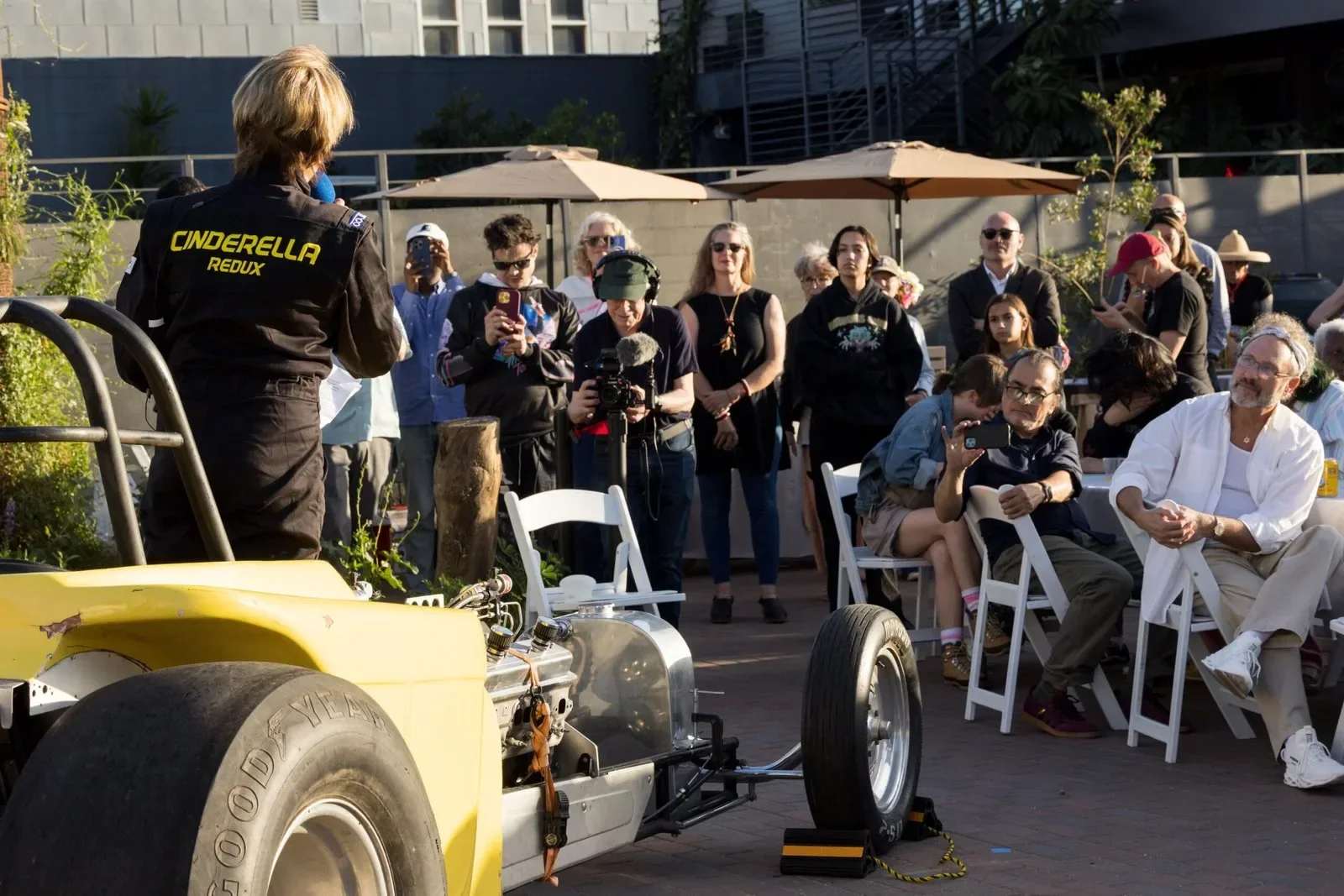
Cinderella in a Dragster, Fifty Years Later
Hugh Leeman: Suzanne, your work Cinderella Redux returns to Cinderella in a Speeding Dragster fifty years later, shifting its original investigation of speed, time, and identity toward endurance and artistic longevity. Walk me through these projects and what inspired the return half a century later.
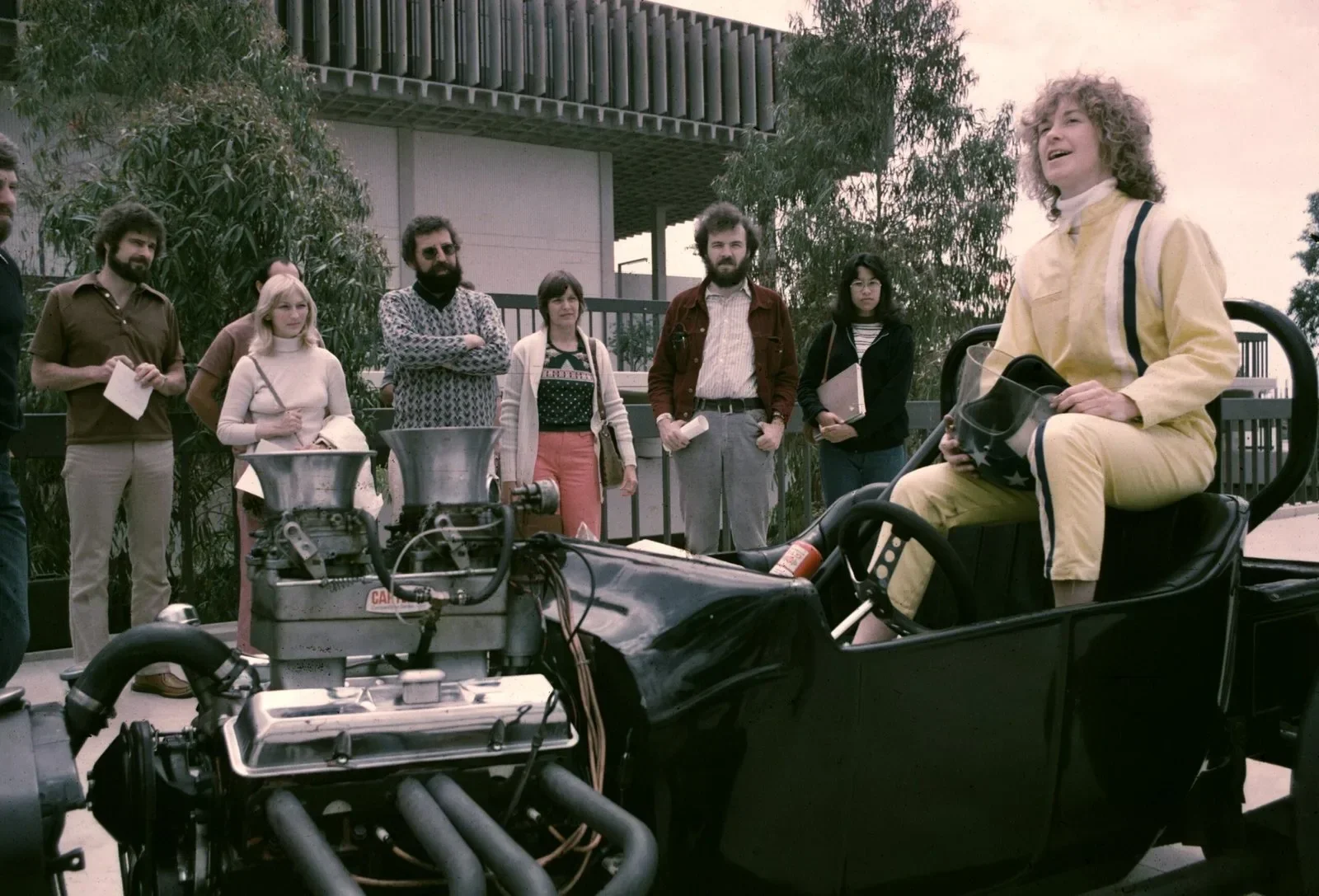
Suzanne Lacy: In 1976 I did a performance that came out of the feminist perspective at the time. I've always enjoyed doing things that men do — as a carpenter, in the kinds of jobs I took on. I liked being able to handle the physical world. I thought it would be funny to drive a race car as a woman named Cinderella. It was also as a comment on my working-class origins and our relationship in California to cars, which is profound. We don't have public transportation systems, we have cars. And it was about motion and speed, and a psychological trajectory in my sensibility about movement. I think that's California-based as well — a sensibility of forward movement. We're on the edge of the Continent; we knock down a building and build a new one the next week.
At 30, I was a young performance artist in LA, and each week I was flying to San Francisco, driving from LA to San Diego and back. I was teaching in three cities every single week. Around the same time, I did a project called Prostitution Notes — essentially a cartography of Los Angeles, the sites where prostitution of various kinds occurred. Unlike other women artists at the time, my relationship to sex work was not to become one with it, to become a prostitute for a period, but to position myself as a subjective anthropologist, finding out the layer of culture right beneath the surface of Los Angeles's normal life. In both cases I was signifying movement — my movement across LA and, in the dragster project, my movement across the state as a performance artist.
Hugh Leeman: In Cinderella Redux you adopt the persona Cindy, who aspires to become the world's fastest rookie performance artist. What does that persona allow you to say about ambition, aging, and femininity?
Suzanne Lacy: I don't know yet — that's exactly what I'm exploring now. I have come to that piece with ambivalence. The first Cinderella was about being a performance artist, and how, as a performance artist, you live in fantasy. You create fantastic worlds, you inhabit them for a while, then you knock them down and build up the next. It's a comment on temporality as an art form. At that time, it was unusual for a woman to be driving a drag car — there were a few in California, like Shirley Shahan, who grew up in the same area I did, and was just a few years older than me, but it was rare. In the performance, I drove onto campus, delivered a rapid-fire monologue, and tossed a glass slipper out as I drove off.
I'm looking at my archives now, thinking about how to manifest past work into present visual standards that would allow my work to be collected. I thought, “I'd like to make a race car” as an object representing the first work. Then I thought it would be funny to drive a race car at my age. It started as a one-liner a humorous work. For me it is a slightly an ironic commentary that at my age I'd be learning to drive a car over 100 miles an hour — one that could blow up at any moment.
But it also indicates this time in my career. At 80, I'm invited to do more projects than exhibitions. My visibility is built on doing long-term projects. The Performance Art Museum was being created here in Los Angeles, x and its exploration of High Performance, the magazine Linda Burnham started in 1978, was underway. (The two-year project is with The 18th Street Art Center, The Getty Research Institute, and Los Angeles Contemporary Exhibitions.) Since I was the first cover girl on the magazine, I thought I’d do a performance about that original performance.
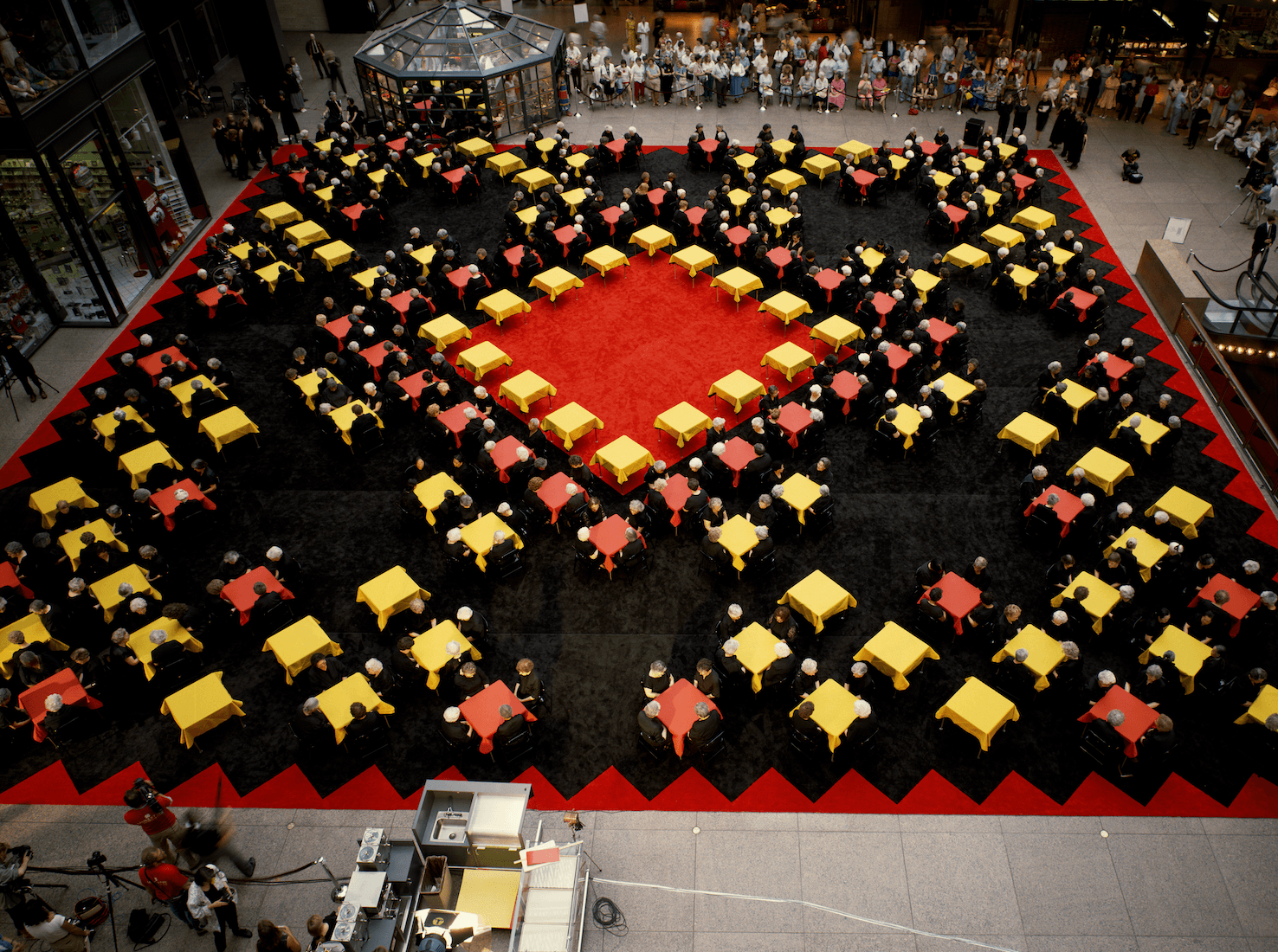
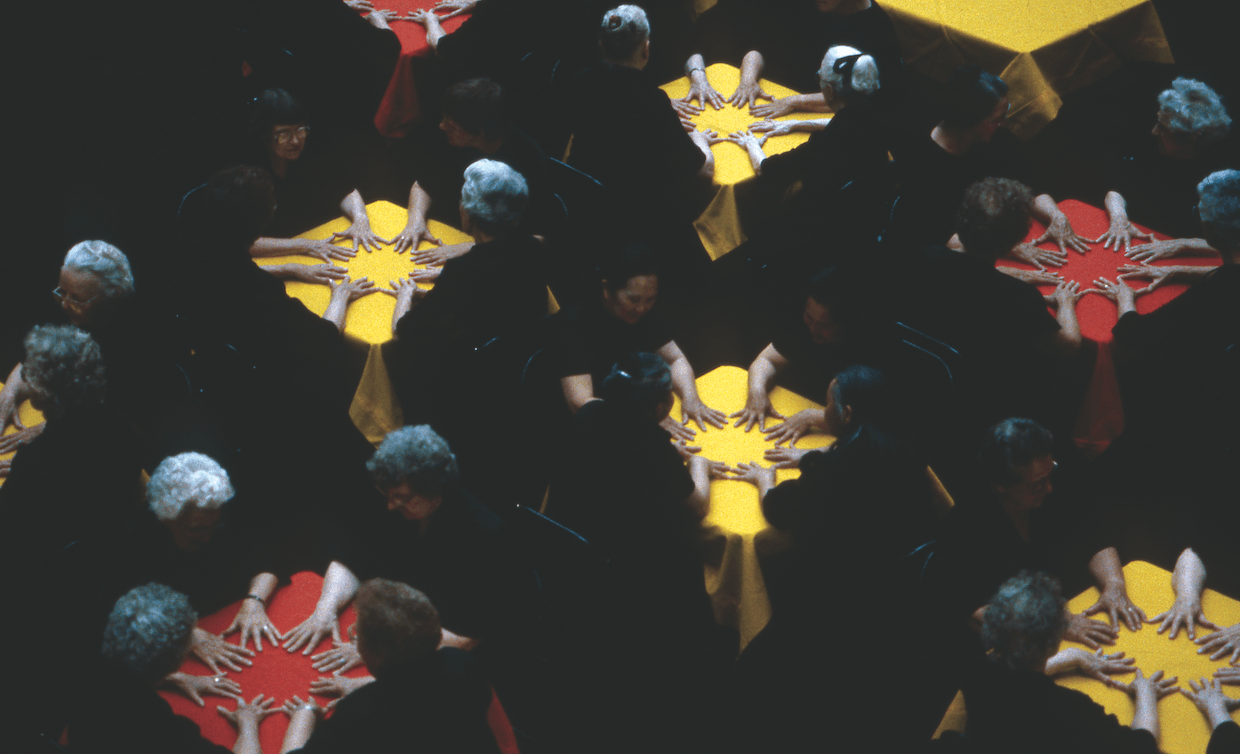
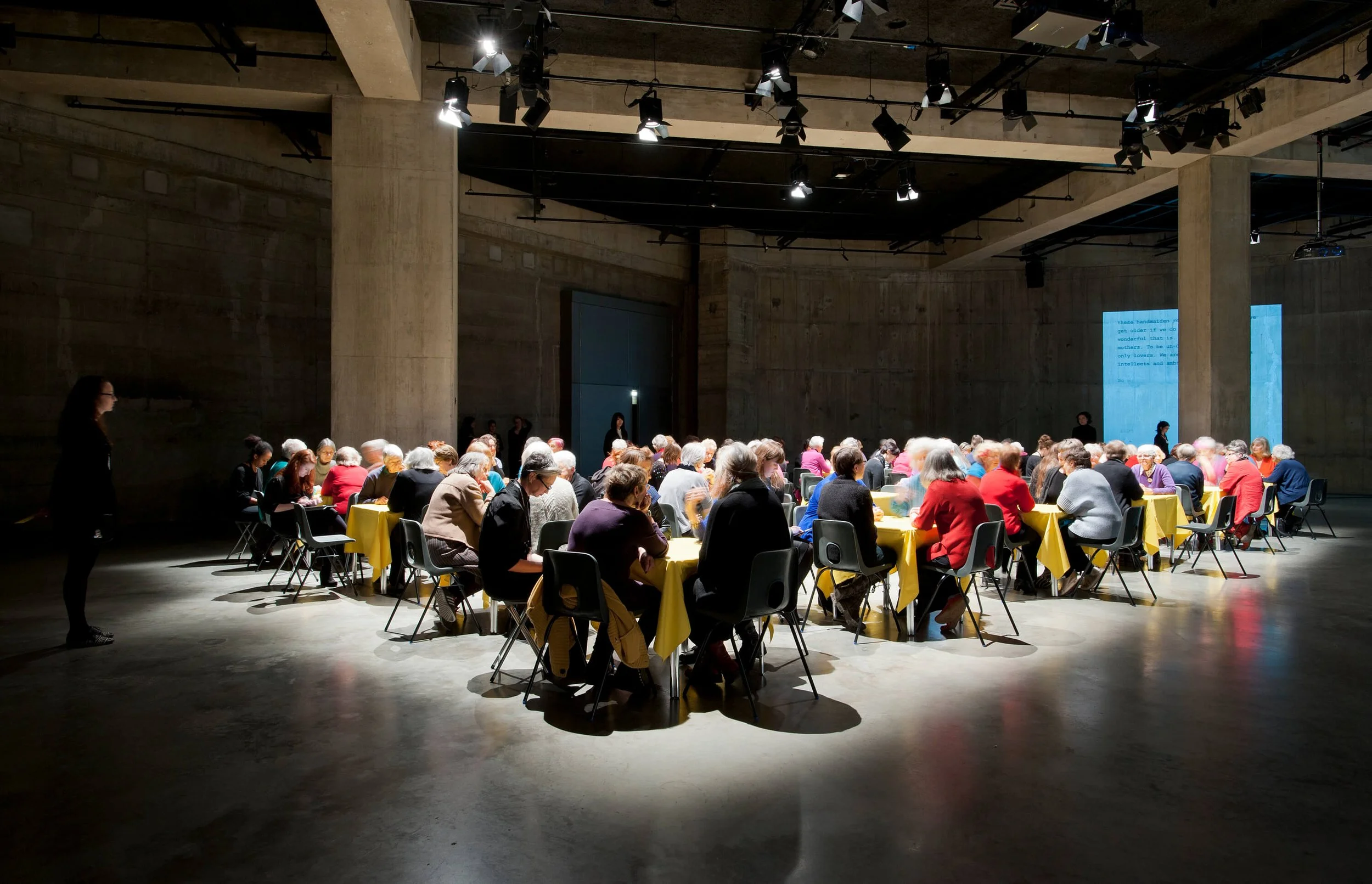
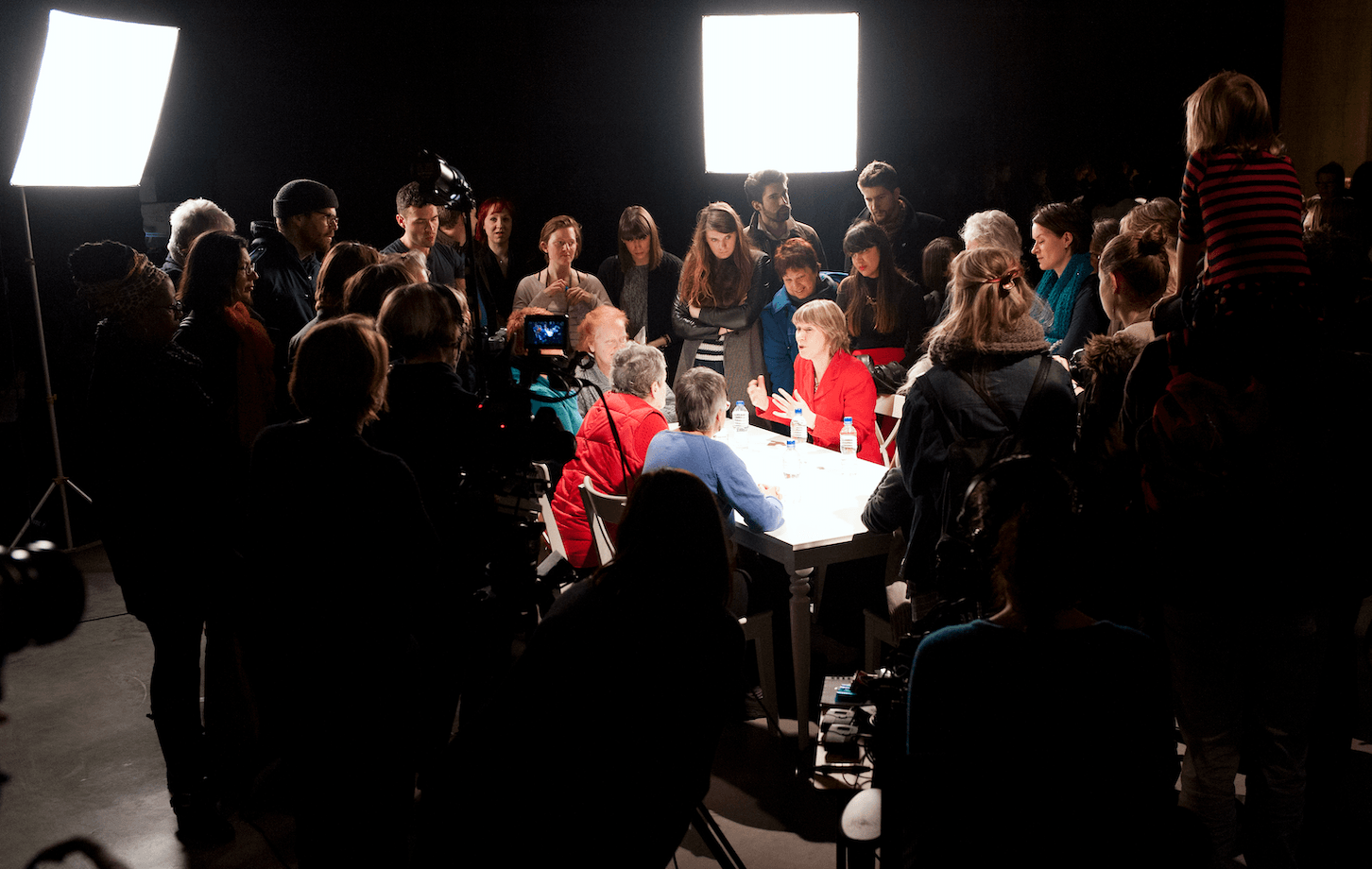
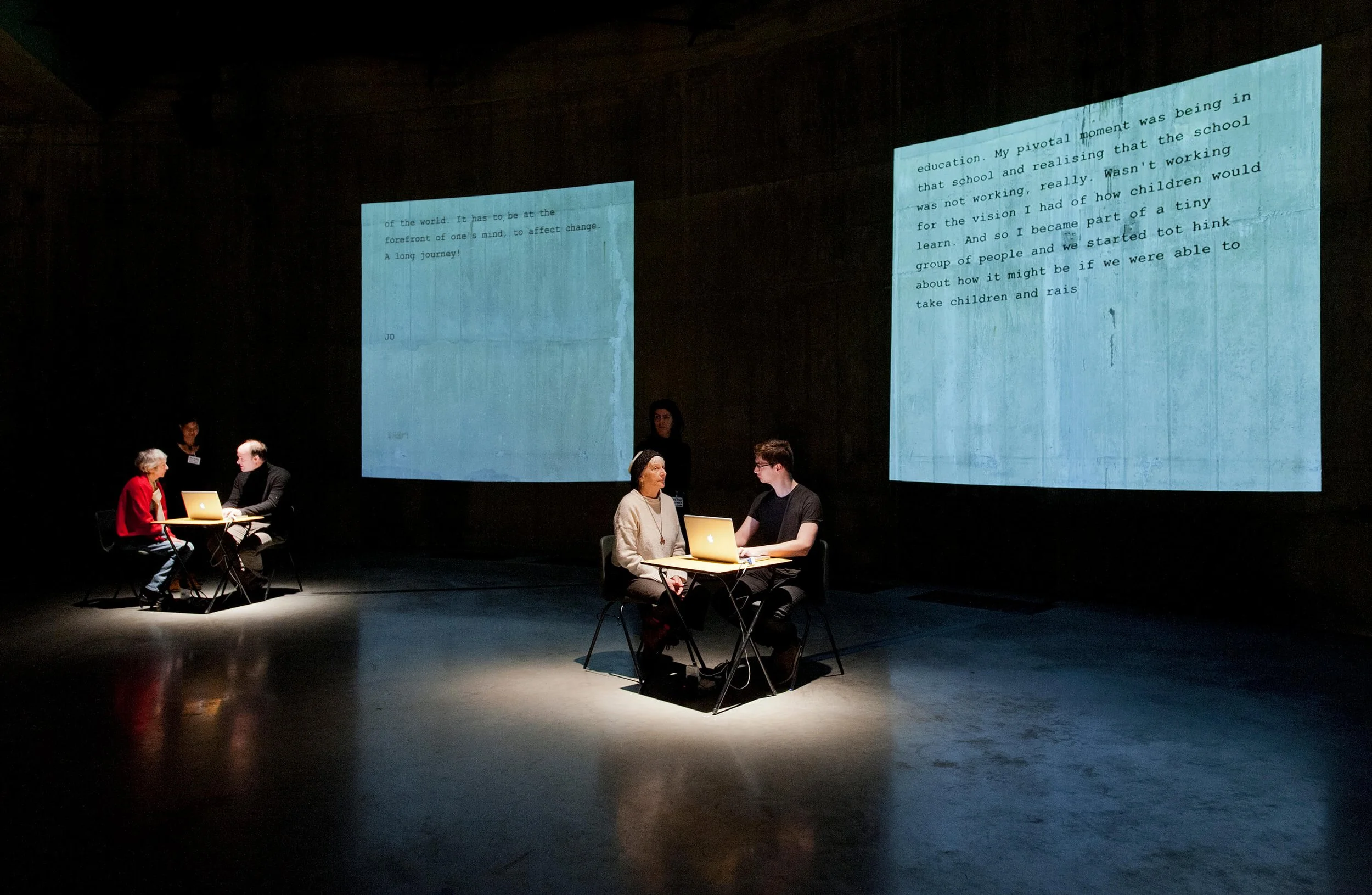
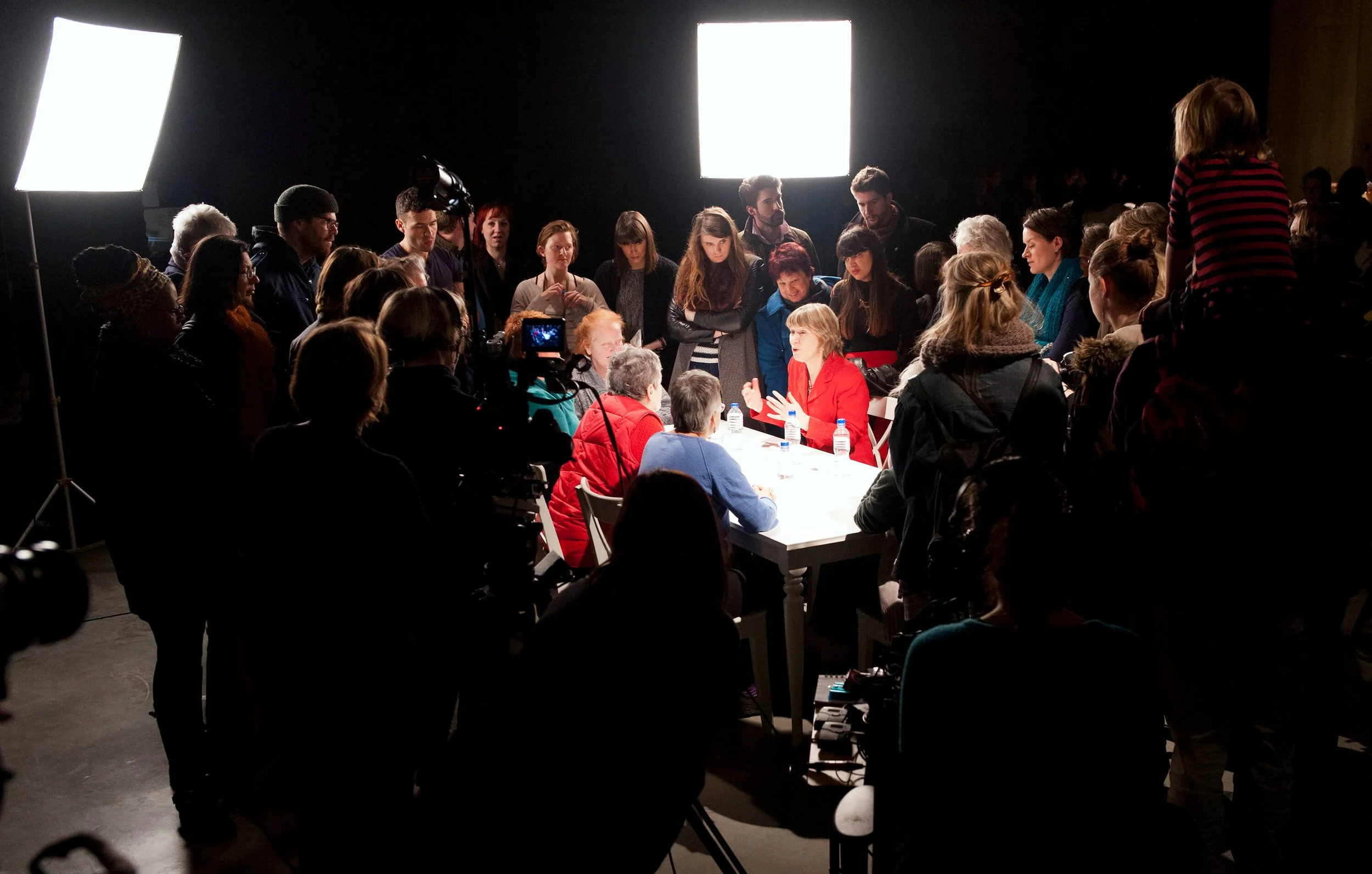
The only reason I'd ever create a performance redo —I've done it a couple of times — is if the performance contends with a radically different social context. I did The Crystal Quilt in Minnesota in '87, then Silver Action at Tate Modern in 2013. Both were structurally the same project, but in England we referenced a different history of activism and a different current social context for aging and gender. With Cinderella Redux, I thought it would be interesting to look not so much at aging, though that's part of it, but at my life as a performance artist — the development of fantasy, the desire to travel, to create new worlds. The way I work now is quite extensive and long term. Cinderella Redux is a reduction in a way, going back to the personal body and the experience of the artist. And that brings up the subject of aging.
The Pressure of the Market vs. the Pressure of Being an Artist
Hugh Leeman: Is there a continuing pressure to prove oneself in the art world?
Suzanne Lacy: I don't think so. The way the art world operates is there's a continuing demand to produce. Once the production moves into the art market — the cycle of exhibitions and articles and sales — it's self-replicating. Of course, there's always the need, particularly now with social media, to be visible, present. But that has to do with the market. There's not a pressure on being an artist, except for your relationship to that system, to the market, and your need to earn a living.
Hugh Leeman: In the 1976 performance, your autobiographical monologue moved from your childhood in Wasco through journeys in San Francisco, LA, and San Diego, ending with the discarded glass slipper. Which parts of that younger woman's story still belong to you?
Suzanne Lacy: Definitely movement — and by movement, I mean physical movement. Travel, and the exponential aspect of traveling long distances. When I first launched this piece, the next week I went to Qatar for two days — a 16-hour flight each way. That's indicative of how performance artists and contemporary artists operate. Some of us are a tremendous user of travel, fuels, airplanes and so on.
Now, where I'm at right now — doing this piece and pausing before I go into other projects (if I do go into them) — it's a moment of considering whether there limits to movement for me? Does movement take another shape? I think if I can think and move, I’ll make things or write. But do I want to start a project in Liverpool with prisoners? Do I want to go to Qatar and start a project with young women? Or do I want to sit here in one spot and write? The urge to keep moving is built into my body. I walk fast. I don't like impediments. I used to climb over things instead of going around. And that body consciousness- in the first performance I talked about shaving my legs and how much time it took. The sense of time is still with me. I have a really strong sense of time. How long do I have left to live, and what do I want to do with it? I've had a keen awareness of death since I was very young.
Hugh Leeman: Where did that awareness of death from such a young age come from?
Suzanne Lacy: I don't know. It could have come from a childhood friend who died when I was 10, but that's maybe a slightly superficial answer. If you look at Rainer Maria Rilke, at Dostoevsky, at Tolstoy — all the things I read in high school and college — there's a kind of depressive mentality some artists have, those drawn to the awareness of mortality. Performance artists, I think, are often philosophical-- thinking about the meaning of what they're doing and how their embodiment of an artwork reflects their own life process. That's true of California performance artists of my generation. Sitting around trying to understand non-existence is, I think, a deeply spiritual issue.
The Bullring: Men Reading Women's Letters
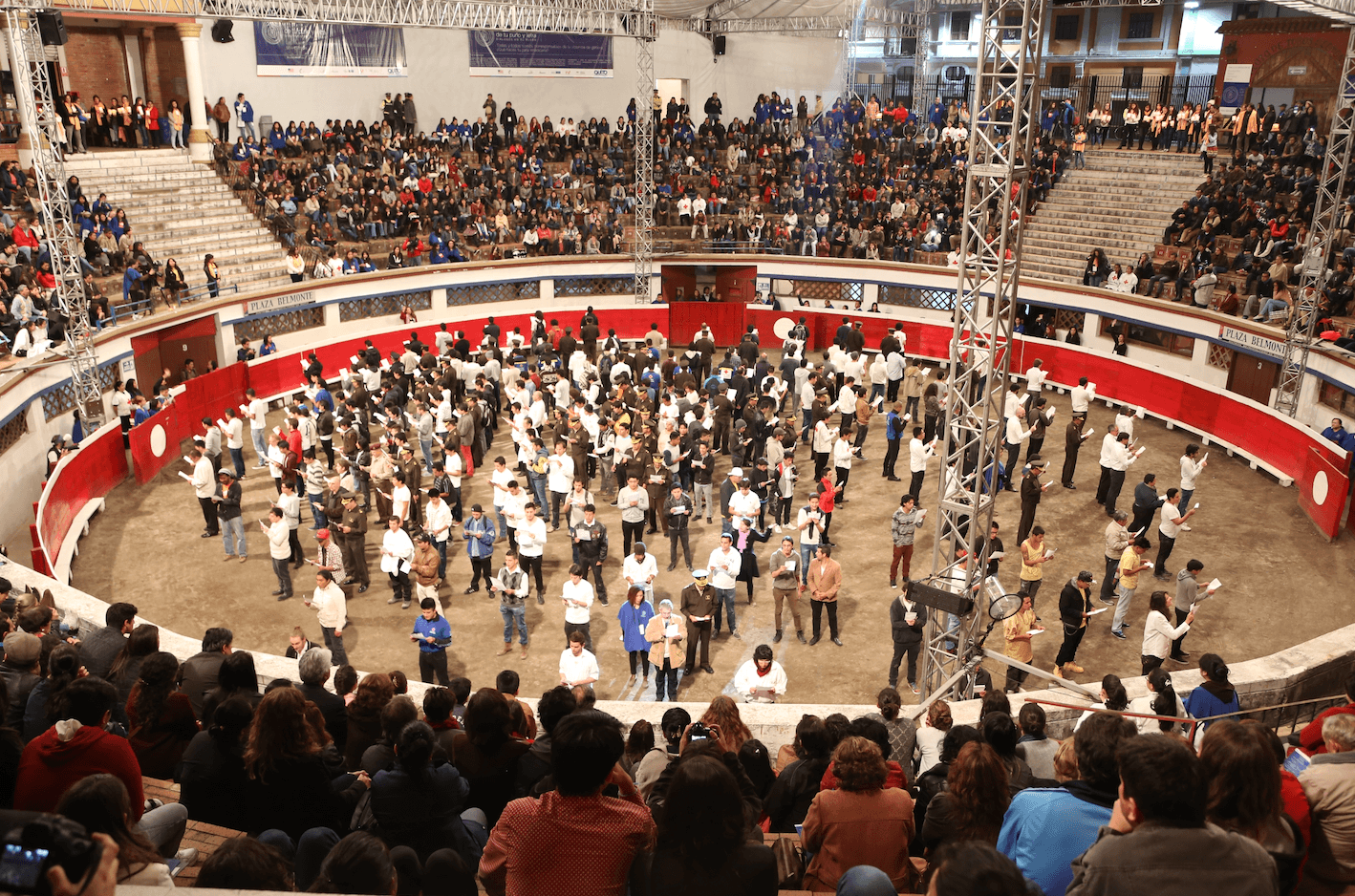
Hugh Leeman: This idea of violence recurs in your projects. De tu Puño y Letra began with some 10,000 letters in which Ecuadorian women described experiences of violence — an unanswered appeal for action. How did you decide what artistic form could answer those letters?
Suzanne Lacy: That project was a year-long process of going back and forth from California to Ecuador, meeting with people. We talked about violence against women in Ecuador, especially family-based violence. In Catholic societies (I've also worked in Madrid), it was different than in the United States. Domestic violence was more visible as a critique of the important family system.
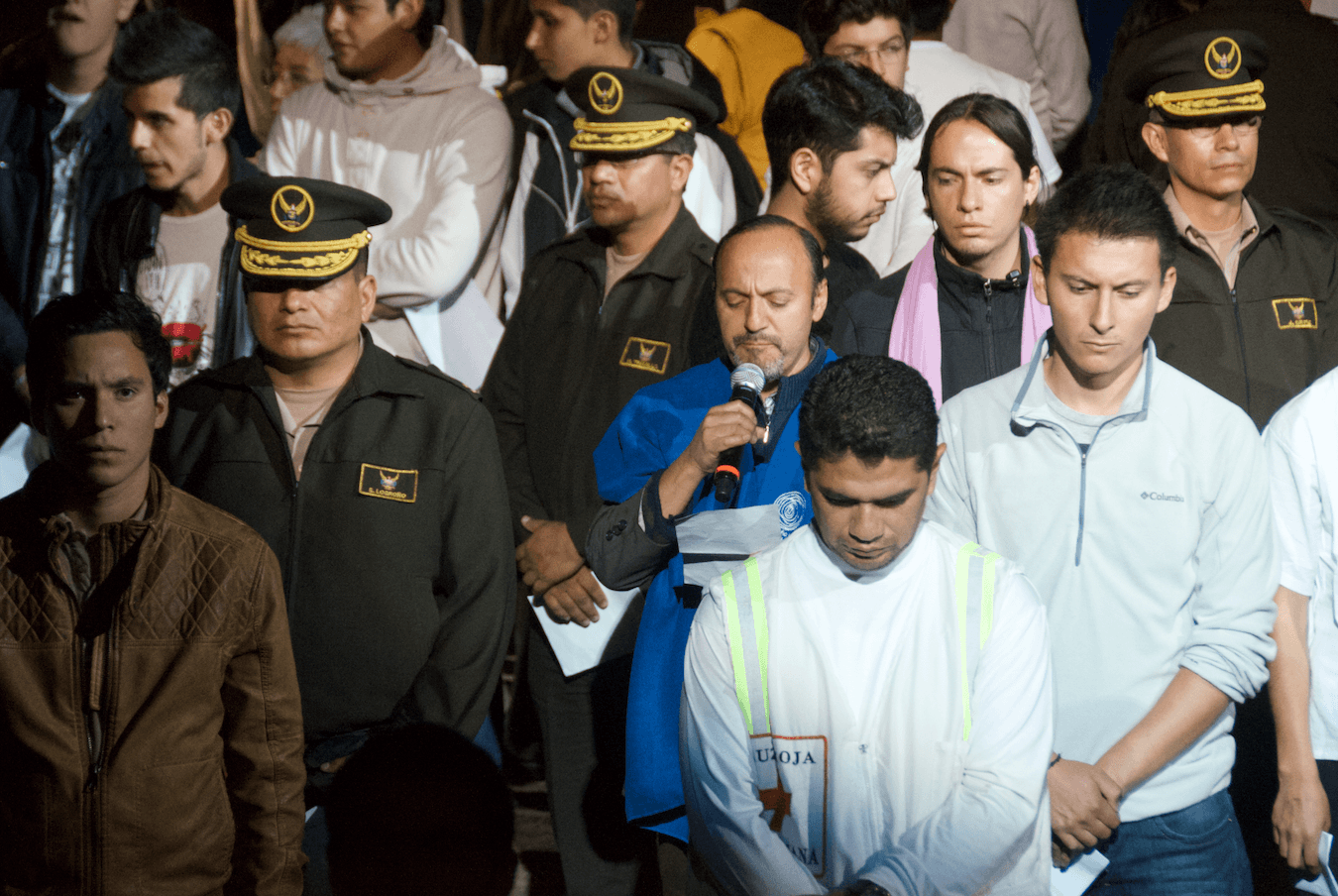
Tim Kroeger, a man who was working with men on violence was an integral part of the Letters from Women project, co-created by a German foundation, GIZ, and the UN Women organization. The letters were collected in Ecuador, then two other South American countries. The Ecuadoran archive of letters was stored in one of the City Museums. The question of involving men and how these letters could serve a process of empathy building, and become an instrument of communication, came together with the idea of men reading the letters in public.
One of the big decisions was the form of the work. At first, I thought that we could emphasize numbers by having men stand as individuals on a street corner reading a letter, another man down another corner, building social impact through repetition and mass. But the people who commissioned me wanted a large-scale theatrical event. That led us to consider different sites for the performance— thinking about the relationship to masculinity in a sports site, a jail, and eventually a bullring.
Hugh Leeman: The work placed men inside a bullring — a space associated with masculinity, violence, and domination — reading women's accounts of sexual assault, domestic violence, and femicide. What did the discrepancy between the speakers' bodies and the survivors' experience reveal about patriarchal power and empathy?
Suzanne Lacy: I don't think it revealed patriarchal power. There were hundreds of letters used in the performance — probably 300 to 500 — and about 300 men, so each man had his own letter. We built workshops on masculine violence for men into the project, directed by Tim Kroeger. Pretty much every man in the performance went through at least an hour workshop, and some went through two- or three-day workshops on deconstructing violence.
The metaphor was very much about empathy — male empathy for women, but more importantly, about men being able to step into the limelight of public discourse with a sense of authority. Men often don't know how to become part of a public conversation on violence. It's kind of like Black Lives Matter, which allowed white people to become part of the conversation supporting anti-racism in a public manner. Men think, well, I didn't do any violence, and it could be a challenge, did I do something? What we were doing was demonstrating the bravery of those men to step into a bullring and publicly read letters sympathizing with a woman’s point of view.
After they read, individually and collectively within the bullring, all 300 went into the audience. The soundtrack repeated, "Can I read you a letter? Can I read you a letter?" They sat down with a candle and a small group of people, read their letter, then went to another spot. So, it turned from representational theatricality into a collective conversation in the audience, through the vehicle of these letters.
Hugh Leeman: Before those letters existed, what was the catalyst for a woman to write one?
Suzanne Lacy: It was a German foundation — GIZ was the acronym. They started a letter-writing campaign, working all over Colombia. They'd go into workshops with women, talk about violence, get the women to write anonymous letters, then set up a little box at the post office where you could drop a letter. It was so successful they took it to Peru and one other country near Ecuador. In Ecuador it was given to the city, which controlled six museums, and the person in charge invited me to do the project, so it wasn't hard to access the letters.
When I first heard about it — a UN Women project done with this foundation — I thought, ugh, artists have done that forever. Feminist artists have been getting women to write letters and archiving them since the 70s. Mary Beth Edelson did it. It's a well-worn trope of political art. I thought, interesting, but I'm not interested. But the more I thought about it, and when the idea of the men came up, it made a lot of sense — as a kind of Indigenous image coming out of that culture. I wasn't simply adopting it and putting it on a wall like I'd go do my own mural. With my colleagues — and there was a very tight group of artists, activists, and curators, so everything's vetted collectively — we thought this was an interesting way to use actual letters, but reconfigure them into something that explored masculinity, male culpability, and male opportunity to be part of the discourse.
The Mill: A Shared History Across a Railroad Track
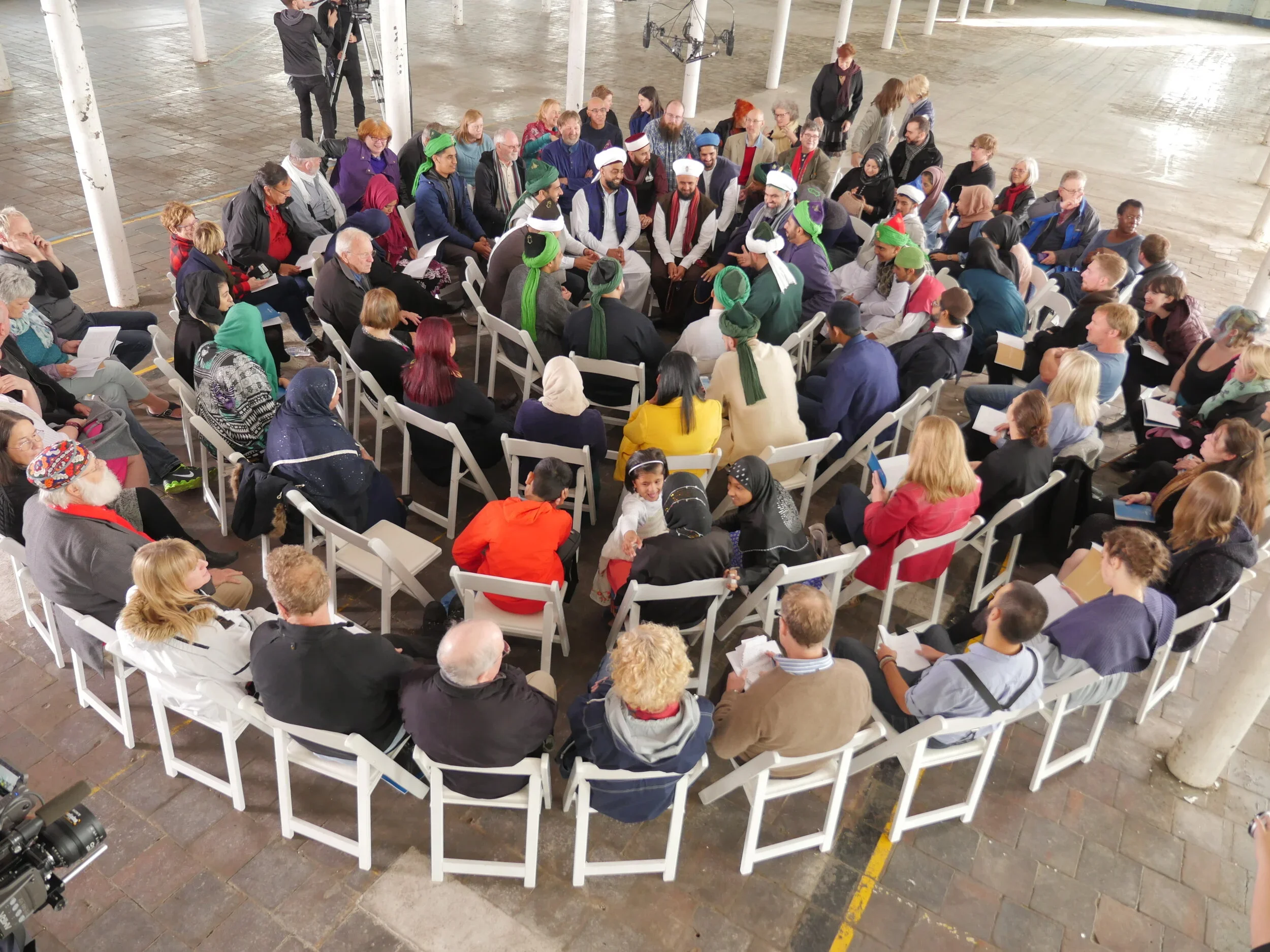
Hugh Leeman: There's a project I saw at SFMOMA as part of your retrospective, We Are Here. Based in England, it examines the disappearance of the textile industry and how that contributes to the separation of white and South Asian communities that had once worked together in the same Lancashire mills. Give us some context — what does the viewer see, and where did the inspiration come from?
Suzanne Lacy: I was invited to a project by Super Slow Ways, a producing cultural agency, and In-Situ, an arts organization in this small town of Brierfield, in Northwest England. Two cultures were living there — a Pakistani-heritage, mostly Muslim population, and an indigenous white British population. The cultures were divided, as in urban areas. The high schools were either for Muslim kids or white kids; they lived in different places. There was a mill being renovated where the people who invited me were making art exhibitions. The mill was gorgeous, and it represented the defunct industrial underpinnings for the entire region — which was impoverished and separated. The mill was being built into condos for middle-class people from Manchester to commute back and forth from the city. It was divided from the rest of the city by a railroad track — ironically, on one side of the tracks, the planned urban population, with the on the other, the Muslim Pakistanis
I saw these issues of race and class being played out in relation to the demise of the industry. As I talked to people, it became apparent the cultures had been together at one time when they worked in the mills. They never did a lot of socializing — Pakistanis didn't hang out in pubs, didn't go to church and so on — but the mills brought them together 8 to 12 hours every day. There was a respect for labor. The Pakistanis were invited to do this work because they had skill sets and worked hard.
Most of the Pakistanis came between the 50s and 70s. Later waves of recent migration found more isolation and less acceptance. There was no gainful employment in the region. At that time there was the Ariana Grande concert bombing by a Muslim radical, and a lot of fear in all of England. Fear rises when you don't know people, when you don't have daily contact. The only place I saw Muslims and white people together was in the lines at their version of Walmart…And they weren’t talking. I started bringing in community representatives, and we found a group of Sufis interested in reaching out and working alongside white people for social change. We built that constituency over time to 500 people, bringing them back together for a dinner that culminated our performance in the mill.
Hugh Leeman: How did you acknowledge the mill as a place of shared history without romanticizing the labor conditions, the racial divisions, or the economic structures that shaped it?
Suzanne Lacy: I don't think we dealt with it as anything other than a historical fact. We didn't ask people to talk about how great it was. Those people you saw on the small monitors — we interviewed 75, and we were very specific with our questions: What do you think about race and racism here now? What do you think about the economy now? What is the future of this place to you? We dealt with their thoughts about the current situation, not romantic tales.
Accountability, Whiteness, and the Willingness to Be Wrong
Hugh Leeman: A recent critic asked how work emerging from white second-wave feminism can remain accountable to intersectional blind spots. How has your understanding of your own position and authority changed across the decades?
Suzanne Lacy: It has. First off, I start projects with listening. I'm very curious about other people's realities. If you're carefully listening and you put what you're hearing into a political context formed by those with whom you are working, there is a level of respect and collaboration that is key to any organizing.
Secondly, you become accountable by being humble enough to be humiliated: to be wrong, to admit it. If you strive for transparency, frame the project as co-learning, and you're conscious of what you represent to others, that can establish trust. I've always been aware of what I signify as white, mitigated slightly by class — I'm working class — and slightly by gender. A lot of the Black people I worked with were older Black women, and at a particular historical point in the US there was, along with righteous anger, a willingness to forgive but also to teach.
I tell my students: if somebody says they think something was prejudiced, you probably should listen, because you're not the experiencer, you're not aware of that context. Sometimes you'll run into people who just have it in for you because you're white — that's been the case occasionally. Even as a kid, there was a young woman, Veta, who always wanted to beat me up. I was afraid of her but also aware she was placing something on me about my whiteness. I might also have just been aggravating to her, I don't know. But the willingness to listen, to be taught — if your interlocutor is kind enough to teach you — and the willingness to be wrong, to step inside somebody else's reality to the extent you can, those are the ways you can bridge the gaps. It's not perfect. But I generally talk very frankly about race, class, and gender and that invites conversations.
Hugh Leeman: What lessons from generous friends who taught you things have stayed with you?
Suzanne Lacy: I remember Judy Baca — one of my best friends — telling me: “I know you're an organizer, but when you go into a Latino family, don't sit down and get right to the point. You sit, and you listen, and you talk to them about their family. That's the communication form.” I've been humiliated by saying something clearly wrong and having to back down, like an event on performance where my friend, Meiling Cheng, said, “Well, it was prejudiced, what you said.”
I came out of an era that was deeply prejudiced. I understood that Black people and Latino students were being oppressed — I went to people's houses, I knew their social situation was different than mine — but I didn't have the contextual understanding of why their houses were different than mine. I hadn’t been taught about redlining, slavery, the whole history of Blacks in the US. Same with Jewish people; there were none in town that I knew of. I got a lot of my awareness from Life magazine, looking at pictures of lynching, and hearing my dad's stories of anti-Semitism from the Second World War. It starts with sympathy. But sympathy is not enough — it's a starter. Then there's empathy, and listening, and learning, and then understanding the whole historical context, like the 1619 Project the New York Times revealed. You must make it your business to understand that.
Museums, the Market, and Working Within the System
Hugh Leeman: You've argued publicly that museums continue to have a function, and that artists working inside institutions can both change them and learn how their systems operate. What structural changes would make museums genuinely accountable to the communities whose histories and labor they exhibit?
Suzanne Lacy: First, I understand the tear-it-down sensibility, the protest sensibility. But I've mostly chosen to work within systems, so that makes me more moderate. You could say burn it down, get rid of the art market — that wouldn't be bad, to my way of thinking. But if you want a profession of art there must be ways to sustain it. A museum at this moment is the repository of visual culture. I'm sorry that's the case. When I began, I assumed writing and film, the documentation of ideas, would be sufficient — and it isn't now, because of the art market. Museums collect things.
You could critique the relationship of museums to the art market. Board members and collectors sit on museum boards and influence programming — when SFMOMA did Jeff Koons's first big retrospective, that was a board member supporting the show and loaning works that, of course, increased in value by being shown. But having said that, at this moment museums are the vehicle for the preservation of visual culture. The reason I wrote so much is to influence ideas about art - that art can have meaning in public settings as well as in art ones. Mapping the Terrain: New Genre Public Art, was about how you change the way we frame a particular kind of art practice, not by media but by its engagement with social contexts; how you pull together ideas, call them a collection called social practice, even though one person paints and another does sound work. How do these artworks get looked at through the lens of their relationship with audience? The same could be said of education, of government, of art institutions. I've worked within those sectors to challenge how things are thought of, and to support a move toward thinking about things differently. But that's not the same thing as revolution.
Hugh Leeman: We're at a moment of incredible political polarization, censorship pressures, shrinking public resources, declining trust in institutions. What can socially engaged art still accomplish — and what responsibility should artists refuse to claim for themselves?
Suzanne Lacy: I'm not sure we can do a lot. We — meaning me and other artists who work like me — don't have a lot of resources. We can change what's considered art, like a community process, but the market still wants a thing that goes on a wall. There are of course lots of projects that do enact small changes in communities and artists lives over time, but I don’t think it caused a lot of large-scale change.
For sure, feminists have changed the way we think about gender, and about violence. Have they changed violence? I don't think so. They've changed the way we think about it, and therefore the structures we might create to handle it better. But there's no evidence we've stopped violence against women. We have changed social attitudes, and for sure artists have changed what is known as art, and museum exhibition practices. When I started, there were very few women shown, and even fewer people of color. Now there's a much more extensive practice of exhibiting women and people of color, a robust dialogue on the role of race and gender in art.
It's when you get to the hardcore political sphere that you can talk about mass change. Feminists changed the abortion law in this country when I was a teenager — of course now we've gone back on it. That's massive. We slowly, over 50 years, changed attitudes toward violence — and yet today, political leaders are told it's a family problem, go home and handle it. It's two steps forward and one step back. You keep doing it because you need to, because you believe in it, not because you think it will cause social change. But for sure it causes individual change and is part of a larger social and political effort to change the way we look at things.
What Art Education Fails to Teach
Hugh Leeman: You've worked in education for years — taught, developed curricula, led art schools, created public practice programs. What is art education currently failing to give students, particularly as they prepare to work with communities amid AI, political conflict, and economic precarity?
Suzanne Lacy: Here I'm slightly negative about the possibilities. I believe very strongly in higher ed — I'm a working-class kid, neither of my parents went to university, and I've been in it for decades, as a faculty or a student. It dramatically changes your ability to operate, to think critically. But higher education for the arts in the US costs a lot of money, so it's unattainable for most except through philanthropic funding. Naturally I think college ought to be free, all the way through to a master's at least — and particularly free for people coming from the working class, of whatever race, because it enables them to become a more productive citizen.
Particularly recently art education pays lip service to social practice. Students come in wanting to do social practice, wanting relevance in their work, wanting to do performance. I tell them: if you want to live in this industry, you must make things for the market or find another way to survive. I counsel kids that they can go into state park systems, recreational systems, educational systems, political systems as creative forces — but that doesn't get you into MoMA. And if you're not in MoMA, it's hard to sell your work.
What art schools don't do is educate much on professional practice issues. And if you're inclined to do social practice art, they don't teach you diddly-squat about how to do it. Kids come out of a critical theory course saying, I can't work in that community, I don't know enough. And I say that you're not going to know enough unless you work in that community, because you'll learn from the people you work with. You must have a certain kind of personality to handle the level of critique you'll get working cross-culturally, because there can be a lot of critique.
Hugh Leeman: What personality type does one need to sustain and confront that critique?
Suzanne Lacy: You must be deeply committed to learning, to know how others experience the world. You must be willing to learn about others' experience of alienation and oppression. You need the ability to handle critique, and you need to learn not to leap to protect your identity. I know I'm a stand-in for whiteness in South America. In Ecuador, some people called me La Gringa — I represented American imperialism to those who didn’t know me. You must learn not to defend yourself against that. Because I am La Gringa.
Hugh Leeman: Suzanne Lacy, thank you for sharing so candidly at a time when it's very common to filter and put up screens. I appreciate your candid, honest vulnerability.
Suzanne Lacy: Thank you.
