
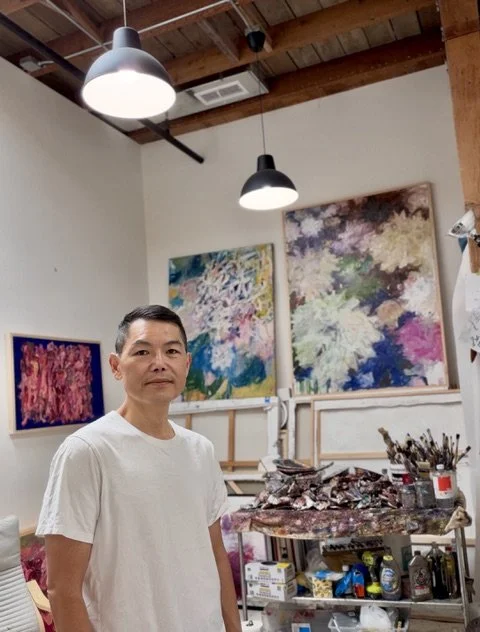
KC Ho is a San Francisco-based painter known for his expressive approach to abstraction. His richly layered paintings draw upon personal experiences of migration and belonging.
Thanks for agreeing to this interview. We’re delighted to learn more about your practice. Can you start by describing your work and specifically what you’re working on now? Do you have a preferred medium? Subject matter?
Thank you for inviting me to participate in this interview. I’m honored to have the opportunity to share more about my practice and work.
I work primarily in oil, with a focus on abstraction. I’m drawn to oil paint because it slows me down and gives me time to experiment, connect with my feelings and rework the surface until the painting feels resolved. I’ve become increasingly interested in what paint itself can do—how color, brushstrokes, texture, and layers can express emotion and give a painting a sense of presence. I build up, scrape away, and rework the surface, allowing forms to appear, disappear, and change. I don’t always know where a painting is going at the beginning. I discover it as I work.
My painting process allows feelings and experiences to emerge organically. I often listen to classical or jazz music while I paint, as it can evoke memories and deepen my connection with my emotions. Sometimes grief, joy, or longing finds its way into the marks and layers. The paintings feel personal, expressing things I can’t always put into words.
Lately, I’m exploring darker colors that I haven’t used much before. They bring new questions and challenges, encouraging me to move beyond familiar choices and let the paintings surprise me.
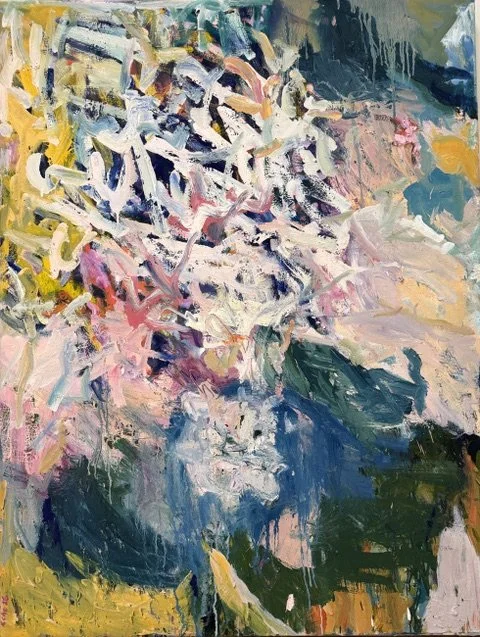
KC Ho, Uninhibited, oil on canvas, 51 × 39 inches.
Where can people see your work? Are you in any exhibitions right now or have anything scheduled? Do you welcome studio visits?
I’m based in San Francisco, and my work can be viewed on my website at www.kchoarts.com and on Instagram at @kchosf. I recently presented my first solo exhibition, Not Yet Formed, at Upper Market Gallery in San Francisco. I continue to develop new work while seeking opportunities for gallery representation. I’m also in early discussions with the OUT Museum in San Francisco’s Chinatown to plan an exhibition, tentatively scheduled for September 2027.
I also welcome studio visits by appointment at my studio in the Mission District. I enjoy talking with visitors about the paintings and learning what they see in them. These conversations often reveal things in the work I hadn’t noticed myself.
Can you share how you became an artist? Did you have an epiphany that compelled you in this direction? Did you have formal training? Did you grow up in a family that valued art and left the door open for you to become an artist?
I grew up in a modest household in a small, predominantly Chinese village in Malaysia, where cultural traditions and expectations played a significant role in daily life. I was curious about the world beyond my village and what lay beyond those boundaries. In high school, I often found myself more drawn to painting than to my Chinese language studies. Because I am Chinese, some teachers and classmates saw this as a rejection of my cultural heritage and called me a “cultural traitor.” Their words led me to question my identity and sense of belonging in that community.
My family saw art as an impractical career, largely because of their concerns about my future financial security. Becoming an artist was never an obvious or encouraged path. Instead, I moved to northern Michigan to pursue undergraduate and graduate degrees in chemical engineering. It was a culture shock. As one of only a handful of minority students in my engineering classes, I faced racial discrimination on campus and often felt unwelcome among my peers. During this time, I was also navigating the process of coming out as a gay man and learning to accept myself. It wasn’t until college that I saw oil paintings in person for the first time. Although I never attended art school or received formal art training, I continued to make art in my free time throughout my university years and began exploring it more deeply.
There wasn’t one defining moment when I decided to become a painter. It happened gradually, as painting became a way to process my feelings and understand myself. I grew up with the teaching that “silence is golden,” and openly expressing emotions wasn’t always encouraged. Learning to be vulnerable and allow myself to be seen took time. Painting gave me a way to express what I found difficult to put into words.
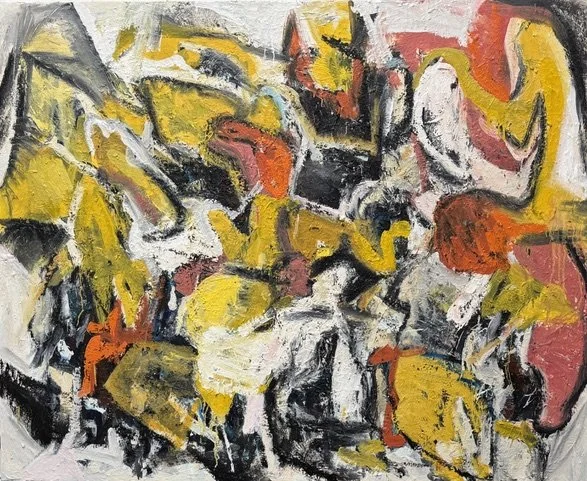
KC Ho, Yellow Fractures, oil on canvas, 60 × 48 inches.
What is the most challenging thing about being an artist in San Francisco [OR ANYWHERE]?
Living and working in the Bay Area connects me to a generous and engaged artistic community, surrounded by beautiful landscapes and a rich diversity of people and cultures. At the same time, the high cost of living, limited affordable studio space, and competition for exhibitions and visibility can make it difficult to sustain an artistic practice. I have to balance my desire to devote more time to painting with the practical realities of making a living. Despite these challenges, San Francisco’s creative energy and artistic community continue to inspire and encourage me.
There’s a lot being said now about the changing landscape of the art scene here. On the one hand there is criticism that City Hall isn’t doing enough to support the arts and some are pointing to the changing landscape of the gallery scene. That perhaps the old model of a brick and mortar gallery that represents artists, with exclusivity agreements, is dying off. Any thoughts?
I haven’t had much direct experience with traditional gallery representation or exclusivity agreements, so I can’t speak to how that model is changing. I do think it’s important for artists to explore opportunities beyond brick-and-mortar galleries and find different ways to share their work and connect with audiences as the art scene continues to evolve.
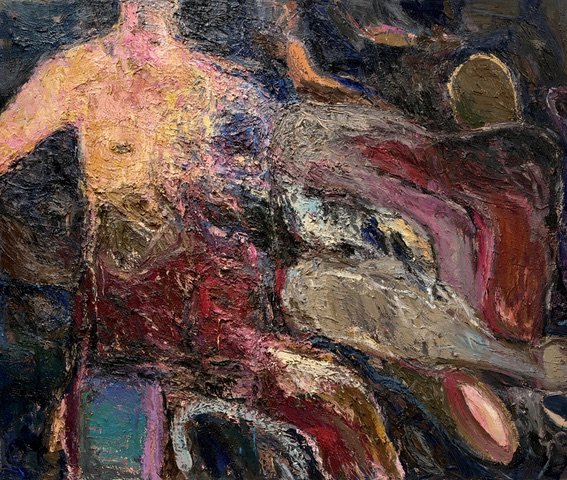
KC Ho, Entangled, oil on canvas, 60 × 48 inches.
Have you ever put on exhibitions yourself as a curator or organizer? If you were to put on an exhibition in the future do you have any curatorial ideas you’d like to share? Is there a show you’d really like to see put on?
In June 2026, I worked with Upper Market Gallery to present my first solo exhibition, Not Yet Formed. I was involved in every stage, from selecting and arranging the paintings to installing the work. It made me think about how the placement of paintings changes the way we see them, both individually and together.
For 2027, I hope to develop an exhibition centered on darker colors. I’m interested in how they can conceal, offer a sense of protection, or draw attention to subtle details we might otherwise overlook.
The idea is still developing, but I’d like to consider the whole space—how the paintings are lit, how much room there is between them, and what visitors encounter as they move through the exhibition. I imagine a show that gives people time to pause, look closely, and make their own connections.
Do you think art should make political or social commentary? Does your art do that? Is there a role for the artist to play in challenging political climates?
I believe art can engage with political and social issues, but I don’t think every artwork needs to make an explicit statement. Art can challenge us by questioning what we take for granted, giving visibility to overlooked experiences, or offering a different way of seeing the world.
My paintings don’t usually begin with a political message. They grow out of my experiences, including questions of belonging, vulnerability, and the freedom to express myself. Those experiences have social dimensions, even when the paintings remain abstract. I’m comfortable leaving room for viewers to find meanings I may not have intended.
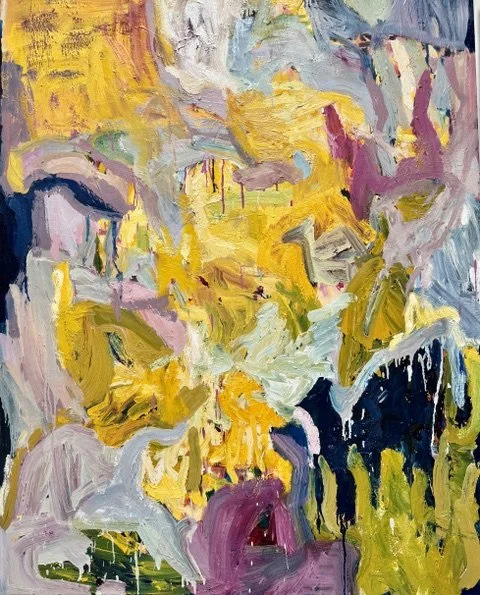
KC Ho, What Remains Unfixed, oil on canvas, 60 × 48 inches.
Do you believe art reflects an artist’s diversity such as gender identity, sexual orientation, ethnicity, or race? Are these (or any other diversity consideration) present in the art you make? Why or why not?
Hell yeah. I think an artist’s history, culture, and identity shape how they see and make work, whether consciously or unconsciously. Those influences don’t always appear as recognizable images or stories.
Being a gay Malaysian Chinese immigrant has shaped my relationship to belonging, desire, vulnerability, and self-acceptance. Moving to the United States, studying engineering, and traveling internationally for work have exposed me to different ways of living and thinking, broadening my perspective on the world and my place within it.
These experiences find their way into my paintings through color, gesture, material, and revision. Even at times I begin without a specific subject in mind, my history and experiences are present in the decisions I make and the work that gradually unfolds.
What do you think artists should be talking about right now?
Affordability is a big part of that conversation. The cost of living and studio rent can make it difficult to sustain an art practice, especially in San Francisco. How do we make sure artists can afford to stay and work here, and that there are still places for people to encounter their work?
I also worry about what happens to human connection as we spend more of our lives on screens and AI becomes part of everyday life. Technology can open up new possibilities, but I hope we continue to value the personal experience, time, and care that people bring to making art. Artists, galleries, and art institutions can create opportunities for people to come together, experience work in person, and connect with one another.
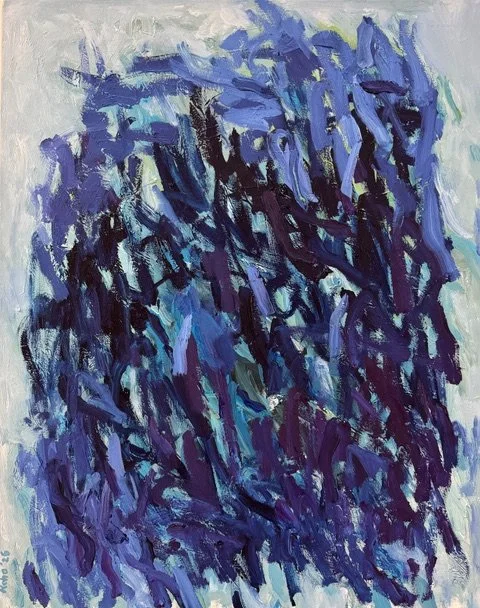
KC Ho, In Saturation, oil on canvas, 30 × 24 inches.
Are there any contemporary artists you draw inspiration from? Can you name the artists and say how or why they inspire you? Same thing for historical artists. Are there any who speak to you despite their living in a different era?
I’m particularly inspired by Abstract Expressionism, especially the work of Willem de Kooning, Mark Rothko, Lee Krasner, and Joan Mitchell. Cecily Brown and Yan Ping are another important influence. I’m drawn to the different ways they create an emotional presence through paint—from Rothko’s quiet intensity to the layered, energetic gestures of Mitchell and Brown. I’m fascinated by how their paintings can feel spontaneous while revealing deliberate choices, revisions, and a strong sense of structure.
Their approaches have influenced the way I think about painting, particularly my willingness to experiment with color, texture, gesture, and layers. I’m inspired by the freedom in their work and their ability to push paint beyond representation, allowing it to communicate through its own physical and emotional presence. Although I don’t aim to imitate their styles, their paintings encourage me to take risks, trust the process, and continue exploring the possibilities of paint in my own practice.
Artists are increasingly expected to have an online presence and, in some cases, become their own publicist. How do you feel about social media? Has it helped your career, or does it sometimes feel like another job entirely? Any social media rules or tricks you abide by?
Social media can be a useful tool for sharing my work and connecting with people, but I also find it challenging. Artists are increasingly expected to be their own publicists, marketers, and content creators. It can feel like another job competing for the time and energy I want to devote to painting.
I try not to get caught up in online attention or lose sight of what matters most to me: painting and pushing my work into unfamiliar territory. Likes, followers, and sales can be misleading measures of artistic success. They don’t necessarily reflect the quality of the work, the depth of an artist’s practice, or the time and effort that go into making it.
I also think we don’t talk enough about the less visible sides of being an artist: self-doubt, rejection, financial pressure, and loneliness. Social media often highlights success while leaving these struggles out of the picture. It can create the impression that everyone else is thriving, even when that may be far from the truth.
My guiding rule is to protect the freedom to experiment, fail, and take risks in my painting. I share when I have something meaningful to show, but I also want to give the work time to develop. Its value may not be immediately apparent in a photograph or a quick scroll.
It’s difficult to talk about being an artist without talking about money. What does making a sustainable life as an artist look like to you? Do you think the art world is honest enough about the financial realities of being an artist?
For me, sustainability means being able to meet everyday needs while preserving the time, energy, and freedom to keep painting. Balancing painting with work outside the studio is part of that reality. Financial stability matters because it gives me room to experiment without needing every painting to sell. Earning a living solely through art sales is difficult, especially in the Bay Area, where the high cost of living adds to the pressure.
I grew up in a family of modest means, where art was not considered a practical career. When I spoke about pursuing painting, my family discouraged me because they worried about how I would support myself. That tension between creative ambition and financial security has shaped how I think about a sustainable way to pursue painting. For me, a sustainable artistic life means finding a balance between financial stability and staying true to my artistic vision. Making sales matters, but so does having room to experiment, take risks, and allow the work to evolve without financial pressure determining every decision.
I do not think the art world is open enough about these realities. We hear about exhibitions, record breaking multimillion-dollar sales and success, but less about how artists support themselves, the sacrifices they make, or the emotional weight of financial uncertainty. Greater openness would help artists set realistic expectations and feel less alone. I would like to see a society that values both the art itself and the conditions that allow artists to keep making it.
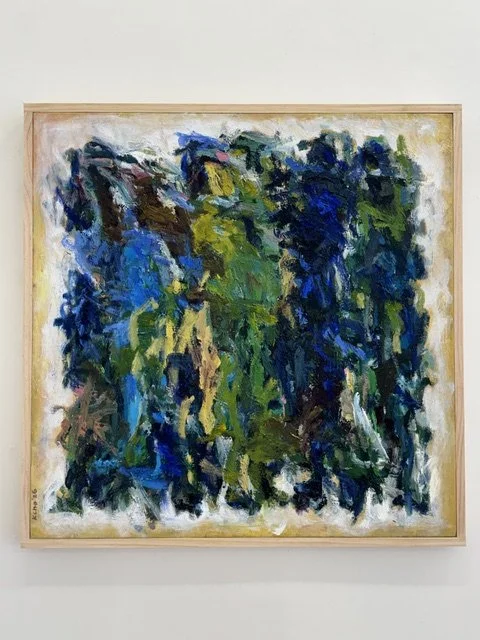
KC Ho, Not Yet Formed, oil on canvas, 36 × 36 inches.
What are you unwilling to compromise on in your work, even if doing so might make the work easier to sell?
Honestly, I don’t paint with the intention of making work that sells, although I recognize there is a contradiction in that. I’m unwilling to give up curiosity or the freedom to follow a painting somewhere unexpected. When I’m in the studio, I want to discover what the work can become, even if that means moving away from something familiar or easier to sell.
Of course, I want people to connect with my paintings, and I want to build a sustainable career. My inner voice keeps telling me, “Stay true to your vision, and your audience will find out” I hold on to that belief while knowing it isn’t a guarantee. I’m still learning how to balance the desire to sell with the need to keep growing as a painter.
Whose opinion of your work matters most to you?
The opinions of painters I admire matter most to me, especially those who offer thoughtful, honest feedback. I value conversations that challenge me, broaden my perspective, and deepen my understanding of my own work. I’m part of a critique group with several artists, and I appreciate the balance of encouragement and constructive criticism we offer one another. Sharing the joys and challenges of making art makes the process feel less solitary.
If you suddenly had unlimited money, space, and time to make one work or project, what would you make?
I would love to create a series of six to eight large painting panels, each measuring around 8 to 10 feet long and 5 to 6 feet high. The Musée de l’Orangerie in Paris is one of my favorite museums, and I’m deeply inspired by the immersive experience of seeing Monet’s Water Lilies there. The way these monumental paintings surround viewers and transform the space is something I find extraordinary.
I’m drawn to the physical presence of large paintings and how their scale can shape the viewer’s experience. I would love to create an environment where people can immerse themselves in the paintings, experience the colors and textures up close, and feel surrounded by the work rather than simply standing in front of it. With unlimited time, space, and resources, I would explore how painting can become an immersive experience that engages viewers both emotionally and physically.
What current art trend have you noticed and do you support it? Are there any fads or trends in the art world you believe will be fleeting?
I’ve noticed the influence of graphic elements and graffiti in contemporary painting. I enjoy the energy and visual language they bring, especially when artists interpret them in a personal way. I’m less interested in predicting which trends will last than in seeing how artists develop these influences over time. For me, what matters is whether the work holds my attention beyond its initial visual impact.
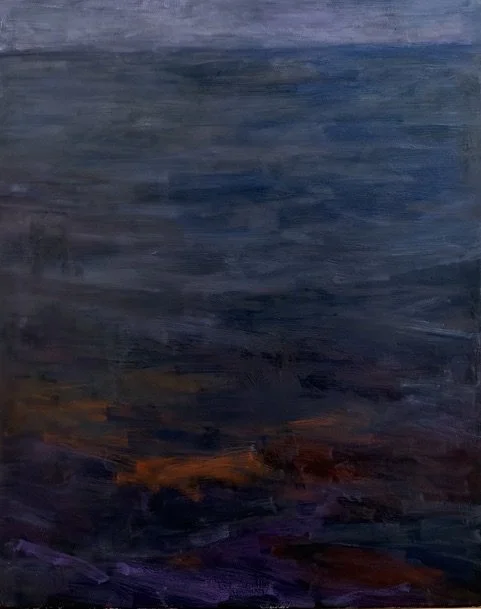
KC Ho, Private Tenderness, oil on canvas, 24 × 30 inches.
What do you make of celebrities who turn to visual art outside of the careers they’re known for? Do you enjoy seeing what they make, or does it bother you that their work can receive immediate attention simply because they already have an audience and a platform? Is that just the nature of the art world, or does it make it harder for working artists to be seen?
I envy the immediate attention they receive. It can be difficult to watch someone enter the art world with an existing audience and platform while many working artists spend years trying to be seen.
At the same time, I’m happy for anyone who discovers a new way to express themselves, and I enjoy seeing what people make outside the careers they’re known for. Their advantage doesn’t make their interest in art invalid.
I can acknowledge that the attention is something I wish I had and still be glad that someone else is making art. Envy and generosity can exist at the same time.
If a fancy collector wanted to take you out to dinner anywhere, where would it be? Do you have a suggestion for a great inexpensive meal in San Francisco [OR ANYWHERE] for the proverbial “starving artist”?
I would invite the collector to my apartment for a home-cooked meal. To me, cooking is much like making art. Both draw on personal history, culture, and lived experience, and both involve attention to color, texture, and how different elements come together.
I grew up eating Hakka dishes such as salted fish with pork, meatballs with salted duck egg, ground tea rice (Lai Cha), pork belly with preserved mustard greens, stuffed tofu, and yam abacus noodles. These foods connect me to my roots,and are an important part of who I am. I enjoy sharing them with people who are curious to try something unfamiliar.
I like to imagine that collectors who connect with my paintings might bring that same curiosity to the table. Sharing these dishes would give us a chance to talk about where we come from and get to know one another beyond the paintings. For an inexpensive meal, my own answer is often to cook at home—though some of these dishes take more time and preparation than others.
LAST QUESTION: Any question you wished we asked you? What is it and what is the answer to it? Pls
What is the most impactful advice you get from other fellow artists? How has that changed your art practice?
The advice that has stayed with me most is, “Keep working on your painting and don’t give up.” It reminds me to keep showing up in the studio, even when the work feels uncertain or progress may be slow.
I’ve also learned from fellow artists how valuable it is to engage with the art community. Although my interactions have been limited, they’ve encouraged me to connect with others and share my work. In fact, I connected with Roborant through an artist in the same studio building. These experiences have encouraged me to balance time alone developing my practice with participating in the community and giving my work opportunities to be seen.