
Hidden Harmony: Lady Henze & Joshua Rampage
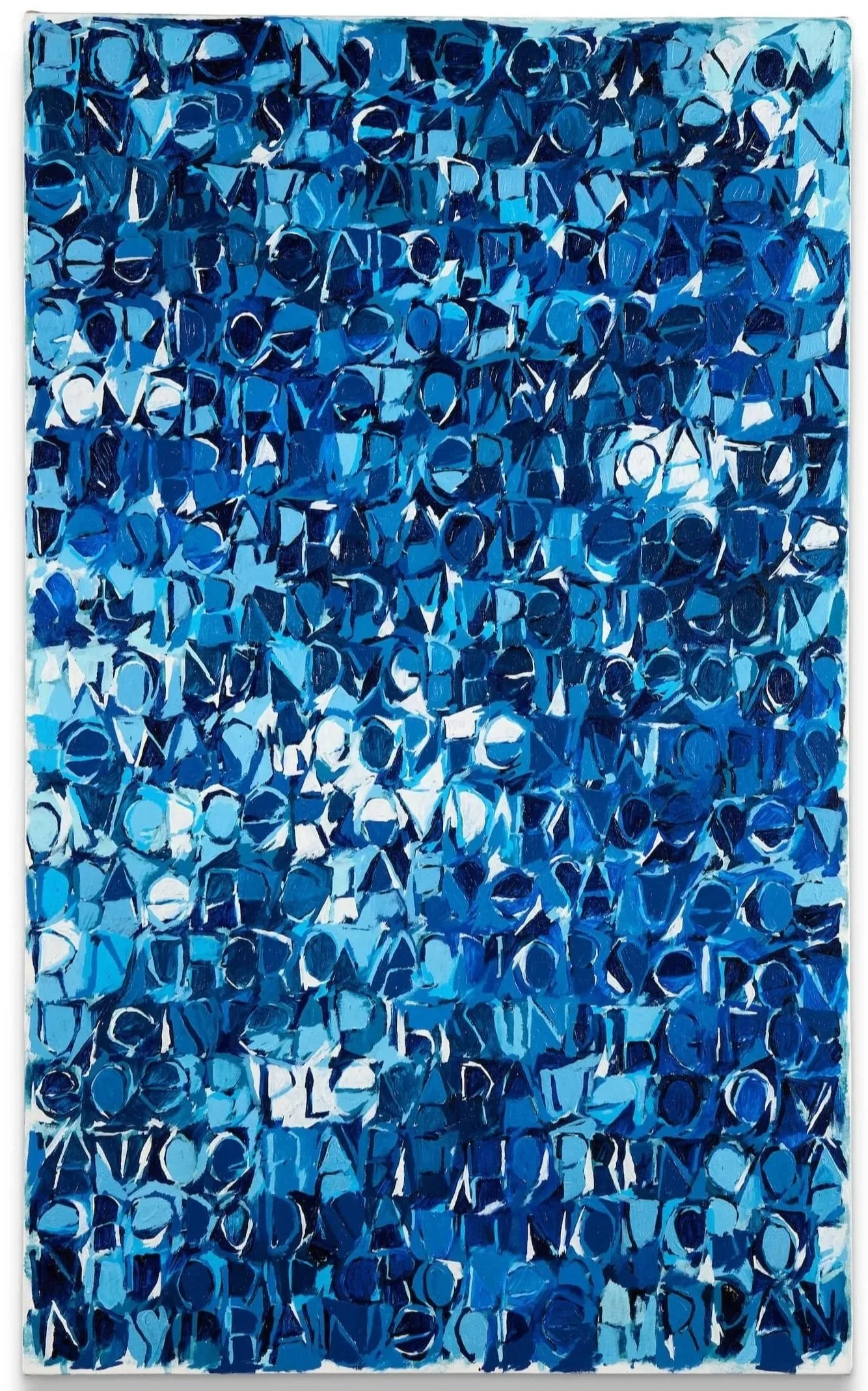
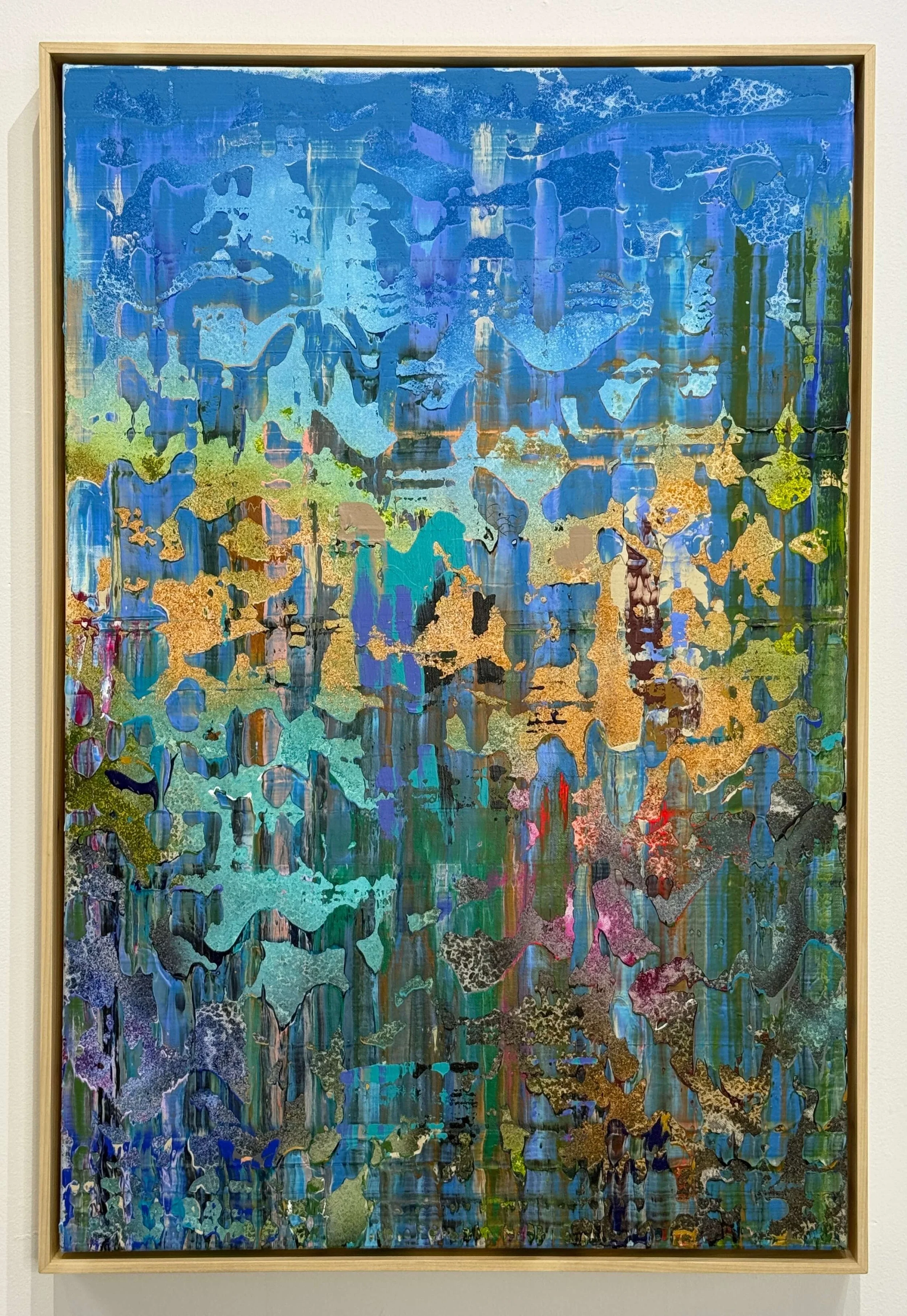
(L) A secret surrender. 2026. 51 x 31 in. 130 x 79 cm. Oil and oil pastel on canvas (R) Lady Henze One Life Stand
“Hidden Harmony: Lady Henze & Joshua Rampage”, Heron Arts, 7 Heron St., SF, until April 16.
The current exhibition at Heron Arts features two abstract painters whose techniques are divergent but whose works sit well together in the voluminous space at Heron Arts , a gem of a gallery in SoMa. While Henze and Rampage achieve their pictorial results through very different means, the thirty-four paintings in this show are vivid orgies of color deftly curated into rhythmic relationships and color harmonies. So far so good, the harmonies are visible, but what is hidden?
As so often, the answer is easy to discover when talking to the artists, but there is something hidden also behind the answers that ostensibly clarify the relationships here. Let me explain. Both artists’ works refer to hidden source material, images that are not represented in their abstract paintings. For Henze, it is that her works are responses to the surfaces of the city, exterior walls that have been tagged, written upon often over multiple iterations, (and then sometimes returned to neutral color by some anti-graffiti outfit hired by the city or a building owner). Her paintings are, effectively, meditations on the urban surface interface and the multiple identities that are left as traces. A QR code on the exhibition list takes you to her website where any viewer can see photos of tagged urban sites juxtaposed with her paintings inspired by them. For Rampage, there are two hidden elements. One is language. Each of his canvases is covered with a matrix of letters that hide a secret (rendered invisible) that someone told him and is embedded in each canvas. Further, he has been experimenting lately with borrowed compositions from fin-de-siècle French and Austrian painters (Vuillard, Bonnard, Schiele) that have also been rendered illegible through translation. (Despite my art historical knowledge of this period of art production and my love for these painters, I would not have been able to figure this out on my own.)
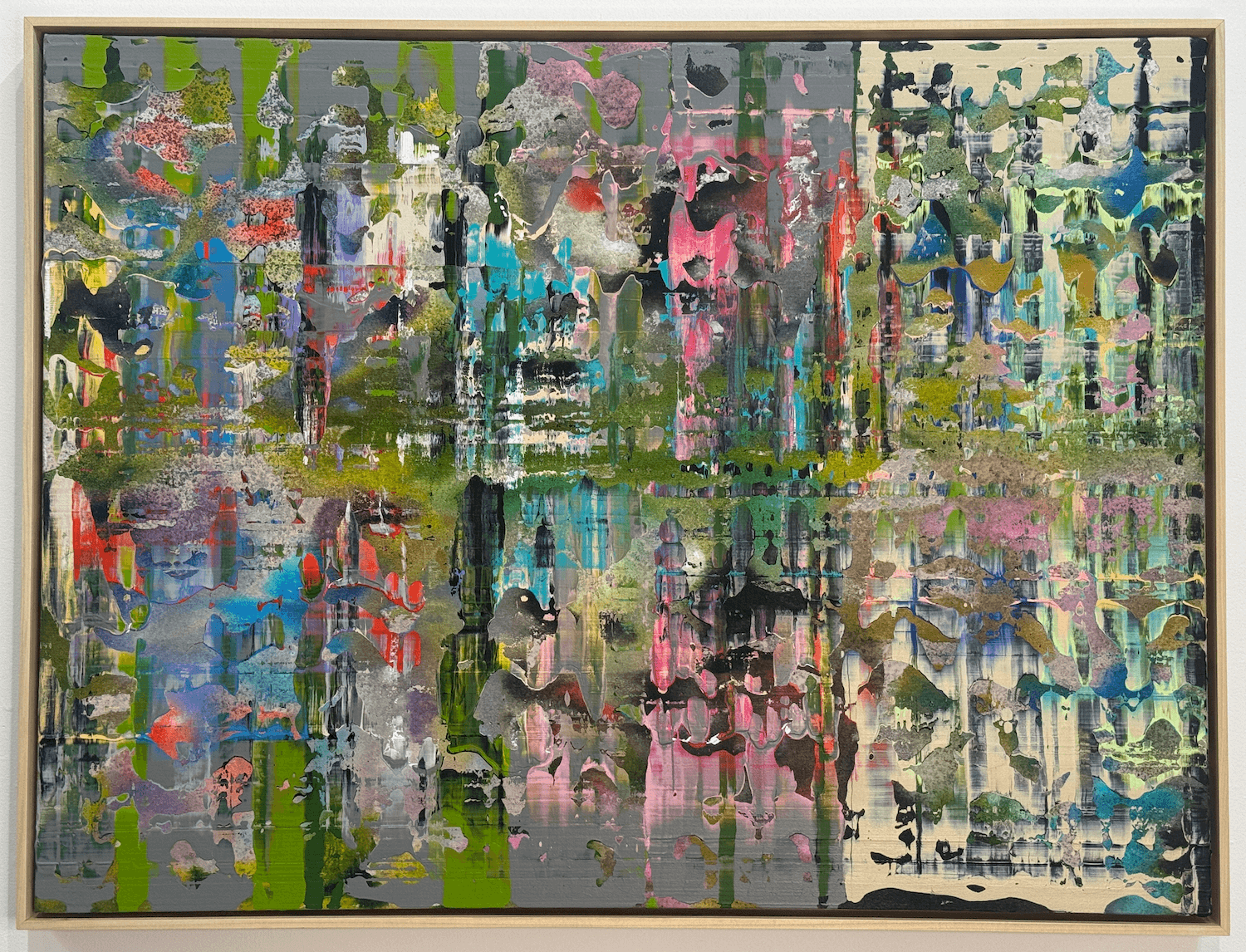
Lady Henze Loud Places
So you need to ask the artists, or the curator, to figure out the hidden harmonies. But the source material is not the end of the story. Working through the show in my mind after spending some time, I think that there are many wonders visible to the naked eye. As someone who has spent some years painting, I had a hard time conceiving of how some of these paintings were made; what did she or he do to get this particular effect? The paintings by both artists in this show are bravura performances of technique. Henze works in acrylic, ink and sometimes aerosol; Rampage employs oils but both of them are uniquely committed to developing and refining their technique to achieve impacts that I can only describe as stunning or exquisite. I will describe just a couple of my favorites.
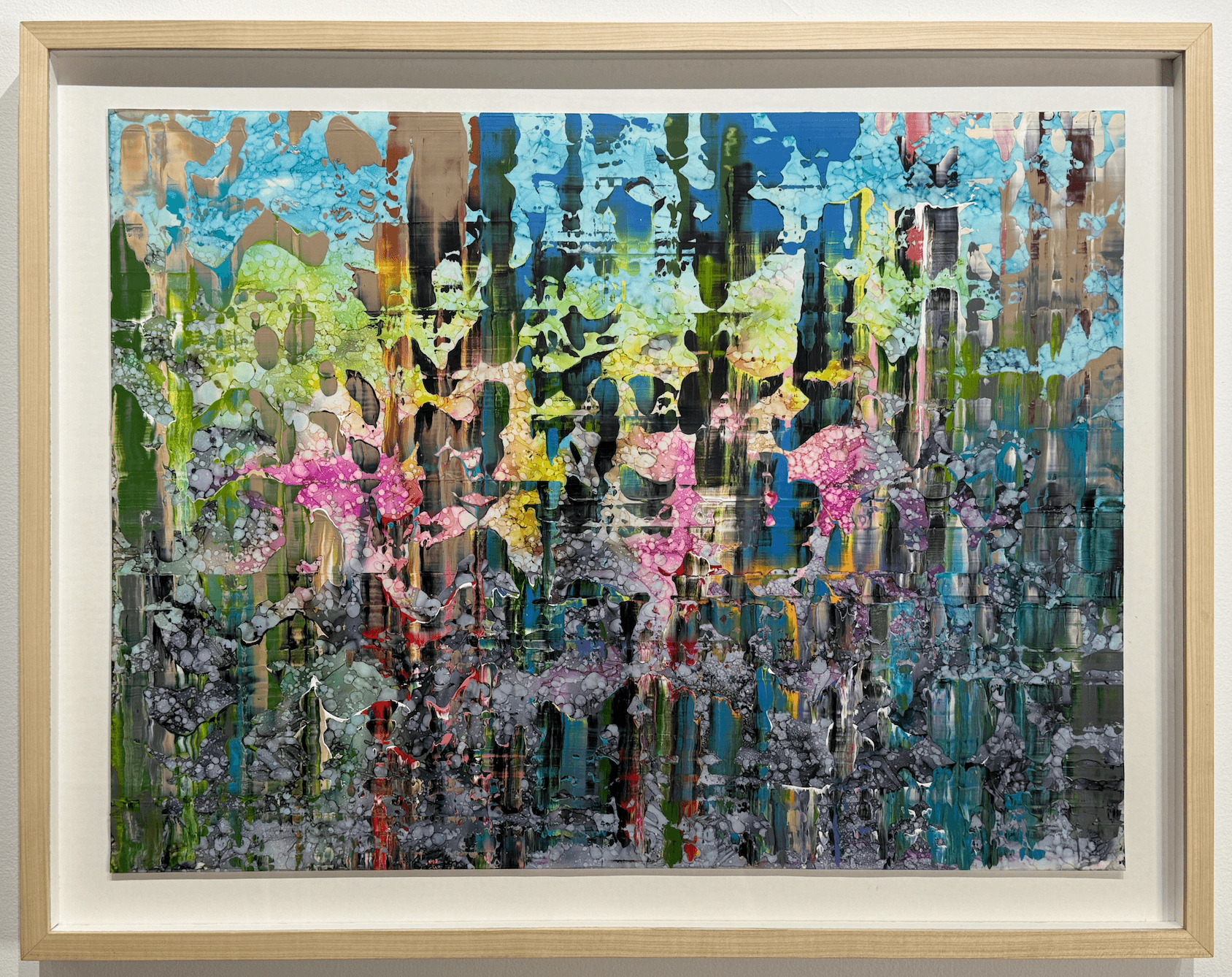
Lady Henze, Nobody Speak
Nobody Speak (2026) by Henze is a horizontal painting in ink and acrylic on Yupo. The scintillating array of colors meets the eye as a series of bubble forms underneath layers of multicolored pigments. While blue/black/green are the dominant themes, bursts of pink and yellow and undercurrents of violet lie beneath the painted surface. The dense layering impulse, so different from her graphic murals on buildings, encourages a rich play for the eye that wanders restlessly around the surface finding countless moments of color harmony and contrast that capture a dynamism of life on this surface. The vertical lines that are the remnants of scraping multicolored acrylic paint across the surface are broken up by the underpainting made with ink and finished with a hair dryer to generate an automatic series of forms beneath. On her site, this image follows directly a photo of Bruno’s bar in the Mission, as it has been transformed by various graffiti writers and also by vines, a form of natural reclamation.

Like a pulse spilling secrets before the act begins. 2026. 46 x 40 in. 117 x 102 cm. Oil and oil pastel on canvas
Rampage’s Like a pulse spilling secrets before the act begins (2026) is characterized by an incredibly rich profusion of colors and letters that engages negative space to shore up its compositional complexity. The colors that dominate this painting are blue, white and pink but orange and purple push the dynamic play of colors into a controlled frenzy. This painting strikes me as one of his most structurally complex. Each of his works contains a series of letters that cover the surface in a horizontal/vertical pattern. They lock in both a graphic dimension and a sense of pictorial immediacy because they cover the surface and so focus our attention on it. Yet they also gesture to signification—a language that could tell us something but does not because the painter is keeping his (and others’) secrets. The painting of the letters and the spaces around them is one fundamental dimension of Rampage’s craft, but he also develops the composition through shapes and colors that seem only tangentially related to the letters. In this way, he builds pictorial tension in these works and, since he has been developing this secret series for many years now, it has become something of a specialty. What is amazing in this painting is the way the artist has built a series of diagonal lines that cut across the horizontal/vertical orientation of the letters. Aside from one, the forms on this canvas are all made from diagonal lines, and stripes of color (blue and pink, or gold and blue) reinforce a possible illusionism that struggles against the flatness of the letters and the canvas. This tension between flatness and illusionistic space is not only present across the whole of the canvas but in countless details articulated by the painting of the letters and the ground behind them. The whole structure vibrates with a potent energy.
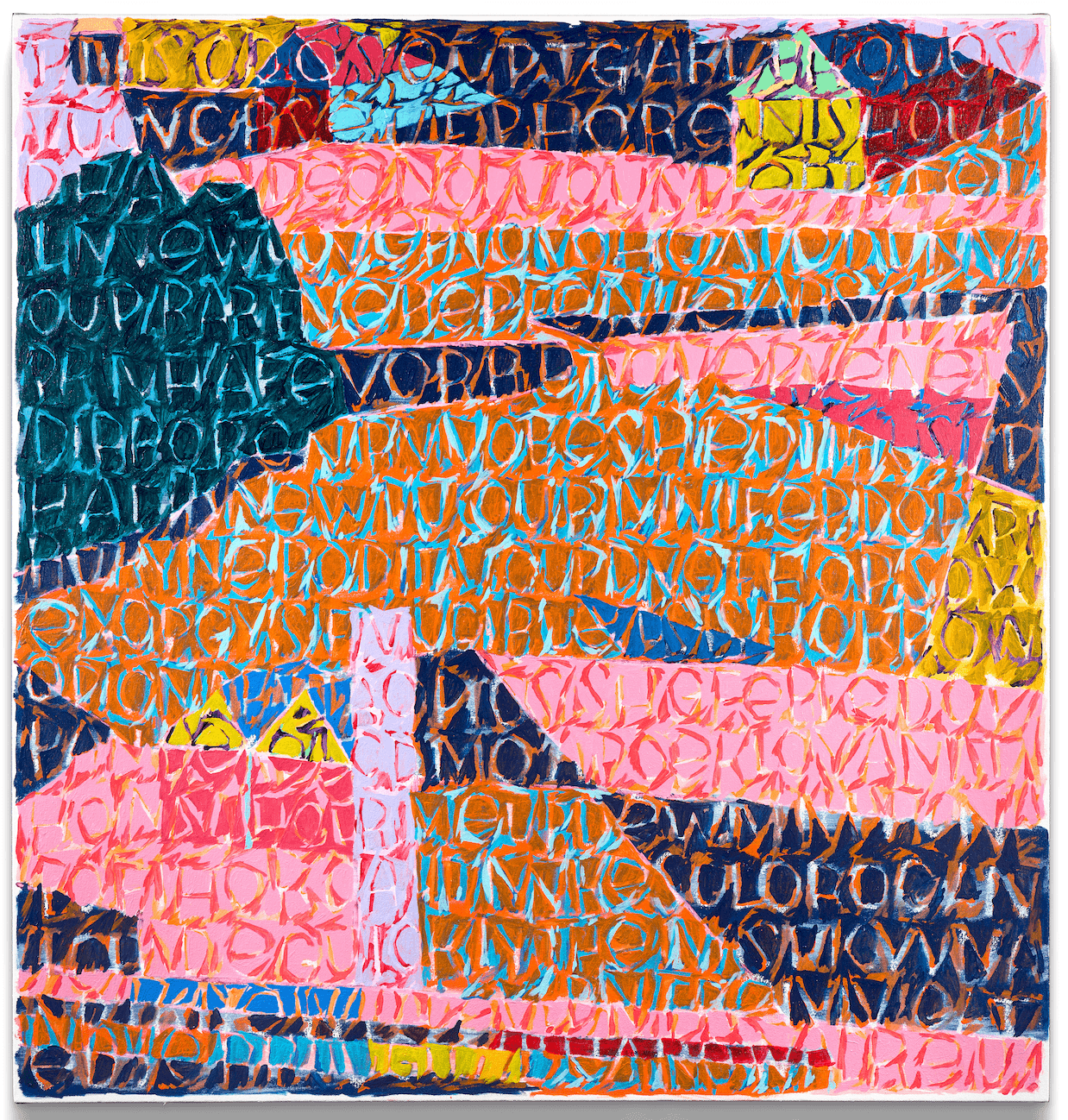
Along with the pounding of his most secret heart. 2025. 42 x 40 in. 107 x 102 cm. Oil and oil pastel on canvas
I am tempted to resort to mysticism to describe the way that this group of paintings by these two artists conveys both the materiality of the world and of painting, and how it suggests something well beyond material facts or even pleasures. The concatenation of effects is not only visibly evident but powerfully moving and my sense was of being transported, the way a dancing Sufi might be, to another realm of experience. Both of these artists are so embedded in a material practice that it comes to structure their work and our experience of it. Here is another layer of hidden meaning: this is a show about the amount of time it takes paint to dry. Most of the works were created in 2026, in a fever of production that both the artists experienced in order to present the works in this show. Practical limitations and heroic working hours aside, these paintings, as surfaces, have been teased into existence through the constraints of the materials. The unique and compelling technical processes of these artists have resulted in discoveries, perhaps revelations, about the world and about the capacity of the painter to make an object that responds to and belongs in it. But there is one more hidden text here and that is meaning itself.
Writing, like what I am doing now, endeavors to tell us something. It articulates and delimits. Poets conjure but prose defines. Both of these artists’ paintings respond to language but in very different ways. While Rampage makes language a structure for oil painting to push against, Henze translates “writing”, the maker’s word for graffiti which is itself a form of public subjectivity. Both of them remake in painting the impulse to literally write, to create a graphic form of meaning and expression with the hand. This is becoming something of an anomaly in a world dominated by devices and keypads. By transforming graphic language into pictorial forms, these artists generate hidden harmonies that vibrate and radiate through the Heron Arts Gallery.
