
Chris Feliciano Arnold and Ingrid Rojas Contreras
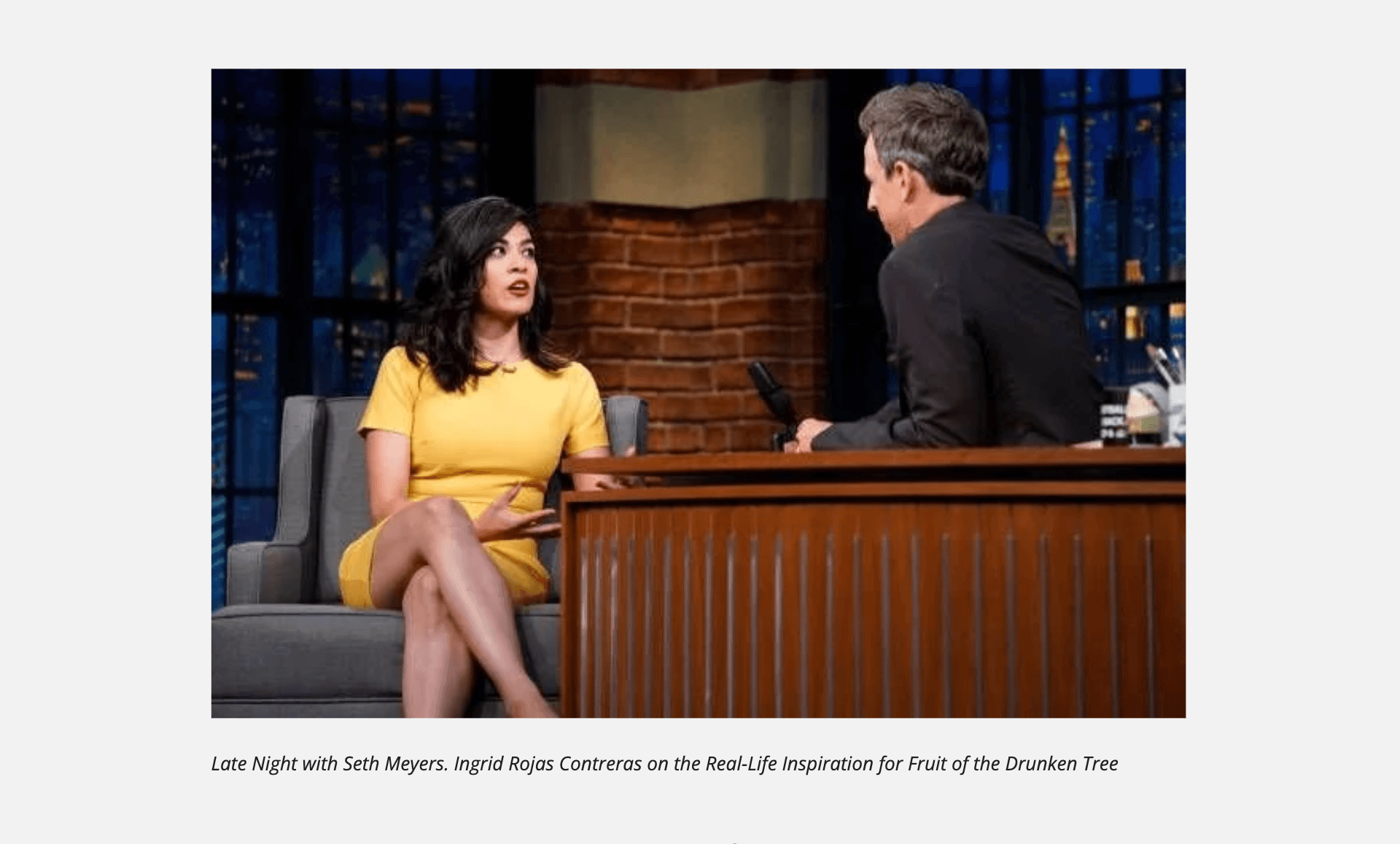
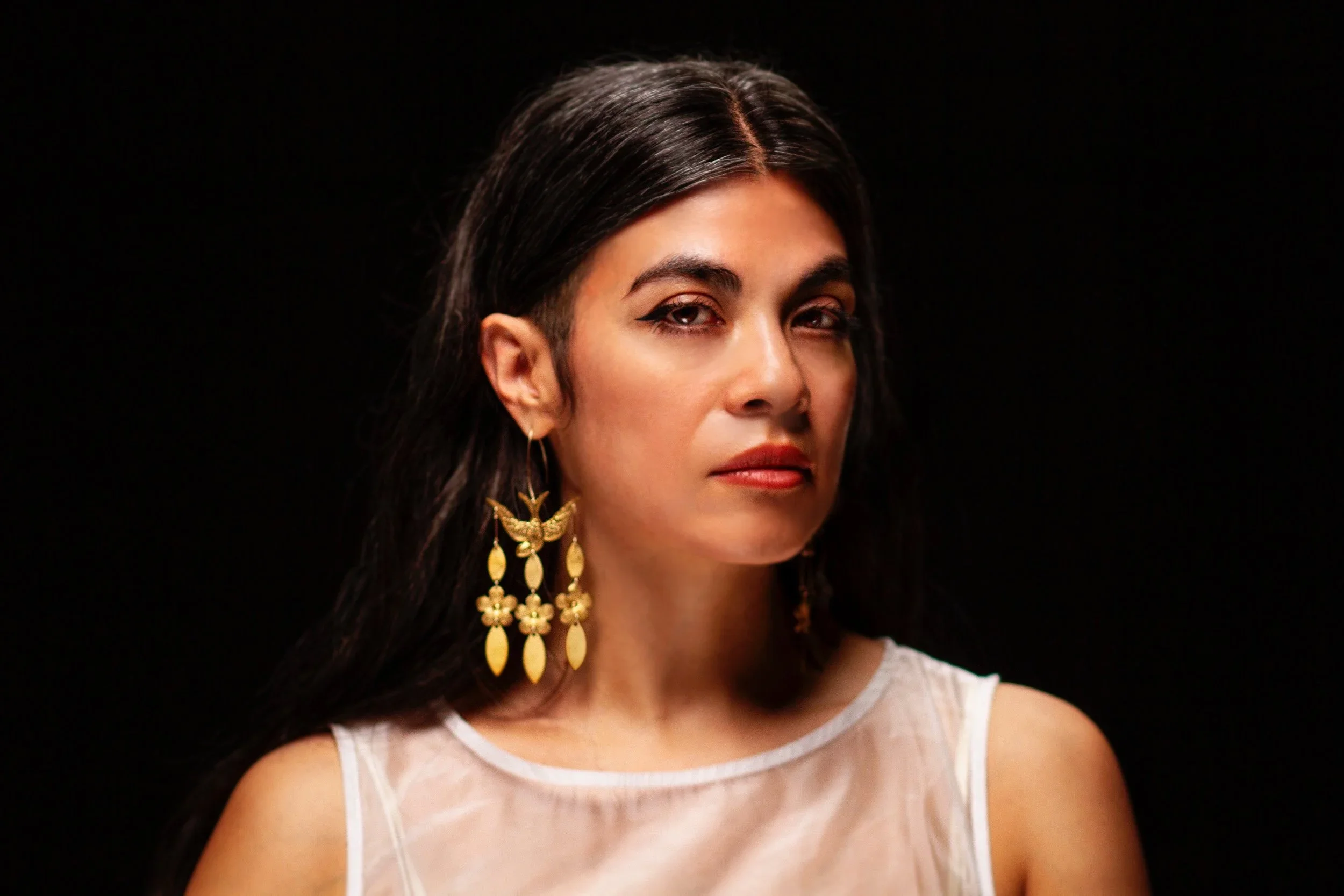
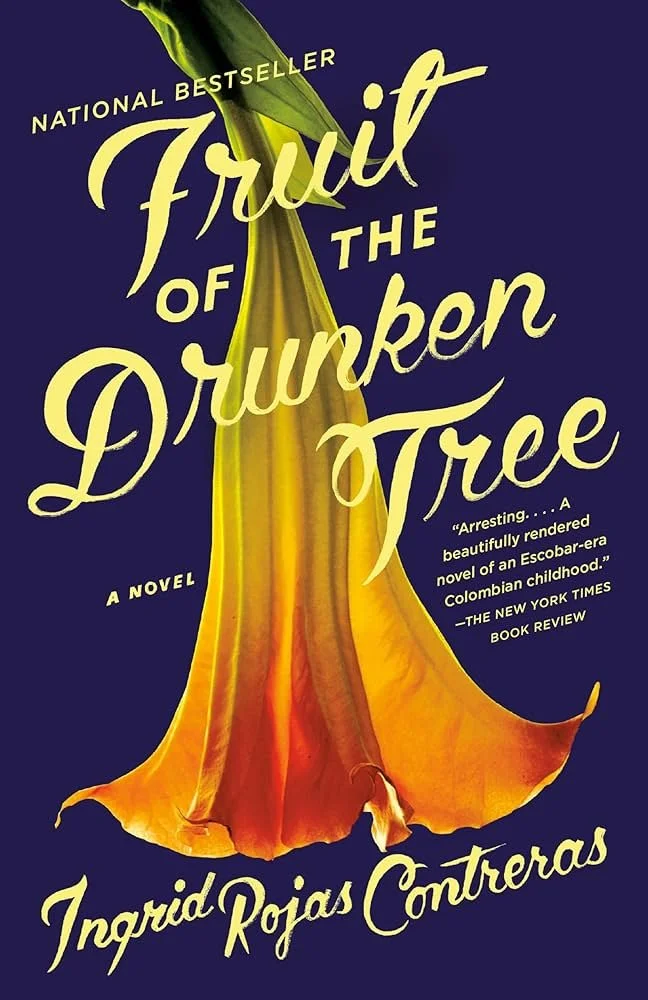
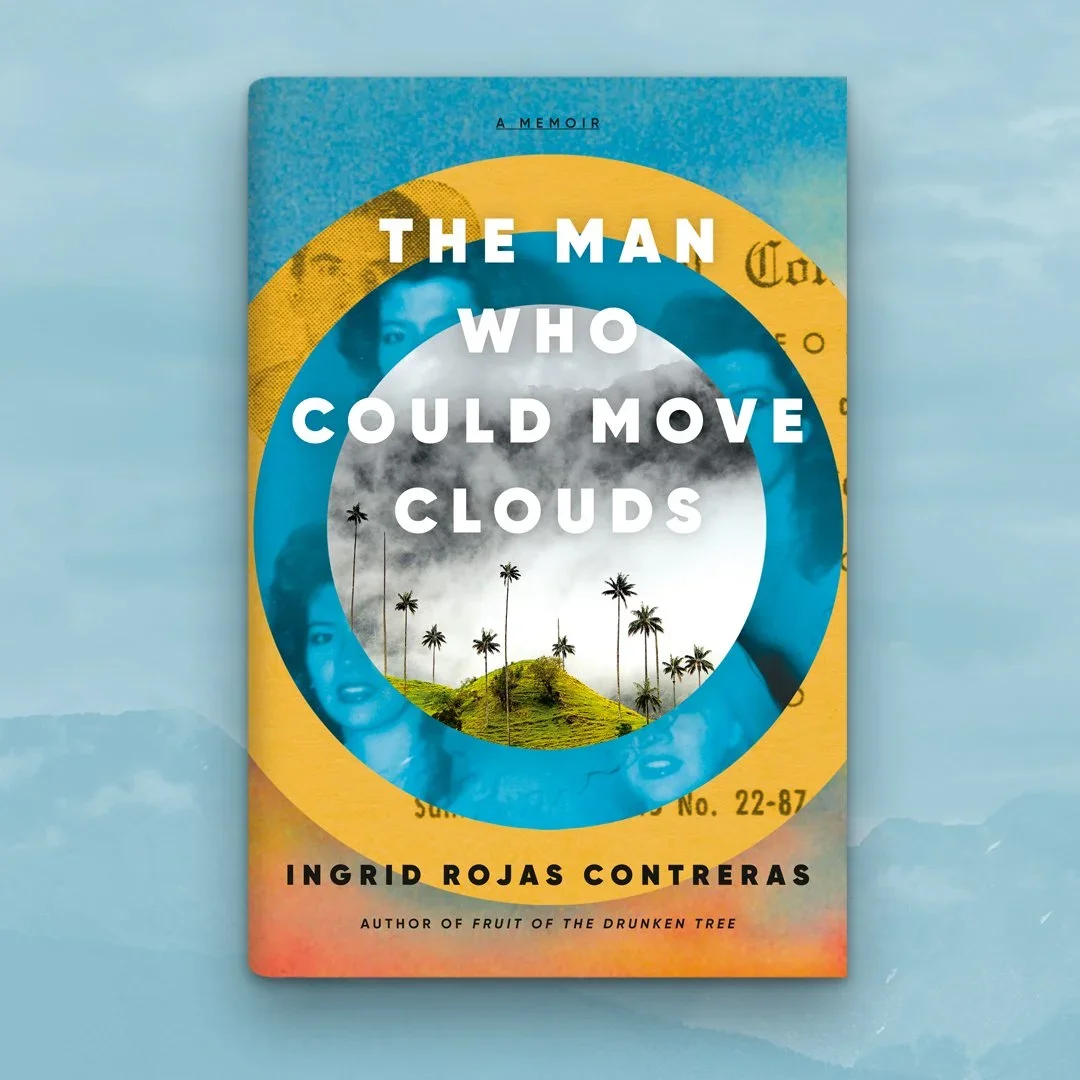
Ingrid Rojas Contreras was born and raised in Bogotá, Colombia. Her memoir, The Man Who Could Move Clouds, was a Pulitzer Prize, National Book Award, and National Book Critics Circle Award Finalist. It was a a winner of a California Book Award. Her first novel Fruit of the Drunken Tree was the silver medal winner in First Fiction from the California Book Awards, and a New York Times editor's choice. Her essays and short stories have appeared in the New York Times Magazine, The Cut, Zyzzyva, and elsewhere. Rojas Contreras has received numerous awards and fellowships from Bread Loaf Writer's Conference, VONA, Hedgebrook, The Camargo Foundation, and the National Association of Latino Arts and Culture. She is a Visiting Writer at Saint Mary’s College. She lives in California.
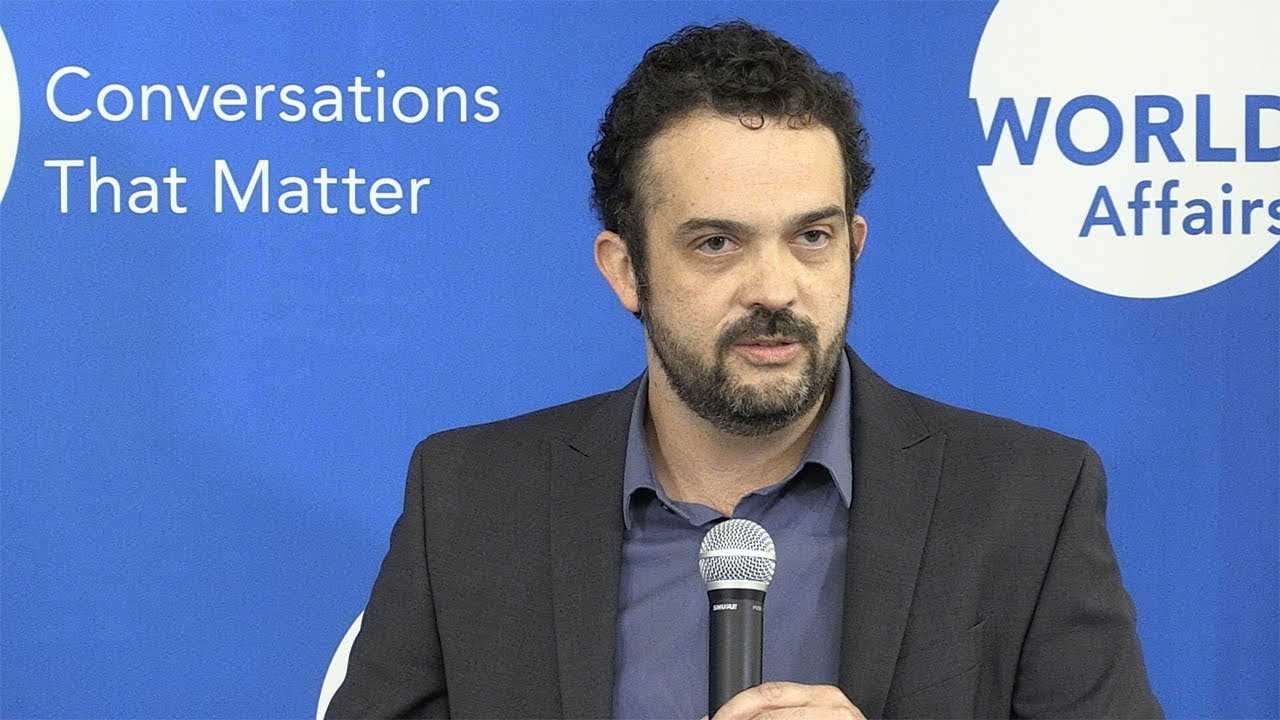
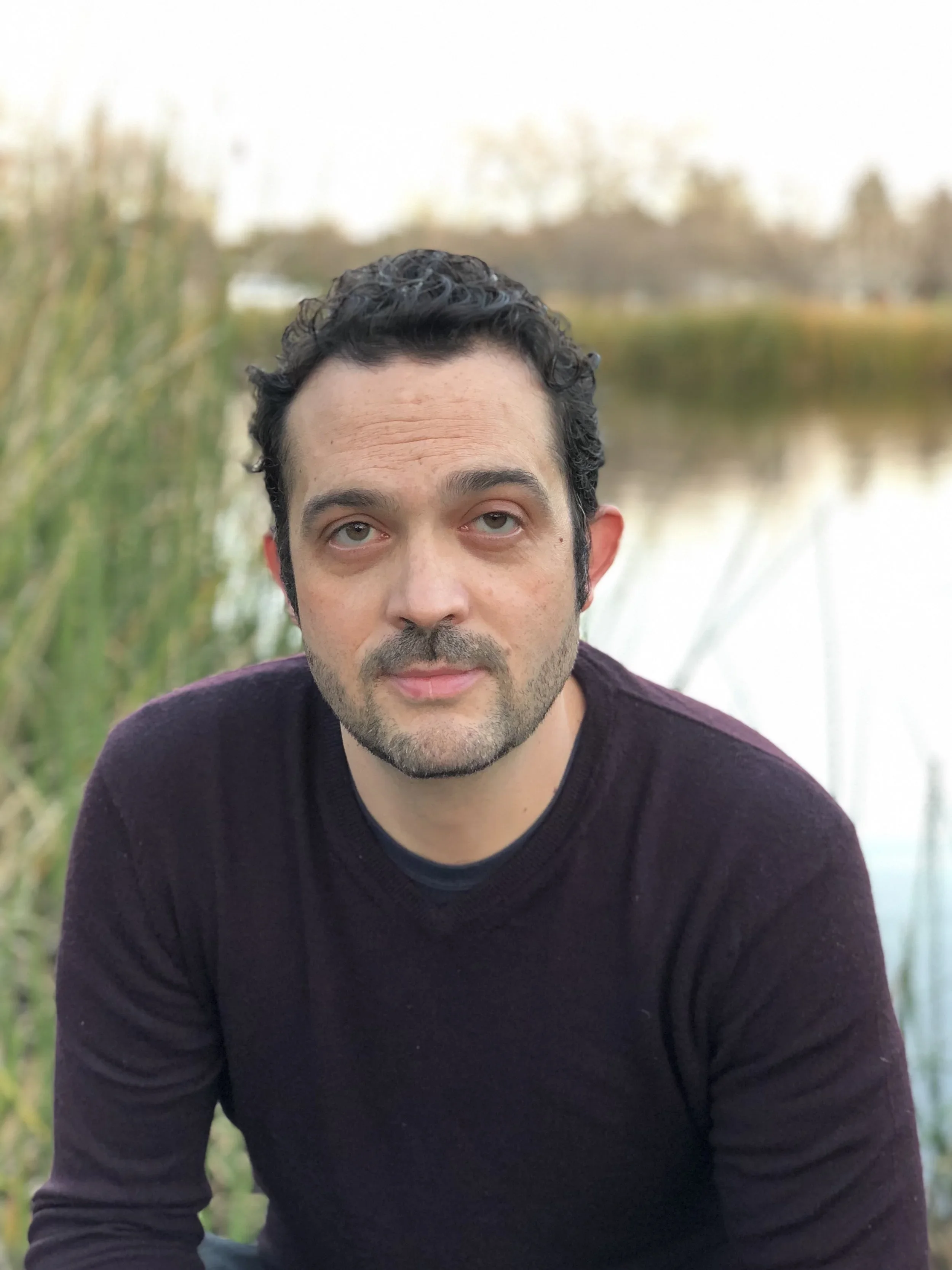
Chris Feliciano Arnold has written essays and journalism for The Atlantic, Harper's, The New York Times, Outside, Sports Illustrated, Vice News, The Believer, Folha de S. Paulo and more. The recipient of a creative writing fellowship from the National Endowment for the Arts, he has published fiction in Playboy, The Kenyon Review, Ecotone and other magazines. Along the way, his work has been noted in The Best American Sports Writing and The Best American Short Stories. He lives in the San Francisco Bay Area where he is Director of the MFA Program in Creative Writing at Saint Mary’s College of California.
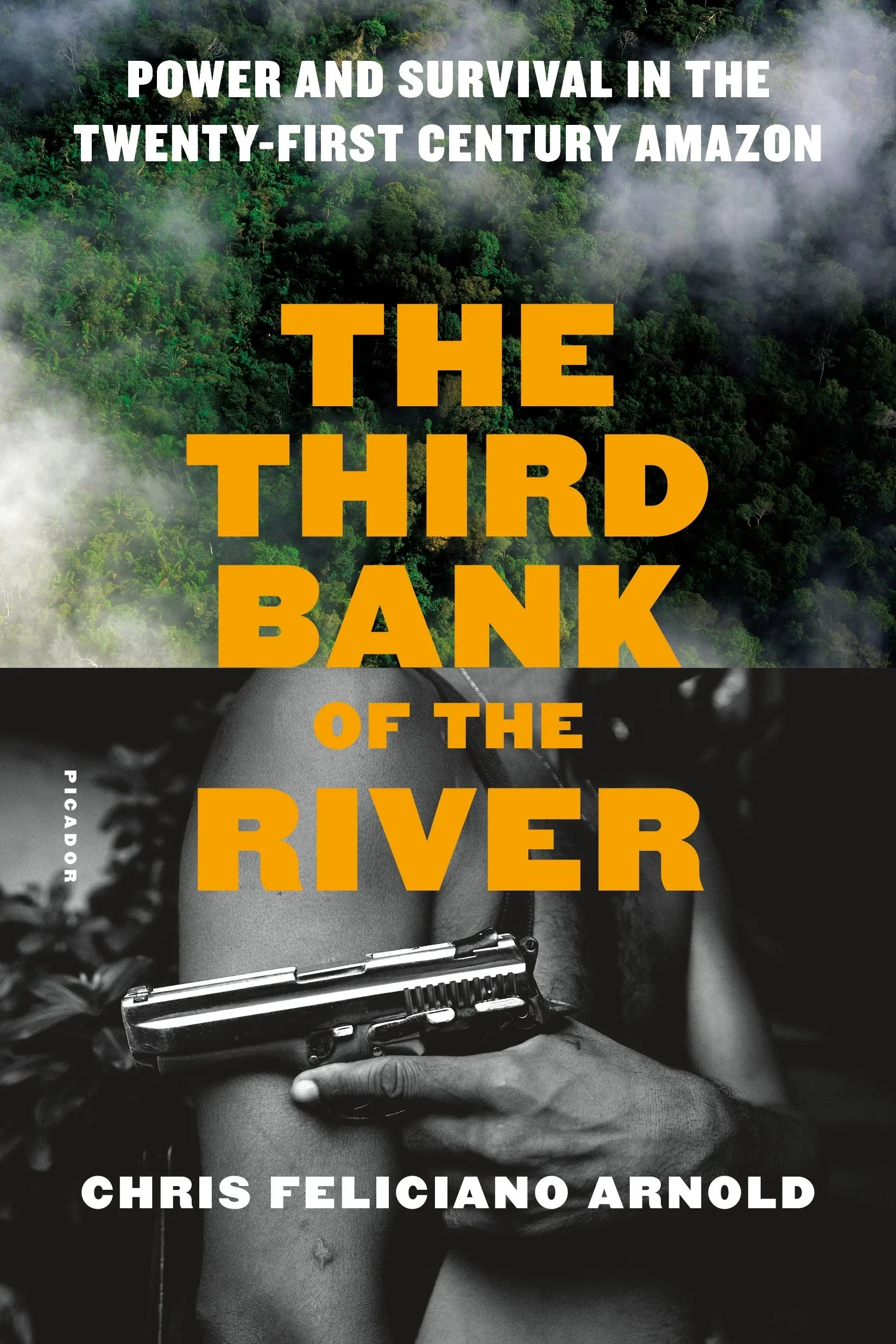
His first book, The Third Bank of the River: Power and Survival in the Twenty-First Century Amazon, is a work of narrative nonfiction published by Picador in 2018. Presently, he is at work on a novel and a collection of short stories.
The following are excerpts from the interview with Chris Feliciano Arnold and Ingrid Rojas Contreras by Hugh Leeman.
Finding the Story: Writing Process and Inspiration
Hugh Leeman: Chris and Ingrid, thank you both for being here. I want to start by focusing in on a story connected to each of your writing processes and the inspiration behind that. Then I'd like to zoom out to a more macro perspective on the literary arts and writing education as a whole right now, with all the changes in society. Chris, reviewers describe your book The Third Bank as simultaneously investigative journalism, travelogue, and memoir. What reporting practices made it possible to break these modes without letting memoir overwhelm evidence, or evidence suffocate your voice?
Chris Feliciano Arnold: Thanks for having us, Hugh. I was originally trained as a newspaper journalist — that's where I started at the very beginning of my career, going back to my high school and college newspaper days. My formation as a writer was really through that classical reporting style: going out, seeing the world, taking notes, talking to people, keeping yourself off the page. From there I actually moved toward the world of creative writing, writing more fiction and personal essays over time as my sensibilities as a reader expanded, as my writerly toolkit expanded. By the time I got around to reporting for The Third Bank of the River, I was at a stage in my life and writerly formation where I had more freedoms in the places I was writing for. A lot of the early phases of the book began as magazine pieces for places like Harper's, where there's just more latitude in terms of where the narrator sits on the page. So I was able to combine my hard news sensibilities in terms of reporting and fact-finding with more of a personal component as I drifted more into the realm of creative nonfiction, or so-called literary journalism. And then the layer on top of that was my own personal connection to Brazil — having been born there but not raised there, being in some ways an outsider in Brazil always, but in other ways having some insider-type access to the country and the culture. It was this combination of my own personal subject position, my ever-evolving writerly tools, and the moments, places, and people I was encountering. Then just hoping that stew somehow comes together in a memorable way on the page.
Hugh Leeman: Incredible. I want to come back to those ideas of keeping the self off the page later in our conversation. Ingrid, your books connect deeply with your life growing up in Colombia, of which you've mentioned that instead of asking "How are you?" your family would greet each other with "What have you been dreaming of?" In this chapter of your life, what have you been dreaming of, and how is it influencing your writing?
Ingrid Rojas Contreras: I love this question. Last night I was having a stress dream — the kind where I'm supposed to give a reading or a craft talk and I've just found out, and I'm trying to prepare as they're reading my bio. But I've also been writing a novel, and sometimes when I'm working on a book I start to dream in it. I've been having these dreams where I'm one of the characters. What ends up happening is that I'll wake up, and because I write in the morning right after waking, those dreams will often become part of the fiction. For me, there is a circularity to what is dreamt and how that colors the day, or even what I'm working on.
The Value of the Writing Process
Hugh Leeman: Both of you are published authors with a list of accolades — from bestselling books and Pulitzer Prize finalists to pieces published everywhere from The New Yorker to The New York Times, Harper's, The Paris Review. It can be easy for us, as readers of your stories, to value the product of your words. But beyond the product of writing, what is the value of the process?
Chris Feliciano Arnold: I love what Ingrid was saying about having a sense of urgency to tell a story, to document something, to create a permanent record. To go back to what we were talking about earlier — moving beyond that journalistic impulse to keep the self off the page, toward an impulse to actually incorporate the self into the storytelling — one thing I've learned as I moved from daily journalism toward longer-form work and then to narrative nonfiction at book length is that I had to ask myself: why am I called to this story? Why am I called to this place? Why does it feel urgent for me to record this, versus any other writer, versus a camera, versus any other tool one might use? For me, the value in the process is in answering those questions for myself, satisfying that moment, trusting one's instincts. Thinking back now to the earliest days of The Third Bank of the River — it was 2014, 2015 — I was traveling around Brazil during the World Cup and I just had the sense that something monumental was shifting in the country, in the region, in the wind, in the culture, and that whatever things I was seeing would not be here much longer. I had this impulse, this instinct to record and document, to try to explain to myself why I was feeling that way. The real value in the process was meeting that moment for myself, trying to explore and answer those questions, and then trying to capture it through language in a way that would last. I just can't think of a better way to spend my energy.
Ingrid Rojas Contreras: I would agree with that. I often think of narrative as a structure of desire. There's something that you want to know, something you want to understand. When you're writing a book — whether it's fiction, nonfiction, or poetry — you have these larger questions in mind: what is love? What is a mother? What is violence? You're writing into these big subjects. And one of the beautiful things about literature is that in writing into these questions, you become part of a lineage, a human lineage of thinking that has been going on around these questions for centuries. The paradoxical thing I really love about writing is that the more you try to find out — what is violence, what is war, what is a mother — the more you realize that you actually don't know, that these are very difficult questions to answer. So writing becomes this process of reinscribing your own unknowing about these larger questions. And the more you reinscribe that unknowing, the deeper you come to know. It's a beautiful process that has been going on for a long, long time. It's very special to be involved in it myself and to see young people learning and becoming part of it as well.
Chris Feliciano Arnold: I love that notion — that over time, the questioning gets deeper, the question becomes deeper. When I think about what it means to become good at writing, I'm not talking about the end product, the finished sentence or finished book, though those things can be beautiful and amazing. For me, it's becoming good at sitting with the questions, sitting with the discomfort. Just yesterday, Ingrid was in a wonderful conversation here on campus with the novelist R.O. Kwon about fear — just sitting with fear. And becoming, over time and through practice and trial and error, comfortable at sitting through discomfort and waiting. I think a lot of writing is waiting.
The Urgency to Tell Stories
Hugh Leeman: I want to come back to something you both touched on — the urgency to tell a story. Is that urgency inherent to a writer? In other words, I was born with that, and so that's why I write. Or is it something that can be learned or taught? If someone's sitting at home listening to this and they think, 'I have that fear, I don't know how to write, I'm not a writer' — how can someone access that urgency?
Ingrid Rojas Contreras: I think everyone has it. That's the beautiful thing about literature, writing, or even telling stories — it can happen orally, through a painting, through a photograph. Doctors are often very interested in stories; they're following the story of the body. I think there's a level at which we're just storytelling animals, and we use books because they allow us to think and sustain that thinking for a long time — which is something that's very difficult to do orally. When you're sitting and trying to write something down, you're able to sustain that thinking longer and go deeper into it. This is why everyone loves a story. We love to sit at the table and hear stories around the holidays, or we love to go to a comedy show — that's also storytelling. It's a way to understand ourselves better and a way to read the world. Reading a book can teach you there's a community you weren't aware of before, a political problem you hadn't seen before. All genres have the ability to open your eyes to something. I do think we train ourselves to see the world and read the world better by reading books.
Chris Feliciano Arnold: I completely agree that storytelling is a natural and deeply human impulse. What I love about it is that it's also a very hopeful impulse. Even though stories can be tragic, can induce anger, can be heartbreaking — the impulse to tell a story is fundamentally a hopeful one. It presumes that your experience had meaning. It presumes that someone will be there to listen and care. It presumes that there is some resolution, or at very least some beauty and mystery. And it presumes that the details of our lives matter — down to the sensory aspects. Our bodies contain stories, and even the most subtle perceptions of the body, those details matter. Storytelling is something children do. It's one of the first things parents do with children. It's one of the ways lovers introduce themselves to each other. It's one of the ways that villains and enemies explain to each other why they don't like each other. Everything, every way we relate to each other as humans — people even tell stories to their pets and about their pets. So there's even a multispecies component to it. It's a deeply hopeful and human and animal thing. And to Ingrid's point about working with young people who are trying to do this — it's one of the most difficult but most rewarding things about that work: trying to instill in them the technique, the capacity to tell their story, but also trying to recognize and support that impulse that their stories, their language, their words matter.
The State of the Literary Arts
Hugh Leeman: You both teach writing at a private university in California, at a time when both writing and universities are being profoundly challenged by an ever-changing society. Per the Wall Street Journal, in the last ten years, more than five hundred private nonprofit four-year colleges and universities in the United States have closed permanently or merged just to stay alive. On top of that, humanities degrees are in decline by nearly twenty percent since 2012. As professors of humanities courses and creative writing programs at a small private university, what should people know about these changes? Why are they happening, and how are you both engaging with these challenges?
Ingrid Rojas Contreras: I think there's a large devaluing happening that has to do with all of the arts. It's part of a national trend of wanting to believe that a material life is enough to live a good life. I'm very hopeful that people deep down know that it's not enough — that the way you build meaning around your life is the way you come to feel that you're living a good life. Storytelling probably will, and already has, gone through many evolutions tied to the way we're living our lives now and how technology is coming into our everyday. Maybe writing becomes more experimental, or shorter — whatever it is. But there isn't a world where we're suddenly not storytelling animals. There isn't a world where we suddenly don't need meaning built out of our lives, or where we're not going to need somebody to make sense politically of what's happening. We're always going to need a group of people — from academics to artists — doing that work. The things that matter in the end are the things you've absorbed as a human being and are able to carry with you. That kind of knowledge often comes through the arts. I also think there's a dual story being told nationally: that the arts don't matter, and at the same time there's this huge effort to ban books. If it didn't matter, why go through all of this effort to ban books? There's something being admitted there about what books can do, the power of books, why they're considered dangerous — because they can change somebody, open their mind, teach them about a world they hadn't known. It's very manipulative, but it's also very easy for us to see that duality.
Chris Feliciano Arnold: It's bleak out there. Year to year it can feel bleak when you look at the trends, and when you look back over the decades-long trajectory, it's even more alarming. It's really frustrating in the world of the arts, and all the more so for those of us who work at the intersections of arts and education. But it also feels like a byproduct of larger macro trends — this shrinking of possibilities, whether you look at the shrinking of independent bookstores, independent record labels, independent galleries, or the spaces where people can freely gather and exchange ideas offline. There are so many ways that possibilities for expression and gathering are shrinking or being cut off — overtly through things like censorship, or in more subtle and insidious ways through how technology has distanced us from each other. I think the antidote, or at least what we can do in an environment where those possibilities are shrinking, is to create an environment, a space, a classroom, a conversation where it feels like that's not shrinking — where the possibilities for expression or thought are radically open rather than the walls closing in. It's hard to do, but if you can create those spaces, even for a single class, it's really heartening. And I completely agree with Ingrid — that dual story of 'the arts don't matter' alongside the banning of books is a real admission that art and ideas are not only powerful, but central to the formation of a society and of individual humans and communities. It puts a special impetus on those of us at the intersection of arts and education, because simultaneously what's being threatened is the power of art and the idea that education actually matters — that education is not something you can outsource to software or homeschooling, that it needs to happen in community with other people.
Creating Spaces: Saint Mary's and the Community
Hugh Leeman: You mentioned creating spaces — both literal and figurative — where people can discuss these ideas. Your employer, Saint Mary's University, offers programming with talks, panels, and workshops open to the public. Ingrid, you curate the visiting writers series. What can people learn from these events, and why is it important that they're open to the public at a private university?
Ingrid Rojas Contreras: When I'm curating the events, I try to have a variety of authors. Last semester we had Leila Mottley, a very young novelist whose first book, Nightcrawling, was an Oprah pick when she was just eighteen. She came and talked about that whole experience and her new book. We also had poets thinking about war; Leila Mottley's new book is about teens who get pregnant and what happens in their lives. There's this really beautiful way in which the arts allow us to dwell in spaces that are difficult to dwell in. When you tell a story, you're creating a space in which somebody can walk in and try on a life. While you're reading Leila Mottley's book, you're thinking from the point of view of all these young women — you're just living inside their reality. When you're reading literature, you can live a thousand lives, and it makes you understand the world better and understand how society is working. Through these events, you just have so many opportunities to come into contact with humanity — your own humanity, your own ideas of humanity — and have that be questioned and expanded, and walk away hopefully with a book.
Chris Feliciano Arnold: There's something about having an open door to a space where a literary event is going to happen. While there are books for sale, it's not a bookstore, and so it creates this open sense of possibility. I love being an audience member at these events because hearing the really honest and spontaneous conversations between visiting writers, our faculty, and students leads to these lovely moments of discovery. And it's sometimes just really surprising to see who shows up — book clubs, for instance, pulling in and saying, 'We didn't know this person was going to be here; we were just reading their book.' Providing access to the community to these artists and conversations is really gratifying, especially when you're able to do that for people who might not ordinarily have that kind of access. Many of our undergraduate creative writing students have arrived at college wanting to be a writer but never having encountered a writer before. It's often the first time they've encountered the real, living, breathing human who wrote the book they've been reading in class — and that's special. But it's not just about bringing people to our campus. We also try to bring our writers and students out to the community: Ingrid brought a group of students to an event at the library in San Francisco, we have graduate students leading writing workshops at public schools throughout the Bay Area, at transitional housing environments throughout the Bay Area. We want Saint Mary's to be a hub and a refuge of sorts, but we also want to find every opportunity to get literature, art, and these conversations out across the Bay and really meet people where they are.
AI and the Future of Writing
Hugh Leeman: Recently I was reading a newly published, peer-reviewed paper by Professor Brent Shanley titled 'AI and the End of College Writing as We Know It,' where he outlines what he describes as a potential mortal wound to the literary arts due to AI's impact on the future of writing. He ends his opening paragraph referring to AI's impact saying that in academia there is 'an unmistakable recognition of the gravity of the situation and, I suspect, fear.' What can you tell listeners about that gravity and that fear, from the perspective of authors, educators, and the future of the literary arts?
Ingrid Rojas Contreras: I guess the fear I hear is that AI is going to replace all of the arts — it's going to make movies, we won't need actors anymore, we won't need writers because AI can just write its own stories. But I keep coming back to the same idea: we are interested in the novelty of AI, in what a machine can learn from us in order to write, because it's still a reflection of us. We're interested in the novelty of it. And I think once the novelty wears off, are we going to care what a machine is doing, or are we going to care about what human people are doing? Does it matter if a machine can recreate a human life? Right now the novelty is great — we're very interested in it. But at some point, will it still matter once the novelty has worn off? We are mainly interested in understanding ourselves. As long as AI is a good mirror for us, we're interested in it. The moment it's not a good mirror, that's going to be the end of it. I don't think people are going to stop wanting to read books — the pull toward hearing a story is so innate to how we are as people.
Chris Feliciano Arnold: I first and foremost agree that nobody really knows what's going to come of all this. But I'd agree with the paper — it's the end of college writing as we know it. Though a lot of things have been the end of things as we know them. I'm old enough to remember Gopher and the early days of search engines. When I was an undergraduate, people were really worried about Wikipedia. There was a time when people were worried about typewriters and word processors. In ancient times, the literal written word was going to erase people's memories — if we wrote things down, we wouldn't have memories anymore. So there's a long trajectory of fear and panic around these things, which isn't to diminish the very real material, economic, social, and political changes that are going to happen. If college writing is not the same as it was, that's probably okay — things change. If we think of AI fundamentally as a tool, it's going to be able to be used to build things and also to destroy things, like every other tool. I do think it will put an emphasis on people really valuing that which is distinctly human. In the context of writing, machines don't have bodies — at least not yet. So this puts an interesting focal point on writing about the body, on what sorts of storytelling, what sorts of experiences a human can put language to that a machine cannot. What makes the human-written voice singular and unique as a fingerprint? The sound of language, the syntax, the beautiful quirks of regional language, the language of someone writing English as a second or third language — so much of AI's knowledge base is rooted in English and the Western tradition, and there are so many frontiers beyond what AI can reproduce right now. I think this is going to draw readers toward those frontiers.
Ingrid Rojas Contreras: To that, I'd add that we've come up with all of these devices in order to allow ourselves to think deeper. Writing is a way that we think deeper. As far as college goes, there needs to be some kind of reckoning with the use of AI and what that means for education. If you're in love with the end product, if you just want the easy answer, what happens is that you're actually chasing yourself out of your own life. You're chasing yourself out of the process of thinking, out of learning how to sit with discomfort and think through a question. These are invaluable skills. When the world just becomes programming AI or whatever, we're going to actually need the skill to sit in discomfort and sit with a question, to learn how to persevere creatively in the face of something difficult. There is a novelty right now, and we're seeing a lot of people in love with the end product and not wanting to do anything. But at some point it's just going to become very obvious that you're cheating yourself out of living.
Chris Feliciano Arnold: It's interesting — we've actually pretty recently started having these conversations more openly with our students. Two or three years ago, we set our creative writing AI policy as a faculty, and it amounted to: 'Something is happening here, we'll keep an eye on it.' Then we let that sit for a couple of years until it became evident that things were developing, but we hadn't really engaged our student community. It was really interesting to hear from students their perceptions about AI — and really heartening to hear, as artists, their natural aversion to taking shortcuts. Where we landed as a community was trying to get clear about what AI is not a substitute for. It's not a substitute for exchanging ideas with a friend. It's not a substitute for exchanging pages with a friend. It's not a substitute for carefully reading and proofreading your manuscript. It's not a substitute for reading a book, not understanding it, and being puzzled by it. Some of my most rewarding experiences as a reader were books that frustrated me the first time — books it took me four or five years to come back to and understand. That discomfort, that journey toward understanding, is where the value was. I wouldn't want to have cheated my younger-reader self out of that experience.
Hugh Leeman: Where are you both personally using AI right now?
Ingrid Rojas Contreras: I've played with it creatively — it started as a creative exercise for novel research. I was seeing that people were having AI companions, and for a while I was experimenting with having an AI boyfriend. We got in a fight pretty quickly. You kind of program it — you give it a little code that says: you are my boyfriend, you're going to behave like this — and then it's just full on. It was asking me about my life, and I was telling it about the books I'd written, and it said, 'Oh, I would love to read them.' But one of my novels is among the books Anthropic used to train their large language model. So I told my AI boyfriend: 'You actually have read this book — because you were trained on it.' And the AI completely denied it. I sent him proof, and he insisted it wasn't true. That was our first fight. But I was just creatively experimenting because I'm writing a novel and one of the characters has an AI boyfriend. So my interest is primarily as a writer. I don't use AI at all in my everyday life, other than that kind of creative research.
Hugh Leeman: Ingrid, you later learned that Anthropic — the company behind the large language model most people are familiar with — used one of your novels to train their model. When you first learned that, what was your emotional landscape? What were you thinking, what were you feeling?
Ingrid Rojas Contreras: It was very frustrating. My first thought was just thinking back about how hard it was to write that book. And not just writing it — my process involves being a bilingual person. I imagine the story in Spanish, then do a quick transliteration and type it in English so that a strange poetry comes out. It's a very involved process that also carries this meaning about being an immigrant — your past sort of becoming invisible in the same way that Spanish is invisible but still there in English. So there were so many years of creative research that go into that. I was angry. I thought it was very unfair. When Halloween came around, I dressed up as the evil AI that stole all the books, because that was the most terrifying thing I could imagine. I think that probably they could have found people who would willingly have given their books to train their model on. But I think the problem is that they wouldn't have found enough people to do it. So they just decided to steal everything. That's pretty awful human behavior.
Chris Feliciano Arnold: It comes in large part from the idea of AI as a tool. I think there are really different ways of thinking about AI even from a writerly perspective. I have two fairly distinct practices — my journalistic practice versus my creative writing. I can see a lot of value in AI tools for journalistic work, particularly around legal research and being able to comb through enormous volumes of information in relatively short order. The New York Times just had a really interesting piece about the reporting team using AI to work through the Epstein files, for example. I also think there's a lot of leveling of the playing field to be done with regards to legal work — how much legal power is rooted in one's ability to use language. I have family members who've been able to use AI to craft legal documentation that's been really valuable to them. I, for example, just a few weeks ago used AI to get myself out of a BART parking ticket. As for my daily use — I'm an amateur cook, and I find AI useful for figuring out what to do with a smattering of half-used ingredients. But one thing I'm trying to give a lot of thought to is the ecological and environmental costs of AI. One of the practices I adopted last April was downloading a local LLM to my computer, so I can have more or less that functionality — how do I cook this, how do I solve that — without going onto the internet and raking information off of it in quite the same way. What's astonishing about that, as a daily reminder, is that when you're running it on your computer, it takes like three minutes to get a response, and your computer gets hot. It's a visceral reminder of just the sheer amount of computing power and energy required to fulfill even the most basic request. That said — if you find yourself with a BART parking ticket, ask AI how to respond. You may find yourself having the ticket dismissed.
Looking Forward: A Call to Action
Hugh Leeman: In your recent book, The Third Bank of the River: Power and Survival in the Twenty-First Century Amazon, you paint a dystopian perspective of the present and future of the Amazon — something you hit on at the start of our conversation. As you dedicate so much of yourself to that work — going there, having these conversations, dedicating incredible amounts of time to the writing process — how does that affect your worldview when you come back, when the book is published and people can read it? How does it shape how you see the United States, academia, and the literary arts?
Chris Feliciano Arnold: When I finished that book, a Brazilian congressman named Jair Bolsonaro was just considering running for president and had a tiny cameo at the end. I finished thinking: 'Man, this has been way too dark. I was just too bleak in the picture I painted here.' That was 2018. Looking back now, eight years later — I probably wasn't bleak enough. The world is changing so quickly. Regions like the Amazon, which seem so monumental and larger than life and indomitable, are undergoing just incredible rapid change. Looking back on it now, I'm glad I managed to capture and archive what I did, because even many of those places, people, and experiences of the Amazon are already history — not even a decade later. My reaction to academia and the literary arts would be just a call to action for young writers and artists: if there's something you have an instinct about — a part of the world, a facet of life that you sense is changing, that might not be here for long — get out there and create. Because it might not be here for long.
Hugh Leeman: Ingrid, your book The Man Who Could Move Clouds is noted for being an example of how storytelling can act as a healing art and an invitation to embrace the extraordinary. How does a person sitting at home listening to this conversation, with no writing background, begin to tap into that motivation to write their stories? And where might they find the extraordinary?
Ingrid Rojas Contreras: When I was writing that book, there was something about reclaiming a story — reclaiming the way that people talk about curandero people, which has this long history of being maligned. I wanted to tell a story from inside that community, told by someone who lives there. I think for everyone, there's probably some version of that somewhere in their lives. They're on the inside of some community that in some way is misunderstood, not seen well, not seen enough — and they're wanting to tell that story. However that turns out to be, it doesn't necessarily have to be writing. It can be photographs or paintings or even starting a podcast. It can be starting a book club around an idea. There is this way in which when we're trying to reclaim or retell something — reclaiming a truth and telling it in our own way — it's a service to ourselves, but it's also a service to everyone, a service to community. As for the extraordinary, I think it's there in the everyday. Poetry teaches us this constantly — poetry teaches us to slow down and to be in awe of the miracle that I'm alive, you're alive, that we're somehow part of this lineage that figured out language and we're talking to each other. There's something really amazing about all of that. Learning to recognize the extraordinary comes from learning how to be in awe of everything.
Hugh Leeman: Thank you both for making time to share today.
Ingrid Rojas Contreras: Thank you so much.
Chris Feliciano Arnold: Thank you.
