
Fragmented Horizons, Chris Hayman and Rob Strati, Studio Shop Gallery
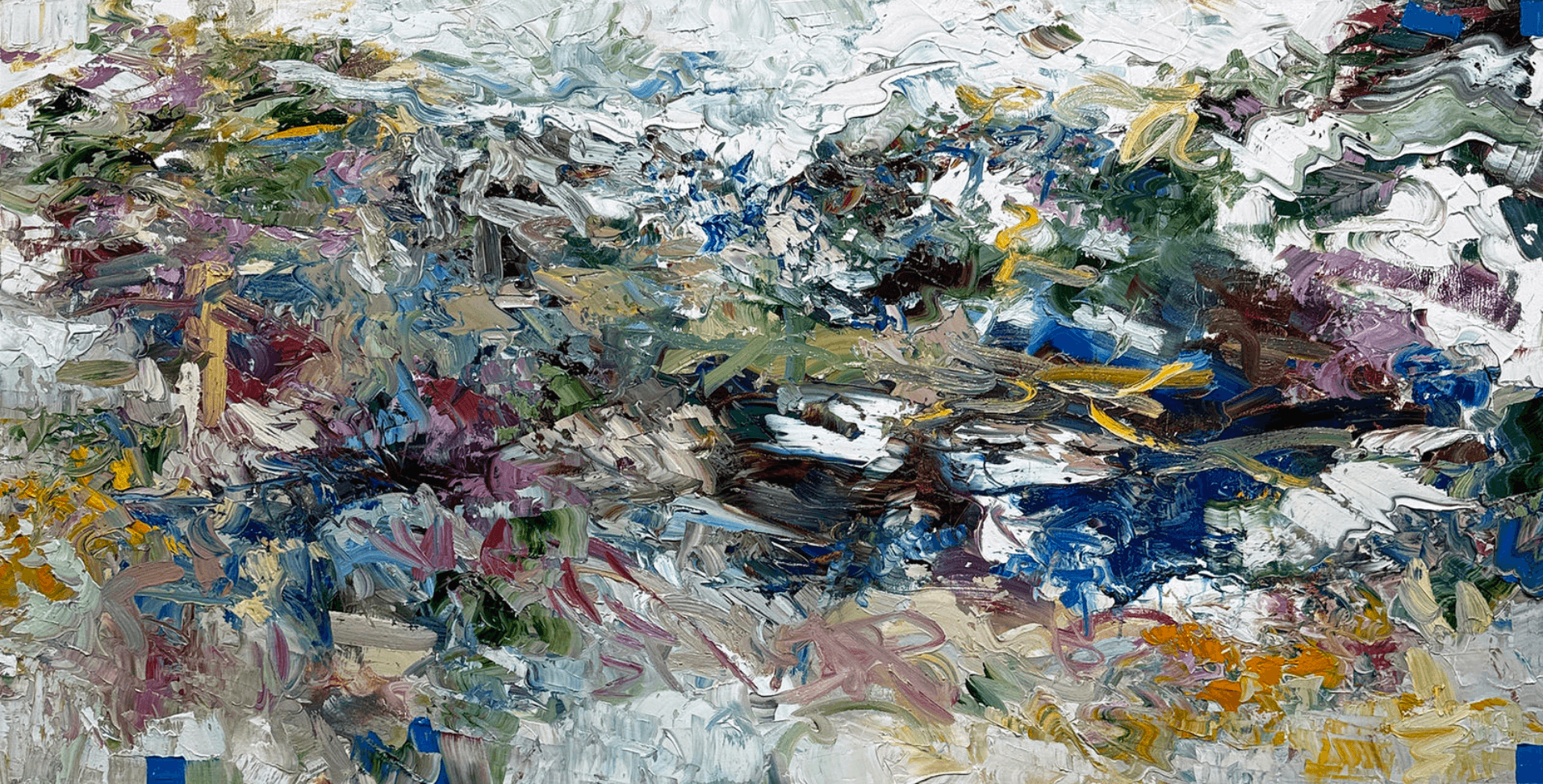
Chris Hayman, Blue Cascade, oil on canvas, 30 x 60 inches.
There are places we remember more beautifully than they probably ever were. The light is softer, the water clearer, the flowers more abundant, and whatever discomfort may have existed has quietly fallen away. Chris Hayman’s paintings in Fragmented Horizons at Studio Shop Gallery feel a little like this. They are a feast for the eyes without the gluttony, more sophisticated picnic than banquet, as though someone planned a birthday around the theme of a spring garden adventure. Bodies of water appear between passages of color, pathways seem to lead somewhere just beyond reach, and fields of flowers stretch into spaces that are recognizable without belonging to anywhere in particular. Hayman is not offering us a landscape so much as the feeling of one, the way we might want our best memories to appear after time has softened their edges.
Paired with Hayman is Rob Strati, whose work produces a surprisingly similar longing through an almost opposite visual language. Where Hayman’s landscapes loosen and dissolve, Strati’s feel precise, calculated and geometrically astute. Fragments of antique and vintage porcelain become the starting points for elaborate ink drawings that extend their existing imagery far beyond the broken edge. The result can feel like a three-dimensional rendering of a place briefly imagined, strangely tangible despite never having existed. Together, the artists make an unlikely but convincing pairing. One allows a landscape to drift toward memory while the other builds outward from what remains of something broken, yet both leave us wanting to enter the worlds they have made. In Fragmented Horizons, place becomes less about where we have been than where we imagine ourselves being.
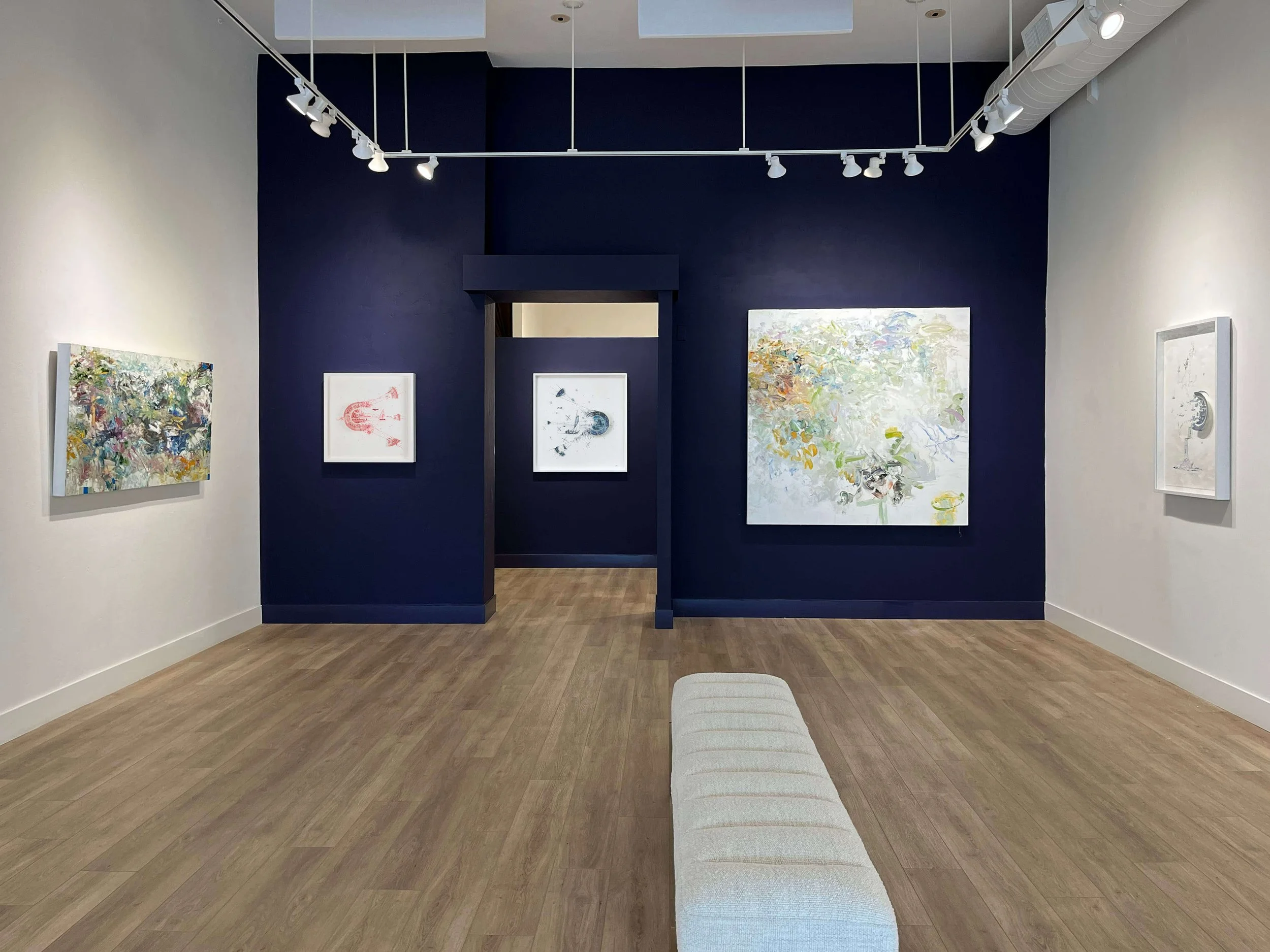
Installation photo courtesy of Studio Shop Gallery.
Hayman’s relationship with landscape is unsurprising considering that she lives on a farm in Northern California, surrounded by livestock and the natural environment that continually feeds into her work. Before turning her attention primarily to visual art, she trained as a classical pianist and was involved in theater and dance, influences that perhaps still surface in the rhythm and movement of her compositions. She earned a B.A. in Art History from the University of Maryland and an Art Education degree from the University of Nevada, Reno, where she began what she has described as her “investigation in painting.” Working in oil on canvas, Hayman is particularly interested in space and in the energy created between forms, often using thick texture and contrasting color to push and pull areas of the painting. She has described landscape as entering her work intuitively, which feels important here. These are not places meticulously recorded from observation. Nature provides the vocabulary, but Hayman rearranges it according to feeling.
Landscape’s Rapture stretches across six feet of canvas, giving Hayman enough space to create a landscape that feels expansive. Oil paint is worked across the surface with varying degrees of pressure and weight; thicker passages sit beside areas that feel pulled, scraped or quickly brushed into place. The marks remain distinct enough that we can follow the movement of her hand. Greens push into flashes of pink and yellow, blue opens up what appears to be water, and white brings moments of light and relief. Hayman does not use these elements to tell us exactly where we are. Instead, they behave more like the pieces of a place we retain after leaving it. A patch of sunlight, the color of flowers, the shimmer of water or the density of a garden can survive in memory long after its layout has been forgotten. The painting seems to understand that distinction. Its beauty comes not from clarity, but from giving us just enough to feel that we have been somewhere like it before.
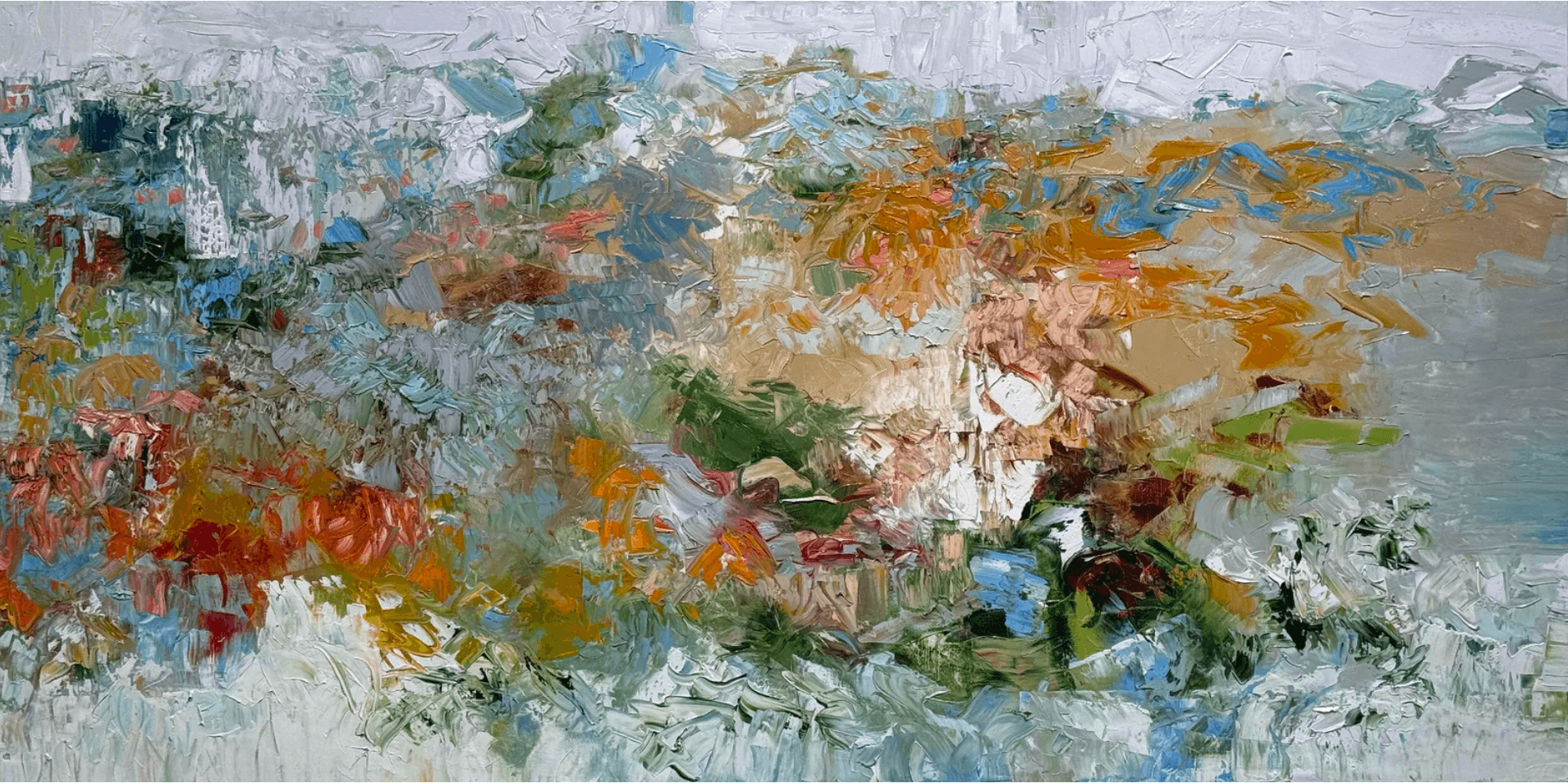
Chris Hayman, Landscape’s Rapture, oil on canvas, 36 x 72 inches.
There is something even more enveloping about Earthly Delight. Hayman builds the painting through accumulation, but the surface never feels labored. Marks overlap, disappear beneath one another and re-emerge elsewhere, giving the impression that the landscape is still growing while we look at it. Her use of oil is important here. Its physical weight allows some forms to rise from the canvas while other passages remain loose and open, creating a sense of depth without relying on conventional perspective. It makes looking at the painting feel less like standing before a view and more like being somewhere within it. Perhaps that is where the “delight” lies. There is no urgency to understand what every mark represents, only the pleasure of wandering through them. A clearing can become water, a cluster of paint can become flowers, and then both can return to being paint again. Hayman leaves enough uncertainty for the viewer to finish the experience themselves, and in doing so taps into something familiar: our tendency to make the places we love a little more beautiful each time we remember them.
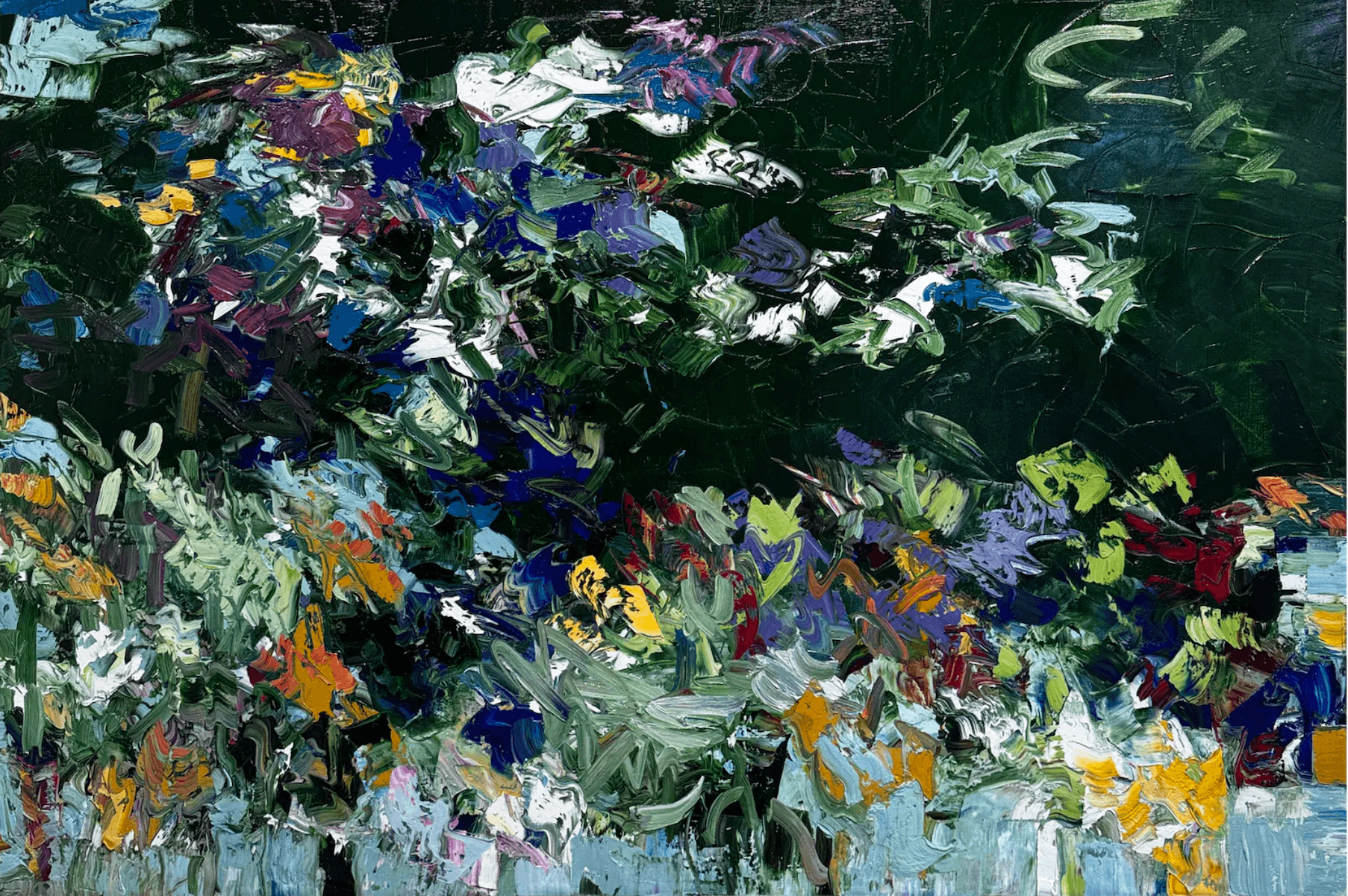
Chris Hayman, Earthly Delight, oil on canvas, 48 x 72 inches.
If Hayman allows the landscape to loosen until feeling takes precedence over place, Rob Strati approaches that same uncertainty from the opposite direction. His Fragmented series began with an accident, when a porcelain plate inherited from his wife’s late mother was broken. Unable to throw it away, Strati eventually began drawing outward from what remained, extending the plate’s existing imagery beyond its fractured edge. That impulse has since developed into a practice using broken antique and vintage porcelain as both material and starting point. Strati studies the imagery already present on each fragment and continues its visual language in ink, sometimes with an almost obsessive precision. Yet the process is less predetermined than the finished works suggest. He does not begin knowing exactly where these scenes will lead. The fracture establishes a boundary, but also an opening, and it is from there that Strati begins to imagine what might exist beyond it.
That expansion is particularly striking in Fragmented in Blue with Fishermen, Astronomer and Scholars and the much smaller Dreams of Blue Delft, Windmills and Dutch Sailing Ships. In both, the original porcelain occupies only a fraction of the finished composition, yet somehow establishes the scale of everything around it. In Fishermen, Strati carries the blue decoration outward into an improbable world of boats, water and architectural forms, eventually sending the drawing upward into increasingly sparse lines, symbols and shapes. Below, water spills from the broken plate as a waterfall, as though the scene held within the porcelain has quite literally escaped its boundary. Dreams of Blue Delft performs a similar trick on a far smaller scale. A fragment of blue-and-white porcelain opens into windmills, sailing ships and water, its imagery continuing so naturally into Strati’s ink drawing that it takes a moment to determine where one ends and the other begins. There is extraordinary precision in both works, but their appeal is not limited to technical skill. Strati takes something physically small and broken and gives it distance, atmosphere and seemingly endless possibility. The empty paper becomes part of that illusion. It is not a void to be filled, but room for these little worlds to breathe and, perhaps, for us to imagine what else might exist beyond them.
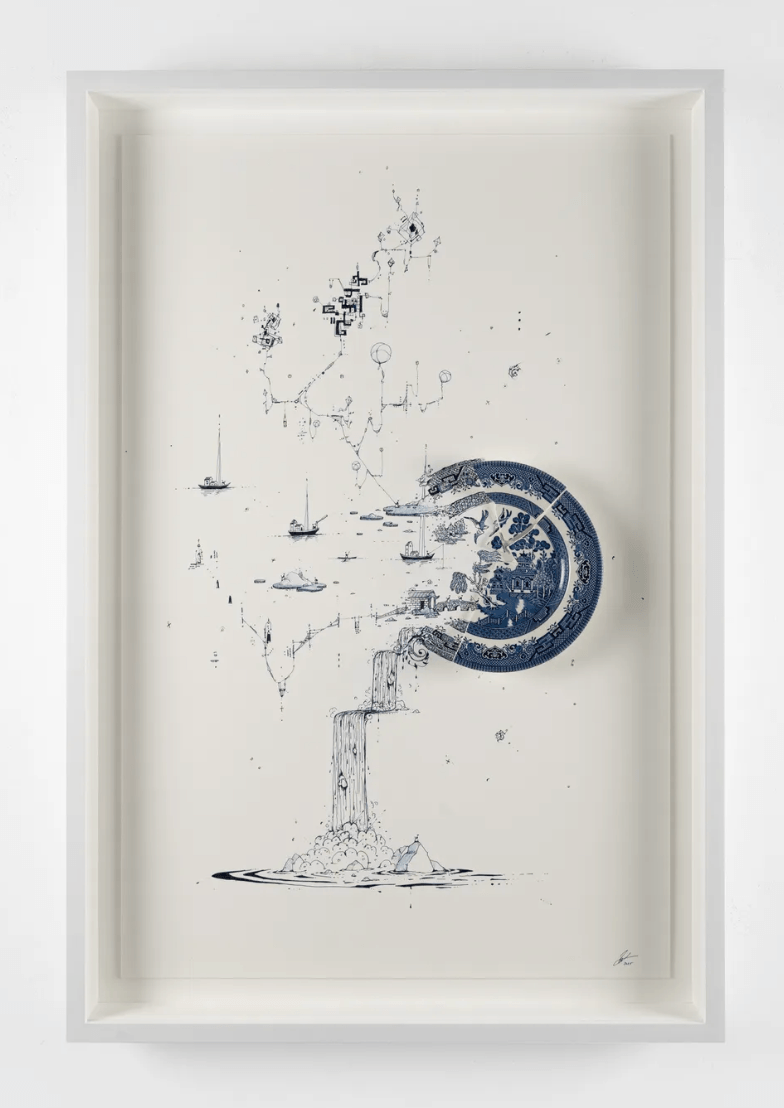
Rob Strati, Fragmented in Blue with Fishermen, Astronomer and Scholars, broken plate and ink on paper, 37 x 25 inches.
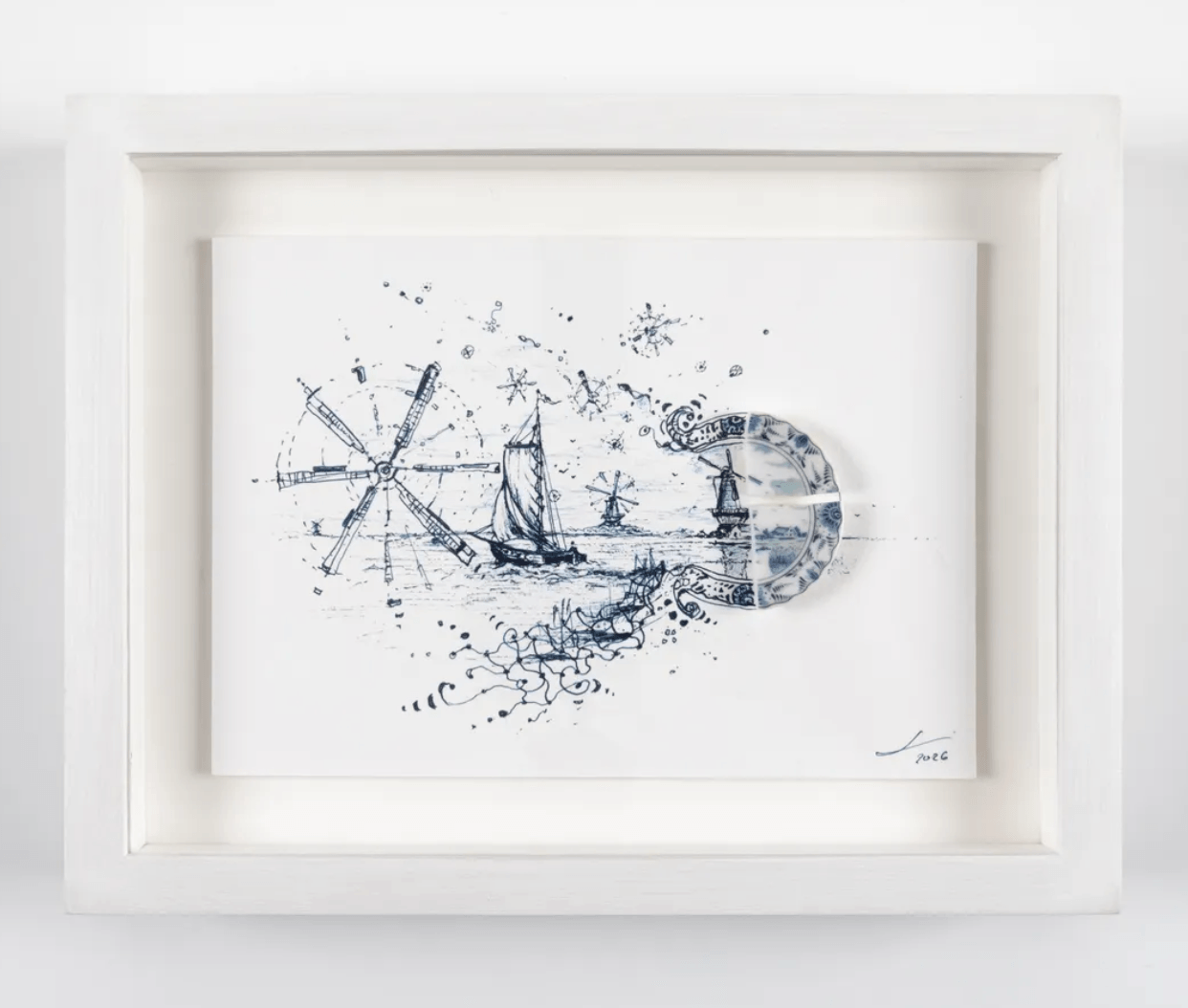
Rob Strati, Dreams of Blue Delft, Windmills and Dutch Sailing Ships, broken plate and ink on paper, 6 x 8 inches.
Fragmented in Blue with Flying Dragons, Pandas and Cranes in Mountains and Fragmented in Red with Minarets, Felucca and Griffin in Flight push this relationship between object and imagination further. Here, separate pieces of porcelain appear almost suspended within the drawing, with Strati using ink to bridge the physical gaps between them. In Flying Dragons, creatures and mountainous forms move between fragment and paper while fine lines shoot outward from the broken pieces, giving the composition the strange depth of a three-dimensional rendering. Minarets creates a different atmosphere in red, its sailboat, palms and distant architecture extending from the porcelain into a scene that feels both historical and invented. What is fascinating is that Strati never tries to hide the damage that made these works possible. The jagged edges remain plainly visible; wholeness is not restored so much as reconsidered. There is something quietly spiritual in that gesture. A break, usually understood as an ending, becomes the point from which another world begins. Looking closely, the fragments start to feel less like remnants of something lost and more like portals, carrying a small piece of one place into another that could only exist through imagination.
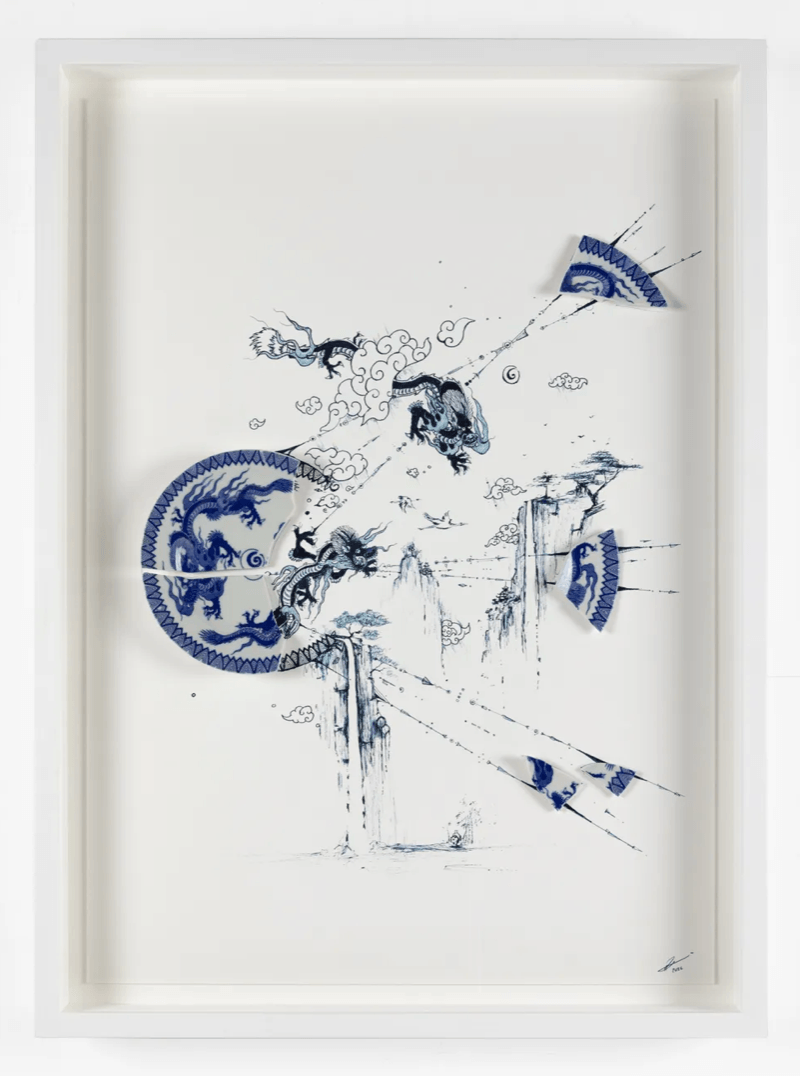
Rob Strati, Fragmented in Blue with Flying Dragons, Pandas and Cranes in Mountains, broken plate and ink on paper, 31 x 23 inches.
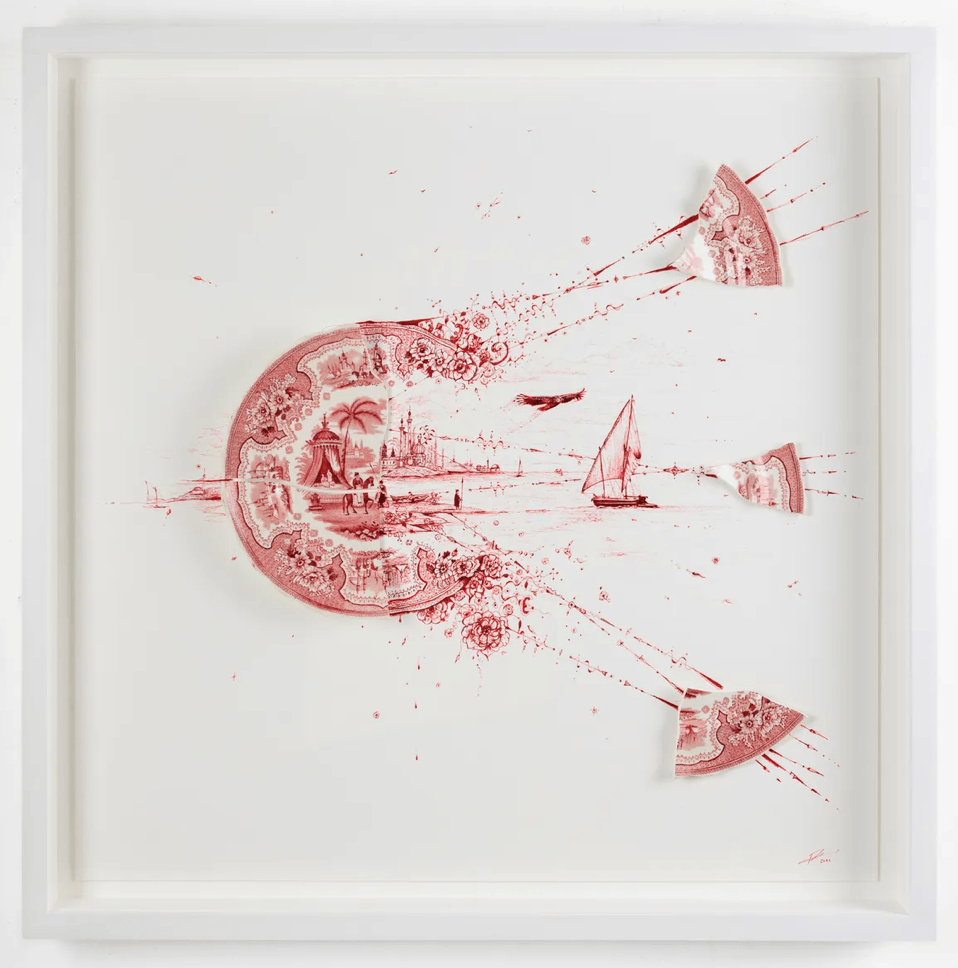
Rob Strati, Fragmented in Red with Minarets, Felucca and Griffin in Flight, broken plate and ink on paper, 27 x 27 inches.
Perhaps the most curious thing about Fragmented Horizons is how quickly the actual places cease to matter. Hayman gives us landscapes that feel remembered before they have been lived, while Strati builds worlds from objects whose first lives have already ended. Somewhere between the two is the peculiar human habit of filling in what is missing. We improve a memory, imagine what lies beyond a path, reconstruct what has broken, or become nostalgic for somewhere we have never been. By the time you leave the exhibition, the horizon in its title feels less like a line in the distance and more like that restless space between what is there and what we add ourselves. Hayman and Strati leave plenty unfinished. Thankfully so. A world completely explained is rarely one worth getting lost in.
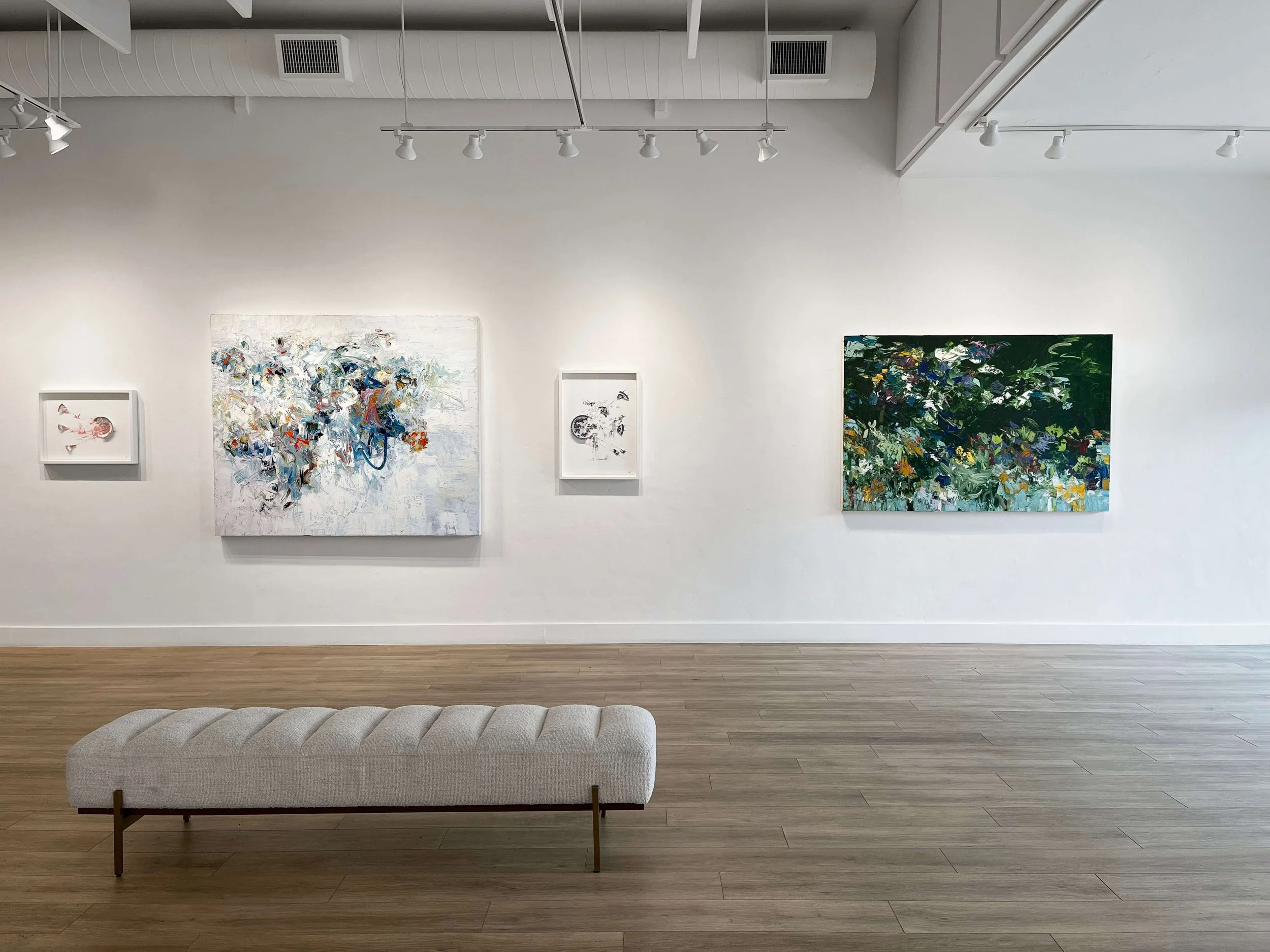
Installation photo courtesy of Studio Shop Gallery.
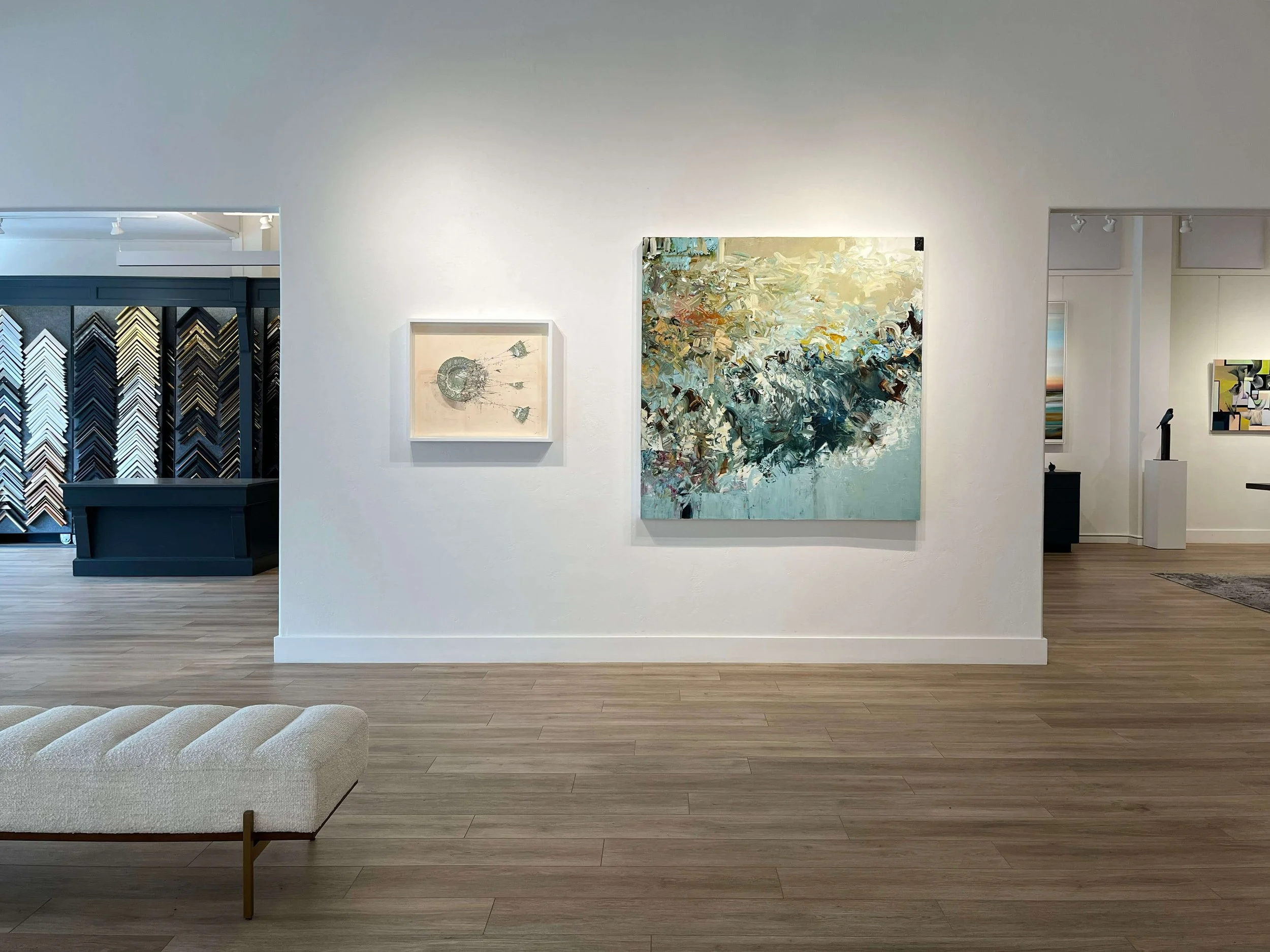
Installation photo courtesy of Studio Shop Gallery.