
FBI Special Agent and Art Crime Founder Robert Wittman on Stolen Art, Lies, and the Gardner Heist
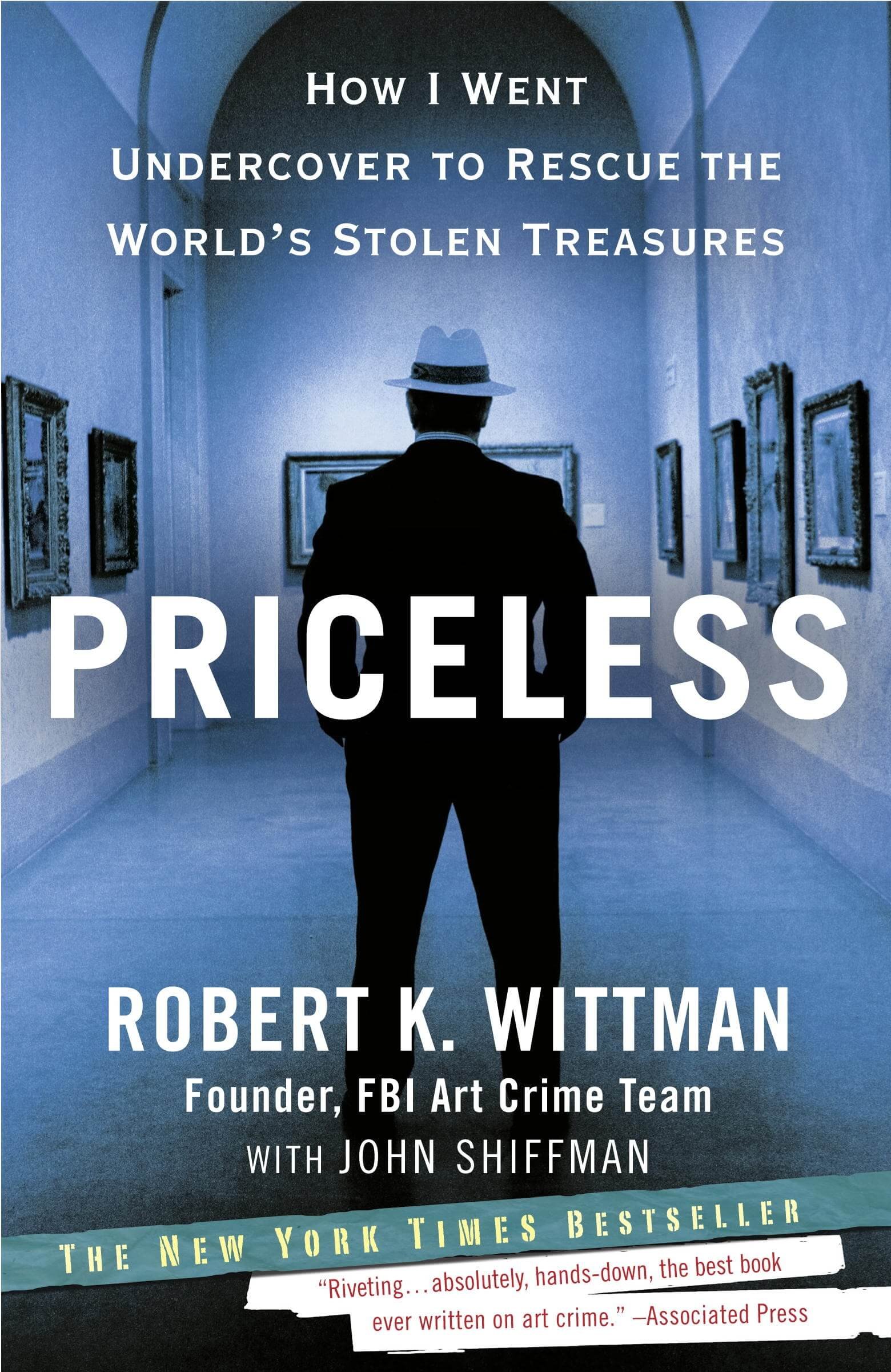

Robert K. Wittman joined the FBI as a Special Agent in 1988 and was assigned to the Philadelphia Field Division. Through specialized training in art, antiques, jewelry, and gem identification, he became the Bureau's foremost investigative expert in art and cultural property crime.
During his 20-year career, he recovered more than $300 million worth of stolen art and cultural property, resulting in the prosecution and conviction of numerous individuals across the globe.
In 2005, Wittman was instrumental in creating the FBI's rapid deployment Art Crime Team (ACT) — the first of its kind. Named the ACT's Senior Investigator, he trained its founding members in cultural property investigation techniques and represented the United States in more than 20 countries, instructing international police and museums in investigation, recovery, and security.
The Wall Street Journal called him "a living legend." The London Times dubbed him "the most famous art detective in the world."
Find Robert K. Wittman at https://x.com/RobertWittman
Founder of the FBI Art Crime Team | Interview by Hugh Leeman
Bob Clay: The Alter Ego Who Was Really Himself
Hugh Leeman: Bob, you founded the FBI's Art Crime Team, working undercover around the world under the identity Bob Clay, recovering everything from Rembrandts and Rodins to Goyas and even Geronimo's war bonnet. Beyond sharing the same first name — what about Bob Clay was like you, Bob Wittman, and what was different?
Robert Wittman: As an FBI undercover agent, you have to keep everything as close to being true as possible. The reason is because if you're working a case, you might be working it for six months, a year, two years. And if you have to remember lies you told two years ago, you can get caught up very easily in a mistake. So Bob Clay really was my alter ego. He was the same guy I was, but with a different name — one you couldn't check up on. That's basically how it worked. I had the backstopping, or what we call the credentials, to prove Bob Clay was a human being. So it was the same guy. Bob Wittman and Bob Clay were the same person.
Hugh Leeman: In your book Priceless, you wrote: "The physical and mental demands of going undercover can be overwhelming. It's easy to lose touch with reality and let the lies and deception take over." What was it like to experience that?
Robert Wittman: I never actually did that. I never lost touch with reality, because I always kept it real. But that was a problem some undercover agents had. You could fall in love with the lifestyle. Depending on the situation, you'd be driving really expensive cars, running around with expensive jewelry, wearing very nice suits — or you might be riding a Harley-Davidson way out of your price range, working motorcycle gangs. All these things have a way of bringing people in.
There was a point in the FBI, back in the 1980s, when individuals started to take their alter egos too seriously and try to become those things. They started spending money, losing money, not keeping track. So it became very important to maintain your reality — which is that you are an FBI special agent working on a case. You're not that day-tripping rich guy on a yacht playing a game. That's not who you are. The reality is who you are.
Hugh Leeman: It sounds like, with the targets you're looking to bring down, you're trying to get a read on their fears and their desires, so you can reflect that back and put yourself into their world. Is that fair?
Robert Wittman: One of the techniques of ingratiating targets is to mirror — mirror their actions, their ideas, their thoughts. People who agree with you are much more likely to want to work with you, especially when it becomes criminal activity. So you're mirroring what they're saying and thinking, and that makes them more comfortable.
A big smile is worth a lot when you meet someone. That's very disarming for many people. And silence is a fantastic leverage tool — letting them speak, hearing what they have to say, really listening. It makes them feel comfortable and powerful. Those are techniques we used, and still use today, to bring people into your sphere of influence.
The Psychology of Infiltration
Hugh Leeman: Amidst your near-recovery of the $500 million Isabella Stewart Gardner Museum heist, you wrote: "I'd spent nine painstaking months undercover, luring Sonny and Lawrence, ingratiating myself with them to win their trust. And today's entire ruse on a leased yacht was a near-final step in that process, designed to prove to them beyond a doubt that I was a serious player." What is the psychology of infiltrating a criminal network?
Robert Wittman: You have to bring them in and make them believe you are who you're supposed to be. You have to convince people you are that person — to the point of actually creating situations where they feel comfortable coming into them.
We used a yacht down in Miami, in the harbor, and we had a party on the yacht where I delivered five paintings, supposedly, to a drug lord — for his girlfriend or wife's birthday. We had a group of FBI agents there, acting as girls dancing on the yacht — all undercover agents. And we were able to convince these targets that we were who we said we were: a $30 million gallery owner who had the ability to get these paintings back, which were valued at $500 million.
Hugh Leeman: It seems like it created an incredible sense of inner tension and anxiety, with multiple undercover players and career criminals always on the lookout for exactly this.
Robert Wittman: That's true. Working undercover in law enforcement is probably the most stressful job any investigator has. It doesn't matter if you're a local PD guy working drugs or an FBI agent working art theft.
In law enforcement, one of the major things is having control. You pull a car over, you tell somebody to give you a license and registration — that's what they have to do. Working undercover, you're not doing that. You don't know how people are going to react. So you have to create a situation where a person wants to do what you're asking them to do. You're not ordering someone — you're having them do it at their own pace, in their own way, because they want to do that with you. And that's ingratiation.
You never know what's going to happen. You don't know if it's going to work out, or if they're going to find out something about you that's not true — or true. Or you might make a mistake and say the wrong thing. That's why it's so important to keep everything truthful. If you have three kids, you say you have three kids. If it's two boys and a girl, you say two boys and a girl. Because you're not going to be able to remember what you said a year from now.
To give an example: if you grew up in a city like Baltimore, you don't want to tell someone in Denver that you grew up in Chicago — because that person may have come from Chicago, and you're not going to know the town like you should. If you grew up there, you should know it like the back of your hand. So you'd say, I grew up in Baltimore, because that's the city I know. You don't want to bring in lies for the sake of lying. You have to stay close to the truth.
Hugh Leeman: That "close to the truth" idea — it seems like it could push you toward a real element of danger.
Robert Wittman: It could. You're not going to tell truths that are going to be dangerous for you. To a certain degree, you can make things up if you have to. I remember a case involving stolen objects where the person wanted to come to my house — visit me at my home. And I said, I would do that, except I have a problem with my mother. My mother's an alcoholic, and I don't like the fact that if we walk in there, she might be lying on the floor. It's not something I want anybody to see.
People understand that. It's funny — criminals are criminals, but you talk to them and they're like anybody else. Everybody has their own human problems — children on drugs, parents who are sick. It's all human structure. So if you go to that level, generally people understand nobody wants to be involved with something like that, and it doesn't happen.
The Motto You Violate to Uphold
Hugh Leeman: There's a case where a criminal you brought down, who trafficked Native American art, wrote you a sincere letter thanking you for the good times you shared — good times he was referencing to Bob Clay. And you wrote: "FBI agents are trained to uphold our motto — fidelity, bravery, integrity. Working undercover, we violate every tenet of that creed. We are disloyal, we act cowardly, we lie." How did you manage that emotionally?
Robert Wittman: The way I did it was I always kept my eye on the ultimate goal — to recover a stolen piece of art or stop a looting network. But as you go through, you have to identify criminals' good traits, because everybody has good and bad traits. In order to do the job, you have to focus on those good traits.
And sometimes, at the end of a case, it's very difficult to put that all aside and ruin somebody's life. That's basically what you're doing. You're ingratiating, and then you're turning them in. After six months, nine months, a year of working with somebody — you got to know their families, you got to know who they were — and then when it's over, you're turning them in, and you're not helping their family, so to speak. Sometimes that was difficult for me.
Hugh Leeman: After that man wrote to you about how much he cared about you as a friend, you responded — in real life and in the book — "This was the hardest case I had, because I really like you and your family. Call me anytime." Whatever came of that?
Robert Wittman: He never called. He went to court. I also said in that note: get a good attorney, and keep your head up, because this will pass. That's the best advice I could give anybody who's been involved.
Here's what you have to understand. Because someone does something against the law doesn't make them a bad person. It just means they broke the law. There are statutes Congress passes, and we have to uphold them. But human beings are human beings, and because they did something illegal doesn't make them evil. It just means they made a mistake in their life, and maybe they need that little awakening to stop doing it and turn it around.
That individual actually ended up getting in trouble again, on a fraud case after this one, where he defrauded a judge in New York State.
Why Risk Your Life for This?
Hugh Leeman: You describe the dangers of the job: "You were dealing with people who killed snitches and undercover cops. I always called my wife in the last moments before an undercover deal. I'd say, I love you, and she'd say the same." And on that yacht in Miami, you asked yourself, amidst all the madness: why am I risking my life for this? What did that reasoning sound like in your head?
Robert Wittman: It's what I elected to do — become an FBI agent and do criminal investigation. That was my work. So you accept the danger as part of doing business. Police officers every day strap on a gun and a badge and go uphold the law. That's the job they choose. If something untoward happens, that's what you chose to do, and you have to accept the consequences of your choices.
That doesn't mean you don't ask in your own mind, is it worth it? Is this what I want to do? But the answer was always, yeah, this is what I chose, and so I have to put my game face on and go for it.
Hugh Leeman: You'd come home to two boys and a young girl. Did they have any idea what your job was?
Robert Wittman: They knew I was in the FBI, and that I was working on cases. I wasn't home, so I was obviously working somewhere. But they didn't know the plans, the situation, the recovery, or who the bad guys were. They knew the general parameters of what Dad did for a living, but I don't think they even knew I was an undercover guy. They probably just thought Dad went to the office every day and came home at night — and when he didn't, he was out somewhere working, doing what he was supposed to do.
Hugh Leeman: That could be seemingly quite isolating.
Robert Wittman: It is, in that you don't talk about your work. But I think a good undercover agent is kind of a loner anyway. He's even a loner in his world as an FBI agent, because there are very few agents in the FBI who are really undercover people. It's such a stressful job, and not everybody's cut out for it.
The motto of the FBI is fidelity, bravery, integrity. And when you go undercover and you're lying to criminals, telling them you're somebody you're not, you have no integrity, and you're supposed to be a criminal. It goes against the grain of who you are.
I'll never forget — whenever we'd go to court, one of the first things a defense attorney would ask you on the stand was: Agent Wittman, do you lie? Are you a liar? And of course the answer was, yeah, of course I was a liar. I did lie to the defendant. I told him I was somebody I wasn't. But I only do it when I'm working a case in an undercover operation. Otherwise, I don't lie. A lot of agents are not cut out for that. They're more comfortable being overt — doing interviews, executing search warrants, wearing the letters on their raid jackets — than going out and doing undercover work.
Not Wanting the Role to End
Hugh Leeman: On the other side of the coin, you write: "It's kind of weird. Sometimes when I've slipped into a role, I really don't want it to end. Which is why when a case does end, I always feel a bit deflated." Despite that deflation, what kept you coming back for more?
Robert Wittman: As Bob Clay, the undercover guy, I was who I said I was — because I kept everything truthful. When I was doing a case, I would be that role, to the point where I would actually believe I was that guy while I was doing it. If I was buying a piece of art playing a professor or authenticator, I'd play that role, to the best of my knowledge, as if I was actually that person. If I was conspiring with a criminal to buy fakes to sell to my close clients, I'd actually believe, in that moment, that I had clients I was going to sell fakes to.
The only way to convince people you are who you say you are is to believe it yourself. If you say something and you don't believe it, you're not going to convince them to come into your circle. So I would actually be involved in these operations, these business deals, and I'd believe I was actually doing it.
As a result, when it was over, it's like anything else — when a big game's over, you have a letdown, because that one's done and you have to move on to the next. It's like a tiger by the tail. When you're doing an investigation and you grab that tiger, and it's running around, taking you all over different countries, you're hanging on for dear life. And when you capture the tiger and it's over, it's a big letdown for a few moments, because you have to start all over again.
The Turning Point: A Car Accident and an Indictment
Hugh Leeman: All of this perhaps doesn't happen if not for you overcoming a life-challenging event. You wrote: "I had a choice. I could go into a funk of self-pity and ride a desk for the rest of my career, or I could come out swinging. Either way, the accident and trial would mark the turning point of my life and my career." If not for the darkest hour of your life, perhaps the Art Crime Team never gets started. What are your thoughts?
Robert Wittman: That's probably true. You're talking about the car accident I had in 1989. My partner, who was with me that night, succumbed to his injuries. And ultimately I was indicted by the state of New Jersey for DWI. I went to trial and proved I was innocent — it wasn't the case.
For the five years I was under that indictment, I was still working at the Bureau, still making cases. But I could have gone into a shell and decided to play it out and get my pension — what we call RIP, not "rested" but "retired in place." I decided not to do that.
I learned a lot, Hugh, from being a defendant, believe it or not. Most FBI agents are always the prosecutors, never the defendant. But I learned there are a couple of things really important to a defendant. One of them is to have hope. Throughout the rest of my career, if I could offer hope to a defendant — make a deal, work out some way to do the best for their sentencing — they'll usually grab at it. That stood me in good stead for the next twenty years. A lot of cases, in the end, you bring people in, you speak to them, you offer them some hope, and that would be enough to bring them around to testifying for you and taking a plea.
I learned how it feels to be a defendant — the hopelessness of having the system against you, and what a defendant is really looking for. I turned that around and used it for the next twenty years.
Hugh Leeman: From what I could deduce, the trick in the case was that the blood test tubes had gotten mixed up — yours confused with your partner's, whose blood alcohol was well past the legal limit, while yours was well under. Is that right?
Robert Wittman: We were right next to each other, and when they took the blood, they sent them both down, and we had the exact same number — the exact same blood alcohol number, which is impossible. Two people of different height, different weight — you can't have the exact same number to the fourth decimal place. So obviously it was the same test tube tested twice. It wasn't being kept for evidentiary purposes; it was for medical purposes. My numbers were nowhere near what they said. My partner was fine — he could have as many drinks as he wanted, because he wasn't driving. I was. That's why I didn't have drinks.
Hugh Leeman: What an incredibly crushing circumstance. And your wife, Donna, was steadfast by your side.
Robert Wittman: I wouldn't have been the person I am today, or at that time, if it wasn't for my wife. She's been the strong person throughout my whole life — always supportive, behind me a hundred percent. I used to go do these undercover operations around different countries, and before I left I'd give her a big hug and tell her, I'll be back. And she'd look up at me, hug me, give me a kiss, and always say: did you pay for the life insurance?
Hugh Leeman: Wow.
Robert Wittman: No, I'm just kidding. But she was always my support.
The Lost Leonardo and the $450 Million Question
Hugh Leeman: You appear in the documentary The Lost Leonardo, casting doubt on whether the $400 million Salvator Mundi is an authentic Leonardo da Vinci. What first led you to believe it might be inauthentic, before those questions hit headlines around the world?
Robert Wittman: Because I looked at the situation. It sold for something like $15,000 at an auction in Louisiana, came out of nowhere. And if you look at the before-and-after photographs and see the in-painting they've done to create the Salvator Mundi — they've added actual parts to that painting that weren't in it. It's been so overdone and conserved that whatever's left of it being da Vinci is very little.
To me, it doesn't seem like it would be worth $450 million. It could be a da Vinci — it could be a piece that's got part of his work in it. But it just doesn't ring true to me. Then again, I'm not a da Vinci expert. I just have an opinion, and that's all it is. I think it was hyped, and people overpaid.
Hugh Leeman: We now know it to be MBS, the Saudi Crown Prince, who purchased it for $400 million plus a $50 million tab to Sotheby's. In the same documentary, you talk about transferring funds from a free port to redeploy the money elsewhere. Can you explain what that means?
Robert Wittman: You're not really redeploying the money elsewhere. The point is you can buy artwork and clean money. One of the ways of money laundering is to buy art, and then you can show you have an object worth X amount of dollars. The money becomes clean when you sell that artwork.
They put them in free ports because otherwise they'd have to pay tax. A lot of artwork gets bought and stuck into storage in a free port — no taxes paid, no VAT, nothing. Those are ways to get around paying extra money and to clean money that you want to show a receipt for, to show where it comes from.
As far as the da Vinci, I don't think that was money laundering. I think MBS just has enough money he can pay anything he wants. A lot of times people buy artwork and it's a vanity piece. Somebody buys a $20 million Picasso and puts it on a wall in their apartment because it looks nice with the colors. Justin Sun, the crypto billionaire, bought a banana for $6 million at one of the auction houses and ate it. It's just because they can. I see that happen quite often.
A Gun to a Knife Fight: The Corsican Mobsters
Hugh Leeman: You mentioned in Priceless there was only one time you carried a weapon during a deal — around two stolen Picassos, when a group of Corsican gangsters proposed that Bob Clay was in fact an FBI agent and threatened to kill you. How did you deal with this, especially as you were nearing retirement?
Robert Wittman: These guys were saying they were going to kill me. They told me they use knives instead of guns, because when you're sitting in a car, it's really easy to be stabbed — sometimes you can't get to a gun. They had put out a hit based on the recovery of those two Picassos, which were recovered in Paris, right by the Louvre, worth about $60 million. But the information came from two Corsican mobsters in Miami.
So I met with them. We talked, and I was able to convince them that I was not involved in the recovery with the police — because it was the Parisian police — and that they must have had a wiretap on them, and that's how they heard about it.
When I was meeting them, I was in a bar in South Beach. They were sitting across from me in a booth with a couch. I was on the outside of the booth, and they were on the inside, together. And I had a gun in my pocket. I figured, well, if they bring the knife out, they'll bring that knife to a gunfight, and we'll see how this works out. At that point, you put your game face on and do what you've got to do, because you're a law enforcement officer, and that's your job.
I convinced them. And I always said the best weapon to have in any undercover deal is a good mind. Use your mind, use your mouth to speak — talk people into and out of things. Because by the time you get into a fight, you're a loser. If I had one pinky broken in an undercover deal, I'd be a loser, because I'd have to suffer with that. The best thing to do is have a good mind, have it clear, and be able to talk your way out of things. That's your best weapon.
Breaking the One-Case Rule
Hugh Leeman: Under the FBI's strict undercover rules, you're only supposed to work one case at a time. You wrote: "I never followed that rule." What effect did breaking it have on your career?
Robert Wittman: I was the only really legitimate undercover agent working art cases at the time. So we'd have a case open in Paris, another in Madrid, one in Santa Fe, another in New York — and these offices would be calling me to go in and do these operations. I didn't have the luxury of doing one at a time, because I was the only asset they had. So I was doing four or five at a time.
The impact was trying to keep everything straight. I'd be at a cookout in my neighbor's backyard during the summer, and I'd get a call on my undercover phone from a guy in Florida about a $5 million painting — and meanwhile I'm hitting emails to criminals in New York about fake Basquiats. So it was just keeping everything straight, trying not to mix things up. That was the most challenging part.
Why Steal Art You Can't Sell?
Hugh Leeman: You note that art thefts total well over $6 billion annually, ranking fourth among criminal enterprises by value, behind drugs, money laundering, and illegal arms. Yet you say the true art of art crime is not the theft, but the sale. If it's so hard to sell stolen art, what continues to incentivize criminals to steal it?
Robert Wittman: Back in the mid-20th century, there was a bank robber named Willie Sutton, notorious for robbing banks. When he was finally caught and led off to jail, a reporter yelled, "Willie, why'd you rob banks?" And his response was: because that's where the money is.
What's happening today, because of the value — you mentioned $450 million for the da Vinci. It's not just the da Vinci. A Mickey Mantle rookie card recently sold for $12 million at auction. An original Mario Bros. game just sold for $3.1 million. A Tyrannosaurus rex skeleton last week sold for $51 million. All of these things are now highly valuable and collectible, and the criminals read the papers. They think, if we can cash in, maybe we can get a billion or two.
And if you steal a baseball card out of a collection, that's not a federal crime, even if it's $12 million — as long as you sell it and keep it in the state you stole it from. Now, if you steal it from a museum, it is. But from a private collection, it's not. So the local police get the call. I'm in Philadelphia — if you call the Major Crimes Division and say somebody stole my baseball card, they're not going to take it very seriously, no matter how much it's worth. They're investigating serial killers, bank robbers, aggravated assaults, car theft. That takes precedence.
That's why criminals get involved. But the problem is, once they have the object, they have to sell it. And that's where we usually recover these stolen objects — when it comes to market, when they try to monetize it. In the U.S., you can't pass good title on stolen property. So it's a fraud, and that's a federal crime. In the end, you're selling to an undercover agent, or to someone who's going to find out it's stolen, at which point it gets recovered.
That's the part they don't understand — you can't sell it. Criminals steal cars and chop them up, and you can sell the parts sometimes for more than the car was worth. But with artwork, you can't chop it up. And most of these criminals aren't art thieves. They're involved in many types of criminal activity, and the art theft is just one opportunity. They don't really know the market.
Criminals, Informants, and Treating People Like Human Beings
Hugh Leeman: Now that these stories have come out — the talks, the bestselling book — what have been your concerns about criminals seeing you gain accolades amidst what was their plight?
Robert Wittman: You know who criminals really hate? The informants. As an FBI agent, it's my job to catch them, and as criminals, it's their job to not be caught. It's a cat-and-mouse game. When they're caught and find out I'm an FBI agent, they accept that. They're not mad at me, because it's my job. But they're very upset with informants.
The truth is, whenever I was involved in a case, I treated people like human beings. I wouldn't say kind, but I'm the type of person who looks at them as a person who maybe made a mistake — not someone to be looked down upon or menaced. I looked at their humanity and tried to treat them that way. As a result, there's not a lot of hard feelings between me and the people I caught. It was my job to catch them.
Hugh Leeman: To what extent does the FBI edit or have approval over what gets published in a book like Priceless?
Robert Wittman: They have the ability to do a first read. You have to pass it through their publication process. They ask you to remove — and they have to tell you why — any part that might divulge classified information. But almost everything I talk about is criminal cases, so they're all in the courthouse, all public information. You can go to any courthouse I was involved in, get the case file number, and see all the testimony. So 99% of my book is not classified. The parts that were, I didn't put in. When you talk about methods, you try to stay away from that — the fact that you have a camera in a room is on every TV show you ever watched, but I don't say what kind of camera or where it was hidden. There's nothing in there that's classified.
Reading the Craquelure: How to Authenticate a Rembrandt
Hugh Leeman: There's a point in the book where you're recovering a small Rembrandt self-portrait on copper, and you'd memorized the crackle pattern in the glaze, because criminals will sometimes fake a stolen painting. Can you talk about that?
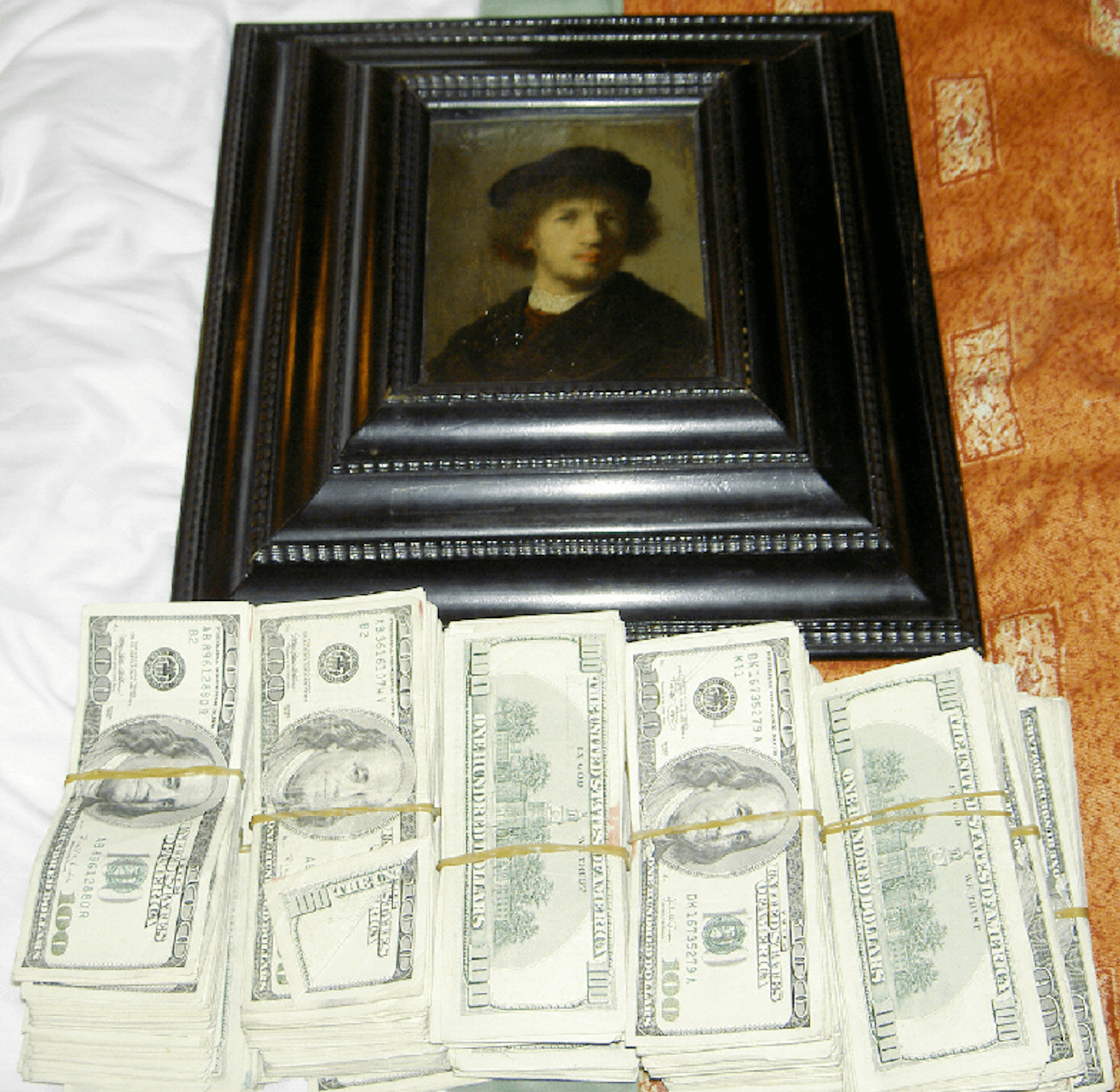
Robert Wittman: One way to authenticate an old master, or any painting that's been varnished over the years, is to look at the craquelure — the crackle pattern the varnish takes as it ages. What you'd do is look at a good photograph of the painting, check one small portion to see the pattern of the craquelure, then take your jeweler's lens and look at the actual piece to see if you can identify the same spot. If it's the same, it's almost impossible to replicate in a new artwork. So you can say this piece has the same craquelure as the original — a very good possibility this is the original. You can't say 100%, but very good.
In the Rembrandt deal you're talking about, it was a $35 million self-portrait that Rembrandt did when he was 24, in 1630. A very nice little painting. It belonged to the Swedish National Museum in Stockholm and was stolen at gunpoint by three individuals.
With that painting, I wasn't checking the craquelure so much as a series of screws in the back of the frame that held the painting in. I was checking how those screws were turned, because the angle of the turns — I had a good photograph from the museum — told me these guys had never taken the painting out of the frame, because the angle of the screws was the same. So I could assume the Rembrandt was still the original. In fact, I said to them, you never took this out of the frame, did you? And these two guys said, of course not — it's a Rembrandt. It made me laugh, thinking, oh, these guys are art lovers, aren't they? And they said, we just want the money.
The Aura of Objects: The Moche Backflap and Geronimo's War Bonnet
Hugh Leeman: Throughout your career you're very pragmatic, yet something mystical makes its way through one case — an ancient Moche backflap, worn over the back of a warrior in the Moche culture 1,500 years ago, made of gold. You wrote: "The backflap seemed to haunt all who touched it. The grave robber who discovered the tomb was later killed by police. The first wealthy Peruvian to obtain it died mysteriously. The second went bankrupt. The son of the Miami smuggler Mendez was born prematurely and lived less than two months, and as his infant lay dying in his arms, Mendez swore his shriveled face resembled the decapitator god engraved on the backflap." What did you make of this?
Robert Wittman: All those things were true. They were all part of the provenance, the history of that stolen golden object — the largest piece of gold ever found in a tomb in the Americas. It went underground for over ten years before we were able to coax it out of hiding and recover it for the Peruvian people.
All those individuals who died, possibly as a result of a curse — it could be part of it. It could have just been coincidence. But when three, four, five things happen, it's usually more than coincidence. Maybe one or two. And I can tell you, I recovered it and gave it back to the Peruvian people, and nothing's happened to me. So I guess it wasn't mad at me.
But there is a certain aura around some of these objects, because they've been around for hundreds of years. Stealing them and doing things to them is a very bad idea.
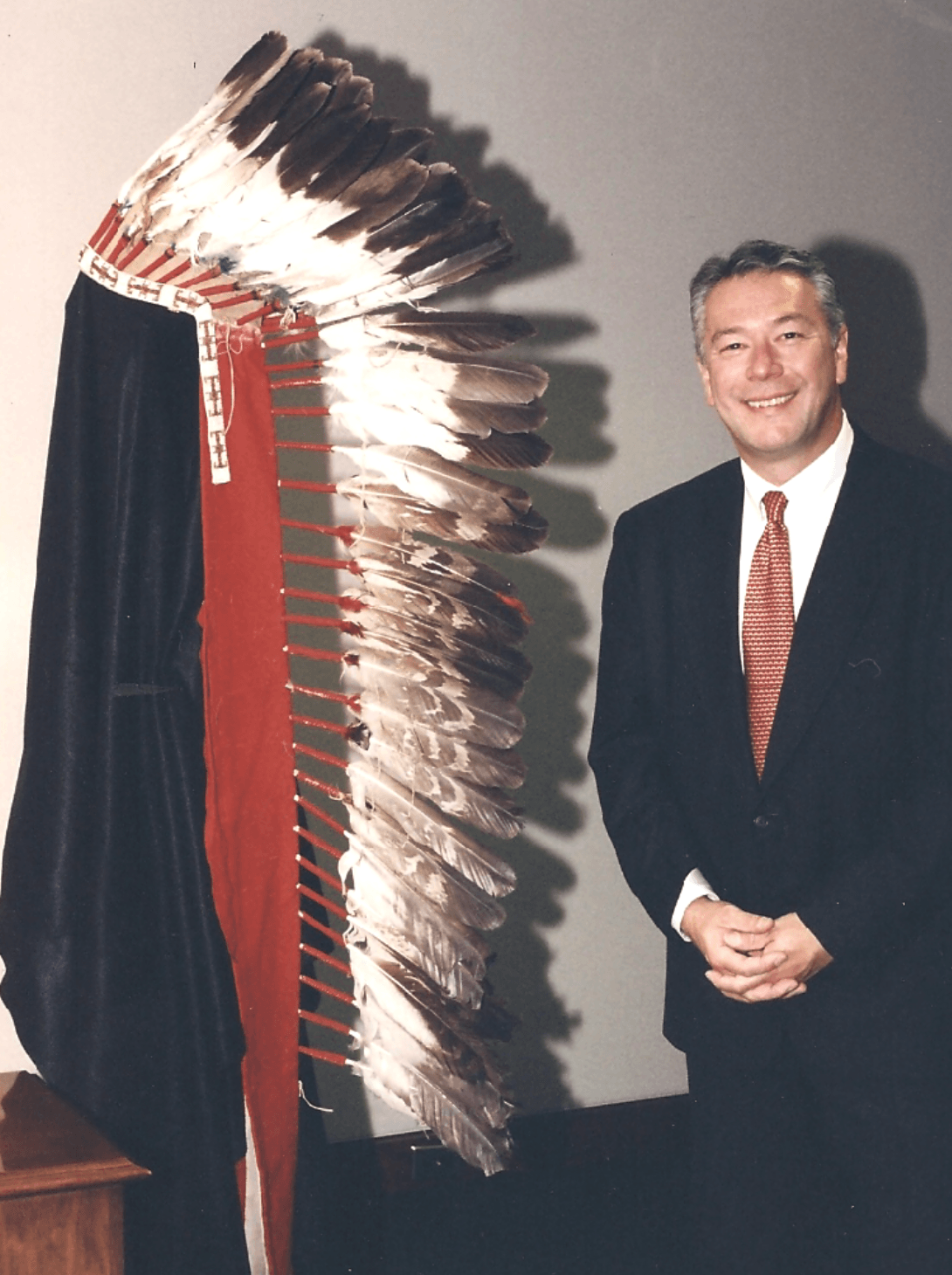
I remember one piece we recovered was an eagle feather war bonnet worn by Geronimo. It was being offered for sale, and it's illegal to sell eagle feathers in the U.S. When we recovered it, it was looking pretty bad — stuck in a steamer trunk for years, the feathers beat up. Then we got a call from a local Lenape tribe, asking if they could come in and bless the war bonnet. Eagle feathers are sacred in Native American culture — they're considered the telephones to the gods, because the eagle could fly between the earth and the sky.
We were a little worried, because they were going to bring in incense and burn it, and I didn't want the alarms going off in the federal building in Philadelphia. But we let them do it. And I'm telling you, Hugh — as they were doing the blessings with the incense, the eagle feathers literally started to perk up. They looked fluffy, much better. They changed right in front of our eyes. There were four or five FBI agents standing there watching. It looked to me like they were happy to be back in an environment that looked at them as sacred instruments.
I've had a few experiences like that with recovered pieces. These things have an aura beyond just a golden object or a feather — something imbued by humans for centuries.
Hugh Leeman: There's something mystical to these pieces, like the Moche backflap and Geronimo's headdress.
Robert Wittman: Right. And then again, there's other times where I recover Rolex watches, and there was nothing to them. So it all depends.
The One That Got Away: The Gardner Heist
Hugh Leeman: I want to finish with the biggest unsolved art heist — the Isabella Stewart Gardner Museum, half a billion dollars of Rembrandts and Vermeers. You had them right in your hand in Europe, and it fell apart amidst a clusterfuck of people wanting credit for the case. One person you mention, FBI agent Jeffrey Kelly, went on the record earlier this year stating he knows who stole the pieces, that the two men were killed within a year of the heist, and that he's confident the paintings will be returned. What are your thoughts?
Robert Wittman: I think it's great that he knows who did it. I know Jeff well — he's a good guy. When we were working this case back in 2007, he was a fairly new agent, only had a few years on the job. He wasn't around in 1990 when the paintings were stolen. I was actually an agent at that time, so I was involved with it for many years, up until Jeff got into it.
I think it's great that Jeff thinks he knows, or says he knows, who the thieves were. As far as I'm concerned, my goal throughout my career was to recover the art, more than to catch the thieves. I was more interested in recovering the material than locking somebody up. So I hope he's right. I hope we can get these pieces back. Right now there's a $10 million reward for information. So if any of your listeners have any idea where these paintings are, they should get in touch with you and me, and maybe we can help them out.
Hugh Leeman: Bob Wittman, thank you very much.
Robert Wittman: Hey, Hugh, it's great to talk to you.
