
Noah Charney on AI art authentication and 85.7% Caravaggio
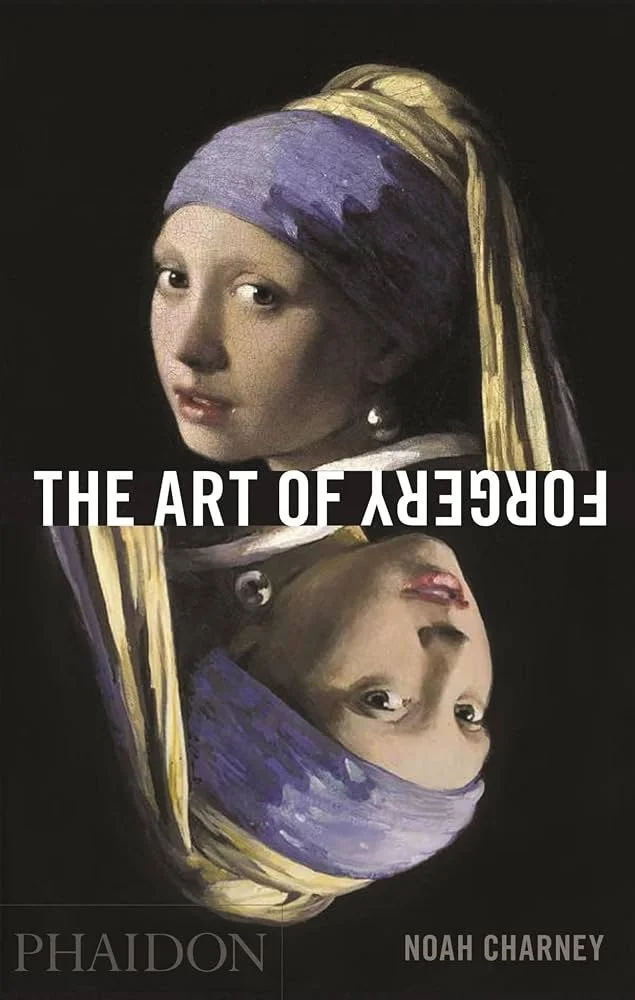
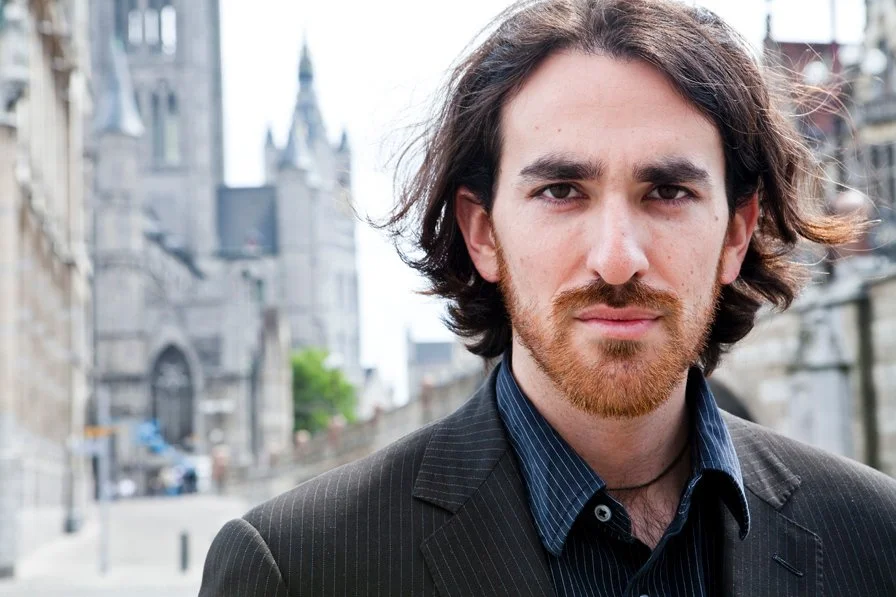
Noah Charney holds master's degrees in art history from The Courtauld Institute and the University of Cambridge , and a PhD from the University of Ljubljana. He is Adjunct Professor of Art History at the American University of Rome and at University of Ljubljana, and is the founder of ARCA, the Association for Research into Crimes against Art, a non-profit research group on issues in art crime (www.artcrimeresearch.org).
His work in the field of art crime has been praised in such forums as The New York Times Magazine, Time Magazine, The Wall Street Journal, BBC Radio, National Public Radio, El Pais, Vogue, Vanity Fair, and Tatler among others. He has appeared on radio and television, including BBC, ITV, CNBC, National Geographic and CBS, as a presenter and guest expert. He is in constant demand as a lecturer. He has given popular TEDx talks, was a finalist for the main TED event, and teaches a Guardian Masterclass called "How to Write About Art." He is also one of the founding editors of The Journal of Art Crime, the first peer-reviewed academic journal in the field, and of The European Review of Poetry, Books and Culture (www.versopolis.com), an online cultural magazine funded by the European Union.
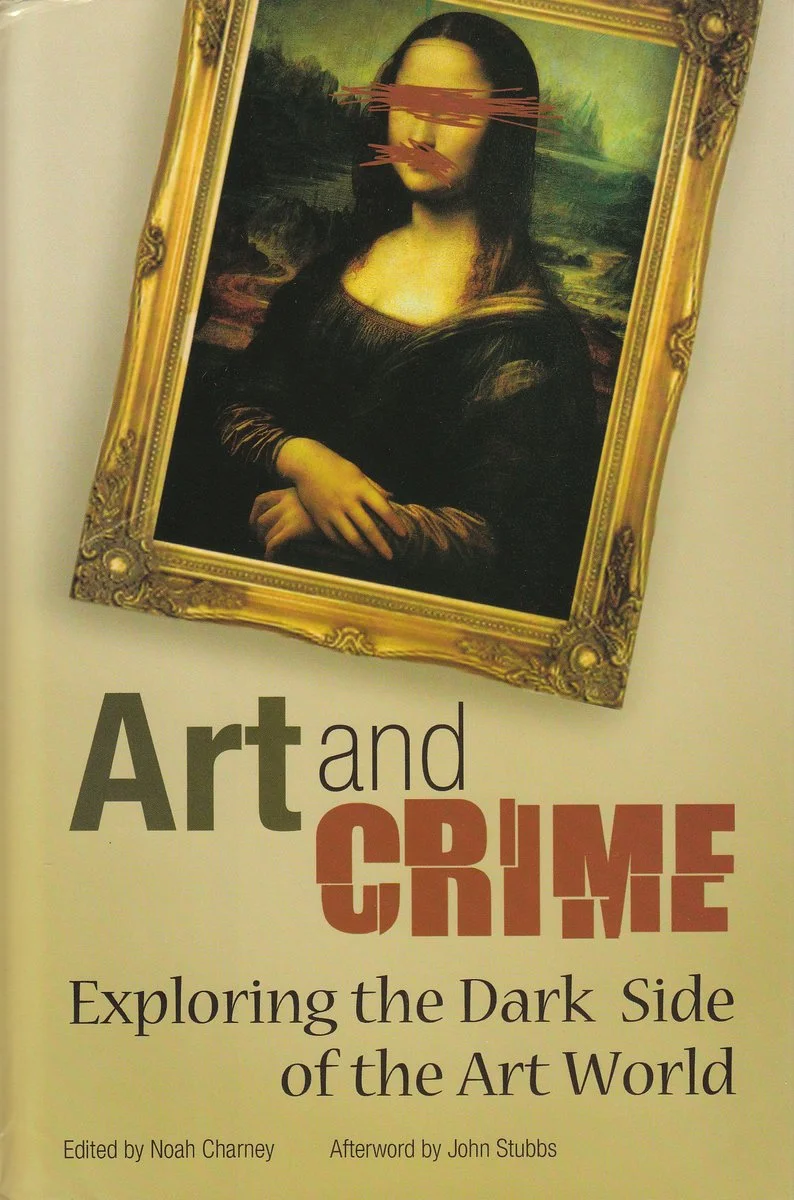
Charney is the author of hundreds of academic and popular articles, contributing regularly to The Guardian, the Daily Beast, Atlantic, Salon, The Art Newspaper, The Washington Post, Esquire and many others. His first novel, The Art Thief (Atria 2007), was translated into seventeen languages and was a best-seller in five countries. He is the editor of academic essay collections, Art & Crime: Exploring the Dark Side of the Art World (Praeger 2009) and Art Crime: Terrorists, Tomb Raiders, Forgers and Thieves (Palgrave 2016).
Art Crime Historian & Author | Interview by Hugh Leeman
The Kid Who Wanted to Be Indiana Jones
Hugh Leeman: Noah, you're the founder and trustee of the internationally respected ARCA, the Association for Research into Crimes Against Art. You've given TED Talks viewed collectively by millions, and authored dozens of books and peer-reviewed papers. And it's interesting, because all of this starts at a very early age — your college admissions essay focused on your dream of becoming Indiana Jones. In some ways you've done that, but in the art world. How did you know so early on, and who inspired that path?
Noah Charney: That you did so much homework you found the subject of my college admissions essay — that's awesome. So, it got started when I was 16. I'm American, but I went to a boarding school, which is kind of exotic for us Americans. It was called Choate, and they had abroad programs. Lots of Americans go abroad, but usually their junior year of college — I was lucky to do it my junior year of high school. I lived in Paris in an exchange program with a French family. There were 15 of us from the boarding school, and every afternoon from 2 to 4 p.m. we went out with an art history professor, walking around Paris, going to museums and churches and castles, seeing the art in person. That makes it much easier to fall in love with. Part of it is the association with living in Europe, which I knew I wanted to do and have done for the last 20 years.
Studying art history at that point seemed like a cool thing to do, because I wasn't sure which field I wanted to study, and in art history you get to do a lot of different ones through the lens of an object — an object you can visit, in most cases. In archaeology, I had trouble imagining from the ruins or shards of pottery what used to be there. Whereas with art history, you have the object in front of you. And it was easy for me to get into it because I particularly like studying iconography — the study of symbols in art — treating artworks like a visual puzzle or riddle we need to solve. To me, that's got the fun of a detective story. That's how I first got into it at 16.
The Museum of Lost Art
Hugh Leeman: You mentioned lost art. As I understand it, you propose that of all the old master works we can go see in a museum, that's about a third of the total output — the other two-thirds has been lost, stolen, or damaged. That's an astounding number.
Noah Charney: It's hard to know exactly, but to give one example: the older the artwork, the less likely it is to have been preserved. If we look at Lysippos, the most famous sculptor of the ancient world — according to Pliny, he sculpted around a thousand works during his career, and only one is extant out of all of those. That's a very low batting average in terms of what survived. But for old masters, we know of a lot more works than we can point to, than are extant — which is the fancy art history way of saying we know where they are, that they've survived.
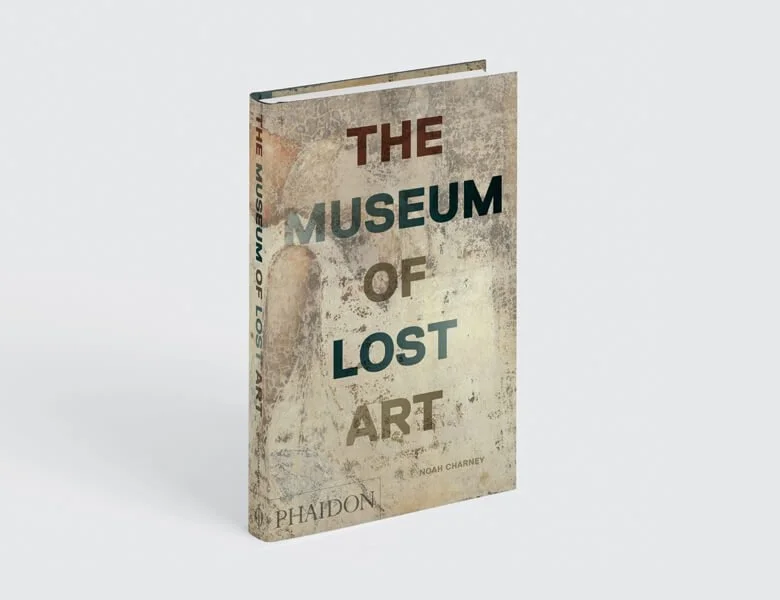
To me, what was interesting was what I call survival bias — the idea that we think the works we can still visit in museums or churches are more important than the ones that didn't survive history. But that's really because we can visit them, and lots of people write about them and photograph them, so they have disproportionate visibility. Back when they were first made, there might have been works that were more important. My book The Museum of Lost Art looks at the works that didn't survive but were very important — more so, in many cases, than works that have survived to this day.
Stealing Hitler's Favorite Painting: The Ulay Story
Hugh Leeman: There's a project that stands out — a story you'd later become a part of. The renowned performance artist Ulay steals one of Hitler's favorite artworks from a museum and hangs it in a working-class immigrant home. Years later, you interview Ulay for several hours for a book on the theft — in what turned out to be the last year of his life. Can you tell the story of the performance piece, the interviews, and how it led to your connection with his former partner, Marina Abramović?
Noah Charney: Sure. Like me, Ulay married a Slovenian woman, and he was living in Ljubljana at the end of his life. I met him randomly at a dinner party thrown by Slovenia's most famous rock musician — kind of like the equivalent of Bruce Springsteen having you over for dinner and bringing a famous artist. He was a super lovely guy, a really nice vibe, very warm, with a sort of Tibetan-monk-guru aura around him. We became friendly. I can't say we were friends, but we spent many days together, him telling me stories. I would steal Marlboros from the pack he kept on his desk. It was a really lovely dynamic.
The first thing I did that was publicly visible with him was when he was having legal arguments with Marina Abramović. He claimed she was trying to erase him from their history of joint works, and that she owed him royalties. I occasionally write for The Guardian, and they broke an article I wrote — basically that Ulay was suing Marina Abramović. I figured she'd want nothing to do with me because of this, but it turned out she didn't seem to mind at all. She was really lovely — we'll get back to that.
Ulay and I spent a lot of time together and had an idea to do a book. I recorded about ten hours of interviews with him. The idea was going to be behind the scenes in the contemporary art world — he had funny stories, like making potato cut-out artworks the way you do in kindergarten, dipping a cut potato in paint, with Iggy Pop. We probably didn't have a book's worth, but he told me play-by-play about this theft in 1976, which is probably his most famous solo performance work — one I studied in my Art History 101 class as an undergraduate.
In 1976, he planned the theft as what he called an "aktion" — an action, in German. He didn't think of it as a performance art piece, but as a political statement. He planned to steal a painting that had been called Hitler's favorite, called The Poor Poet by Carl Spitzweg — a cheesy romantic picture of a poet so poor that he's living in a garret apartment with a leaky roof, holding an umbrella over his bed so he doesn't get rained on. He stole it in a pre-planned heist. He wrote out the plan, studied all the aspects, and filed all of it with his lawyer ahead of the theft — including his intention never to permanently deprive the Berlin museum of the work. He was going to take it as a political action and hang it on the wall of an immigrant family's home in Kreuzberg, which today is hipster central and very expensive in Berlin, but used to be a down-and-out immigrant neighborhood.
Marina Abramović was his girlfriend and creative partner at the time, and in this action she was photographing. He had a getaway van, and he hired a filmmaker to film him. He cased the joint first, then goes into the museum on the day he's planning to steal the painting. There are two security guards nearby. He has wire cutters in his pocket, and the work is hung by an alarmed wire. To get the guards away from the painting, he goes to the other side of the room and starts giggling maniacally while looking at a different painting. They think this is a weirdo, and they go over to ask what the deal is — and he sprints across the room, snips the wire, which sets off the alarm, grabs the Spitzweg, and heads for the door. He knew the doors automatically lock when the alarm goes off — except it's a fire hazard to have no exit, so there was one fire exit he was able to burst through. Marina was hiding the camera so no one would confiscate the photos. He sprints outside — it's snowy — the van is idling because it's so old and clunky he's afraid it won't start. He reaches the van, drives off, and the security guards are grasping at the door handle trying to get in. And he zooms off.
This is all captured on film, which you can see in museum exhibits. The van itself is, as we speak, on display in Ljubljana at a contemporary art gallery. He drives to the other side of town, takes the painting out, hangs it in the home of this immigrant family, and calls the museum director to tell him where he can pick up the work. The museum director understood what it was about — that he wasn't a criminal, he was making a political point, and the painting wasn't harmed — and he got a slap-on-the-wrist punishment.
It was a fascinating work that combines the subject I study, art crime, with art history. It was very cool that I got the full story from him. He'd beaten cancer once, then it came back, and he passed away. I had the idea to do a monograph about this one incident. The book of mine that came out this spring is called There's a Criminal Touch to Art, and it's got a chapter that is, word by word, how Ulay described the theft to me — and then a chapter, word by word, where Marina Abramović described it from her perspective. Originally it was going to be co-authored by the three of us, but I wound up writing all of it. It's in collaboration with the Ulay Foundation and the Abramović Institute. It was a particular thrill to do a project with these people who are real artistic heroes of mine.
Hugh Leeman: What was the interview process like? As I understand it, his illness cut the project short, and you had to improvise how to put it out to the world.
Noah Charney: It does. We didn't know at the time that he'd get sick so suddenly. We were doing the interviews with a different book in mind, but then I wrote his first-person account of the theft for a magazine called The Observer — that was about one hour of the ten or so hours we did together. I also had to write an essay for a big exhibit of his work in Frankfurt, part of the exhibition catalog. So I had a couple of destinations in mind for just that story.
The thing with him is he traveled a lot, his health waned, and we'd be in touch periodically. When we got together, it would usually be for a one- or two-hour block in his kitchen overlooking the Ljubljanica River, and then his energy would fade. So we did it in little spurts. He also wasn't someone who would sit and write part of a book, but he was happy to tell the stories.
After he passed, I was in touch with his widow, and then with Marina Abramović, because she was coming to Ljubljana for a big monograph exhibit of her work. The original concept was that we three would be co-authors — a posthumous project they'd do together. In the end it made more sense published with me as sole author, because they just told me the stories. But the concept was a beautiful one: that after death, he'd still be doing a collaborative project with Marina.
The Fourth Pillar: AI Enters the Authentication Game
Hugh Leeman: I want to turn to a current project — AI used for authenticating multi-million-dollar masterpieces. You're an expert advisor to the company Art Recognition, and there's a great story around Caravaggio's The Lute Player. There are three versions. One was bought at Sotheby's for around 71,000 pounds as by a "follower or circle of Caravaggio," and then a Swiss algorithm says it's the real thing. How did you first get pulled in?
Noah Charney: Back in 2015, I wrote a book called The Art of Forgery, which has been called the definitive book on art forgery — I'd be delighted if that's the case. I actually just finished a 10-year edition coming out later this year. I was interested in the history of how forgers have fooled the art world, and part of that is how art has been authenticated, historically and today.
Historically, there are three ways art is authenticated. One is connoisseurship — the personal opinion of people who consider themselves experts. The second is provenance research — the documented history of an object; is it logical and plausible that the object could be by the artist we think it's by? The third is material forensics — what a conservator looks at in a lab, using multispectral imaging like X-rays, ultraviolet, and infrared to look beneath the surface, testing the age of organic materials. Provenance research really only kicked off after World War II, out of concern for the estimated five million cultural heritage objects that changed hands illegally during the Nazi era.
Now there's a fourth one — I call it the fourth pillar. And I want to be clear: at no point will machines take over from humans in authenticating artworks. What we have is a new tool available to human experts, just like X-rays and infrared were decades ago. Those made experts nervous at first and are now part of everyday work.
The fourth pillar is AI image analysis. It's important to know what it is and what it shouldn't be. You don't go onto Claude or ChatGPT, upload an image, and say, is this a Caravaggio? The problem with any open-source system is it has the entire internet available to it, which is full of incorrect information.
The way Art Recognition does it — which is why I agreed to become their art history advisor — is that they have a very strict, carefully built, closed AI system they programmed themselves. It takes two to three weeks to teach their system to recognize the hand of any new artist. They begin with a catalogue raisonné, which should be every known work by the artist, plus lists or descriptions of lost works, plus derivative works. They feed all that into their closed data set. Then they feed negative or counter examples — forgeries, copies, derivative works, works by followers — to teach the AI what not to be fooled by. They also generate synthetic images: they'll have an AI make a "Caravaggio" painting and feed it in, saying, this is AI-generated, this is what you should not be fooled by. Then you can upload a high-resolution image of a painting and ask, is it by one of the artists Art Recognition has taught its AI to recognize — and the software gives you an estimated probability. I've been testing it, and it's remarkably accurate.
I actually launched a podcast last September called Is It? In each episode, I invite an art expert to pick any painting, and I have Art Recognition test it against the artist we think it's by. The Caravaggio was an early episode. This version of The Lute Player divided scholars — one scholar in the US thinks it's definitely not Caravaggio, and lots of others think it is. It's a question of which equally decorated experts you believe. The AI thought it was by Caravaggio, and it had been acquired for 71,000 pounds. It could be worth $71 million now that it's authenticated.
What's cool is that in the same examination we looked at two other Lute Player paintings also attributed to Caravaggio. The one everybody agrees is his — and the AI agreed — is at the Hermitage Museum. Another, part of the Wildenstein collection, was deemed not by Caravaggio according to the AI. So it's a really good additional tool, actually a pretty good first line of defense. Right now AI is used as a last line of defense — when experts can't agree and the forensic tests look okay. Forensics are very good at telling you if the object is from the correct era, but not good at telling you who the artist is. So you get stuck: it's the right age, from the right part of the world, the provenance makes sense on paper — but equally famous scholars say it is or it isn't. At the moment, AI image analysis is a tiebreaker, because it's new and people don't know what to make of it yet. The art world is slowly seeing it's not something to be scared of, but a useful tool.
What AI Adds to a Case a Connoisseur Already Built
Hugh Leeman: The art historian and dealer Clovis Whitfield had already done the archival detective work on this piece. What did AI actually add to a case a connoisseur had already built?
Noah Charney: Good question. The issue is that there was one scholar in the US, disproportionately influential, who said there's no way this is by Caravaggio. And even as evidence rose to the surface that it probably is, scholarly ego gets you stuck in place. Scholars do not like to say, you know what, maybe I was wrong. That's a rarity. We should all have more of a sense of humor about these things, because we get things wrong all the time.
Clovis built up the case forensically, like a lawyer, step by step. AI didn't add something new to his argument, other than bringing in an objective, scientific analysis that confirmed what his old-school scholarly research had suggested. It's a union of the two. I don't think you ever want only AI. Most of the time we only have scholars trawling through archives, and that's it. Sometimes you get forensic tests, but the market is quite resistant to them. If you have both — the scholarship agrees, the forensic tests agree, the provenance agrees, and now an AI image analysis agrees — that's quite a compelling combination.
What Does "85.7% Caravaggio" Actually Mean?
Hugh Leeman: For this piece, the probability analysis I read was 85.7% likelihood it was a Caravaggio. When you say a painting is 85.7% Caravaggio to a general audience — what do you want them to hear, and what do you worry they might actually hear?
Noah Charney: This is exactly what I've told Art Recognition, because it's potentially confusing — I had to have them explain it to me as well. It could be interpreted a couple of ways. One is that 85% of the painting is by Caravaggio and 15% is not. And actually, that's preferable to a machine saying flatly "it is" or "it isn't" — because that's so black and white, and the way art was created until the 20th century doesn't work that way.
Caravaggio is a bit of an outlier, but most old masters worked with a big team of assistants and apprentices. If you said a work is by Rubens — who famously had an illegally high number of assistants — it means there are a lot of artistic hands in the finished product. The idea that you're only going to find Rubens's hand in it is absurd. So what are we looking at? We're comparing it to other works confirmed by the hand of the artist that everybody agrees on, and it comes up with a probability.
One of the other studies Art Recognition is doing looks at the statistical probability their AI suggests for works nobody doubts. Basically, any probability from about 65% and up is a safe bet that it's by the artist. There was a painting suspected to be by Monet — when they tested it, it came back not by Monet. But then their team of real art historians found in an archive that a large patch in the center had been restored. When they told the AI to omit the restored central part, it immediately said, this is definitely by Monet. So it's important to understand that different parts of a work can be subject to restoration, even within the original artist's studio.
Upgrades and Demotions: The Van Eyck Surprise
Hugh Leeman: In some ways the machine becomes a kingmaker — like Antiques Roadshow, the thing on Grandma's wall is actually a such-and-such, it's official. But it can do the opposite. There's a piece — the Wildenstein version — that the same analysis demoted.
Noah Charney: It can go both ways. Everybody's happy when it upgrades something, and not everybody's happy when it demotes. In this case, it confirmed the Hermitage version is authentic, confirmed the ex-Badminton one Clovis Whitfield researched is by Caravaggio, and confirmed the Wildenstein is not. That's not a big surprise, because Guy Wildenstein himself had written that when he acquired the work, it wasn't listed as by Caravaggio. But the same influential scholar who thought the ex-Badminton one wasn't Caravaggio thought the Wildenstein was.
We had another example. At the Philadelphia Museum of Art, there's a painting I studied as an undergraduate — Saint Francis Receiving the Stigmata, attributed to Jan van Eyck — and it turned out it's not by Jan van Eyck. There's a Turin version, and that turns out to be by him. That was another podcast episode, then reported in a newspaper, and then the scholar who was my guest published a peer-reviewed academic article looking at both, with the AI analysis in mind. So yes, it can upgrade and downgrade. The advantage is that it takes a long time for a grown-up company like Art Recognition to teach its AI to recognize an artist — but once it's taught, any new work can be tested quickly and inexpensively.
There are lots of firms that say they'll do AI image analysis, and the question is how sophisticated and grown-up their method is. It doesn't work well with an open-source model — too much irrelevant, misleading information. So you have to do your homework and pick a company that feels like the grown-ups in the room.
How the Loudest Skeptic Became a Collaborator
Hugh Leeman: It's a fascinating act of transformation — how does the loudest skeptic end up becoming the collaborator?
Noah Charney: I was not part of the Art Recognition team when this took place; I joined relatively recently. But as I understand it, the scholar — Tilman Borkert, one of the most famous Van Eyck scholars — had read about Art Recognition and AI in general. Art Recognition is the oldest firm doing this and the leaders in the field, so they get the most attention. He didn't like the sound of it, but he didn't fully understand how it worked.
Then Carina Popovici, one of the founders of Art Recognition, reached out to him — and it's to her credit that she does so. In these academic worlds, you can make enemies who can't stand each other, hurling insults at conferences, and that doesn't help anyone. Instead you can say, maybe there's a way we're misunderstanding each other. To his credit, he was open to the conversation. They had an extensive dialogue and wound up publishing a peer-reviewed article together. That's been the case for quite a few scholars. There will always be perennially grumpy folks who think this is no good, and that's fine, that's normal. It's so new that it's probably a decade or so before it becomes part of the everyday language — just like multispectral image analysis freaked people out at first and is now totally normal.
The Problem With the Single Connoisseur
Hugh Leeman: Throughout your career you've argued the art world leans too heavily on the single connoisseur to say "this is a such-and-such," and we all go along with it. How does AI fix that — and does it just install a new oracle owned by a company?
Noah Charney: A couple of ways to answer this. One thing that always surprised me is there's no objective determination of whether someone is an expert in a field of art history. If you're an expert in wine, you have to pass courses and blind tasting tests. In karate, you work your way up through colored belts and demonstrate to existing black belts that you can do what a master does. Art doesn't have that. You can have a PhD, or even two, in Rembrandt, and it doesn't mean you can recognize Rembrandt's hand.
Connoisseurship has become almost a naughty word in the last few decades — the sense that certain people have a maybe-even-supernatural ability to recognize an artist's hand, and they just know because they know. Art has an elitism problem, and people who establish themselves as experts like to keep a sense that they're gatekeepers and nobody else's opinion is of value. I have a book called The 12-Hour Art Expert whose primary goal was to knock down the elitism around studying art history, because I think it's silly and unhelpful. Experts who authenticate works like to have — it's not a monopoly, but an oligopoly — within any one artist there'll be just a handful of go-to experts around the world. They do know what they're talking about. But anyone can raise their hand and say "I'm an art expert," and there's no objective way to demonstrate it.
I studied for one of my master's degrees at a place in London that's one of the last places on Earth that teaches connoisseurship, because it's seen as old-fashioned, almost like a magic trick. The better focus is on provenance research and material forensic testing. Now, if you bring in an AI image analysis firm, it's no different from hiring a conservation lab. They do the tests, they're as objective as possible, they give you results, you're paying for a service. They don't own any of the objects, and there's no benefit to them in saying yes or no.
Whereas connoisseurs traditionally — most famously Bernard Berenson, the most famous connoisseur of all — Berenson used to get a percentage of the sale price for every work he authenticated that was sold by Sir Joseph Duveen. There's a famous stage play, I think called Old Masters, a two-man play about an argument Berenson and Duveen had over whether an Adoration of the Shepherds now in the National Gallery in London was by Giorgione or Titian — if it's by Giorgione, it's much more valuable, because he has fewer extant works. Berenson got a percentage, so it was in his interest to overestimate. Part of the problem is the art trade is geared so that people want to be told an object is legitimate and authentic, because then you get the maximum price.
There have been law cases around this. There's a case called "the American Leonardo" — a version of La Belle Ferronnière owned by a family called the Hahns, who claimed it was an original Leonardo. Duveen and Berenson publicly said they didn't think it was by Leonardo, and the Hahns sued them for damaging the value of the object. Then in the 1930s there was the Wacker–Van Gogh trial, where a dealer named Otto Wacker was found guilty of selling forged Van Goghs. It was the first trial where two experts couldn't agree which paintings were genuine. When they couldn't agree, and there was no provenance because Wacker refused to say where he got the works, they brought in a tiebreaker — a Dutch chemist named Martin de Wild, who used chemical analysis and found the paintings had pulverized lead and resin mixed with the oil paints to speed up drying, which don't appear in Van Gogh originals. That's what solved the case.
In each of these steps, we tend to prefer scientific evidence over personal opinion, especially when experts disagree. Material forensic testing is like having eyewitnesses in a murder trial and then bringing in DNA evidence — the DNA is more compelling. AI image analysis is like the DNA evidence for works of art you might put on trial for authenticity. Ideally it's an objective way to bring in something that feels more scientific than human opinion.
A New System, Not a New Oracle
Hugh Leeman: It calls to mind a medieval Catholic priest — if there's something I don't know, it's because God doesn't need it known — this "believe me because I said so" pedestal. And you seem to be building a new framework. There's this loop: your podcast Is It?, the Caravaggio episode, then The Guardian and The Times pick it up. Are you creating a new system that could replace the single connoisseur?
Noah Charney: I don't ever actually want to get rid of anybody. The individual expert having an unhealthy influence is not good. But the nature of scholarship is to bring experts together and force them to prove what they conjecture in a public forum — that's where peer-reviewed academic journal articles come from. You write up your argument, submit it, they decide if it's good enough to publish, and then the 27 other scholars in your field read it with a skeptical eye. They'll challenge your supposition, or you might bring them over to your view. That's the testing ground, which is why it's important that anything like this is included in peer-reviewed journals — which Art Recognition does. They publish their methodology in computing journals, so it's not a black box. And scholars include the research in peer-reviewed journals too. Tilman Borkert, one of the most famous Van Eyck scholars, just published an article a few weeks ago using the AI image analysis in his interpretation of the Philadelphia and Turin paintings.
So we should have a collaborative effort by human scholars who now have, in addition to provenance research and material forensics, this new tool — AI image analysis — without it ever superseding them. I like the idea that lots of scholars have new things available as ways of testing and exploring the world. The individual scholar who says "my opinion is the only valid one" — that's not good for anyone.
Hugh Leeman: If the AI verdict and your own art historical judgment ever flatly disagreed — the machine says yes, your eye says no — which goes to the public, and which do you actually believe?
Noah Charney: I get to cheat a little, because I'm a generalist, a pop art historian, without deep expertise in any individual artist. That's why I get a free pass and why I'm more open to this. I've been privileged to have access to Art Recognition's testing facilities. I've been surprised on a number of occasions. There's one very big surprise I'm not allowed to say yet — I was sure it was by the artist in question, and they tested and retested it from different angles, and it definitely isn't. The most famous scholar in the world of that artist totally convinced me it's by them, and I believed him — and it just appears that it's not. To me, that's very exciting.
It's important not to have an ego with this. You know what you know. If something comes up that changes your mind, then cool — rather than getting stuck and saying, in a stroppy way, no, I said this first. Unfortunately, it's human nature. We don't like to volunteer that we were wrong. But for me, that's part of the fun.
A Coming Demotion the World Will Hear About
Hugh Leeman: To close us out — you're trying so hard not to say the name. When will we know, and why the secrecy?
Noah Charney: There's a simple explanation. We're going to reveal it in a way that's more of a media event. It'll be enough of a surprise that it'll probably be covered all over world media. We'll do it as one of the Is It? podcast episodes, probably later this fall. We want to make sure everything is lined up so that when we reveal it — and it's going to make some waves — we have all our ducks in a row and feel entirely confident the results aren't some attempt at grabbing media attention, but part of a thoroughly developed, grown-up approach to demoting a famous work, with good follow-up answers to the questions that will inevitably follow.
There's a responsibility to this. If it's a work nobody's heard of, that's one thing. If it's a work lots of people have heard of, you really want to make sure you have everything set up right. The last thing I want is to do something that feels attention-grabbing but hasn't been thoroughly thought out. Some people are going to have feathers ruffled, and that's expected — but you have to back up your argument in a variety of ways. Hence I'm being coy.
Hugh Leeman: Noah Charney, it's fascinating. Thank you so much. I look forward to learning more about the demotion of this painting — a fascinating field you're in.
Noah Charney: Thanks. You did a lot of good research ahead of interviewing me — very impressive. Thank you for having me.
