

David Ligare, Sand Drawings 1973-1977, at 615 Broadway, Seaside, CA
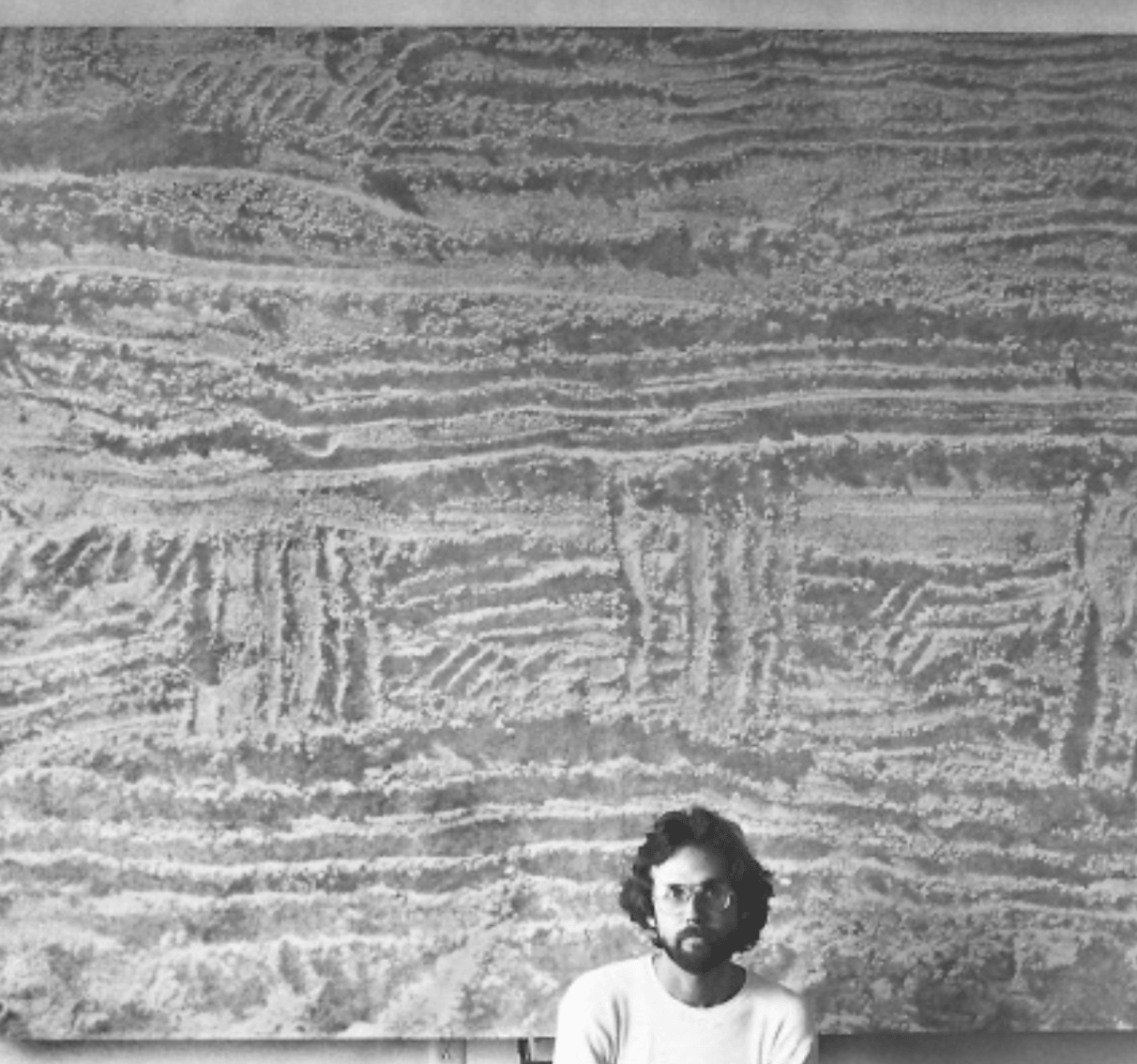
June 20 – 30 (by appointment through the Winfield Gallery, Carmel, CA)
Best known for his representational narrative paintings featuring Greco-Roman classical themes, David Ligare exhibits a group of paintings, drawings, and lithographs he made over 50 years ago which depict sand formations. The fascinating group of works were previously exhibited in a one-person exhibition in New York City at Andrew Crispo Gallery in 1973.
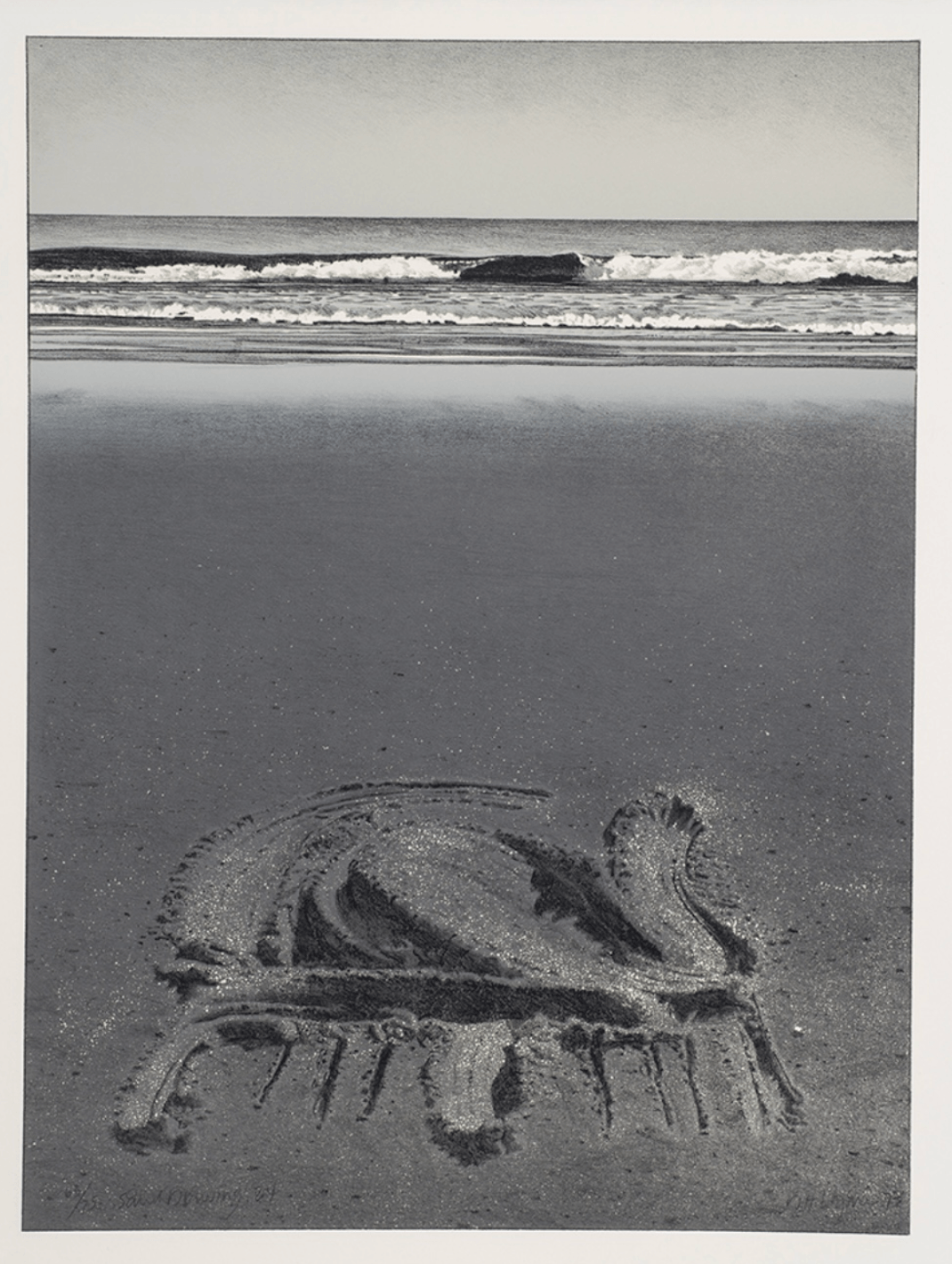
David Ligare, Sand Drawing #24, lithograph #63/75, 20 x 15 inches, 1973.
While completely different from the paintings he would become known for, these works engage with many of the topics that have always occupied his work. They lean more toward abstraction and process-oriented art making, yet they implicate the nature of beauty, the relationship between equilibrium and symmetry, and the contrast of opposing values. They hint at what was to come and thus are historically noteworthy, yet they have their own power and subtlety. Ligare ultimately made his way to narrative pictures but the equally prevalent appearance of process-oriented art making, and mixing of painting medium (specifically aluminum powder which offers a metallic sheen contrasting with the softer quality of graphite), the utilization of photography, the Andy Goldsworthy-esque engagement with nature, and the additional layer of lithography, are perfectly suited to a multidimensional art style the 1970s and 80s art world seemed to relish.
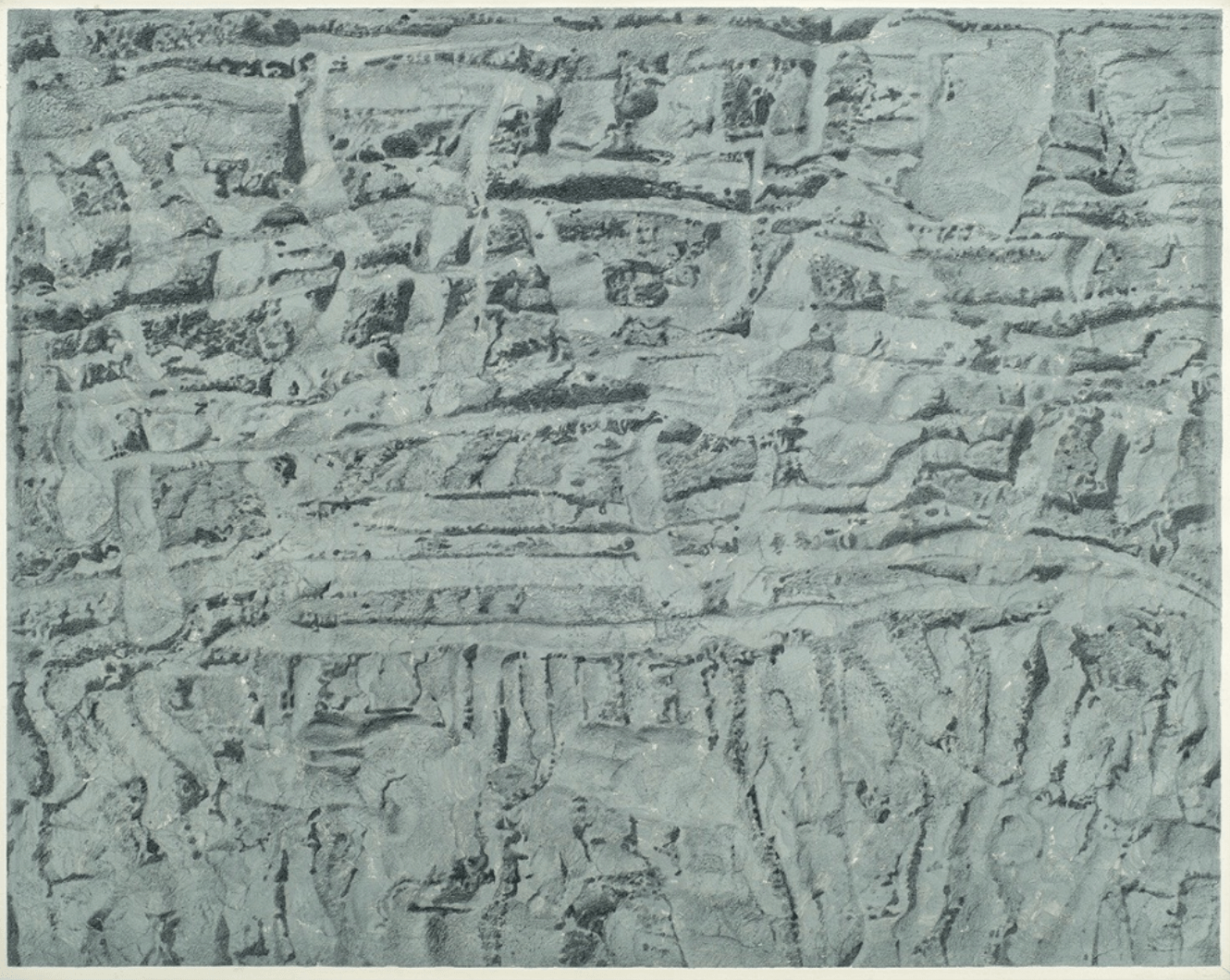
David Ligare, Sand Drawing #34, pencil and aluminum powder on acrylic, 22 x 28 inches, 1973.
Unlike Ligare’s later paintings, which preserve history, the Sand Drawings conserve the fleeting. They are records of something that no longer exists. The drawing is not the artwork itself so much as the memory of an encounter between artist, landscape, and time. It’s an artifact that tells the story of artistic exploration.
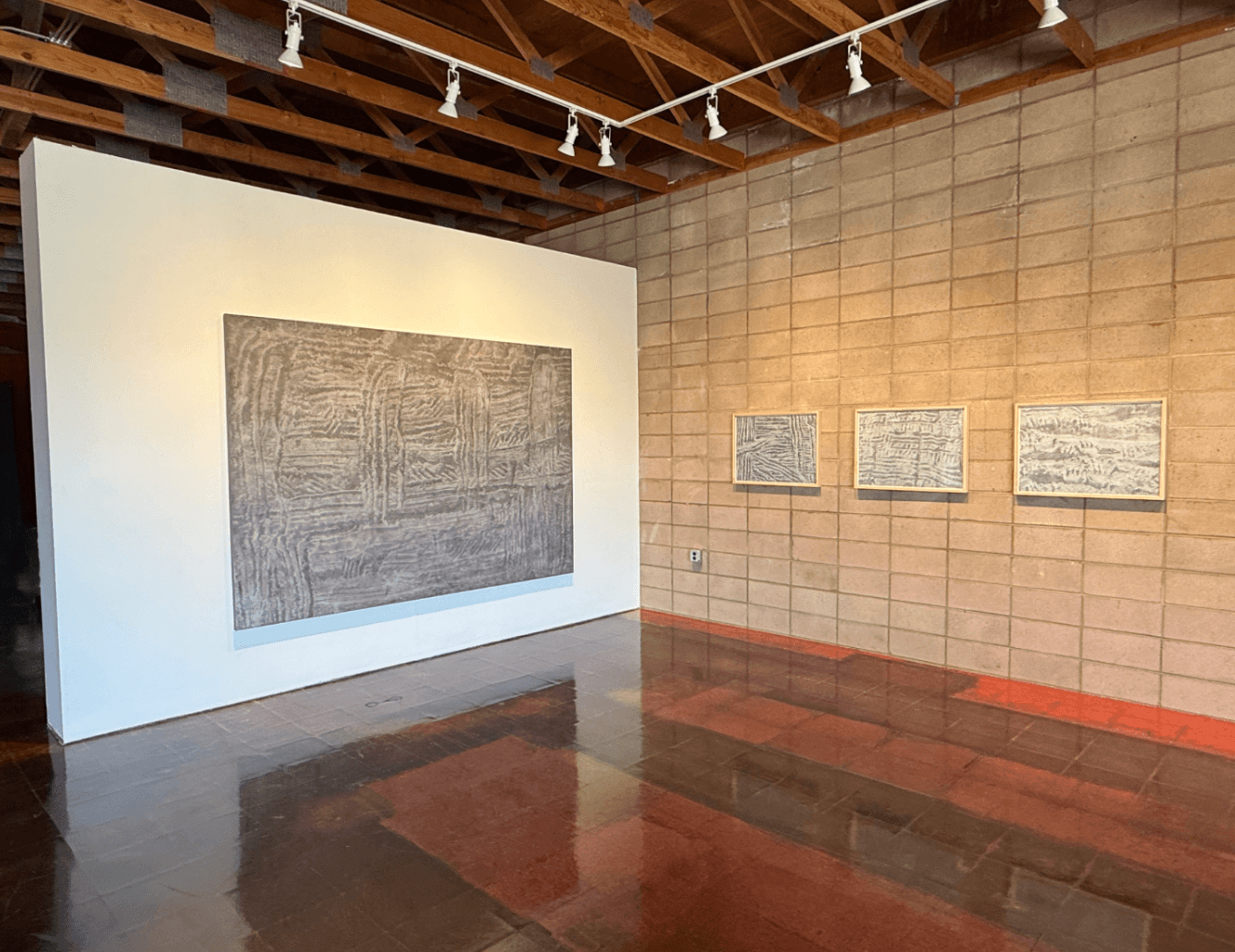
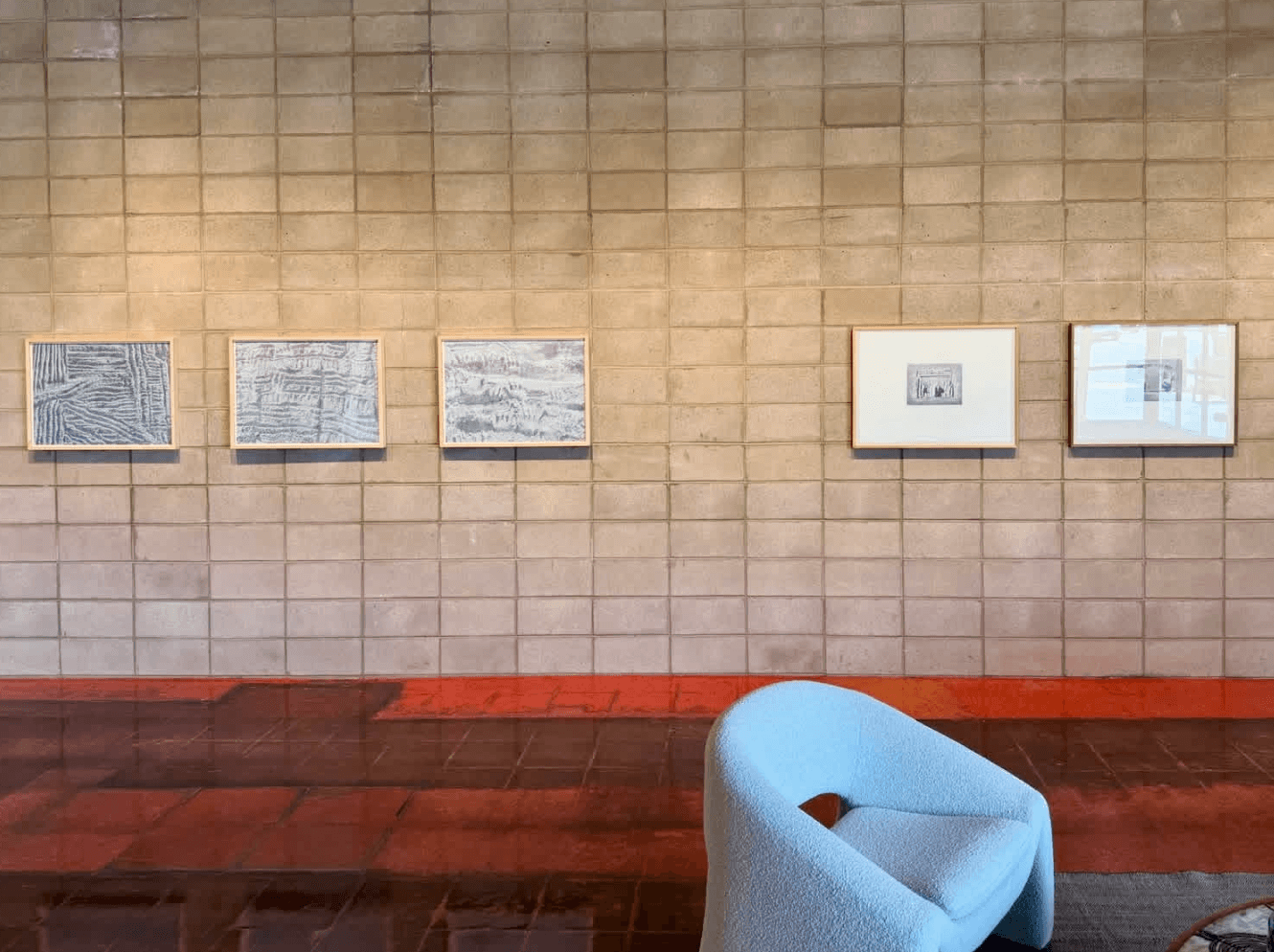
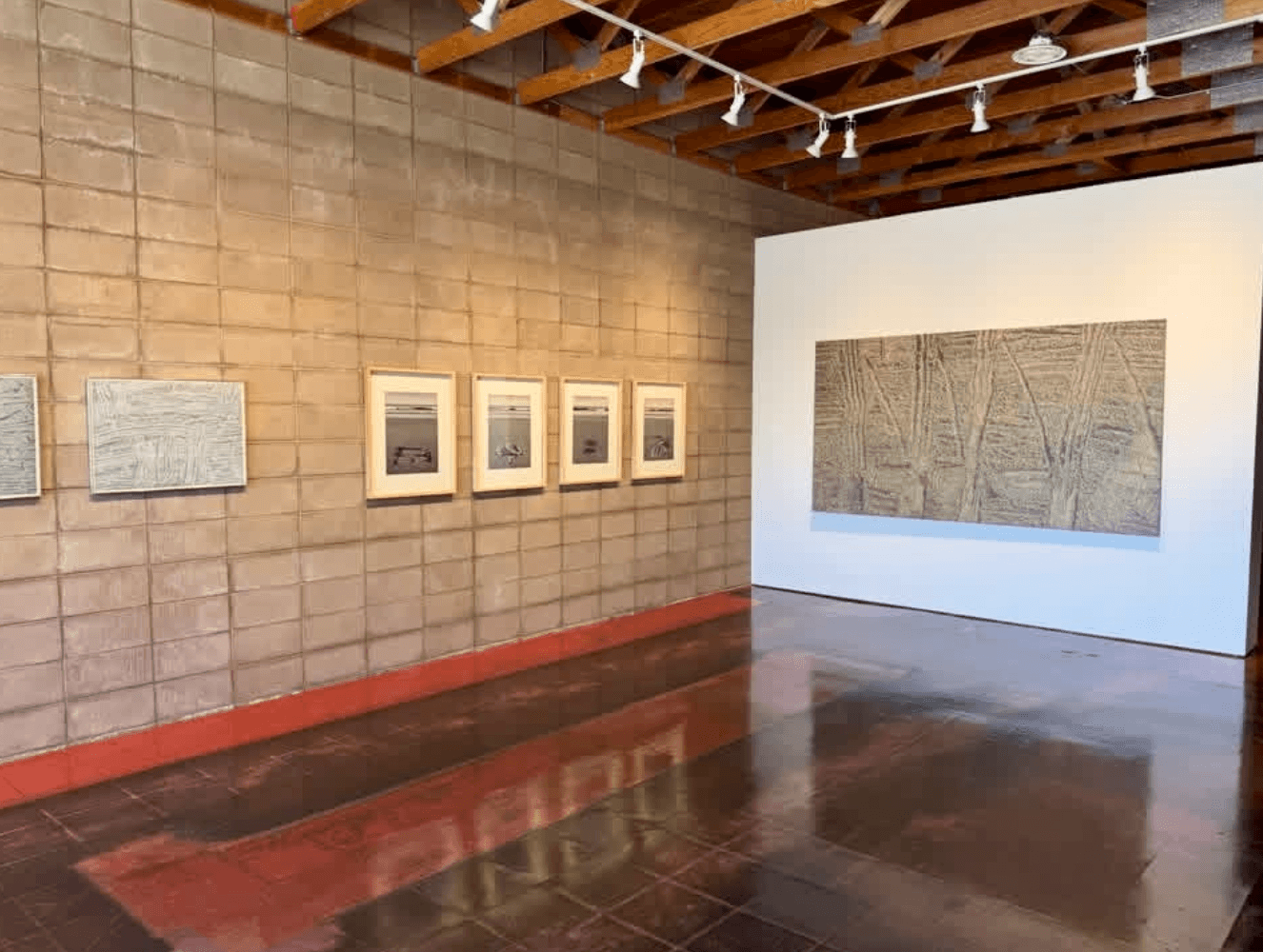
Installation view of 615 Broadway exhibition, Seaside, CA.
Ligare was living in Big Sur in the early 1970s when he made this series of work and would walk out to the nearby beach to get started. He made impressions in the sand, drawing directly into the wet sand with his hands. Described by Ligare as “jagged, quick and direct,” he was working in the free style and gestural manner of the New York School of Abstract Expressionism (particularly Franz Kline and Joan Mitchell), although the linear elements harken to a more compartmentalized and formal construction. Driven by intuition rather than a set program, the drawings nevertheless convey an aura of having been found, rather than made. Although the imprinting and mark-making are caused by Ligare’s own hand, they might have been made by objects or the ocean tides themselves. The very idea of the ephemeral, the fleeting and transitory quality of impermanence, and how we render the things we see onto a canvas, are all evoked in these works.
The process is compelling because it sits at the crossroads of Land Art, Process Art, drawing, and photography, while already hinting at the philosophical themes that would later define his classical paintings. They’re often labelled as simply “early works” before Ligare’s embrace of classicism, but they already contain many of the questions that he draws on today: the relationship between chance and order, nature as collaborator rather than subject, the translation of experience into image, the tension between the temporary and the permanent, the paradox that abstraction can emerge directly from observation rather than invention.
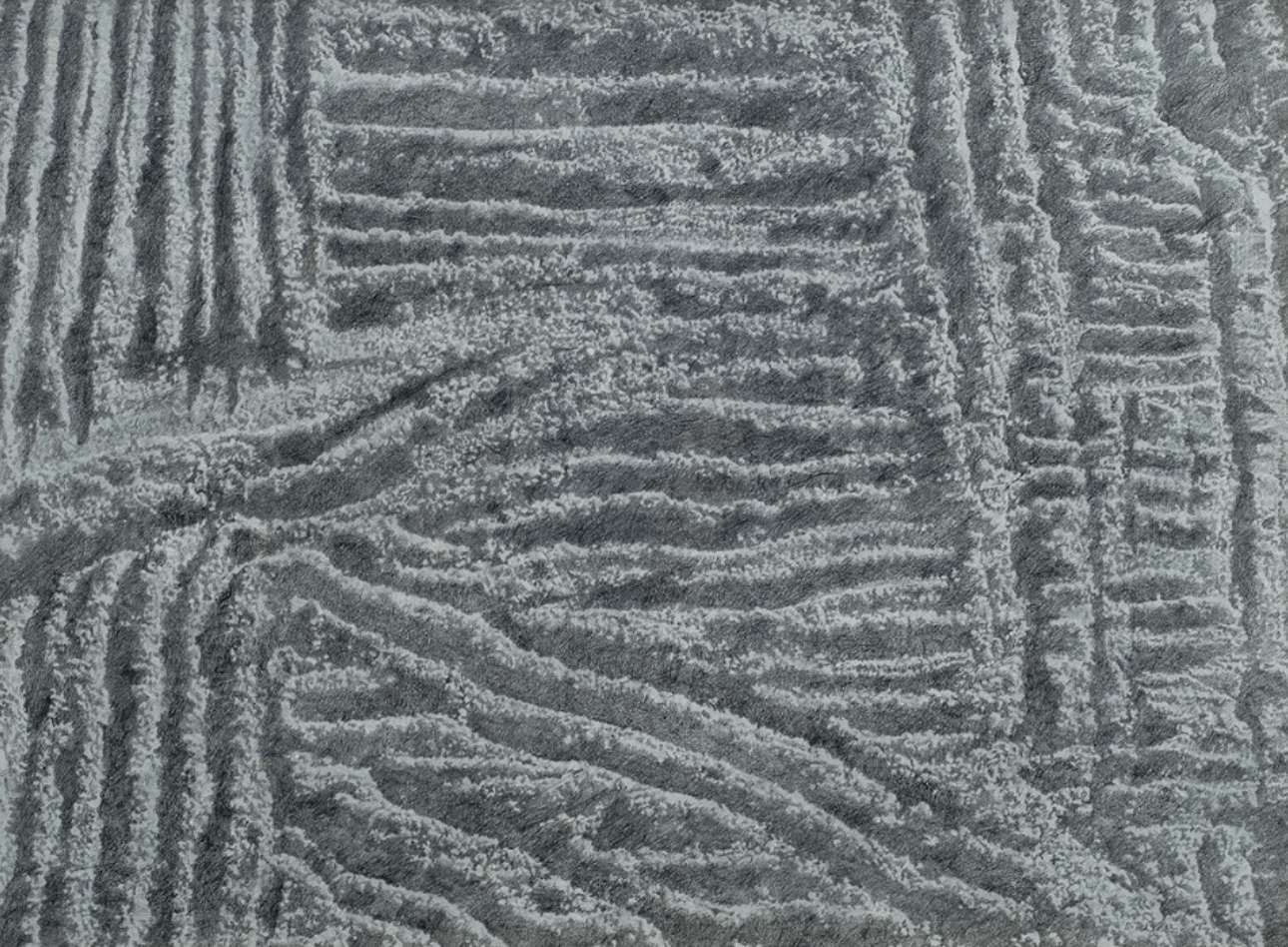
David Ligare, Sand Drawing #40, pencil and aluminum powder on acrylic, 22 x 30 inches, c. 1973.
His mature paintings aspire toward permanence. They draw upon histories and ideas that have already survived centuries, employing a visual language that has proven remarkably durable. Whether depicting Petrarch, Greek mythology, or idealized landscapes, they participate in a tradition that assumes certain values can outlast the people who make them. The Sand Drawings begin from the opposite point. They are made with the full knowledge that they may disappear almost immediately. The tide is not an abstract possibility but an active participant in the work. Wind, water, or even a simple misstep can erase what has just been made. The drawing exists in a state of continual vulnerability. This distinguishes these works from Ligare’s later paintings without setting them in opposition. The contrast isn’t simply between abstraction and classicism, but between two different relationships to time.
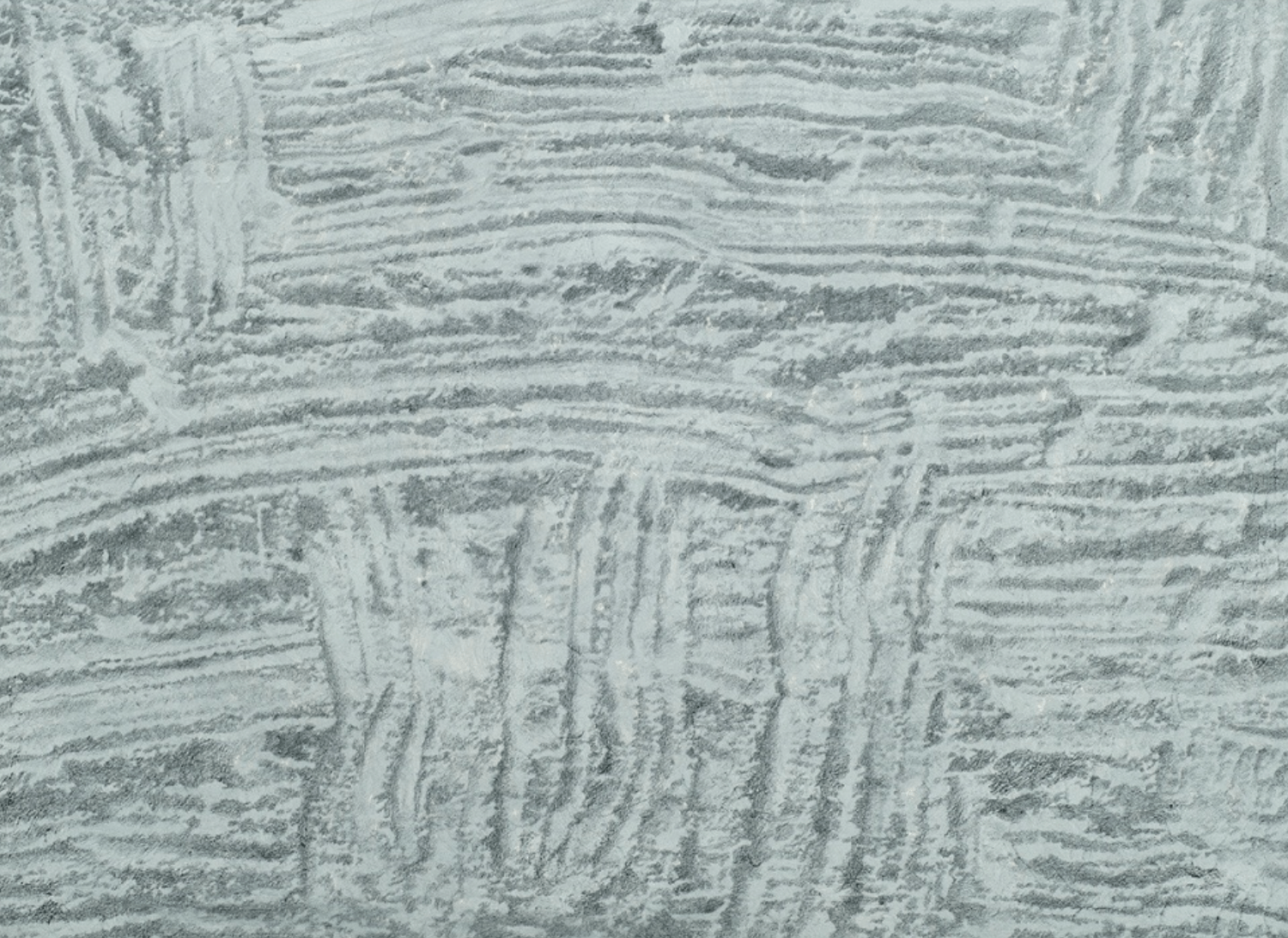
David Ligare, Sand Drawing #35, pencil and aluminum powder on acrylic, 22 x 30 inches, 1973.
Not dissimilar to our own existence and mortality, the drawings share the body’s condition. Both exist under the constant possibility of alteration. We tend to imagine our lives as stable until illness, accident, or chance reminds us otherwise. The drawings inhabit that same uncertainty. Their vulnerability is never hidden from us; it is the premise upon which they are made. We aren’t vulnerable despite our mortality; our mortality fundamentally shapes how we experience beauty, intimacy, memory, and time. The drawings seem to understand this intuitively.
The completed art works look like photographs, which at the inception of his project, Ligare did in fact take to preserve the evanescent moments he wished to depict. By the time he was transferring the images onto a canvas or paper surface the tide at Big Sur would have already erased the original. The ephemeral nature of these moments is the tension pulling these drawings from nature and human intervention all the way to the terminal layer of completed art works. Ligare both created a moment that would soon be in crisis, and thereafter played the role of rescuer, via photography and drawing, preserving a moment we now observe from a temporal distance.
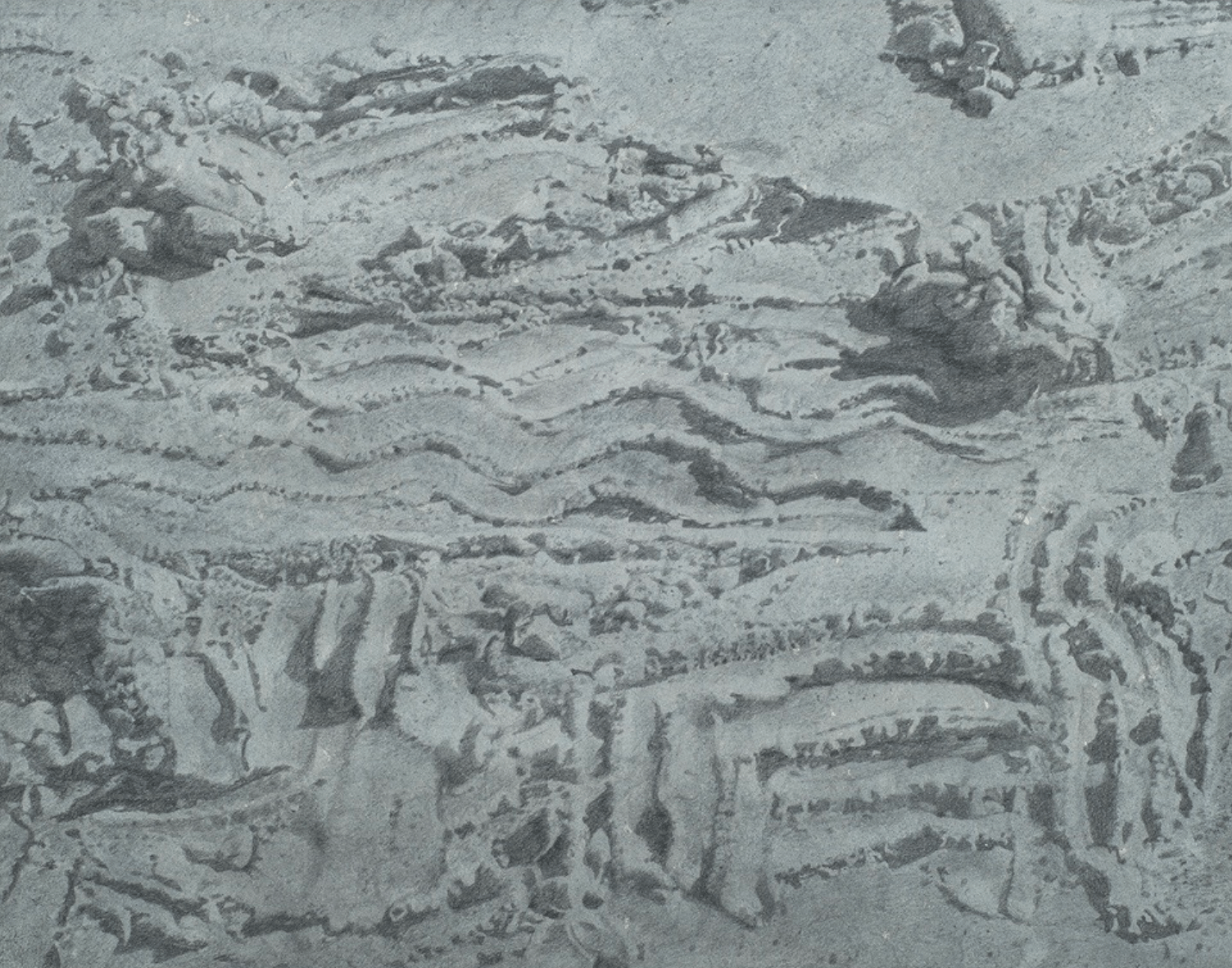
David LIgare, Sand Drawing #27, pencil and aluminum powder on acrylic, 23 x 29 inches, 1973.
Visually striking, the light raking across the elevated sand crests would offer enhanced softer shadows, particularly when the sun is lower in the sky, enhancing the textures and making more dramatic and longer shadows emphasizing texture, shape, and strength. The natural equilibrium found in natural forms needn't be balanced perfectly to convey a formal order, typically represented by symmetry. Inexact lines and awkward counterbalances can still convey poise.
The human intervention inherent in the construction of these images draw parallels to frottage where a sheet of paper is placed over a textured surface and thereafter rubbed or traced with a pencil or crayon to transfer the impression onto paper. They also resemble the pre-columbian geoglyphs known as the Nazca Lines in Southern Peru. Made by scraping the outer layer of iron-oxide stained earth surface, including soil and stone, lighter subsoil is exposed creating a negative image viewable from nearby foothills or aerial vantage points. The pure organic nature of Ligare’s creations can also be compared to many naturally occurring processes whose forms are not imposed upon the natural world but emerge from the same visual language nature continually produces: the tracks left by a sidewinder snake across desert dunes, the mysterious sailing stones of Racetrack Playa in Death Valley National Park, the intricate circular nests created by the male white-spotted pufferfish on the ocean floor, and rain pulling dust into delicate branching rivulets across a window. With the latter example, you aren’t looking at rain itself, you’re looking at the evidence that rain has passed. That’s exactly what Ligare’s drawings become.
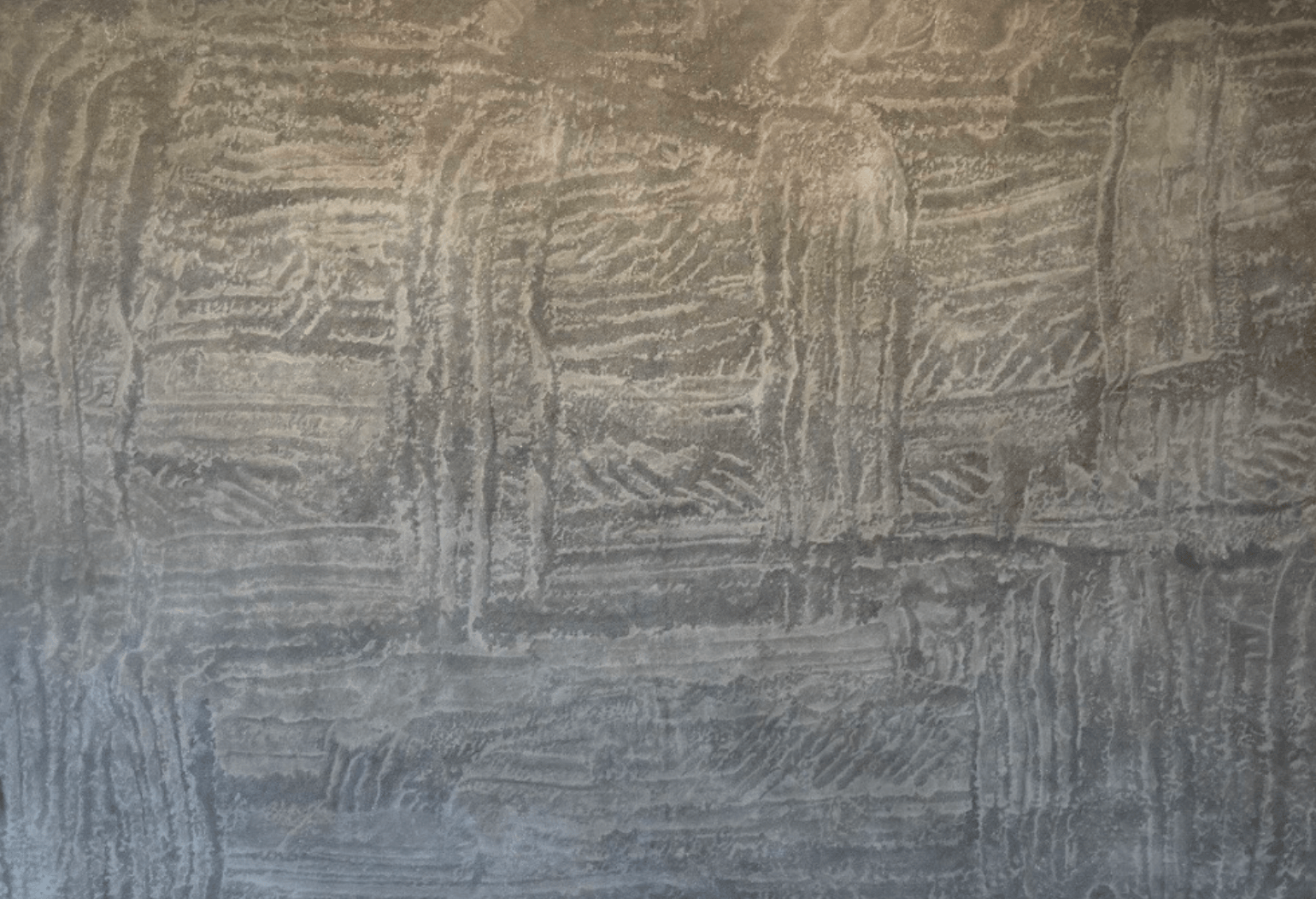
David Ligare, Sand Drawing, graphite and aluminum paint on canvas, 75.5 x 111 inches, 1973.
Each drawing is an inscription made by movement. None is intended to last. Yet each carries an extraordinary beauty precisely because it is temporary. Wind smooths the dunes, rain eventually obscures the playa’s tracks, currents erase the pufferfish’s elaborate geometry. Their impermanence is inseparable from their meaning. Every line exists with the knowledge that it may be the last moment it exists at all.
Ligare would later paint a series of sheets in the sky, what became known as “thrown drapery” paintings. This work from the later 1970s suggests a desire to capture the fleeting nature of beauty. In each case, Ligare is indebted to natural elements, yet these works cause us to examine the mundane. The fold of fabric or the shadows emanating from a ridge in the sand. Normally we might glaze right over such things, yet inspected carefully, when motion is stationary, we see the complex formations that are as beautiful as any forms we might innately dedicate more time to.
His later classically-themed paintings seek permanence by looking backward through civilization. The Sand Drawings seek permanence through memory. The original gesture disappears, but its essence survives because Ligare painstakingly translates it into graphite. In that sense, the drawings become acts of preservation rather than invention. His classical paintings deliberately converse with history, while these works seem almost prehistoric. They evoke the primal human impulse to leave a mark on the earth, knowing it might vanish before another person ever sees it. They’re less about culture than about existence itself. Their beauty lies not in resisting time, but in acknowledging its inevitability.
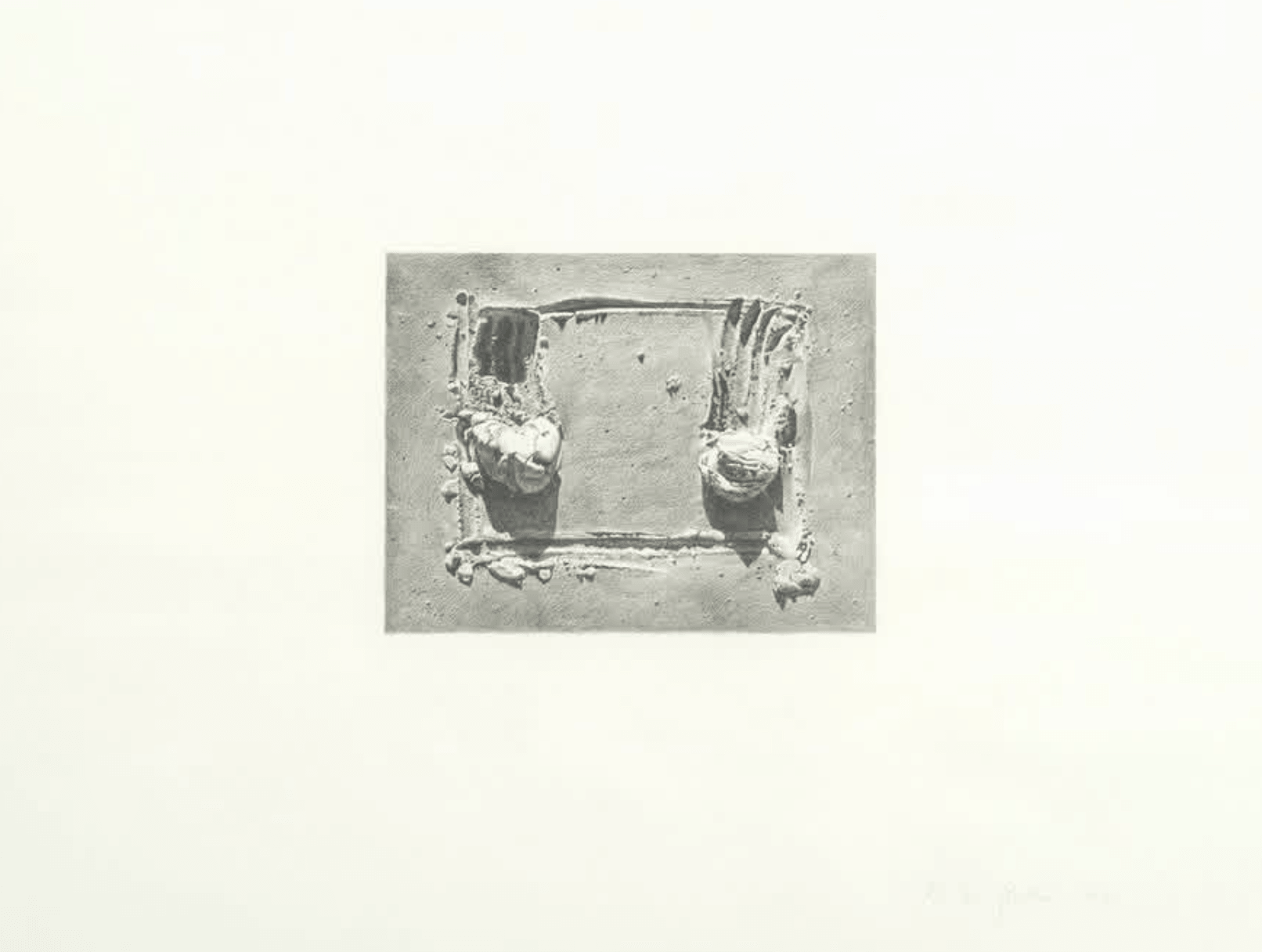
David Ligare, Sand Drawing, (II Version), pencil on paper, 8 x 10 inches (paper size 22 x 30 inches), 1977.
There’s something quietly profound in the fact that Ligare’s drawings are remarkably modest. He doesn’t impose himself upon the landscape so much as converse with it. The sea, the wind, and the sand retain equal authorship. The finished graphite drawings are therefore not copies of an artwork but records of a collaboration between human intention and natural forces.
Do these works activate the values that Ligare’s representational works arouse? Ligare has previously noted how Plato gave his essential criteria for a work of art including mimetic correctness (orthotes), attractiveness (charis), and a rather curious additional requirement of usefulness (ophelia). This latter consideration has been interpreted as requiring the work of art to influence culture in a positive way by imbuing a desire for knowledge and truth. This concern is what Ligare’s narrative paintings focus on. However, usefulness vis a vis the sand paintings could be about teaching the viewer how to see, how to look carefully, to come to terms with beauty being present in fragments and unlikely moments.
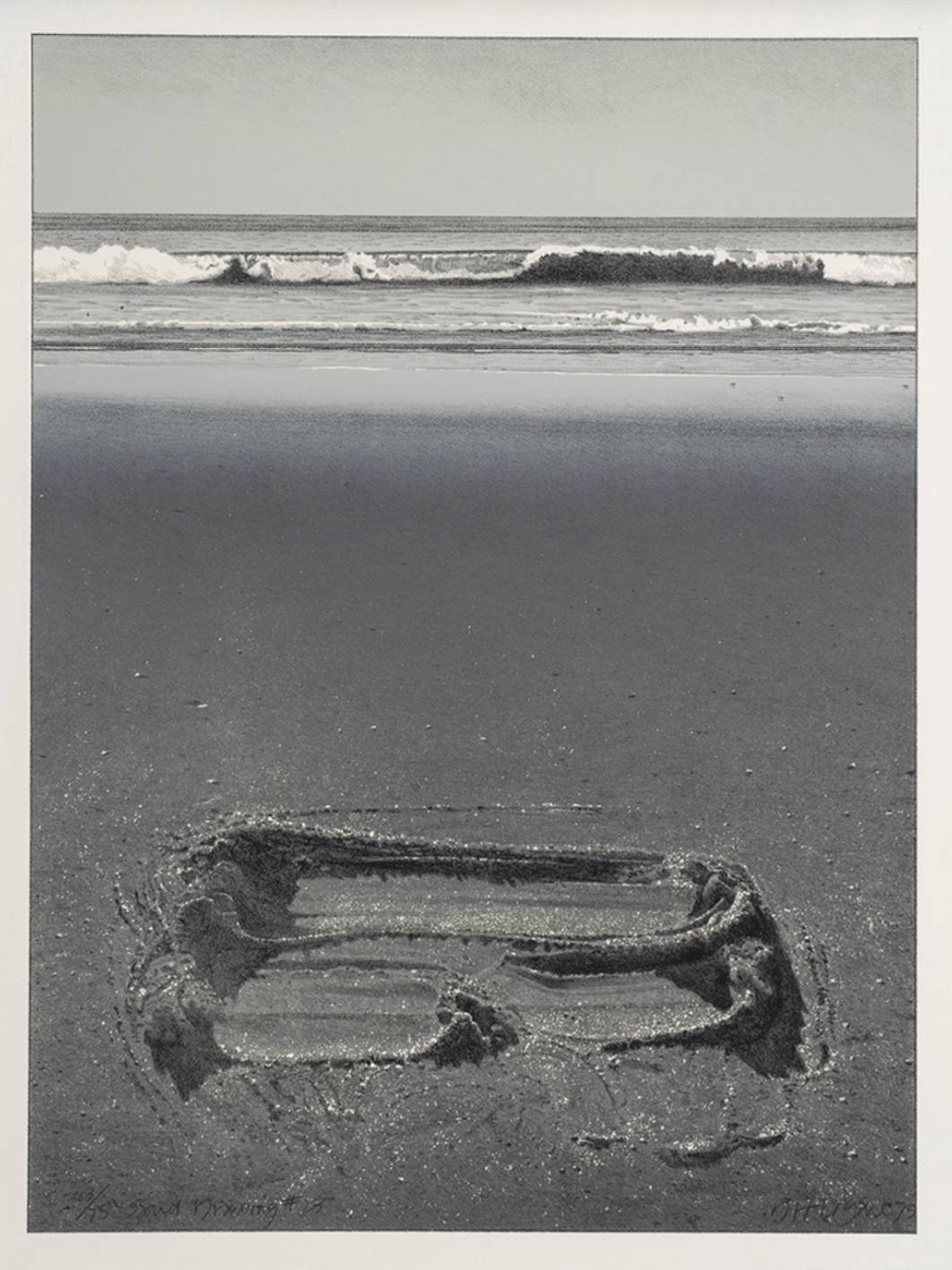
David Ligare, Sand Drawing #23, lithograph #73/75, 20 x 15 inches, 1973.
While Ligare is celebrated for paintings rooted in the permanence of classical tradition, the Sand Drawings reveal an artist equally captivated by the opposite condition; the fleeting, contingent, and fragile nature of existence. They suggest that permanence and impermanence are not opposing concerns in his practice, but two different ways of searching for the same truths.
