

Christy Chan
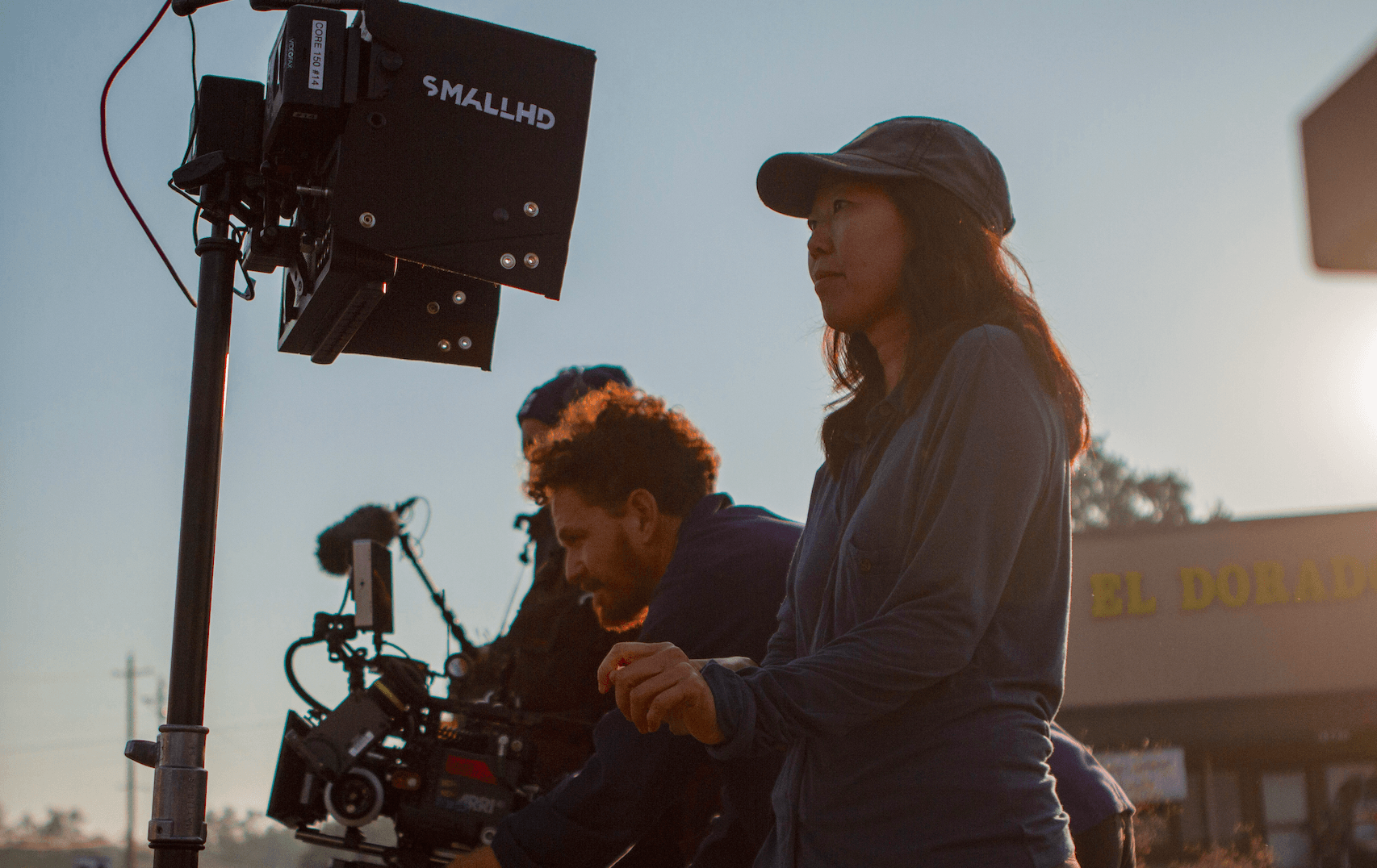
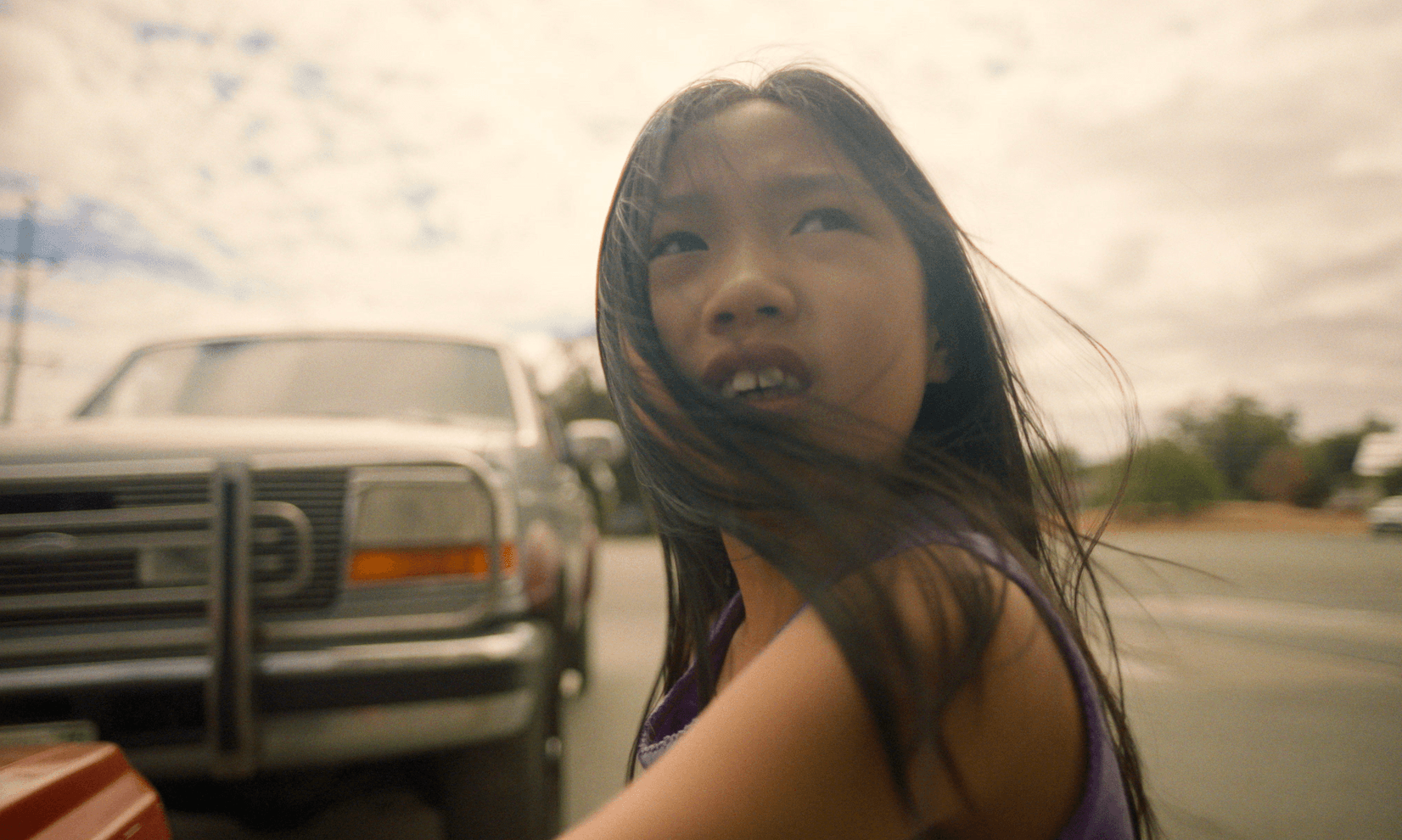
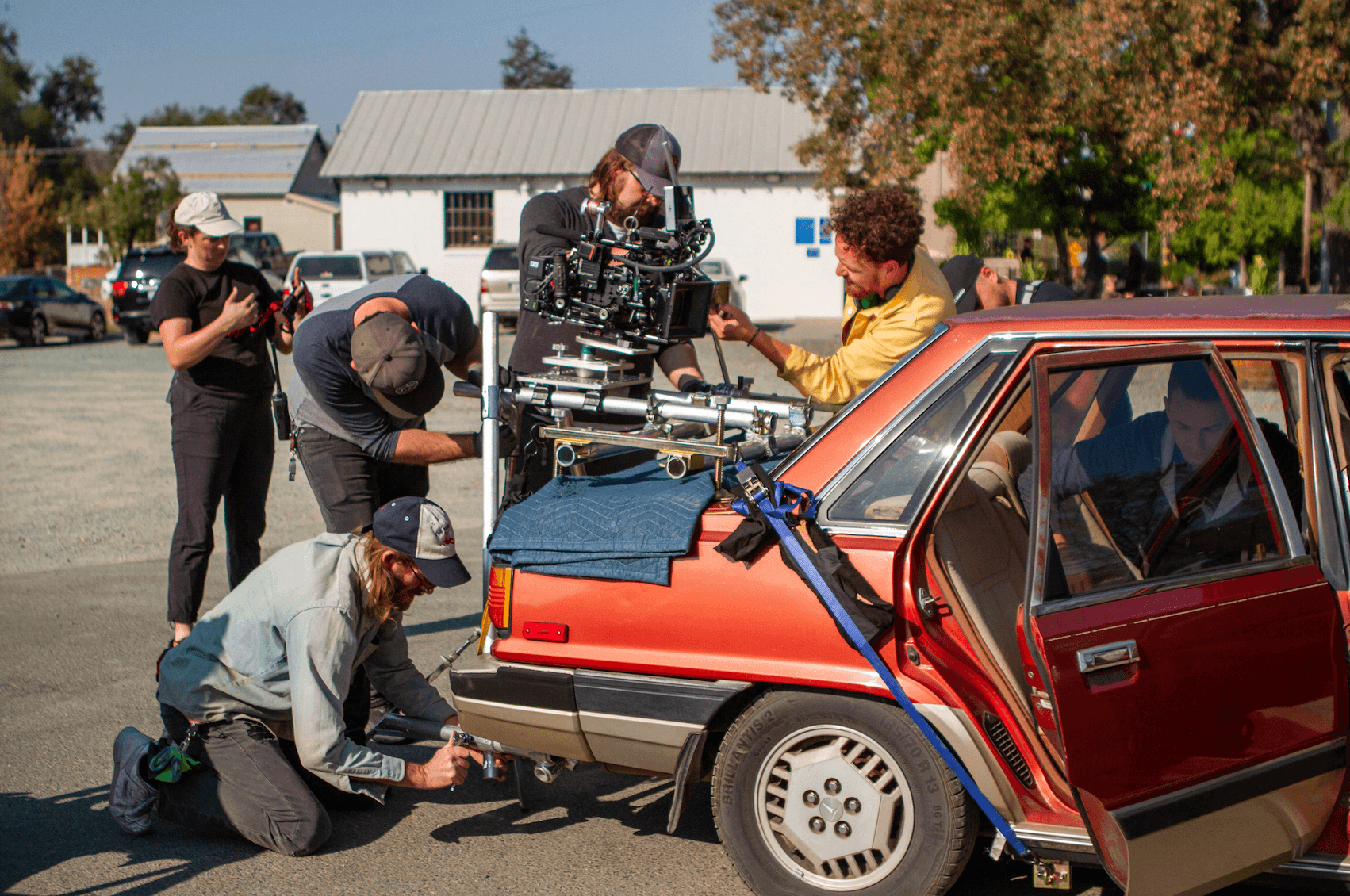
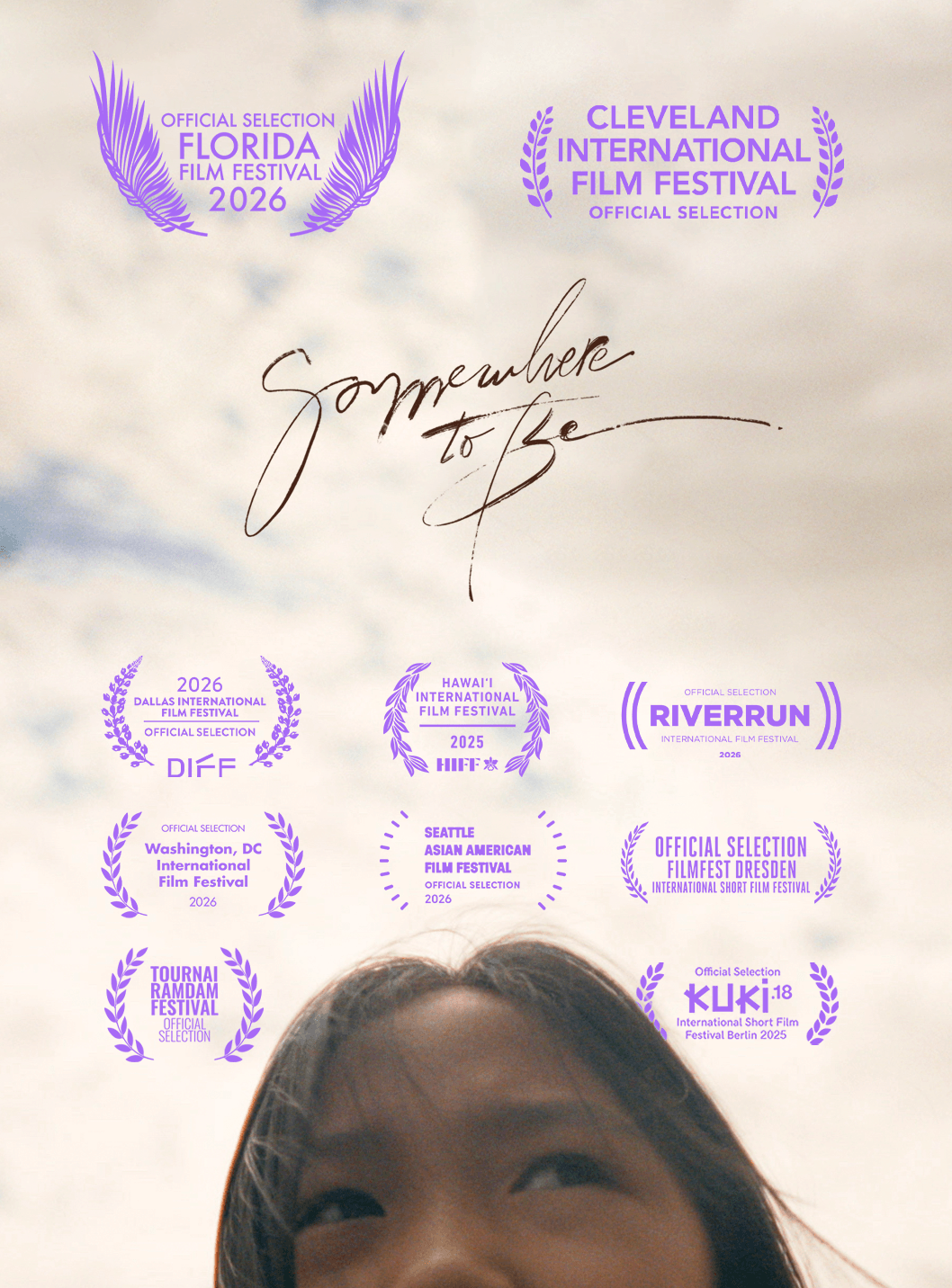
Christy Chan is a Virginia-born, San Francisco Bay Area-based artist who uses video, installation, performance, narrative film, design and public art interventions to question the everyday power structures and social codes that uphold white supremacy in the United States. Her work has been presented at YBCA, ICASF and Mills Art Museum in the Bay Area; Wassaic Project x NY State Council of the Arts in New York; Film Independent in Los Angeles; Interfilm-Kuki and Dresden Film Festival in Germany; UMOCA in Salt Lake City, and other institutions. She is the recipient of a recent Guggenheim Fellowship, Creative Capital Award, and Kenneth Rainin Fellowship, among others. Her independent film “Somewhere To Be” will be screening in U.S. cities throughout 2026.
An interview with filmmaker Christy Chan, conducted by Hugh Leeman.
Somewhere to Be: Dark Comedy as Truth-Telling
Hugh Leeman: Christy, your recent film Somewhere to Be centers on Shelley, an eight-year-old girl whose mother refuses to leave after gas station attendants deny service because they look, quote, foreign. When you were making this, how did you shape the incident into a dark comedy rather than a straight trauma narrative?
Christy Chan: I think it naturally came out that way — it was naturally conceived that way. One of the things I love about being an artist and a filmmaker is that there's a process where memories are being collaged together and things are transformed. In a lot of my work, not just this recent film, I do have a tendency to want to narrate a theme or open a conversation through absurdist comedy — through something that has absurdist humor.
The Coming of Age of a Country, Not Just a Child
Hugh Leeman: To give a bit of context for people listening or reading: the film is set in the 1980s American South, and you've spoken about growing up personally around Civil War reenactments and exclusionary local narratives. How did those childhood atmospheres inform the film's visual language and emotional temperature?
Christy Chan: I think the past did inform the film, but the present does as well. One of my ongoing concerns as a person and as an artist is simply who gets to have a voice and who gets to have presence in our country. Immigrant families have historically — and now as well — needed to assert their right to exist, and how they get to assert that right has been mediated. What I was really excited about with making this film was showing a family asserting their right in a way that felt nuanced and authentic to me. Telling it through a child's point of view takes a lot of the rules off of storytelling — the guardrails are off. This film wasn't just about the coming of age of a child. In a way, I wanted to tell the coming of age of our culture, of our country. There's a rawness I wanted to infuse this film with — not out of scale with the rawness of the conversation happening right now around immigrant families. I'm wanting to transform the conversation, to broaden it.
Hugh Leeman: You want to transform the conversation — I like this idea. What does it look like after the transformational act of art?
Christy Chan: It's different with every project. With showing a film, you actually see the audience's reaction — you're talking to them after it screens. With an art opening, I get to talk to people after it happens. I don't think I can ever, as the artist, completely know what's happening for people after they see the work. But I do feel that once I've made a work and put it out there, it's no longer mine. I can trust it to live and breathe on its own — to be weird in the world without me, to be provocative in the world without me.
A Love Letter to Immigrant Families: Feeling Seen
Hugh Leeman: From the perspective of you as the creator — and by extension as the creator of Shelley, the eight-year-old protagonist — there's an element to Somewhere to Be that feels like a love letter to immigrant communities, especially for people who may feel the pressure to hide or to be invisible, perhaps more now than ever. What kind of recognition do you aspire for immigrant viewers to feel in the theater after seeing this?
Christy Chan: I would love for people to feel seen. I would love for them to see a little bit of themselves in the characters, whether or not they closely identify as descendants of immigrants. I'd like them to feel a little bit of delight that characters like this can be represented in independent film. The characters in this movie are flawed people — they're not model minorities. They're just trying their best to survive, like most of us are every day. I know that when the film screened — it just screened in seven cities, and I was at four of the festivals — some of what people were saying afterwards was that they identified with being the kid in the back of the car. They identified with feeling both powerless and powerful as a child of immigrants. They identified with both the fear and the agency. At the Minneapolis screening, the Q&A lasted a really long time, and afterwards people stuck around in the lobby for an hour to keep talking. That was such a gift to experience — when people want to hang out and share what it meant to them.
Powerless and Powerful: The Child in the Back Seat
Hugh Leeman: Go to that idea again — powerless and powerful. People told you they felt that connection with Shelley, the eight-year-old in the back seat. They felt powerlessness, but also agency. Talk us through that.
Christy Chan: In various different words, people in the audiences told me afterwards that they were the children of immigrants, or grew up in an immigrant family. The sense that the world is spinning around you, and you're seeing your family struggle, and you just want to do your part — they really identified with that. The curiosity: what can I do? I started working on this project almost five years ago. We shot it four years ago, finished it one year ago, and now it's screening in 2026. As I've watched things unfold on the news — the ICE raids in different cities, people standing up to this violence — what has personally moved me has been seeing images of kids caught up in this. That was something I really wanted to offer through the film: to put people in the situation and let them feel like they're the kid. Because really, it could be anyone's kid that this is happening to. It could be anyone's family. I crafted the film so that I take the audience for a ride, and at the same time I'm not protecting them from feeling their feelings. One man said at a screening that he hadn't been feeling very present because he'd rushed from work, but during the tension scene he felt completely pulled into his seat. Part of what I always want to do with storytelling is to take away the fourth wall and allow people to feel like they're inside it — not just watching it.
Hugh Leeman: Does Shelley become effectively an extension of you, Christy — the powerlessness, the powerfulness, the agency of the child?
Christy Chan: No. And I think it's very important to distinguish that what an artist makes and who they are are two different things. It would be very limiting if those two things always had to be tied together. When I make something, it's from my perspective, my resources, my time — but it would not be in service of the work if my work were necessarily a translation of me. It would actually be very dull. The story was always intended to live on its own and be of service to the conversation.
Being of Service to the Conversation
Hugh Leeman: Be of service to the conversation — that's a powerful statement. What is the conversation you're wanting to serve?
Christy Chan: We have trouble in this country telling the truth about racism, about white supremacy, about how these things affect families. These conversations are often had in soundbites and very hypothetical ways. The power of stories — the reason I watch a lot of movies and enjoy art with narrative embedded in it — is that you're allowed to have an unguarded moment as the participant, to simply feel your way through the subject matter. I think it's very important that we keep feeling our way through what is happening, and not just thinking our way through things. Feelings are very important — feelings are very informative. I really want to invite people to feel their way through this moment, as hard as it is. I'm not an expert on any of the topics I work on. I'm mostly interested in seeing how we can talk differently about them.
Hugh Leeman: You're a storyteller.
Christy Chan: Yeah. Yeah.
Innocence as Currency: The Child's Moral Weight
Hugh Leeman: The Minneapolis festival listing describes the film as a story about love, courage, and trauma — and notes that children can feel these things very intensely. What did you learn by letting the child's perspective carry the moral weight of the story?
Christy Chan: This might sound strange, but I don't know that I learned something new so much as I wanted to offer that perspective to the audience. In this film, innocence is its own currency. Having a kid in a movie is, in a way, a metaphor for looking at things through an innocent point of view. Something that can sometimes get lost when talking about racism and immigration is just the bare bones fact of: what is all this doing to our humanity? What are the things happening in the world doing to our collective sense of being human beings?
Inside Out: Censorship and the Right to Speak
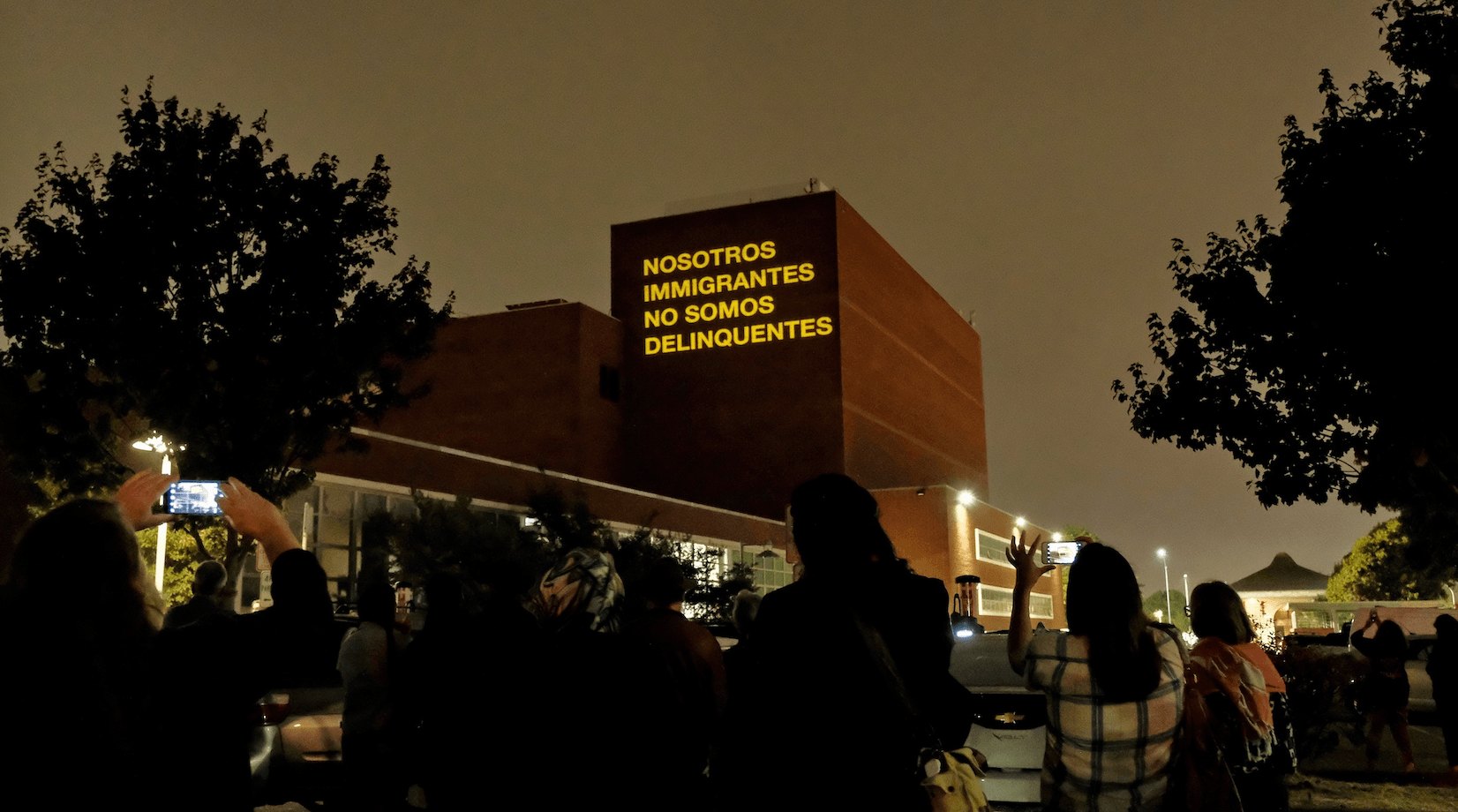
Hugh Leeman: I want to switch gears to another project — your public installation Inside Out, where residents of Richmond, California submitted more than 1,100 phrases. But city officials barred statements critical of President Trump if they named him specifically. What did that censorship reveal about what kinds of speech are considered "too political"?
Christy Chan: To me, what happened in 2019 with that project was a signal of what was to come. It was a project that represented the perspectives of Richmond residents, and the critiques they were offering were very poetically expressed. When those phrases were banned by the city — due to fears of the attention it would draw from the administration at the time, which were not unfounded — I do think it was a sign of things to come. But I think in creating participatory projects, it's a really beautiful thing when people want to participate in a public art project and when they offer their time and perspectives in a way that is raw and unfiltered. I feel transformed by those projects and what people share. In the case of Inside Out, we had nine different community partners. We partnered with local churches. For folks for whom there were safety issues participating in a public art project, we offered one-on-one workshops with language translators. Many ways people could contribute, tailored to what would feel right for them. It was very people-centered, very community-centered. And I would say my film work is influenced by my work doing participatory public art, in that sense.
Dear America: Bypassing the Bureaucracy
Hugh Leeman: Following the censorship of your work for critiquing a US president, you evolved your practice to bypass traditional municipal and institutional processes and founded Dear America. What did bypassing that bureaucracy make possible — and what did it make more vulnerable?
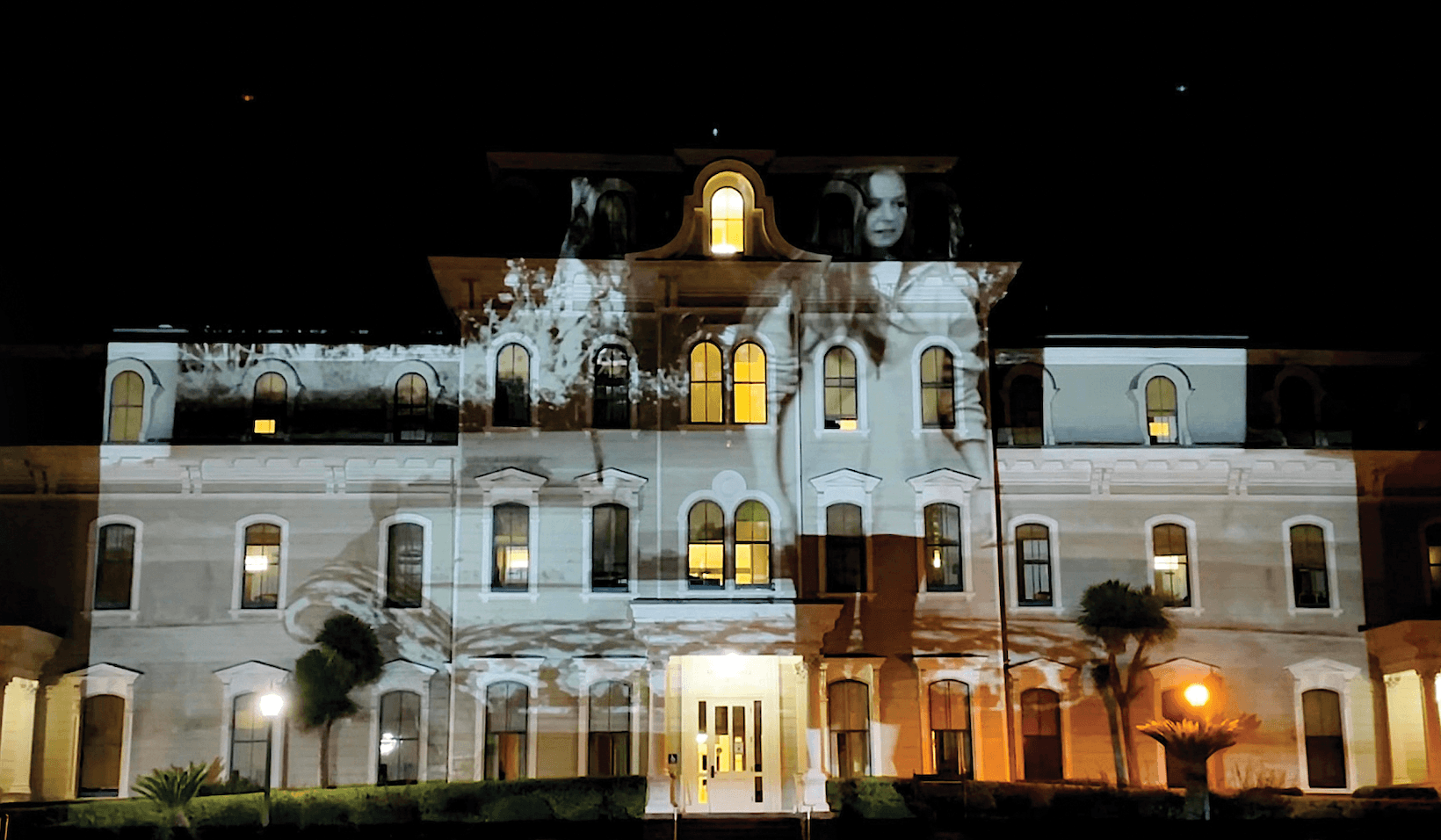
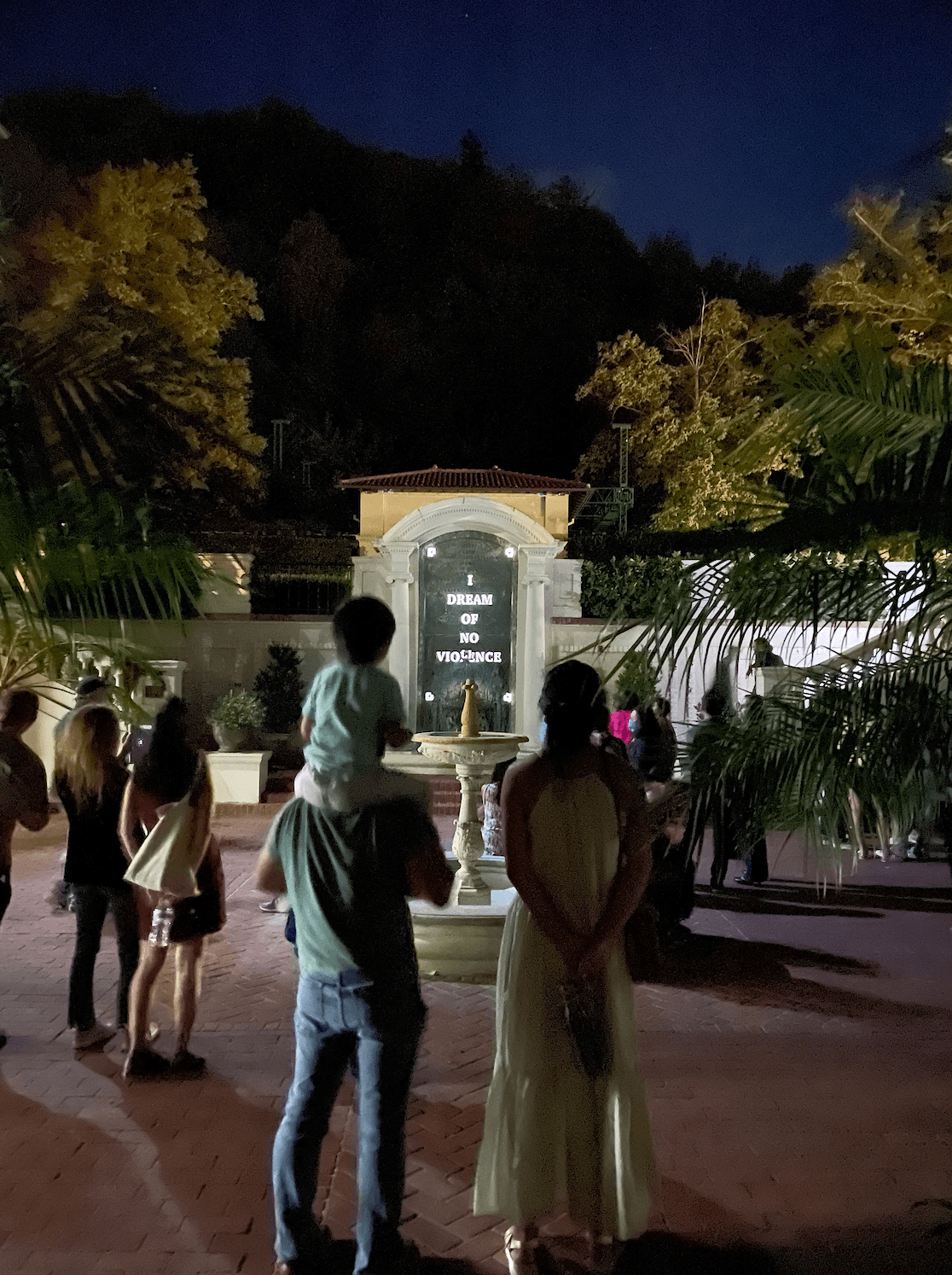
Christy Chan: What it made possible was responding quickly to what was happening in 2021 — an epidemic of anti-Asian hate. I wanted to create a project that would support local communities and bring artists together in a show of solidarity. That project went from idea to launch in about three to four weeks, which is the quickest I've ever moved — and which would not be possible on a municipal art schedule. I do believe in working both with and outside systems. In this case, the project had a creative activism and advocacy layer to it, and being able to respond quickly was more important than following a traditional public art process. That was the right choice, looking back. White supremacy does not operate on a grant cycle, on a municipal art grant cycle. So in this case, the art making could not either.
Hugh Leeman: That's a powerful statement. Do you feel this is the high aspiration of what you're wanting to address through projects like this?
Christy Chan: I can answer that more broadly. I'm really interested in seeing how different communities can be activated to participate in art — the art ecosystem, local businesses, local citizen groups. When Dear America was launched, there were about ten grassroots community partners. Some of these conversations that might seem like they could divide us do have the potential to unite people on projects. I'm always passionate about how I can create the space for community groups and local citizens to come together and make something happen that could not have happened at the same speed or with the same energy had the project not been opened up to partnerships. And I'll say: in the arts, we talk about money and funding a lot. Something that is invaluable is the non-monetary wealth of resources that can come together through people believing in a project.
Fainting Couch: Who Gets to Rest?
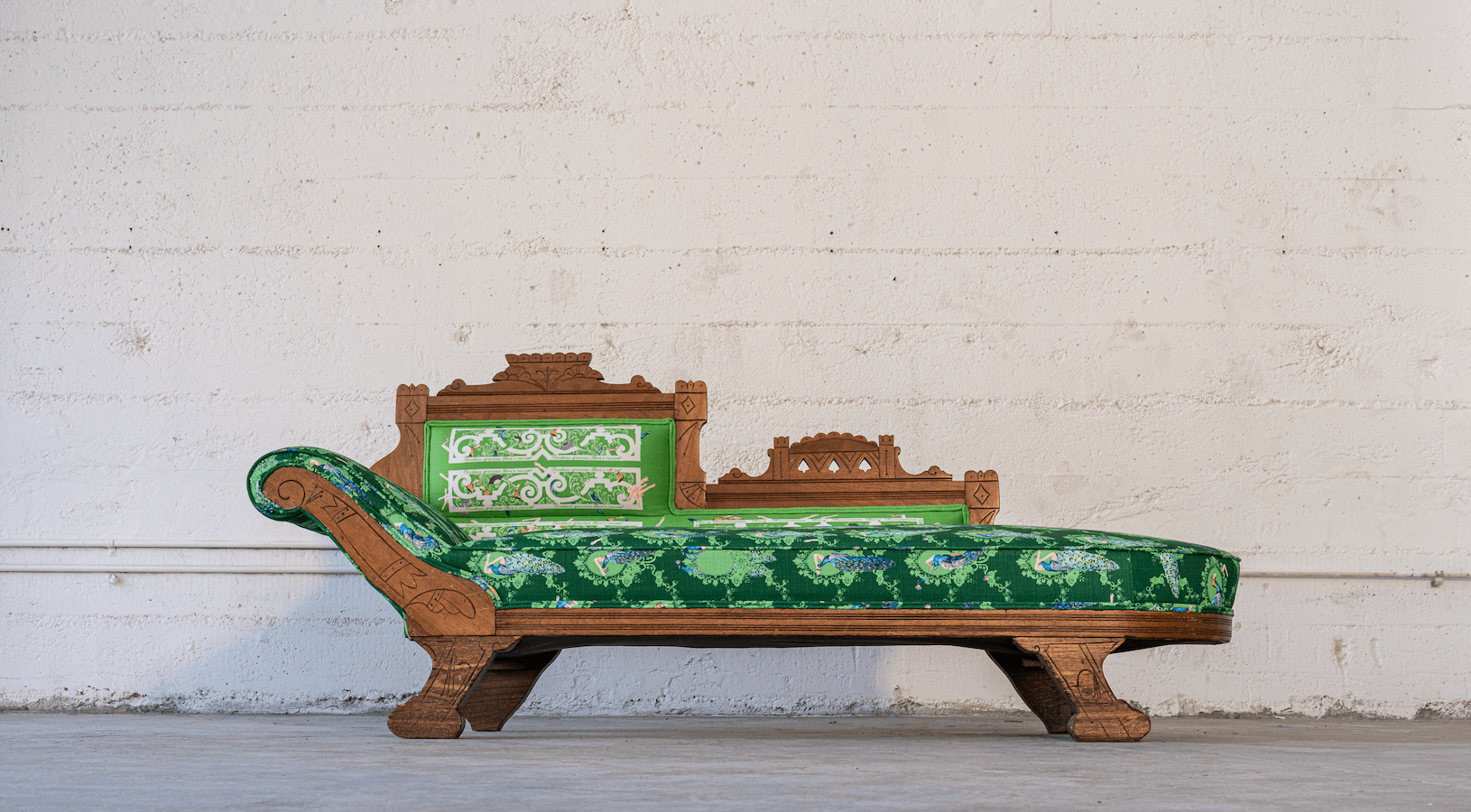
Hugh Leeman: I want to focus on Fainting Couch. You re-upholstered an 1890s fainting couch and invited people to rest on it as an act of decolonization. When you're watching unsuspecting strangers sit on it in different contexts — what did it say to you about what these people were expressing through the act of sitting, without saying a word?
Christy Chan: Fainting couches were a symbol of social class. They were usually for the lady of the house, and they had a functional purpose: women of privilege in that era wore corsets, frequently didn't get enough oxygen, and would have to retreat and rest. It was considered not only acceptable but celebrated that women of a certain class could retreat and not participate. I thought that was an interesting metaphor for intergenerational privilege. I grew up in the South and saw fainting couches around me. I worked on this project in response to what was happening in 2021 — Southern states were starting to ban the teaching of what they were calling critical race theory and diverse points of view. The first county that actually banned the teaching of race was the county I grew up in. So I wanted to turn a fainting couch — an object you're normally not supposed to touch in art — into a touchable platform for conversation. Everyone was invited to rest on the couch, reversing the historical purpose. In that era, only the lady of the house could rest on it; someone who worked in the home would not have been allowed. After participants rested for as long as they wished, there was another stage where they could journal about their feelings about what was happening politically. In essence, it became a time capsule of what it felt like in 2021 to see education restricted, to see steps being taken to curb conversation around racism.
Who Gets to Be Fragile? Who Has to Be Strong?
Hugh Leeman: There's a part of the project that asks: who gets to be fragile in America, and who has to be strong? As you were watching people experience the couch over time — reading their journals, seeing them struggle with what to say — how has that question evolved for you since the 1890s woman in the corset?
Christy Chan: I think of this part of the project almost as a quilting project — quilting together videos and photos of participants. After people write their thoughts, I take photos of them there. Not just the writing, but their efforts to write. In some cases, people struggled with what they wanted to say and what felt okay to say — they balled up pieces of paper after writing. So in these videos, there are actually a lot of photos of balled-up pieces of paper where you can maybe catch a letter or two. I've asked participants' permission if I can photograph those balled-up pieces. The question of who gets to be fragile, who has to be strong — that's something I think about constantly. There's such a huge power imbalance. We're seeing it play out in the news in a way that perhaps not everyone had to see if they weren't directly on the receiving end of the violence. It raises questions of who has to survive violence in all its forms versus who can casually keep seeing it happen. And what's been interesting is that the average person doesn't want to see violence inflicted on their fellow neighbor. I want us to keep asking this question. We have a government that's behaving in a very fragile way — when they put in measures to limit what people can learn in schools and what they can talk about in the workplace, that's coming from a deep fear of the truth. A deep fear of people being able to talk about what is true and what is even historically factual.
The Complete Narrative and the Power to Participate
Hugh Leeman: To bring some of these things full circle — you've previously said you wanted to show that the narrative was incomplete when voices were censored and could not appear. What does the complete narrative look like today?
Christy Chan: I'm going to answer that indirectly, if that's all right. I think we're living in a time — this is just my opinion — where we're being taught that we don't have any voice, any power, any agency. And that is part of how fascism has historically worked. But the people still have power. The people still have agency. Art is still a potent way to talk about things. And I'm excited to see all the art that's going to come out of this period, because things are being made. Projects are being created. Maybe we're not able to talk about everything in the same way as before. But I really believe in the potency of everyone making art in this moment. Continuing to participate — whether that's through art-making, protesting, or keeping conversations going within your own community — that keeps the conversation alive. Not believing that the conversation is over. That these conversations can't be had.
Hugh Leeman: The conversation keeps going. Christy Chan, thank you so much.
Christy Chan: Thank you. Thank you so much.
