
Andy Rappaport on Art, AI, and the Future of San Francisco
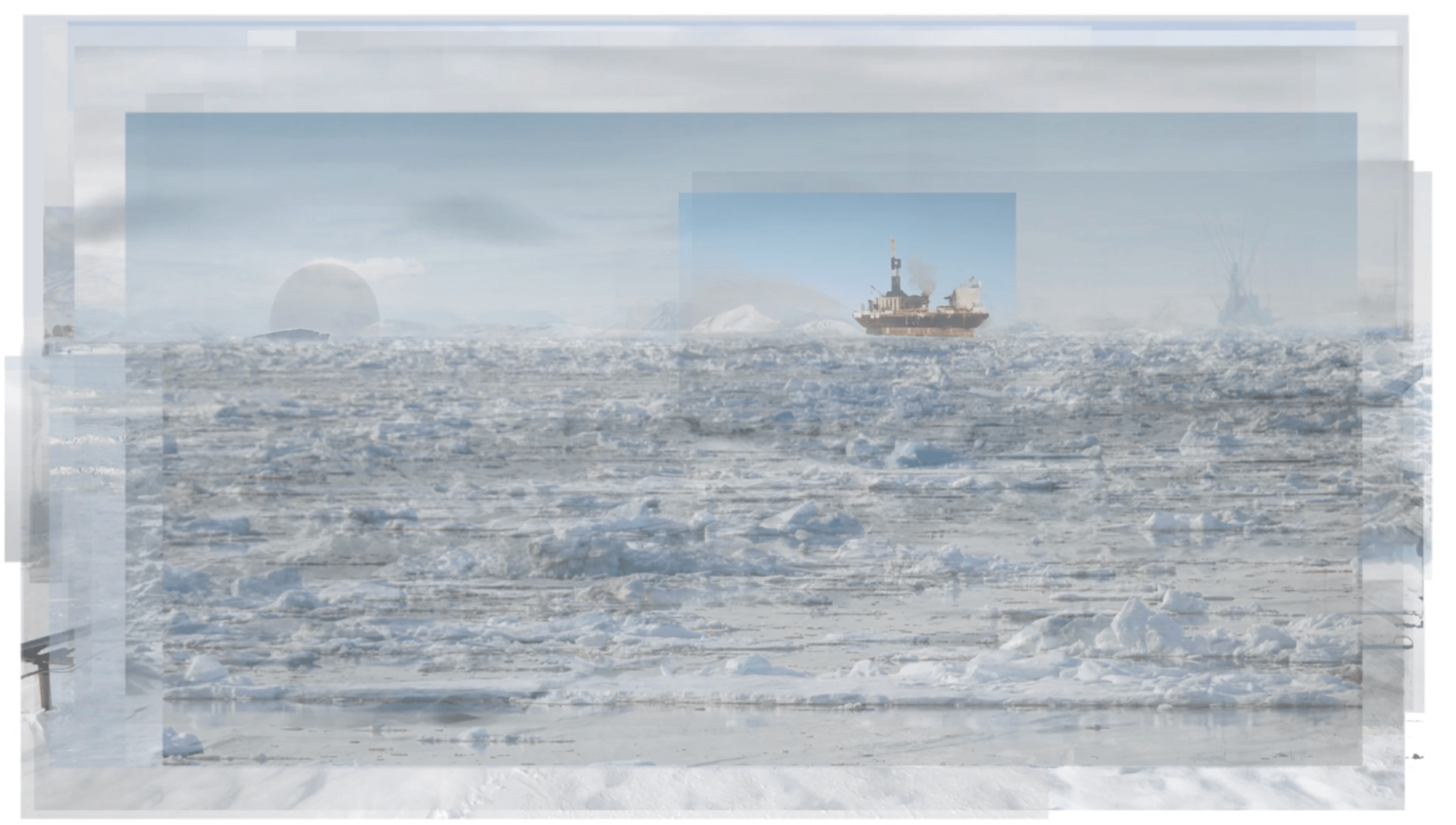
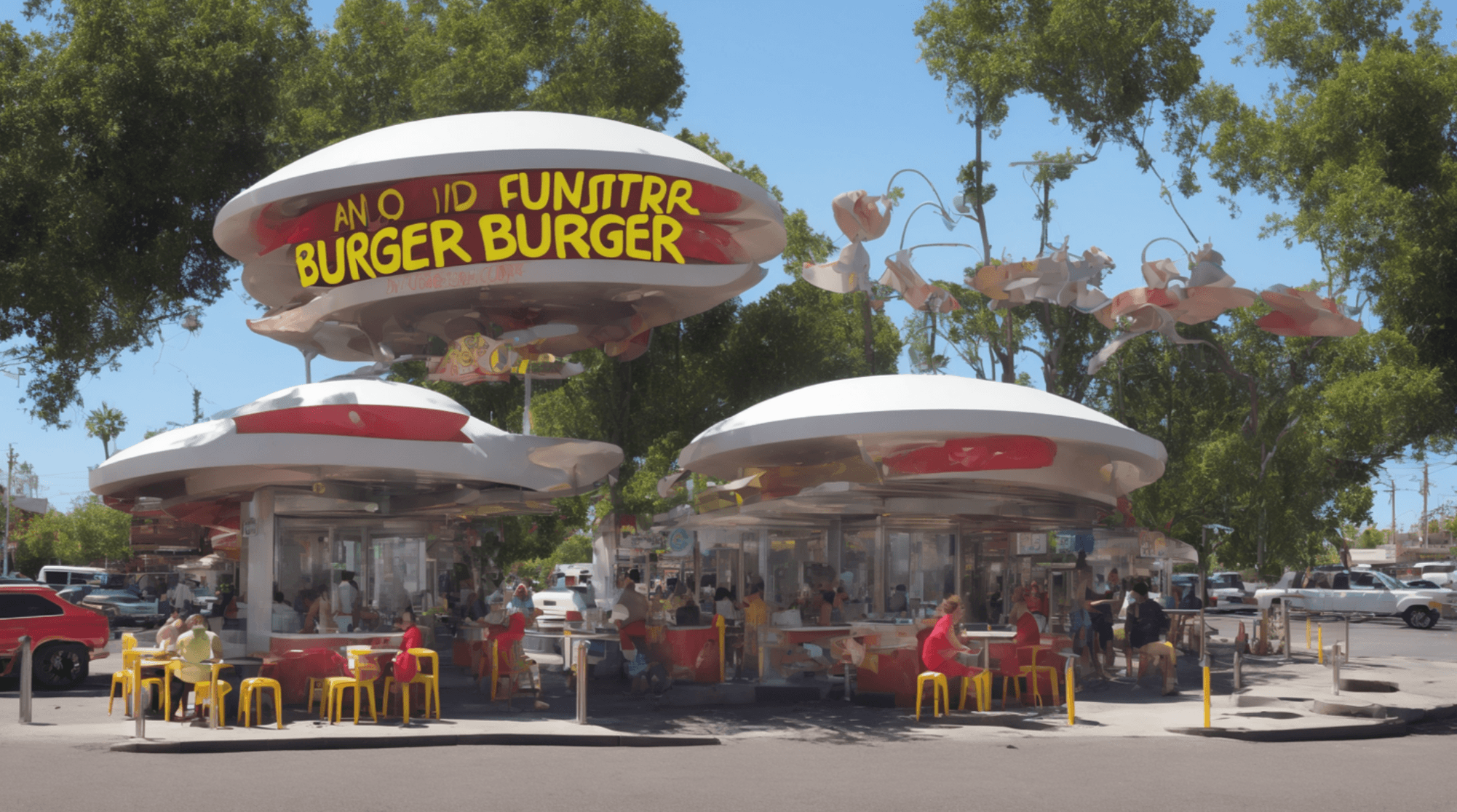
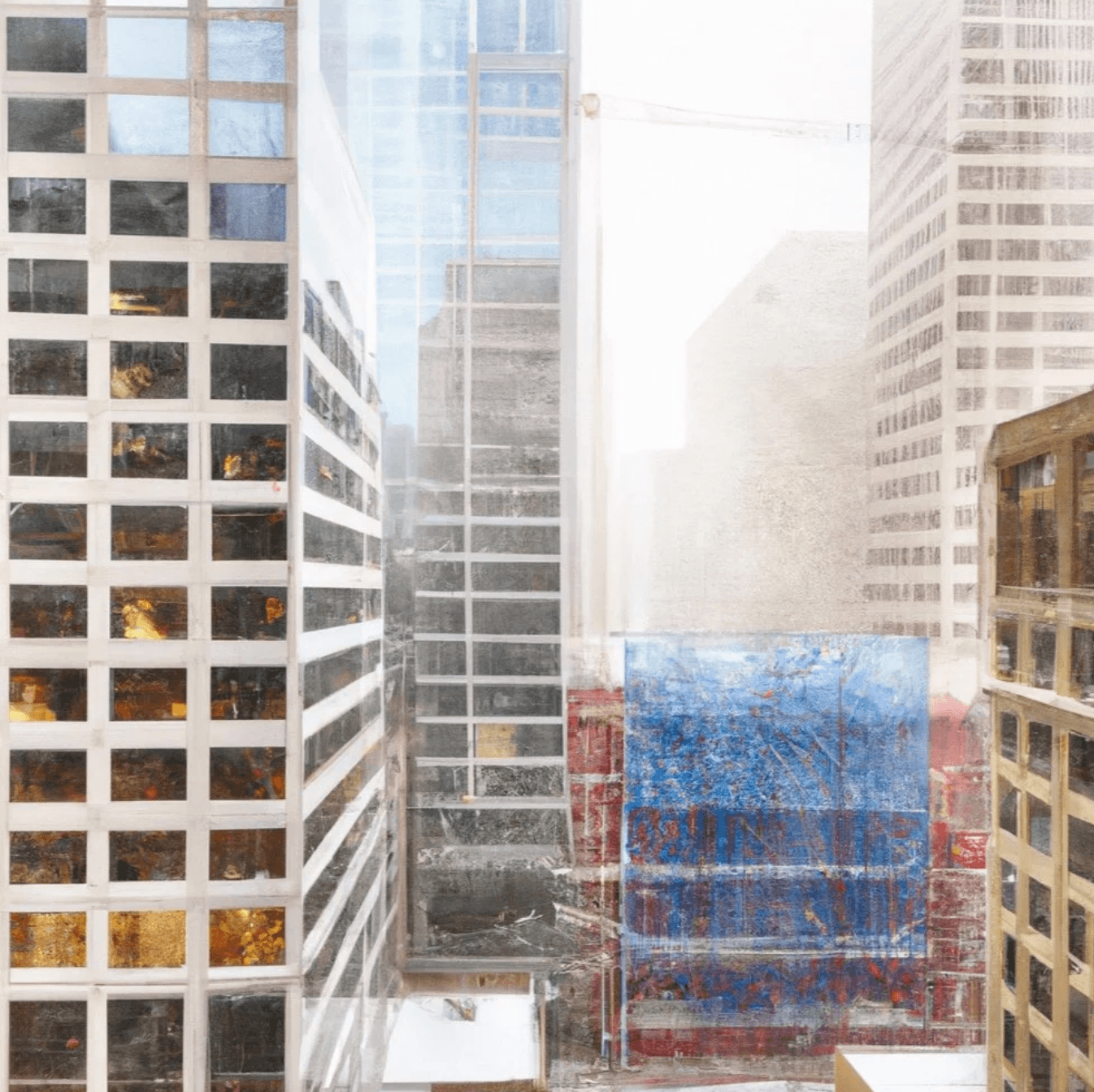
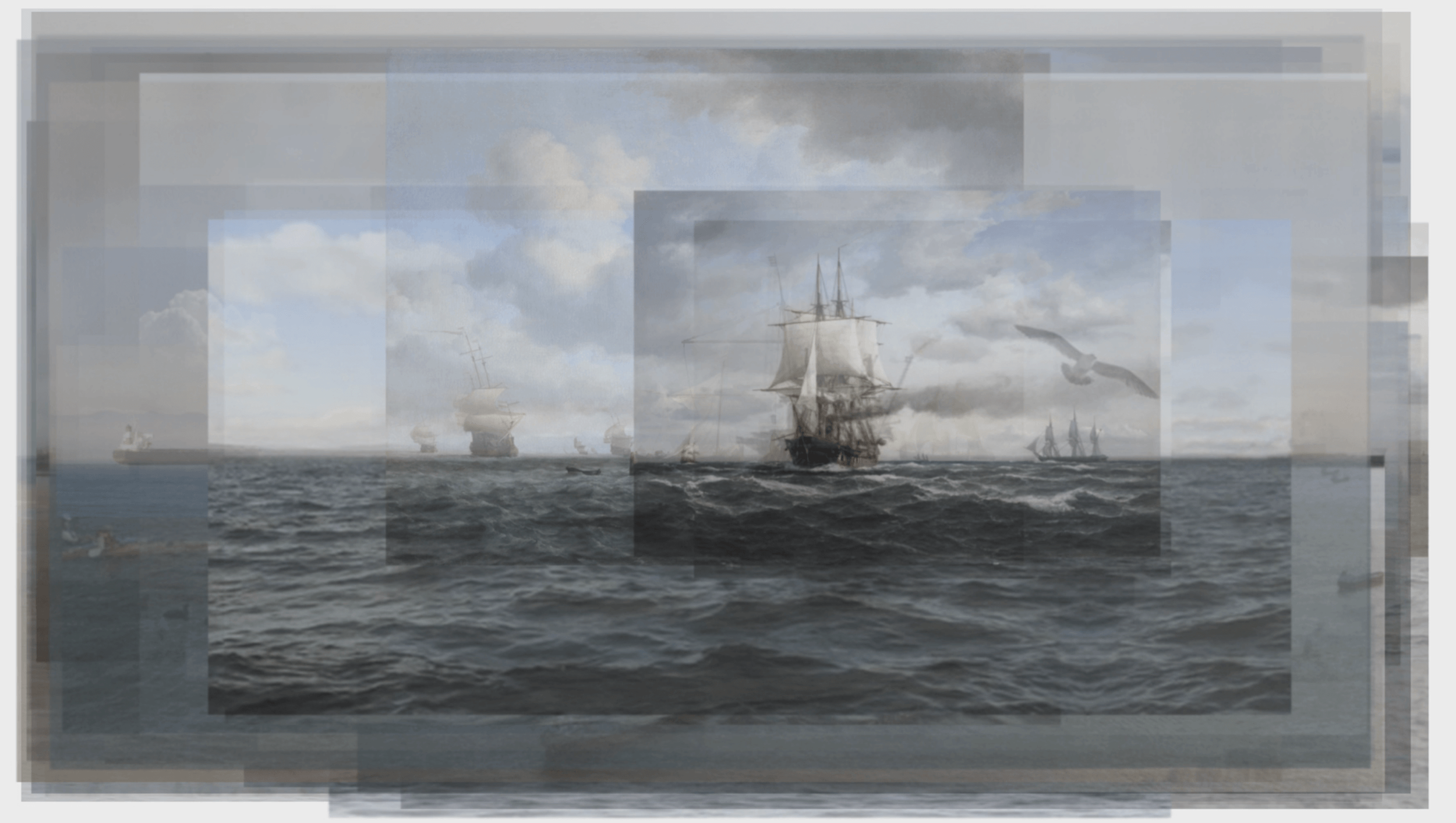
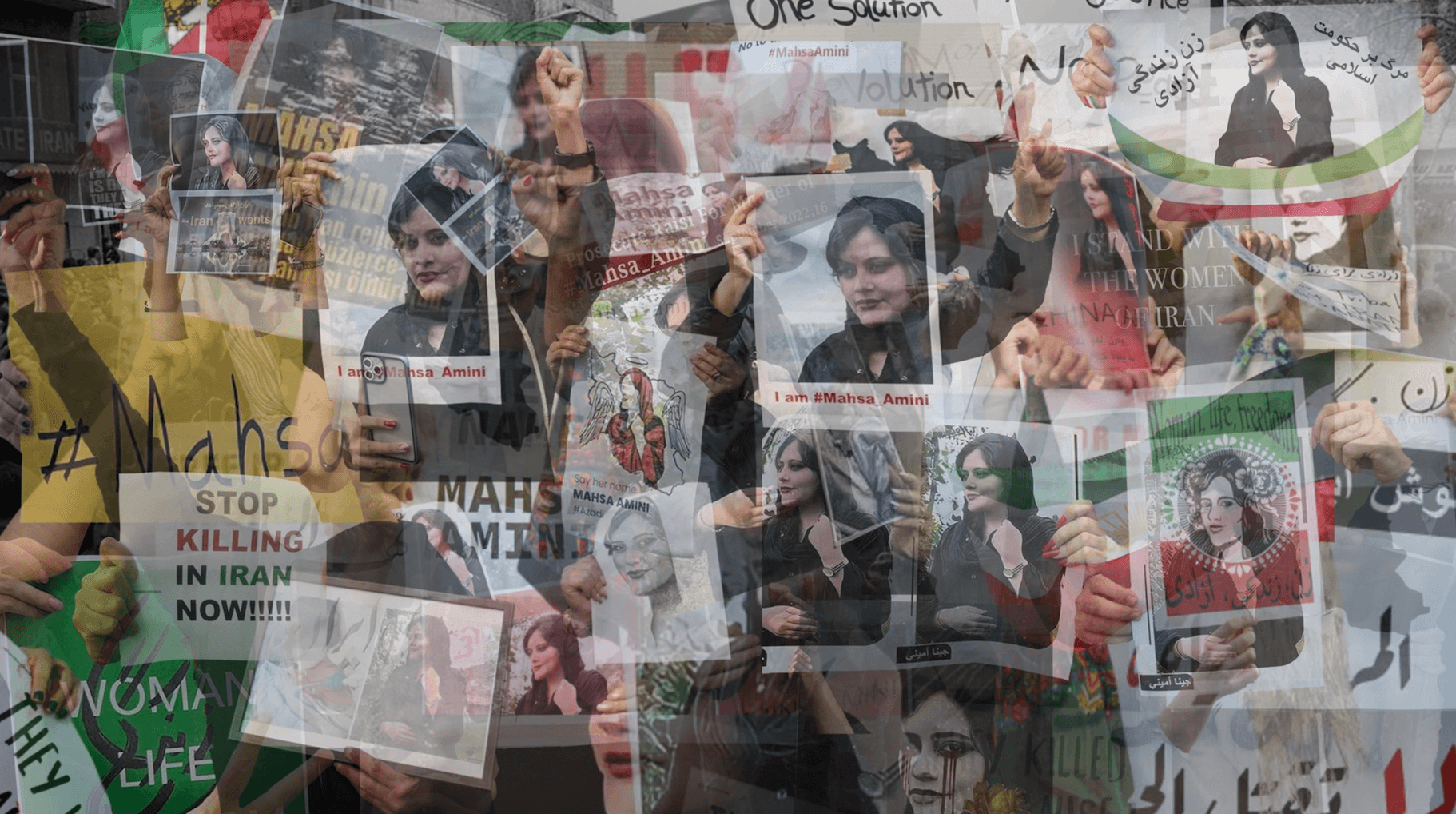
Andy Rappaport (b. 1957, New York City) is a sound and video artist whose work draws on his experience as a photographer, musician, composer, and technologist. His newest project, not [TEXT], combines sound, images, and AI technology to explore the human compulsion to extract meaning from the smallest fragments of recognition. Other work, both solo and in long-standing collaboration with Deborah Oropallo, has dealt with various cognitive, social, environmental, and political themes.
Andy’s solo and collaborative work has been widely exhibited and is in the permanent collections of the Smithsonian American Art Museum, the Schneider Museum of Art, the Kramlich Collection, and 21C, as well as many private collections.
With his wife Deborah, Andy is also the Founder of the Minnesota Street Project and Minnesota Street Project Foundation, which provides support for visual arts and artists and facilitates connections between visual arts and the community in the San Francisco Bay Area.
An interview with artist, philanthropist, founder of Minnesota Street Projects, and venture capitalist Andy Rappaport, conducted by Hugh Leeman.
Venice Biennale: Giving Voice to the Voiceless
Hugh Leeman Andy, you’ve just come back from the Venice Biennale, where the art world addresses the global stage on social issues. Of what you saw in Venice, what spoke to you most impactfully?
Andy Rappaport It was an interesting experience seeing the Biennale this year because of the political backdrop. The thing that spoke to me most wasn’t officially in the Biennale — it was an exhibition of the work of Gabrielle Goliath, who was scheduled to be the representative of South Africa. Shortly before the Biennale, the Minister of Culture in South Africa said this work would not appear on behalf of South Africa. So it was mounted in a church not far from the Arsenale, where part of the main show was, and it was one of the most moving pieces I have ever seen.
The basic idea of the piece is to give voice to the voiceless, and to deal in particular with women who are voiceless in society — specifically African society. But the piece also includes a poem by a Palestinian poet, and that was the part deemed too political, too controversial, and therefore not worthy of being seen. The piece itself was spectacularly moving, and the setting was perfect — visually, conceptually, acoustically. It was very powerful, both the piece itself and the reflection on the morality of any government that could deem it should not be seen. That was by far the most impactful thing I saw there.
Why Guitars: Music Over Investment
Hugh Leeman The idea of collecting has woven its way through much of your life. You’ve become an incredibly successful venture capitalist, but you’ve framed your guitar collection among your greatest investments — in an NPR article you said, “My guitar collection has outperformed almost anything else that I’ve been invested in over the last 10 years.” What first made guitars objects of emotional connection and historical importance, rather than just a musical instrument or an investment?
Andy Rappaport The guitars for me are about the music. They’re beautiful objects — you can see a few behind me; I’m always surrounded by guitars — and I’m very fortunate to have accumulated a big pile of instruments. But when I was younger, before I had the means to really accumulate them, I was accumulating them anyway, because they were tools. I played in rock and roll bands; I briefly supported myself that way after I left college.
For me, the instruments are about the music. I’ve been a musician my entire life. I cannot not make music. The instruments that speak to me speak to me because they have music in them, and I like getting the music out of them. Nobody needs as many instruments as I have — it’s kind of crazy. But what I find when I pick up an instrument is that because it feels different, because it sounds different, because I don’t have a history with it, I’m doing different things with it. Different music comes out. The idea that it’s different appeals to me; the idea that it’s pulling something different out of me appeals to me. And so they follow me home.
“113”: When a Marching Band Becomes Gunfire
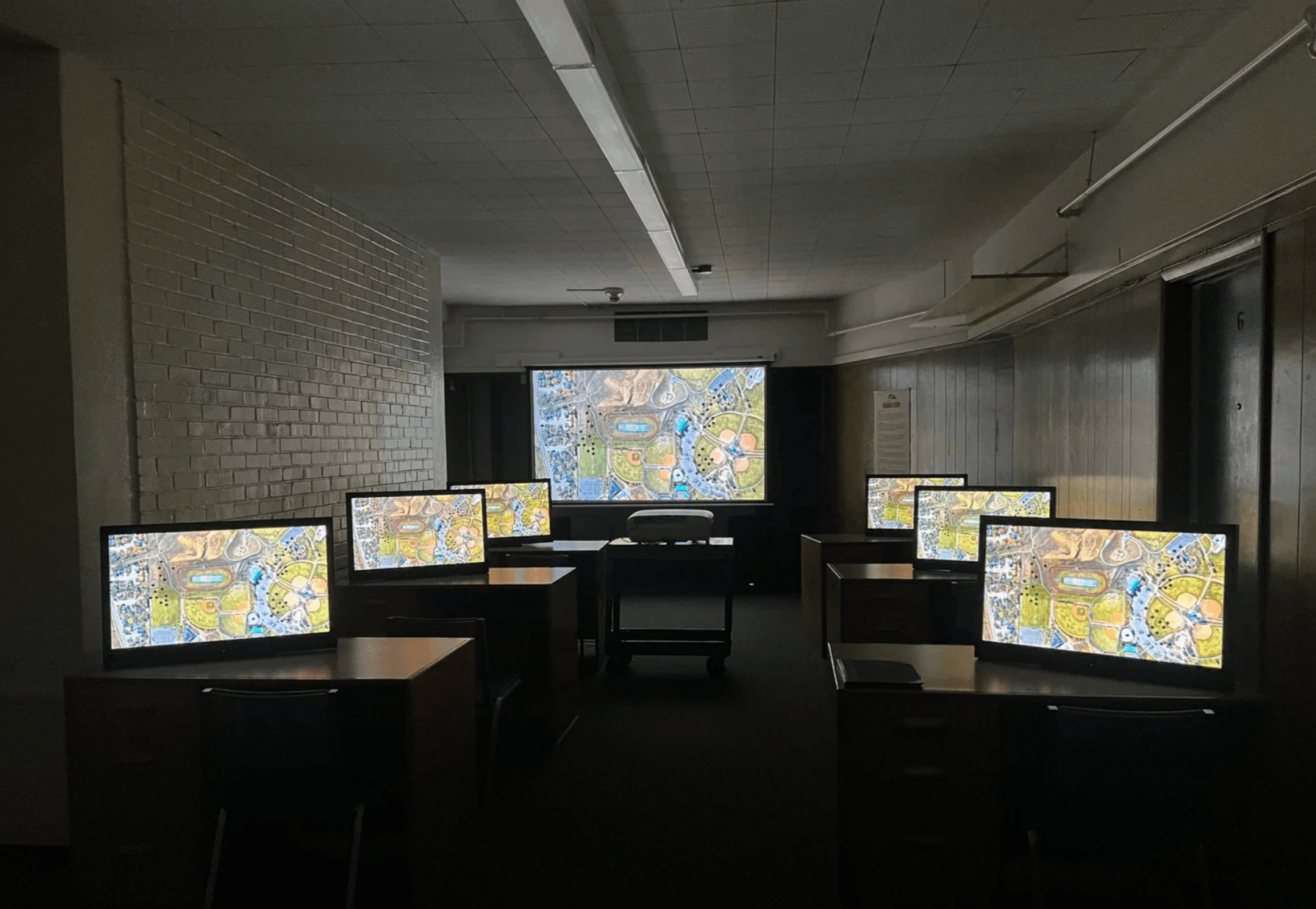
Hugh Leeman Your passion for music connects to your collaborations with Deborah Oropallo. You created a project titled 113, which links high school shootings to school athletic fields, tracks, and marching-band rhythms, interspersed with sounds that represent the delayed recognition of gunfire. How did the conversation begin between you and Deborah to address a topic so challenging?
Andy Rappaport My work with Deborah is very fulfilling, in part because she shares a passion for doing things that are challenging and using our art to challenge people. One thing that became apparent very early in our collaboration is that we both have this slightly twisted idea that we should use things that are aesthetically very appealing — visually, acoustically — to draw people into work that then reveals itself to be about something absolutely appalling. We both have a natural desire to use the tension between attraction and repulsion.
When we had the opportunity to do 113, dealing with school shootings, we started talking about it on the 20th anniversary of the Columbine shooting. The question was: how do kids experience shootings in their schools? One of the things you read about — especially early on, when shootings were much less prevalent — is that there’s a very delayed recognition. There’s a sound, and you don’t know what it is, the kids don’t know what it is, and then it goes on, and it starts to dawn on them what’s happening. That felt to us like a chilling experience. Schools are supposed to be for kids — supposed to be joyful. It’s not just about learning; it’s about becoming a person: your social environment, the athletics, the extracurriculars. I discovered music in school.
So when we asked what this piece should sound like, it was actually Deborah who had the idea. The conceit of the piece is that the oval in almost every high school sports field looks like the oval in the NRA shooting-practice target. The visuals overlay gunshot or bullet holes on top of aerial photographs of these oval playing fields. You think about those fields, and you think about the marching band — every school has one, and you hear it at the games. Deborah said, “When I see these ovals, I hear a marching band.” And I immediately said, “Yeah — and it’s the drum beat, the tom beat in the marching band, that’s going to turn into gunfire.” That’s how we would acoustically signify normal sounds morphing into something else, and the sudden recognition that you’re hearing something really horrible. It came to us very quickly, in our first conversation about the piece.
“One World”: Memorializing Ordinary Life Before Catastrophe
Hugh Leeman Your collaborations with Deborah wind through the dark corners of American history and society. There’s another project the two of you worked on, One World, at the Smithsonian, which uses postcard-sized monitors to remember the World Trade Center on the 20th anniversary of 9/11. What did the postcard format let you address about memory and tourism, or mass trauma — and perhaps most specifically, ordinary life as a place before catastrophe?
Andy Rappaport It’s the ordinary-life aspect that’s exactly what we hoped to capture with the postcard format. Deborah and I both grew up outside of New York at around the same time, as the World Trade Center was being built. We both remember Lower Manhattan before it was built, while it was being built, and then once the World Trade Center became this beacon of New York commerce and finance — all the things it came to represent. It was very much a part of our lives.
As we started thinking about this piece, what struck us was that the World Trade Center had a life and a meaning long before it became defined as the symbol of the worst terrorist attack on U.S. soil. So we wanted to celebrate the World Trade Center, and celebrate life in New York, as a commemoration. Of course, the piece is chilling, because when you see it now — any time after 9/11 — you know what’s coming. The piece is about five minutes long, and four and a half minutes of that is the history of the building and life in New York. We wanted it to be joyful; the music I wrote for it is the most uplifting music I’ve ever written. I did that on purpose, and it reflects my awakening in jazz in the 1970s and what that meant for me emotionally. But that’s the attraction-repulsion thing: you’re uncomfortable as you watch it, because you know what’s going to happen. The building was memorialized in postcards, and so was life in New York, so Deborah started collecting those images, and we said, let’s make the piece a postcard display.
Where Were You on 9/11?
Hugh Leeman Many people remember exactly where they were at major events — the assassination of Kennedy, Pearl Harbor, 9/11. Where were you on 9/11?
Andy Rappaport I was at home in Woodside, California. I remember listening to the radio in the shower as I was getting dressed that day and hearing about 9/11. I remember that day the way almost anyone who was alive and cognizant remembers it — I remember basically what I did that entire day. But it was otherwise a normal day at home and at work.
From That Morning to the Memorial: A Twenty-Year Timeline
Hugh Leeman From that day in the shower to the piece you made 20 years later — what was the timeline like, from day one of 9/11 to having these conversations with Deborah about bringing it to light?
Andy Rappaport I didn’t think about 9/11 as something I wanted to commemorate in art. I wrote some music that just poured out of me, out of the emotion I was feeling at the time, but I didn’t do it consciously. As the anniversary started coming up, Deborah and I began talking, and we realized we needed to do something. I think it was a year or two before the anniversary that we said, let’s think about doing something. As it approached, Deborah started collecting the images — some of them postcards — and that’s when we started talking about centering the piece on the postcard-display concept. It was really the first time I thought about making something that specifically relates to 9/11.
“Flight”: Refugees, Ancestors, and the Power of Place
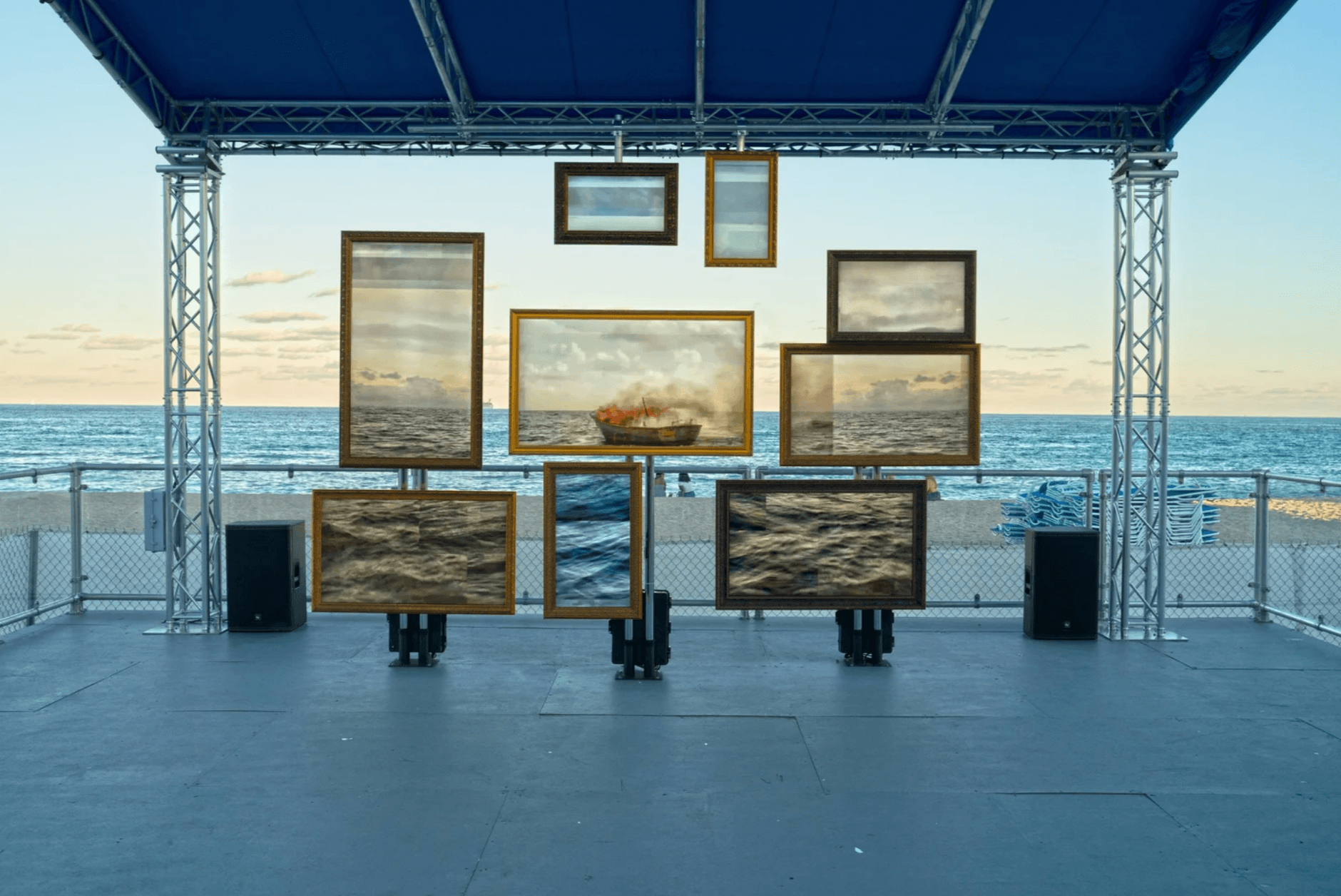
Hugh Leeman The piece Flight is particularly impressive. It’s described as depicting “the universality of suffering as refugees seek escape and shelter on essentially every continent.” It uses nine framing monitors with “ornate frames suggesting ancestral portraits. Our ancestors were refugees. The survivors depicted here will be someone else’s ancestors.” It’s been shown indoors and outdoors, including on a beach in Miami near real landing scenes. How does site change the meaning of the piece, especially when it’s placed near real geographic locations of migration?
Andy Rappaport The piece preceded any thought that we might be able to place it near one of these landing sites. As you said, it’s about the universality of the refugee crisis and refugee suffering, and the idea is to call attention to the humanity of refugees. The frames carry the idea that my ancestors were refugees — fortunately, they were welcomed here when they arrived, but they were refugees, and so many of us have ancestors who were.
This is characteristic of a lot of the work Deborah and I do: we deal with phenomena that are universal — all over the world, very constant, all around you — until you become numb to the sheer magnitude of the crisis. With refugees, it’s common to hear about it only in terms of numbers: how many there are, how difficult the problem is. What you forget is that each of these refugees is a person, and families traveling together are families. So we wanted to make this our form of portraiture — some of the images interspersed with the refugee images reflect portraiture — to call attention to that humanity.
We weren’t thinking, “We’ll show this on a beach where refugees had landed.” But when we had the opportunity to do that in Miami, it became very powerful — not just because the work itself portrayed the humanity of these people the way we wanted, but because you were looking through and over the piece at the actual beach where some of the refugees depicted in it had landed. We had hoped to make real for people the idea that this is not just something you hear about on the news — these are real people going through real terror, real pain, real challenge. Having the piece almost exactly where some of those landings took place really reinforced that this crisis is real and directly affects people.
“My Ancestors Were Refugees”: A Family Story, One Generation Apart
Hugh Leeman You make two striking points there. First, that the statistics you hear are actual human beings and families — there’s something humanizing about that. And then you connect it to yourself: your ancestors came here as refugees. Who were they?
Andy Rappaport My ancestors came from Russia and elsewhere in Eastern Europe during the time of the pogroms, prior to the Holocaust. This was in the late 19th century, when Jewish men in the Russian Pale of Settlement were subject to lifelong conscription into the army so they wouldn’t reproduce, and towns were literally burned to the ground to rid them of their Jewish population. My ancestors were able to escape and, one way or another, find their way to the United States, where they were welcomed.
It’s interesting: when my kids were in high school, one of my daughters was studying refugees and refugee crises. She’d heard about my grandfather — her great-grandfather — whom I knew quite well, and who had escaped Russia under very difficult circumstances. I’d told the story of his escape many times. When my daughter Rebecca was in high school, she came to me one day and said, “Dad, I don’t get it — how was it that your grandfather was able to come into the United States?” I said I didn’t understand the question: he got himself to England, got on a boat, came to Ellis Island, was registered there. She kept asking, over and over, until I finally realized what she was asking.
When he came over in the late 1890s or early 1900s, refugees were accepted here — they were welcomed. There was a system for accepting them. Life wasn’t easy once they got here, but they were allowed in. What she was wrestling with — and this had to have been the early 2000s — was, “We’re closing our borders; refugees aren’t allowed here.” The contrast between my growing up valuing the fact that my ancestors were able to escape, that hundreds of thousands of other people’s ancestors did the same, and simply taking that for granted — and here’s my daughter, one generation later, surprised that we were ever welcoming refugees, at a time when the government was working to close our borders. The idea of refugee abandonment, of borders closed, of having to go from country to country trying to find someone who will take you — which is the current and, I think, worsening climate — is anathema to me. It goes against everything I was raised understanding about quite literally how I got here.
One Generation, A World of Difference
Hugh Leeman It’s a powerful story. The idea that our understanding can change within a single generation — your daughter questioning something that seemed inherently obvious to you, and realizing her perspective is so different contextually — gives us all insight into a very interesting movement.
Andy Rappaport In one generation. That is the thing that, to me, is most shocking.
Art as an Ecosystem: The Origins of Minnesota Street Project
Hugh Leeman You’ve said that you and Deborah realized the visual arts community is an ecosystem that depends on others to survive. How has your understanding of that ecosystem changed since you opened Minnesota Street Project in 2016?
Andy Rappaport First, here you’re referencing the other Deborah in my life — my wife, Deborah. It gets a little confusing between Deborah Oropallo, my artistic collaborator, and Deborah Rappaport, my collaborator in life for my entire adult life. But yes, Deborah Rappaport and I have really come to understand that art requires an ecosystem. It requires one because artists on their own can’t completely control everything. We can control the creation of our work to some degree — though artists need support to create work, especially ambitious work. They need support to exhibit it, and support while they’re making work that isn’t producing income. And then there needs to be support in figuring out how the exhibition of work turns into commerce that provides ongoing support.
What we realized, when we started thinking about what became Minnesota Street Project, is that in a community like San Francisco — a creative force of artists — it isn’t enough to directly support the artists. Even if artists can eat, if they can’t show their work, collaborate with other artists, or find collectors and institutions interested in their work, it’s not a particularly fulfilling or productive environment. San Francisco has thrived artistically because, at various points, it has had an effective ecosystem for art — and that somehow needs to be recreated.
What we’ve learned operating Minnesota Street Project is, first, that it’s very difficult, because you also need critical mass — and I don’t think any single institution in San Francisco can by itself provide the critical mass for all the elements of infrastructure required. It takes a lot of collaboration and a lot of commitment from the community overall. The other thing we’ve realized is that needs change and environments change. The challenges facing artists, galleries, and institutions in San Francisco today are different from the ones they faced 12, 13, 14 years ago, when we first had the idea. So if we want to build something sustainable that helps sustain the community over time, it has to have the idea of evolution built into it — evolving to meet the challenges as they change.
A Prediction from 1990 Meets the AI Economy
Hugh Leeman In preparation for this interview, I listened to a 2019 talk you gave at the Commonwealth Club about the thesis of a paper you co-wrote, “The Computerless Computer Company.” You said, “The inspiration about how to use technology is going to eclipse in value the construction of the technology itself,” but that this also raised questions about inequality and whether the fruits of that competition can be shared sufficiently broadly. How do you connect that 2019 concern to today’s AI economy — globally, and here in the Bay Area?
Andy Rappaport This is something that haunts me. The Computerless Computer Company — the paper that interview was about — my co-author and I actually wrote in 1989 or 1990, so it’s been almost 40 years. We were concerned that to the degree technology was creating economic change, it would create economic dislocation; there would be have-nots; economic prosperity would attach more to capital than it had historically, and less to labor. We thought at the time, well, these will be difficult problems, but they’ll be obvious problems, so societally we’ll figure out how to deal with it. Governments won’t abandon people. Society won’t abandon people. We’ll figure it out as we go.
Little did we know. Little did we know that the forces that make that difficult would be stronger than the forces that make it possible — and that we’d have the level of economic inequality, largely as a result of this technological change, that we have now. Even before the explosion of AI, that’s a very disturbing phenomenon. My realization was that, at least here in the United States, society was just not equipped, and in some cases didn’t even care, about the implications of these trends. You can’t really reverse them — they’re not exactly laws of physics, but their economic power is so strong that it’s almost impossible to reverse them. All you can hope to do is cope with them and muster appropriate responses that keep people thriving and healthy. In my opinion, we failed at that in the United States even before AI.
So now we have AI. What’s its implication in this context? There are two that I find challenging to the point of being somewhat chilling. One: it’s moving at 10 times or more the speed of the forces I was writing and talking about 40 years ago. It’s extraordinary how fast these changes are occurring, and it’s not going to slow down — the dam is broken, and the rate of improvement is extraordinary. So society has a lot less time to deal with these effects than it did with the ones I was writing about, which society did not deal with effectively anyway. Two: AI will much more directly displace labor. It won’t necessarily eliminate it, but it will change the flavor of it to a degree people are unprepared for. There’s this notion that you can always retrain people, and up to a point that’s true — but then you have to actually be committed to doing that retraining. Because of the nature of what can be displaced by AI and related technologies like robotics, the effect on the labor pool is going to be very stark, and the need for retraining and other mitigating programs is very strong.
Just as it’s moving 10 times faster, I think these effects are an order of magnitude more direct. I’m not a doomsayer in the sense of “Oh my god, our AI overlords are going to wipe out civilization” — I don’t believe that’s remotely true. But I do believe that the rate and depth of economic dislocation as a result of this is something that, in the United States and most of the developed world, we’ve proven we are not up to. And if there isn’t a change in how we think about our responses, the consequences can be quite dire for a very large swath of the population.
How Do We Cope? Society vs. the Individual
Hugh Leeman You used a powerful word a moment ago: coping with the implications. How does society — or the individual — cope with the implications you’re describing?
Andy Rappaport How society copes is different from how individuals cope, though obviously they’re related. If every individual could cope, society wouldn’t need to. Unfortunately, I don’t think that’s going to be the case. Individuals need to, as much as they can, think about what skills are going to be needed in the not-very-distant future to remain productive in society. You can’t just hide under the table and hope this goes away.
Societally — and I wear my political leanings on my sleeve — I think what society needs is a commitment that it’s going to take care of people. There’s an idea that we’ll be able to push back on the technology, and I don’t think that’s ever worked. The most successful pushback on technology has been nuclear détente — not exactly disarmament, but the neutralizing effects of mutually assured destruction. That may be the best example of pushing back on strong technological forces, but it hasn’t stopped proliferation or development. So it’s naive to think we can just ban it and make it not happen. What society has to do — and all of us have to play a role — is say: to the degree there are going to be increasingly severe consequences from economic dislocation and income inequality, society has got to take care of people. We have to find a culturally palatable way to commit to getting people from one side of this chasm to the other, and not just leave it to personal ingenuity and luck.
“Homeless People and Billionaires”: Why Minnesota Street Project
Hugh Leeman I admire your optimism — I feel a bit pessimistic that a government, particularly the U.S. government, which can’t handle basic healthcare, could do a basic-income kind of thing. The generosity you’ve displayed sets a template for that, perhaps. You’ve been incredibly generous in supporting the arts, starting Minnesota Street Project, which combines subsidized, below-market space for artists, galleries, and arts nonprofits. What inspired your investment, and what is the importance of the arts?
Andy Rappaport What inspired us is simply that Deborah and I feel incredibly lucky. We’ve been together since our early 20s. We were fortunate to be raised in households that valued education and imbued us with good values, but neither of us came from money — when we first got together, we were congenitally broke. We never imagined a life like the one we have now was even possible; we didn’t even know people could have lives like this. And we realized we didn’t get here on our own. We benefited from a society that educated us, a society that made some of the companies I helped start possible. Our success derives from the environment we’ve been able to live in, so it’s been very important for us to give back — not only to recognize the value of the opportunities we’ve had, but to help lift other people up to better lives. It’s an innate part of how we were raised and who we are, and quite frankly, the example we wanted to set for our children.
Why Minnesota Street Project in particular? Deborah loves to tell the story that the genesis of the project was her reading an article one day about a long-term gallery going out of business in San Francisco because it couldn’t afford its rent. Without thinking, Deborah basically said, “If nobody does anything, San Francisco is just going to be a city of homeless people and billionaires. And who wants to live there?” We looked at each other and said, well, if somebody needs to do something — who’s somebody? And we said, let’s see what we can do. I joke that it’s a little bit my penance for having had a successful career in tech. I’m still active in tech, I think tech does a lot of great things, and I’m not anti-tech at all. But because of the economics of technology businesses relative to art businesses, tech has the ability to drive everything else out of town. If you don’t want San Francisco to become a monoculture — if you want it to keep the kind of creative force that makes any good city vibrant — then something specific and purposeful has to be done to counter the natural economic forces. That’s where we said, okay, what’s within the scope of what we can do, and let’s take a shot at it.
Closing Galleries, Shuttered Schools, and a Contracting Market
Hugh Leeman There’s clearly been a change since COVID. At Minnesota Street Project, there’s recently been the loss of several galleries in quick succession. What does this moment — not to mention CCA, the Contemporary Jewish Museum, and a list that goes on — reveal about a deeper art-market contraction?
Andy Rappaport A couple of things are going on. When you think about galleries that have gone out of business, this is not a San Francisco-specific phenomenon — it’s happening everywhere. You read about long-term galleries closing in Los Angeles, New York, everywhere, and it reflects global changes in the art market. Some are the natural result of consolidation, where more and more of the market is controlled by large international galleries, which creates a different set of challenges for smaller local and regional ones. Much more art commerce now happens at art fairs rather than in local galleries. The life of a gallerist has changed dramatically, as have the economics of gallery ownership, as you contend with what it costs — and the risks and lifestyle implications — of needing to be present at a different art fair every couple of weeks to stay competitive.
Culturally, things have changed too. The whole nature of retail, and how people think about acquiring things — especially in the Bay Area, where younger people weigh the value of possessions versus experiences — has changed the nature of commerce in retail generally, and in galleries specifically. When Deborah and I were young, even before we could afford to buy art, it was fun to wander from gallery to gallery, learn about art, and talk to gallerists. That doesn’t happen as much anymore; other things compete for people’s time and attention. Some kinds of businesses can become online-only and don’t need large facilities — but with art, you need to see it, you need to experience it. It’s not bought very much just online, and that creates a challenge: how do you justify a place where people can see things if nobody goes there?
So at Minnesota Street Project, we’re encouraging experimentation. One interesting thing — sad on one hand, energizing on the other — is that some galleries that grew and were extremely well regarded were dealing with artists whose price points had become high, where the demands of representing them were significant and, in some cases, not really sustainable. The galleries at Minnesota Street Project that closed last year had been successful for a period of time, and the responses to what it would take to sustain them in the current environment were just things that people who’d been at it a while didn’t feel made sense to try. It was very hard to say goodbye to those galleries and gallerists — many represent artists we collect, and many are friends. But there are also galleries doing more experimental things, meeting the newer generation of collectors where they are, the way some older galleries did 30 or 40 years ago. Some of what’s happening there is very exciting. We started the Atrium Art Fair this year to showcase those galleries and artist cooperatives doing vibrant things, and you’ll see the mix at Minnesota Street Project change.
That’s one part of your question. The other — San Francisco specifically — is that we are stunned and quite concerned about the loss of art schools. The closure of SFAI and CCA is a huge problem and an enormous challenge for the city, on top of the essential closure of the Mills program and others that were bringing young people to San Francisco and creating a regenerative, multi-generational system of artists fueling the creative culture. If we don’t have art schools drawing young people to the city and encouraging them to pursue art, how is that going to be regenerated? And if we don’t have art schools where artists can teach and earn a living while developing their careers, why are artists going to stay here? How are they going to afford to? Even if Minnesota Street Project could provide space absolutely free, living here would still be unaffordable without a job. So we’re quite concerned about what can be done. There are some budding programs — different kinds of arts education, mentoring, things that can draw people to the city. Through the Minnesota Street Project Foundation and the Artist Studios program, we think a lot about how to create space and programs to help draw young people and create opportunities. But the community has to respond quickly and definitively. If we lost X students and student opportunities between SFAI and CCA, we should be thinking about how to build back at least half X, or two-thirds X, to keep San Francisco a place where young people want to come and be creative.
An Alternative Model for Arts Philanthropy
Hugh Leeman The Minnesota Street Project Foundation has a central philosophy that philanthropic support for the arts today requires an alternative model. That seems important — because, as you say, even free rent doesn’t do much if people don’t have jobs and the schools are closing. What does that infrastructure philosophy, and the potential of long-term investment in people and place, look like — especially as people stop walking out to galleries to buy and linger?
Andy Rappaport It’s a great question, and a hard one to answer quickly, because there are a lot of components. There’s no silver bullet — if there were, somebody would have found it, and we’d be doing it, and it would be working. You started this conversation by recognizing that there needs to be an ecosystem, and that ecosystem is complex, with many different elements. What has to happen is that we find people who are passionate about each of those elements. It doesn’t have to be the same people — different people have different passions — but in aggregate we need to activate and support a sufficiently diverse set of things to recreate a sustainable ecosystem.
A couple of things are really important now. First, how do we make San Francisco a conducive place for young people? If we think medium- and long-term, and we’re not bringing young people here — and we’re not — then we’re not regenerating the creative force in the city, and we’re not encouraging the kind of experimentation that has characterized art here. And by art I don’t just mean visual art, but music and performing arts. That level of experimentation, and tolerance for it, created the creative climate that has existed in San Francisco, contributed by people coming in. People don’t come to San Francisco mid-career. If they don’t come when they’re young, and they don’t have the ability to stay, then the creative forces we have now will simply leave or die off. So how do we invest in programs — they might be institutions, they might not — that make it attractive for young people pursuing a creative path to end up here? Some of it can be art schools; some can be the natural vibrancy that attracts young people to a city.
The second thing is, how can artists survive here? San Francisco has long been a high-cost-of-living city, and Minnesota Street Project addressed that: our founding idea was that if we reduce the professional costs people face in their artistic pursuit, it gives them a little more to pay for housing, and maybe they can stay. But we have to think about supporting artists now, at a time when, first, some of the jobs that propelled artists’ careers have gone away because the art schools are going away, and second, it’s a more challenging environment to survive as an artist because of the nature of our commerce. At the Foundation, we think a lot about this in connection with the Studios program: how do we expand it, serve more artists, make it cheaper to be there, and provide more forms of resource, so artists can more easily pursue the art they want to create? And how do we create connections between artists and the rest of the community — the part that will exhibit the art, buy it, or provide employment, grants, and other economic opportunities?
When we say it requires a different philanthropic model, the basic model is the same: you put money behind things likely to make a social difference. But we have to recognize the inability of even the best institutions to fully address the whole panoply of things that need to happen to sustain this creative community — and therefore be willing to create and invest in programs that live alongside those great existing institutions, complementing, augmenting, and supplementing what they do with different kinds of programs that better meet the needs of this particular time.
What the Death of Records — and the Boom in Live Music — Teaches Us About Art’s Future
Hugh Leeman Art often needs to be experienced — you have to go to a geographical location; it’s not in the palm of your hand. In that context, art is up against perhaps impossible competition. Its high aspiration, as you said, is to challenge people’s thoughts, to shake them a little — but we seem to have moved toward a society that conveniences itself with information that already agrees with us. People 25 and under express little interest in art and the consumer culture around it, and museums are majorly struggling. What might a bridge between these worlds look like?
Andy Rappaport I love that question, and I have very specific thoughts about it. When we started Minnesota Street Project, it was fundamentally about real estate: if we could provide rents for artists’ studios, galleries, and nonprofits substantially below market, we could help with the biggest problem they face. So we set about acquiring property, and the most common question we got was: “Wait a minute — everything’s moving online, and you’re investing in real estate. What makes you think people are going to show up?”
My answer stemmed from my experience with music. From the dawn of the internet to around 2010 or 2012, when we were getting Minnesota Street Project started, the recording industry was decimated. Because people could listen online, nobody was buying physical music anymore; it was very difficult for artists, and record companies were going out of business. It appeared to be a one-way transition from physical to virtual in the delivery of music. But at the same time, the live music business was setting record after record, year over year. People were showing up in ways they never had before. Why? The simple answer is that people still want interpersonal social experiences. When you’re listening to music by yourself, it doesn’t matter whether it’s an LP, a record, or an online stream. But when you’re listening together, it matters a lot whether you’re in a club, an arena, a place where you’re celebrating your membership in society, with your friends — feeling like you’re part of something.
That observation — record sales dying while live music thrived — is what made us structure the Minnesota Street Project real estate the way we did. It’s no accident that about half of 1275 Minnesota, our galleries building, is empty: we built a big atrium so it could host social gathering, so the building could feel like a gathering place, not a warren of individual experiences. In the studios building at 1240 Minnesota, more than a third of the space is given over to shared spaces, where artists can see each other, collaborate, and share resources. That has produced collaborations, residencies, and conceptualizations relating to the community in ways we didn’t predict — just because we brought people together.
So as we think about engaging people: if you take people in their early 20s and lecture them — “Your life will be empty if you don’t fill it with art” — that’s going to fall on deaf ears. But if we can create experiences that are fun, rewarding, and fulfilling, that make people feel part of something and feed this need to turn out with one another and experience things together — and if art is a component of that, because art in all its forms can drive the nature of those experiences — then that can lead to discovery that’s much more natural, organic, long-lasting, and powerful. That’s our motivating force right now: do as much of that as we possibly can.
The Crystal Ball — and the Danger of One Good Prediction
Hugh Leeman The paper you wrote 30-some years ago reads as if you had a crystal ball — you were seeing things in the present that others weren’t. What are you seeing now in society that gives you insight into where it’s going, and where the arts are going?
Andy Rappaport The worst position anybody can be in is having made one very successful prediction — and then believing you can make others. I think I just revealed my thinking on this. The way I was able to have that insight back when I did was by not assuming the past predicts the present directly — by assuming that the nature of things continues to change, and then looking for the forces that are going to change it.
And here I think I gave my hand away by talking about the relative power of social experience versus any particular didactic. We talked about AI and its impact, and it is going to be dislocating; it’s going to challenge people in ways that are very uncomfortable. There’s a lot going on societally right now that’s challenging people in extremely uncomfortable ways. And my core belief is that those kinds of challenges drive people to seek one another out far more than they otherwise would — not everyone, but in general. So having gone through a period where people got close to their phone screens, and those screens could be isolating — technology has allowed us to isolate more when we’ve wanted to — I actually believe that some of the direct implications of the very technology that facilitated that isolation are going to bring us back together.
The things that will be most important in shaping society are going to be the ones that allow people to come together, that empower groups to accomplish what individuals can’t, that provide comfort by satisfying what must be some kind of evolutionary need to come together and experience life together. I think we’re going to see greater importance attached to those things. When I think about how that relates to art, commerce, and technology, I think the things that serve to further that are going to turn out to be the most successful and impactful — with the caveat that I’ve made one good prediction, and it’s not clear that means all my predictions are good.
Hugh Leeman Andy Rappaport, with his convoluted crystal ball — I appreciate your insights. Thank you so much.
Andy Rappaport Thank you. It’s been a pleasure.
